….. Mexico is second only to Italy.
It’s true, 85% of Mexicans are Catholics and many are now proud of their Latin American Papa Francisco, but the church in Mexico is muy conservador and often in contrast with Mexican legislature. Critical, if not anti – church sentiment is intrinsic in the country (remember Graham Greene’s priest on the run in The Power and the Glory? A novel, by the way, that our English teacher in Highschool failed to make us comprehend.) You meet many Mexicans with a modern, critical way of thinking (or afraid of an outspoken popular pope?), people with strong anti-clerical sentiment, so …
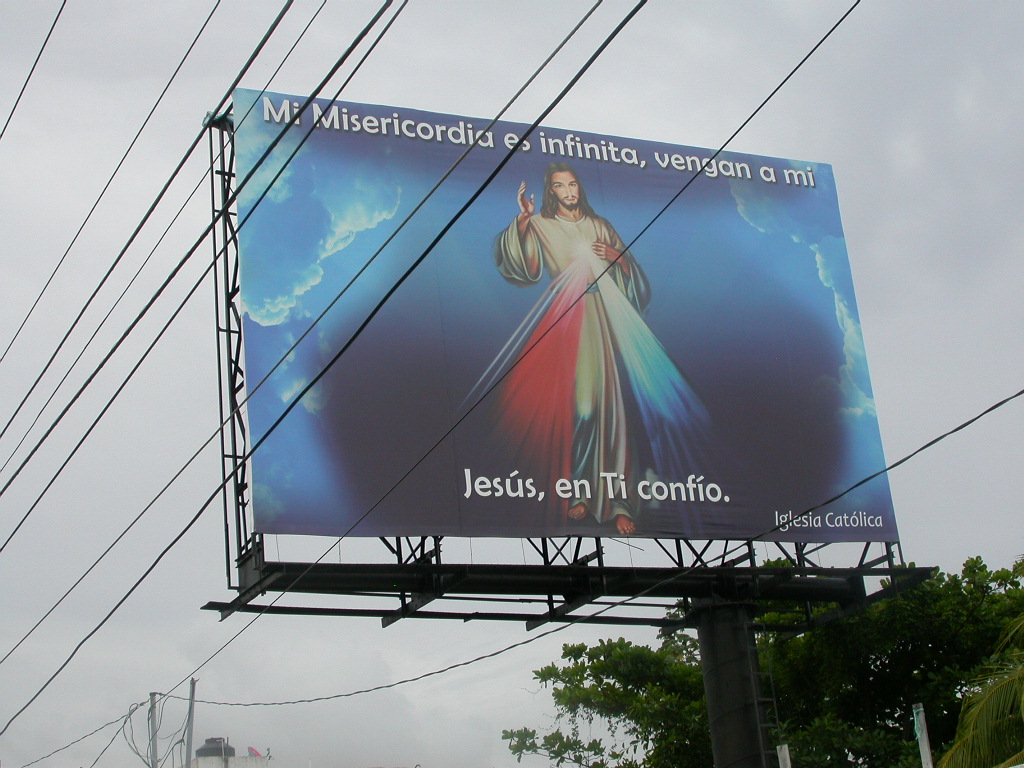
….. “HIS” PR – management better be top.
&&&&&&&&
Not just the famous Nuestra Señora de Guadalupe (of whom I haven’t got a picture here, she always dons a blue-green mantle), but many a pretty Lady are venerated …
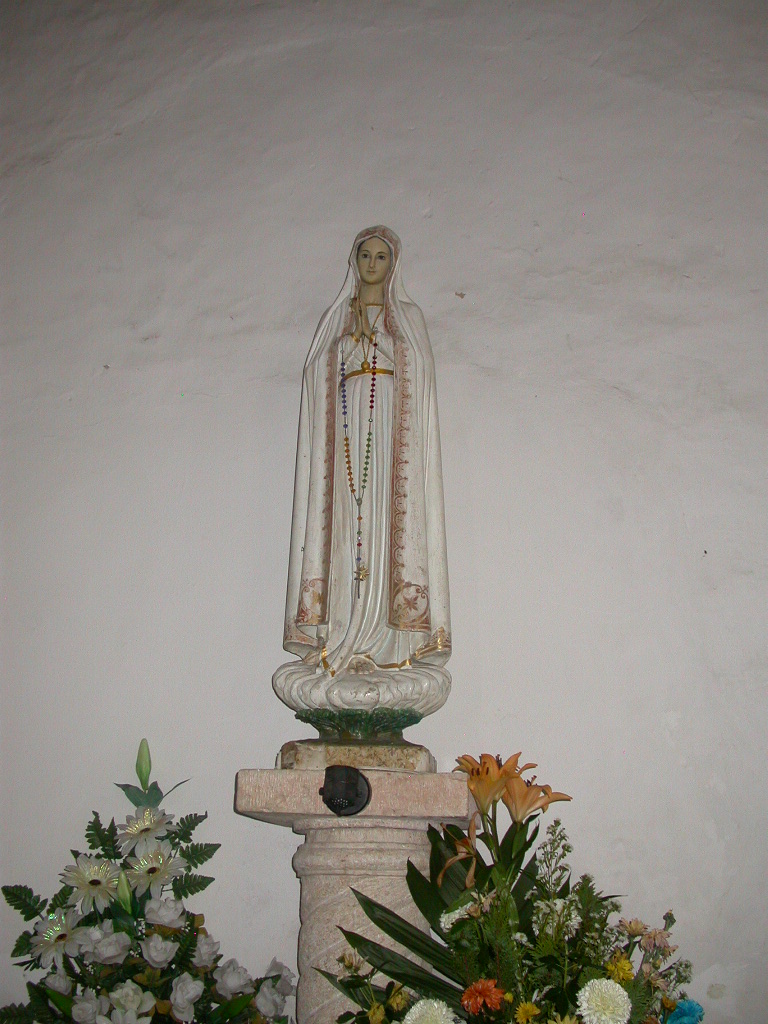 (seen in church and ex-convent of San Bernadino de Siena in Valladolid)
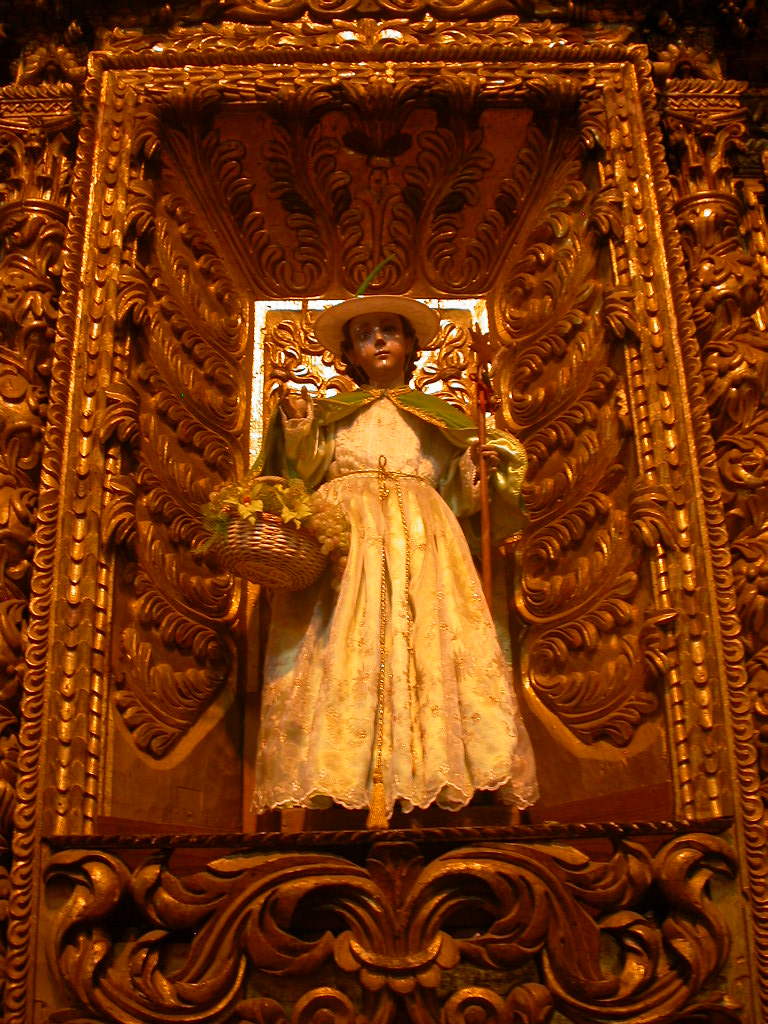 seen in San Domingo Church in San Cristóbal de las Casas
&&&&&&&&&&&&&&&&&&&
Holy Trinity: don’t philosophize, don’t speculate! Picture it!
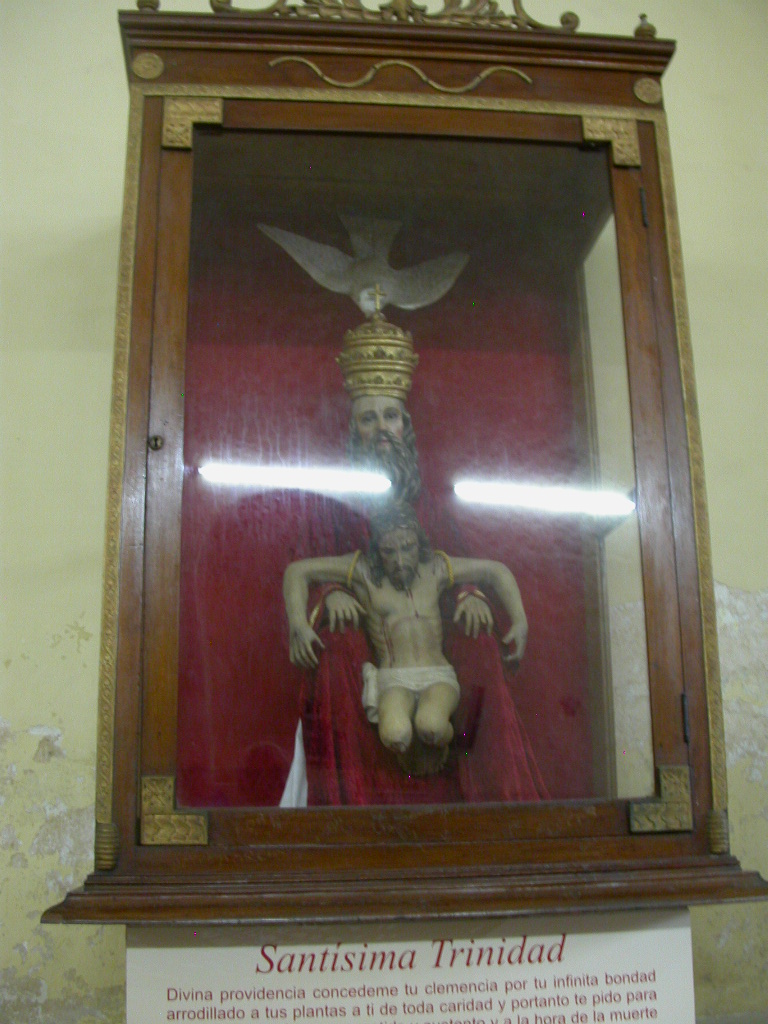
Ever had a problem imagining the Holy Trinity? Look at this! Seen in the Museum San Roque, Valladolid
&&&&&&&&&&&&&&
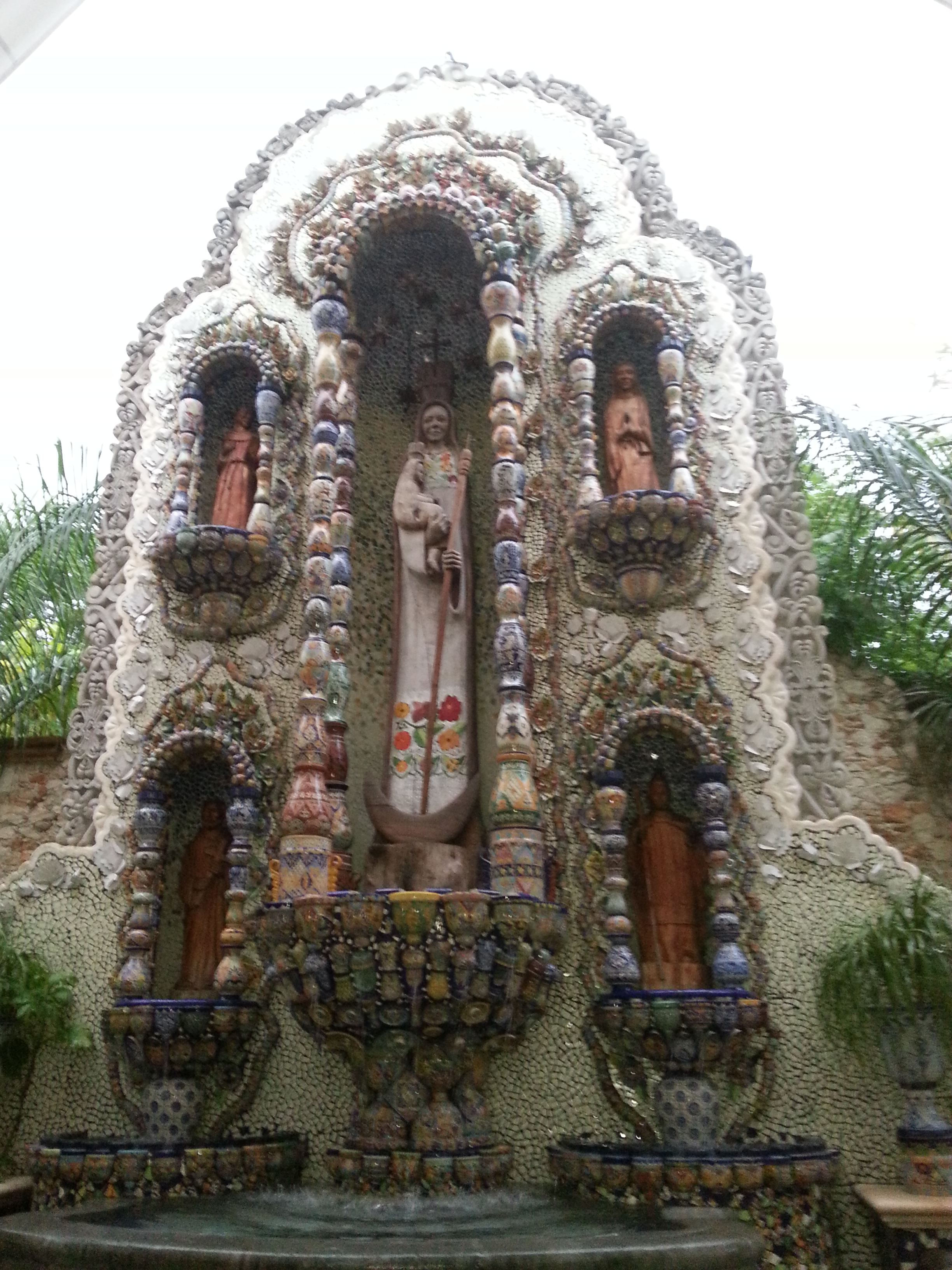
modern shrine in an elegant café – restaurant in Valladolid
&&&&&&&&&&&&&&&
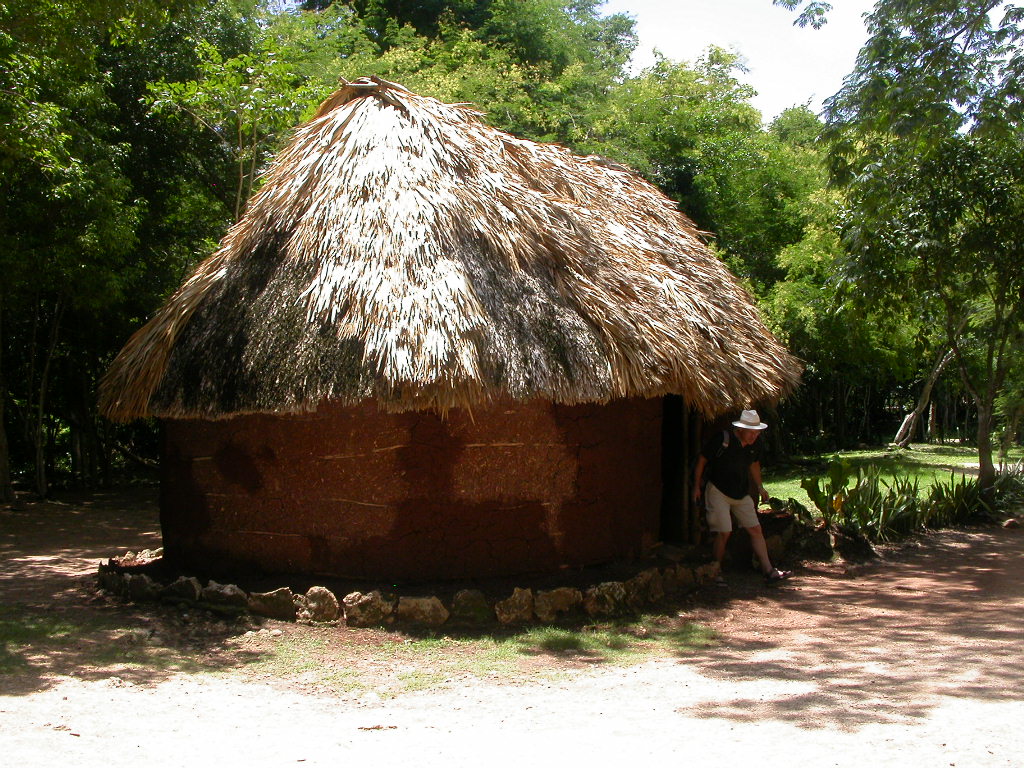
Iglesia modesta
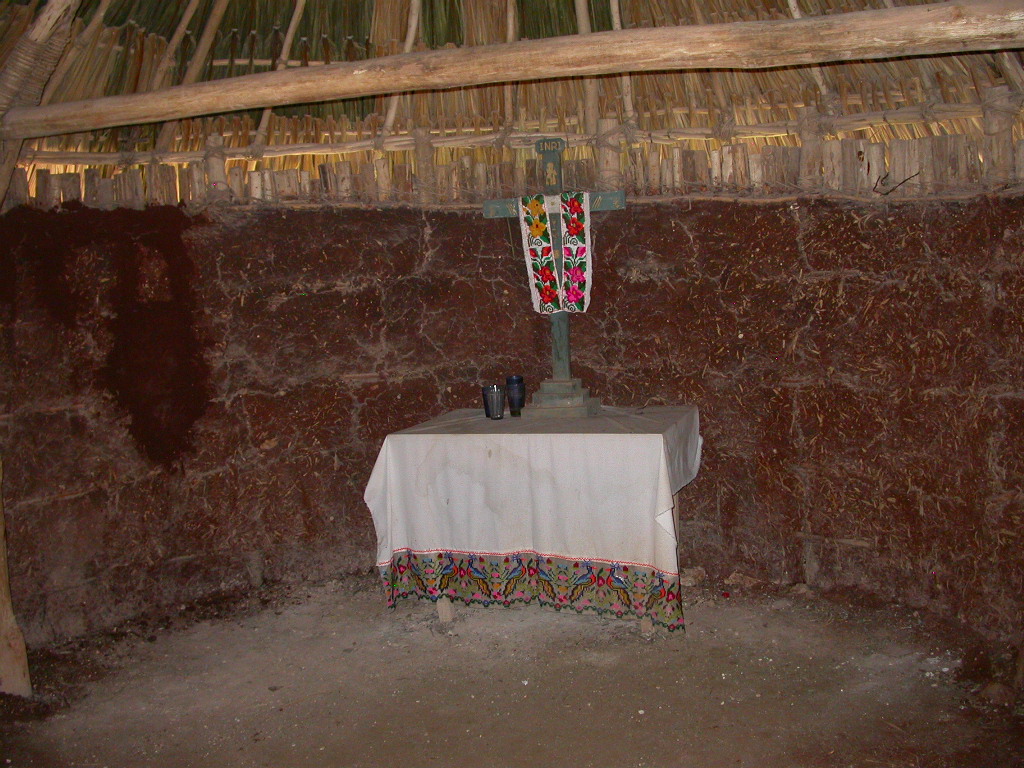
seen in Chichen Itza
&&&&&&&&&&&&&&&&&&&&&
Iglesia pomposa (Big, expensive church)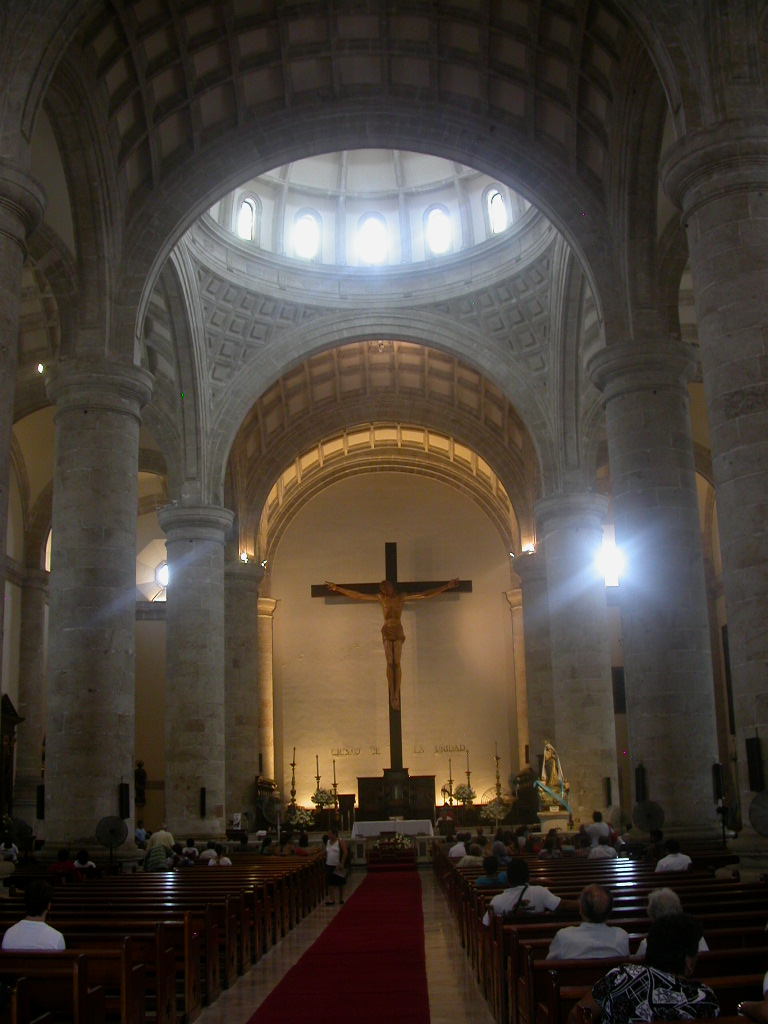
- Mérida, Catedral de San Ildefonso with el Cristo de la Unidad
&&&&&&&&&&&&&&
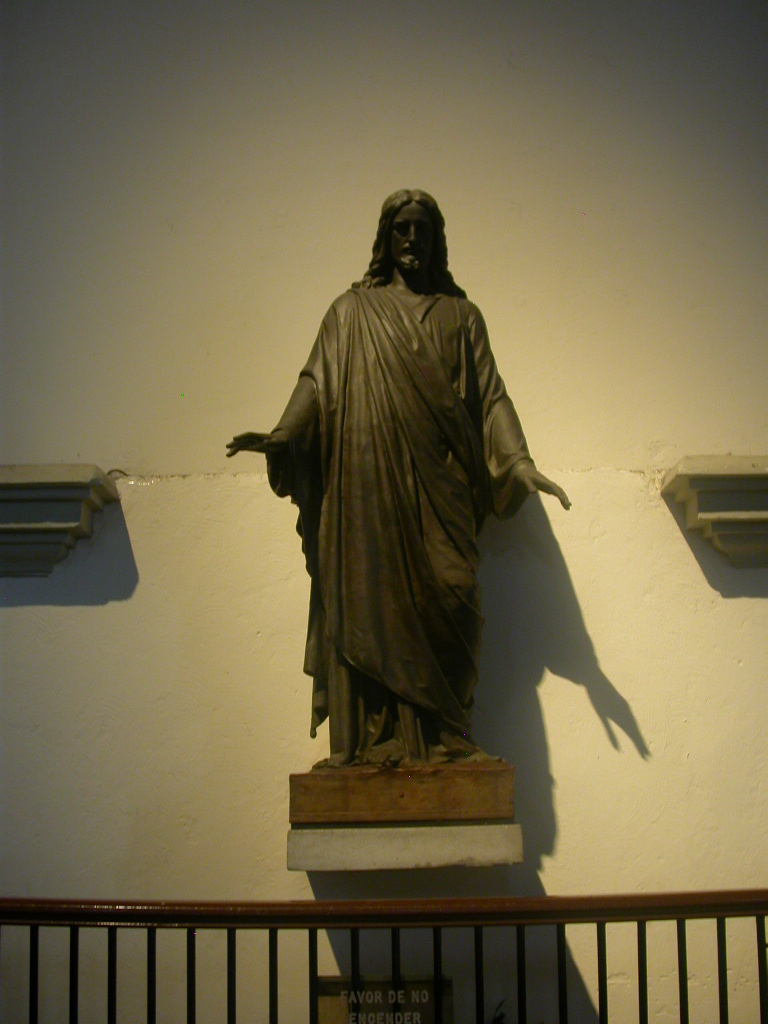 Is he saying: “calm down, take it easy” to the frenetic big city (tourist) crowds? I call him soothing Christ (seen in Mérida)
&&&&&&&&&&&&&&
Oh brother, what have thee done, what art thou up to …..?
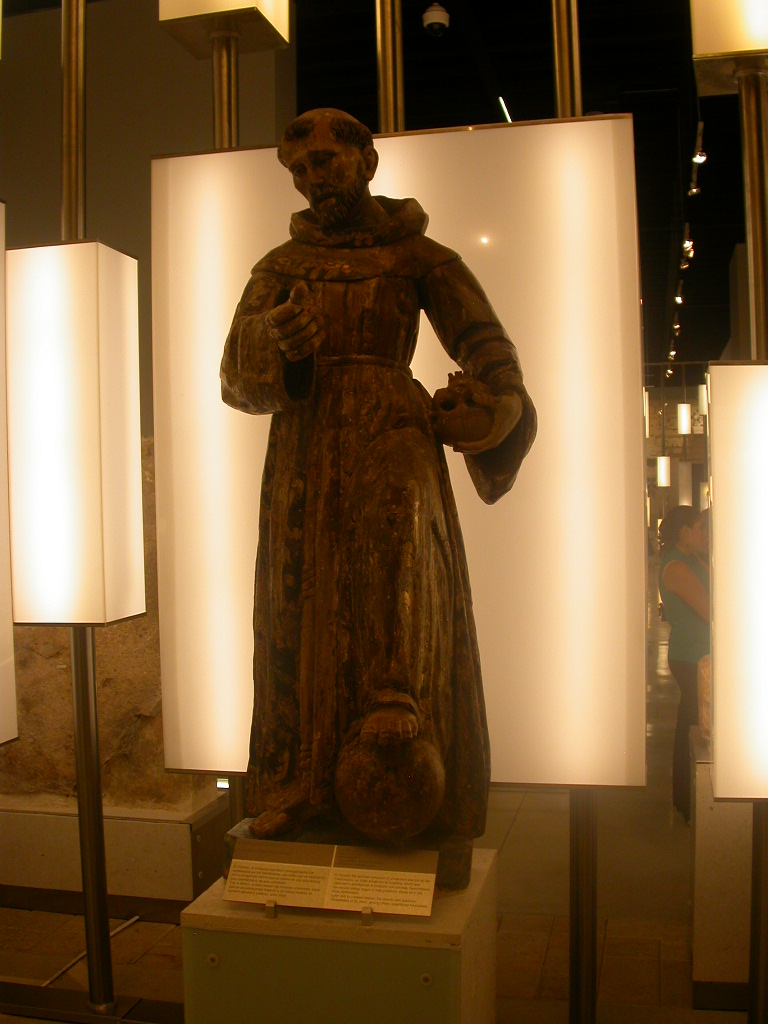
seen in the fabulous Gran Museo del Mundo Maya, Mérida
&&&&&&&&&&&&&&&&&&&&
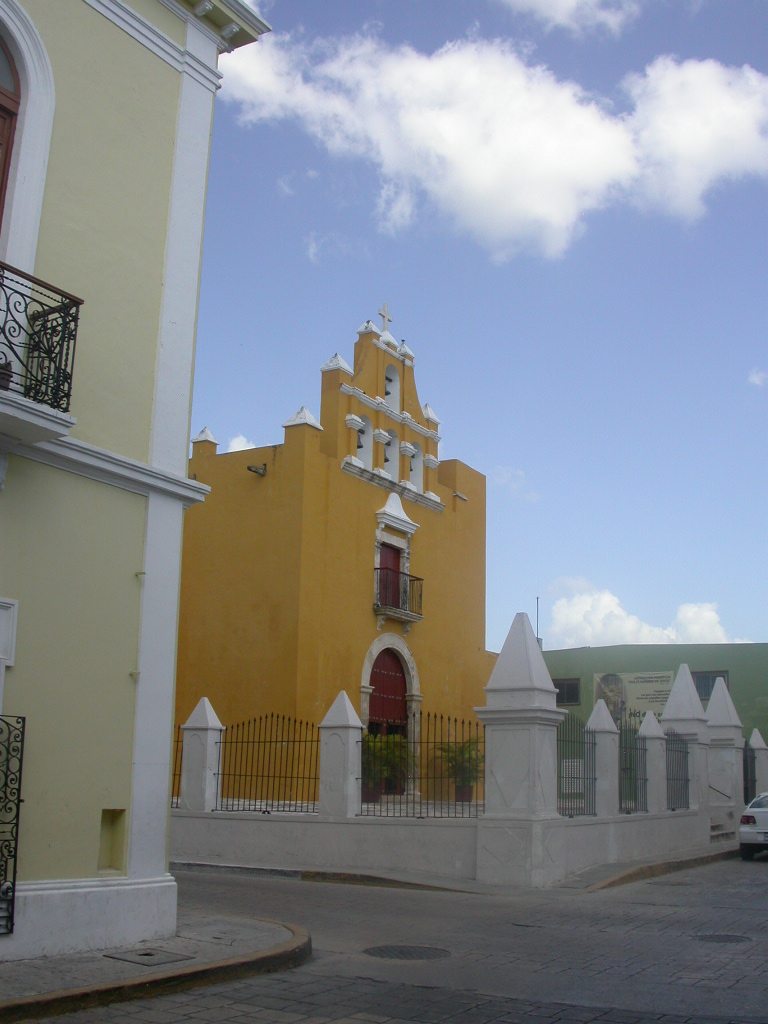
Small church in Campeche: open 24 hours for confession
Are Campechans really greater sinners than others to feel the need of a 24-hour- confessional ? Sinners no, but maybe they distort history a little (and if that’s not sin enough!). There is a sound-and-light-show almost every evening at one of the entrance gates in the wall that surrounds the historical centre of the town. The show is mainly about the pirates trying to raid well-to-do Campeche (in fact they managed to destroy it in 1663) and it’s about the town defending itself. They built the toughest town wall with bastions and gates with draw bridges and cannons everywhere. All this is now a World Heritage Site. But the show, a lively, loud and colorful spectacle with gun – and cannon shots and sword fights, starts further back in history, at the conquest by the Spaniards led by Francisco de Montejo the son (el Mozo) (1540s). At some point the play strongly gives the impression that the “encounter” between the indigenous population and the Spanish conquistadores was not a bloody battle for conquest and submission but a wedding between two peoples, the Spaniards and the Mayas, the first represented by a man, the latter by a woman. Now, I admitt that my Spanish is less than basic, but nevertheless, that’s what the story looked like to me (I hope I’m wrong!). I understand that people are now happy and proud of their double heritage but love at first sight was certainly not the starting point.
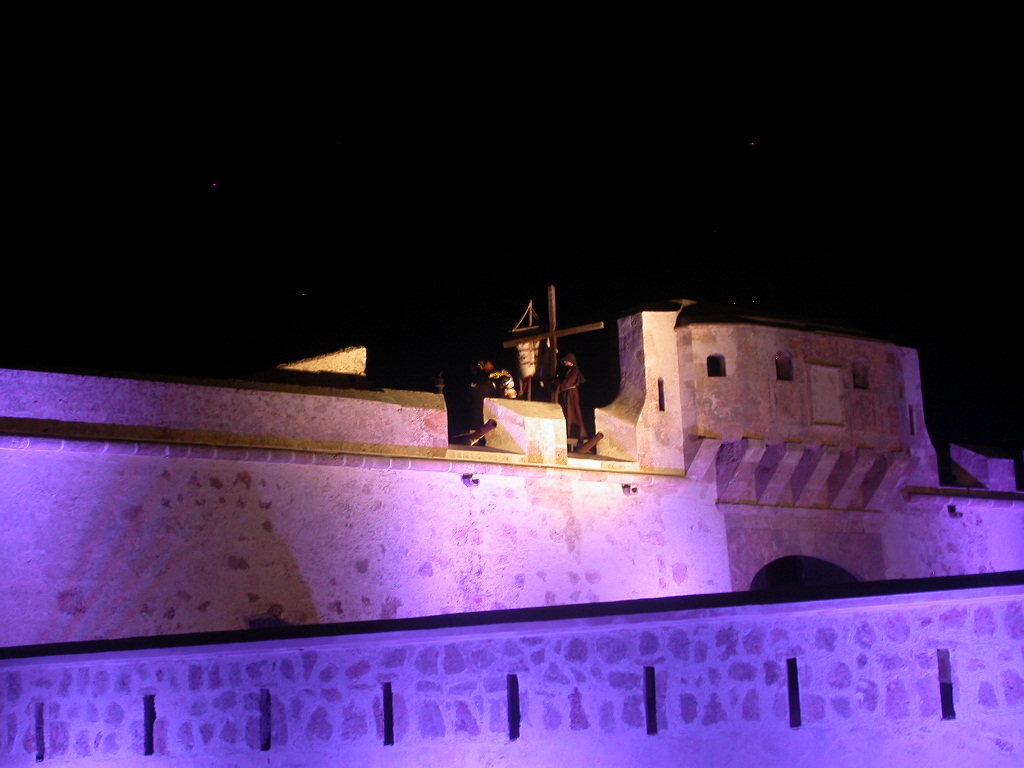
The Campeche city wall at the land entrance gate (Puerta de Tierra), the pirates are defeated, the cross prevails
&&&&&&&&&&&
But the conquistadores didn’t just bring the cross …
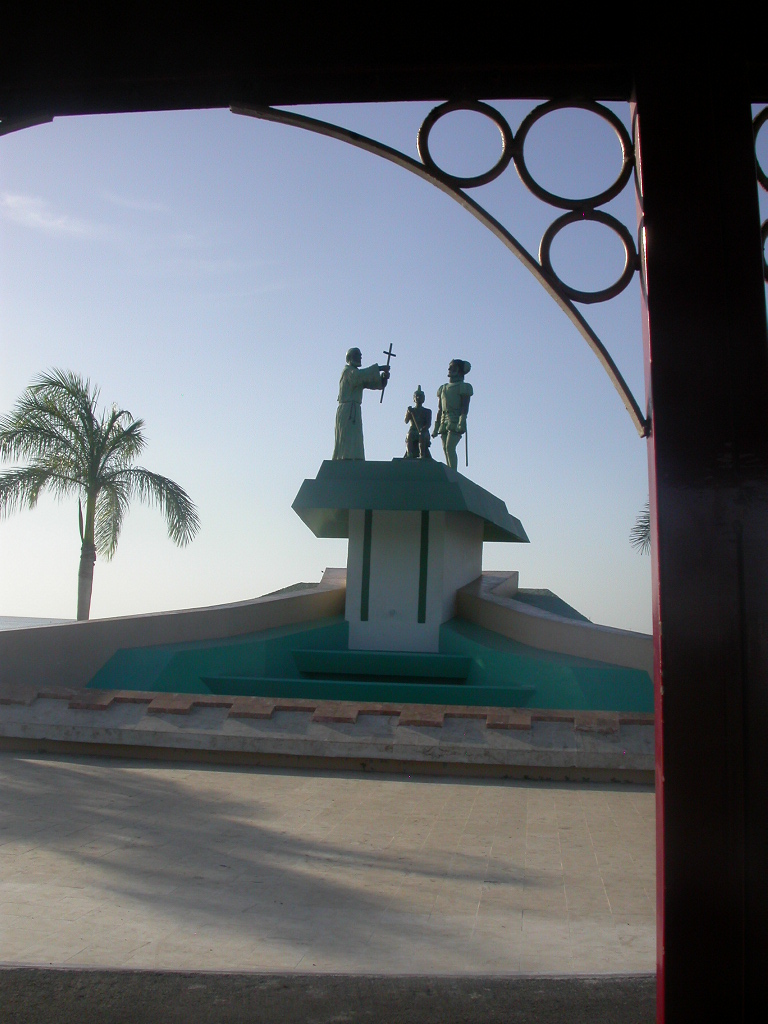
seen outside the centre of Campeche , on the sea shore
they brought diseases such as smallpox, influenza and measles with them. There were approximately 7 million Mayas when the Spanish arrived on the peninsula of Yucatan during the 1500s, and after that, about 90 percent of the indigenous population died from European diseases.
As they had learned from the disease bringers themselves the people invoked Saint Sebastian, the epitome of the martyr, but to no avail, it didn’t work.
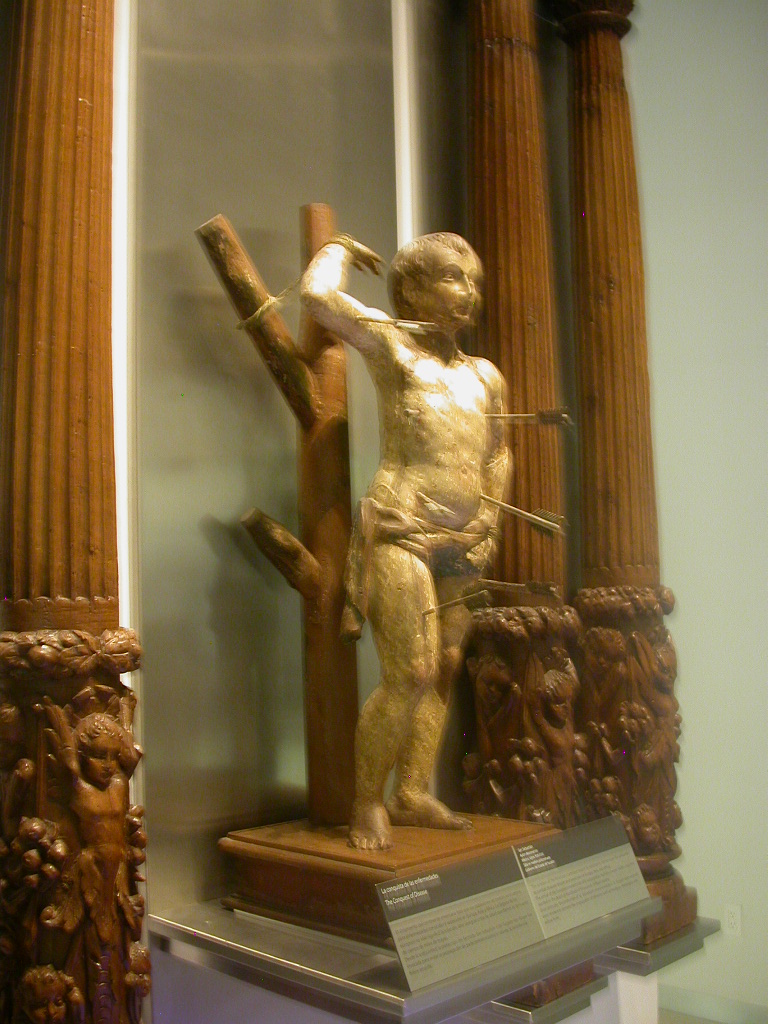
Saint Sebastian in El Gran Museo Maya, Mérida
&&&&&&&&&&&
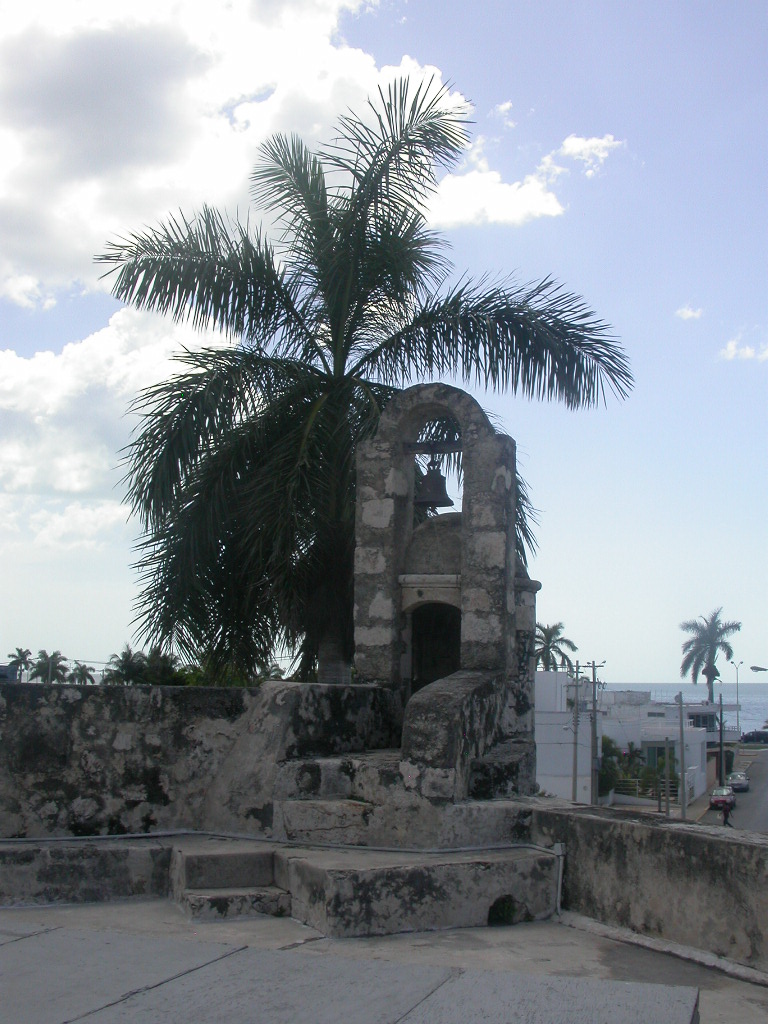
From here you could see the pirate ships approaching Campeche
&&&&&&&&&&&&&&
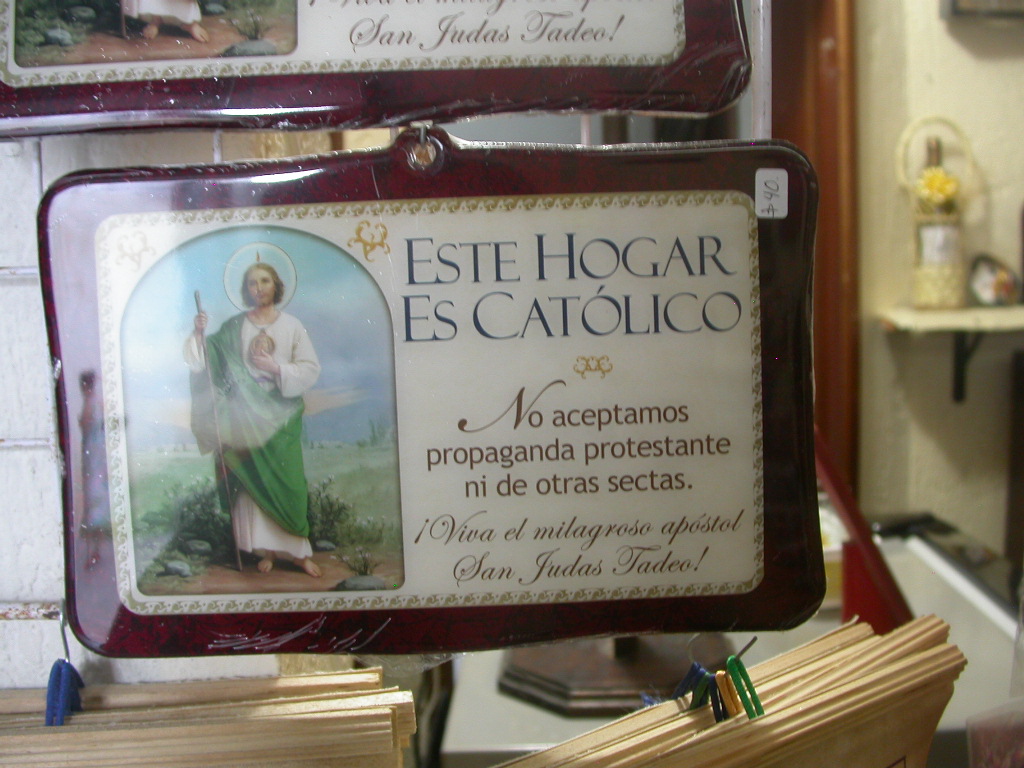
Translation: This place is catholic. Protestant propaganda and that of other sects is not accepted. Long live the miraculous apostel Saint Judas Tadeus. (Campeche)
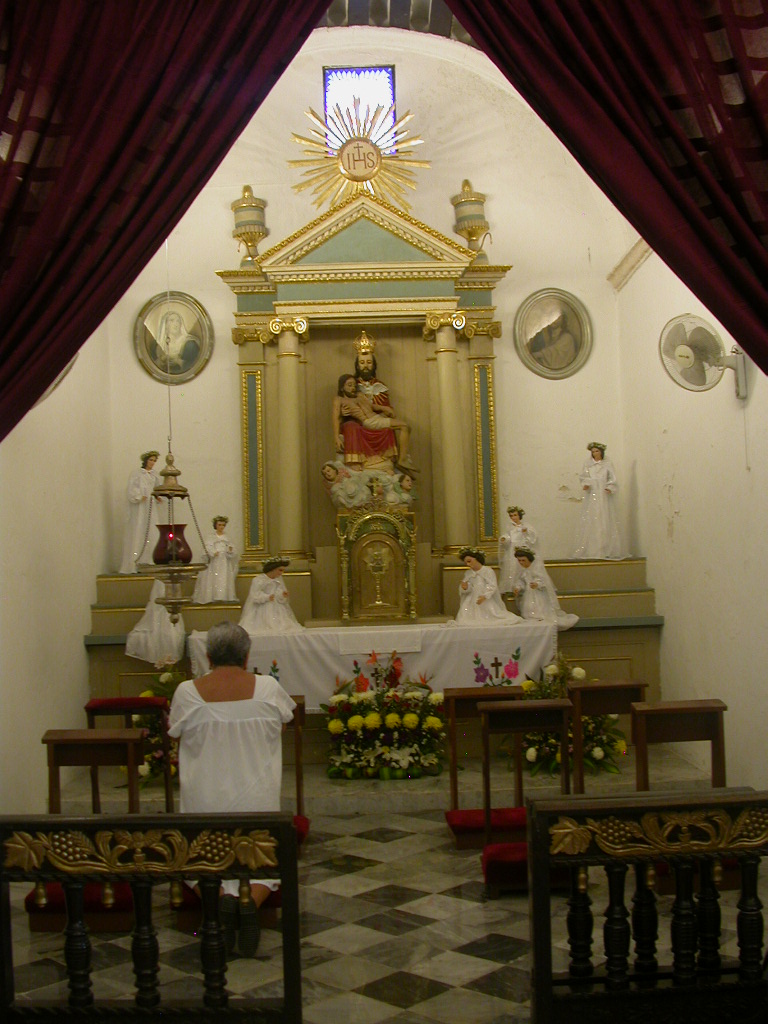
I wouldn’t dream of trying to convert anybody here.
&&&&&&&&&&&&&
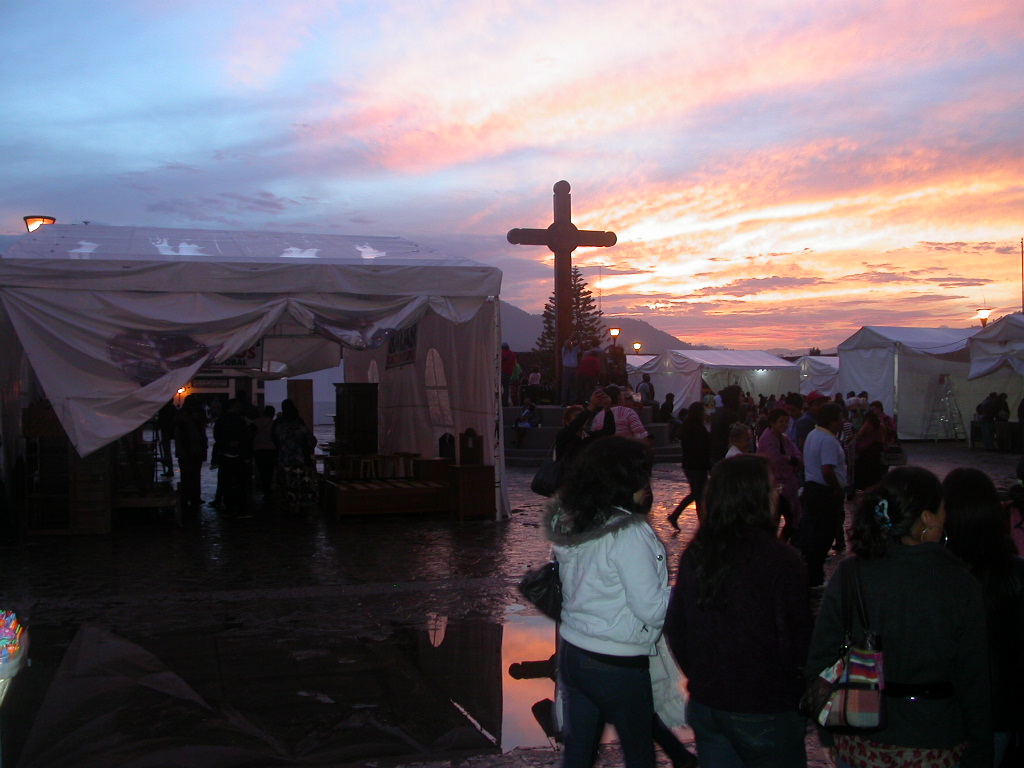
San Cristóbal de las Casas
This is Zapatista country and San Cristóbal de las Casas is my favourate town, even though every morning I was rudely awakened at 6.00 a.m. by the rumbling of cannons. I thought the Zapatistas were back, they were going to occupy San Cristóbal, take me and all the other tourists hostage and abduct us into the Lacandon jungle for a looooong time. I would not be able to go back to school and would try to make myself useful to the rebels (as a German teacher? Well, you never know, they might want to ask for political asylum in Germany some day). The cannon shots turned out to have been fired on the occasion of some kind of celebration. Nothing to do with the Zapatistas. Nothing really exciting ever happens to me anyway.
Visiting the Museo de la Medicina Maya I saw these crosses:
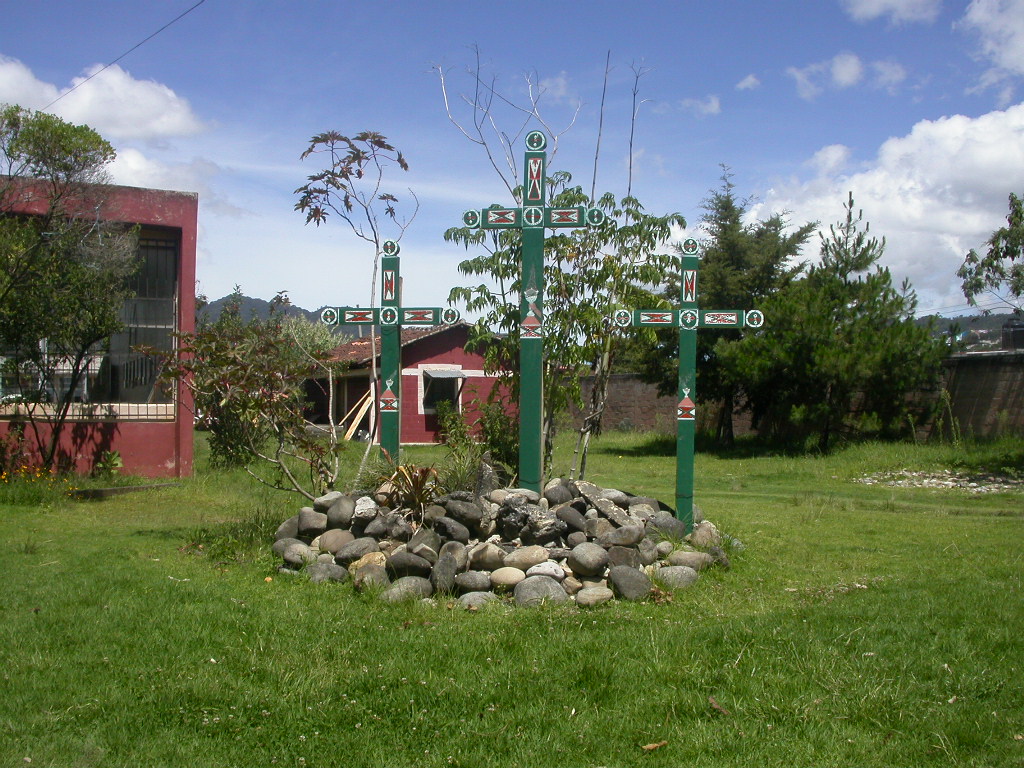
Seen in front of the Museo de la Medicina Maya
and I remembered to have read somewhere that the green cross was a secret sign of the Zapatistas to let their friends know that they were in the area. I don’t remember where I got this information, I didn’t find any confirmation for it. I was too shy to ask. Fact is that there is a room in the museum dedicated to the ongoing struggle of the movement (critical of globalisation, okay, and also critical of sustainable development and tourism, hard to explain, hard to understand).
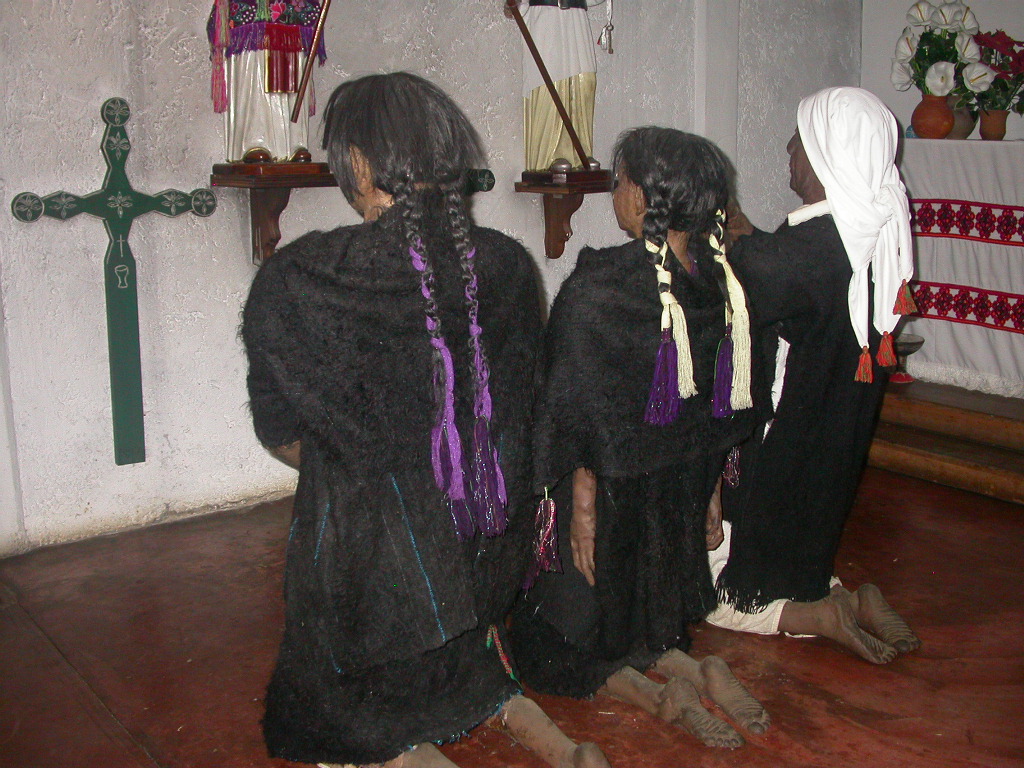
Museo de la Medicina Maya, San Cristóbal de las Casas
Apart from converting and getting the populace to work for them, priests are known to have sided with the indigenous population when the colonialists cracked down too hard on them.
&&&&&&&&&&&&&&
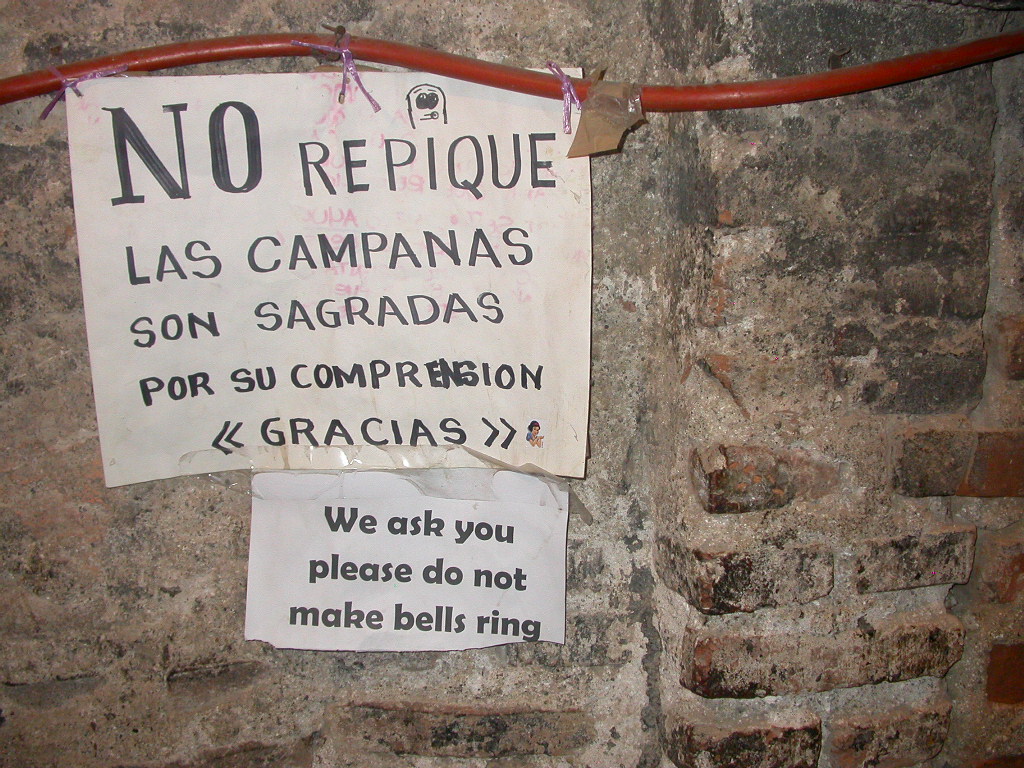
On a church spire in Chiapa de Corzo
Don’t ring the bells, for heaven’s sake, don’t ring the bells!
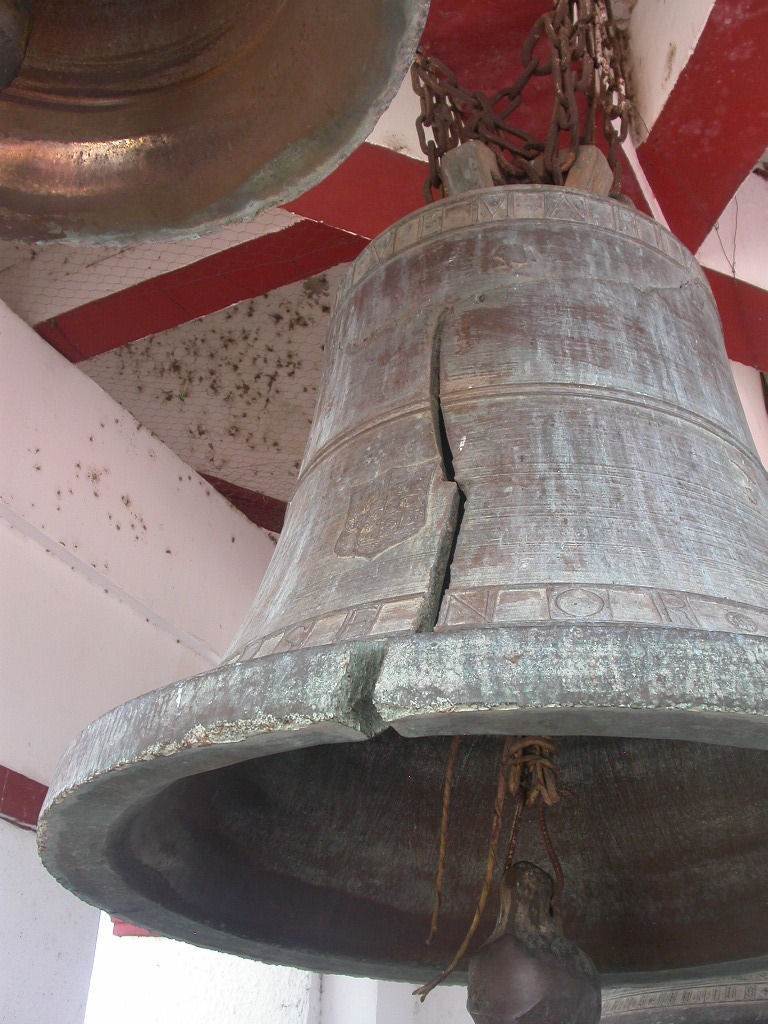
kaputt
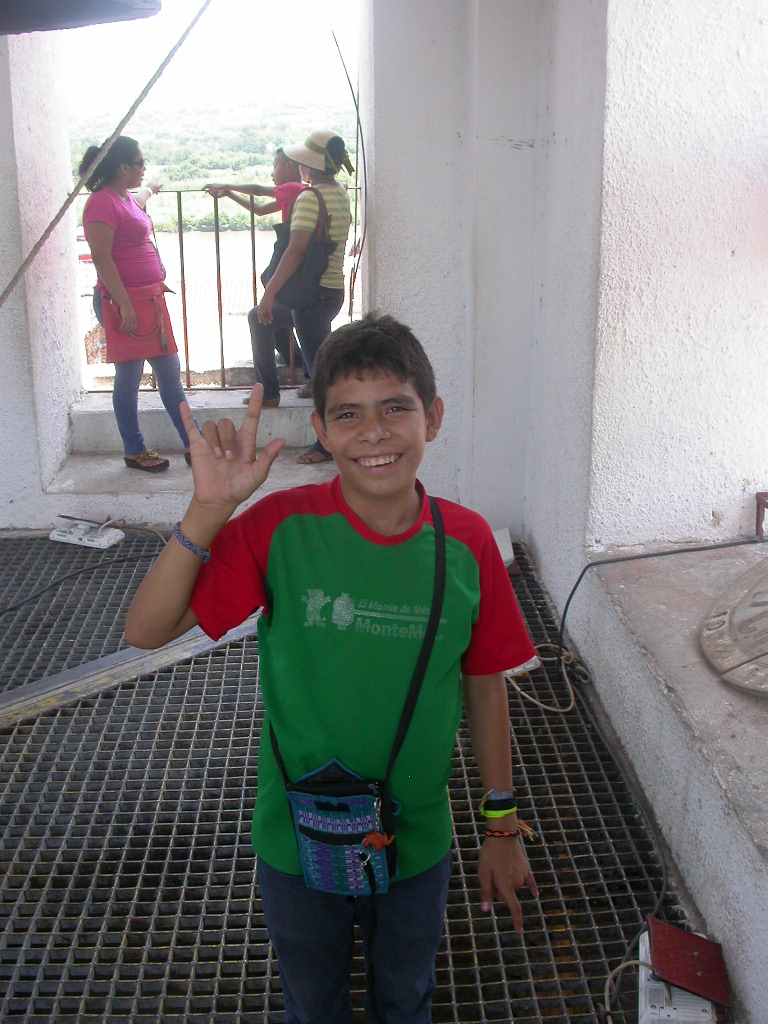
nice kid
This boy on the church steeple wanted a “propina”, a tip for showing me the crack in the bell and letting me take his picture. I asked him why he wasn’t at school (“holiday”) and whether he learned English at school. He said they had the subject English but “no tenemos teacher”. I taught him a couple of sentences that could be useful when dealing with the tourists, then other kids came and wanted to participate. After learning the lessons so willingly they wanted to be rewarded with a “propina”. When I told them that, actually, I deserved a propina for my English lesson, they took it with humour and laughed.
&&&&&&&&&&&&&&&&&&6
Oldest, largest cathedral in the Americas: the huge, majestic Catedral Metropolitana with tabernacle, situated in the centre of Mexico City, right where the even more awe-inspiring, grandiose Aztec Tenochtitlán, the largest city in the Pre-columbian Americas, one of the largest in the world, had been. Having seen this dream of a city on November 8, 1519, the infamous Hernán Cortéz rolled up his sleeves and got down to work. He leveled the capital of the Aztec empire and built himself a church there. What is left today are just the ruins of the Templo Mayor, here in the foreground of the photo. The temple had been dedicated to Huitzilopochtli, the god of war, sun, human sacrifice (gee, he could have done better than succumb to the Conquistadores!) and to Tlaloc, god of rain and agriculture.
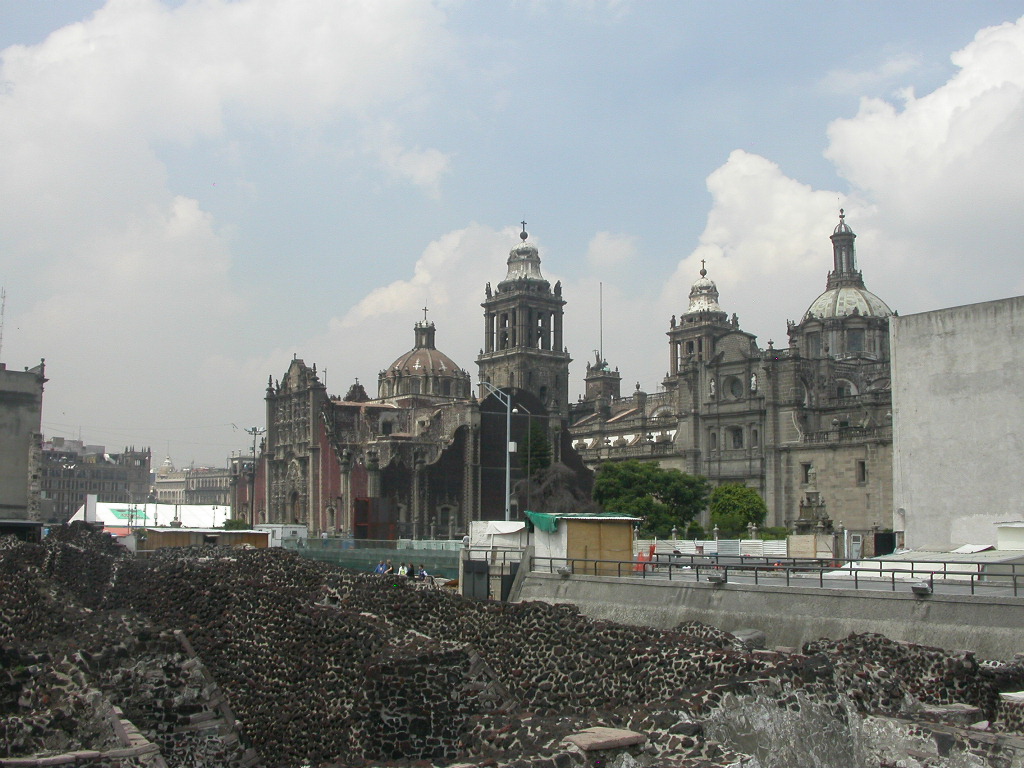
Catedral Metropolitana seen from the ruins of Templo Mayor
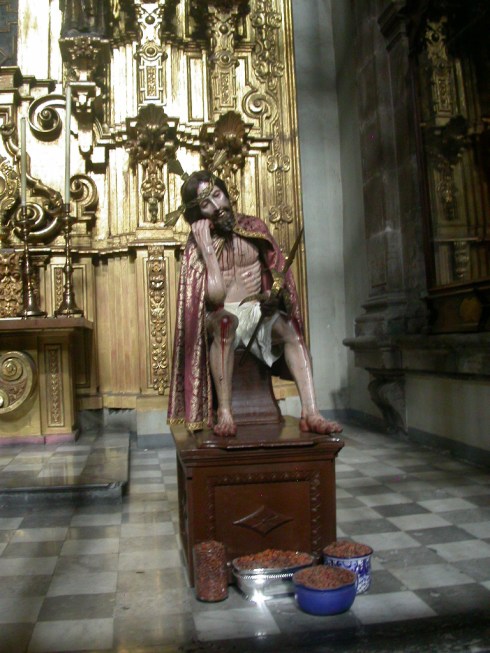
- Our Lord of Cacao, got his name from the cacao beans offered by the poor indigenous people
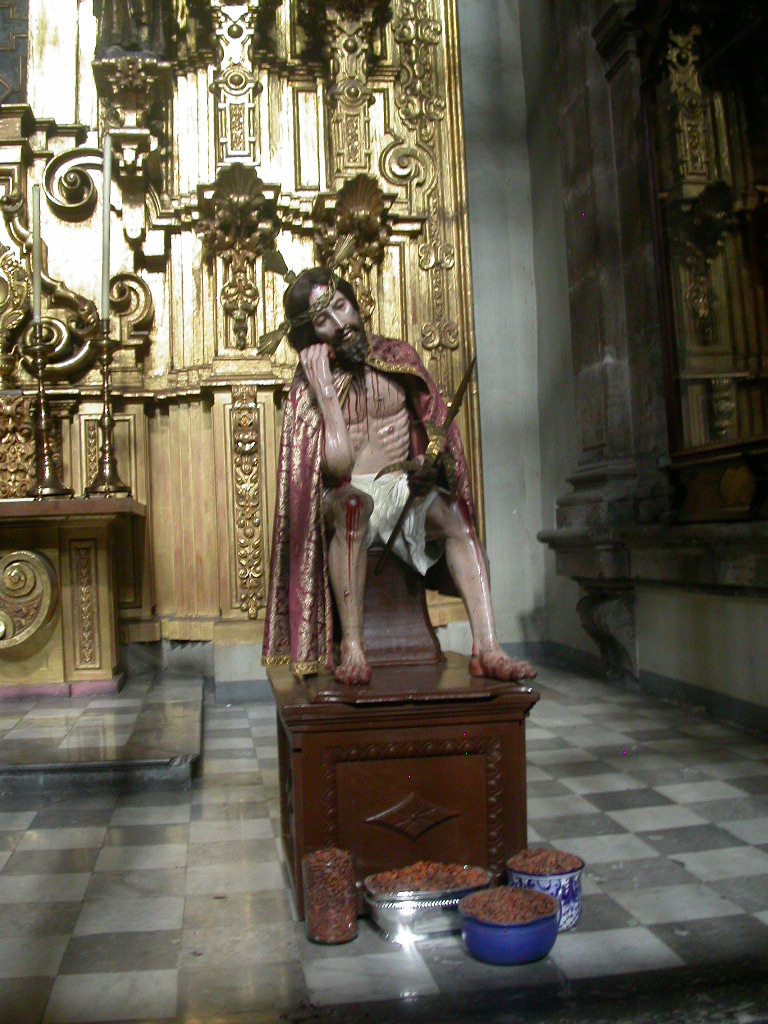
To me he rather looks like someone who has been working in cacao plantations from childhood onwards to ensure that the people who live in earthly paradise never run short of chocolate….
Some more drastic images:
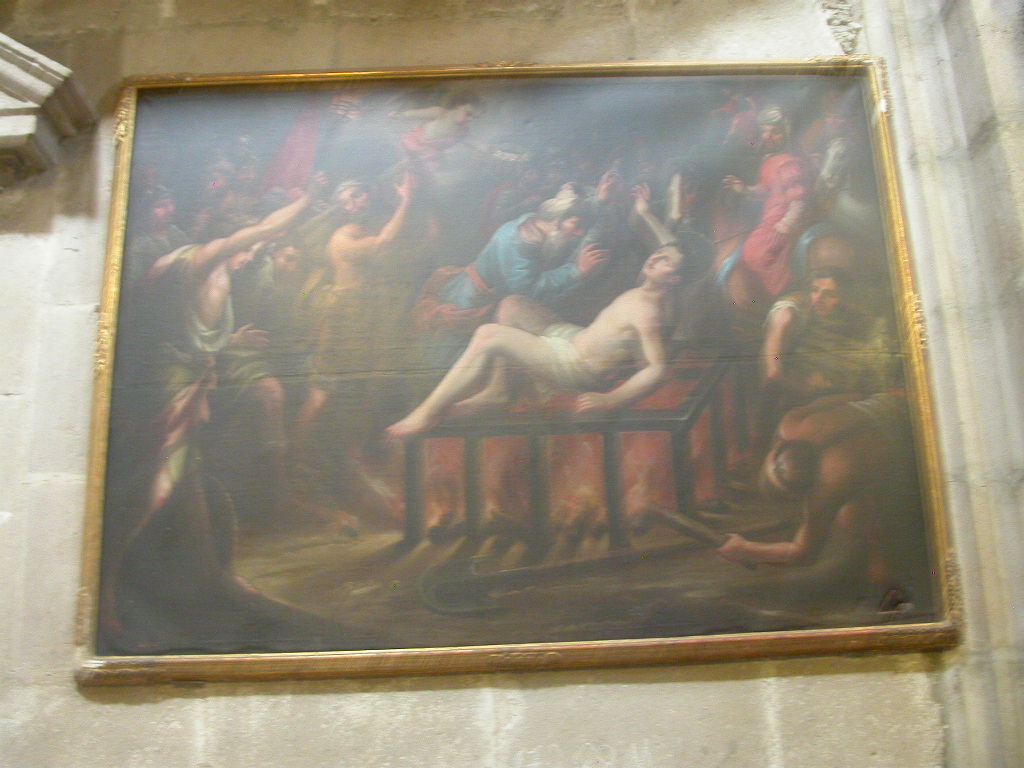
Catedral Metropolitana, I don’t remember the title
Help!!!!!
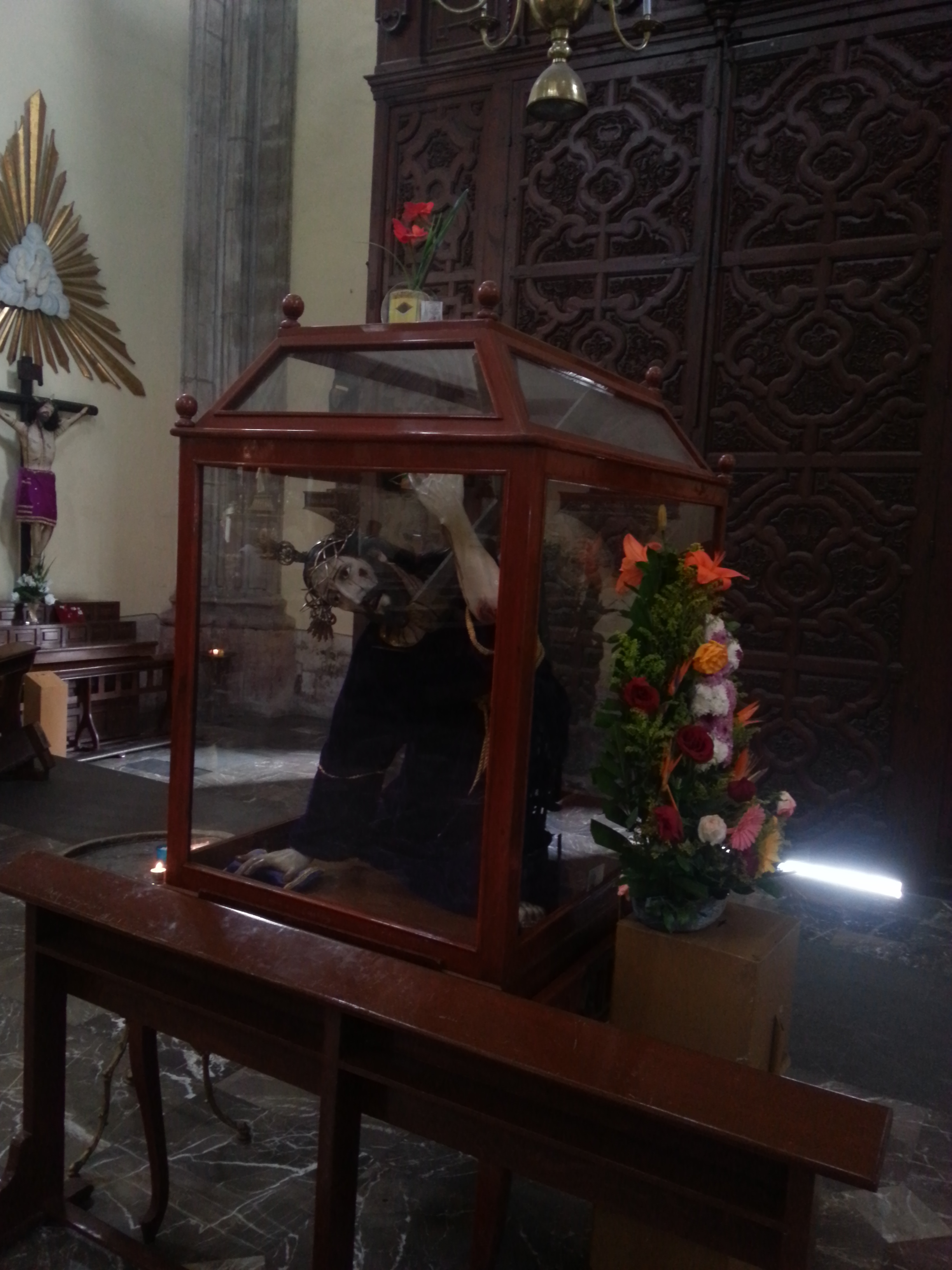
Catedral Metropolitana, Mexico City
&&&&&&&&&&&&&&&&&
AND LOVE IS ………
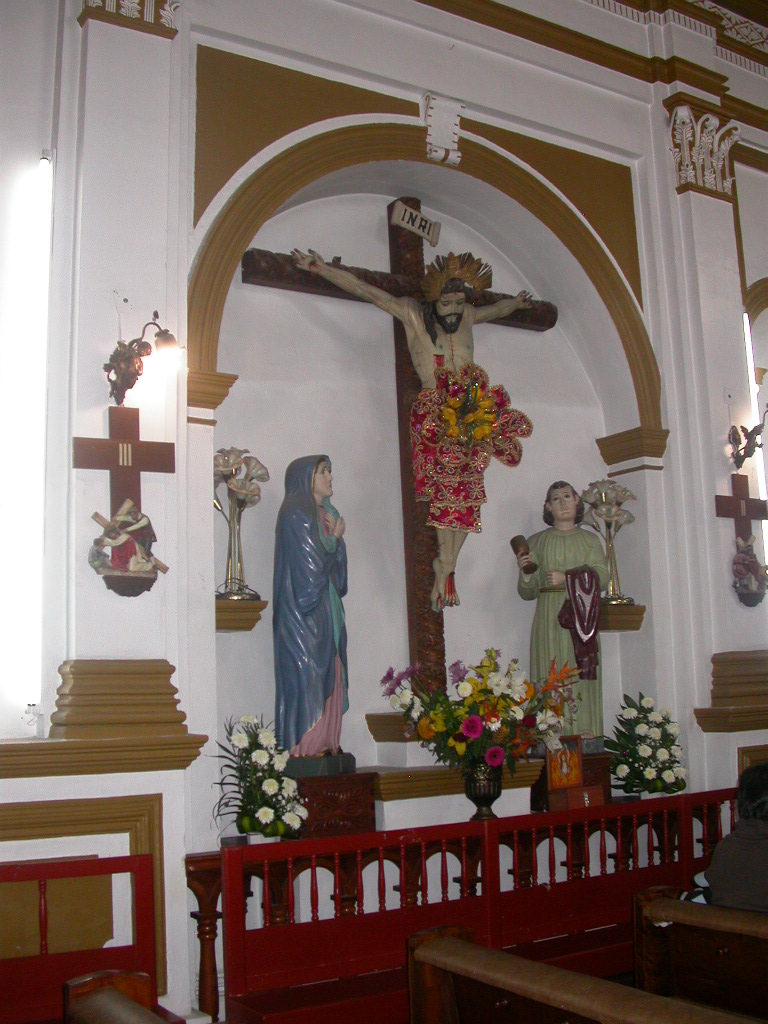
…. to “let a thousand flowers bloom”
……. to comprehend ….
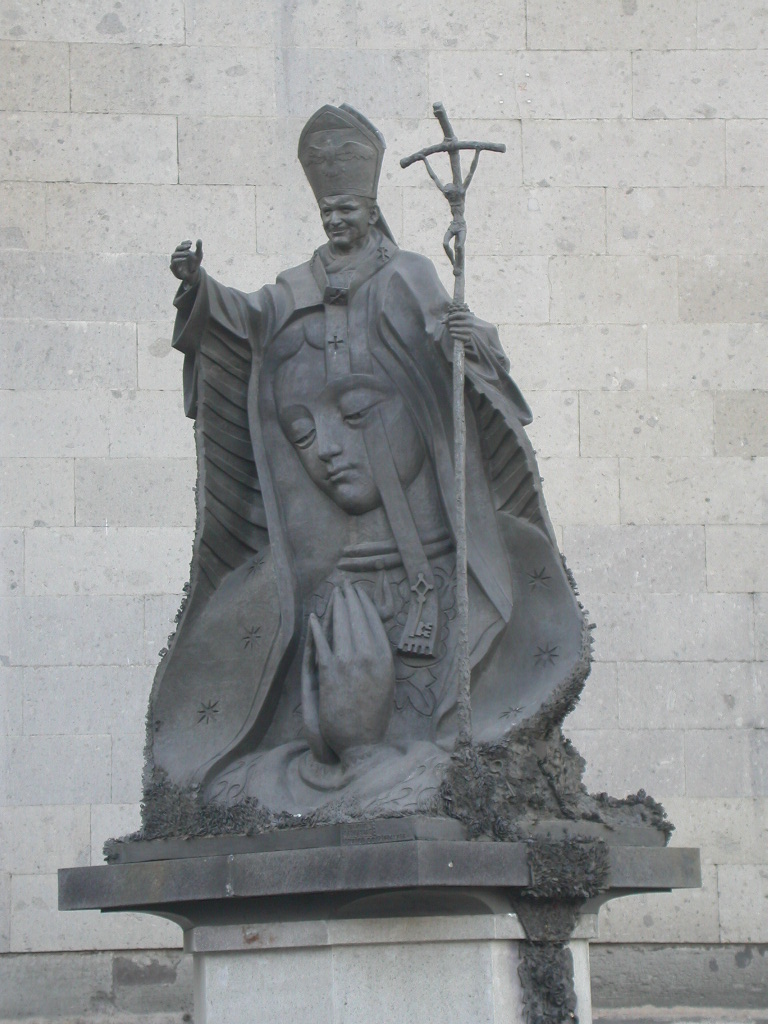
Juan Pablo II, Mexico City
“Juan Pablo …….. Juan Paaaaabloooo ………… ! ! ! ! !”
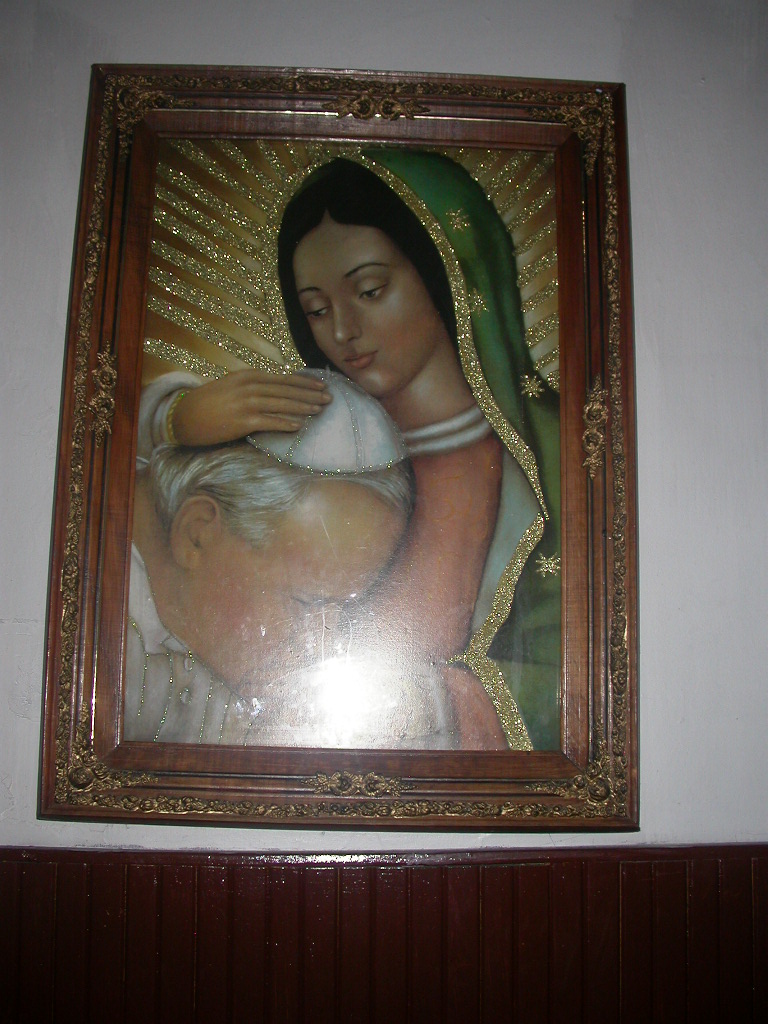
Juan Pablo II, John Paul, Giovanni Paolo, Johannes Paul …. in case the picture isn’t clear
&&&&&&&&&&&&&&&
Up and down the stairs, not only the Mayan and Aztec pyramids are worth a work – out.
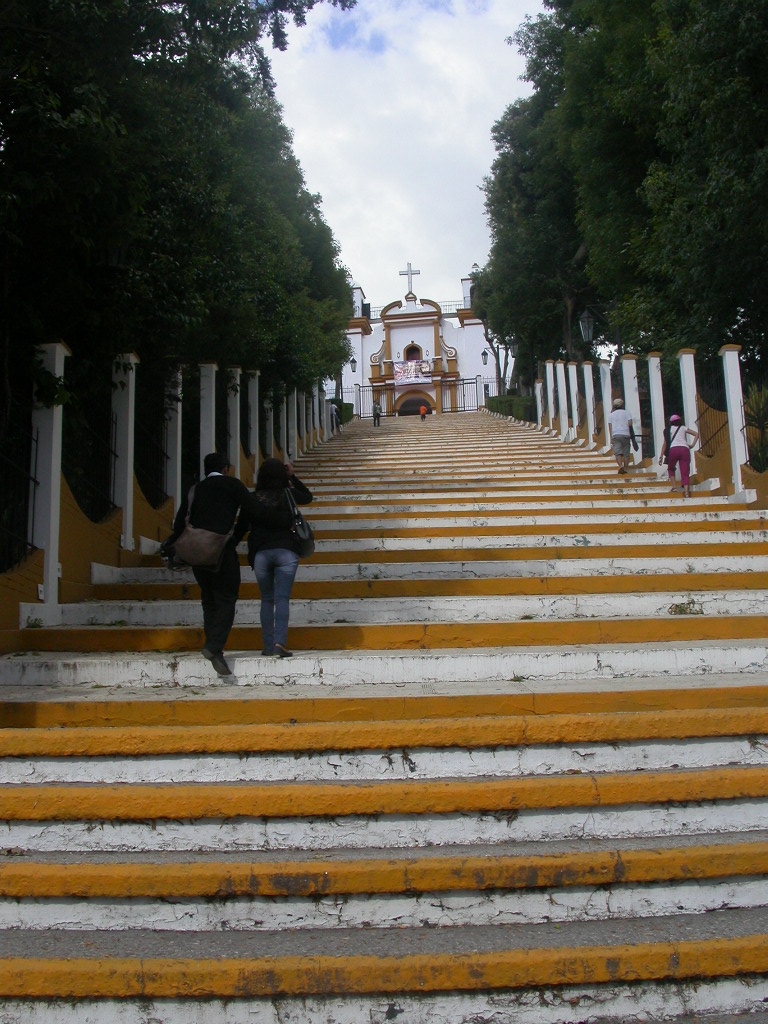
Church in San Cristóbal, Cerro de Guadalupe
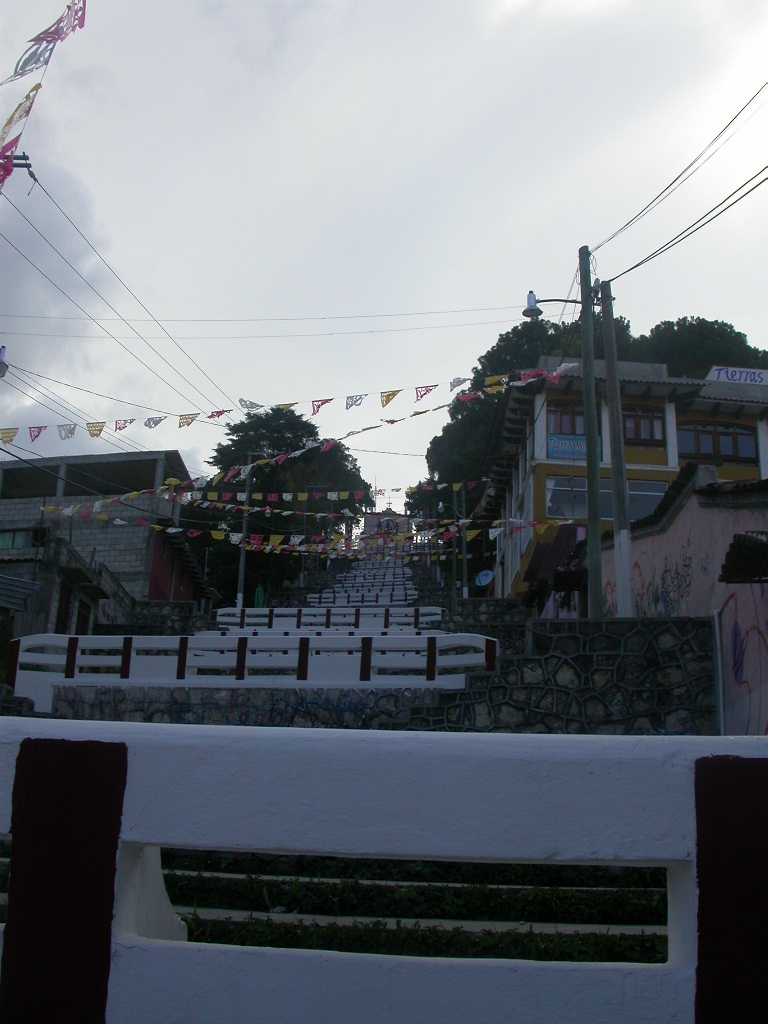
San Cristóbal, Cerro de San Cristóbal, up up, the tiny little thing in the middle, at the end of the staircase
These last two pictures of the stairs leading to churches in San Cristóbal are supposed to make a connection to my next letter about the highlights of Mexico, the pyramids with their stairs!!!!!!!!
Take care and a wonderful post-holiday season to all those who aren’t yet retired
cheers Gerburg
 gerburgkamm
Toll, Gerburg. Freue mich schon darauf, mit dir weiter um die Welt zu reisen. Thanks for sharing the pictures and your interesting and entertaining comments.