… and had the plague on board; auf deutsch (vivacious march rhythm) : “Wir lagen vor Madagaskar und hatten die Pest an Bord”!
We learned that song in a children’s “holiday camp” or was it at school? I liked shanties; they told of the big wide world and “men’s freedom”, even if that meant being thrown overboard as plague-ridden corpses. And what 9-year-old knew where Madagascar was? In any case, the song didn’t exactly encourage travelling there. In September / October 2025 the news explicetly discouraged travelling to Madagascar because of “Gen Z” protests over power and water outages and corruption allegations. The elite CAPSAT soldiers (Corps d’administration des personnels et des services administratifs et techniques) refused to obey the government order to shoot at the protesters, instead they helped to bring about a coup d’état. The killings of 22 protesters and civilians were blamed on the “gendarmerie”, a guide in Antananarivo told me later. The actual government is transitional and the interim president is a Colonel.
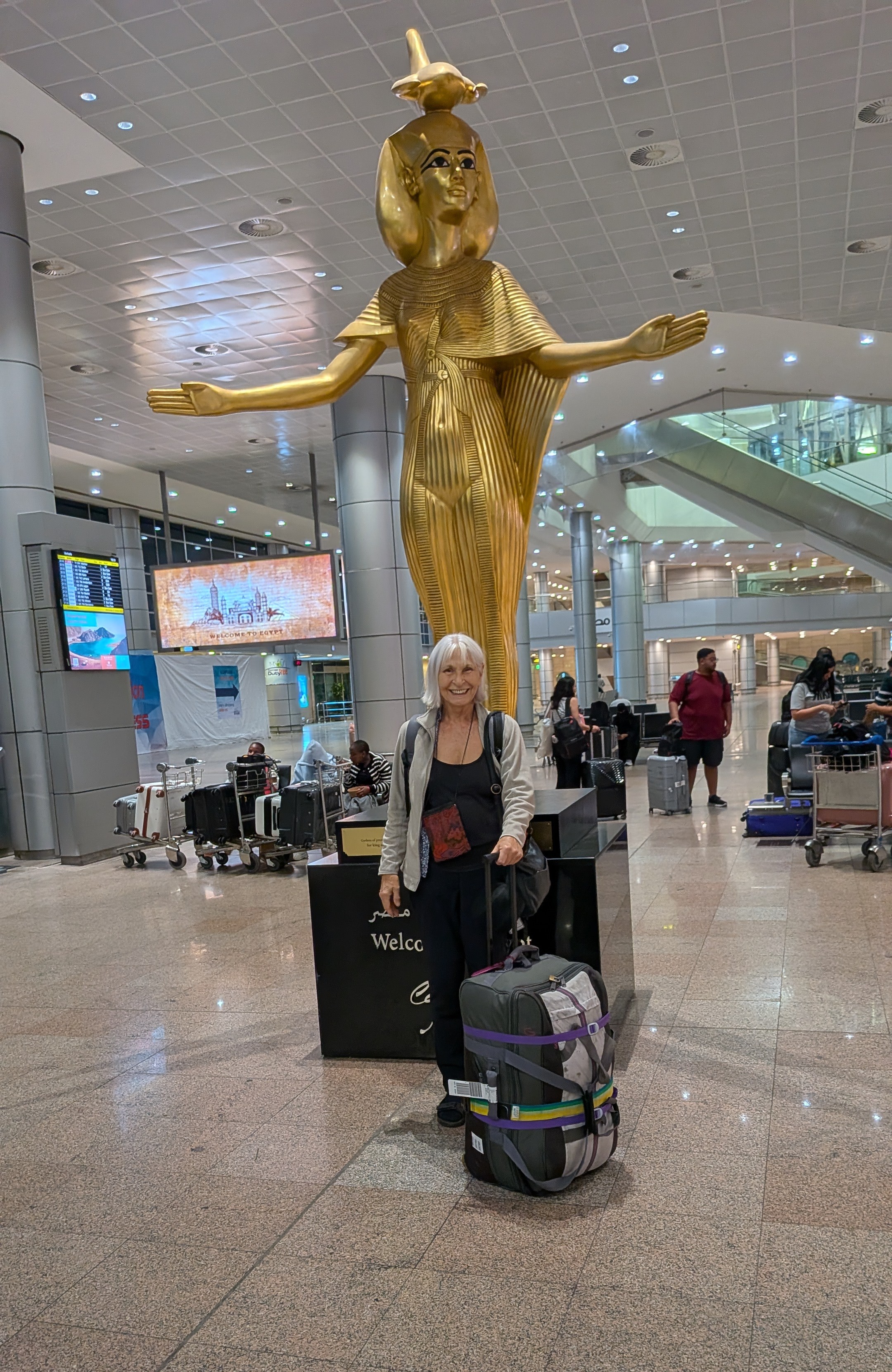
I went on my trip as I had planned (I’m too old to lose time). Stopover in Cairo: who wouldn’t want to have a physique like Cleopatra’s. Picture 1.
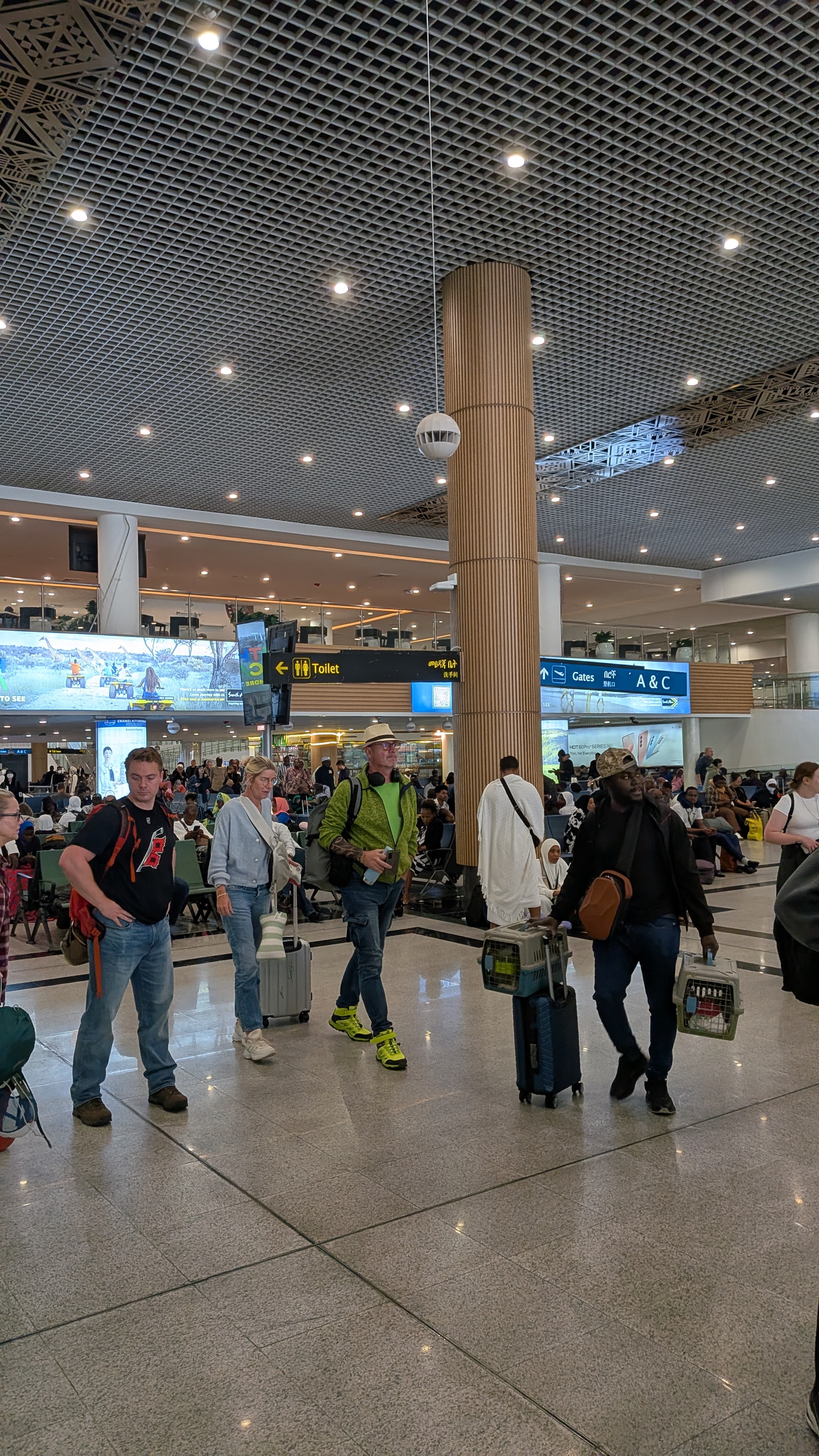
The airport of Addis Ababa has become a hub of interesting people with exciting life projects, like Joey Potter, who is a one man NGO and saves young girls all over the world from being sold and dragged into premature marriage. During a cup of coffee he told me that he had fierce enemies. Immagine me looking around furtively while listening in awe … Look him up (https://www.joeypottermissions.org/).
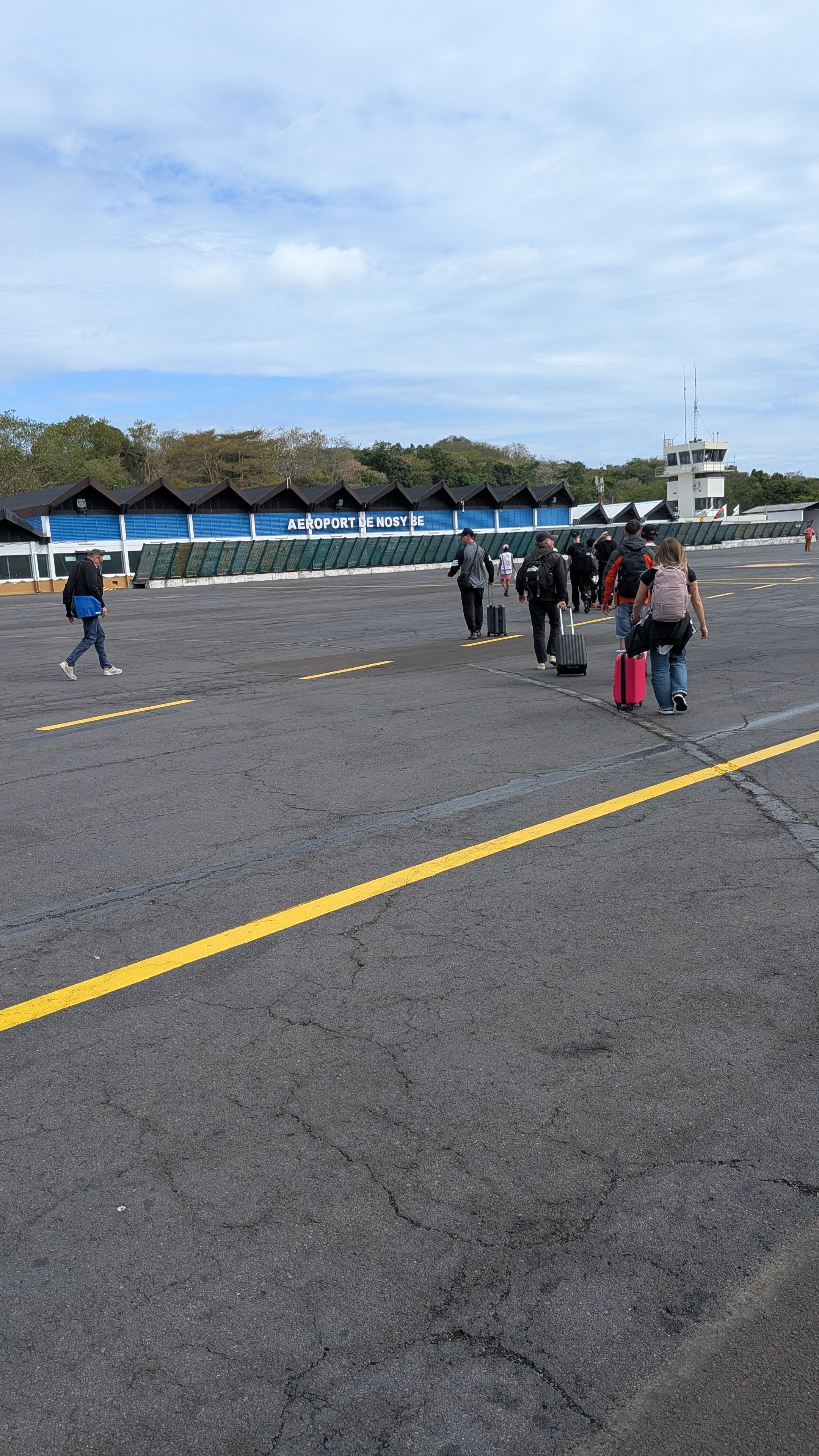
Arrival at the Aéroport de Nosy Be, pic 3: walk to the airport building, someone in uniform gives you a relatively unbureaucratic, plain looking (difficult to decipher) visa for a couple of Euros. I paid less than what it said in the entry regulations; and … no! no receipt! Strange!
Nosy Be! Don’t pronounce the island’s name as if you were speaking English; say something like: “nussy beh” instead. The name means “Big Island”.
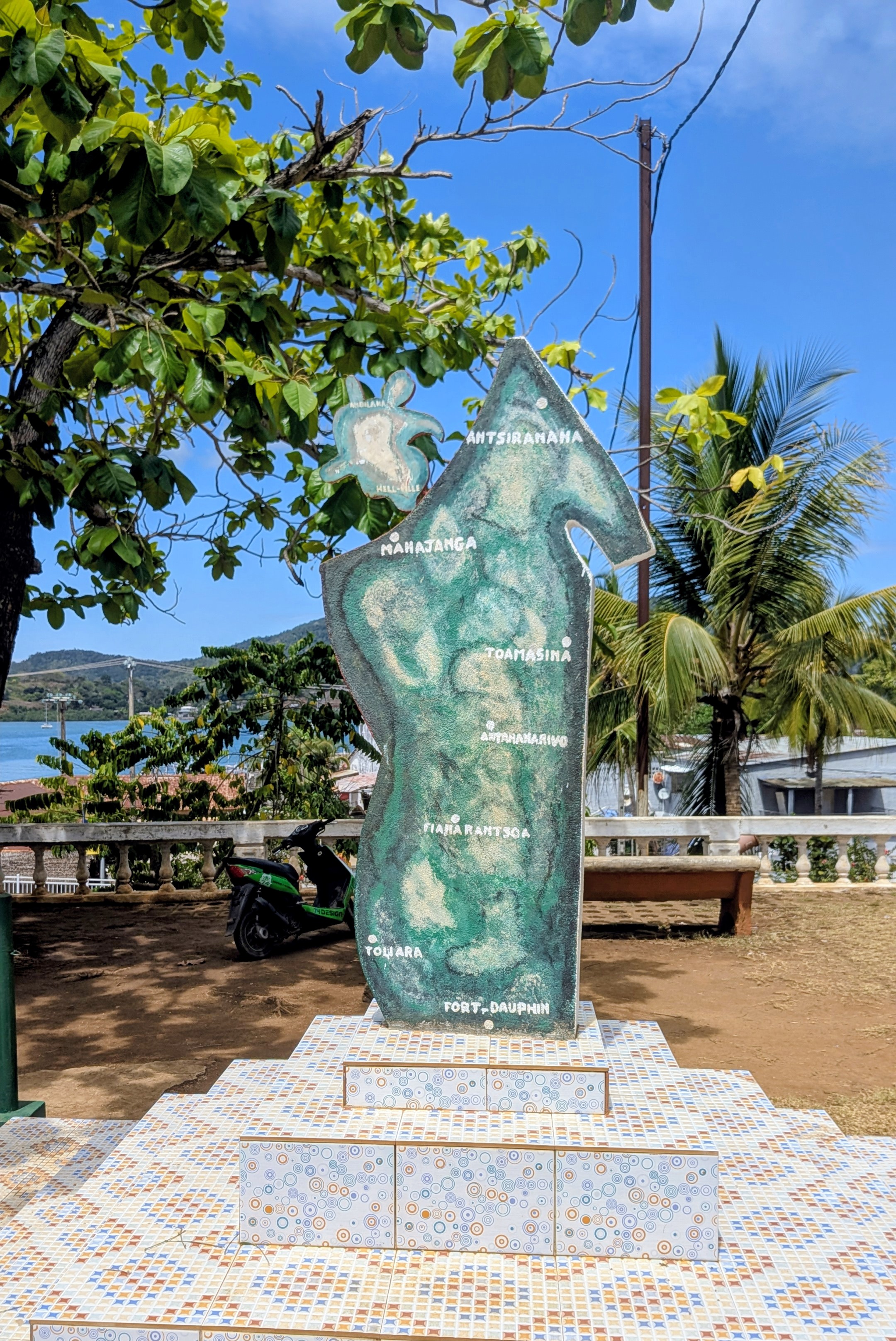
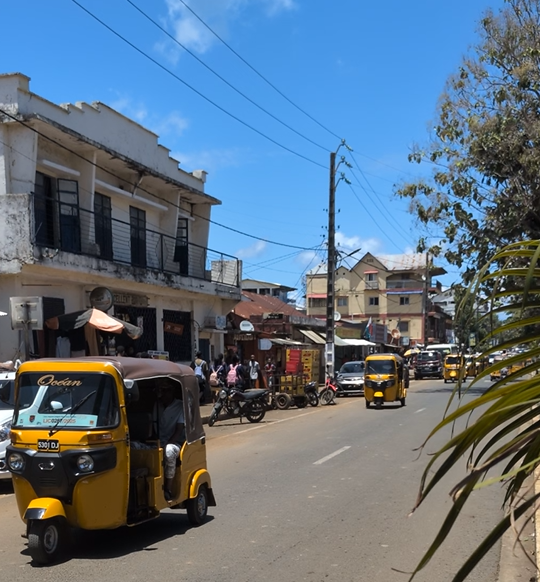
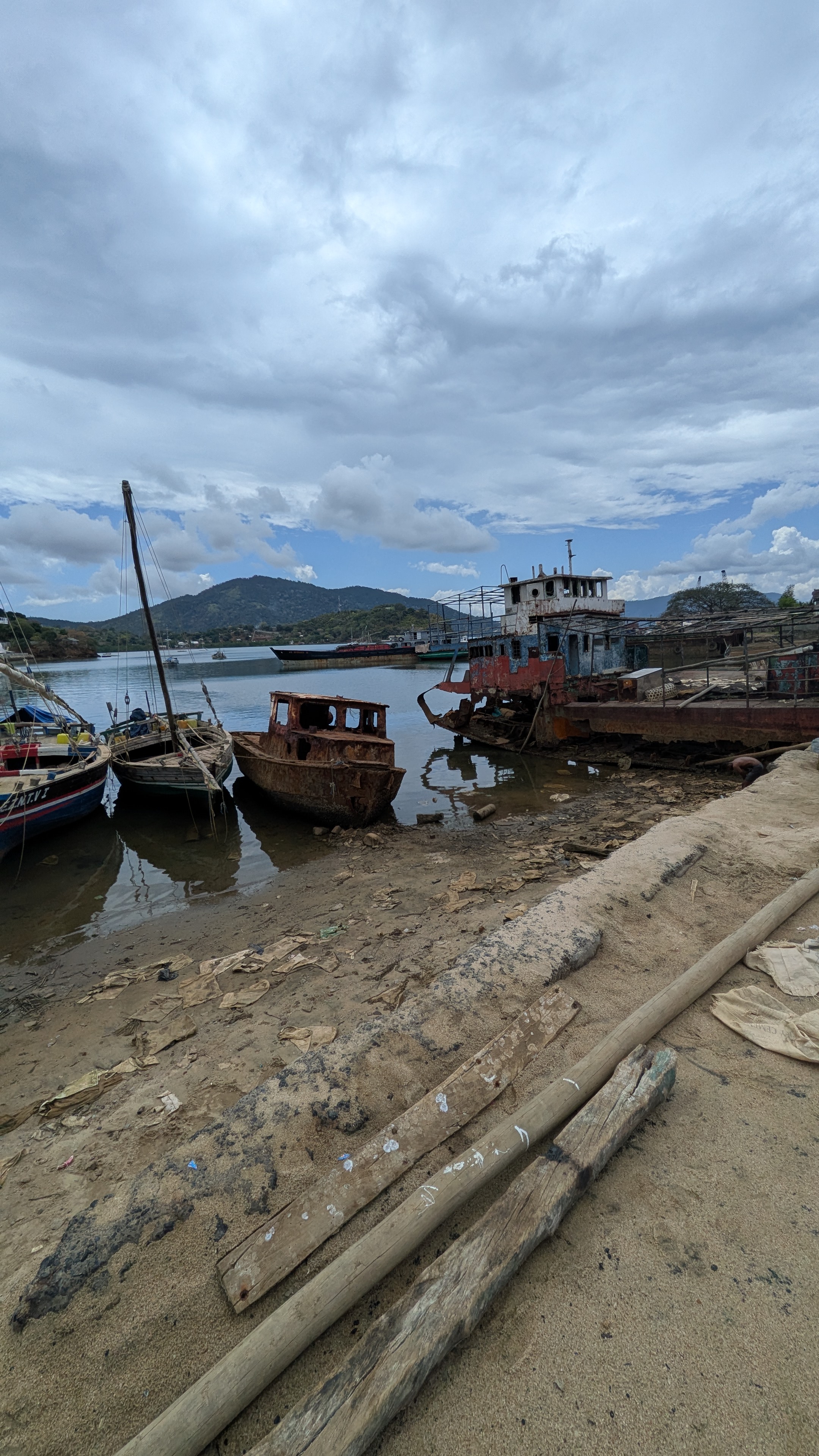
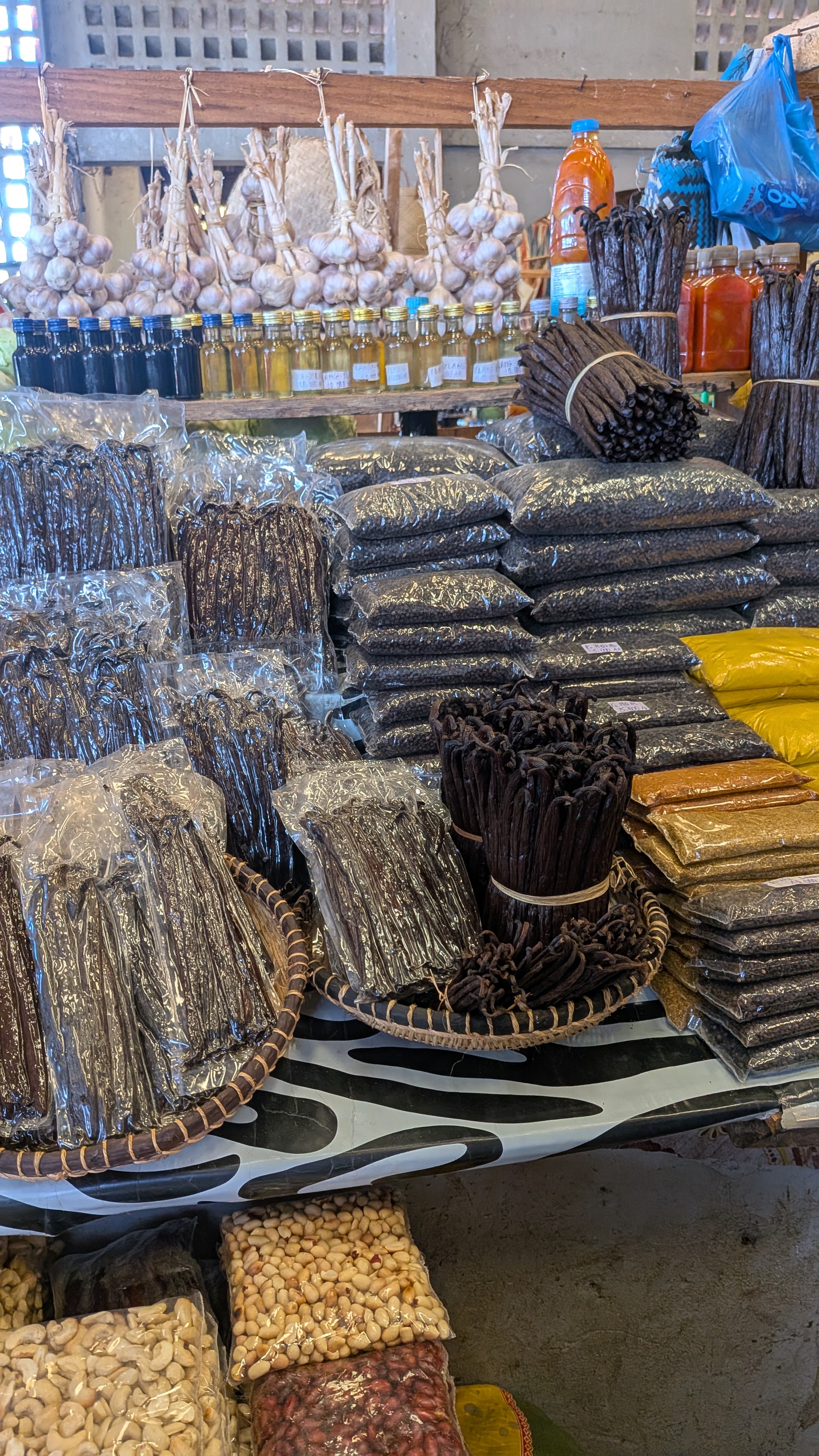
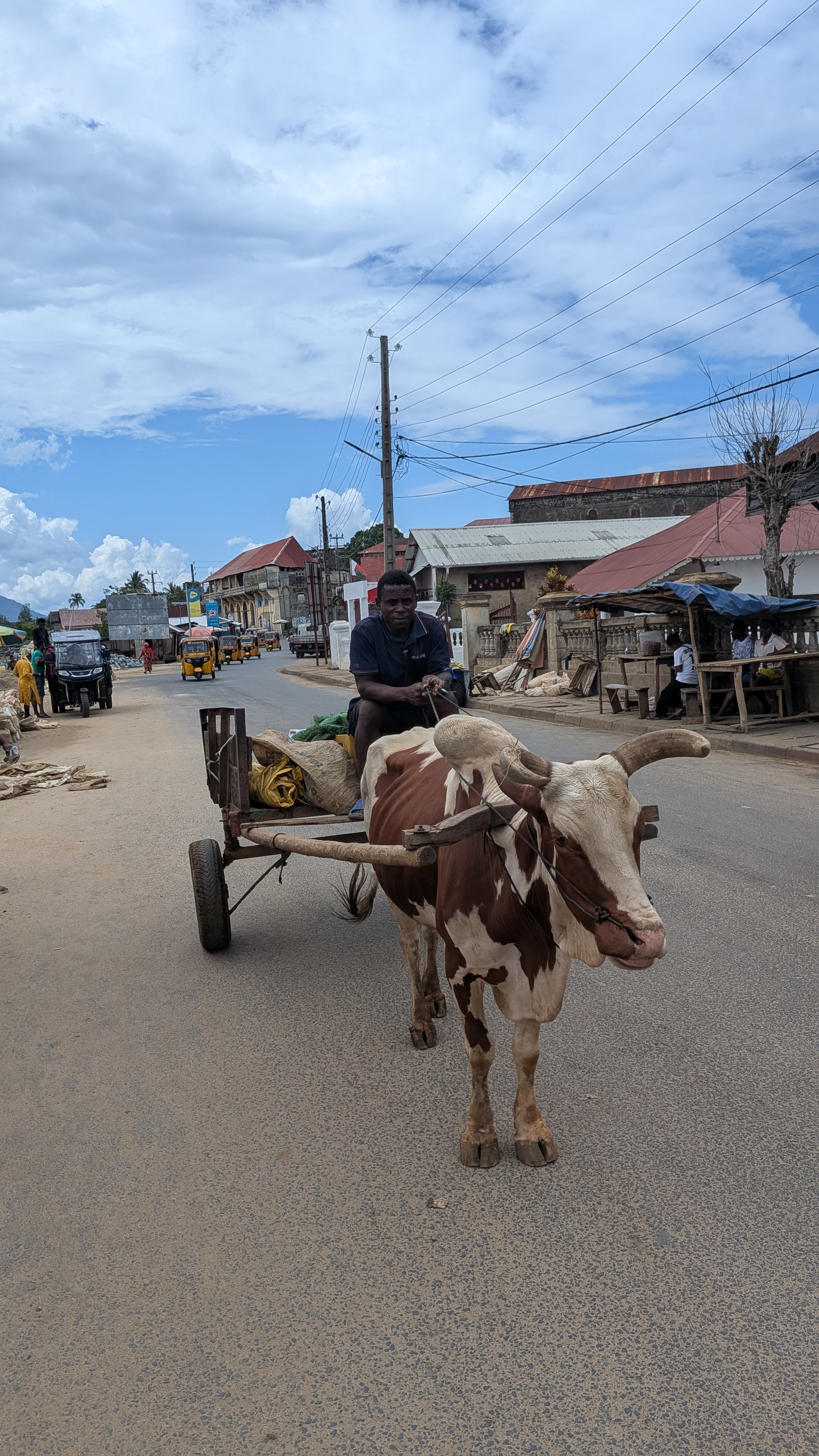
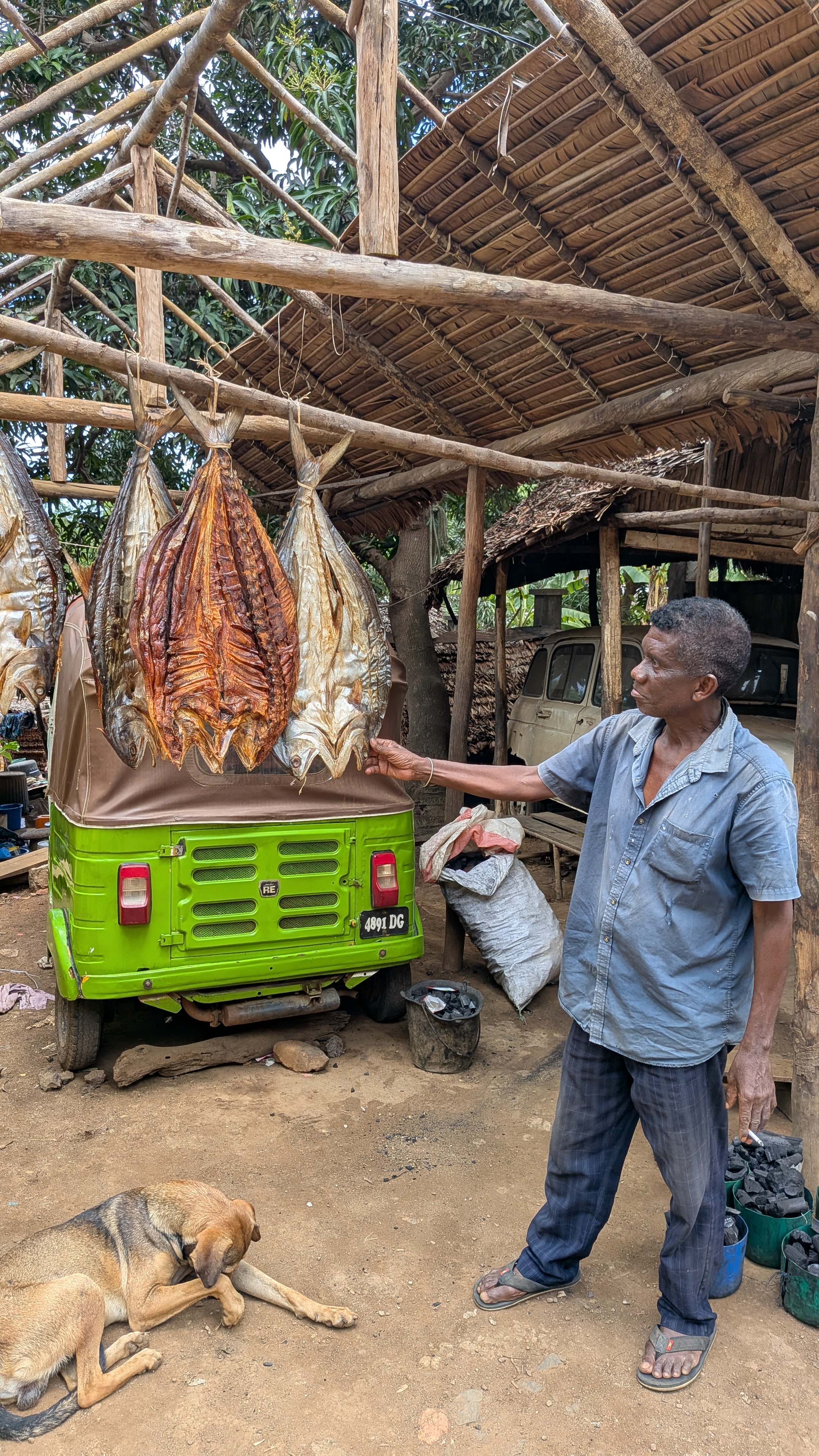
First day: I explore Hell-Ville, Nosy Be’s capital, change money, buy a simcard and walk, walk, walk and take a tuk tuk. Hell-Ville’s post colonial name is Andoany, but most people still call it after the French Admiral Louis de Hell. Hell! it’s not a nickname for a hot and trafficky town as I thought in the beginning. Pic 1 below. “Where the pepper grows” in German means: a very remote place. In Nosy Be you find all kinds of spices, the most famous one: Bourbon vanilla; the orchids are hand-pollinated during their single-day bloom, like almost everywhere. I took pictures of the flower when I travelled over Polynesia in ’23. The specialised insect for vanilla orchid pollination survives and thrives only in Central America. Bourbon vanilla pods for friends and family are a real gift. Pic 3 below
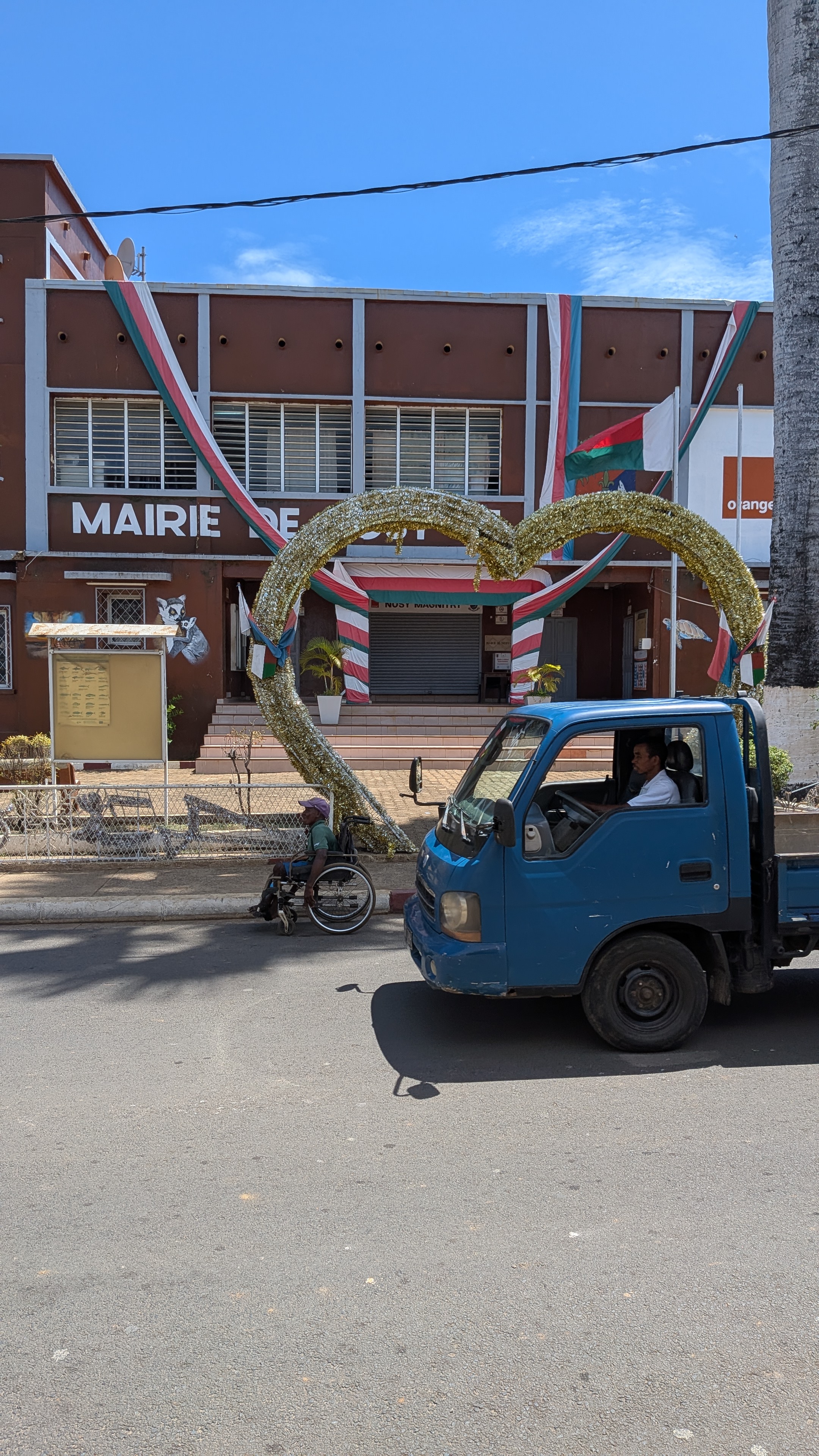
the municipality
My immediate programm: Go and meet the long-tailed, wide-eyed little forest ghosts and fall in love with them. Walking to Lemuria Land (a park 4 km from the centre of Andoany and nobody goes there on foot) I get into the feel of being in tropical Madagascar. At the entrance of the Nature Park I hire an English speaking guide for an hour and then roam about on my own. The park is beautiful and the animals are well cared for and kept in a near-natural environment.
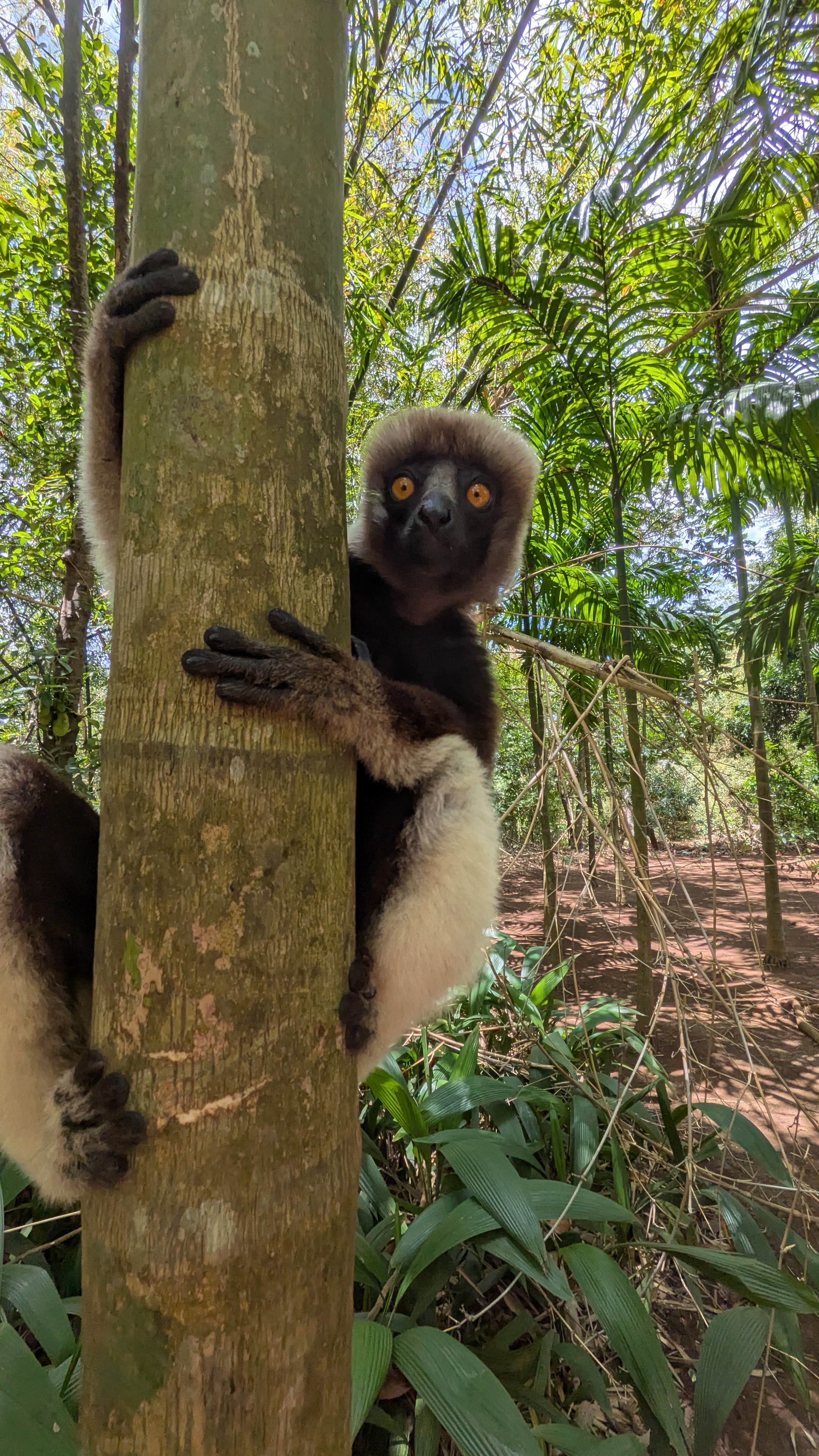
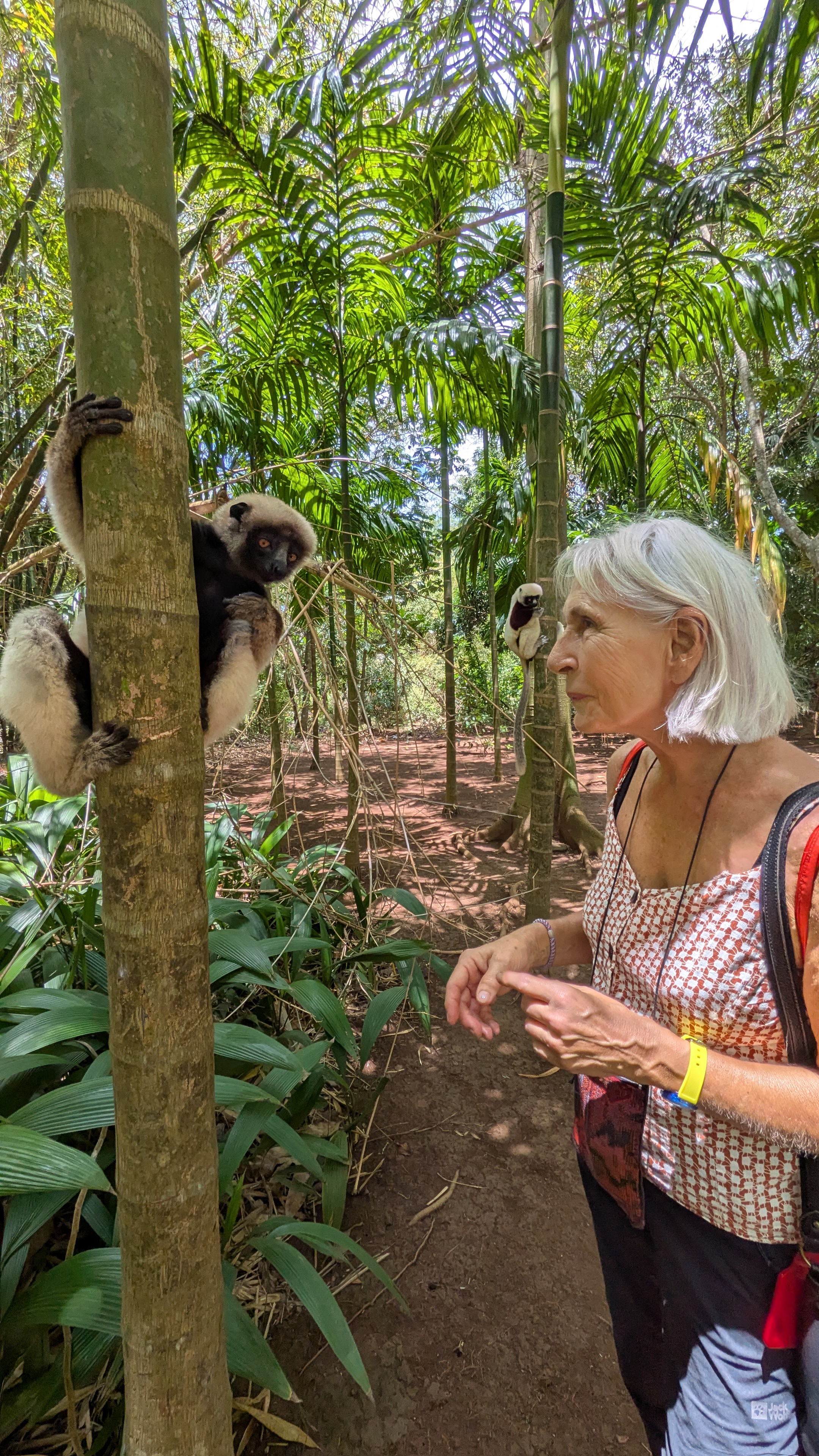
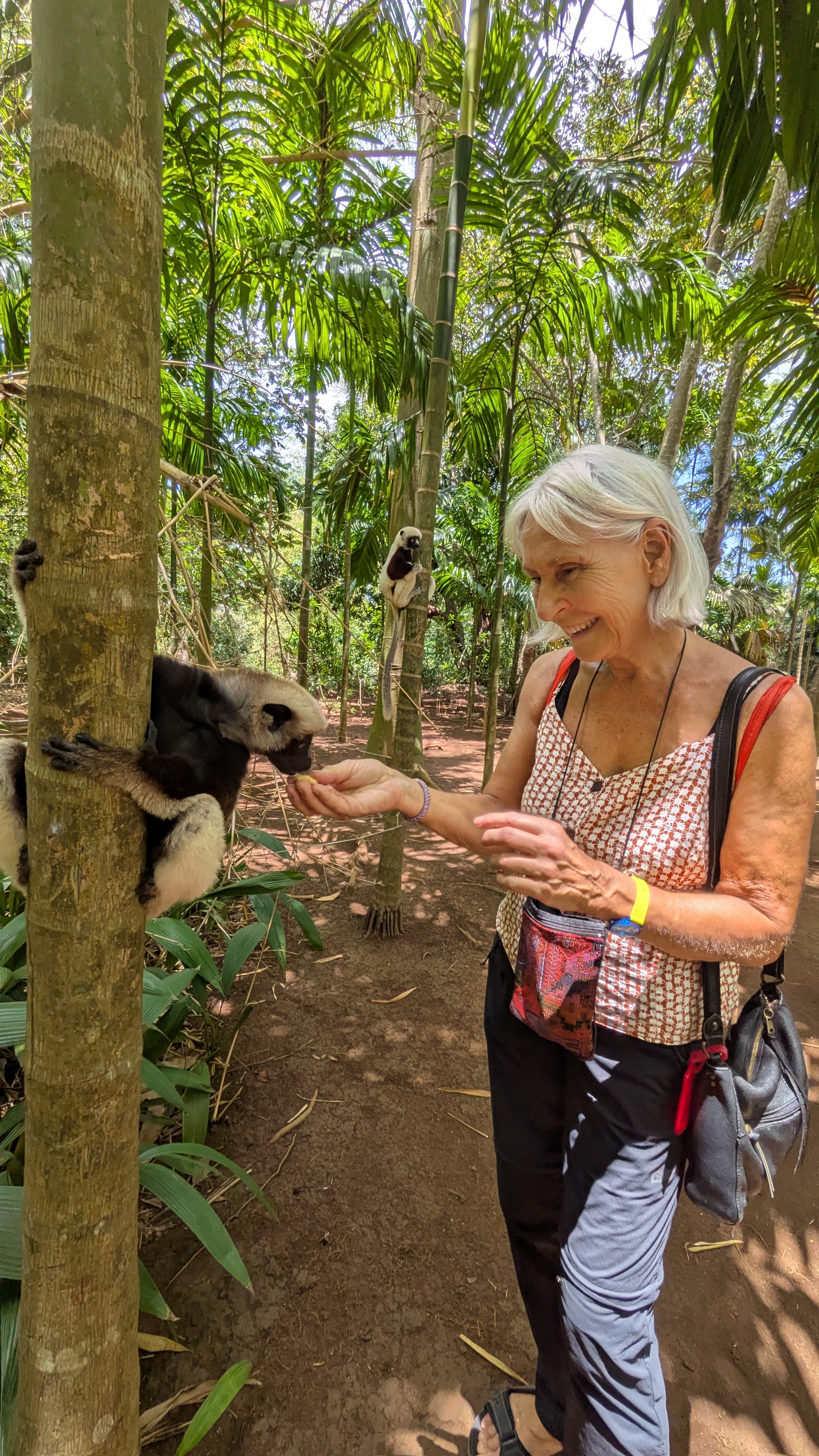
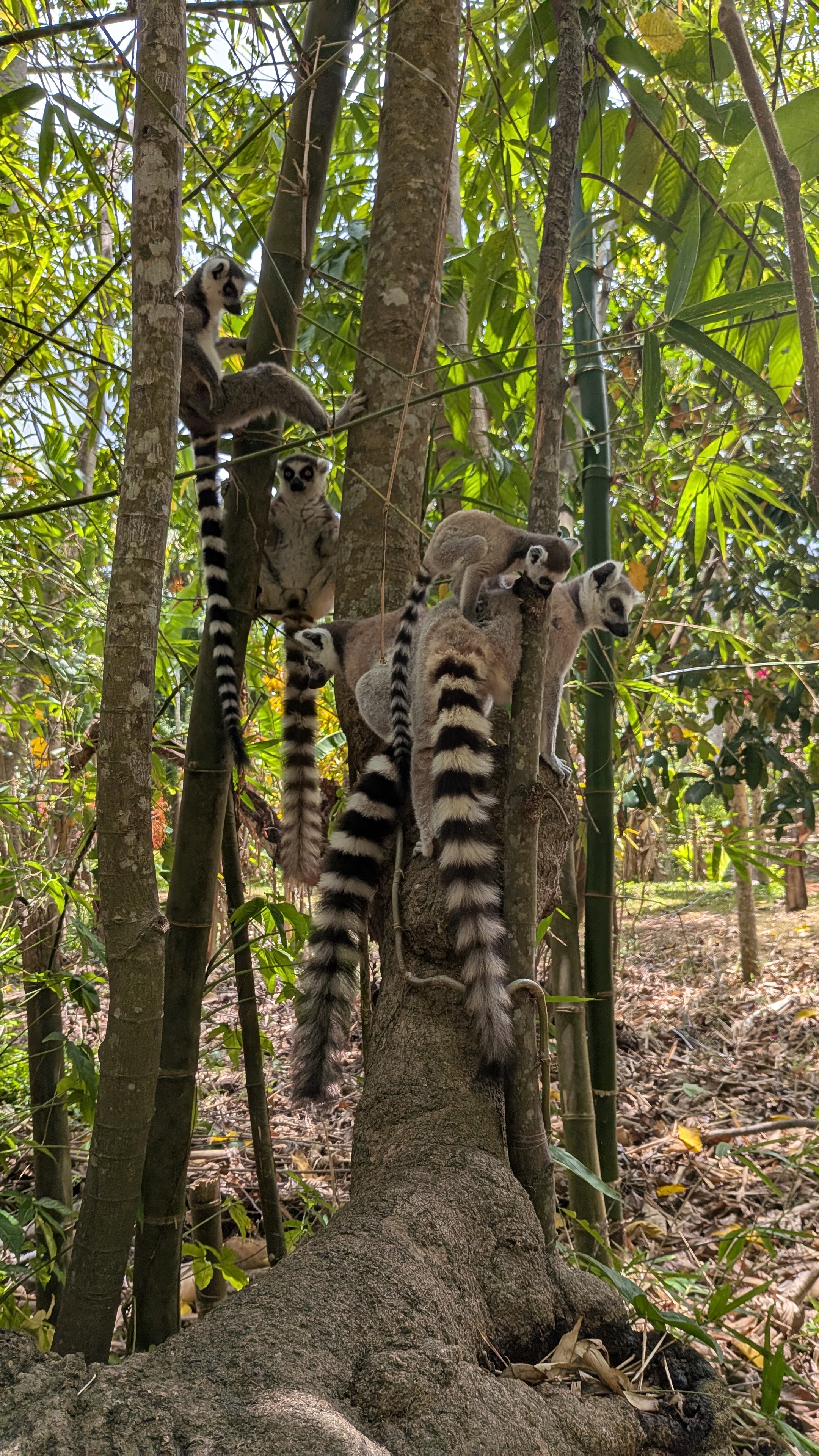
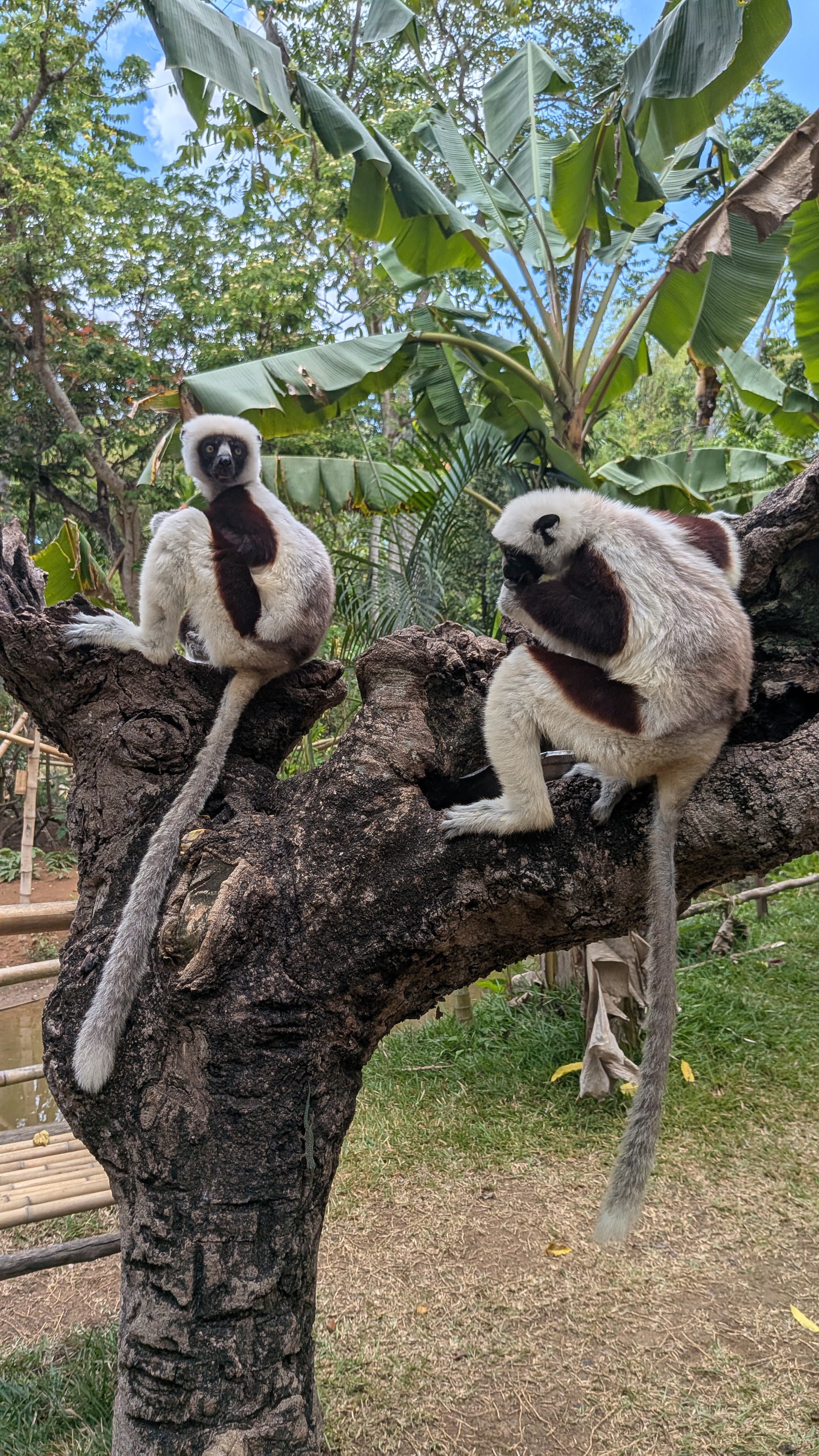
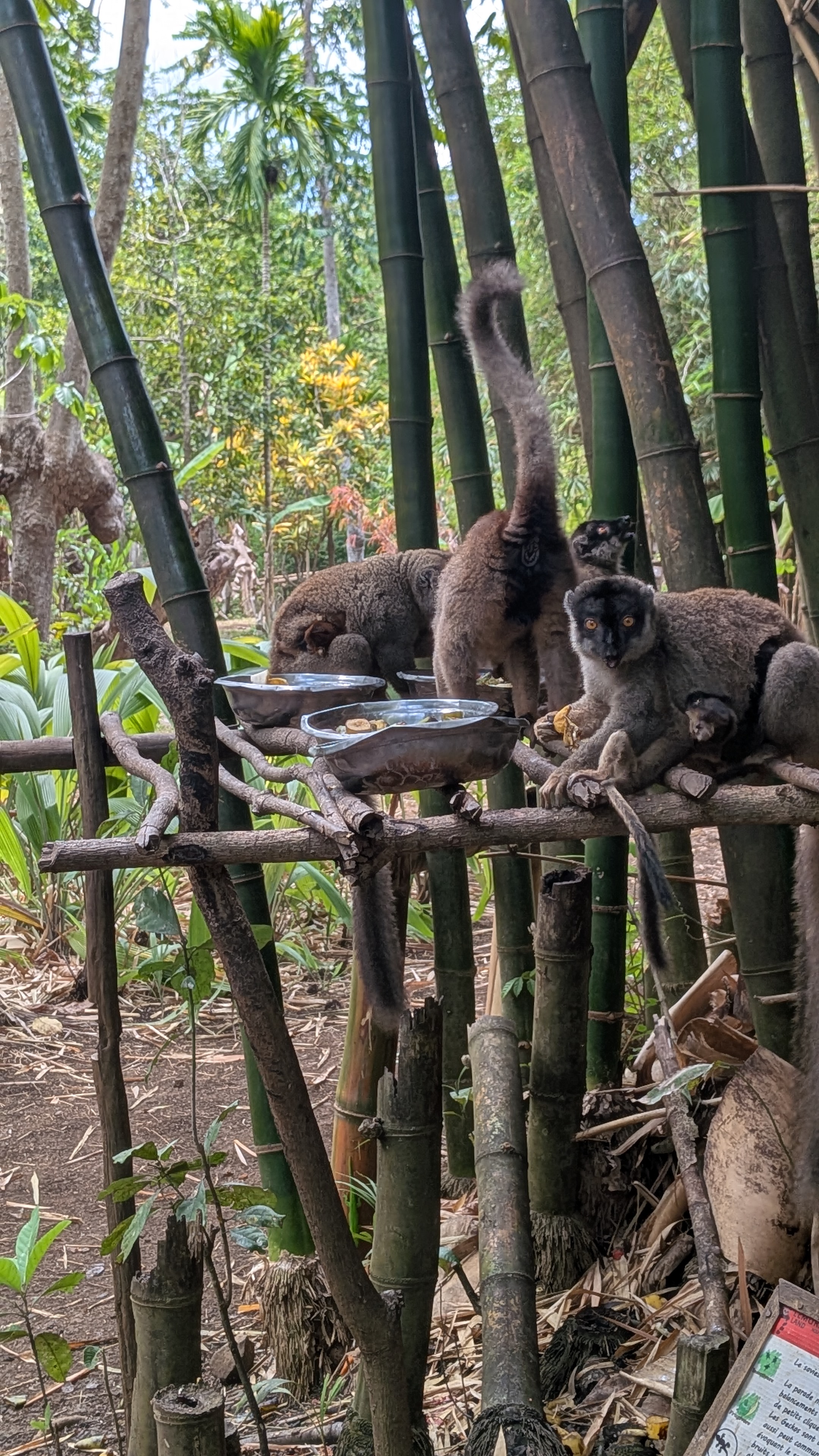
A common true or false quiz question: There are more than a hundred species of lemurs (from the tiny mouse lemur to the big 3 feet tall indri). Answer: True! 108 species … all over of Madagascar. Lemurs can be lively, one moment you see them, the next moment they are gone. They are primates, mostly live in matriarchal groups and are endemic to Madagscar.
Reptiles
They may be difficult to detect but when spotted they stay and give you time to take a picture.The Malagasy are incredibly proud of their reptiles, the most iconic being the chameleon. People here have an eye for it and spot its hump easily in day- and nighttime. Apropos of eyes: here Chameleons symbolize forsight: “one eye on the future, one eye on the past.” And … no, they don’t change colour with their surroundings, rather with their mood or sometimes with the temperature, like we do ;-). Their tails are curled when they are relaxed and sleep (nighttime pictures later) and straight when alert. With their fascinating perfect hands and feet (3+2 fused toes and 2+3 fused fingers) they hold onto the tiniest twiggs. The Nile crocodile is not endemic but has adapted well to the environment and is said to keep the eco-system healthy, simply by feeding on other animals. Watch out when swimming in caves, they like people, too.
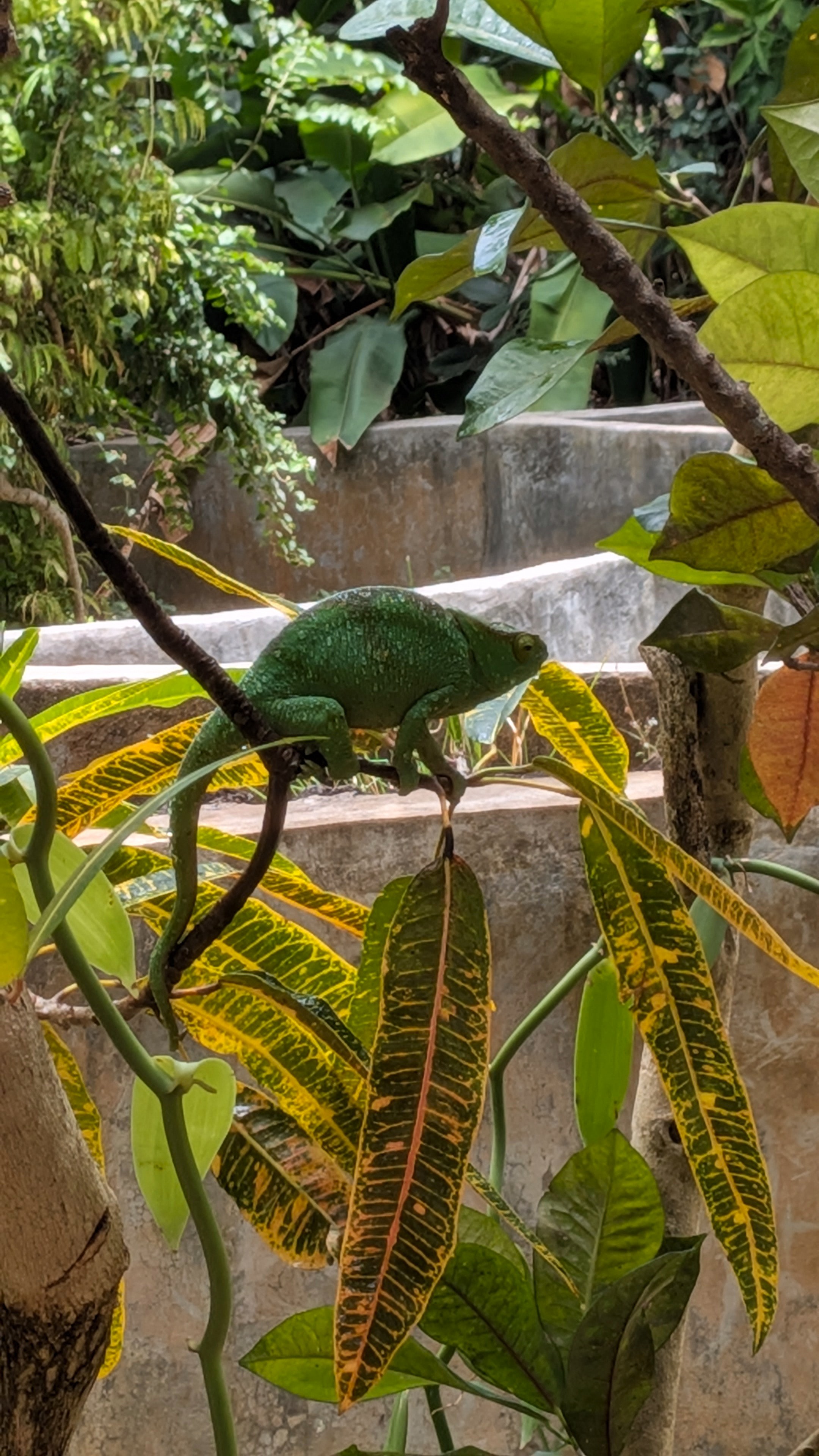
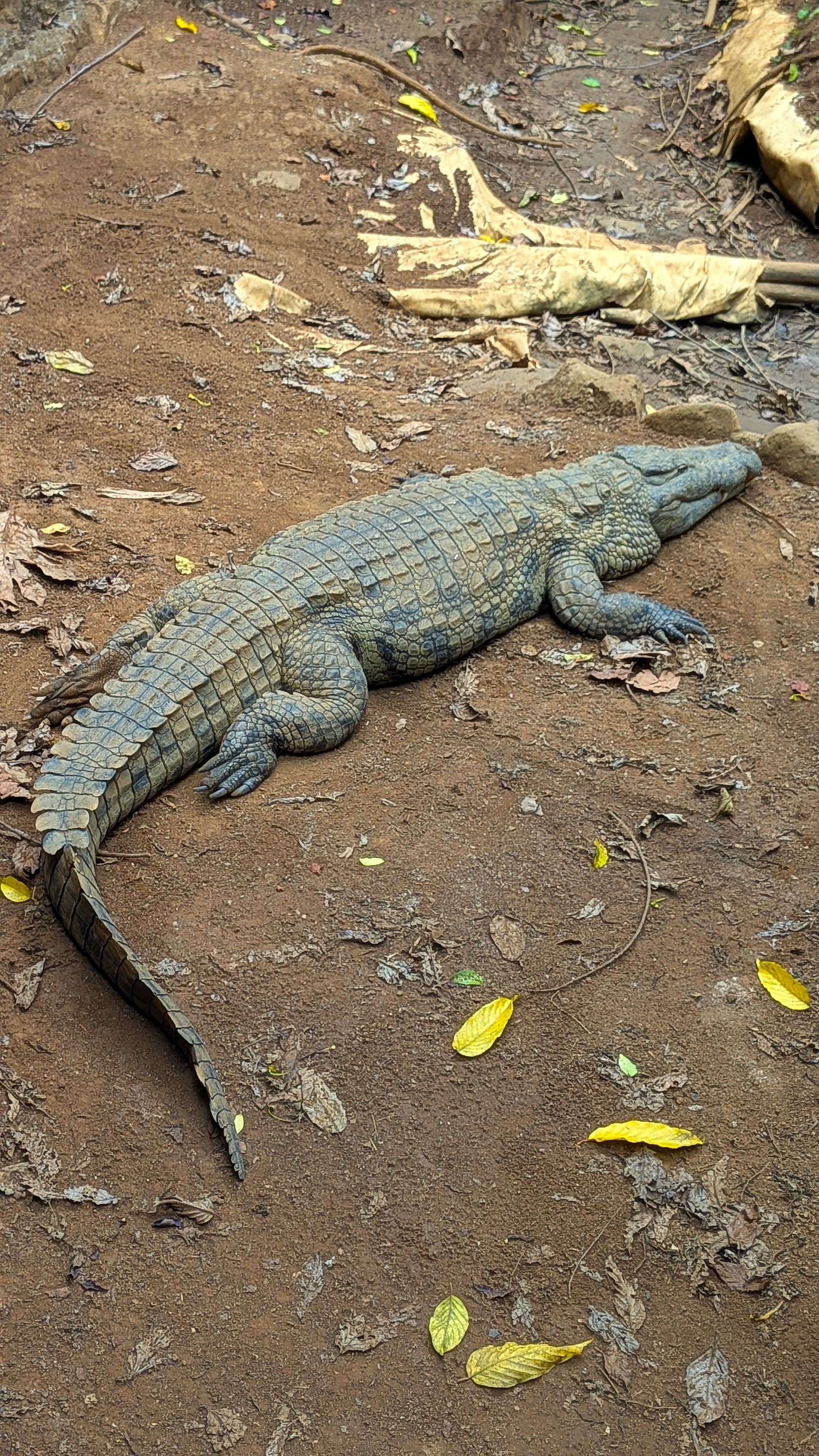
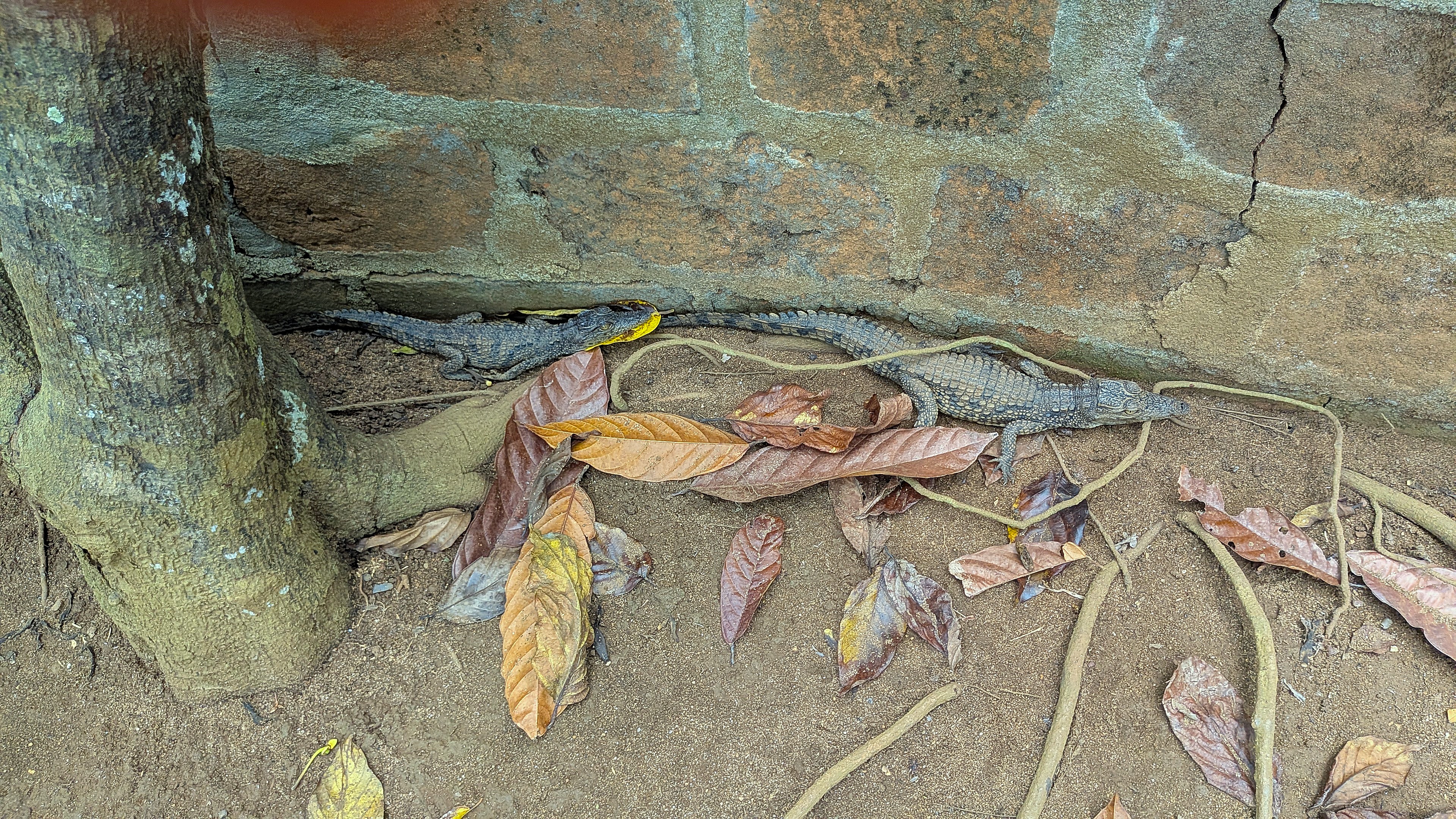
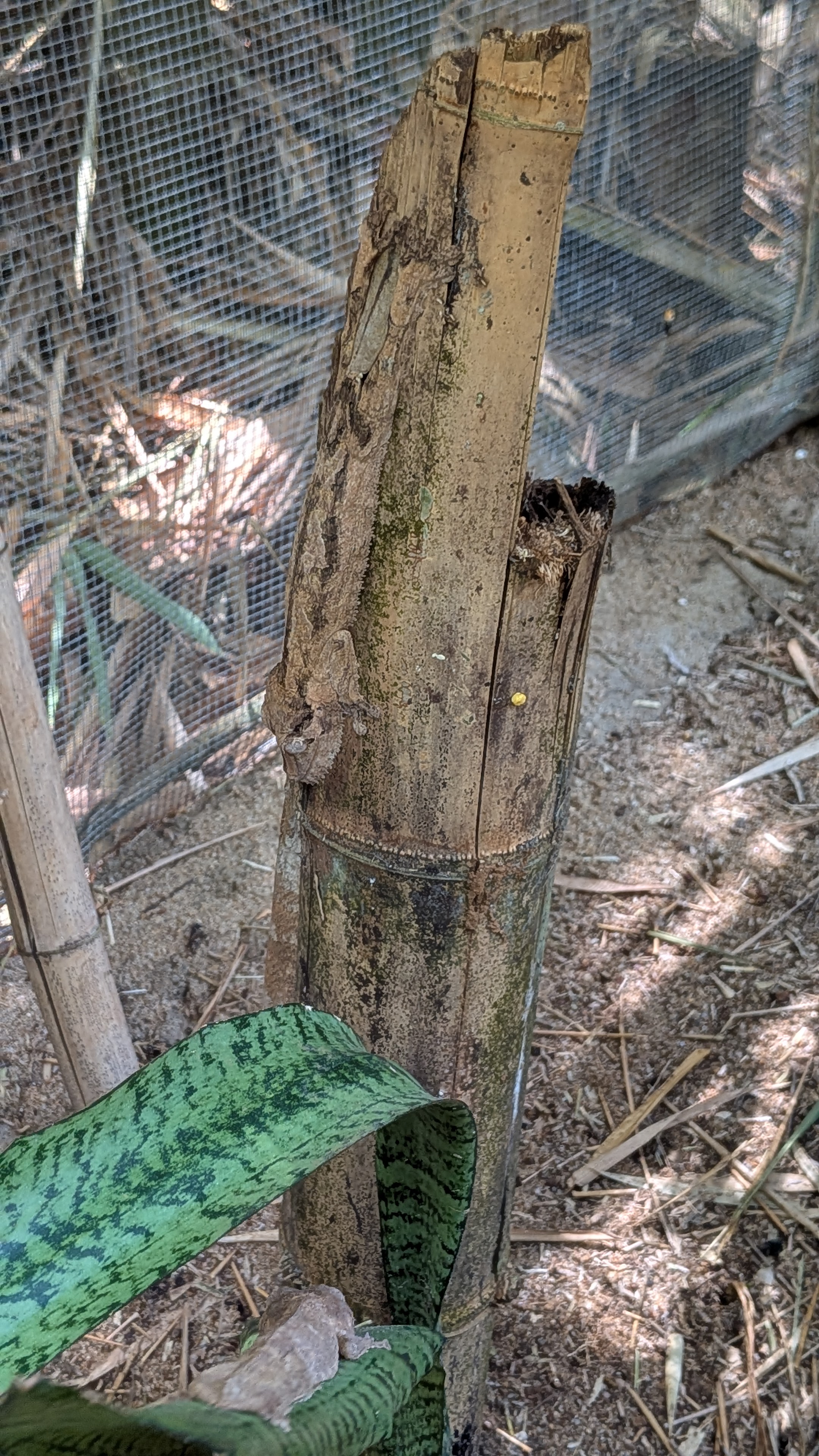
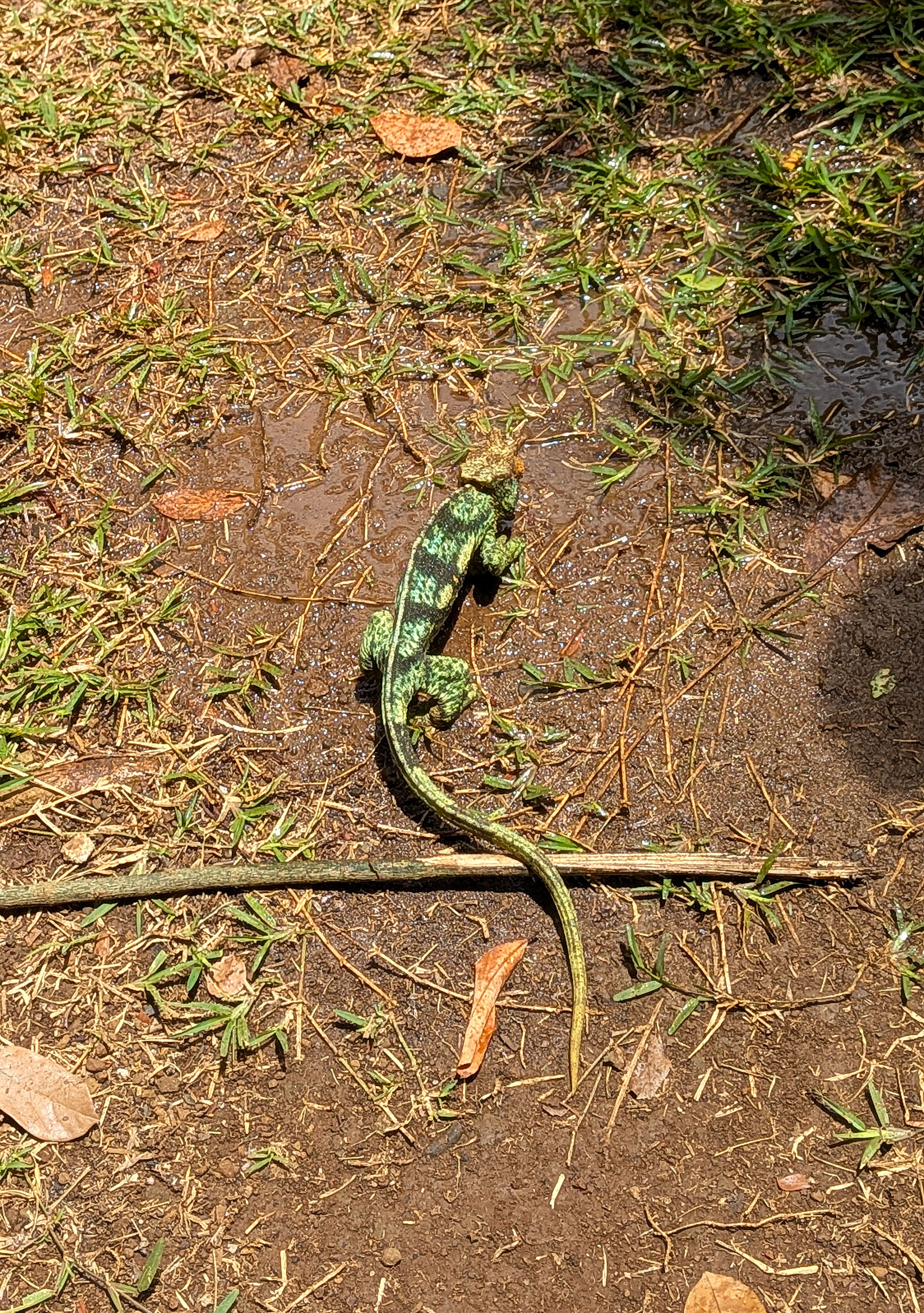
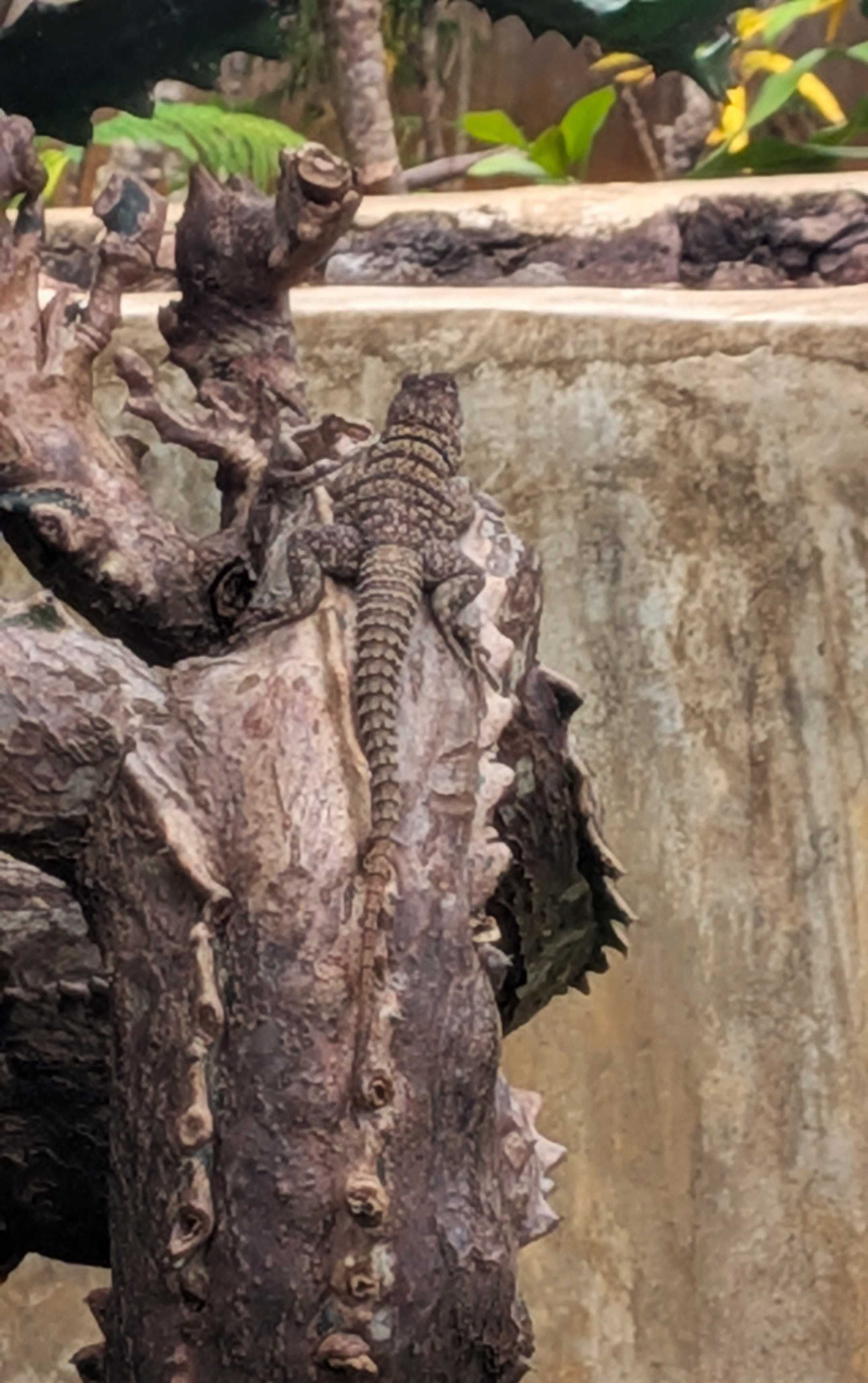
Lizards come in many shapes and colours and sometimes you take a picture before you even SEE them.
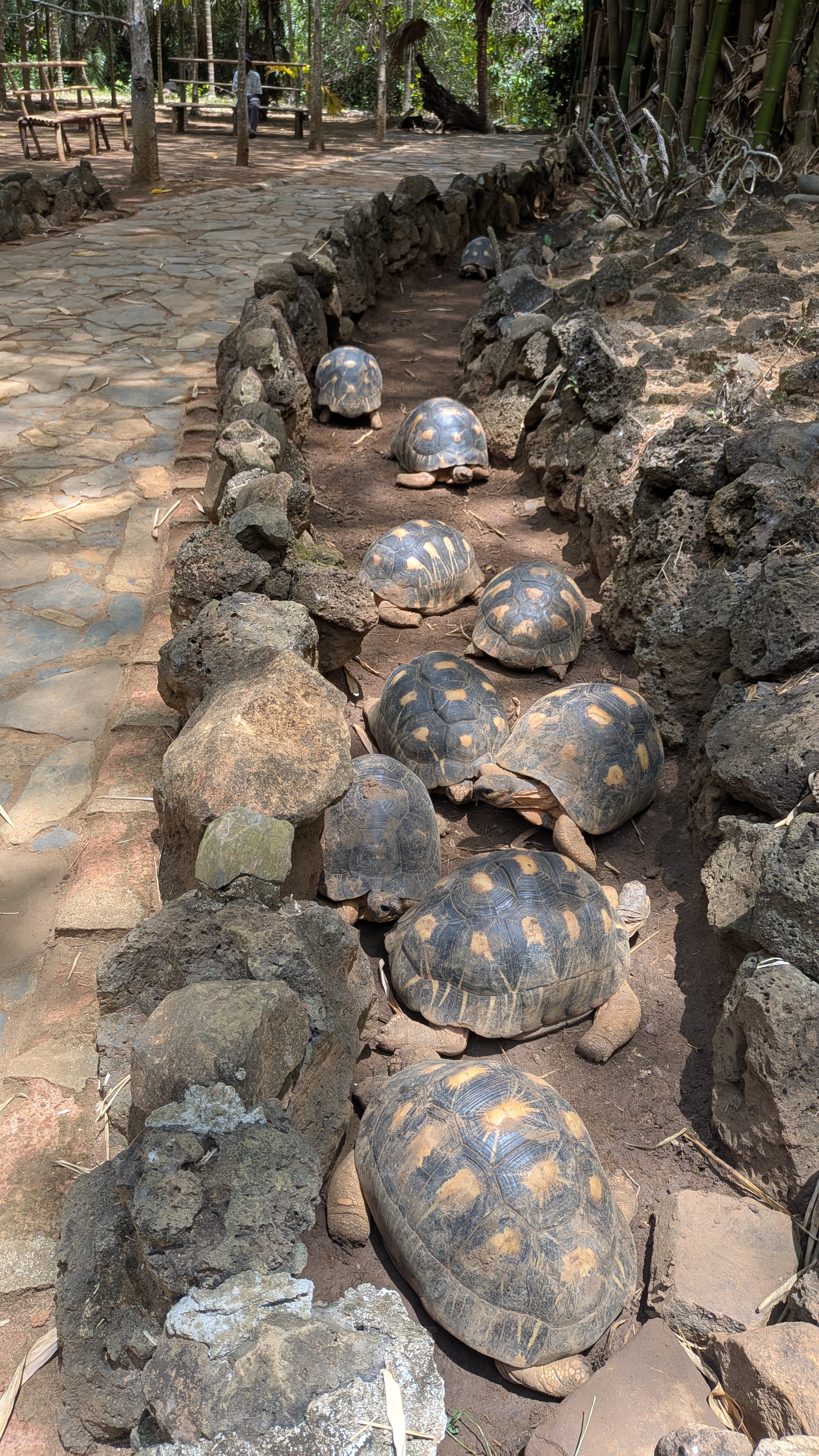
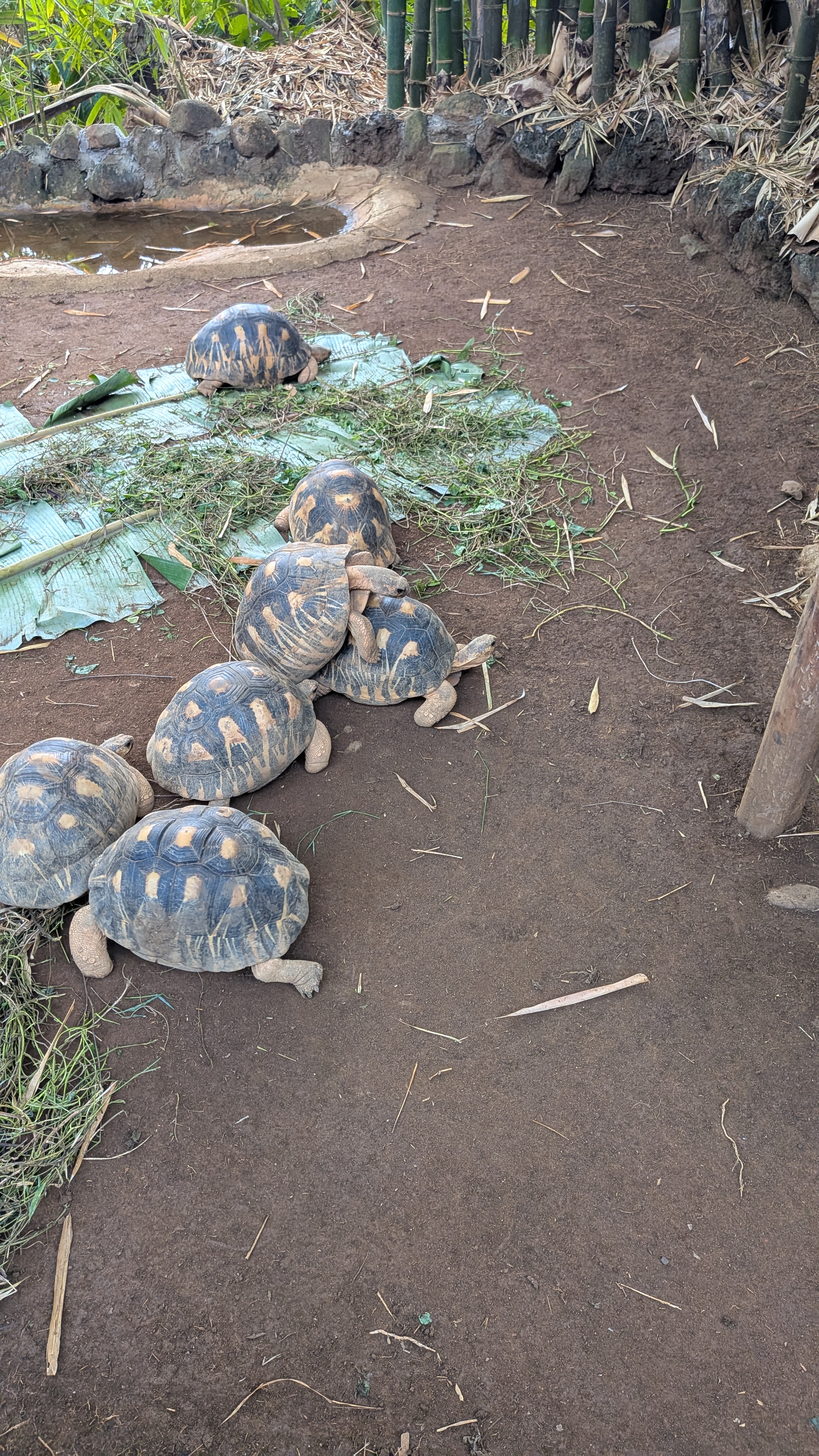
Turtles and Tortoises are part of the conservation projects of the volunteer camp on Nosy Komba where I was to spend the following three weeks. They are beautiful, sadly never fast enough to escape their ruthless, greedy poachers who kill them for their meat and their pretty shells. Testudines come in all sizes, and designs, they live in water and on land. One fresh-water species behaves like piranhas (I just took a picture of the pond). Turtoises can be observed in company or on their own. The famous couple her are Napoleon and Josephine. Pic 3 below. Yes, they are a couple but he is 150 years old and ways 250 kg, she only 58 kg. So … I guess …

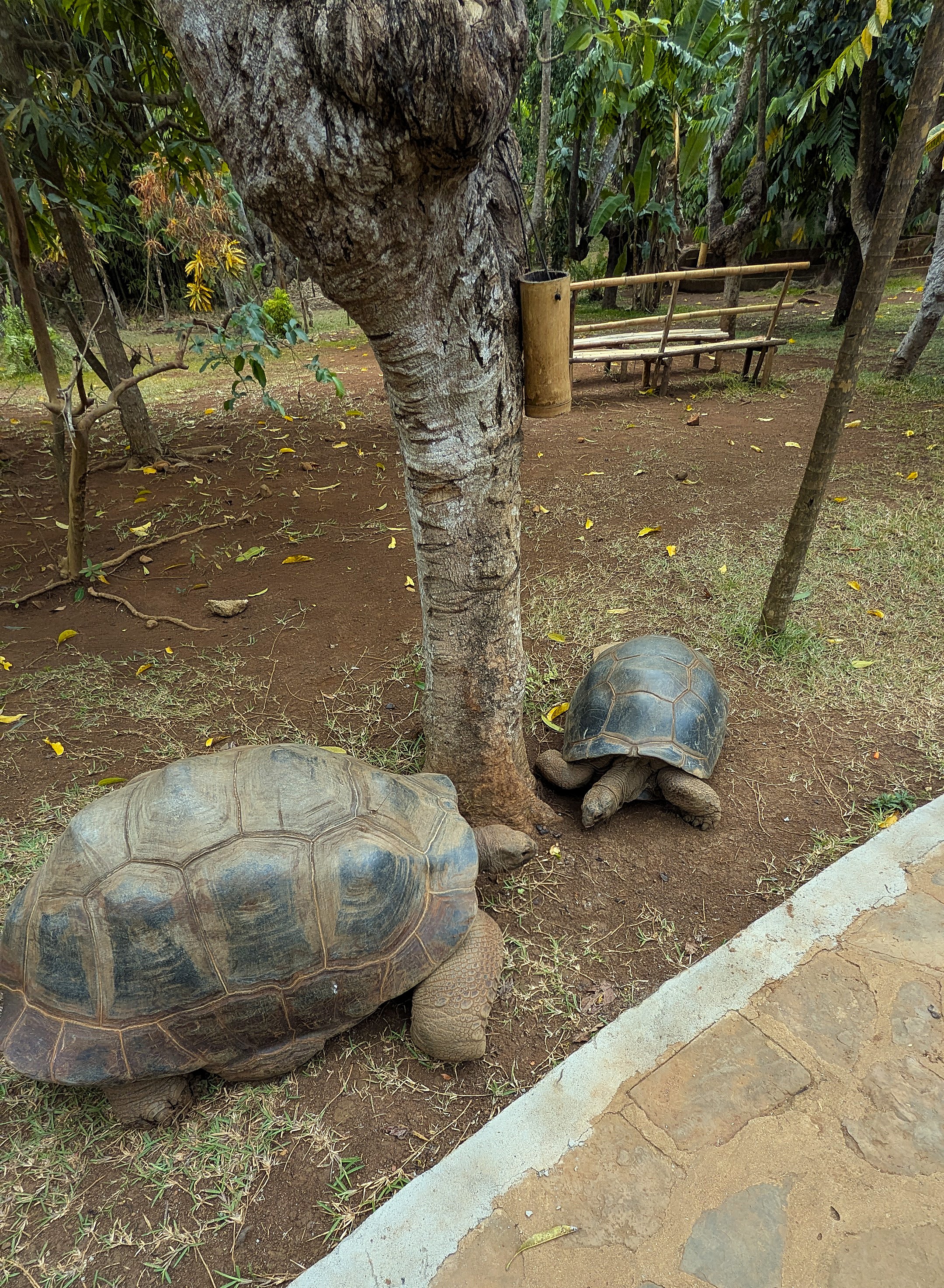
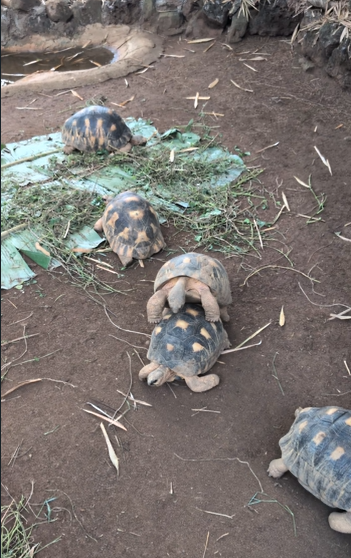
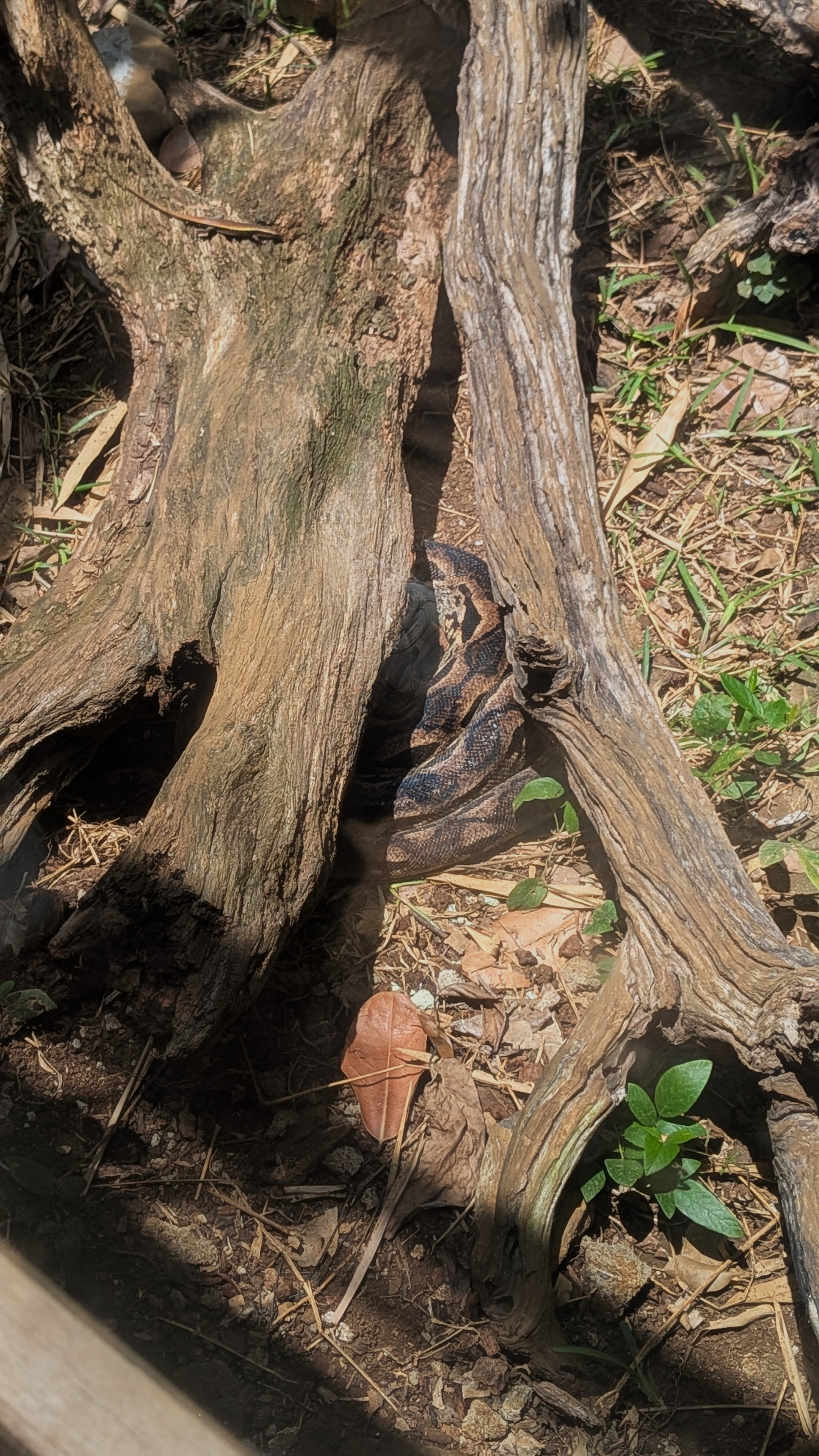
… they leave the lovemaking to others. Picture 2 below was actually a sound video clip 😉 that exhilerated my followers on FB and WhatsApp. You don’t have much to fear from snakes in Madagascar. They are mildly venomous, just enough to kill what they can swallow, or they are constrictors, like boas that may even be welcome in the household because they feed on rats and mice. On top of the trunk (pic 3 below) under which the snake is curled up you see the tiniest skink (a smooth lizard).
The Queen of Perfumes Ylang – Ylang
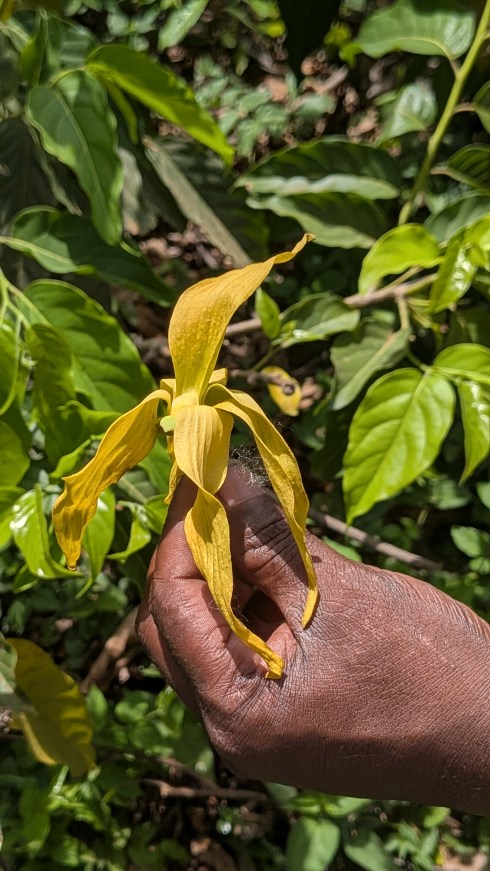
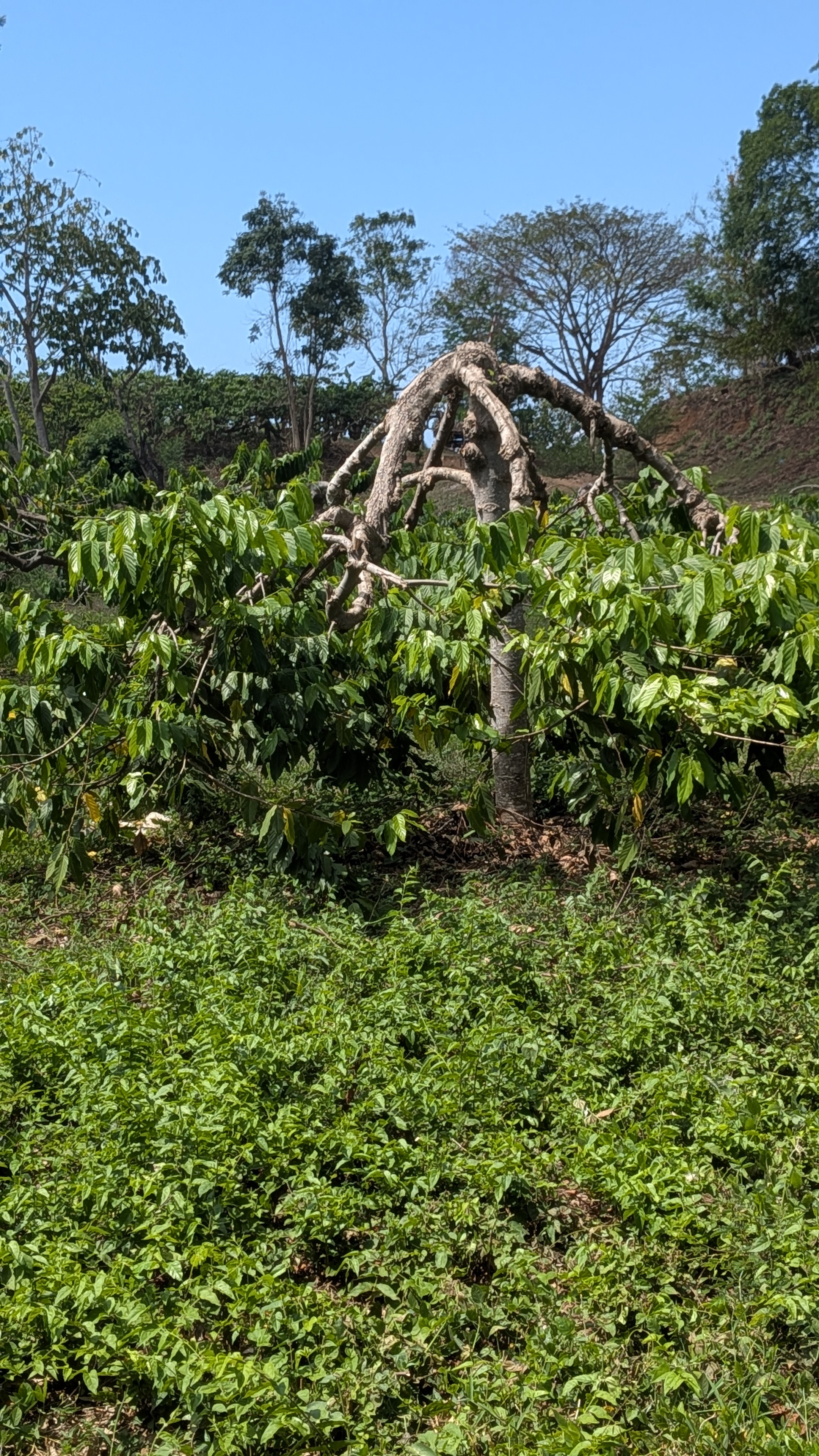
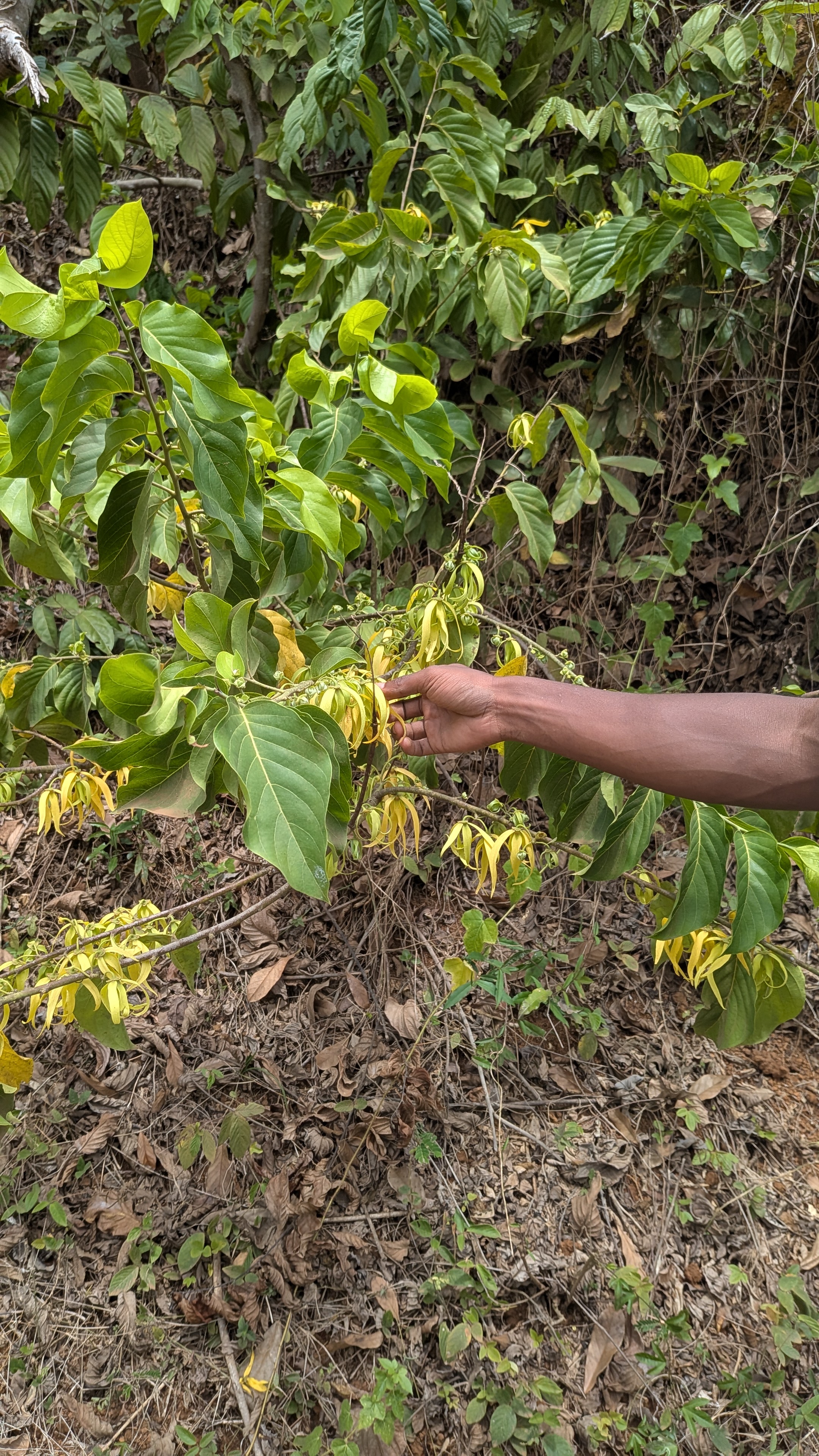
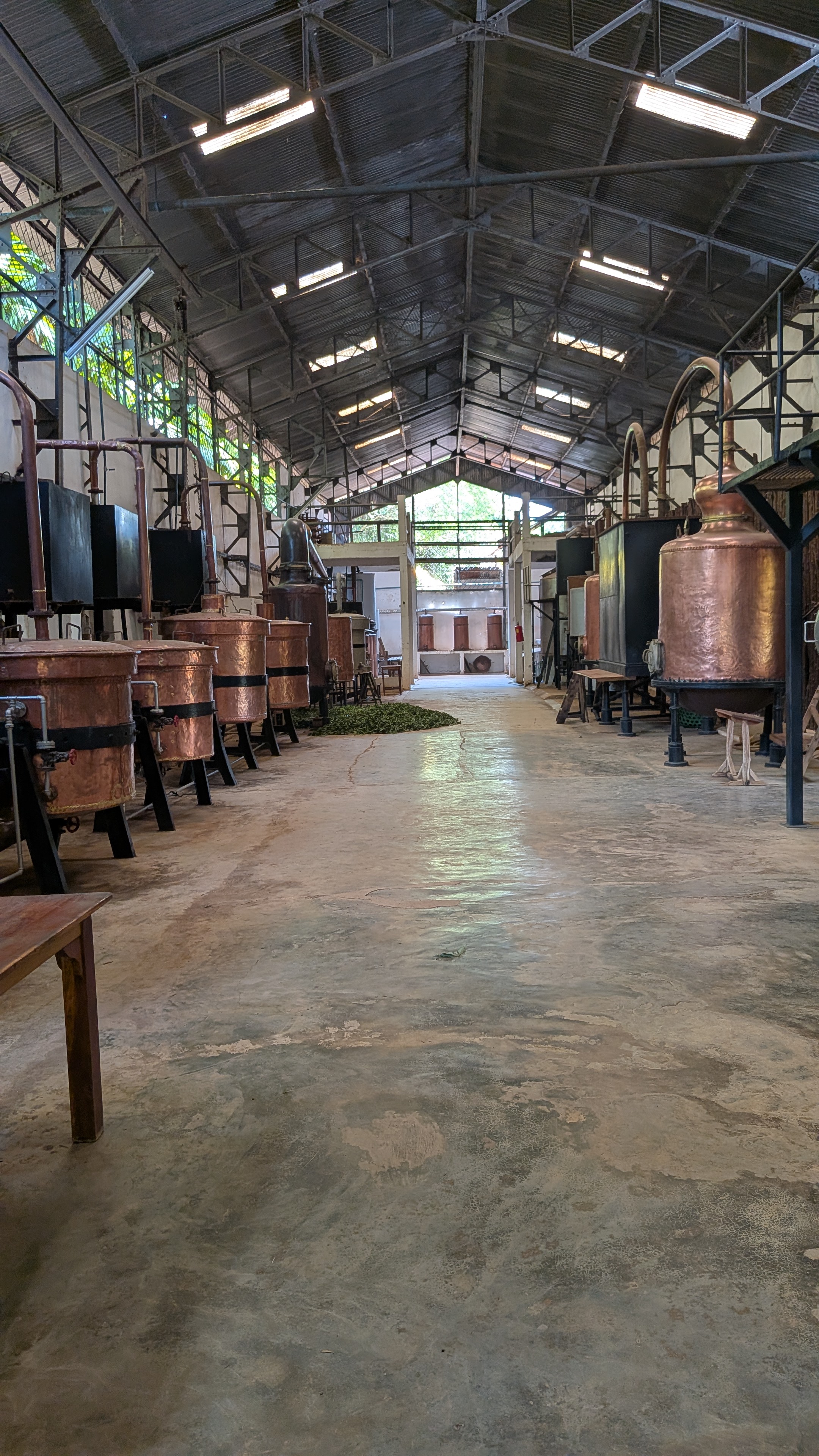
The Malagasy pronounce it in such a way that I hear almost only Lang Lang and keep wondering that music and fragrance may have something in common. The cananga tree is really very high but usually pruned to remain short to facilitate the harvest of its unique star-shaped, fragant flowers. My guide explains the complex process of harvest and distillation to me.To gain 12 l of essential oil you need 500 kg of the beautiful yellow flowers picked in the early morning hours when the scent is strongest and 300 l of water for distillation. The distillery in Nosy Be has to sell all its essential oil to France, she says. But I doubt that this is still the case.
The sacred tree
I hail a tuk tuk and tell the driver I want to go and see the sacred tree (l’arbre sacré, l’ar-bre saaa-cré!!!). The driver stops another driver and another one until I have about 5 tuk tuks and their drivers and a few passers-by around me. They are passing my phone with GPS map open from hand to hand, discuss in French and Malagasy and shake their heads. I tell them, I’ll walk – being on my last legs already – when a young chap appears: What’s the problem? Get on my tuk tuk, I’ll take you there. It turns out he is from Mahatsinjo Village which is right near the sacred place.
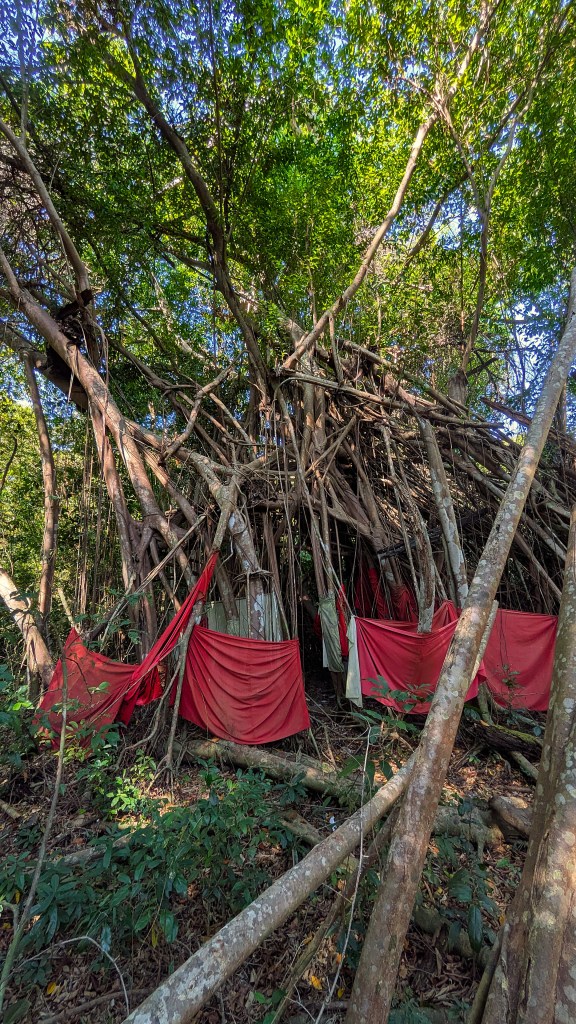
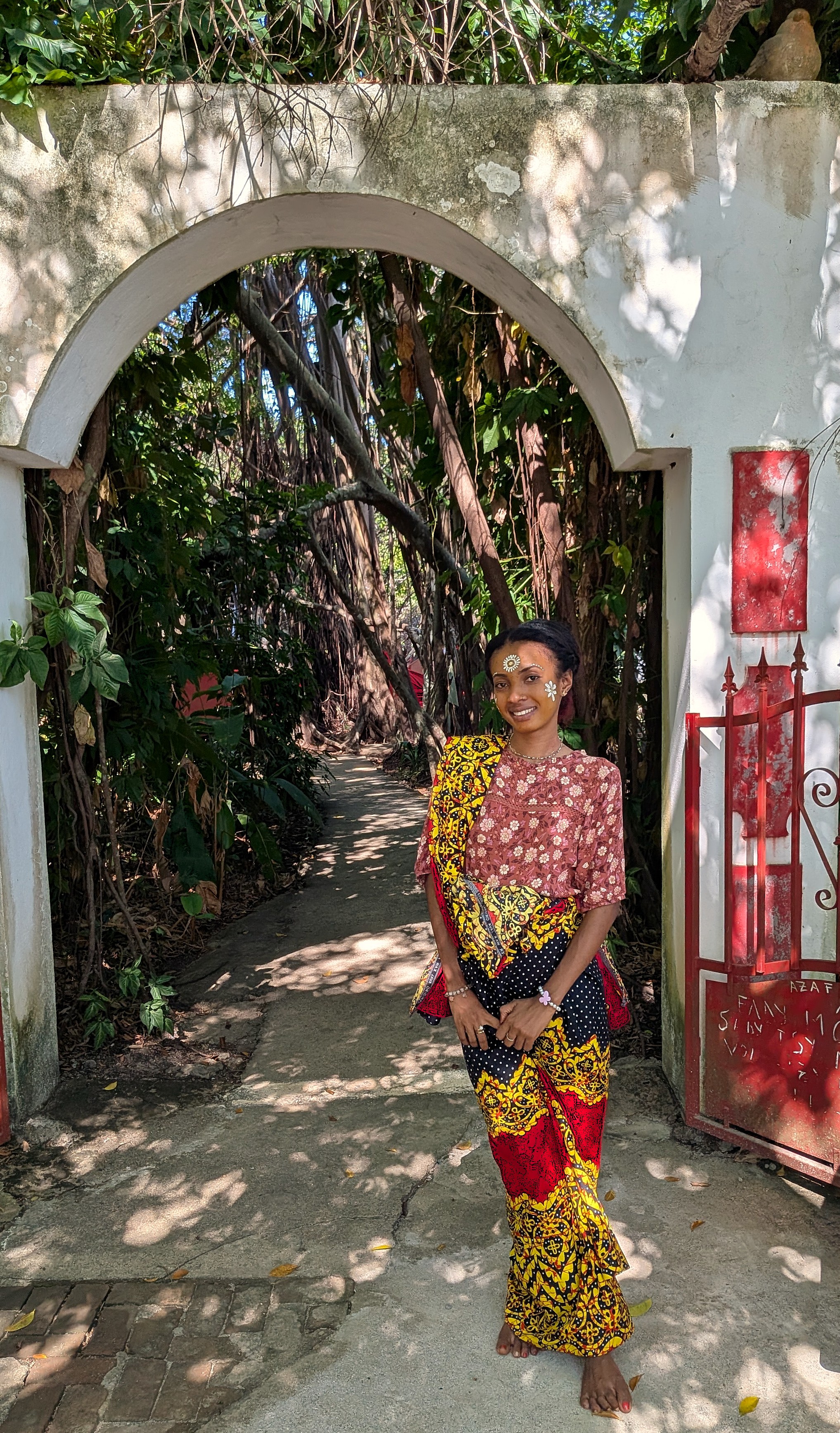
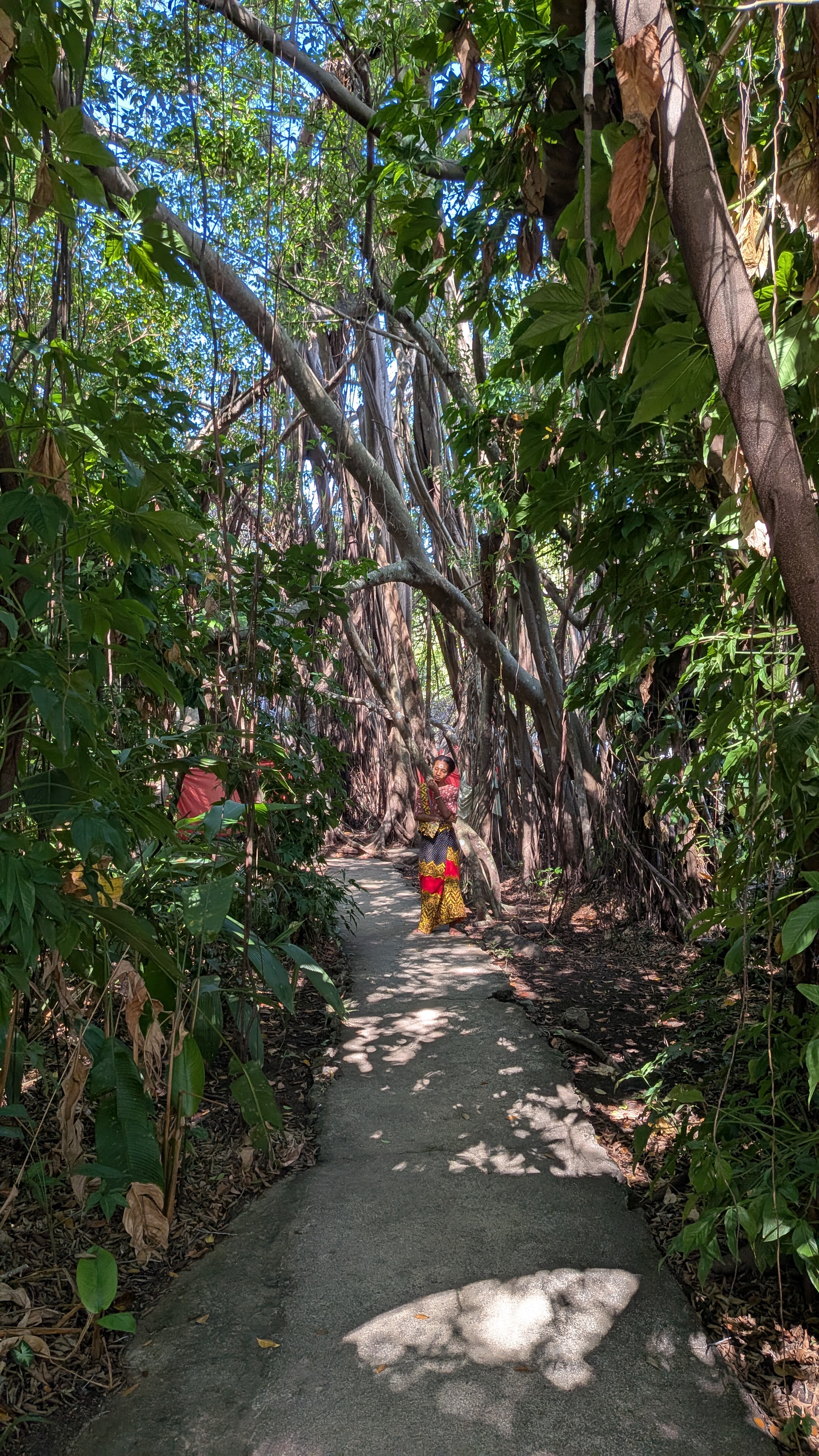
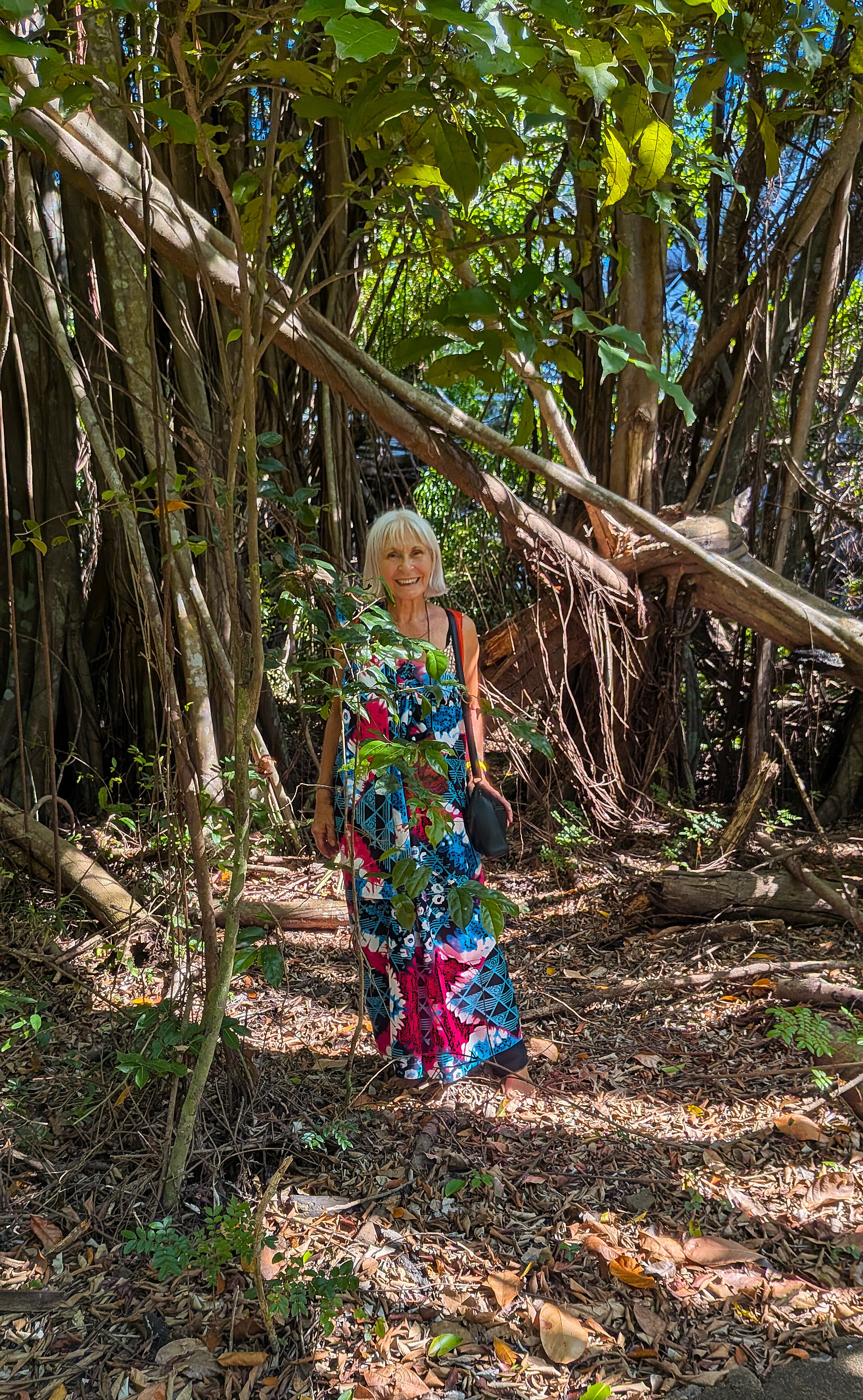
A Banyan tree!?!? One of the trees under which the Buddha meditated? I am surprised but I remember that the connections between Asia and Madagascar are manyfold, even more than between Madagascar and Africa, it seems to me. A seed most likely brought over from India was planted almost 200 years ago at the request of queen Tsiomeko of the Sakalava tribe to create a place of worship for the people. Now hundreds of its aerial roots become trunks make up a little impenetrable forest of more than 5,000 square feet. Sacred places are usually draped with red and white cloths which symbolize gold and silver of the Sakalava royalty. So take off your shoes, put on a Lambahoany (pareo) and enter the site with your right foot first. Walk along the footpath through the mini forest and enjoy the peaceful atmosphere away from the hustle and bustle of the town centre. Don’t be surprised when you step into a soft, warm pile of lemur poo. Your guide will help you wash it off once you’re out.
My first day in Nosy Be.
And while I am immersing myself in warm memories of this tropical island, I am looking at my watch to see if it’s late and cold enough for the heating to be turned on.
see you again in 2026
Gerburg
 gerburgkamm