Darwin: thinking of …

10 Sep

… Charles, what comes to mind? Lessons about Evolution, the Origin of Species, survival of the fittest and most adaptable (and merciless, okay, no, he didn’t say that). So why would a place where the explorer himself never set foot on be called DARWIN? I think, the First Officer and the Captain of the HMS Beagle must have really liked the voyages with this weird guy, keen observer – explorer – theoretician. And after Darwin had got off the ship and started dedicating himself to organizing, editing and publishing the reports on his collections, the officer and the captain of the Beagle got the task of surveying the shores of Australia and they called the nice new port at the Top End Darwin.

Coming from a Roman summer (hot), to a Sydney winter (fine days but cold nights and mornings), where would you want to go to warm up? The tropics sounds great and Darwin is the northernmost city of Australia, a stone’s throw away from Indonesia and the equator, with a temperature between 19 degrees (night) and 36 degrees (daytime). That’s nice and waaaarm! Only 4 hours flight from Sydney, slightly different time zone, just half an hour, but set your watch (!), Australians can be over-punctual.

DSCN0004

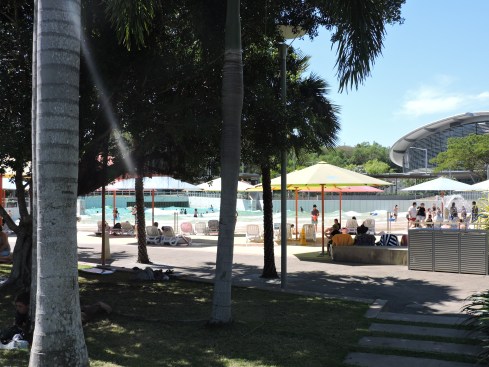
this may look really new and modern …
DSCN0006

… and unexciting to you

Some of what is really interesting here is underground.

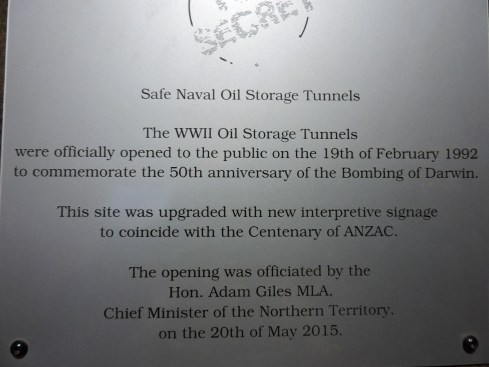
Remember WWII? Another ANZAC memorial? No! Look at this:
DSCN6641

Now why would anyone want to bomb Darwin? Who? Germans? Japanese?

Australia wasn’t on the list of the countries to be occupied but after WWI Darwin became a key location of the Singapore – Australia defence line (I guess they saw it coming).

DSCN6643

note the words “naval refuelling station”

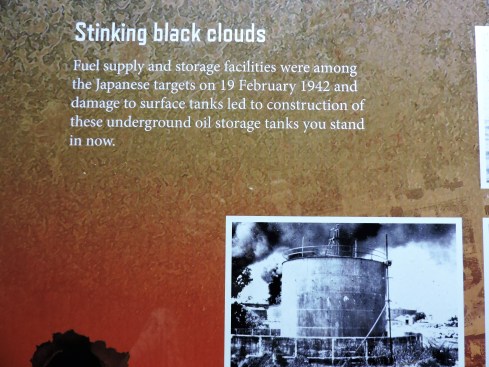
Clearly, never underestimate your enemy!!!! Seeing huge fuel tanks on the Darwin waterfront the Imperial Japanese .. bla .. Forces didn’t think twice and bombed the oil out of them on the morning of February 19 in 1942 destroying the naval base and killing more than 200 people.
DSCN6655

Japanese air raid, successful, these things blow up like hell

Australian guns and searchlights on the waterfront hadn’t been of any help, the attack came from the air. Gee, didn’t they KNOW, the Japs had planes? (Mitsubishi was already a name to be taken in consideration!).

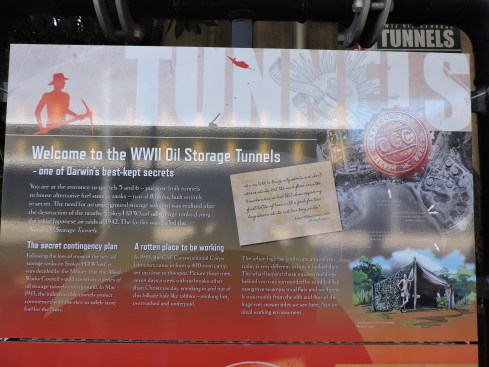
Then, brilliant idea, put that stuff underground!
DSCN6630

… the tunnels were built entirely in secret … 400 men … sneaking in and out of this hillside like rabbits … sandfly-filled mangrove swamps … not an ideal working environment (understatement!)

Secret?! The soil that had been removed from underground remained dumped at the entrance of the tunnels clearly to be seen during reconnaissance flights (just in case Japanese intelligence officers were wondering what was going on now). Never mind, the tunnels were made of concrete walls with steel lining and were bomb proof. However, they turned out to be not entirely water proof in the long run. They were restored and ready to be visited in 1992 at the 50th anniversary of the bombardment.

DSCN6632

a hell of a lot of work (5 tunnels)

These pictures probably mean “everybody, really e-ve-ry-bo-dy,  lent a hand”

overworked           and          under-payed
DSCN6639

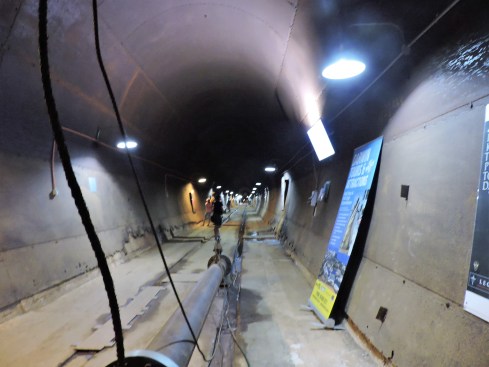
The tunnels, now a museum with posters and explanations  

Australia, keep these things in good condition, Kim Jong-un may NOT be “blustering”! (as Aussie newspapers suggest) Oh okay, no, no chances, he’s gonna nuke us right away …

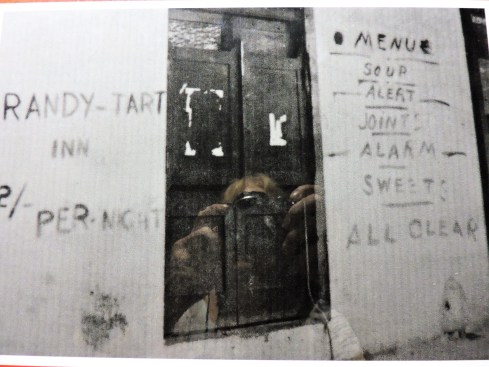
Wartime humour: I found the menu really funny.  However, as the saying goes: “war is not a picnic” (Yeah, I know, it’s “life is not a picnic”)
DSCN6656

“joints” are large pieces of meat cooked in one piece, not the ones you smoke; the meaning of the name of the inn? … no idea!

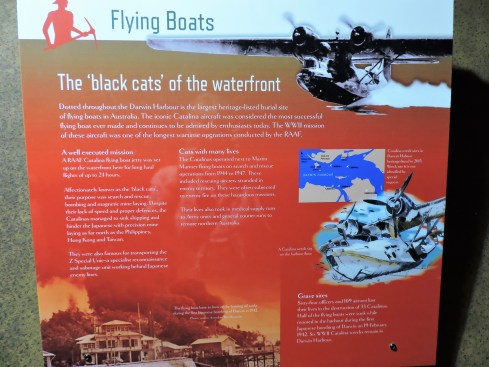
On the whole, as all the ANZAC memorials tell, Australia had and still has a military force to be reckoned with. Amazing the Catalina flying boats, you would think, you don’t need anything else.
DSCN6651

Perfect multi-purpose war equipment: search and rescue, bomb and lay mines, medical supply and courier service, reconnaissance and sabotage. Had they been faster, they would have done the job and won right away.

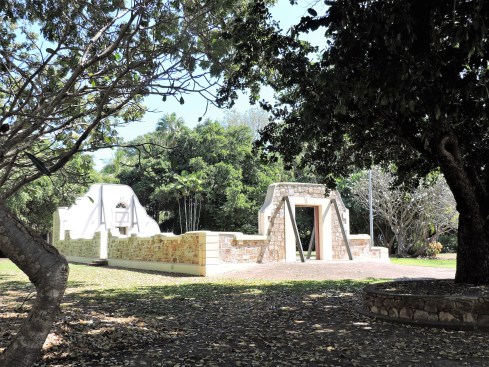
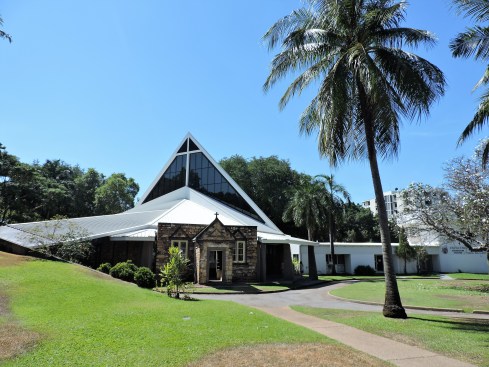
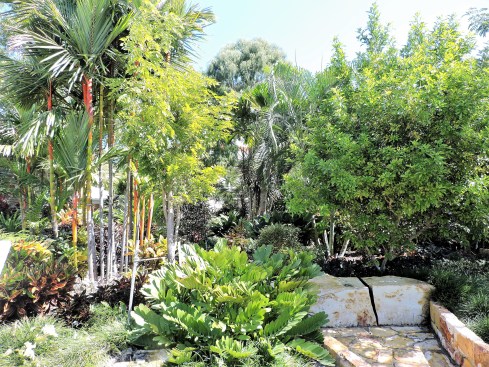
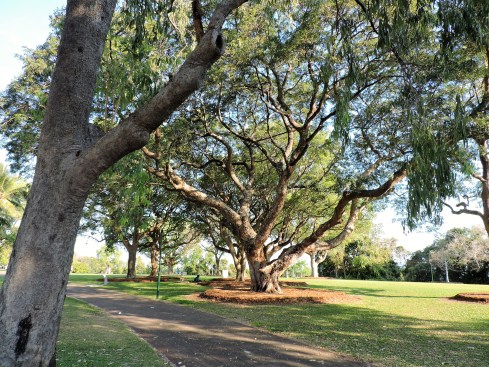
Happy to be over ground again and back to the present: tropical vegetation, the well kept ruins of the town hall, Bicentennial Park (nice benches in the shade, green grass carpet, public restrooms: clean and for free), Christ Church Cathedral, as garrison church first destroyed by the Axis powers, then rebuilt by the military and finally, in 1974 cyclone Tracy struck and (besides devastating the whole town) wreaked havoc on the church leaving only the porch of it standing. It happened one hour after Midnight Mass on Christmas Day. (Je …)
DSCN6659

lush green tropical vegetation

DSCN6660

Ruins of the Town Hall (cyclone Tracy,1974)
DSCN6667

Bicentennial Park, green and clean

DSCN7146

Christ Church Cathedral, the old porch integrated into the new, modern building

DSCN0002

Cyclone Tracy Memorial window (Dalle de verre technique, pieces of glass)
DSCN6674

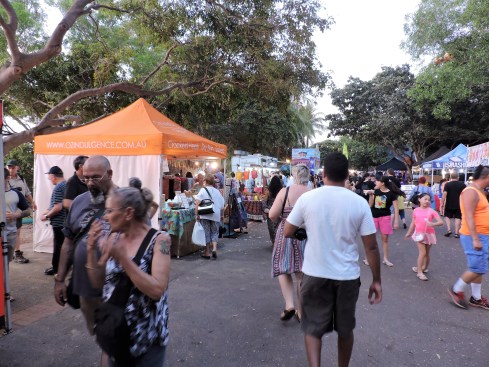
Multi-ethnic Darwin: countless origins, cuisines, languages, >50 shades of beige-brown, at the night market you meet them all  
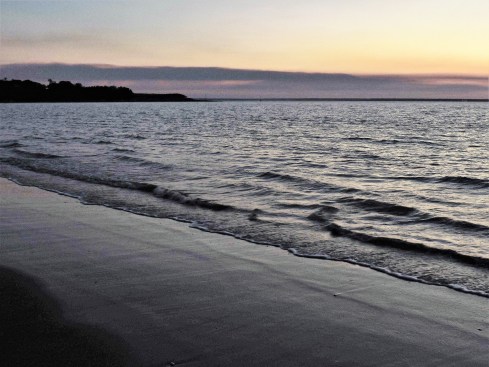
DSCN6675

Mindil Beach at sunset

No salt water croc in sight but having heard of them I gave up the idea of going swimming in the morning.

Cheers

Gerburg

Sydney and around: beaches, beaches, be

8 Sep

DSCN7076

clean! public! spectacular!

Just listen to these names:

Bondi Beach (say [bondai] otherwise no one is gonna tell you how to get there),

Palm Beach (wow-name),

Barrenjoey Lighthouse, Bronte Beach (if you think you’ll find “Wuthering Heights” there, you better look up vice-admiral Horatio Nelson, Duke of Bronte),

Whale Beach, Shark Bay, Dolphin Point, Narrabeen (hear the Beach Boys in your mind’s ear: “… Santa Cruz and Trestle, Australia’s Narabine … Everybody’s gone surfin’, surfin’ U.S.A.”)

Balmoral (not the one where the Queen keeps out of sight when she doesn’t want to show her feelings or the lack of them)


Names that sound at once familiar and new, exotic, classy, promising fun, leisure, sport, relax

DSCN7835

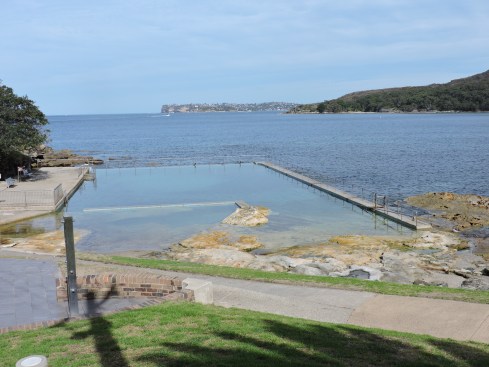
Ocean pool: water always fresh, conditions always safe, no crocs, no sharks, no currents that suck you into the open sea

and two hours free parking somewhere in the vicinity. If 2 hours is not enough, you take you Opal Card (smart, remember?) and go to the beach by public transport.

This is what you want to do, when the conditions are right (preferably not in winter, remember, summer is around Christmas): sailing, swimming in the ocean or in public ocean pools, surfing, diving

DSCN7834

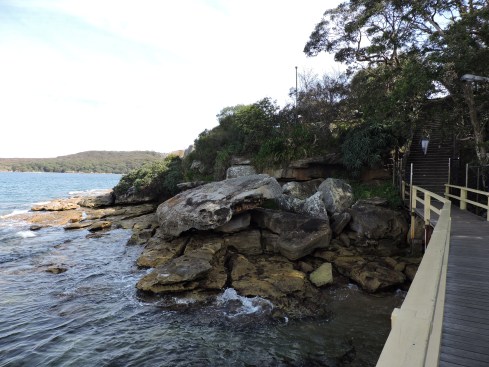
the boardwalk down by the sea

And this is what you can do any time of the year, because even in winter you feel like being on the sunny side of the earth most of the time:

  • basking in the sun, lounging in cafés sipping at an aperitif or a healthy smoothie or a coffee (but don’t call it just coffee, order a “flat white” or “long black” with or without milk on the side, make it almond or soy milk for a ridiculous 50 cents more),
  • beach walking or just strolling along the literally litter-less waterfront promenades and smooth boardwalks,
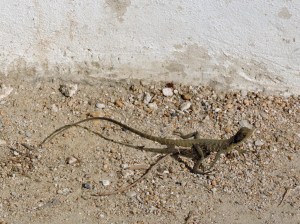
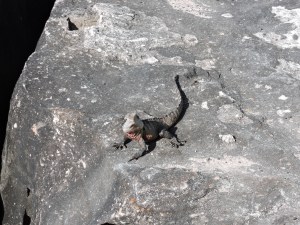
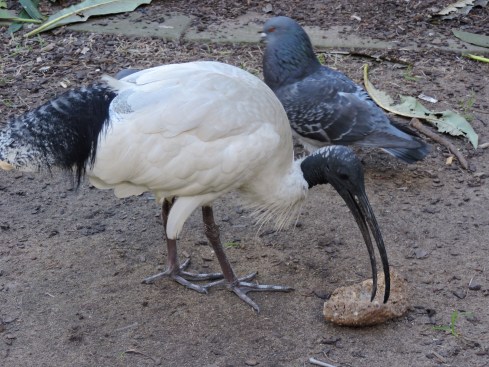
  • whale watching, bird watching, blue tongue lizard watching (don’t wait until it pulls its tongue out to check if it’s blue, even a different type of lizard is still worth taking a picture of). Here’s the bird I watched
DSCN7829

seagull following its shadow

DSCN7840

run gecko run

DSCN7842

“One more pic and I’m gonna throw myself down there”


DSCN7089

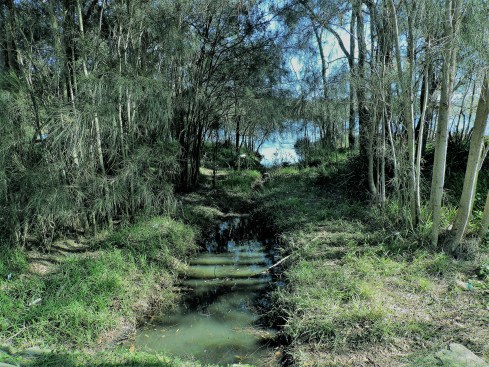
towards the lagoon

DSCN7090

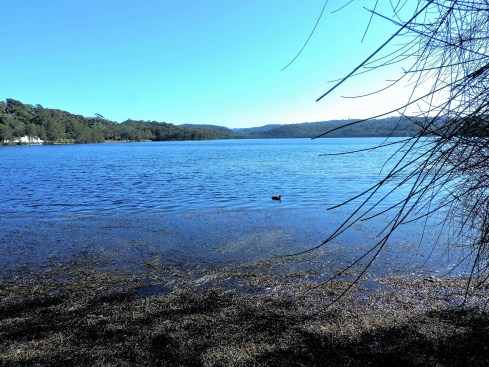
the lagoon is pretty big

Safety is important to Australians: on a sunny winter day you see helicopters circling over the rough sea where reckless surfers challenge the waves. They were too far away to be taken pictures of.

Sorry, no photos of sharks and crocs or selfies of coffee sipping ladies.

Cheers

Gerburg
I like … Sydney

20 Aug

After hearing divergent opinions about it, – in the sense that Melburnians like Melbourne better, Canberrans like Canberra, some Sydneyans like Melbourne, some like Sydney, non-aligned foreigners stay neutral because they want to go into the outback and see, if crocodiles are more dangerous than 21st century traffic, – I decided I had to start from somewhere, why not from Sydney, where I already know someone?

First thing you do, when you get to Sydney, you post the skyline on Facebook, so everybody knows you are there.

016

This is not the pic I posted on FB, here I’m getting closer to the city already

019

Second thing you can’t stop taking pictures of is Sydney Harbour Bridge

I shot hundreds of pictures of the Opera House and The Bridge, from all sides, left / right / inside / out, underneath, above, close up, far away, I just couldn’t get enough. I was fascinated, the two constructions had cast a spell on me, the lens of my camera was drawn to them like a magnet.

030

I didn’t go inside at first, reserved the guided tour (37 Oz bucks) for my last days in Sydney

074

Tried to have them both in one picture plus a picturesque tree in front (in all, not really brilliant)


And soon you realize that Sydney isn’t just made up of skyscrapers, it’s a mix of the old and the new, obviously not like in Rome and other ancient cities, the difference between old and new not being 2000 years but more or less 200, but still! The “old” houses and churches, from colonial Georgian over neo-Gothic, Victorian and post – WWar II styles are a charming surprise among the tall, shiny towers.

The Old and the New

103

View of “The Rocks” (historic quarter)

048

Cadman’s cottage

063

051

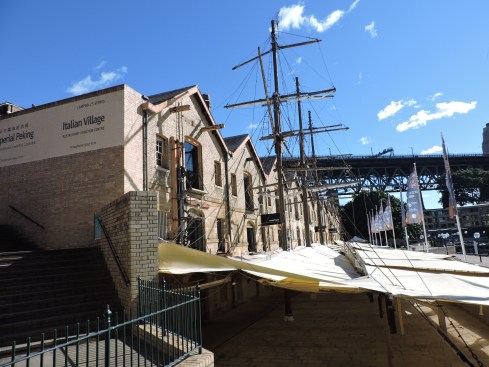
Campbell’s Cove (ITALIAN VILLAGE!!!)


119

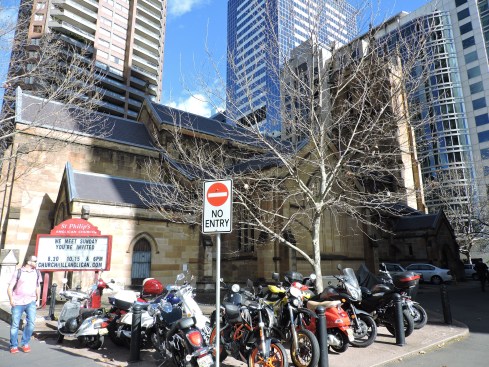
Downtown: St. Philip’s (lots of churches between the skyscrapers)

125

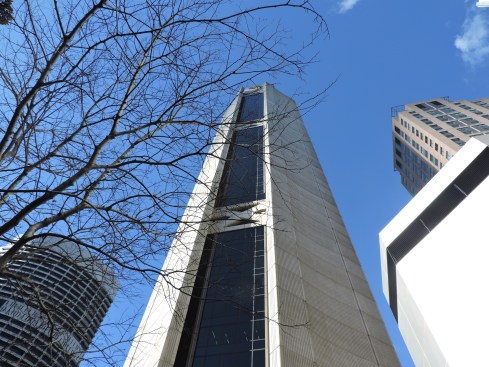
Suncorp Place, regular skyscraper

134

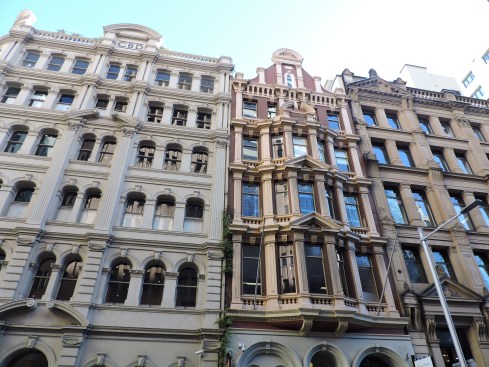
facades

140

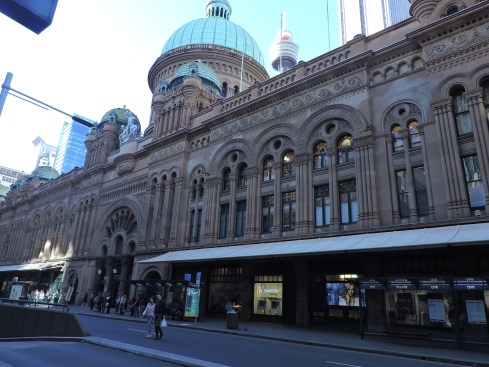
CVB (obvious, short for Queen Vic Building, Romanesque Revival, impressive on the outside, expensive inside!)

144

Her Majesty Queen Victoria (here as “patron” of young Asian artists)

149

St. Mary’s Cathedral (Gothic Revival, awe-inspiring) photographed by Asian tourists with the same enthusiasm as Cologne Cathedral 😉

Something funny, something historical, something sad

076

..it happens or is this art?

075

still in use

114

Observatory (very old, don’t remember how it works)

Clear rules

025

Rules are …

148

… rules

152

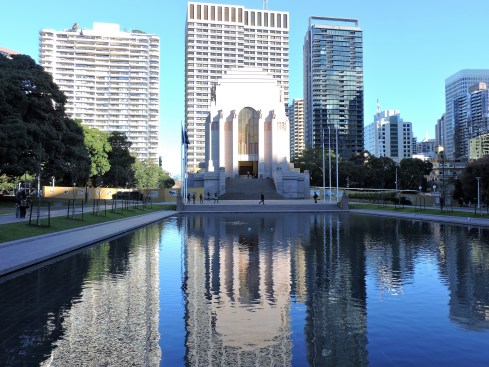
ANZAC Memorial (Australian and New Zealand Army Corps, they didn’t miss a war)

Sad History

086

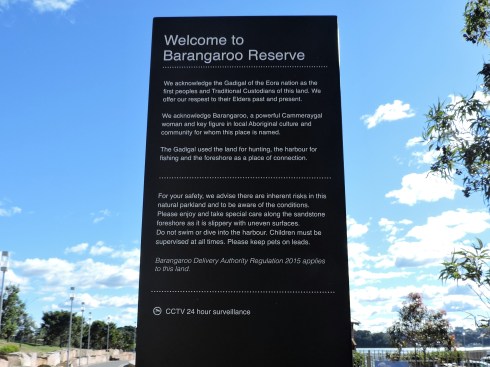
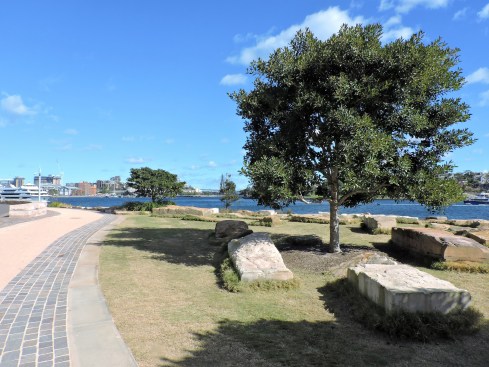
Barangaroo didn’t trust the white colonists that had arrived from overseas from the start. As Bennelong’s second wife she opposed her husband’s being an interlocutor with the British. Most of the Gadigal people are believed to have died of smallpox (epidemic 1789)

The park is nice, the Gadigal people aren’t there

090

would have been nice to meet …

089

… a soul

And at the end of the chapter, as does the Lonely Planet (not that I’m putting myself at the same level), the question is “how to get there and how to get around”. It’s easy! You can ask your cousin to take you there by car. Not every day! Parking is about:  ½–1 hour: $8 and that’s probably budget. No, you don’t want to waste money like that. You get yourself an OPAL card,

quote: “Opal makes getting around on public transport easy. To travel anywhere from the Blue Mountains to Bondi, or Goulburn to Scone, all you need is an Opal card.”

It’s a smart card, you only pay for what you get: long trip – more money, short trip – less money. So far, so good. You get on the bus, you tap on, there are beautifully coloured readers everywhere on the bus, you hold your card against it and you have started paying; you get off the bus, you tap off, you hold the card against the reader and you have payed for your trip. The problem starts, if you forget to tap off or you don’t tap successfully, then the card is smarter than you and you pay until the end of the route. I found out the hard way. Another thing: you have to learn where to get on and where to get off. So there are stops, where people get on and there are stops, where people get off. If you, not being familiar with the system, try to get off at a get-on-bus-stop, you cause confusion to the local expert users of this sophisticated system. I managed to give the bus driver and fellow travelers an excellent example of foreign simplicity on my last bus ride. Next time I’ll know better.

130

And they help keep the city clean

Love to all of you until the next letter

Gerburg

Australia: Amsterdam Huangzhou Sydney

26 Jul

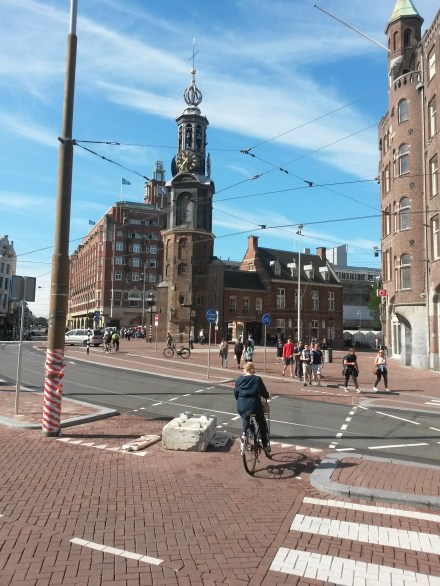
A couple of hours stop-over in Amsterdam: dash to the city centre (from the airport not even ten Euros coming and going, roughly 20 minutes), dash through its alleys, take a few significant pictures, all that just because your kids never took you along with them. They probably thought I wouldn’t be interested.

20170717_100921

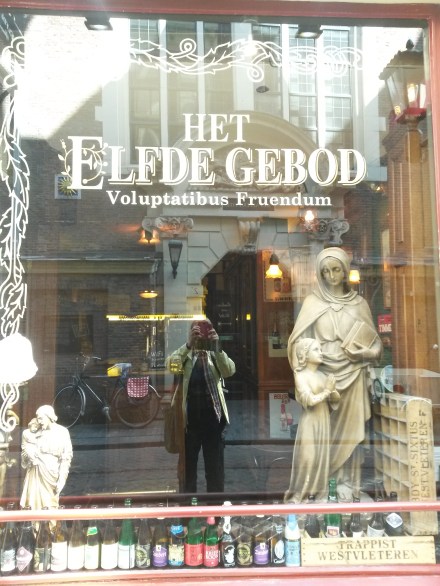
The Eleventh Commandment: Voluptatibus Fruendum (for a spiritual moment)

20170717_103046

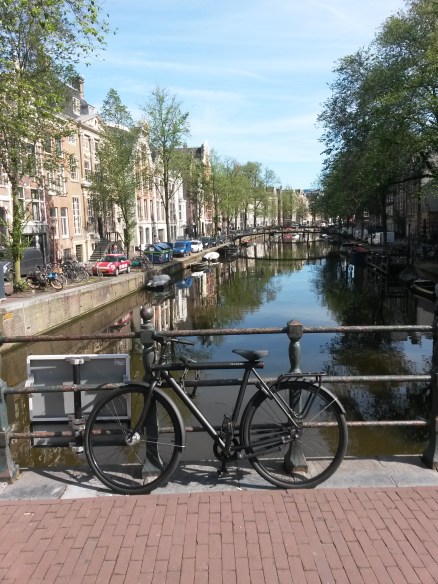
bikes and canals

20170717_103651

Bikes and churches (churches either closed or charging entrance fees)

Then with Southern China Airlines, stop Huangzhou. Pretty little hostesses render excellent service and take excellent care of me and my gluten-free diet. After more than ten hours I start feeling violently sick nonetheless. Can’t even find my (keep-it-down) pills anymore. Lots of options: I can spend the night in the loo, I can stay in my seat with one of those throw-up bags in my hands, I can tell one of the pretty little hostesses, I can open the window …. The hostess says, there is medicine, but only for emergency. And this? what is this? I silently ask. They give me a cup of hot water. While I drink it, I see my reflection in the mirror: I’m white like a Geisha. The hostesses should pay me for keeping them company. The water helps!!!!! I make friends with two young women from Denmark and from Holland (one in her early 20s, the other one in her early 40s, and myself …). We vow to help each other changing planes in China. My experiences with KunMing and Bejing were terrible. But then Huangzhou turns out to be the transit friendliest airport in all of China. You just proceed to your gate, no holding up and checking and queuing and stamping and whatnot. So we sit down and have a nice cup of coffee. It was so calm and unspectacular, I didn’t even take a picture. But thank you girls, I enjoyed the morning, afternoon, whatever it was.

Then Sydney, so similar to Europe, yet so different. I’ll tell you next time. I’m having a problem uploading the pictures. I guess I’m gonna resort to manual work for the time being and then type it all on the computer under better conditions. Bear with me, everybody

love Gerburg

Best Kids 2

12 Sep

Exceptional kids

My friends’ children and the miracle of …

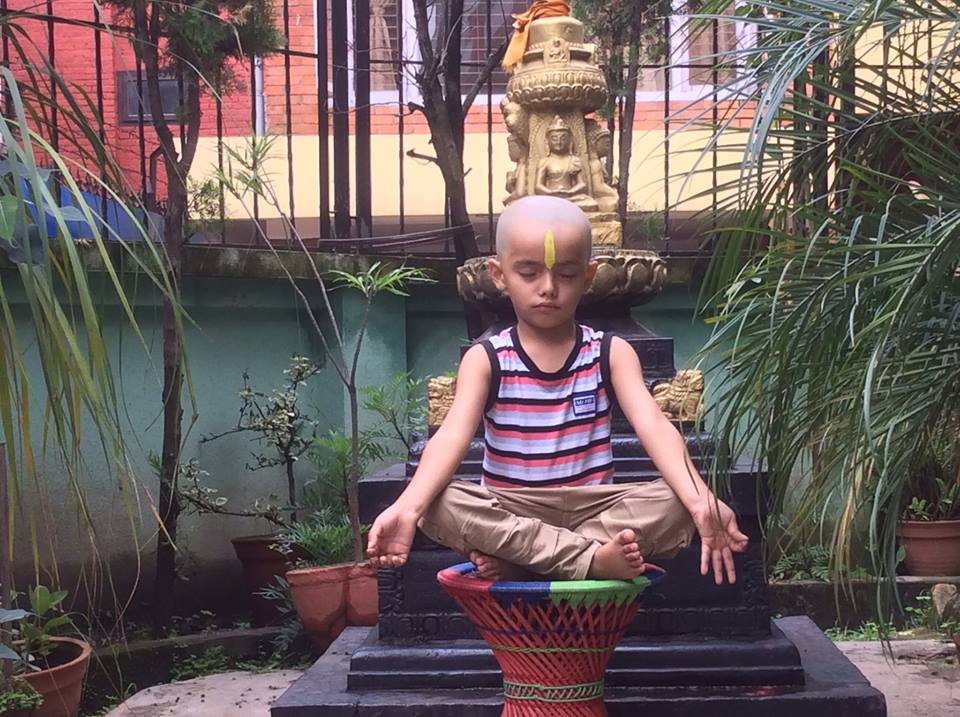
Lively little boy sitting still!

… a lively little boy sitting perfectly still!


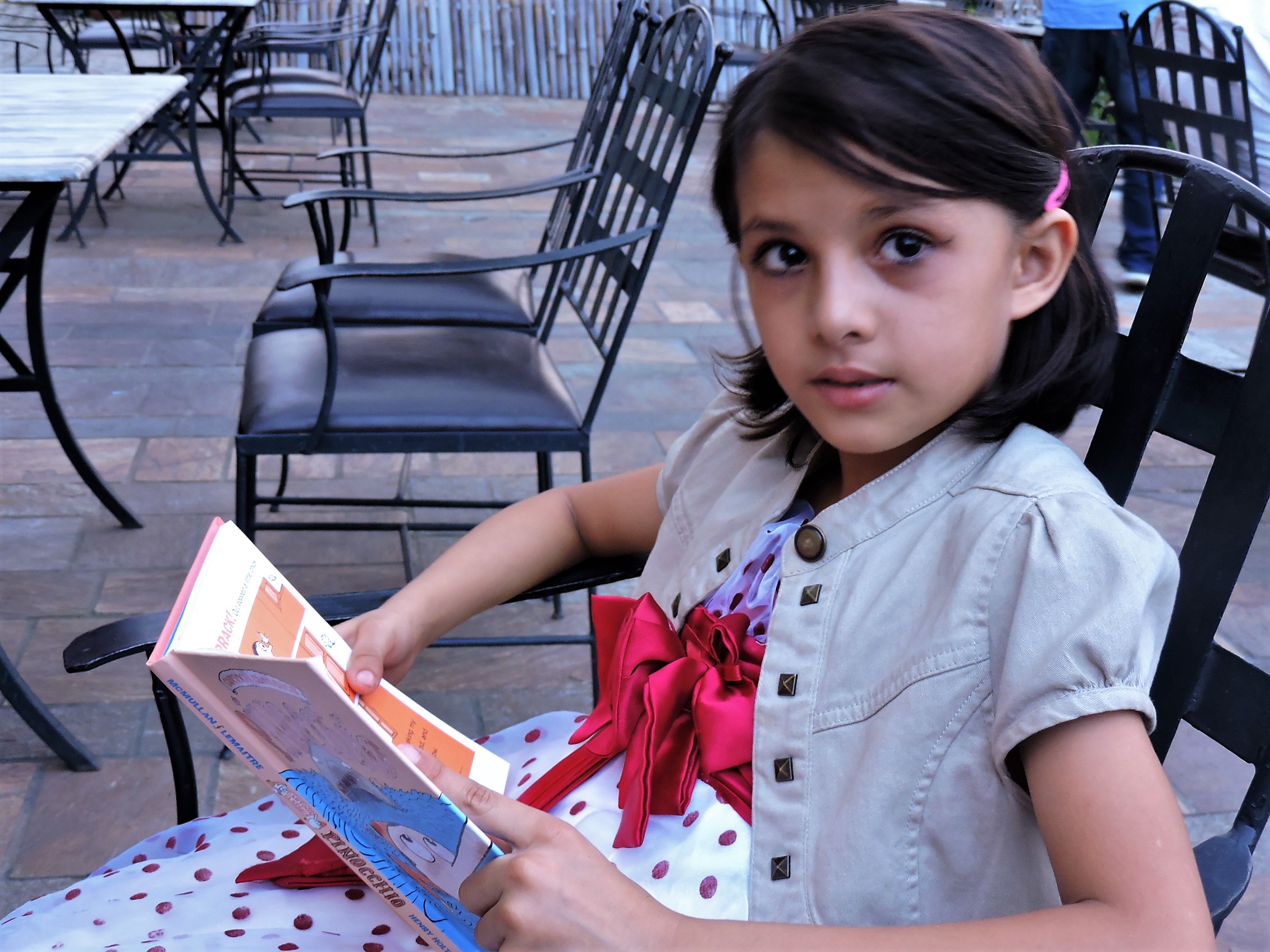
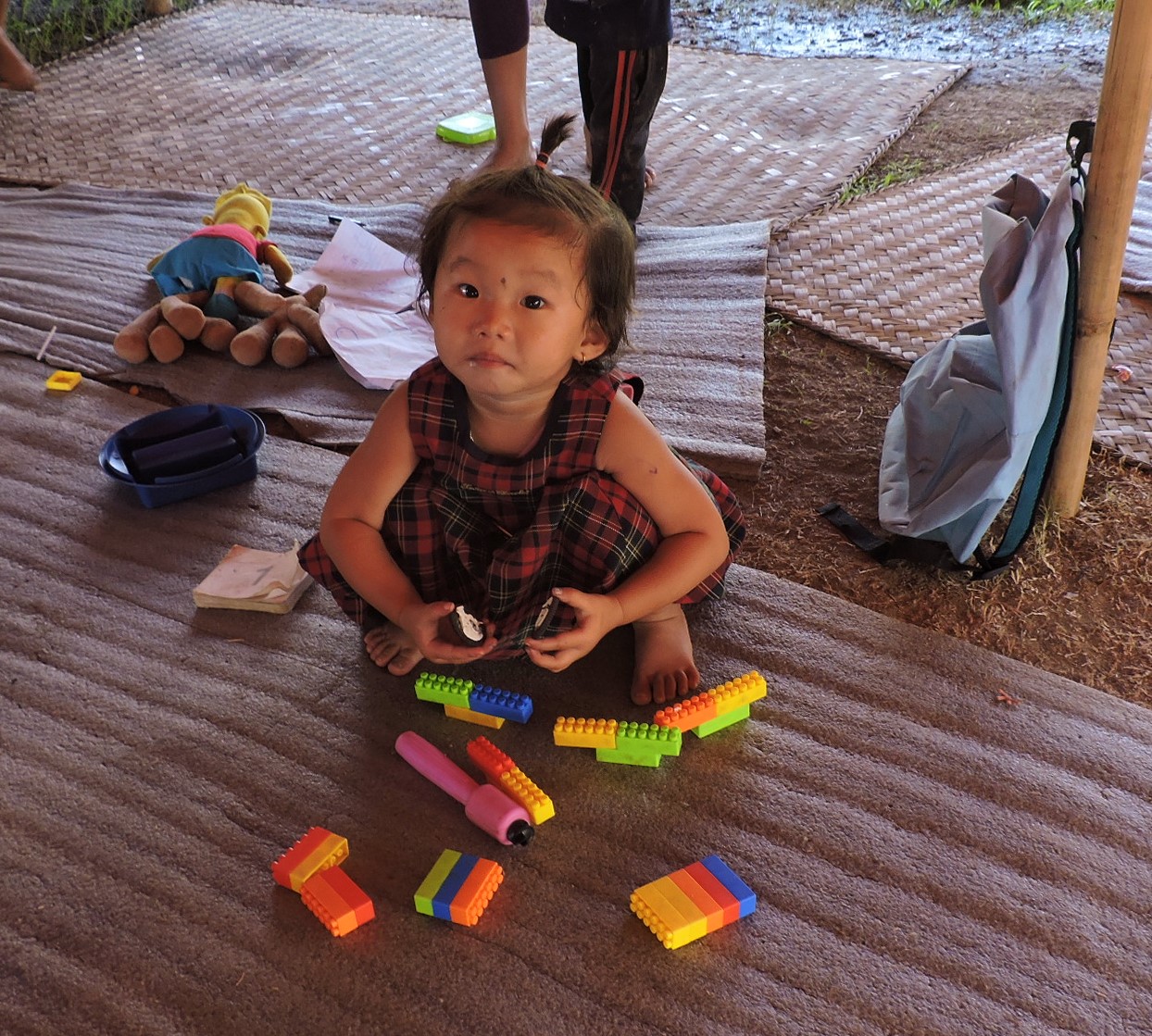
Seeing the book she exclaimed: "Oh, Pinocchio! I like Pinocchio!"

… a little girl seeing my gift from Italy exclaiming: “Oh, Pinocchio! I like Pinocchio!”


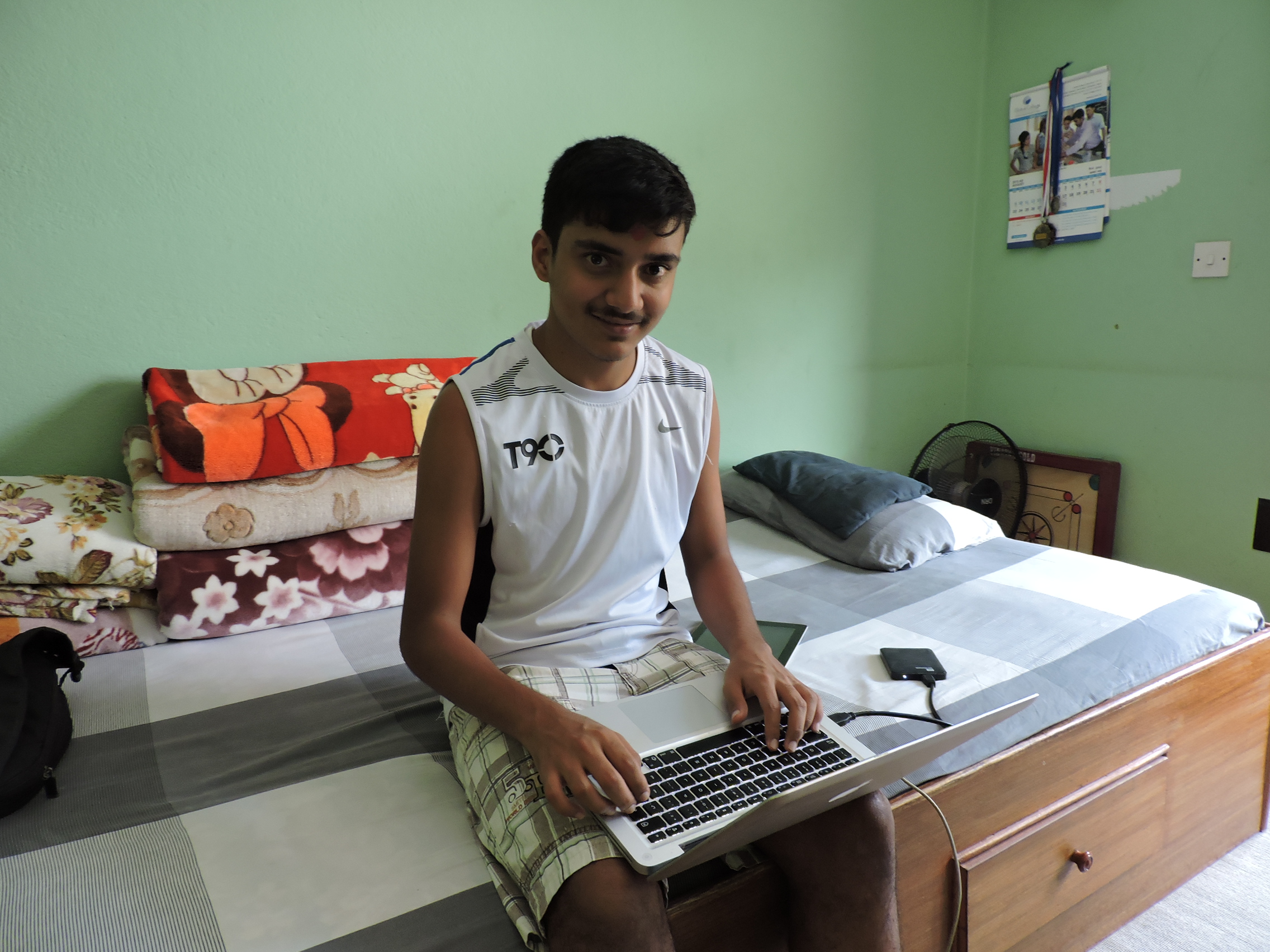
Twelve years ago: the liveliest boy, today the most serious student

… growing up: Nasib, twelve years ago the liveliest boy, today the most serious student


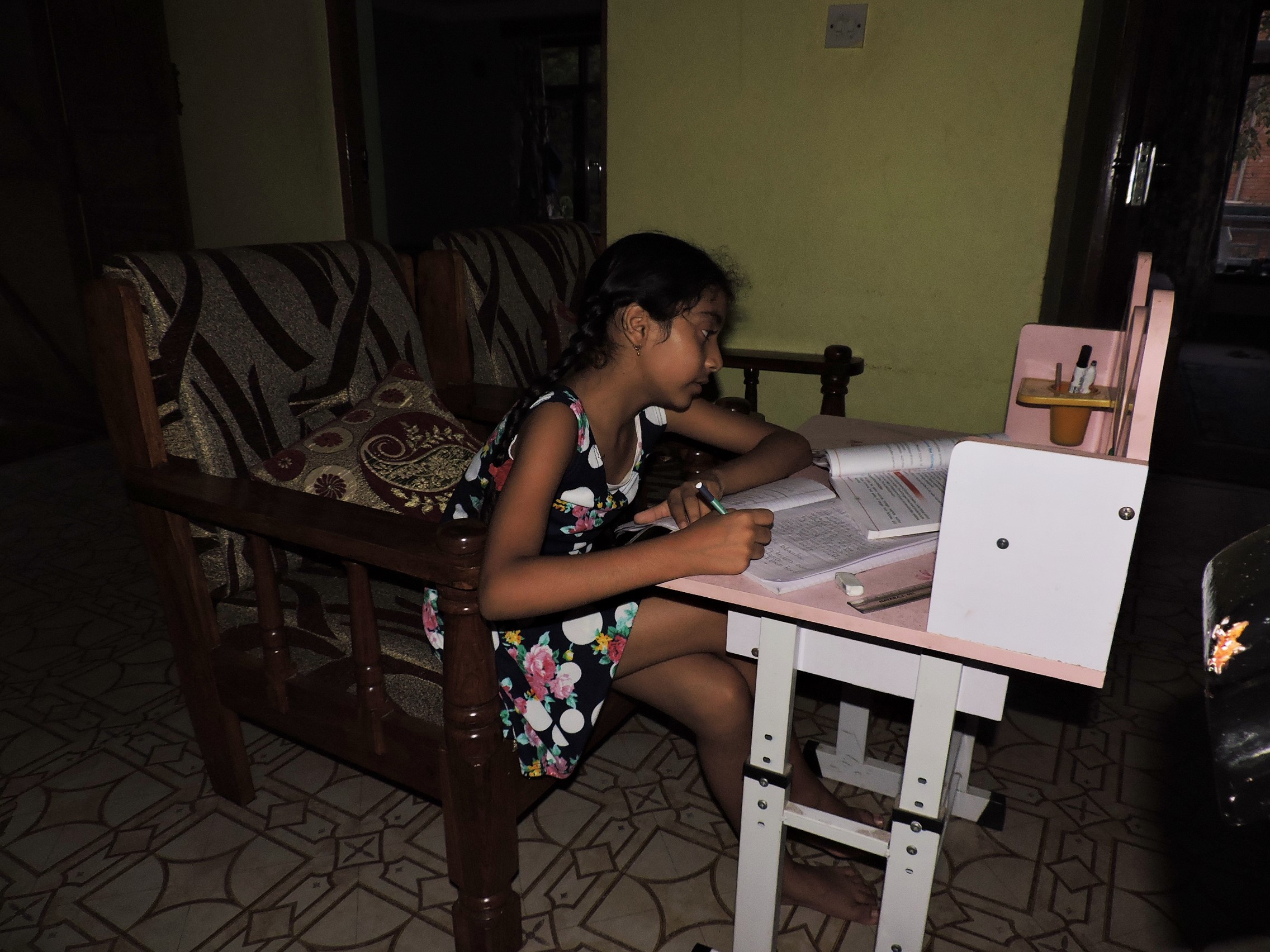
Muskan: studying in the dark during a blackout

… Muskan’s sense of duty: studying in the dark during a blackout

Januka

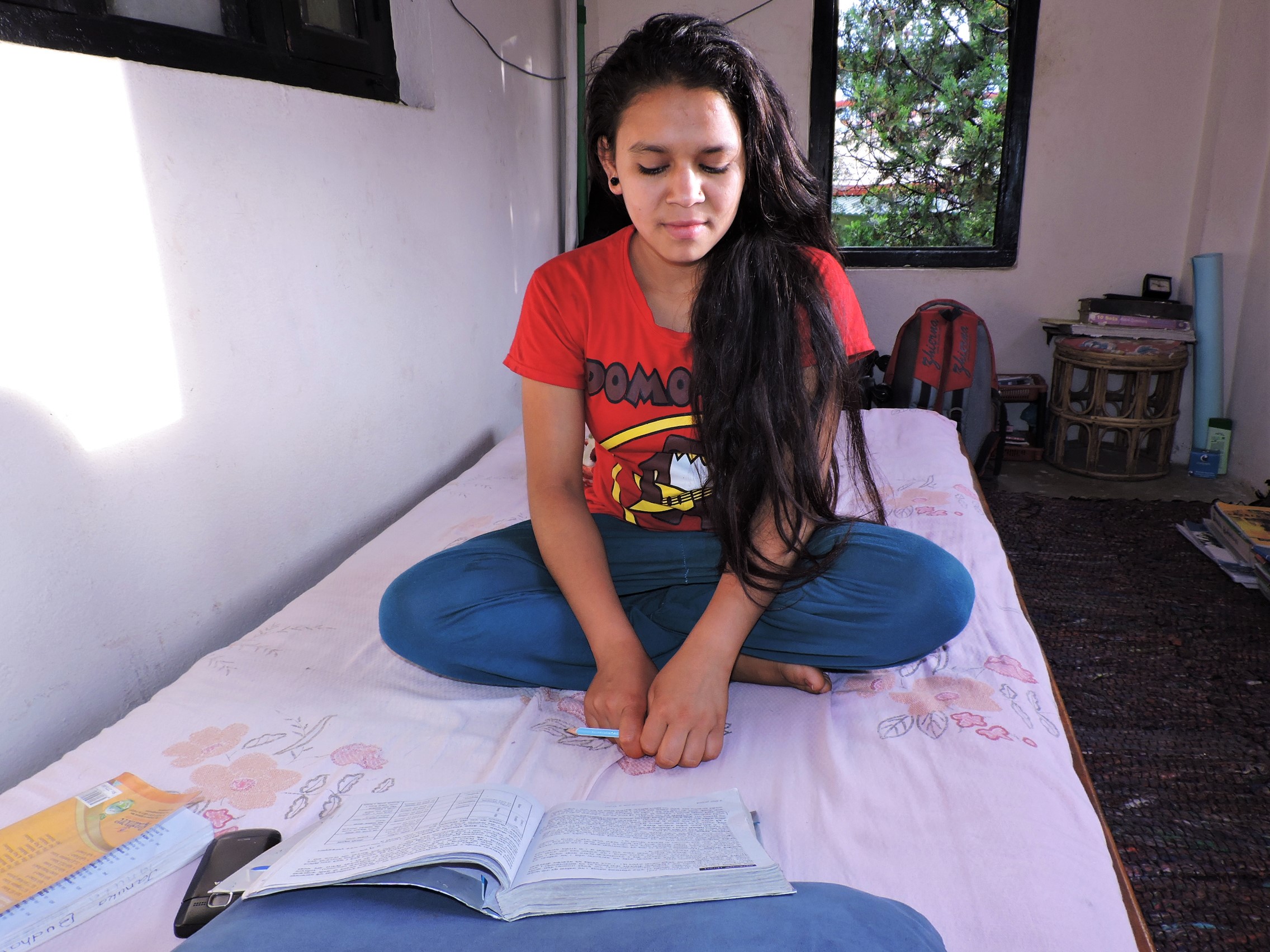
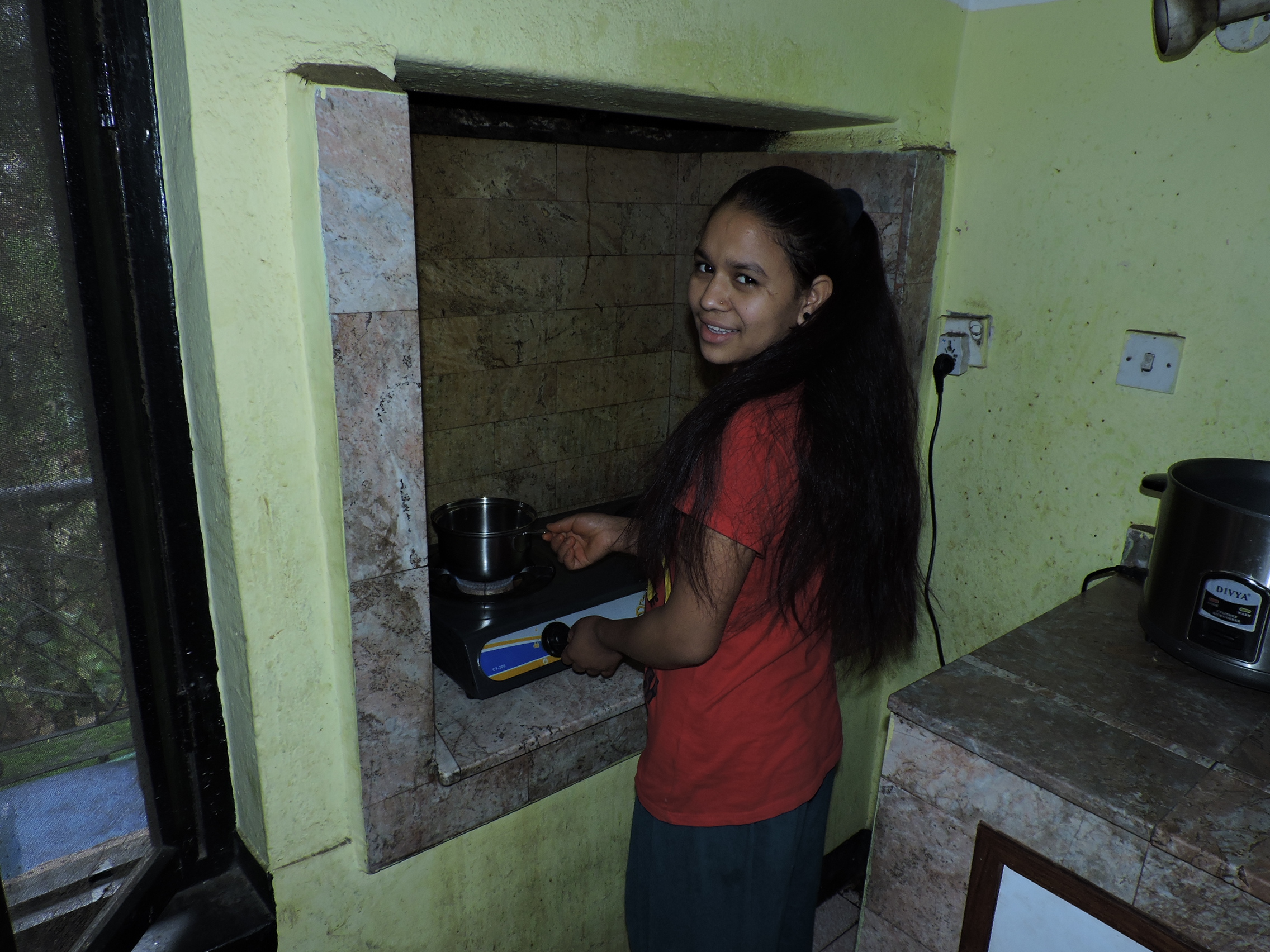
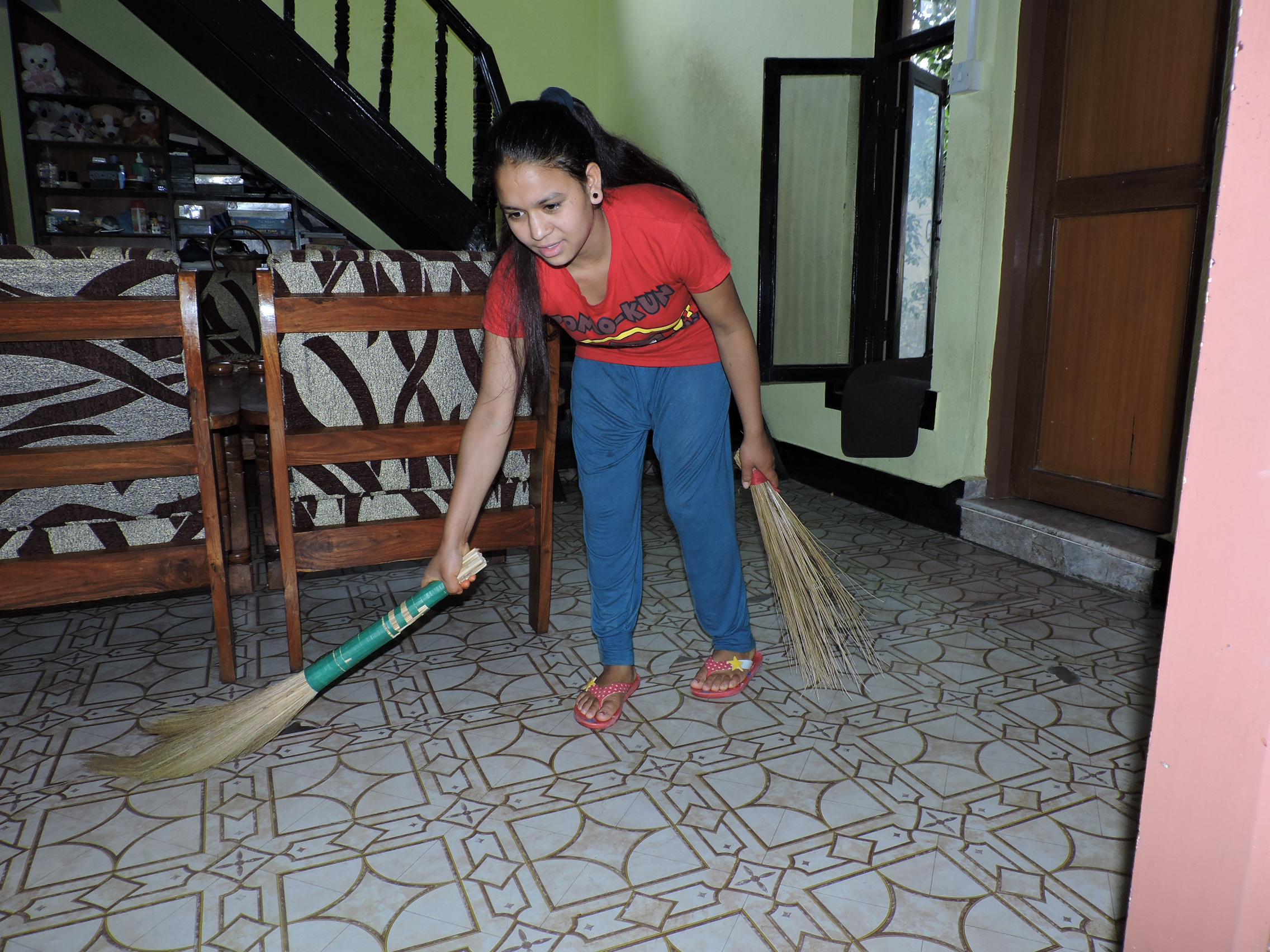
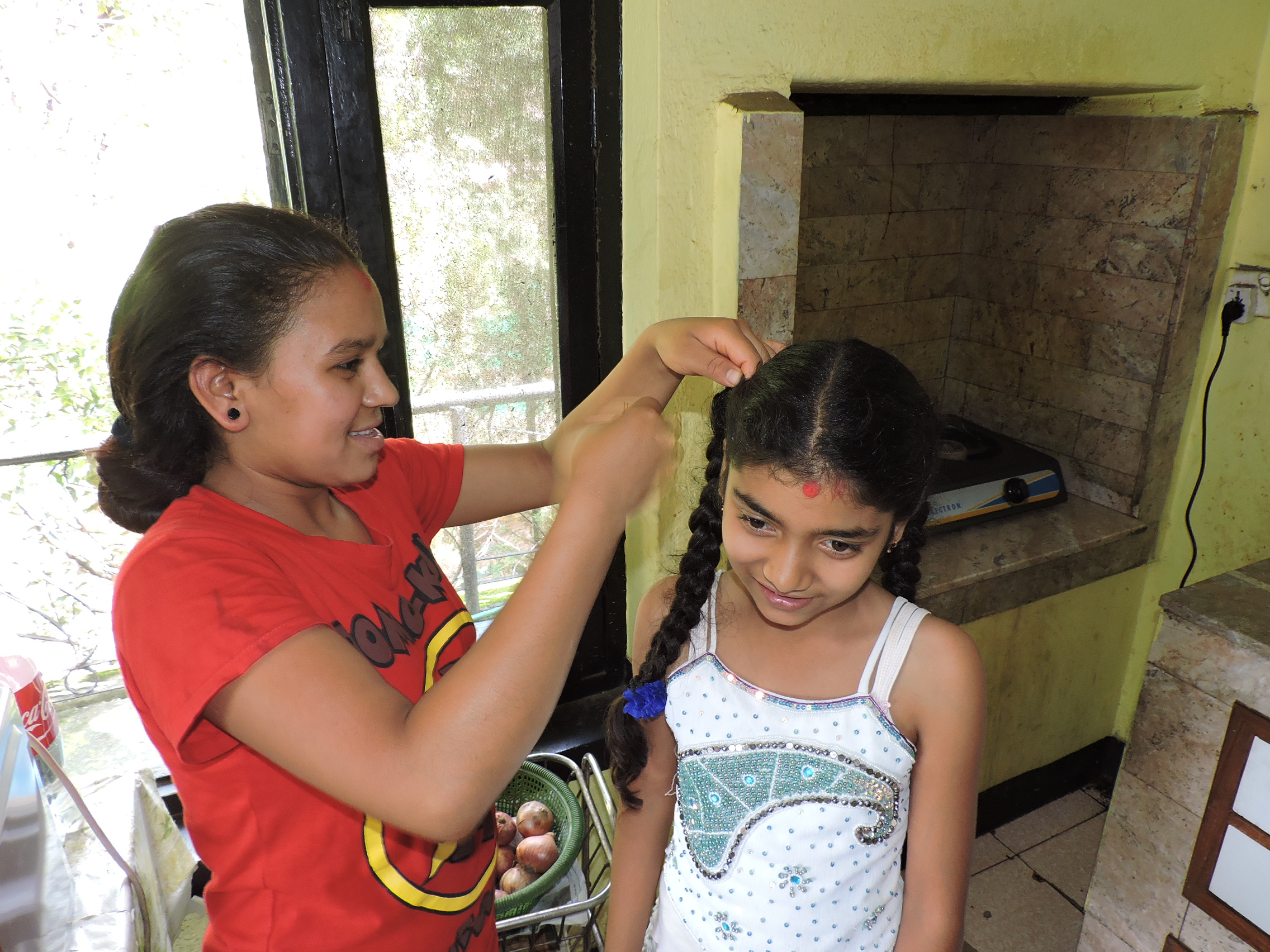
My host family call her “their daughter”, in Europe we would say a bit less affectionately, she is an au-pair-girl, similar to our sons and daughters going abroad for a while, living in a family, helping with the housework for a couple of hours, studying, learning … Januka comes from a village in the West of Nepal and is the eldest of many siblings. My host family have taken her in about a year ago and Januka does everything she can to recompense them for the chance they have given her. In the morning she goes to school, later she helps with the chores and does her homework. On Fridays school is from 5.15 a. m. to 7. 15 a. m. (yes, a. m.! Think of the teachers!) so the students find enough time to work or help their parents during the week-end, half Friday and Saturday. Januka is also good at cooking and applying Henna.

Januka studying in her room

Januka studying in her room


Making tea for all of us

Making tea for all of us and  … smiling, even though we interrupted her studies …


DSCN2349

House cleaning


Januka helping Muskan do her hair

… helping Muskan do her hair


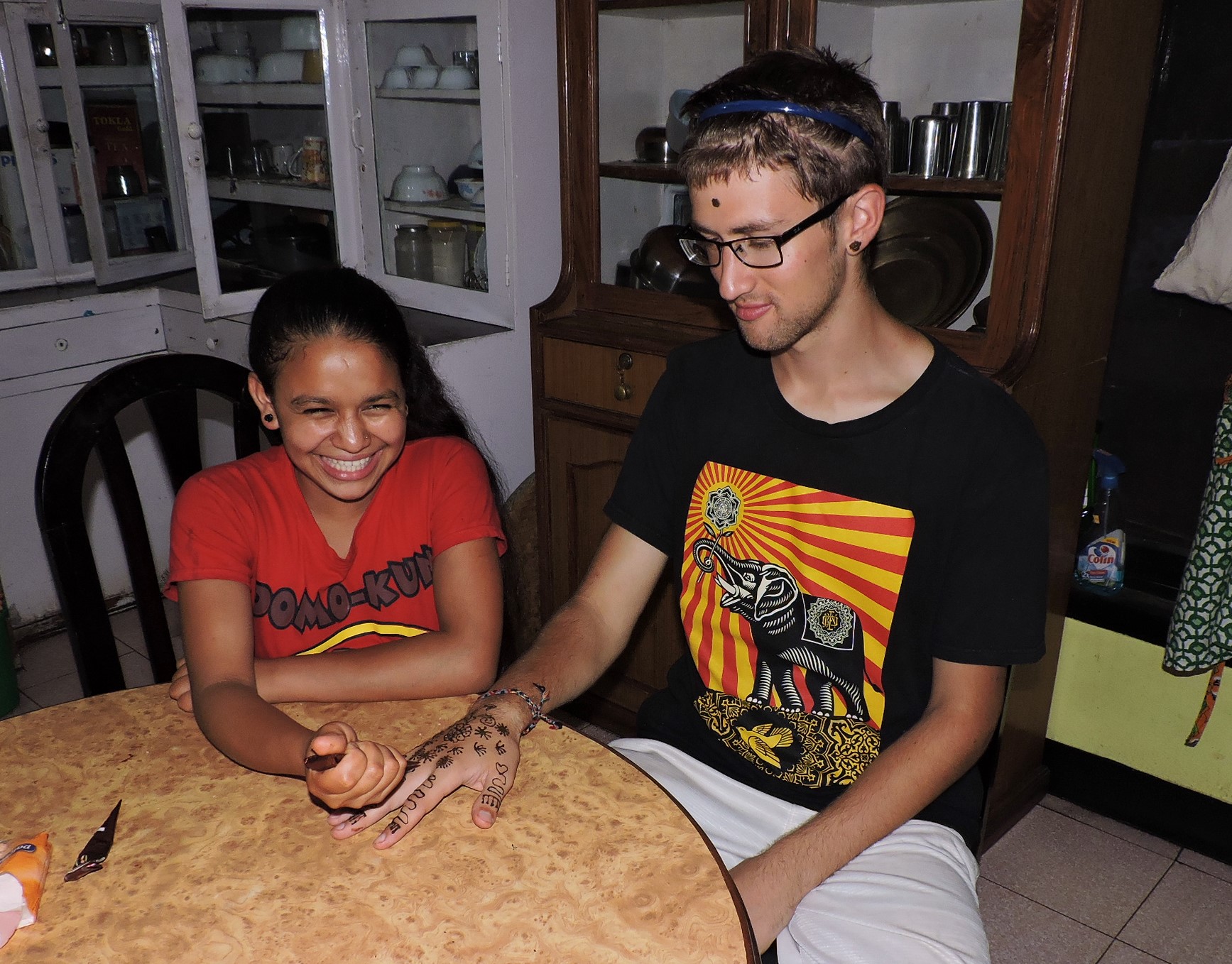
Januka applying Henna designs to one of the guests hands (face, ears)

… applying Henna designs to one of the guests’ hands (face, ears); needless to say: he is going to be a famous anthropologist one day

I’m sure all the other guests will agree when I say: “… miss your smile, Januka.”

Vishwa Shanti Vihara School

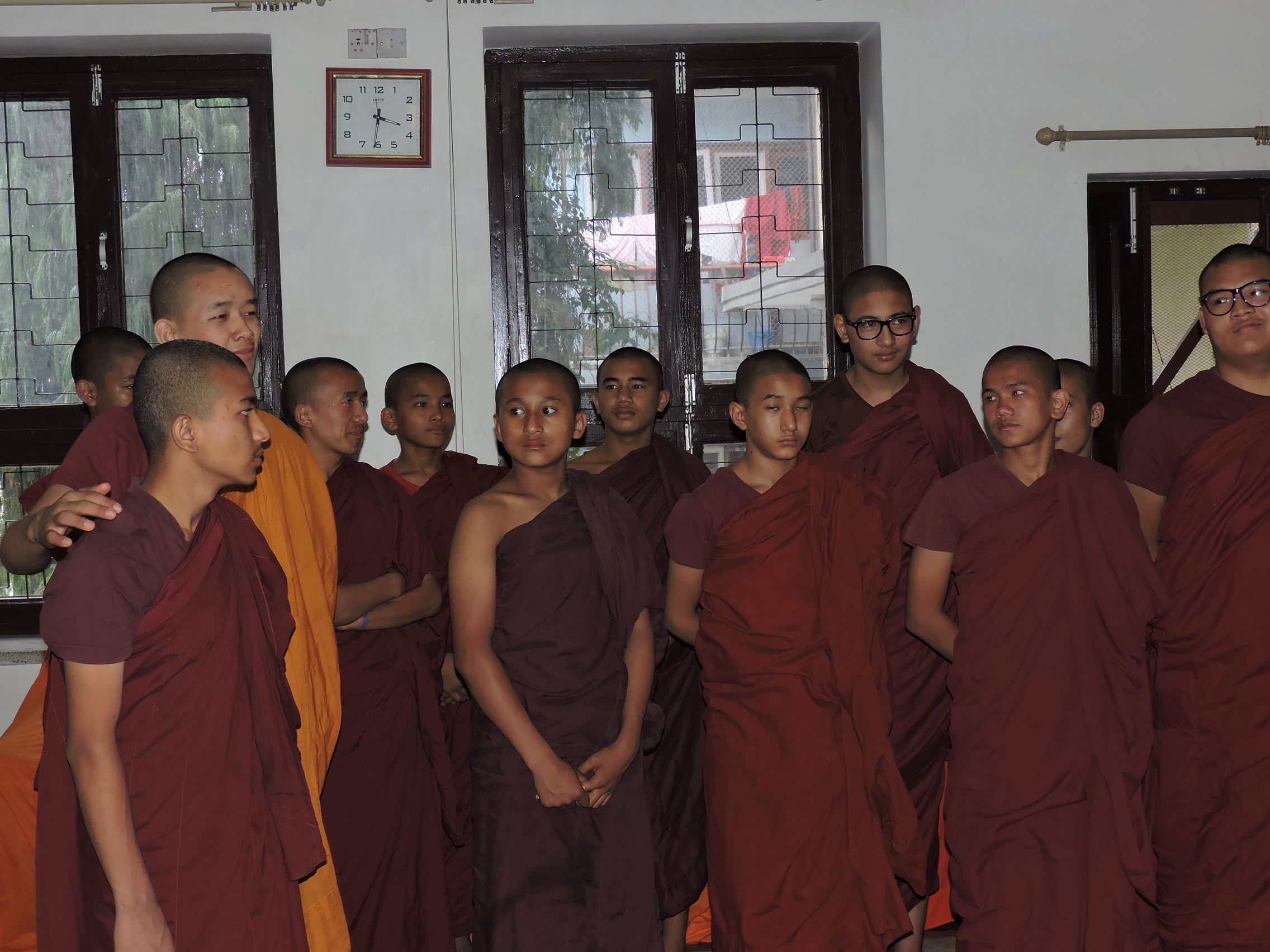
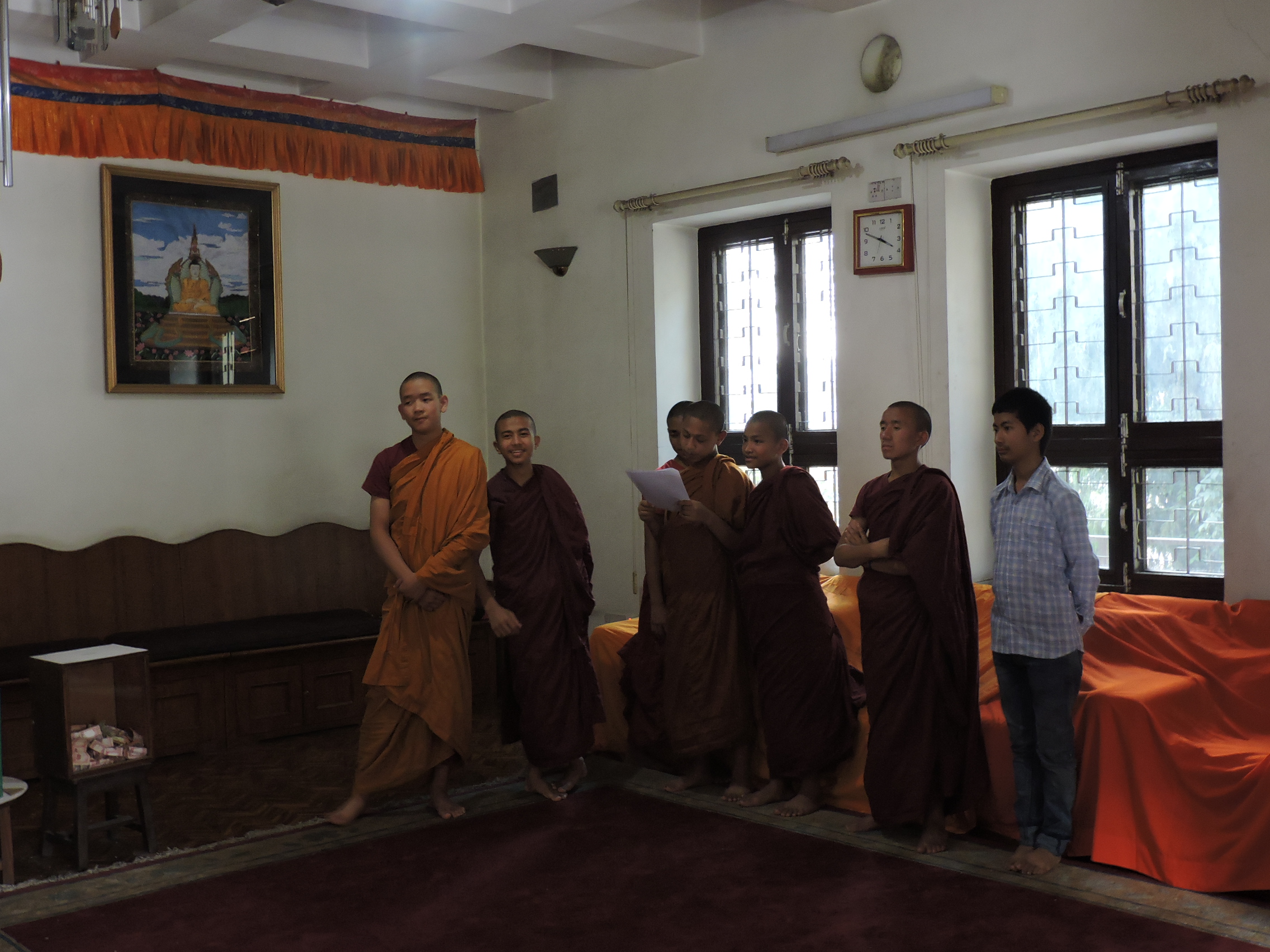
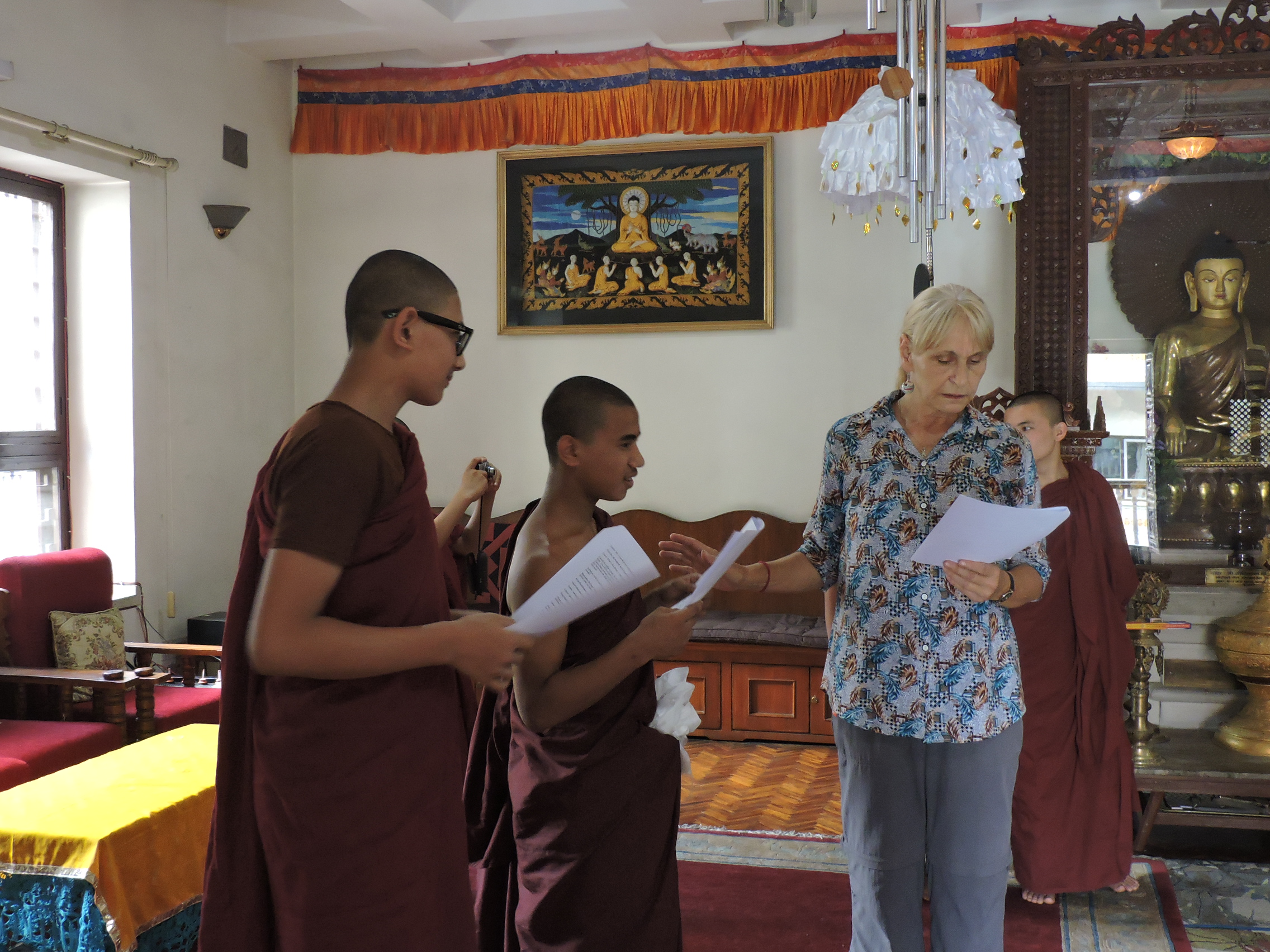
When I came back from a month’s stay in Nepal 12 years ago after teaching English in a Buddhist Monastery school I had a real culture shock. I couldn’t understand how youngsters like the ones in Europe could be so restless, continuously moving, chatting, unable to pay attention, cracking stupid jokes, laughing apparently without reason. Now I was curious if anything had changed in the Vihara, too. True, the boys have become a good deal livelier, more open, comunicative but at the same time they are calm during lessons, interested, attentive, respectful …

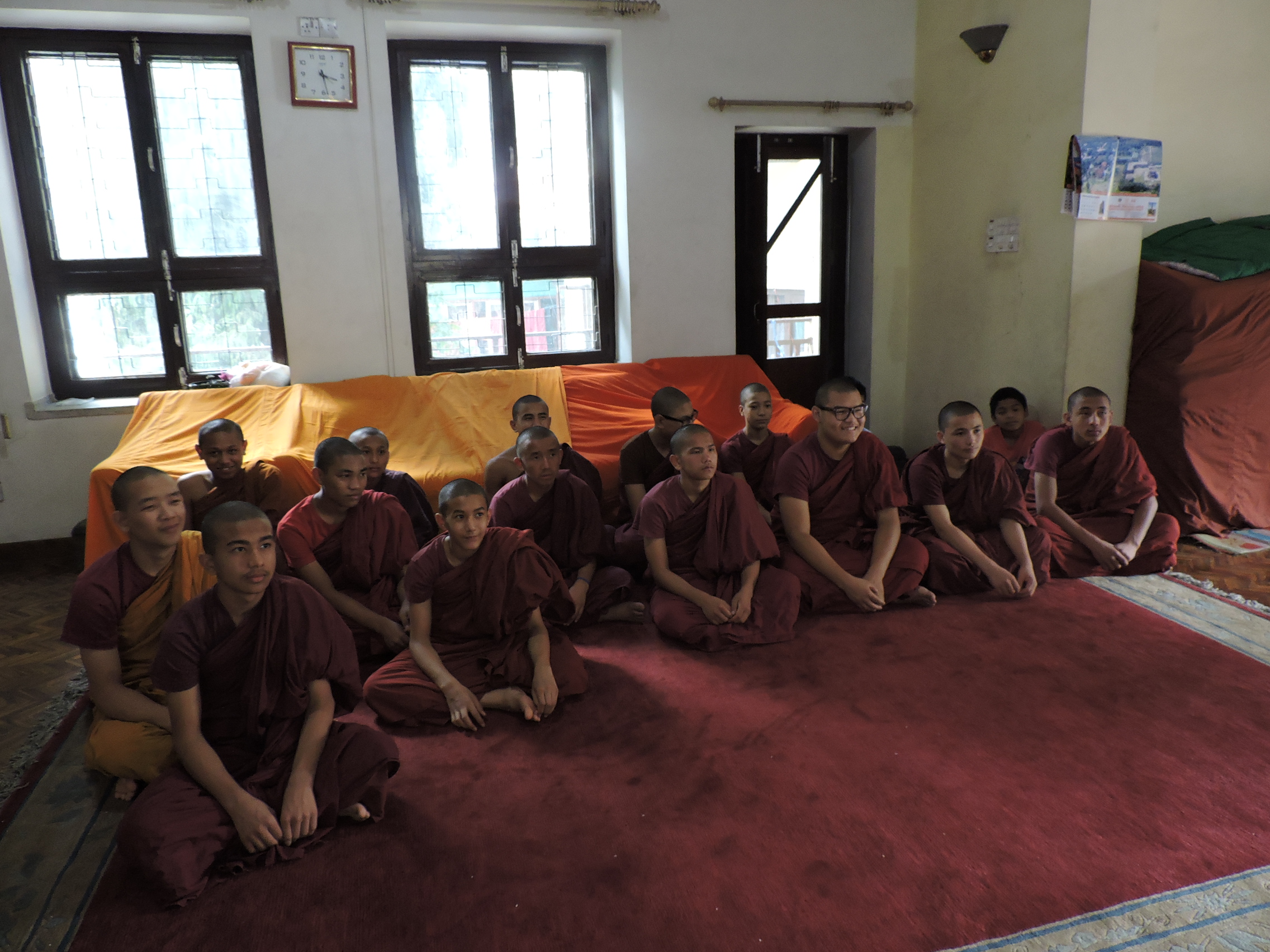
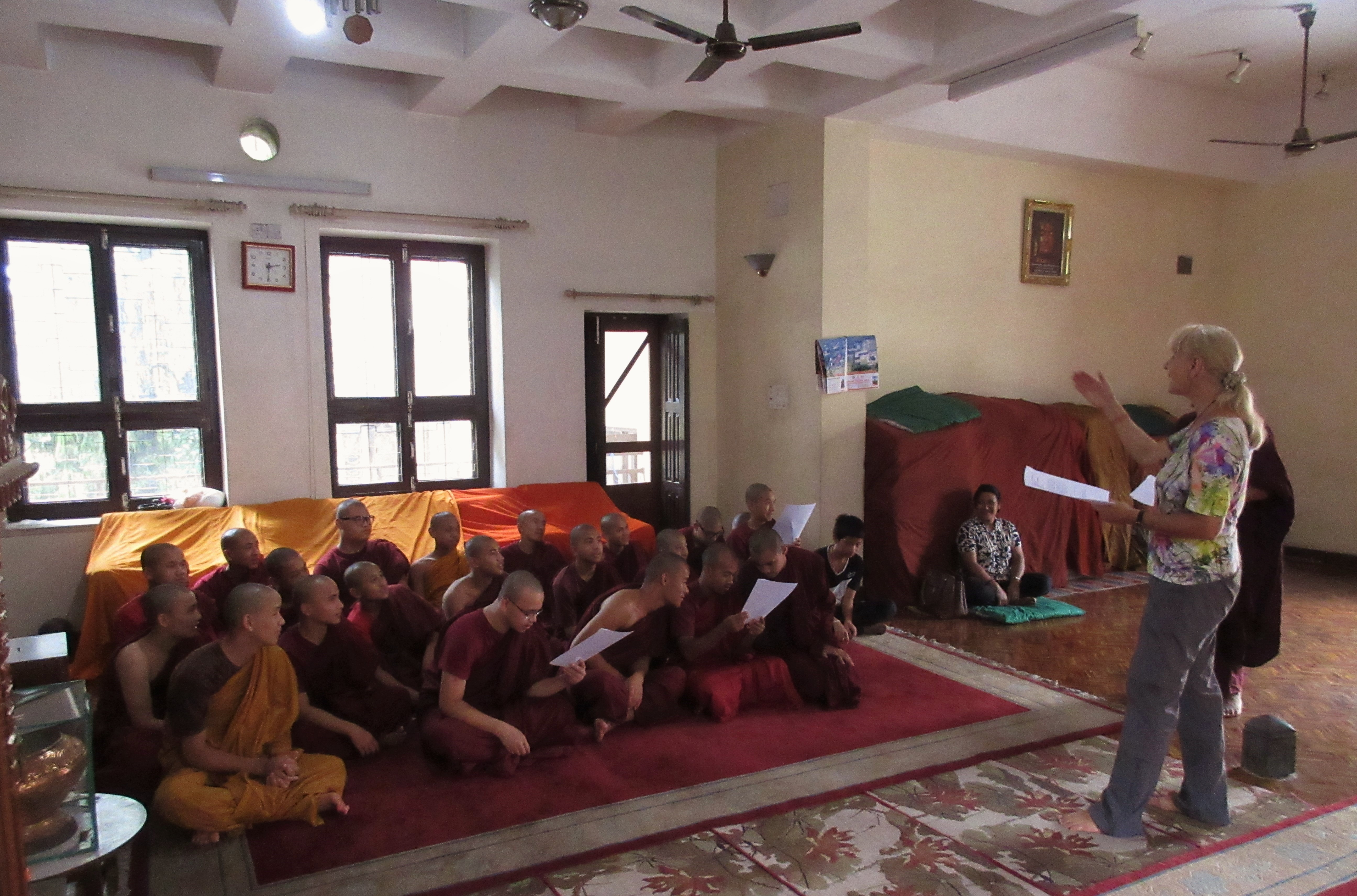
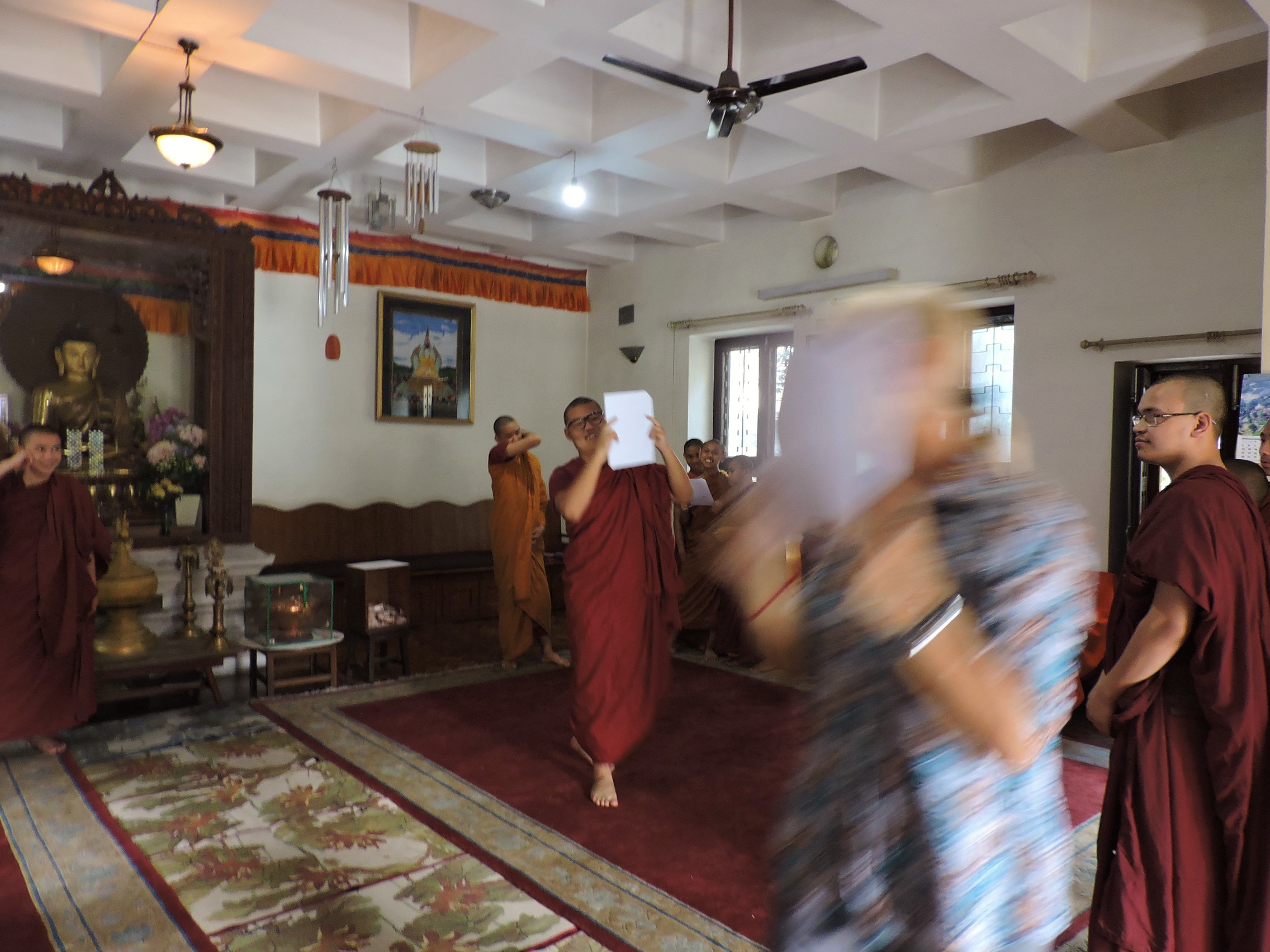
The monastery is still there, with a few cracks but nothing broken, the abbott of the monastery is the same and the headmaster of the school a former student remembered me for the songs I did in my lessons (Beatles with the elder students, didactic songs with the younger ones). He had liked this techique (as he said) and had continued to improve his English with songs and later with films. We, the abbott, the headmaster and I agreed to try out my little theatre play with the students. The play is about the life of the Buddha. I had started to write the play many years ago when I had the idea of combining two things: teaching to speak English and dealing with the life of the Buddha. The students responded to the play with more enthusiasm than I had expected. As the headmaster told me, in spite of being a bit shy in the beginning they enjoyed acting. In the pictures you see them all being very serious and concentrated but in actual fact, we had a lot of fun and a good many laughs together.

Curious

Curious


Learning should be fun

Learning should be fun; first practice still sitting


Real actors are not just sitting on the floor

Real actors are not just sitting on the floor


Trees and flowers populate the scenes. There is a part for each student.

Trees and flowers populate the scenes. There is a part for each student.


the father and the mother of Siddhartha

Siddhartha’s father and mother (the laughs!)


Me, teaching to act

Me, teaching to act

After this boost in motivation I will now finish the play, formatt it and then send it to them.

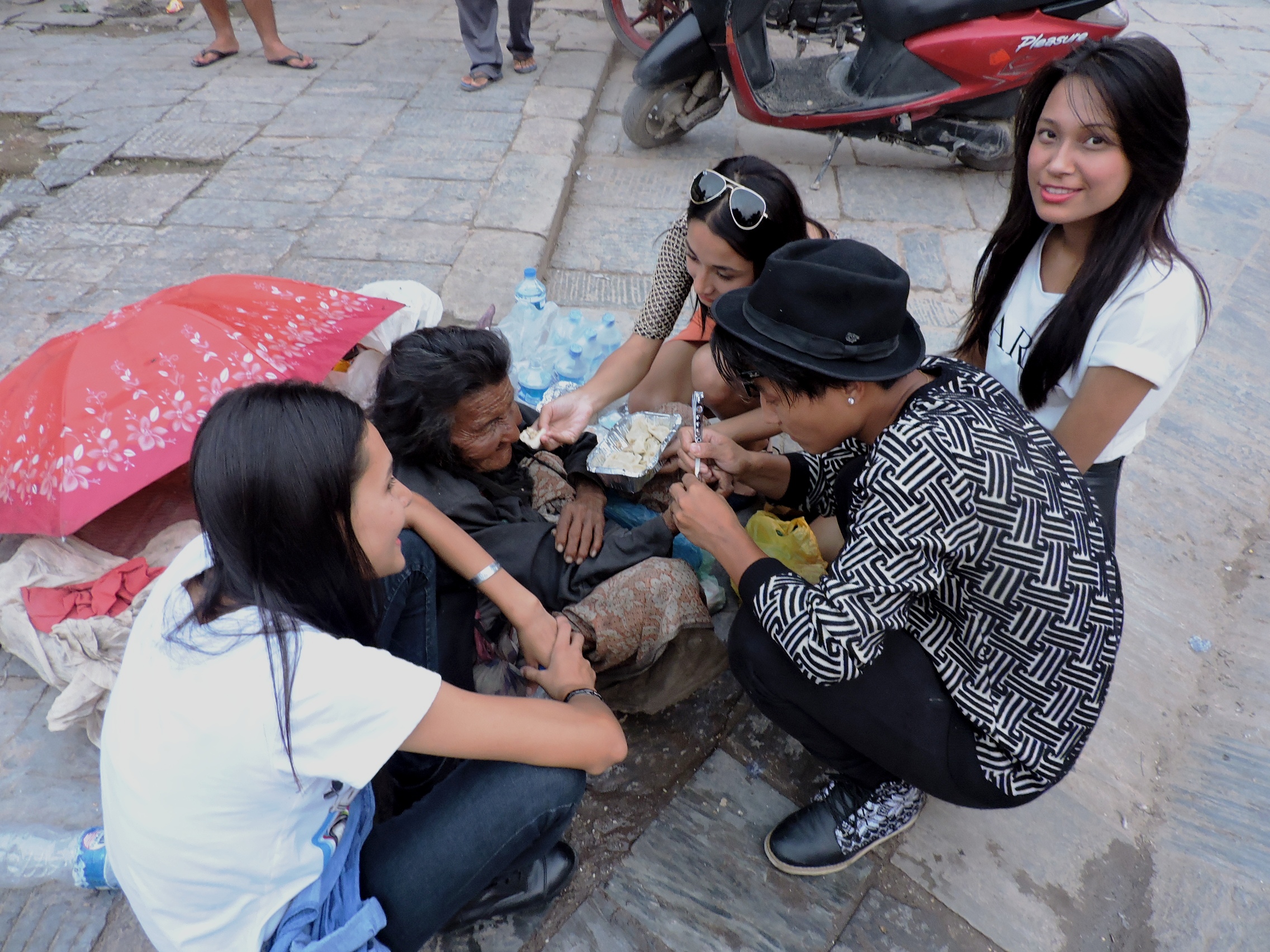
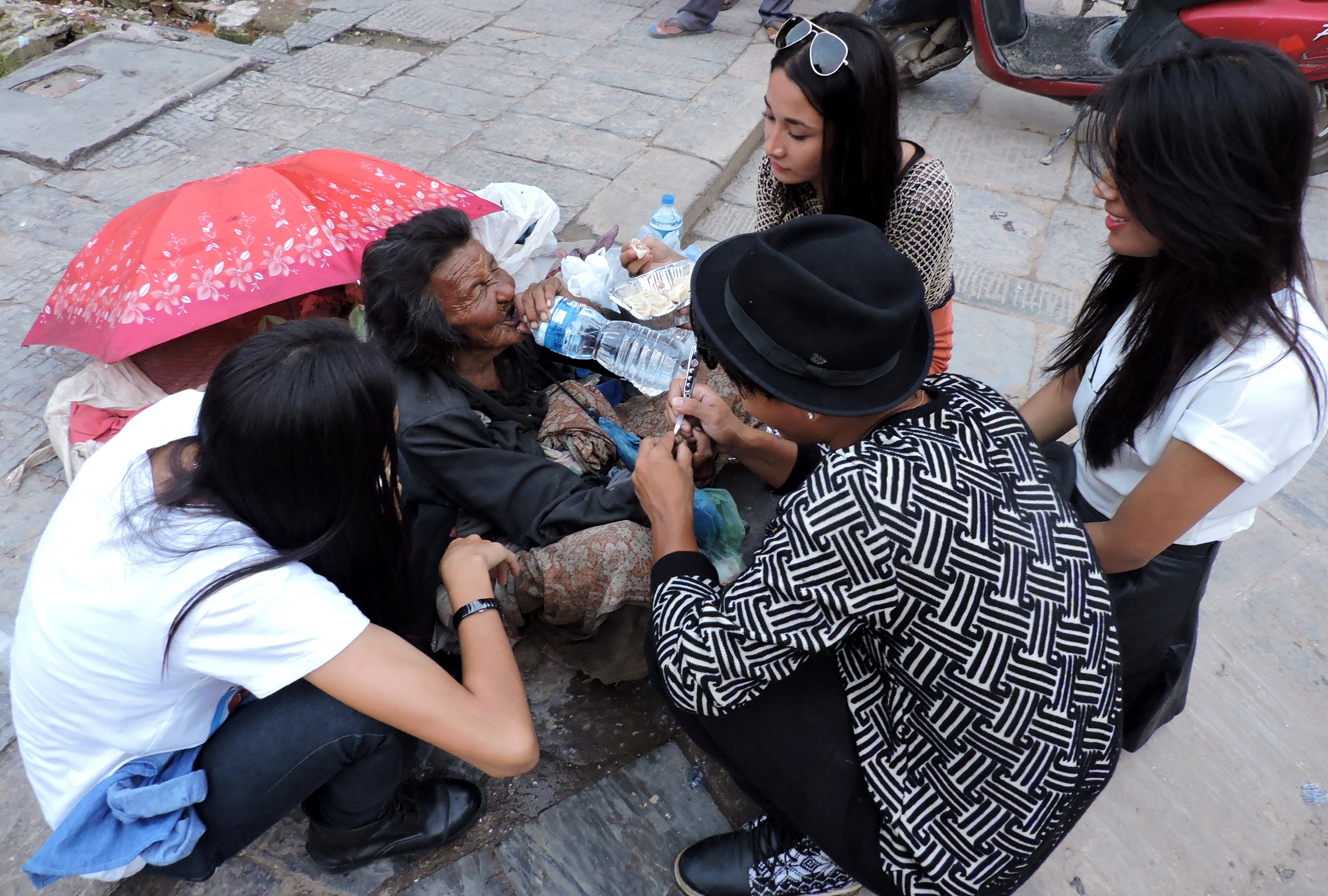
On one of my last evenings on Durbar Square in Kathmandu I came across these youngsters. They were taking care of an old homeless woman, giving her to eat and to drink and the young chap cleaning her fingernails. As young as they are, they must have realized that being kept clean has something to do with dignity.

Feeding the old lady Momos

Feeding the old lady Momos


Giving her water to drink

Giving her water to drink

And if they go to the discotheque after their good deed, so much the better.

Kumari

Ok, no problem.

Ok, no problem.

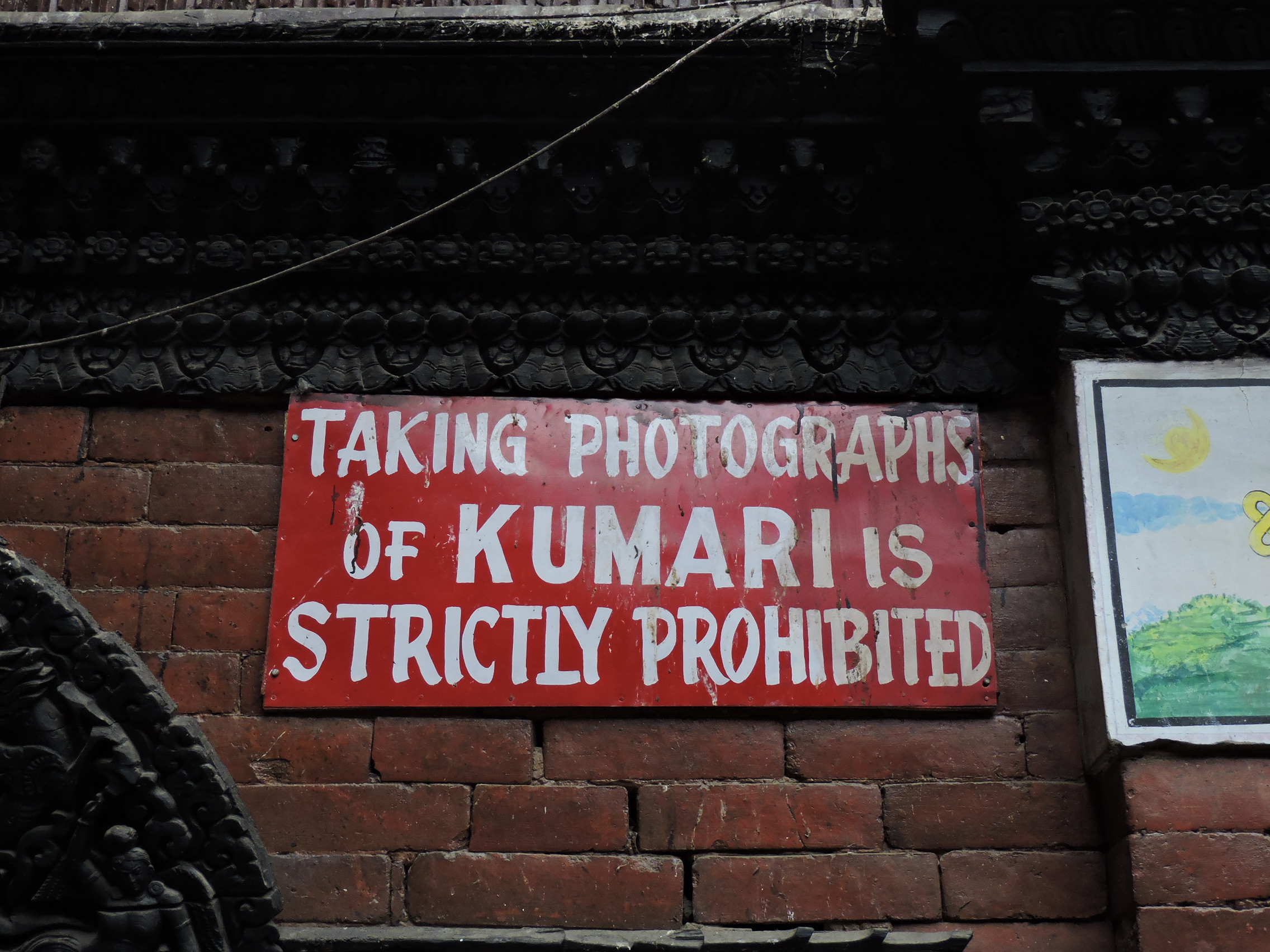
The last child I am presenting to you remains without a picture. It is forbidden to take fotos of her, because she is not a child, she is the Kumari, a living goddess, … and who wouldn’t want to be one! Except, when you google her name and read about the life she leads, you can’t help thinking that Dalit street children probably lead a healthier life from the psychological point of view than the poor little goddess that spends her whole childhood until her first menstruation locked away in her special home. She comes out only on festivities or when an earthquake threatens to wreck her house.

A young man in Bhaktapur tells me that their Kumari leads a normal life and gets locked away only for a short period of time together with her parents: a compromise between tradition and a child’s right, because believe it or not, even Kumaris have got one life only.

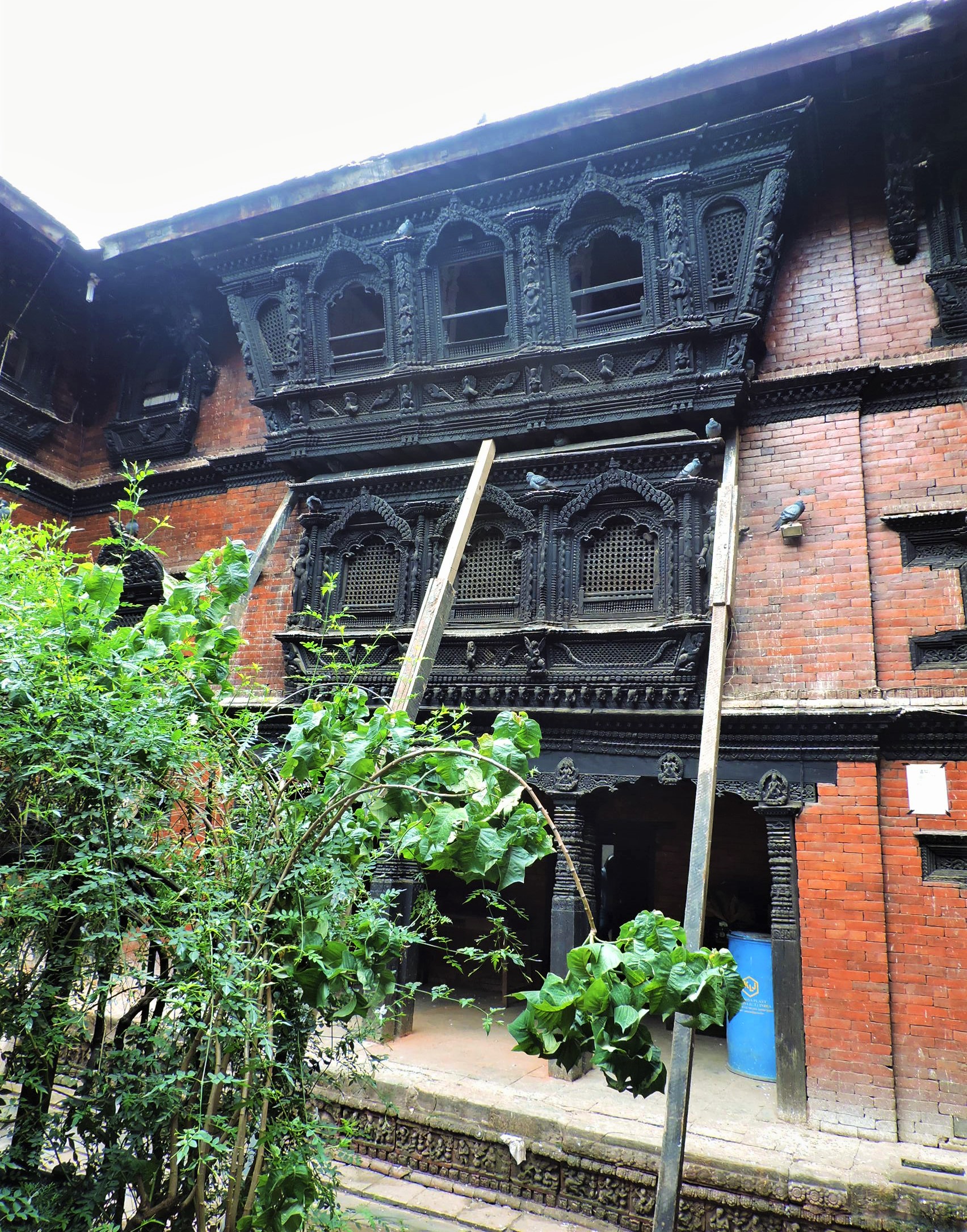
Different in Kathmandu, where every day tourists gather in the little courtyard at Kumari Marg until she appears at a window and looks down at the people with her big, earnest kajal lined eyes.

Listening to the tourists it seems to me that even Europeans believe in child goddesses and have never heard about a child’s right to play, to have peers around them, to go to school, to have a toy, a favorate dish, to walk with her own feet, to laugh out loud, to throw a fit … all rights that they would claim for their own children at any time.

Still standing amid destruction: at 4 p.m. she appears at the window for just a minute

Still standing amid destruction: at 4 p.m. she appears at the window for just a minute

Let’s hope that Kathmandu one day will find a similar compromise for the life of the little Kumari like in Bhaktapur.

Bye bye

Gerburg

Best Kids 1

12 Sep

Wishing for …

“Children learn by doing, and Play is their work”

Children learn by doing, and Play is their Work

Kindergarten in Kathmandu, Bishalnagar

In the displaced people’s camp in Thali, thanks to private initiative the evacuees’ children lead an almost normal life.


In the camp in Thali; playing and having a biscuit

Thali: playing and having a biscuit


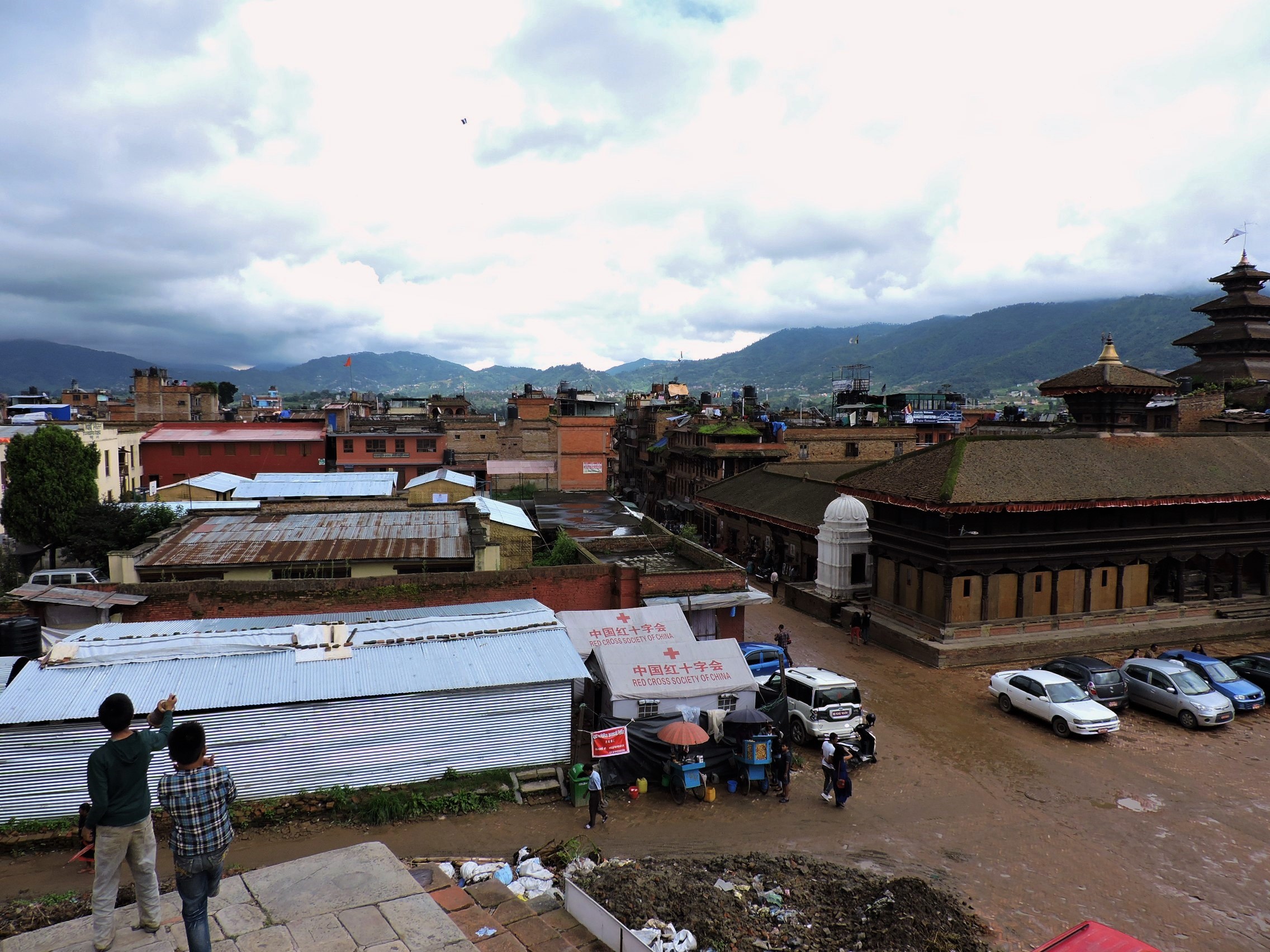
Flying kites over Bhaktapur

Flying kites over Bhaktapur (the kite is difficult to see; below: tents of the Red Cross China)


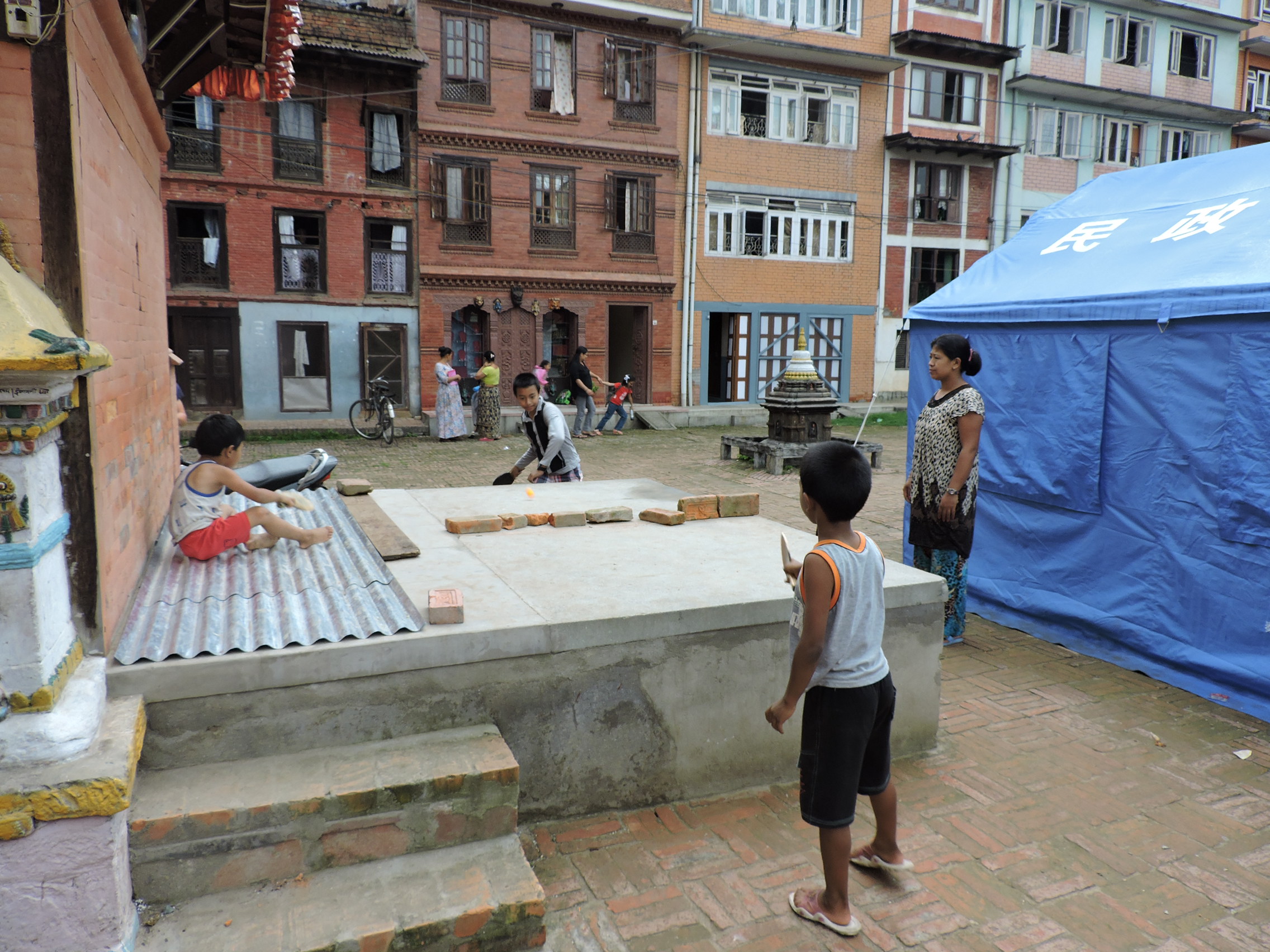
Improvising ping pong in Patan

Improvising ping-pong in Patan (on the right tent of Red Cross China)


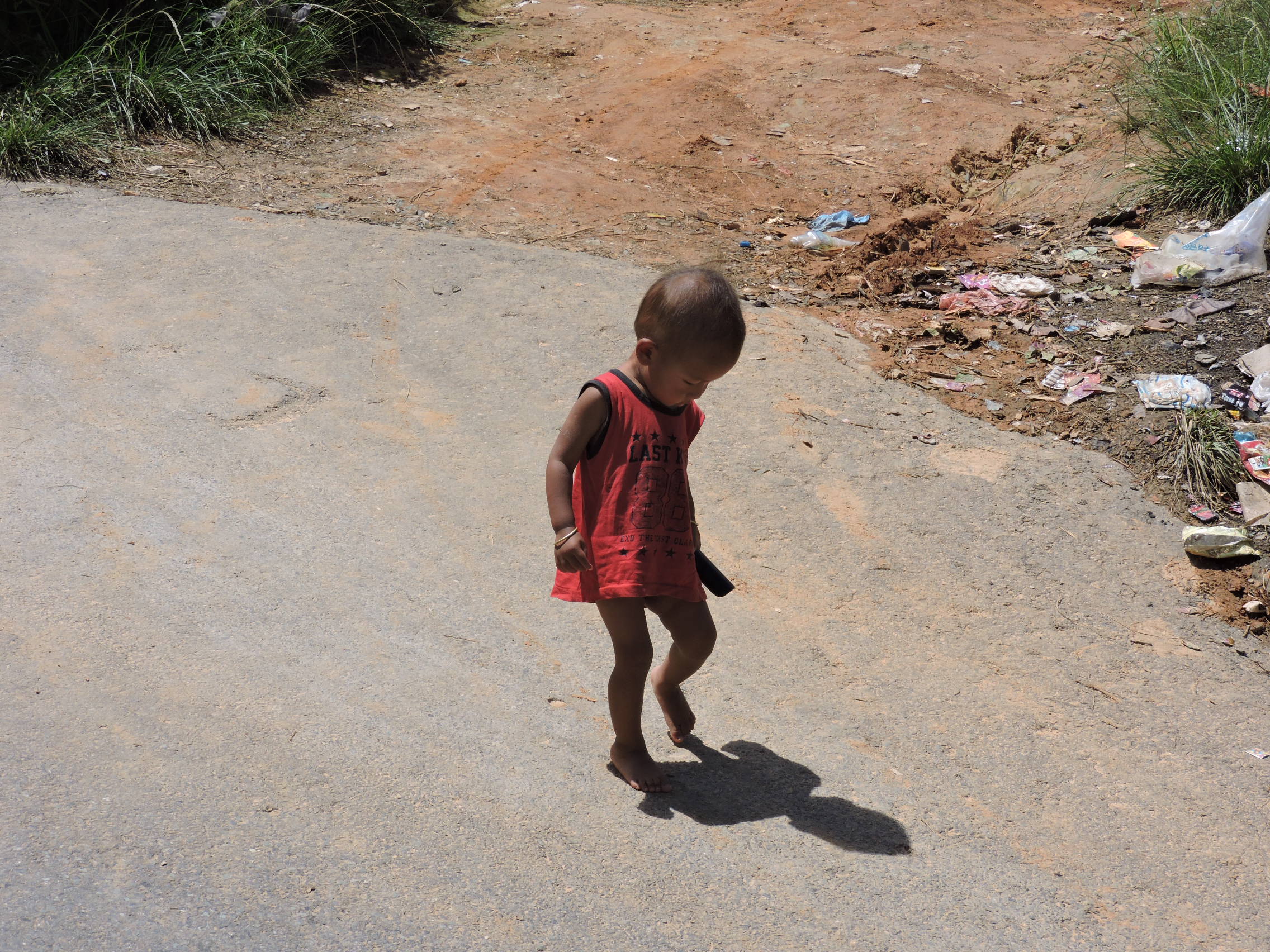
A shadow as a toy

Who knows where this guy is gonna lead me?

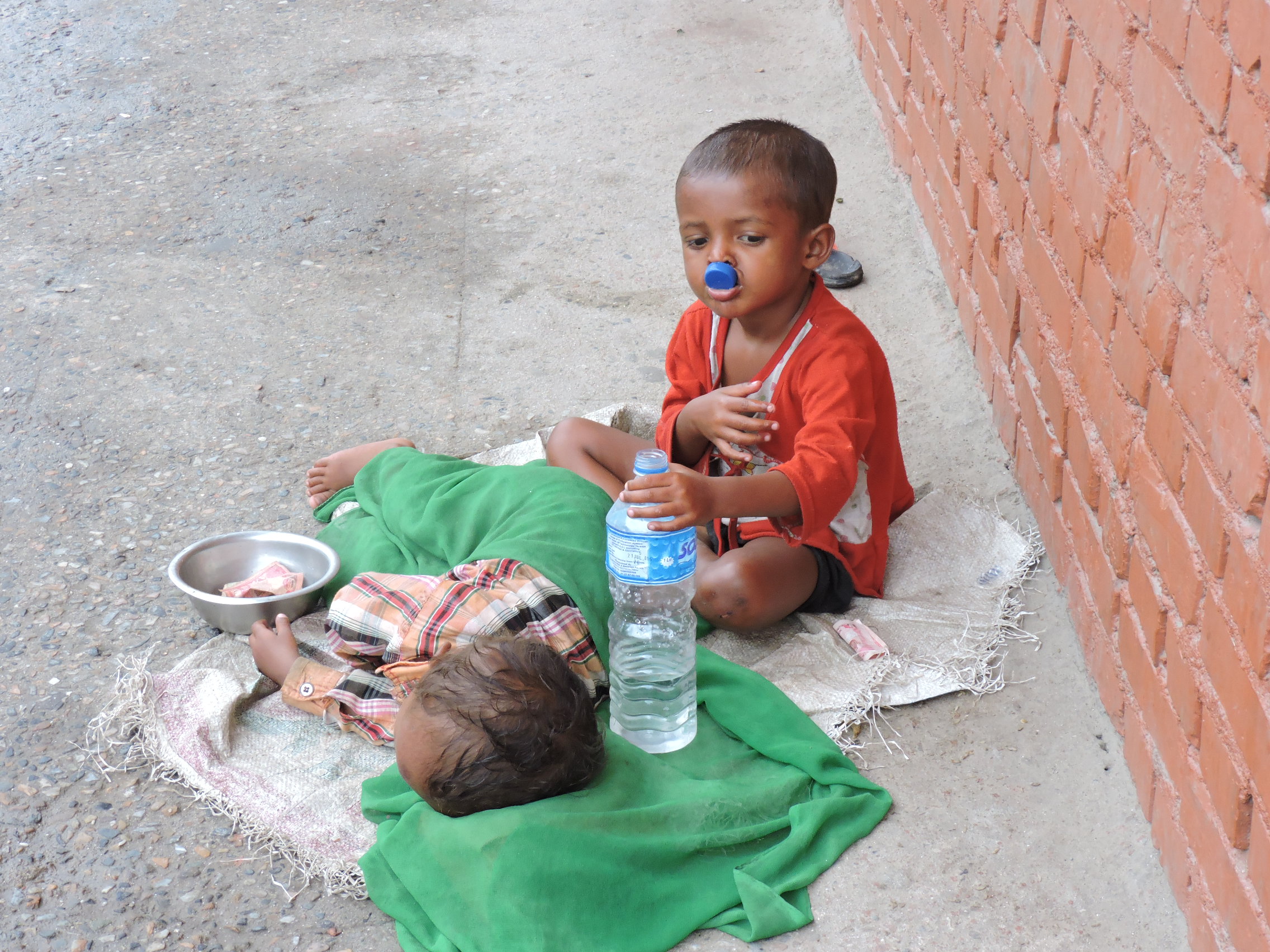
Reality is …

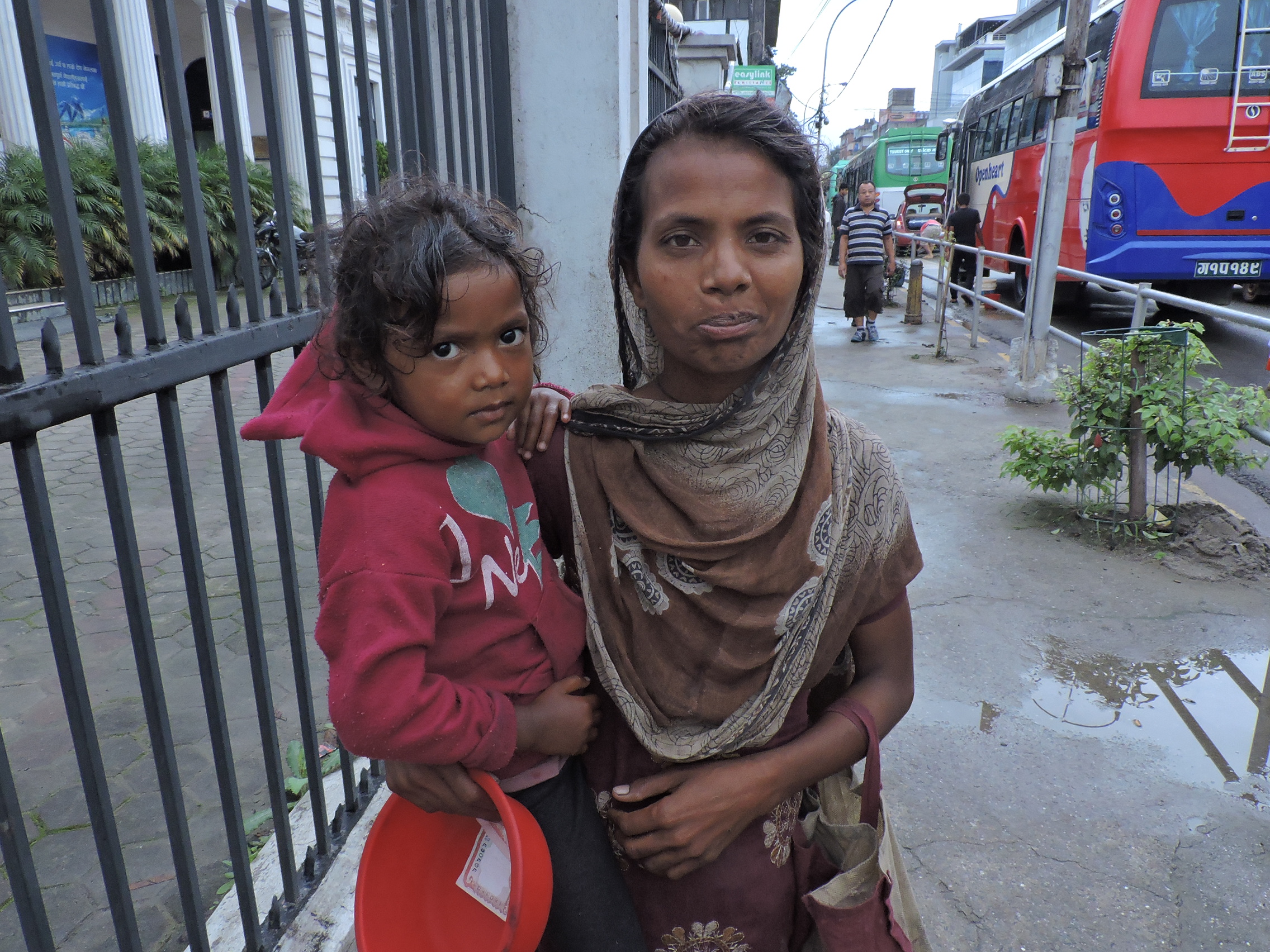
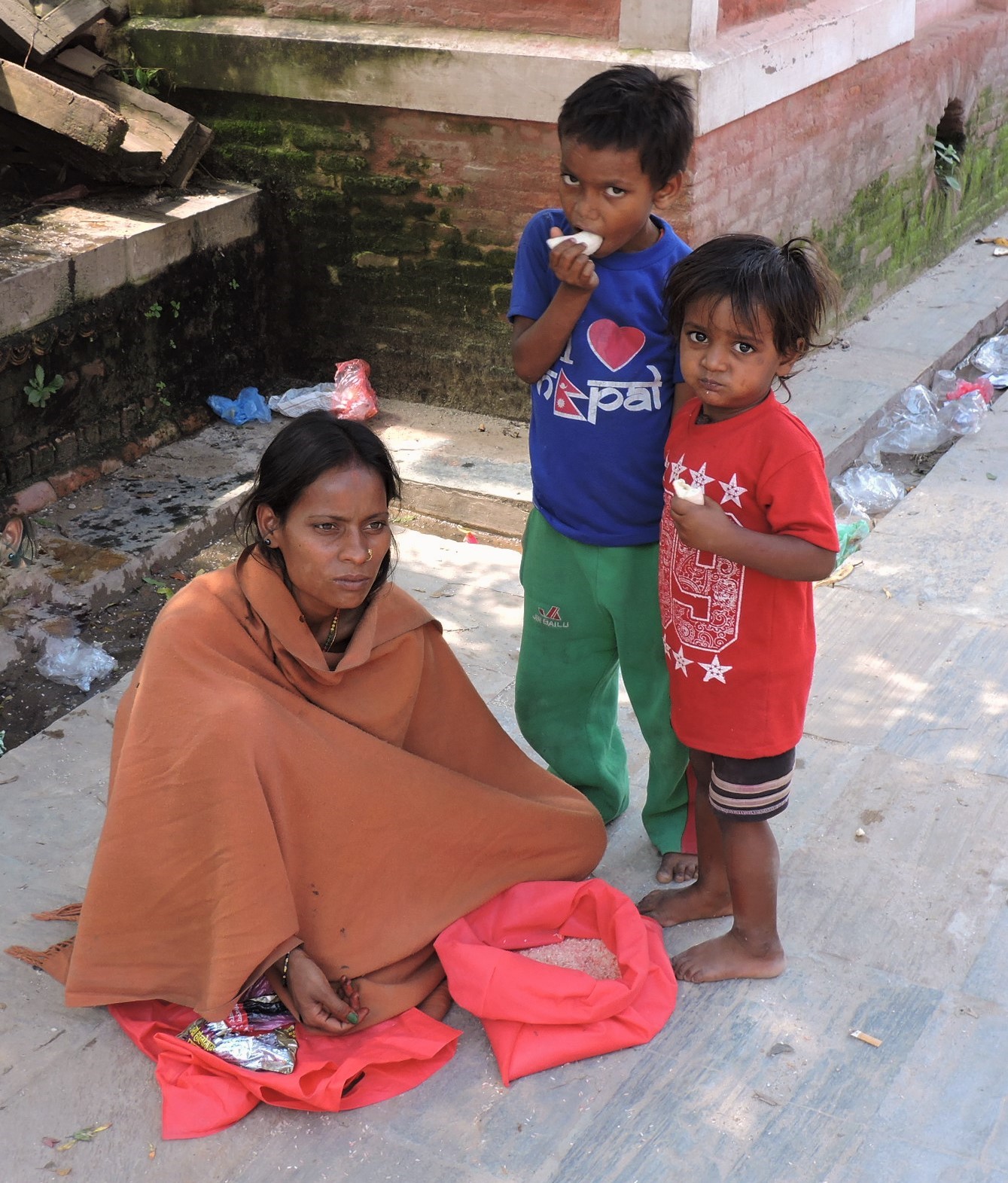
… begging for money

still, they were put there with a minimum of care

Still, they were put there with a minimum of care


Having come all the way from the South to Kathmandu

Having come all the way from the South (Terai) to Kathmandu hoping to find work but ending up in the street begging

At the Pashupatinath temples there was nothing else at hand than the small bananas meant for ritual offerings. I bought them all. It took a few seconds for I don’t know how many kids to appear out of nowhere and to finish them. Who knows where the food offerings in the temples go in the end. The gods will understand that mine go straight to the living humans.

no amount of bananas could ever be enough

No amount of bananas could ever be enough


too shy to ask

Too shy to ask (Patan, Krishna Mandir)


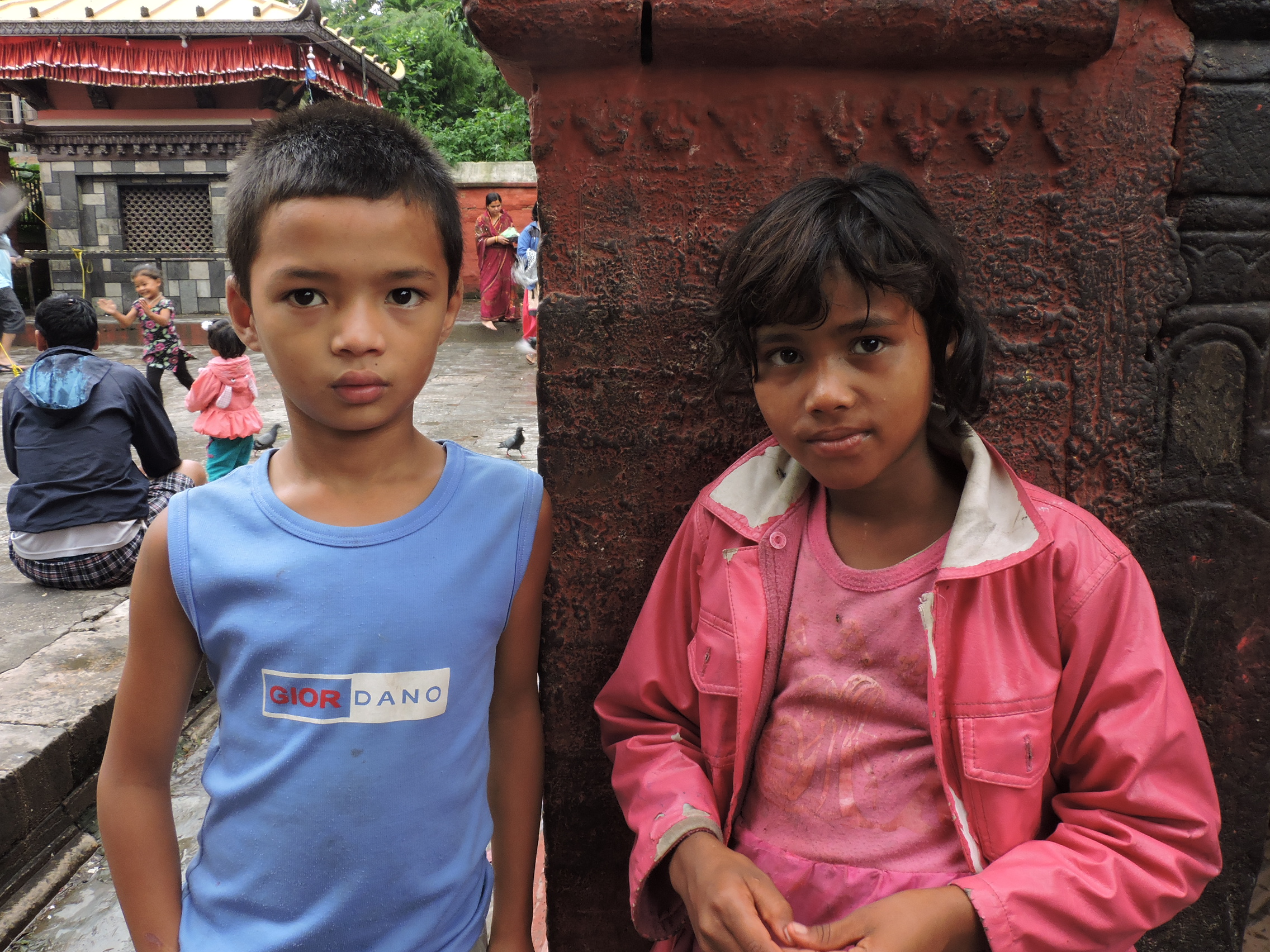
Not too shy to ask but not too needy either

Not too shy to ask but not too needy either. Me: “Do you speak English?” They: “Yes, money, give me money, he he he.” Giggle, giggle. (Thamel, Kathmandu)

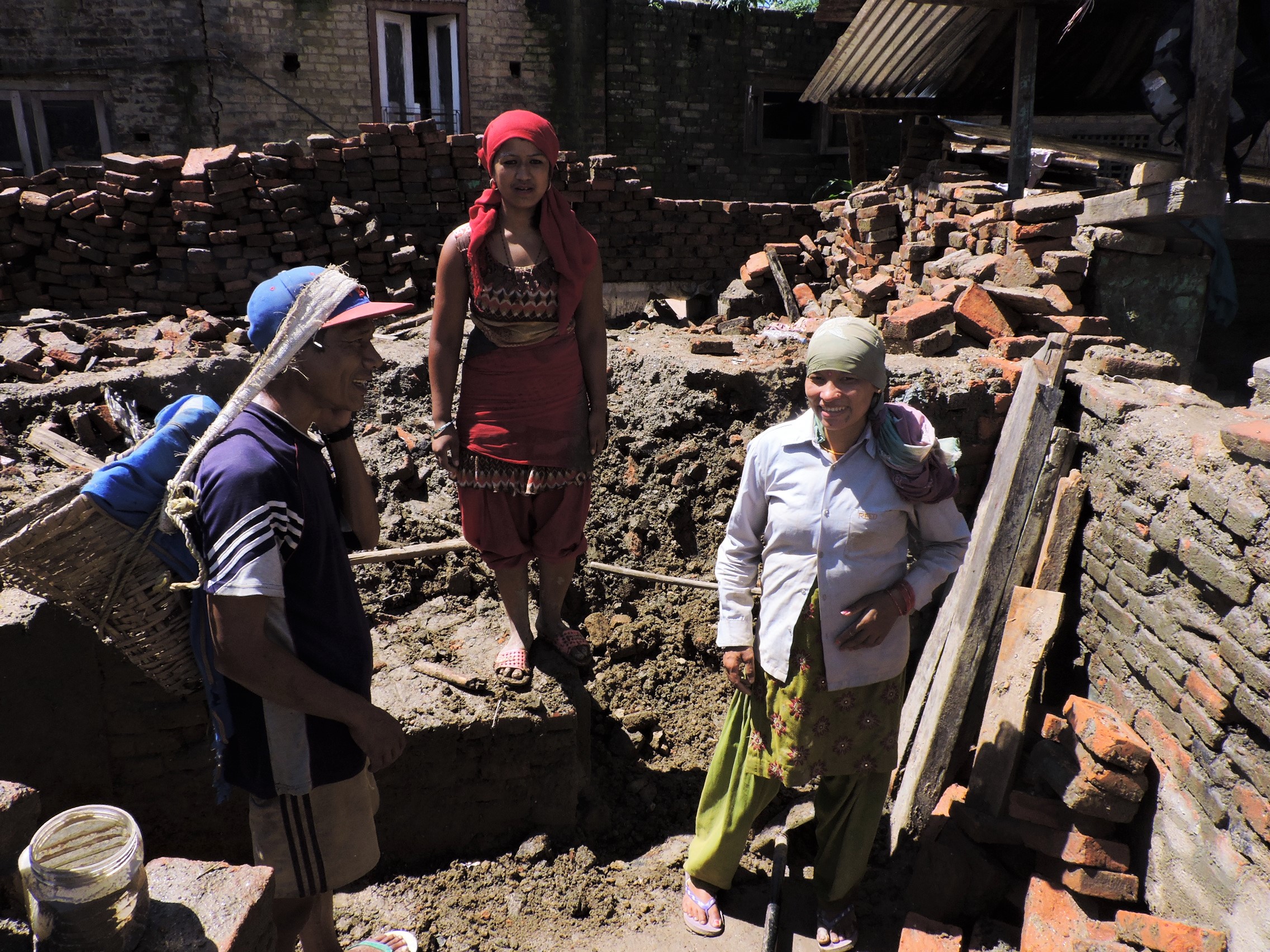
Living in poverty, even before being born. Pregnant women do hard physical work, here rebuilding in Sanku (20 km east of Kathmandu), the worst quake-ravaged place in the area.

baby on the way, parents and relatives building a makeshift home

Thank you for smiling


home of the baby to be born

Home of the baby to be born; a blue plastic sheet for a roof


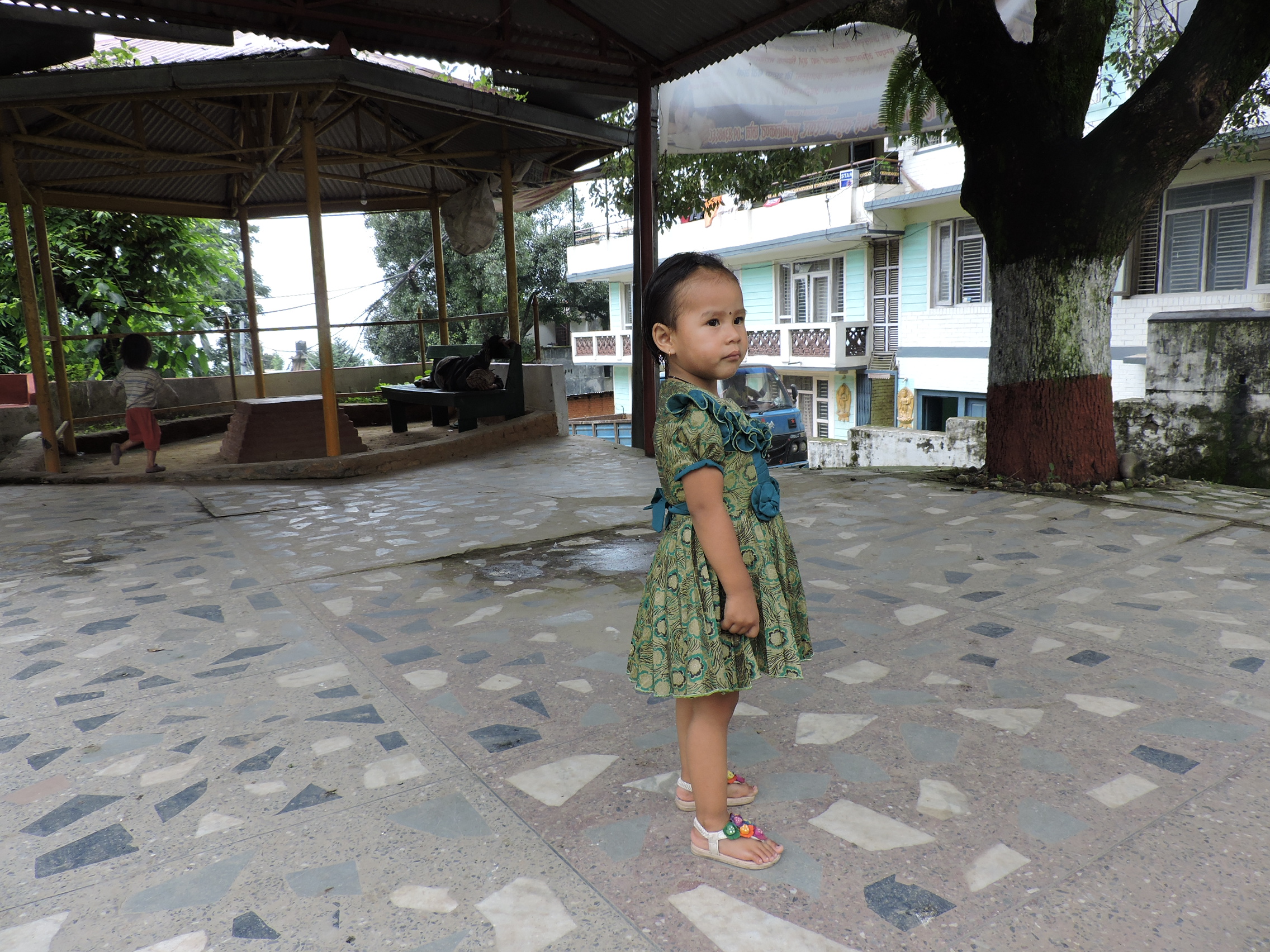
dressed up to take the bus to Kathmandu with mum

Dressed up to take the bus from Budhanilkantha to Kathmandu with mum (in the back the child below)


It's not the money, it's all the rest that stinks

It’s not the money, it’s all the rest that stinks

Finding solace in the sight of school children.

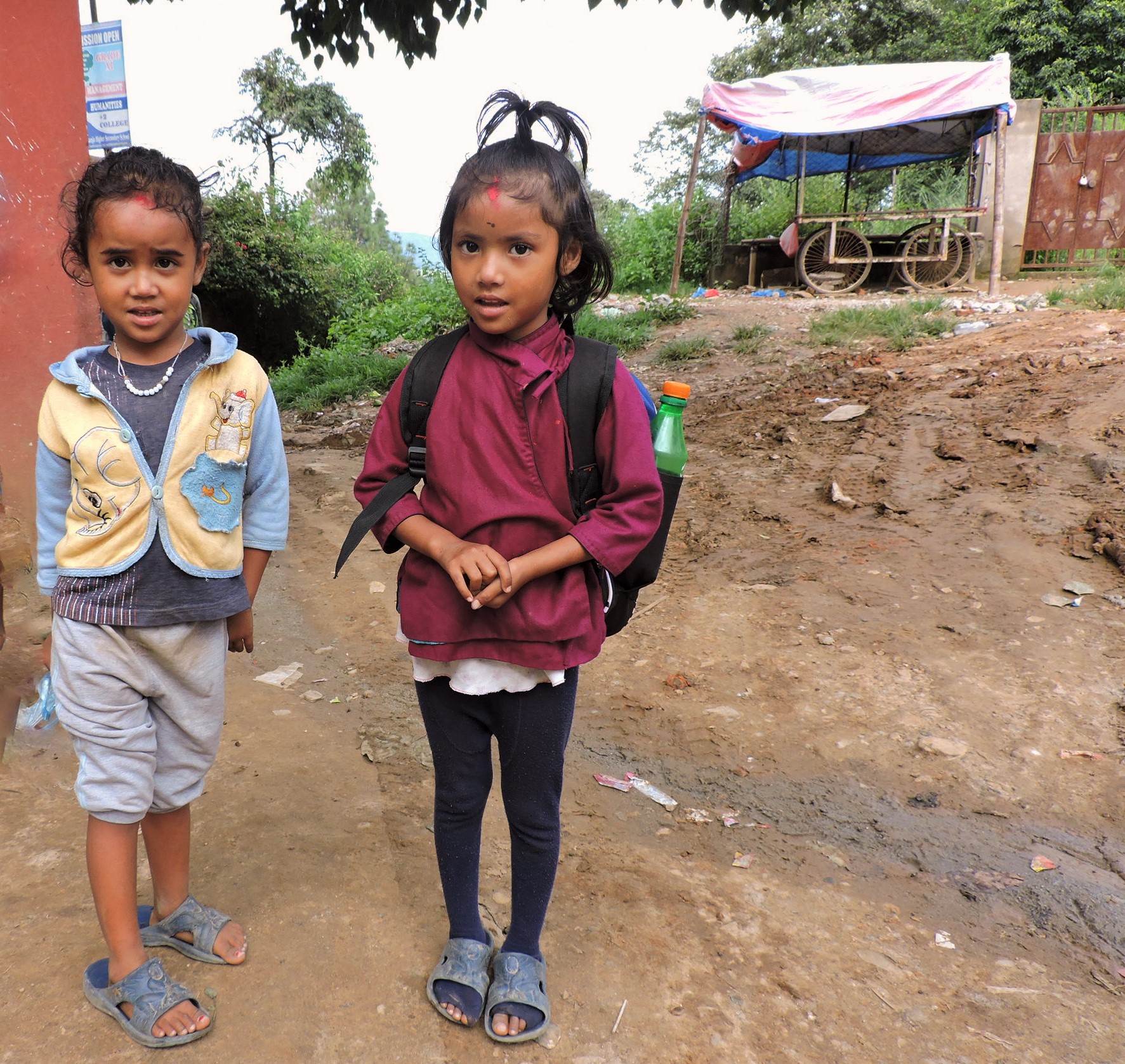
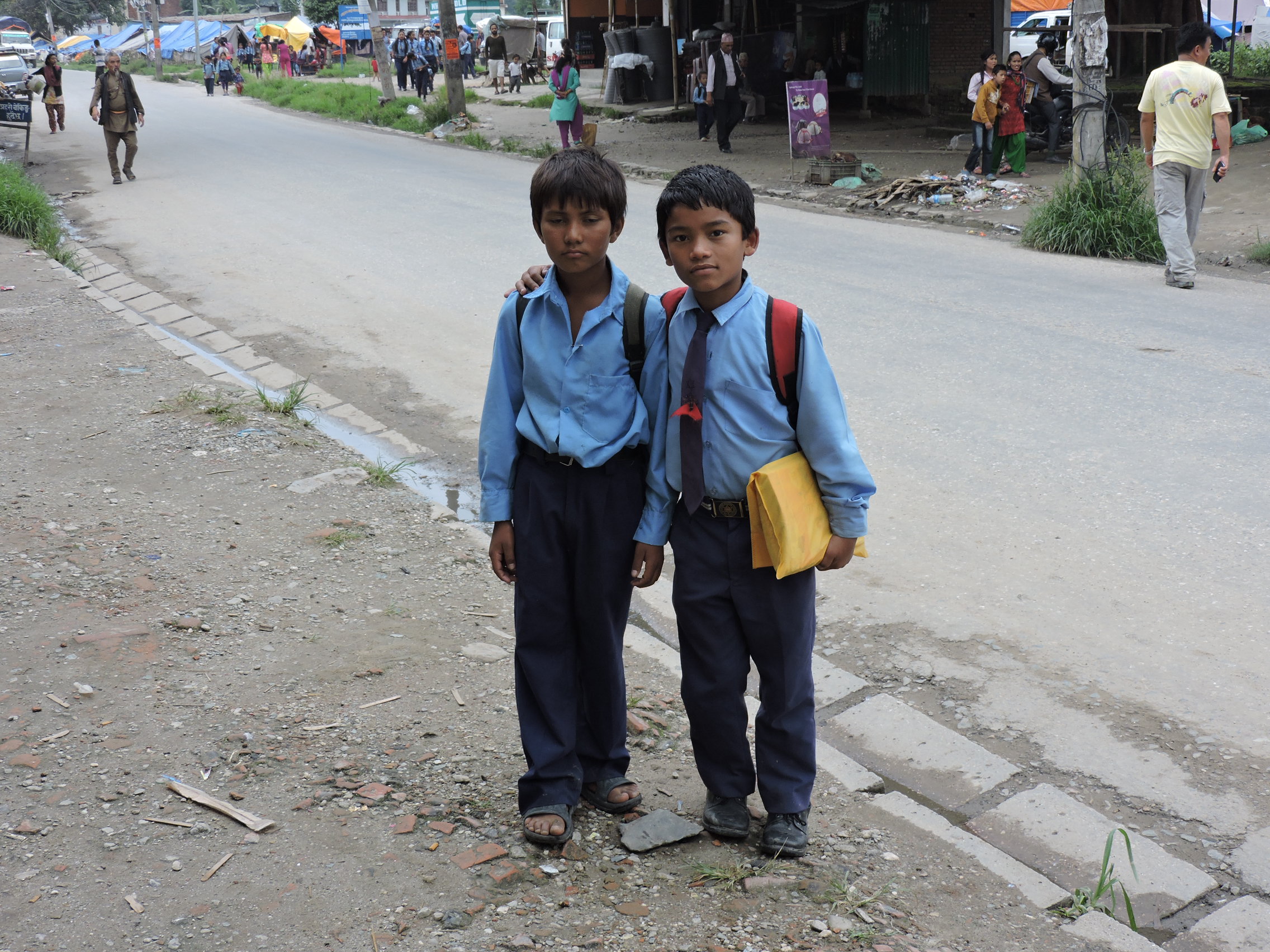
In the Kathmandu Valley and in towns the majority of children go to school at least for some time, a taxi driver from Pokhara tells me. He also says that in the rural areas children must help their parents a lot, and this keeps children, especially girls, from going to school.

coming home from school on a Sunday afternoon

Coming home from school on a Sunday afternoon, on the slopes of Kathmandu Valley, near the White Monastery


Mothers wash, iron and polish shoes every morning

Mothers wash and iron clothes and polish shoes for school every day (Thali)

Devout youngsters:

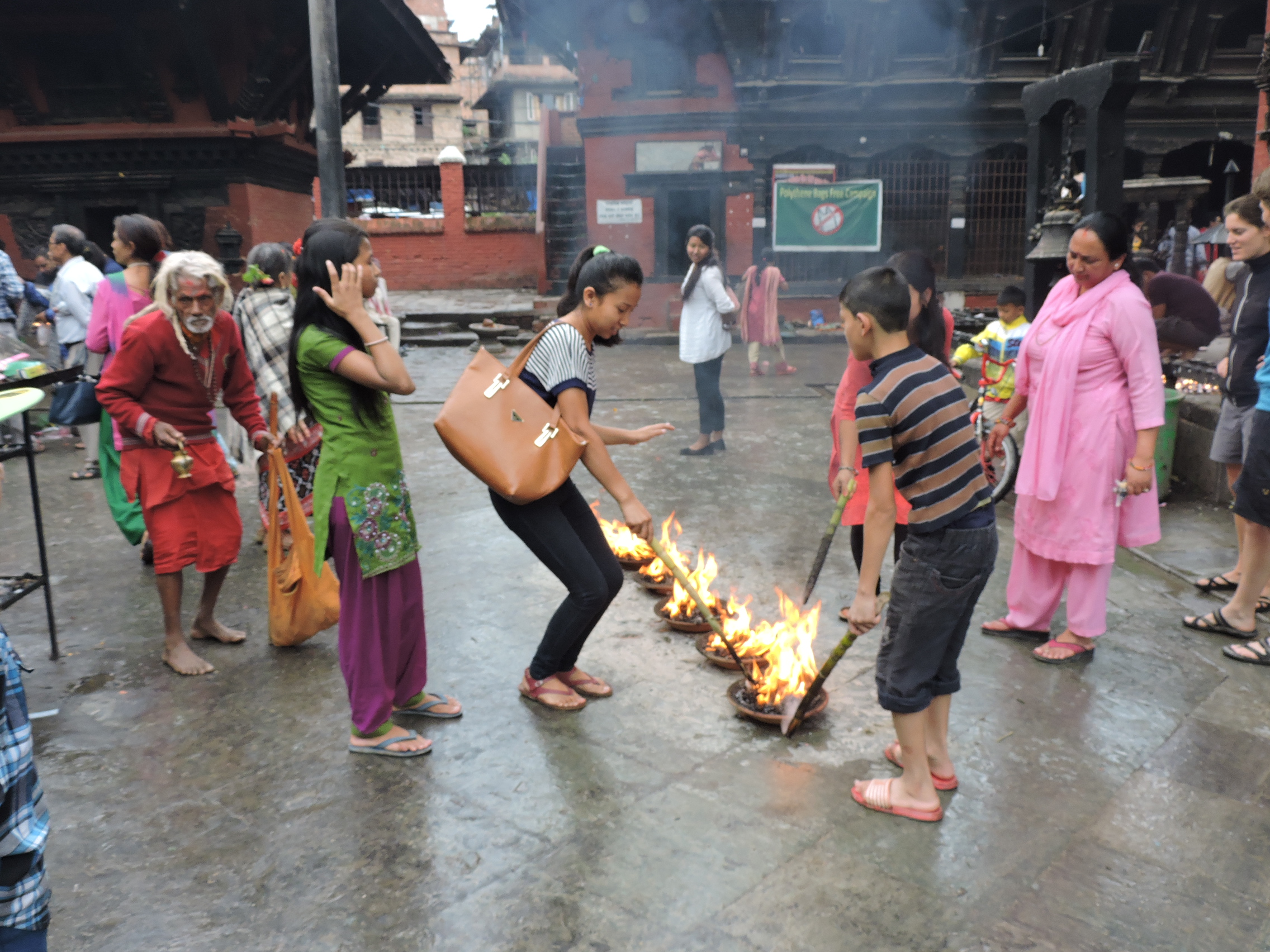
They visit their religious sites with friends, boyfriends, girlfriends to perform their rituals and take pictures and selfies while doing so, or they respectfully accompany their parents and grandparents and help them light butter lamps, fire for  worship, and offer flowers and foodstuff.

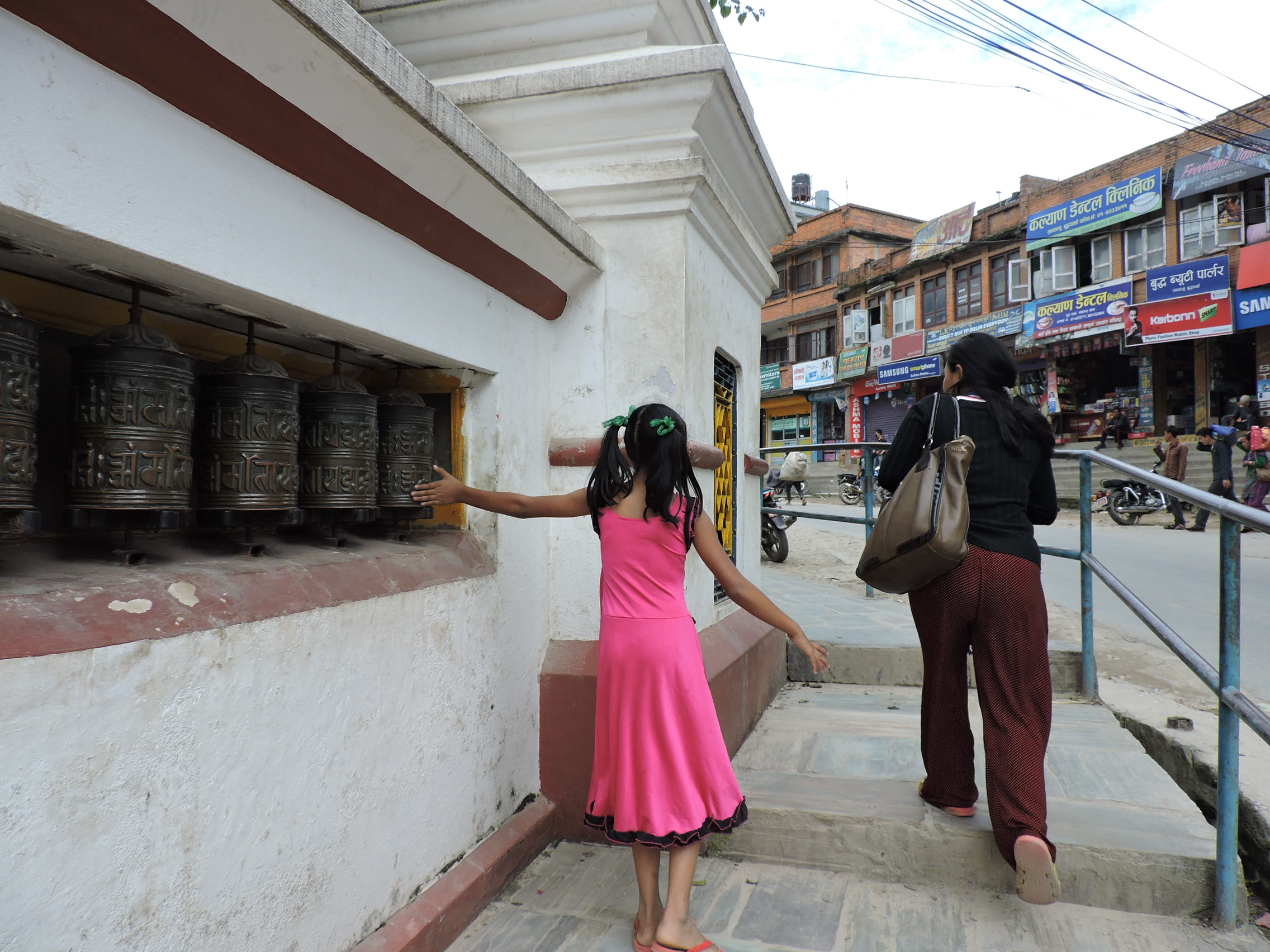
Wait Mum, another turn of the wheel, another prayer

Wait Mum, another turn of the wheel, another prayer, Om Mani Padme Hum


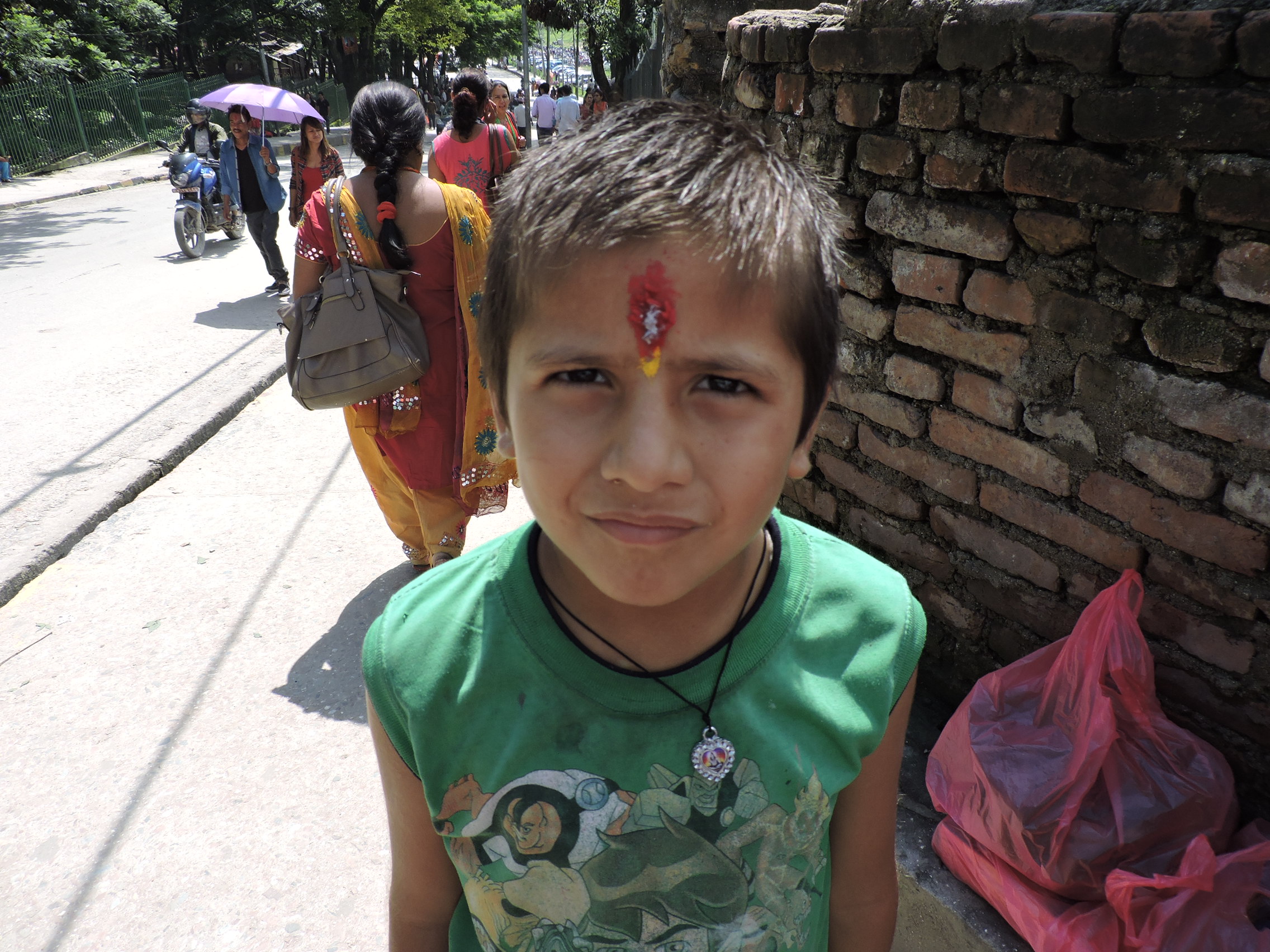
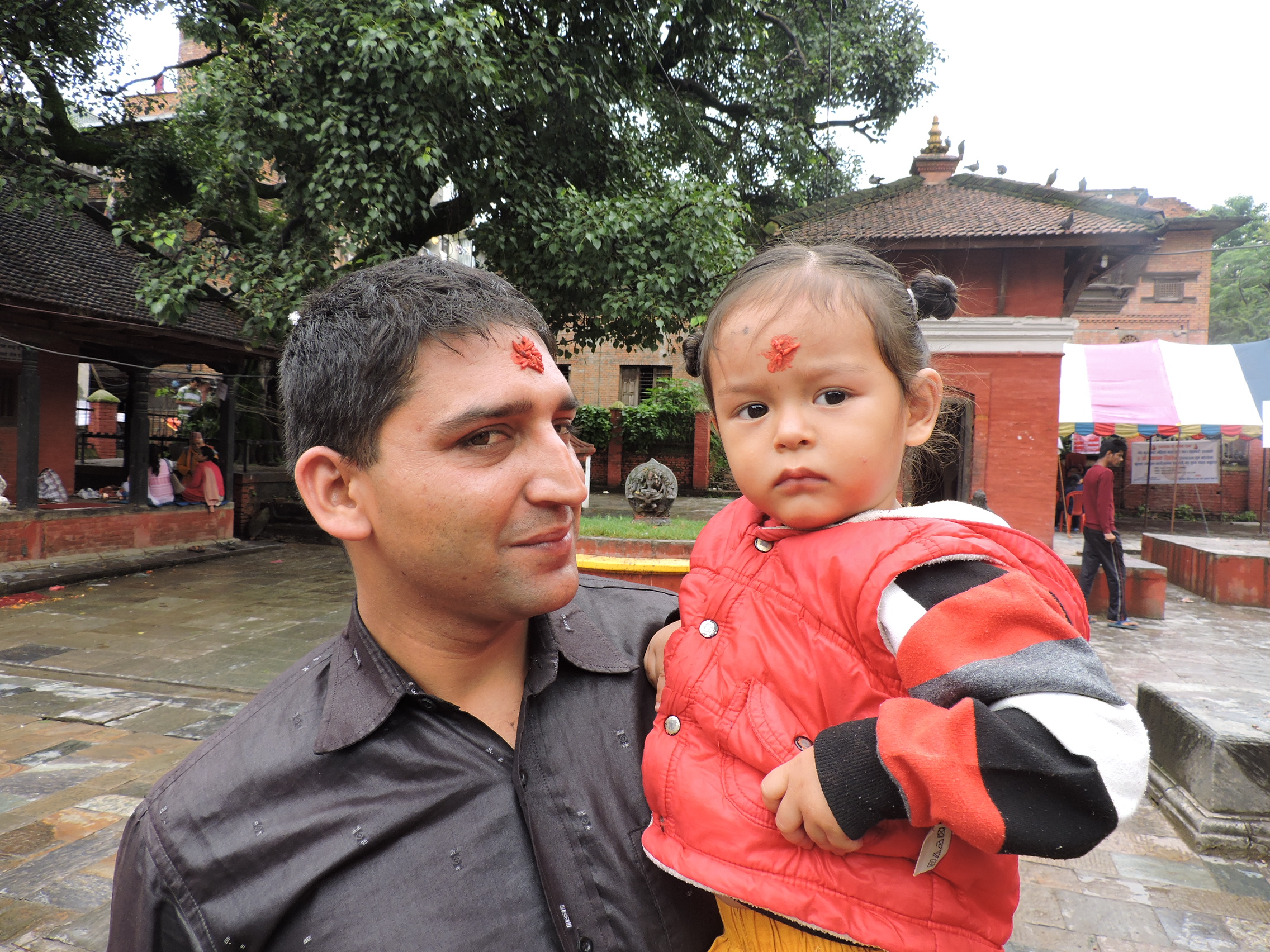
boy with tikka on his forehead, the centre of wisdom; no religious function without a tikka!

Boy with tikka on his forehead, the centre of wisdom; no religious function without a tikka!


Krishna Mandir, Patan

Krishna Mandir, Patan, young people tending a consecrated fire for prayers and offerings


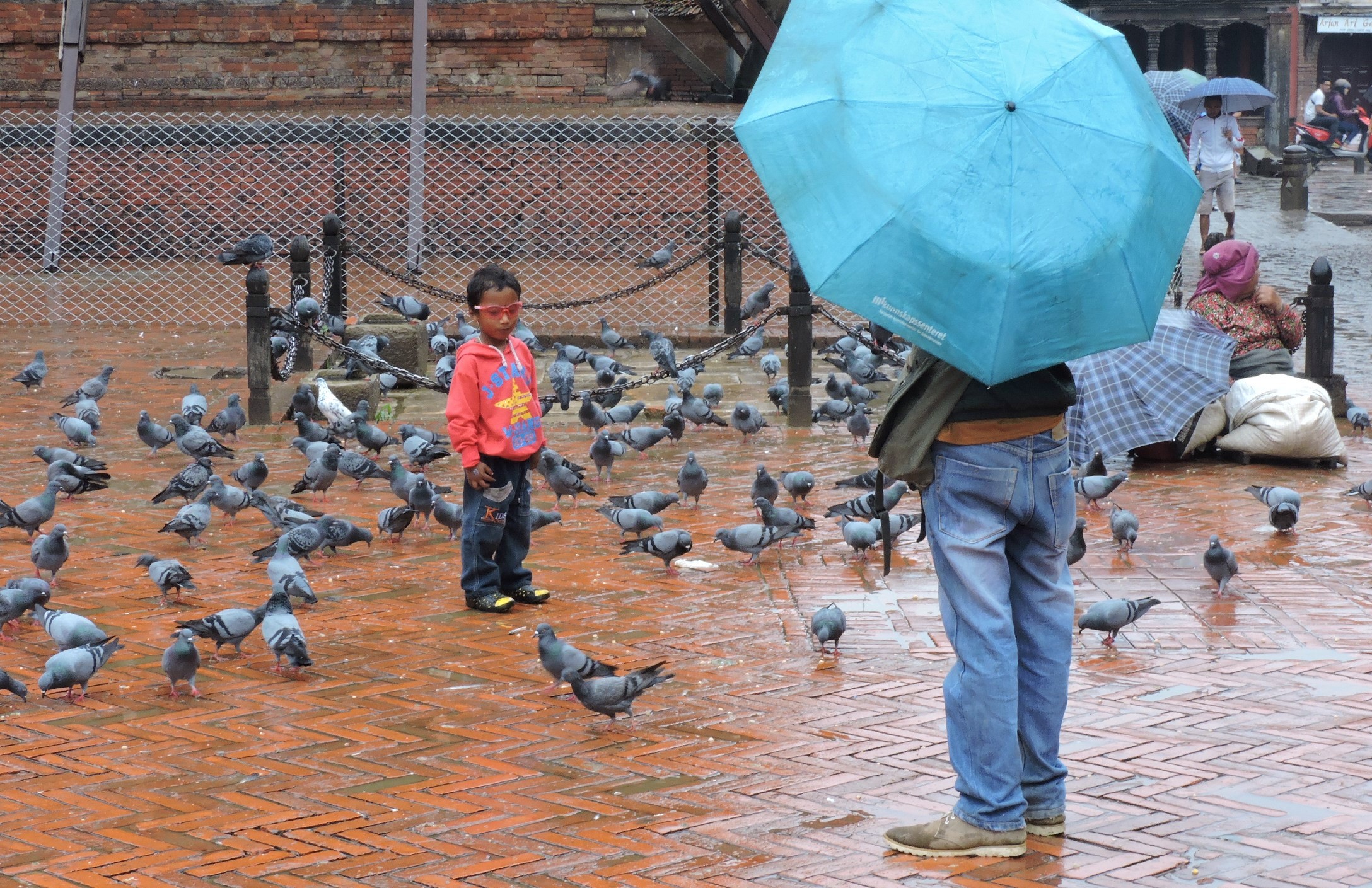
Daddy, whose soul? which pigeon? Better feed them all

Daddy, daddy, whose soul? which pigeon? Better feed them all! (Patan, Durbar Square)


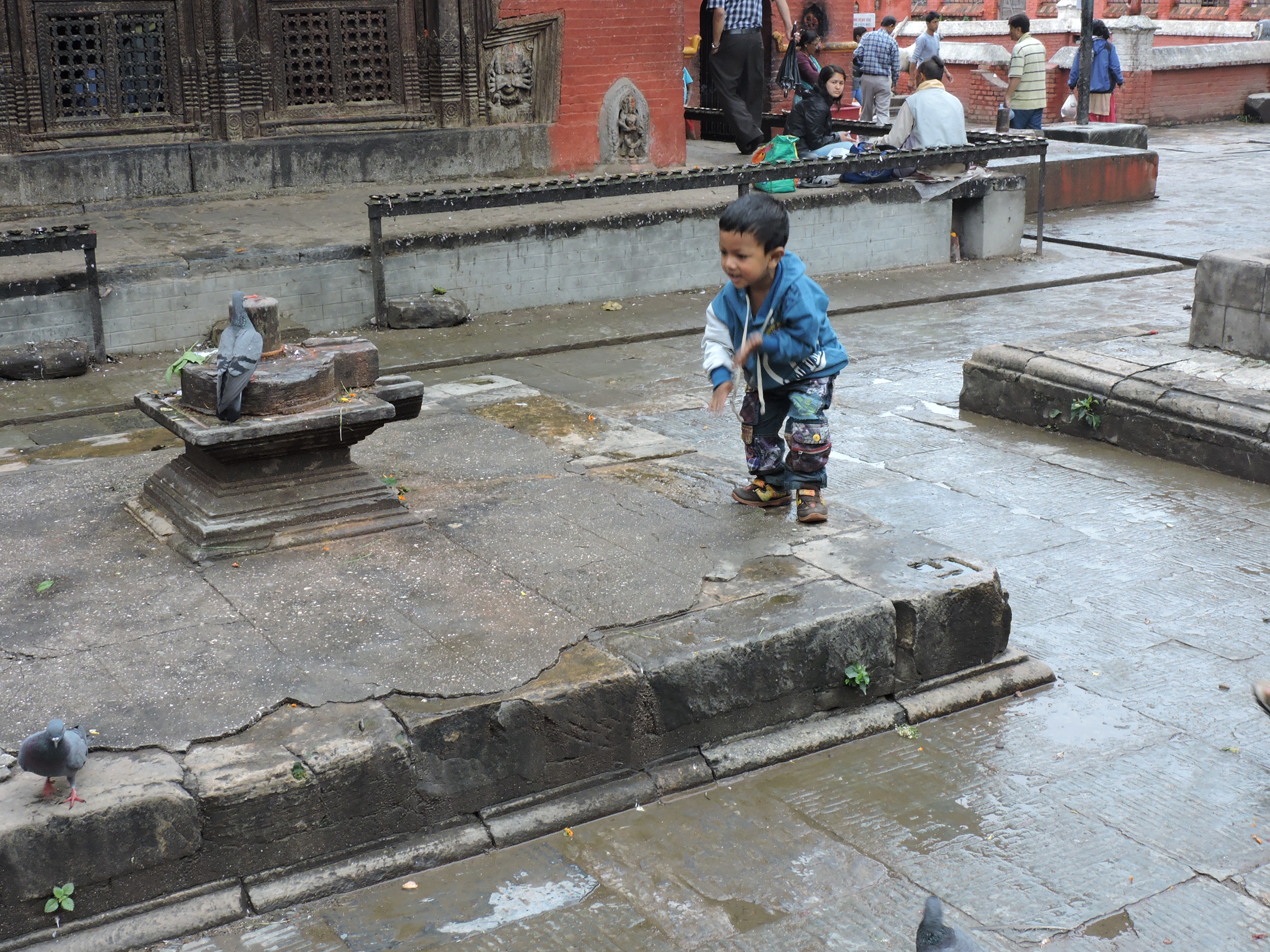
Soul or pigeon, I'm gonna get ye!

Soul or pigeon, I’m gonna get ye!


Got a tikka with daddy

Got a fresh tikka with daddy

Temple sites, temples, shivalingas, mandirs, everything that is used for rituals can become a playground, a gym, a fair …

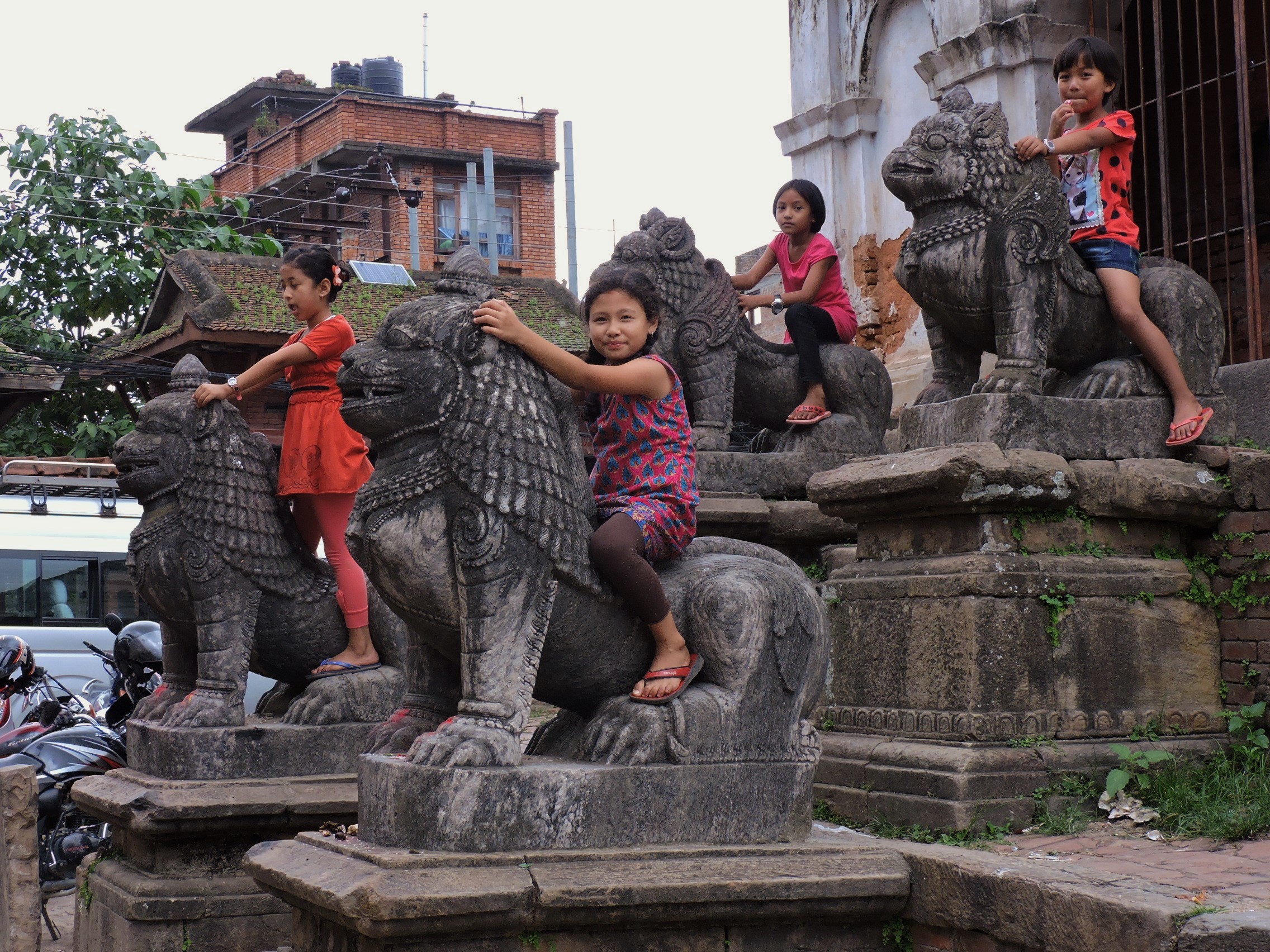
Kirtipur, lionback riding

Kirtipur, lionback riding


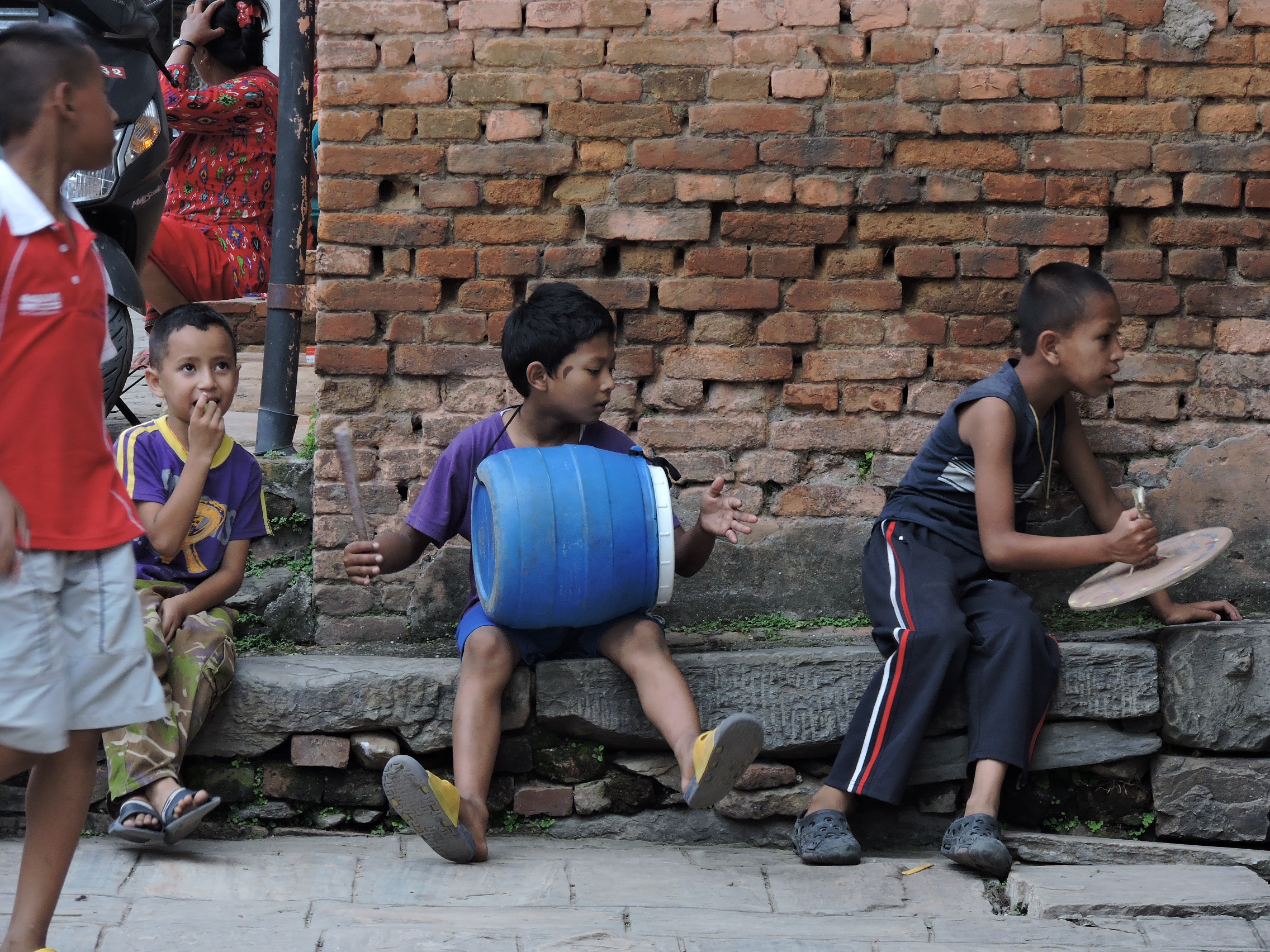
Improvising a band: good rythm

Improvising a band: good rhythm (Kirtipur)


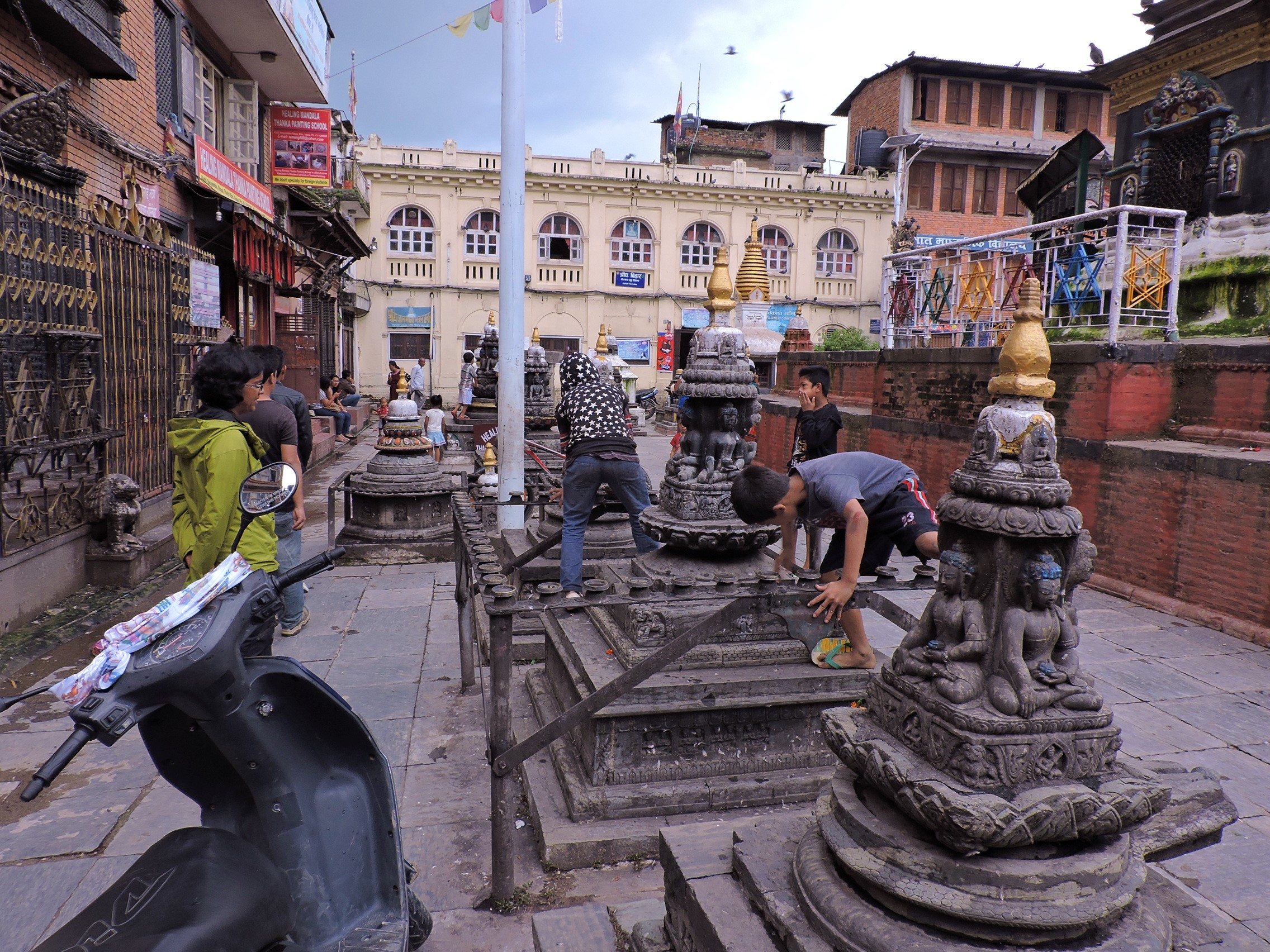
Shivalinga climbing contest

Shivalinga climbing contest, Thamel, Kathmandu


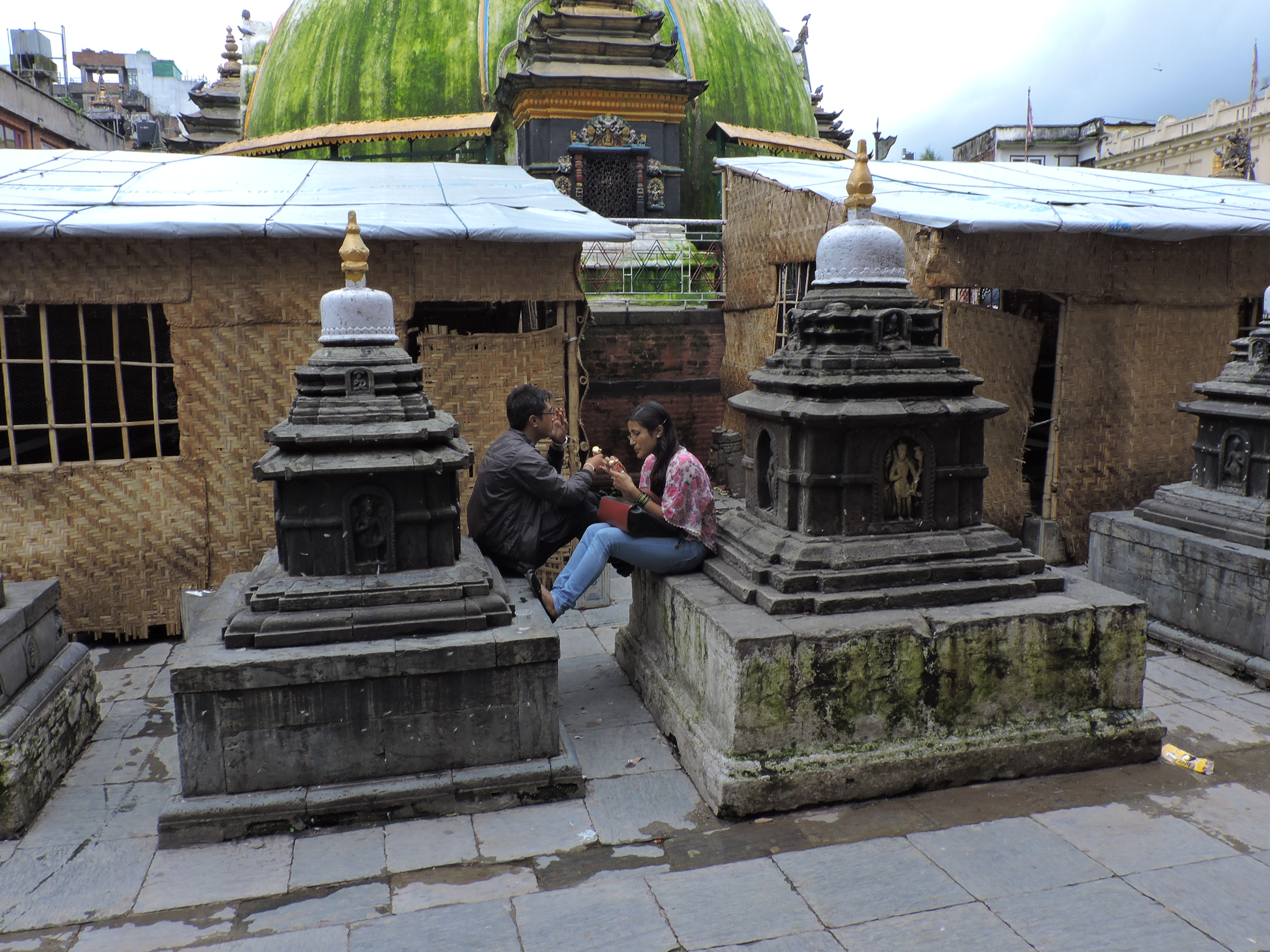
Mini stupa dating with icecream; background: two makeshift schoolrooms and the the big stupa

Mini stupa dating with ice-cream; background: two makeshift schoolrooms and behind them in moss green instead of chalk white the big stupa

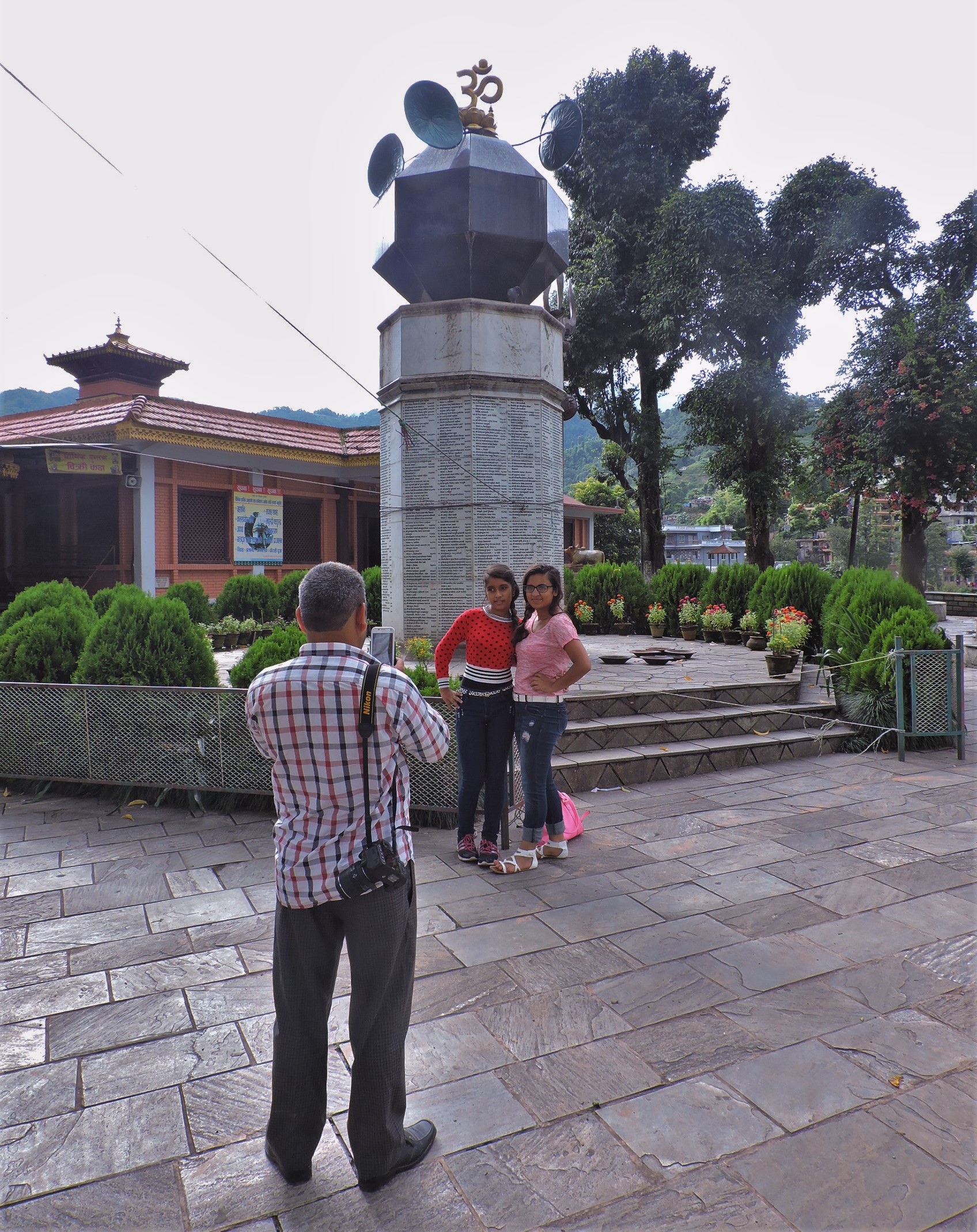
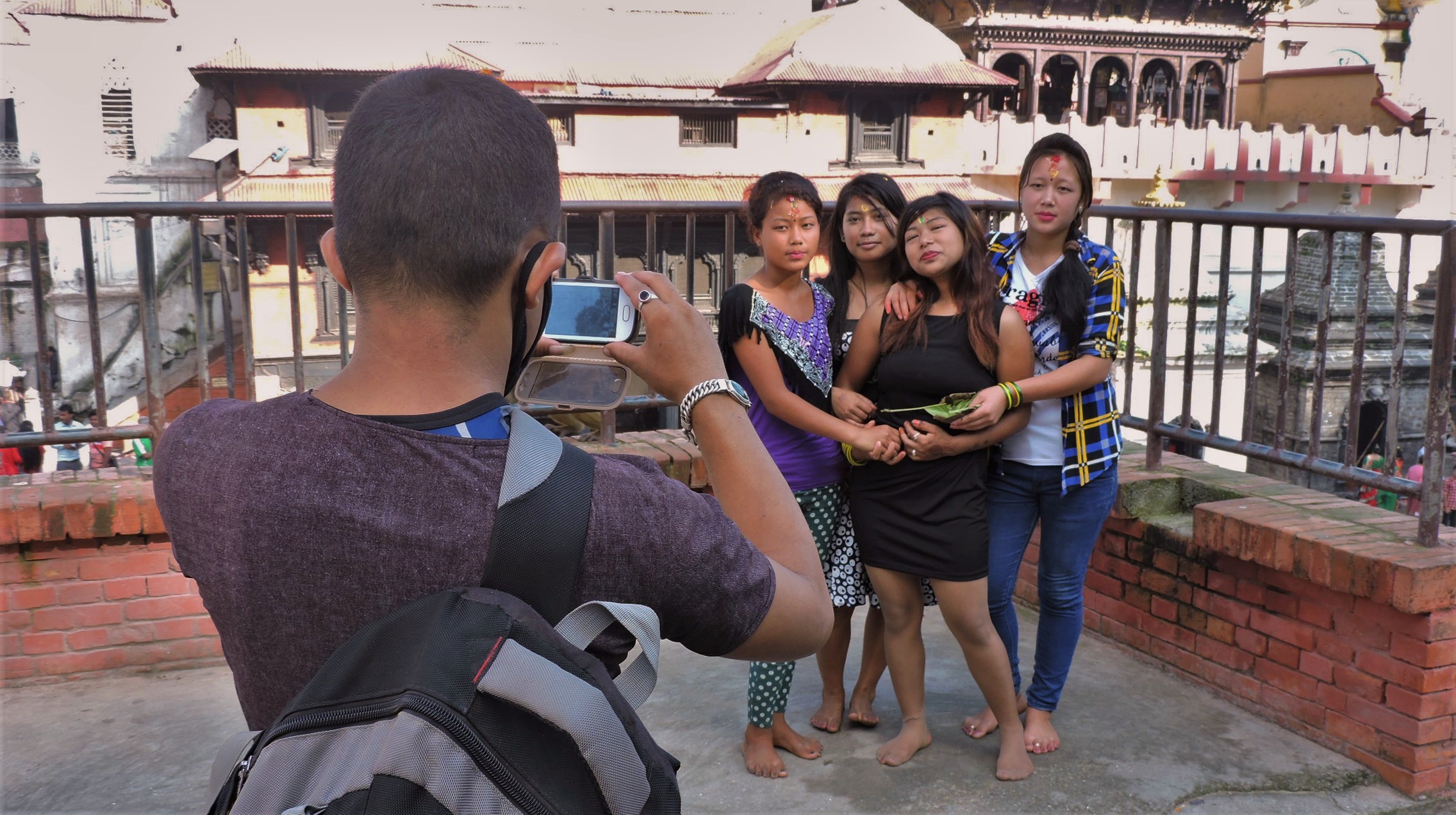
Under the OM sign: Daddy taking pictures of his daughter and her friend at a temple site especially for women in Pokhara: girls go there to ask for a handsome boyfriend, young women for a good husband, married women to get pregnant, elderly women for long life of their husbands!

Right, it’s a temple for women but the centre of the prayers: men

Daddy taking pictures at a temple especially for women in Pokhara: girls ask for a handsome boyfriend, young women for a good husband, married women to get pregnant, elderly women for a long life of their husbands (that makes sense!)

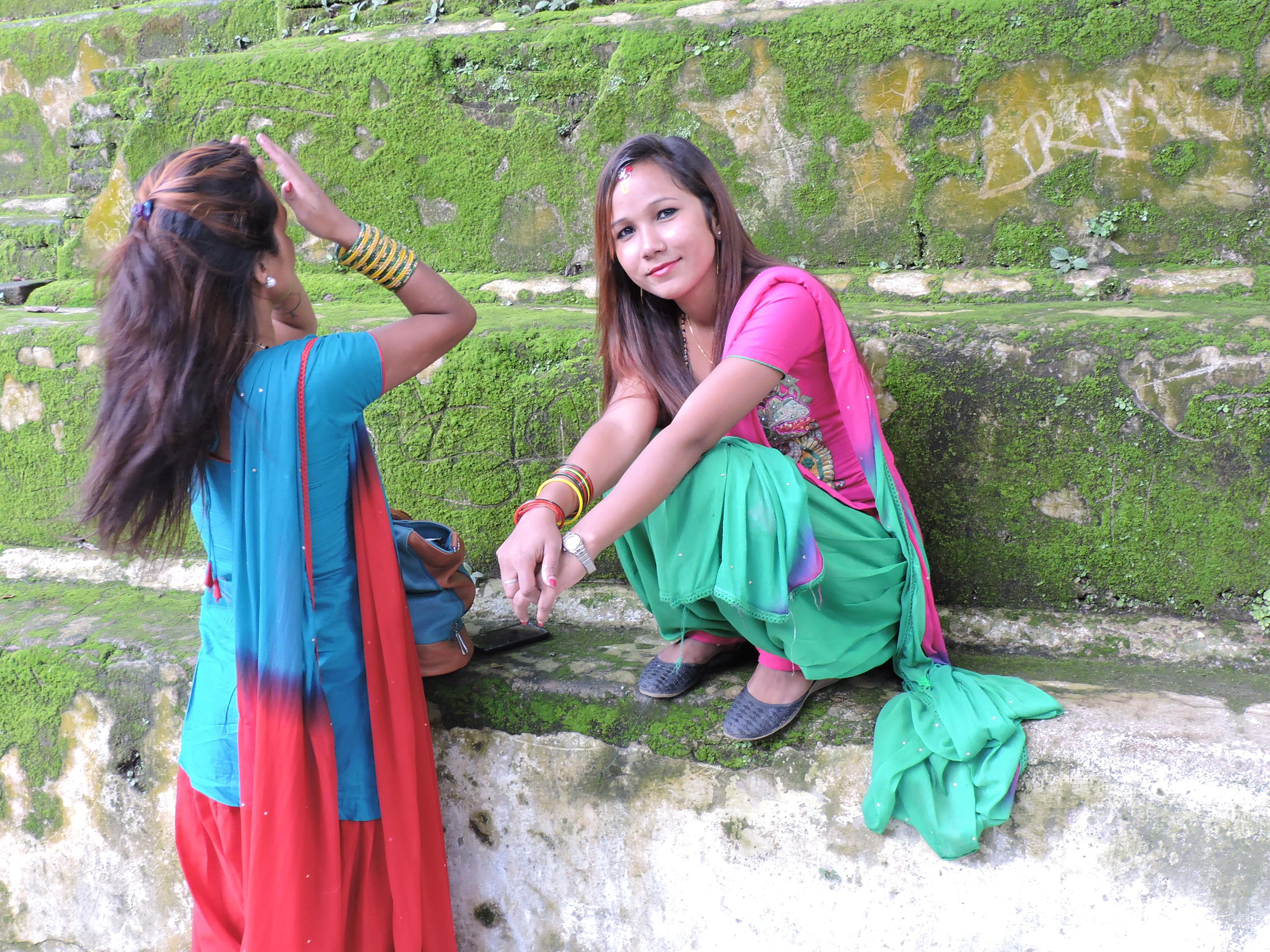
Praying for a handsome boyfriend

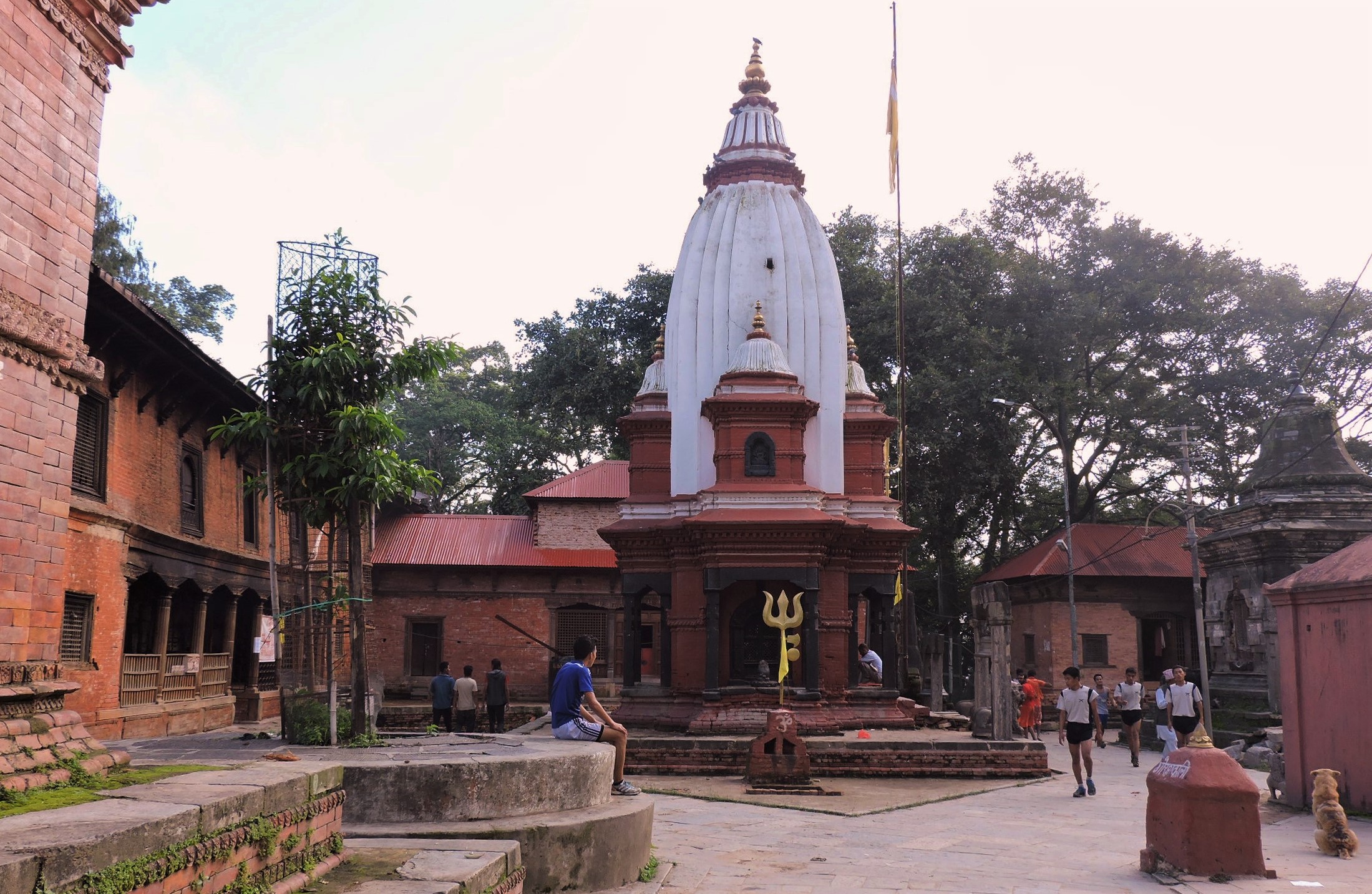
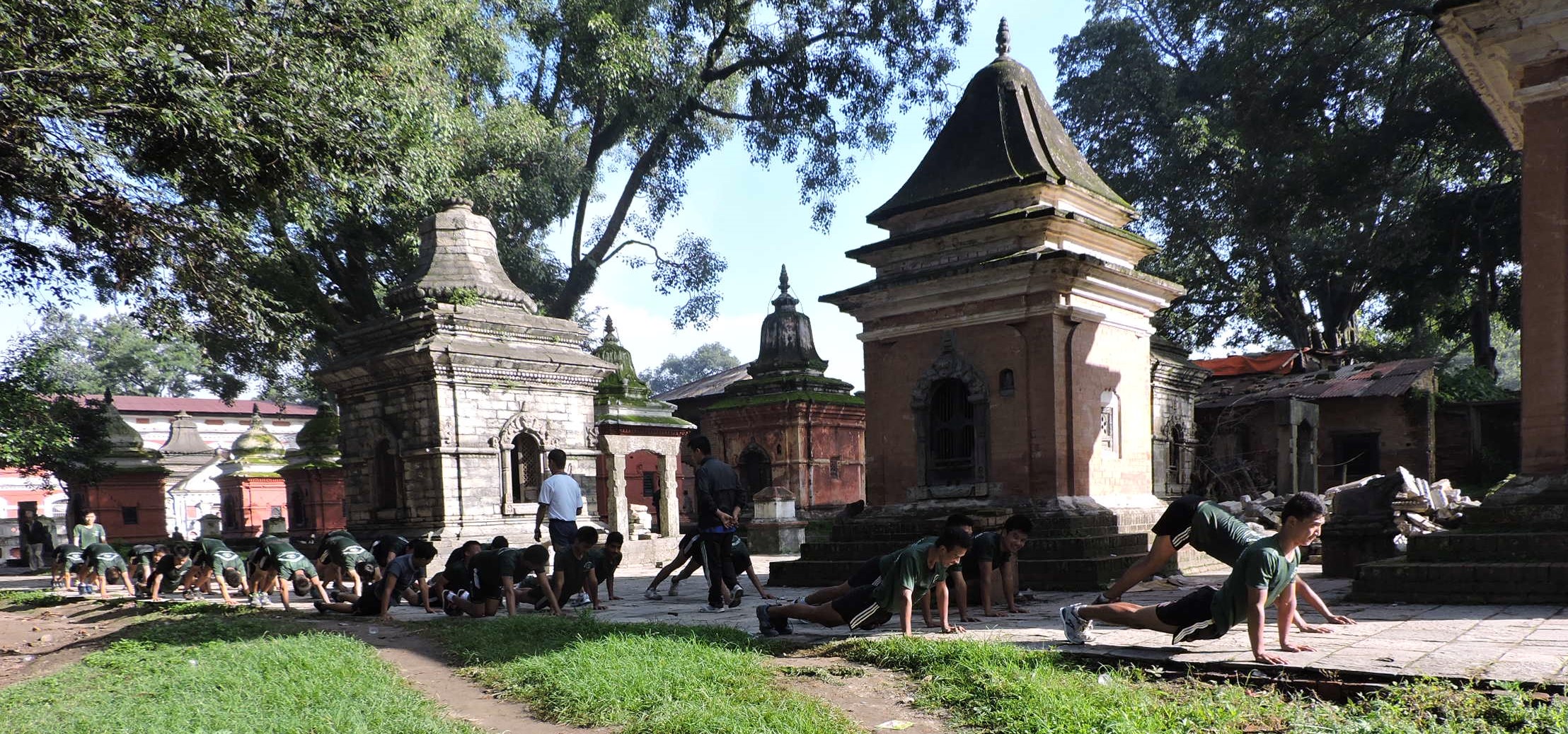
At Pashupatinath: while down at the Bagmati river at the ghats the fires are burning and the grieving are crying, up at the temples young men are working out and young girls are … looking beautiful

May Shiva help us

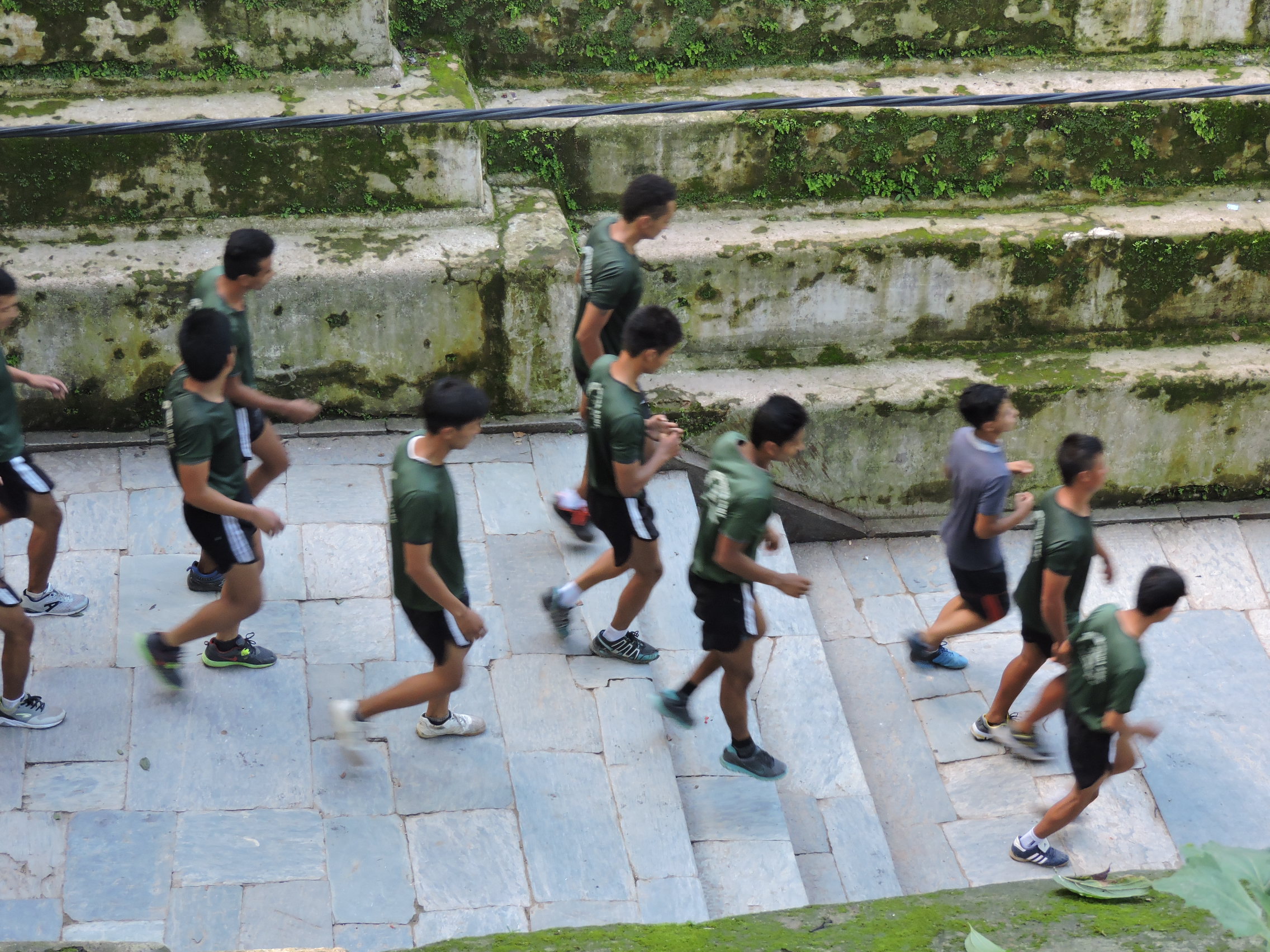
Jogging at Pashupatinath: May Lord Shiva help us


Jogging at Pashupatinath

Jogging at Pashupatinath, too fast to get the camera ready


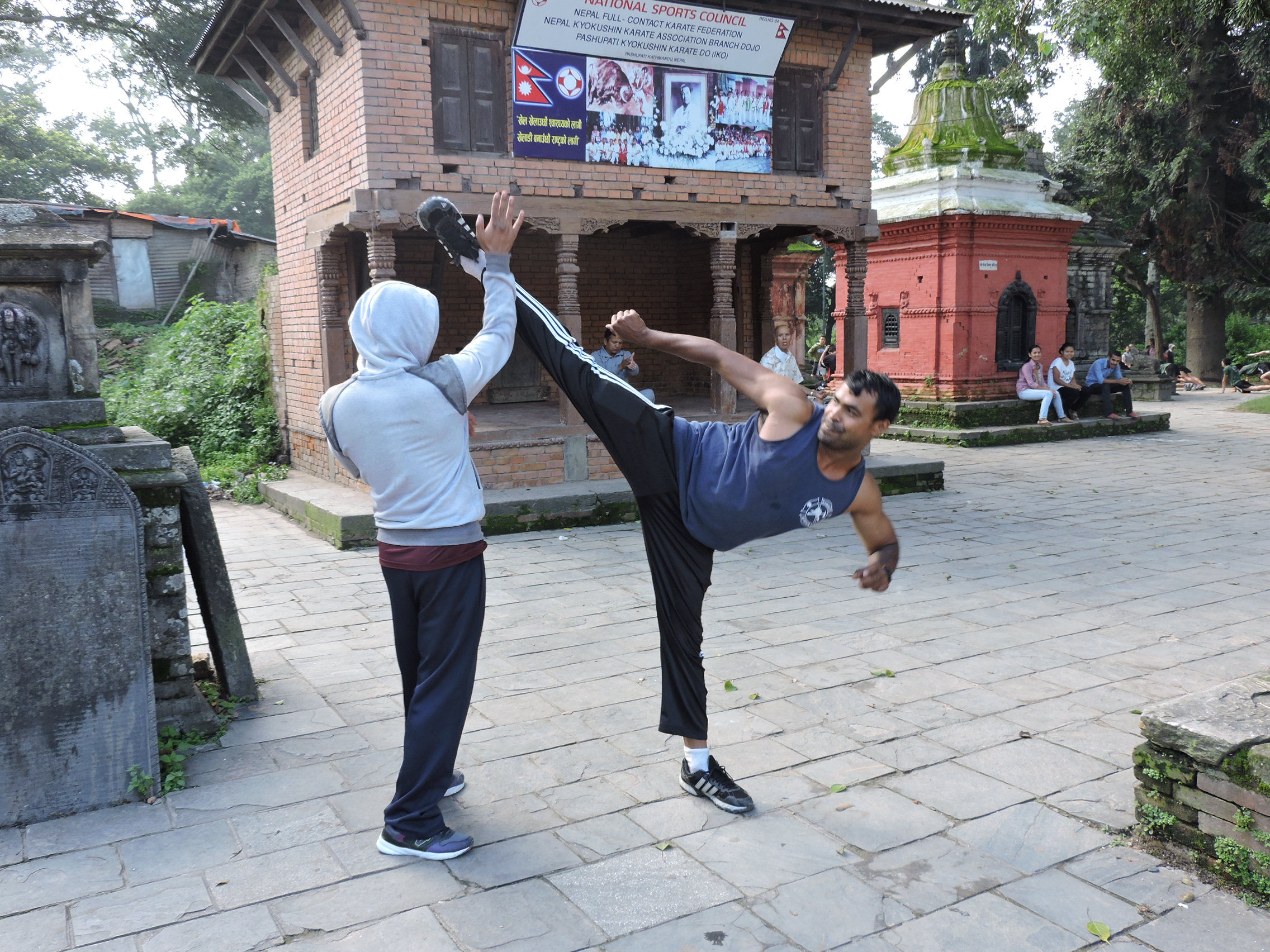
Kung fu fighting, fast as lightning

Kung fu fighting, fast as lightning, he posed for me because I told him he reminded me of my son (beefy)


pushups, 26, 27, 28 ... and the sun is shining, the air is humid ...

push ups, 26, 27, 28 … and the sun is shining, the air is humid …


They took a picture of me, too, but that's not the same thing

They took a picture of me, too, but that’s not the same thing


having fun, in the back tha gats

Having fun, in the back further down the burning ghats


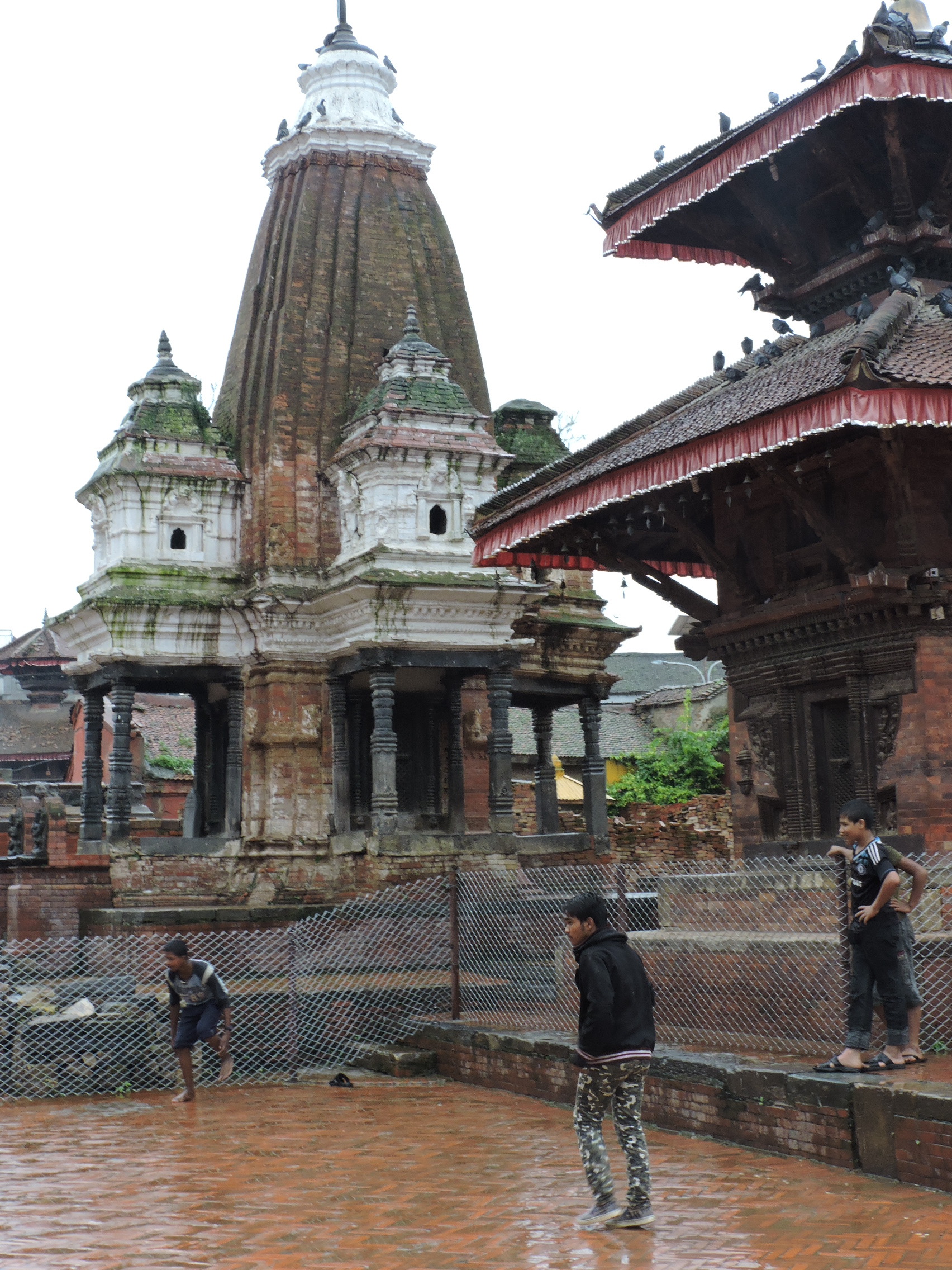
Playing soccer between the temples of Durbar Square, Patan

Playing soccer between the temples of Durbar Square, Patan

Youngsters working:

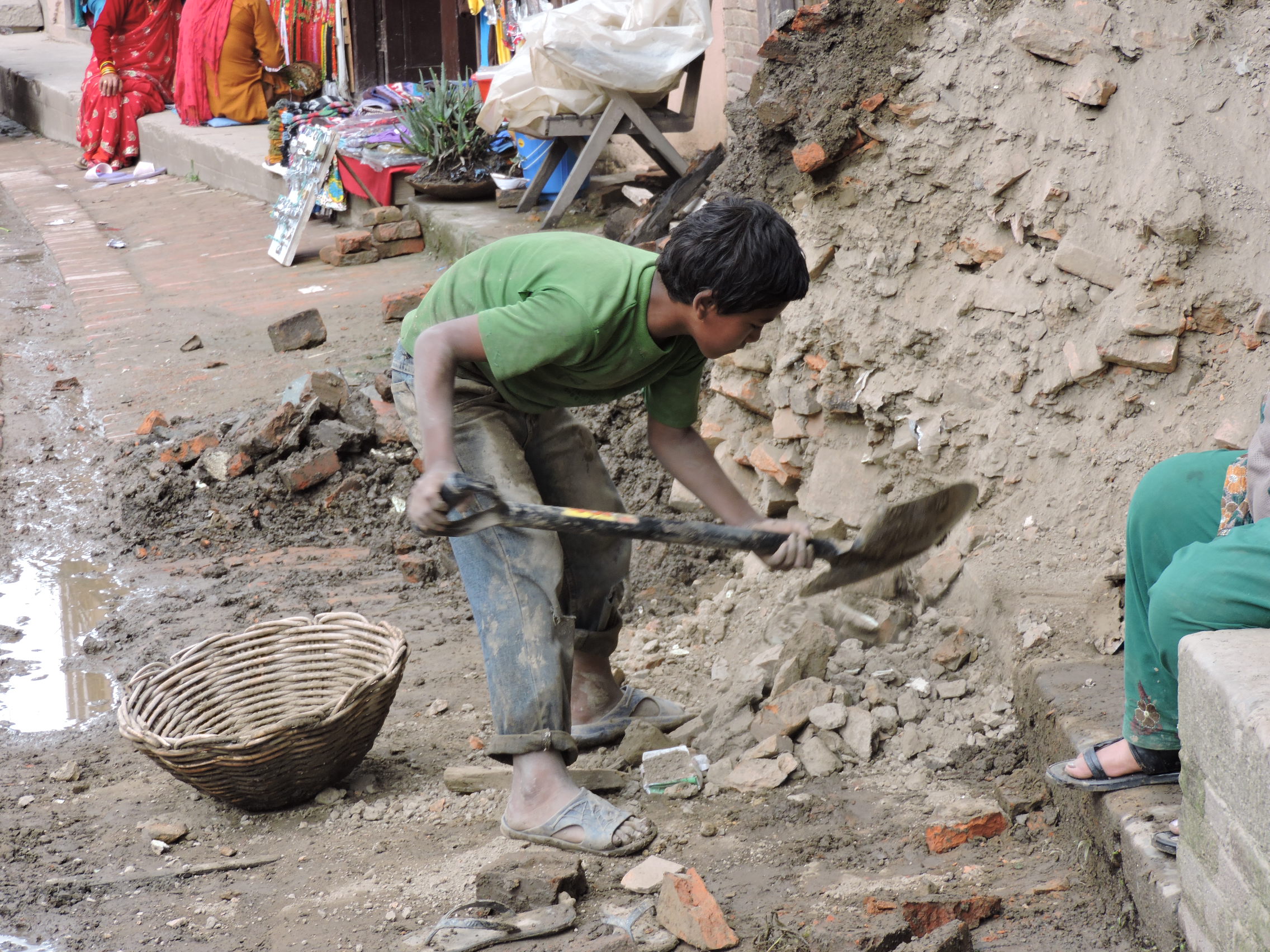
Reconstruction in Bhaktapur

Reconstruction in Bhaktapur


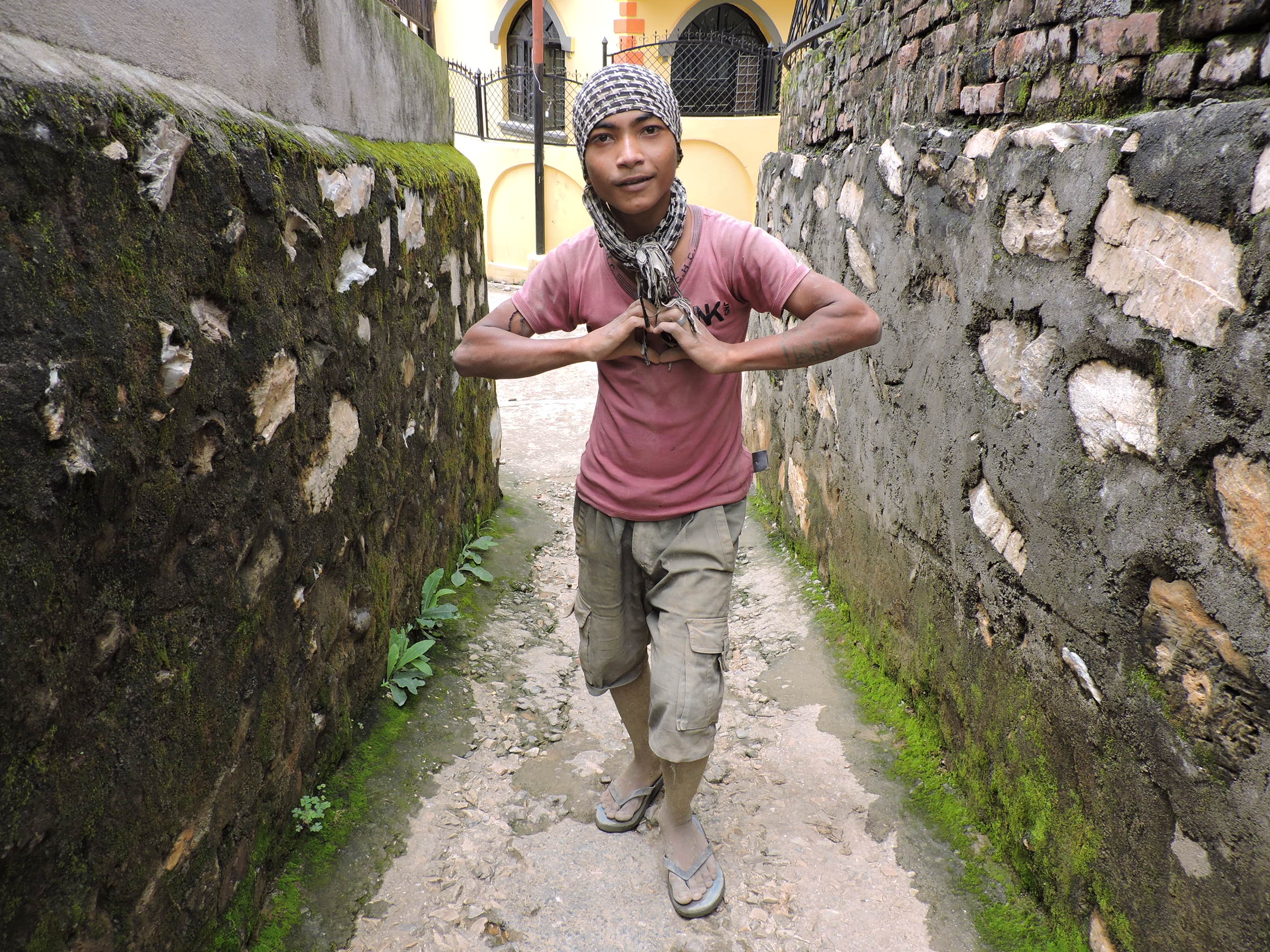
Between two heavy loads, still time to great the stranger and form a heart with his hands

Between two heavy loads, still time to great the stranger and form a heart with his fingers


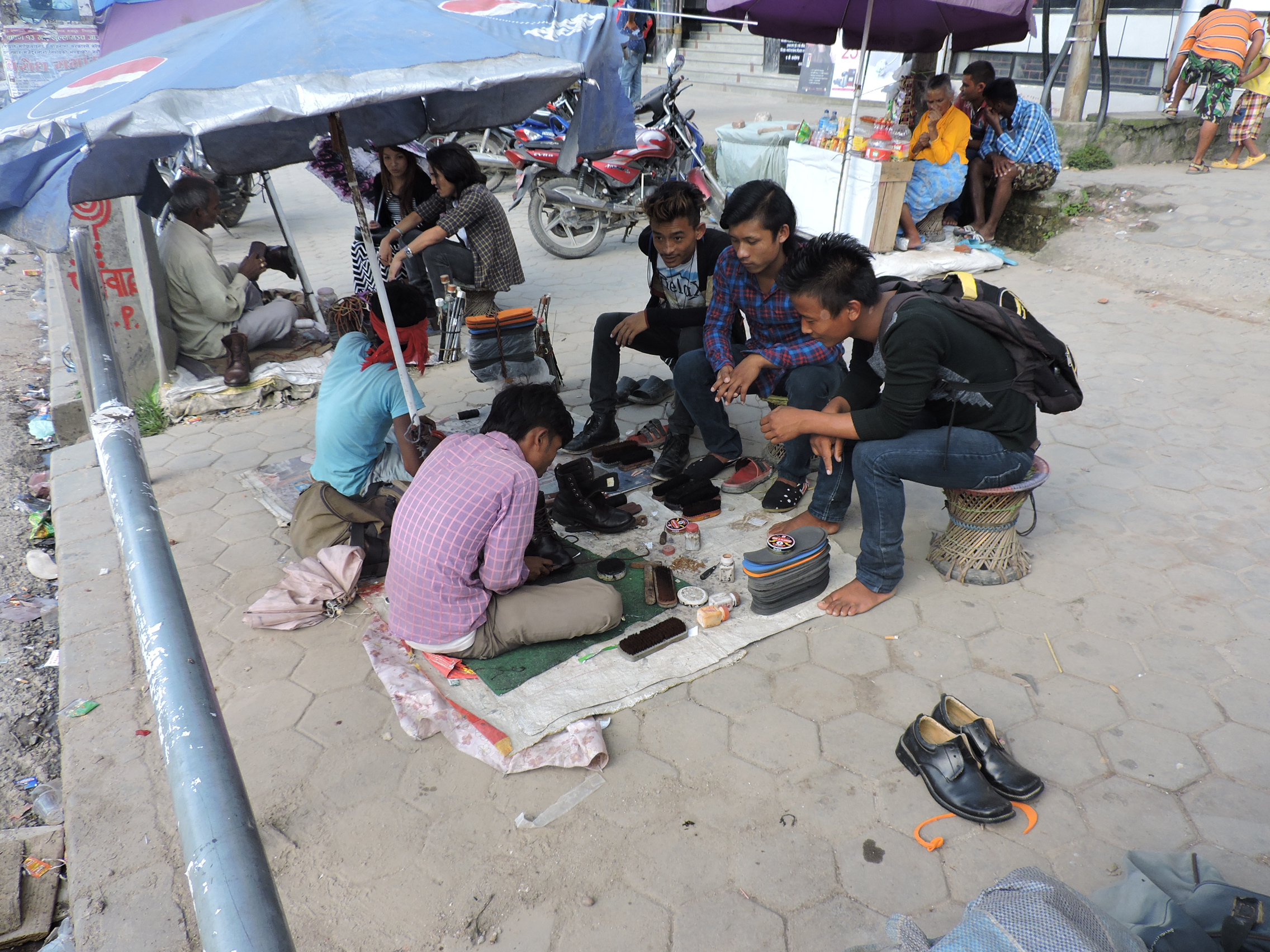
Working at the roadside: cleaning shoes

Working at the roadside: shoeshine boys

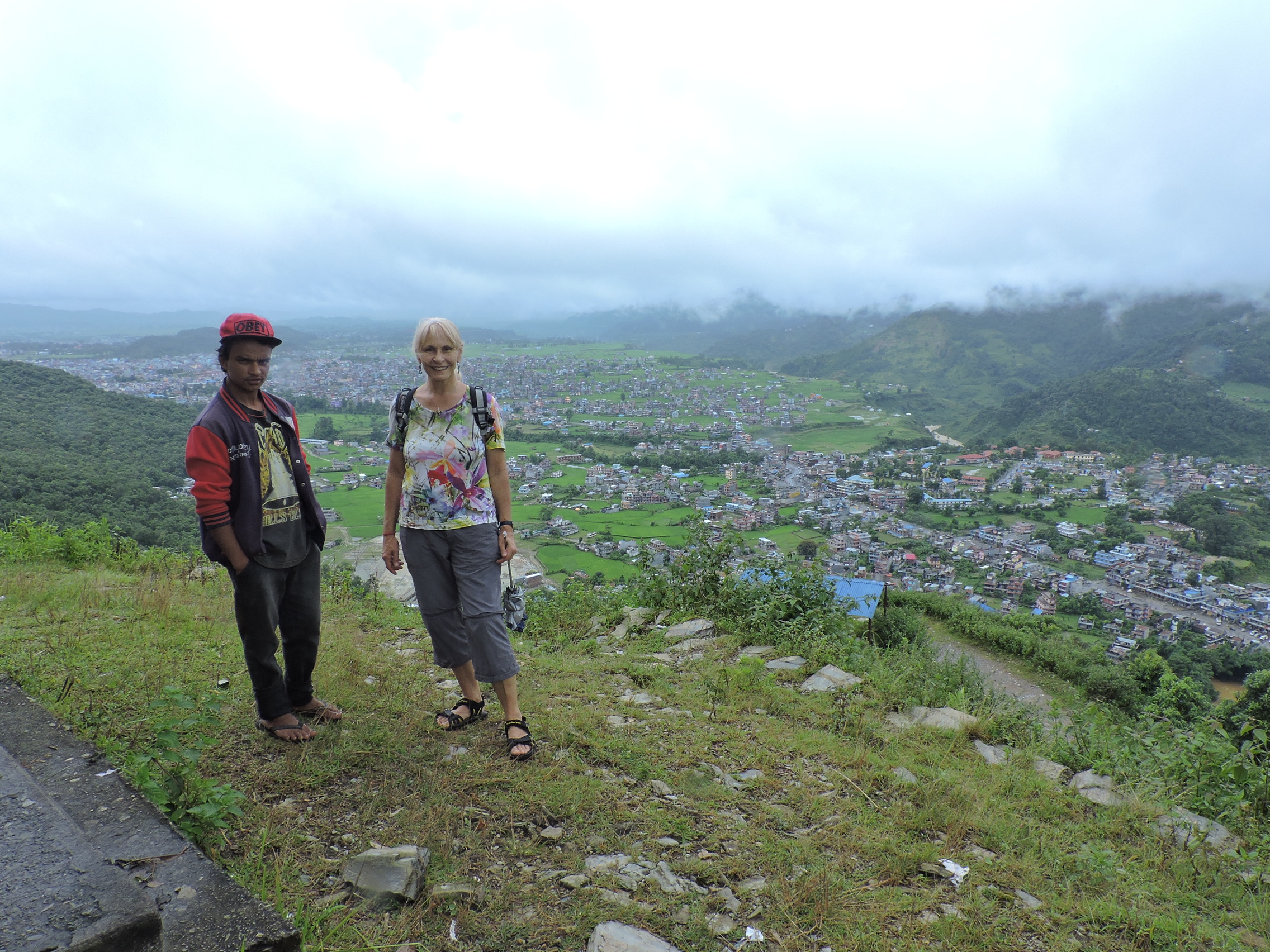
It was good to have him as a guide. I would have probably found the way myself, but he needed the money and who knows, I could have sprained an ankle … Nice chat, too, school problems are more or less the same all over the world for boys that don’t sit down and study (his sister is at university).

It was good to have him as a guide (I would have probably found the way myself, but who knows, I could have sprained my ankle

View over Pokhara right after the rain, it didn’t get any better than that


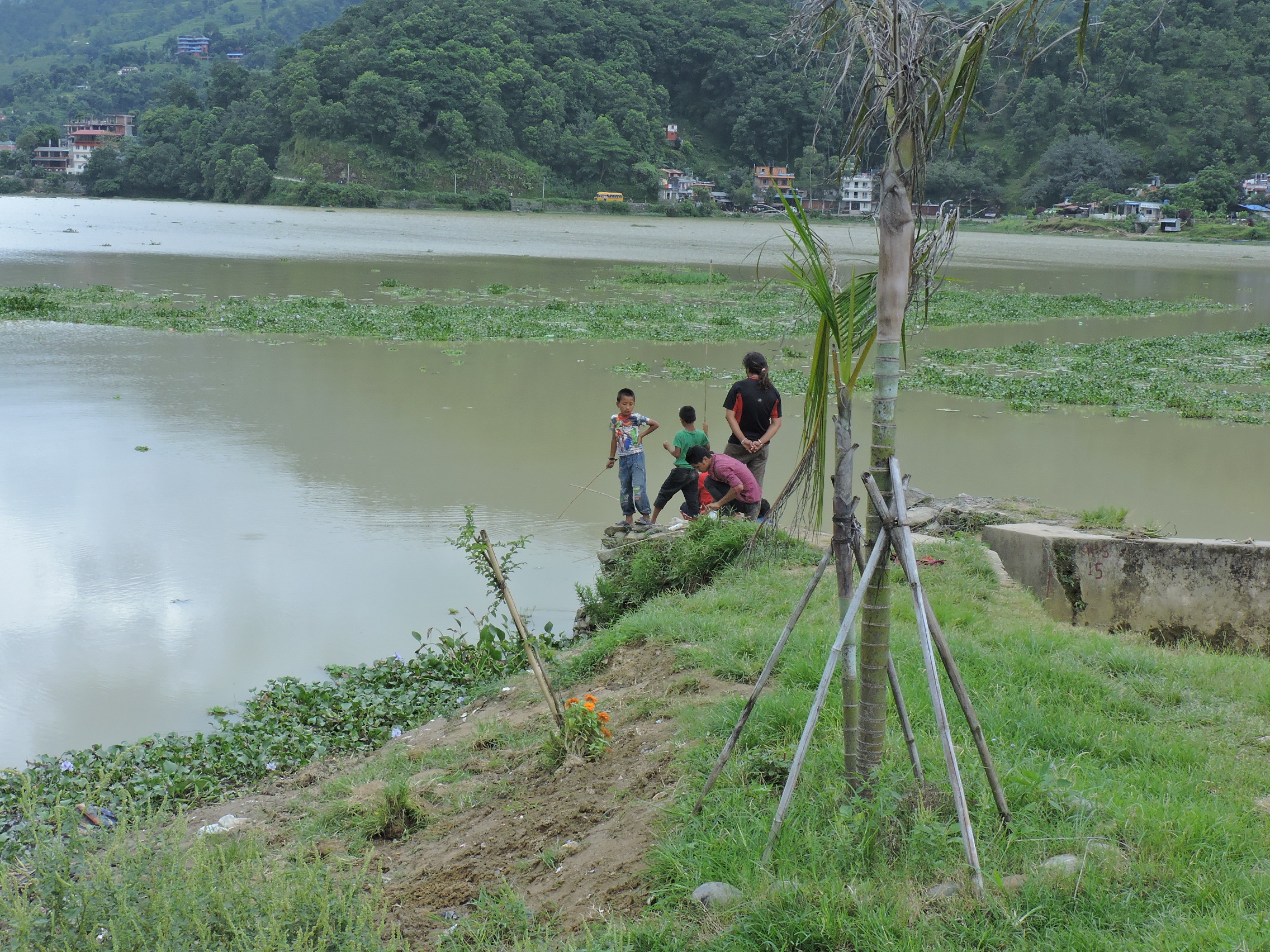
somewhere in between work and fun: fishing for dinner

Somewhere in between work and fun: fishing for dinner


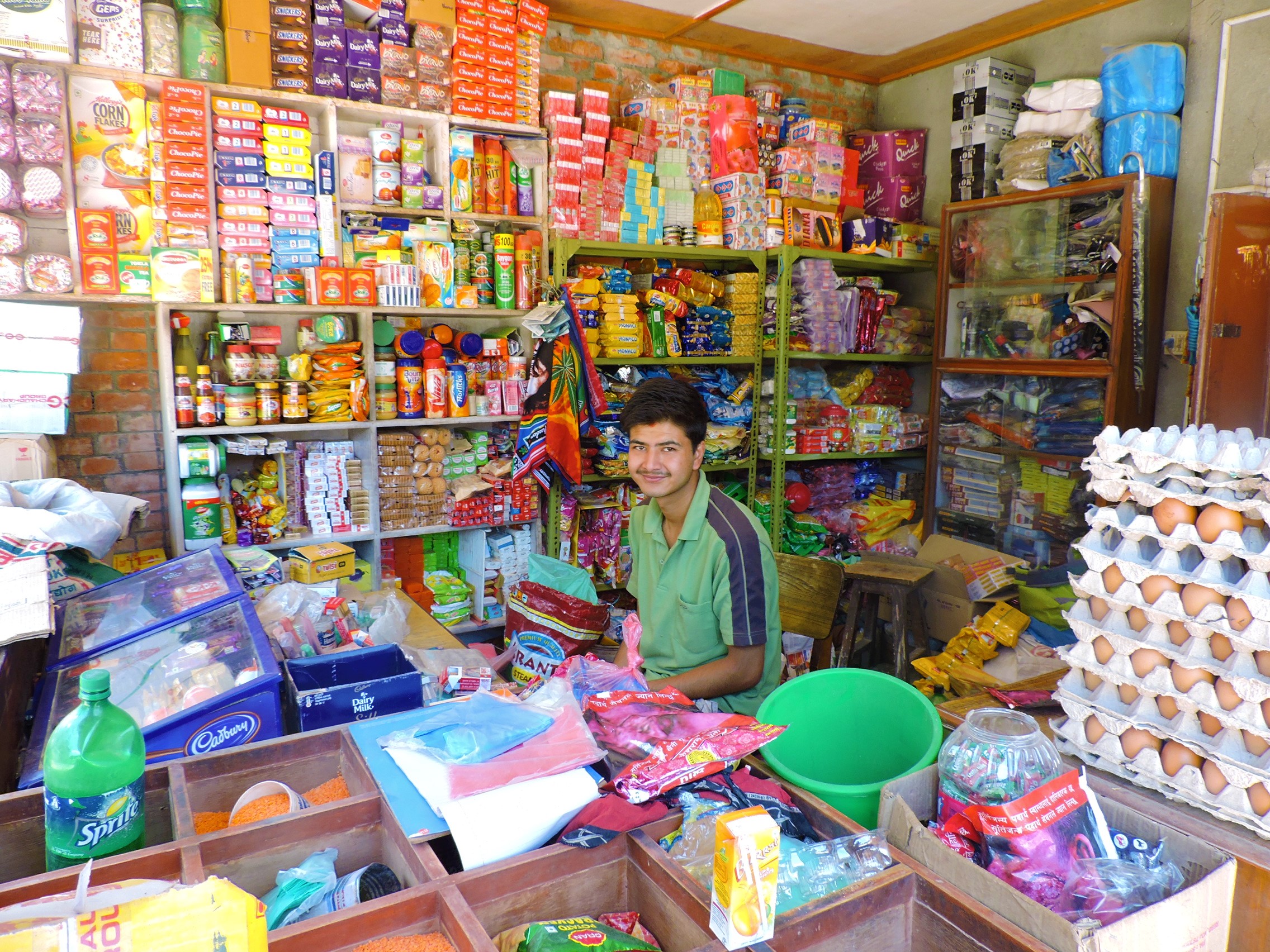
He likes his work. You can get anything in his little shop.

He likes his work. You can get anything in his little shop. Study? Homework? In between two customers.


At work with their parents:

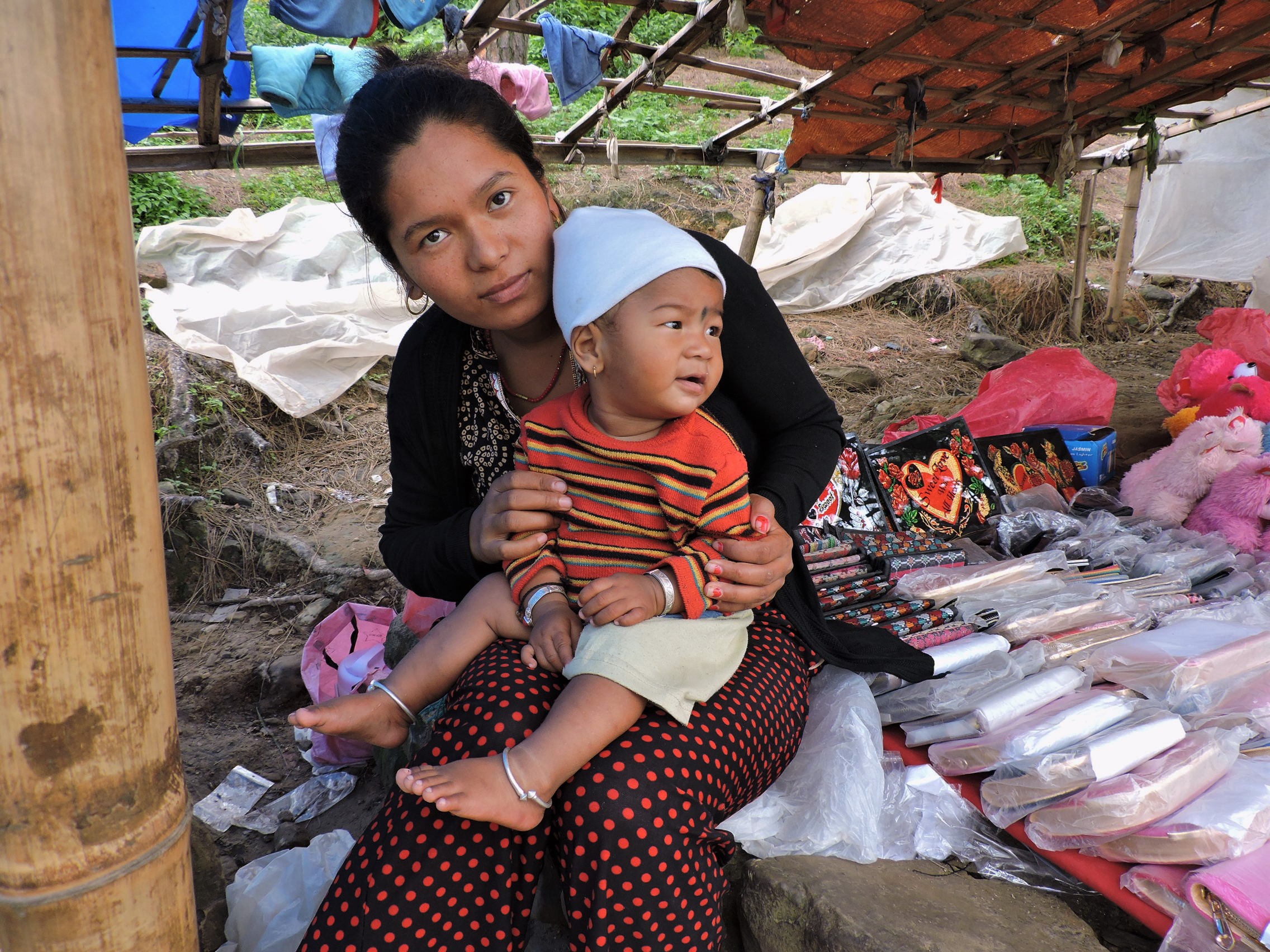
selling souvenirs with mum (Swayambunath)

Selling souvenirs with mum (Swayambunath)


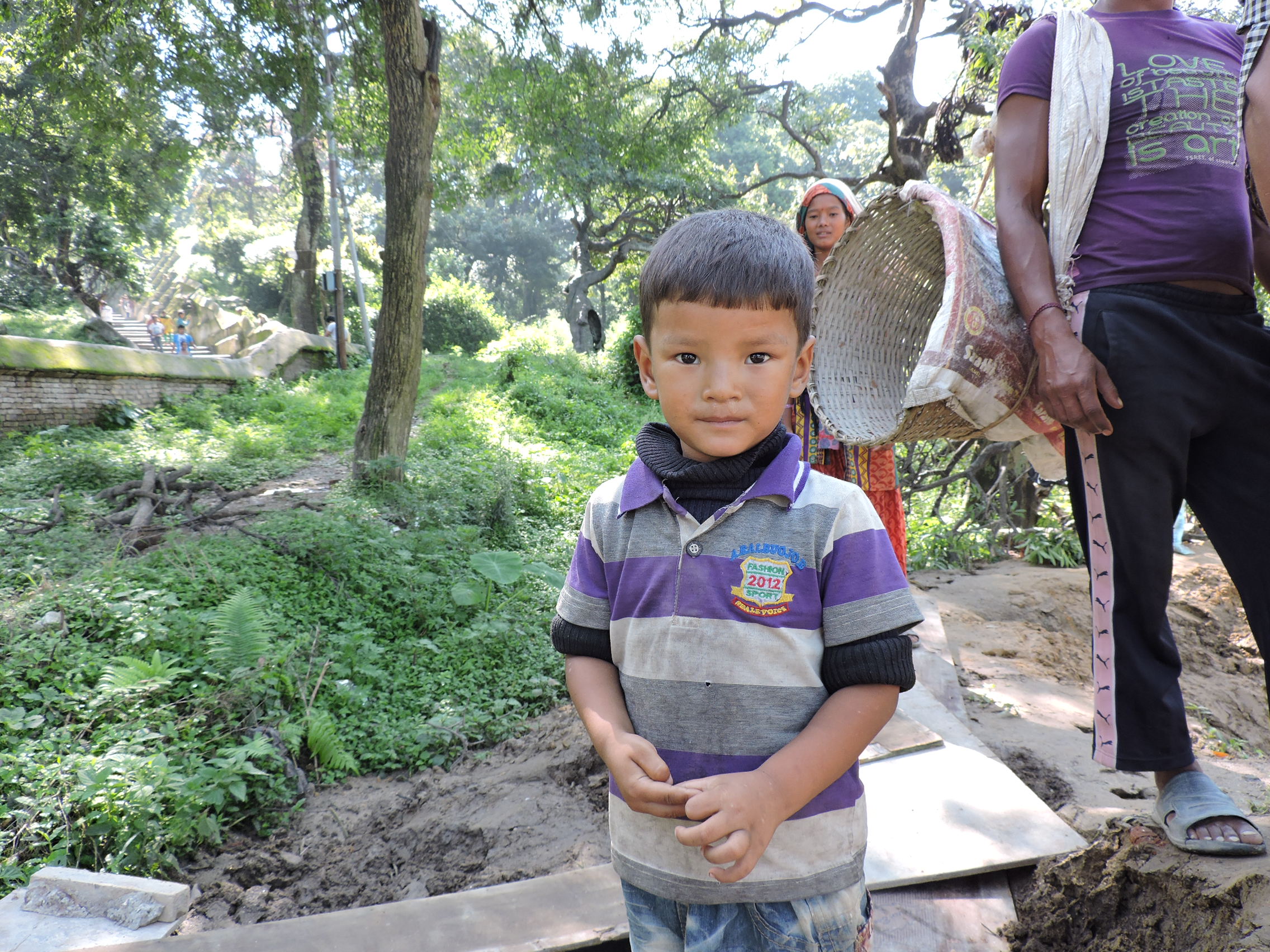
Construction site: building an earthquake safe toilet at Pashupatinath

With mum and dad at the construction site: building an earthquake safe public toilet at Pashupatinath

Wouldn’t it be wonderful to have a real Kinder Planet?

Bye-bye

Gerburg


Bhaktapur, Beloved Mandala

29 Aug

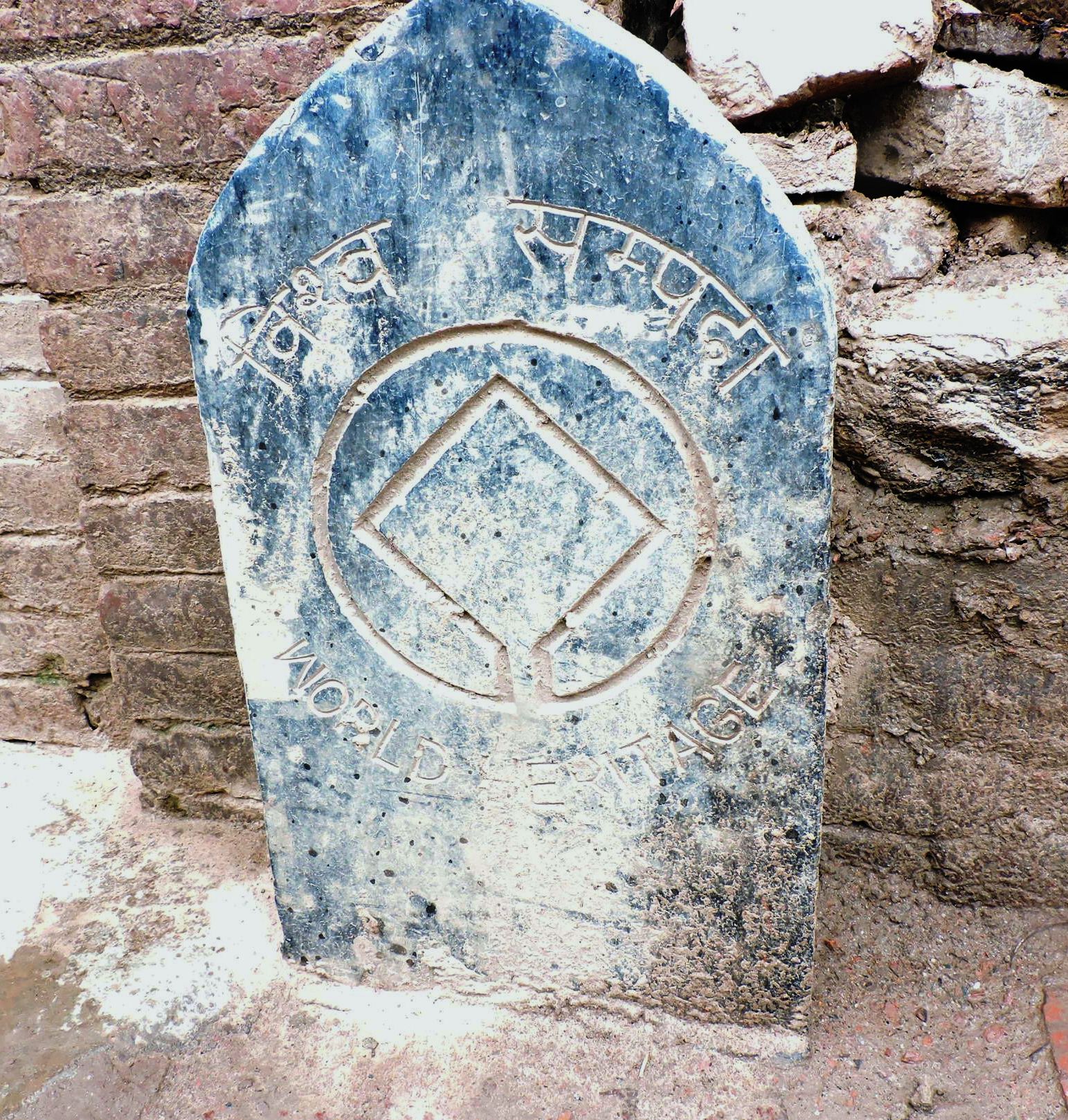
Not a tombstone

This is the UNESCO sign of World Heritage

This is the UNESCO sign of World Heritage

Is it actually possible to fall in love with a city, once, on one day only, and to find it utterly changed years later, after a huge hand (of a trickster, maybe?) had swept over it scattering its fine artistic components, destroying its harmony, its order, its beauty, its heritage of humankind? And to love it even more then, because you feel in the end, the essence of it all, the essence of her, the beauty of Bhaktapur, still is?

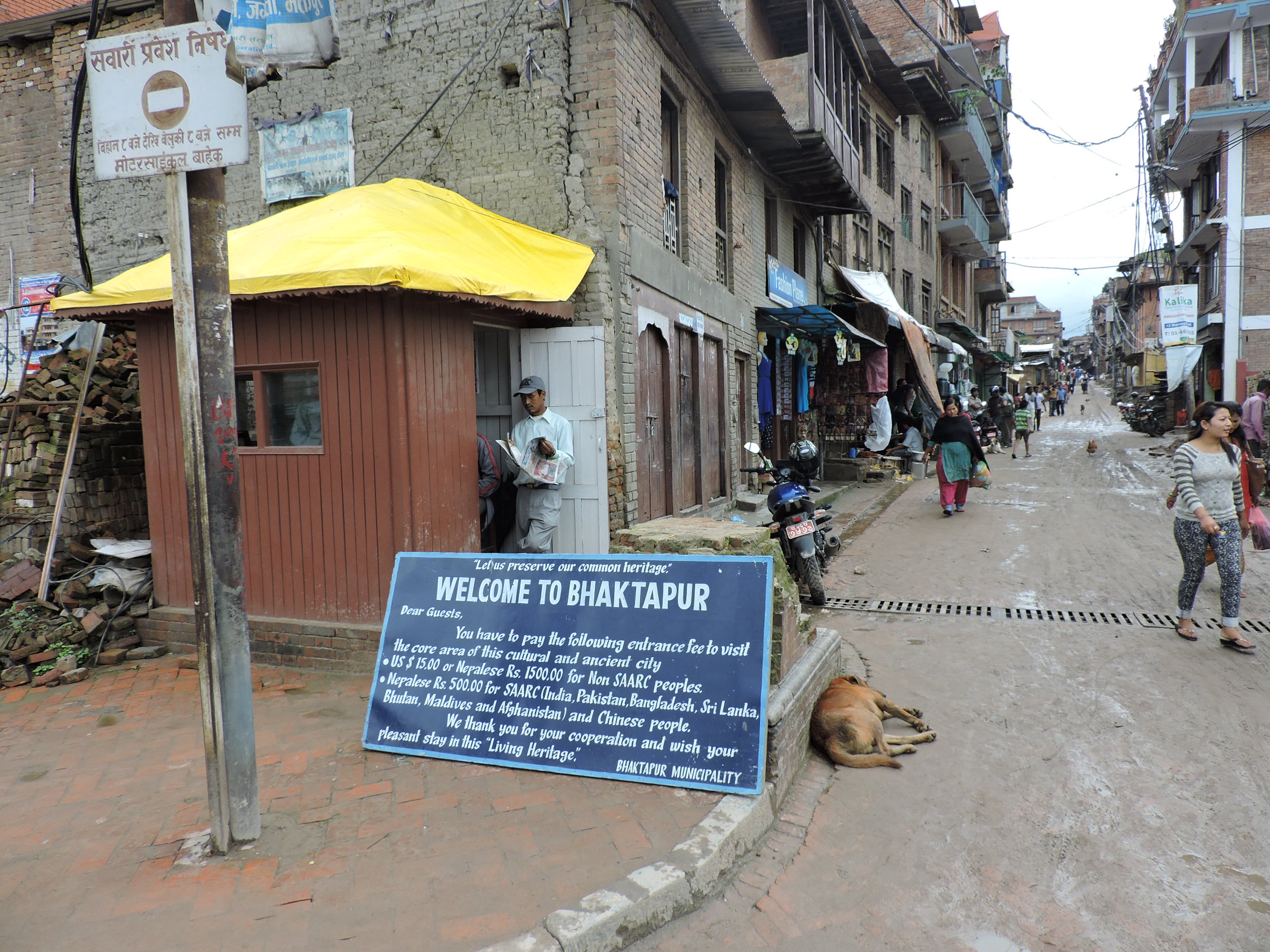
While travelling to Bhaktapur on the usual ramshackle bus over the flooded and muddy road I could feel a lump forming in my throat. I expected the destruction to be worse than in Patan (Lalitpur) and Durbar Square in Kathmandu.

Of course there are ways to get to the historical centre withour paying, but they need the maney more than ever

Of course there are ways to get to the historical centre without paying, but the municipality needs the money more than ever

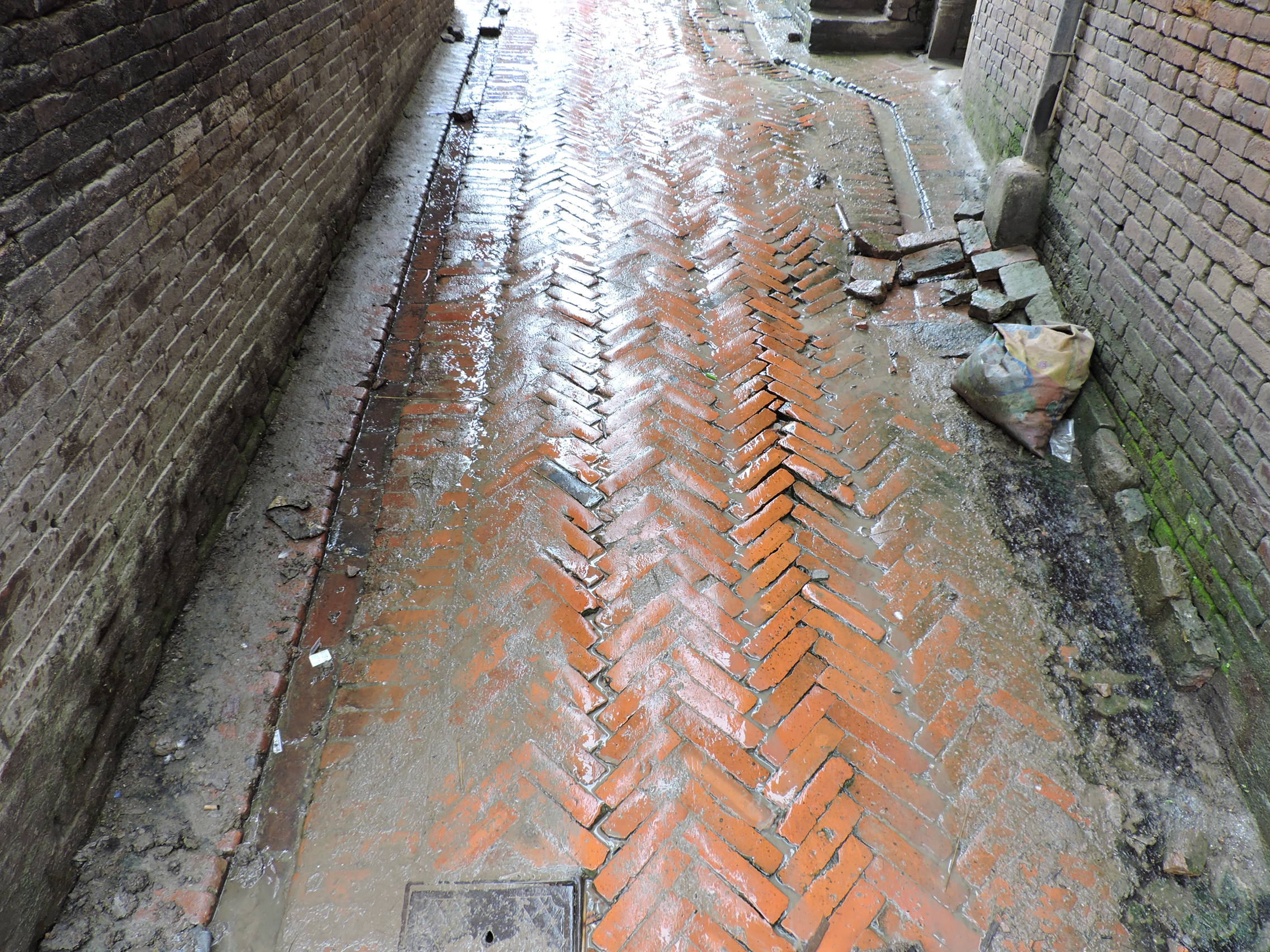
Eleven years ago the people of Bhaktapur talked about two things to me: how the Germans had restored and preserved the historical centre, especially its fish bone paved streets with sewage and water pipes underneath and how in 1993 Bernardo Bertolucci had directed the film Little Buddha here and had generously compensated the population for their help. I appreciated being somehow related to both nationalities.

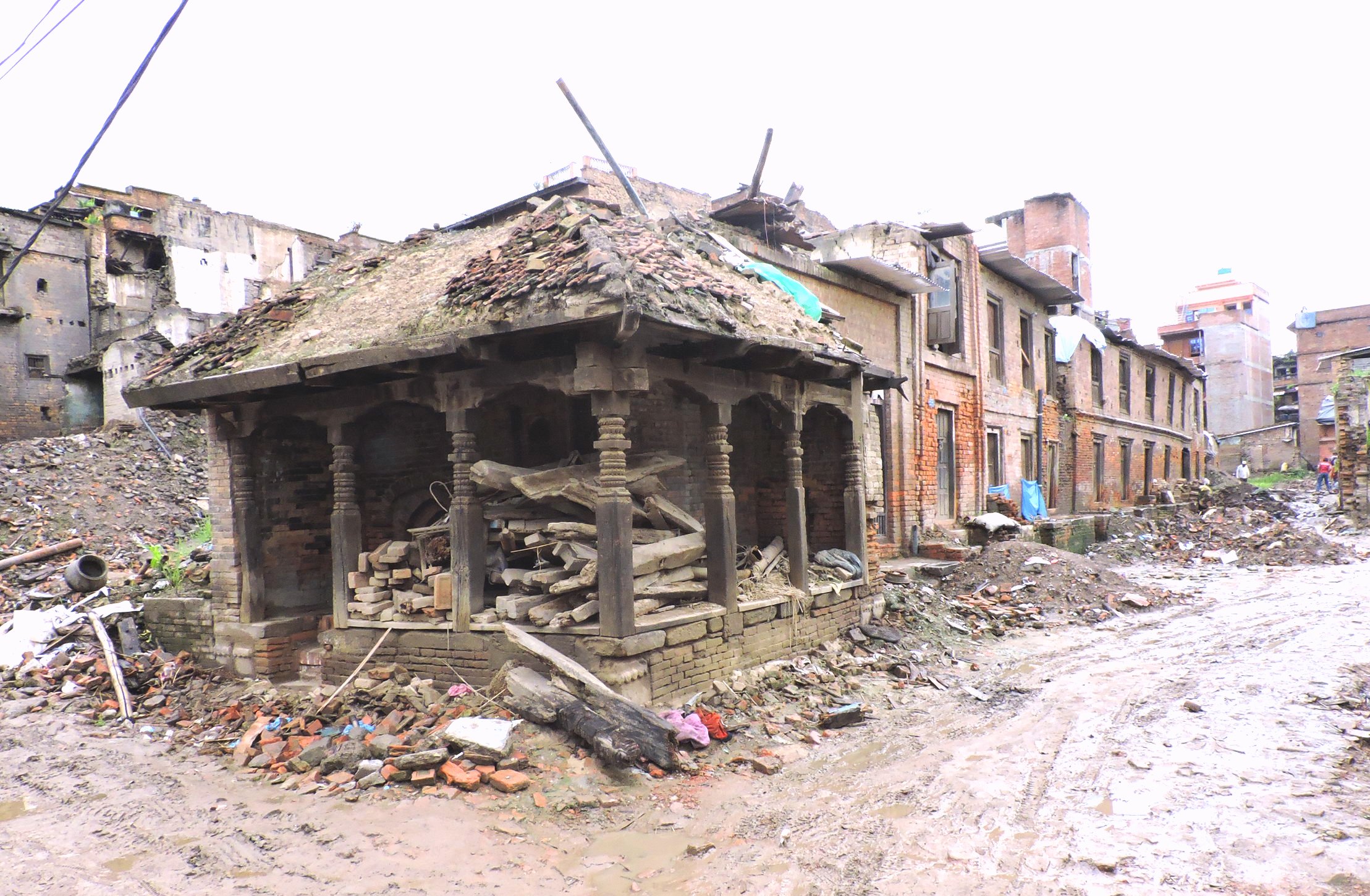
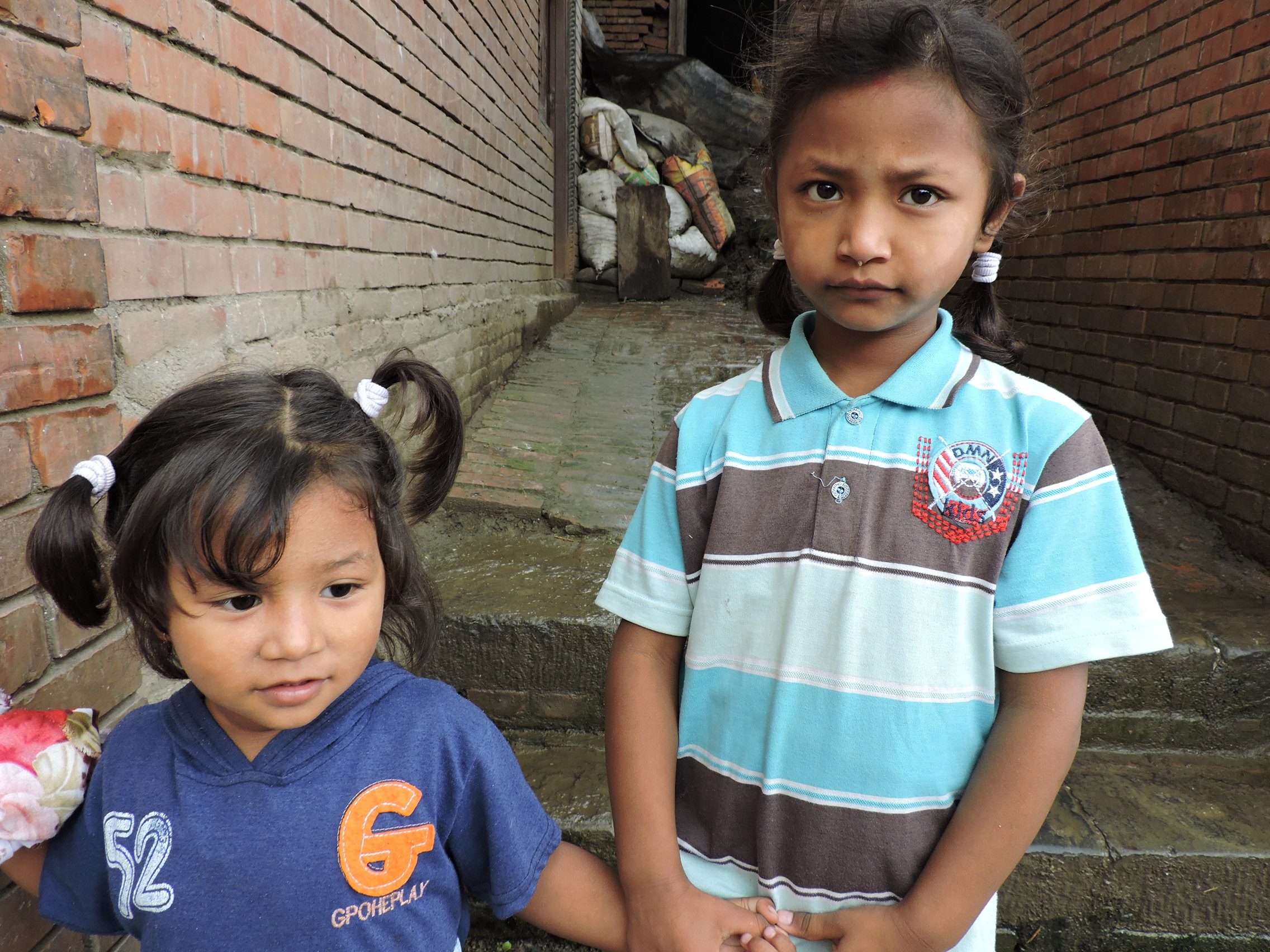
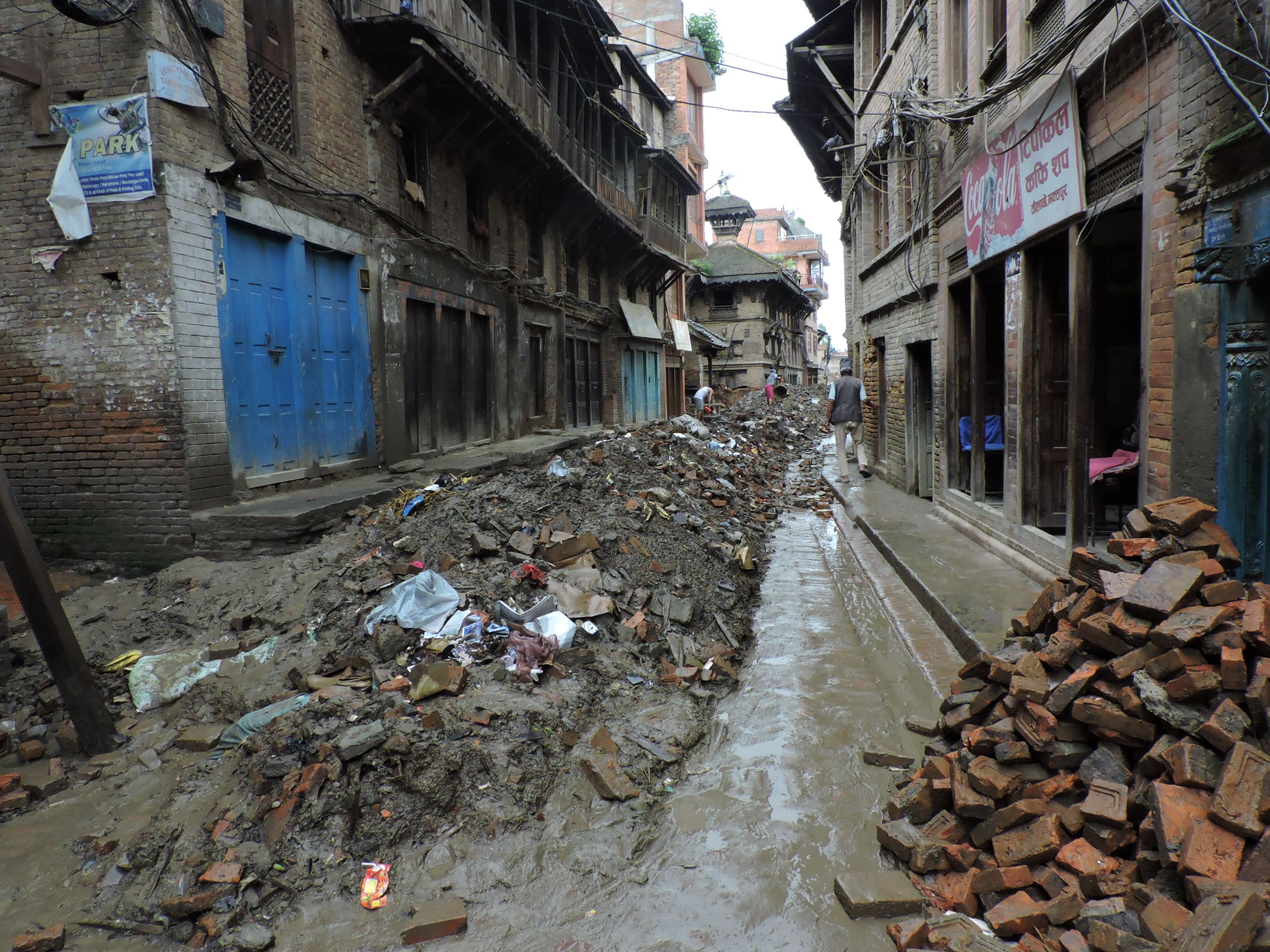
a nightmarish silence lies over the town

A haunting silence lies over the historic town

My promise to my Nepali friends to focus on the positive, on what was still in place and standing, was impossible to keep in Bhaktapur. An invisible hand had grabbed my camera and directed it to the worst affected parts.

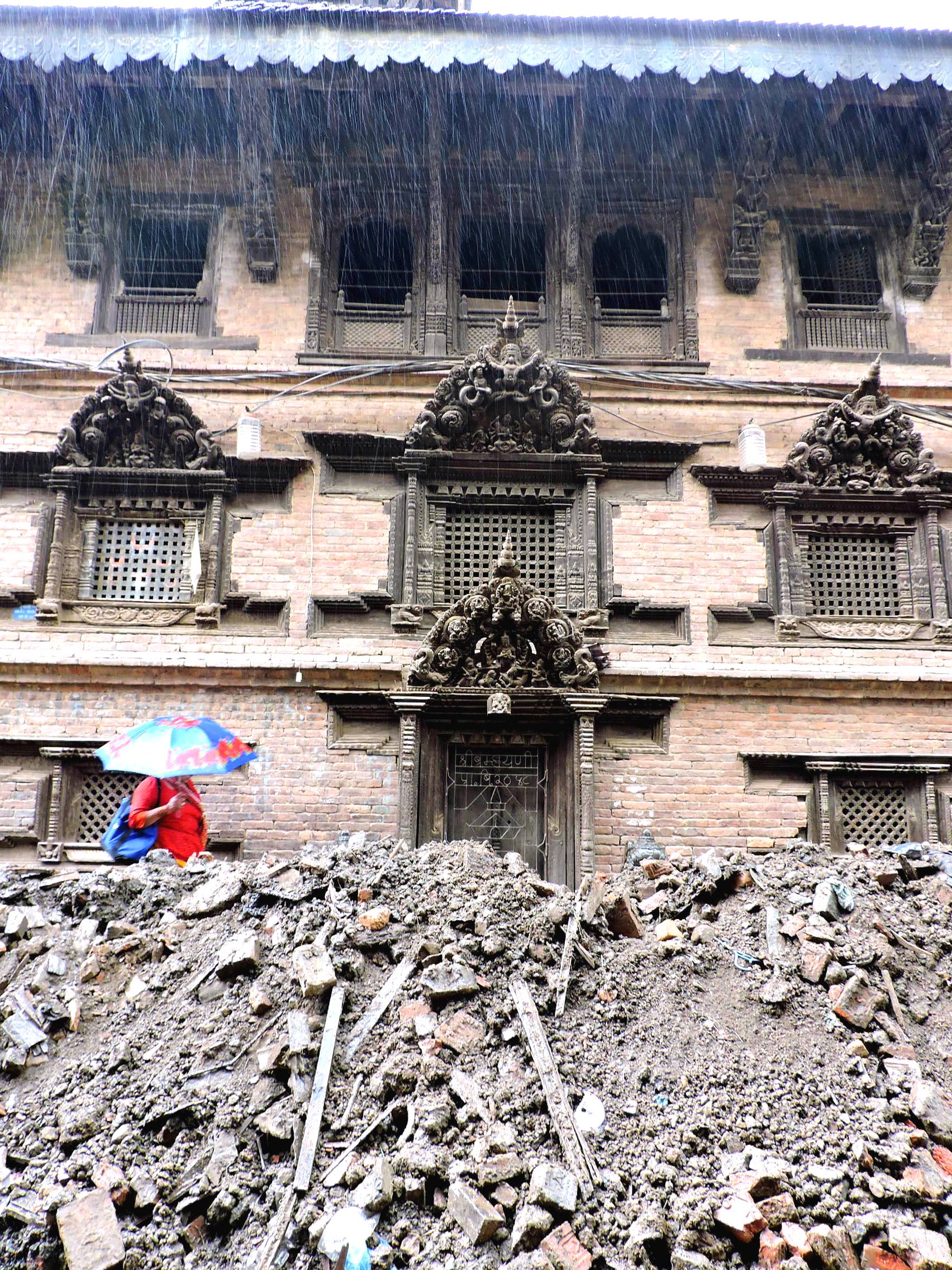
and the relentless rain doesn't cheer up the picture

And the relentless rain makes the overall picture even gloomier

The usual readiness to smile has given way to uneasiness

DSCN0358

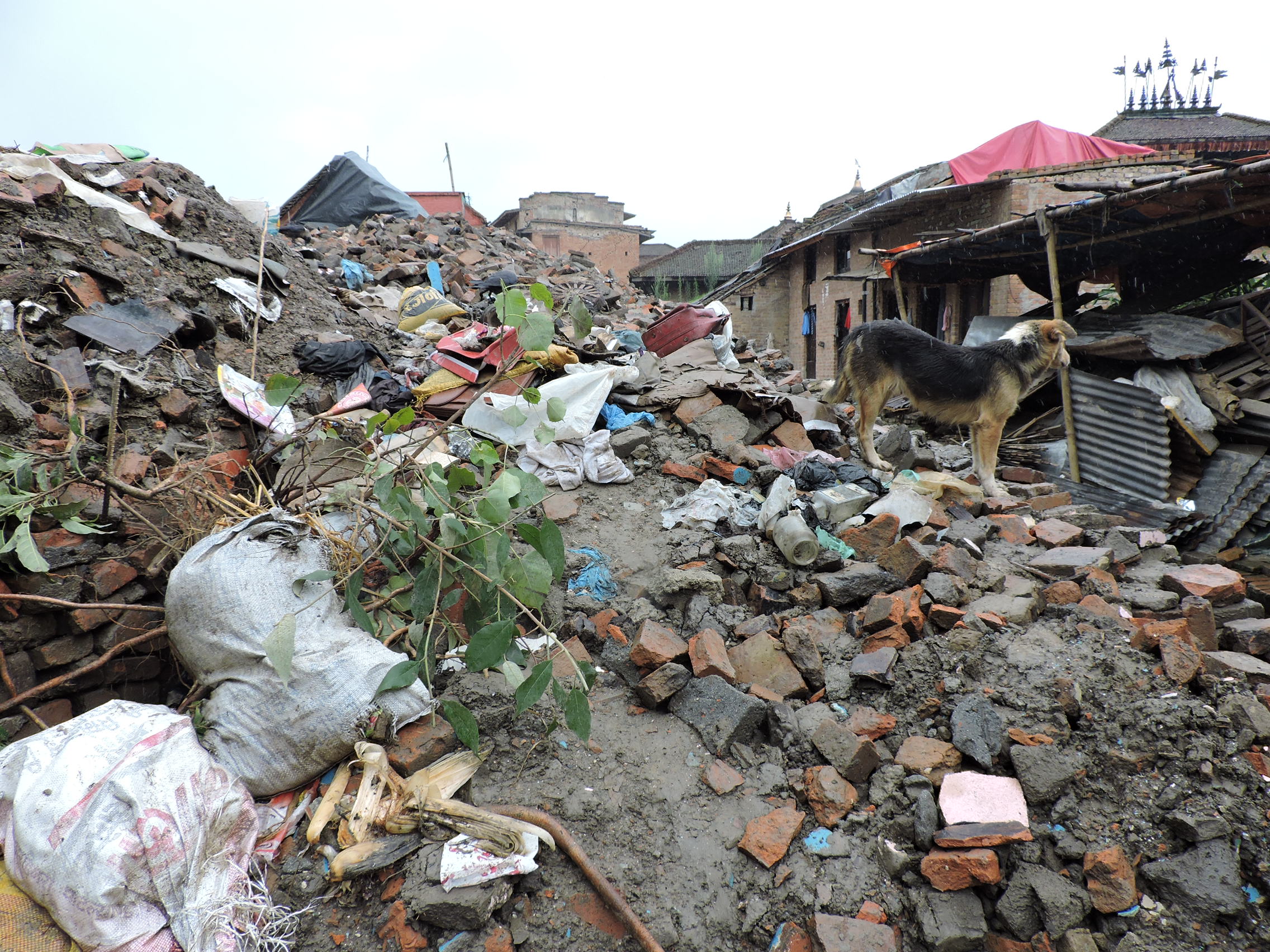
The wonderful fish bone pavement is still there, even though in most places covered by mud

DSCN0362

Can this ever be cleaned away?

could this ever be cleaned away?

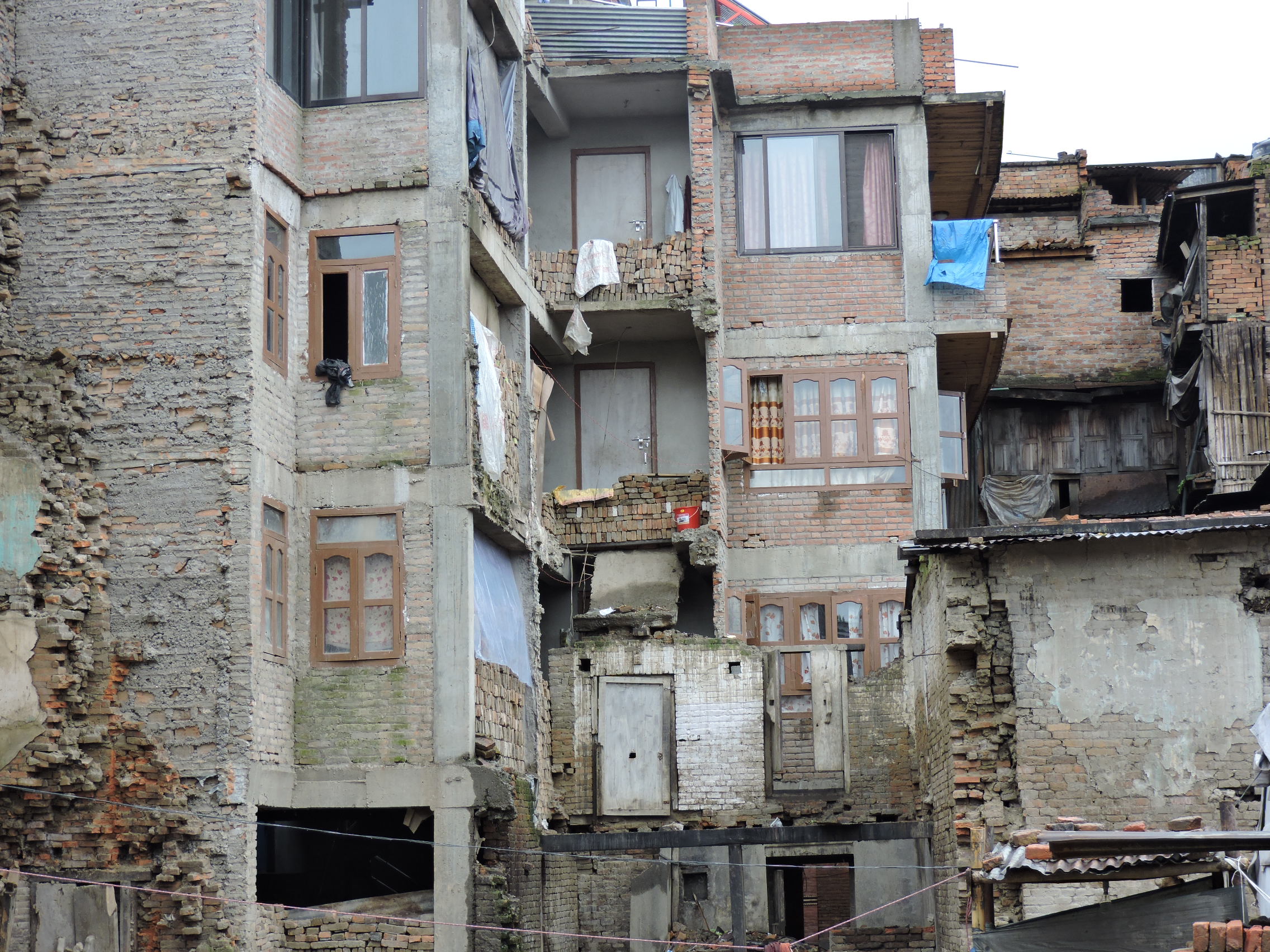
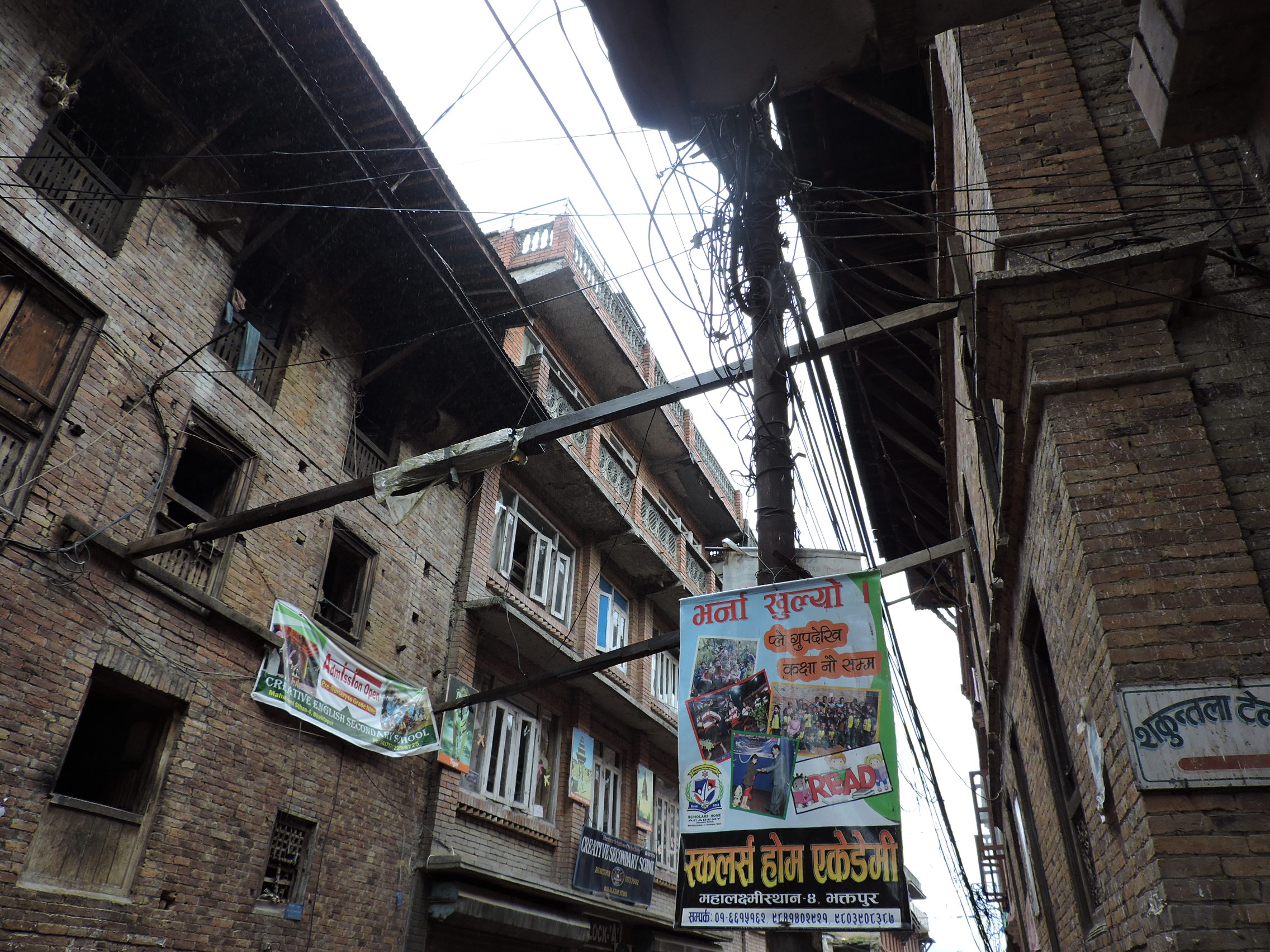
once picturesque

when half your flat breaks away

What a shock, when a part of one’s flat just breaks off  …

still habitable

Still habitable? The criteria depend on necessity

unrecognisable

unrecognisable

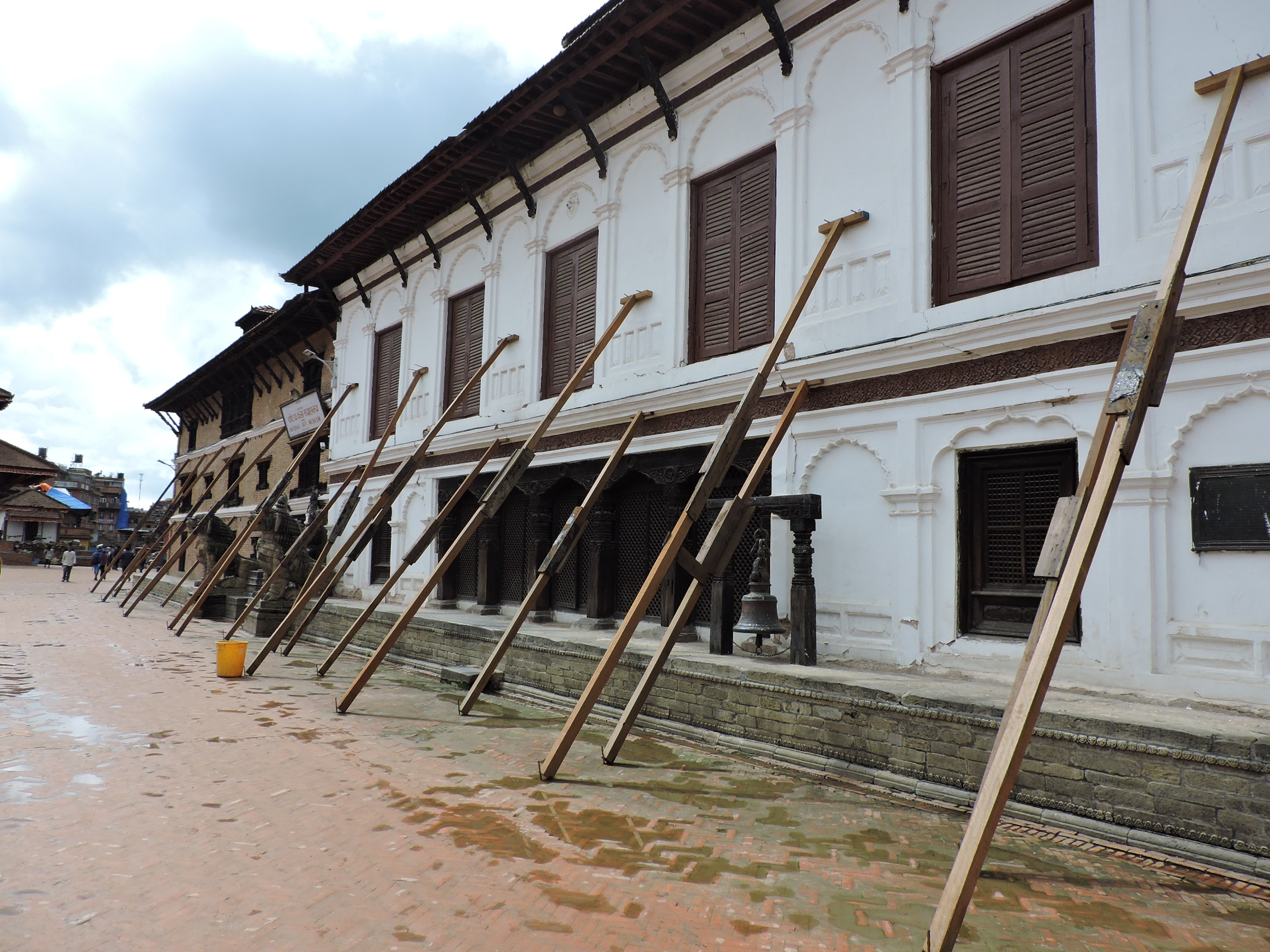
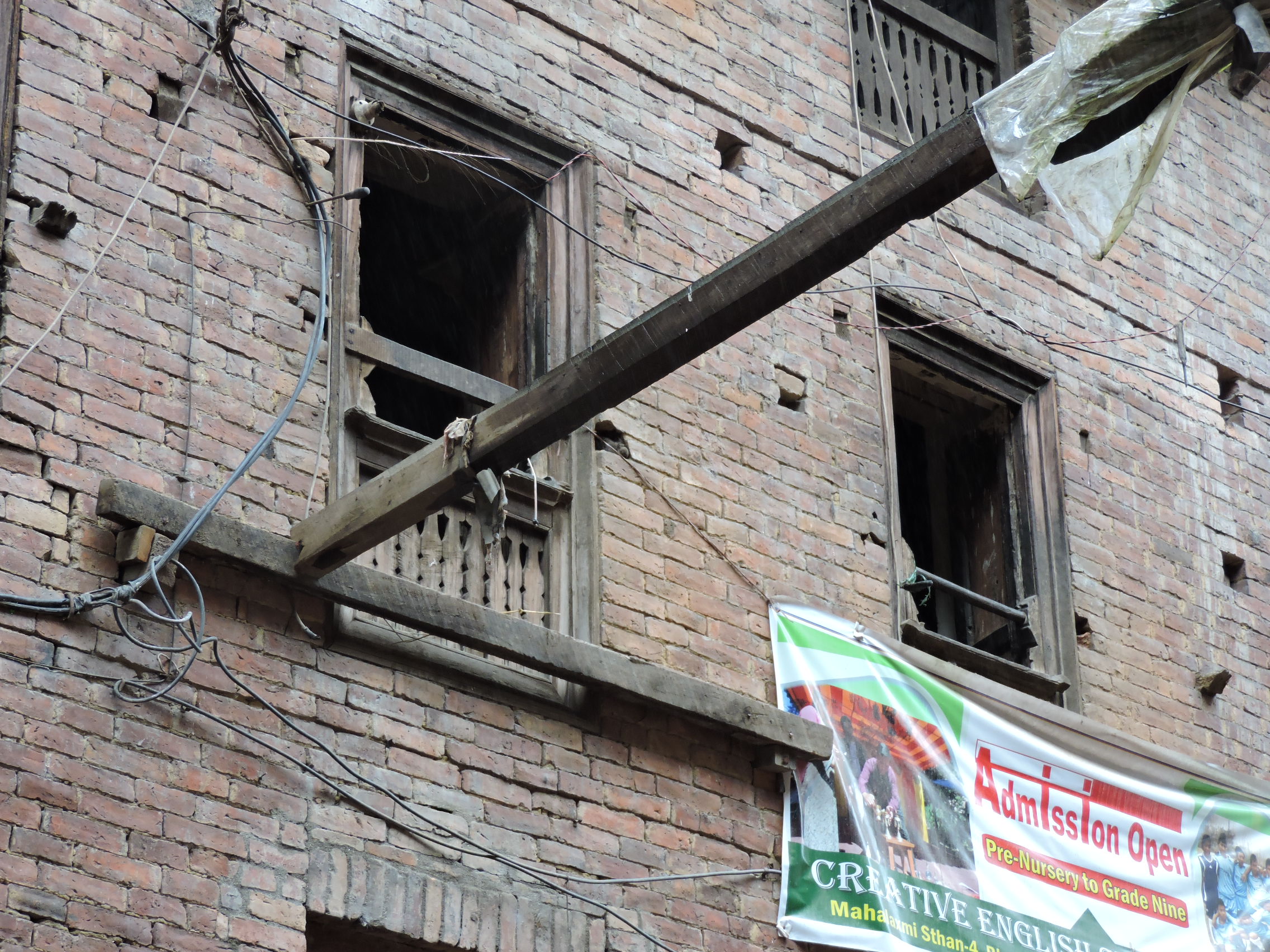
A city on crutches

palace

palace

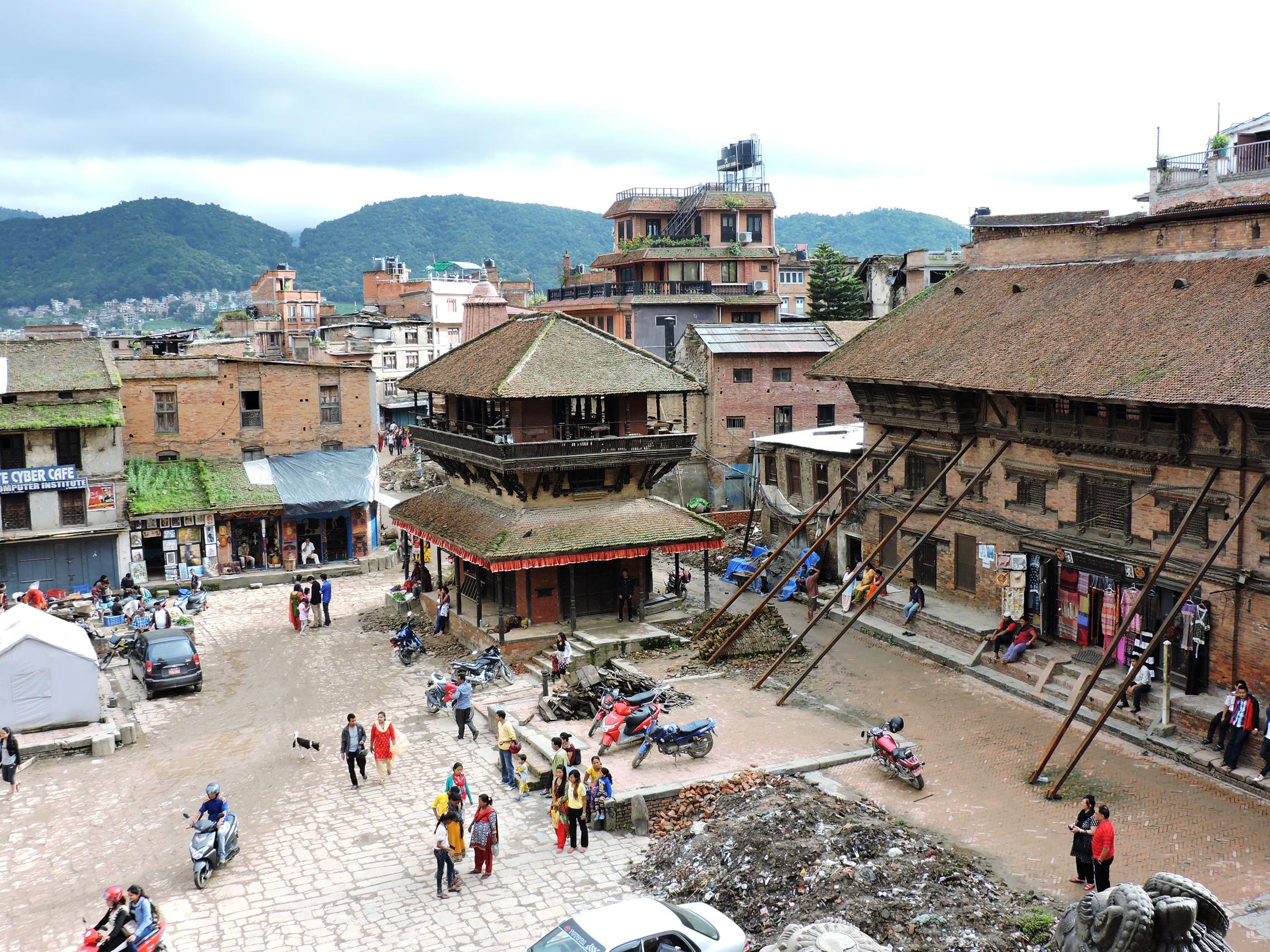
holding each other in place

buildings holding each other in place

wa forest worth in wooden beams

a forest worth of wooden beams

for the time being

for the time being …

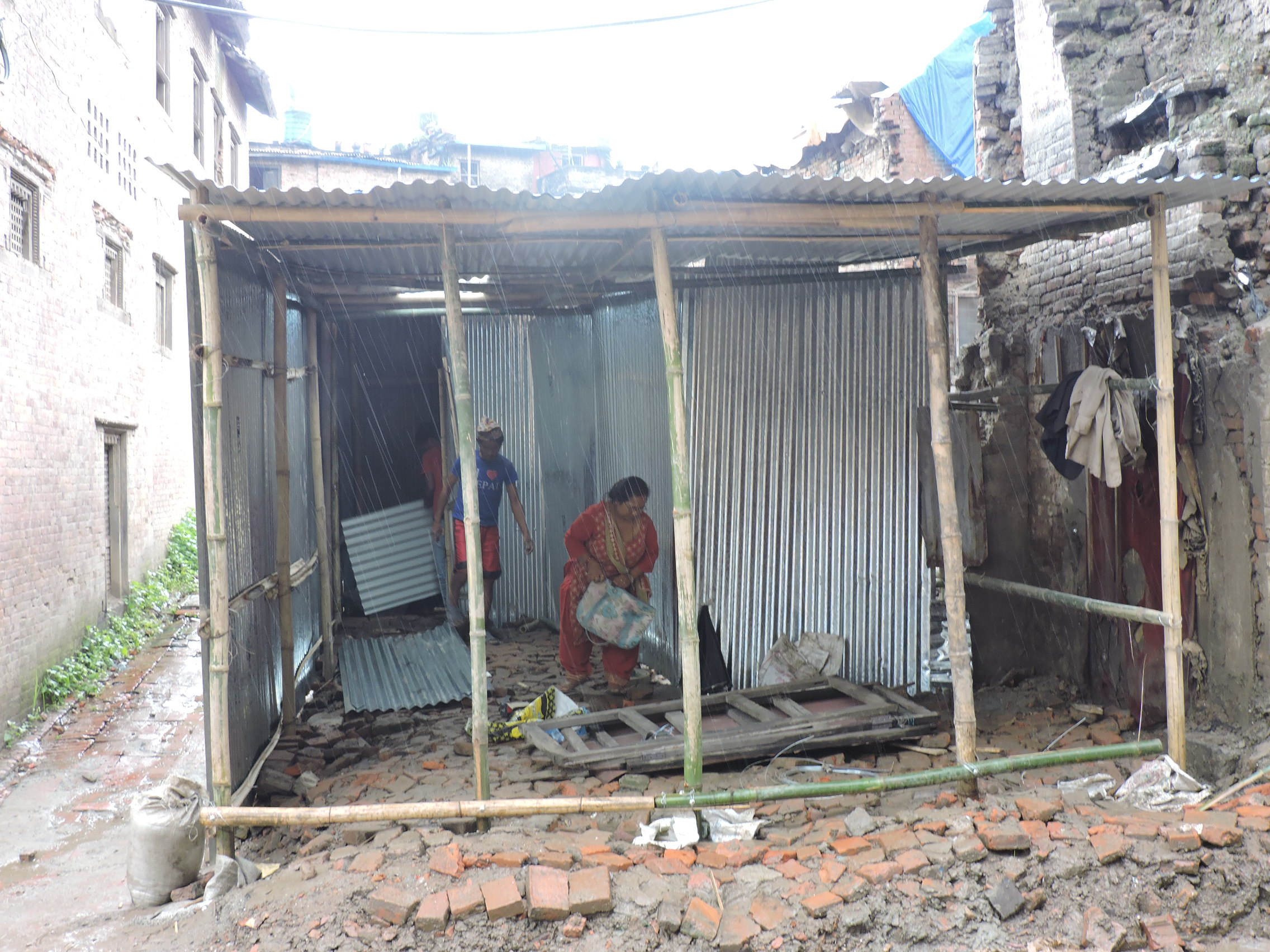
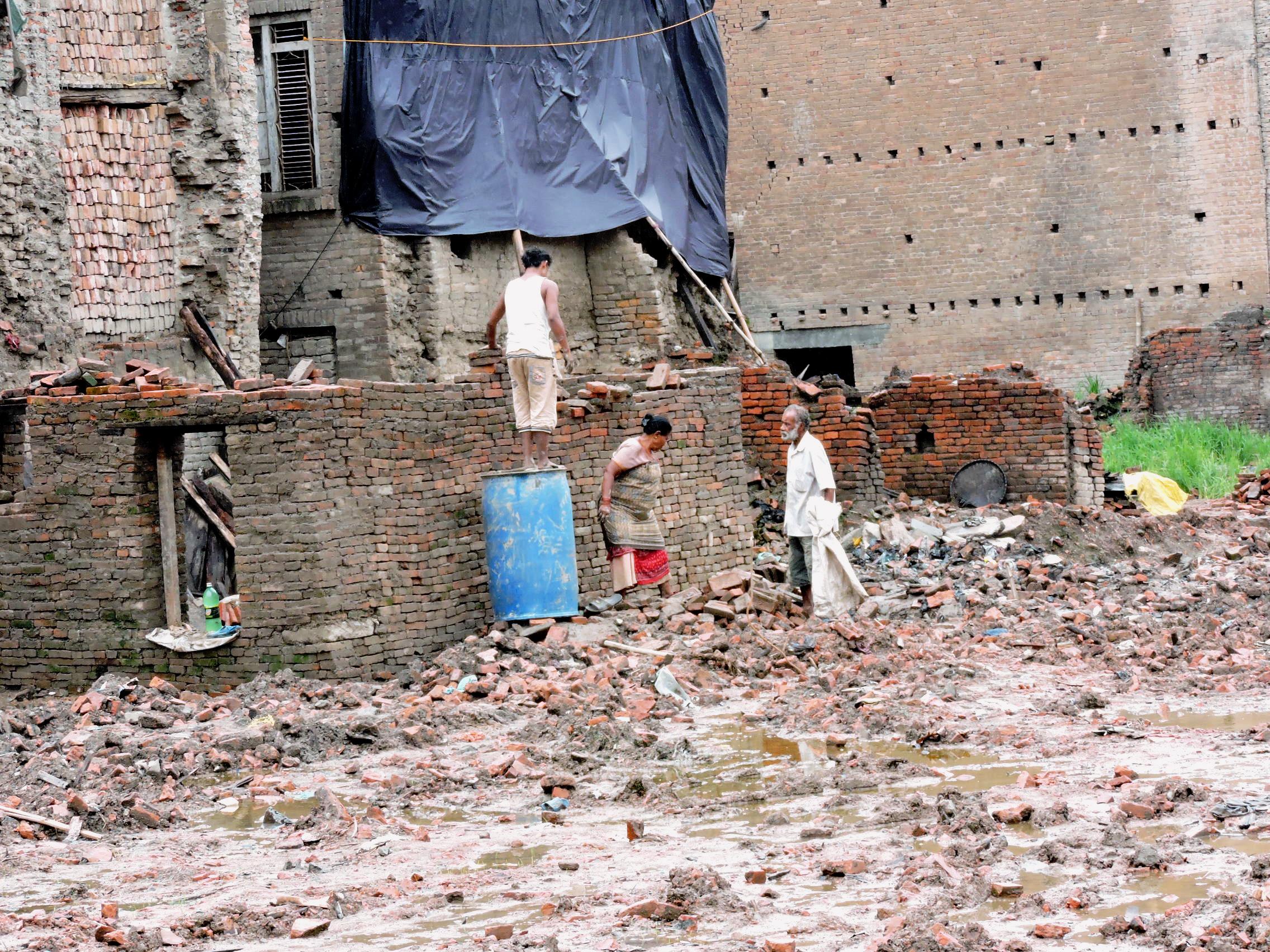
Everybody rebuilds as best they can, on their own initiative, there doesn’t seem to be an overall plan

DSCN0374

building a provisional shelter,

building up, again not for eternity

building up,  without the more secure frame structure, a makeshift solution

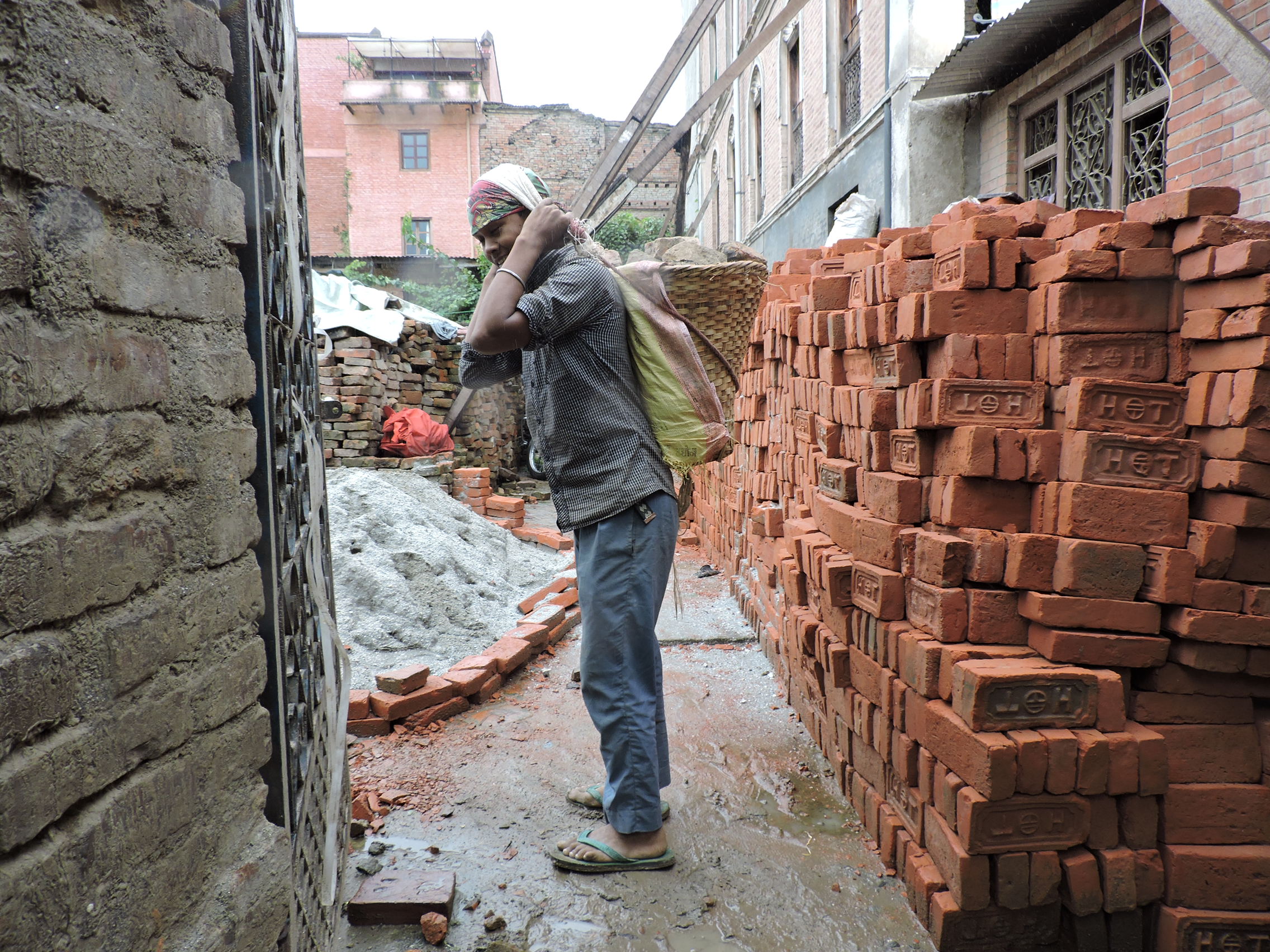
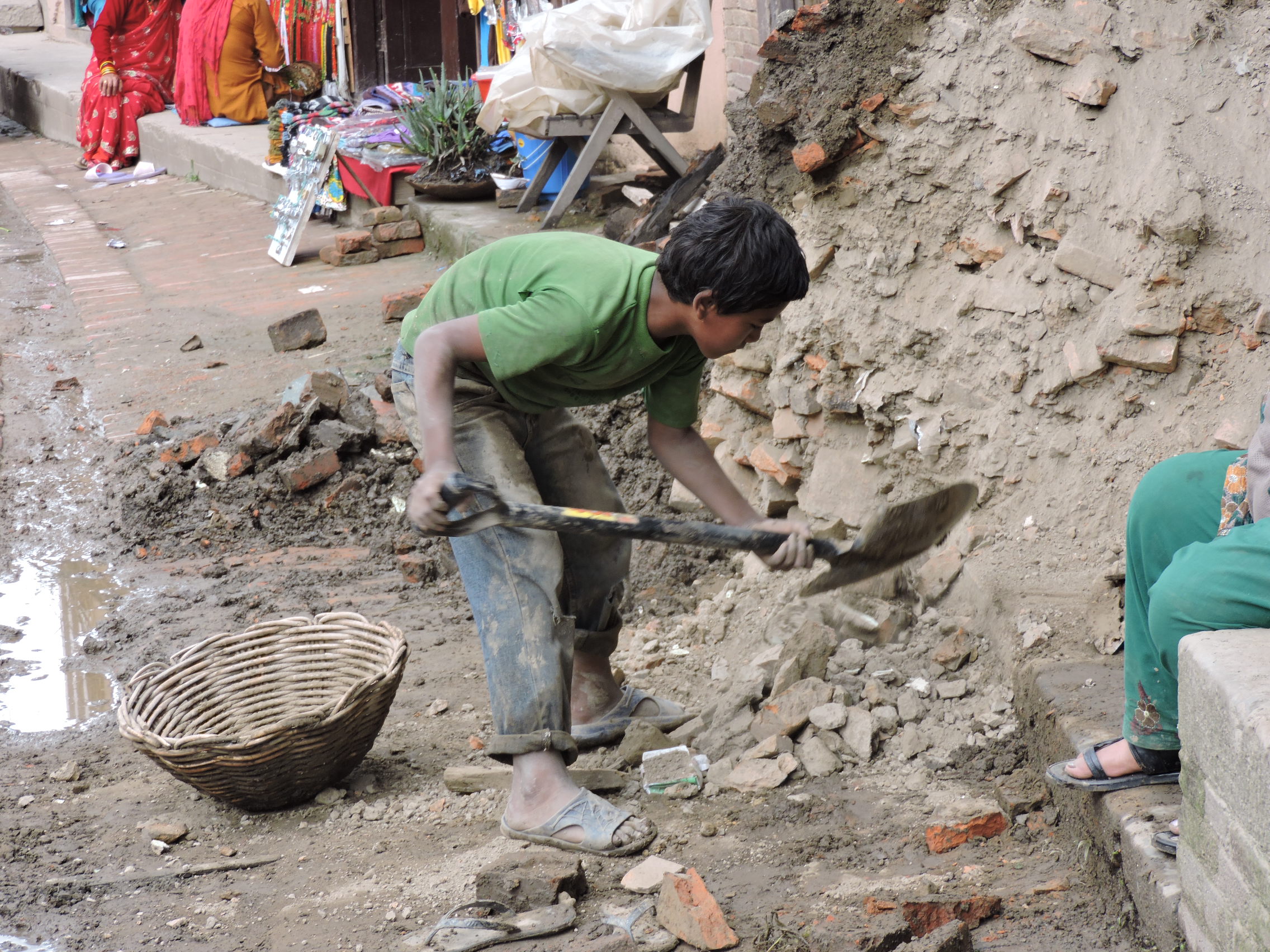
a boy doing the hard work of an adult

a boy doing the hard work of an adult

as I say, the best kids in the world

as I say, the best kids in the world

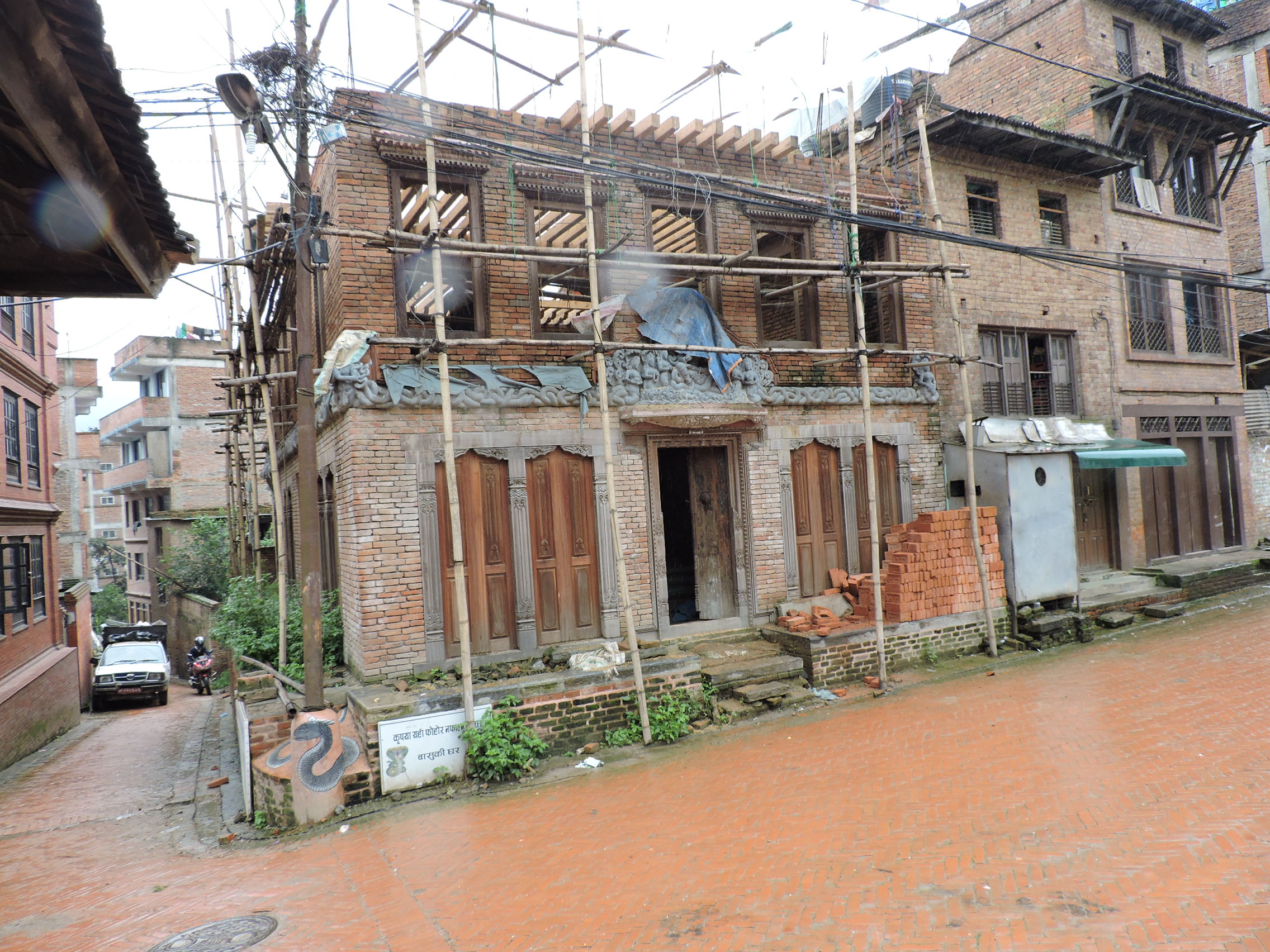
Bamboo scaffolds, and besides rebuilding without the frame structure

Bamboo scaffolds, nice work, but again no frame structure

Life goes on

an artist

an artist painting patiently his colourful signs, but the customers are missing

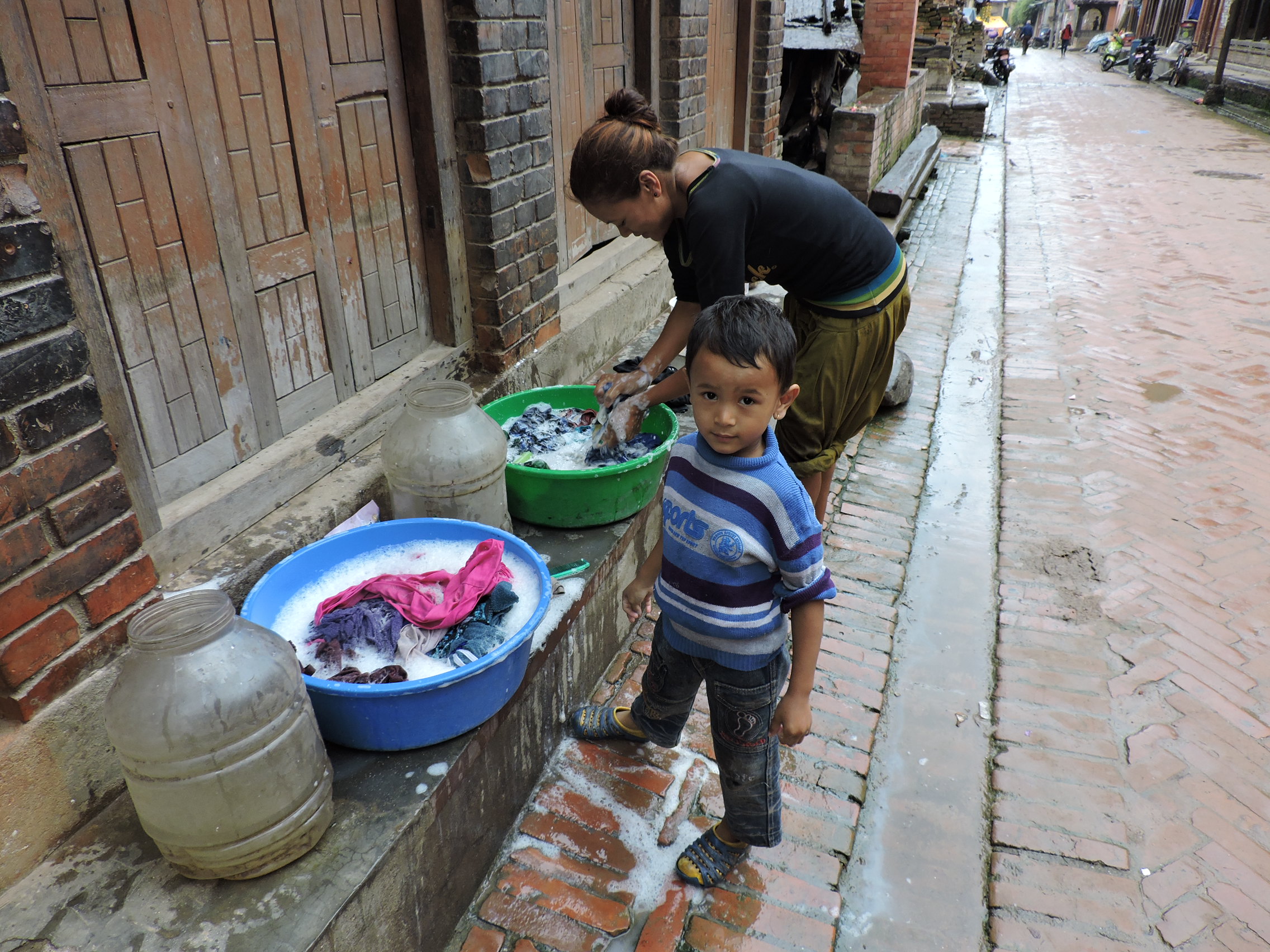
doing the laundry with mum

doing the laundry with mum

looking pretty

looking pretty

choosing a necklace

choosing a necklace

dating

dating

flying kites, the kites can't be seen, but kids always ask the tourists to buy them spare parts (handmade, they break easily)

flying kites, the kites can’t be seen in the picture. The kids always ask the tourists to buy them spare parts (handmade, the kites break easily)

selling and buying

selling and buying

schools reopening

schools re-opening

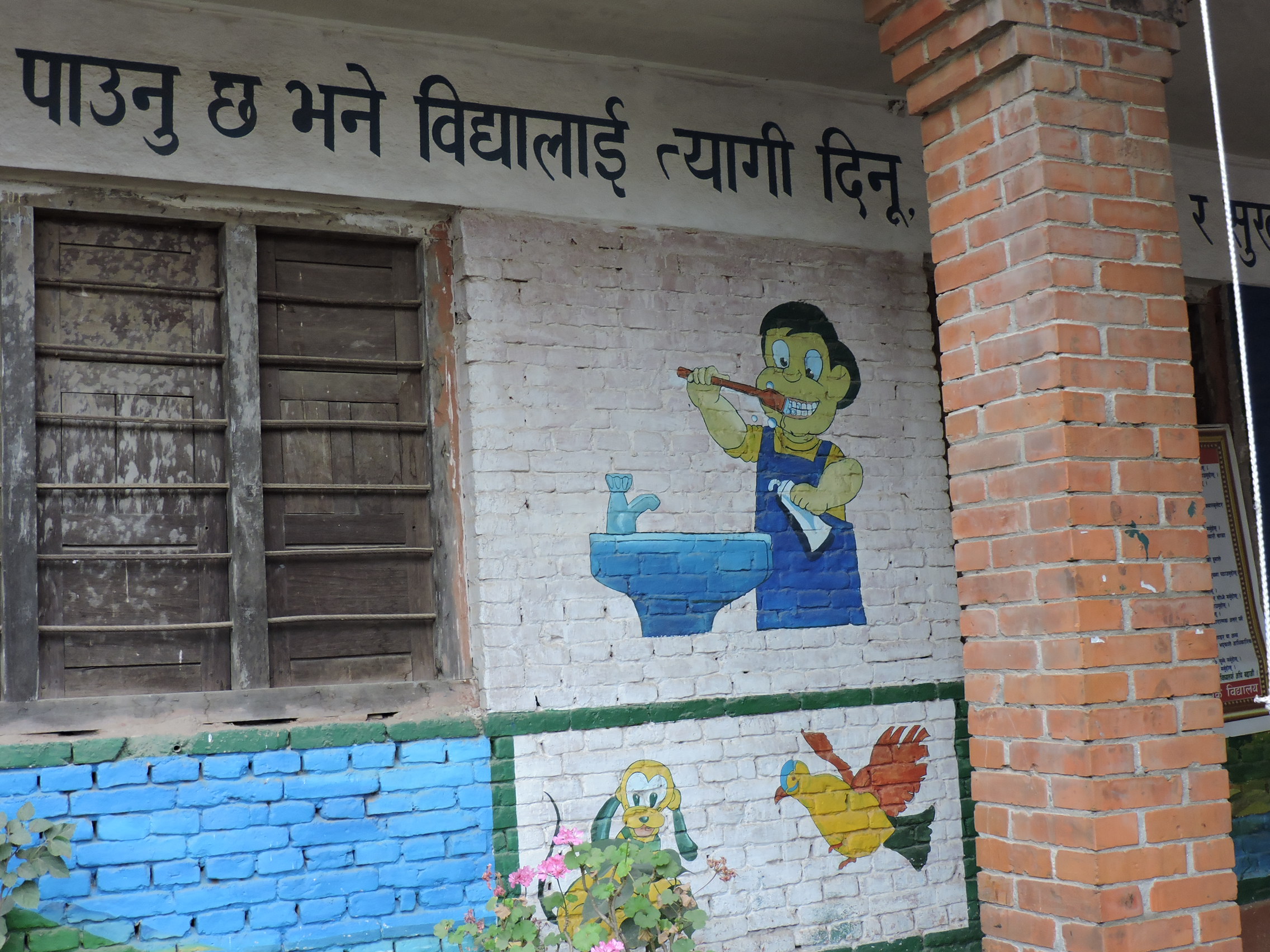
Kindergarten promissing good education in hygiene

Kindergarten promissing good education in hygiene

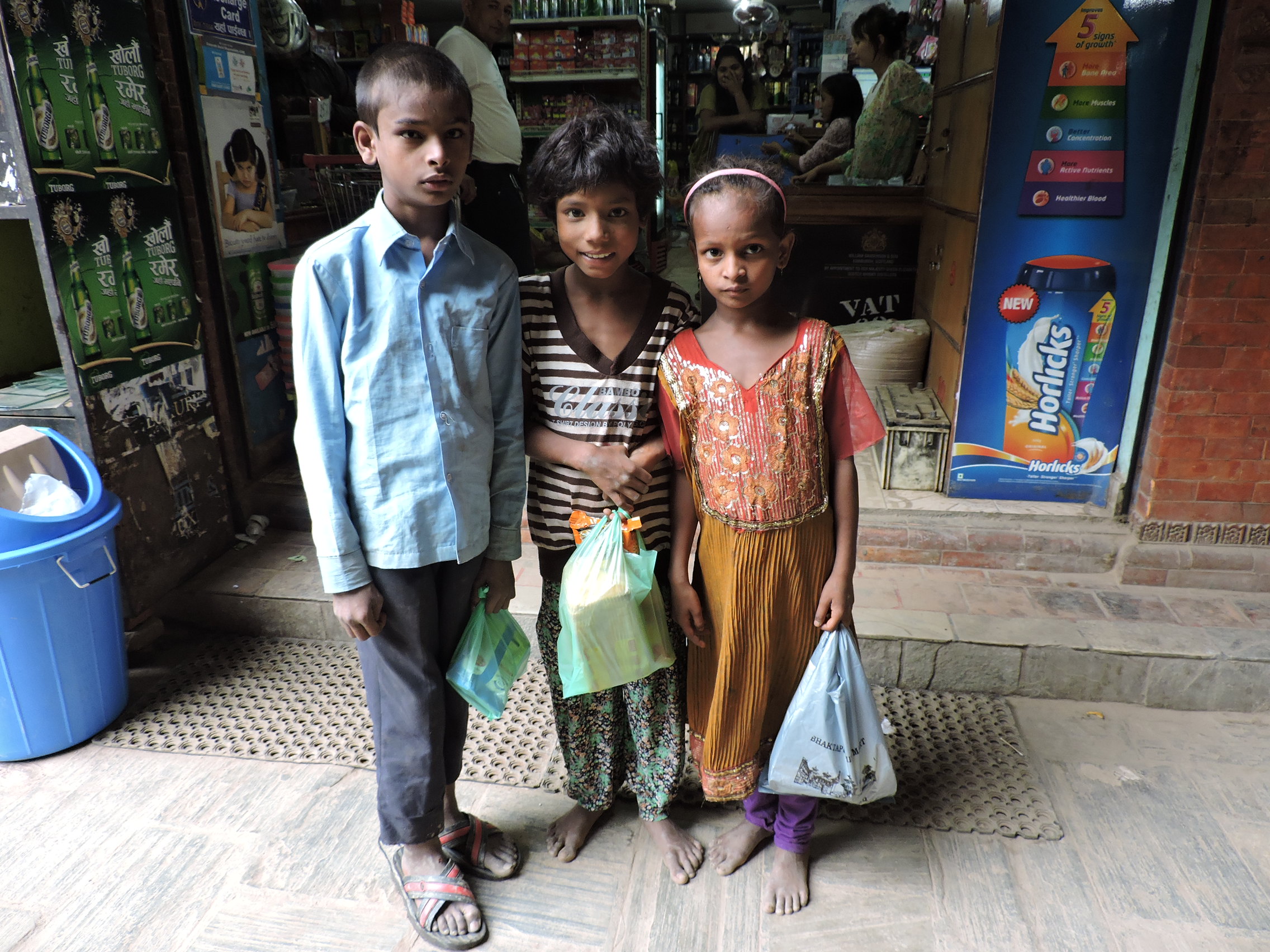
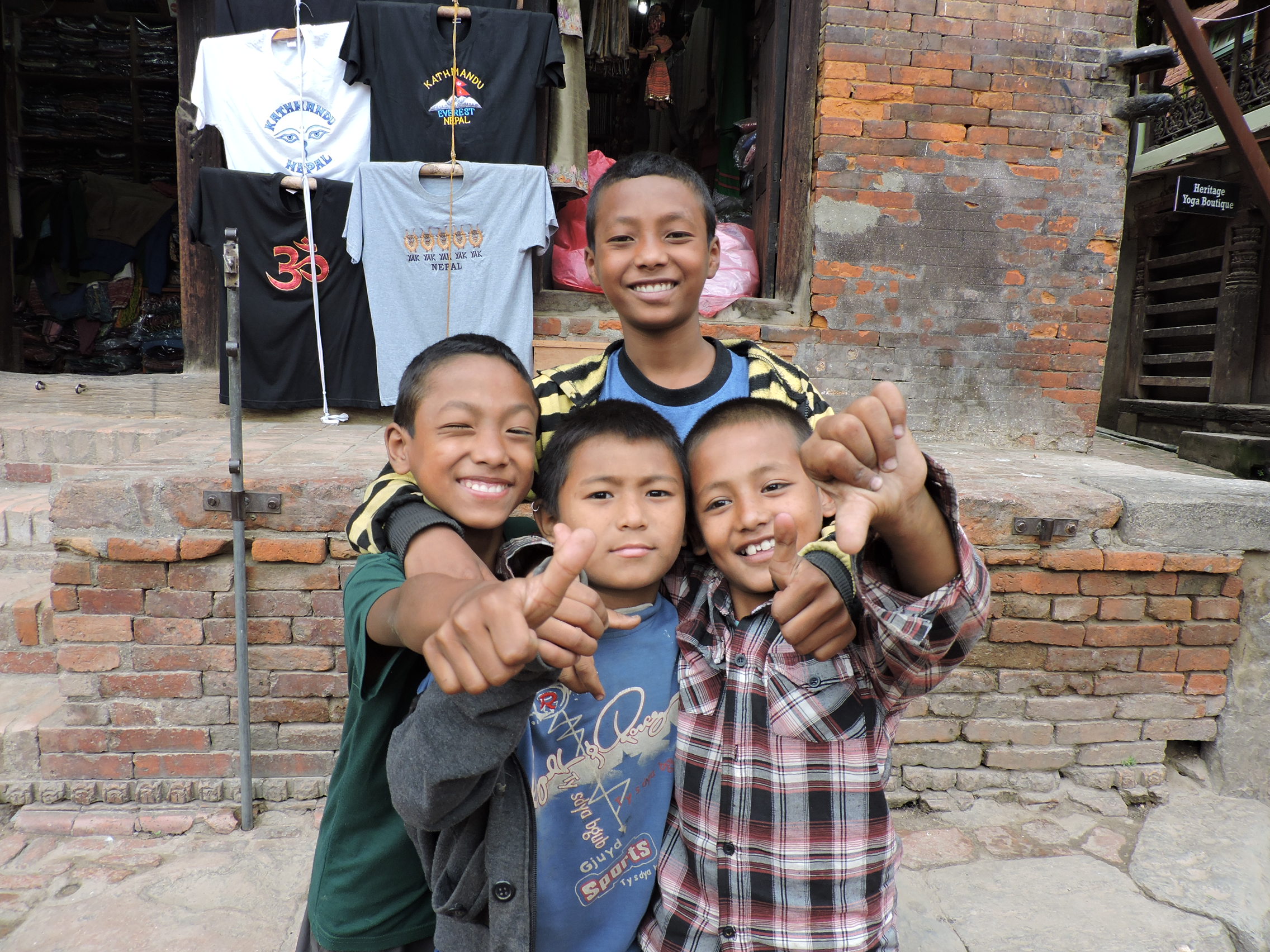
Abducted by three kids, I ended up at what is probably the only supermarket in the old town. Inside some English speaking Nepalese customers helped me negotiate with the children as to what I was willing to buy for them and what they would have liked me to buy. In the end we all came out quite satisfied. In the picture they look rather earnest but before I pointed my camera at them they beamed with excitment and happiness. Even the cashier girls smiled.

begging for food; that way I found the supermarket, I insisted on something healthy to eat; people helped me make myself understood

begging for food; I insisted on something healthy to eat and drink

Nepalese tourists taking pictures of their cultural heritage

Nepalese tourists taking pictures of their cultural heritage

Mothers taking their children to the temples

Mothers taking their children to visit the temples

mother and daughter in front of a shop

Mother and daughter in front of a shop

granny resting from a visit to the temple (i call her granny but she is younger than me)

Granny resting from a visit to the temple (I call her granny but she must be younger than me)

boys will always be ...

Boys will always be …

After half a day of walking around I was not only hungry and soaked from the rain, but my camera had run out of battery. So I went to a nice restaurant at Durbar Square (remember all three towns Kathmandu, Patan and Bhaktapur have a Durbar Square) to eat and to get my camera charged. The place was almost empty, more waiters than customers, just a group of American youngsters, probably volunteers. It was good to sit down and leave the rain outside.

Suddenly a European comes in, elderly man (gee, who am I to talk like that) with a young Asian girl at his side. Maybe he’s her Daddy, oh so sweet! I think. They sit down at the table next to me. The food comes and before starting to eat, I see the girl wipe the cutlery and the dishes with desinfectant tissue.

So I turn toward her, look her in the eyes and tell her: “You mean, you are a sugar daddy’s baby and you are worried about clean dishes (!?!?!?$$?)?”

No, I’m just kidding, I wouldn’t even think of doing a thing like that.

By the time I had eaten a delicious Dal Bhat and some fruit and taken a coffee, and my battery was charged enough to take more pictures, it had stopped raining and the sun had come out. That’s why you see some dry pictures, too.

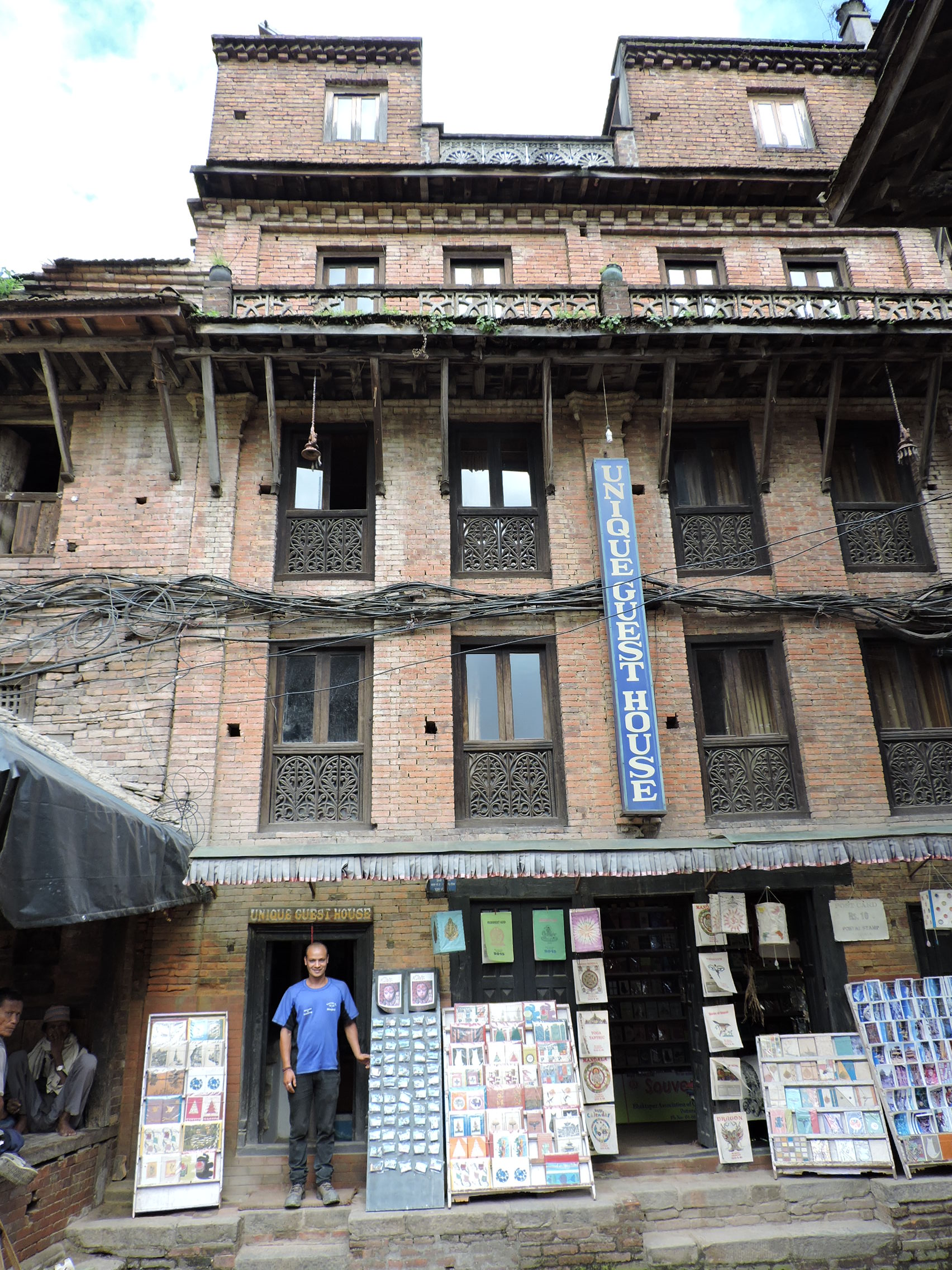
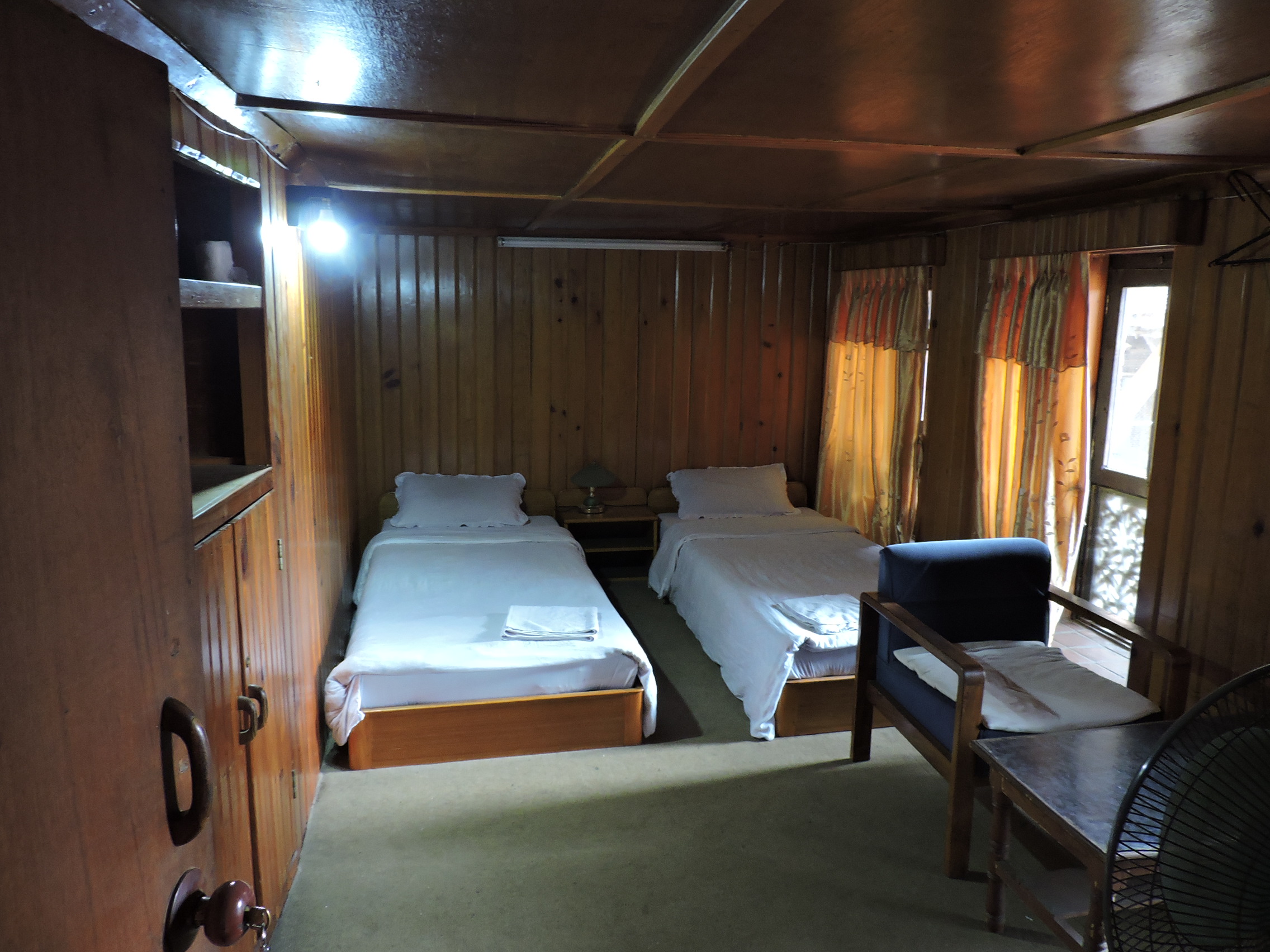
After lunch I went to look for the little Newari hotel where I had stayed 11 years ago. I didn’t remember its name or address but I found it. The young proprietor had at the time been so nice to keep my luggage after I checked out, so I could go sightseeing without carrying my backpack around. The “Unique Guest House” was still standing and the proprietor, still young, seemed really touched that a former guest had bothered to look him up. He offered a cup of tea and I sat down and we talked. His closer family, he said, was alright, but among more distant relatives and friends some had lost their lives. He didn’t know anyone who didn’t have someone to mourn.

the Unique Hotel

the Unique Guest House

my room

My room 11 years ago, the room on another floor is still inaccessable

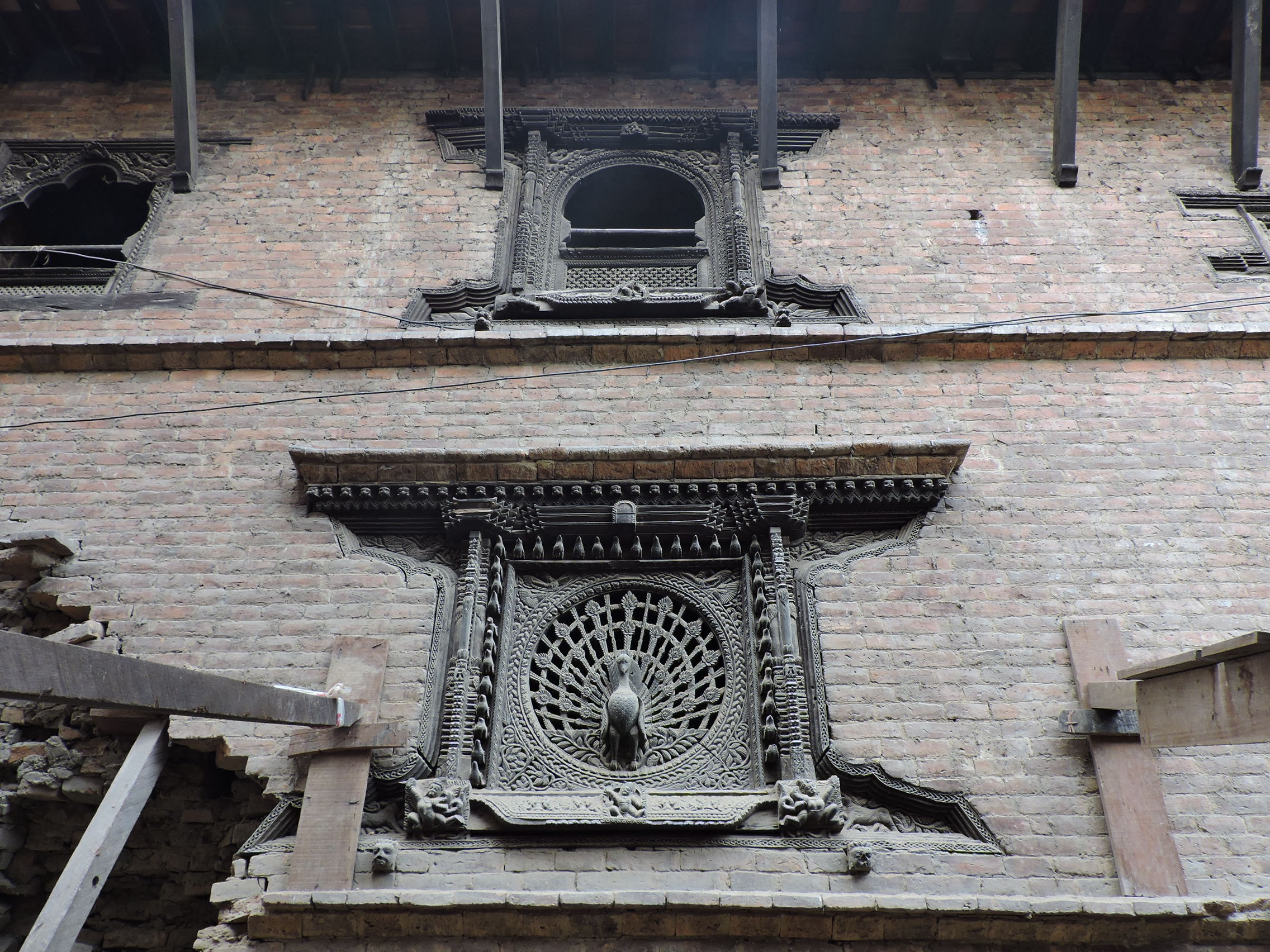
Nearby, the famous Peacock Window, a wonderfully carved, wooden window, which I had taken a picture of on my last visit. The proprietor of the shop in front had invited me to go up to the 2nd floor of his house to be able to take a more frontal picture. I remember when going upstairs I met the only two children in the whole of Nepal that didn’t greet, that didn’t say: “Namaste”. They were probably also the only children in Nepal at that time who were playing video games. The family had come through the earthquakes unharmed but the house is uninhabitable.

Peacock Window

Peacock Window seen from the ground, the house opposite is not accessible

Homage to uncaring gods

DSCN0499

Hanuman

DSCN0493

DSCN0512

worse than uncaring gods, indifferent people

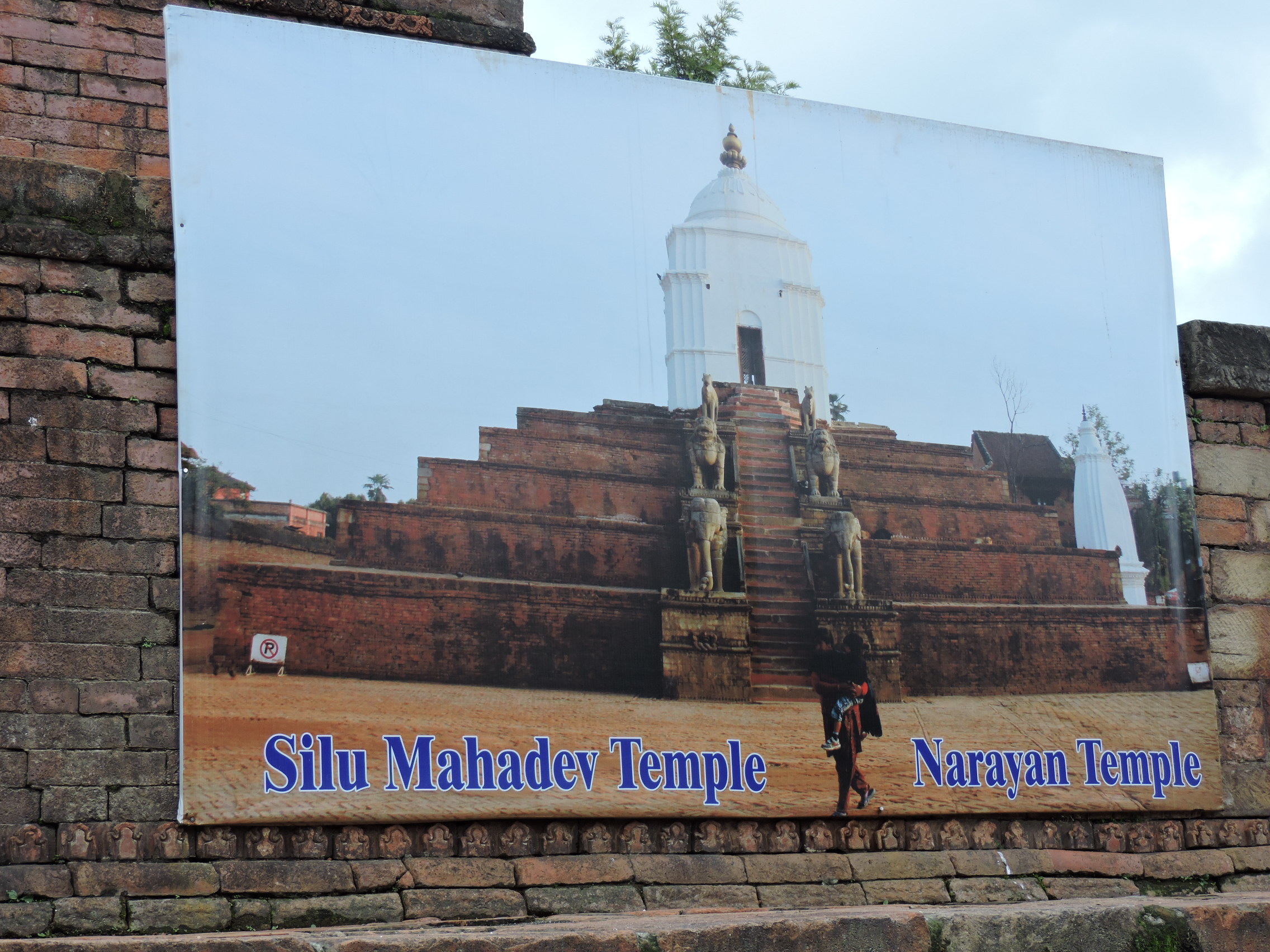
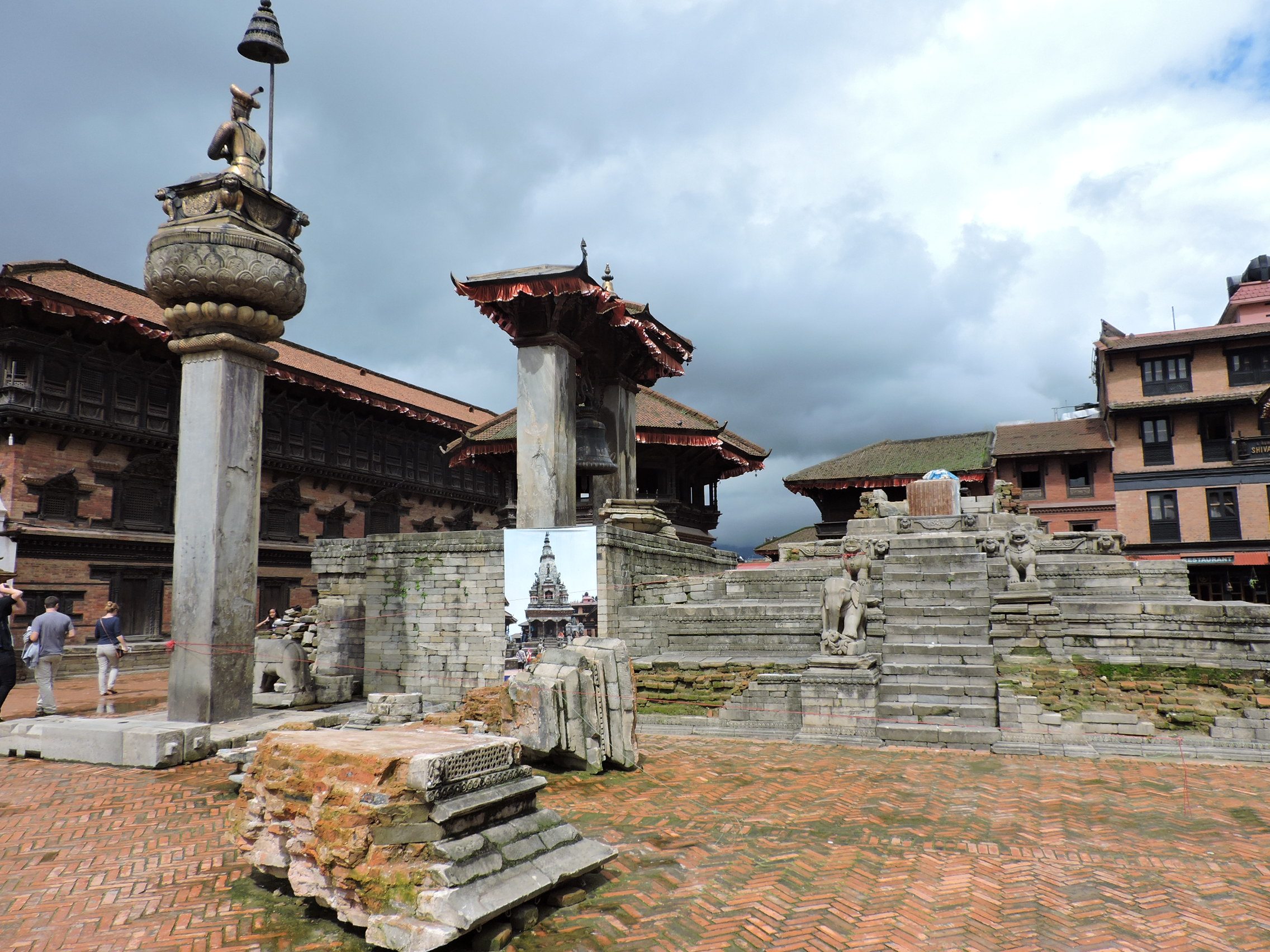
what remains, the foundation of the temple

what remains, the foundation of the temple

DSCN0458

one of the many posters of what the temple looked like

temples gone

some temples gone

DSCN0501

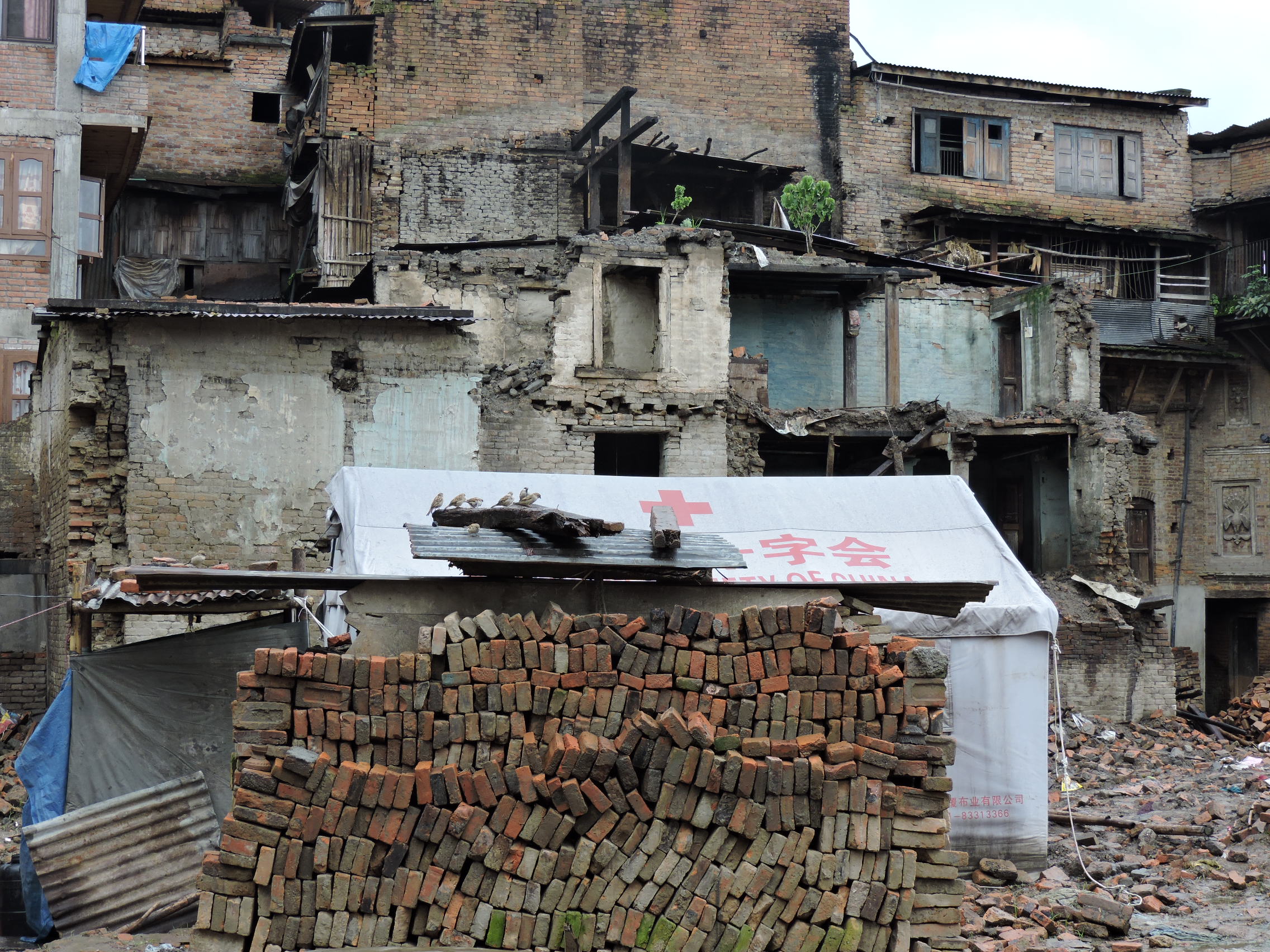
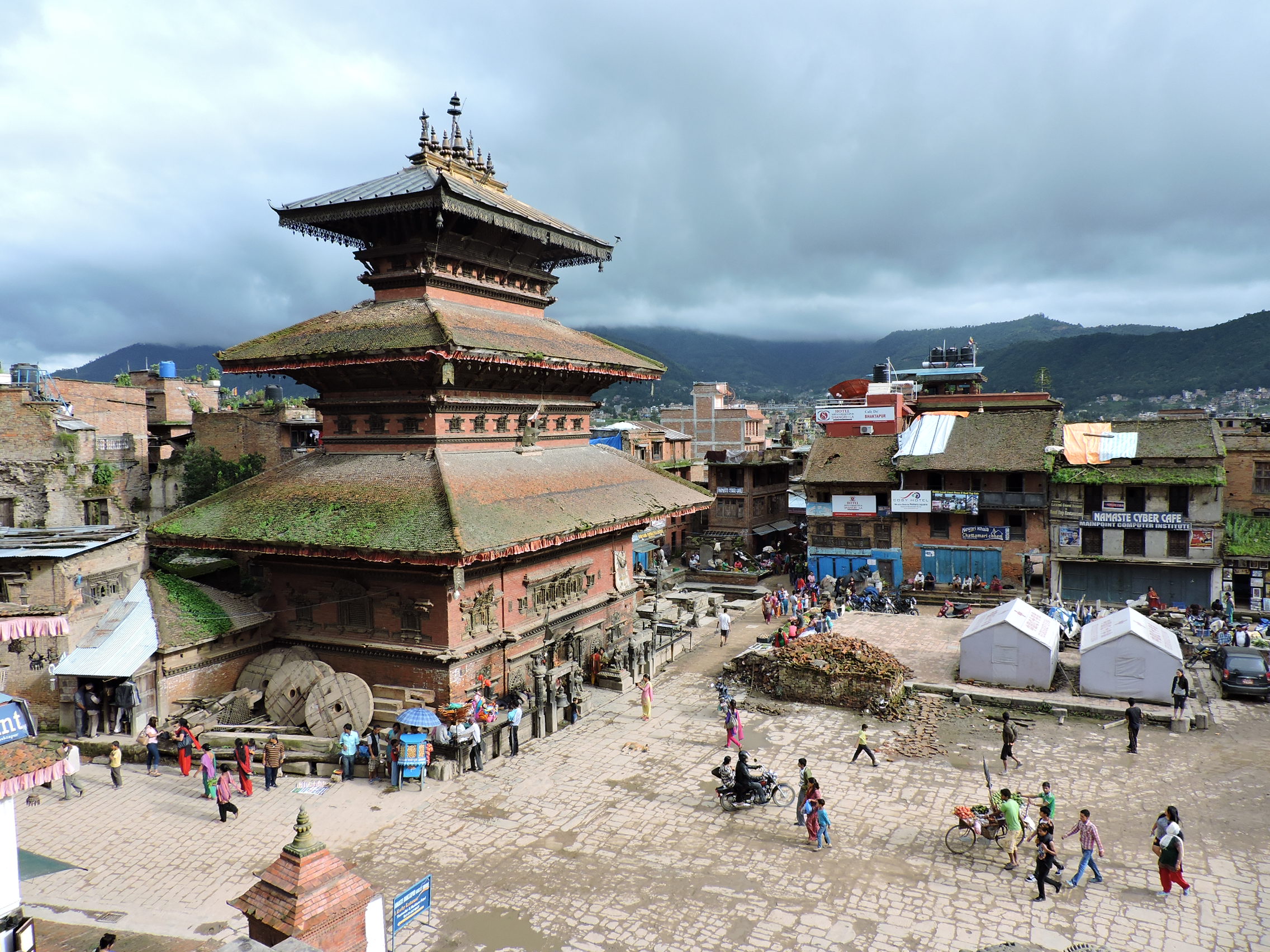
some temples standing, in between, tents from the Red Cross of China

DSCN0502

Devotion brings about the finest art

Devotion brings about the finest art

Adulation anyway

Adulation goes on …  anyway …

Good-bye Bhaktapur, it will take time to heal

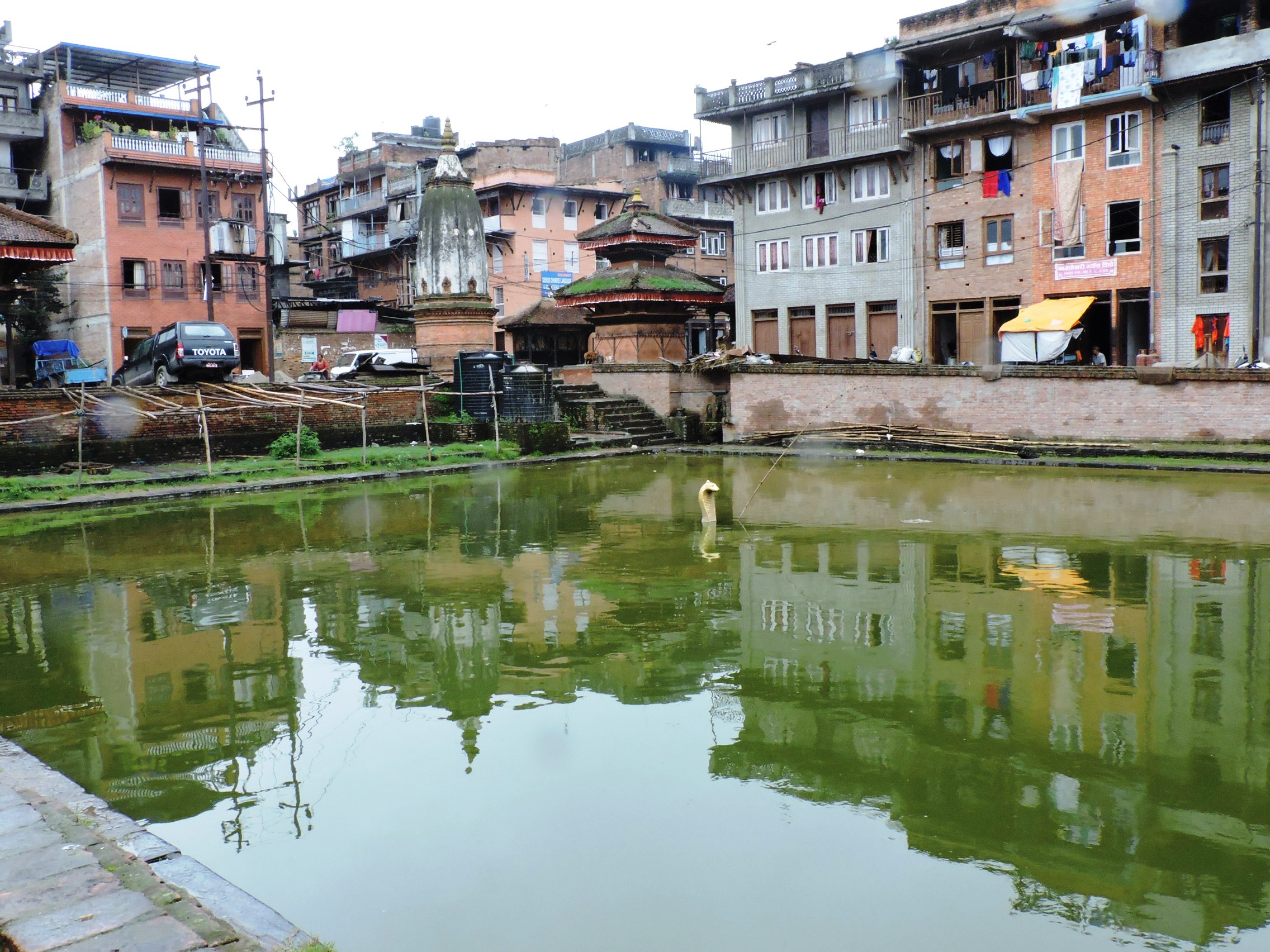
Snake pond

Snake pond

And all the time throughout my tour I keep thinking of a hand sweeping arbitrarily over a beautiful sand mandala scattering its wonderful shapes into the wind to teach us human beings that all things are ephemeral and nothing lasts forever. But then, this is only true for the outward appearance, the essence, the idea of the colourful mandala, the plan of an amazing town full of life remains.

I know that the people I met 11 years ago are alright and with a couple of hundreds of fotos more in my camera I go back to the turbulent modern age.

trying to carch the bus back to kathmandu

Trying to catch the bus back to Kathmandu

Cheers

Gerburg
The Camp 2

28 Aug

Activities

Clearly the skills that are needed in a rural environment up in the Himalayas  are different from the skills that are required for earning a living in an urban environment.

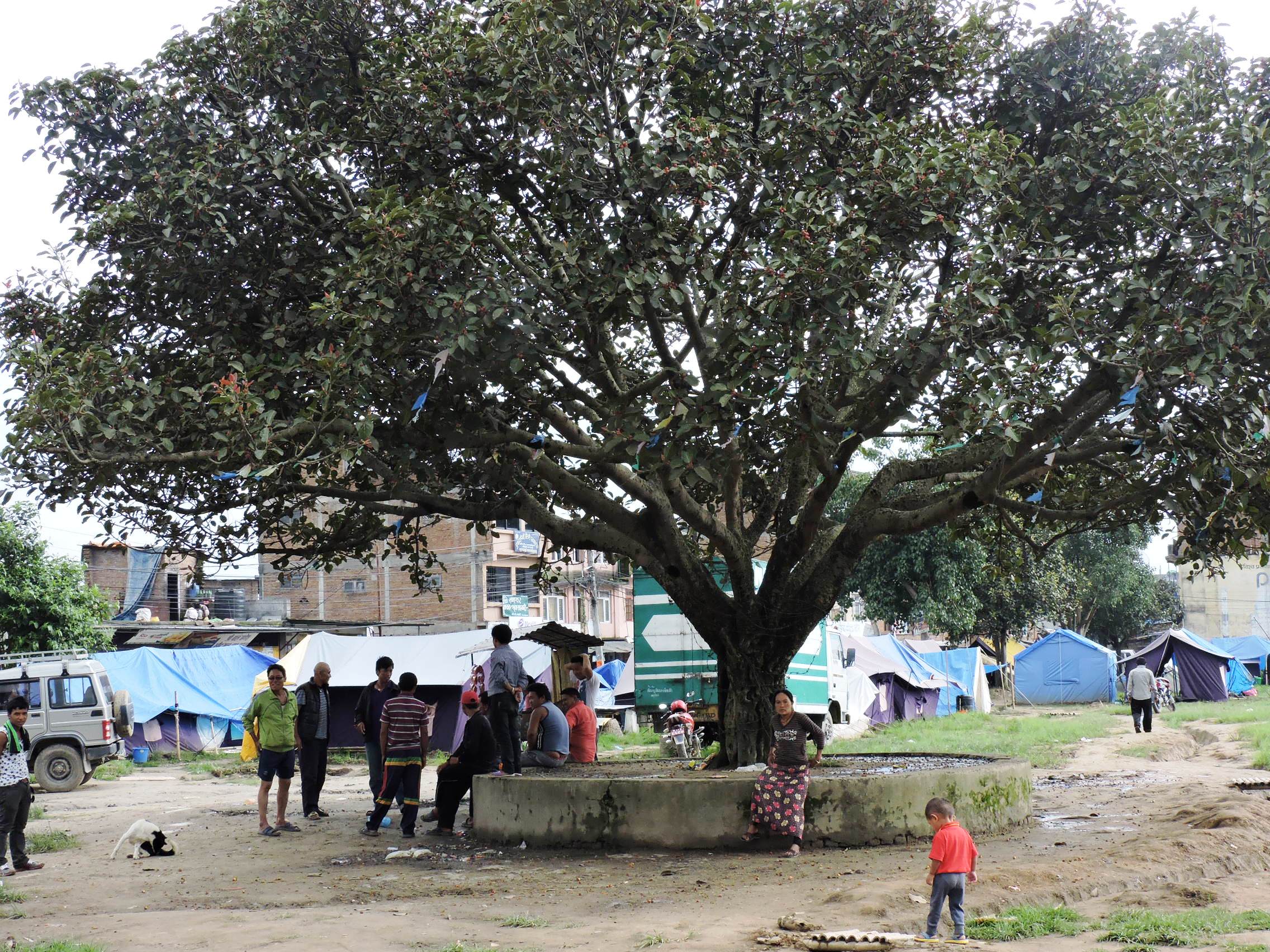
men's gathering umder the big tree

men gathering under the big tree to talk and to have company


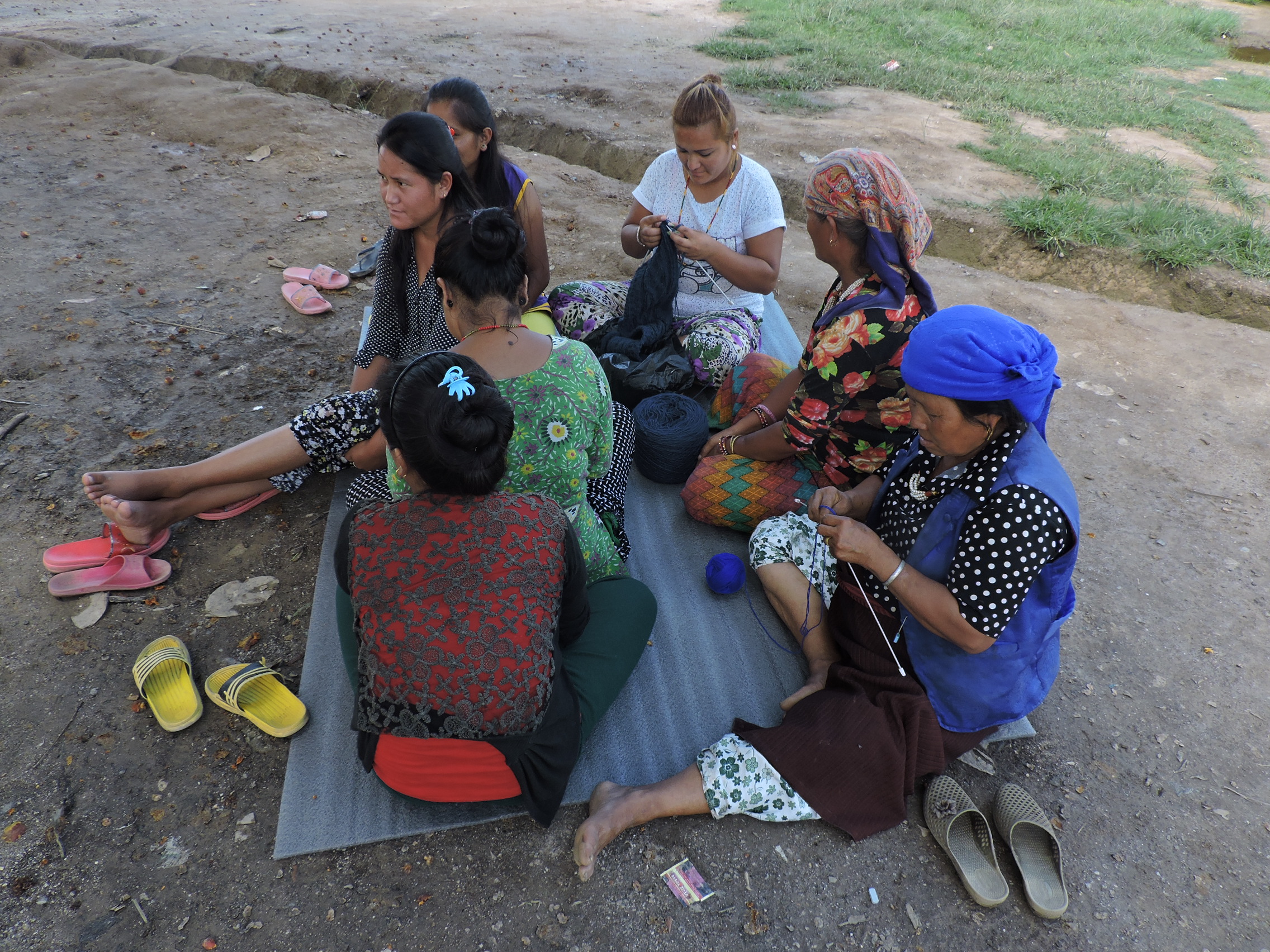
the ladies' handcraft: knitting and crocheting for sale and also for the winter

the women’s handicraft: knitting and crocheting for sale and also for the winter


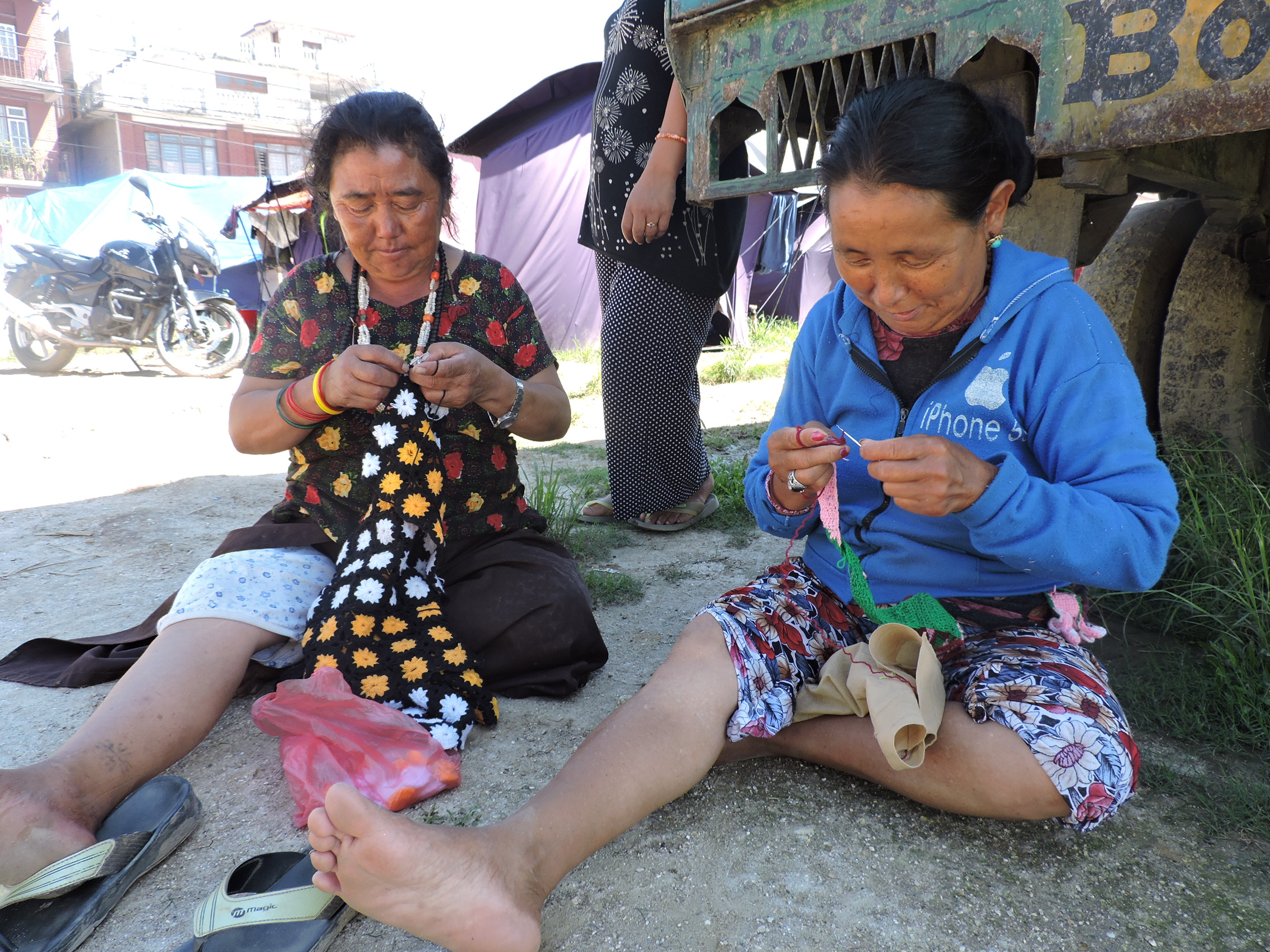
doing needlework for sale makes the women feel better

doing needlework and earning some money makes the women feel better

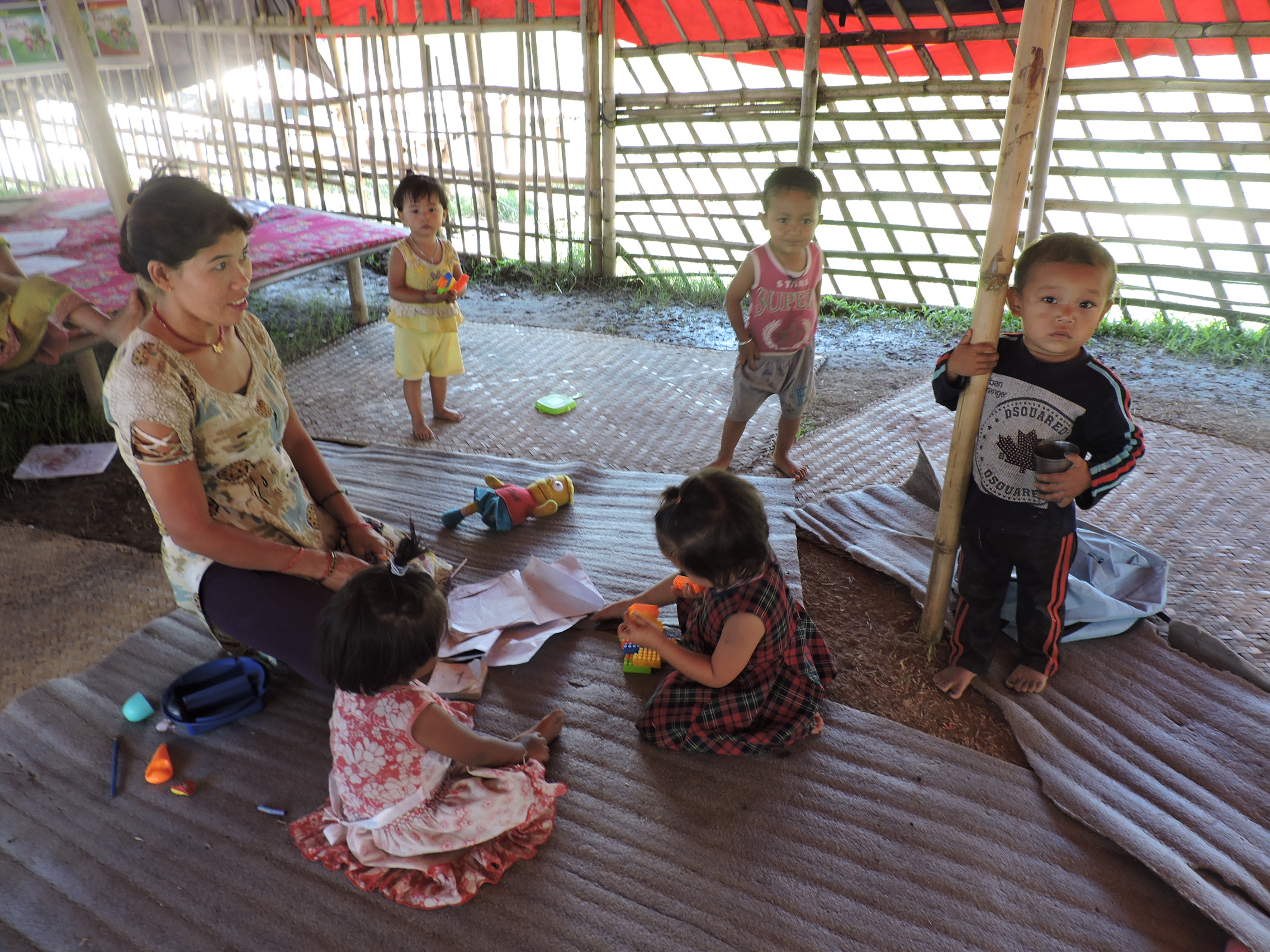
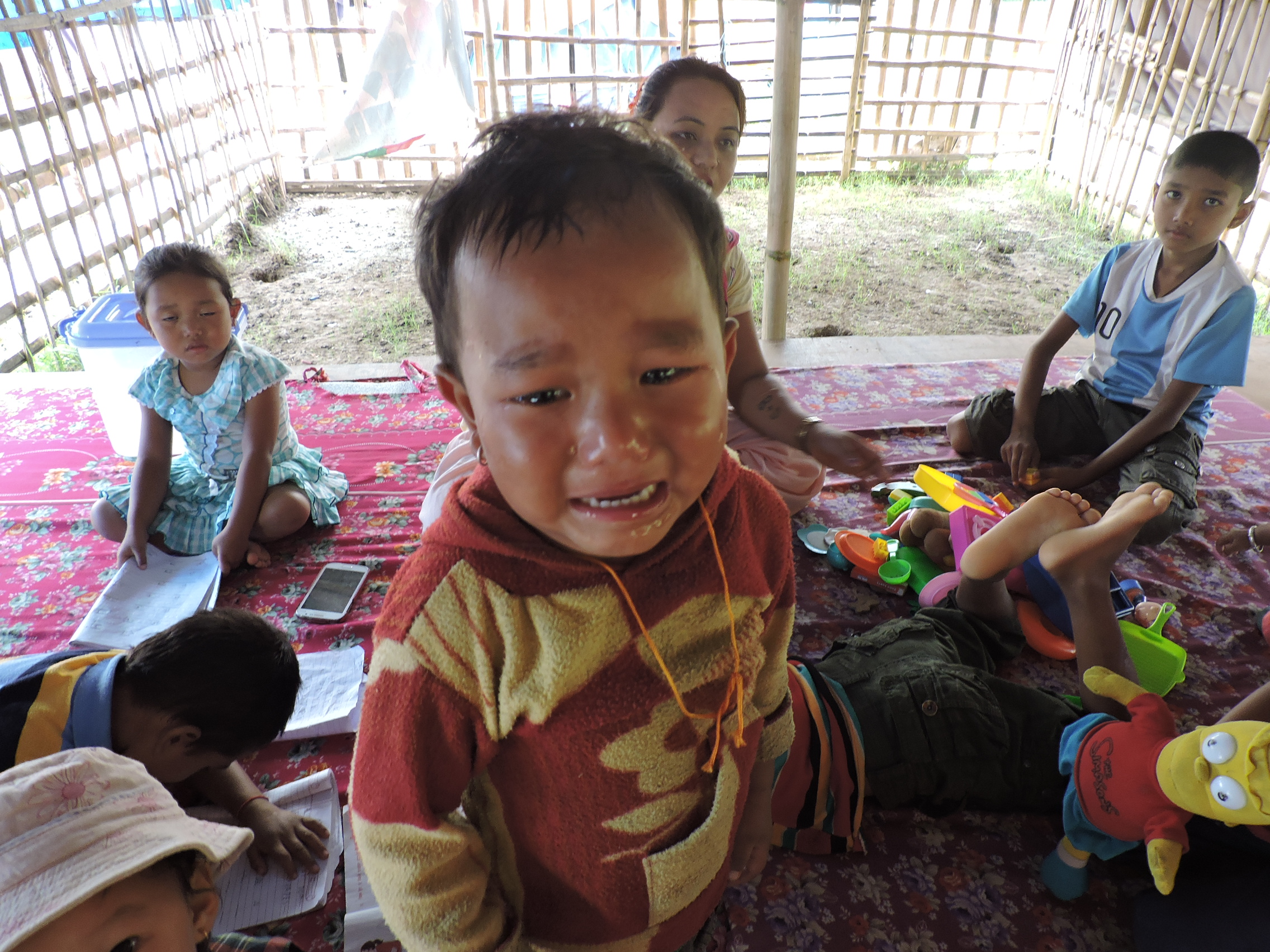
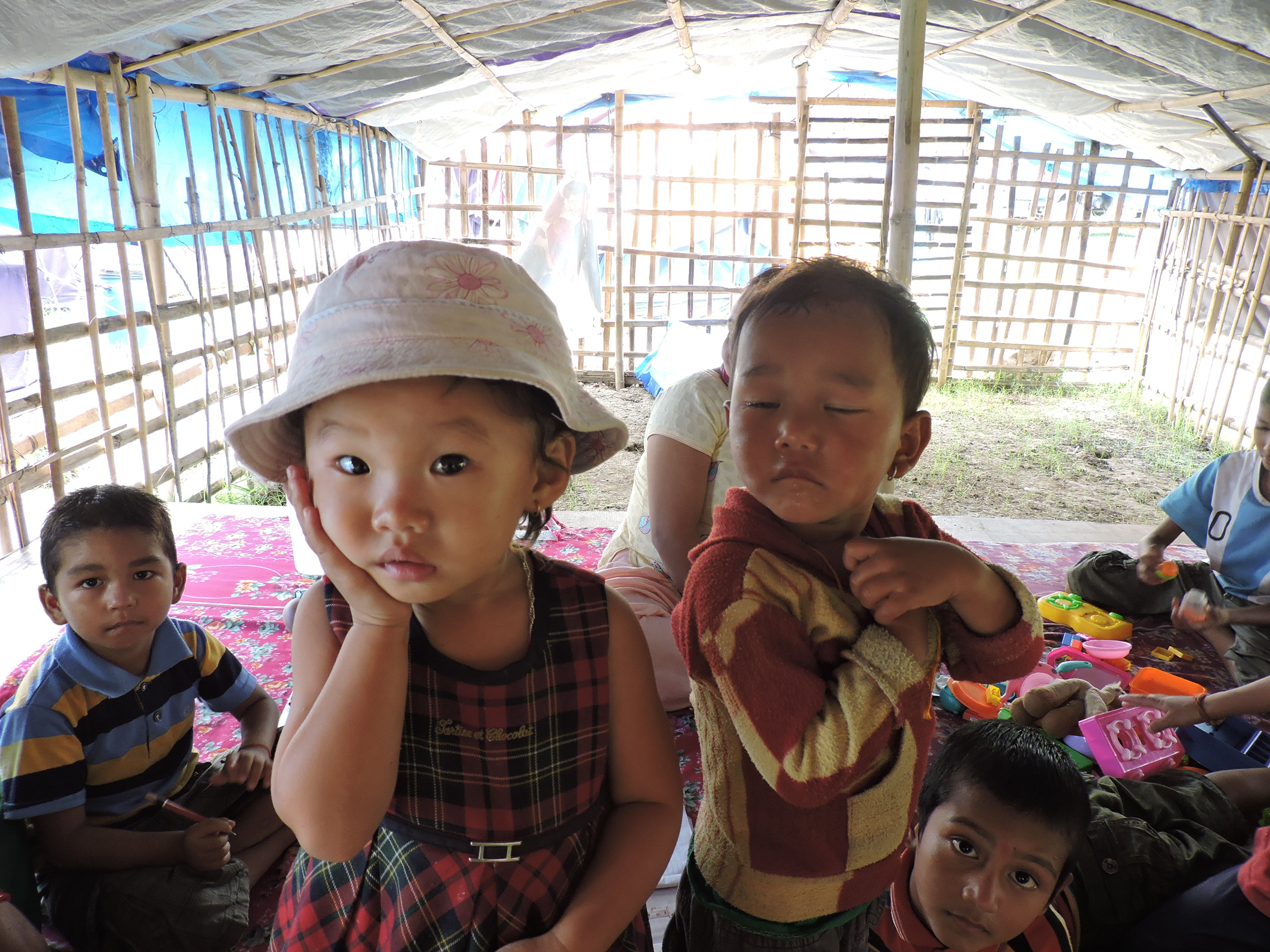
By the end of my round through the camp the school has filled with kids that play and jump around and laugh and cry, like anywhere else.

DSCN1959

he cried until he saw my camera, very interesting thing

he cried until he saw my camera, very interesting thing

DSCN1104

cuties

cuties

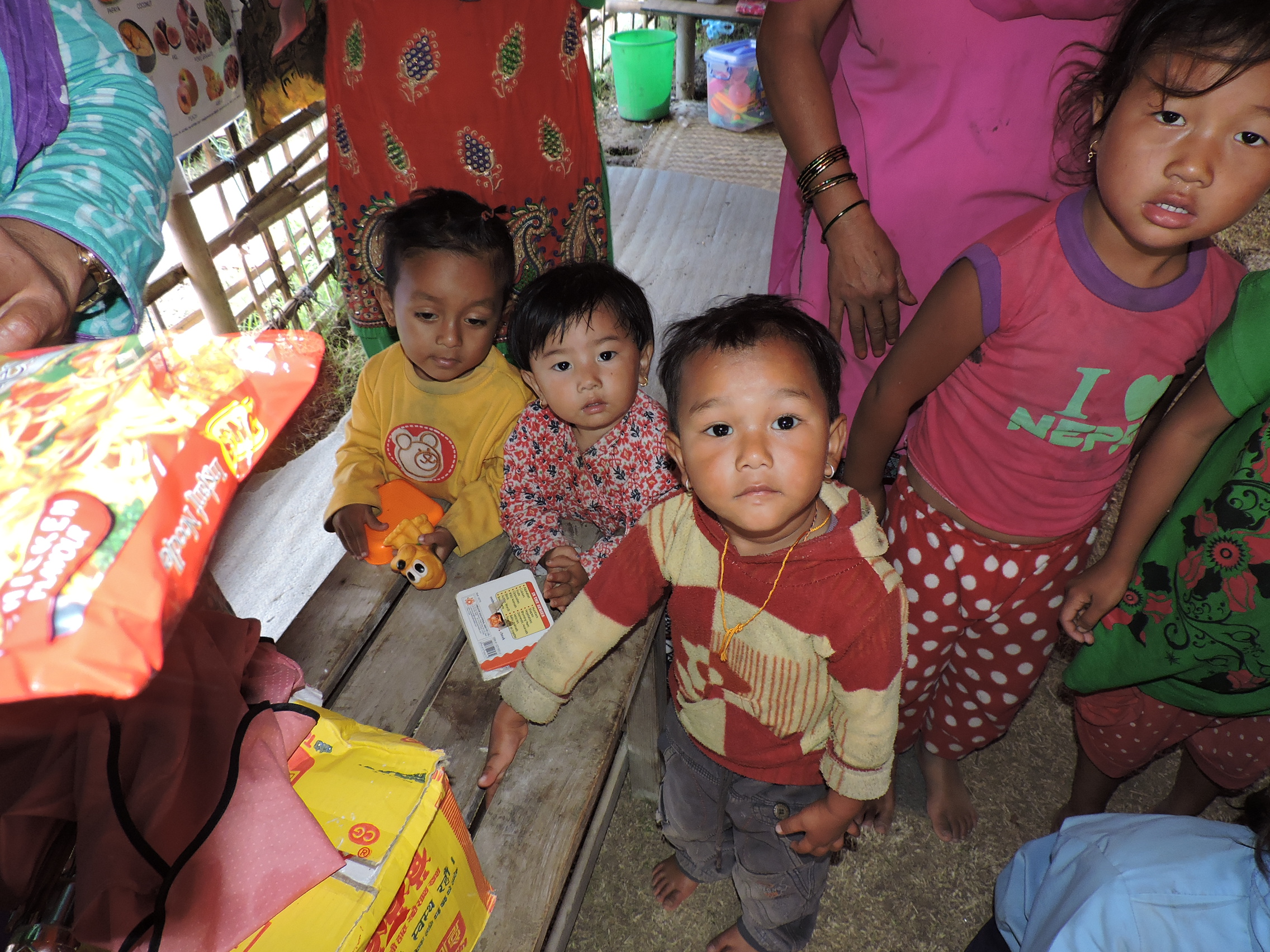
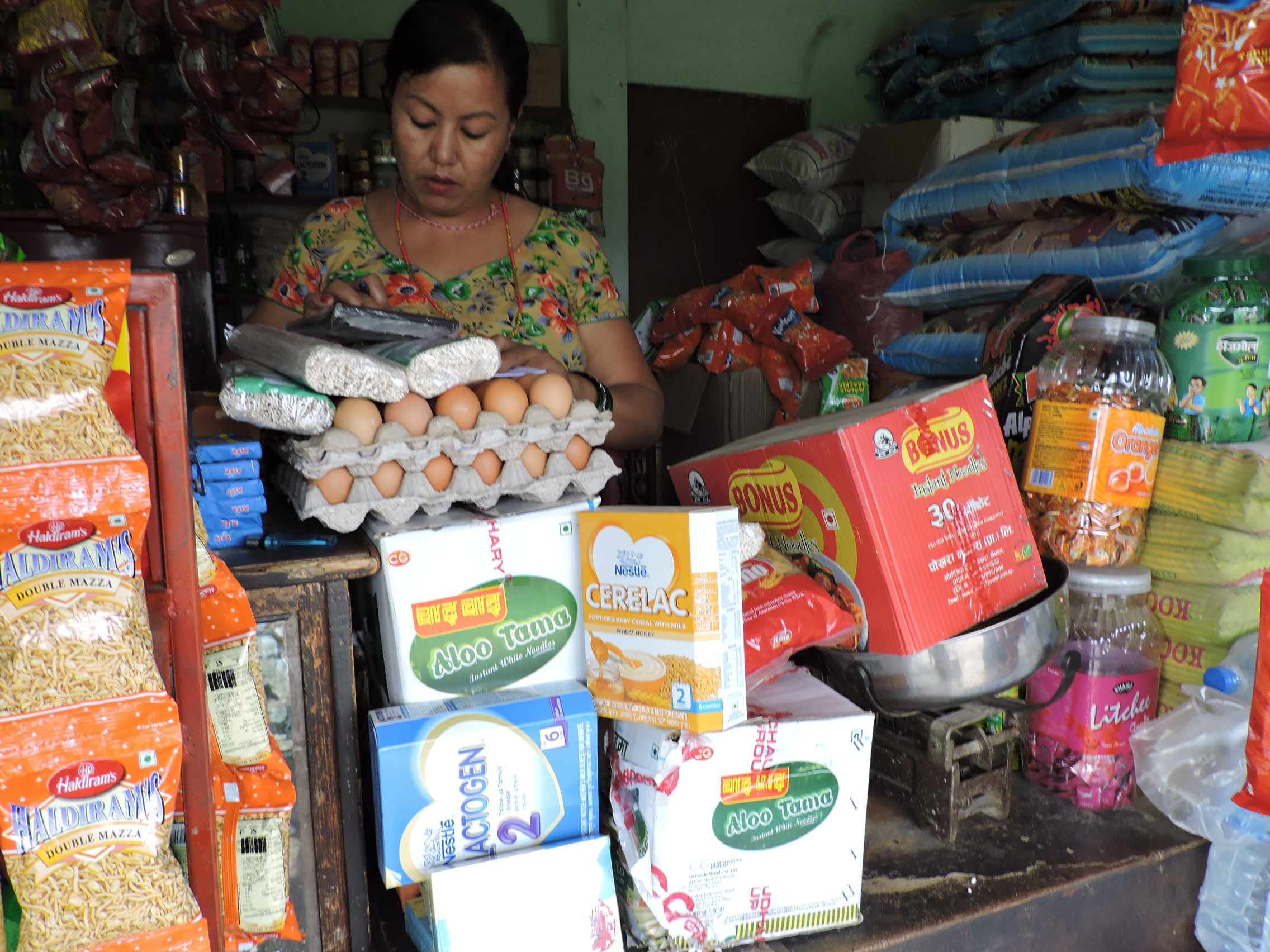
With the money a donor gave me I buy some food, some teaching material and other useful things for the school.

With the money of a sponsor I buy food for the school in a small grocery store

in a small grocery store in Thali

and a few useful things for the teachers who volunteer at the school

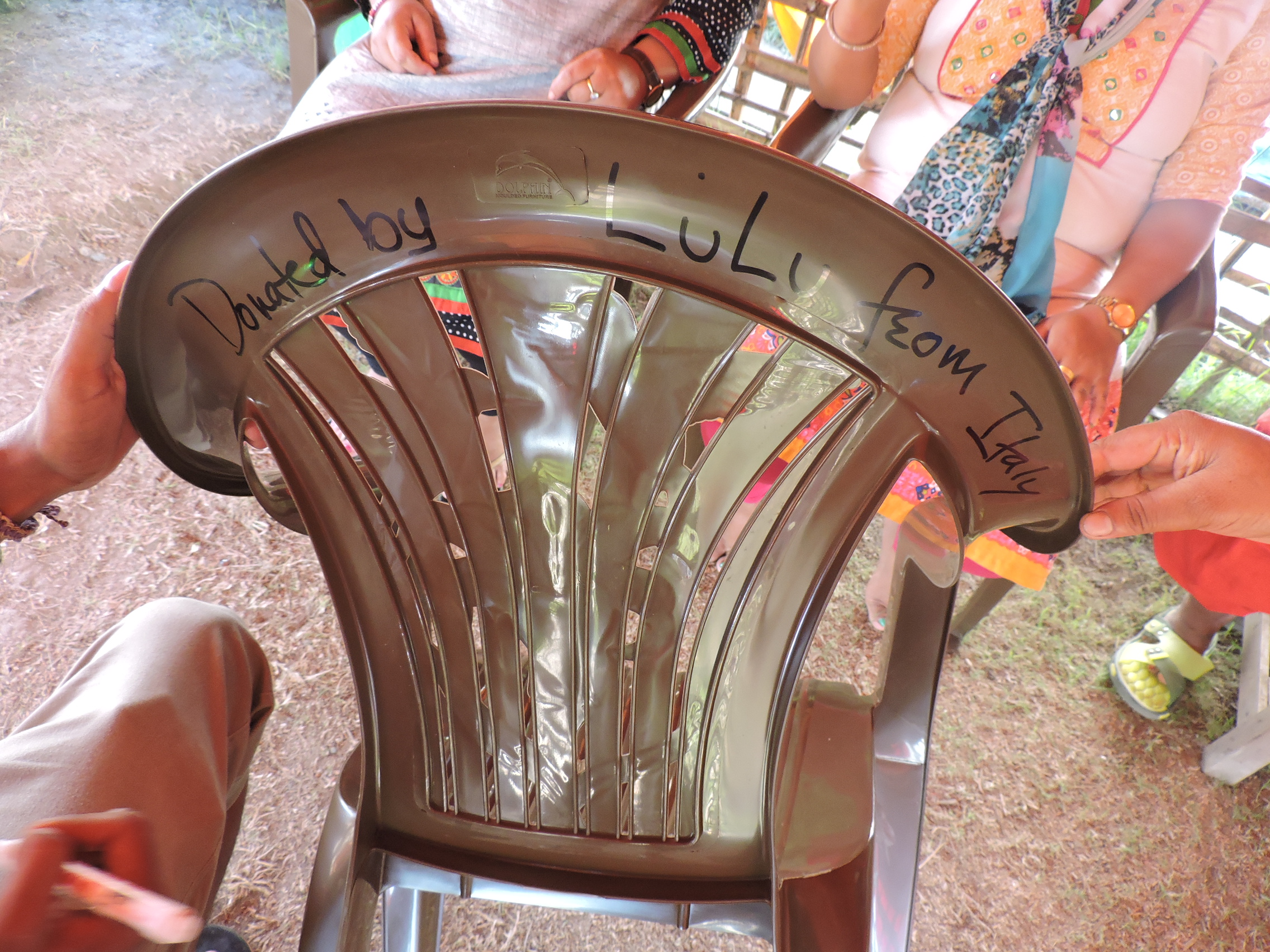
chairs for the teachers who volunteer at the school

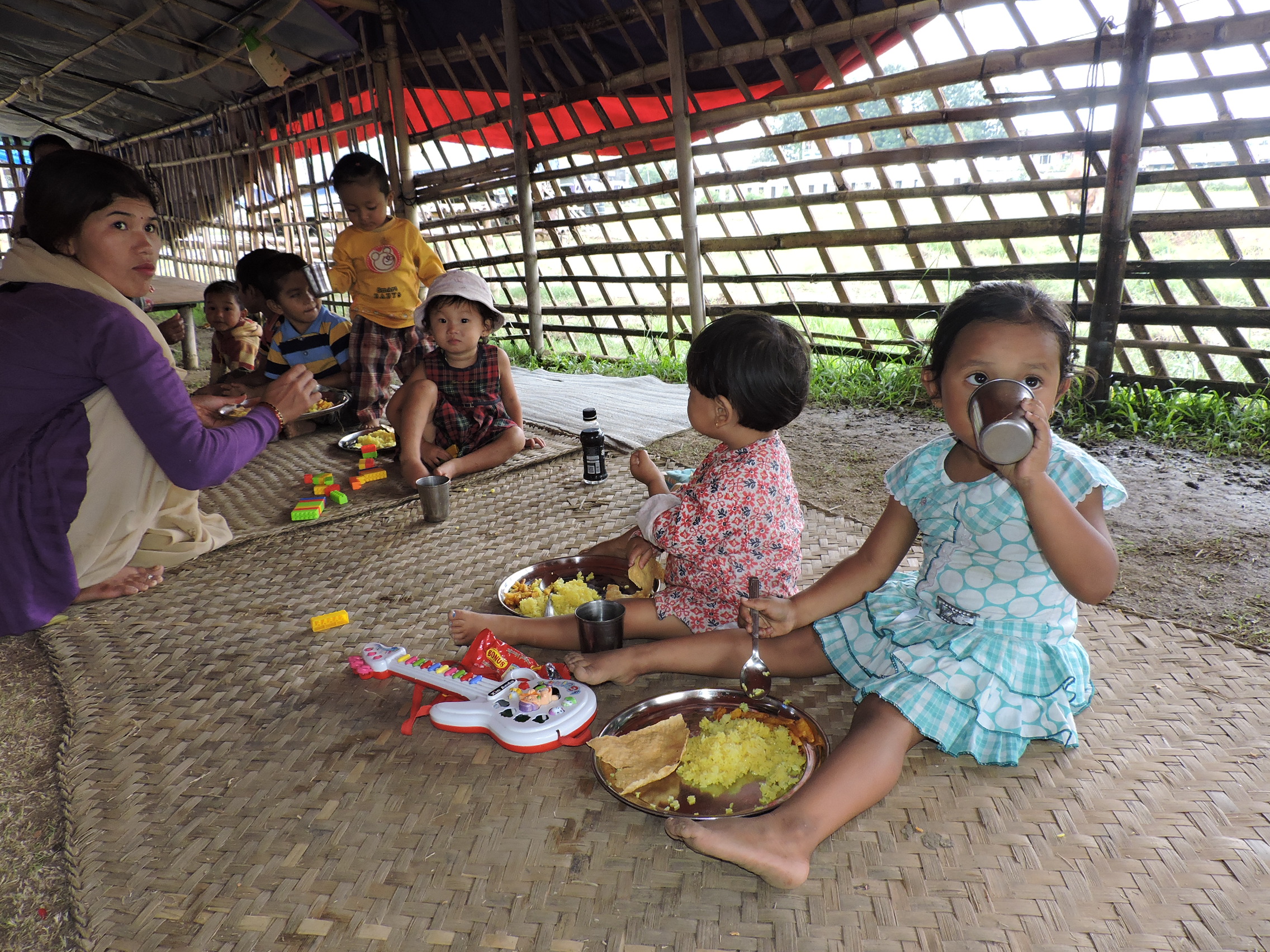
Another good thing about the school: the children get a warm meal there.

DSCN1168

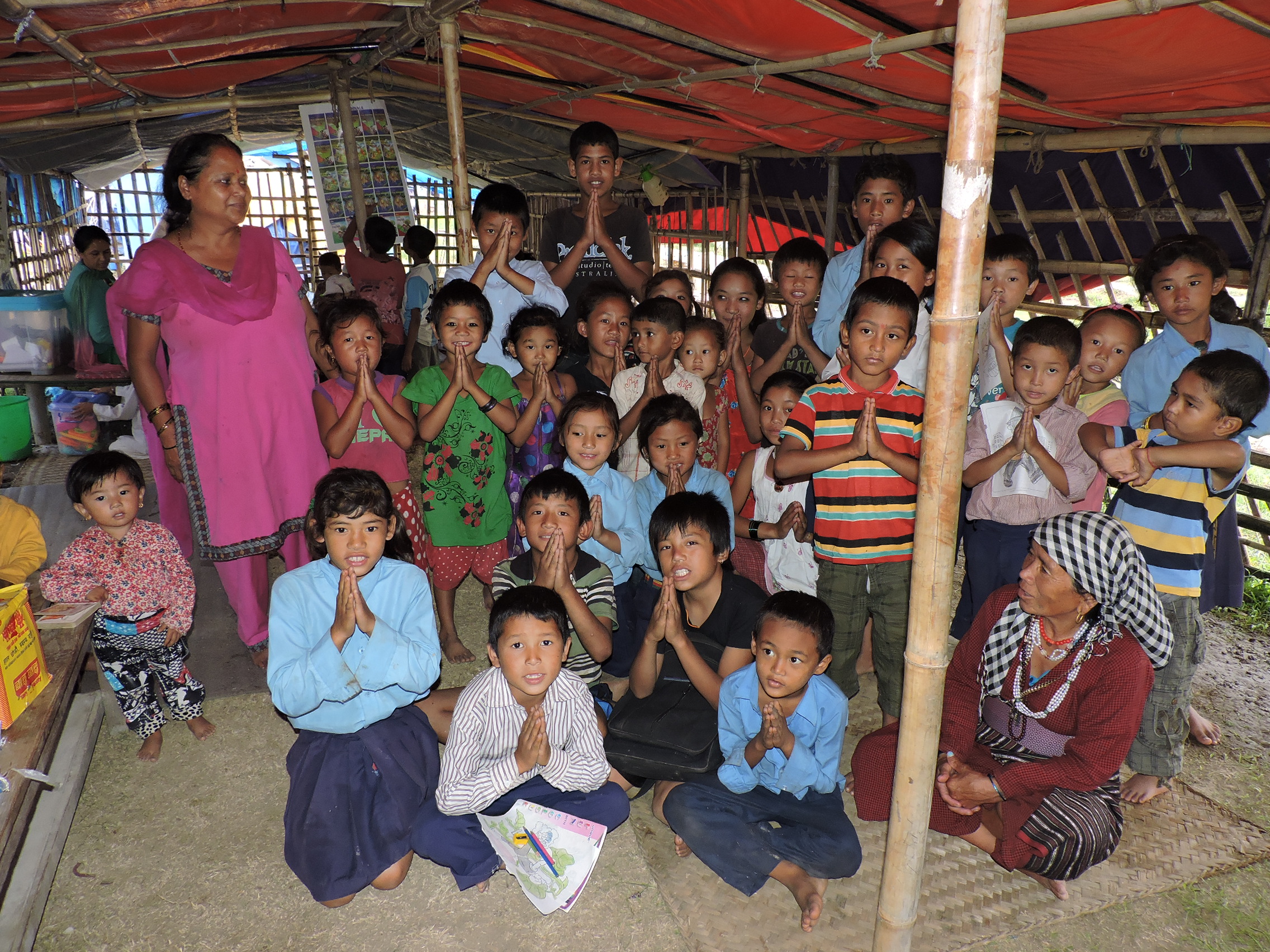
Before I leave the children greet me with a heartfelt “Namaste”

"Namasteeeee"

“Namasteeeeeeee!!!!”

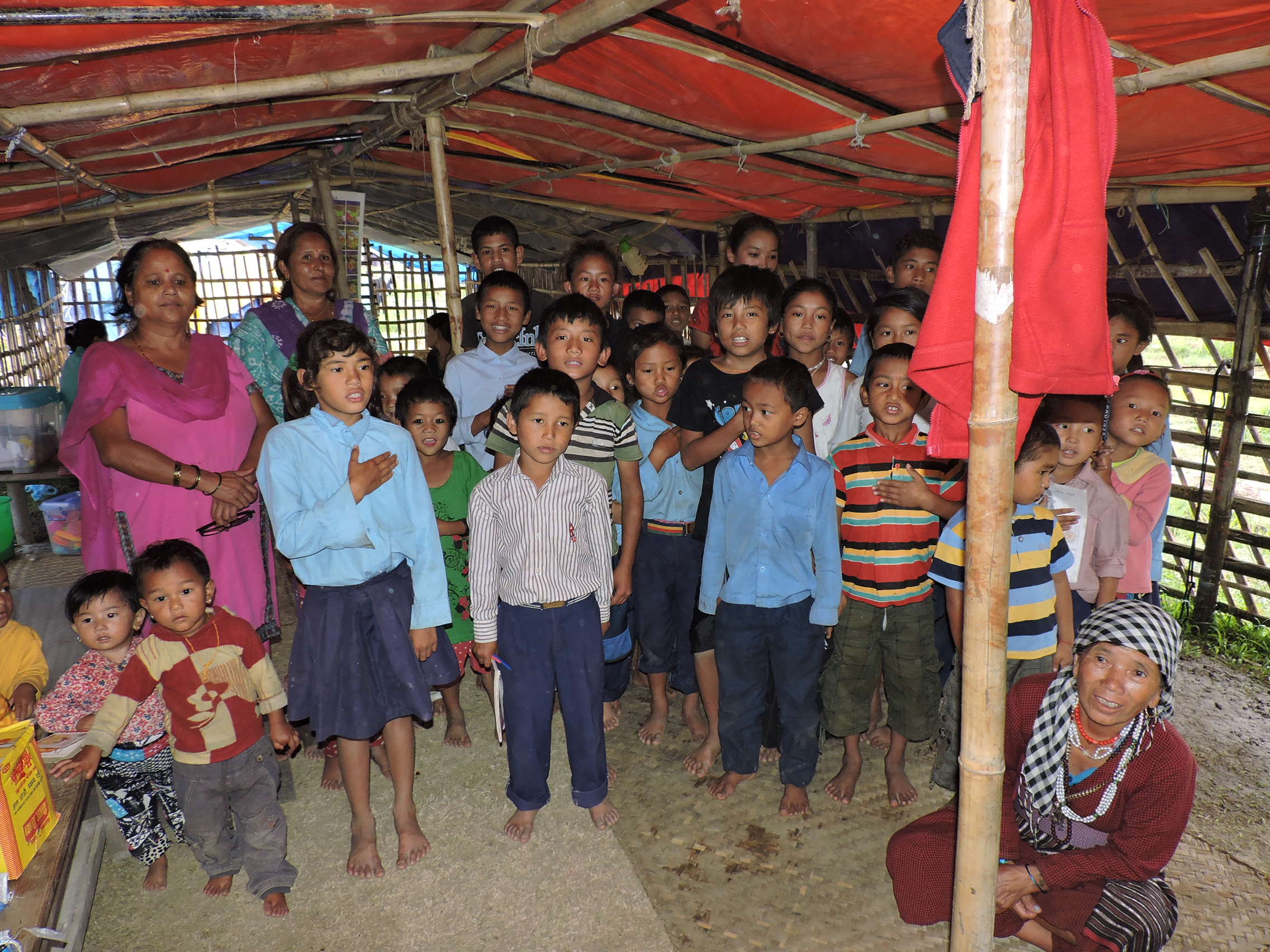
and the singing of the national anthem

DSCN1144

It’s time to say good-bye to the camp and to the women’s group.

you are doing a wonderful job, keep it up

Rita and the other ladies, you are doing a wonderful job, keep it up

Help will come

Help will come

DSCN0994

When the rains are pouring down at night and the powerful tropical thunderstorms pound the area I think of them and I wish for them not to spend another monsoon season in the camp, not even the winter which is cold at 1300 m of altitude.

Best wishes also to Rita and her women’s group for their community engagement and their support to the needy. For people who would like to help them finish their house here are some details:

A/C Name: Shree Gauri Shanker Nari Sewa Kendra

A/C number: 021 080 101 223 7011

ABA routing # ADBLNPKA

Bank name and address: Krishi Bikas Bank (Agricultural Development Bank LTD)

Jorpati Kathmandu Nepal

Bye – bye  Gerburg
The Women and the Camp 1

28 Aug

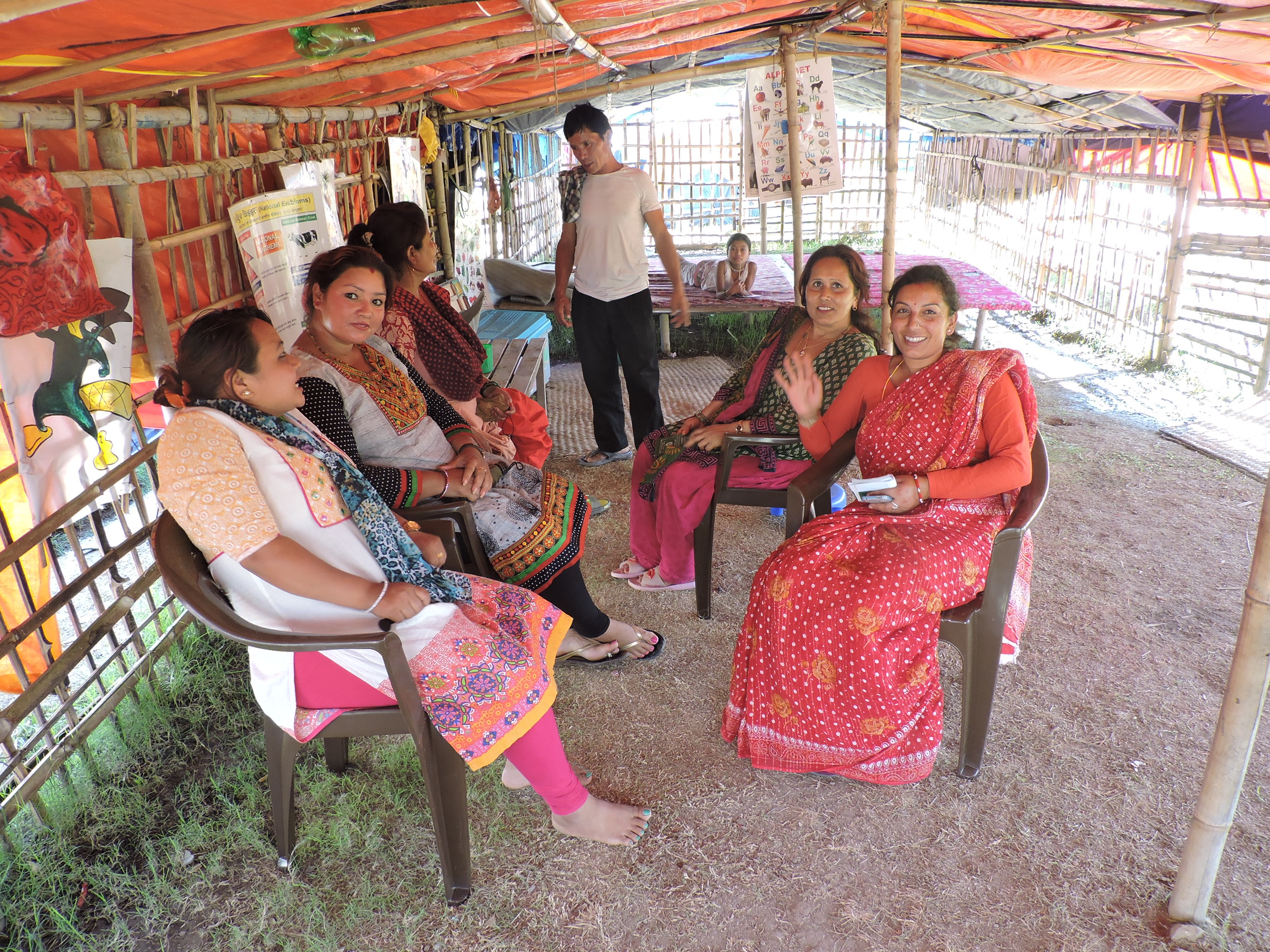
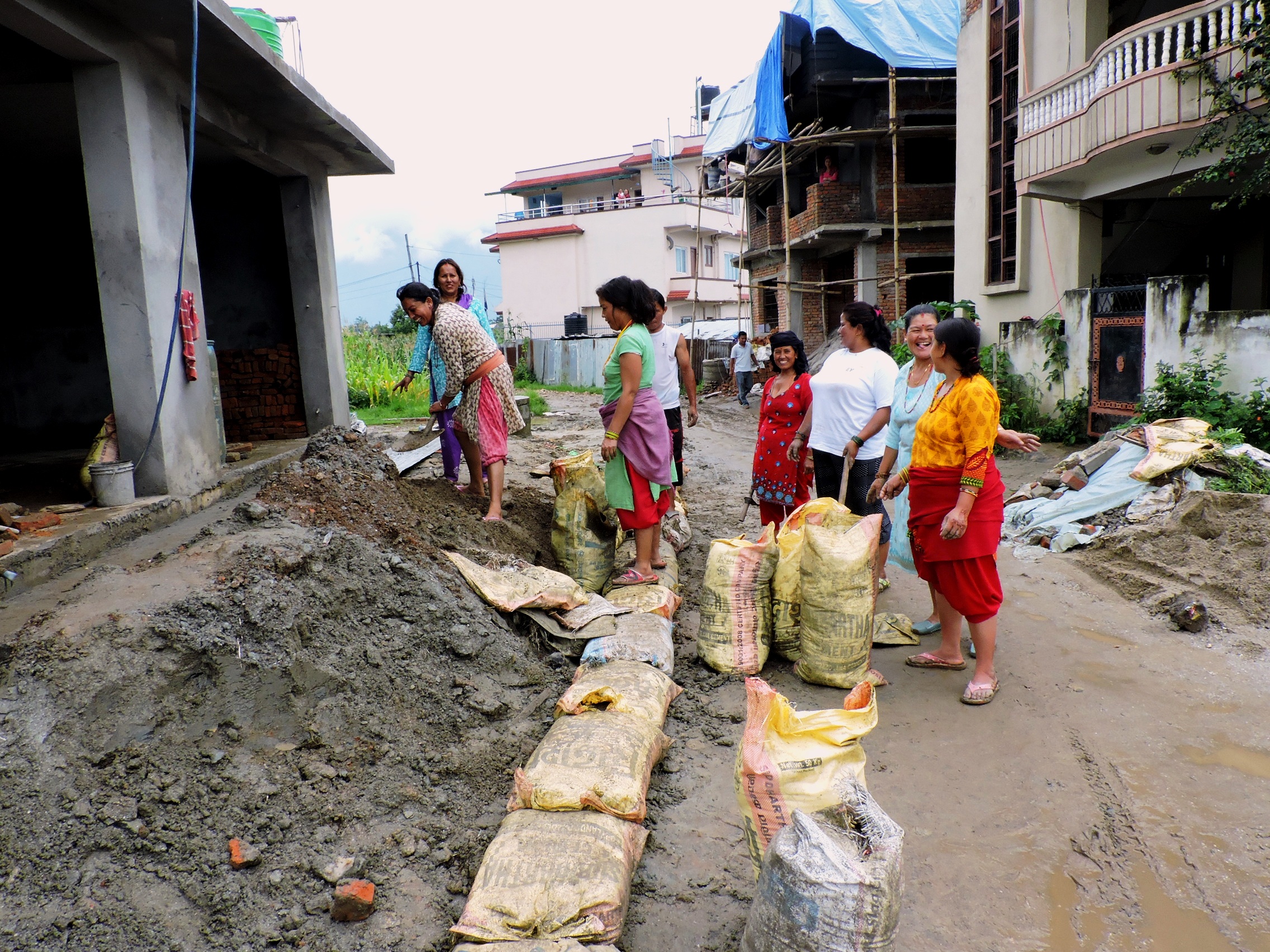
When I went to Thali to look for the Shree Gauri Shanker Nari Sewa Kendra: Shiva and Parvati Women’s Group, it wasn’t easy for me to find them. On an empty space on the town’s edge they were busy building a house for their group, hoeing, shoveling, handling cement. Between laughter and jokes (apparently) they explain to me that they need a place where they can meet and make plans for their social work and their community engagement. Since a place like that doesn’t exist, they are building it.

With their bare hands and a few shovels

With bare hands, hoes and a few shovels

With the ground floor already completed they are now trying to go higher, they know they will need more space to put their plans in action. A few rooms will be set aside to host orphans and to help them with their studies at school. Building material and equipment were bought with the women’s own money and to cut expenses they set themselves to work whenever they have time.

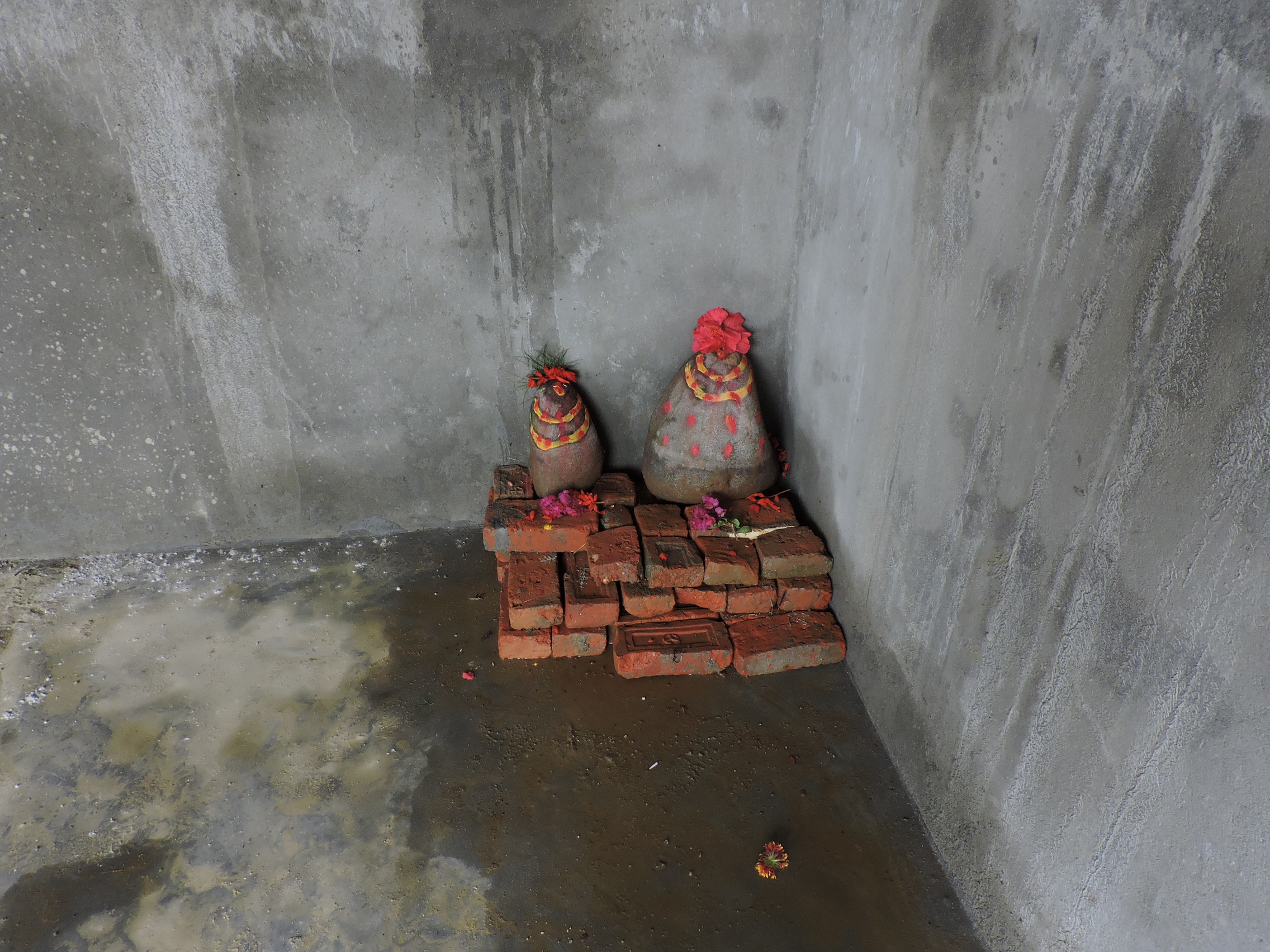
A small makeshift altar adorns one corner of the rough cast building.

Could they be Shiva and Parvati?

Could they be Shiva and Parvati?

This little altar is probably there to assure good luck in all the ladies’ activities, is my first thought, but it really serves a more practical purpose: it keeps people from using the unfinished house as a toilet. It’s as simple as that, one doesn’t pee where the gods dwell.

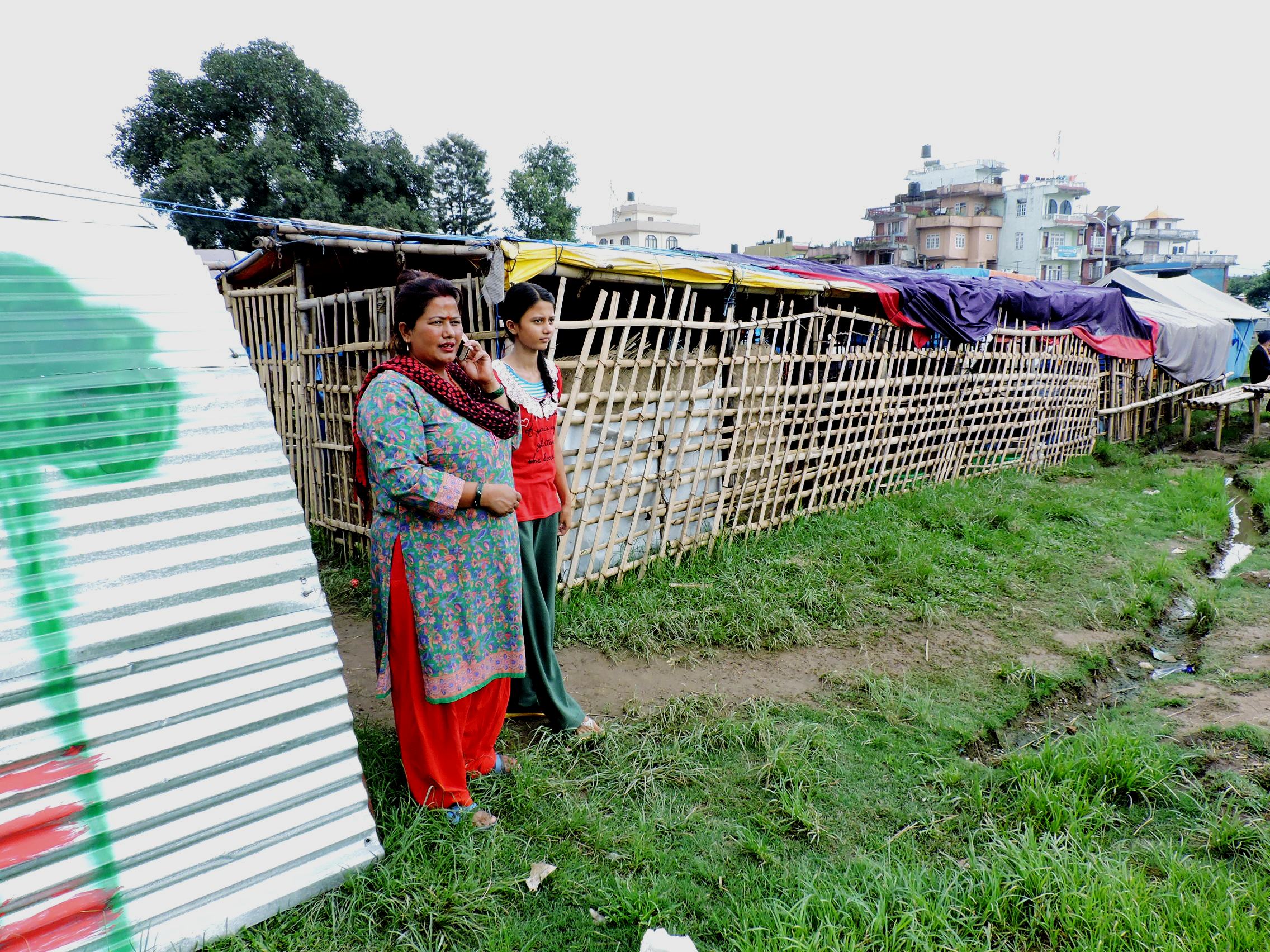
The leader of the group is Rita, an energetic, kindhearted, noticeable woman from the Province of Sindhupalchowk in the North of Nepal.  She got married to a man in Thali, a small town just one hour’s drive from the capital. She now owns a Kindergarten and an Elementary School here and is very active in her community.

Their biggest challenge so far literally descended upon the women’s group after the earthquake when the people from Sindhupalchok arrived and settled on what must have once been the village green where holy cows grazed undisturbed.

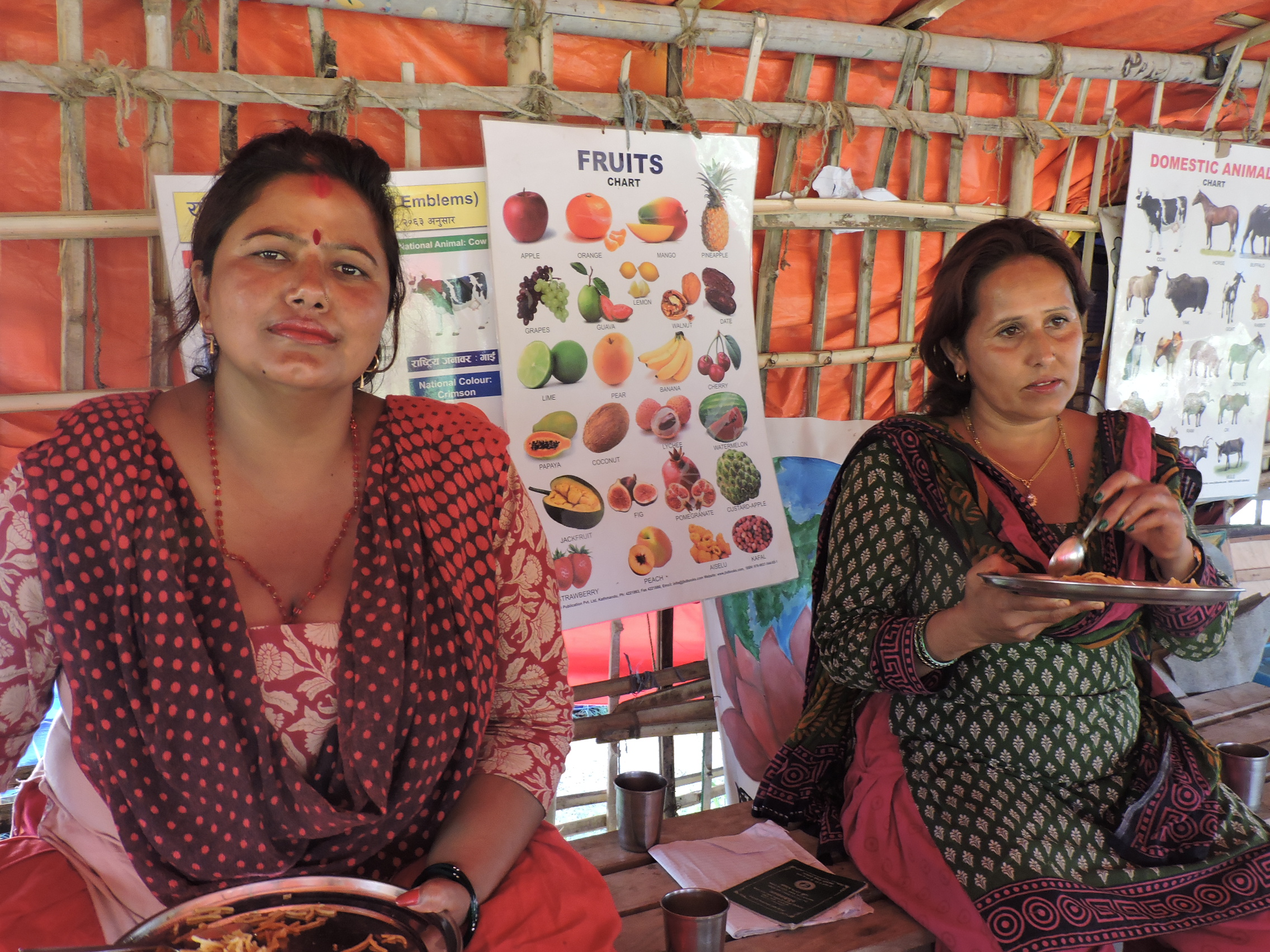
Mother and daughter: one the manager the other the English speaker

Mother and daughter: one the manager, the other the English speaker

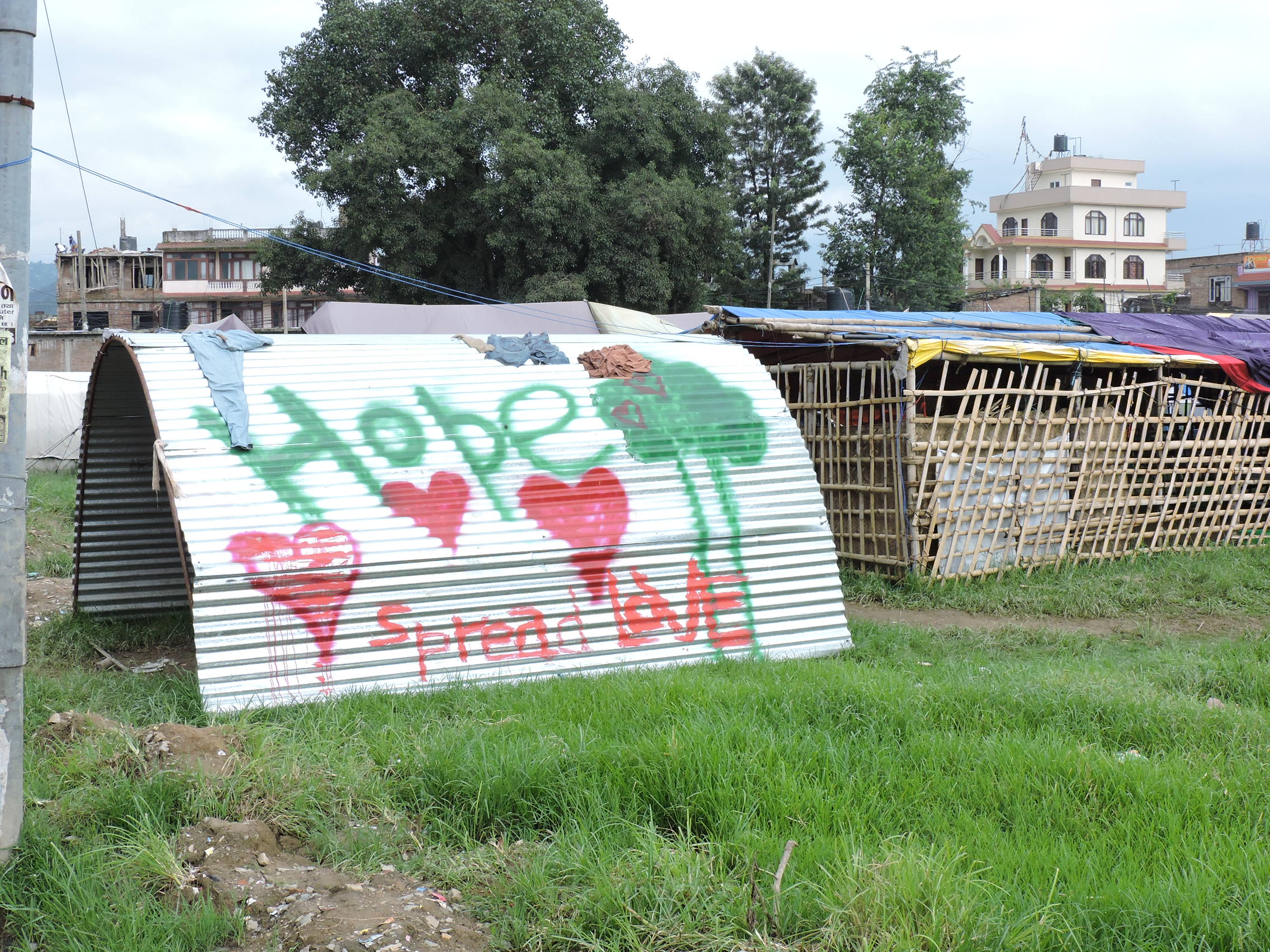
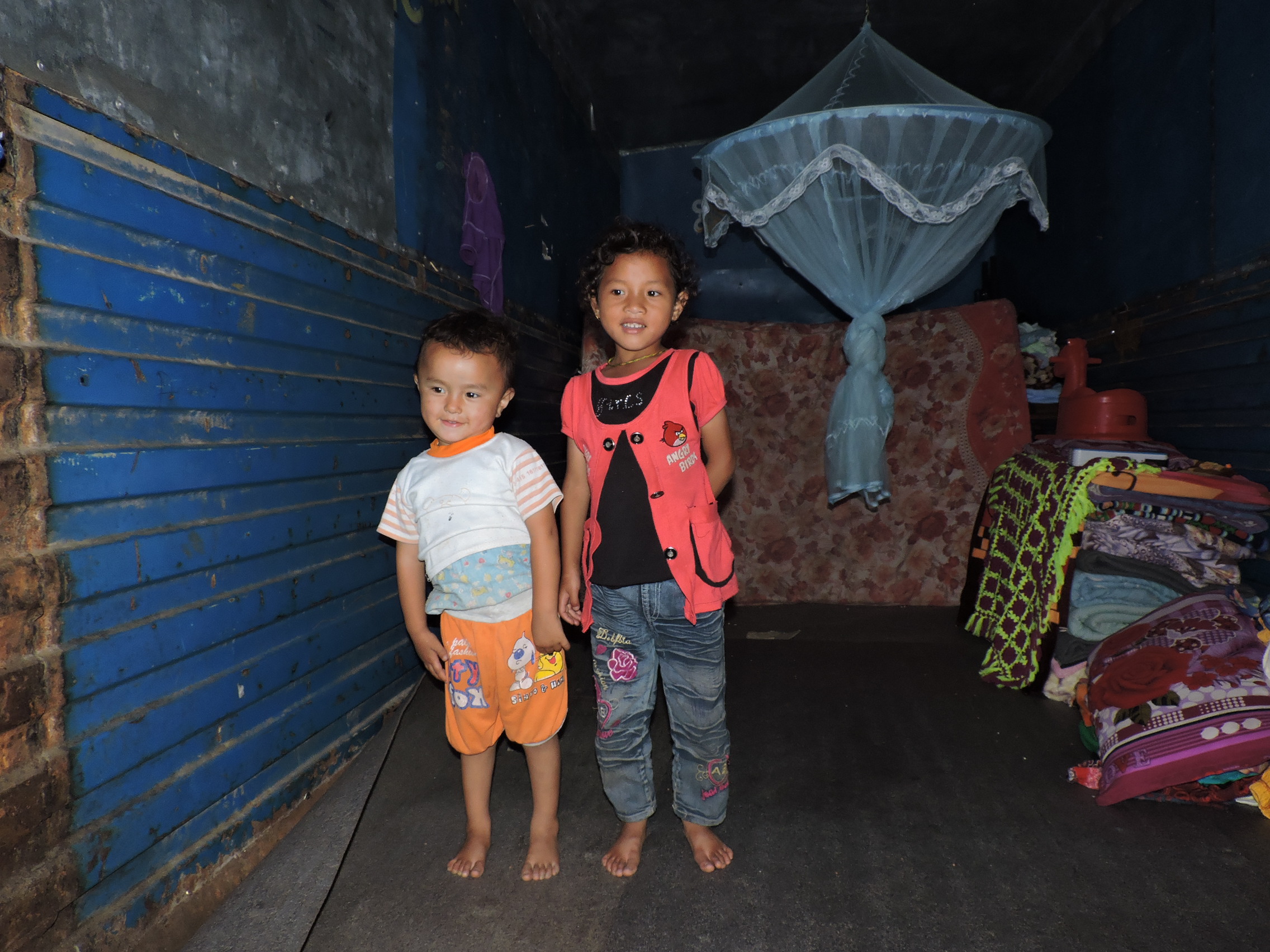
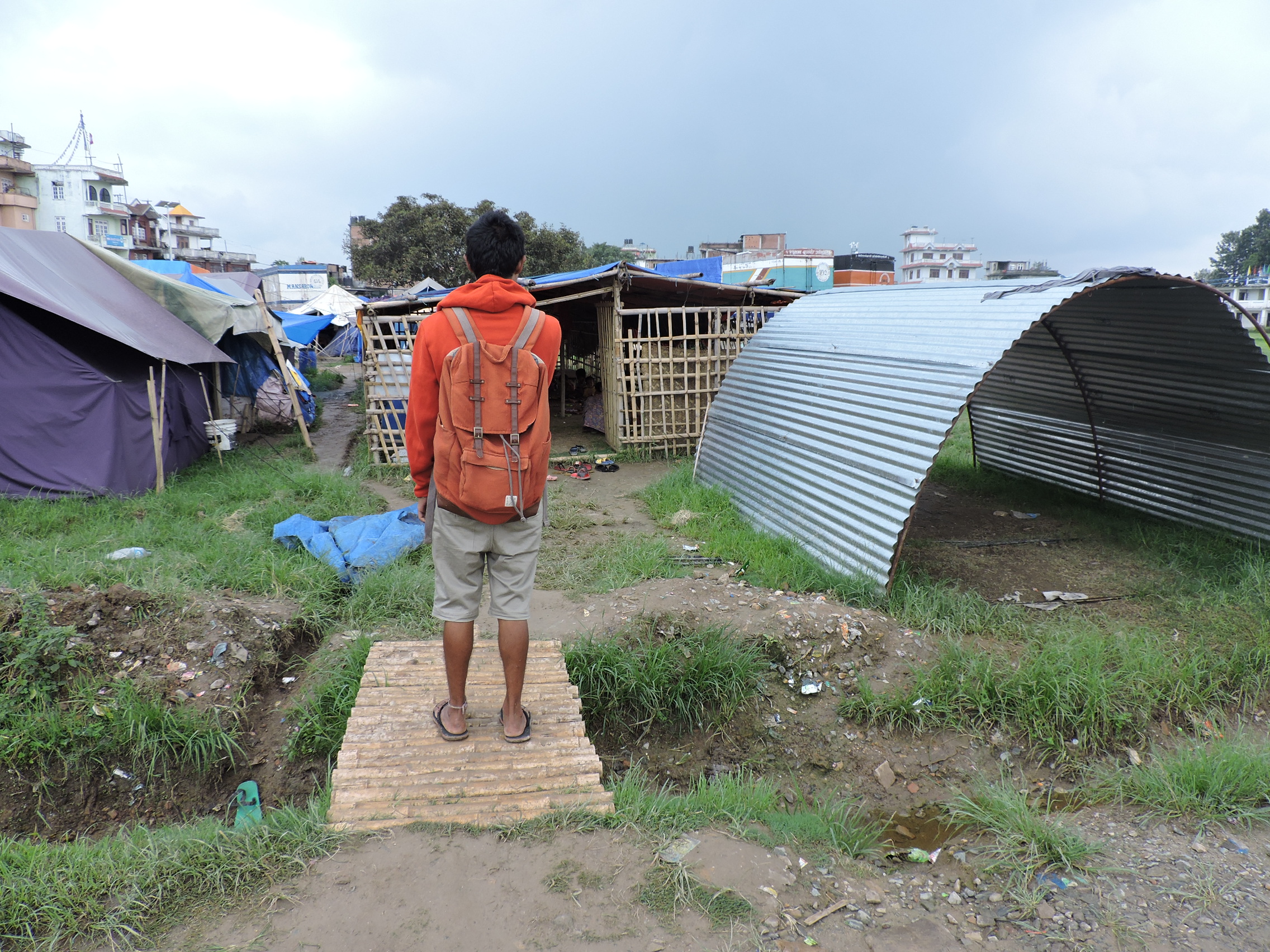
As if two earthquakes in a row hadn’t been enough to display the gratuitous wrath of the gods, a landslide had sloshed away what was still standing of the village of Tatopani in the province of Sindhupalchowk not far from the border to (greater) China. The survivors, 220 destitute and traumatized people packed up what little was left of their belongings and headed for a safe place in the Kathmandu valley where they knew someone who would help them. Many of the men from the village are lorry drivers so they used their vehicles to take their families to Thali. They also live in the lorries until enough tents are put up.

Load area of a truck: just a temporary shelter. The trucks don't belong to the drivers.

Load area of a truck: just a temporary shelter. The trucks don’t belong to the drivers.

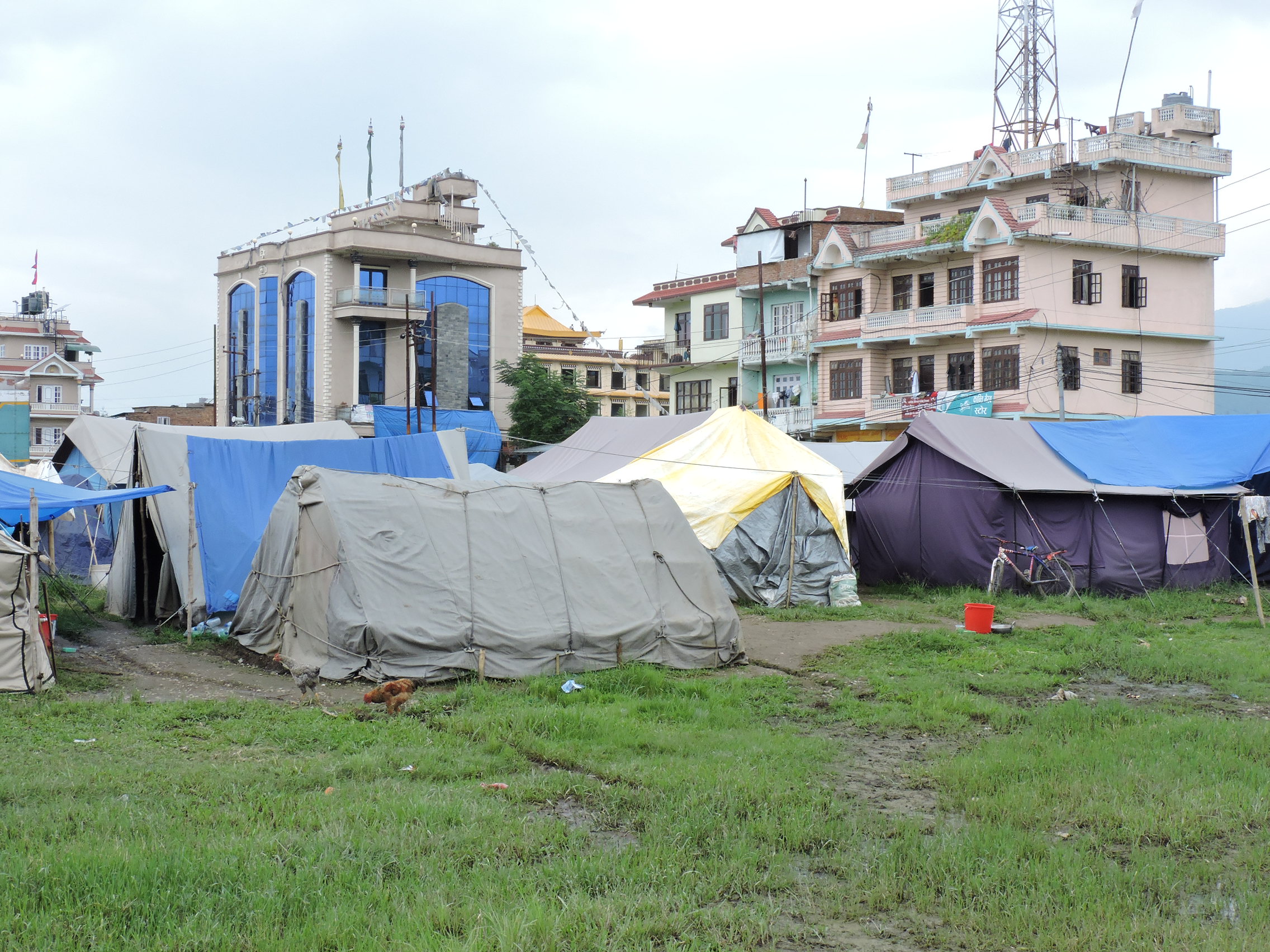
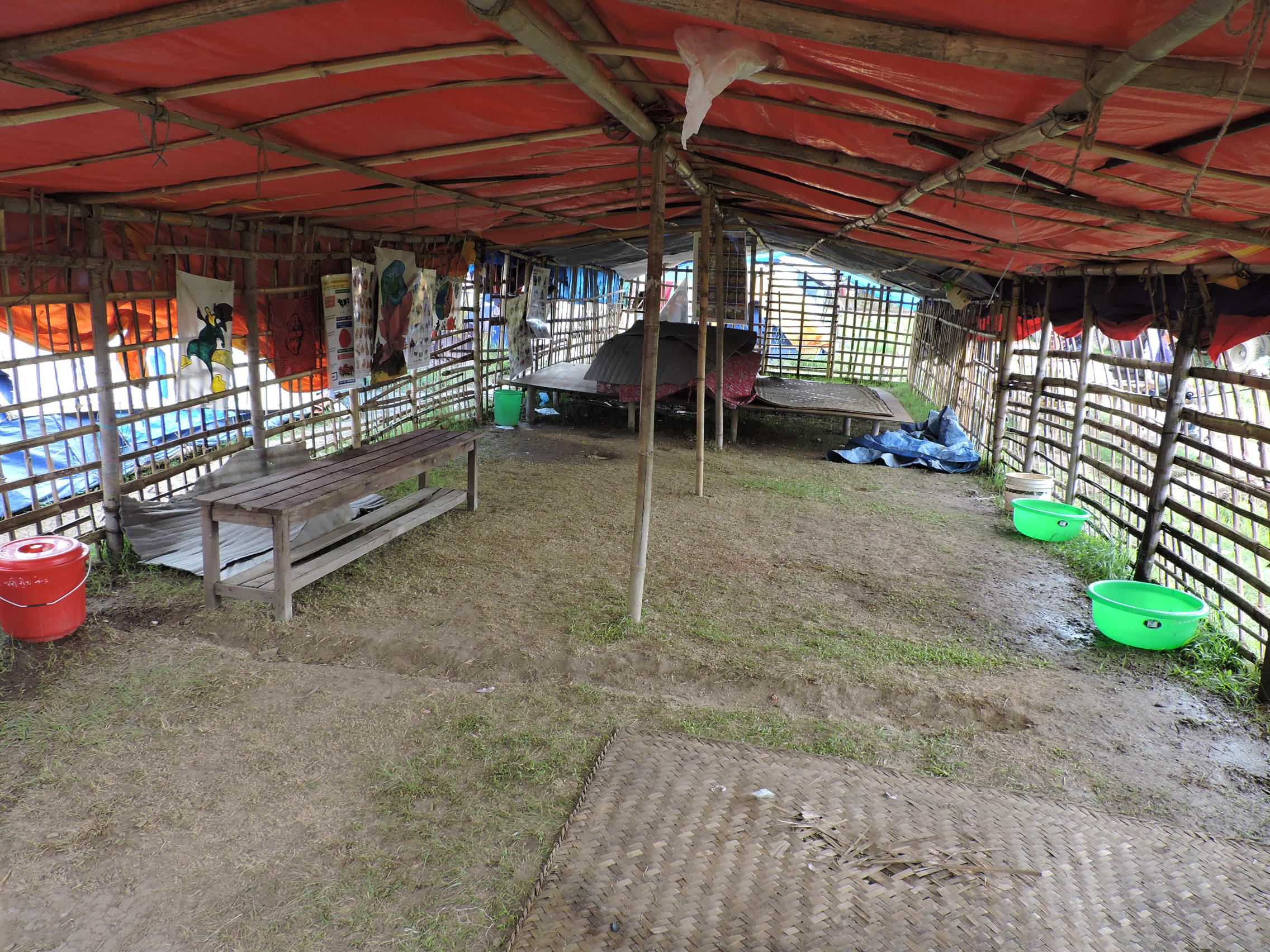
With the monsoon rains setting in and the men having to take the lorries back to their employers the tents were needed quickly. Volunteers from Kathmandu tried their best to help. With money coming in from “We help Nepal” and from expatriates they first bought tarpaulins with which they covered simple bamboo structures.

anonymous agglomeration of blue, grey and yellow tents on ever sodden ground

anonymous agglomeration of blue, grey and yellow tents on ever sodden ground

Aabhash, a high school student, is one of the volunteers who still travels regularly from Kathmandu to Thali to help the people (and to work as a translator in case a foreigner comes by).

He leads me through the camp, translates, explains

He leads me through the camp, translates, explains

I meet him at the school/kindergarten, where parents can leave their children for a few hours and where children can play together and learn.

Still empty: the children are at school from 11a.m. - 3 p.m.

Still empty: the children are at school from 11 a.m. – 3 p.m.

Outside the school a place where people get together, sit down and talk, when the rains stop long enough.

a young woman waiting for the school to open

a young woman waiting for the school to open

My guide takes me around the camp. This is how displaced people live and whenever I look at them I can’t help thinking:

“Thank you for smiling at me”

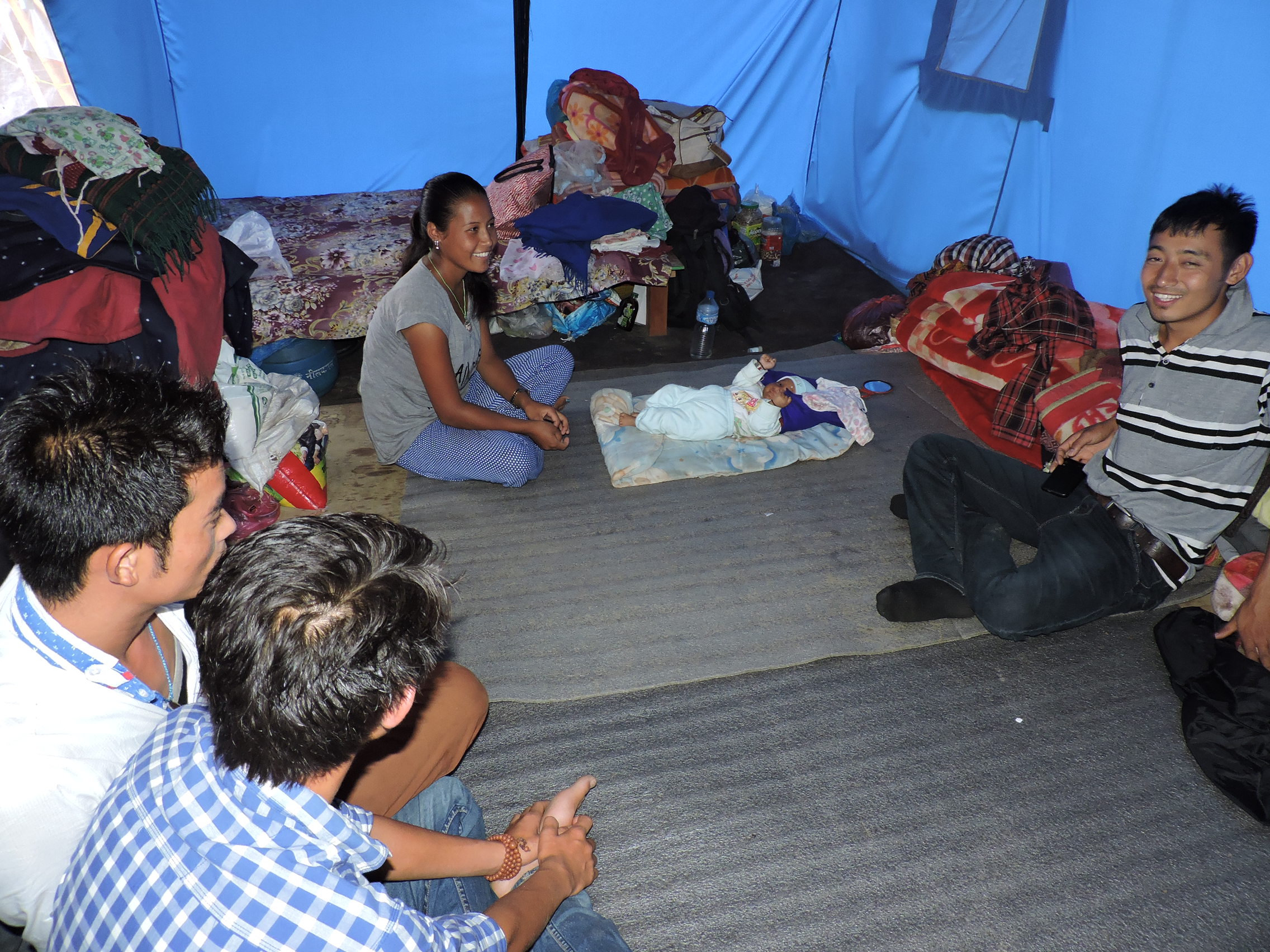
Families live in regular tents

Some families live in regular tents

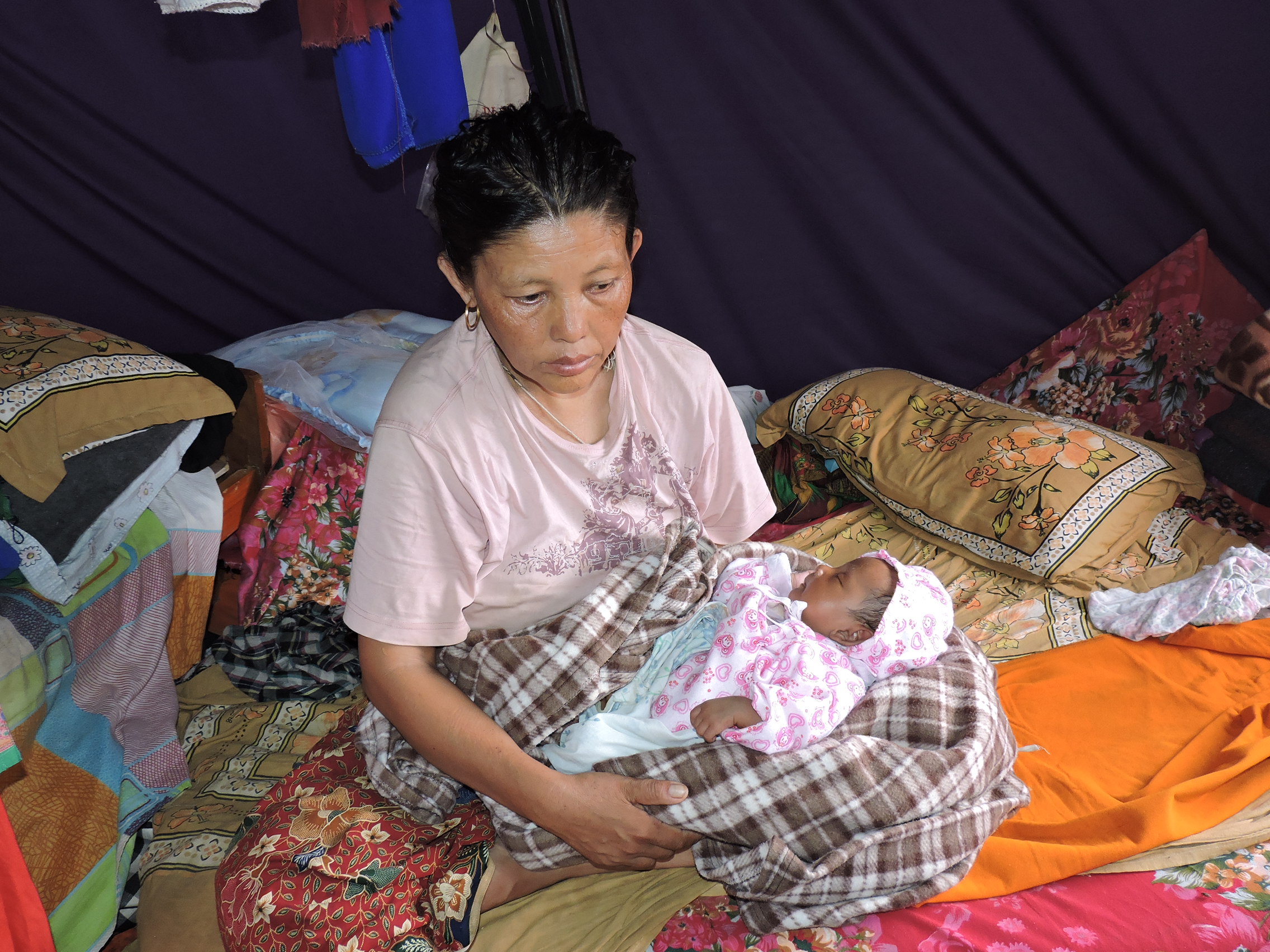
Newborn babies

mother with child

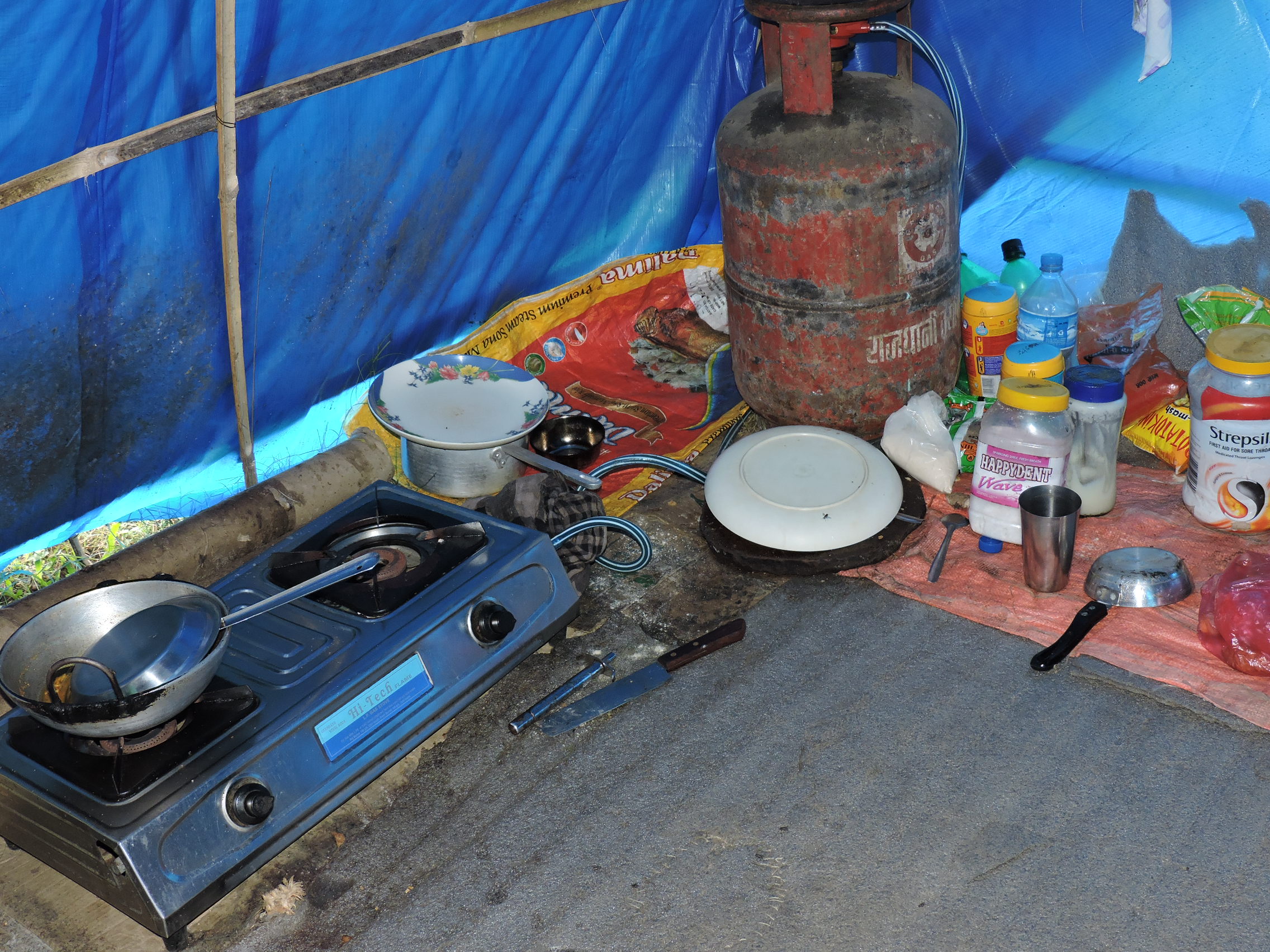
A kitchen in one corner of the tent

a kitchen; some child got burnt in a kitchen like this one

not without risks

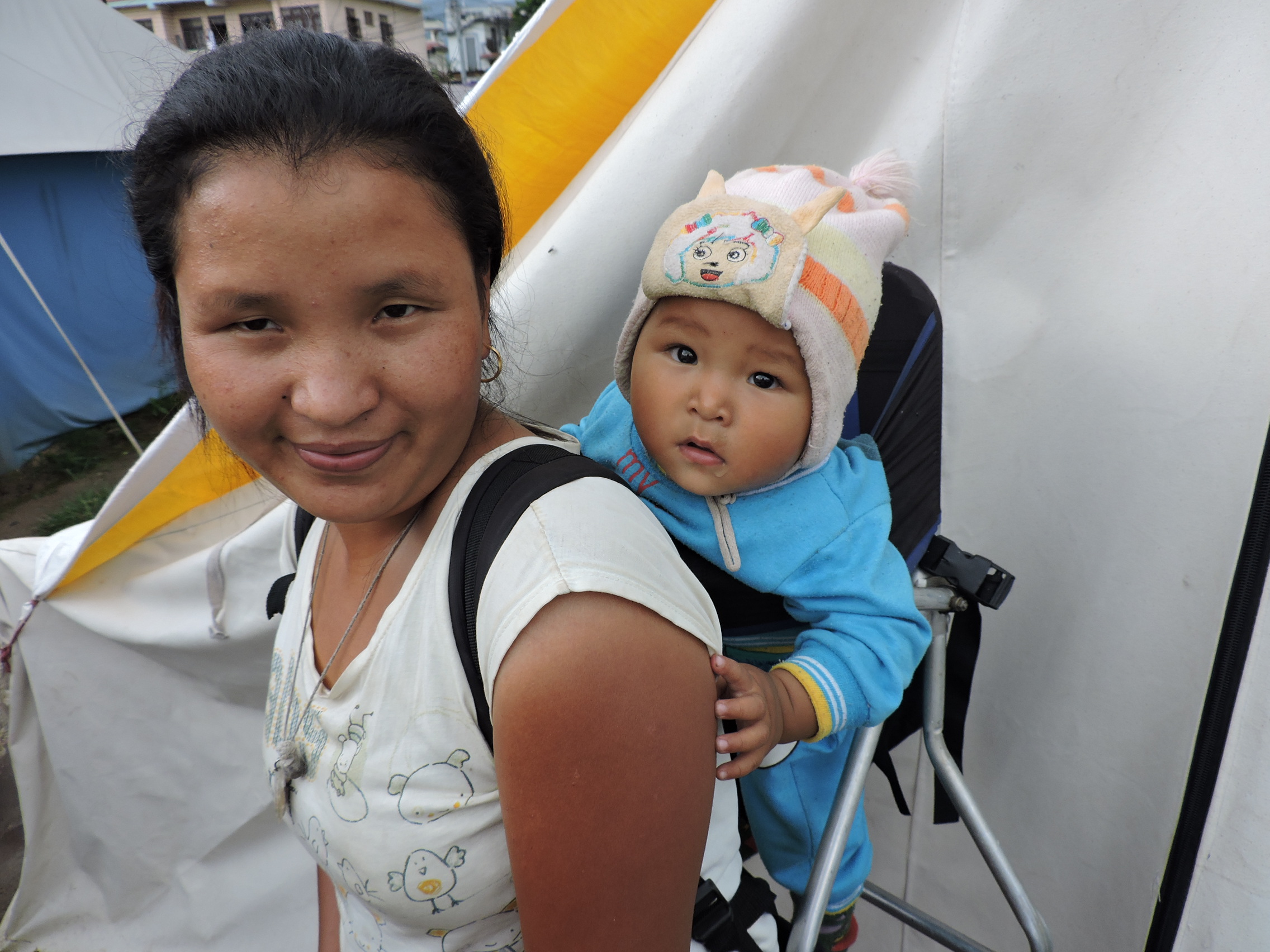
Going for a walk with mum

DSCN0980

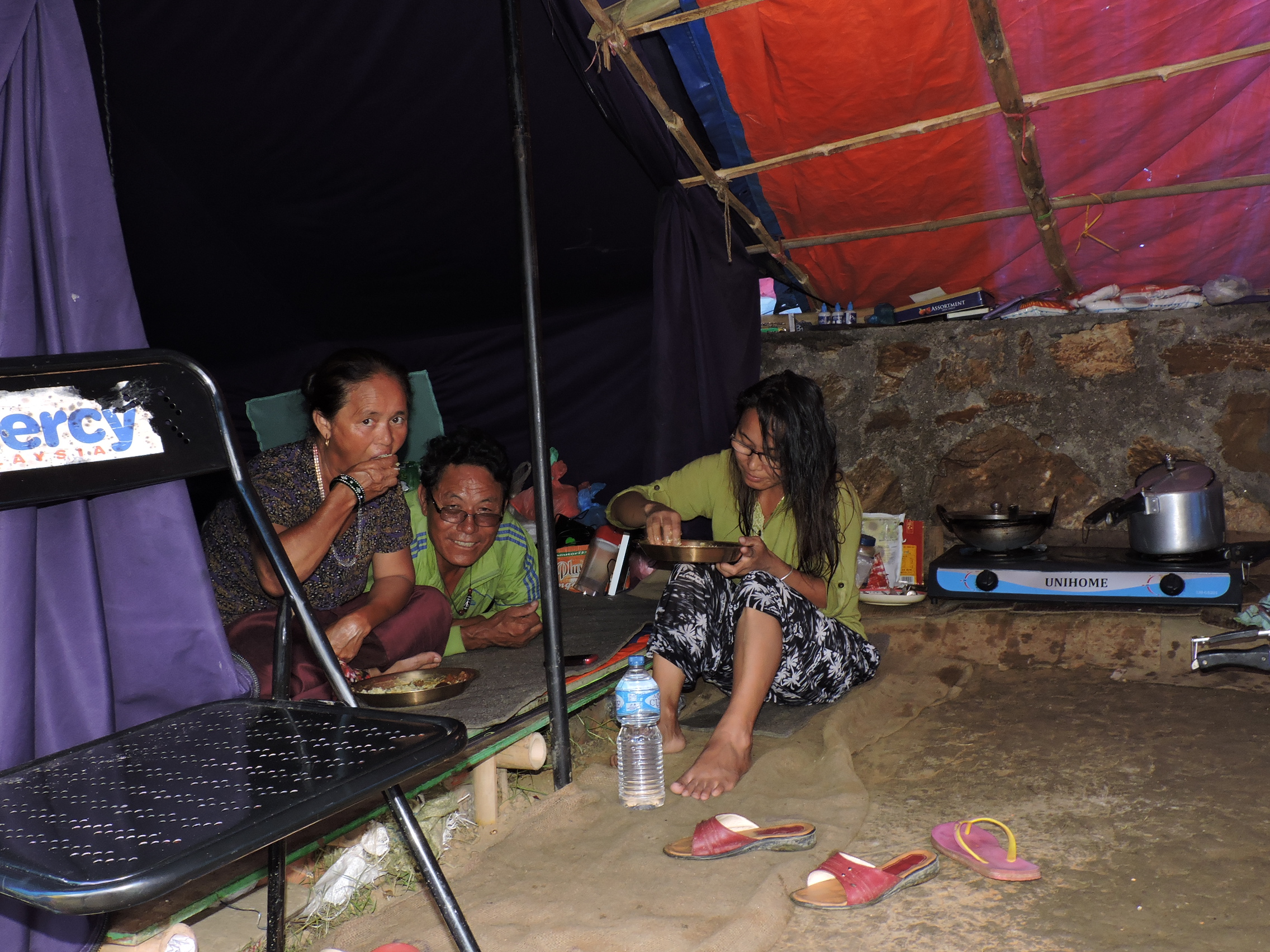
A family having lunch

They still welcome you with a smile

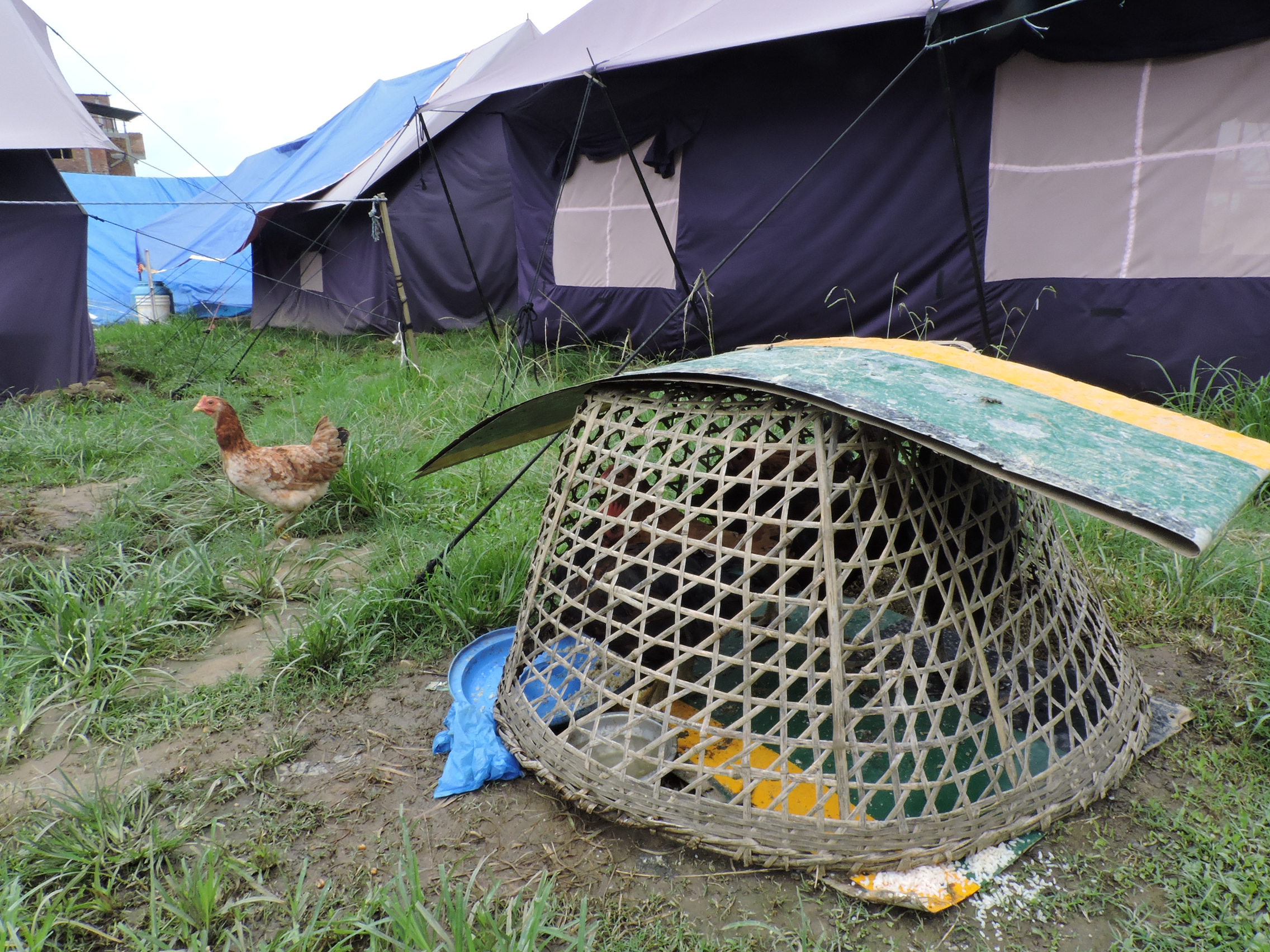
Some people keep chickens

some people keep chickens

chickens in  and outside the cage

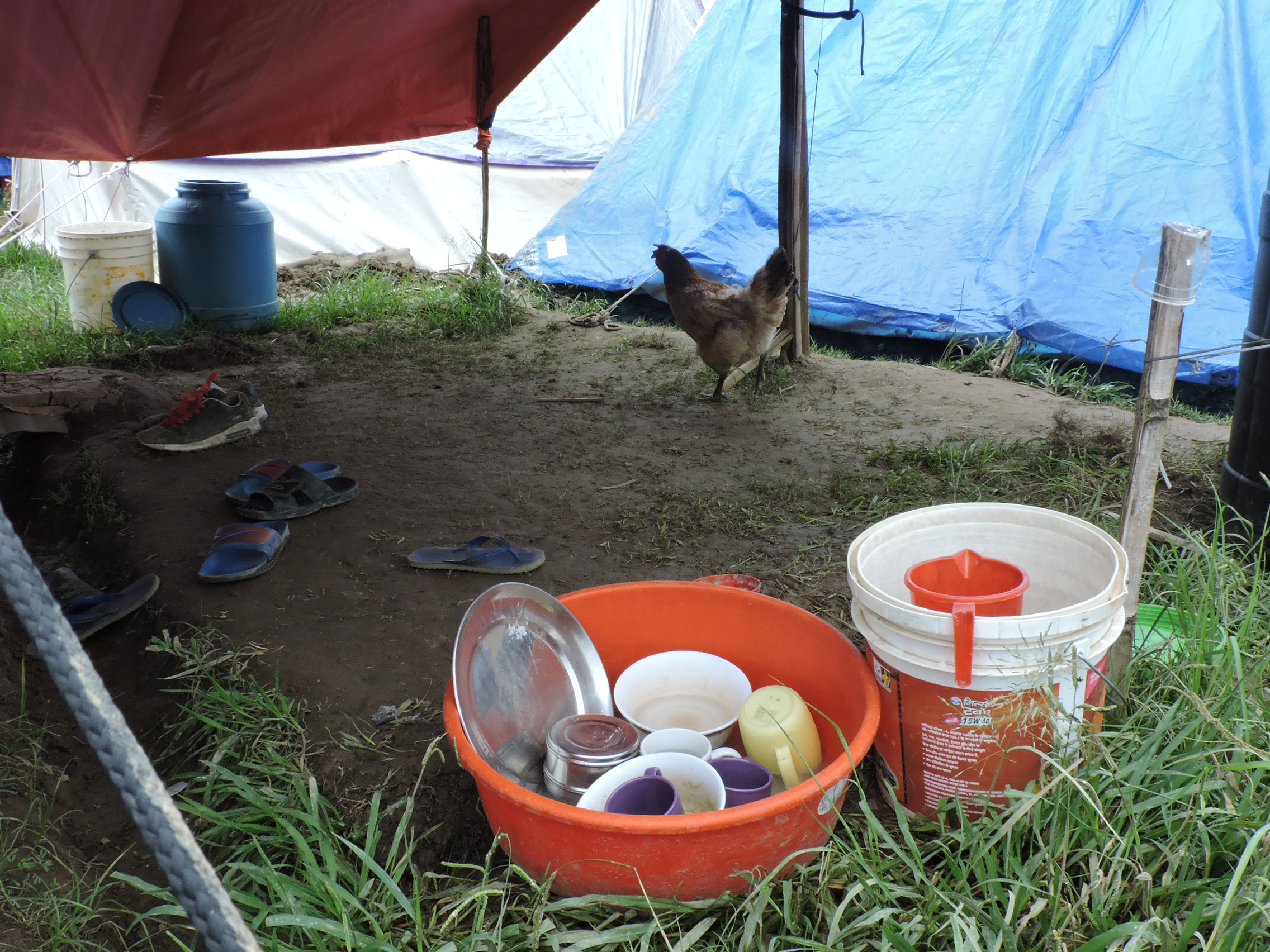
chickens in the kitchen

chickens in the kitchen

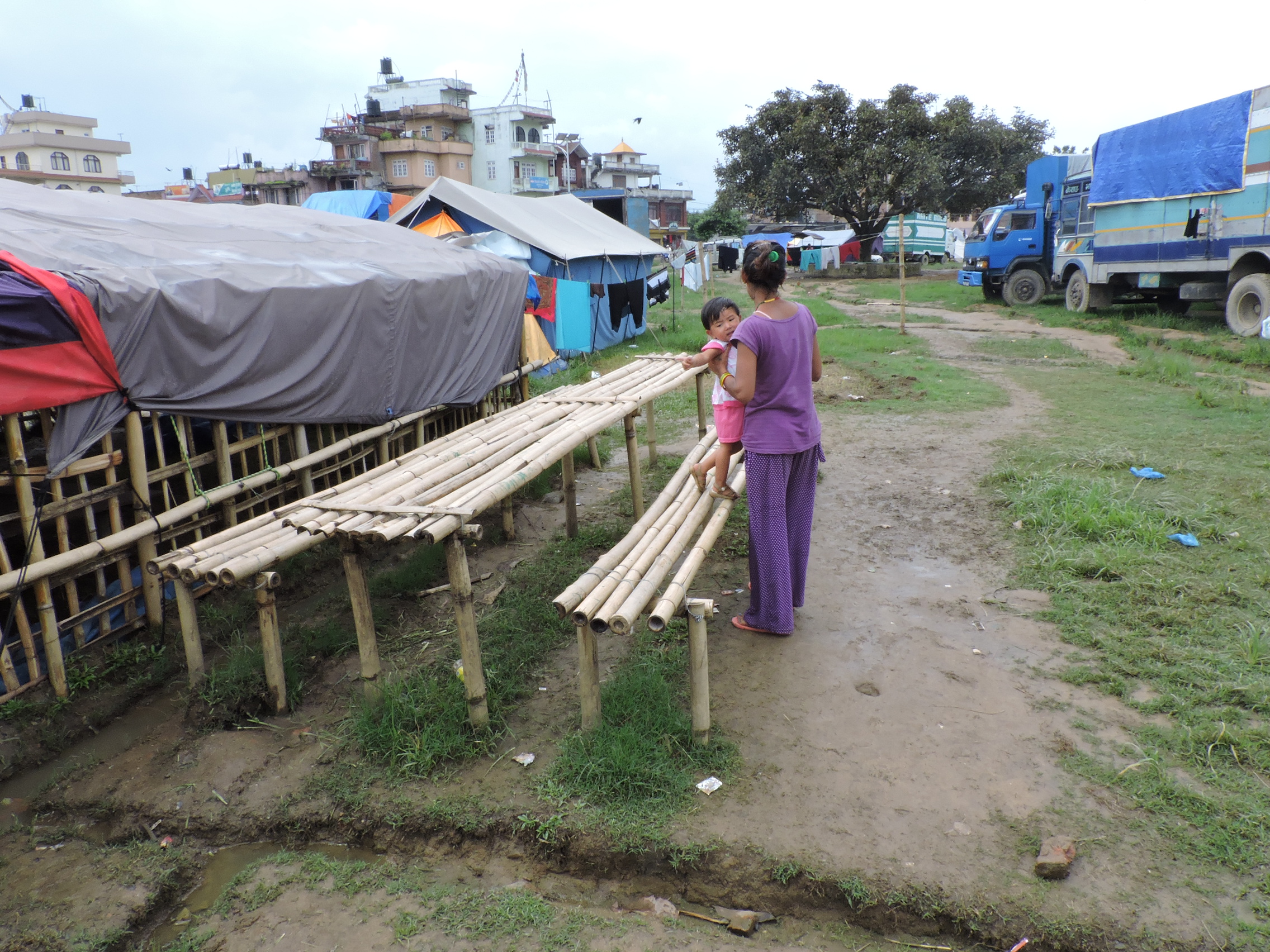
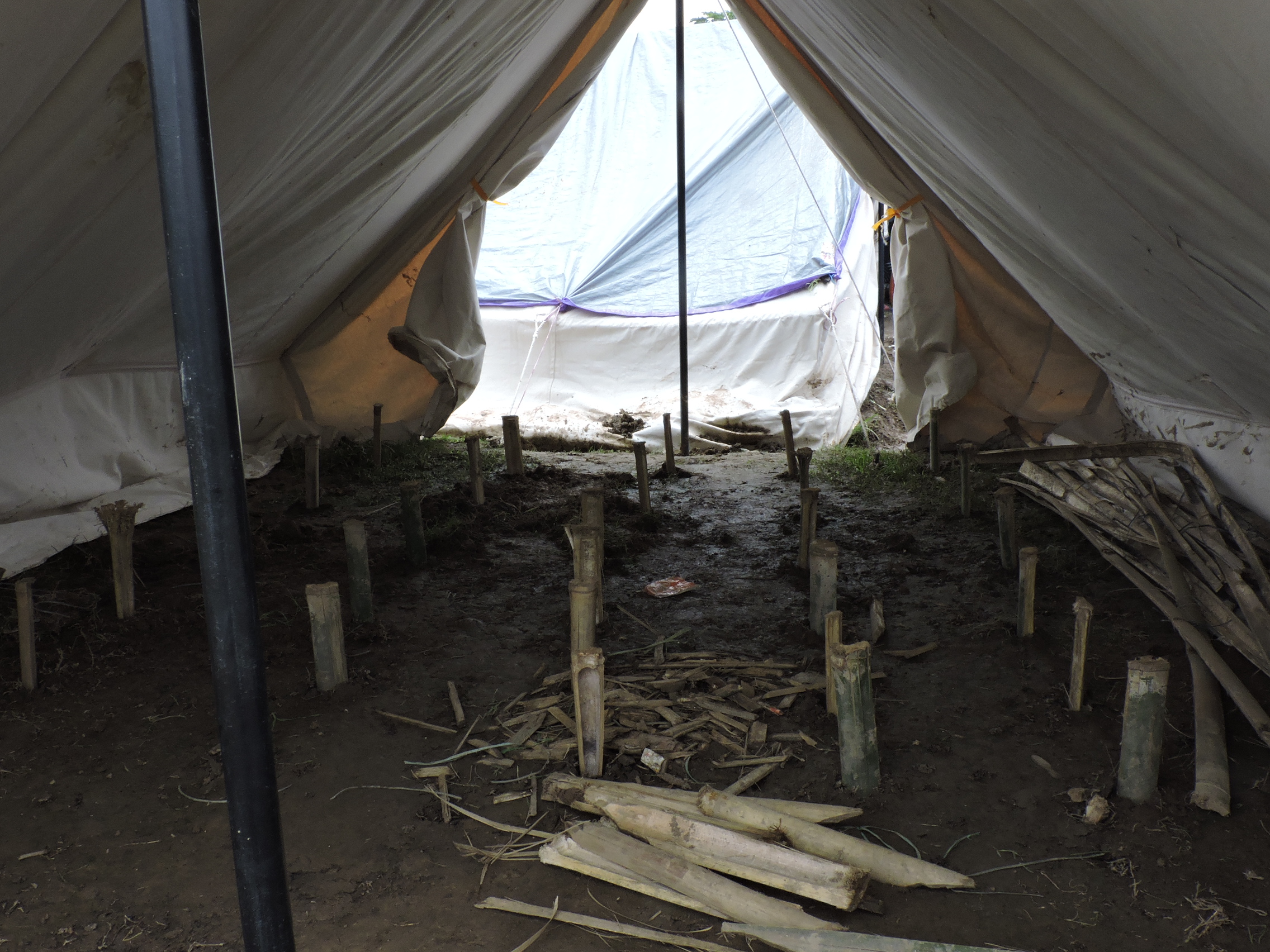
Trying to keep the ever-present moisture at bay: the bottom of the tent has to be lifted off the sodden ground

the bottom of the tent has to be lifted off the ground

bamboo poles are getting stuck in the ground, then a plank is put on them

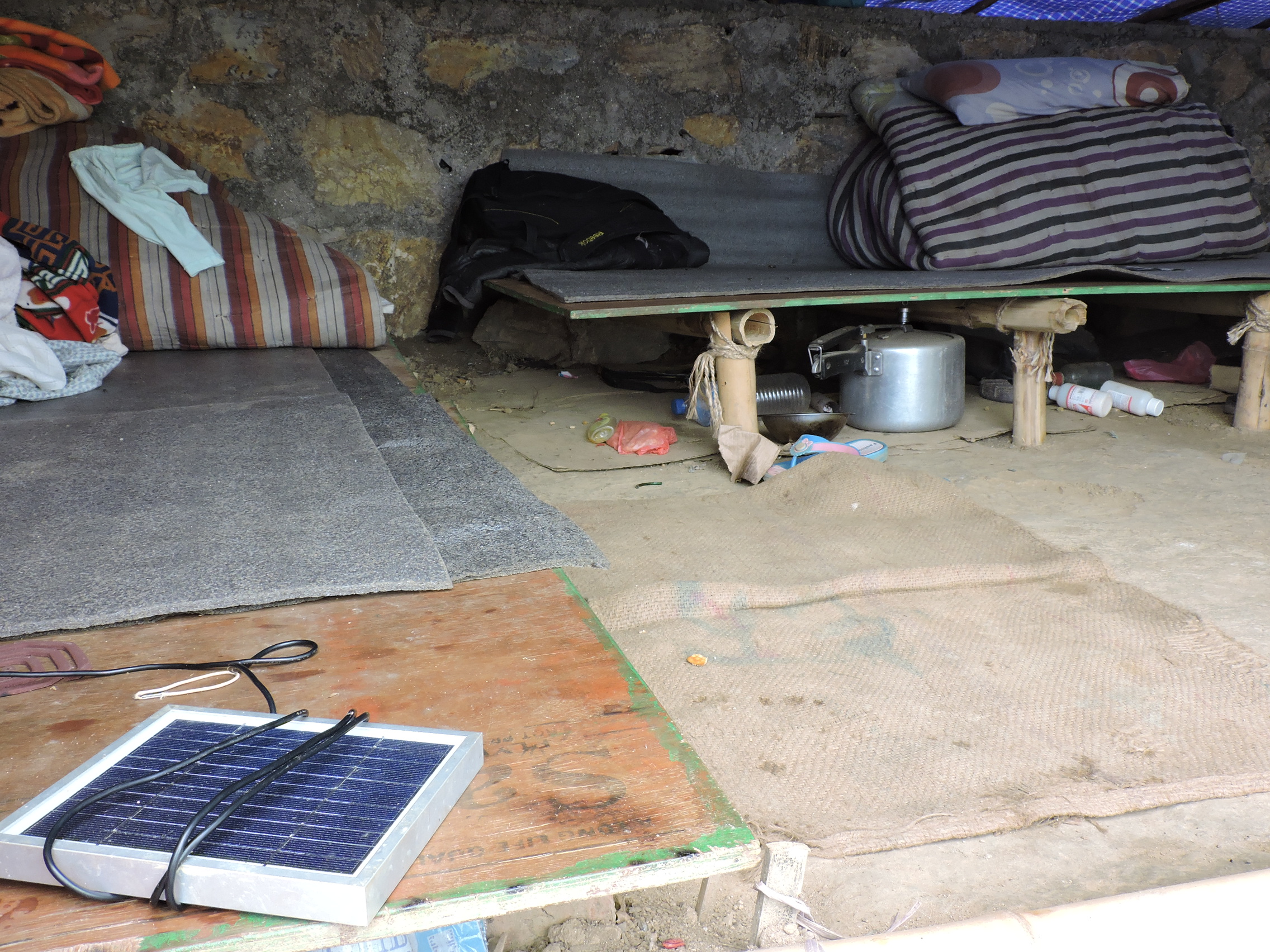
inside a tent

inside a tent attached to a wall

Aabhash tells me about the hardships of life in the camp:

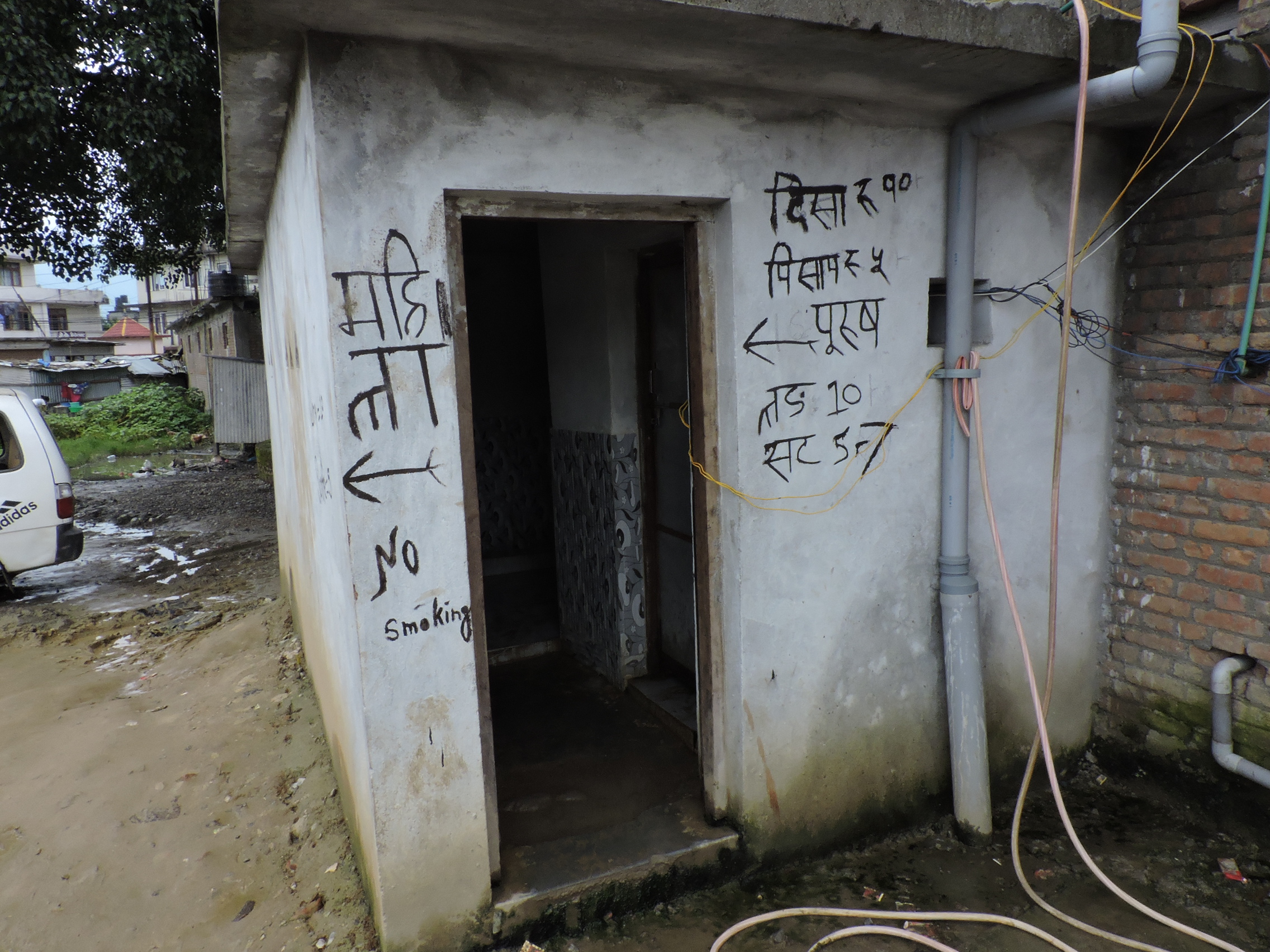
The nearby toilet costs money, so the people have to go to one further away,

pay toilet

pay toilet: that money stinks; and everything has its price

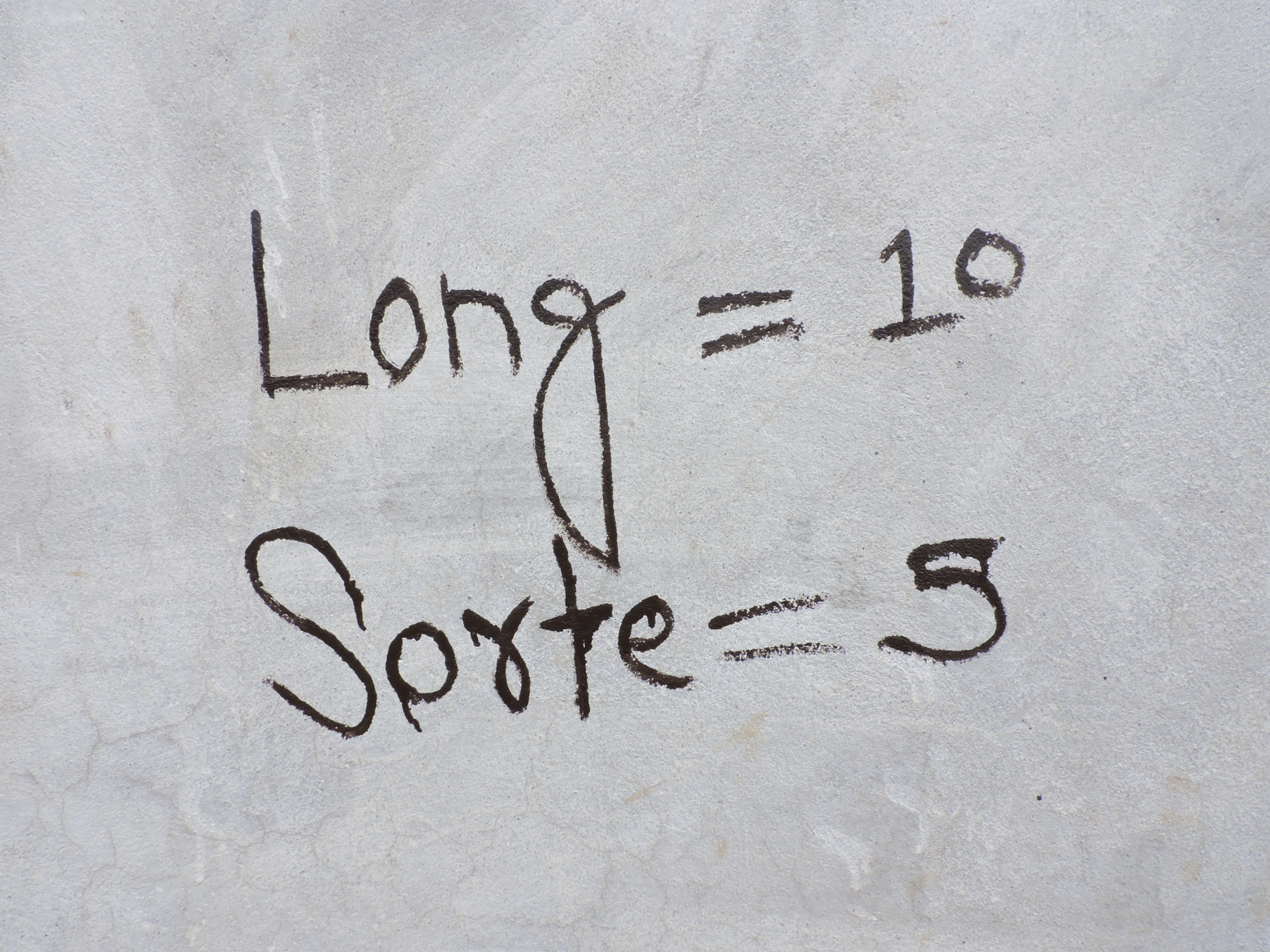
The toilet price: long 10 rupees, short 5 rupees

The toilet price: long 10 rupees, short 5 rupees

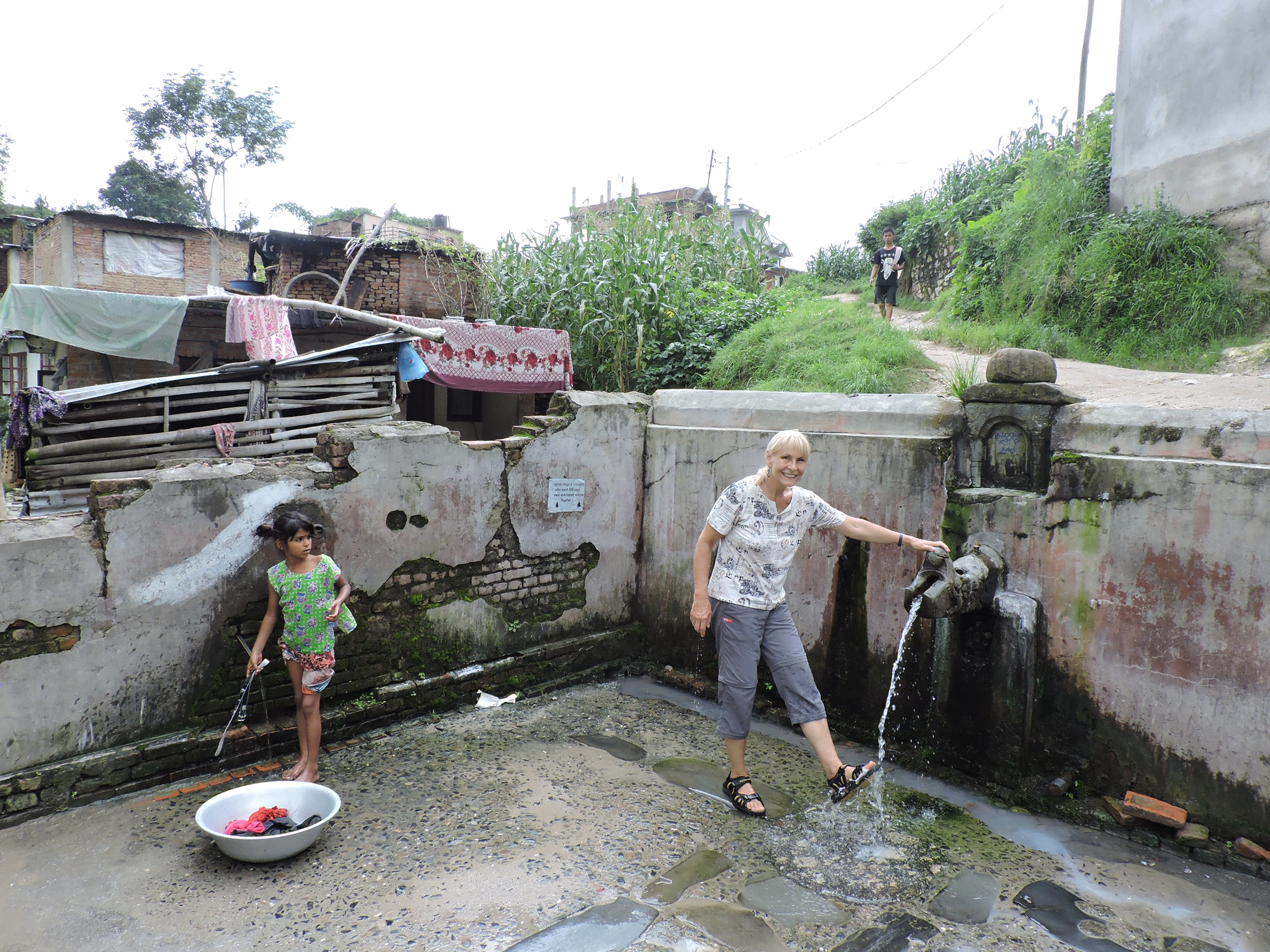
The laundry is done a couple of hundreds of meters away, downhill where during the monsoon season water is continuously running out of one of those picturesque spouts that you find all over the country (remember the one I took a picture of in Patan?)

the laundry is done a couple of hundreds of meters away

muddy feet and muddy sandals

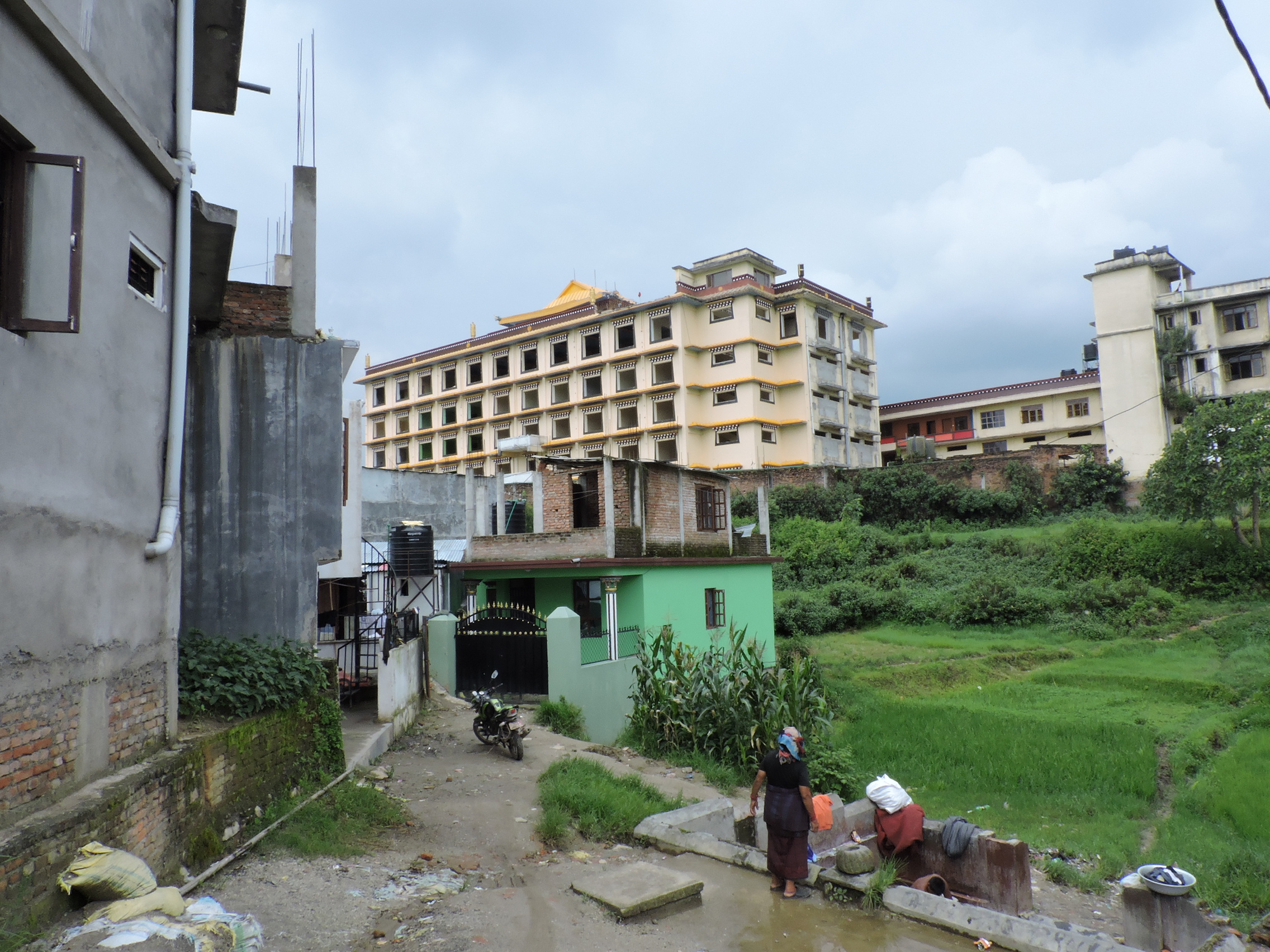
From the big wash basin you see a damaged buddhist monastery that has to be pulled down and rebuilt. Some of the men from the camp have found work there.

Buddhist monastry, now uninhabitable

Buddhist monastery, now uninhabitable

“Wouldn’t it be more useful to build a big house like that for the displaced people instead of spending all that money on a monastery?” my guide asks after a moment of pensive silence.

Then he slowly starts telling me about the people in the camp, how modest they were when they first arrived, content to have a safe place to stay, not wanting to ask for, not wanting to take anything from anyone. They were destitute, traumatized, one woman becoming anorexic, a child getting burnt by hot cooking oil and her parents being able to afford only traditional treatment (ghee), one woman not changing her clothes for a month being too shy to accept offerings, another woman suffering from postpartum psychosis (on top of all the hardship, she had been scolded by her husband for having given birth to a baby girl), parents of a child with special needs in education not being able to afford school in the new environment, parents of other children not being able to afford the school uniform and fees in the local schools. The people from Tatopani didn’t expect help, they kept saying, they had everything, they were just grateful for a safe place to stay. But the volunteers were aware of their difficulties and helped.

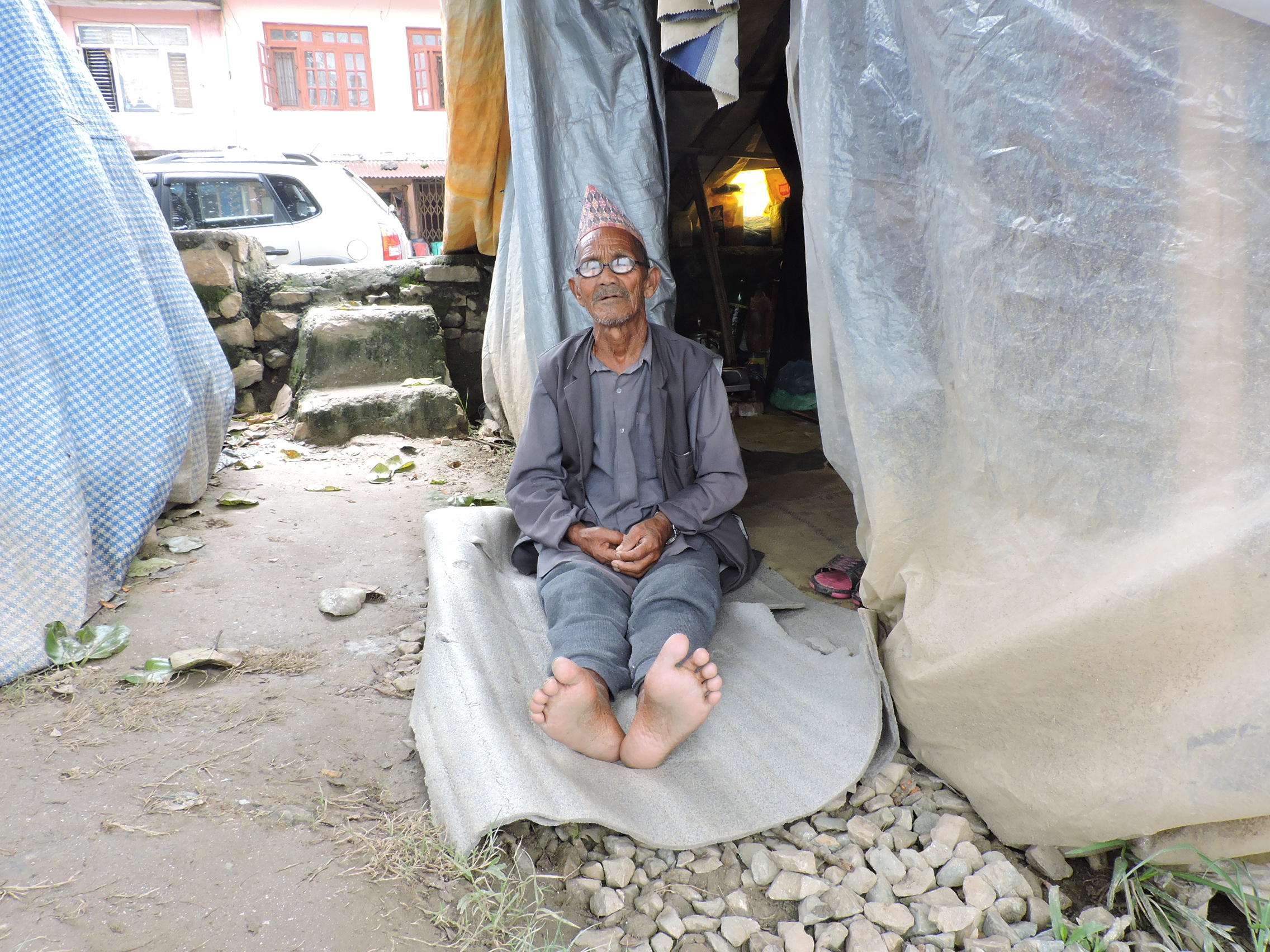
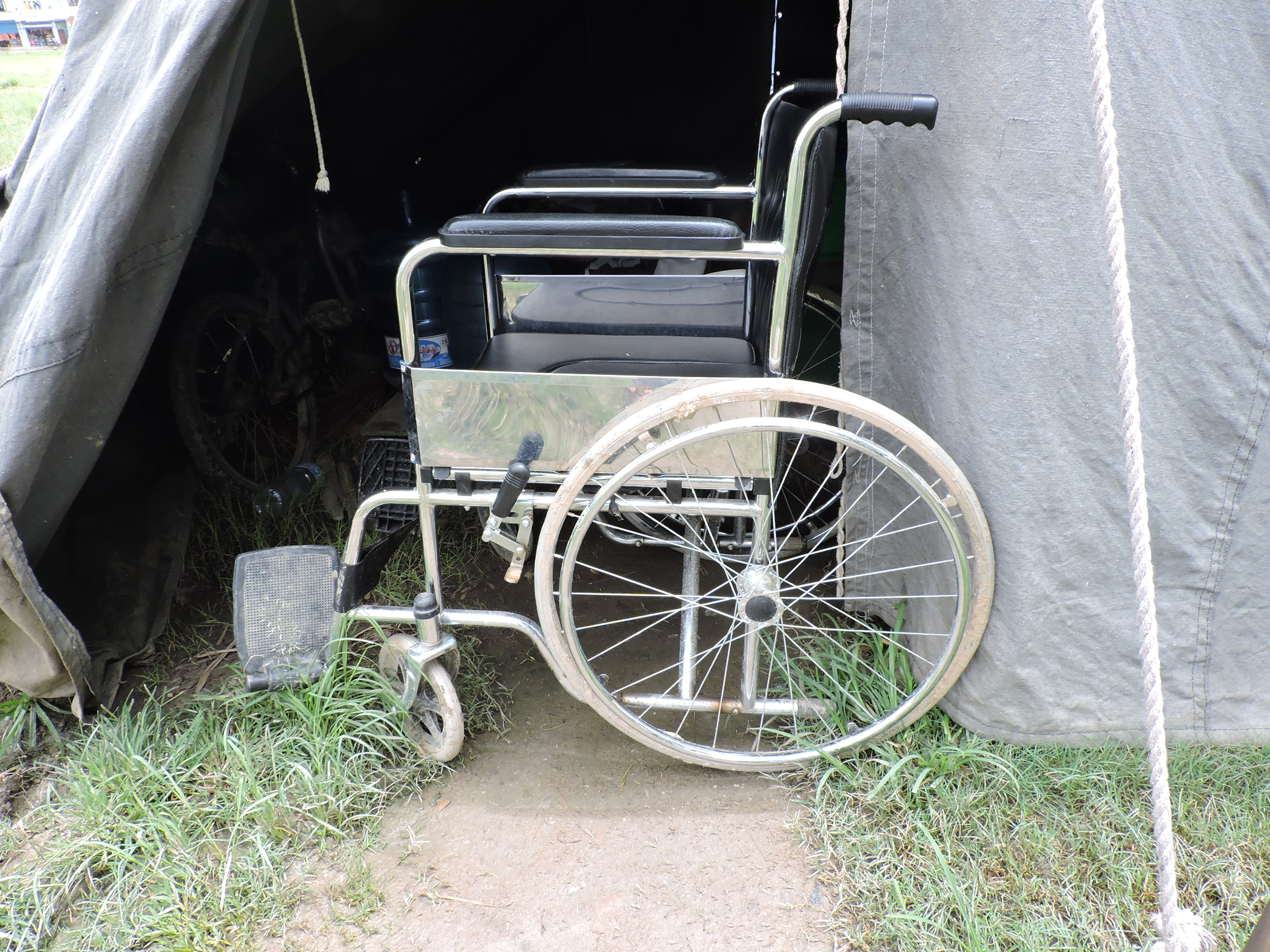
And Rita’s women’s group got active. They opened a school for all the children and then tried to place the elder ones in local schools for free, as a contribution from the school to a disaster that had hit the whole nation. They got hold of a wheel chair for the old man.

an old man paralised after a stroke

an old man with hemiplegia after a stroke

every day he gets a ride on his wheelchair

every day he gets a ride on his wheelchair

Follow up: The Camp 2

BREAKDANCE in NEPAL

15 Aug

A BREAK FROM THE ORDINARY

In Kathmandu, in Pokhara, in Patan, anywhere in Nepal, anywhere in the world,

kids want to work out and meet friends,

do things together, have fun,

DSCN1435

they love music, hip hop, funk,

the rhythm gets in their feet,

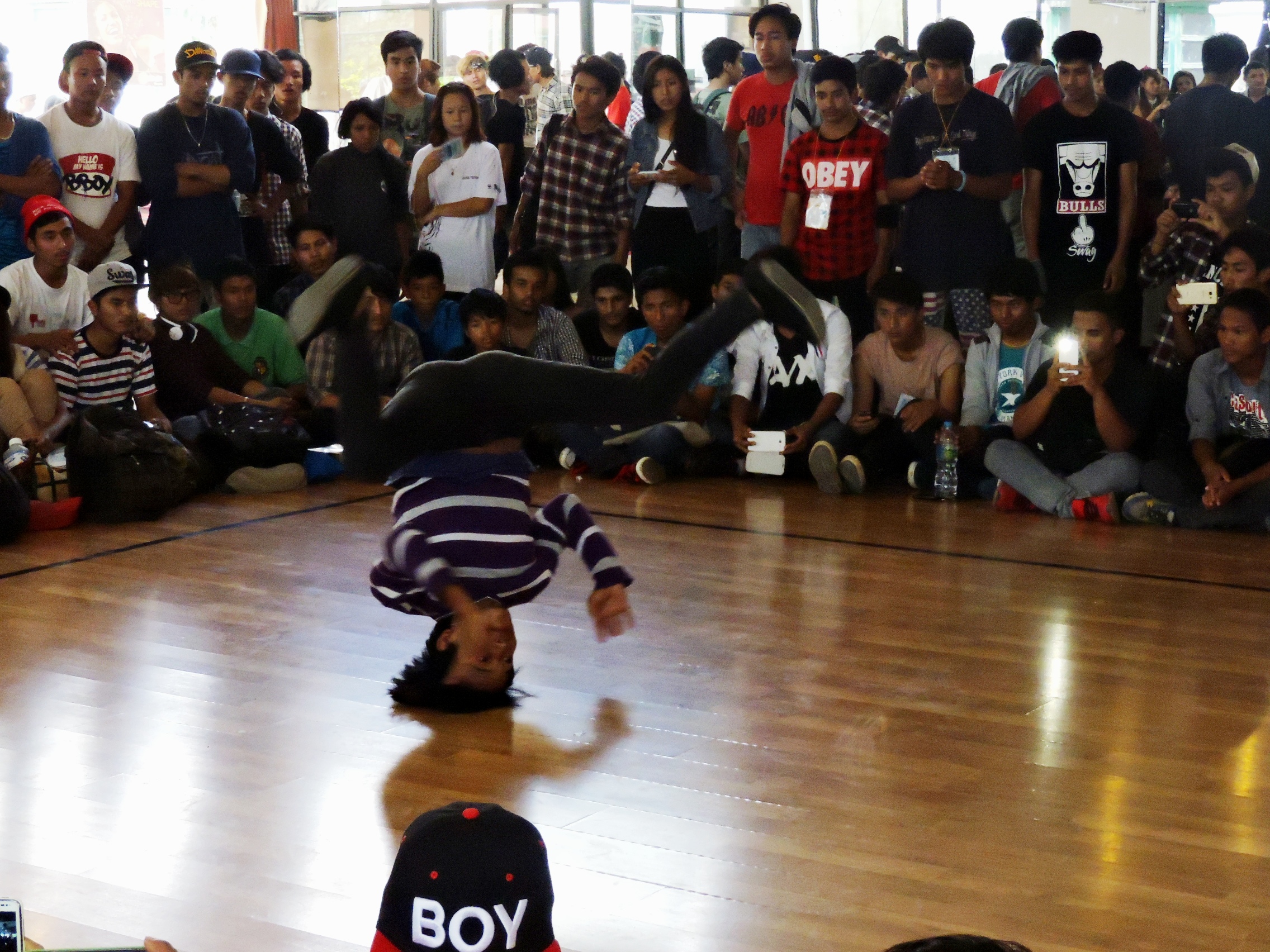
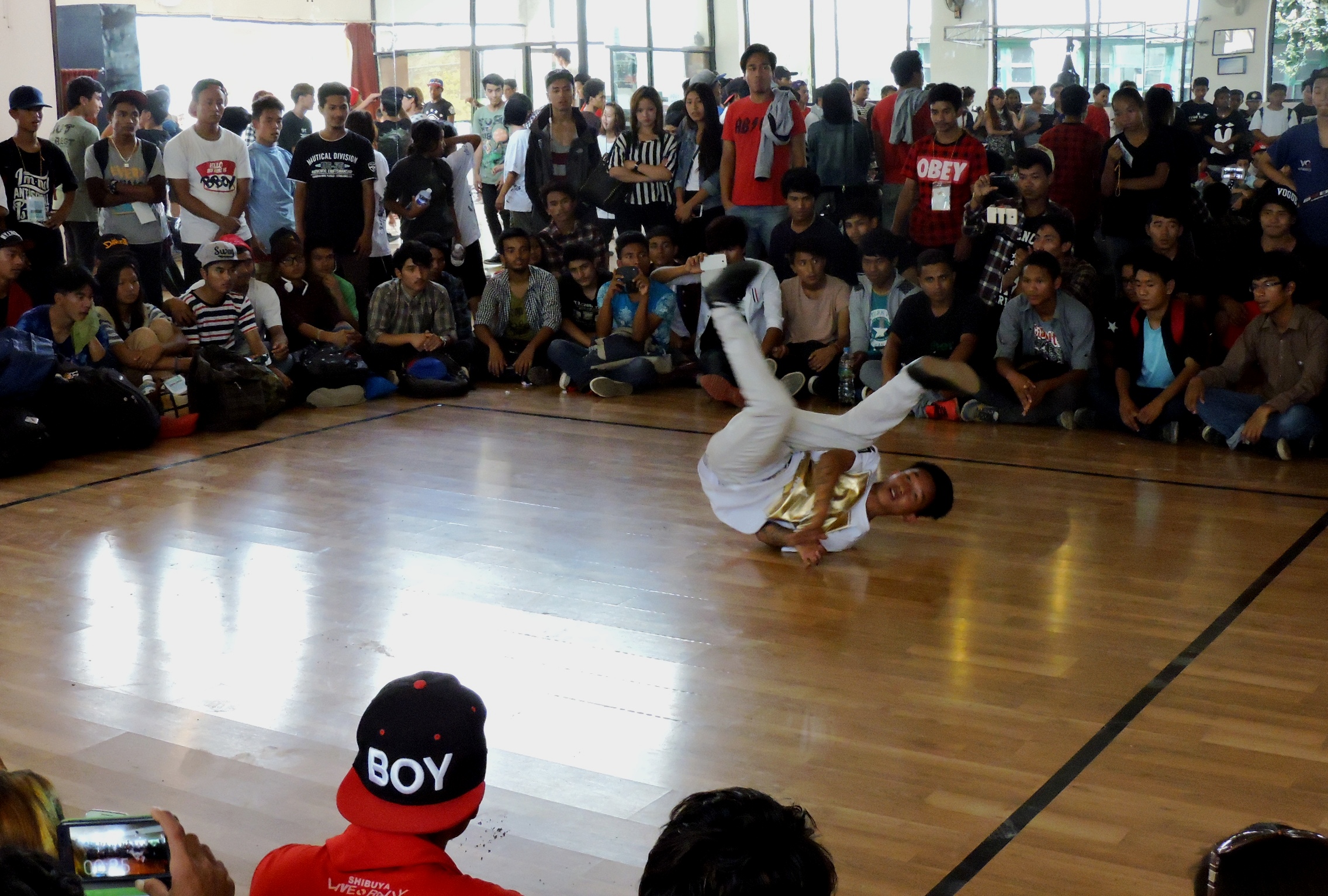
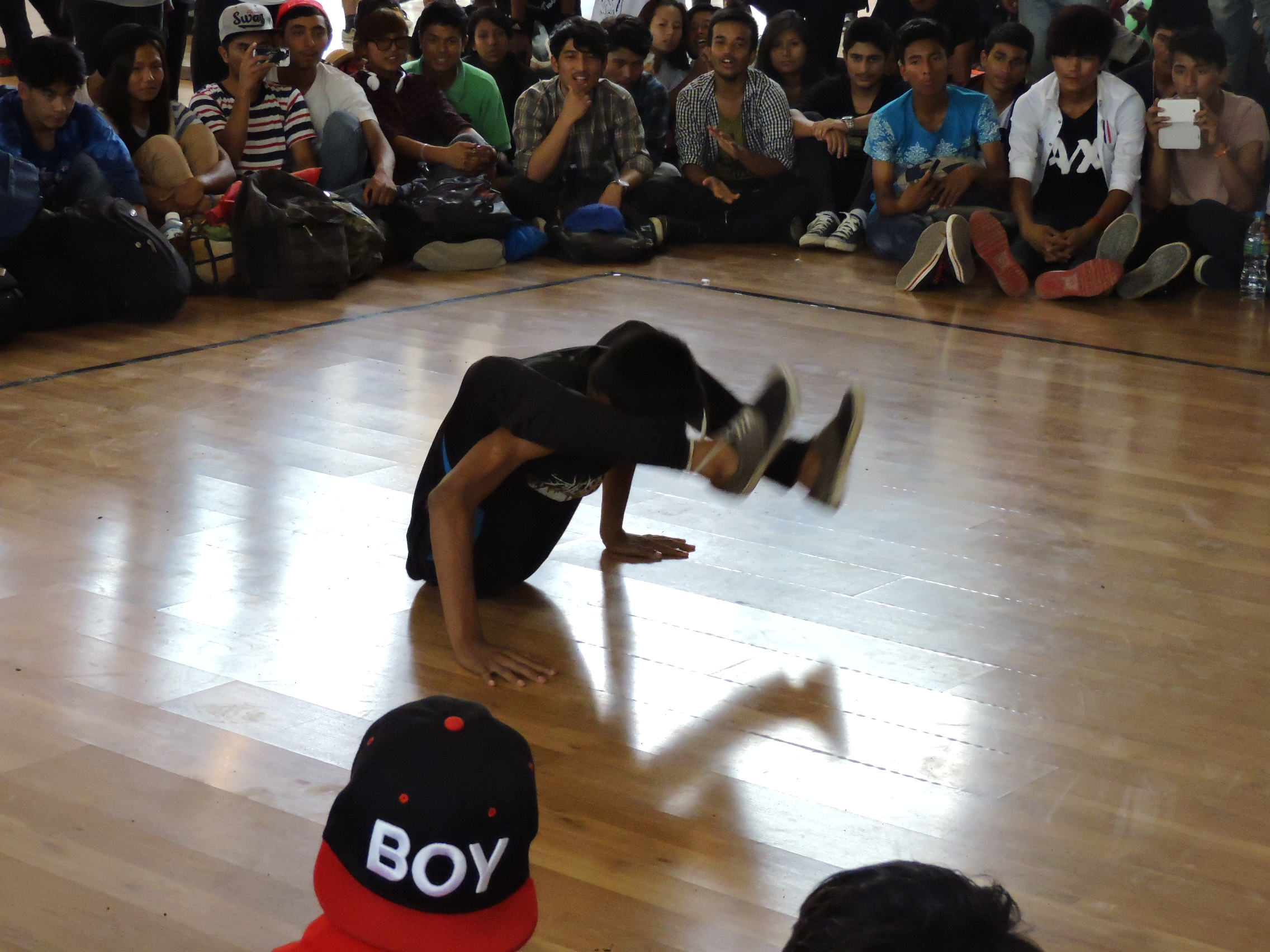
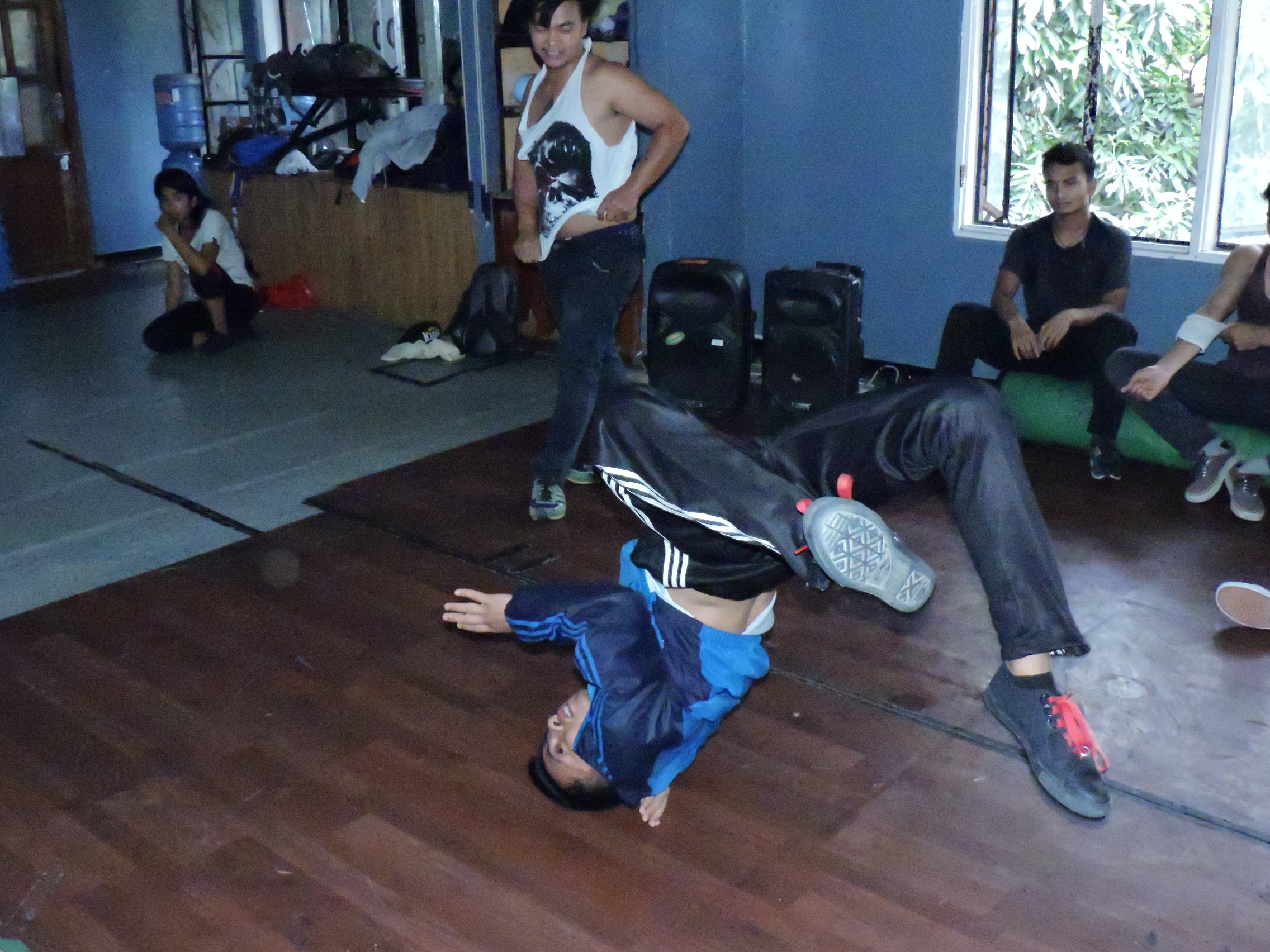
they move to the beat, they dance, they break

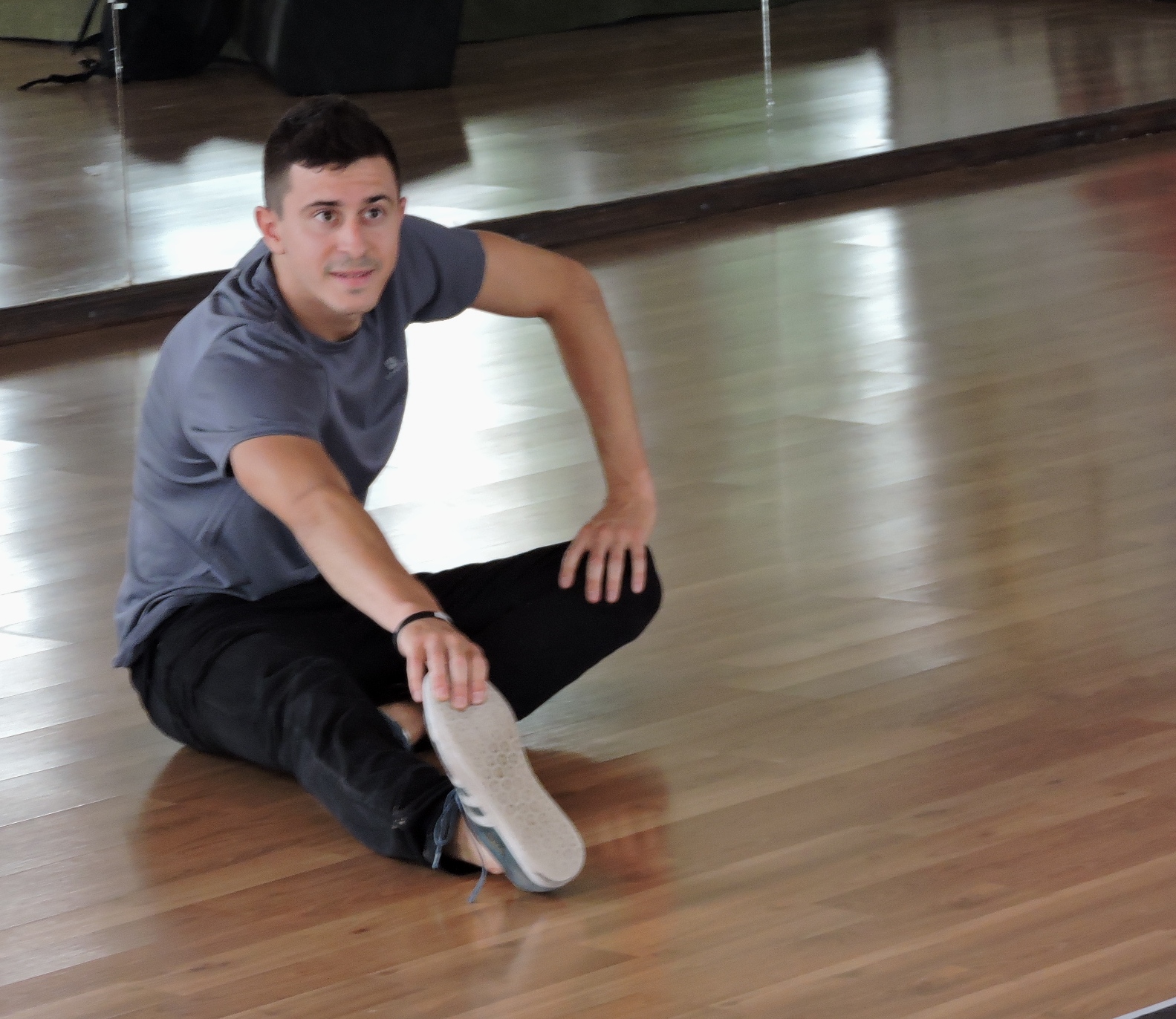
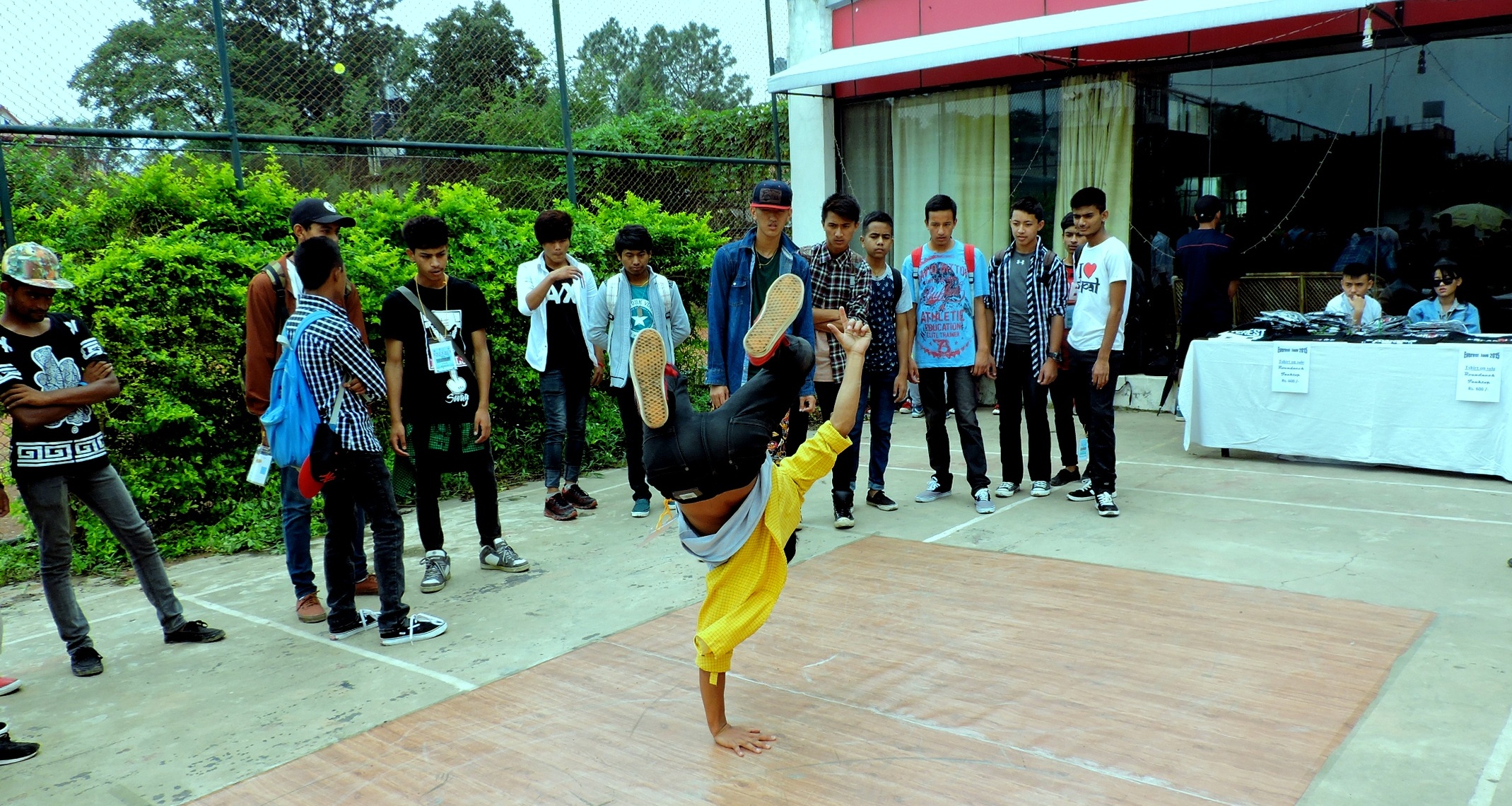
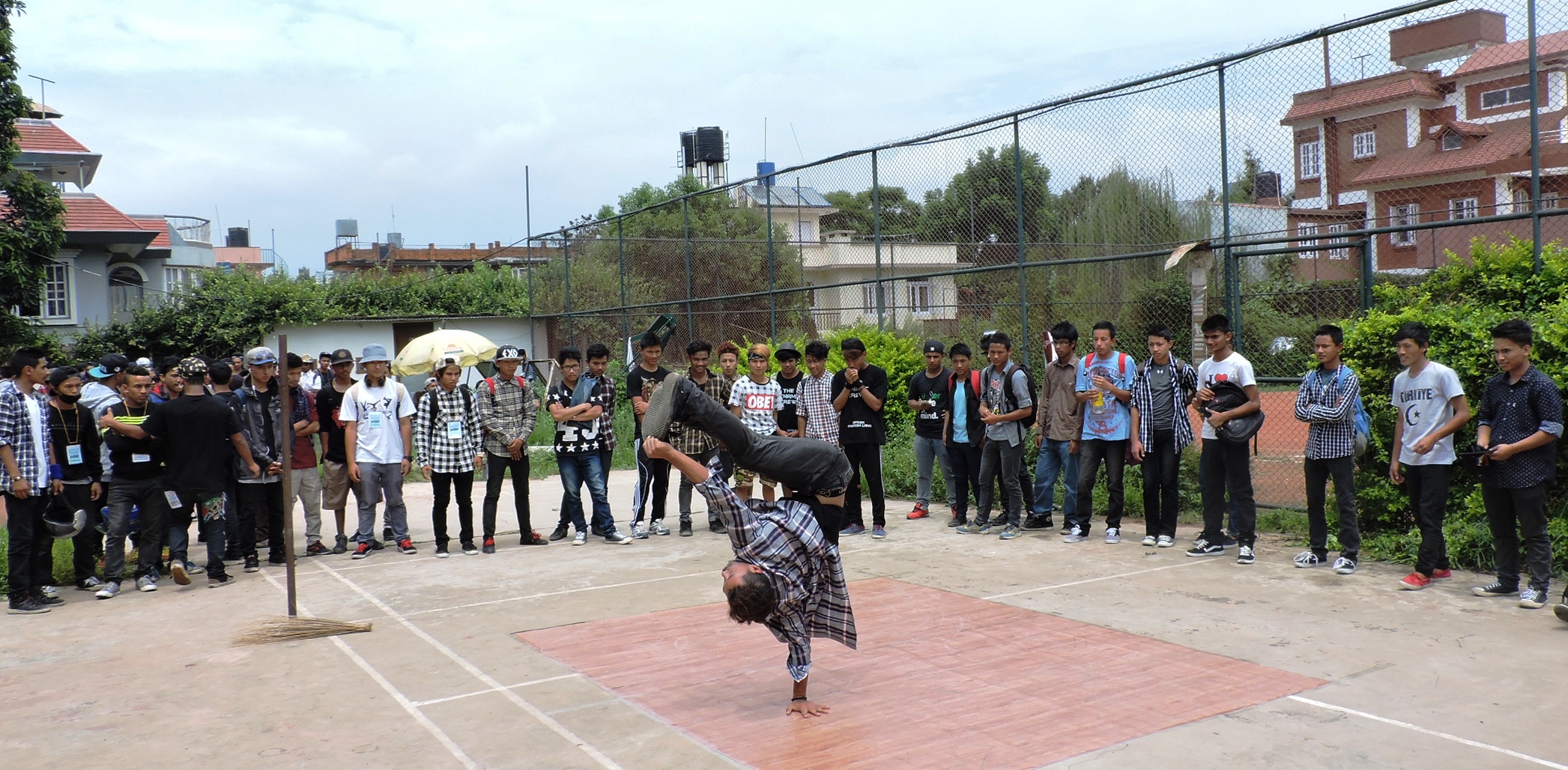
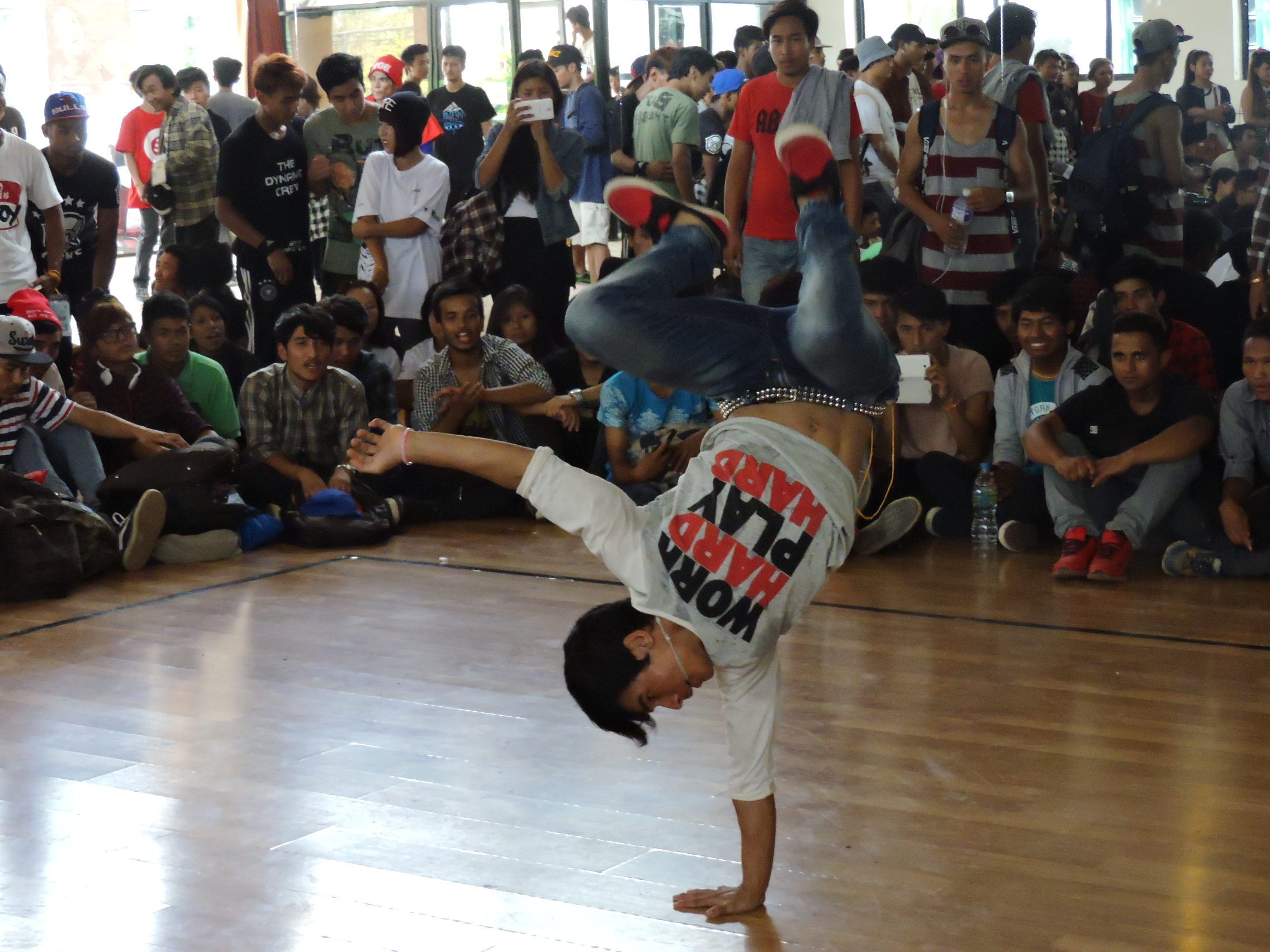
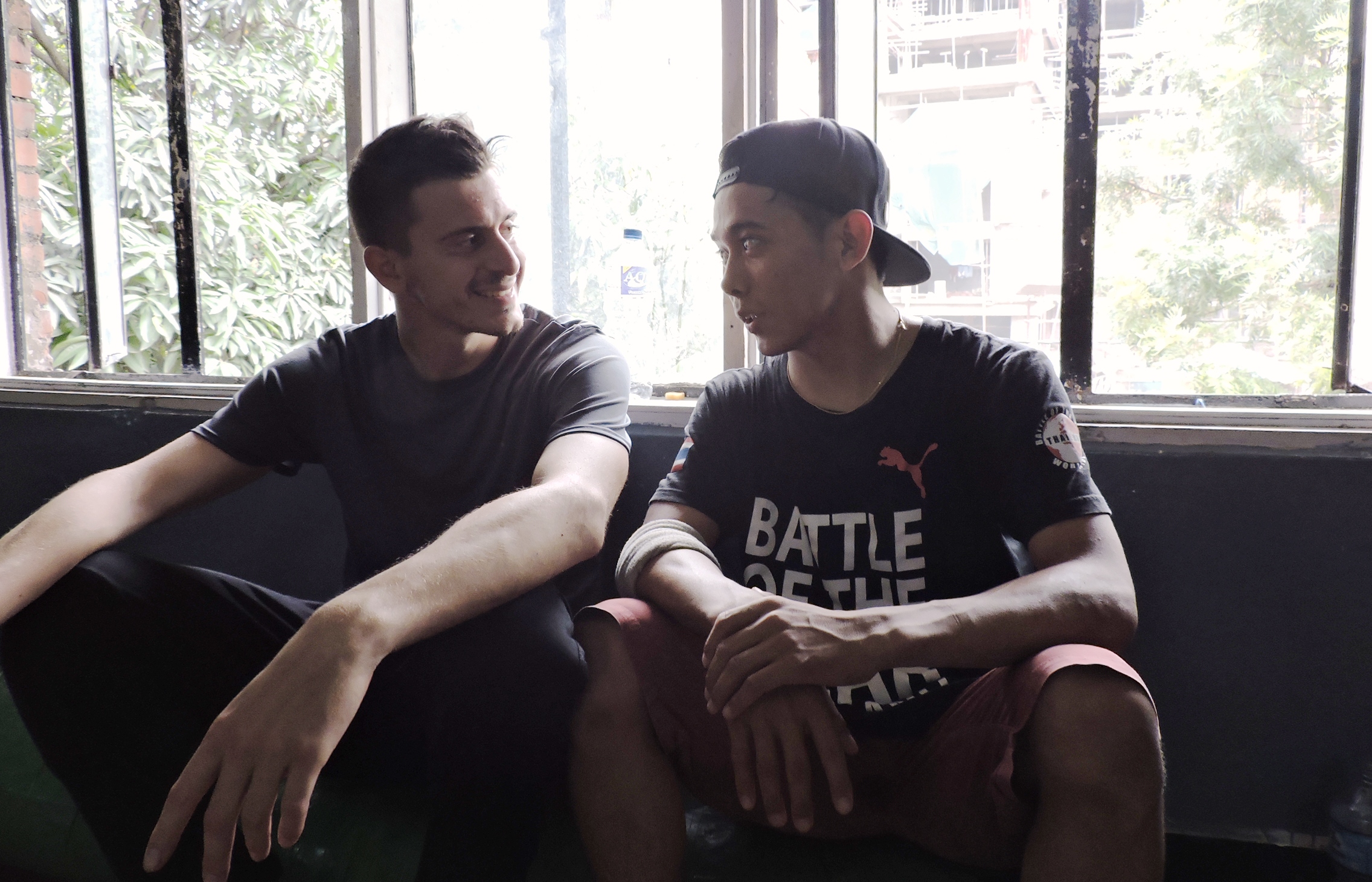
“Breakdance has been introduced in Nepal only six years ago, but Nepalese b-boys and b-girls can easily stand comparison with break dancers in Europe, where we have been practicing it for over 30 years now,” says Cristian, a top break dancer from Italy.

DSCN1456 a

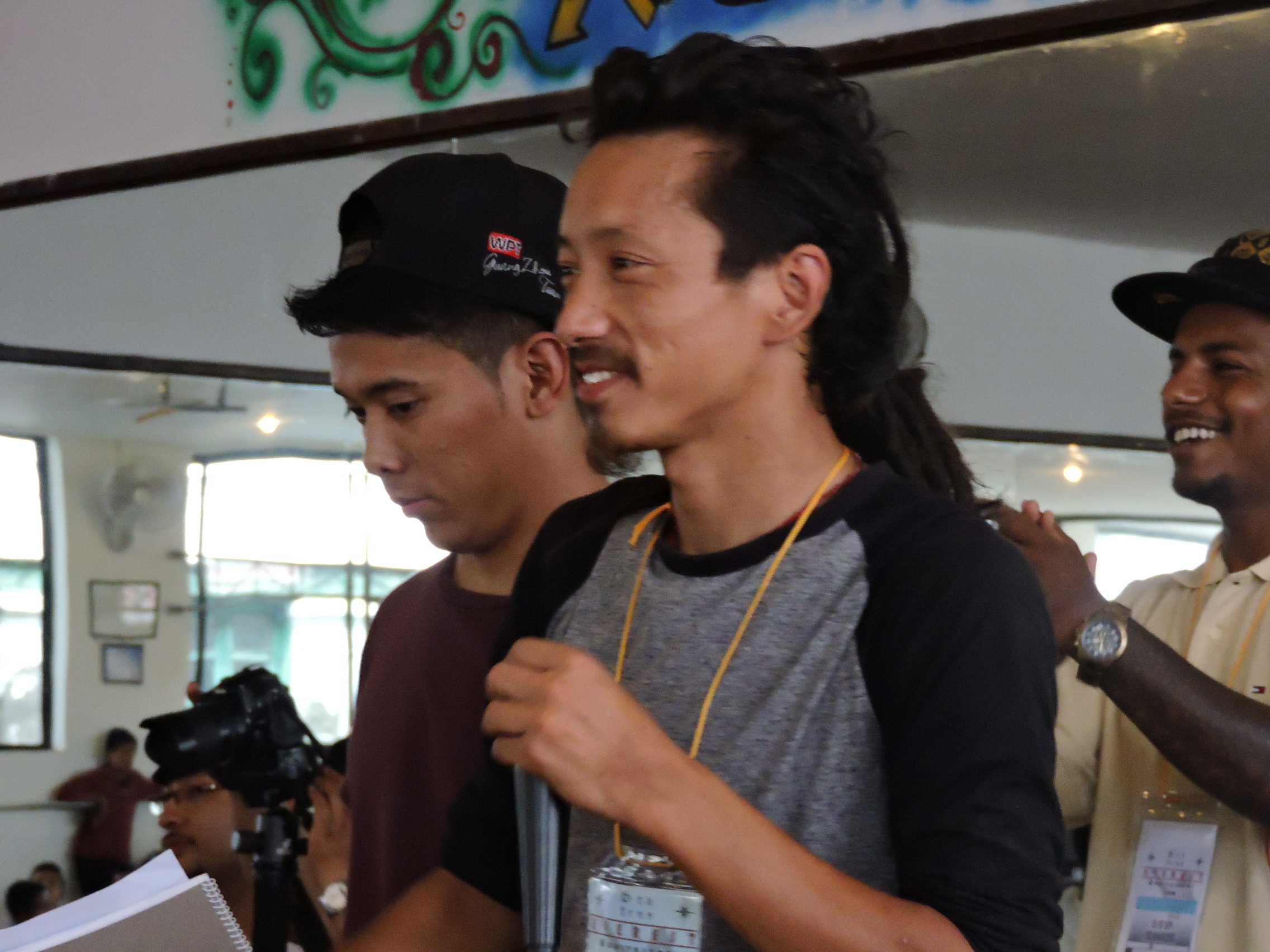
He has come to Nepal to meet young people who share his passion, to get inspiration and to inspire, to learn new moves and styles and to share his long time experience. Breakdance for him is not just a sport or a hobby, it is a way of life. He has travelled a lot to meet breakdance groups all over the world, in South America, in other parts of Asia. Wherever he goes, getting together with his fellow break dancers is like visiting family. Travelling with him is an idea: breakdancing is not an end in itself, b-boy and b-girl groups which become socially envolved can make a difference in this world. He is one of the co-founders of  wedoWE (http://www.wedowe.org) an organisation that helps groups go ahead with their projects.

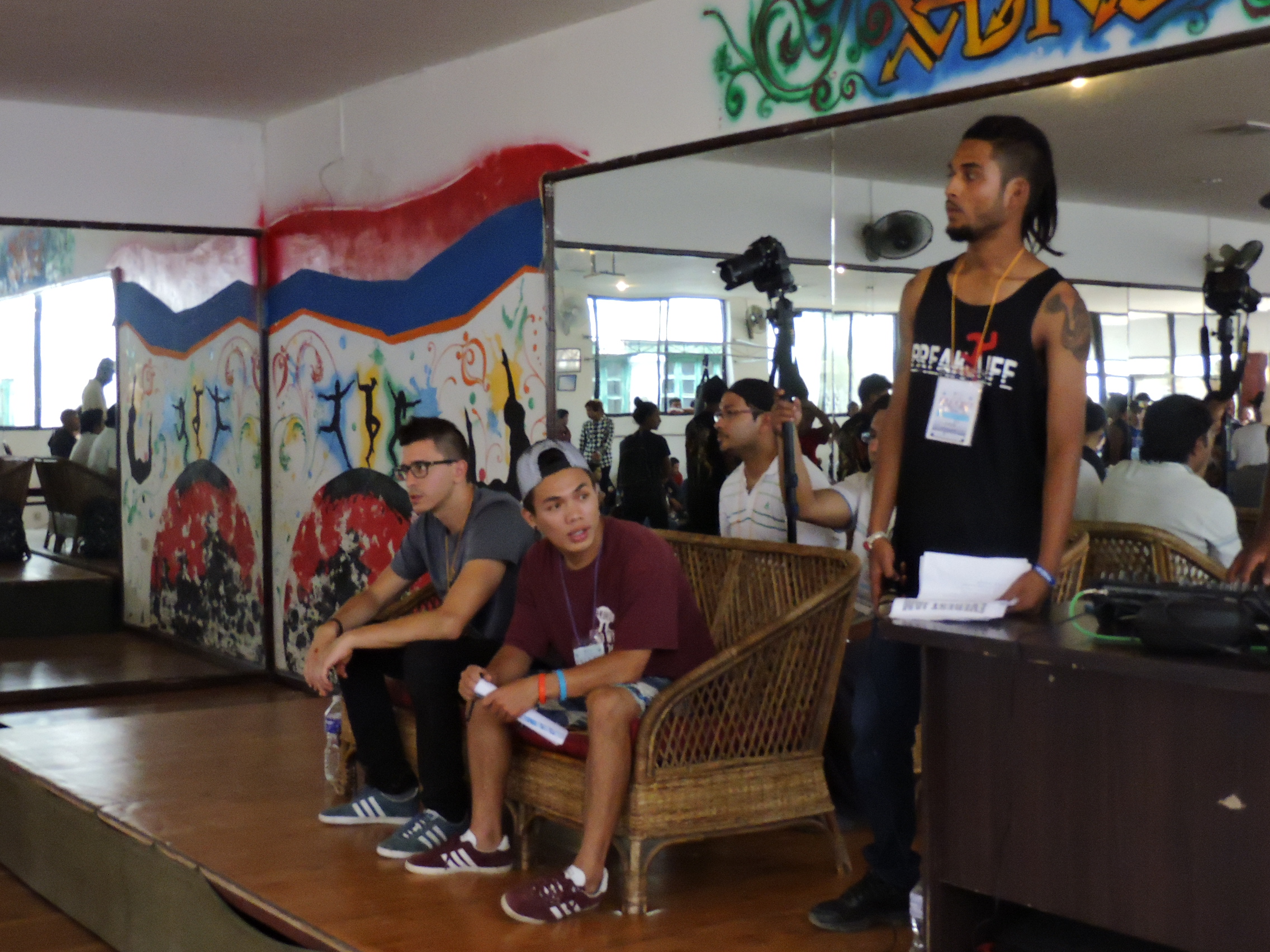
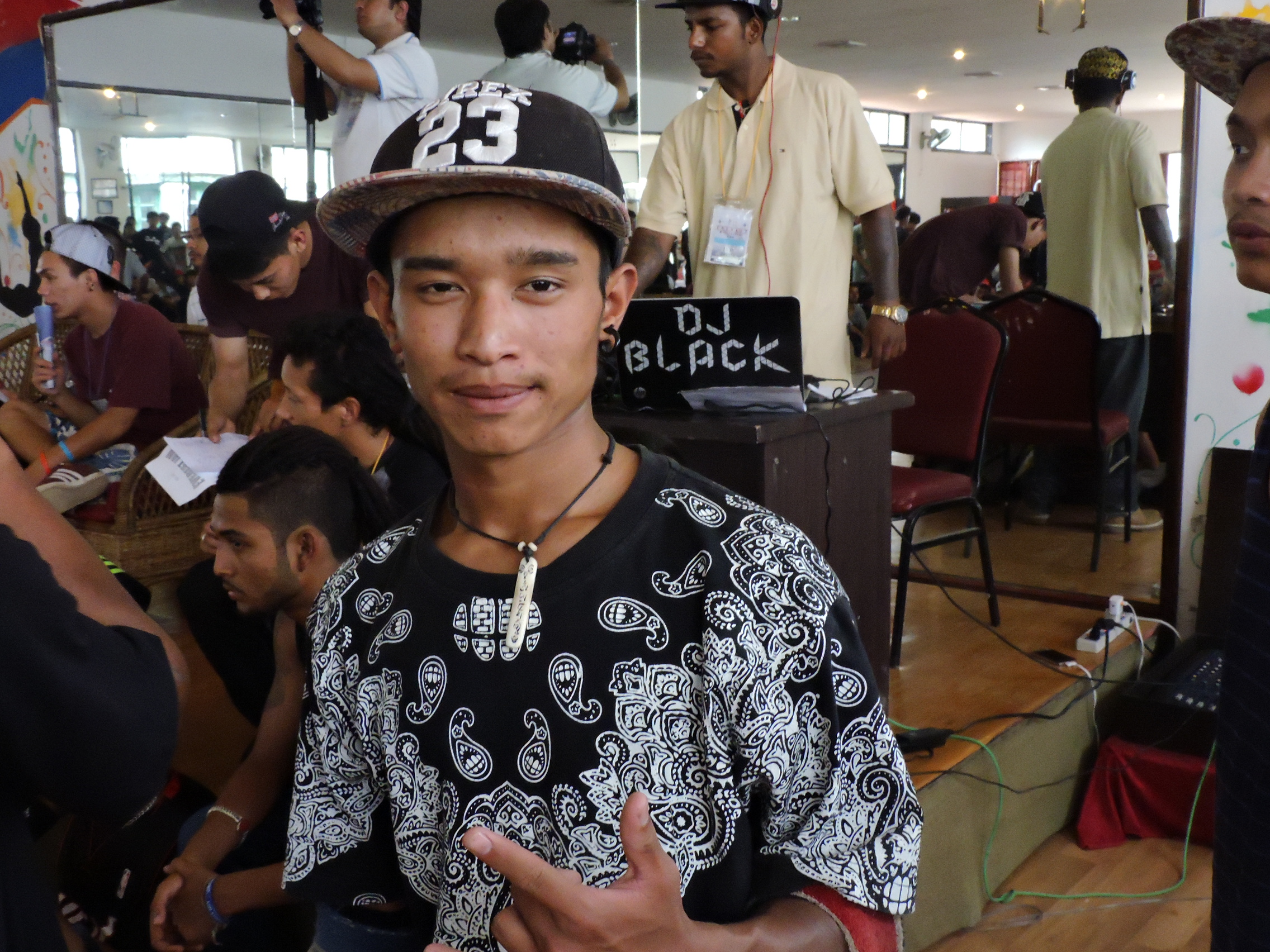
After a warm welcome Cristian is invited to participate as a member of the jury in the 2015 Nepalese Breakdance Competition organised by the Everest Crew on August 8 in Patan (Lalitpur).

DSCN1437


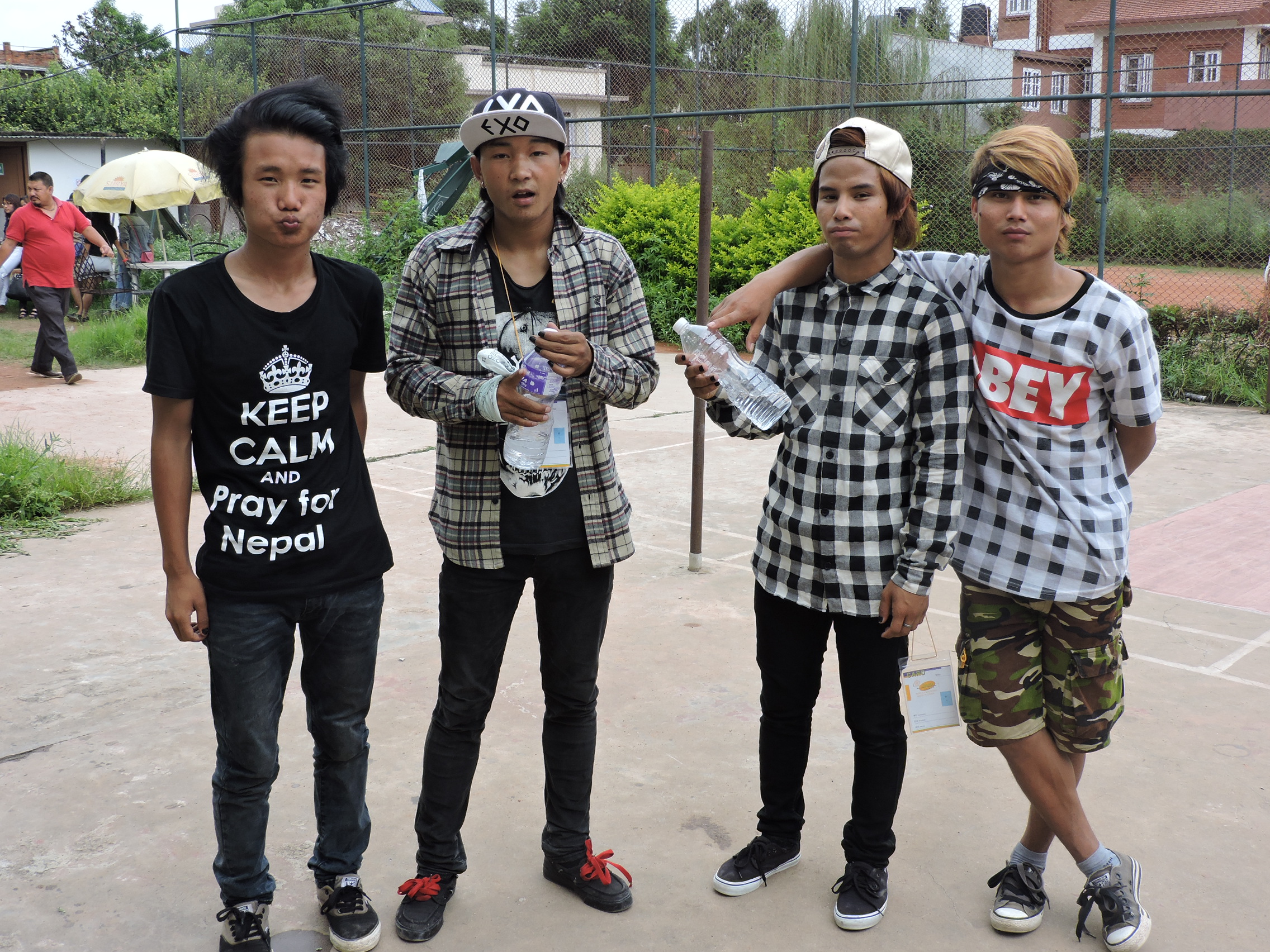
The first thing that strikes him in Nepalese youths is their motivation and their sense of sacrifice.

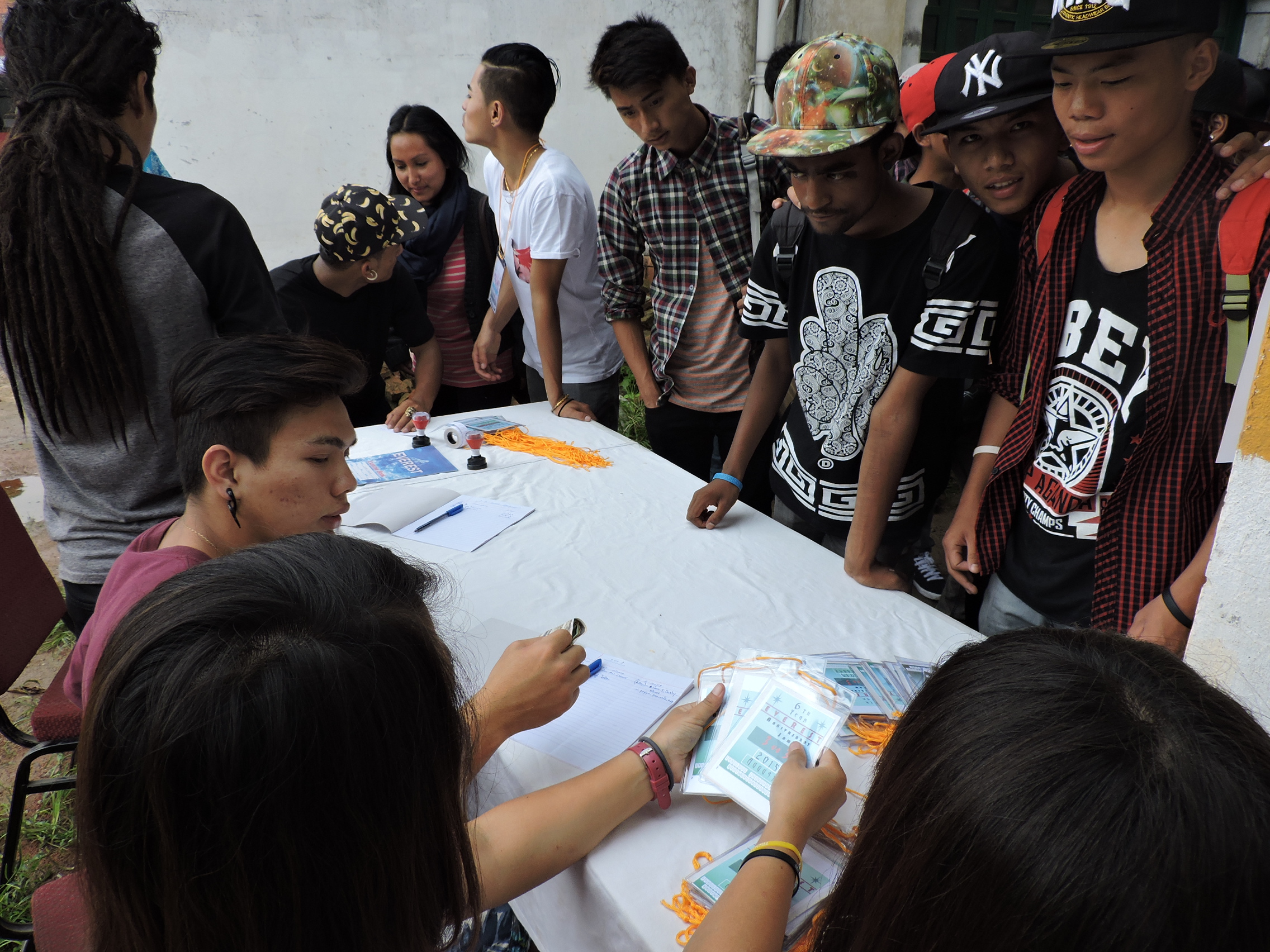
“They have travelled for more than 14 hours on busses coming from remote parts in Nepal and even from India,” Cristian says in admiration, “they payed their participation fee, 300 rupees, which may not seem a lot to us but for them it is.”

The event is well planned with the organizers having advanced their own money for the rent of the location risking not to break even in the end.

participants paying their entrance fee

participants paying their fee

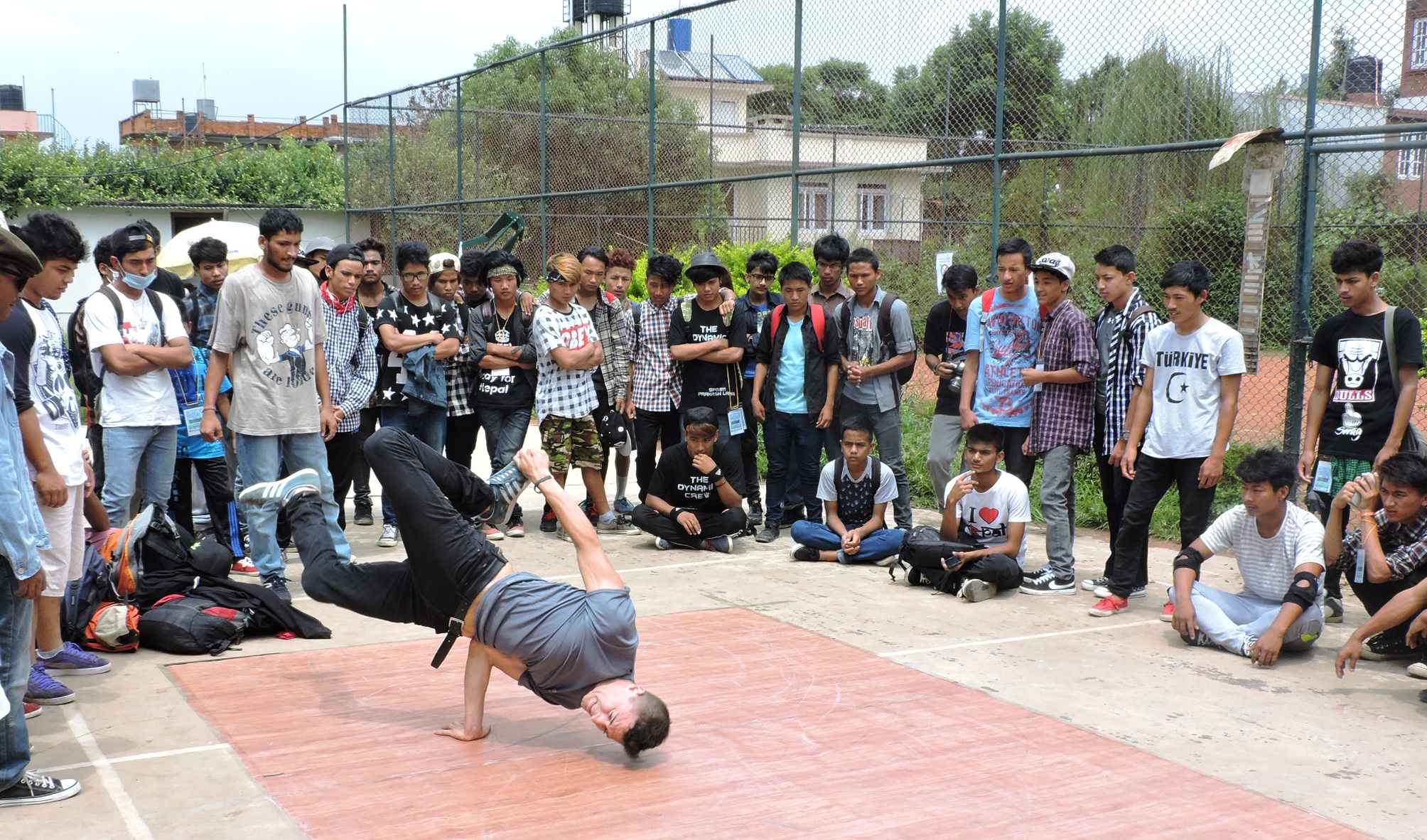
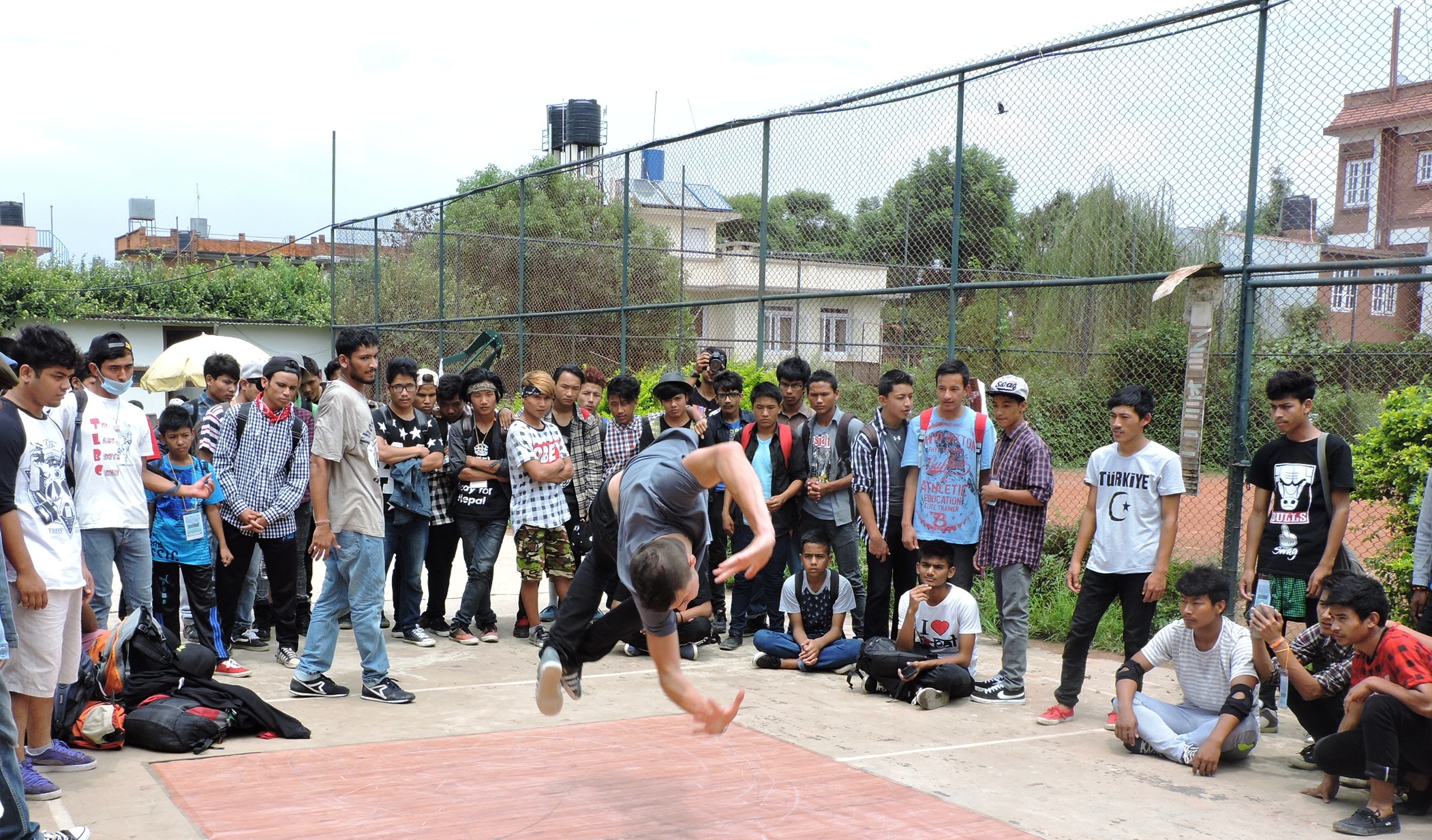
When the b-boys and b-girls first arrive they are too shy to practice their stunts so Cristian goes ahead to break the ice.

DSCN1500


the onlookers are impressed

the onlookers are impressed

After a while

under the scorching sun The "warming up" starts

under the scorching sun the “warming up” starts

DSCN1504


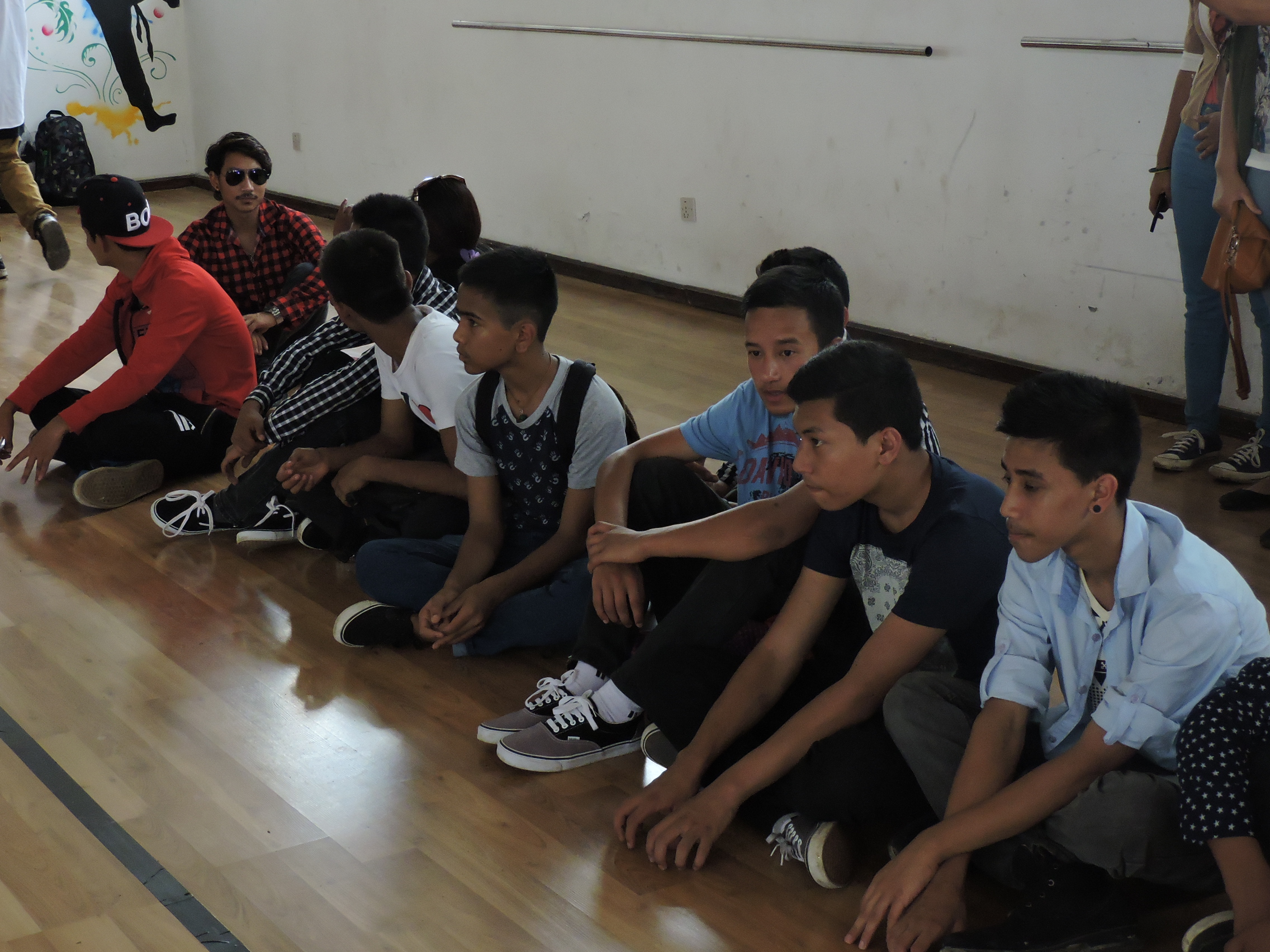
Waiting for the festival to begin

The youngest are 12 and 13 years old

They are disciplined, calm.

The excitment is in the air filled with the stomping beat of the music.

Finally the show starts

DSCN1532

one of the organisers opening the event

 Cristian’s difficult task as a juror or (as they say) as a judge begins.

DSCN1525

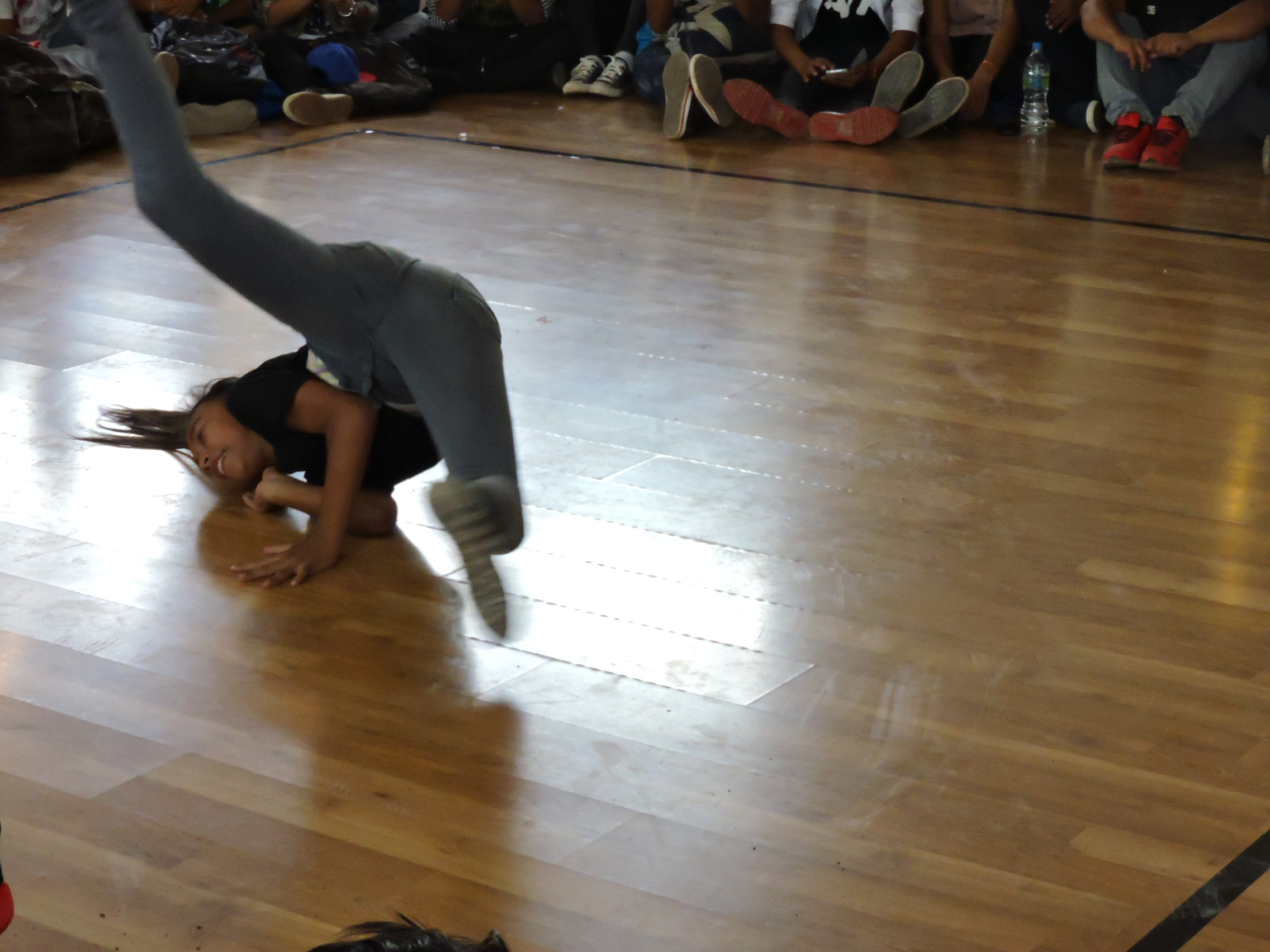
Competition is tough, the dancers are really good and the judges have to look on and concentrate for hours. Cristian is impressed by the seriousness and the commitment these young people demonstrate.

The competitors

DSCN1580

their sense of equilibrium


fast

their fastness

DSCN1661

their flexibility

DSCN1665

their strength

DSCN1685

their courage

cool kids

they are cool

DSCN1702

they are winners

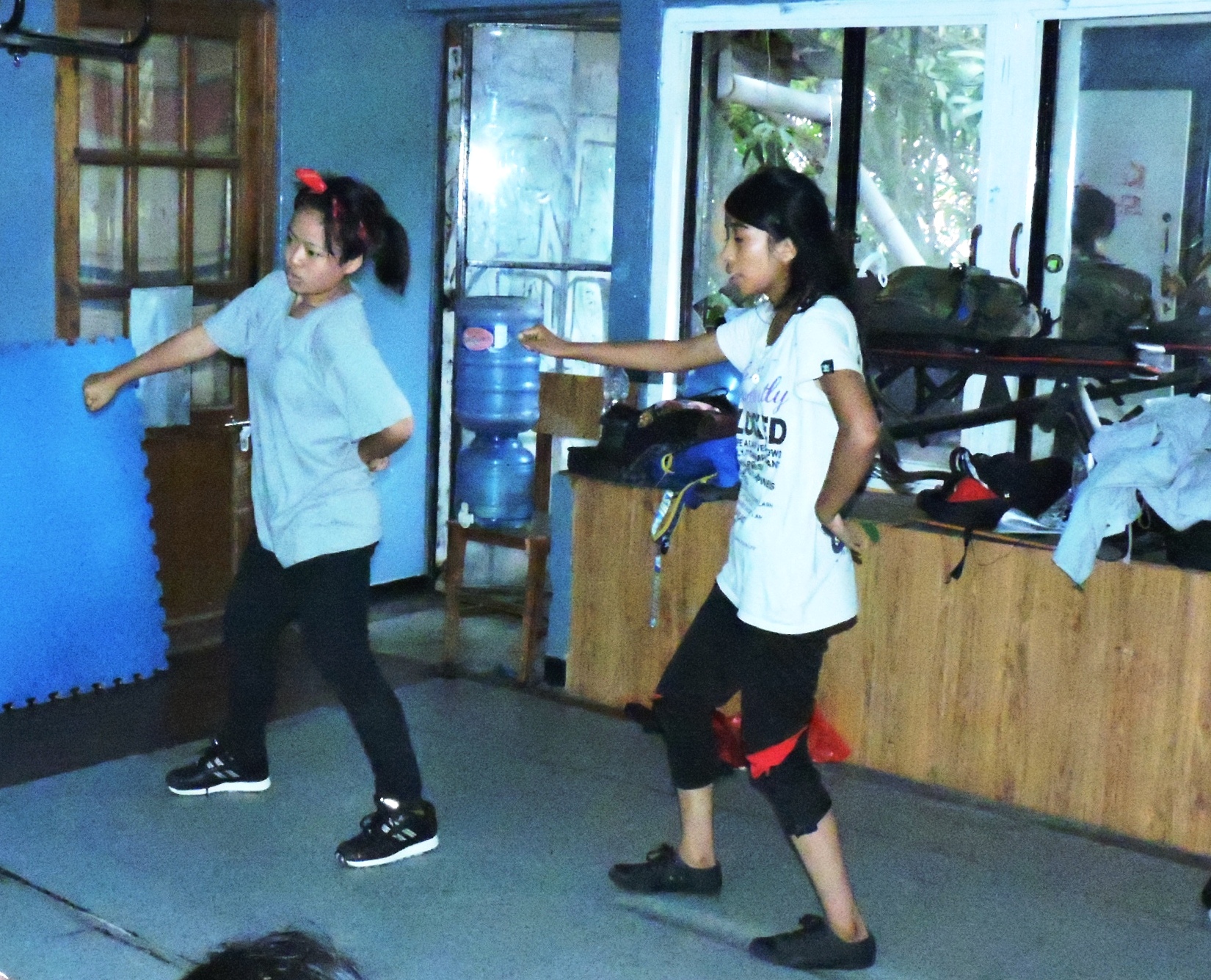
In a gym in Kathmandu: b-boys and b-girls practising together.

Togetherness, that’s what it is about, and many more things …

it's about self esteem

it’s about self-esteem

it's about perseverance

it’s about tenacity and creativity

it's about freedom

it’s about freedom

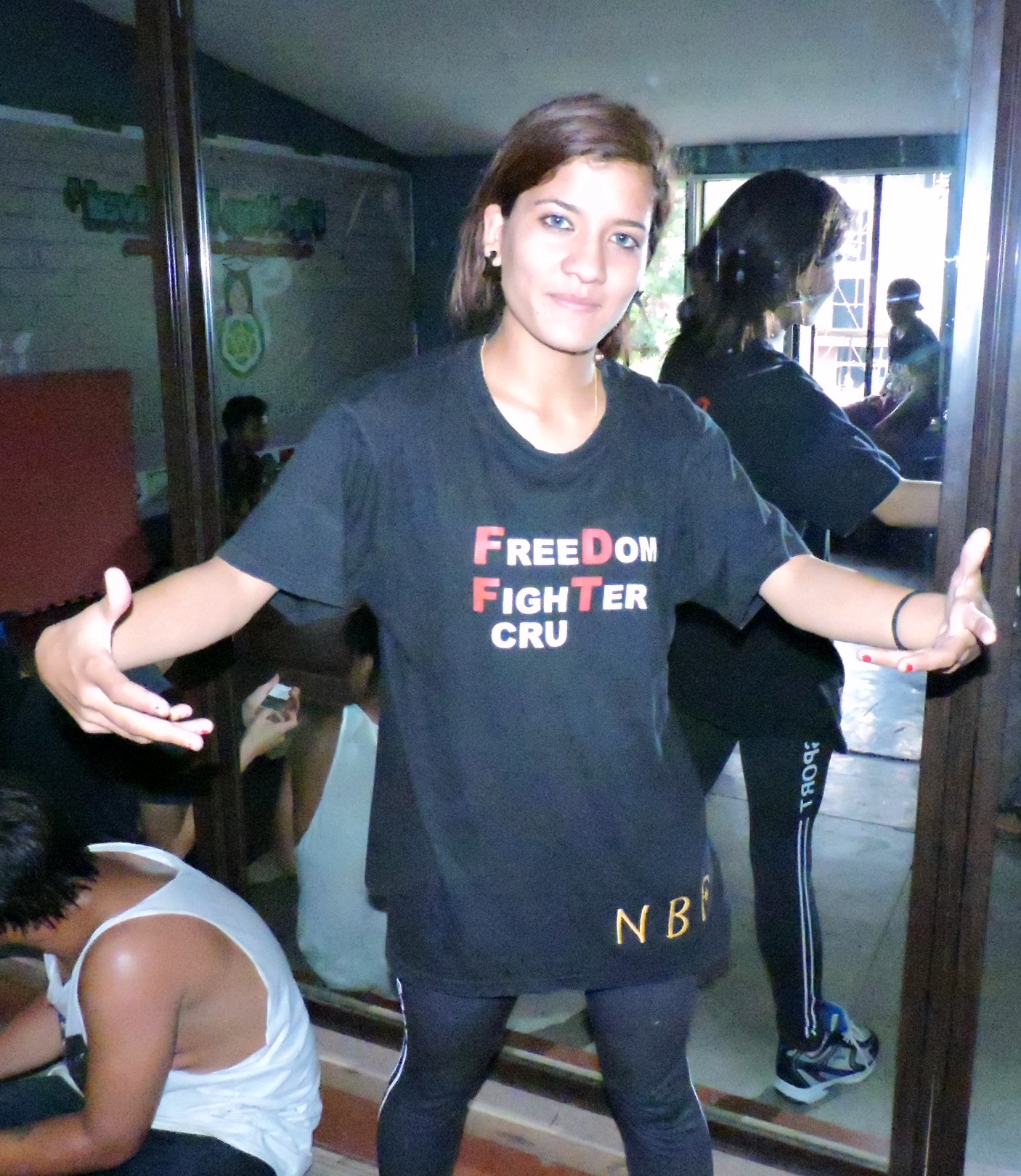
Their breakdance group gives b-boys and b-girls a sense of belonging.

Class, ethnic or religious affiliation don’t count.

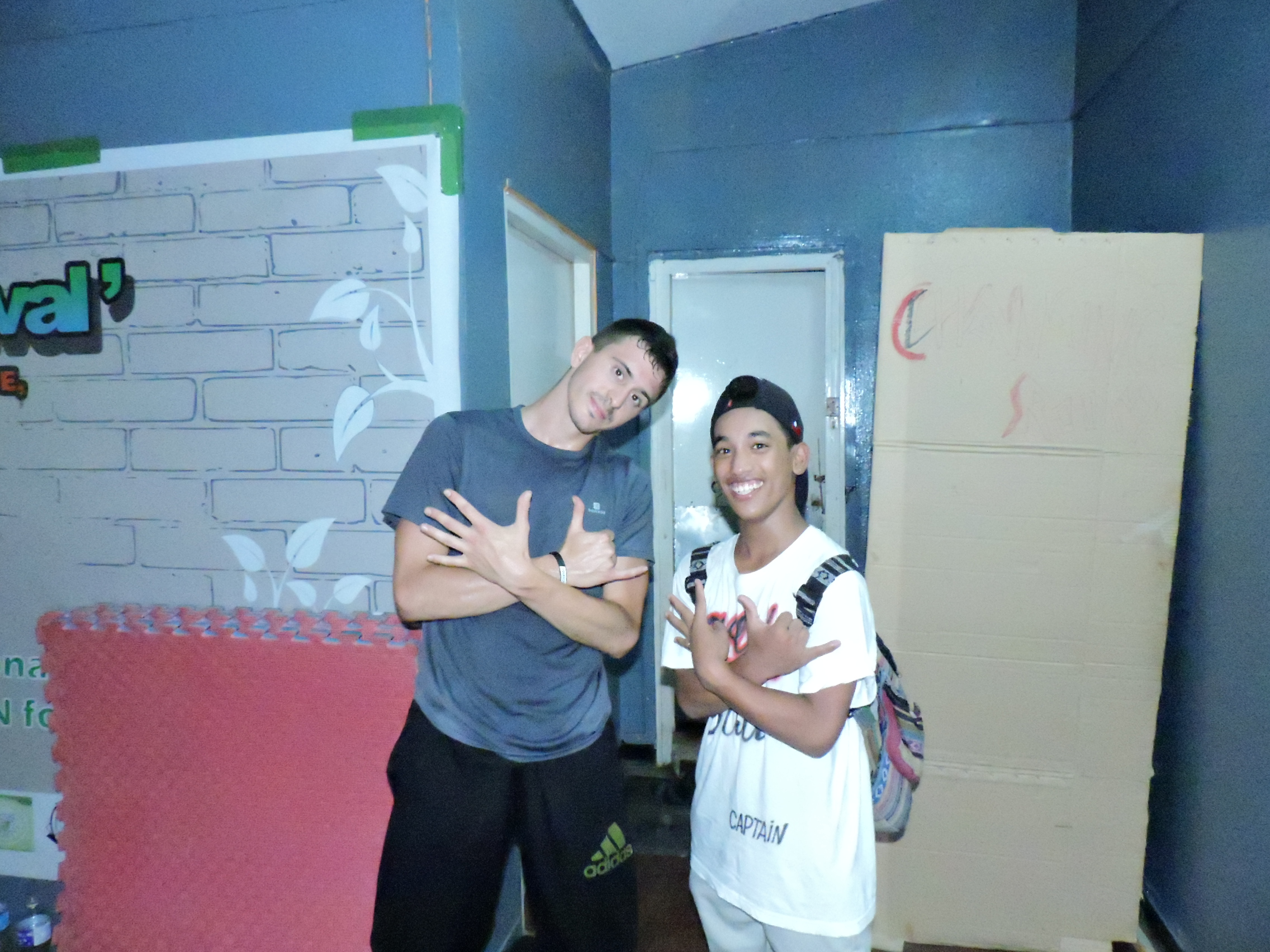
friends

friends beyond borders

positive leaders

positive leaders

It gives them role models

DSCN2166

their motto: say no to drugs and violence

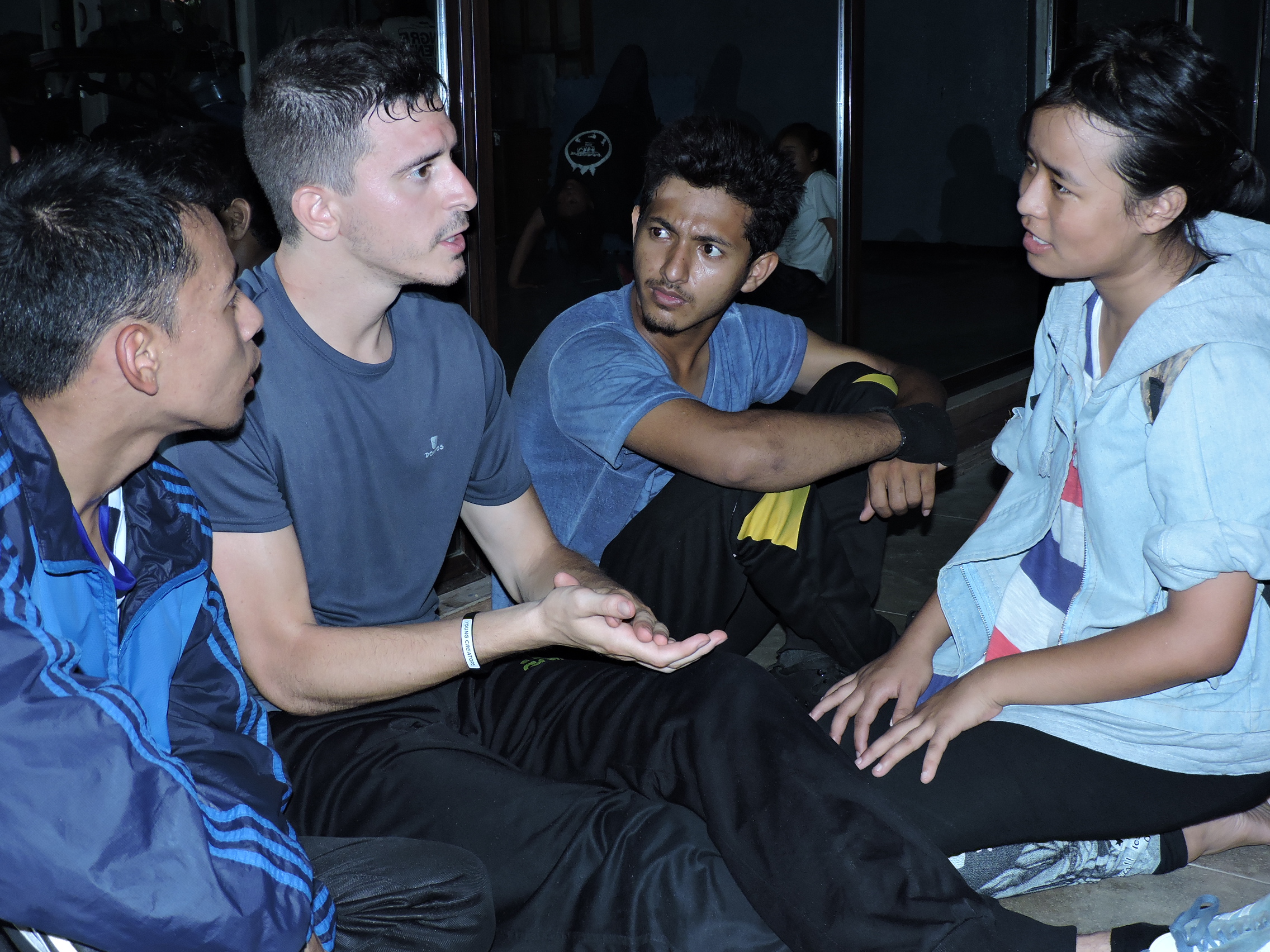
They find someone they are willing to listen to and who listens to them

DSCN2152

advice and encouragement 

And Nepalese b-boys and b-girls have plans for the future: they want to work for the benefit of their community. They feel lucky because they have found something that they enjoy and that helps them grow up to become self-confident, successful adults. Now they want to share their passion and their experience with other youngsters. They want to go out and teach street kids to dance, they want them to have fun and to have something meaningful to do. This way the breakdancers hope to help them stay away from drugs and other bad influences.

We wish them luck!

 Contacts:

Everest Crew: facebook Everest Crew

Telephone number: organiser Arbin Thapa +977 9849197554

For more info or to get in touch:

http://l.facebook.com/l/IAQGIrBjGAQGr7h9NIuOn_2zDGoQpwxc5RvIK_t4GkyDWew/www.wedowe.org
twitter @CriBoscheri

facebook: breakingandimpact: https://www.facebook.com/groups/breakingandimpact/?fref=ts