Archive | December, 2024

Nagas and Wats

22 Dec

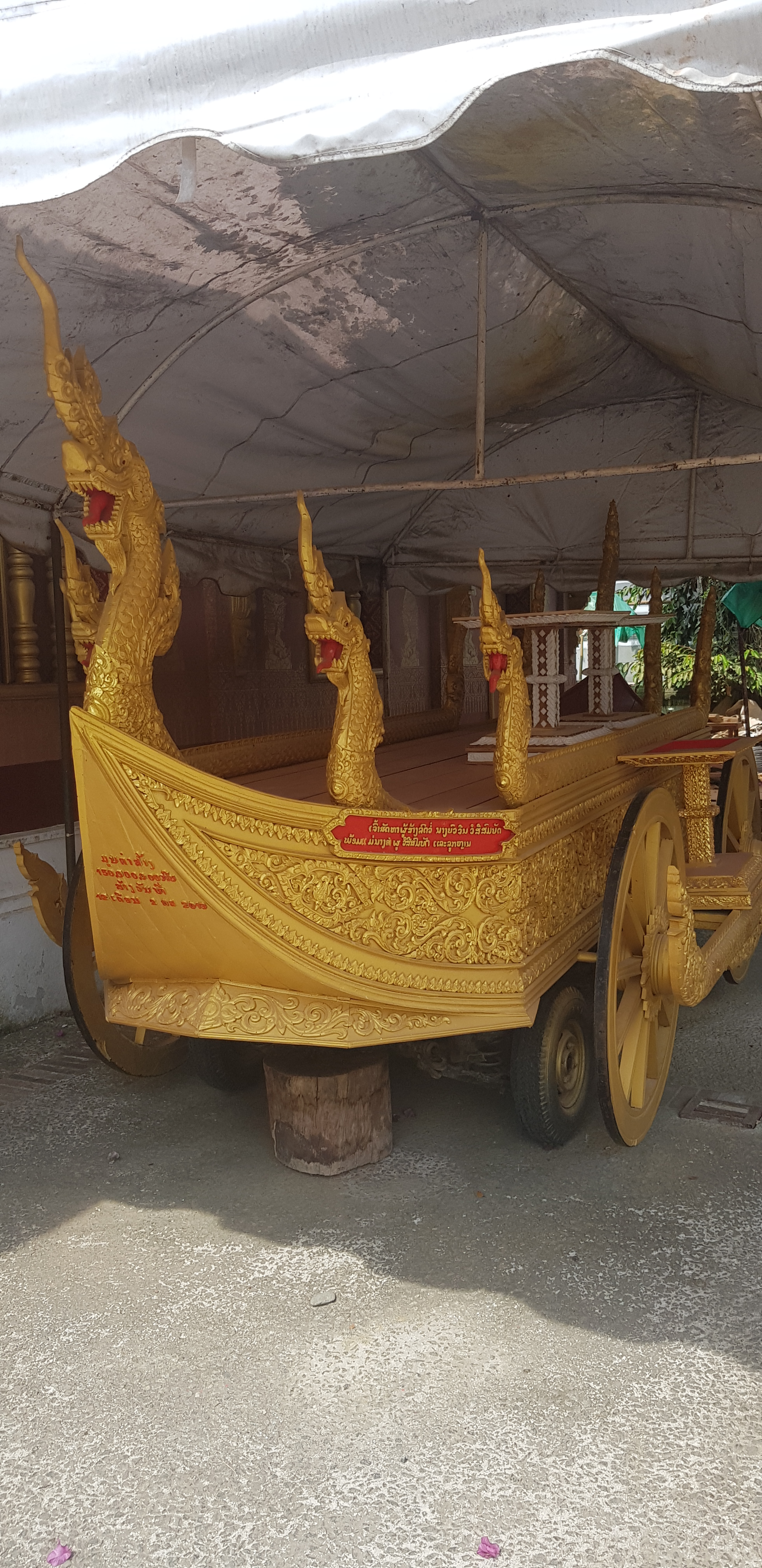
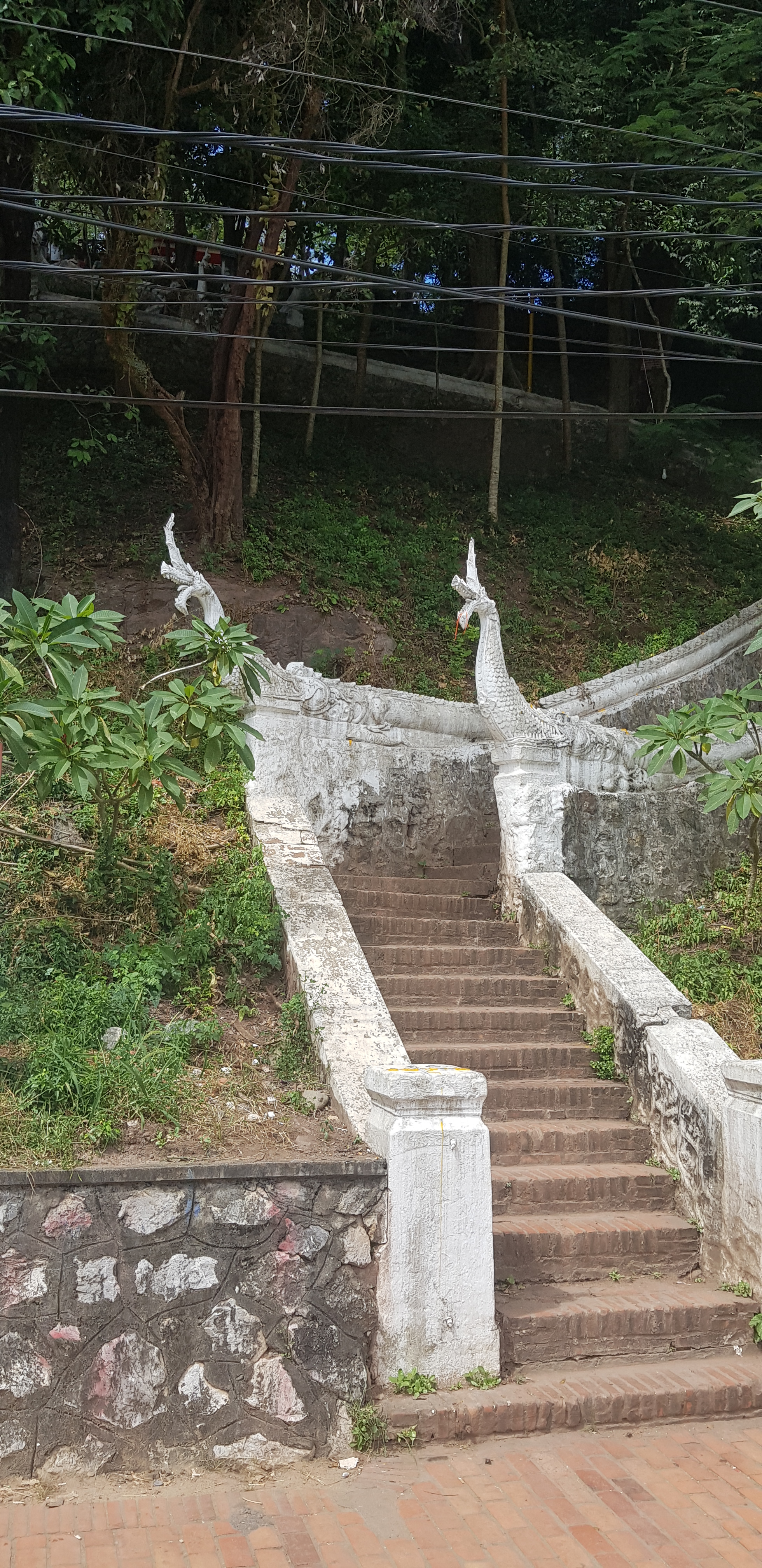
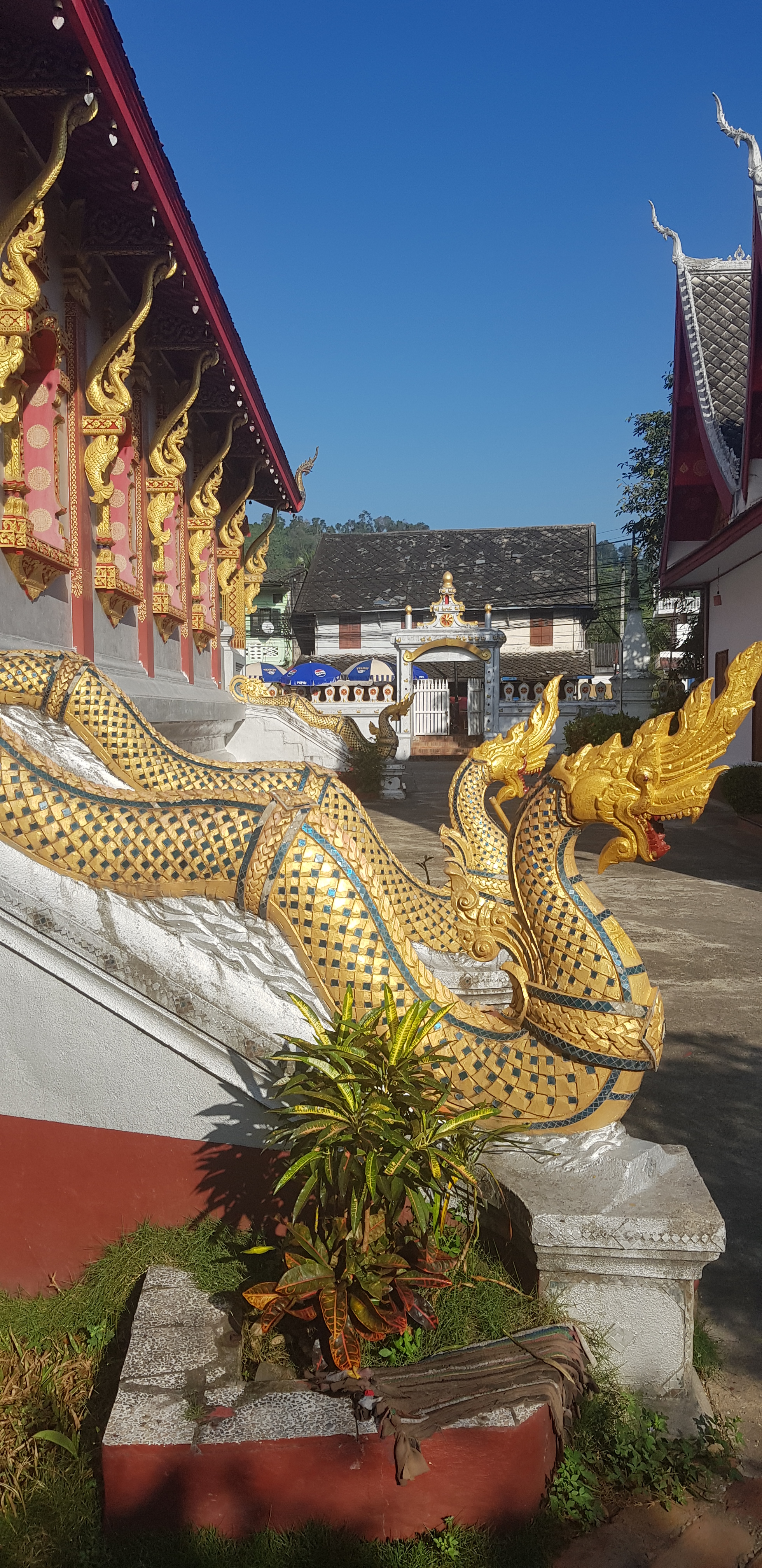
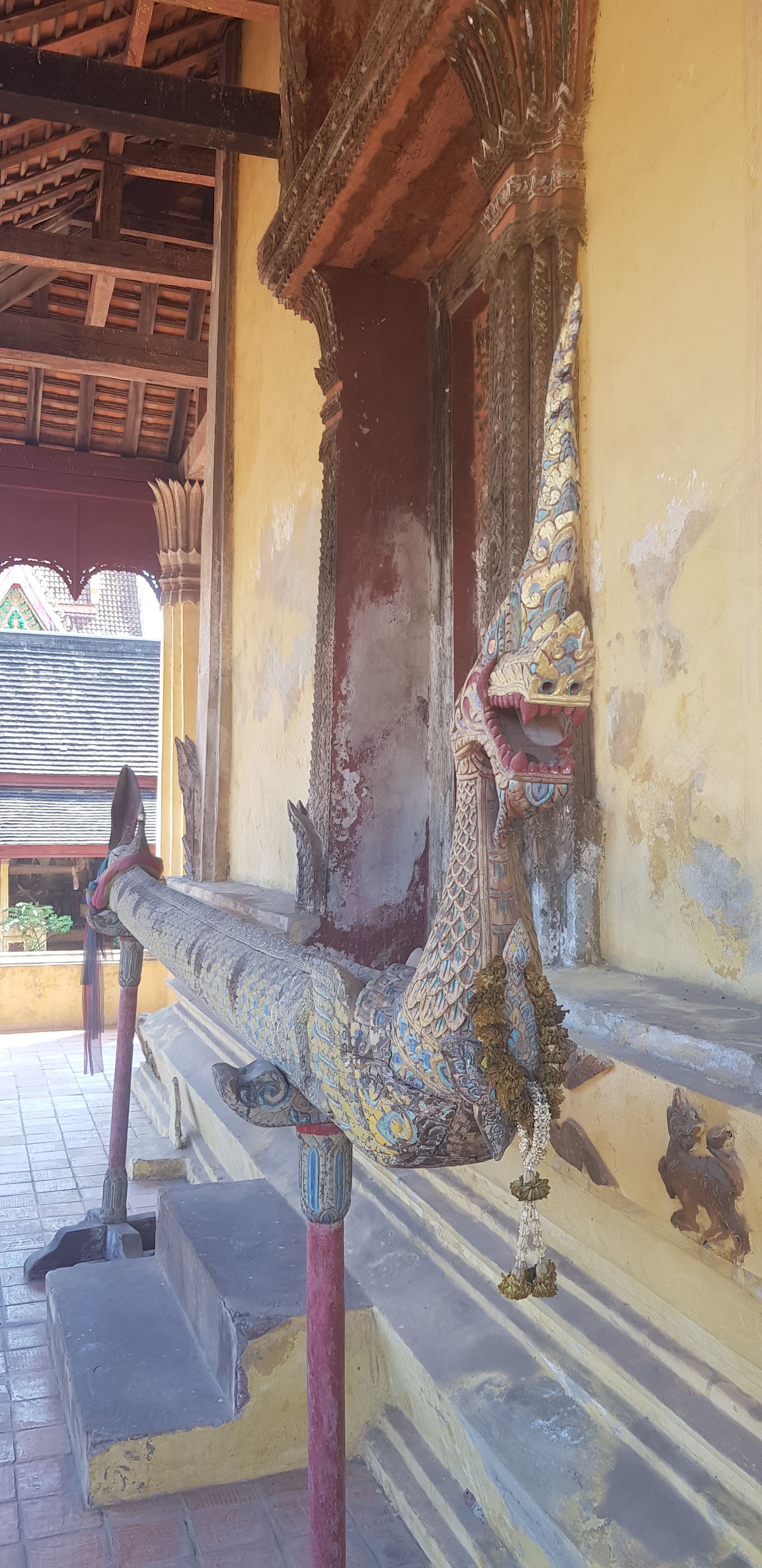
Last year it was the Tiki, this year I fell in love with the Nagas, these mythical, elegant looking snake-like creatures with their fearsome pointed teeth that live in rivers and ponds and offer protection to temples and humans.
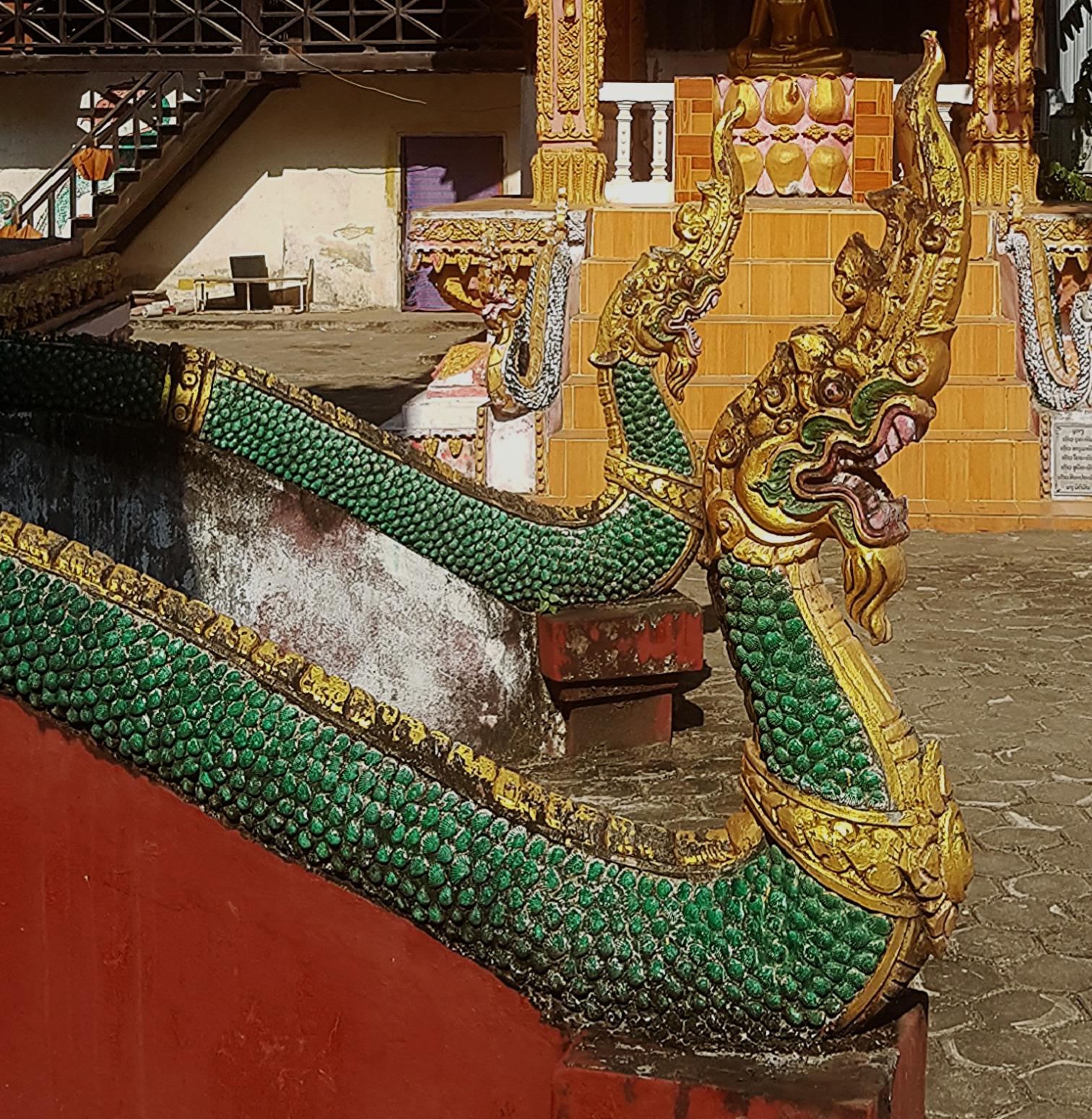
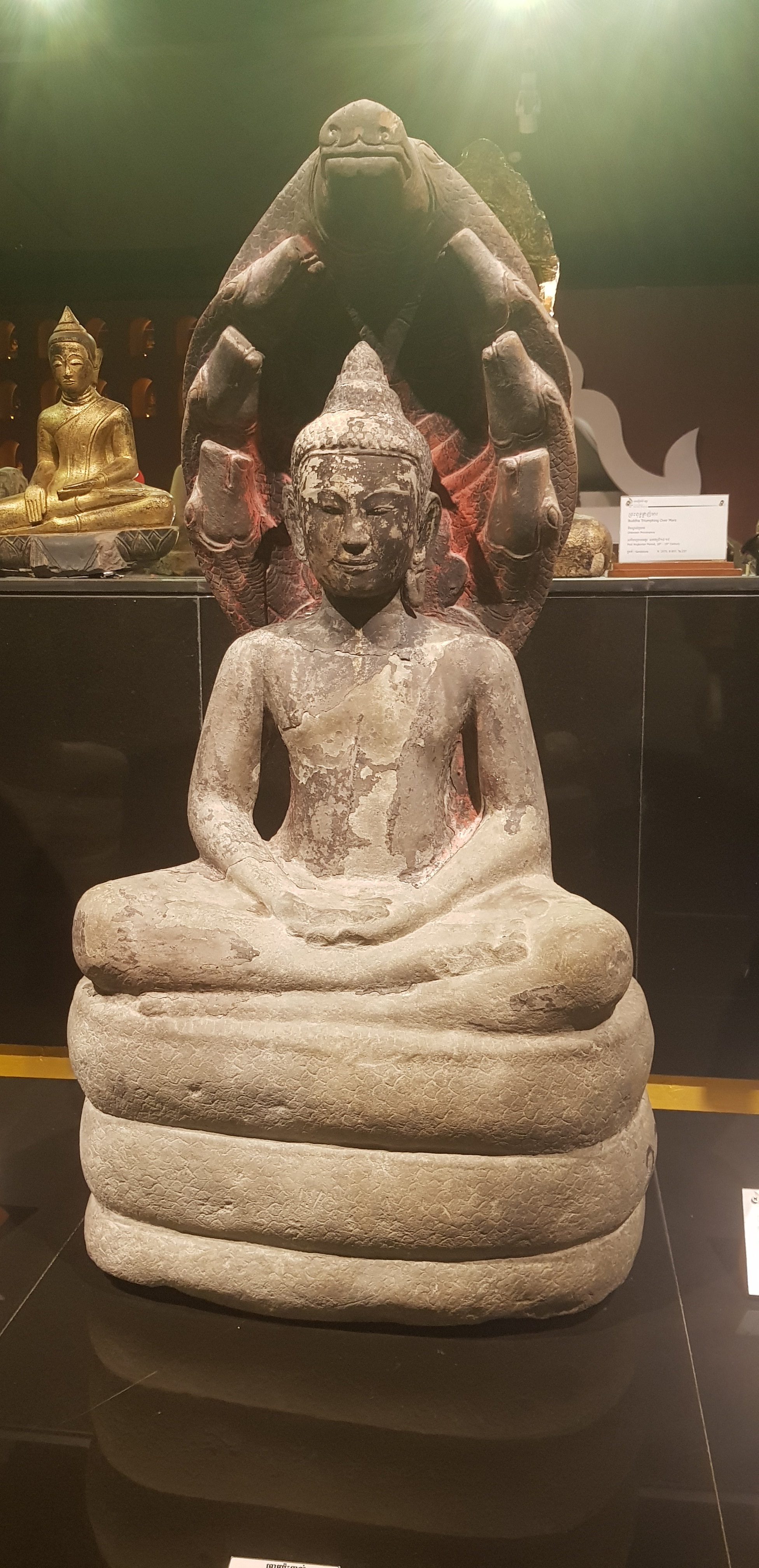
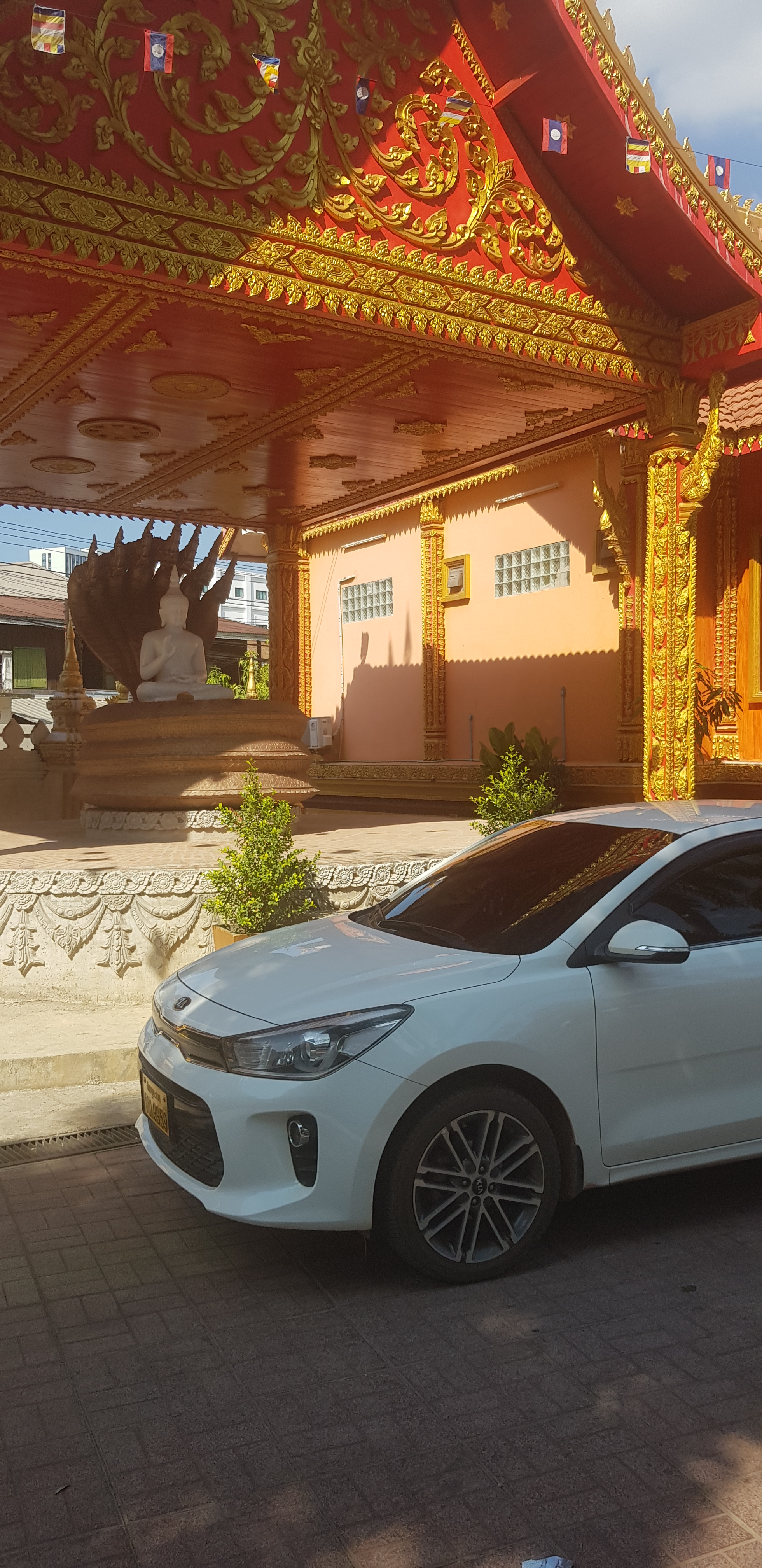
They are benevolent and do good, not like the sneaky, treacherous, apple-stealing reptile we know from Genesis. The nagas deserve worship. Take, for example, the Buddha: He sits absorbed in meditation, it starts to rain, in no time he would sit in a mudpuddle, if it weren’t for the naga that curls up underneath him and unfolds his 7 heads like an umbrella over the Buddha’s head.
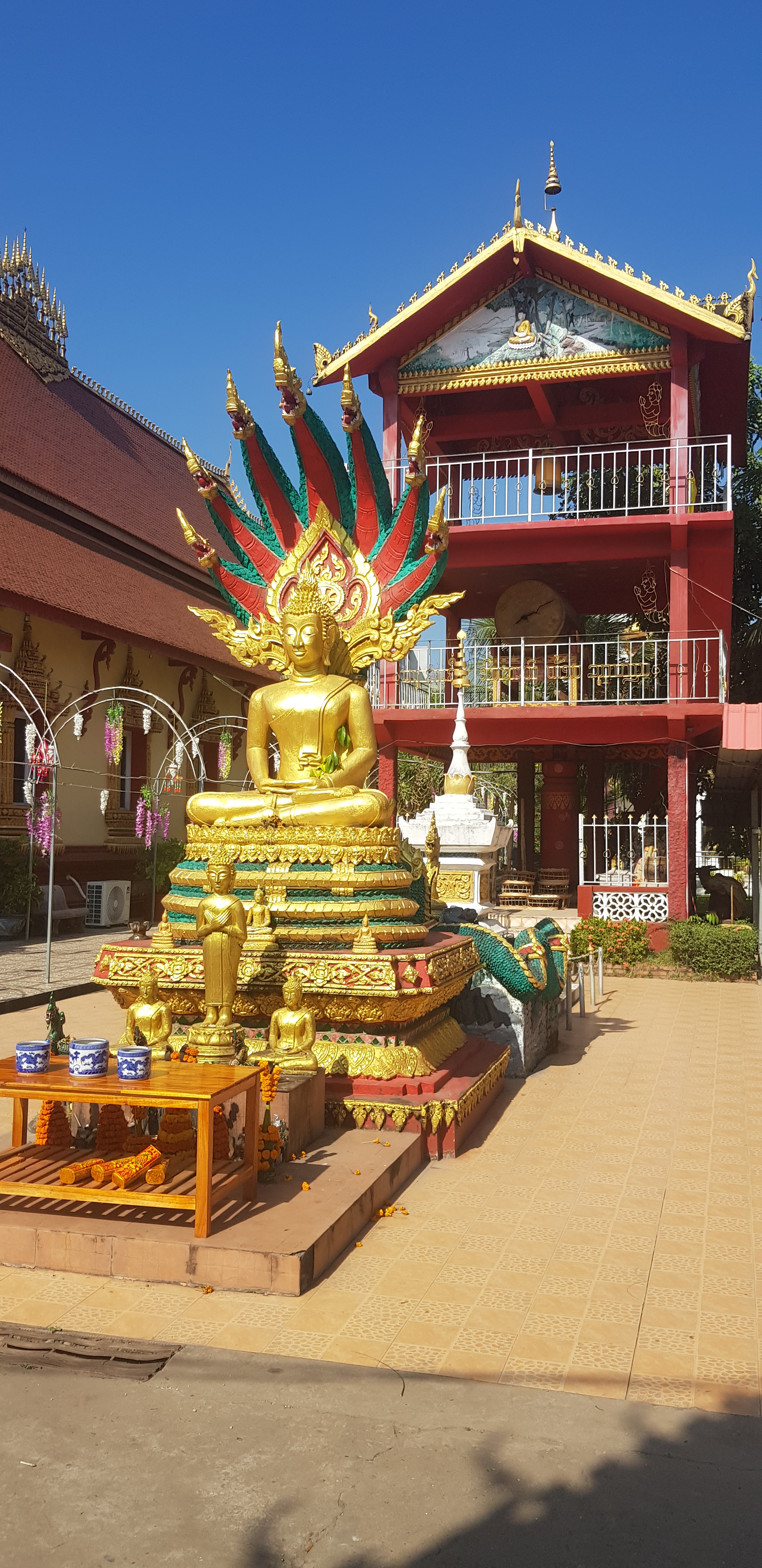
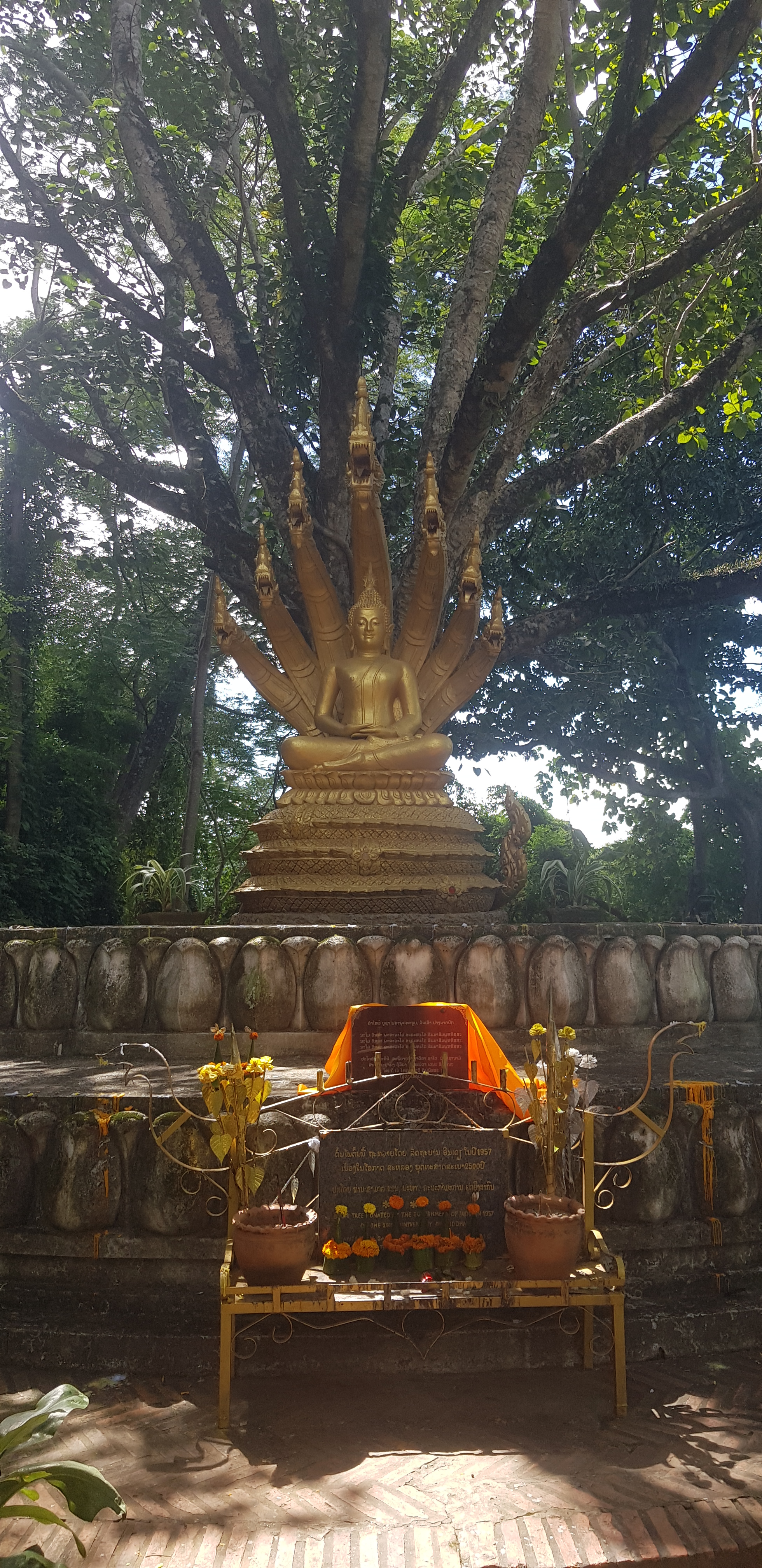
A traditional storyteller in Luang Prabang might tell you the legend of a poor weaver girl becoming a princess by getting married to a Naga Prince.

In order to present his chosen sweetheart to his parents in the underwater kingdom, the Naga prince disguised himself as a chicken, stole the weaver girl’s shuttle so that she had to follow him through the water, probably the Mekong River, to his underwater home. There he turned back into a naga, proposed to the girl and his parents gave her a lotus flower as a gift for her parents. Overnight, the lotus flower turned into a diamond and the girl’s parents agreed to the marriage. From then on, the happy couple spent half a year on land and half a year in the water.
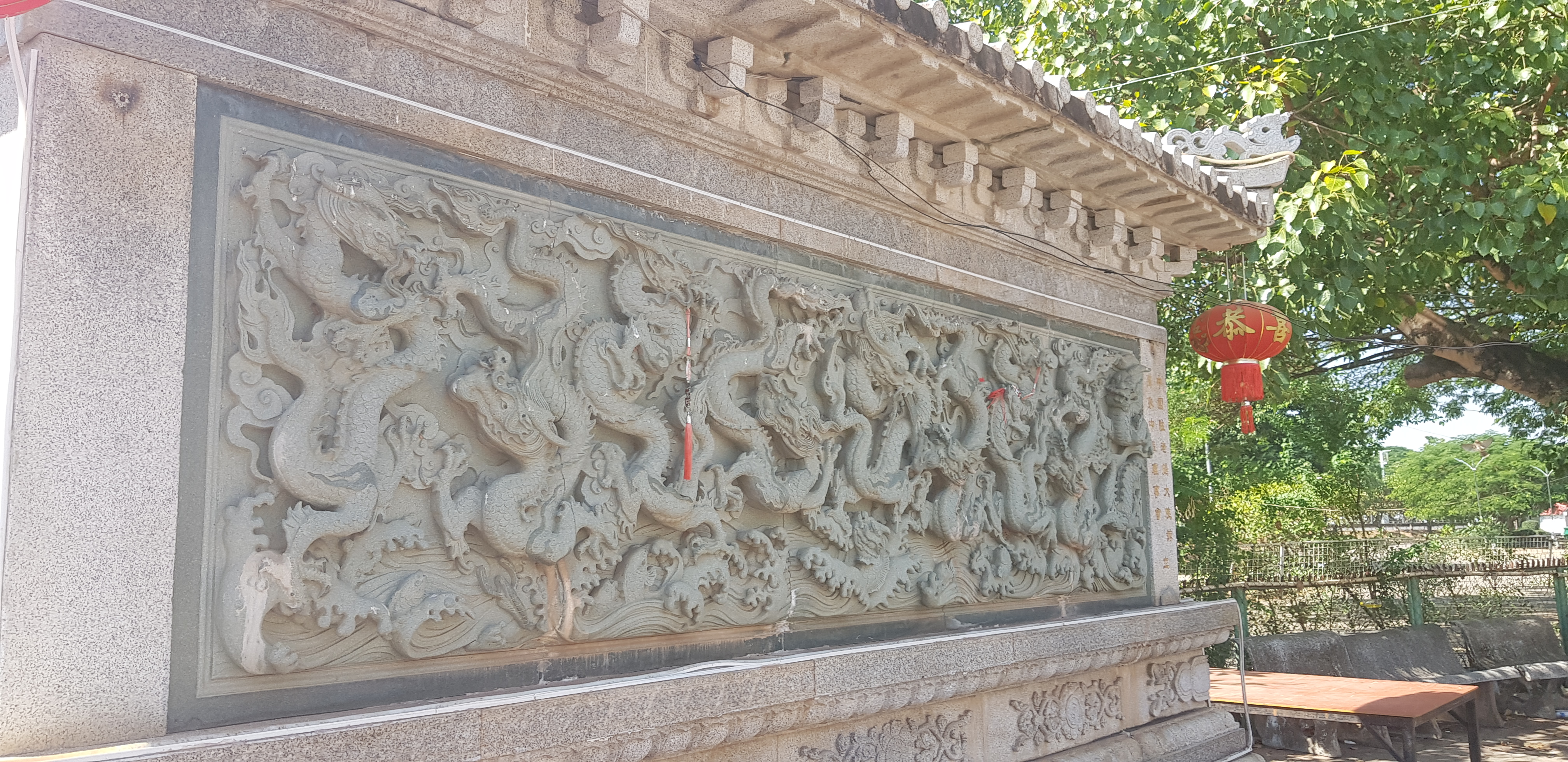
Isn’t this a much more pleasant and a much less mysogenist story than our European myths about dirtyoldman Zeus, who kept turning himself into any kind of unsuspicious animal (a swan, a cuckoo, a bull … a husband) whenever he intended to ravish (not marry!) a pretty, young lady.
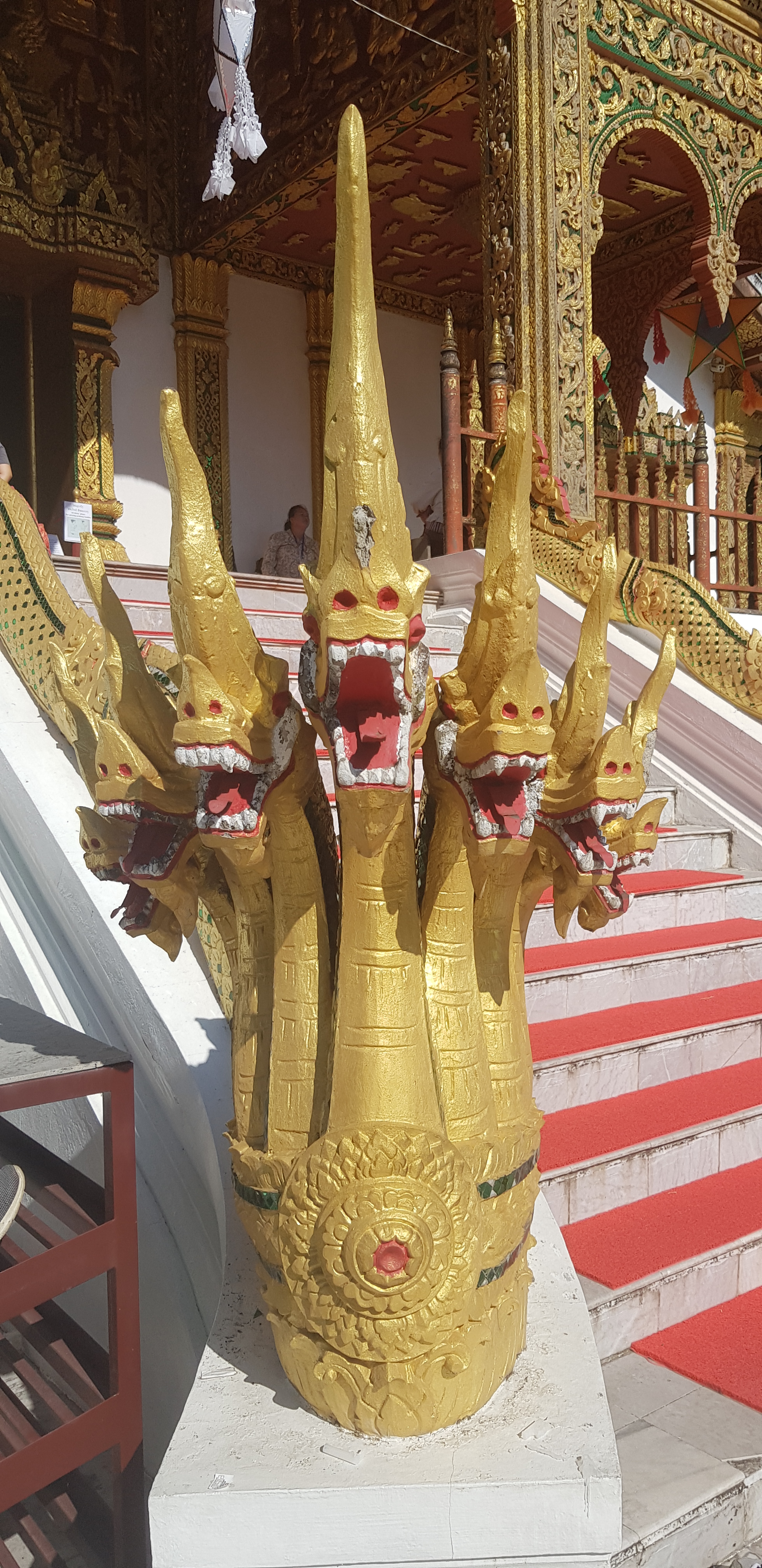
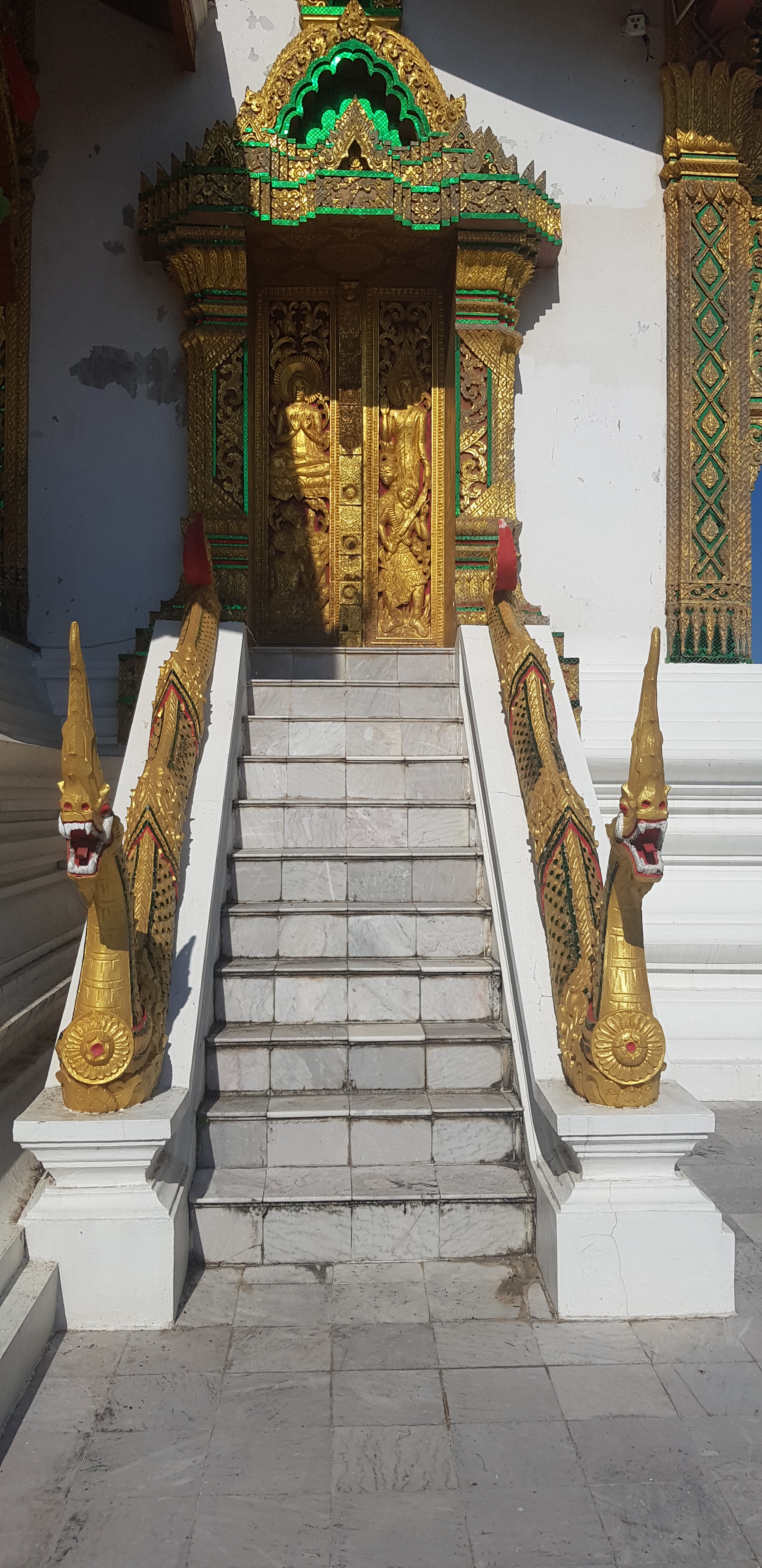
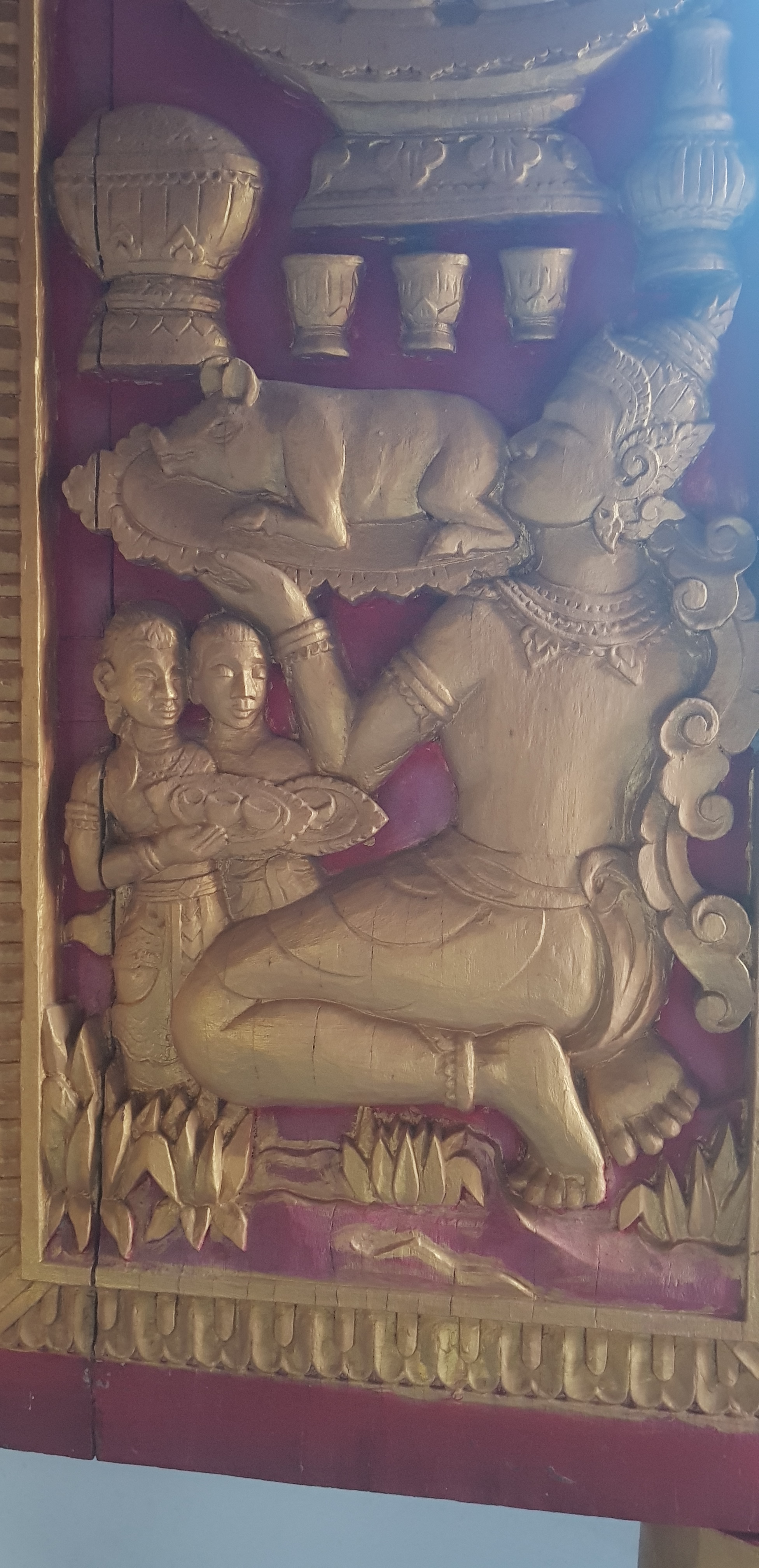
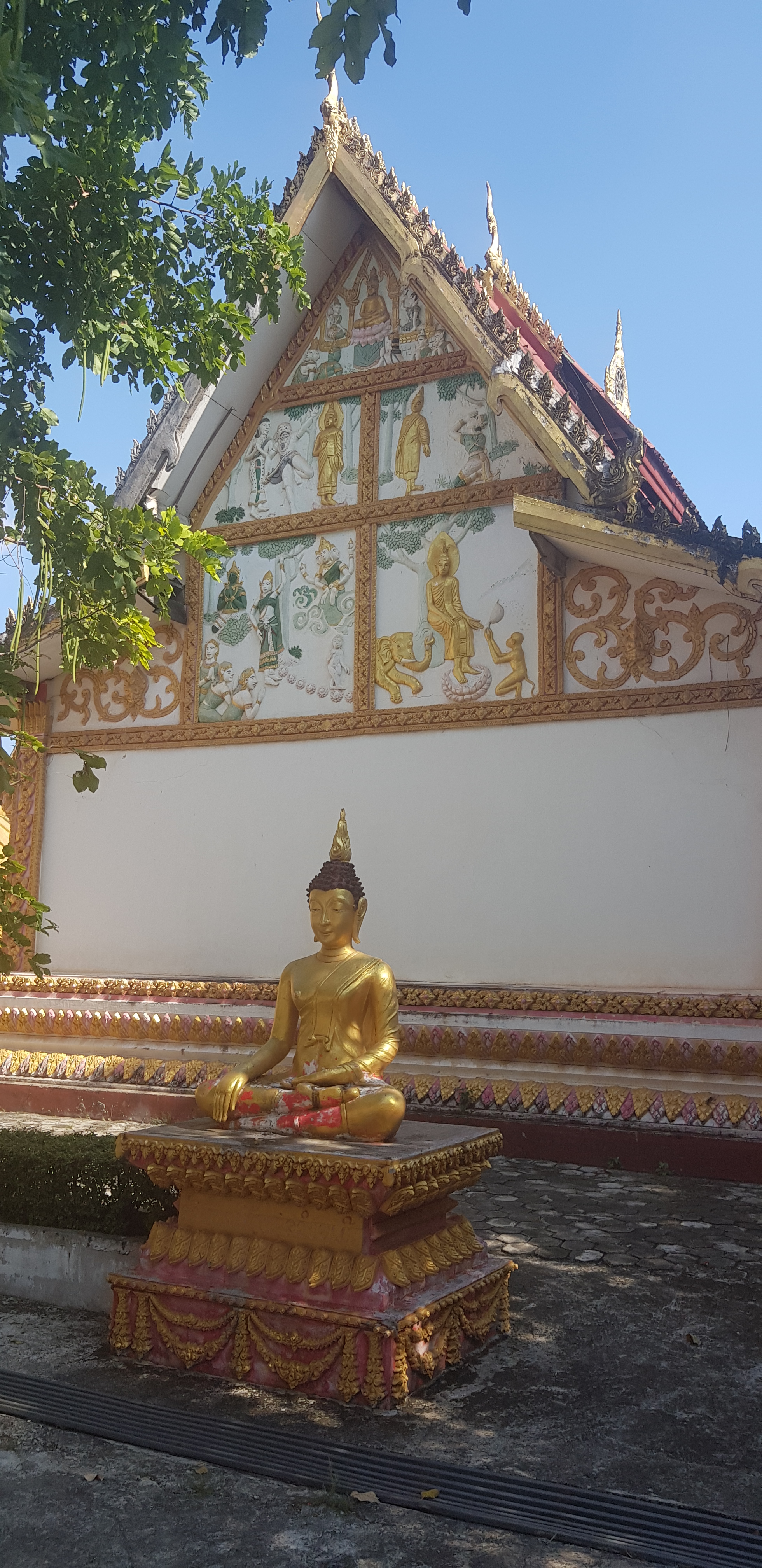
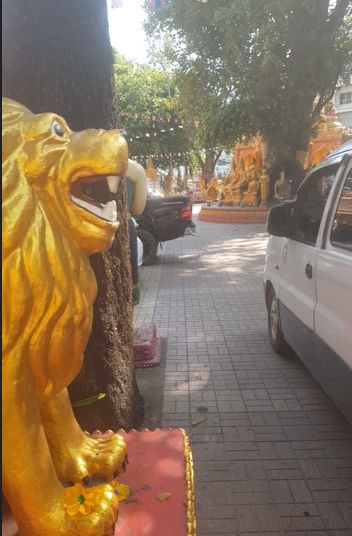
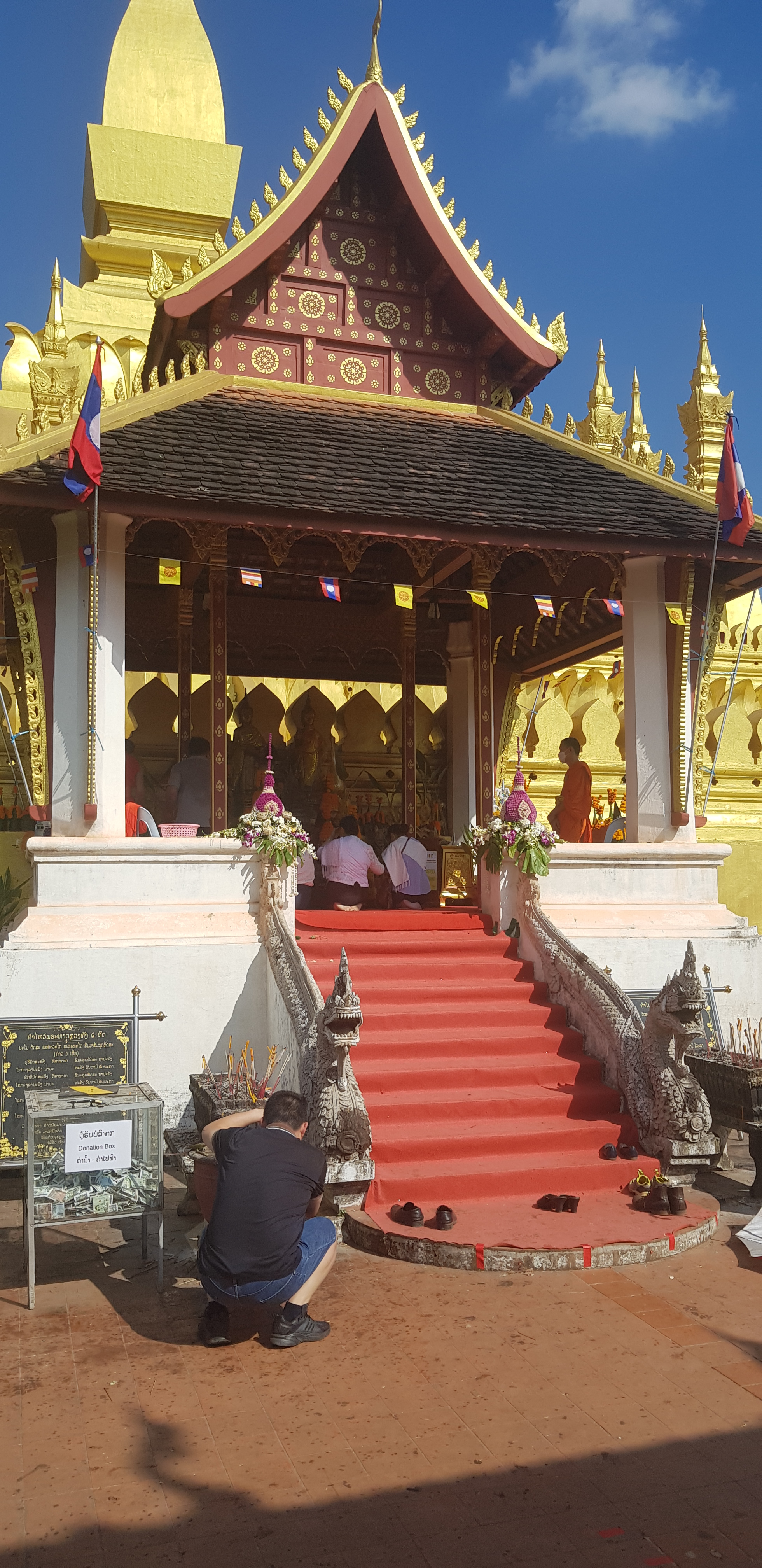
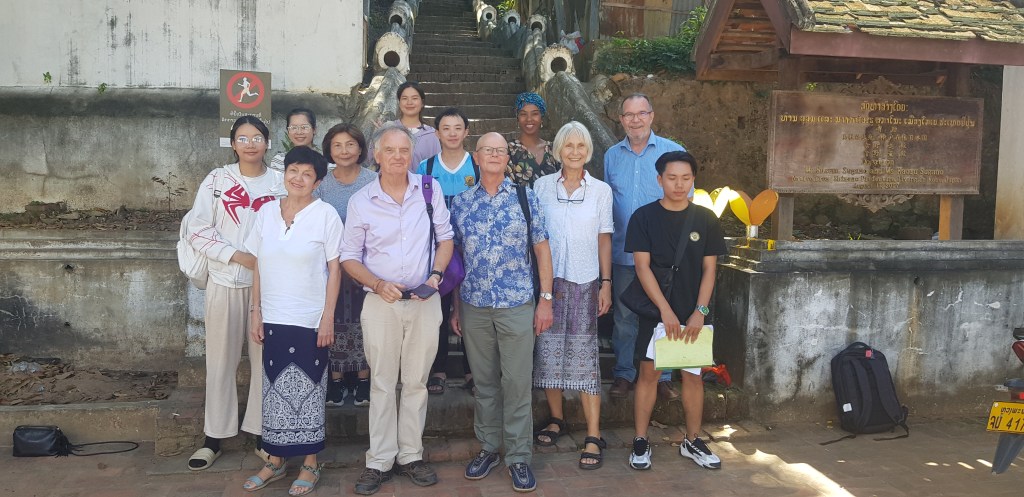
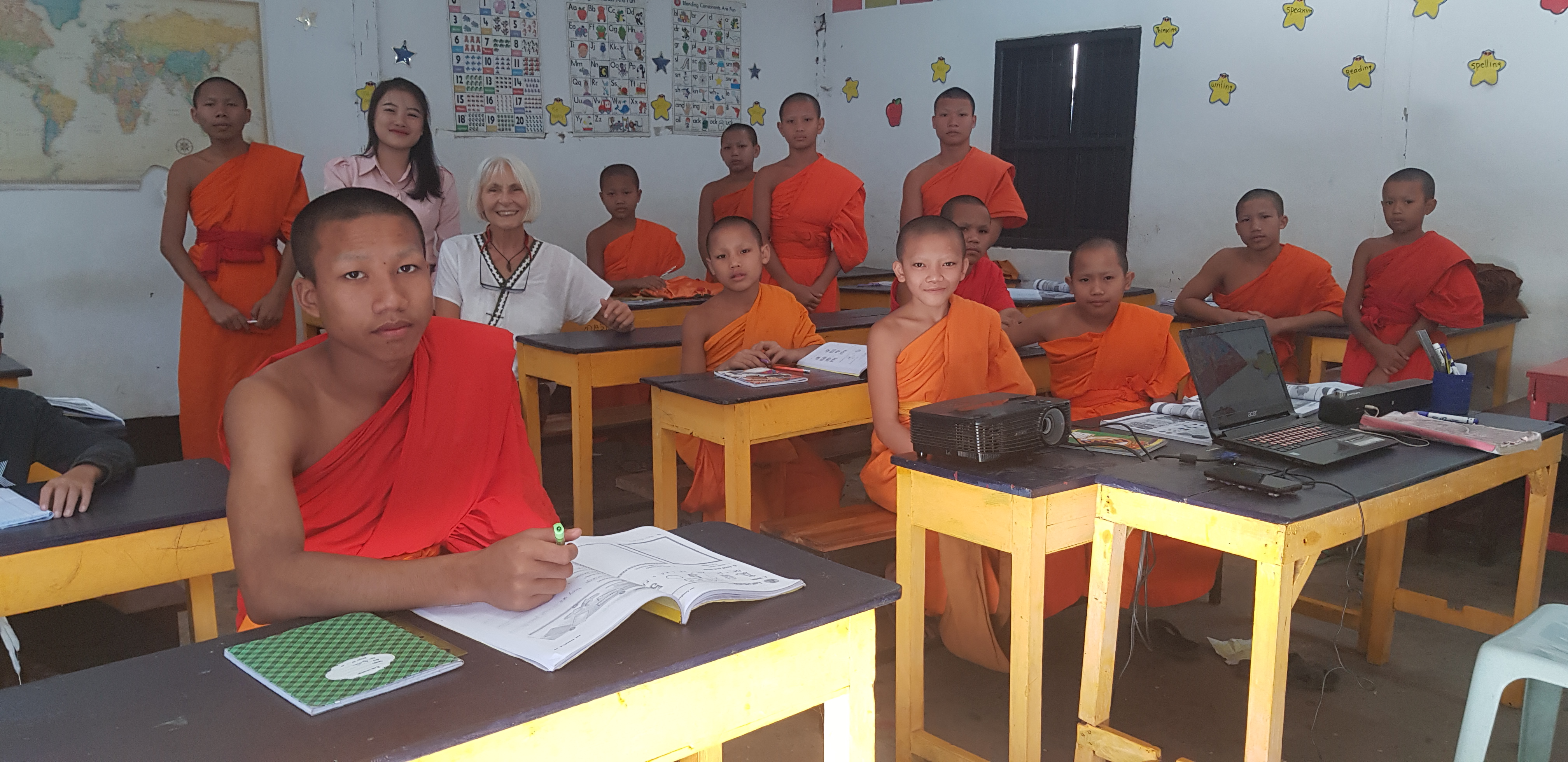
Nagas deserve to be worshipped because they are guardians of temples, of wats, their bodies run along the staircase leading to the entrance of a holy place. Wats are temple complexes, they are a bit like living quarters where Buddhist monks find all the necessary elements for their daily life made up of meditation, study, worship. There are prayer halls, ceremonial halls, stupas containing relics, a drum tower, a pond with lotus flowers, a library, dormitories and classrooms for lessons. Especially in rural areas wats offer boys whose families can’t afford school fees the possibility to get an education.
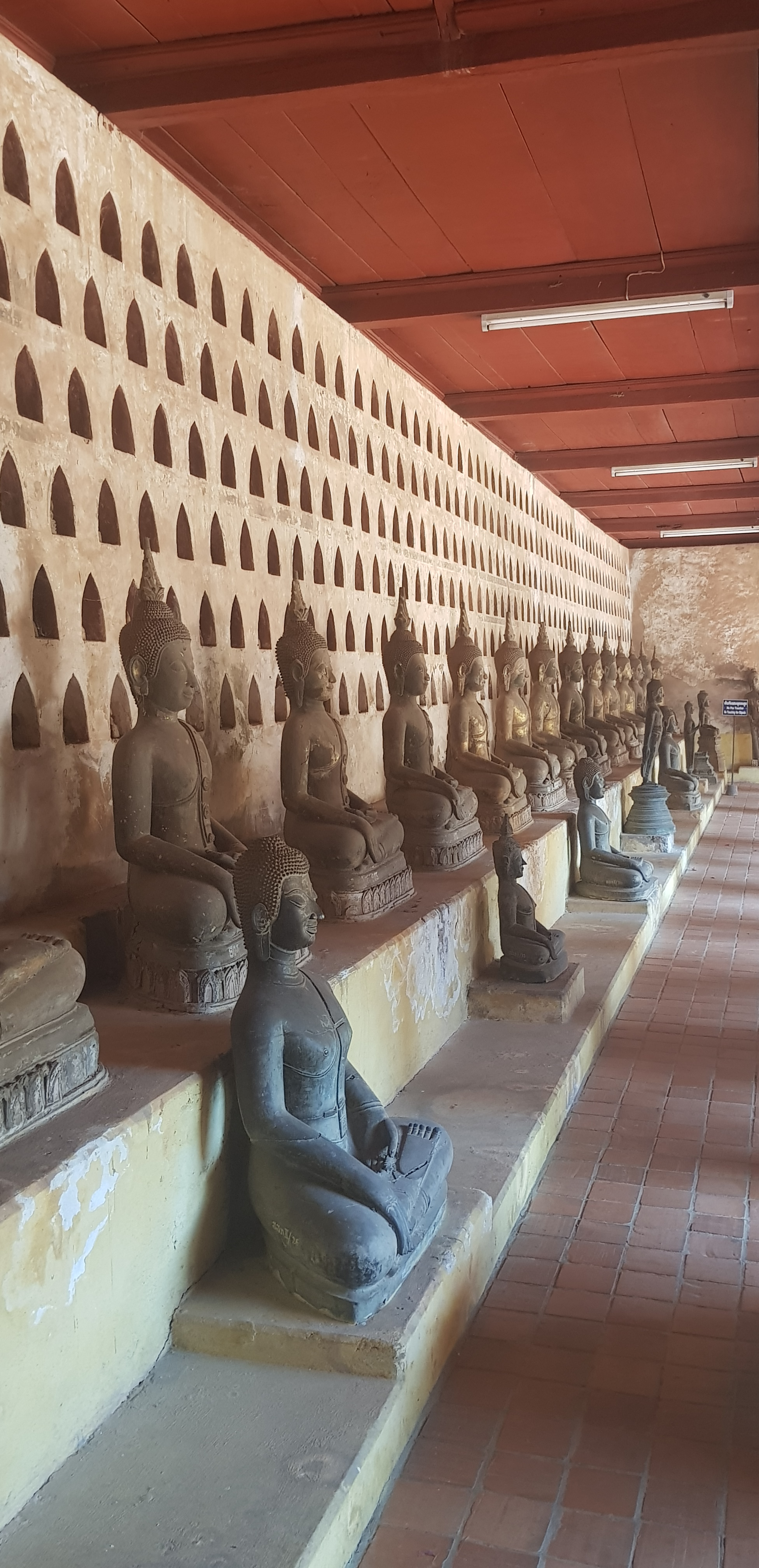
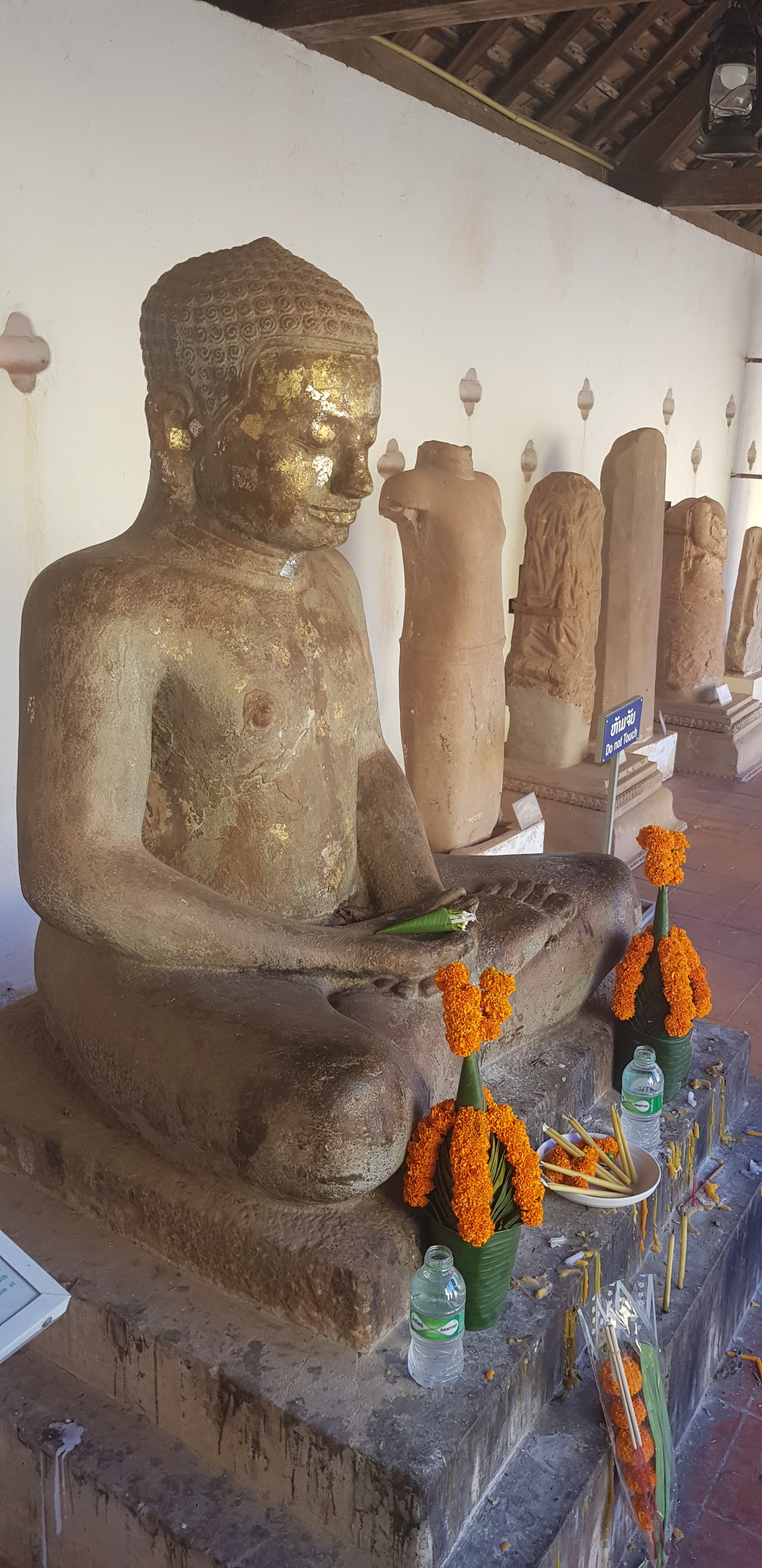
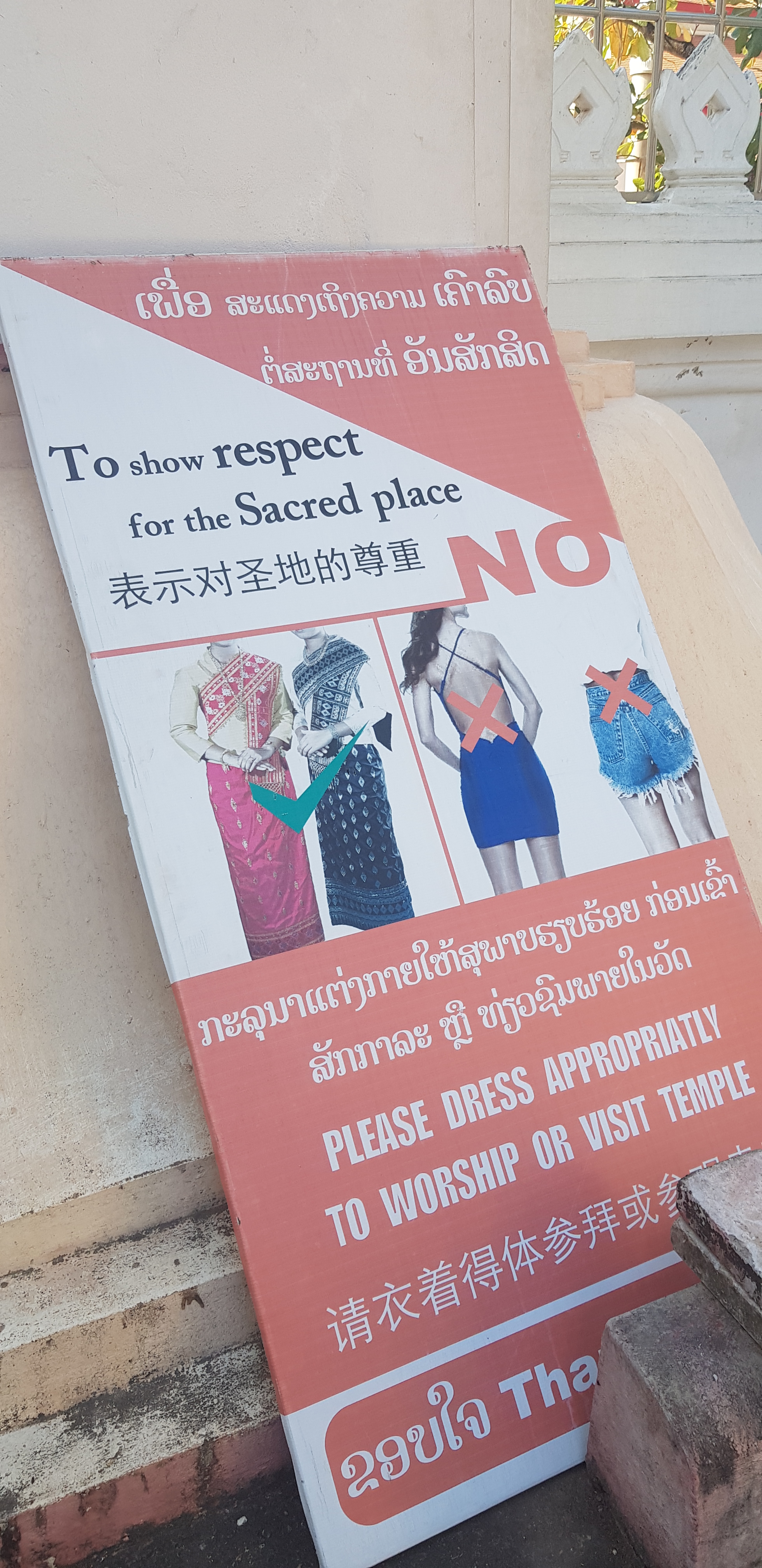
Wats have become my favourite places. You can do lots of things there: you can meditate sitting in front of a Buddha image or walking slowly along the cloister flanked by Buddha figures surrounding the temple area, you can kneel and pray, or make a donation, you can set a little bird free or you go on a foto spree that later on makes it difficult not to bore people to death with your > 2000 pictures. Dress as if you were going to the Vatican (not like going to the beach or the gym).
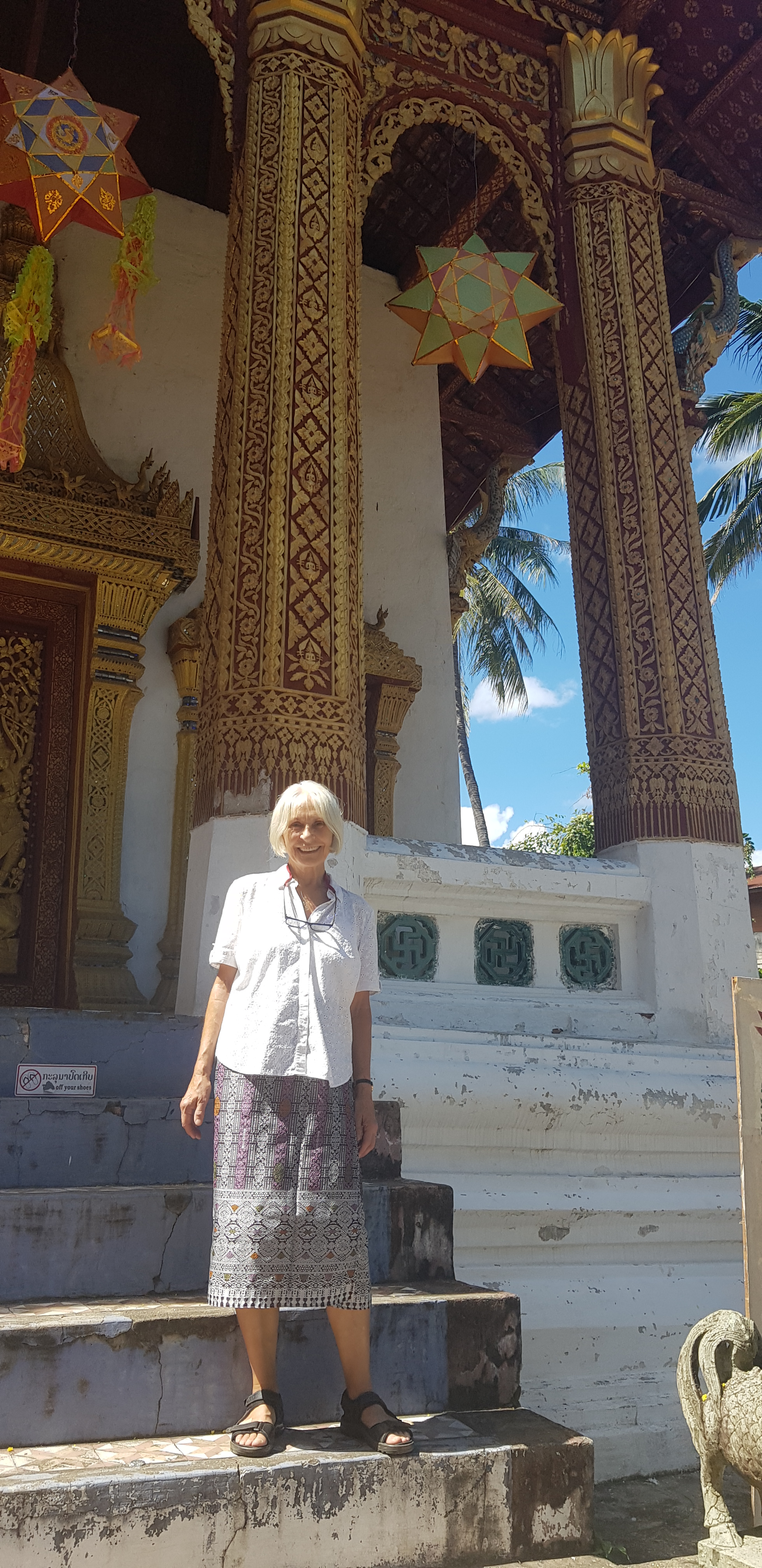
One of my favourite wats was Wat Pa Phon Phao, on a hill in the forest, not far from where I lived.
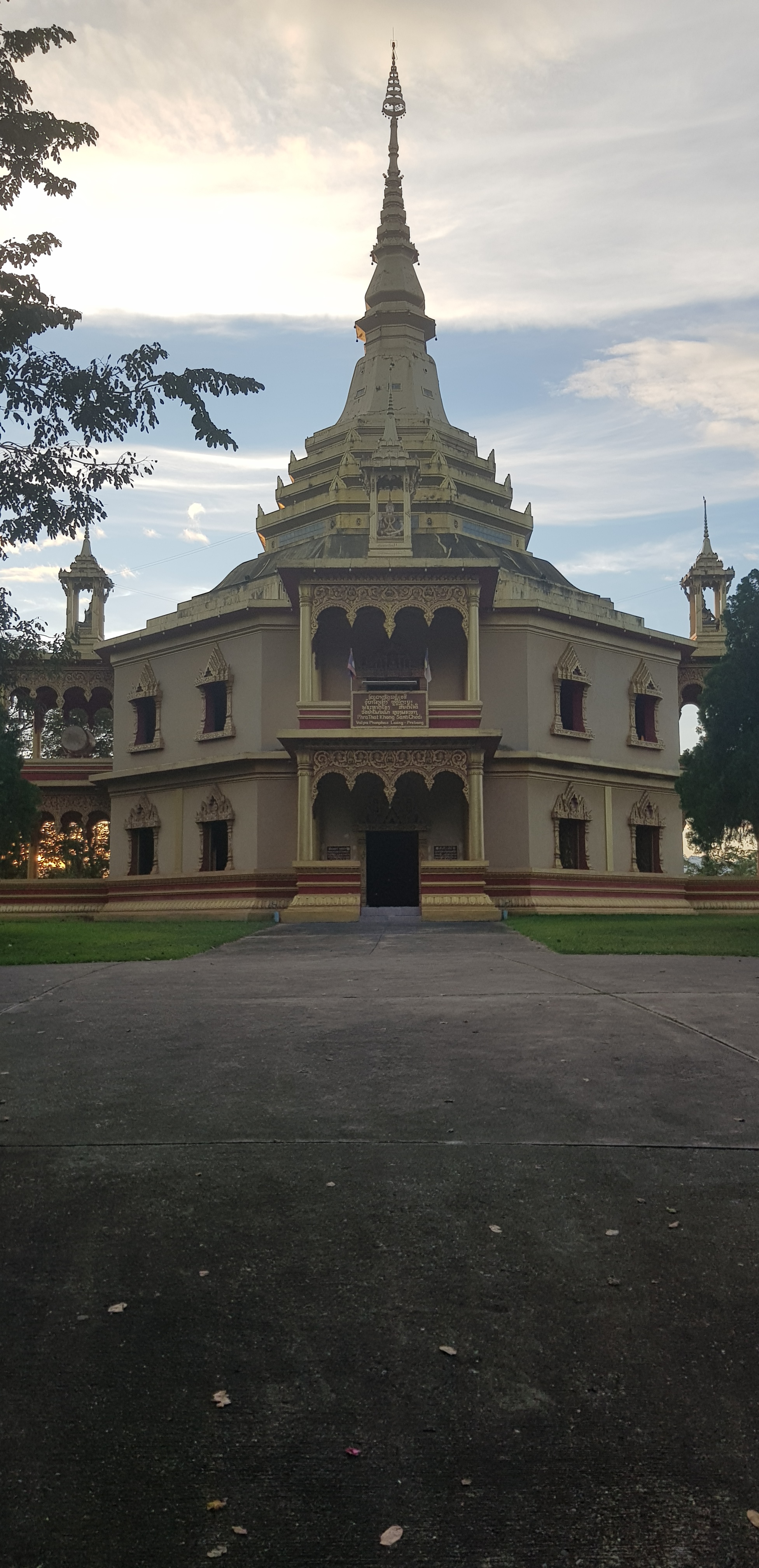
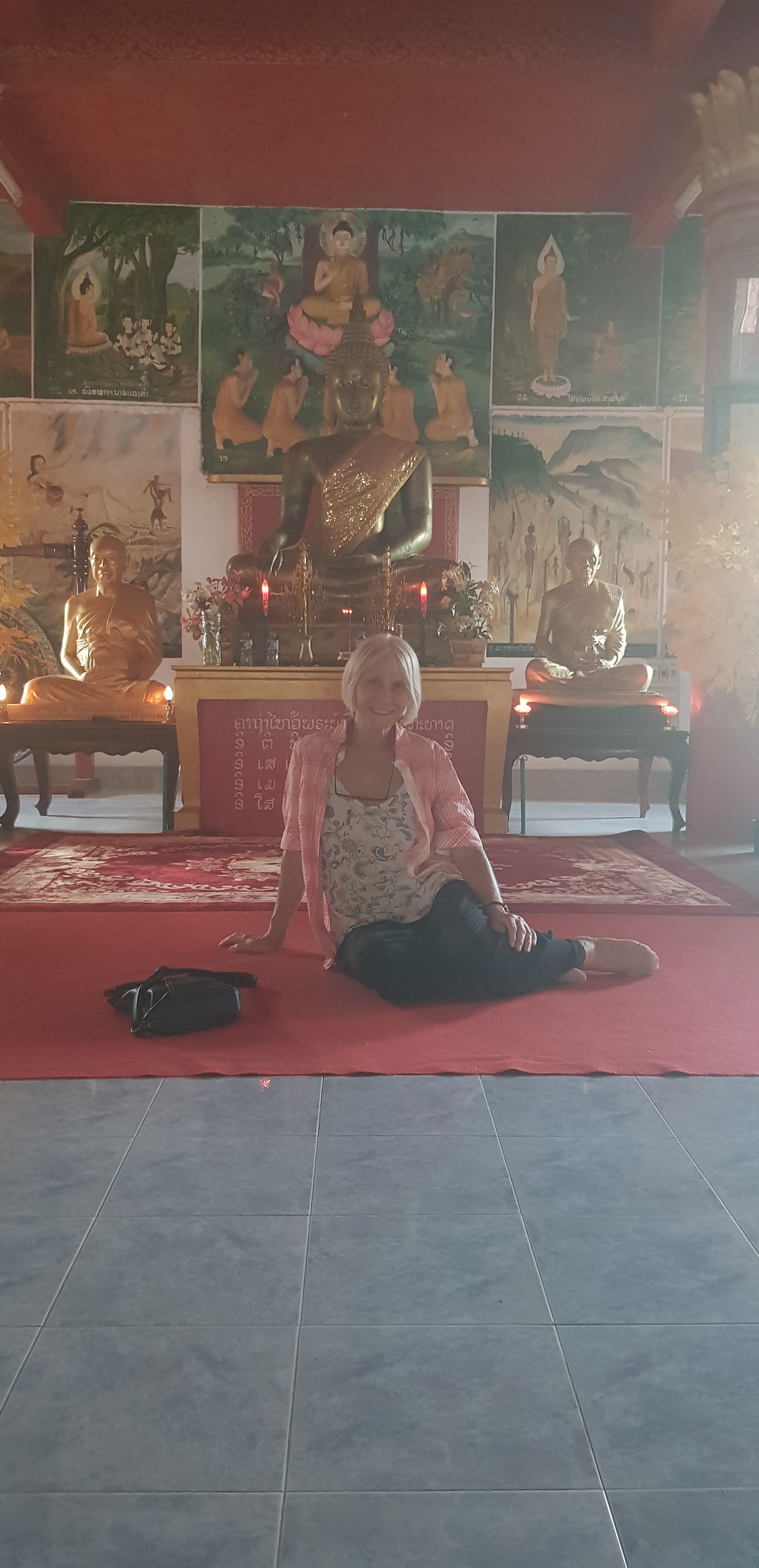
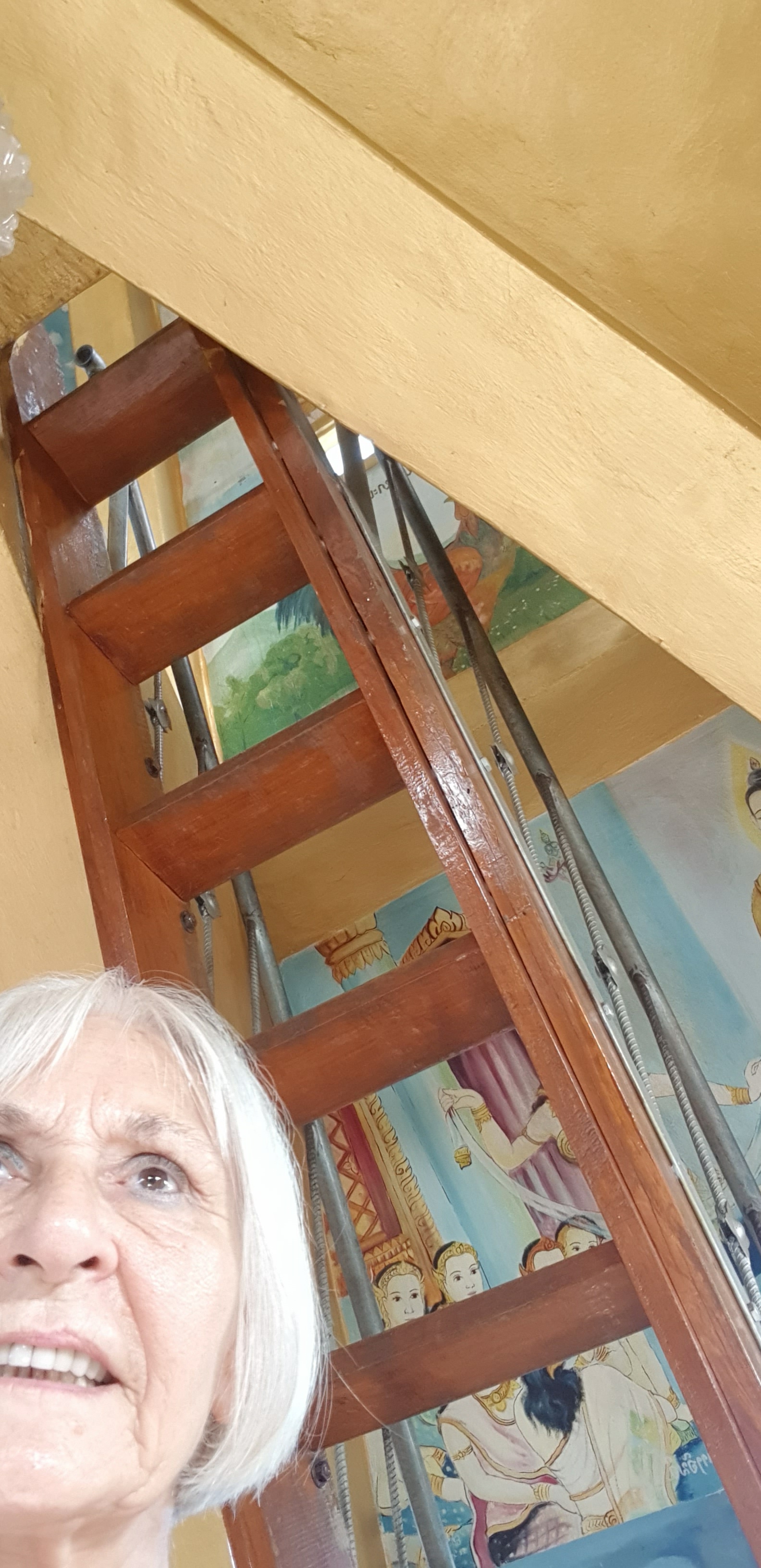
The most silent place, no other visitors, a five-storey temple that waited to be explored. One day I went all the way up to the top over the last 90 degrees steep staircase (more like a ladder) not considering that I would have to climb down again.

Some wats are true oases of silence

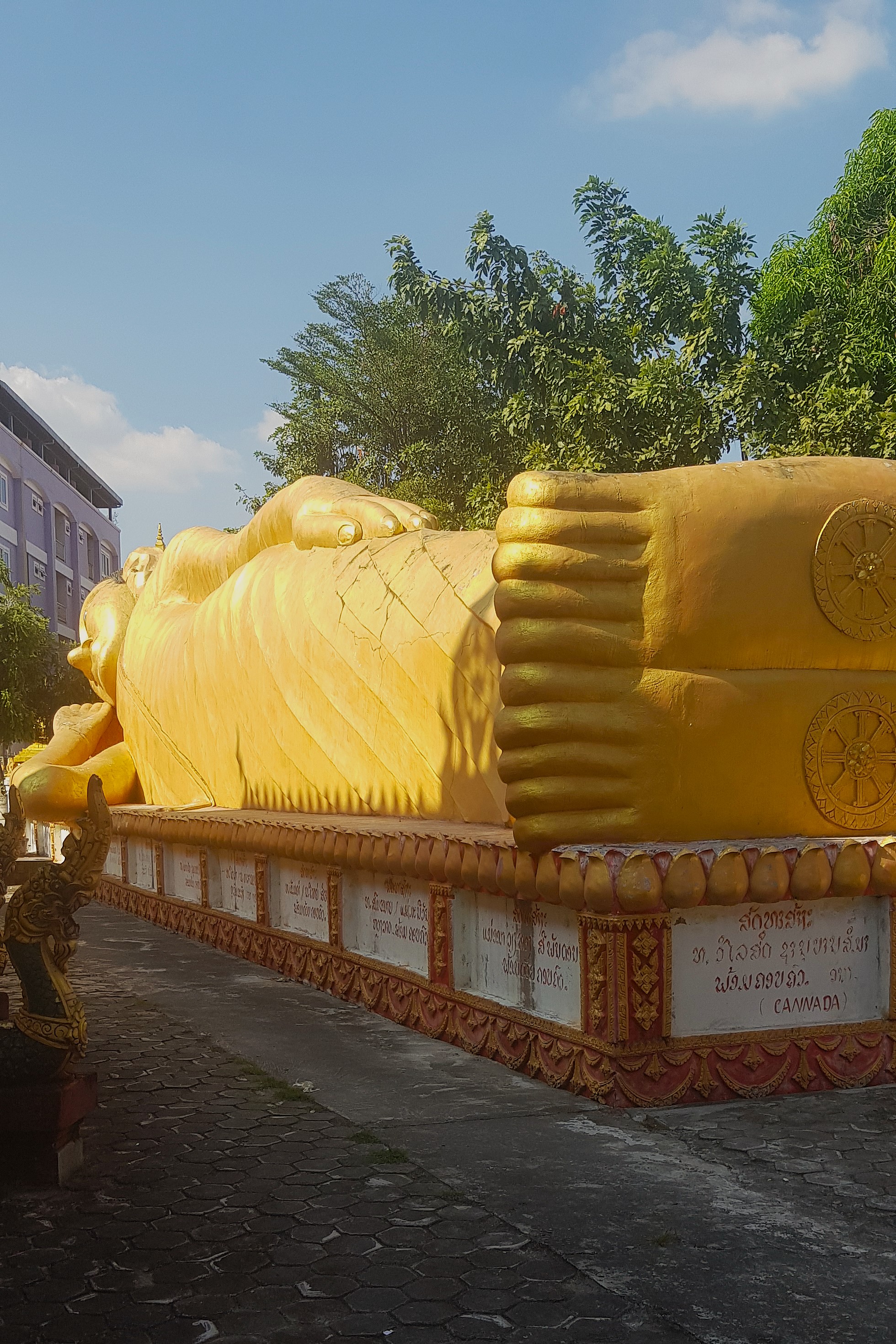
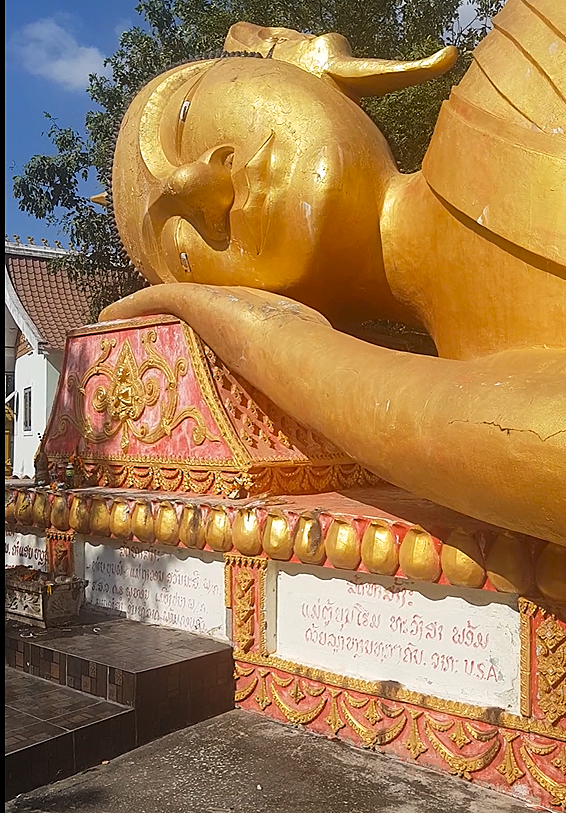
Wat Pha that Luang Neua in Vientiane with the looooong reclining Buddha was such a silent wat apart from the crowing of a rooster, no tourists, no worshippers, just me taking a rest (like the Buddha below).
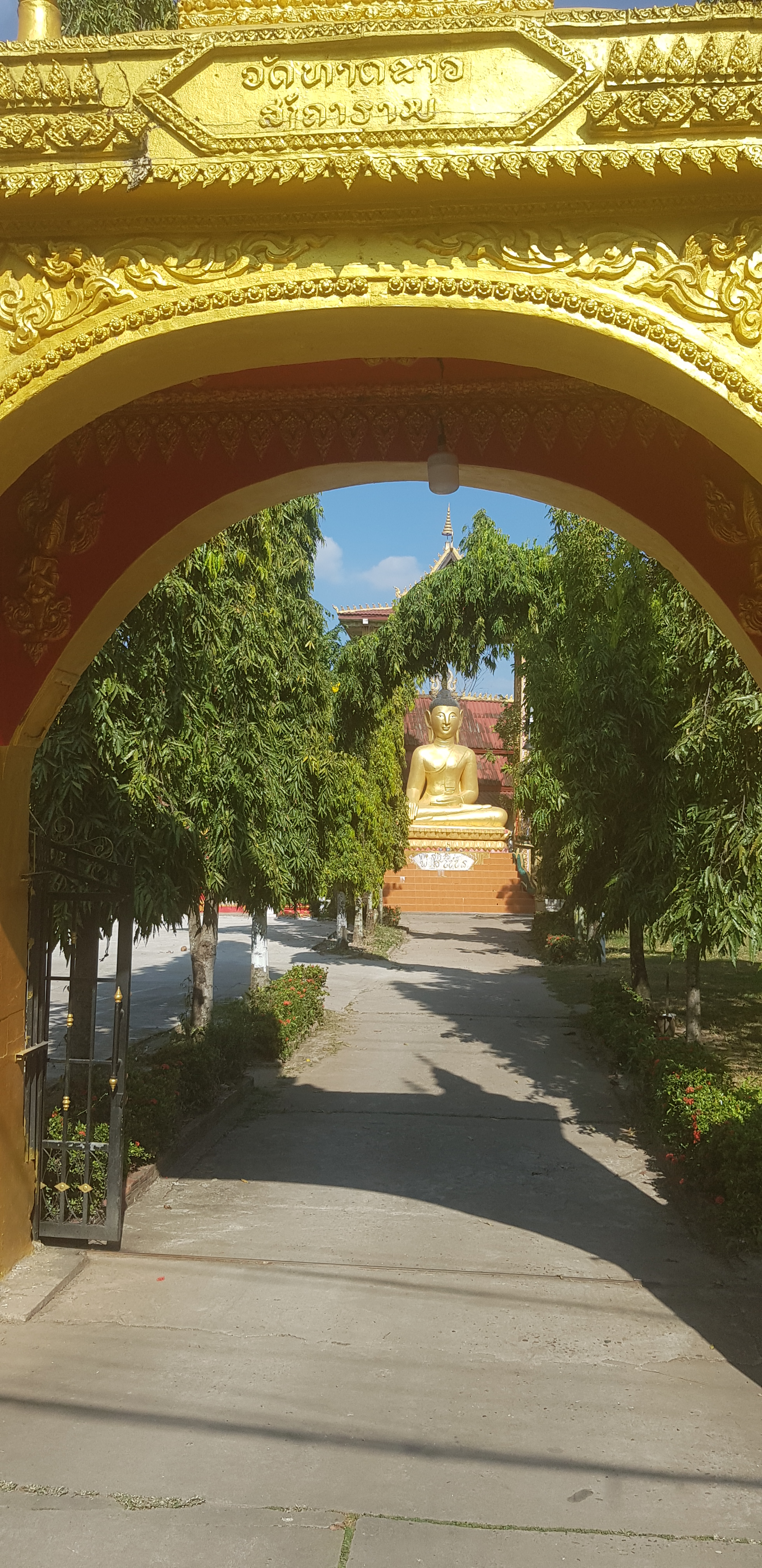
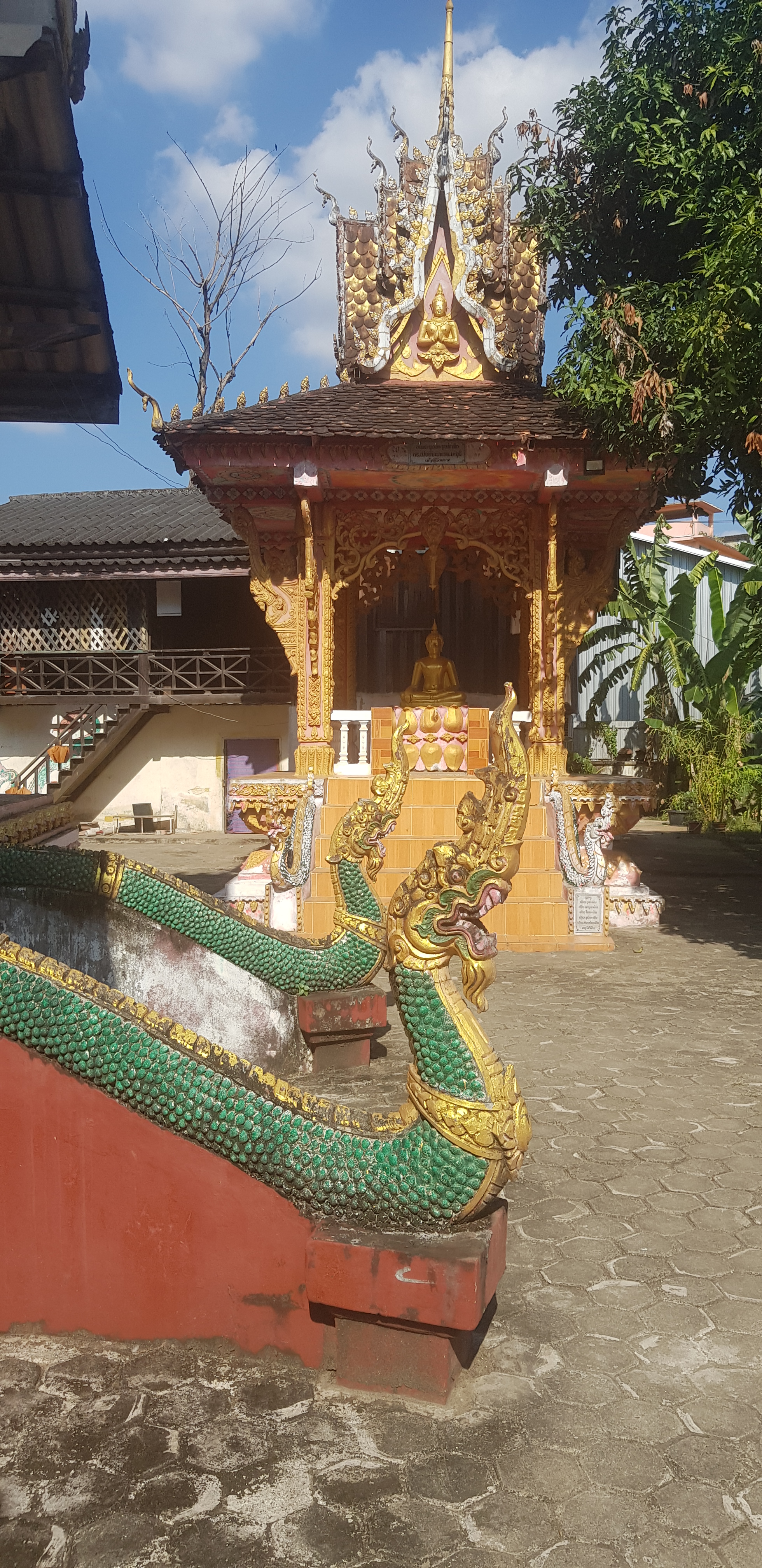
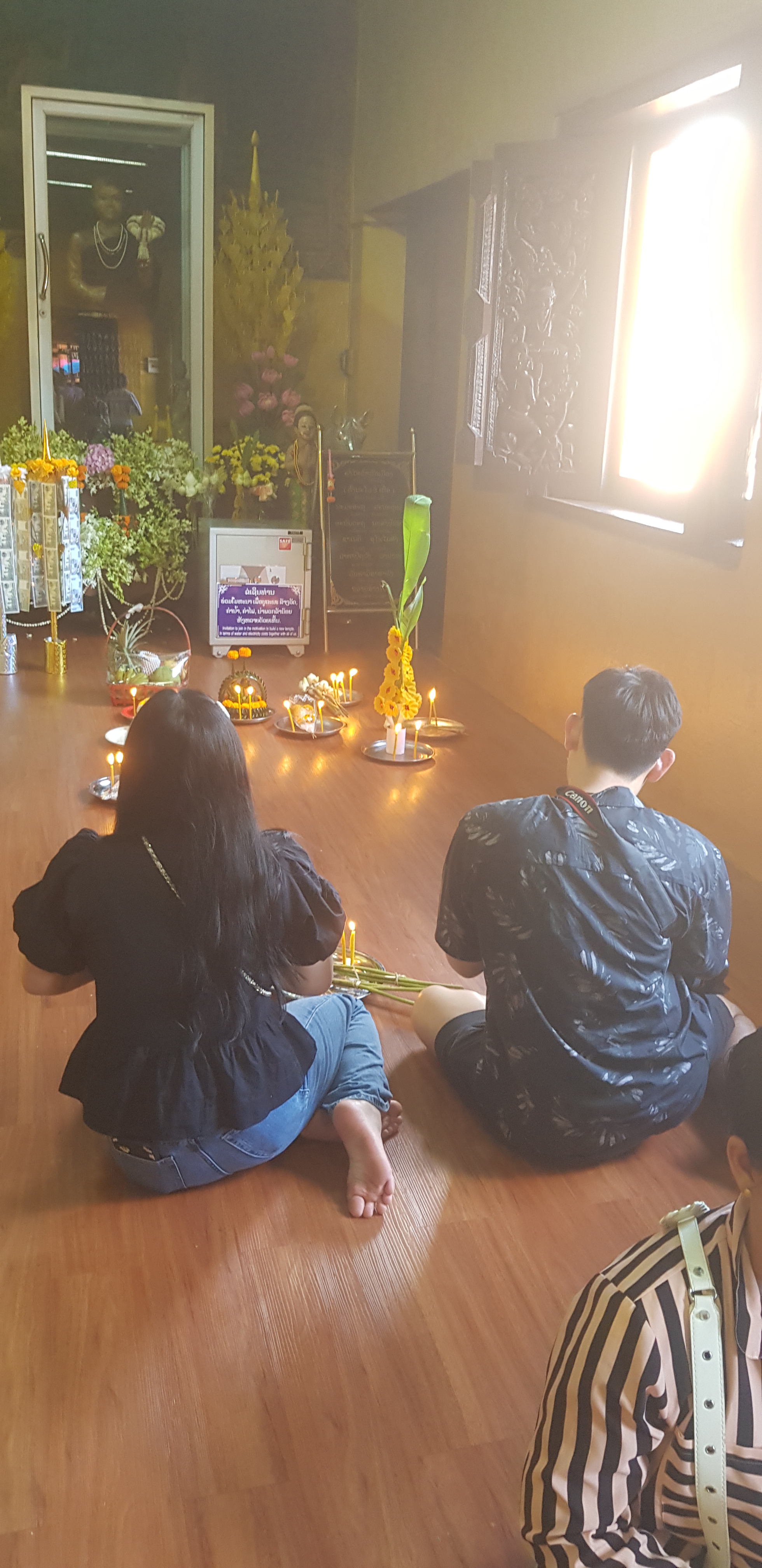
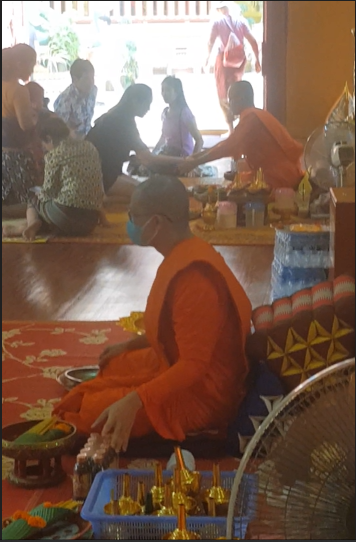
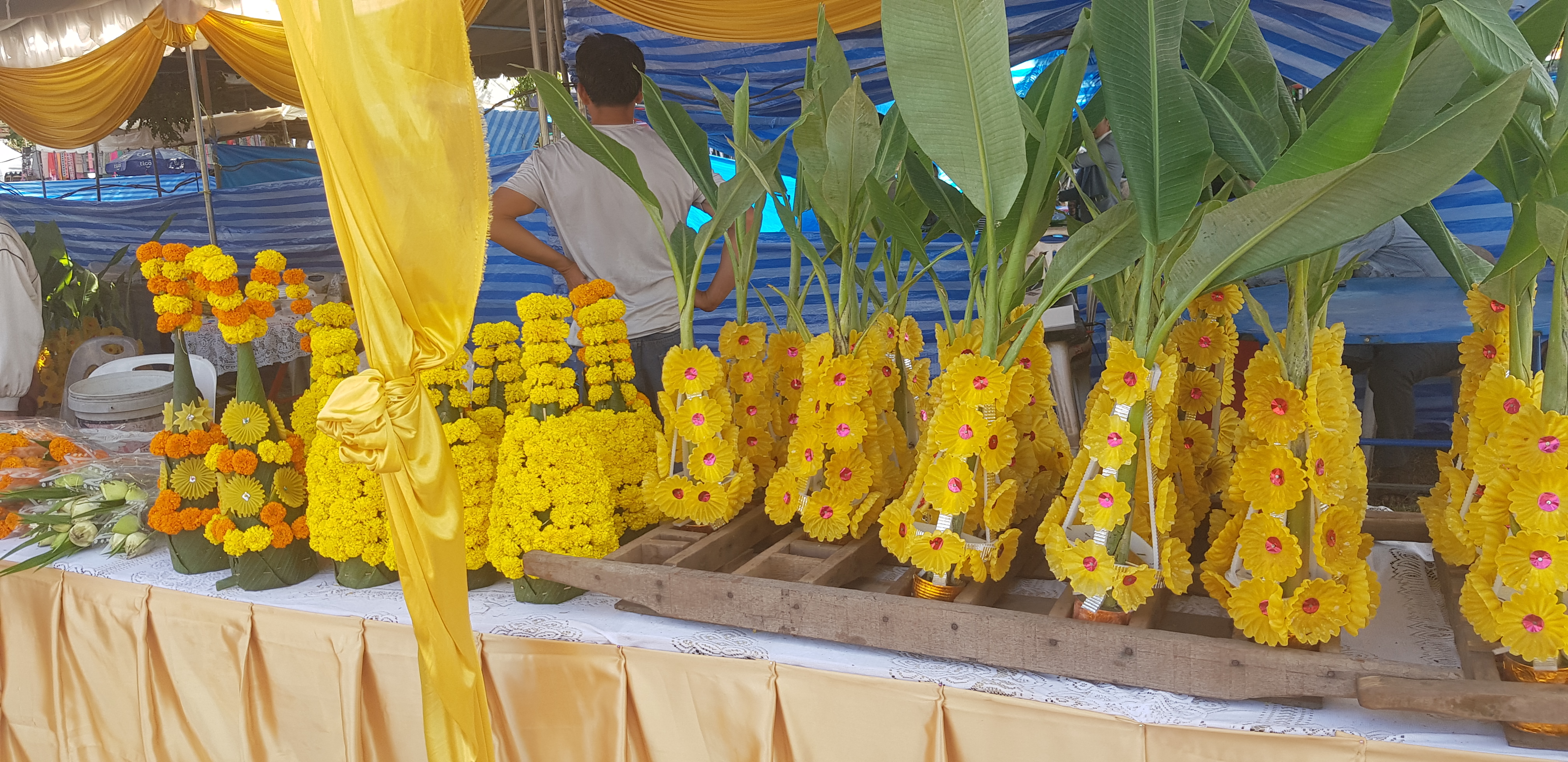
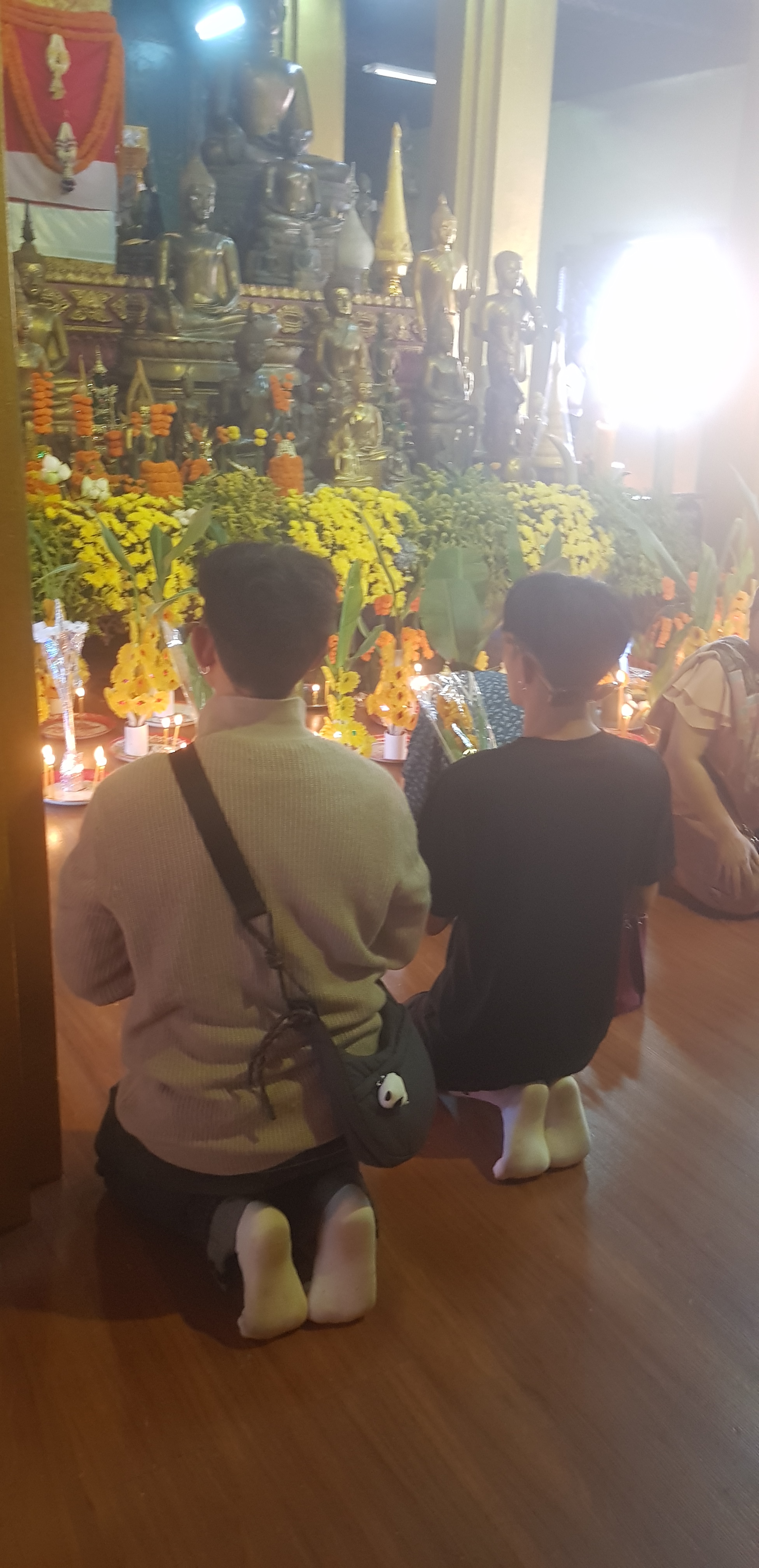
And then there are the busy wats like Wat Si Muang where loud music and car engine noises mix and make for a kind of fairground atmosphere, where meditation and contemplation are probably difficult. People go there to have their secret wishes granted or to have other problems solved, to make donations like flower arrangements, bananas, coconuts, incense and candles or simply kips (money) and to receive blessings. If you are in hurry, you drive in.
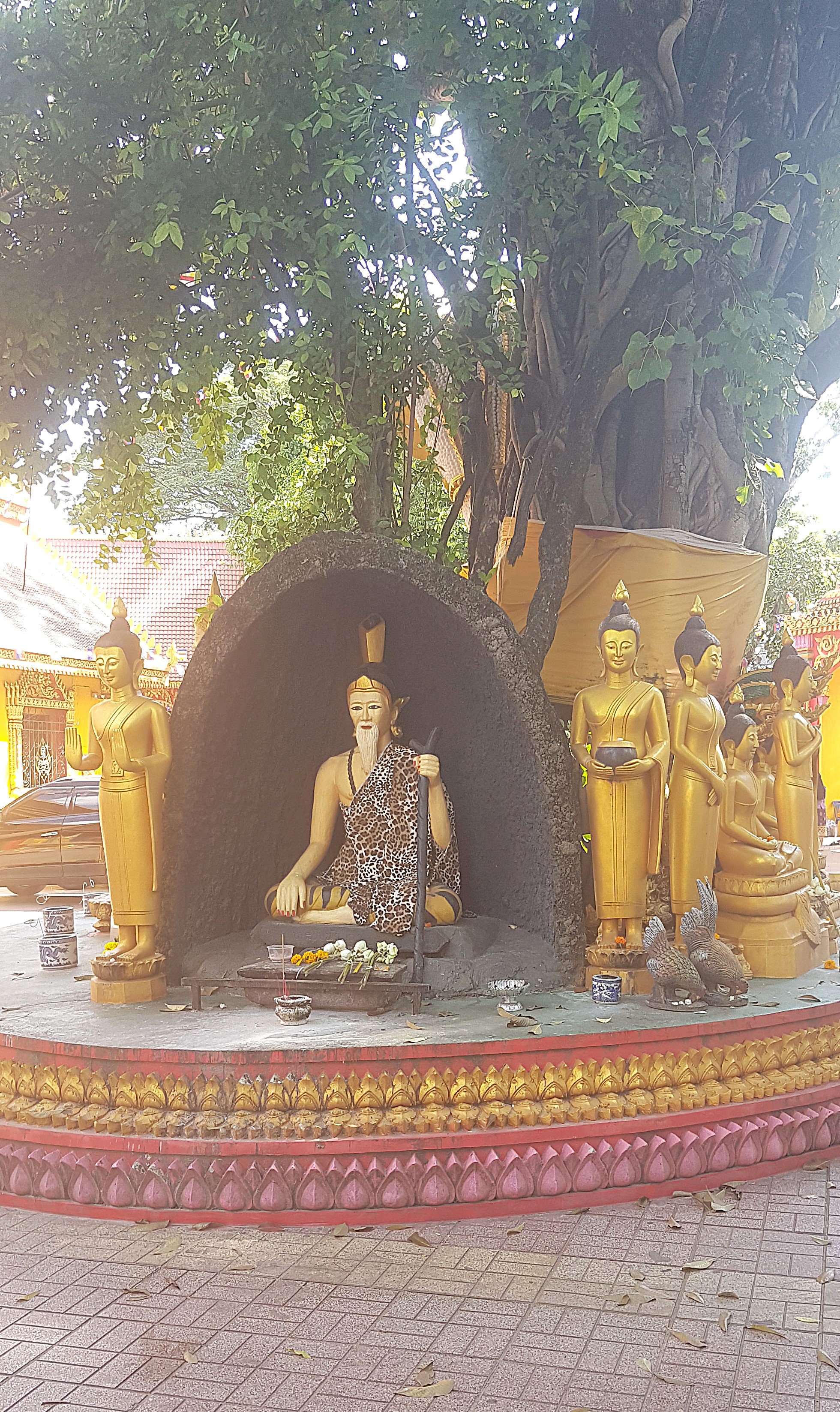
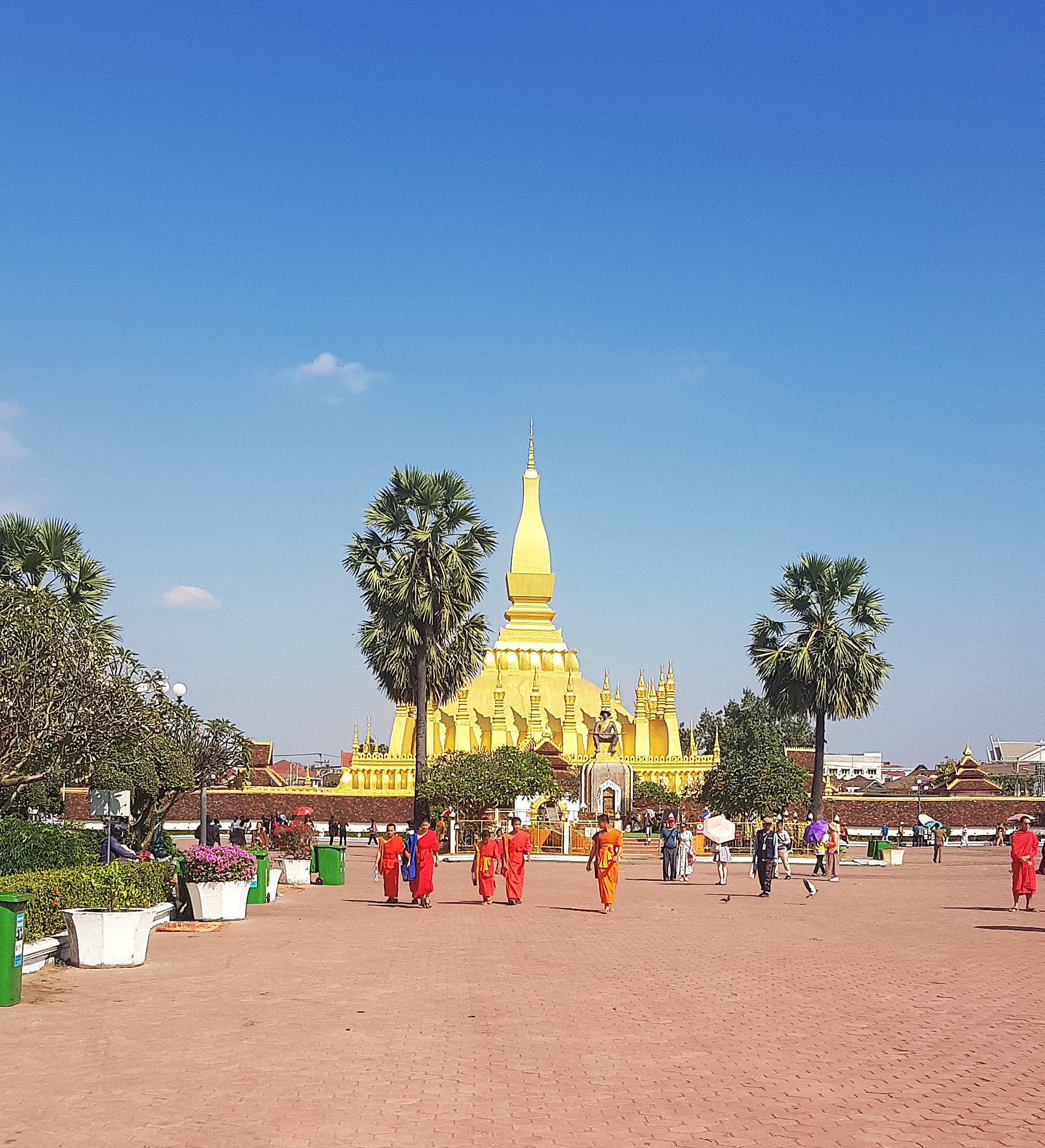
Going to Wat Pha That Luang, 4 km from the city centre, is like a pilgrimage. From far away you see the golden stupa shining in the sun, you hear the music, there is a fair or a market in front. A stupa erected here in 3rd century B.C. was believed to enclose a piece of Buddha’s breastbone. Now it is the most important national monument. No cars here. Entrance is free but ladies have to rent a long Lao skirt to enter.
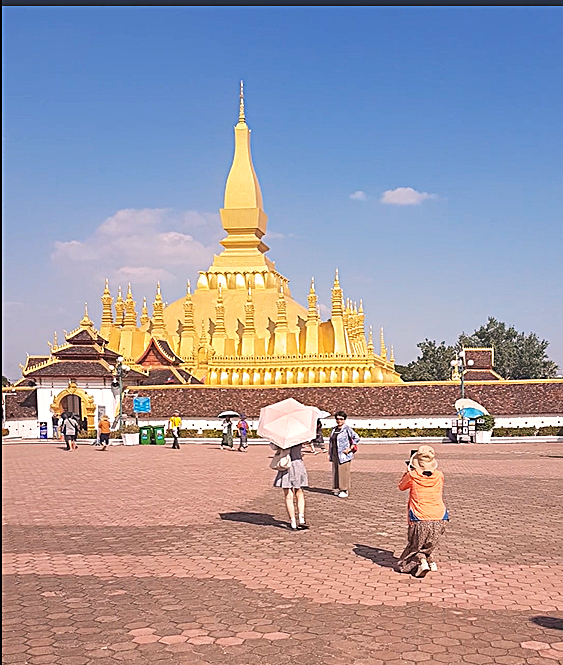
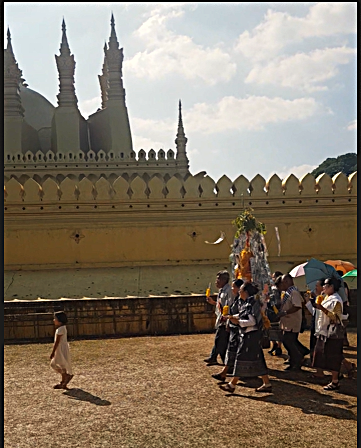
Wats resemble each other and still are unique. I spare you the other onethousand ninehundred and something pictures until I publish a post about the most famous one: Angkor. That’s really different.
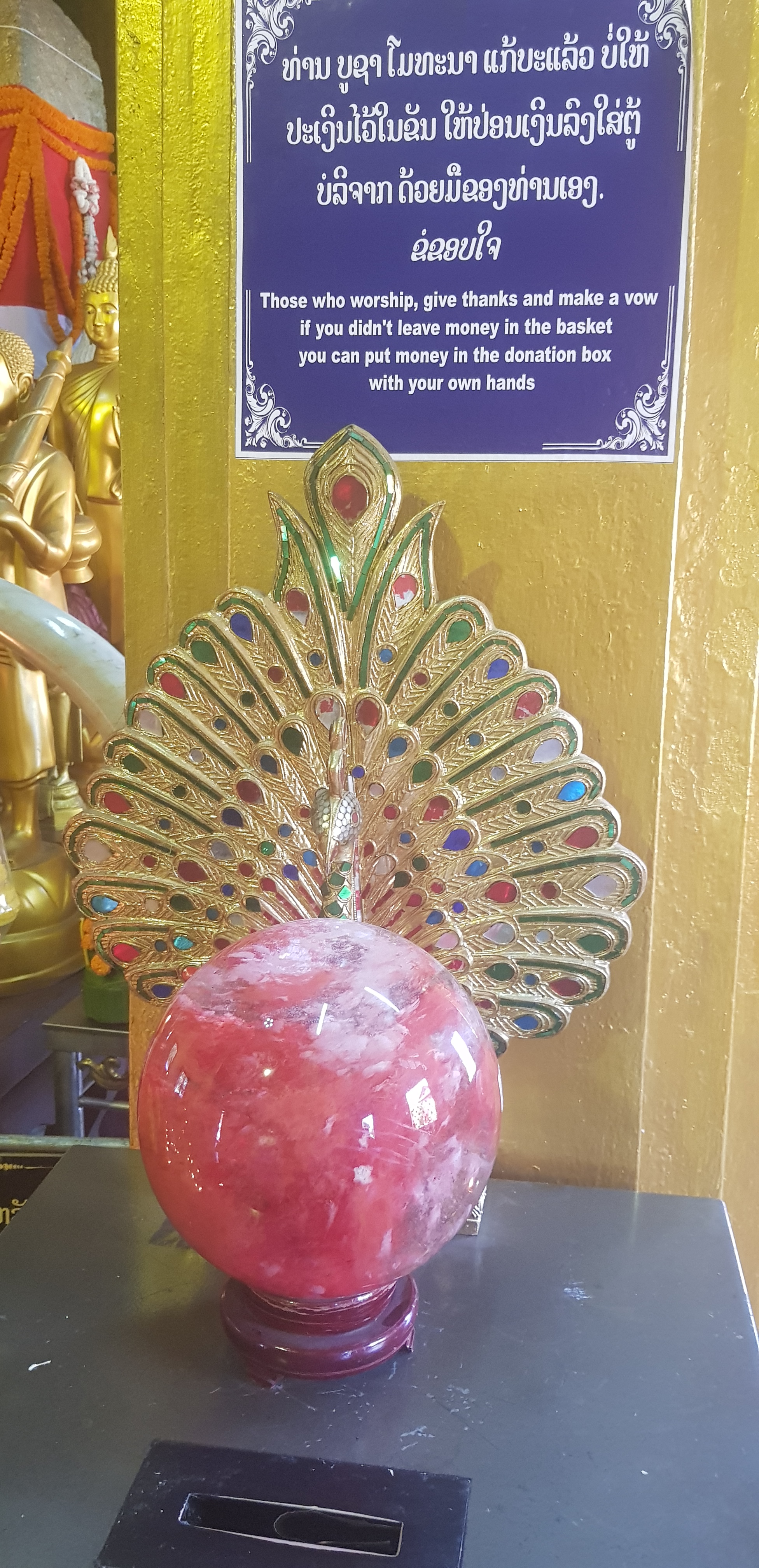
It says above: Those who worship, give thanks and make a vow, if you didn’t leave money in the basket you can put money in the donation box with your own hands. (I liked the translation)

In spite of feeling the December cold and in spite of baking Christmas cookies every day I can’t muster up that Christmas feeling but nevertheless I wish you all a merry merry Christmas, a time of tranquility, compassion and mindfulness.! (oops ;-))

Gerburg
Travelling with a purpose

8 Dec

(as my friend Irene Chua says)

English lesson

What’s your favourite country?

Laos, the lovable sleeping beauty between its famous neighbours Thailand, Myanmar, China, Vietnam and Cambodia.

PDR doesn’t really mean ‘Please, don’t rush’, it’s a common joke of the Laotians themselves with a slight touch of self-irony. So as a visitor I, too, relax and enjoy their kindness and generosity, as an older person I am pleased with the respect and consideration they show me, and as a European I simply hope that all their positive character traits will stick with me.

You don’t have to be rich: 1$ is 21.937 kip. Mental maths: forget it, I don’t distinguish 20.000 from 200.000, even 2.000 is a problem.

Wats everywhere (ladies, cover your shoulders and your knees, gents, too. Fellow Europeans: this is not the beach or the gym!)

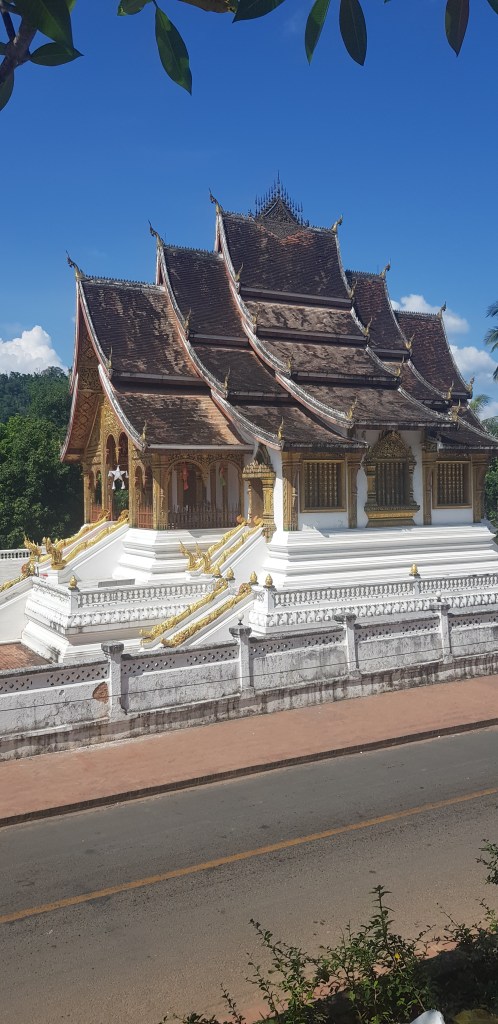
Wat Ho Pha Bang with an important Buddha statue inside, but … no photos. It’s part of the Palace Museum. Climb up the stairs, take off your sandals, peep inside, and shoot a mental photo.

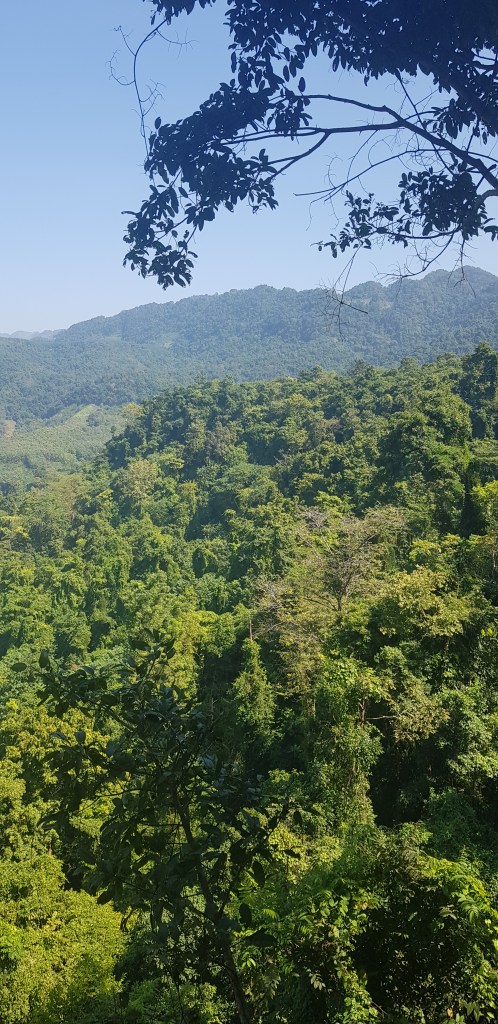
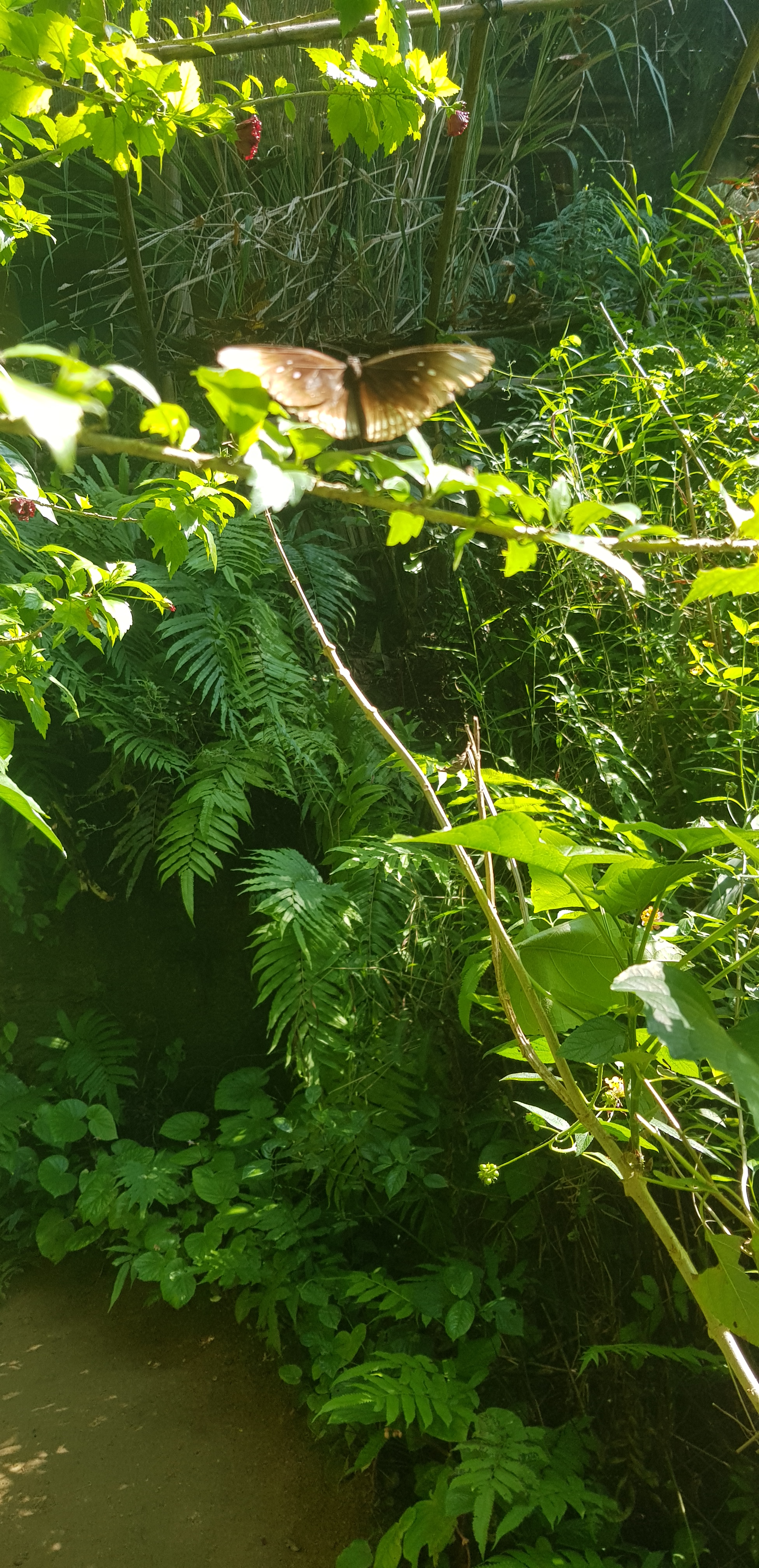
Call it forest, call it jungle, nature is abundant. The really cool people go ziplining through the treetops. I prefer to go photo hunting and all I catch is a butterfly. Where the heck is the Indochinese tiger?

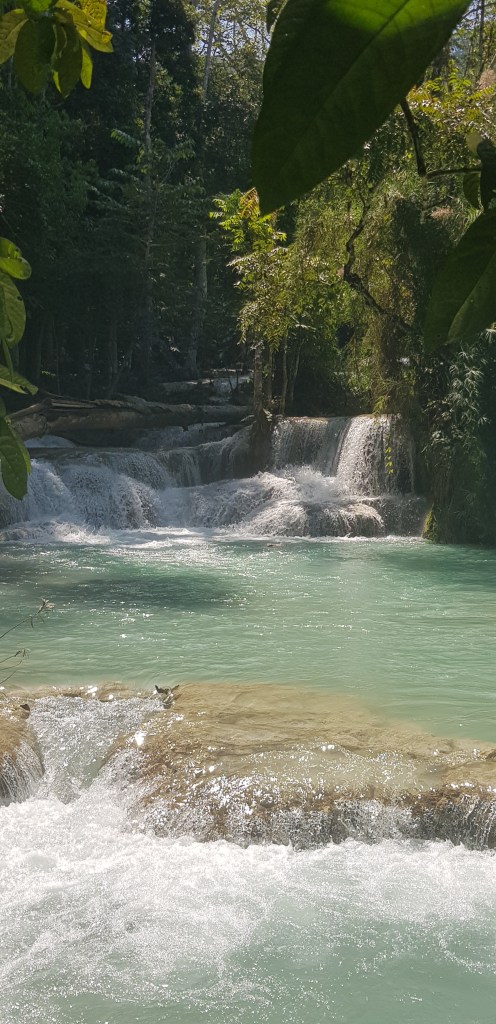
Kuangsi Waterfalls: take a bath there. It’s refreshing after the climb up to the top of the mountain. Make sure your arms are strong enough to pull yourself up to scramble out of the deep pond.

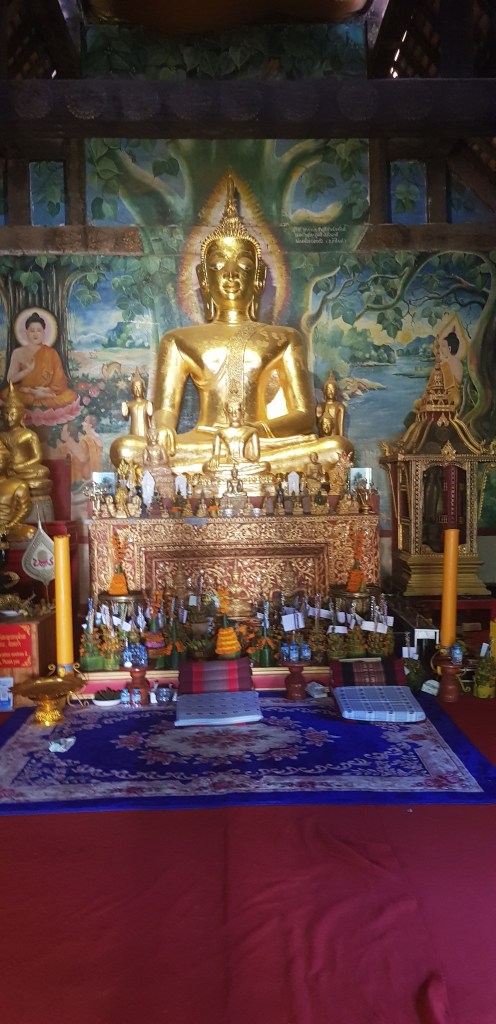
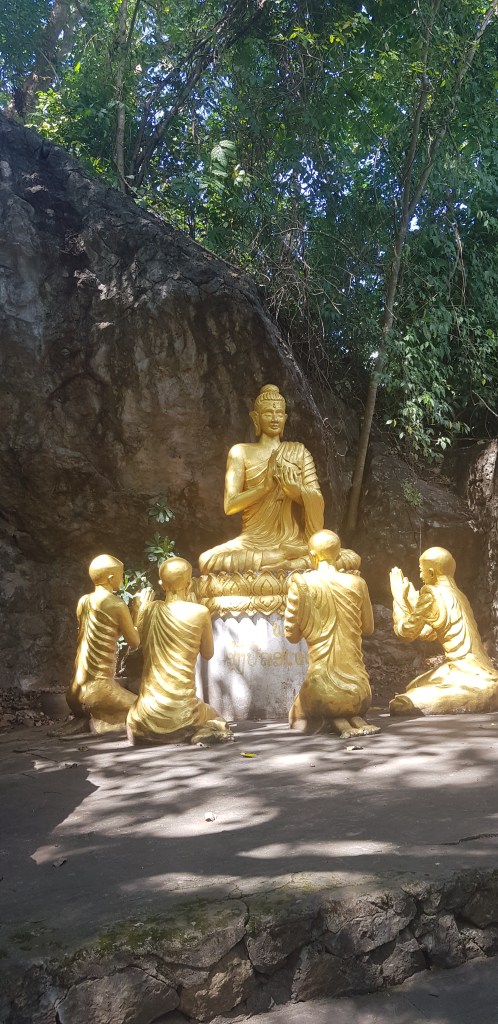
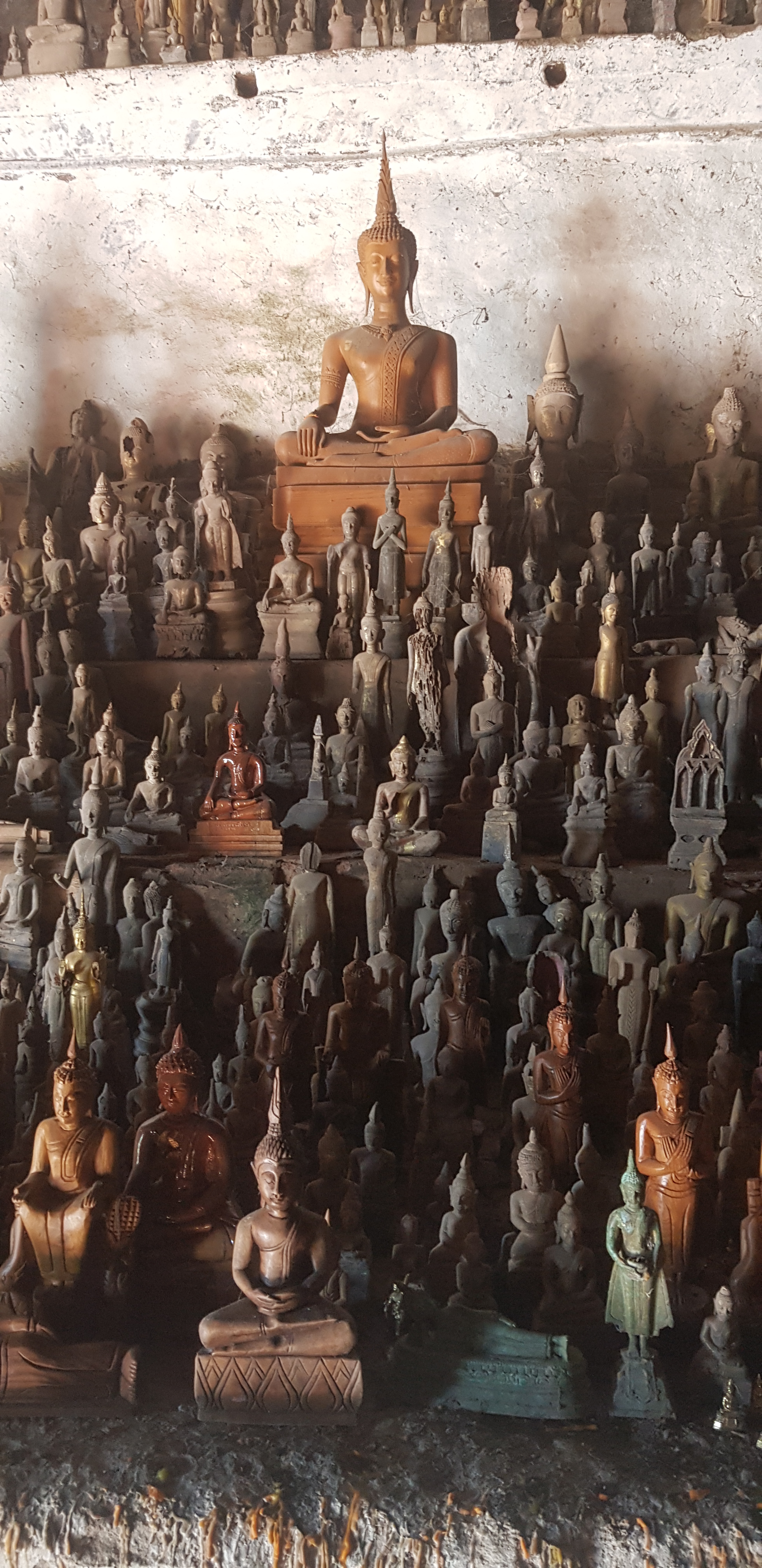
Buddha statues everywhere: don’t count them and don’t go looking for unique design and style! Forget art history, meditate!

What’s your favourite town?

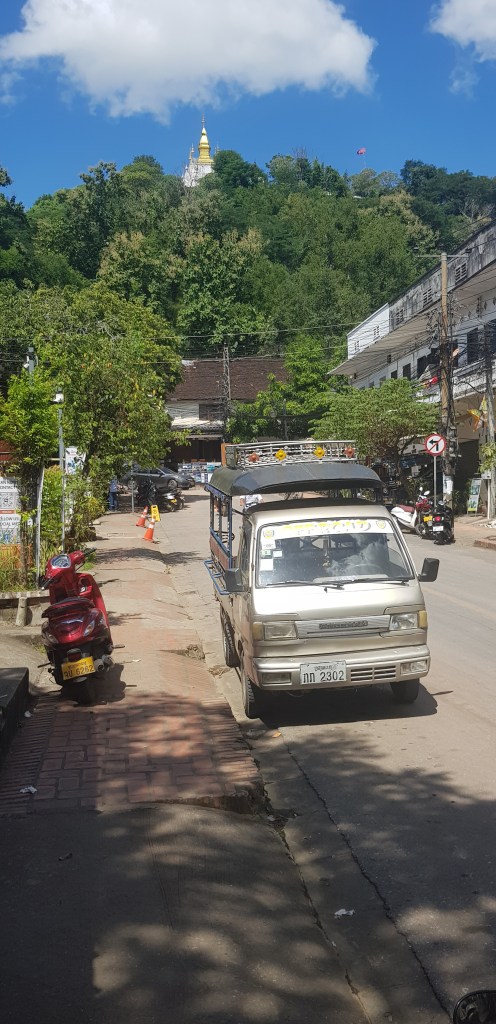
Luang Prabang with a silent “r” is NOT the capital, the name means “Royal Buddha Image”. The town centre on the peninsula between the Nam Khan and the Mekong River is so pretty and picturesque with its numerous wats, with its traditional and French colonial houses that it was declared a World Heritage Site in 1995. I love this place.

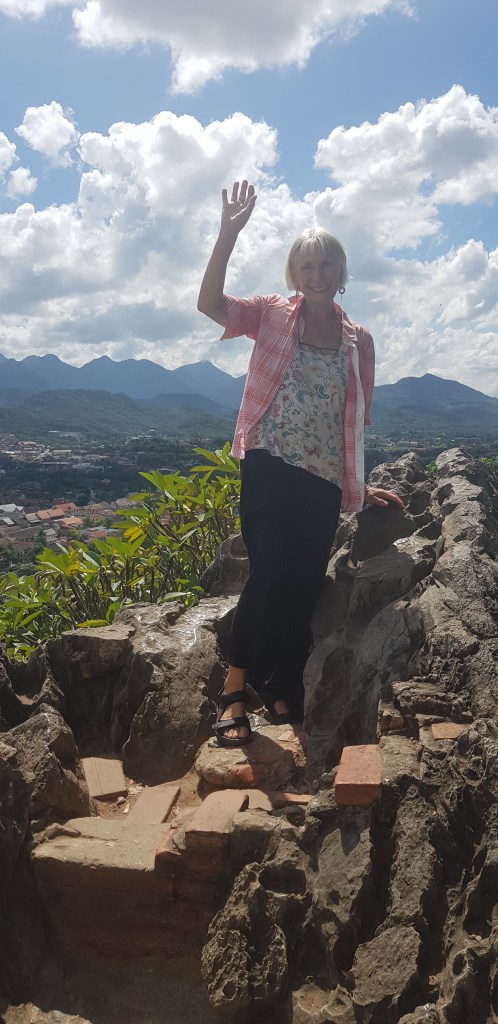
From Phou Si Mountain you overlook the whole town, if you are able to get up there at 35° C and 96% humidity, chastely covering your shoulders with a blouse. That’s where I started to put electrolytes into my waterbottle.

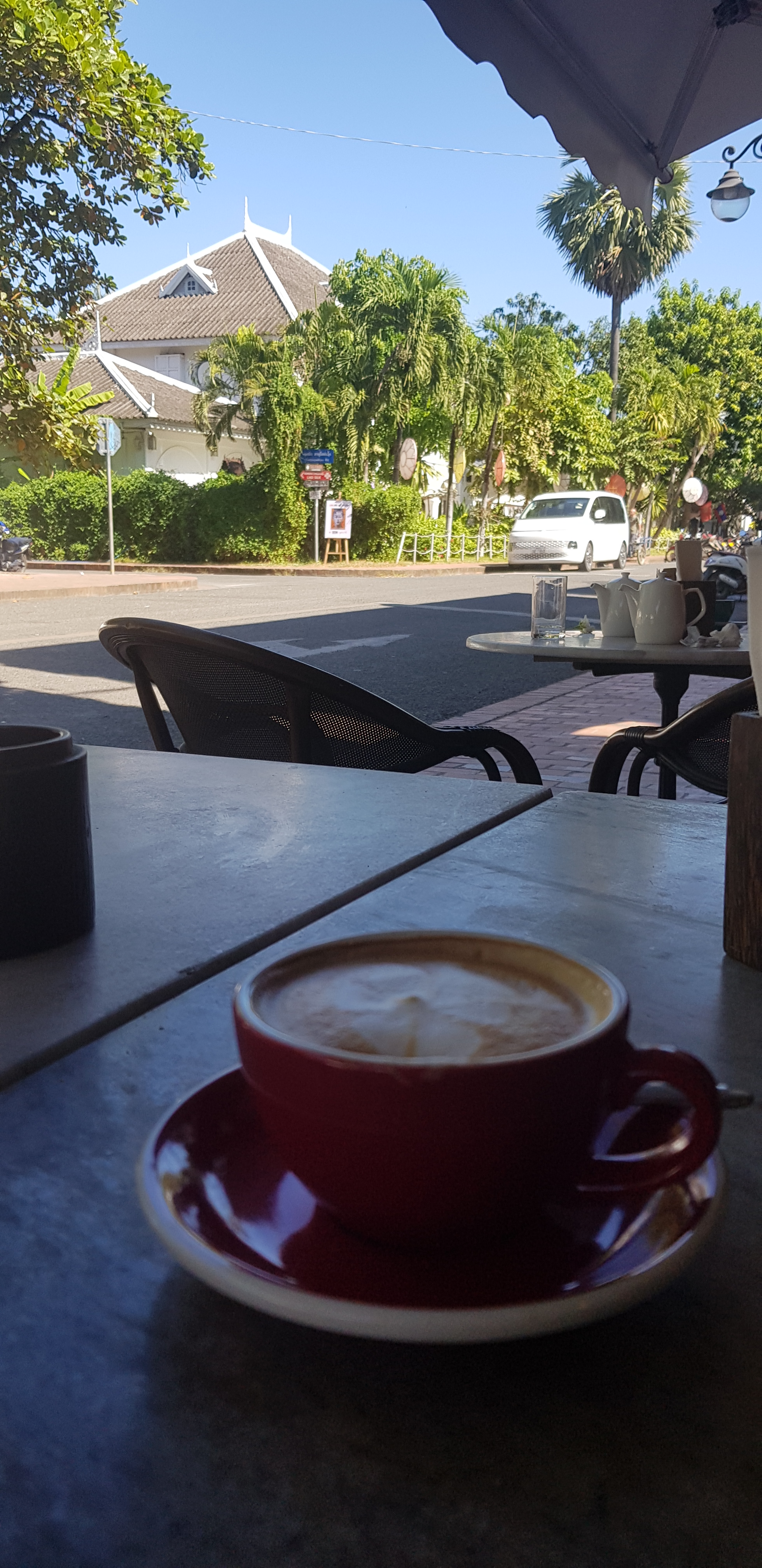
Nice cafés and restaurants everywhere, particularly along the Mekong river. And the coffee is sooooo good.

What’s your favourite job?

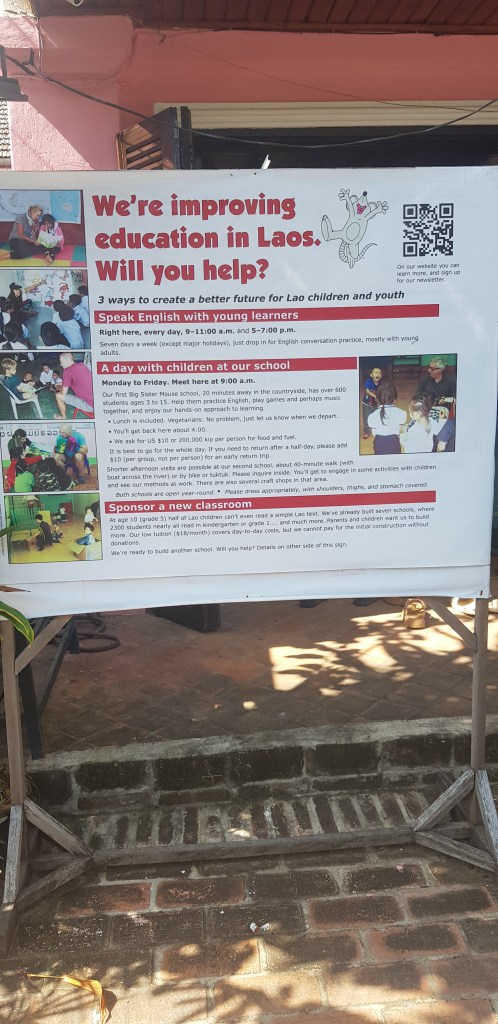
Teaching, even without the Dharmachakra position of hands and fingers, is extremely gratifying.

As teachers from all over the world, we are working together with our lovely Lao counterparts, enjoying each other’s company and learning from one another. The lady teachers wear a Lao skirt, very elegant and quite warm.

“Sabaidee!” ສະບາຍດີ

Education is improving! In Luang Prabang the situation is quite promising. Students of all ages take English courses after school, employees before and after work. Many of them have smartphones (even here a lesson starts: “Please, put your phone away!”) and the kids have little motorbikes to travel home with their siblings after lessons. Courageous parents, traffic is abundant but not rowdy. There is a huge difference in access to education between the city and the countryside.

What’s your favourite language?

ehm …. English

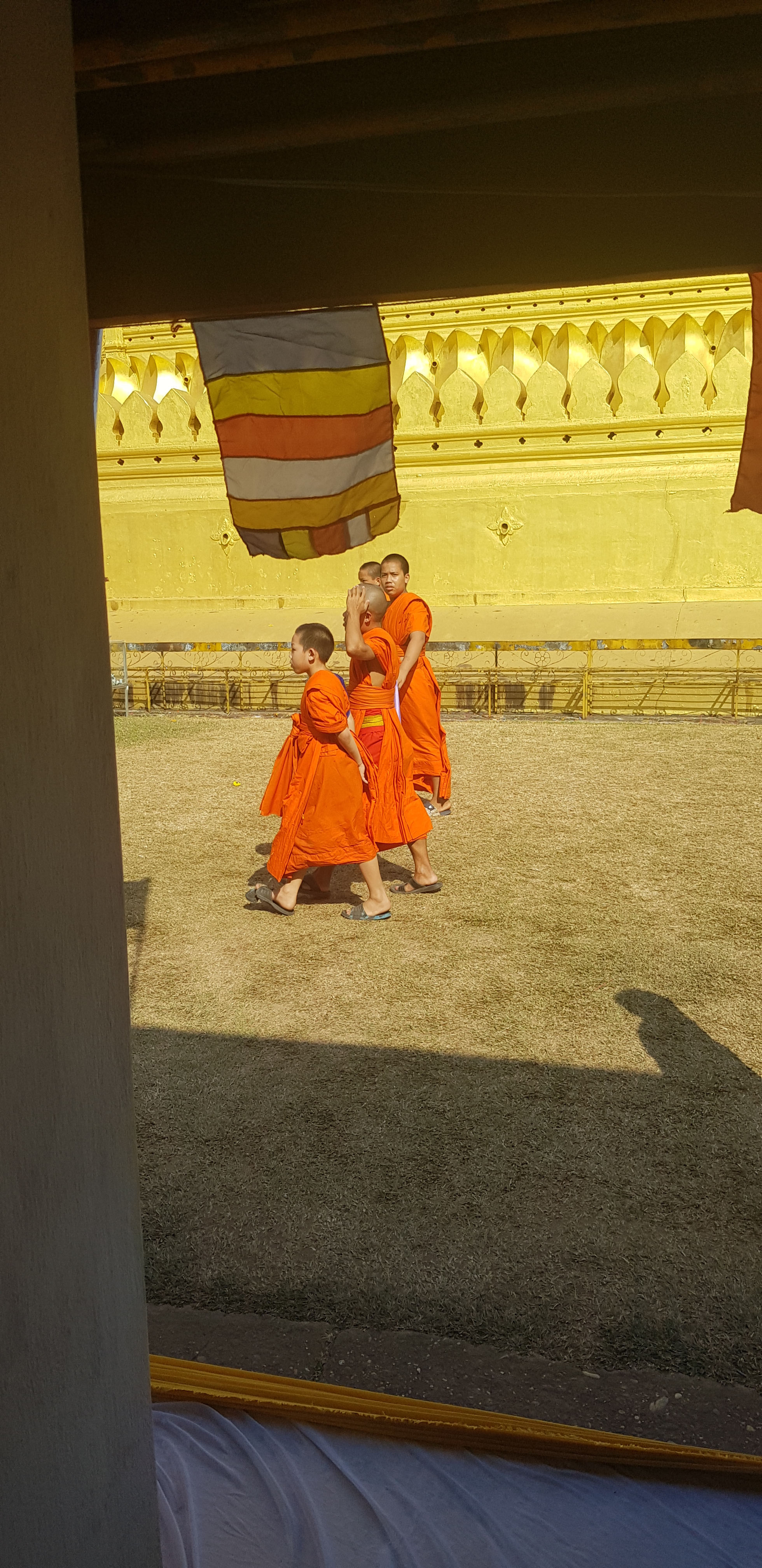
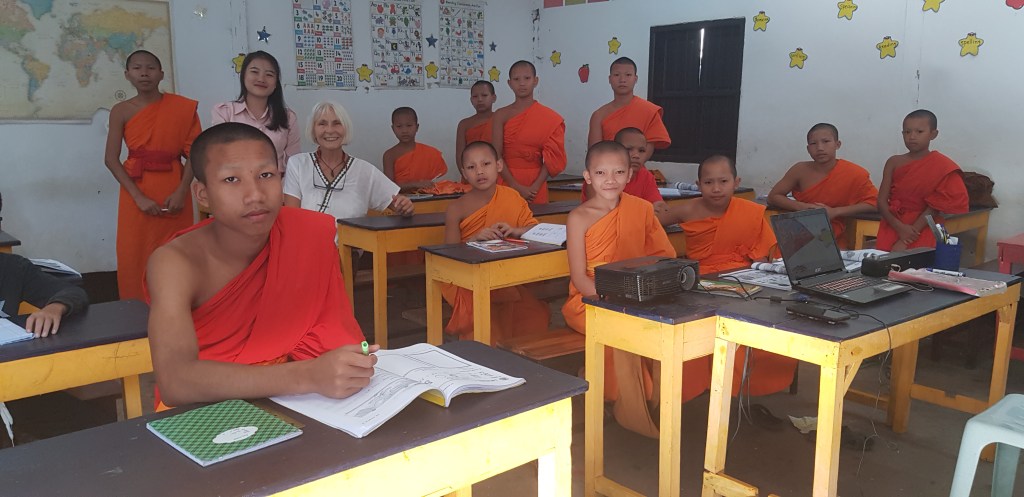
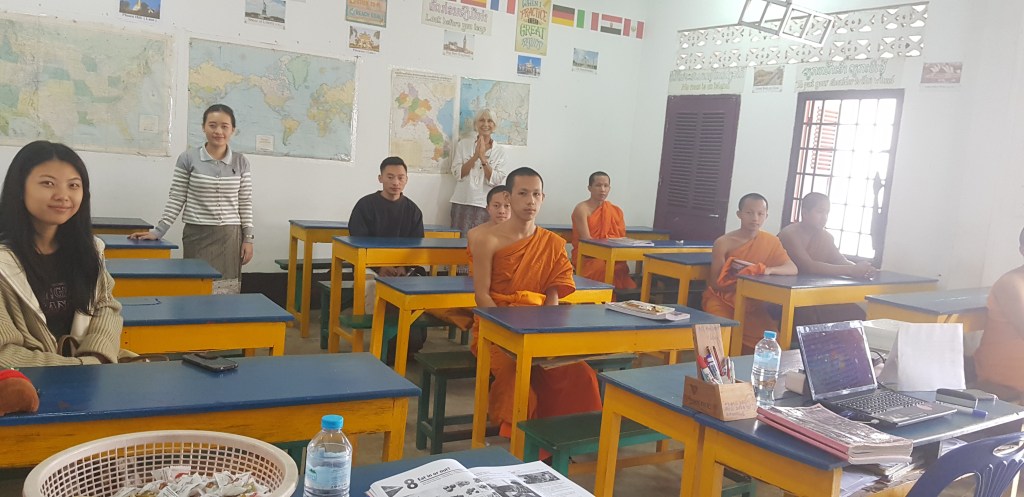
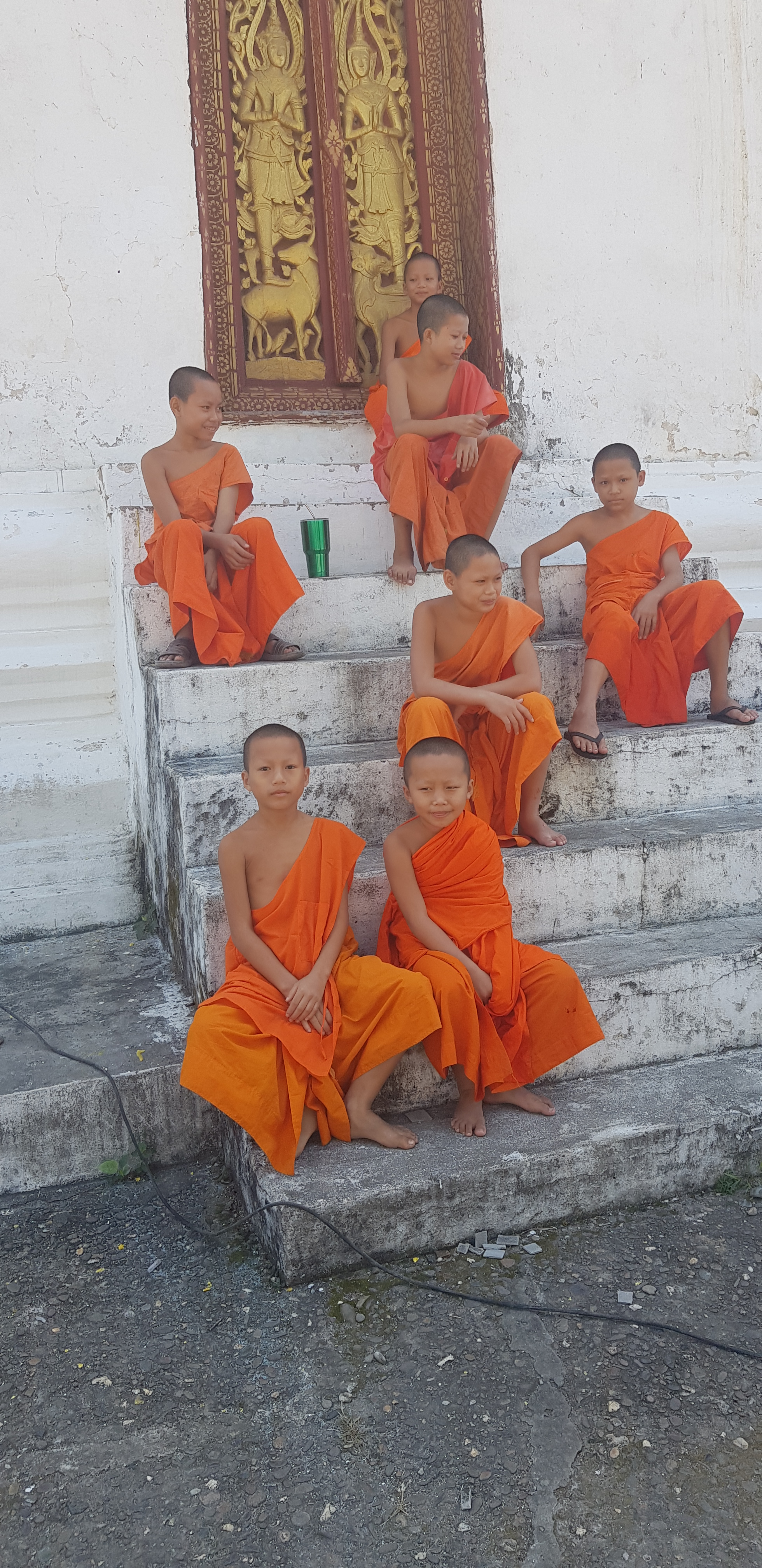
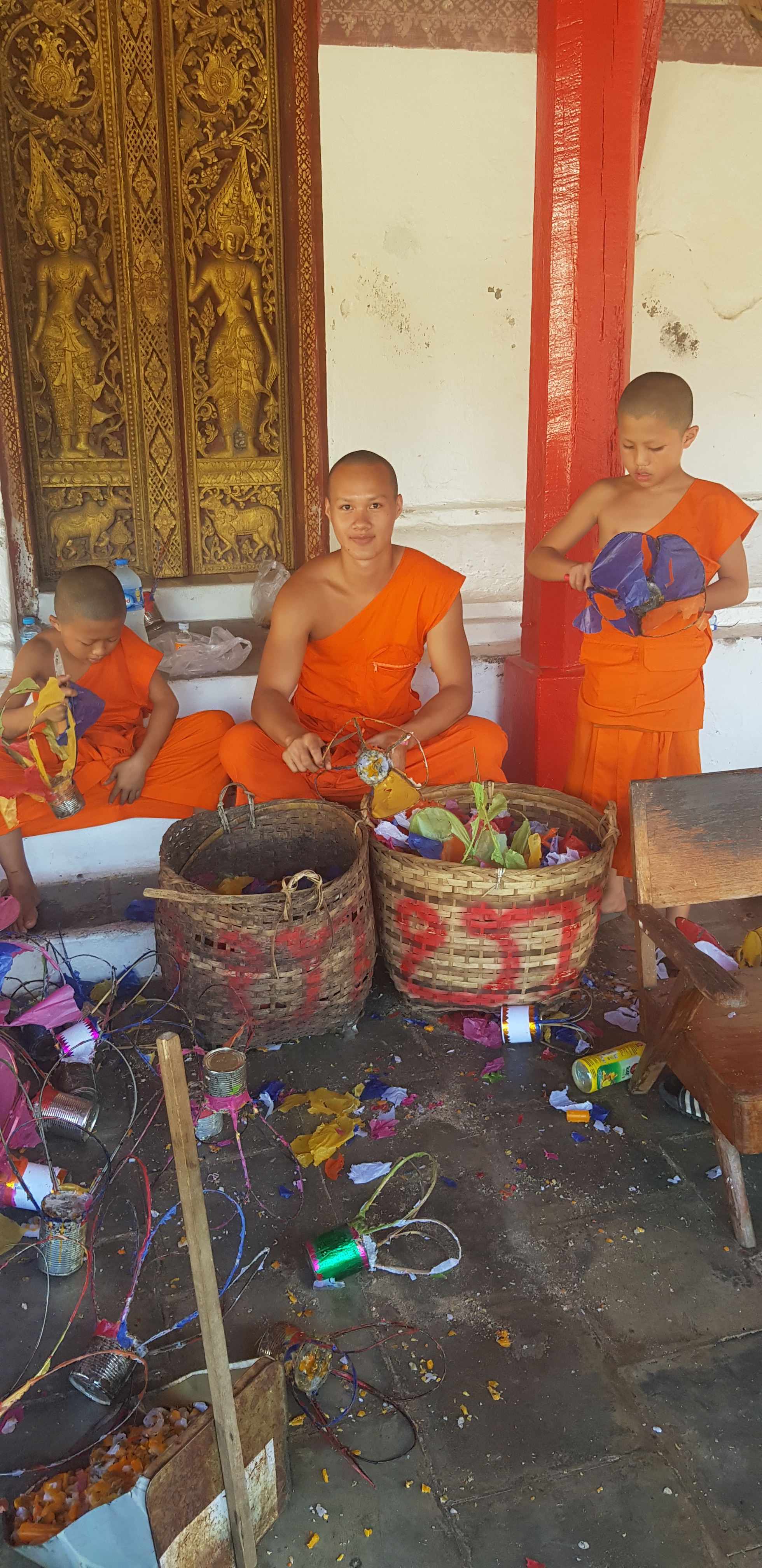
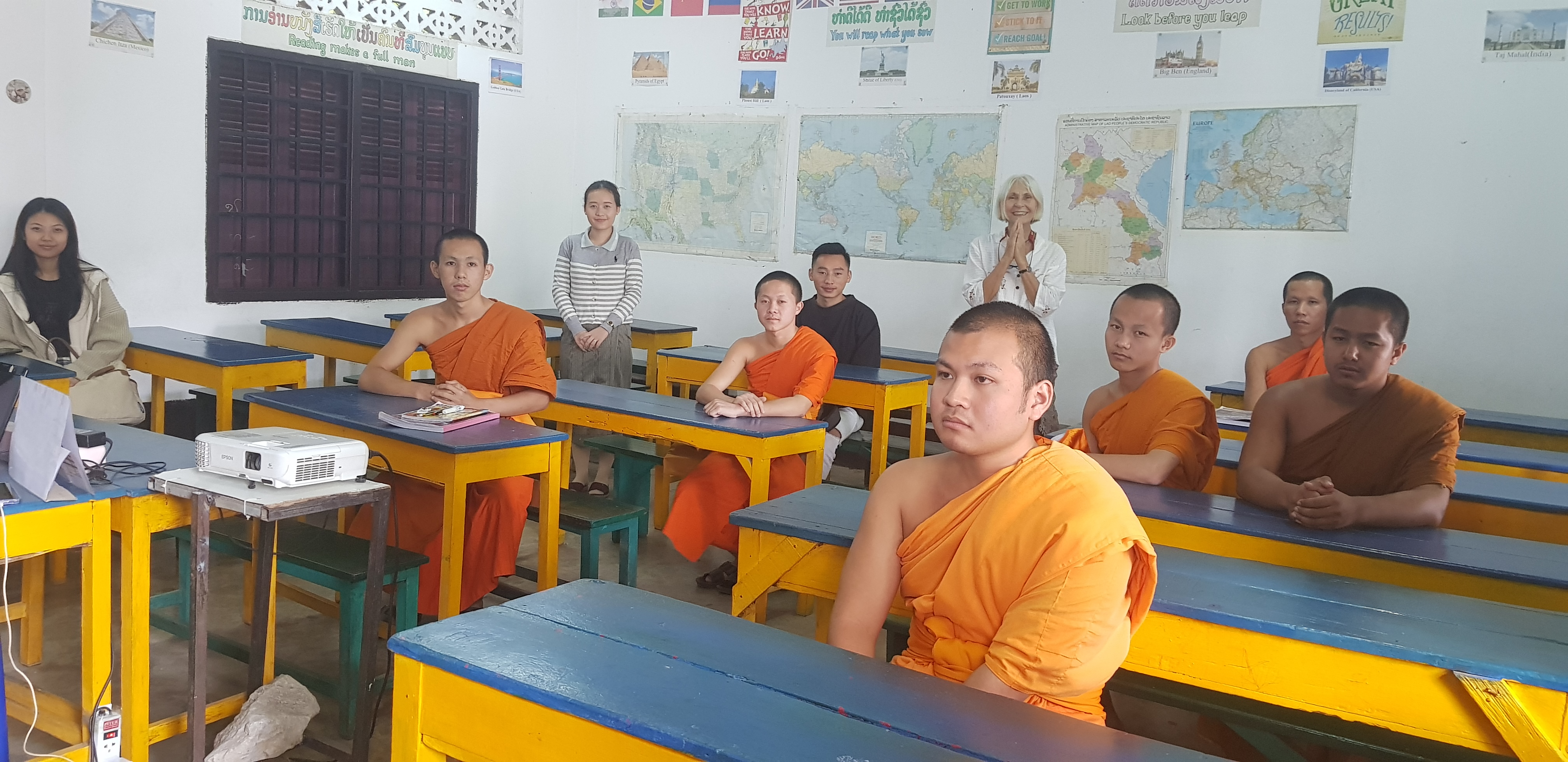
The monks and novices come in for English lessons in the morning after having meditated since 3 or 4 o’clock. Little wonder, they are a bit drowsy. Singing and moving usually helps activate tired students but the monks are not supposed “to do sports”.

Instead of “Stand up, stand up, sit down, sit down”, we play engaging word games and do a little geography using the inflatable globe I brought along. “Where’s Italy?” “Where is Laos?” We are having fun!

What’s your favourite river?

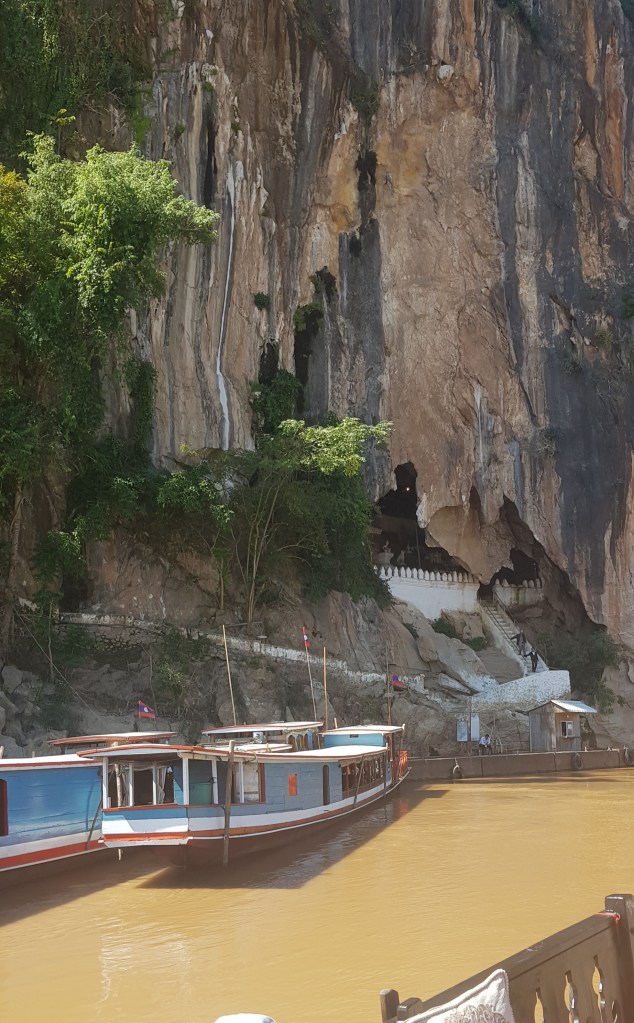
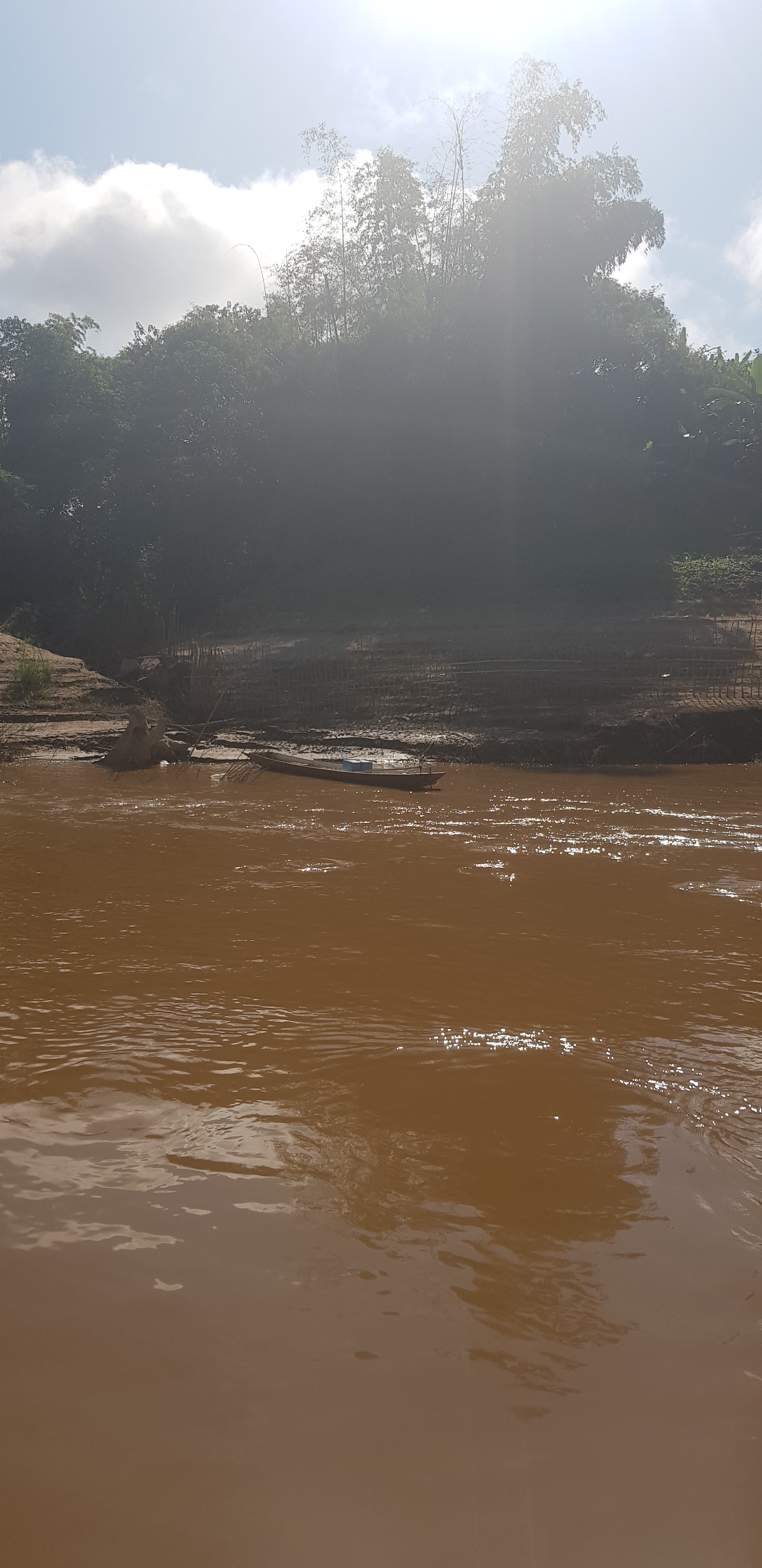
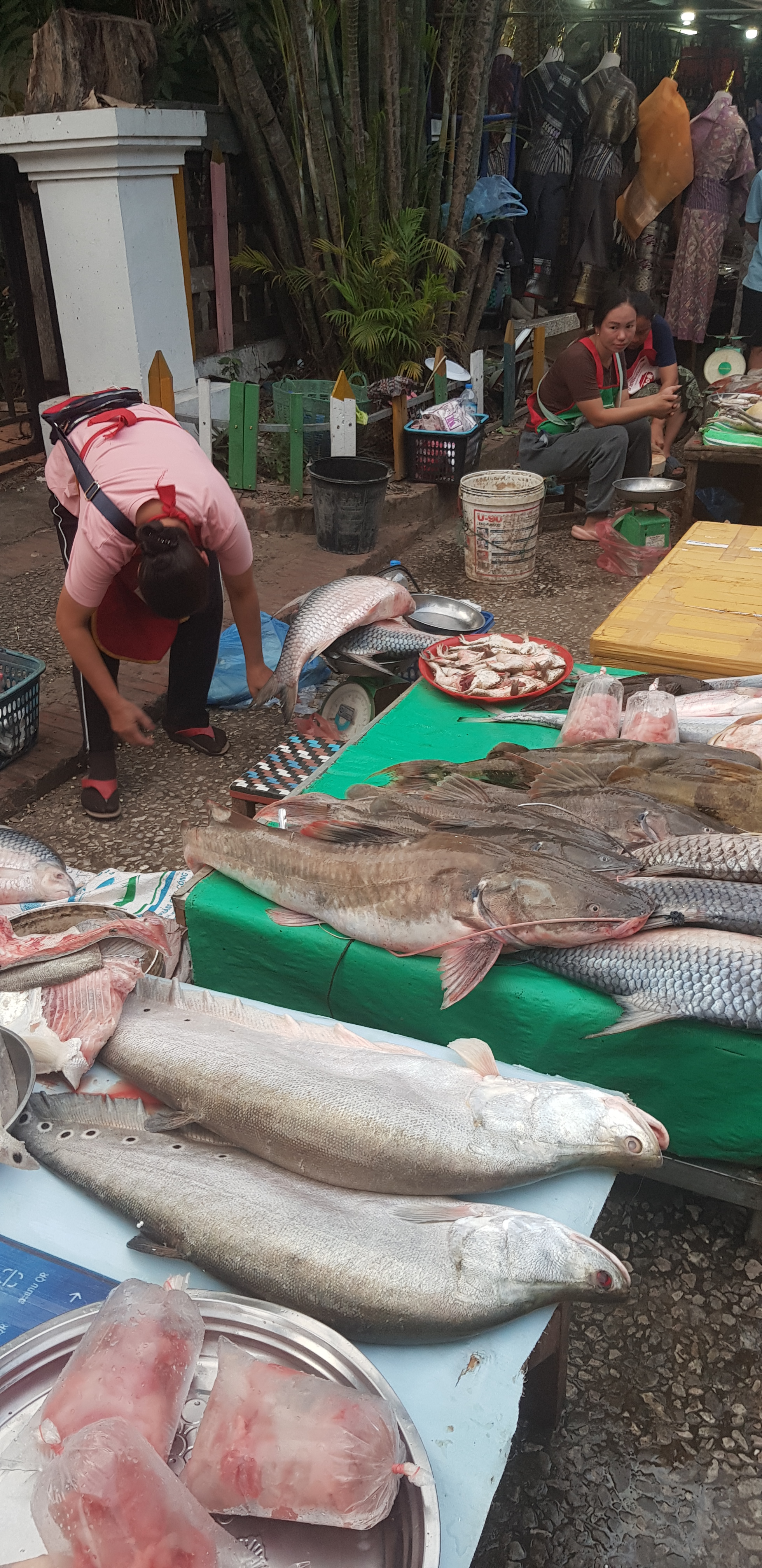
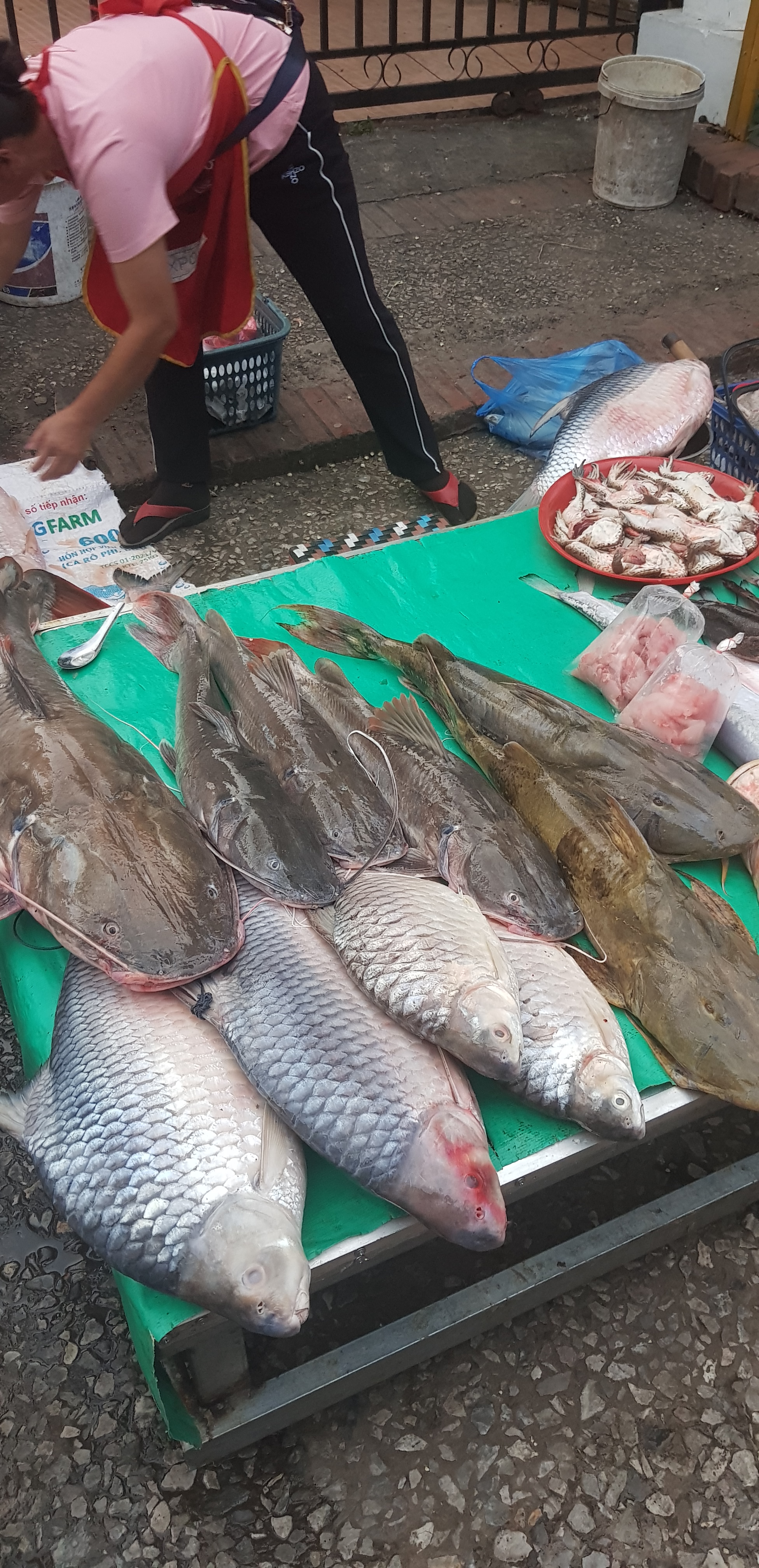
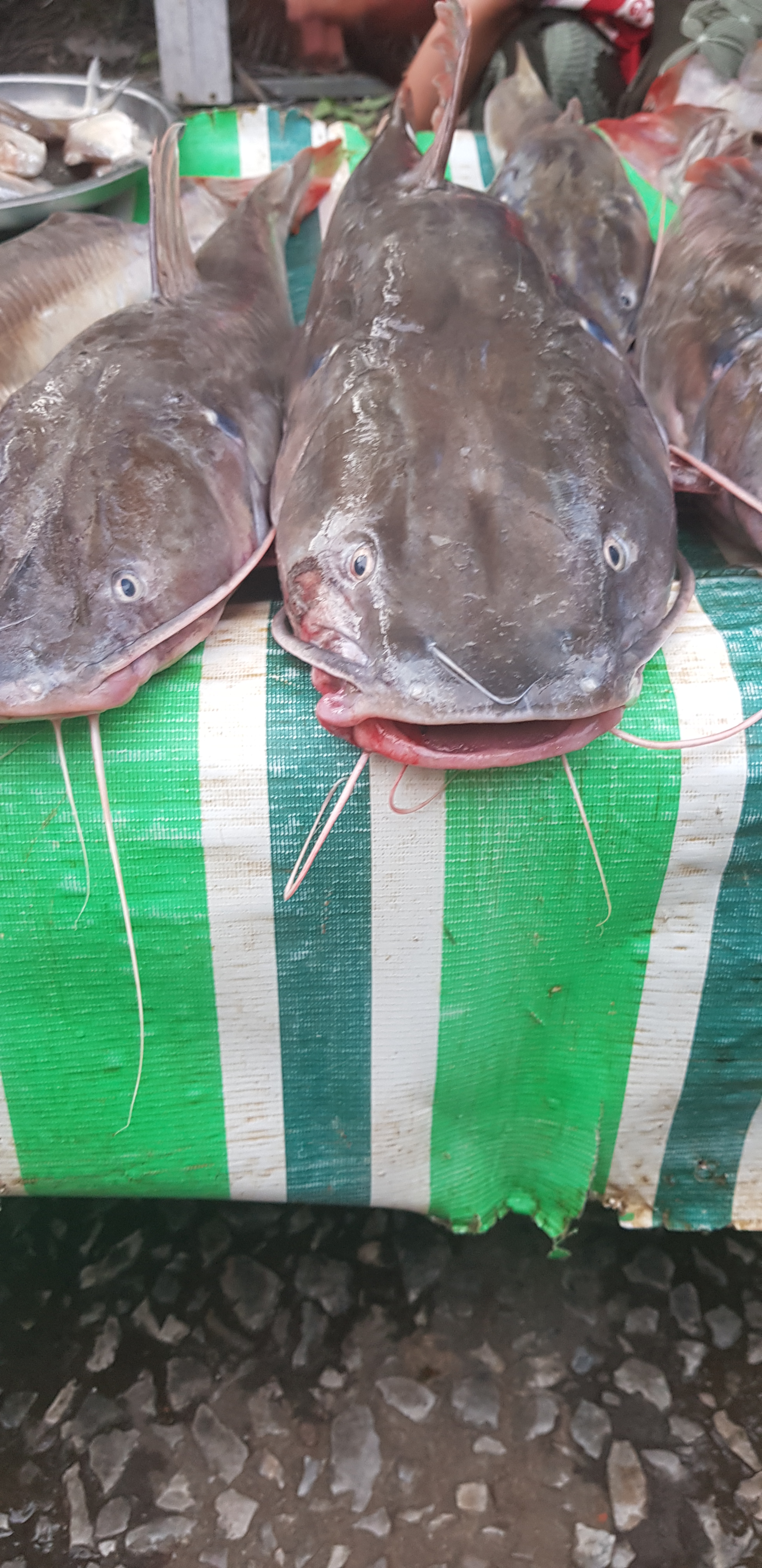
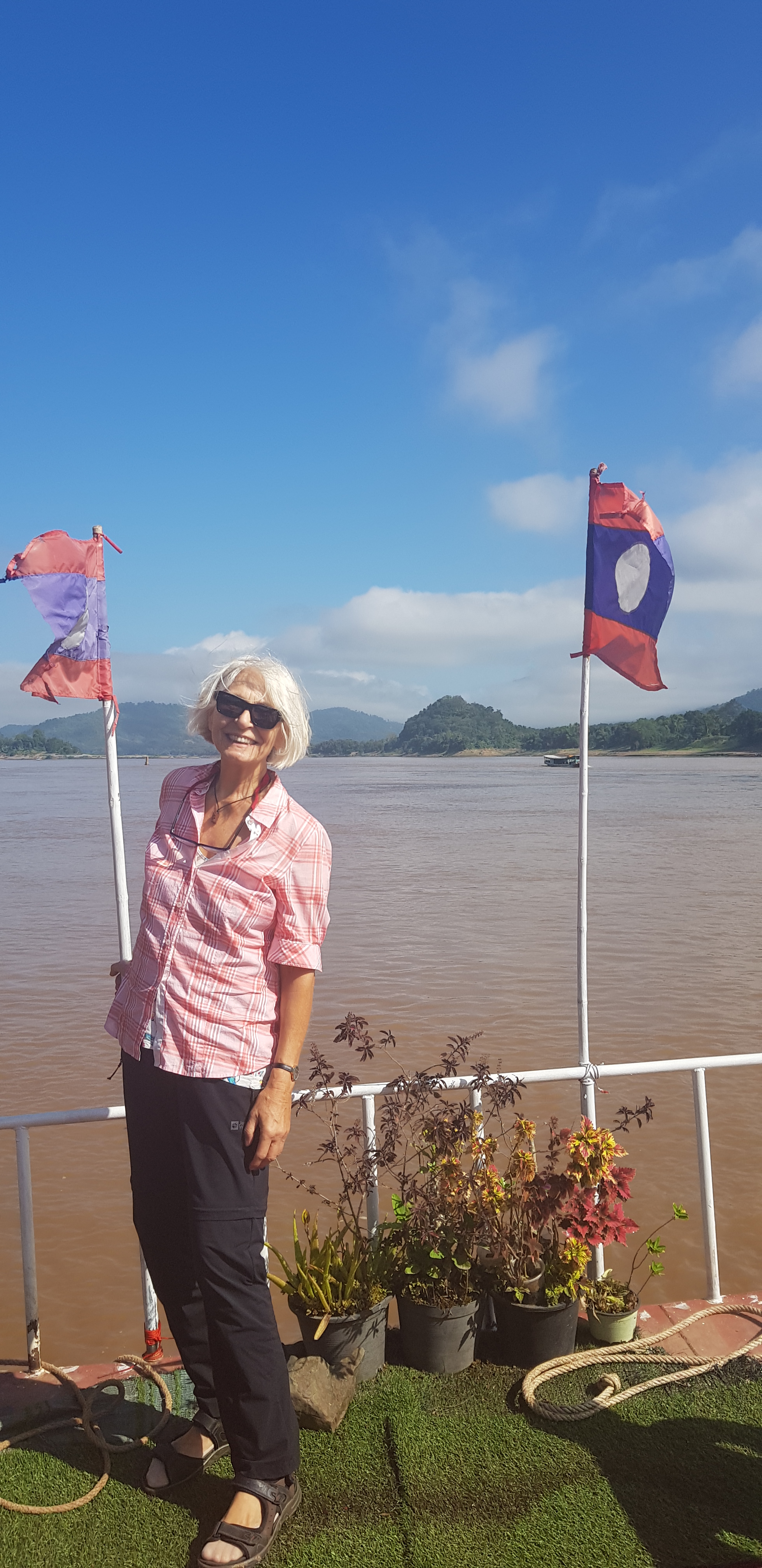
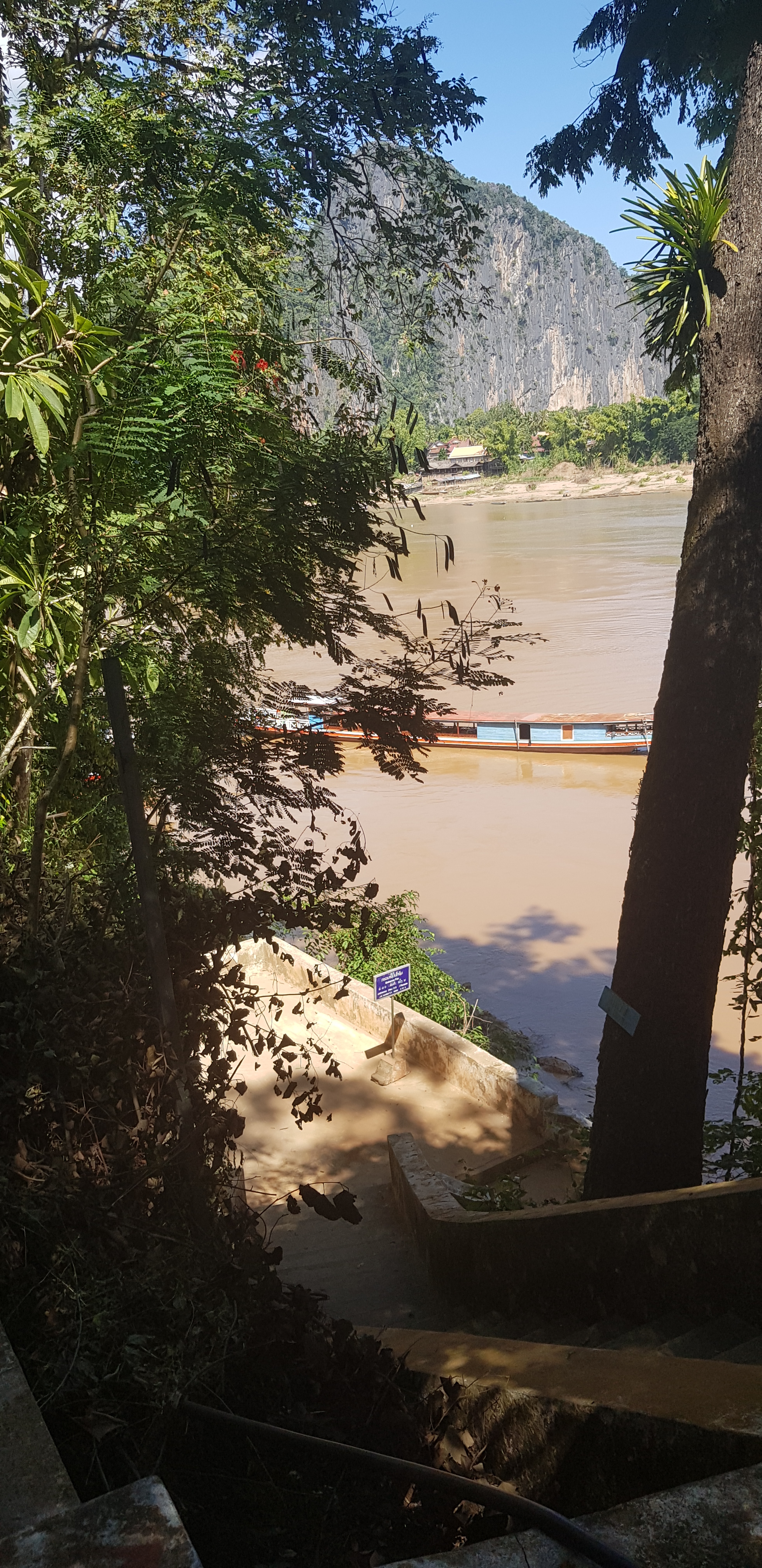
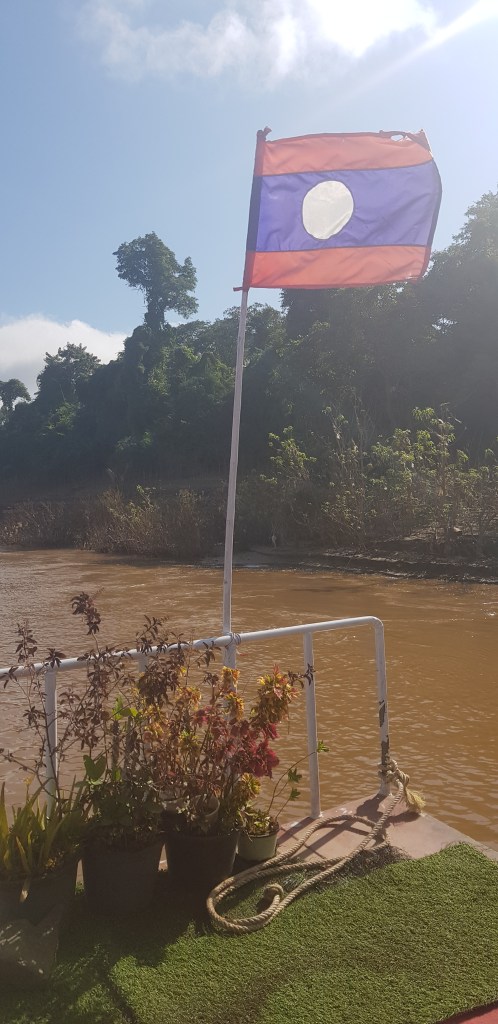
The Mekong is 4.350 km long and a large part of it flows through Laos. Its water is muddy brown, a natural fertiliser. And fish thrive in it.

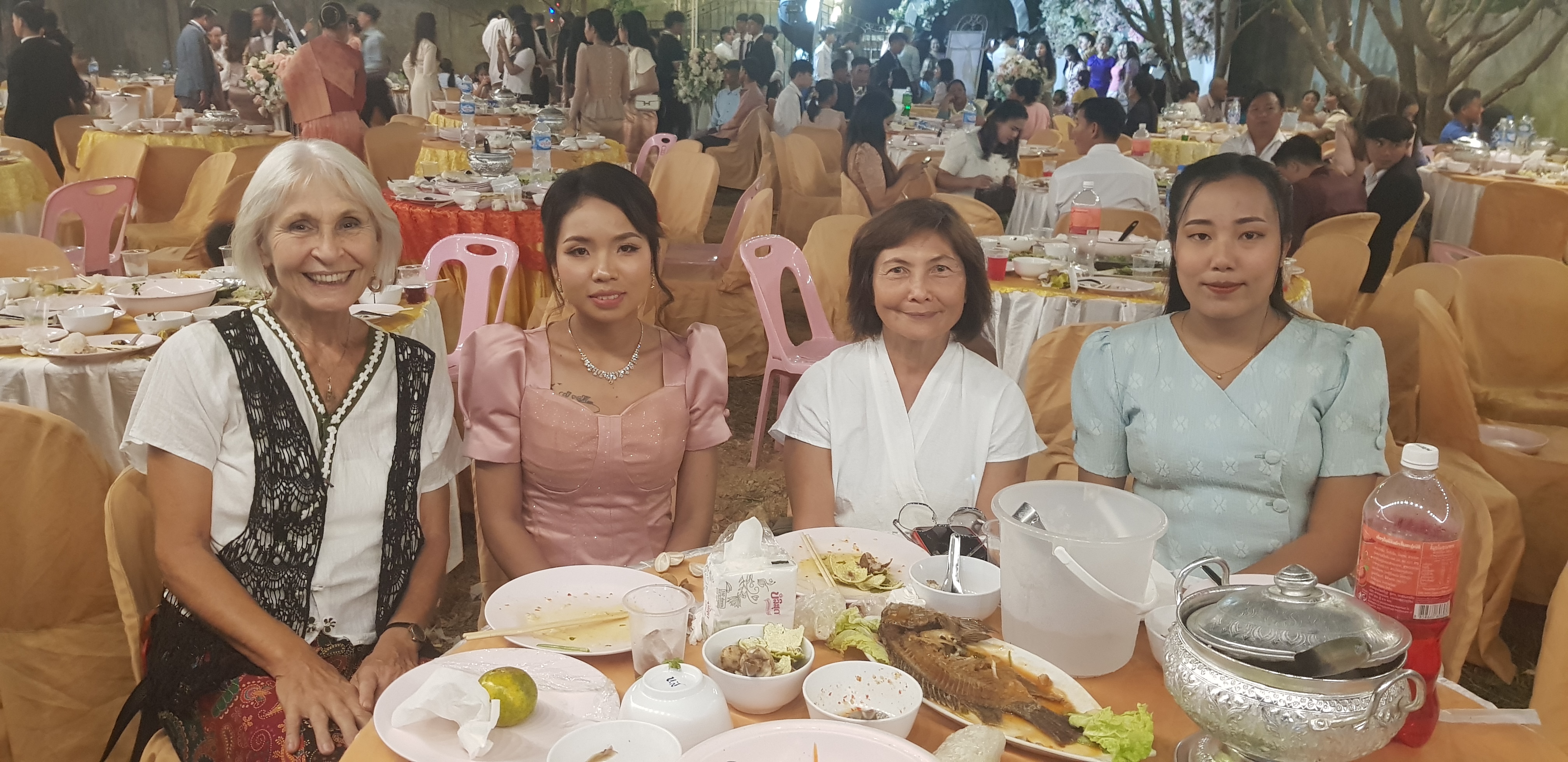
At a wedding dinner

How about a swim in the Mekong River?

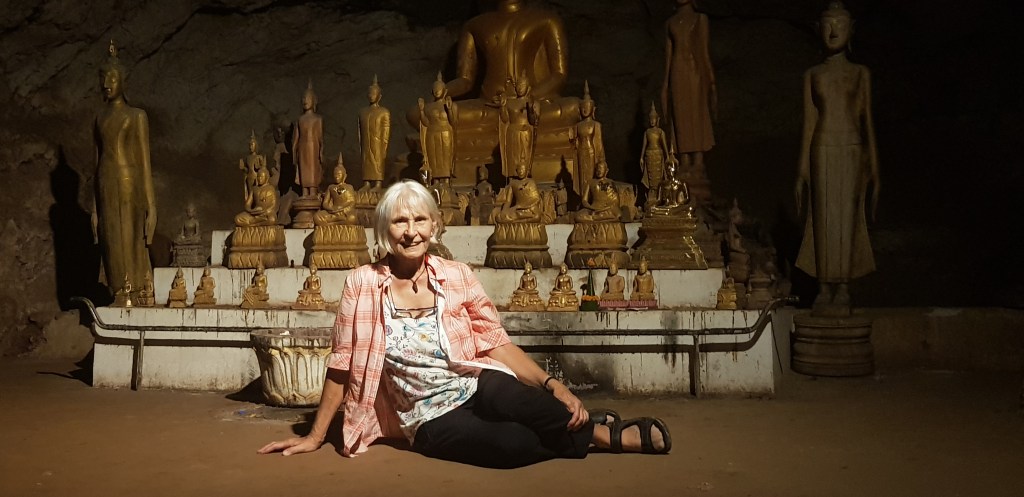
Rather, travel upstream and visit the Buddha caves!

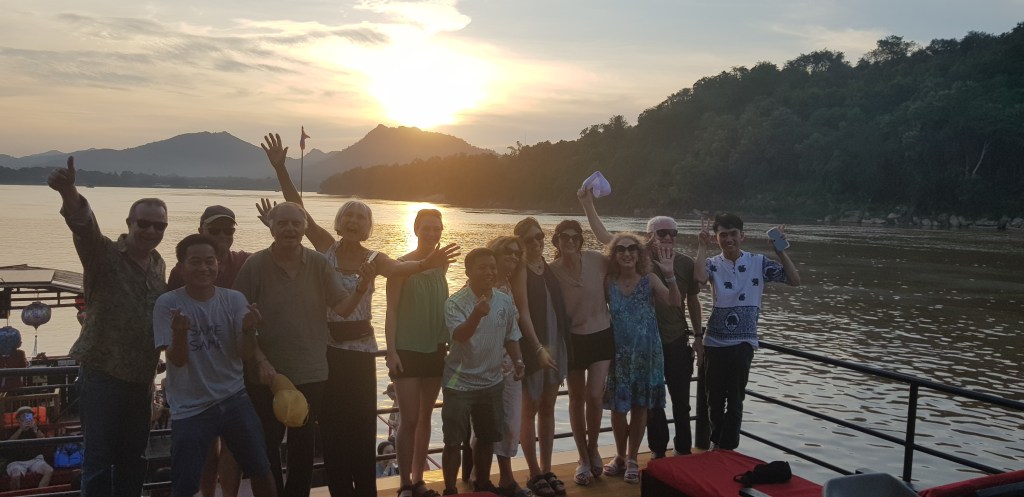
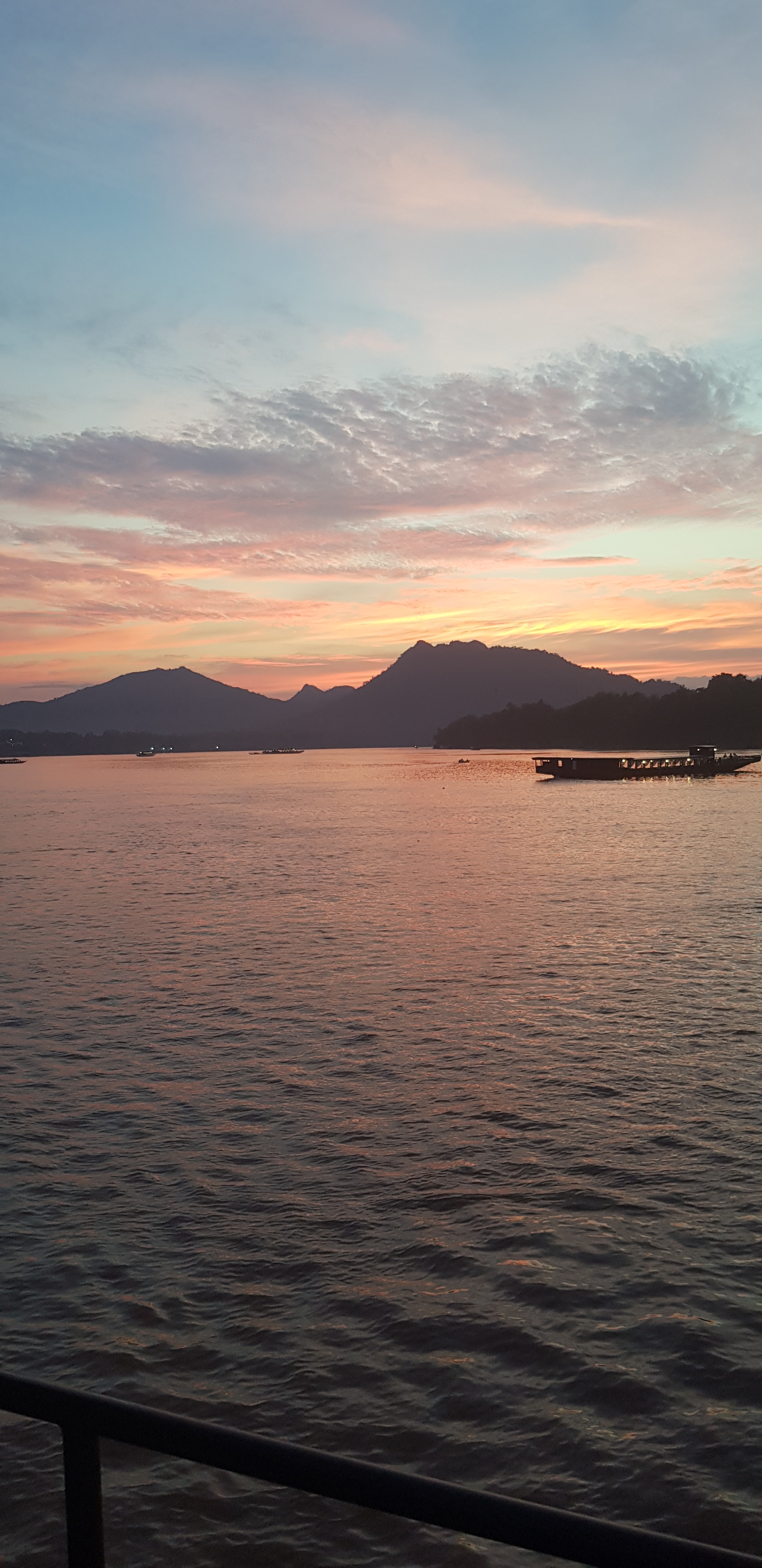
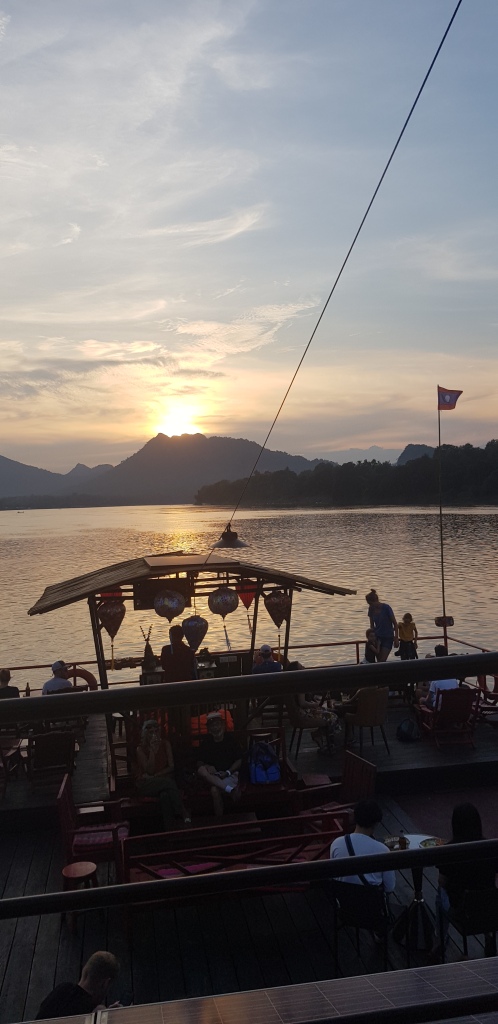
Or go on a sunset cruise with your friends!

Included: spring roll, mojito or beerlao, and music.

What’s your favourite colour?

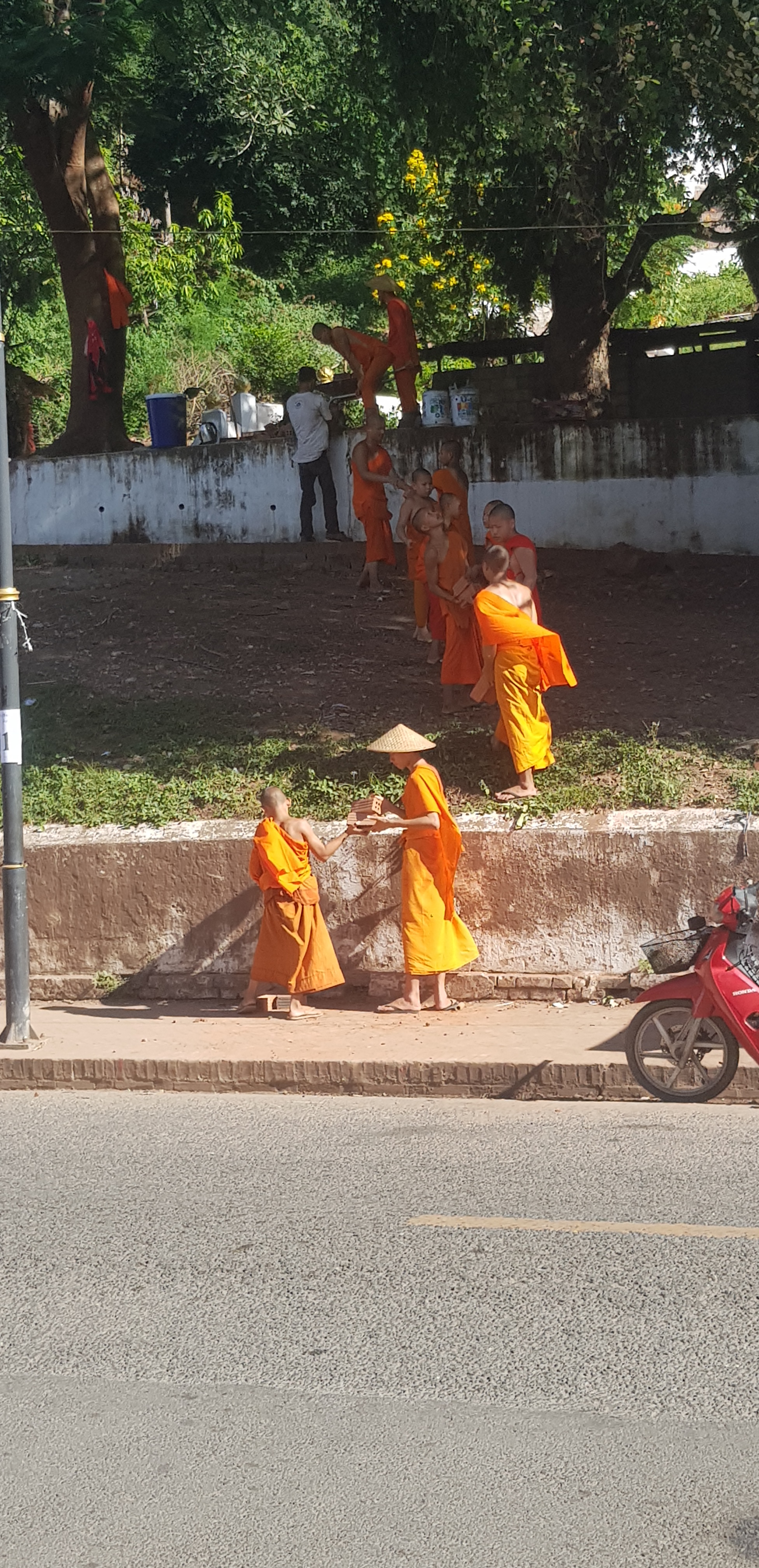
Orange: like the monks’ robes, like the light, like the flame (of the Buddha’s teachings)!

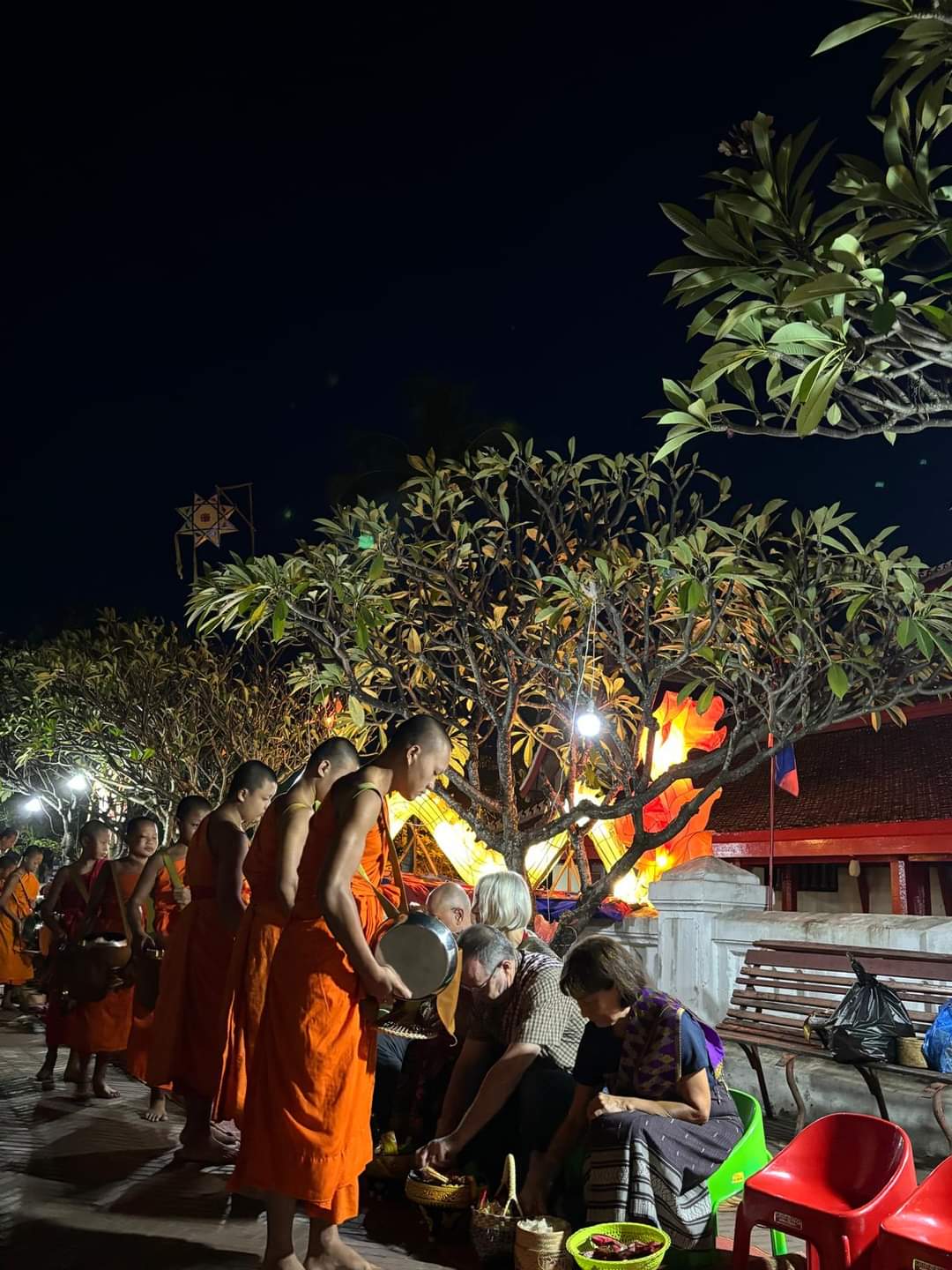
Feeding the monks is a ritual. Or call it almsgiving. It needs some preparation: get up at 2 o’clock at night to cook sticky rice. It’s a long and tricky process, but sticky rice is convenient because it comes in one big lump, from which you take off small chunks to put into the monks’ alms bowls. Bring along 60 or 70 small packs of biscuits. Dress decently (long skirt, shoulders covered) and go to the street where the alms round takes place. In the dark, you see the monks in their bright orange robes approaching, bring your food bowl to your forehead, and when the monk is in front of you, lift a handful of food to your forehead and gently place everything into his bowl, without touching either robe or bowl. And this goes on for about an hour. Don’t be surprised when some ill-informed tourists in shorts and belly-free top get in the way to take pictures of the monks. They don’t know any better.

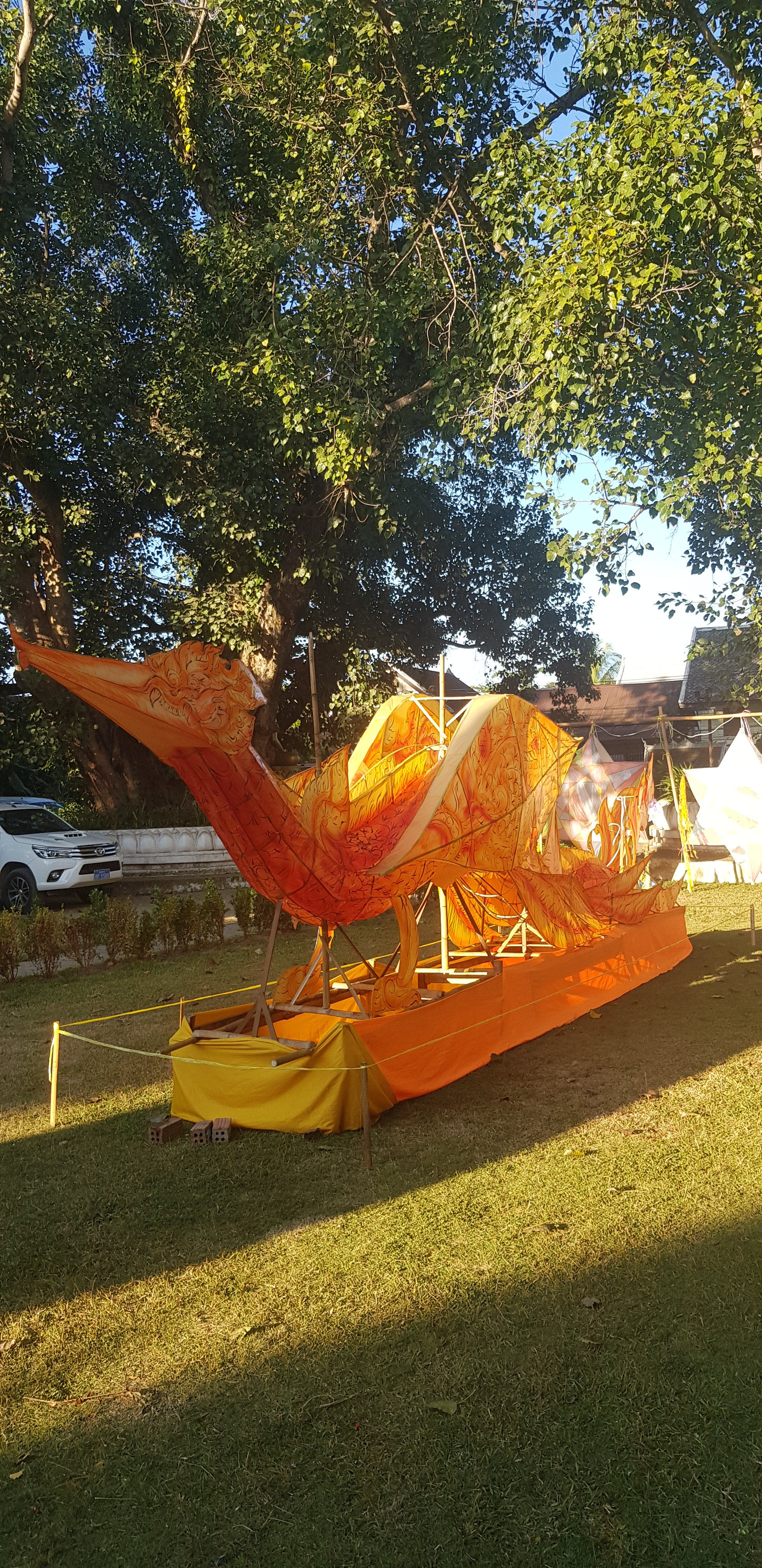
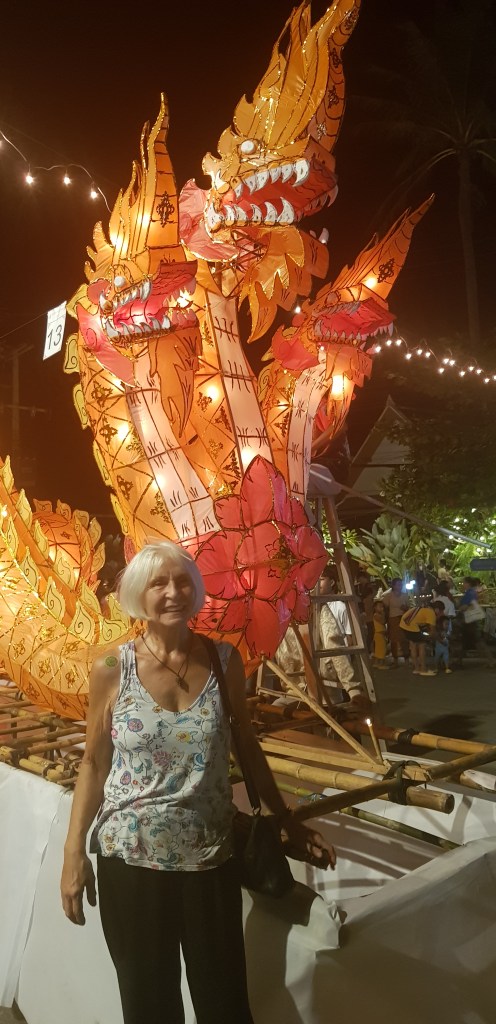
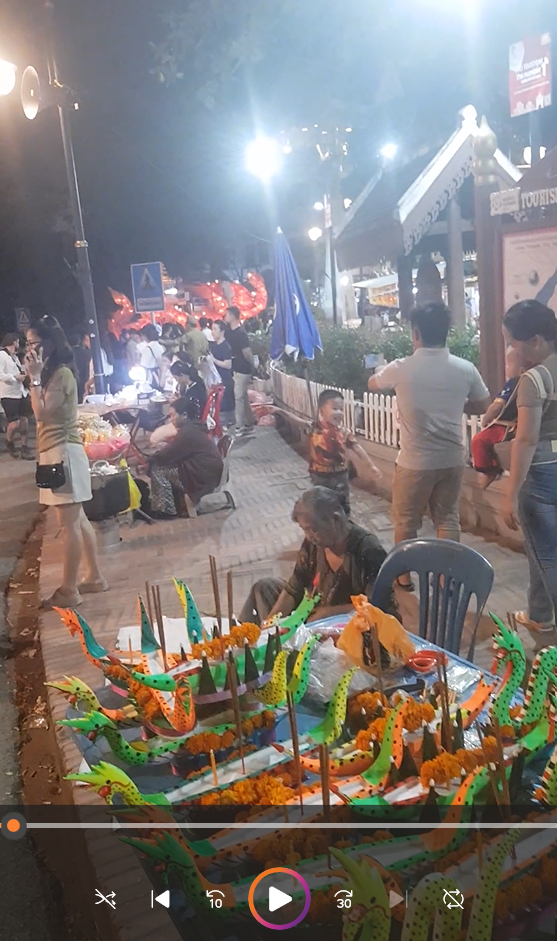
On my first night in Luang Prabang I went to see the Festival of Lights. A long fire boat parade wheels through Luang Prabang to the riverside where the boats are carried down to the Mekong River and float away going up in flames. They are made of orange coloured paper and bamboo with candles inside. You can buy offerings to the Buddha, to the river Mekong “the mother of all things”, or to the nagas. That way you ask for forgiveness for having polluted the river and you avert bad luck. The fire boat behind me represents the nagas. I love nagas (serpent spirits) and take pictures everywhere I see them!

I was so fascinated that I lost my group and not yet having a Lao sim card I couldn’t use the gps or call someone.

Luck is when a tuktuk driver understands what you are saying and knows the place you want to go to.

to be continued

cheers Gerburg