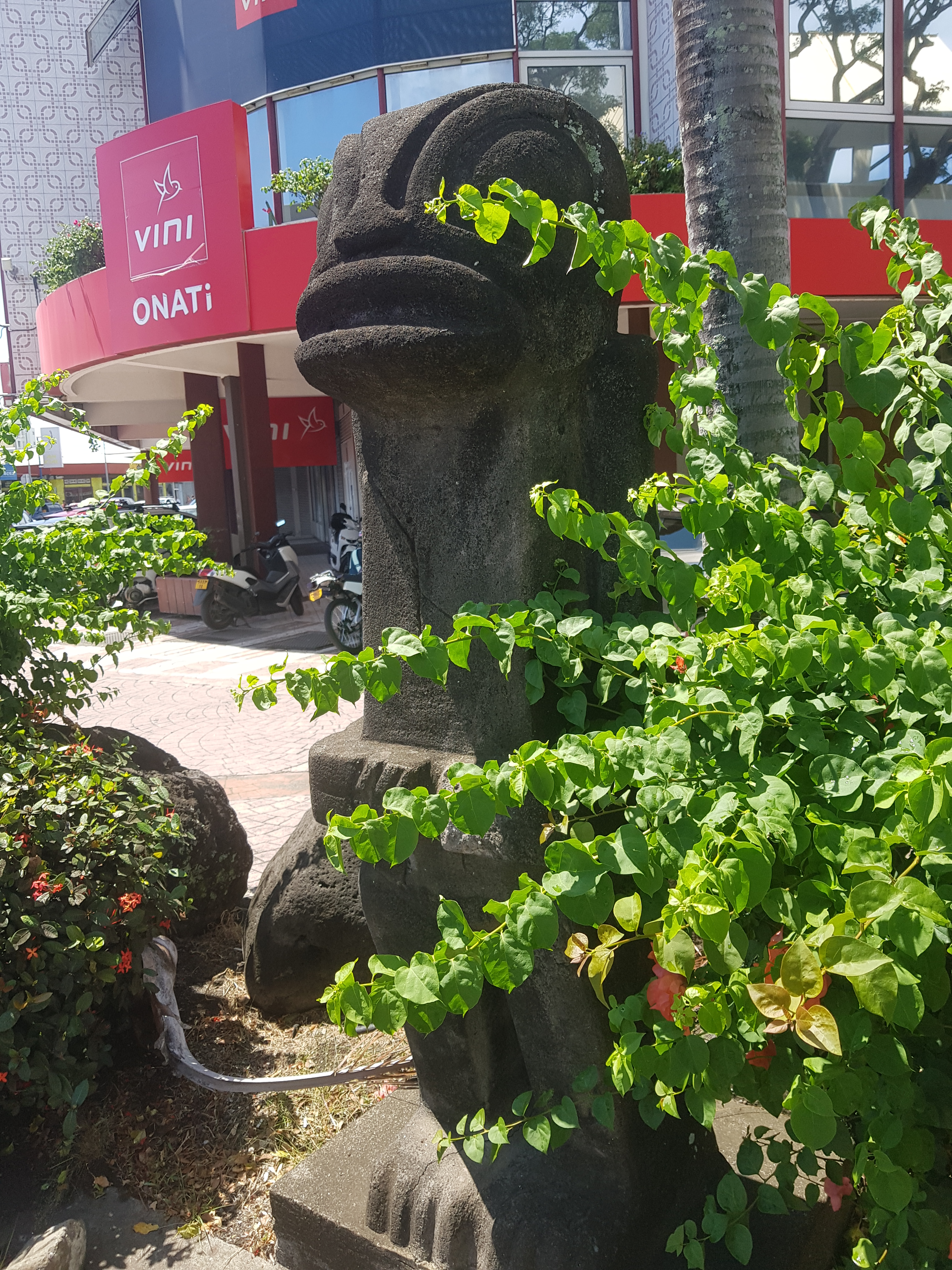
I didn’t know much about Tiki when I started out, it was just a figure, carved in stone or wood, resembling what? a human being? ET? With large oval eyes and high arched eyebrows, wide mouth, squatting or kneeling, even standing upright … sometimes in the middle of a busy street or in front of a Bank. I saw my first Tiki when I went to buy a Polynesian Sim Card fom VINI.
Is it decorative? Is it pretty?
I simply fell in love with it and started taking pictures of every Tiki I came across. And I didn’t know what it was all about. I’m still puzzled today, and I’m still infatuated.
A symbol of Polynesian culture and spirituality Tiki or Ti’I, means demigod and is therefore considered the creator of man. He represents ancestors or gods and has protective powers. That’s why you would also put it in your garden or in your house. I want one!
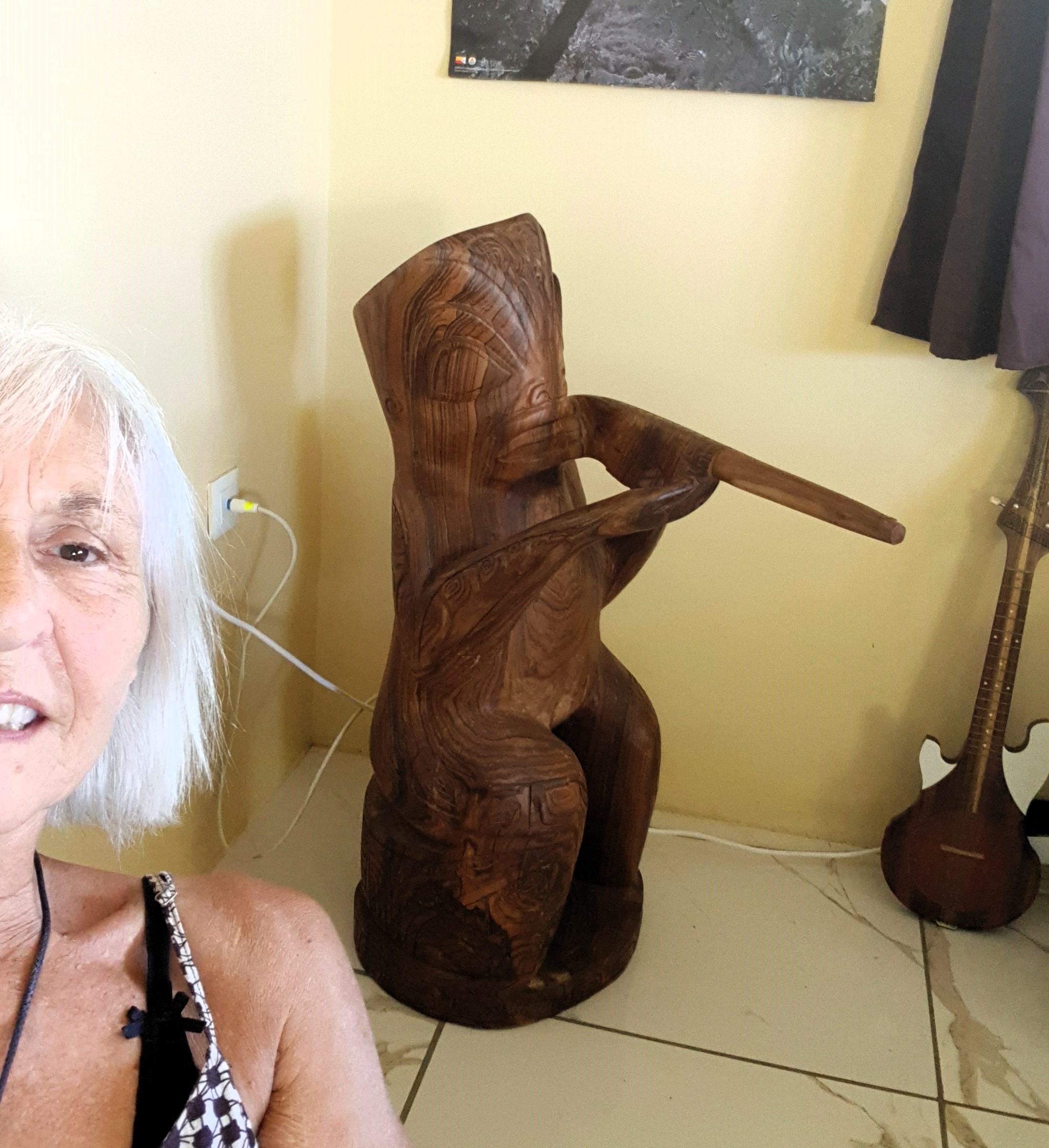
Modern Tiki: A not so suttle statement against the white invader? In my bungolow on Hiva Oa.
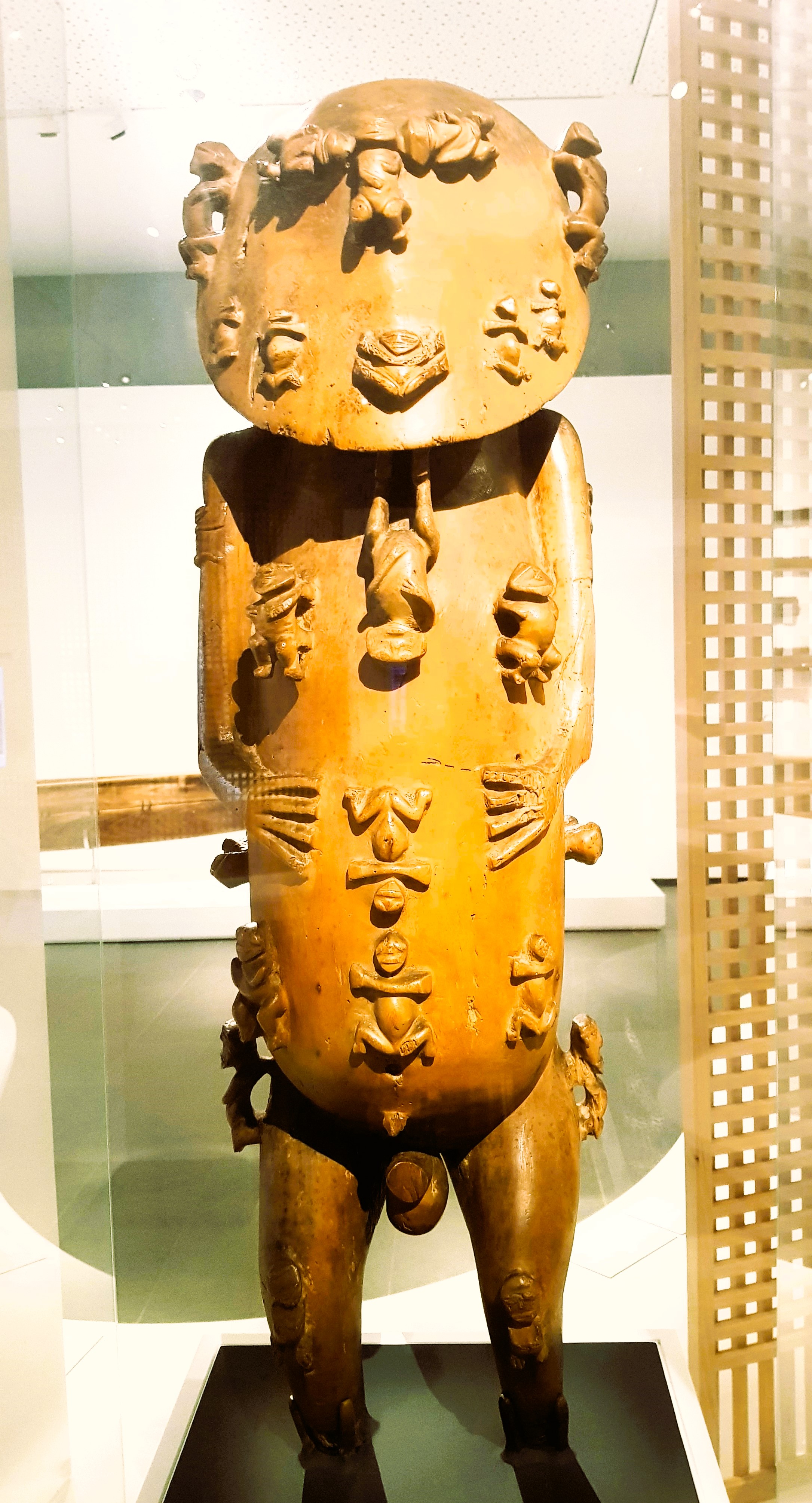
I suppose not all anthropomorphic figures are Tiki. Here are some pretty ones from the Musée de Tahiti et des Îsles. (Entrance fee around 20 €. Ok, no quarrel, already the Louvre costs 17 €.)
Most pieces of art in the museum are on loan from the British Museum, le Museum of Archaeology and Anthropology of Cambridge, la Congrégation des Pères des Sacrés-Cœurs de Jésus et de Marie, the musée du quai Branly – Jacques Chirac and other important European Museums.
On loan … That is so generous!!!
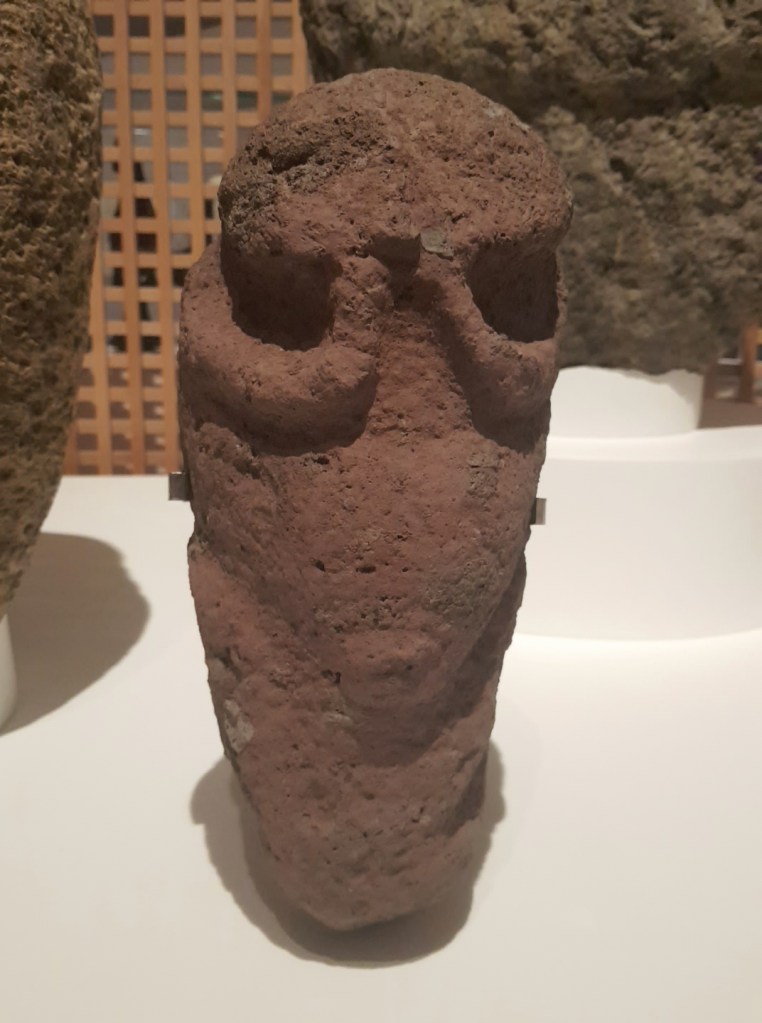
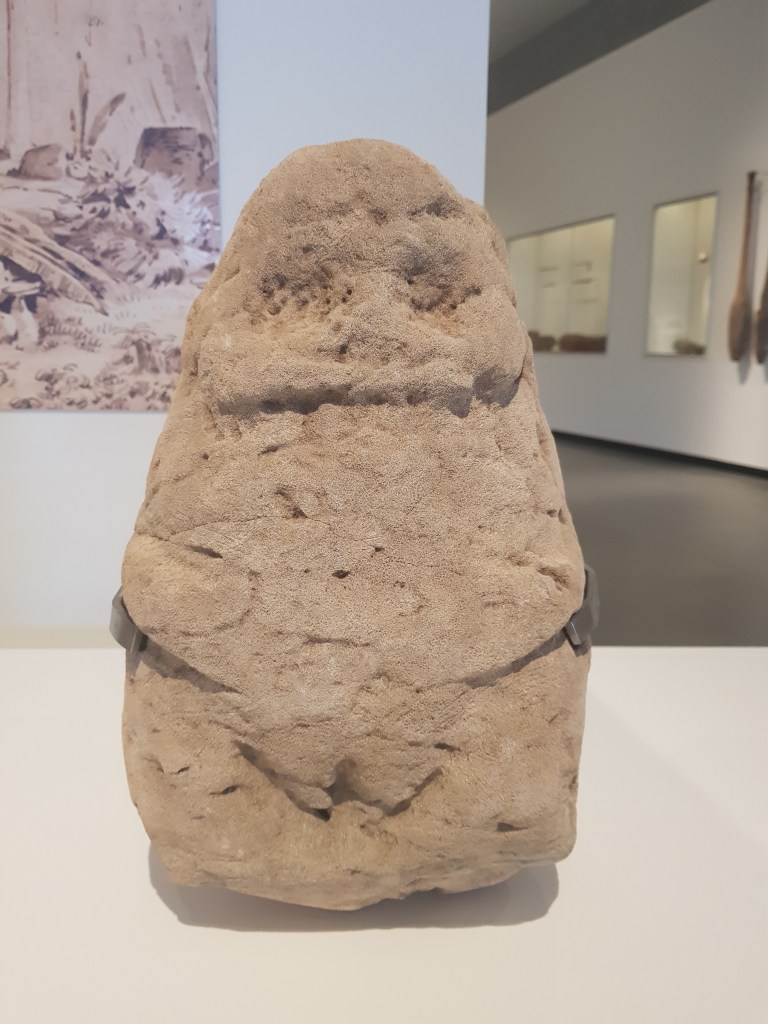
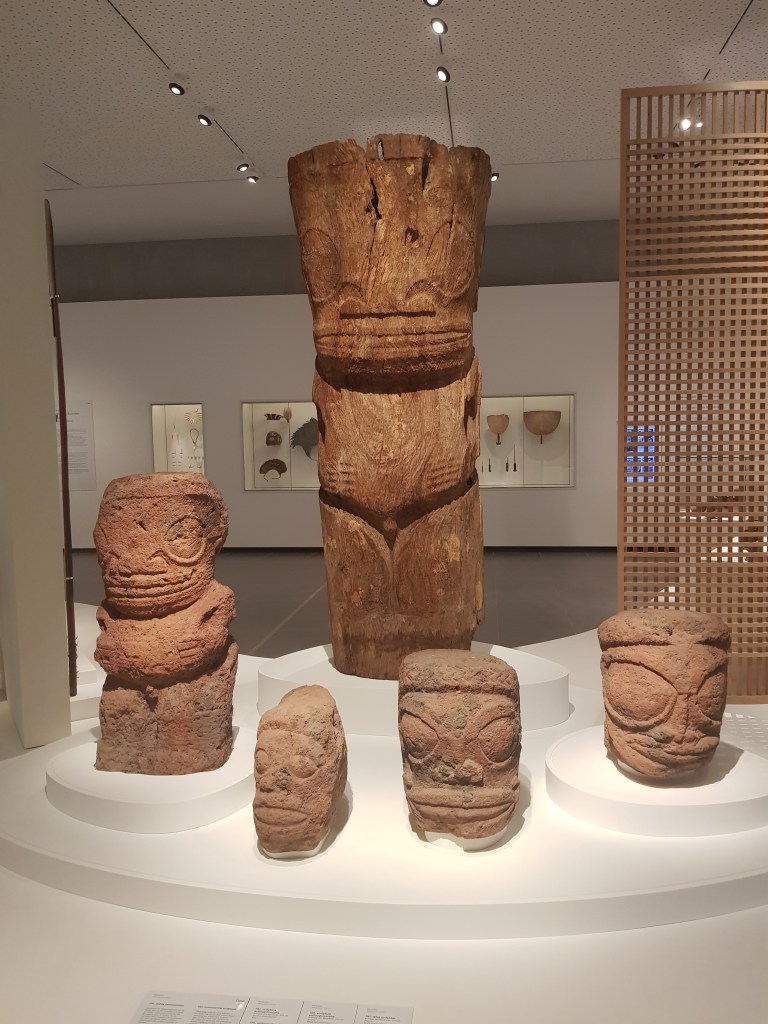
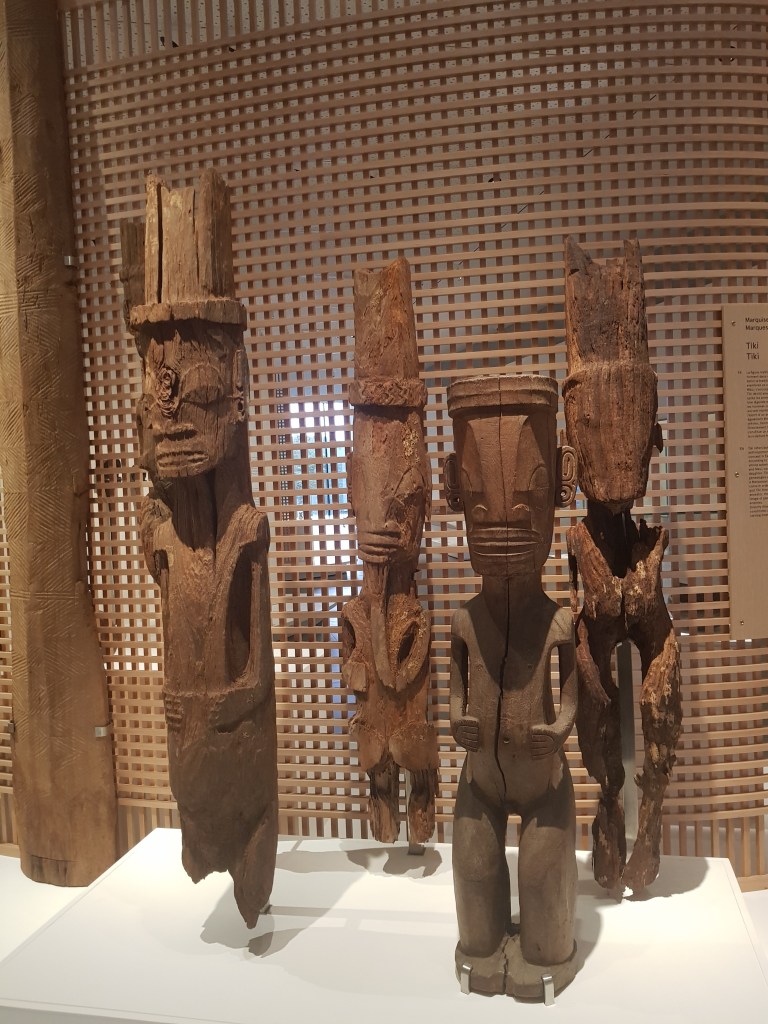
Some carved heads from Tiki could represent deified prestigious chiefs or enemies that had been sacrificed. You’ll find them mainly in the vicinity of the meàe the sacred sites formed of huge, meter high stone platforms where rituals were performed. Today they are indicated as archaeological sites. There you find pits for food storage and caved out bowls in the rocks used to mix tattoo ink.
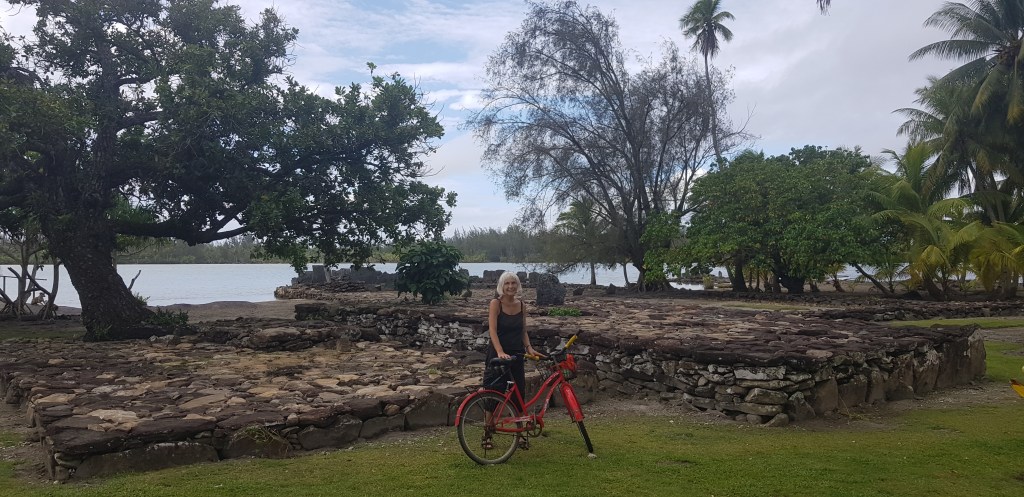
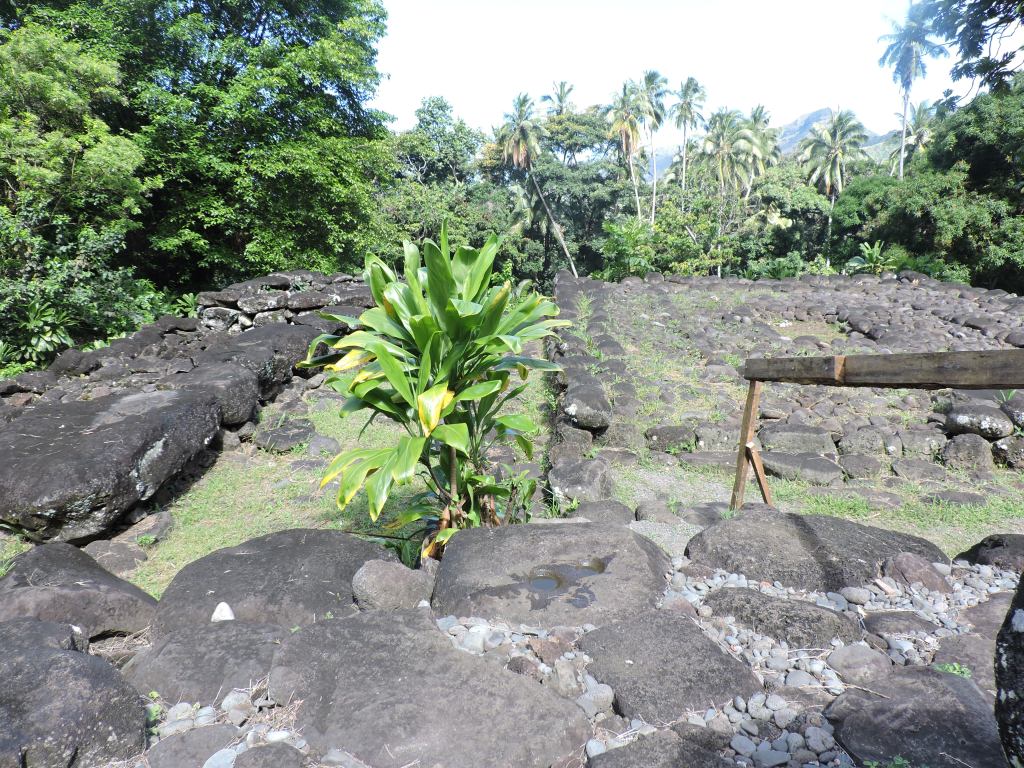
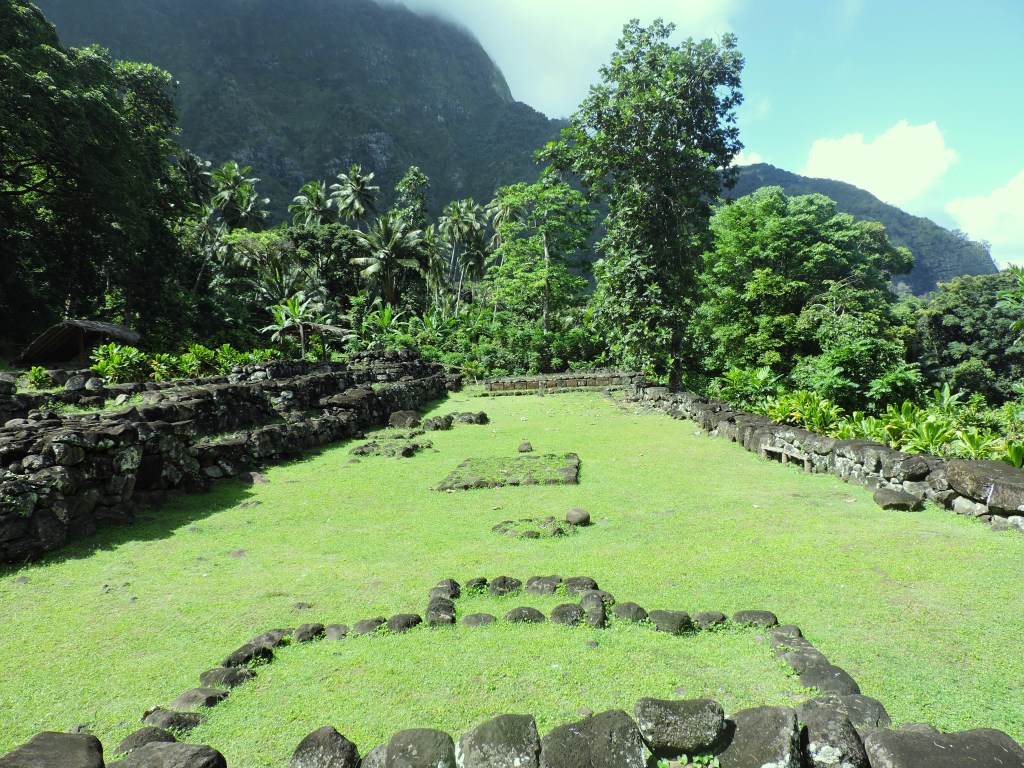
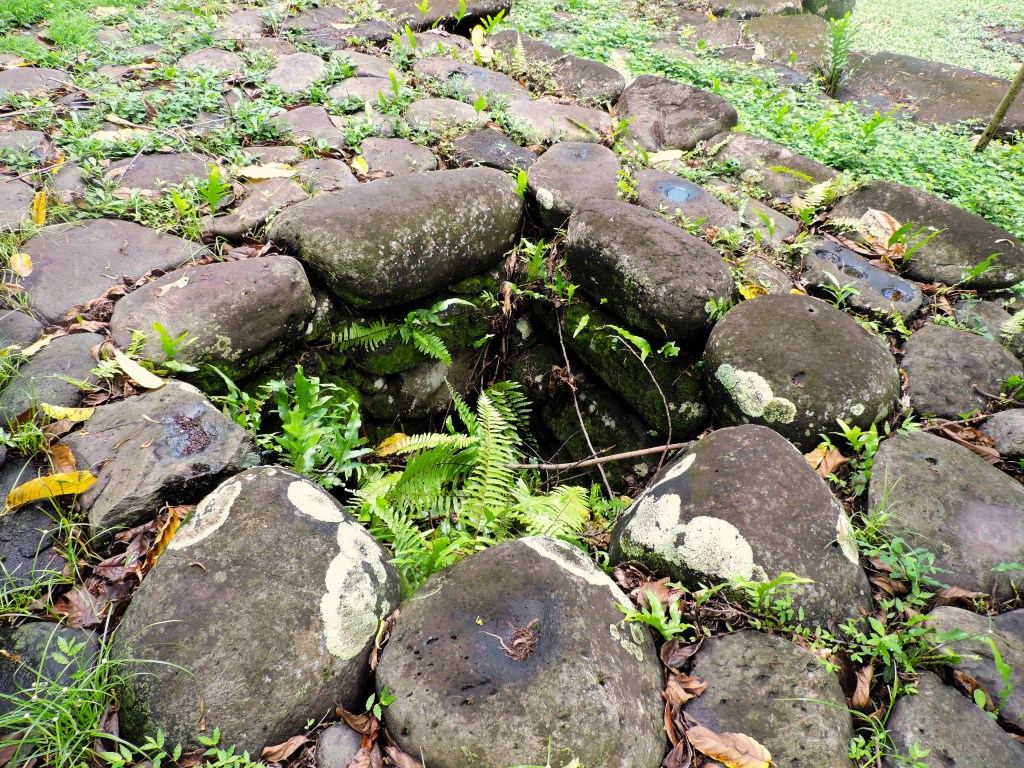
Only spiritual leaders and their assistents were allowed here, sometimes the chief and high ranking members of a clan. For ordinary people all that was sacred was “tapu”, forbidden: the head and sacred body parts, people, places, times, objects and foods. And now we also use the word, in all our languages.
According to the oral tradition, Tiki, half-man half-god, coupled with Hina-one, whom he fashioned out of sand, then with their daughter. Tiki thereby became the creator of humankind. He appears after the first gods and before the deified chief of a clan. Creation myths may vary from isle to isle or one archypelago to the next.
Here “Tiki family life” on a community square in Hiva Oa (Marquesas Islands); of rather recent making but still in the tradition.
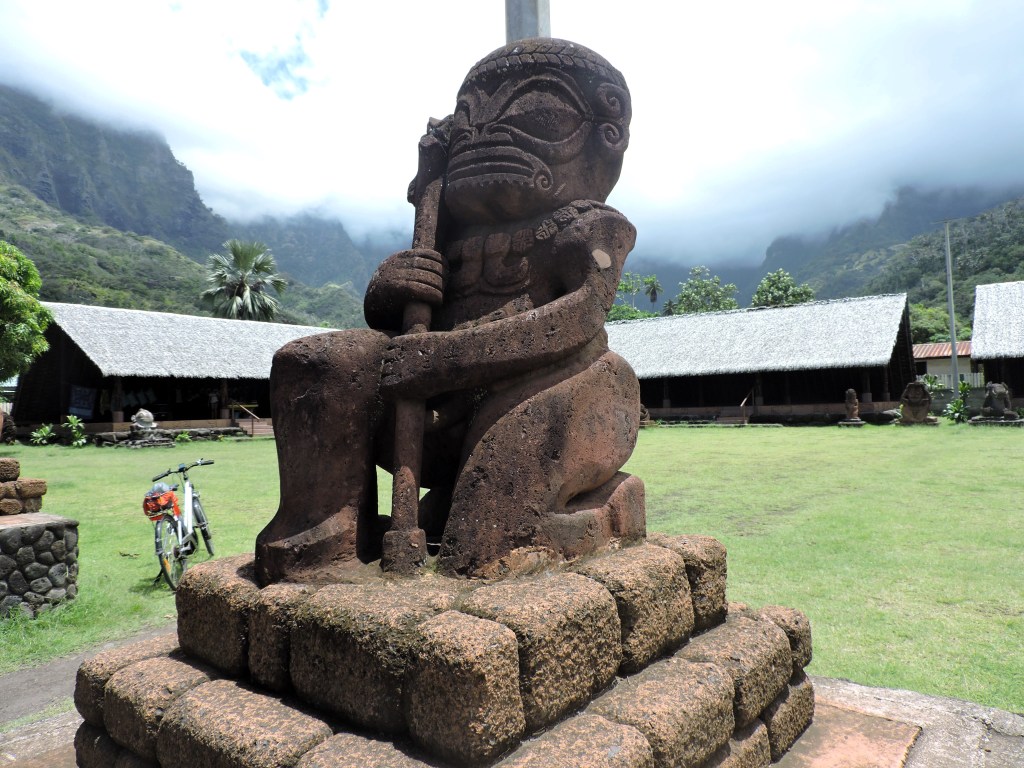
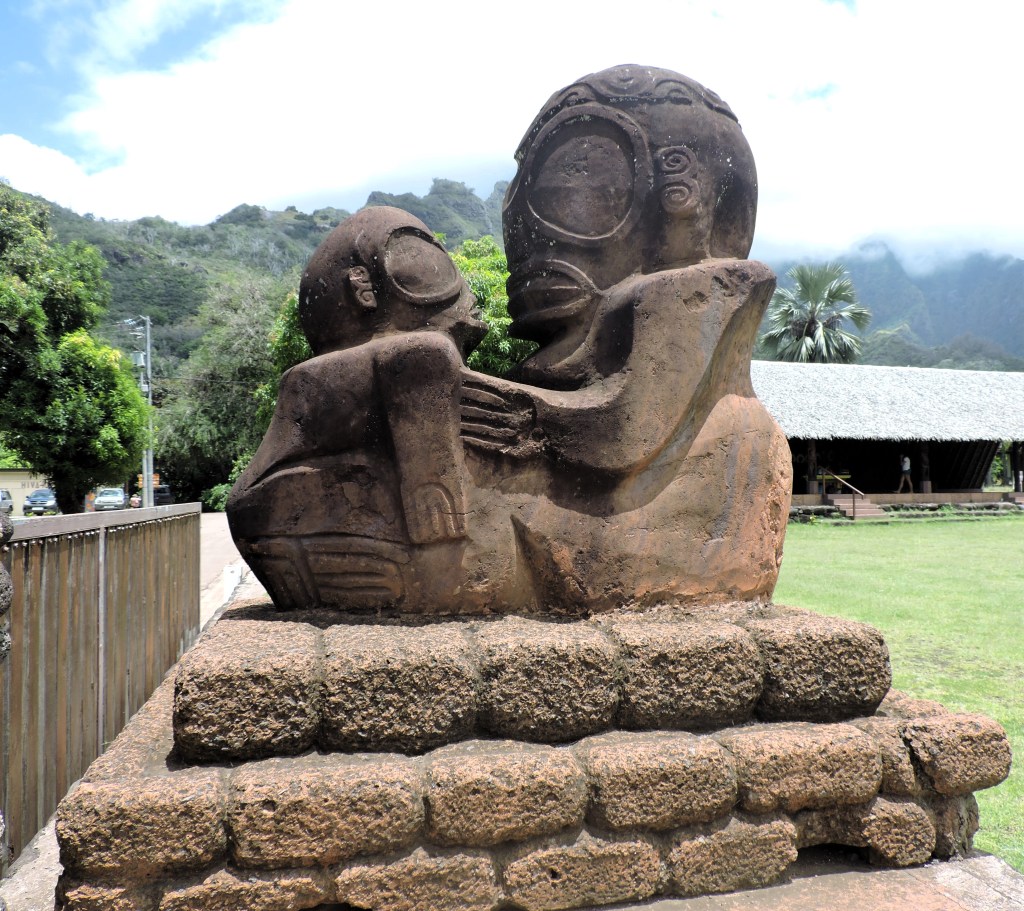
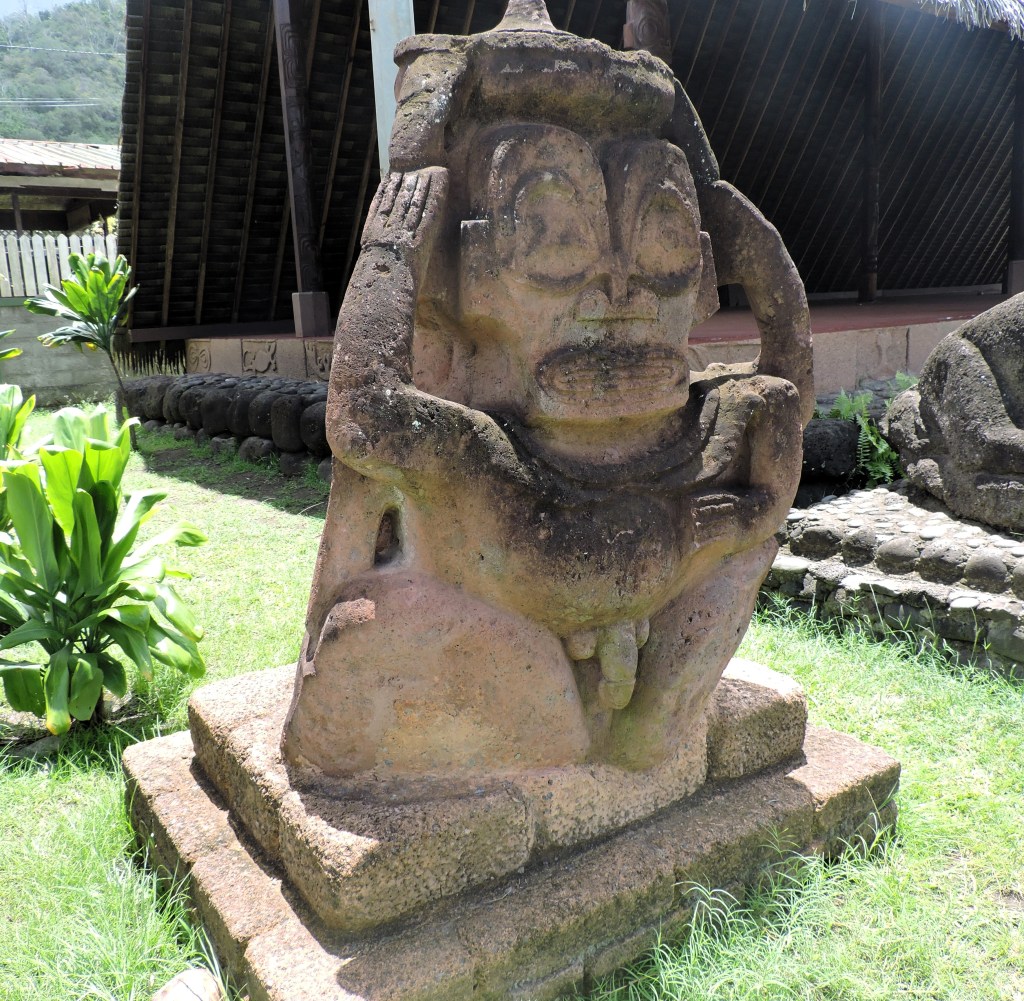
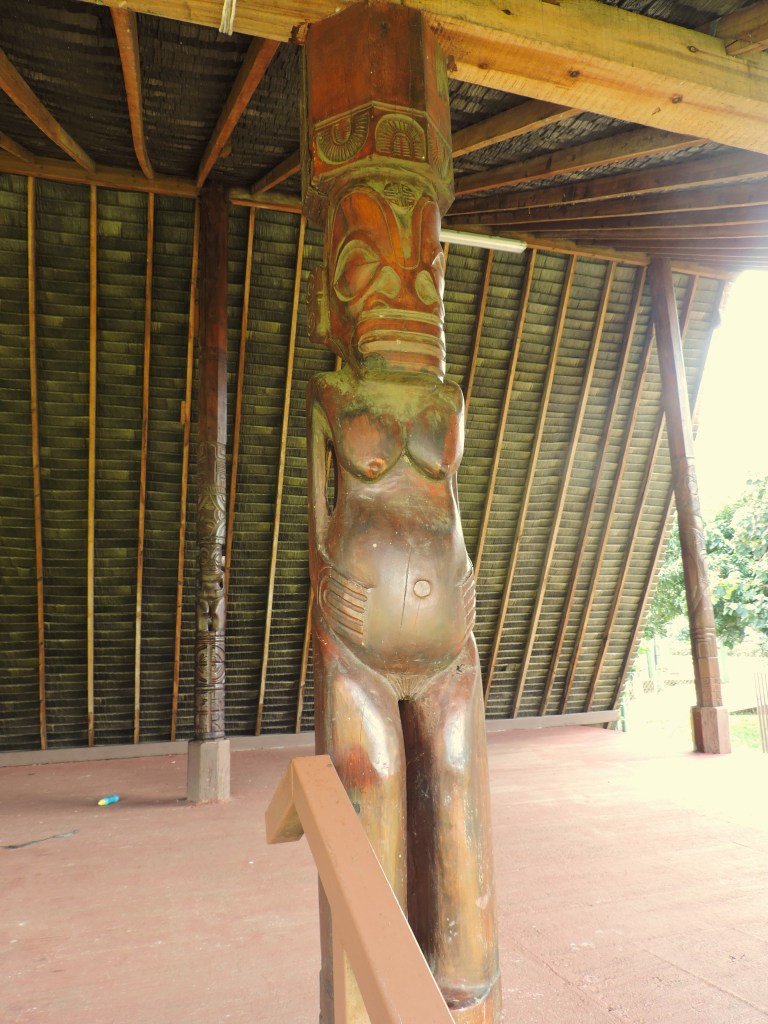
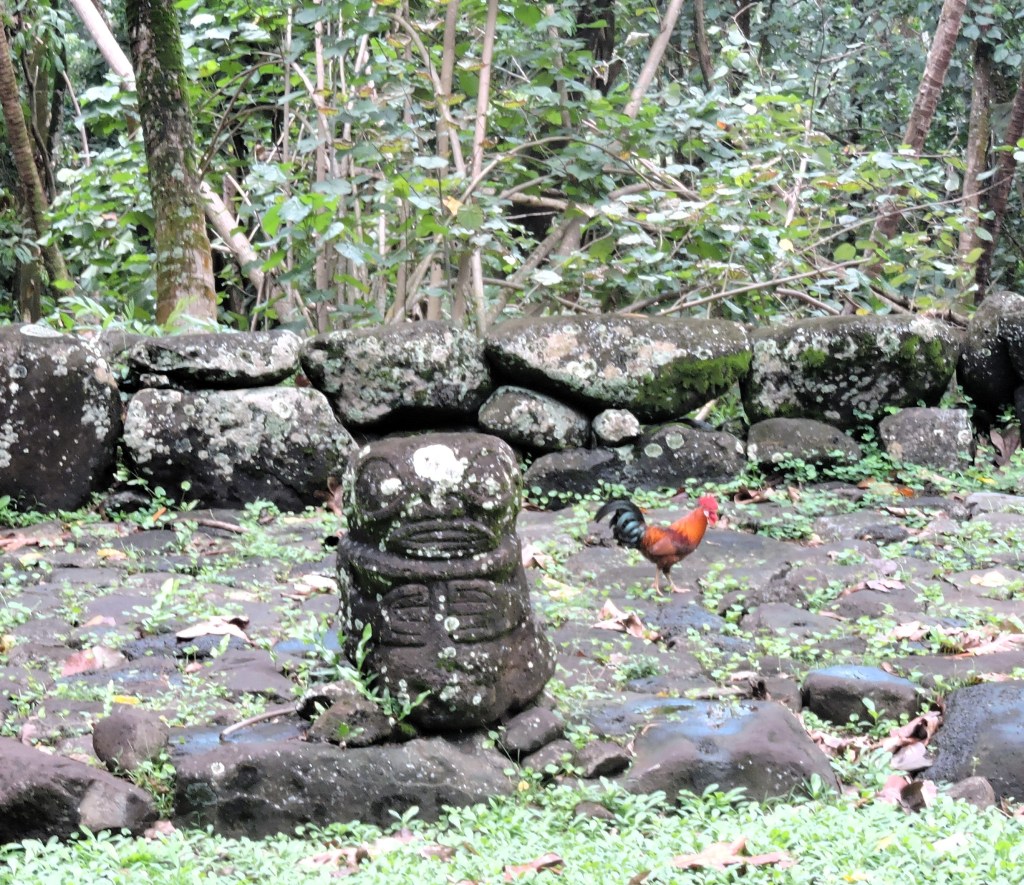
Meeting Tiki in nature makes it look even more mysterious than in town or in the museum. All overgrown with lichens and moss, it is hard to distinguish it from the surrounding rain forest.
Hiva Oa: Smiling Tiki, tallest Tiki, prone Tiki, hidden Tiki
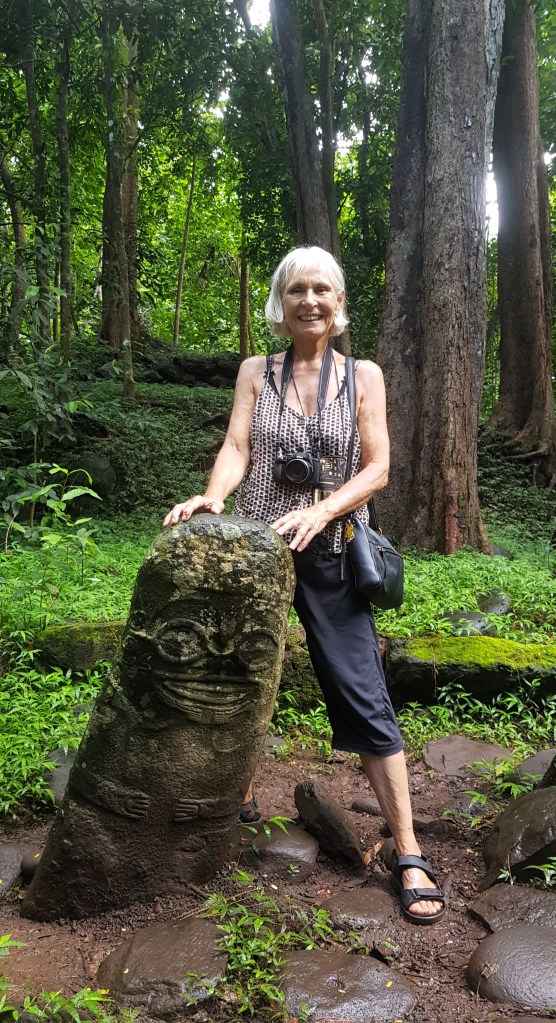
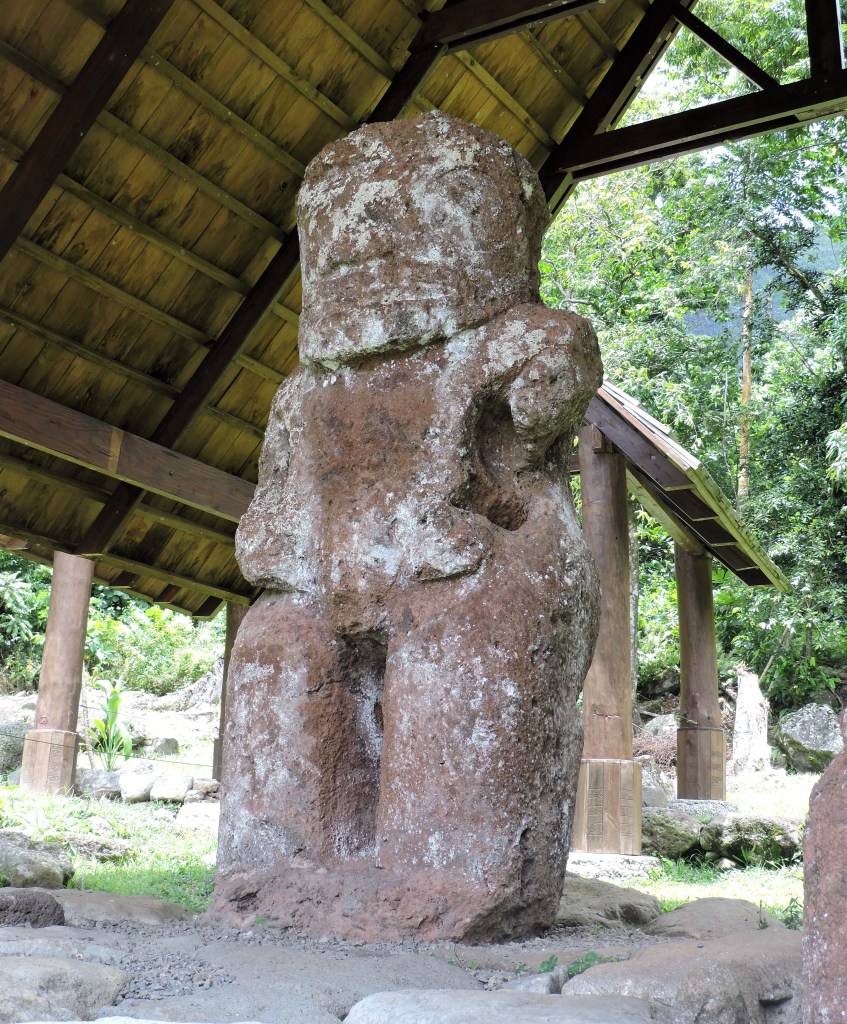
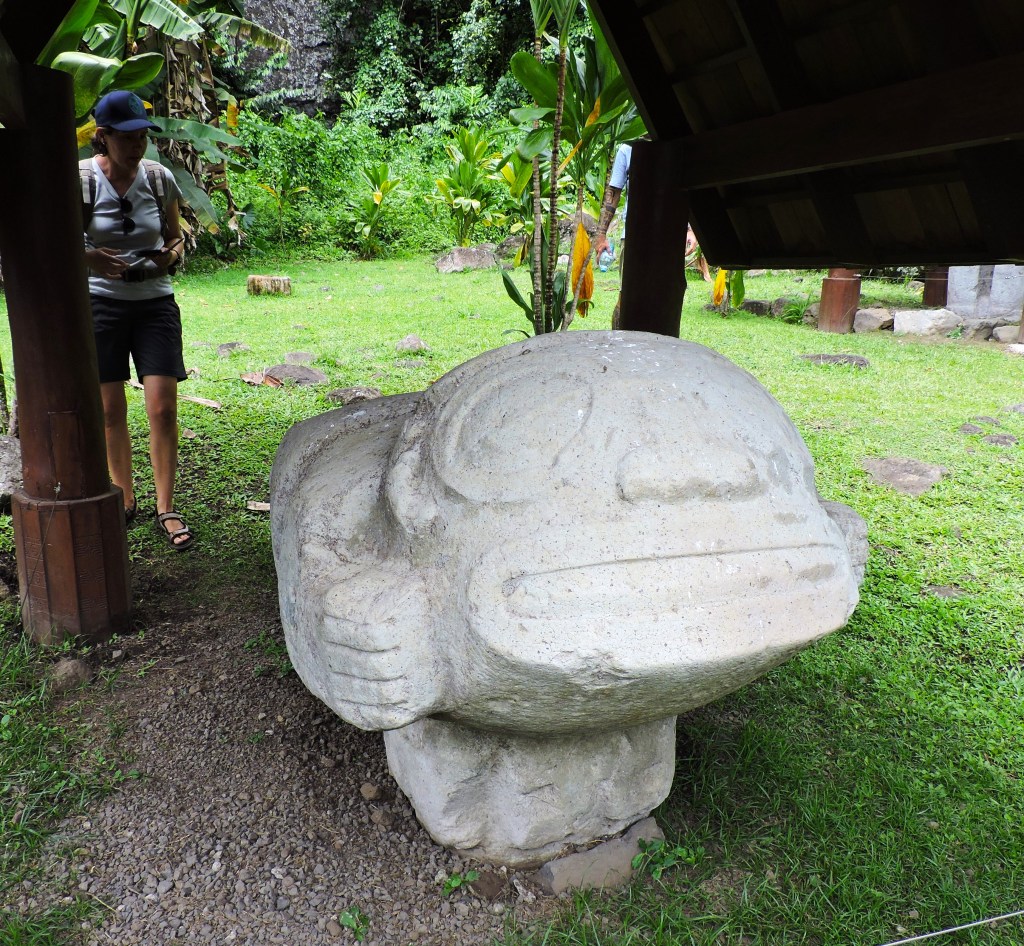
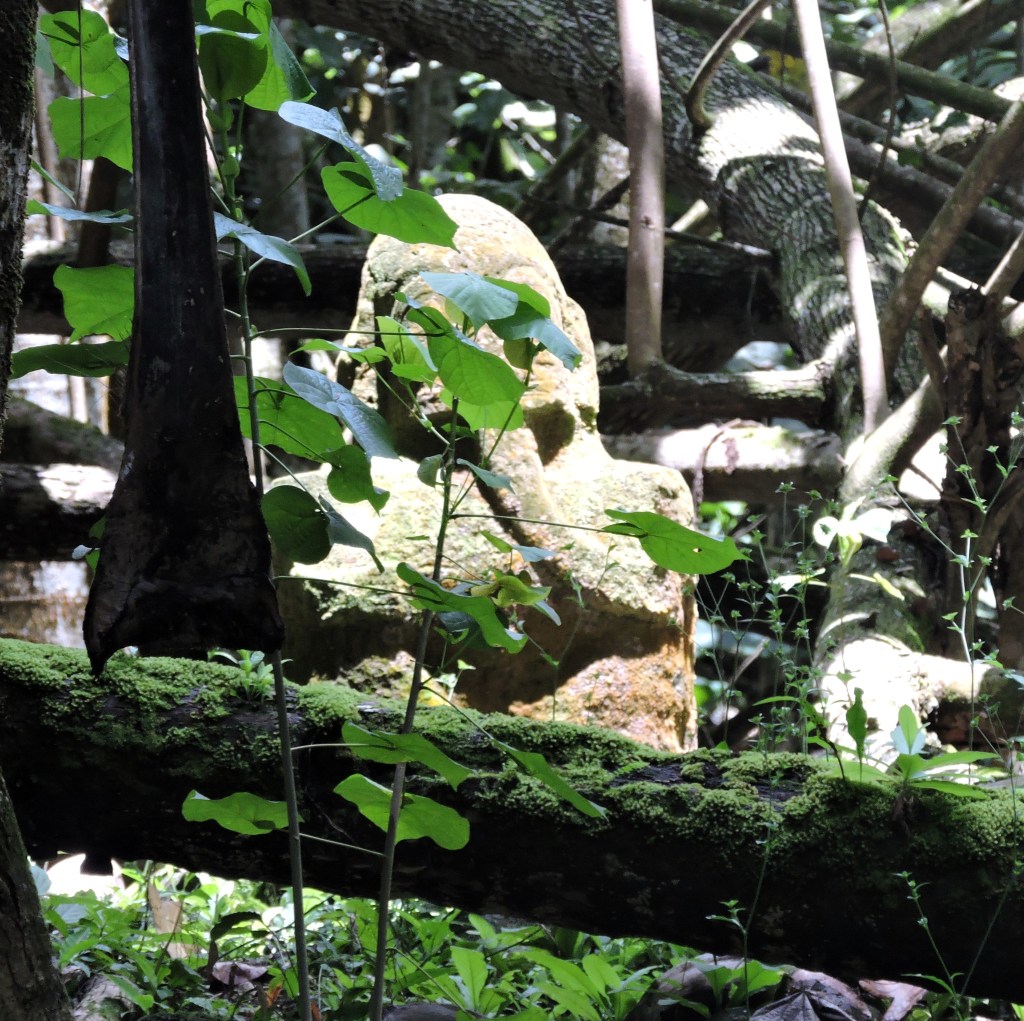
His big head is the symbol of his power, his large mouth sometimes with his tongue wide out marks the challenge he throws at his opponent, his big eyes reflect his divine power and the knowledge he possesses.
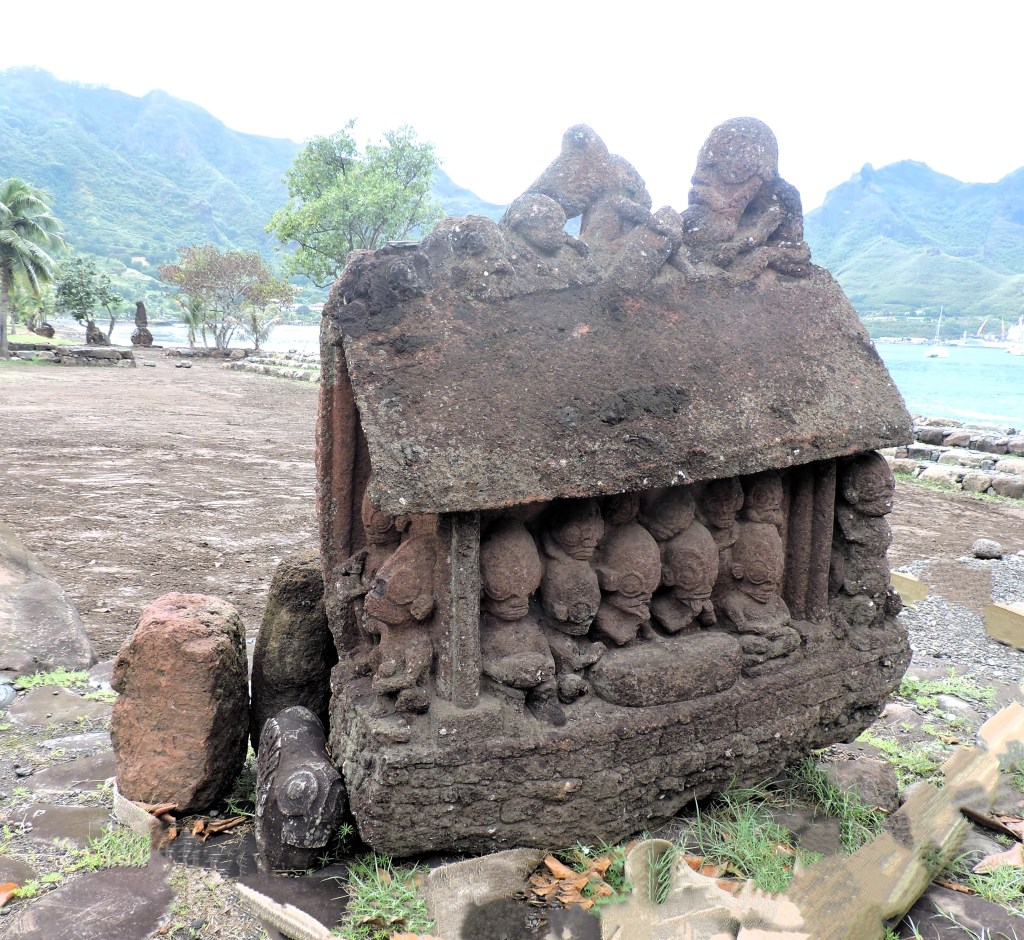
Nuku Hiva (Marquesas Islands): Tiki family seated on heads, Tiki with live rooster, Tiki houseboat? (voyaging the Pacific Ocean in search of new islands?).
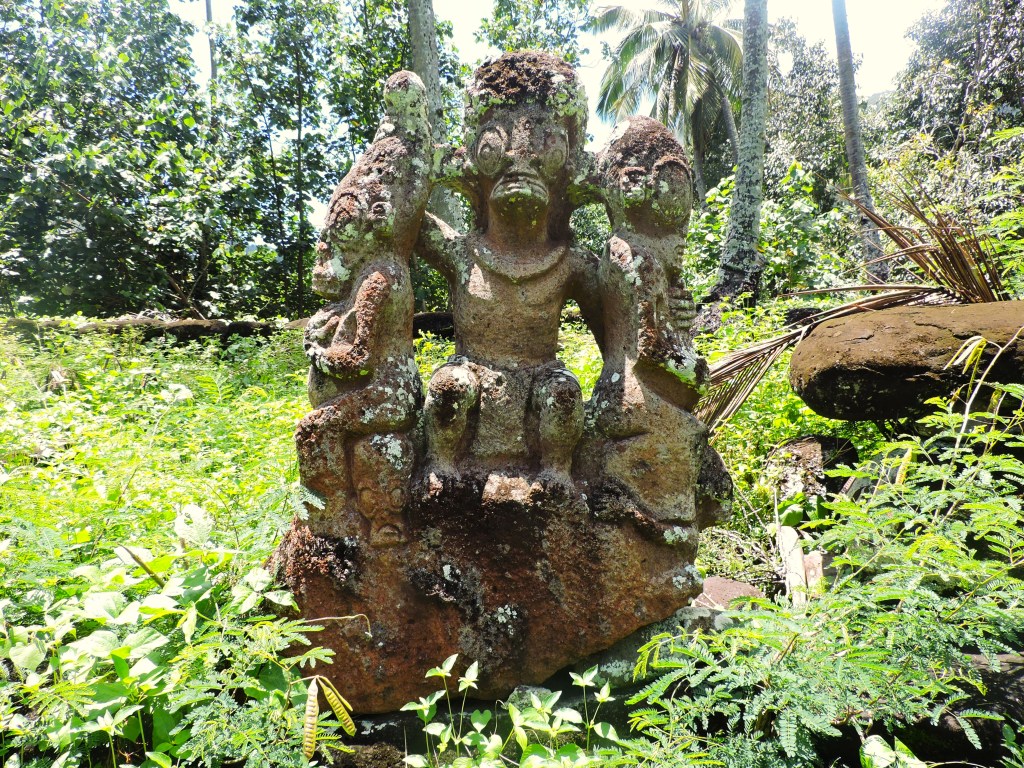
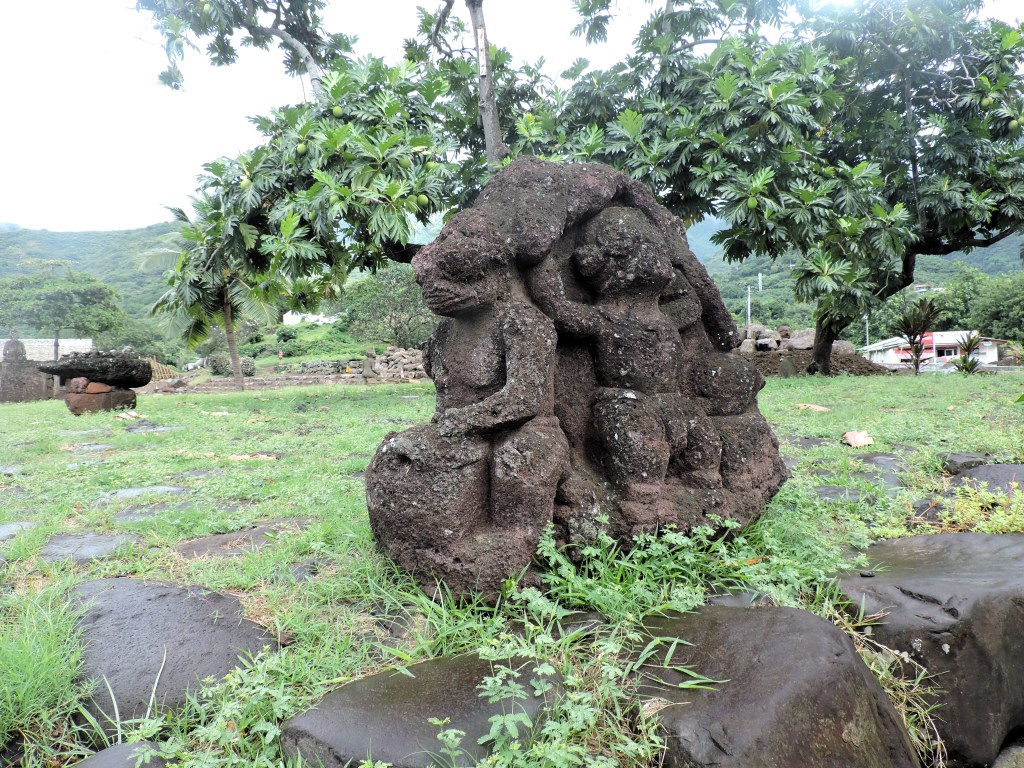
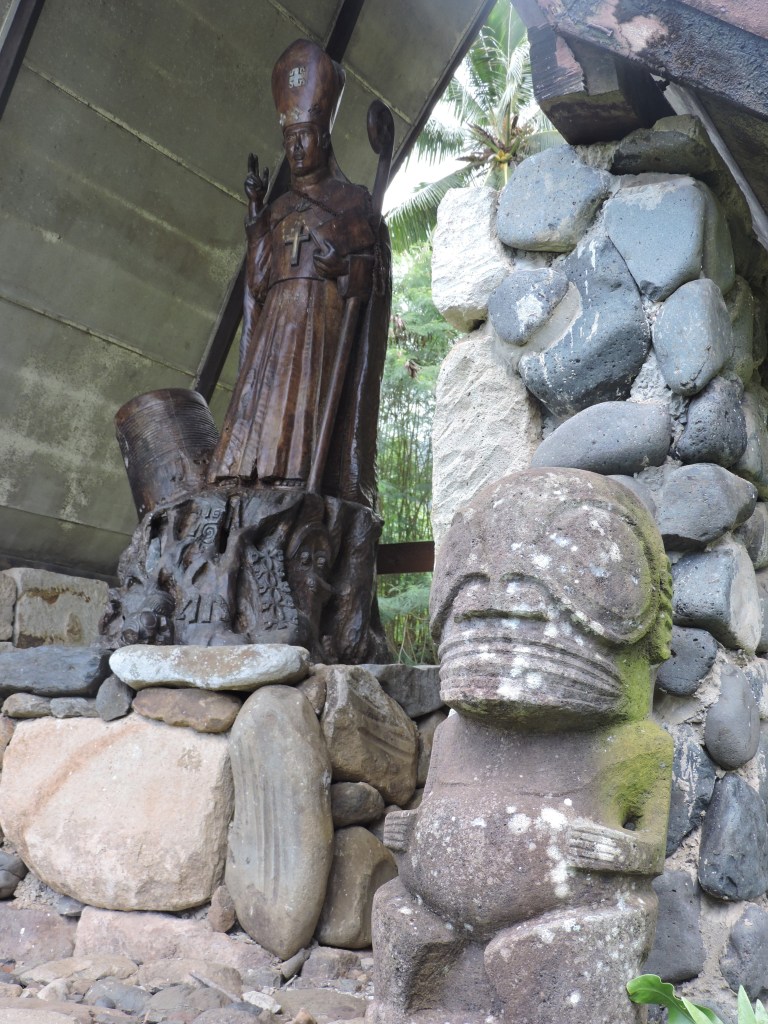
Christianity doesn’t exclude Tiki (any more, after having forbidden their usage in the past, after having destroyed a great deal of the sculptures, after having thrown them in the ocean and punished their worshippers). Here Tiki sentinels for the bishop of Nuku Hiva. There is another Tiki on the other side.
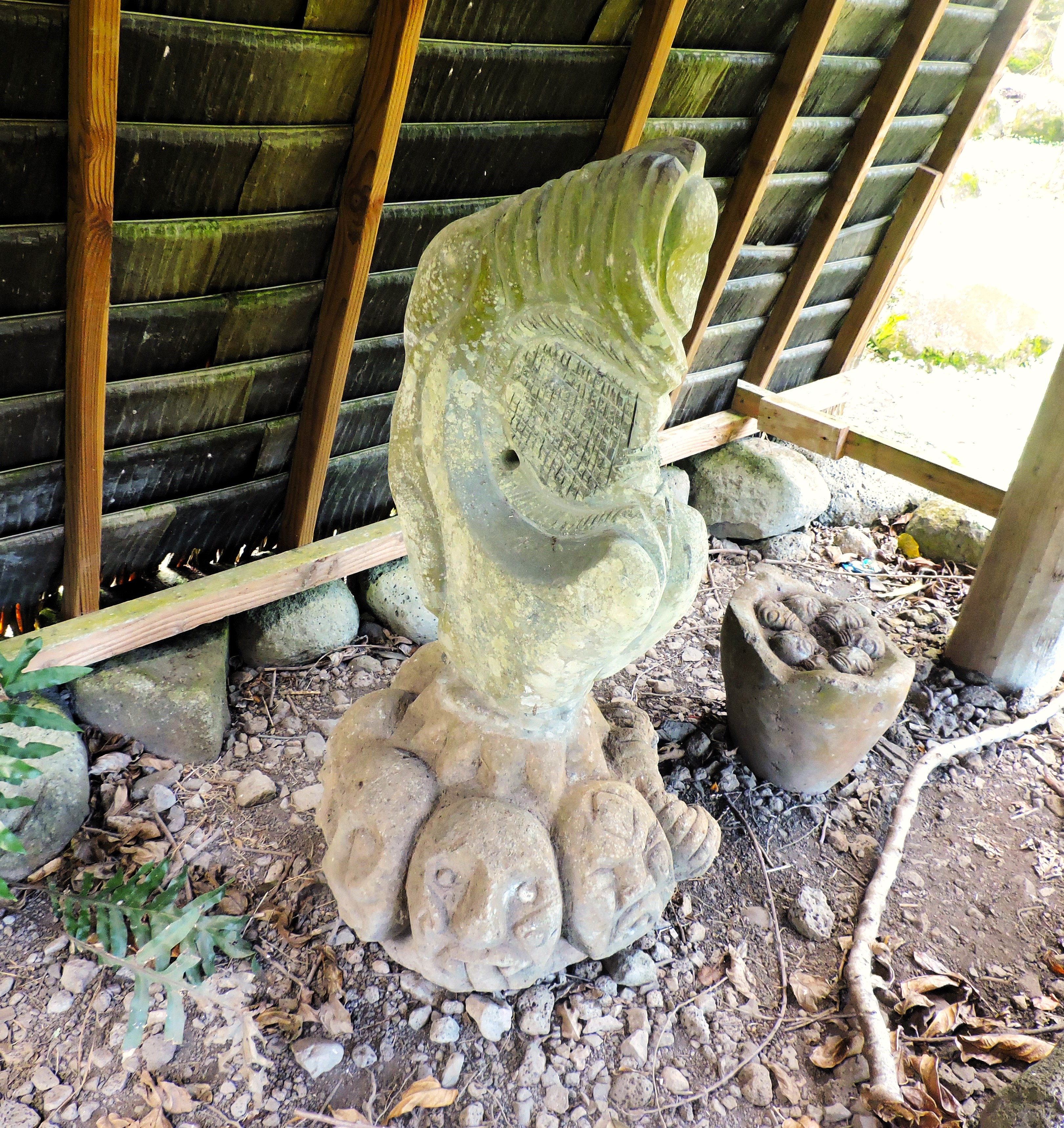
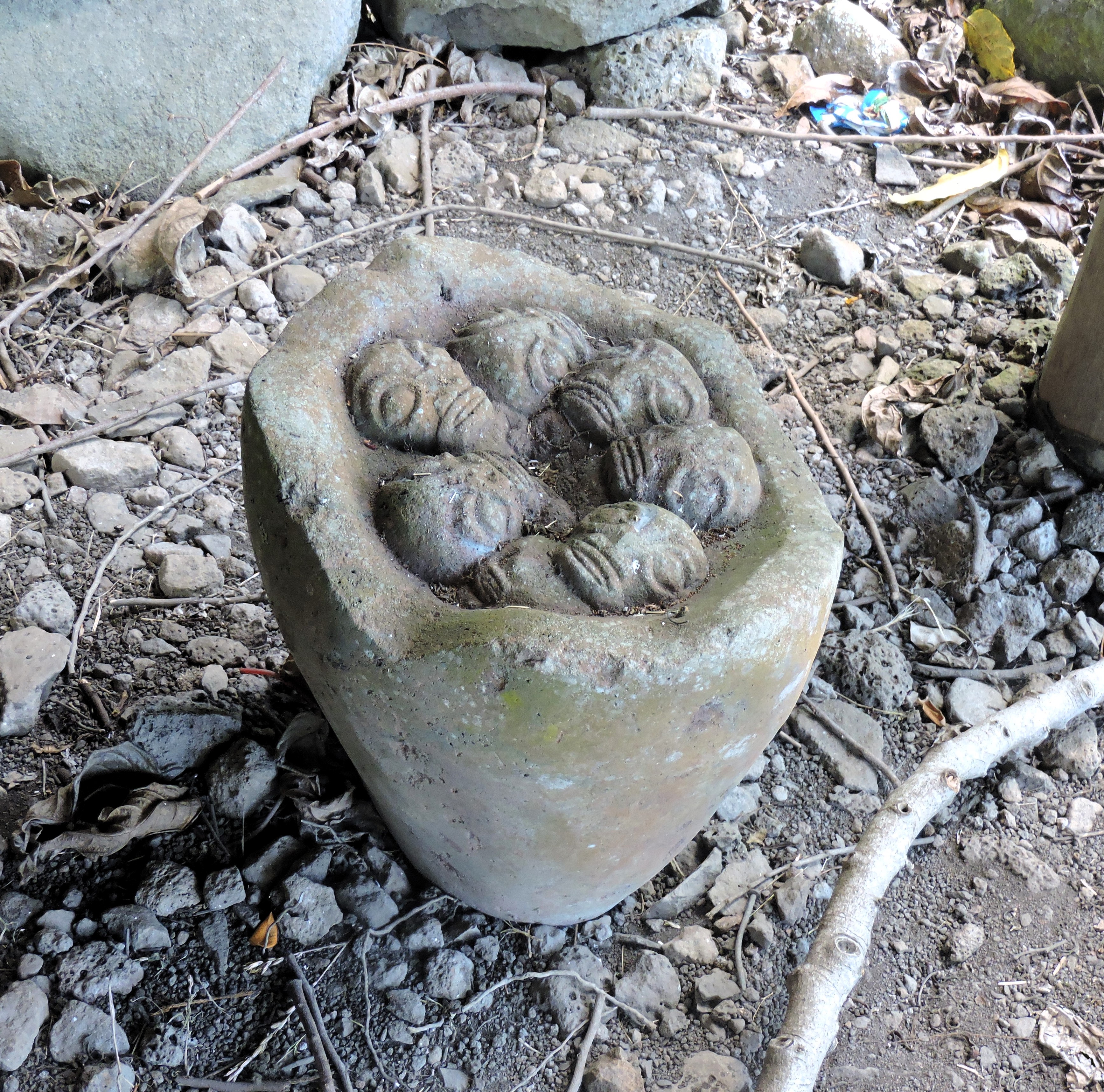
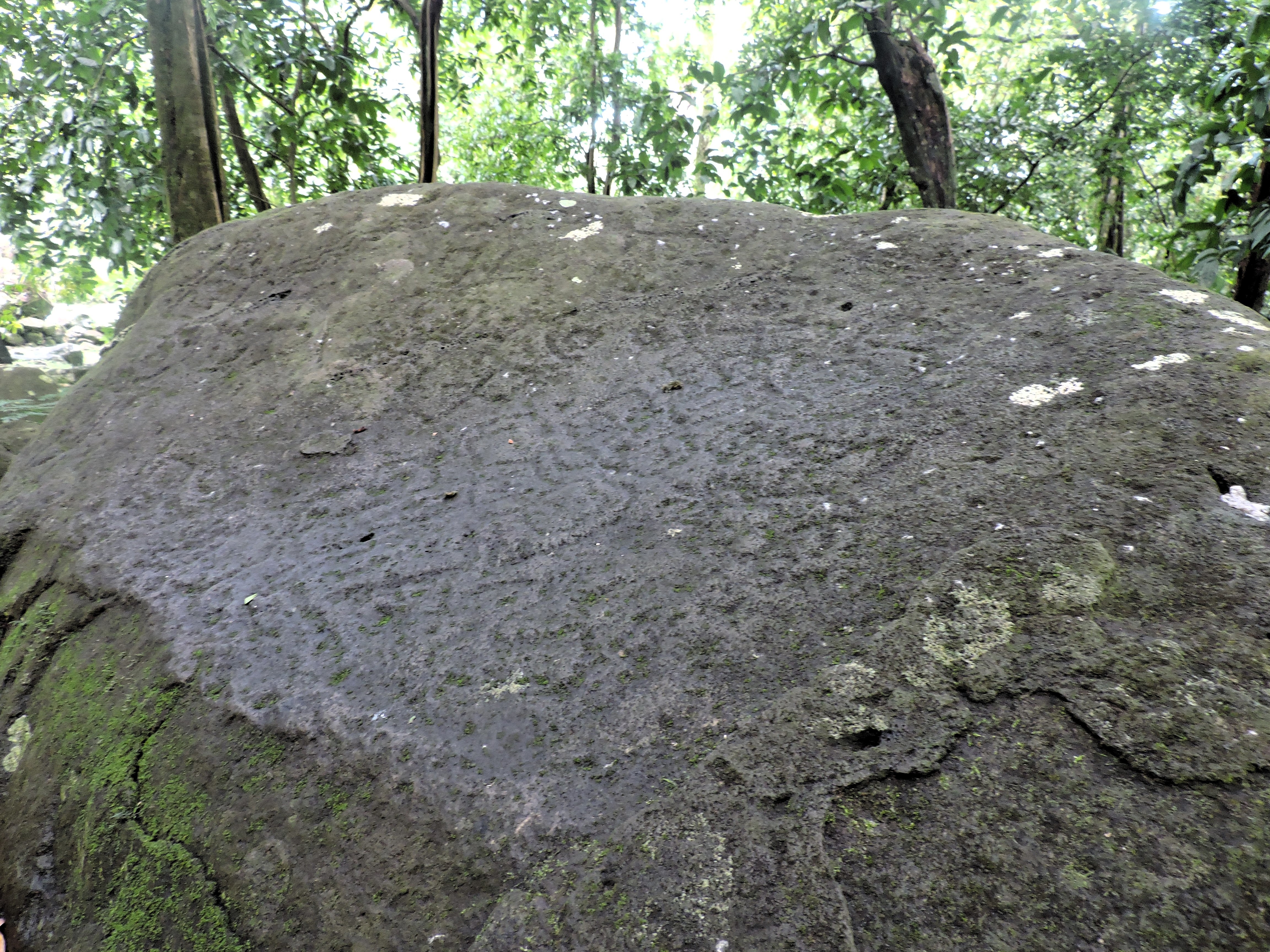
Misterious shape with Tiki heads in a pot and a big rock with petroglyphs, difficult to find and difficult to fotograph.
In defence of Tiki Tuhiva (from my spontaneous FB post)
I am by no means an expert on Tiki, I’ve just been “in love” with Tiki from the moment I arrived in Polynesia: fascinated, enamoured, overawed, enticed … I go around looking for them and take pictures to take home. I don’t even know which personal pronoun refers to Tiki, he, she, it, them, his holiness …
And then I come across the huge modern version of the statue, the tallest Tiki statue in the Pacific, 12 m high, wanted by Nuku Hiva’s Mayor Benoît Kautai and the sculpturer Grégorio Grand-Midi, working with the two Marquesian sculpturers Teve Teatiu and Touatini Matiki. The giant is looking out over the sea from the island of Nuku Hiva. Walking up to it, my first thought is “What’s this? Disney World or something?” I look at it closely, walk around it several time and make friends with it. Now it looks exactly right, where it is and how it was made and I start feeling sorry for all the negative comments I read and hear, saying “this is not my culture … and worse”. But cultural expression as a creative process, wouldn’t it be subject to changing ideas and convictions, new materials and tecnical possibilities? Tiki Tuhiva is the contemporary continuation of an ancient culture that got almost wiped out by the invader who robbed Polynesians of their beliefs, their myths and their rites and rights, their protection, their way of live … until almost today. And I am happy this Tiki is a woman. The artist: “avec la force ancestrale héritée de la femme tiki, gardienne de la tradition et du savoir, le guerrier Tūhiva s’élance pour façonner son futur”. She is the guardian of tradition and knowledge, and the warrior next to her protects the future so that past injustice will not repeat itself.
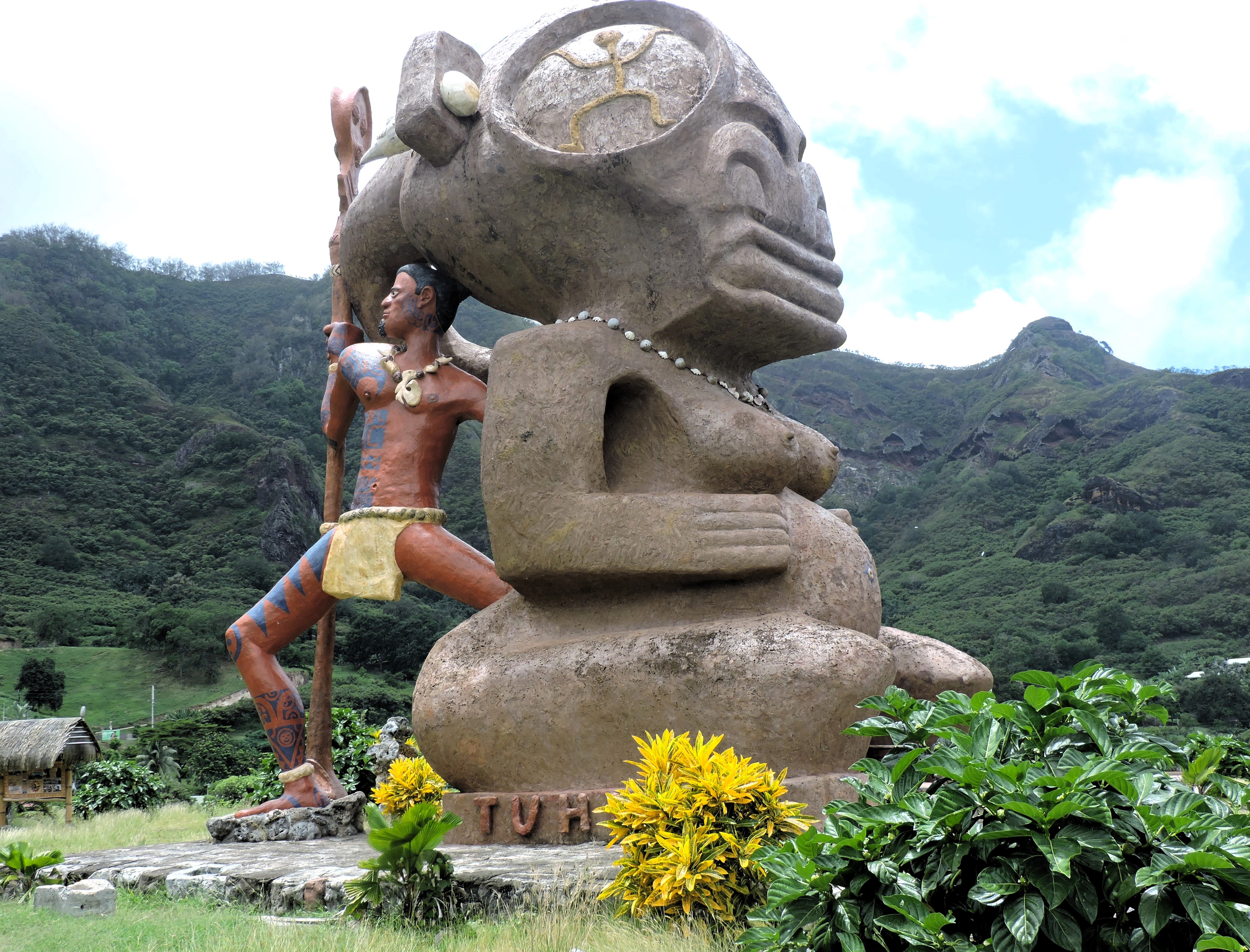
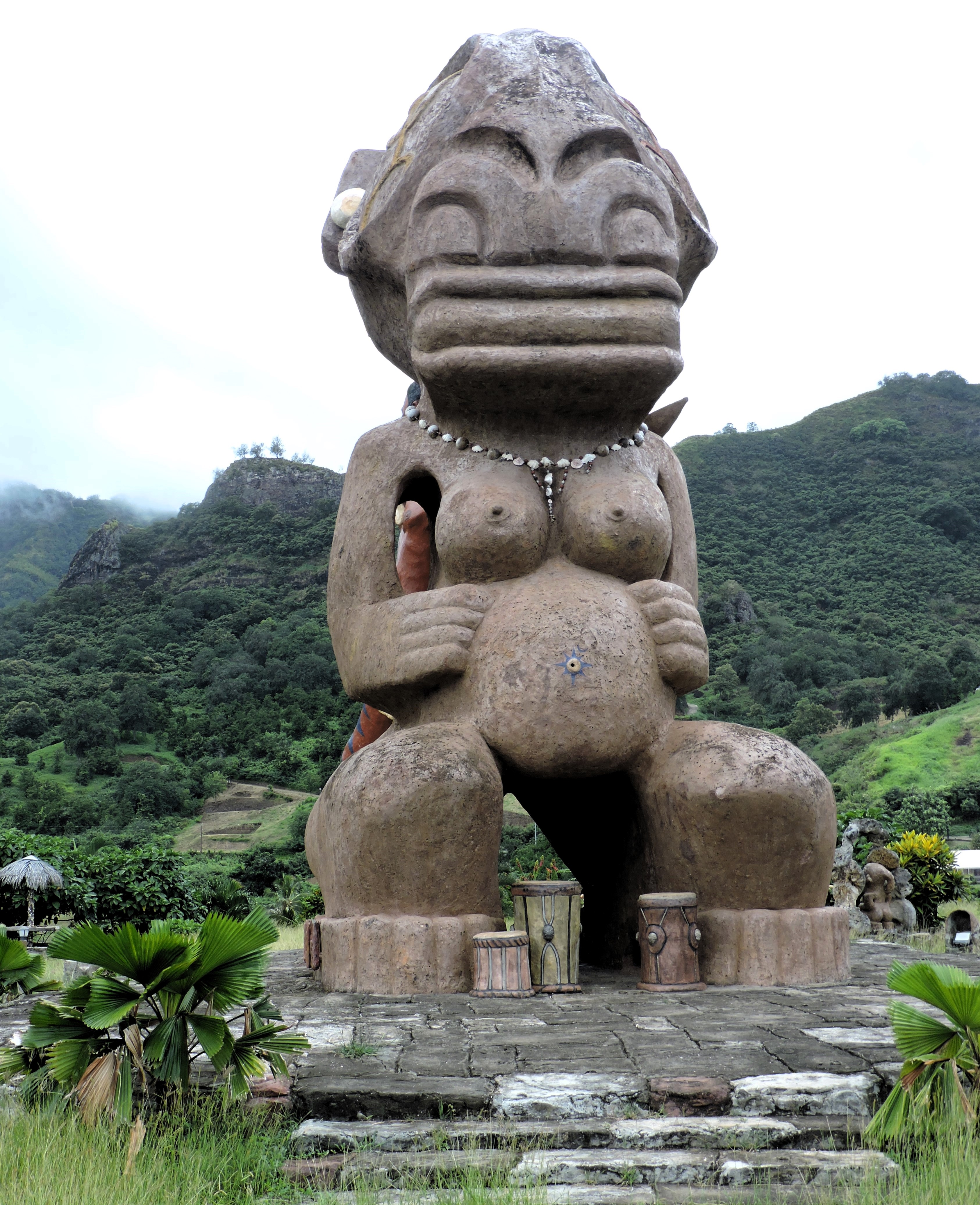
and the traditional Tikis are potently guarding her!
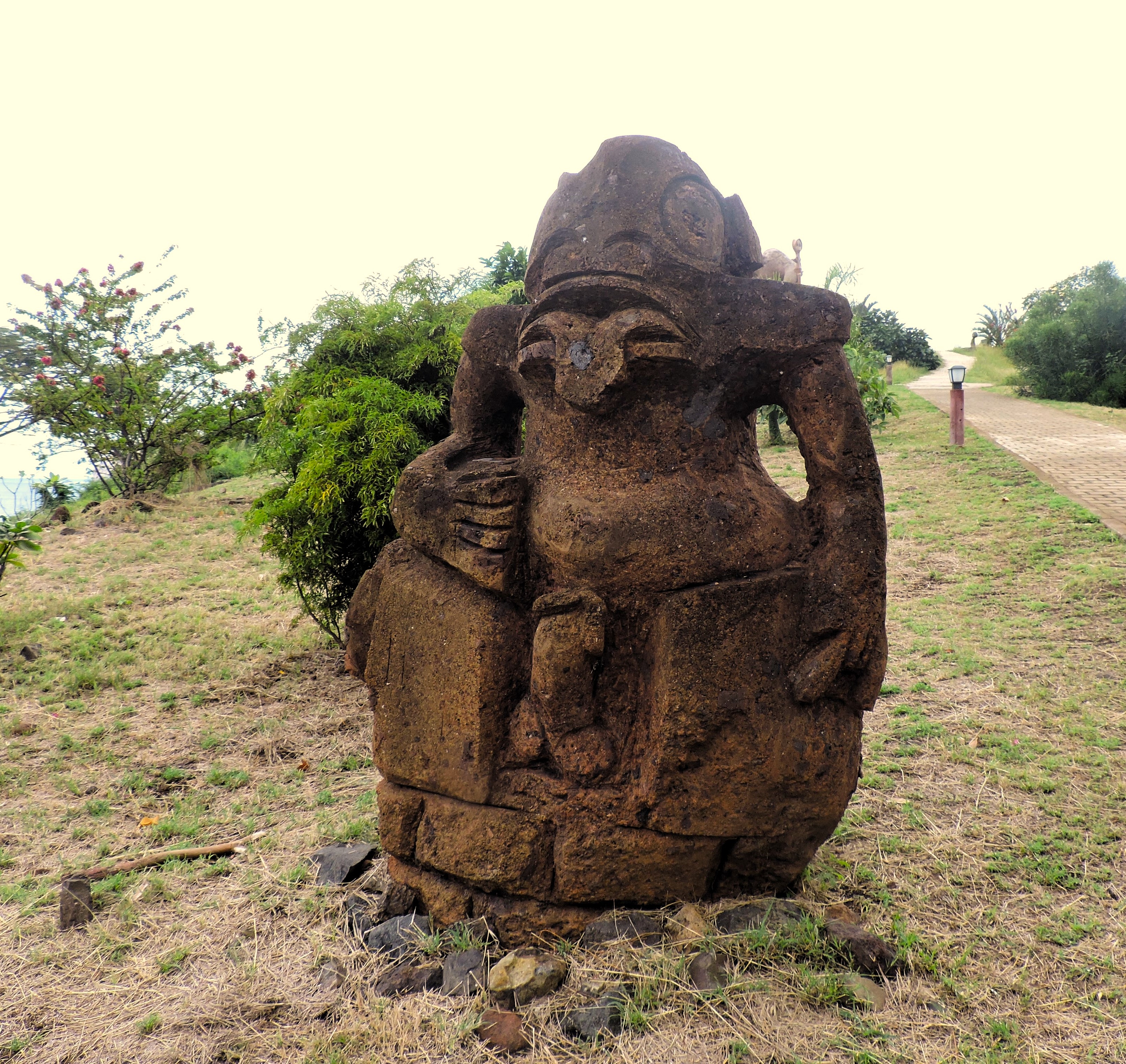
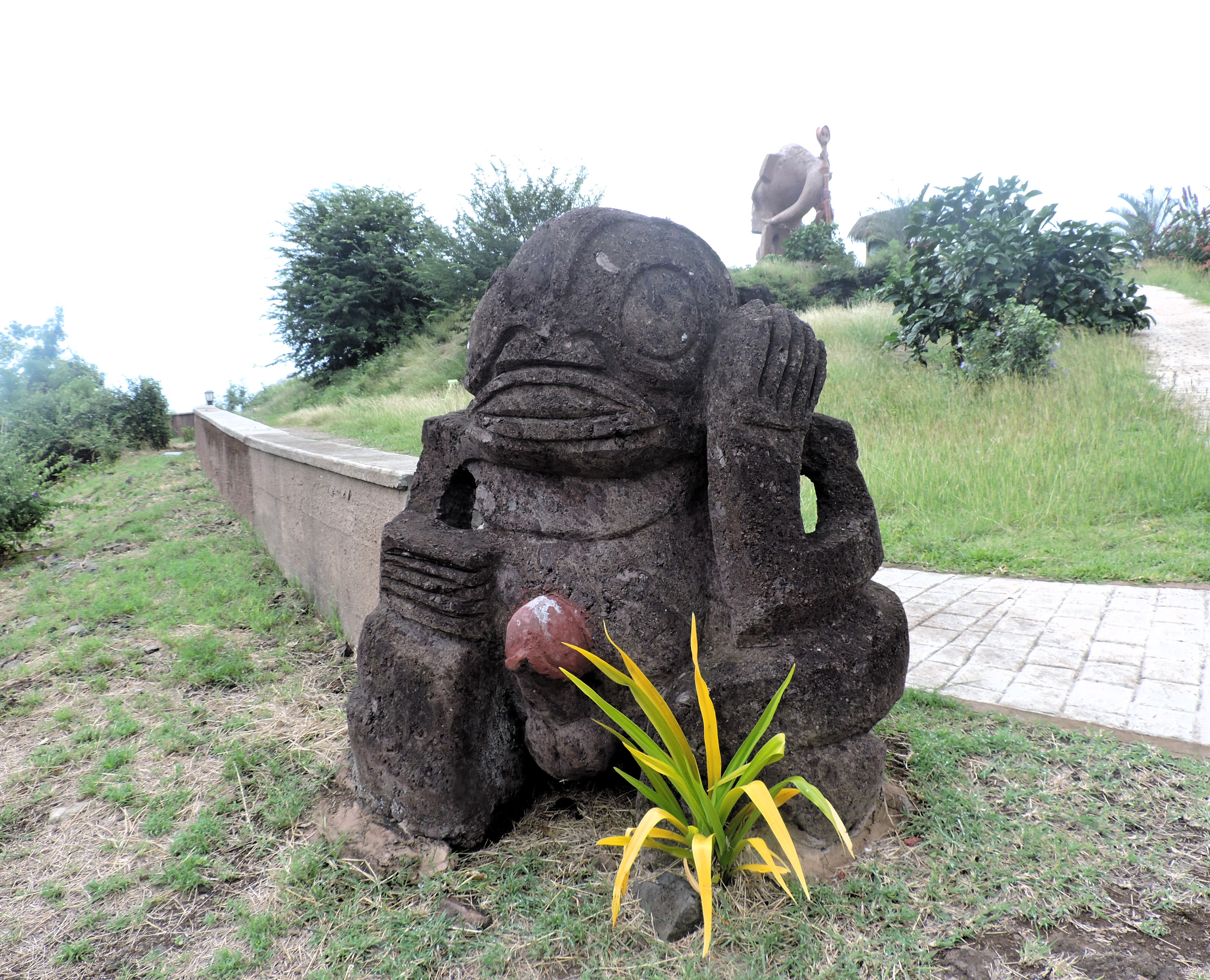
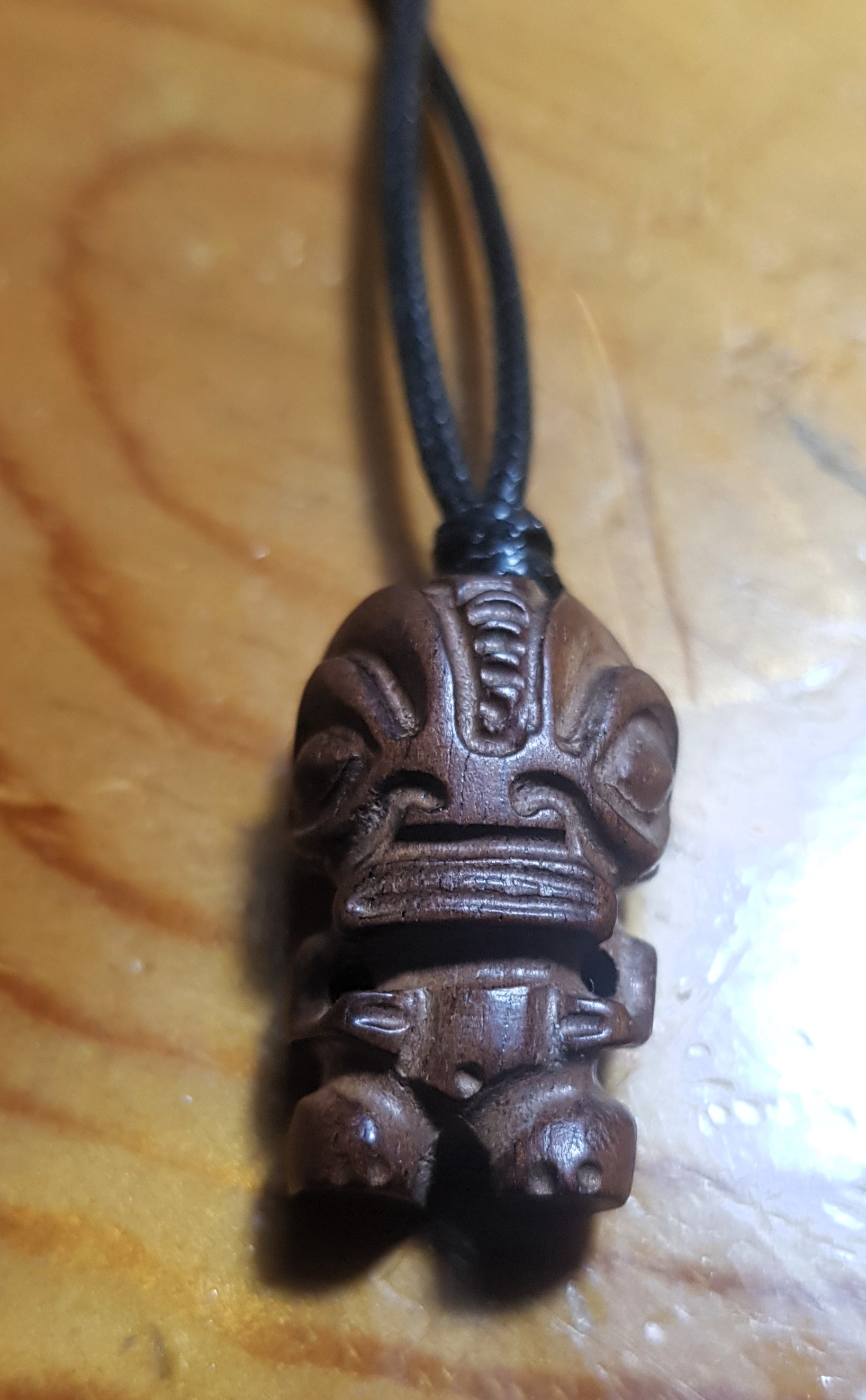
And just to feel a bit protected in the future I bought myself a Tiki charm to wear around my neck.
Bye bye Gerburg
 gerburgkamm