… you would build a temple or an observatory for sun, moon and stars, a giant solar calendar, or a sanctuary where a virgin girl could be sacrificed in dignity to the patriarchal gods, …
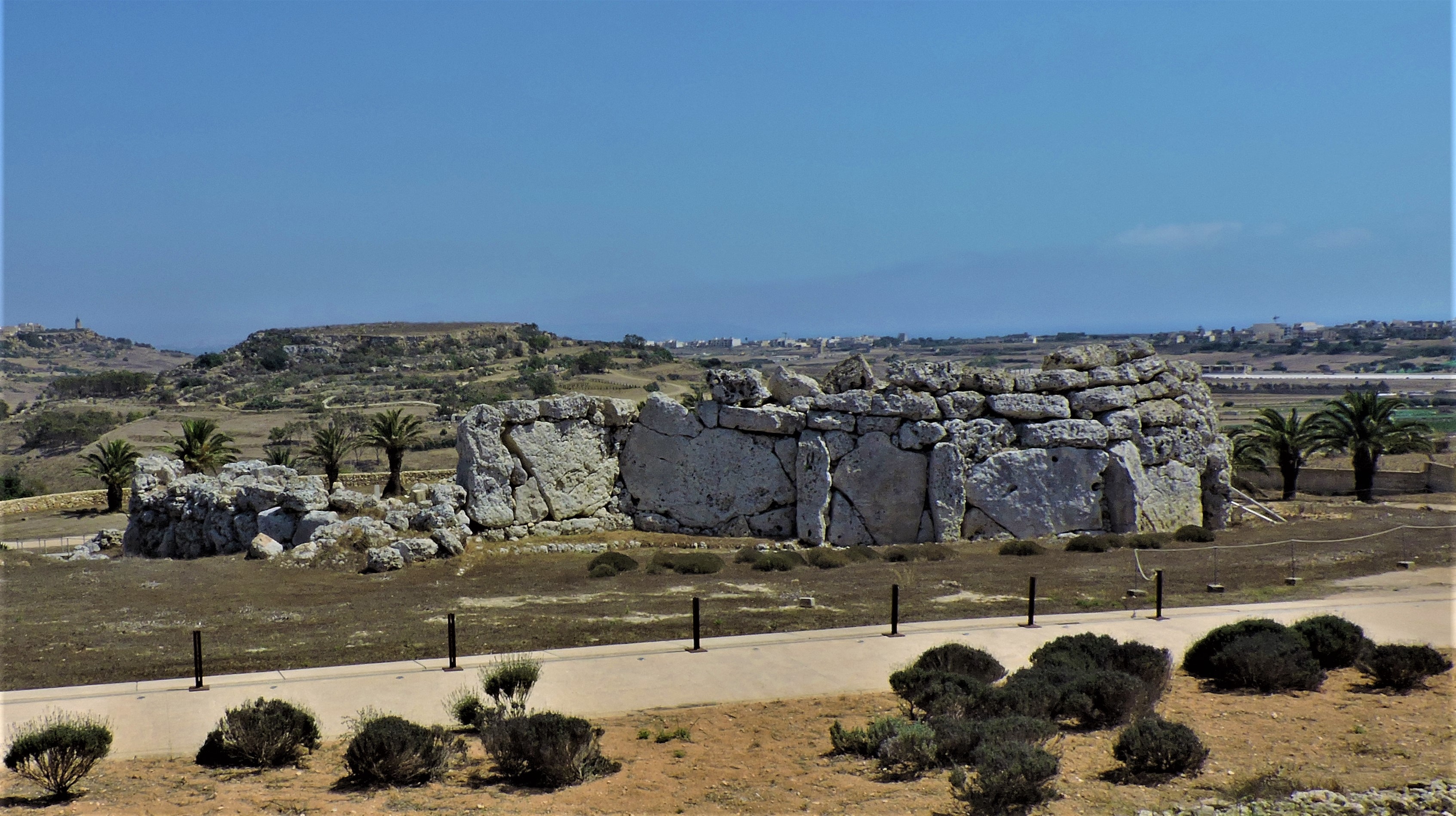
… you would construct it so big and strong, so heavy and difficult to put together … it would be standing upright forever and be recognised as a World Heritage Site after 5200 years.
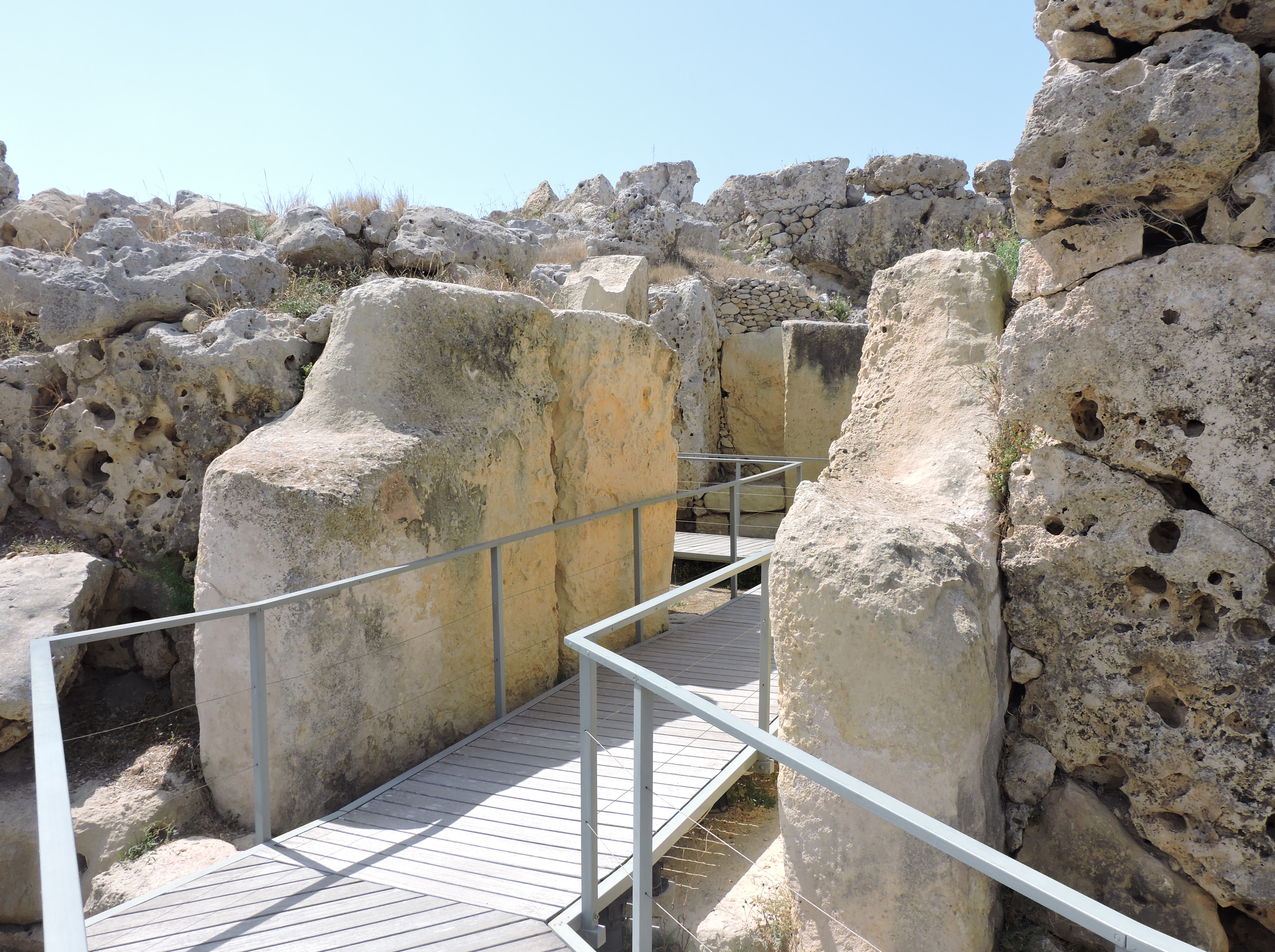
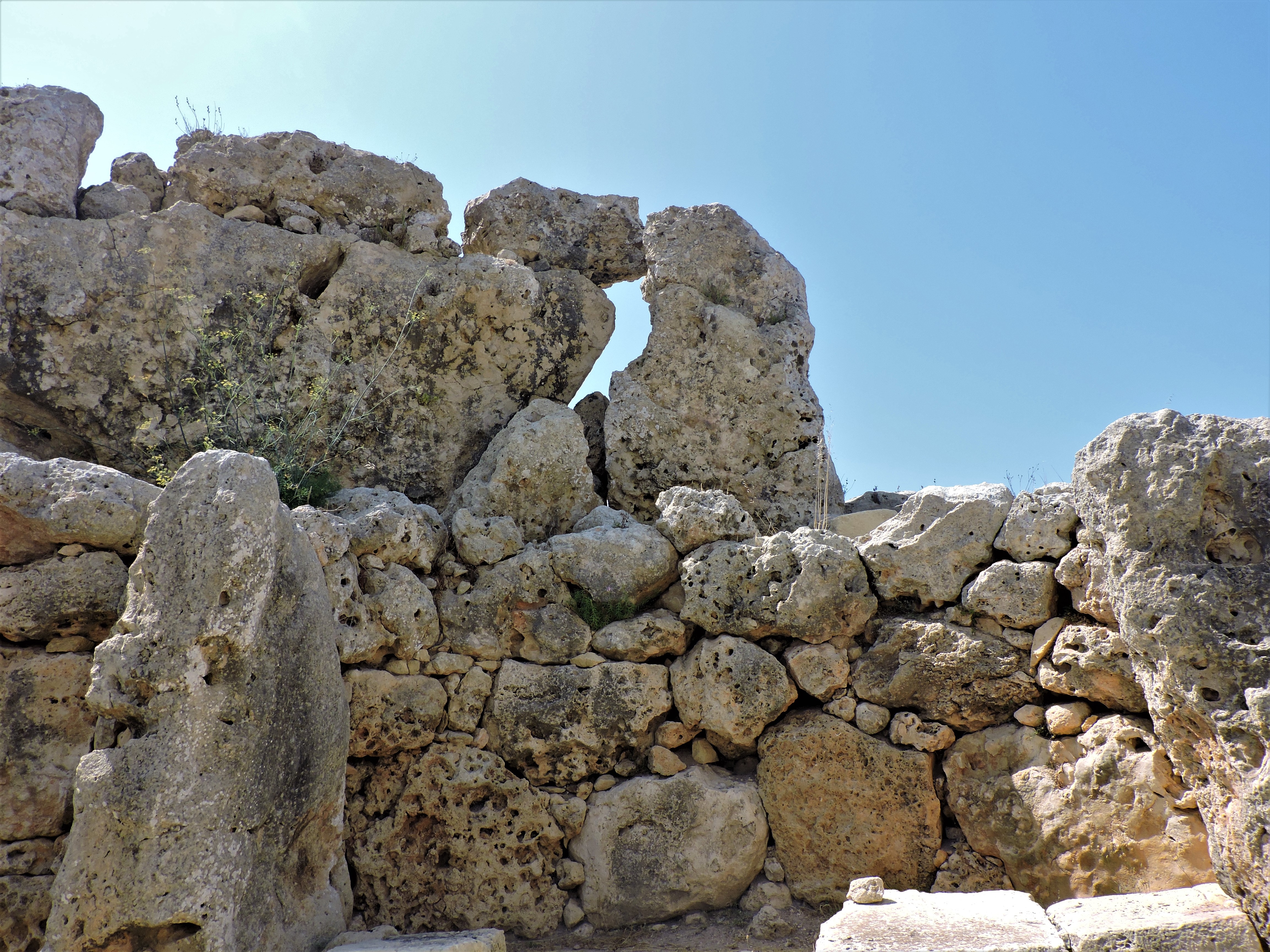
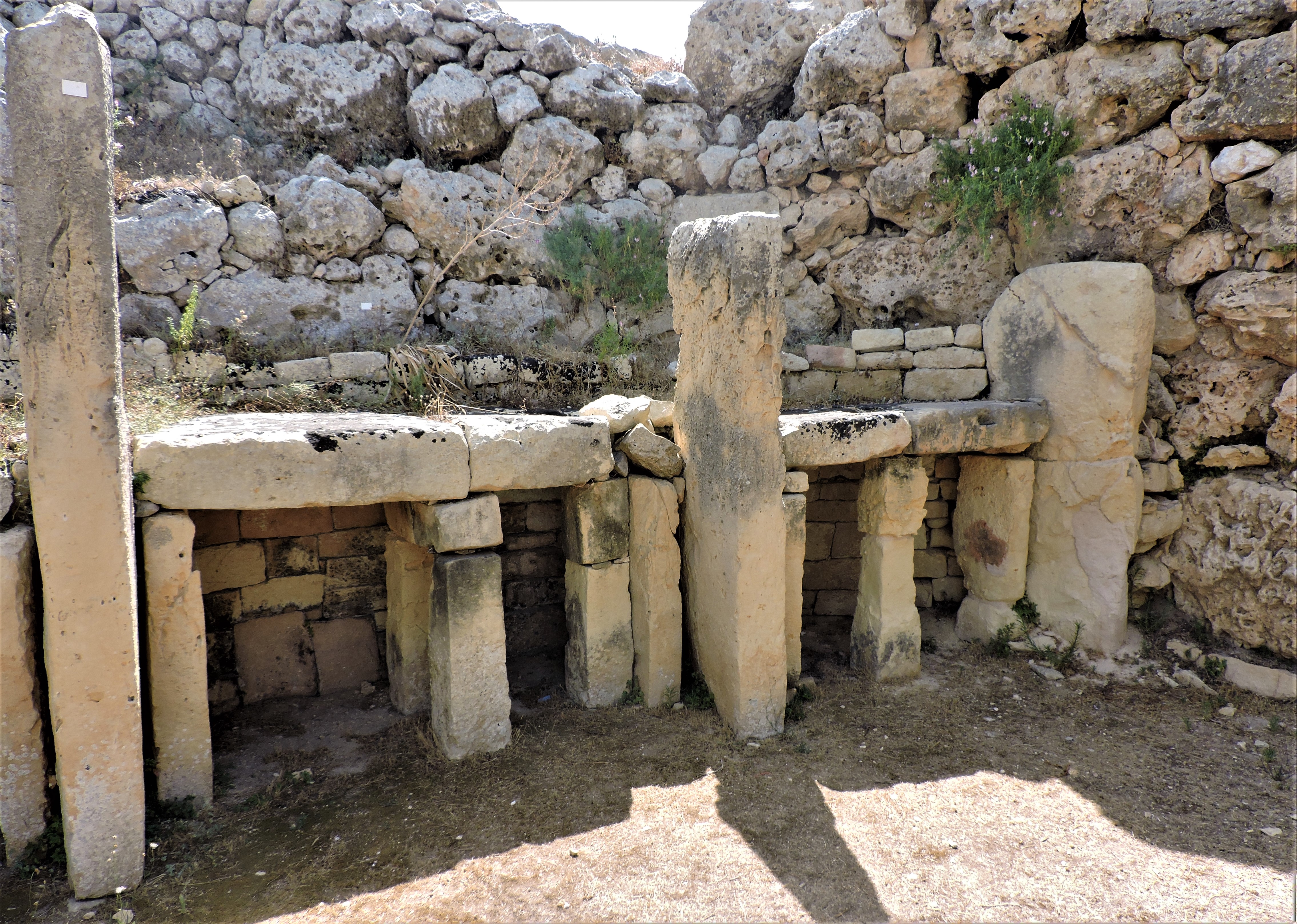
Okay, you have seen huge manmade constructions like Stonehenge (2400 BC), okay, you’ve been to the pyramids in Egypt (starting from 2800 BC), all fantastic but these temples are much older, they are still STANDING upright! …
… and … they are womanmade!
Ġgantija [dʒiɡanˈtiːja]: “A giantess was seen carrying large stones on her head while carrying her baby in her arms, or in a sling on her back . As she walked along she snacked on broad beans and wove flax.” (by Fr Manwel Magri, Maltese ethnographer, archeologist and writer, 19th century)
Now you know who built the stoneage temples: Multitasking strong giant ladies.
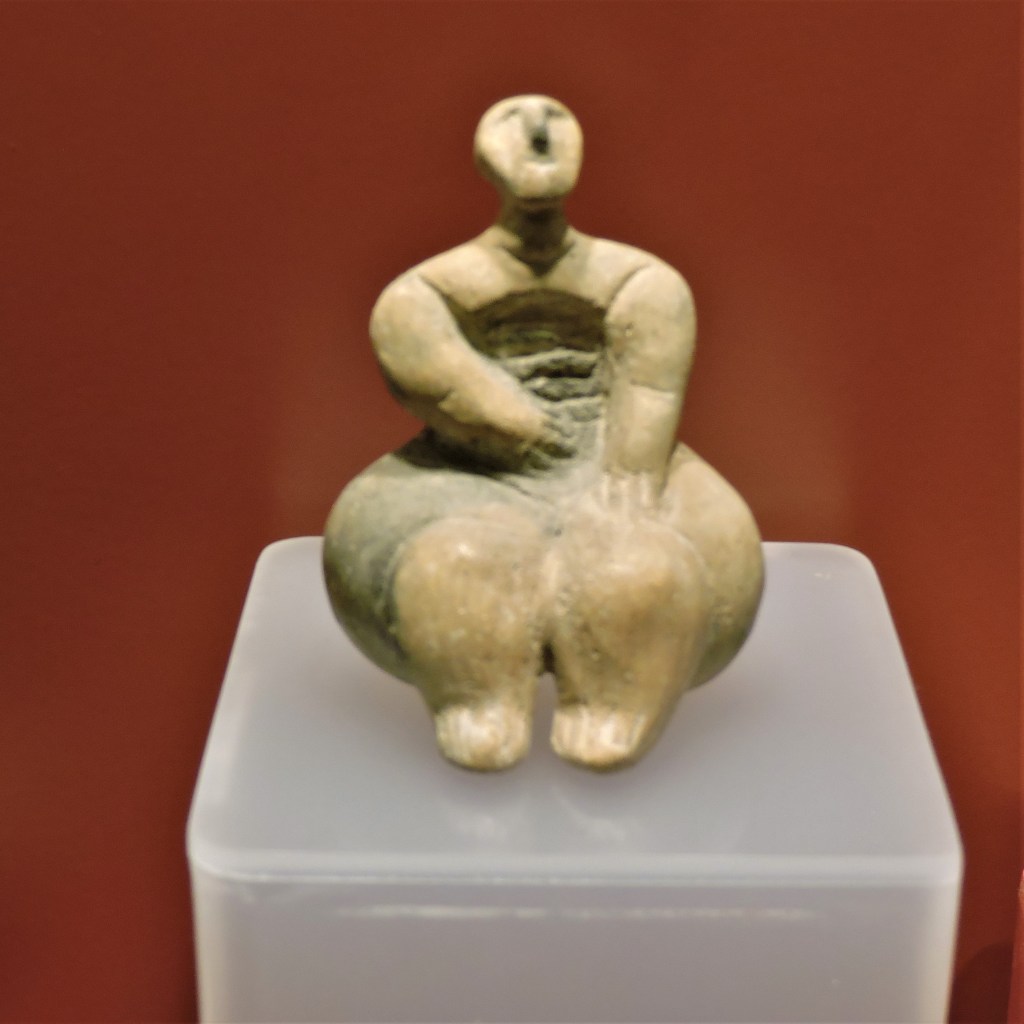
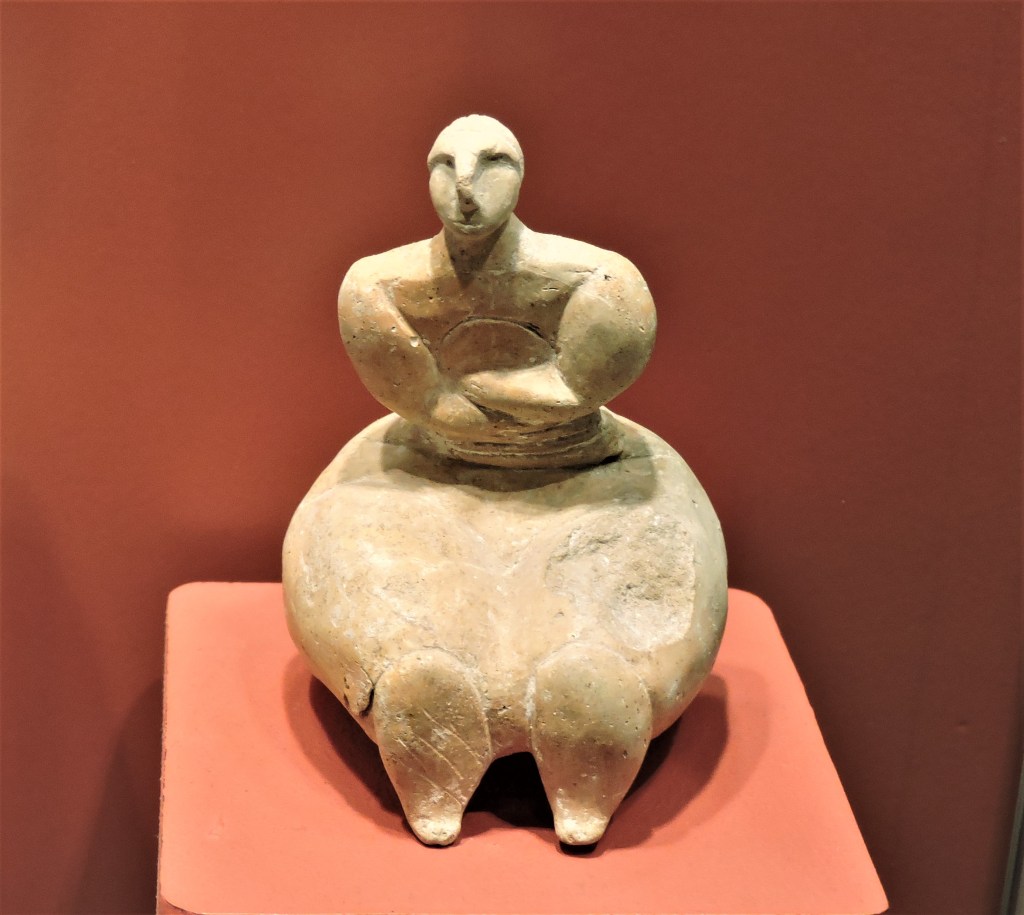
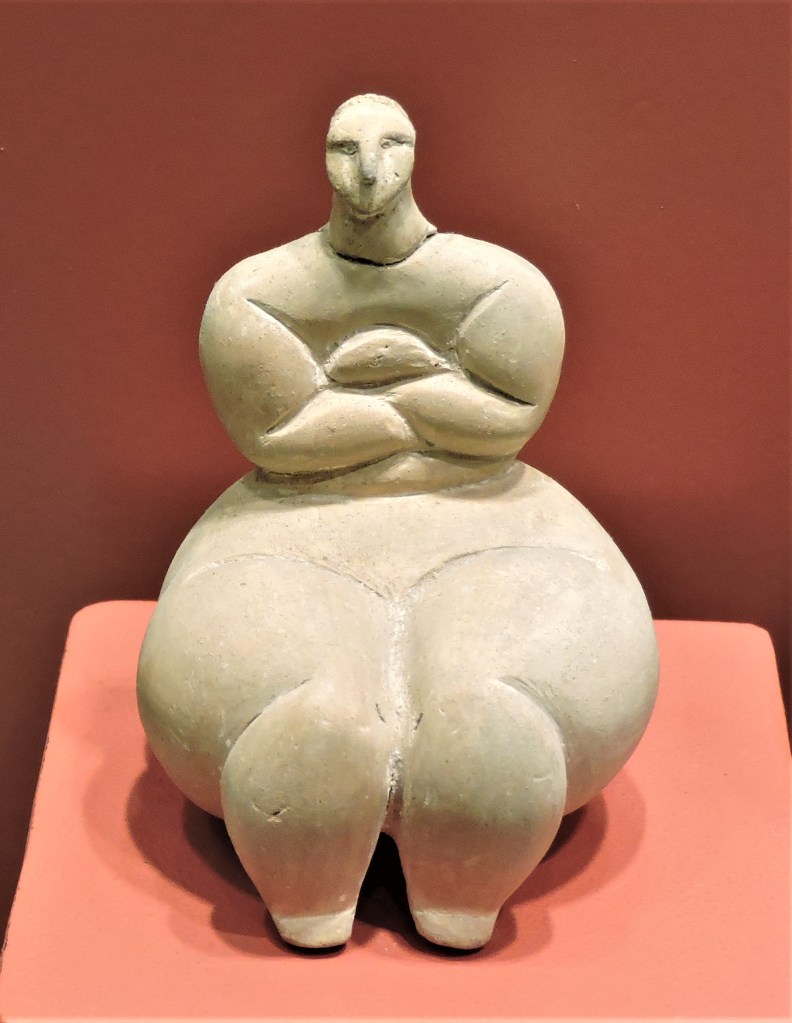
What about the men? You’ll ask …
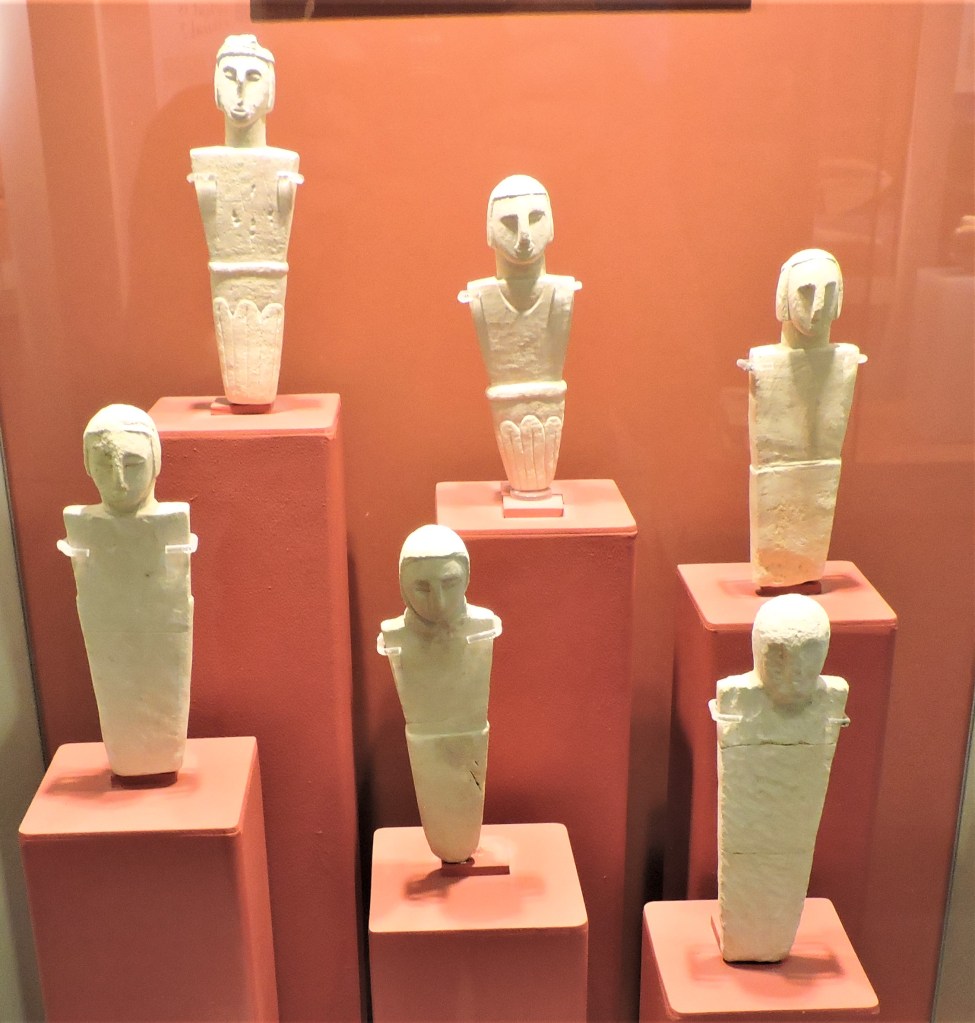
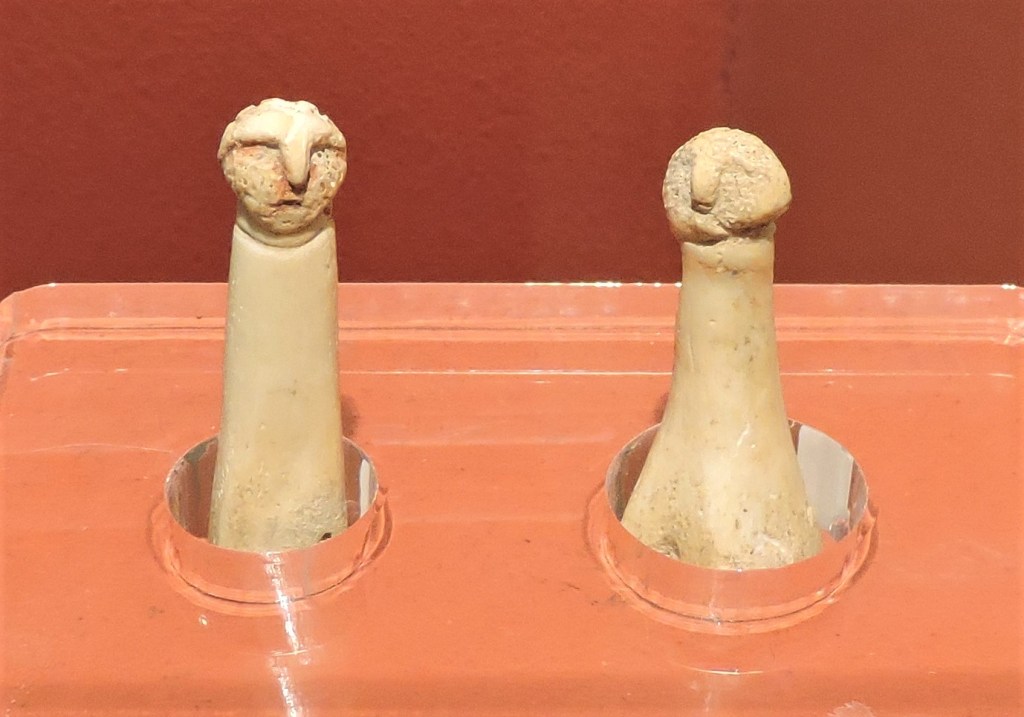
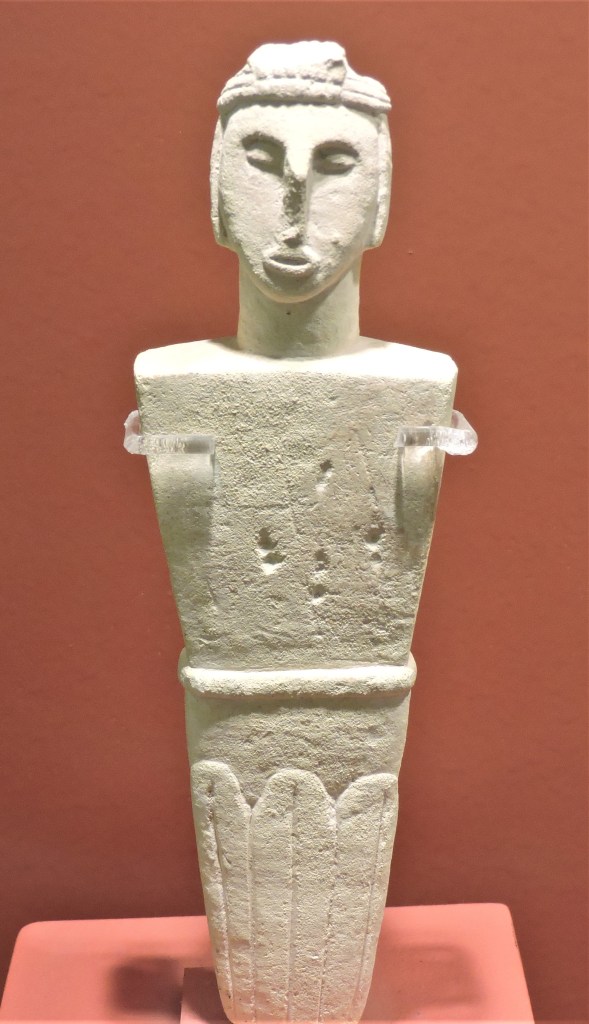
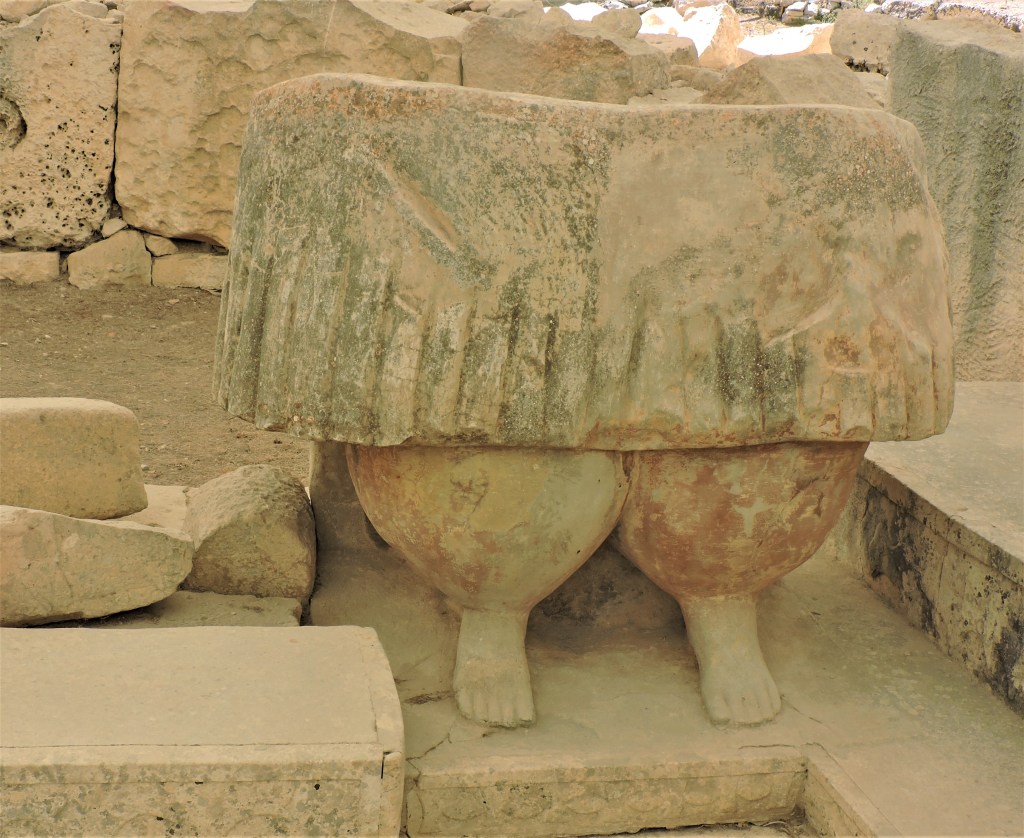
A bit priapic in shape, and arms?? … (What for?)
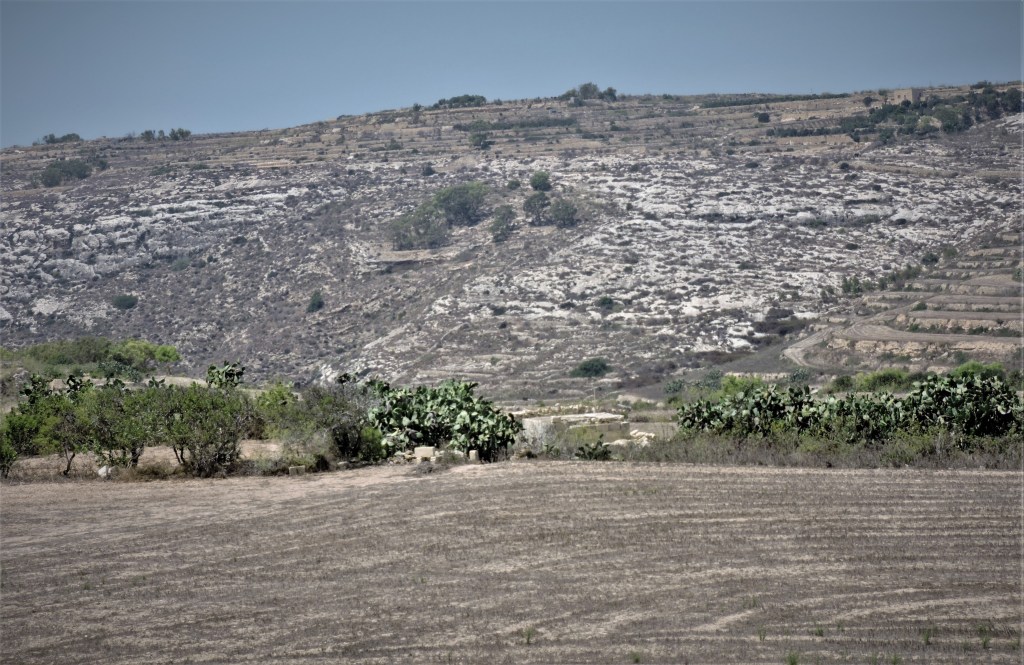
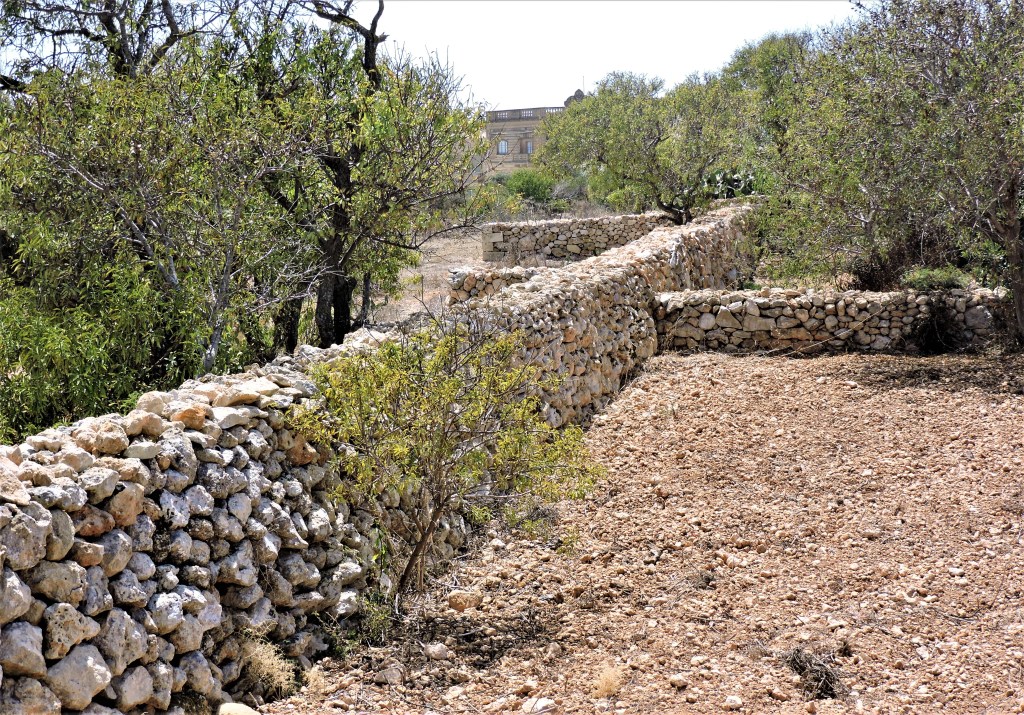
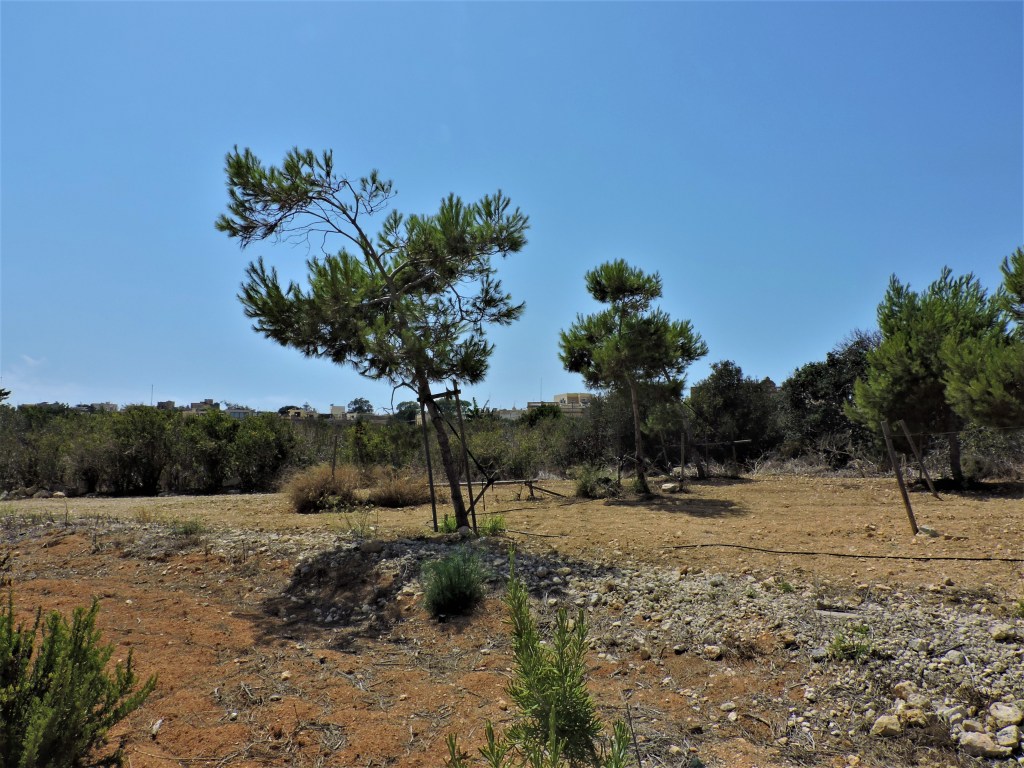
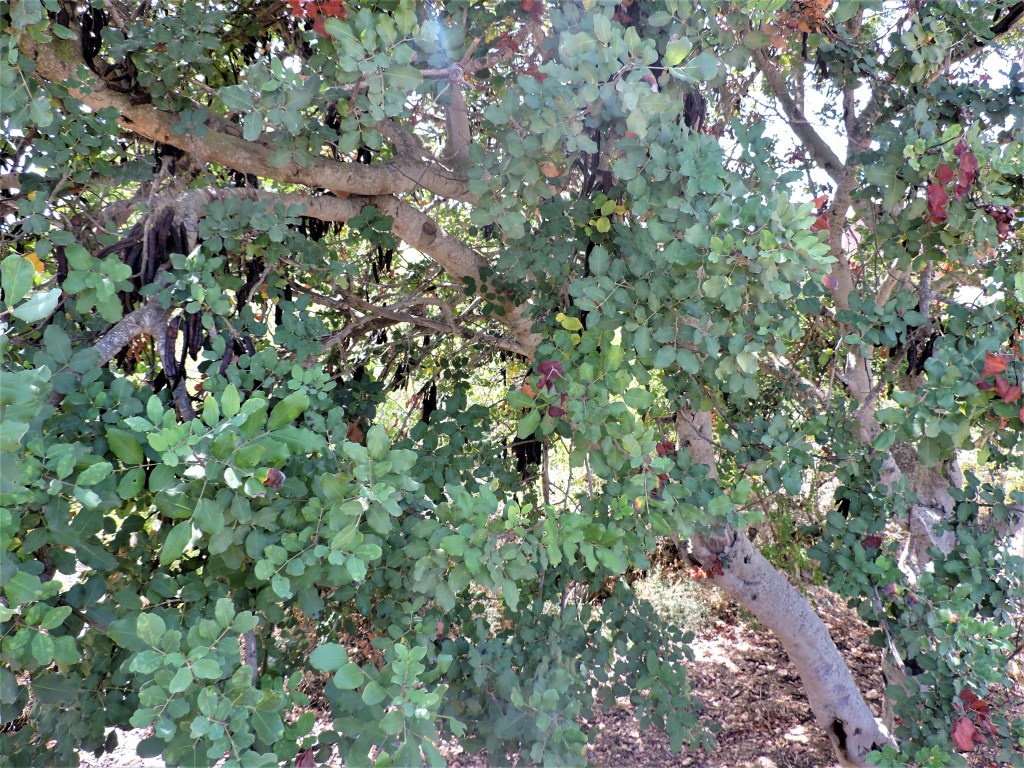
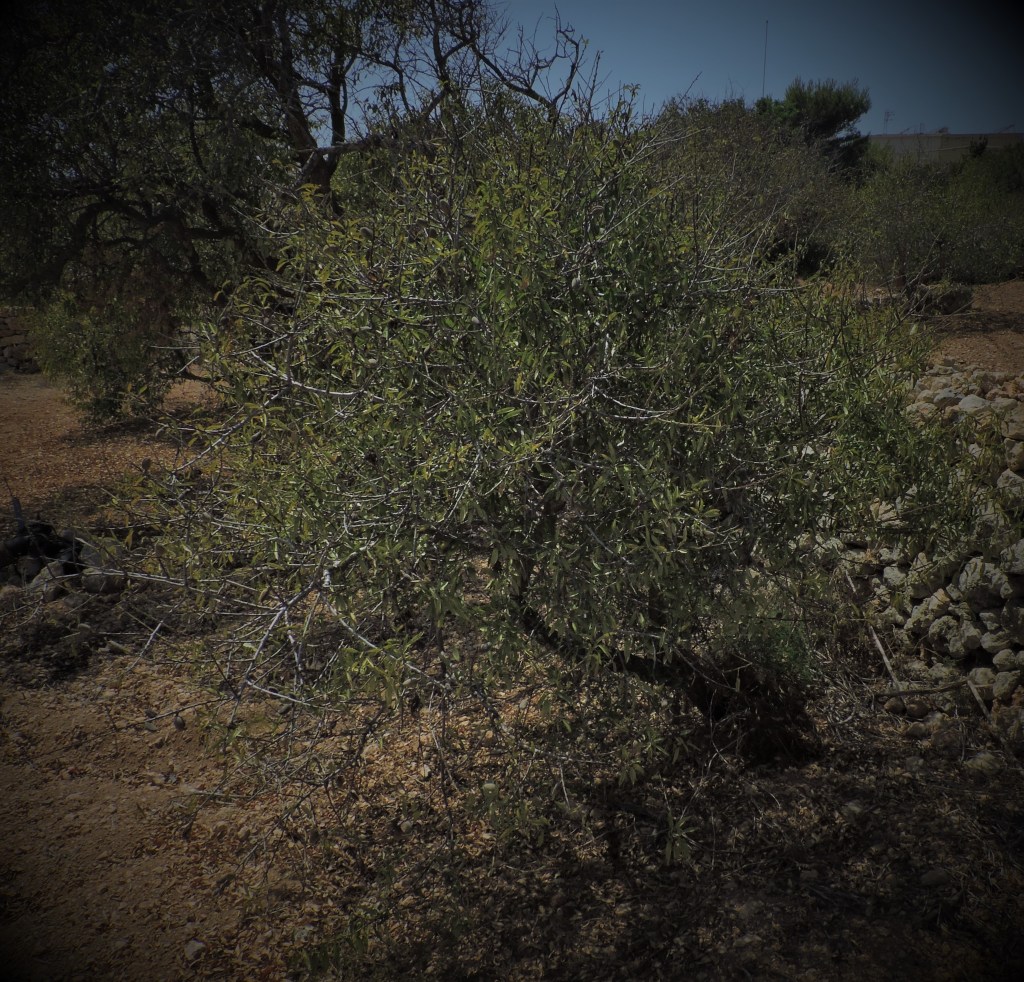
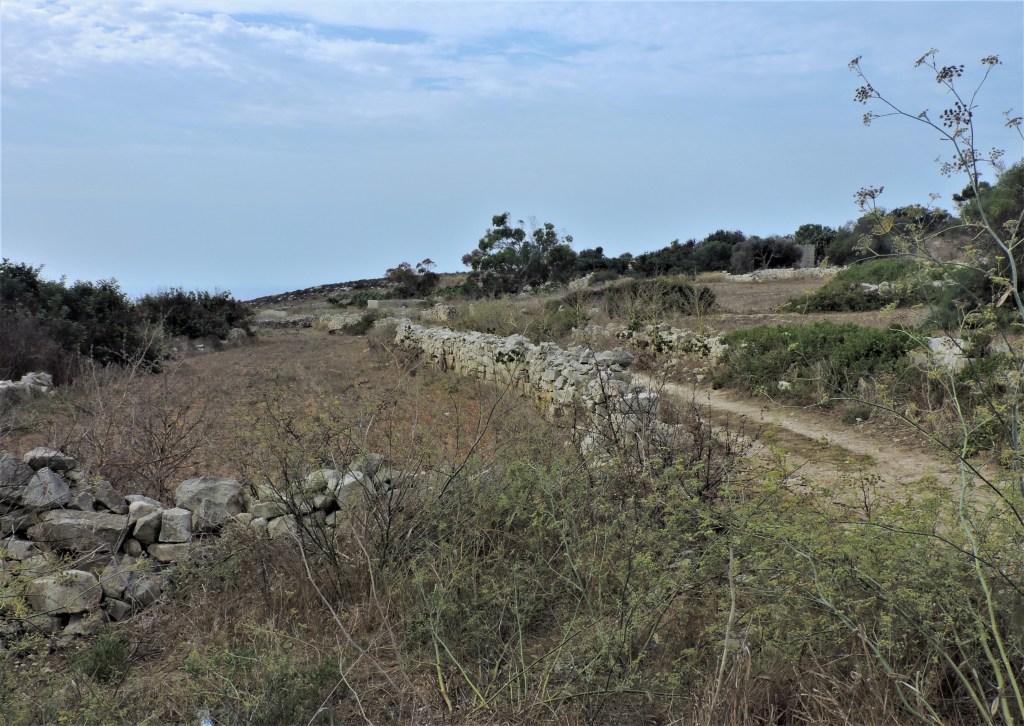
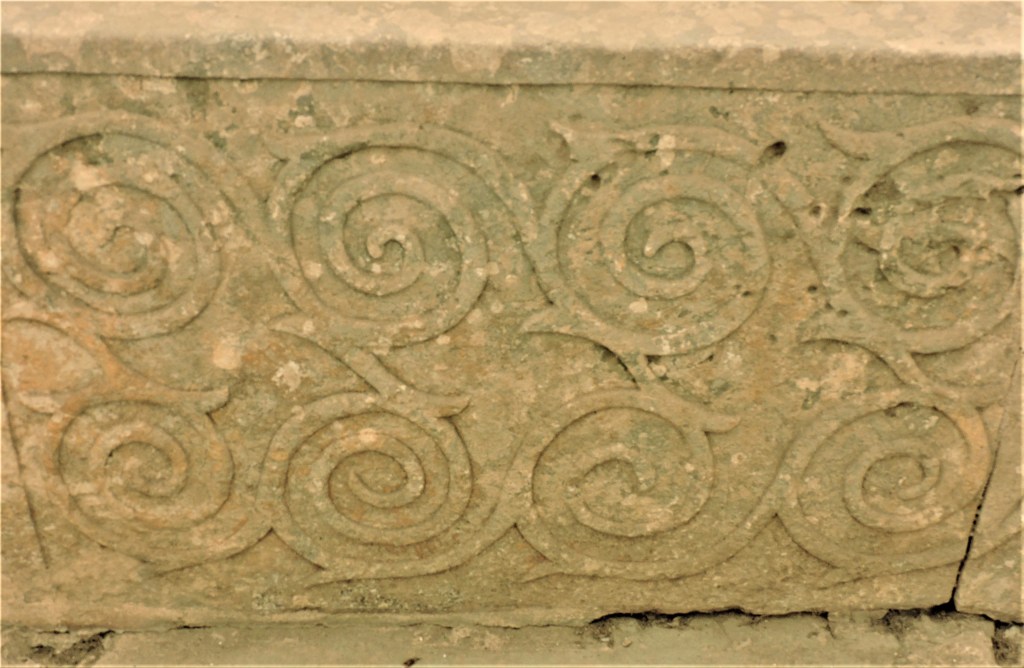
But in the end when it came to religious rituals and human sacrifice to appease the gods, in a drought for instance, it had to be a fair maiden, or at least that’s what they thought a hundred years ago. Pictures: Barren land, best drywalls, Aleppo Pine Tree
| Ġgantija di Ġorġ Pisani Fra preistorica traccia nelle dolcissime serate incantate, Va sognando il tempio per tutta l’estate, lassù sul colle di Caccia: …. | Gigantija by Ġorġ Pisani In the light of the lovely moon all through the sweet hours of the summer nights there in the lush of the wilderness green for ever Gigantija dreams: …… |
This poem goes on telling of a famine on Gozo Island and of a young maiden, unskilled, and “blue of eye” in the English version, who offers to be sacrificed to the gods. Shortly after, Gozo was green again, “every one ate and drank … and every heart rejoiced”. (except for the maiden’s)
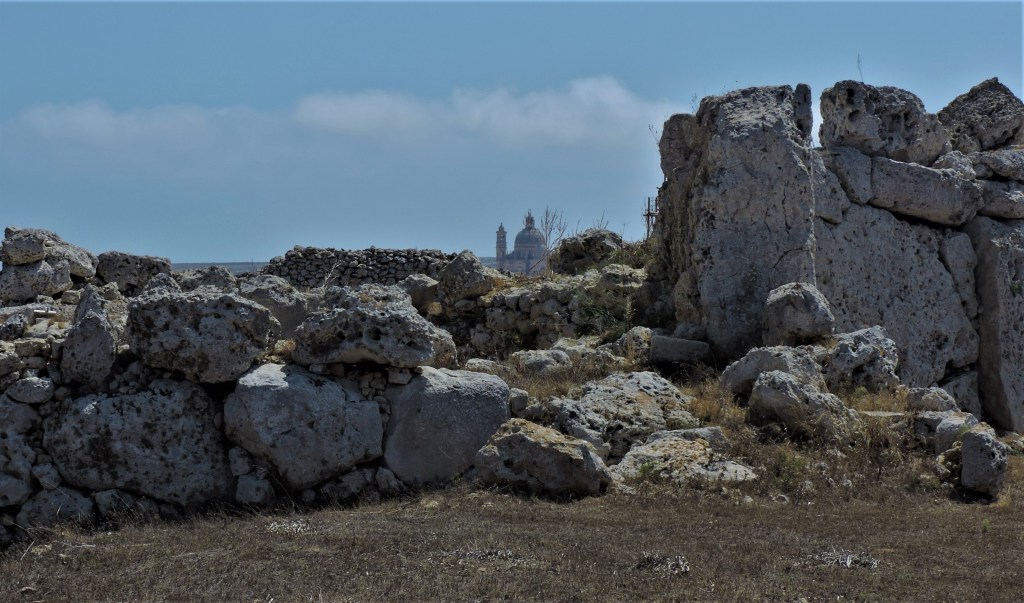
And will that church in the distance still be standing in the year 7500? I ask myself in the year 2020.
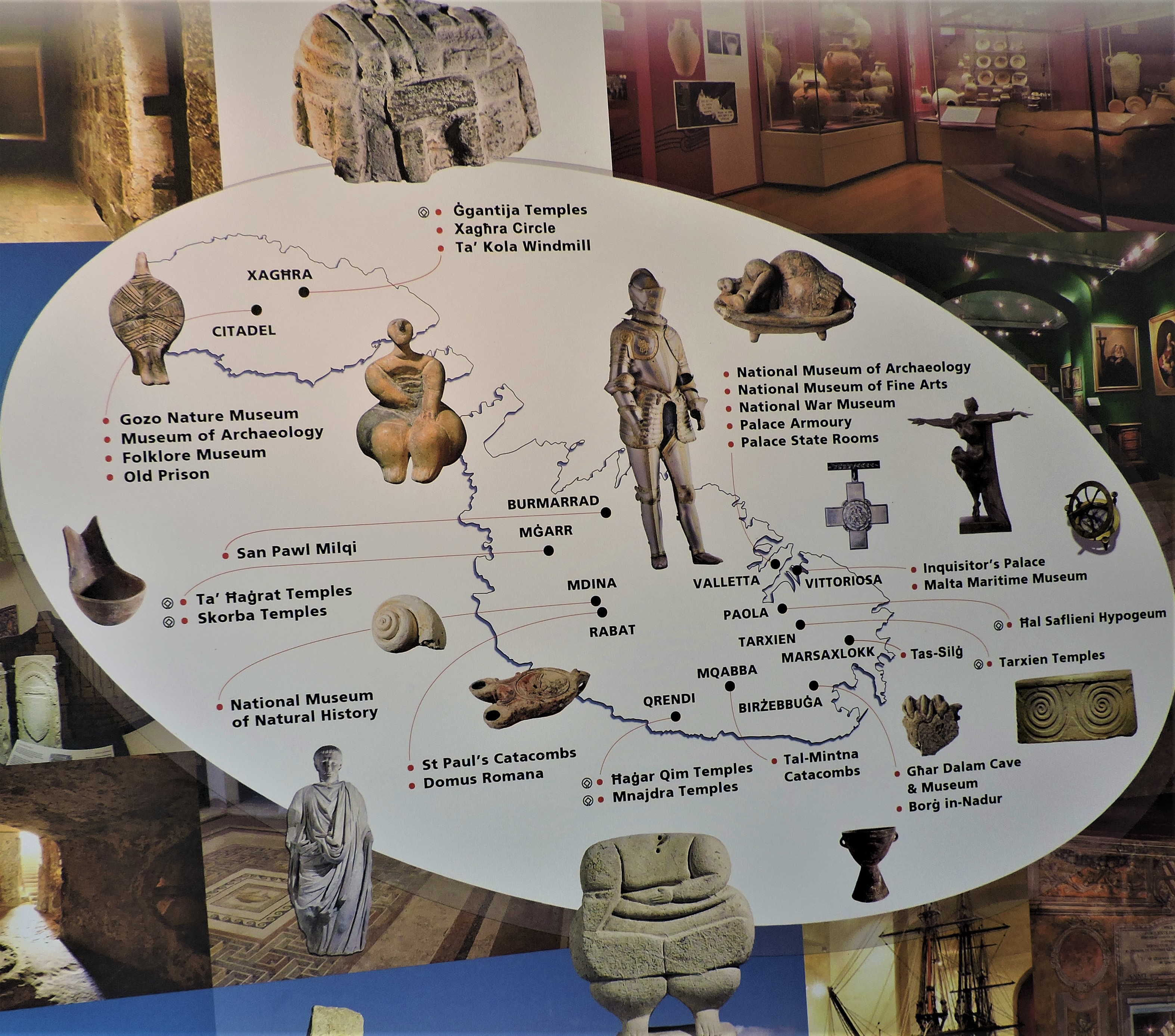
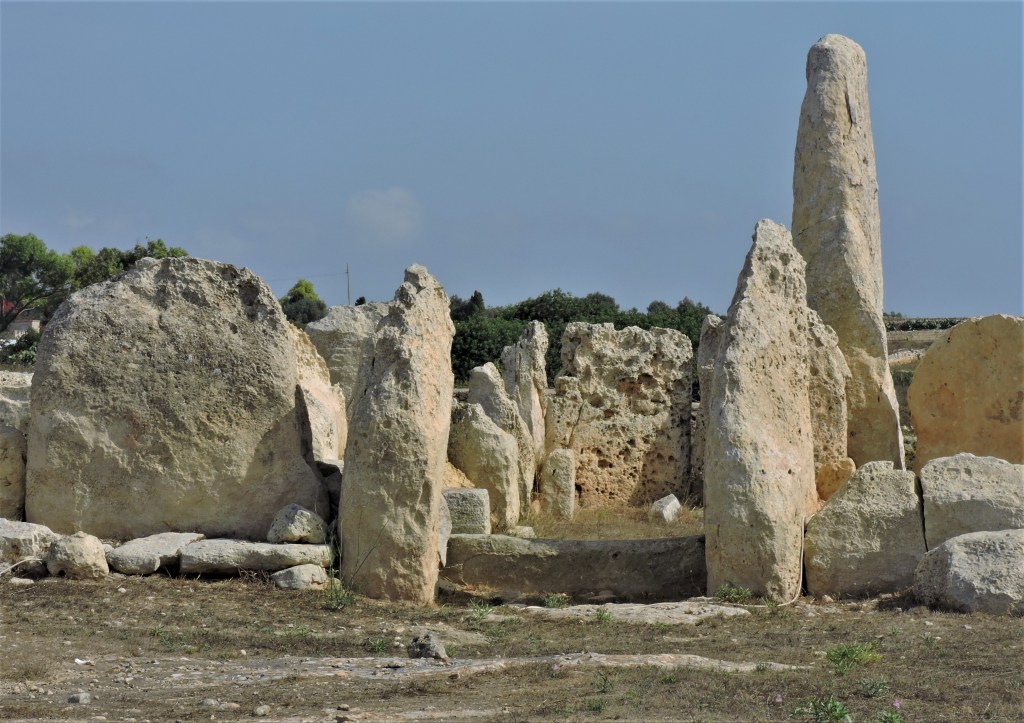
Take a local bus from Valletta, go southwest to what are maybe the best preserved temples Ħaġar Qim [ħadʒar ˈʔiːm], worshipping stones, and Mnajdra Temples, Qrendi. The driver will let you off even if you don’t pronounce the names right. Arabic in latin letters: nothing sounds the way it’s spelt.
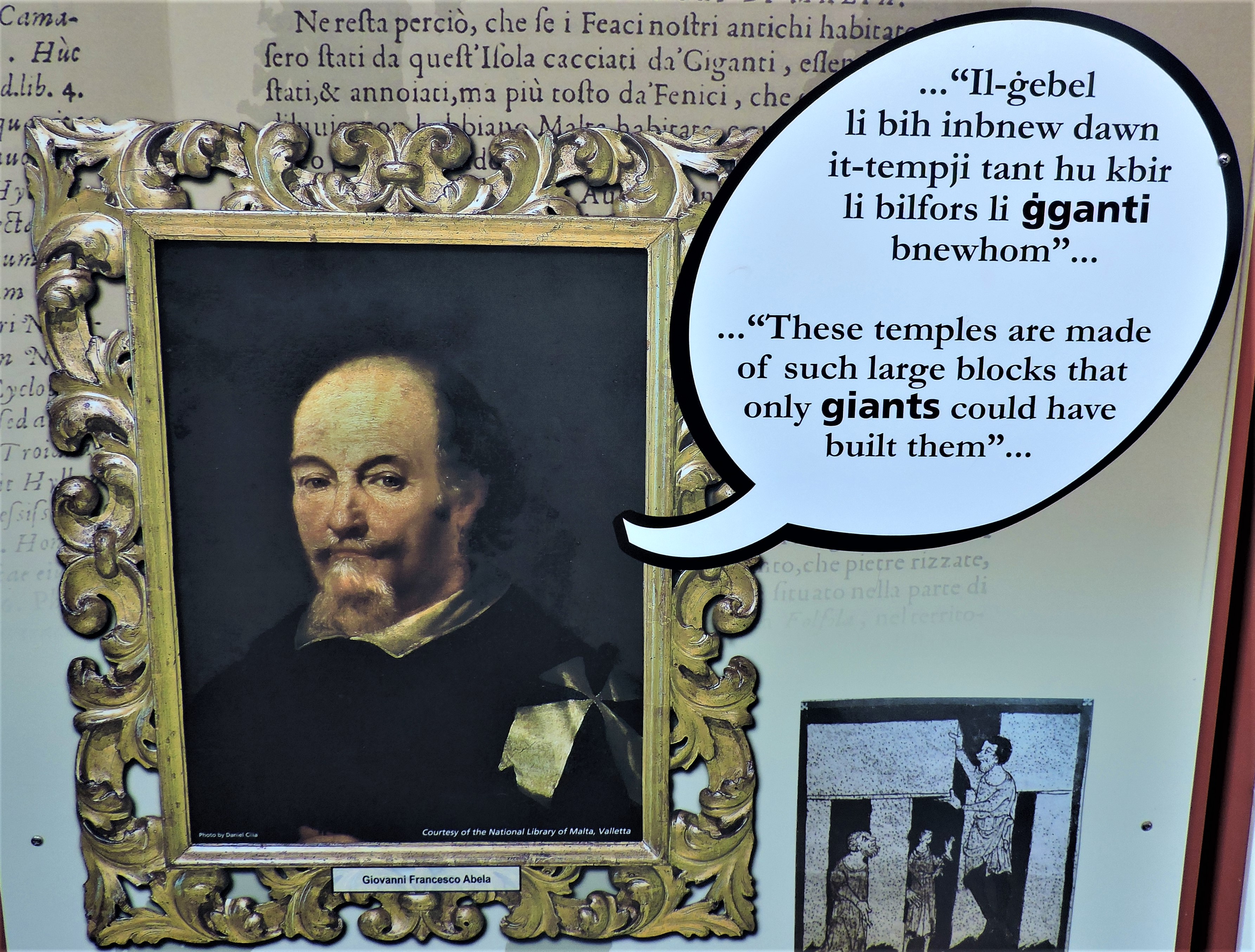
Giovanni Francesco Abela (17th century): “These temples are made of such large blocks that only giants could have built them”…
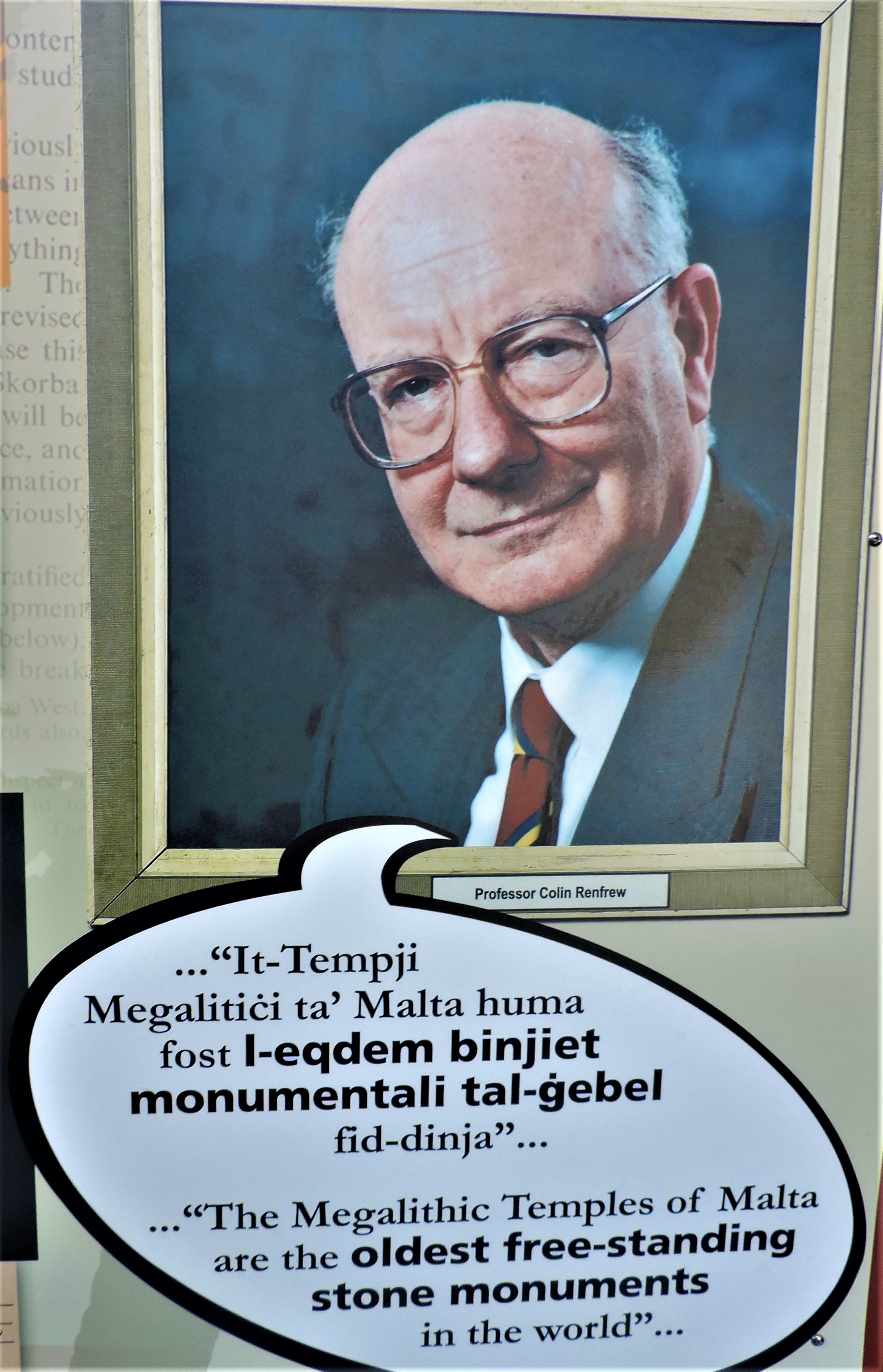
Professor Colin Renfrew (archeologist, still around): “The Megalithic Temples of Malta are the oldest free-standing stone monuments in the world” …
The first to be constructed were the doorways,
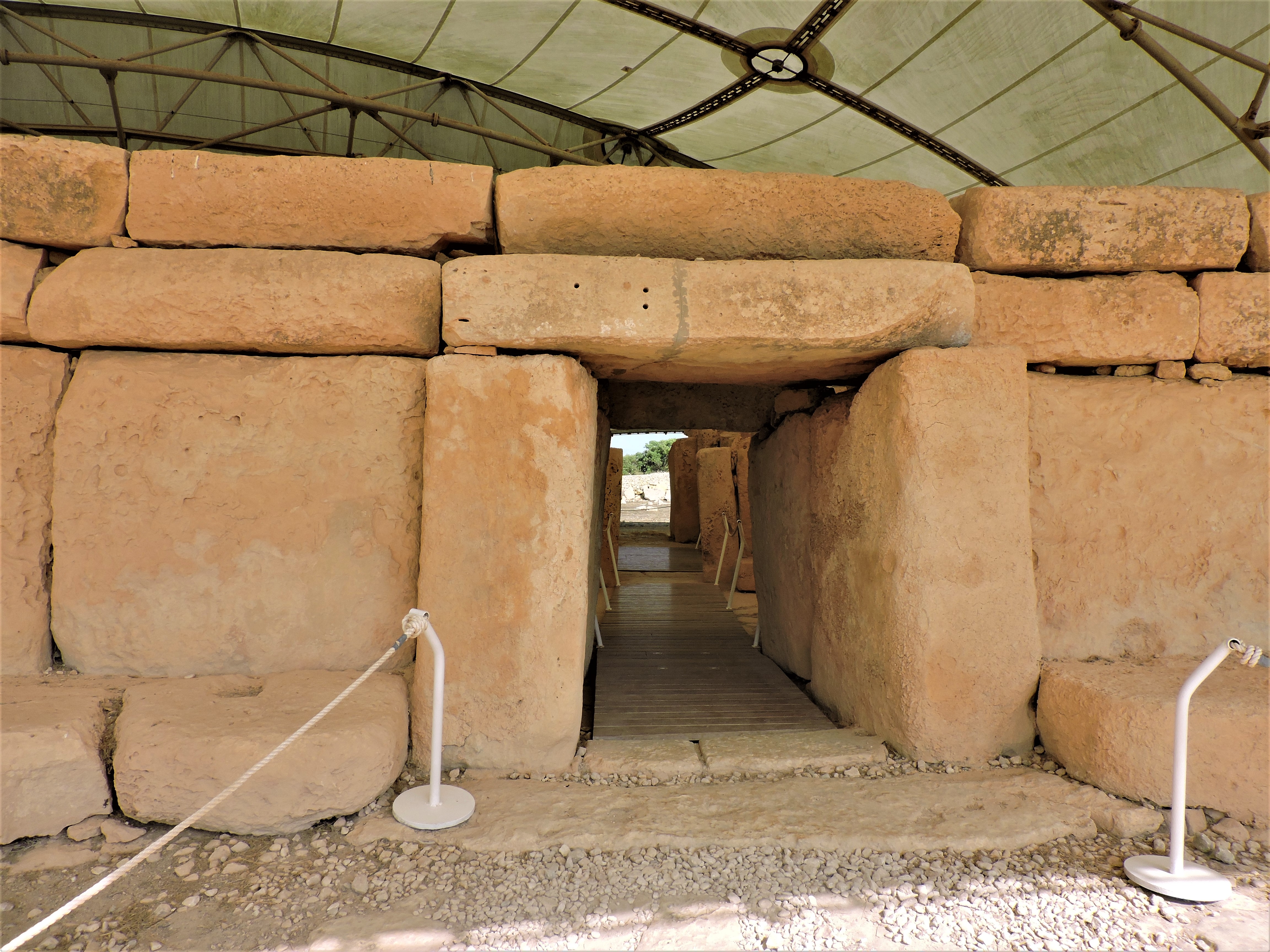
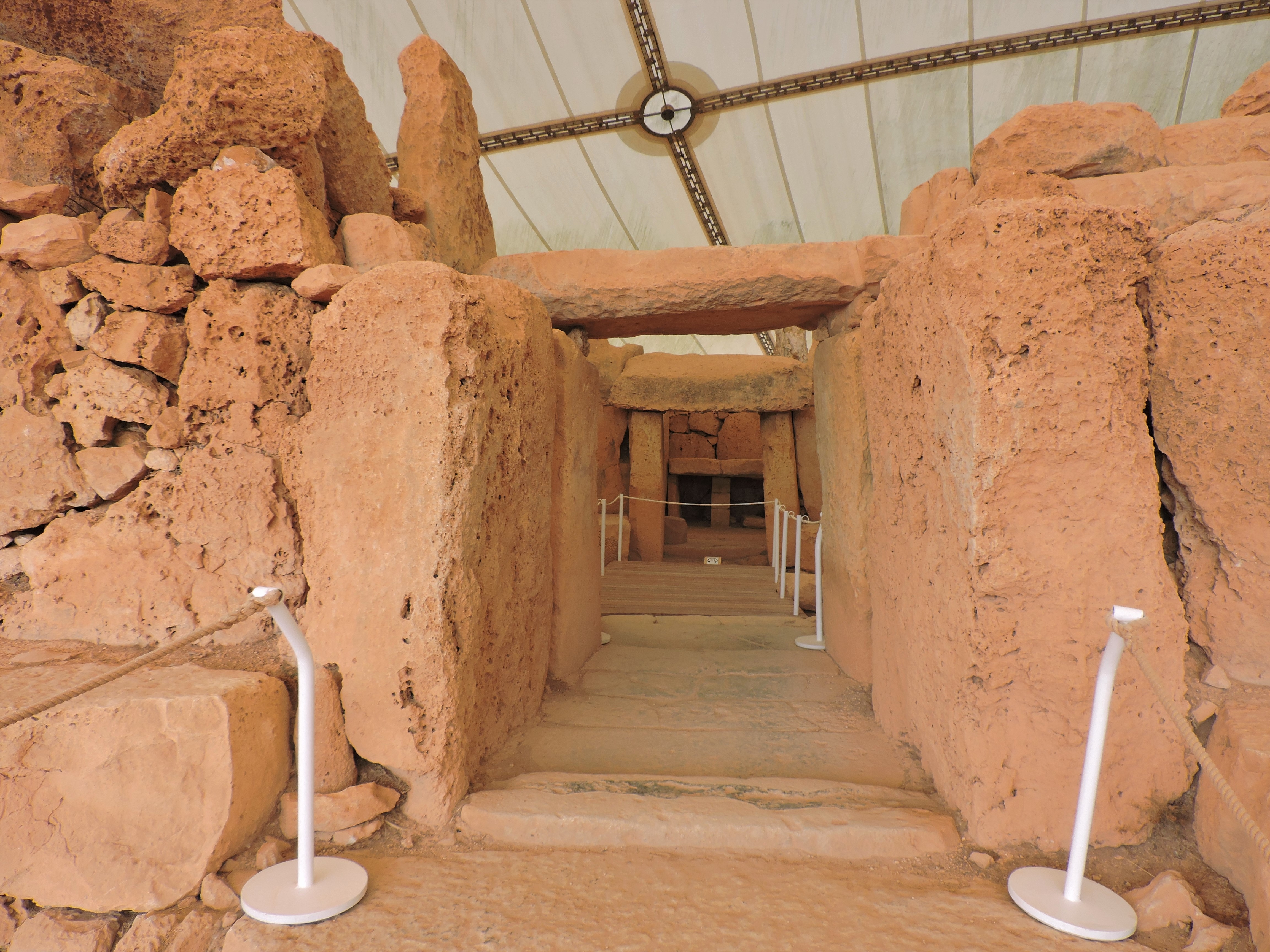
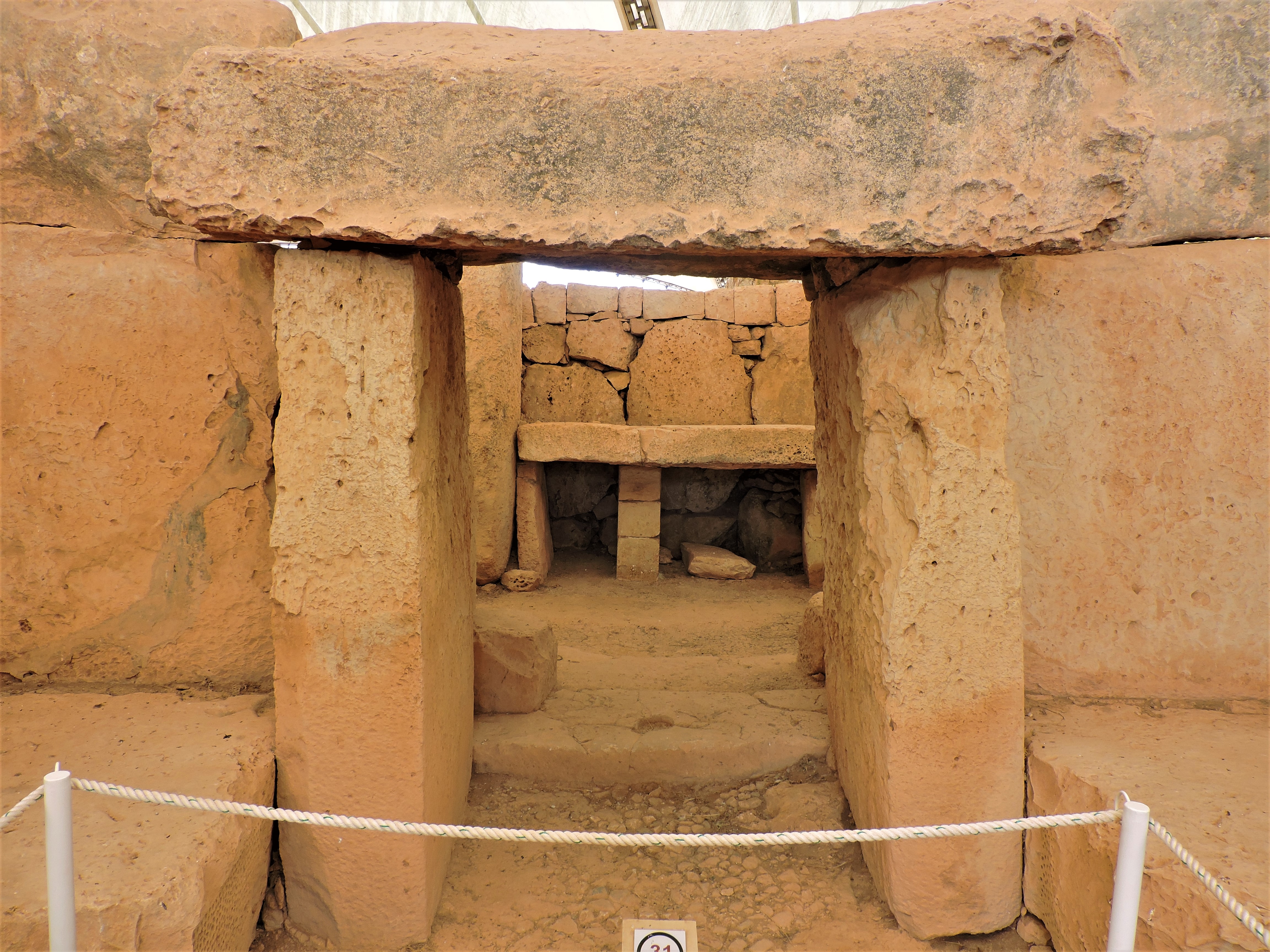
The inner wall was then built, followed by the external wall and infill, the horizontal blocks were set above the walls slightly protruding over each other to form a corbelled roof.
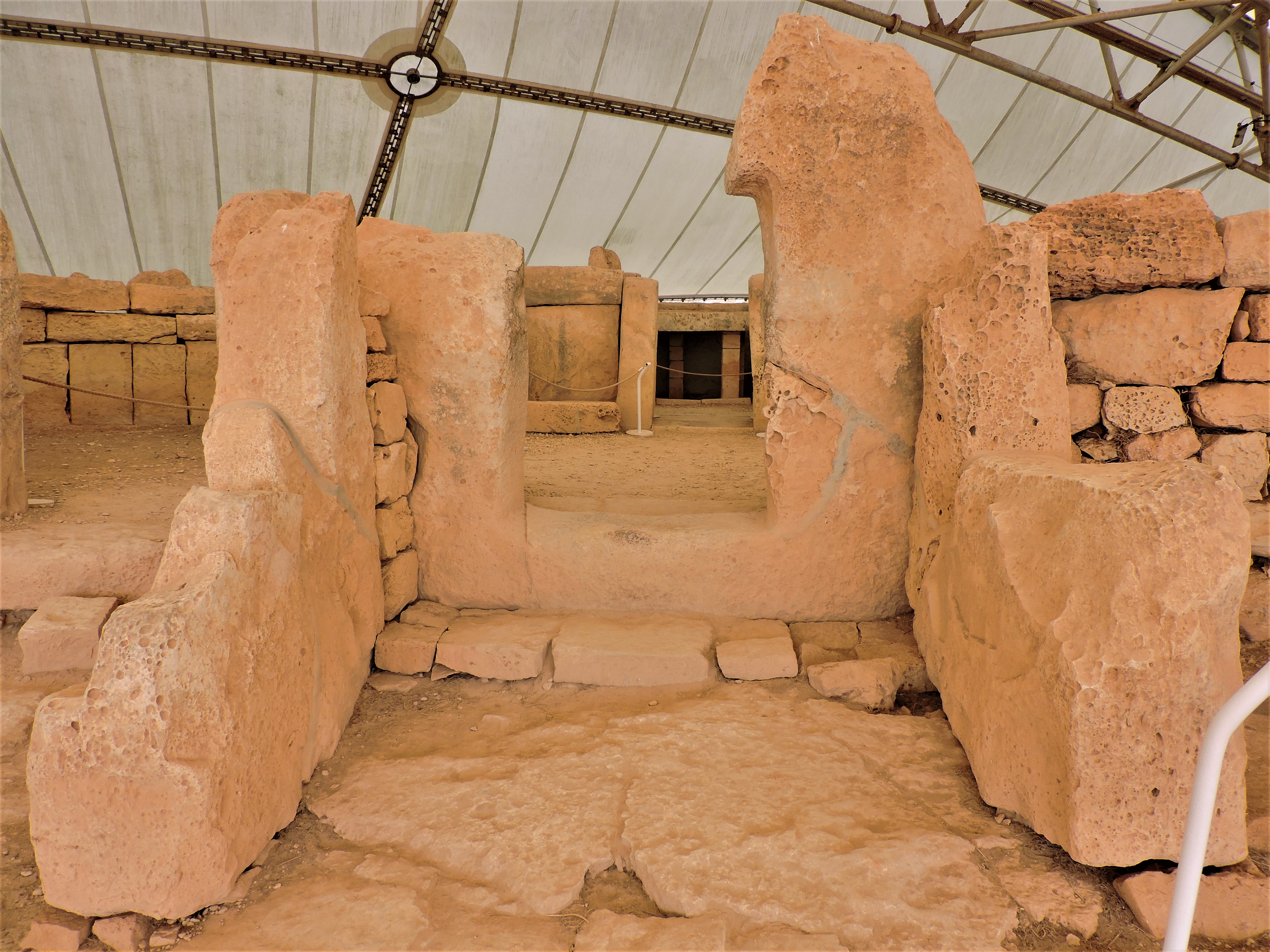
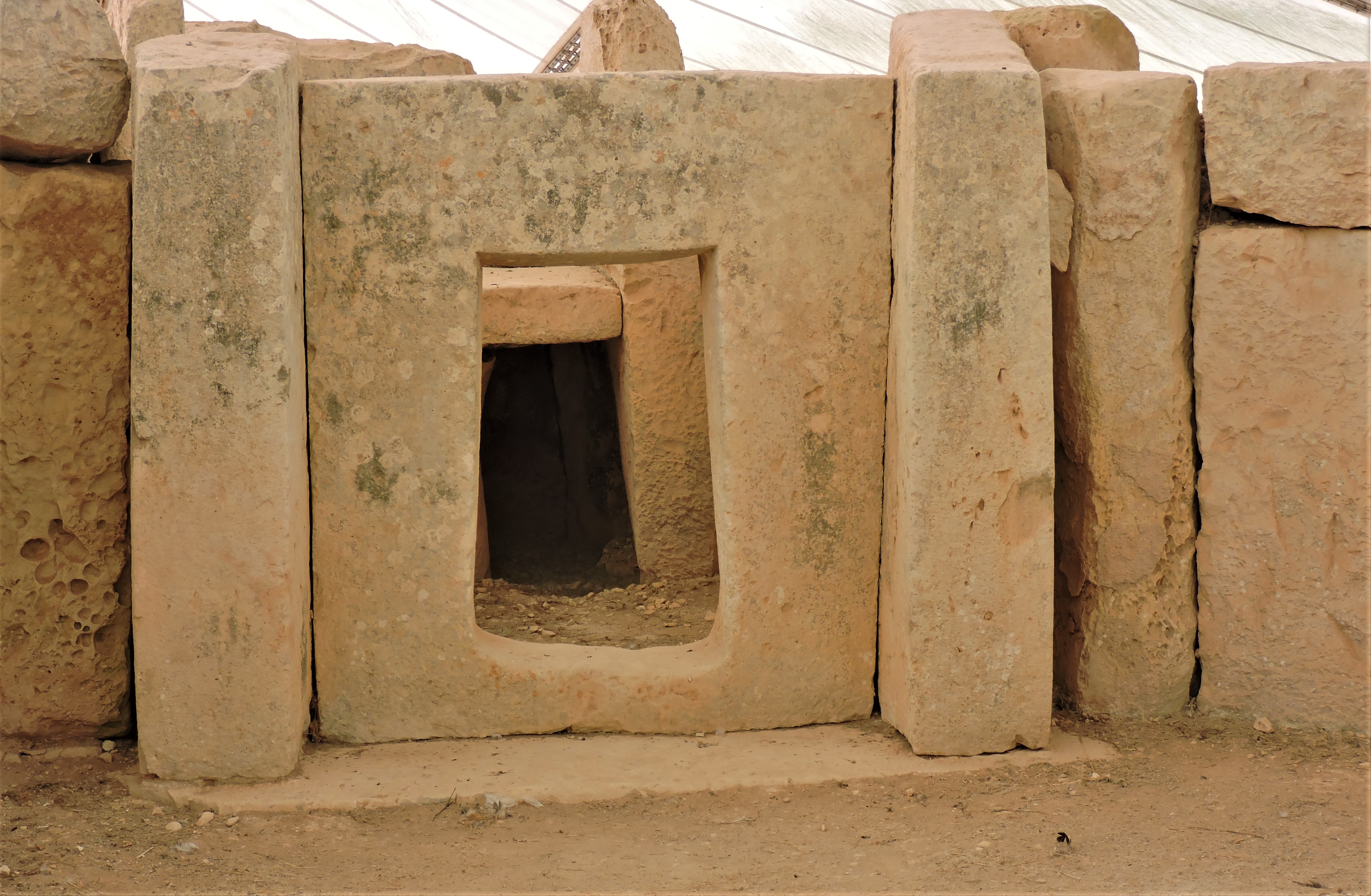
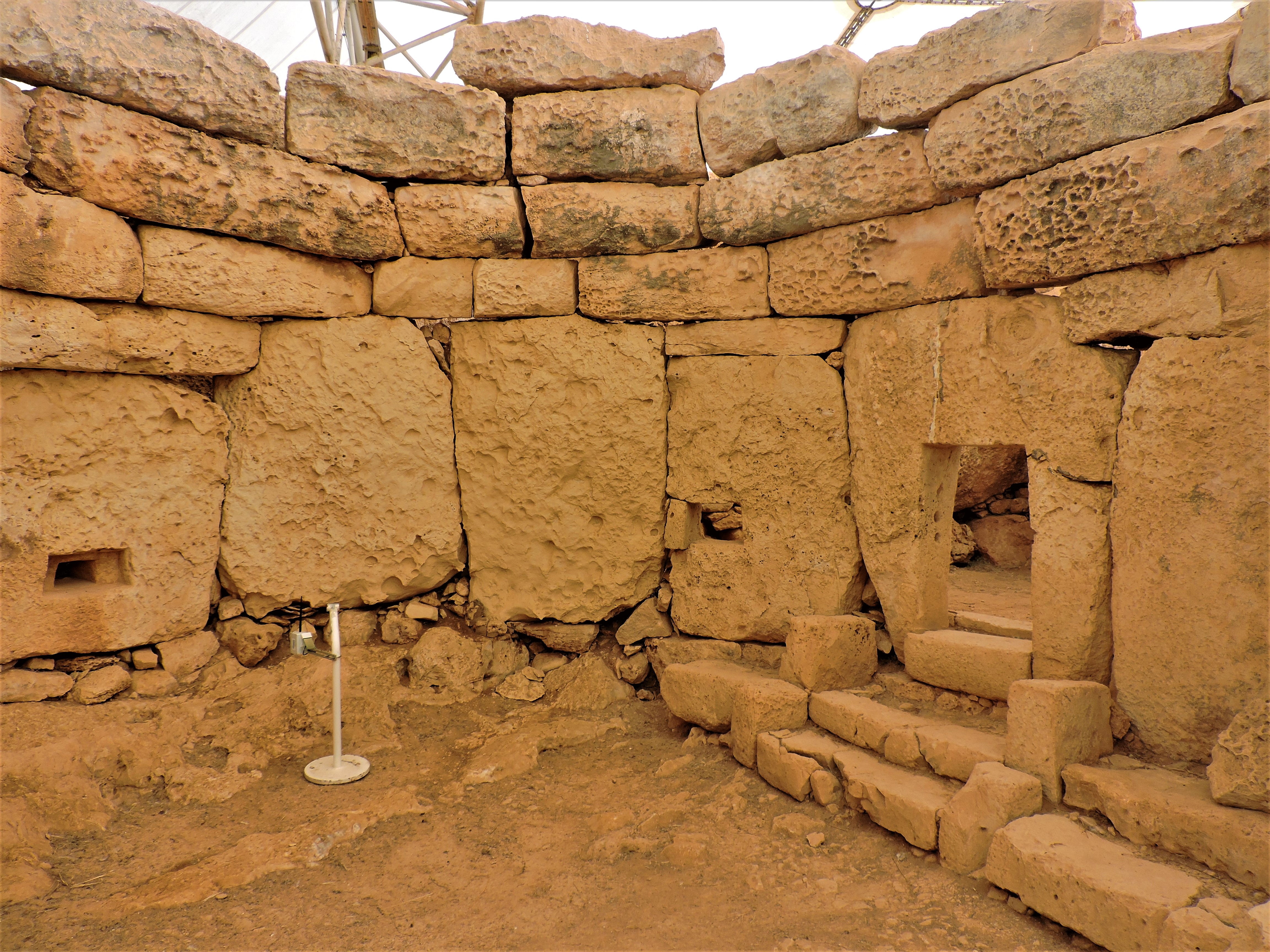
Let’s assume the builders weren’t giants or giantesses, they didn’t have metal tools and the wheel hadn’t been invented yet. How did they get those huge slabs to where they wanted them?
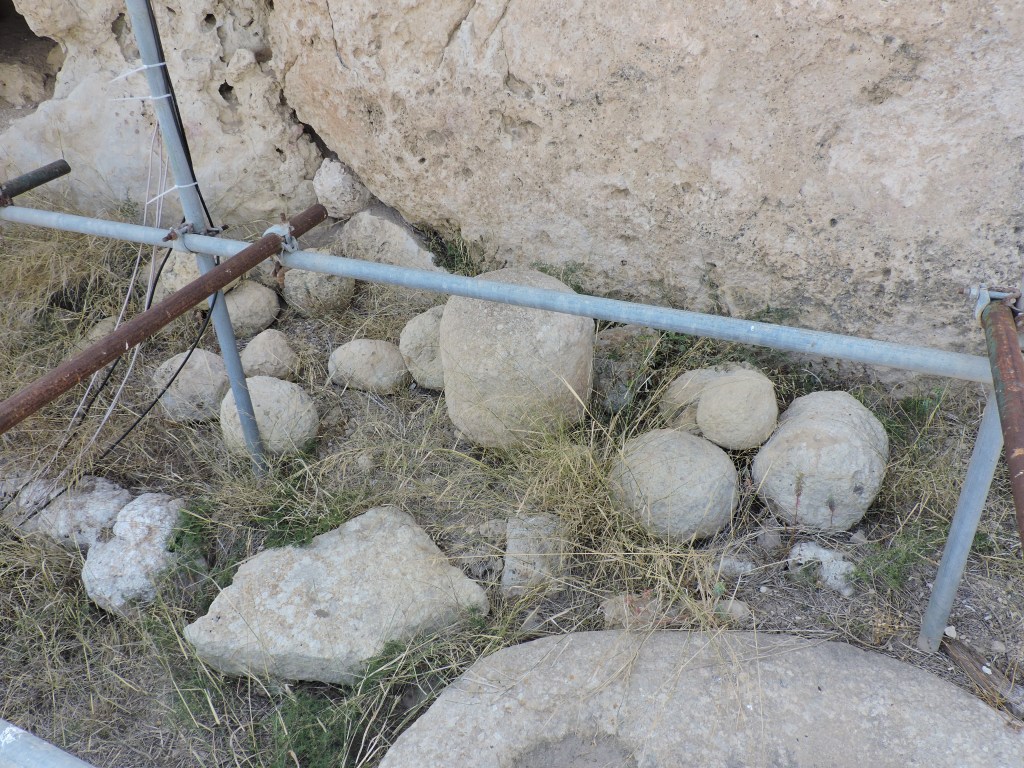
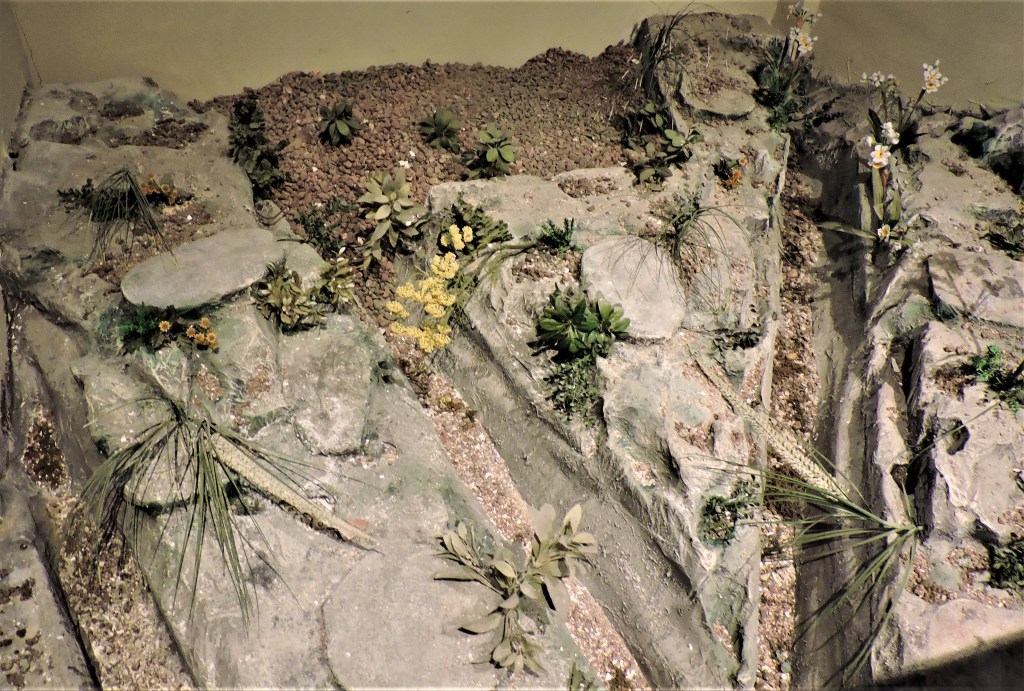
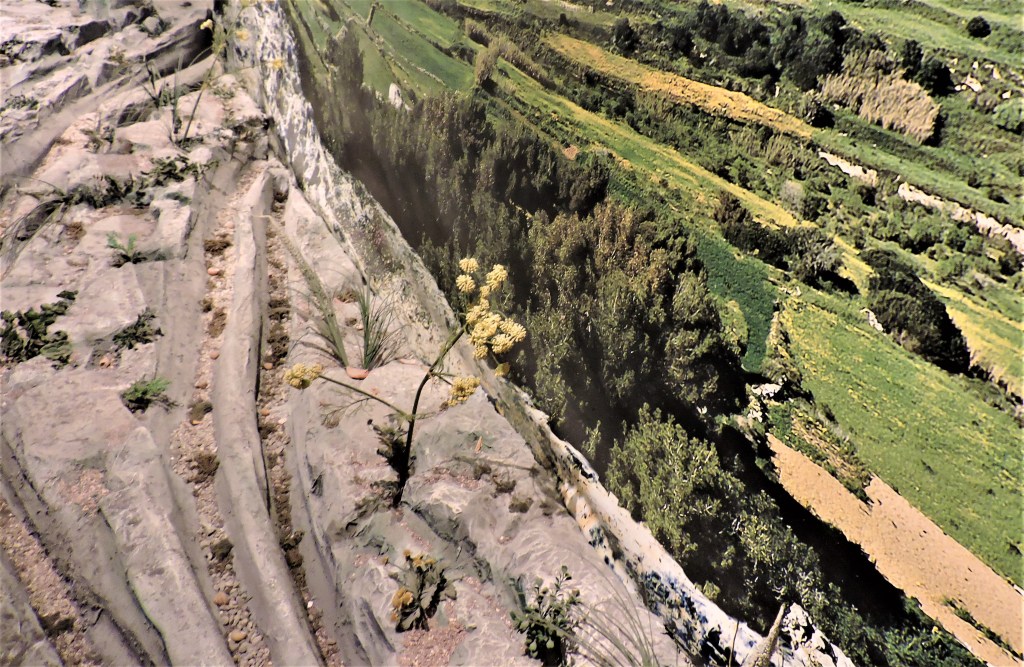
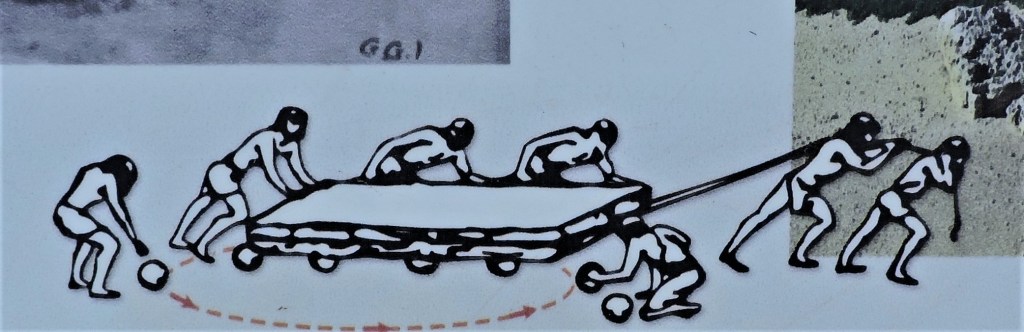
They used stone spheres to roll the heavy stone slabs along and the ruts that run through the countryside were most likely carved by sledges that carried heavy weights (no wheels yet).
The Tarxien Temples [tarˈʃɪːn] – until as late as 1914 – used to drive the farmers nuts any time they tried to plough their fields and struck a stone. Then they realised they had a World Heritage Site under their plough blades.
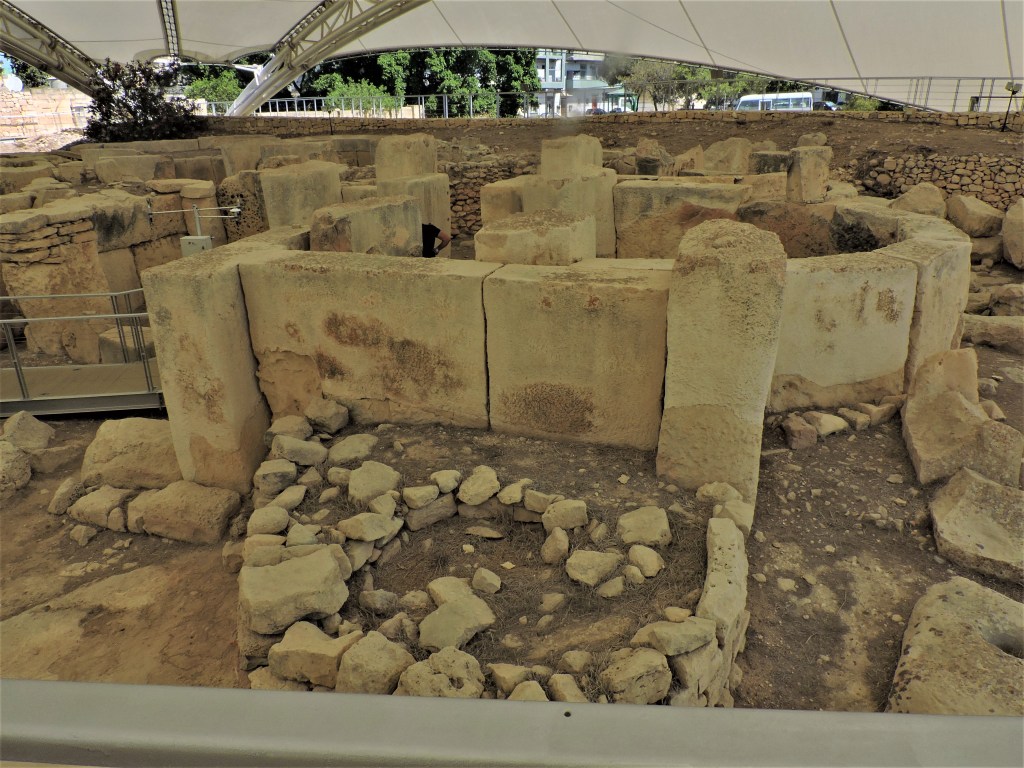
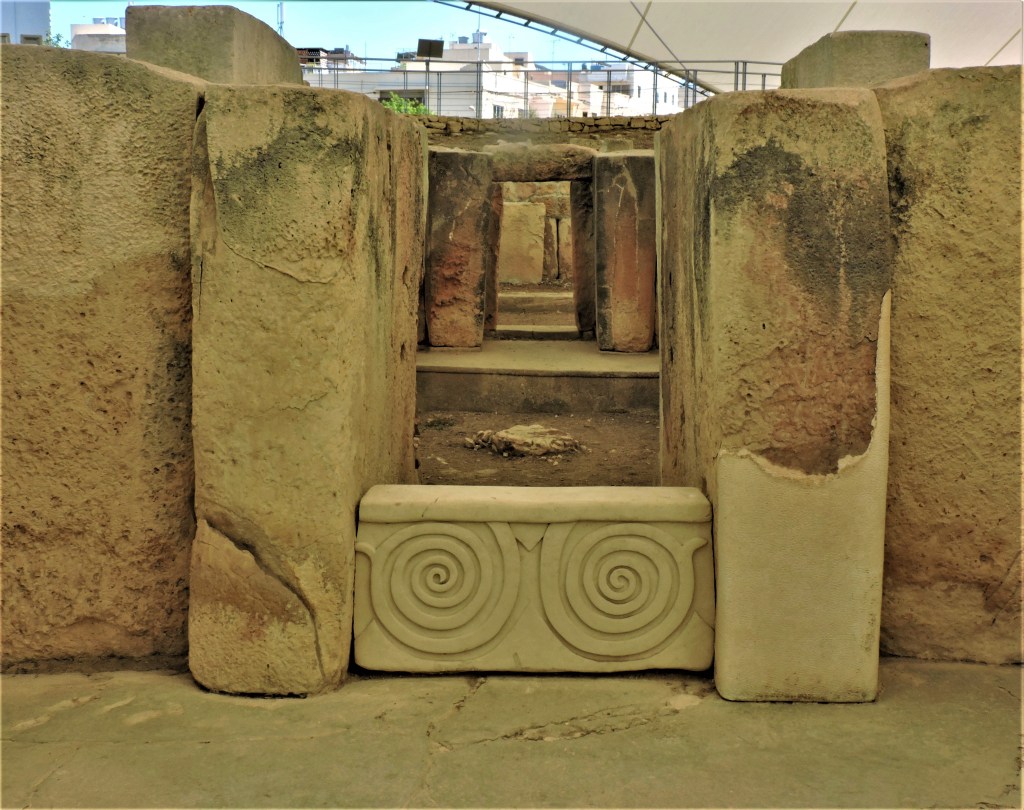
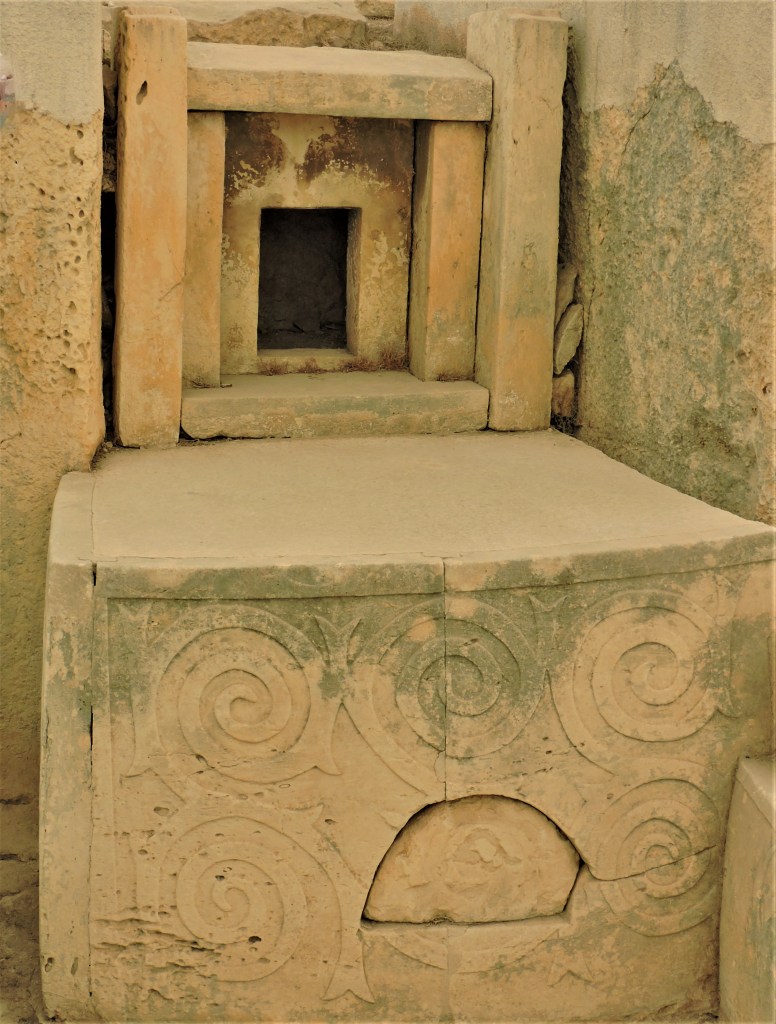
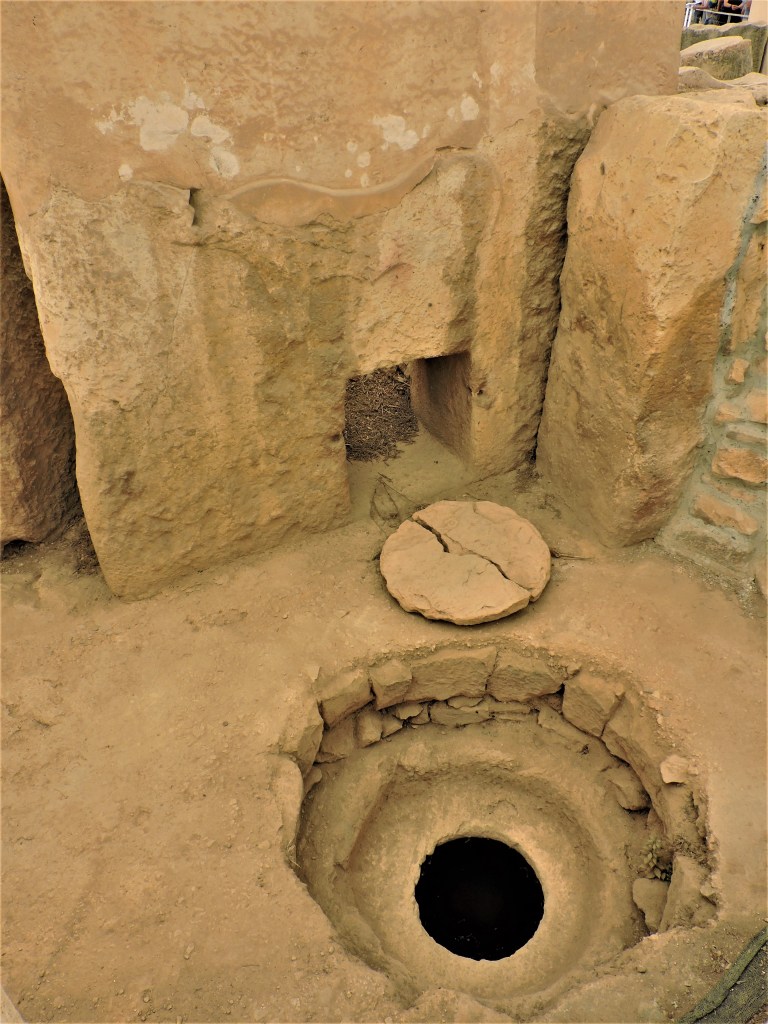
Evidence showes the possibility of animal sacrifice, anything worse must be folklore.
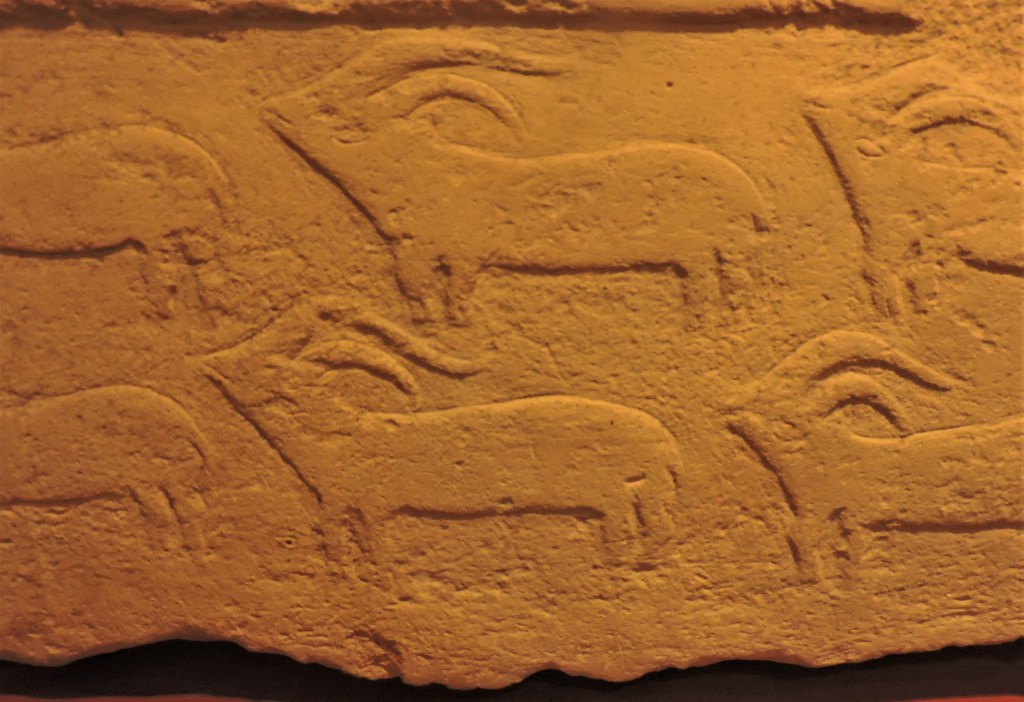
THE ABSOLUTE HIGHLIGHT of Maltese archeology was discovered shortly before the Tarxien Temples: an underground cemetry! Forget about the Catacombes! The earliest rock cut chamber tombs had started to be carved out by 4100 BC! The Ħal Saflieni Hypogeum in Paola (a short bus ride from Valletta). Book your visit half a year ahead, access is very limited for the protection of the site, be prepared to pay what seems a lot of money, a bit less for the over 65. The visit is awesome even though you can’t take pictures. (these pictures here taken from Heritage Books)
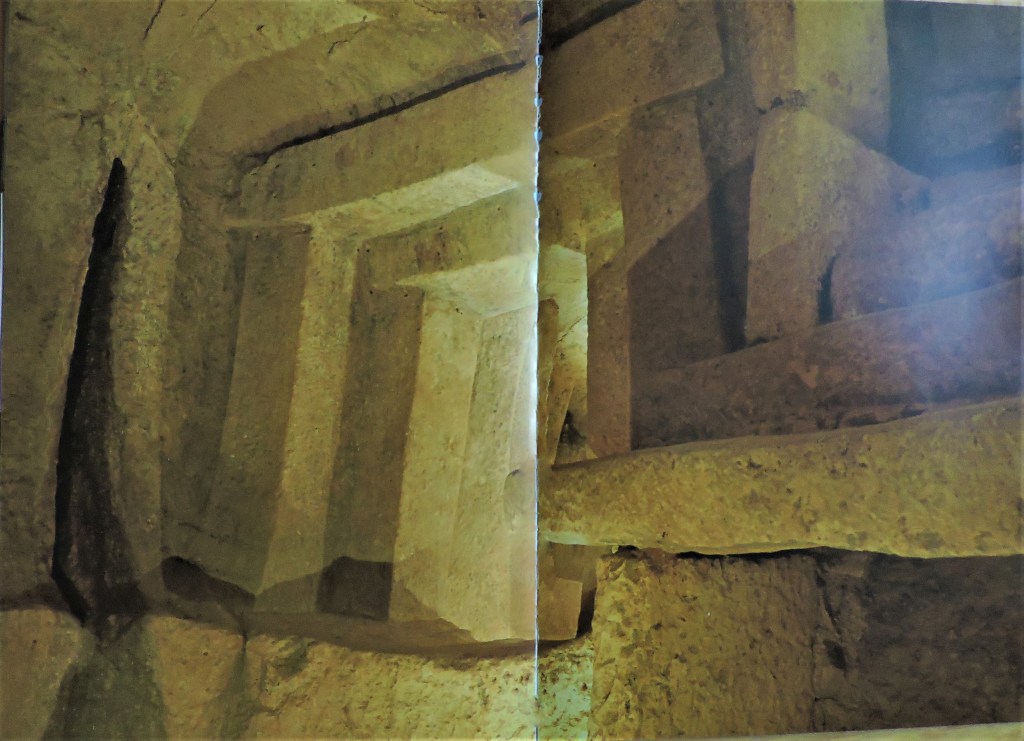
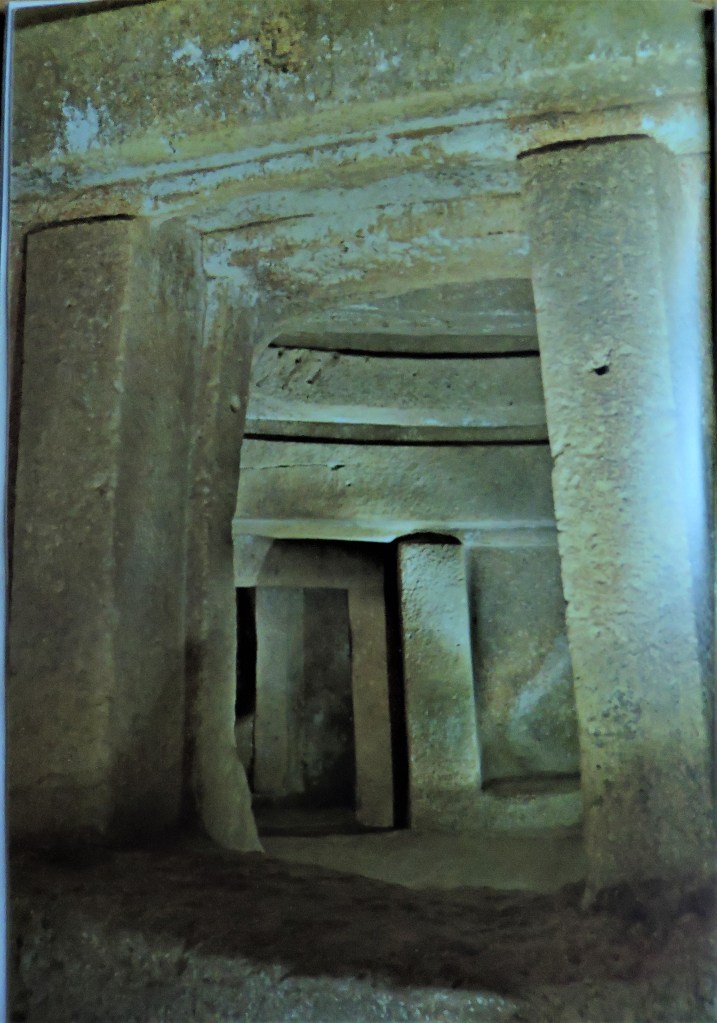
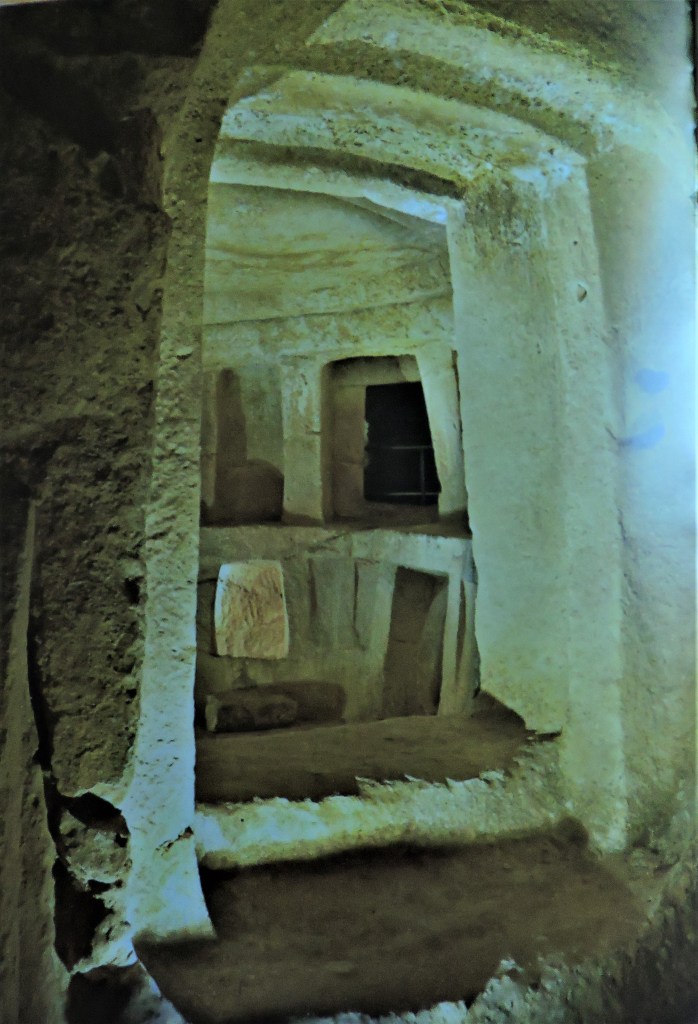
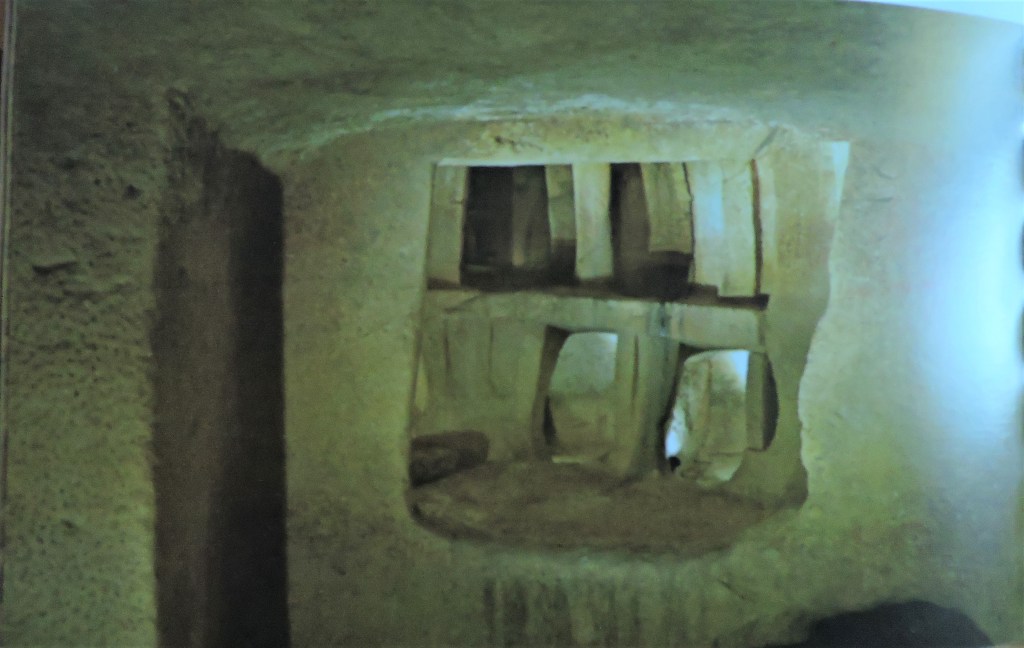
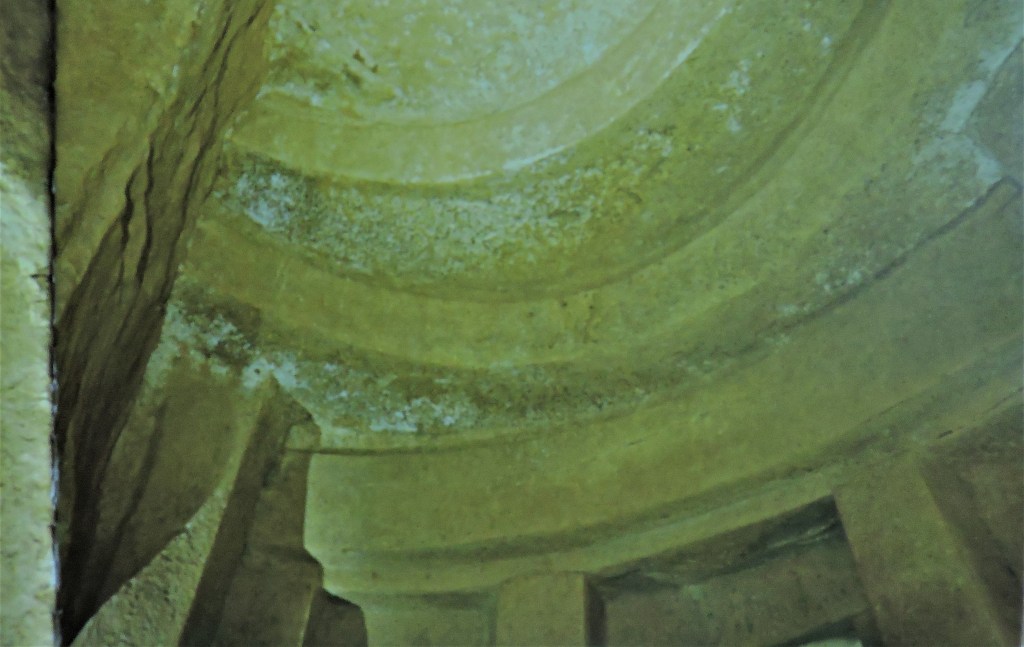
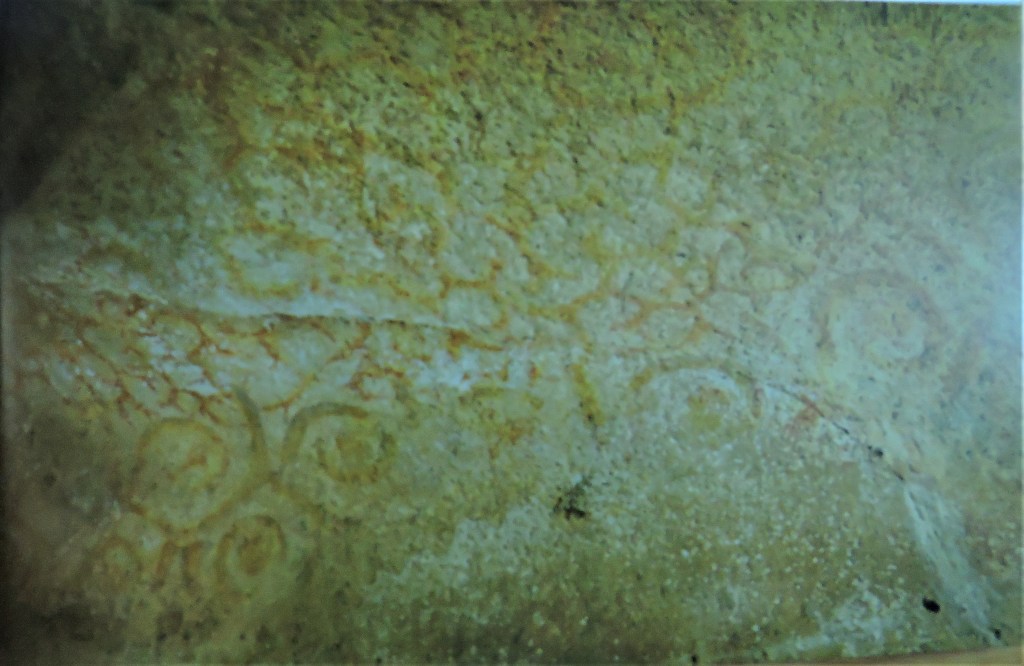
Paintings are red because red is the colour of the dead. What’s the difference between the other temples and this one? You see the usual passageways: vertical stones with heavy lintels on top. But … not built from bottom to top but laboriously carved out with tools made of hard stone like chert, flint or obsidian: the chambers, one oriented towards the winter solstice, another one producing an acustic effect, the corbelled ceilings, the doorways, niches, holes and windows. Even antlers were used to hew and carve. A lot of what was found inside the Hypogeum and the other temples is now exhibited in the National Museum of Archeology in Valletta. And … a lot was not recognized as valuable finds and discarded as waste (I wish I could have just one piece, even a smal one!)
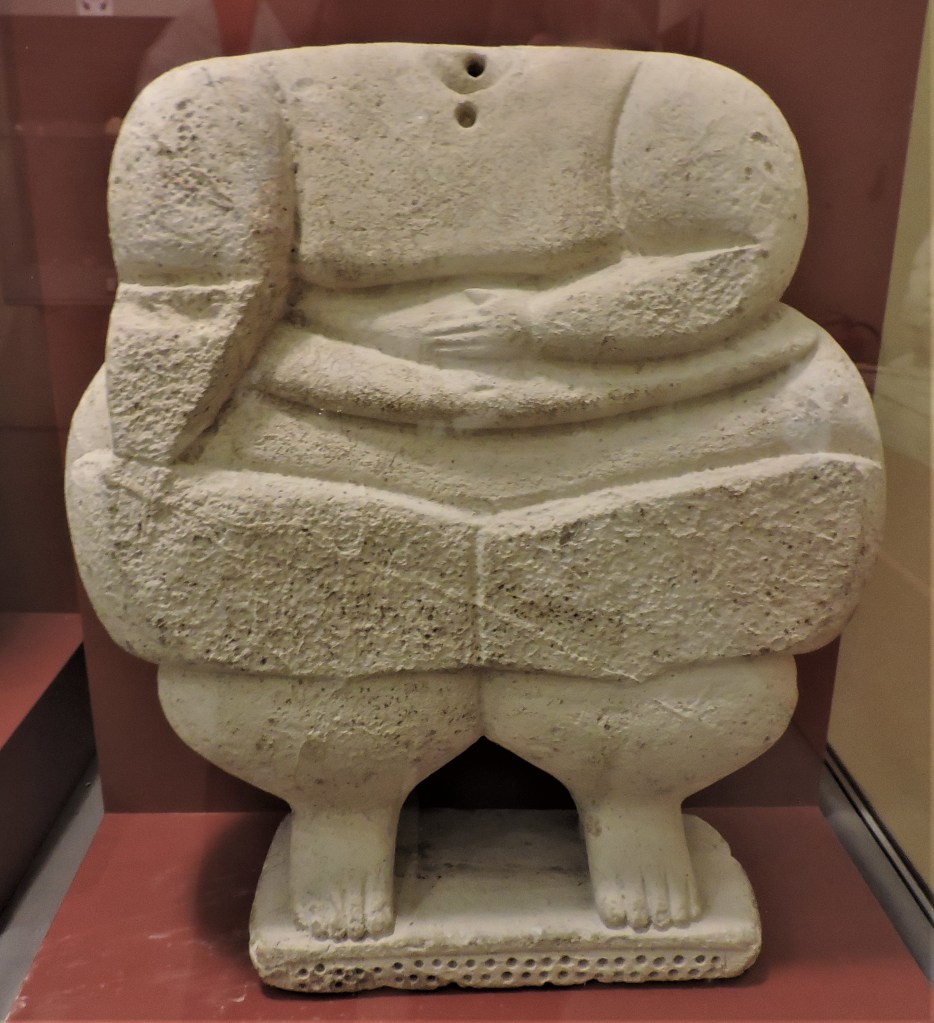
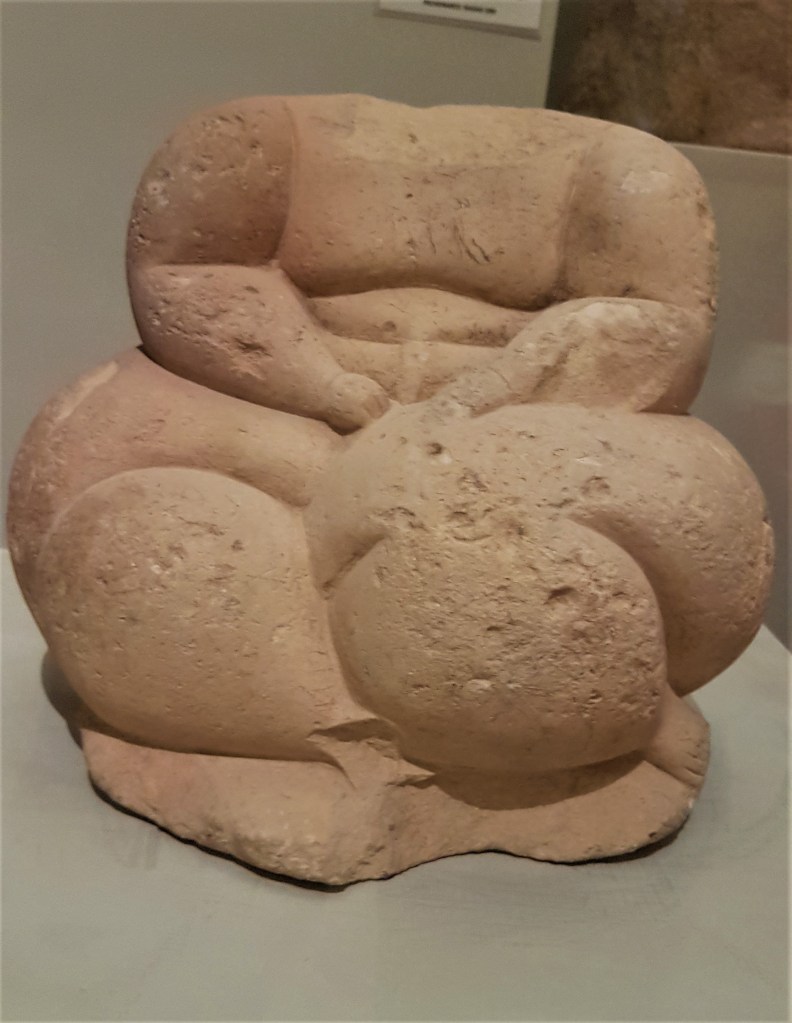
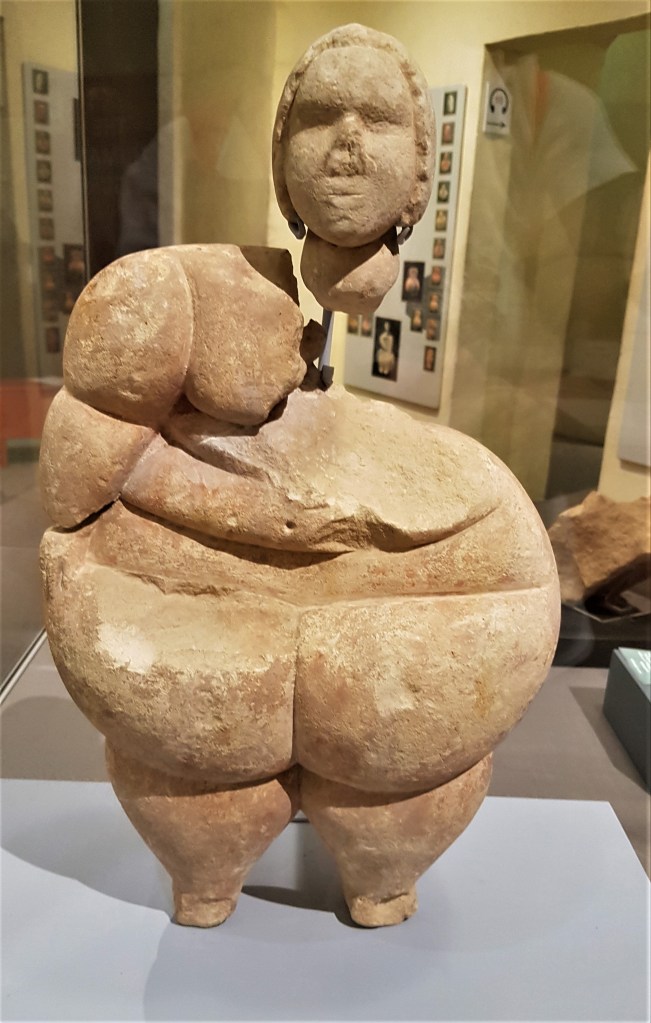
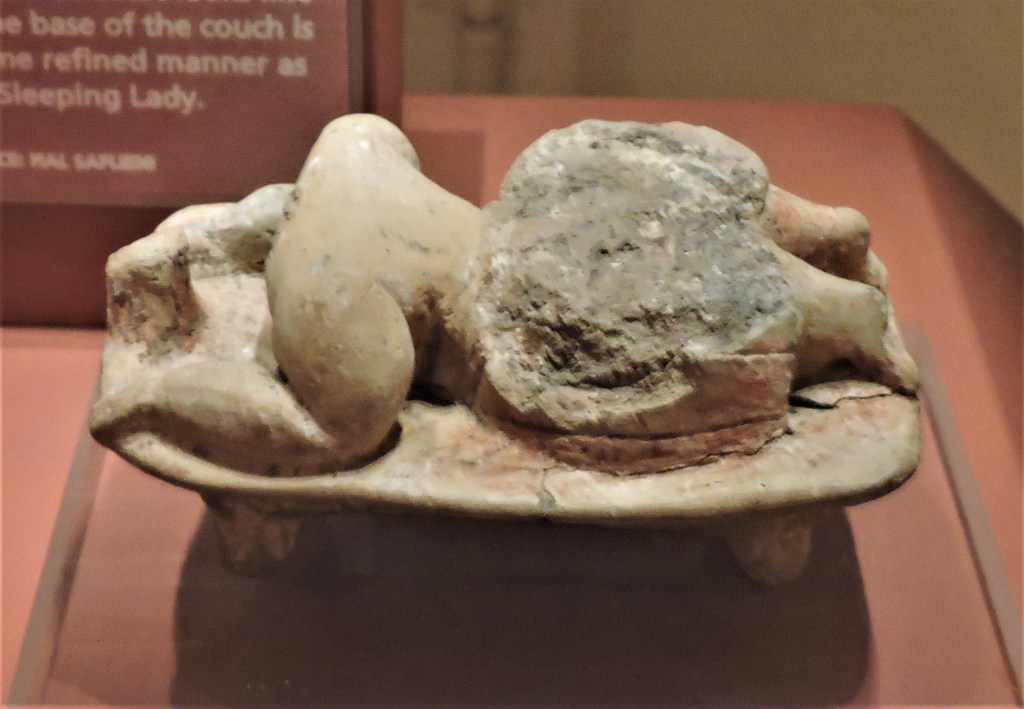
The corpulent statuettes? Must be mother goddesses, females anyway, who survive the famines and keep the tribe alive. Archeologists nowadays take a more unbiased look: the figures are sexless, infact, but still part of fertility rites. The prone figurine without its head,? Don’t worry, no axes yet.
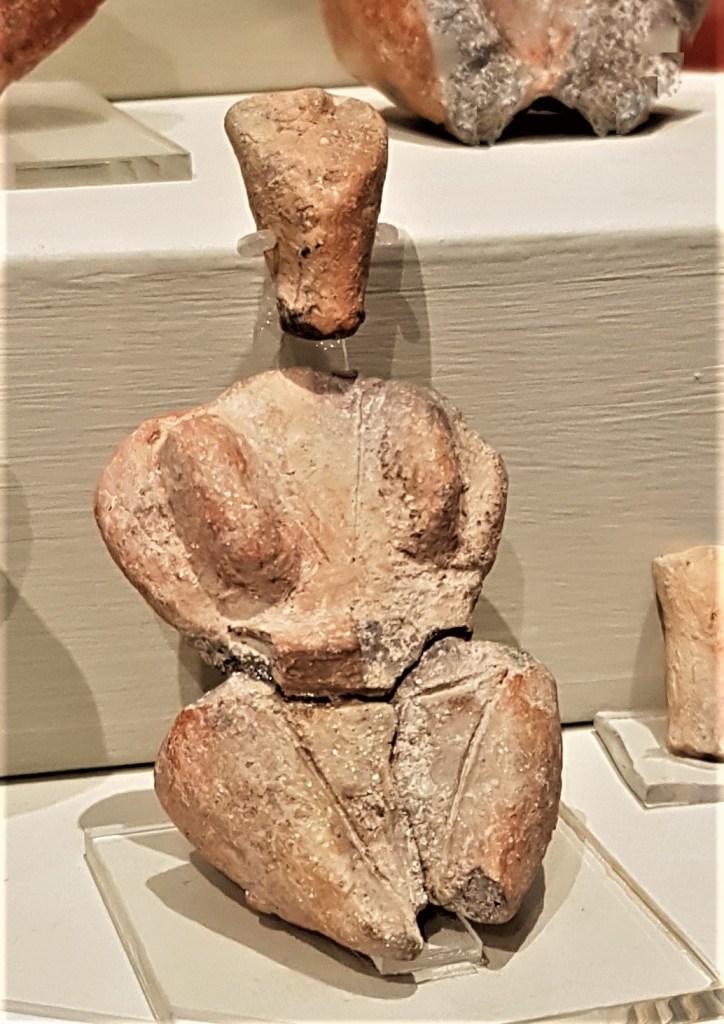
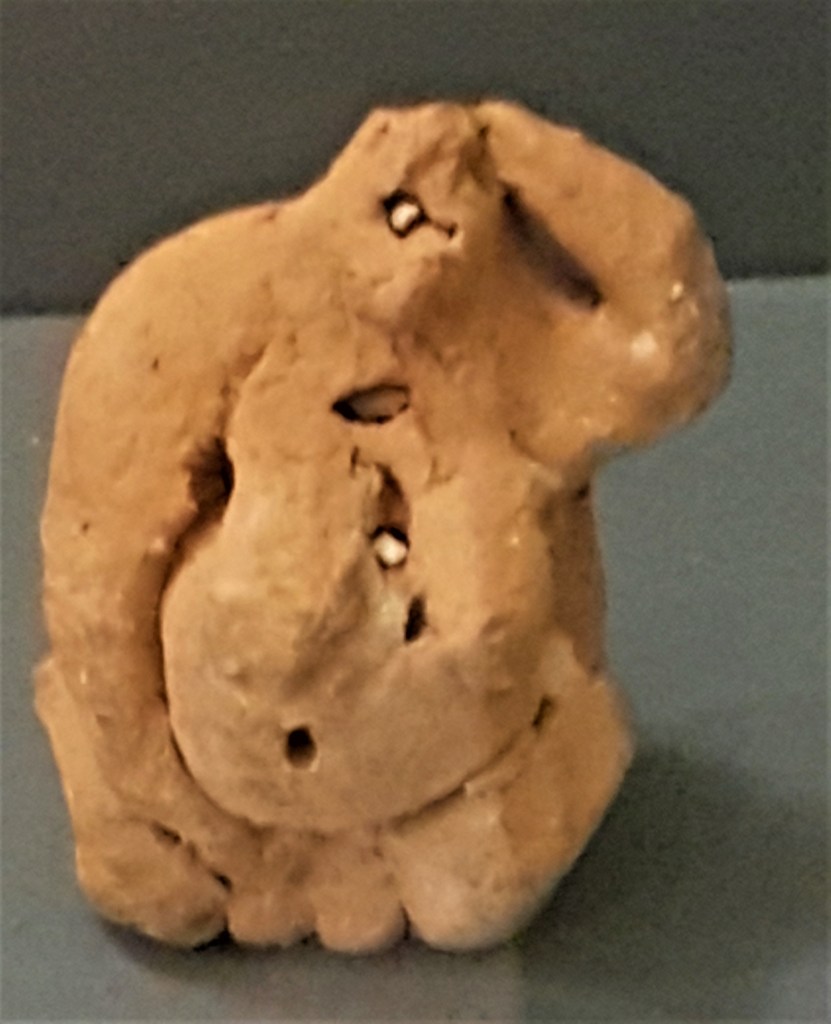
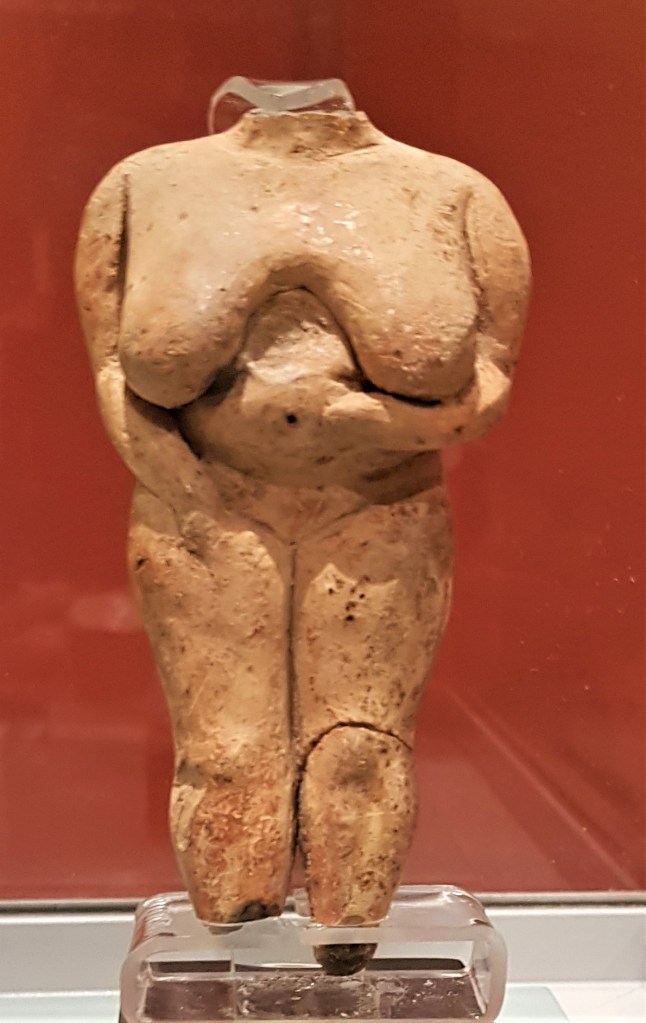
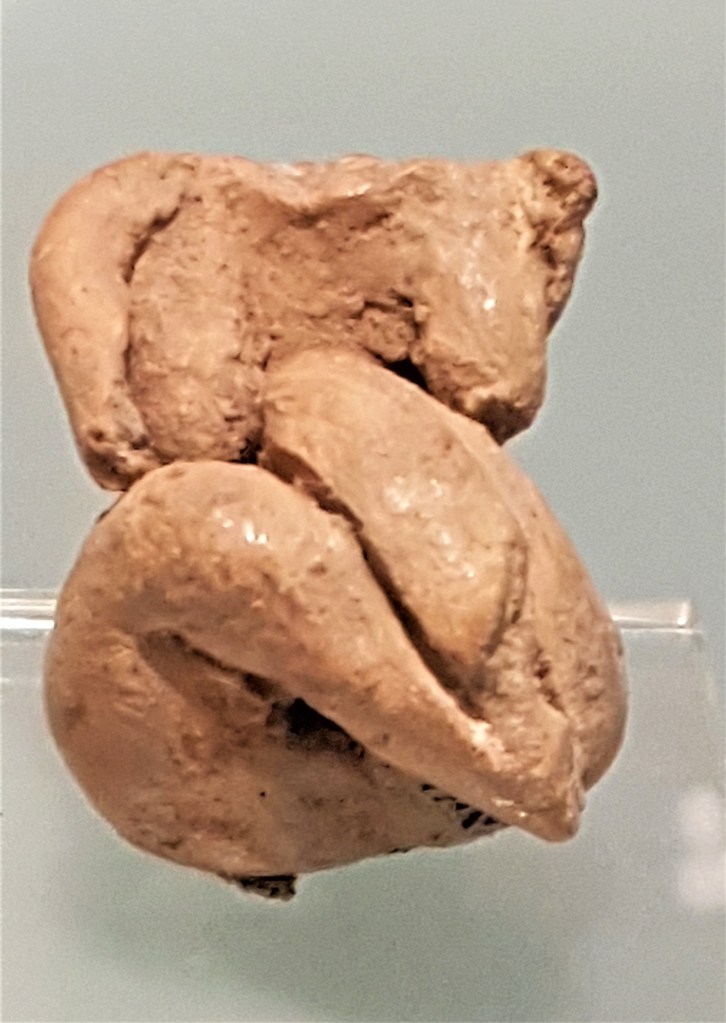
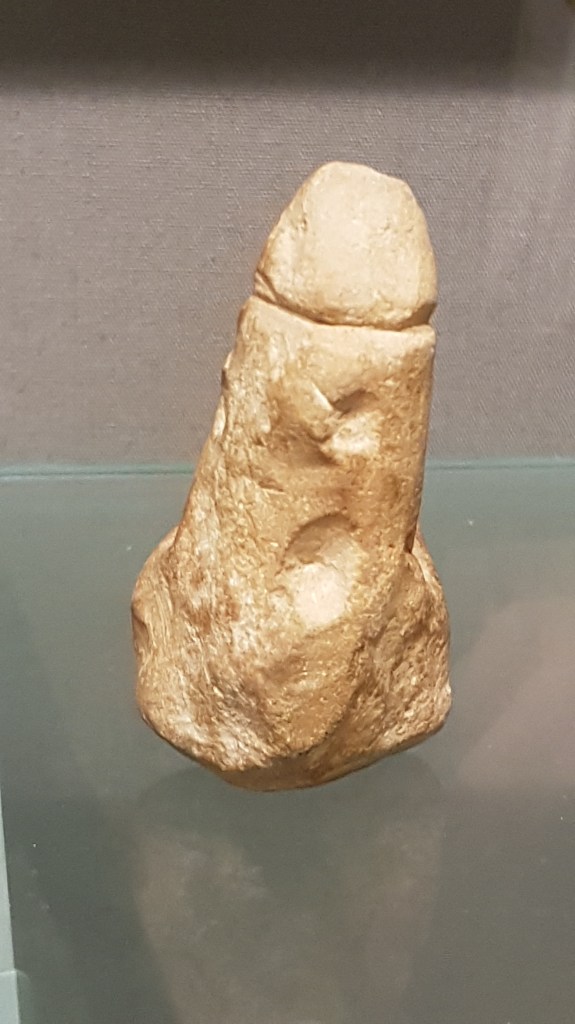
Much smaller but not less fascinating: real women, exactly as the gods had created them: 1) one of the earliest representations of a human being 2) a pregnant woman holding her forehead and her belly, maybe preparing for delivery. There are small pieces of bone stuck in the figure. 3) a sitting figurine, elegant 4) the so called “Venus of Malta”, the most natural representation of a woman 5) the universal fertility symbol shown here for the sake of male female equality
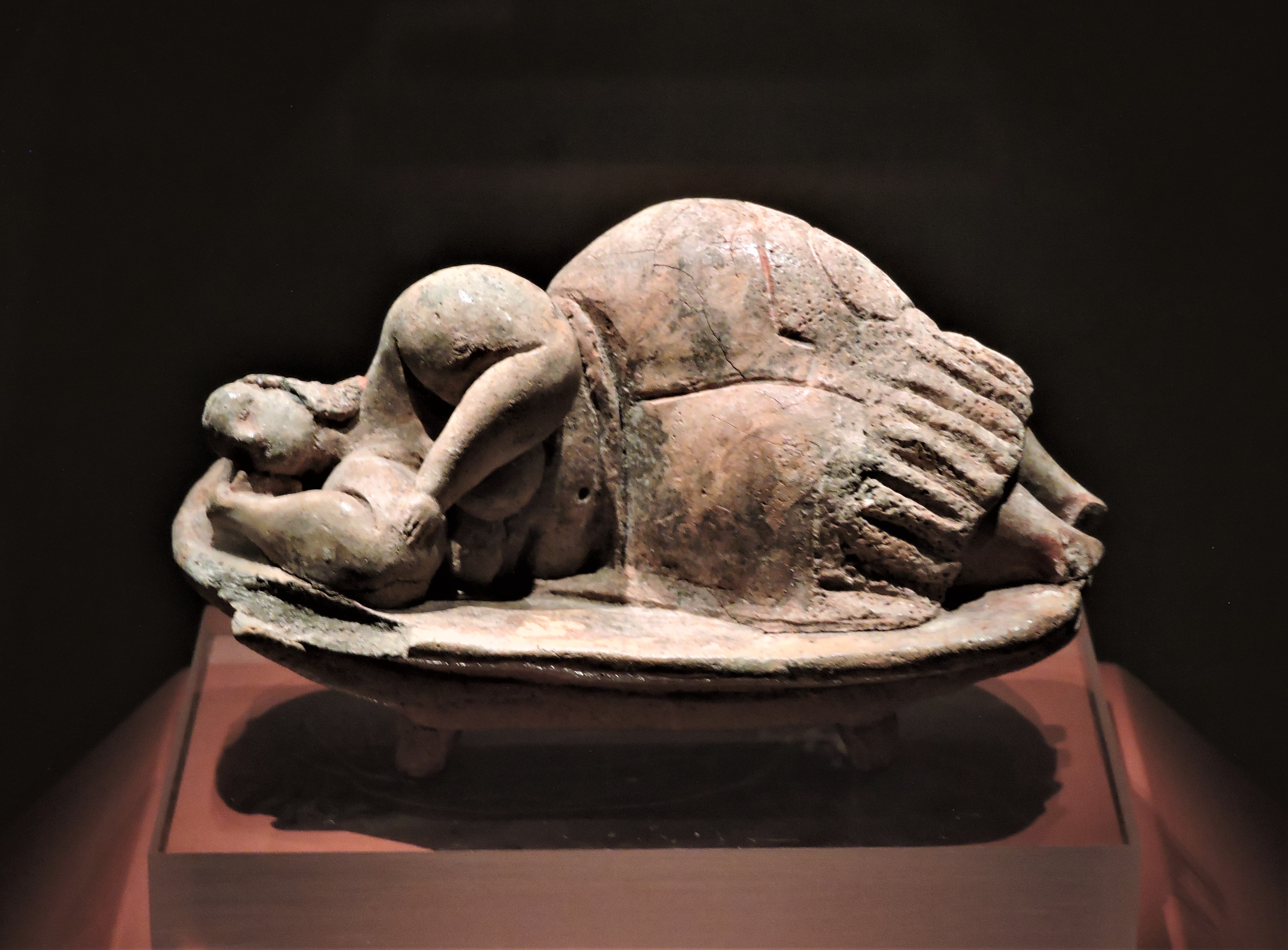
And now the absolute highlight: the Sleeping Lady from the Hypogeum. The figurine is 7 cm high, 12 cm long and 6.8 cm wide, polished brown clay with red ochre, lying sideways, half clad in an embroidered skirt. Is she a ‘sleeping mother godess’, or a representation of the ‘eternal sleep’ or just an exhausted cavewife? We don’t know but she is the oldest most amazing representation of a woman you may have ever seen.
There are many more impressions to share about Malta and when I get quarantined again, I’ll let you know.
Gerburg
 gerburgkamm
Leave a comment