What have the Centre Pompidou, the new Bridge in Genoa and the Maltese Parliament House in common? All extraordinary, for sure and beautiful at second sight …
Right! Architects may come and architects may go … Renzo Piano … forever everywhere whether you like it or not.
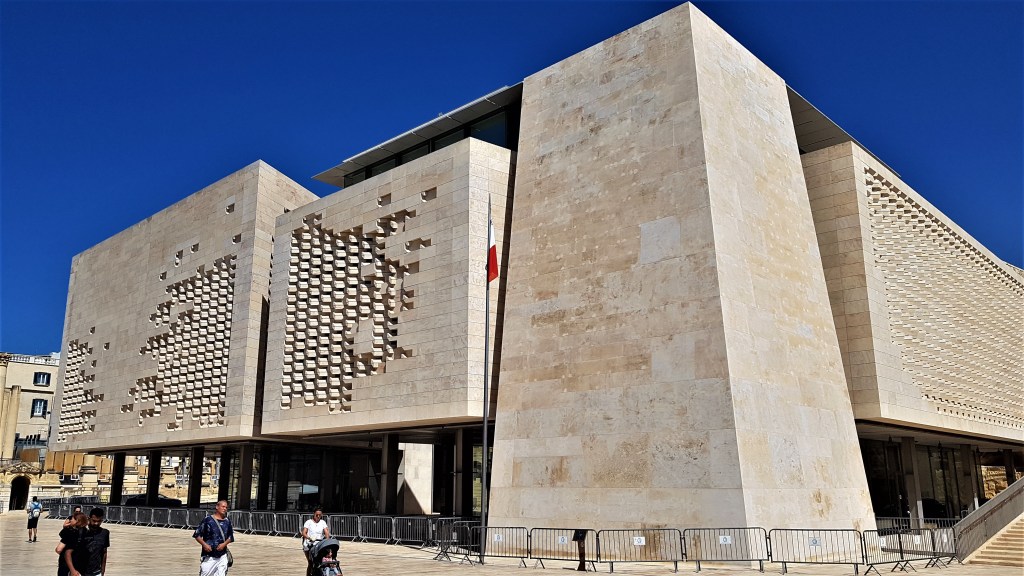
The genius of it: the windows! Let the light in but not the sunshine. Nickname them any way you like, curse the cost, but in a sunshine country that’s a deal.


Majestic King’s Gate and the Royal Opera House, badly damaged or almost completely destroyed in 1942 (by youknowwhom) now re-thought and re-made by Enzo Piano. Not without controversy, but …get used to it.

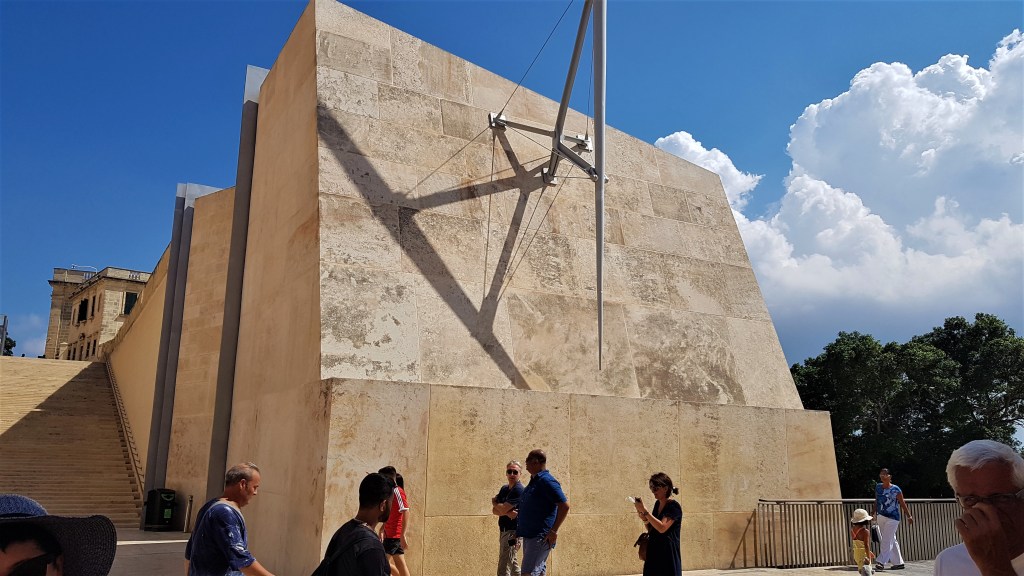
One side of the gate, futurist and apparently designed to withstand a 15th century “bombard” cannon attack.

The remains of the Royal Opera House now fitted for open air concerts (by Renzo Piano), in front Jean de la Vallette who repulsed the Turks’ attacks and gave the capital its name.
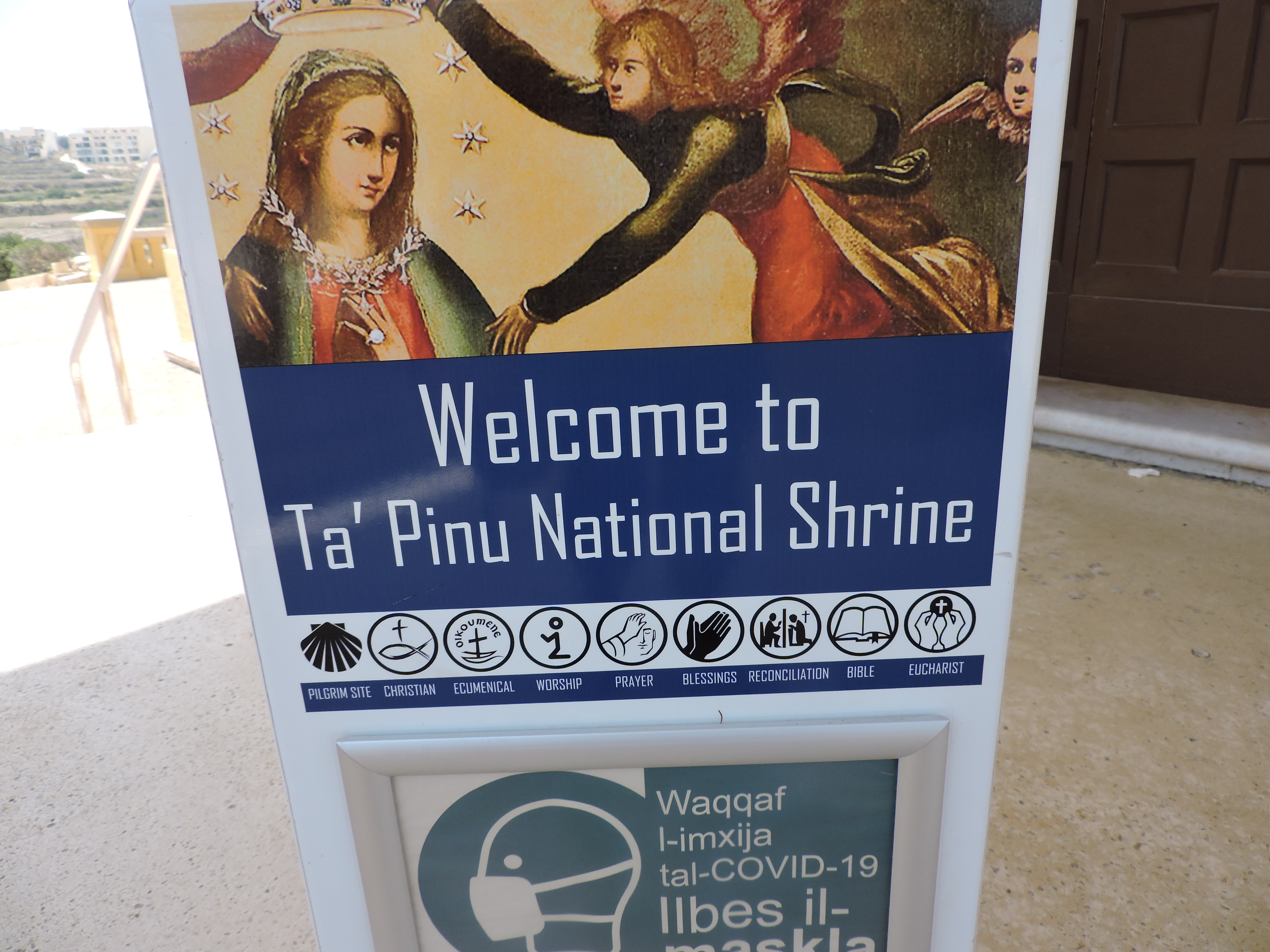
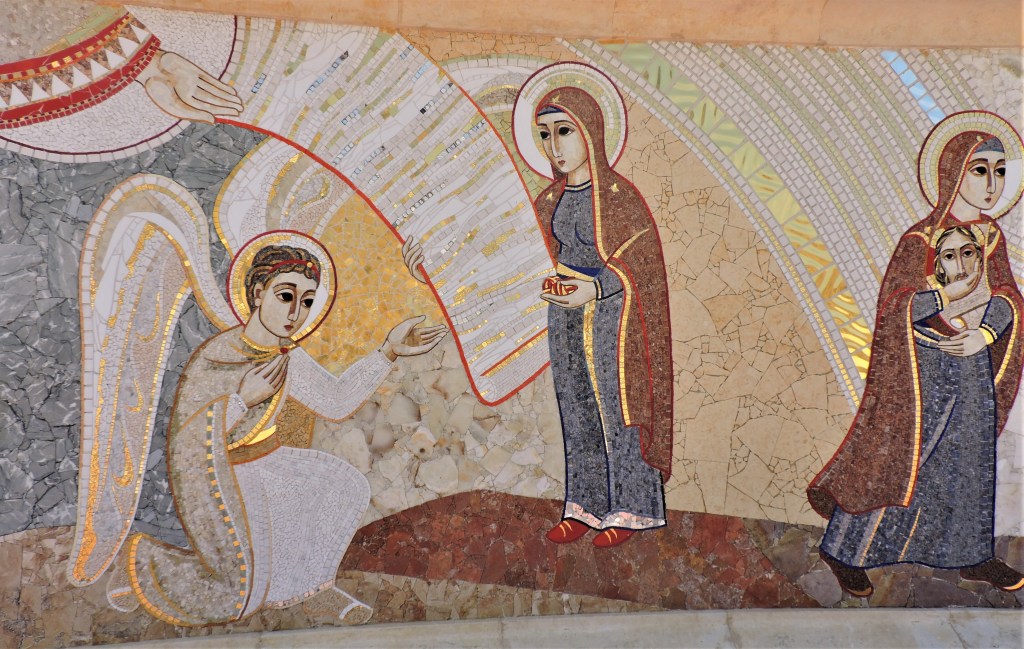
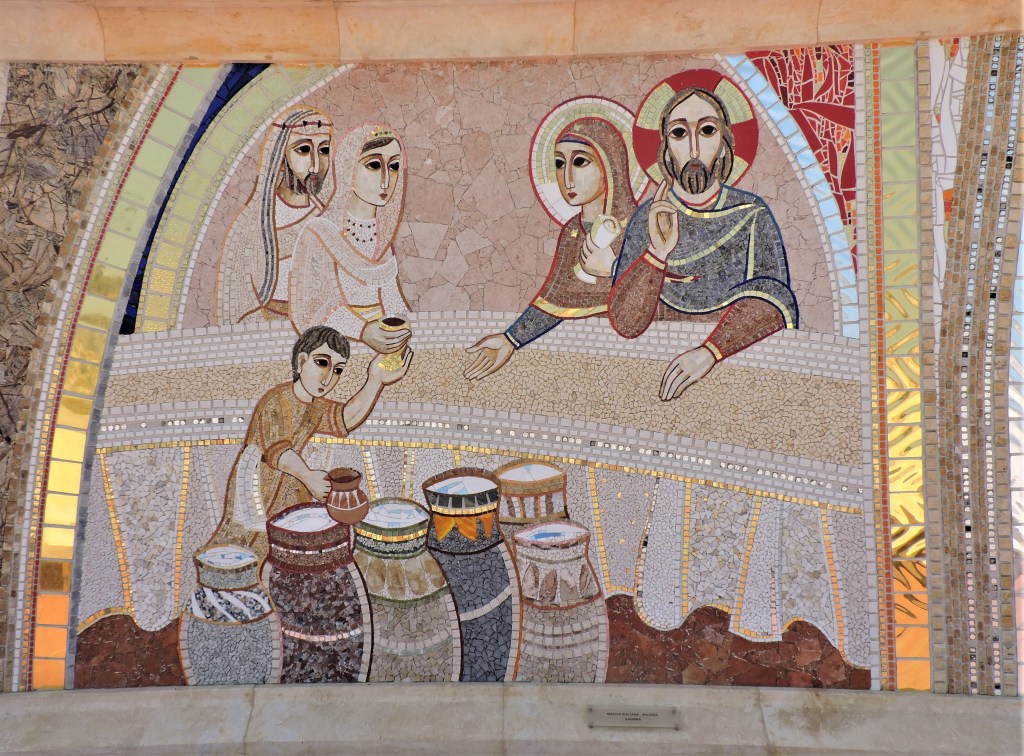
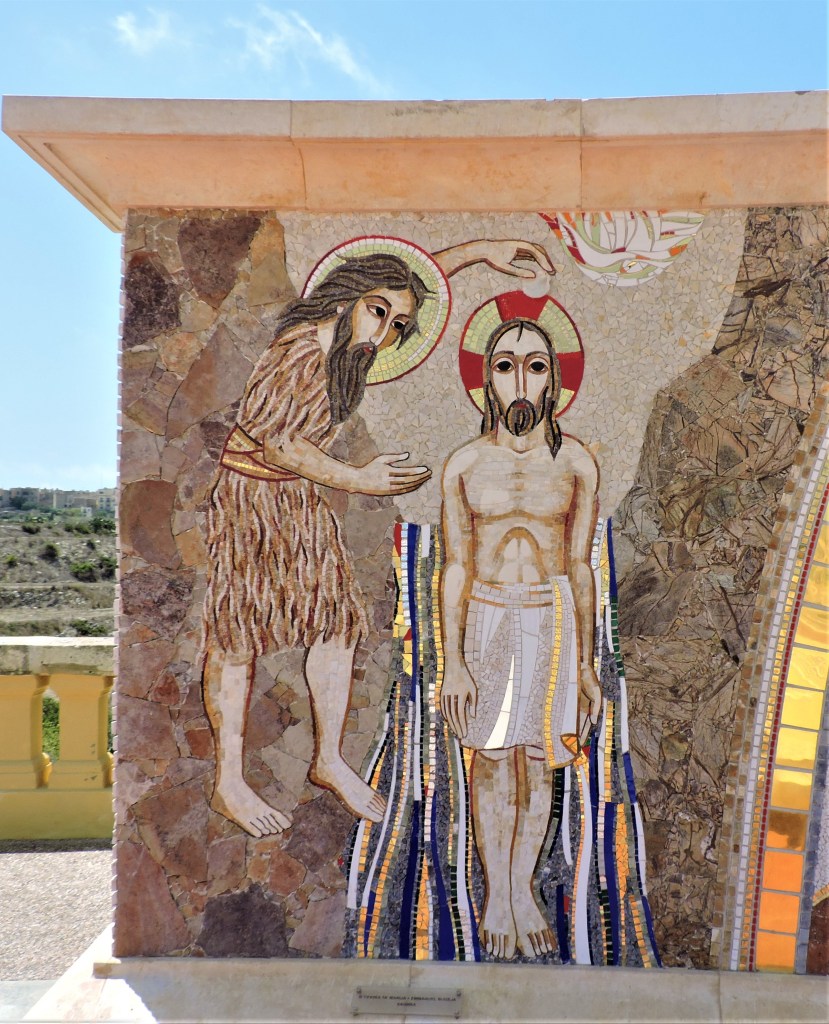
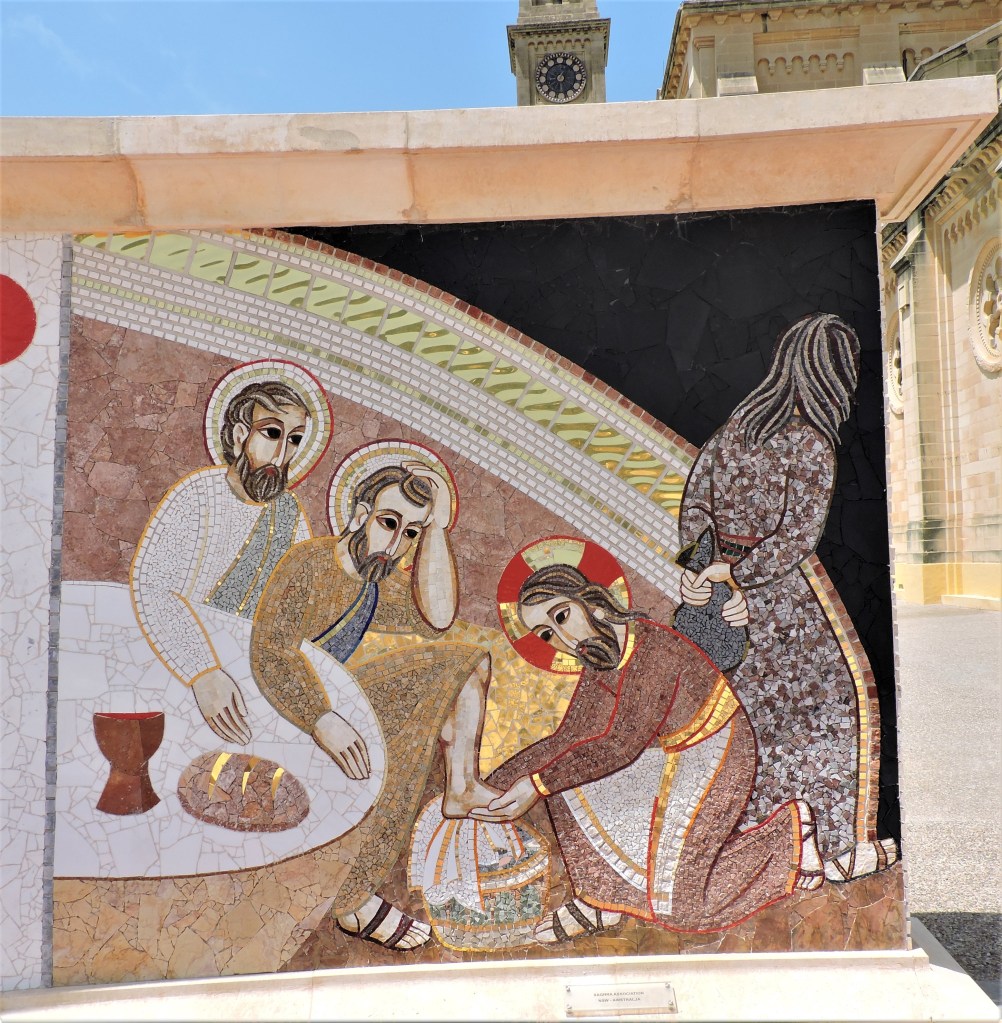
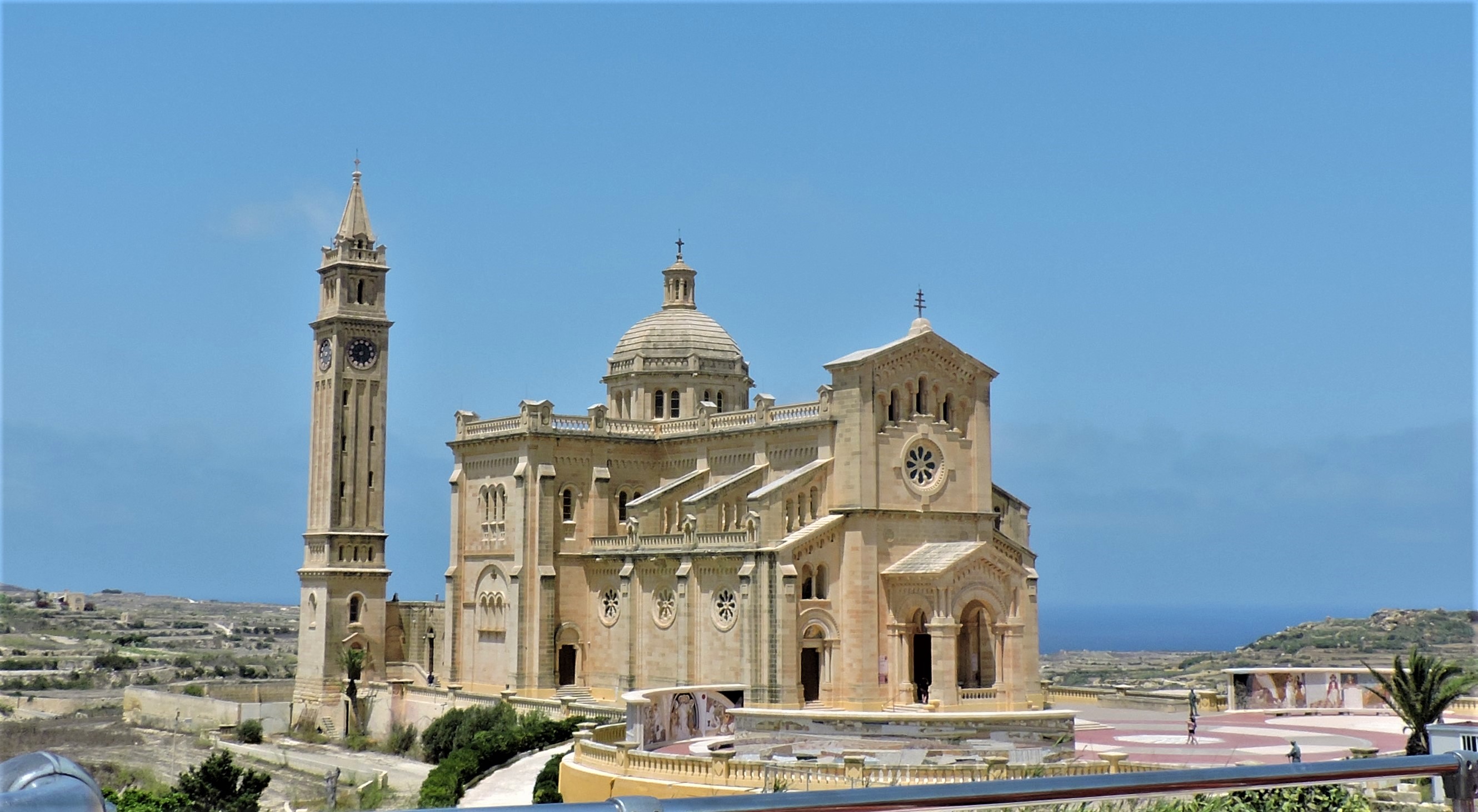
In the middle of the dry, sundrenched countryside of Gozo: The Basilica of the Blessed Virgin of Ta‘ Pinu.
——————————————————————————————————————–


A short lone pilgrimage across the large forecourt to the huge church, quick photos right and left. 1920s Neo-Romanesque! The newness, the clear lines, the unequivocal imagery, they calm your mind, clear your perception, open you up spiritually.

“Hearken!” The softest whisper touched my ear. I looked around. No one there, just a few statues along the way. The sun blinded me and I could feel the sweat running down my forehead. Before I could take another step the voice went gently on: “Go into my church and recite a Hail Mary .”
——————————————————————————————————————–
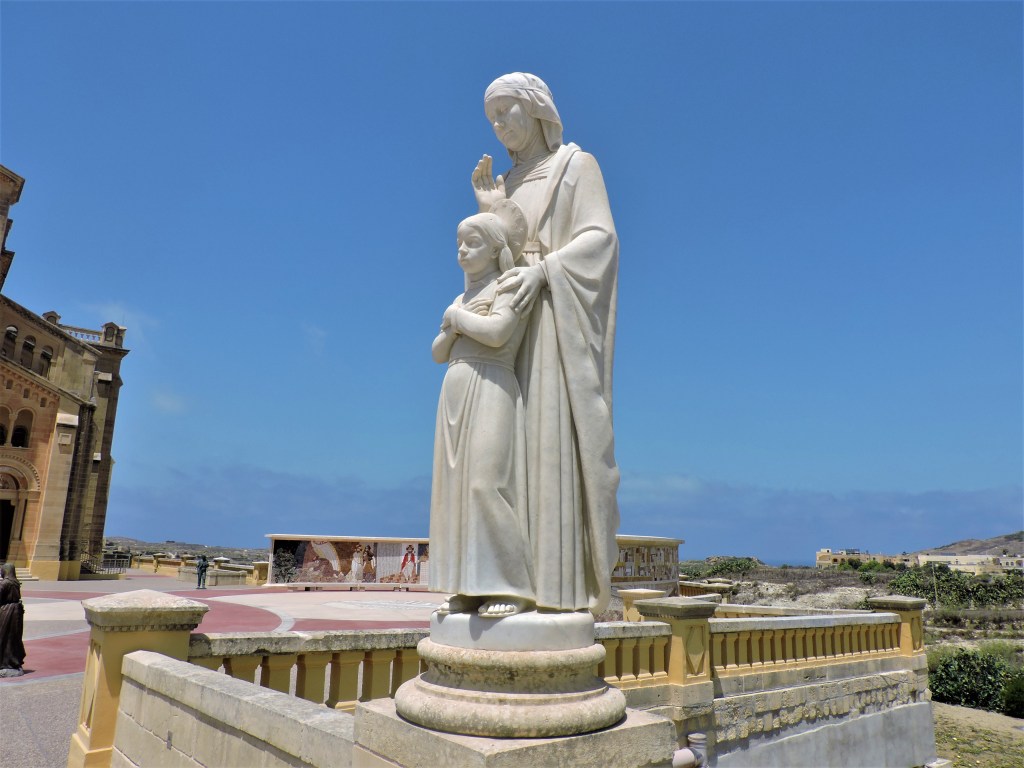
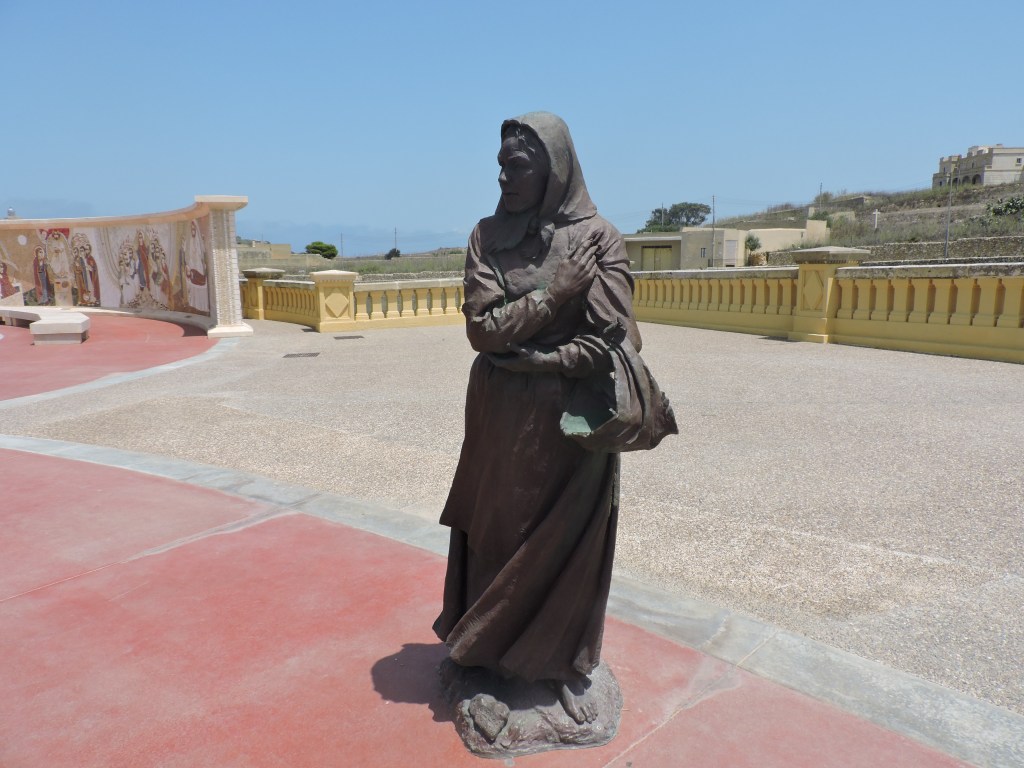
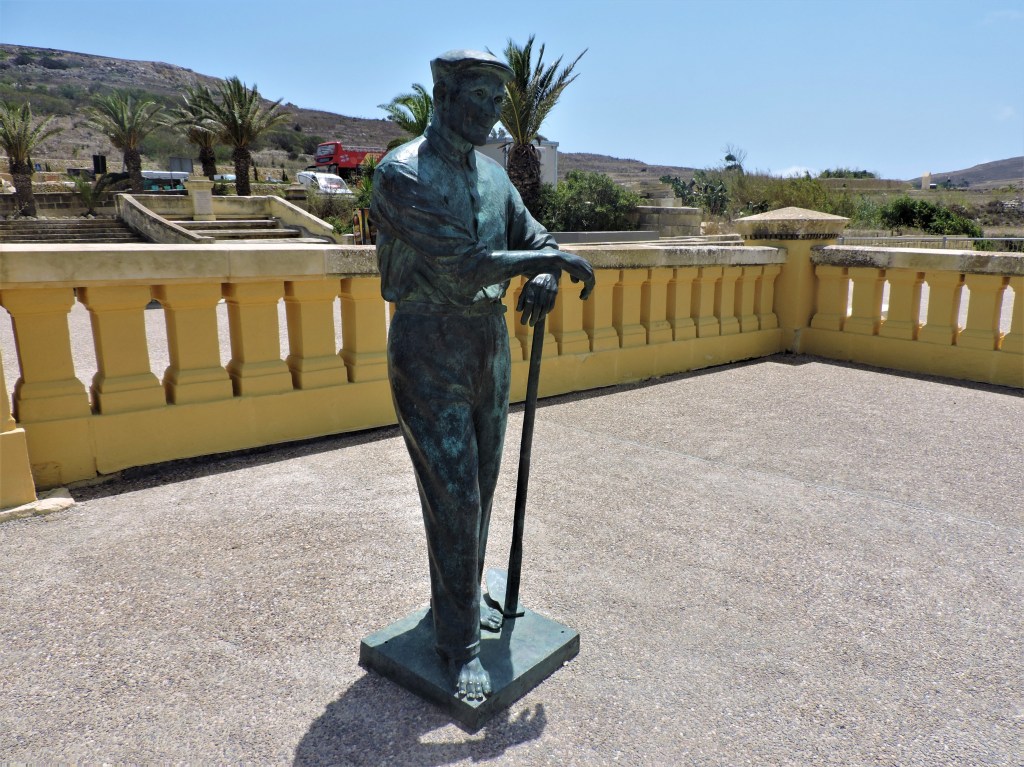
“Is that you, Mother Mary?” I asked never having been able to reconcile myself to the fiction of the Virgin. No time for discussion, I still had 9 minutes left. “In what language?” was I about to ask not knowing the prayer in any. “Can I recite it in Latin, please?”

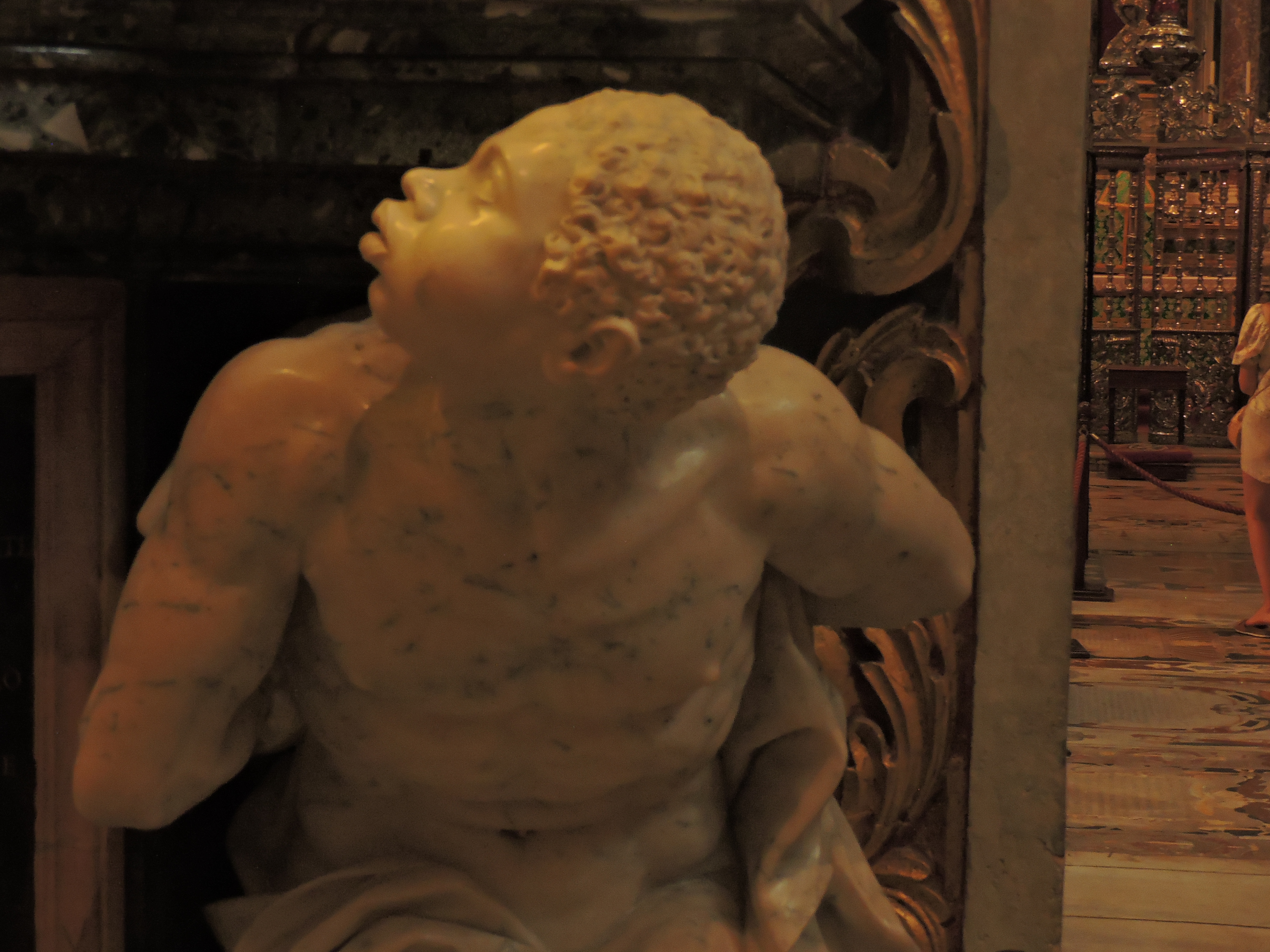
Inside the church I stopped in front of a marble angel that was sitting mindfully in an attempted lotus position as if floating in the air and chose him as my intermediary.
“Ave Maria, gratia plena, ehm, Mater Dei, ora pro nobis,ehm dunno, pecca …, boh, nunc et in hora mortis, ehm, amen.”
I hoped she wouldn’t notice that I’d left out the bigger part of it. “Go home and do something good!” The sweet voice breathed in my ear. “Do something … good!” – What can I do? my humble self, what good?
“All I can do is teach,” I proposed helplessly, “ I can teach German!”.
Silence.
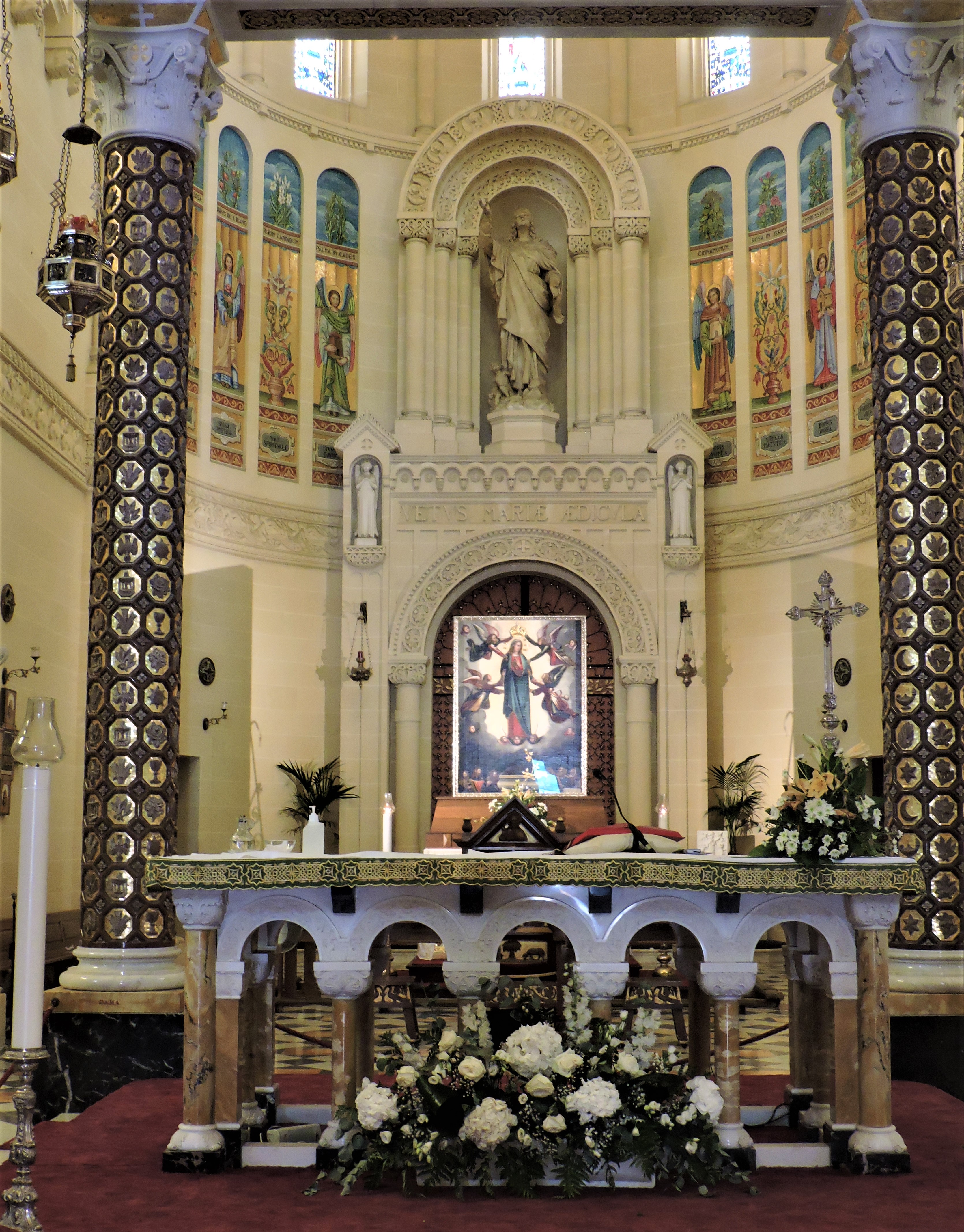
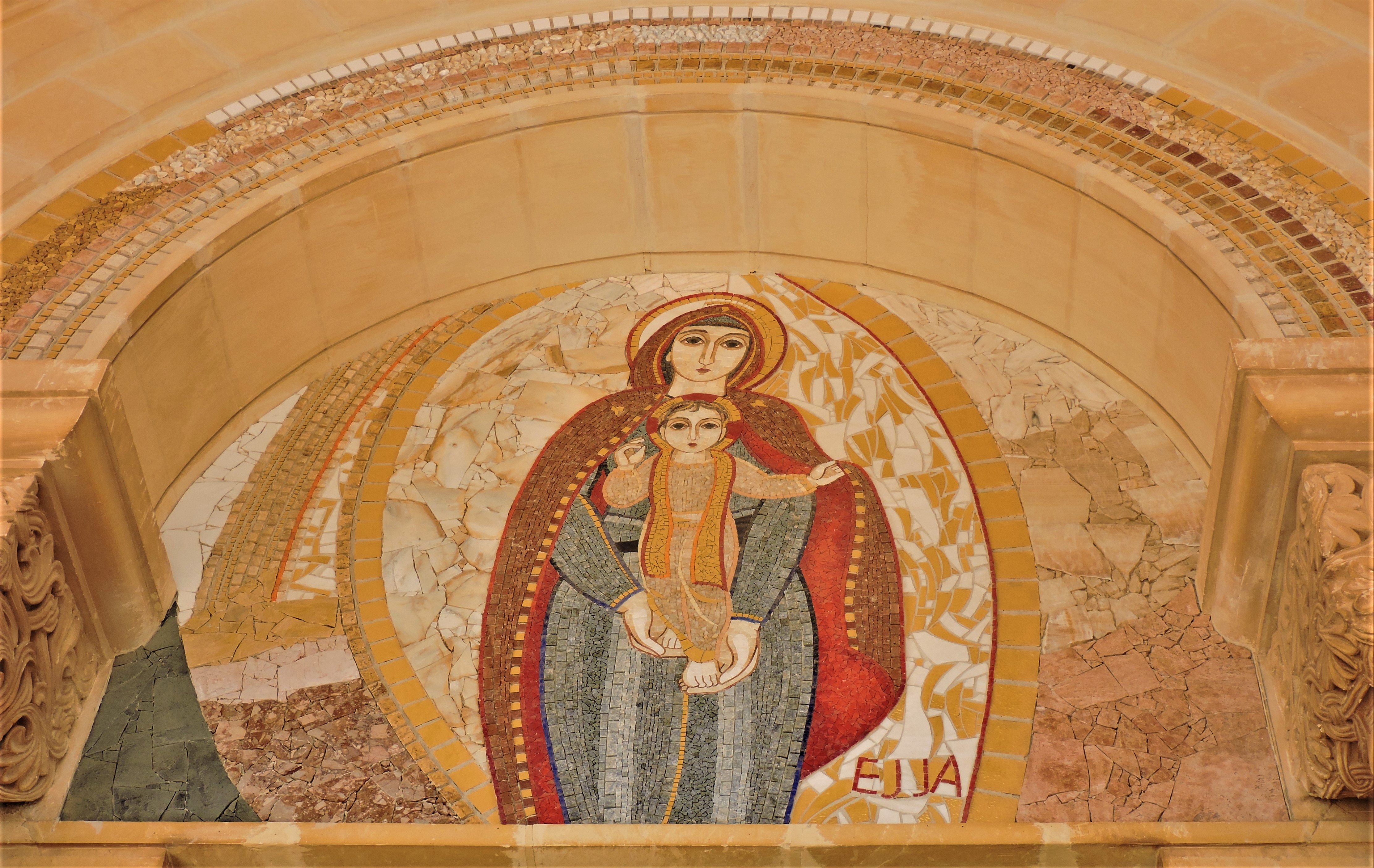
“Mother Mary?” I felt a touch of wind on my cheek and heard an almost imperceptible wheeze.
——————————————————————————————————————–

Then … nothing. Back at the bus I thanked the driver who had just finished his cigarette and hopped on. (When I got home I found that the Board of Education of Latium had changed my working conditions from bad to worse … I should have promised Mother Mary to build her a church!)
Which brings me to:
The Inquisitor’s Palace undramatically tells you what kind of treatment was reserved to heretics in the roughly 200 years (end of 16th century – end of 18th century). Below: the chapel, the confessional, the inspiration, the courtroom.
——————————————————————————————————————–
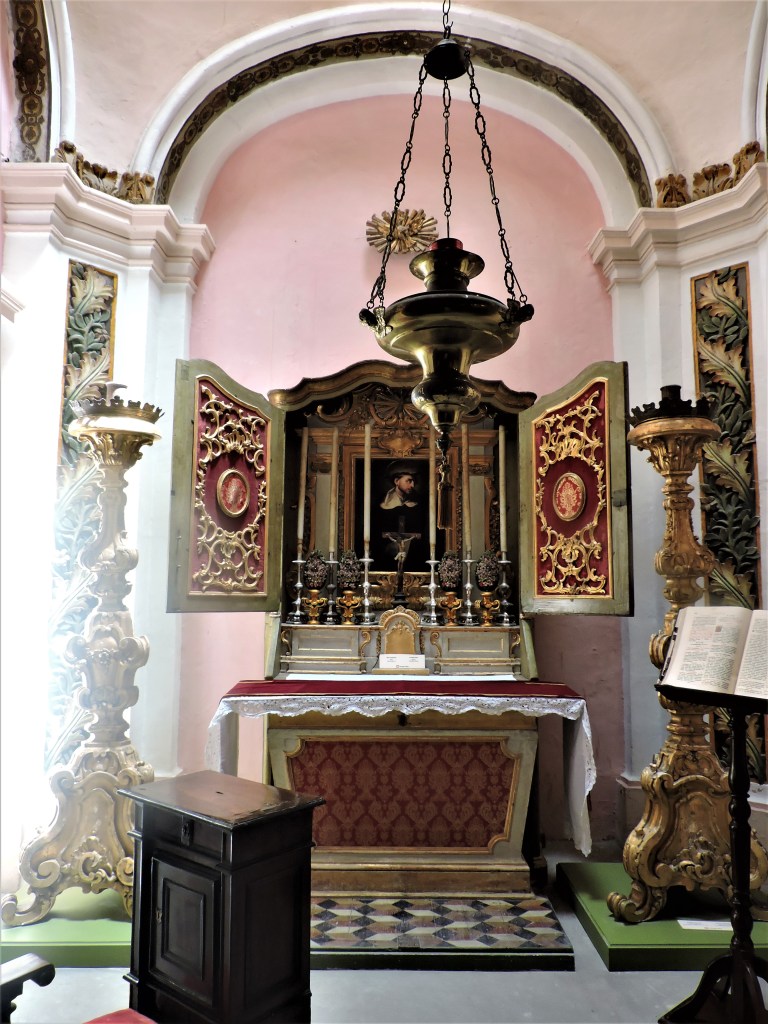

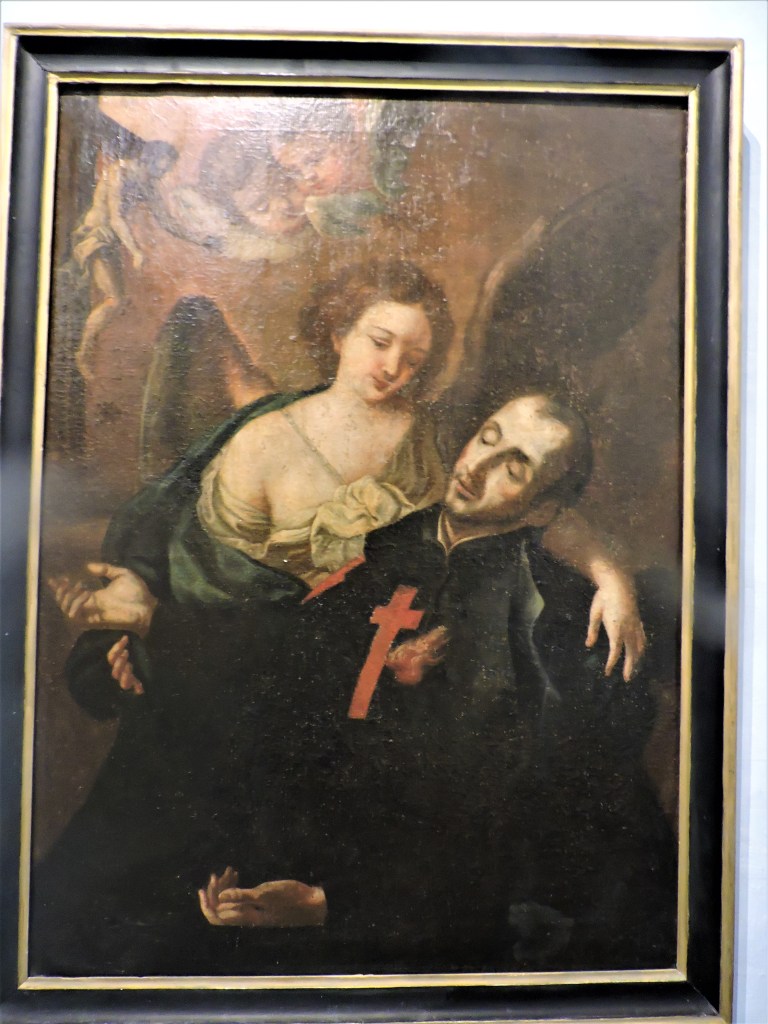

Here’s what you got for owning prohibited books, practising love magic, for heretical talk, apostasy to Islam, infringement of abstinence, abuse of sacramental oil, sorcery, bigamy (for women mainly):
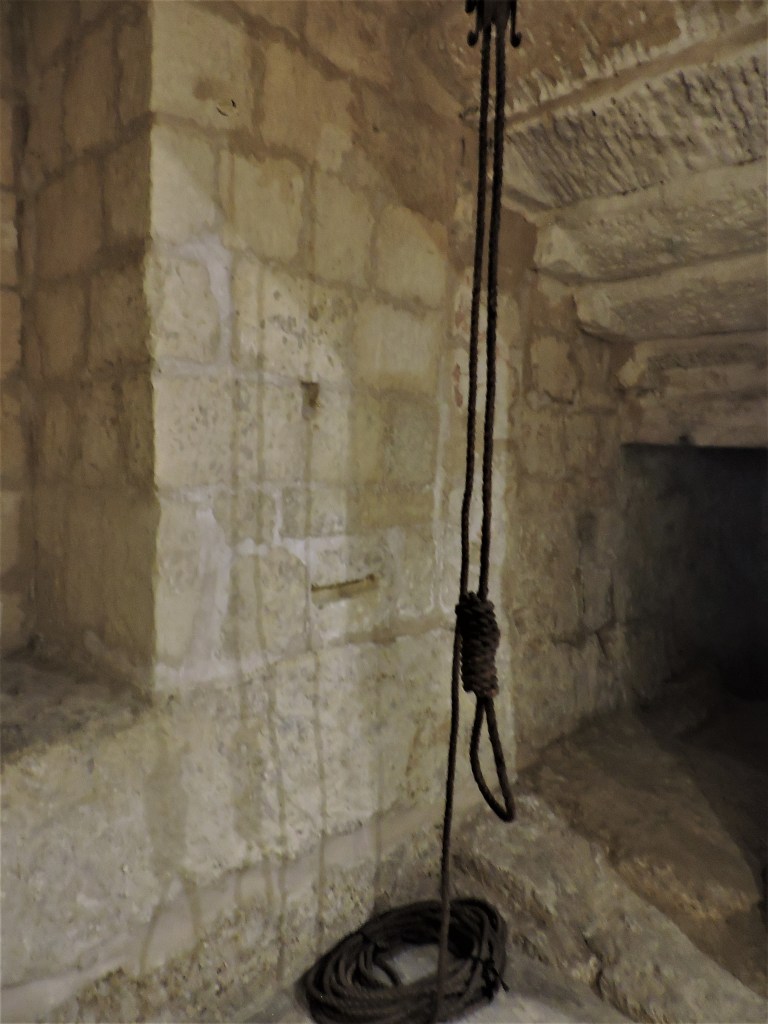
hanging on a rope with your hands tied behind your back causing dislocation or bone fracture
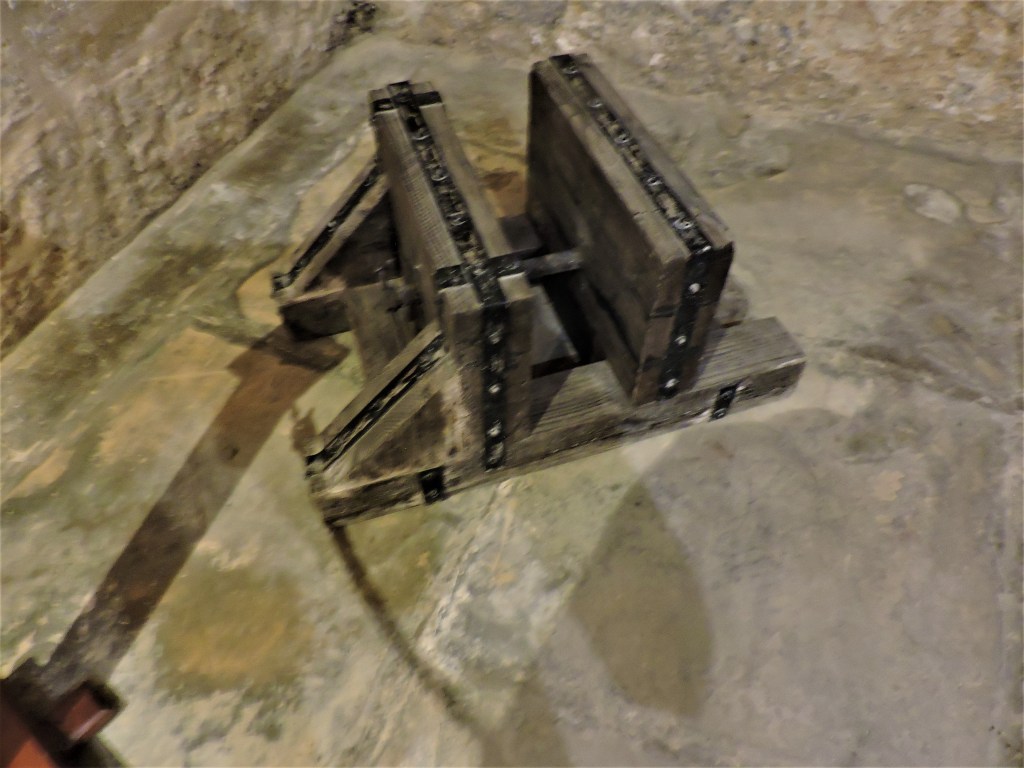
pressing your ankles in the stringitore
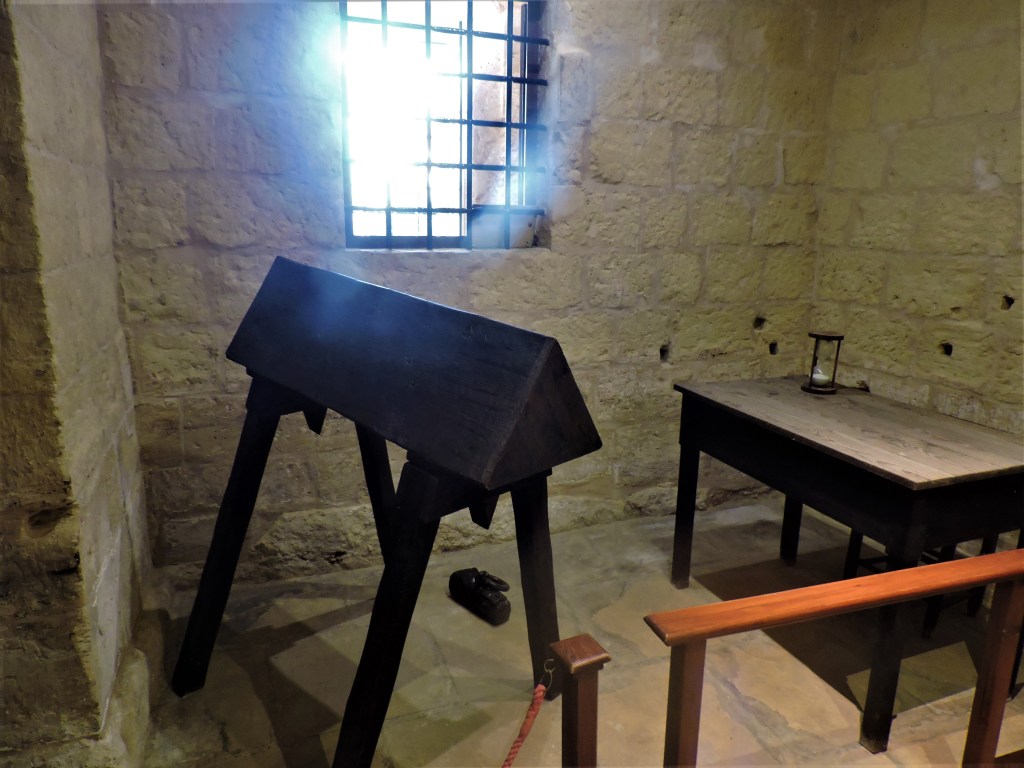
or the cavaletto, you “ride” on it with the tormentors pulling at your legs. For justice’s sake the torture was timed by a sandglass. (center right on the table)
If you were “lucky” you could be condemned to vegetate in a dungeon for a couple of years fasting on dry bread and water, taking the Holy Comunion and reciting the rosary every Saturday. You could leave some graffitti on the limestone walls drawn with your fingernails so 20th /21st century tourists could be appalled by the horror of what human beings inflict on one another.
——————————————————————————————————————–
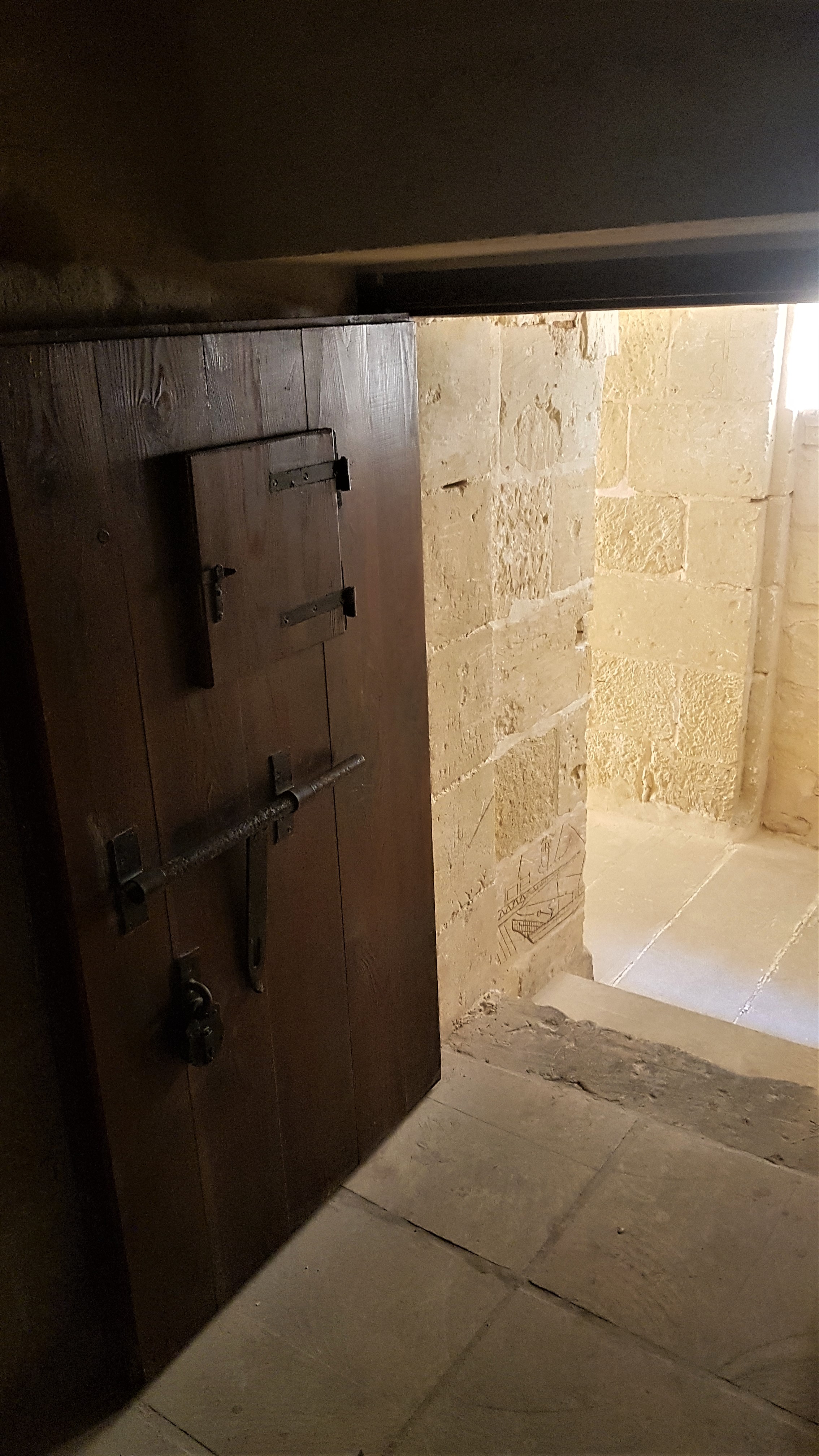
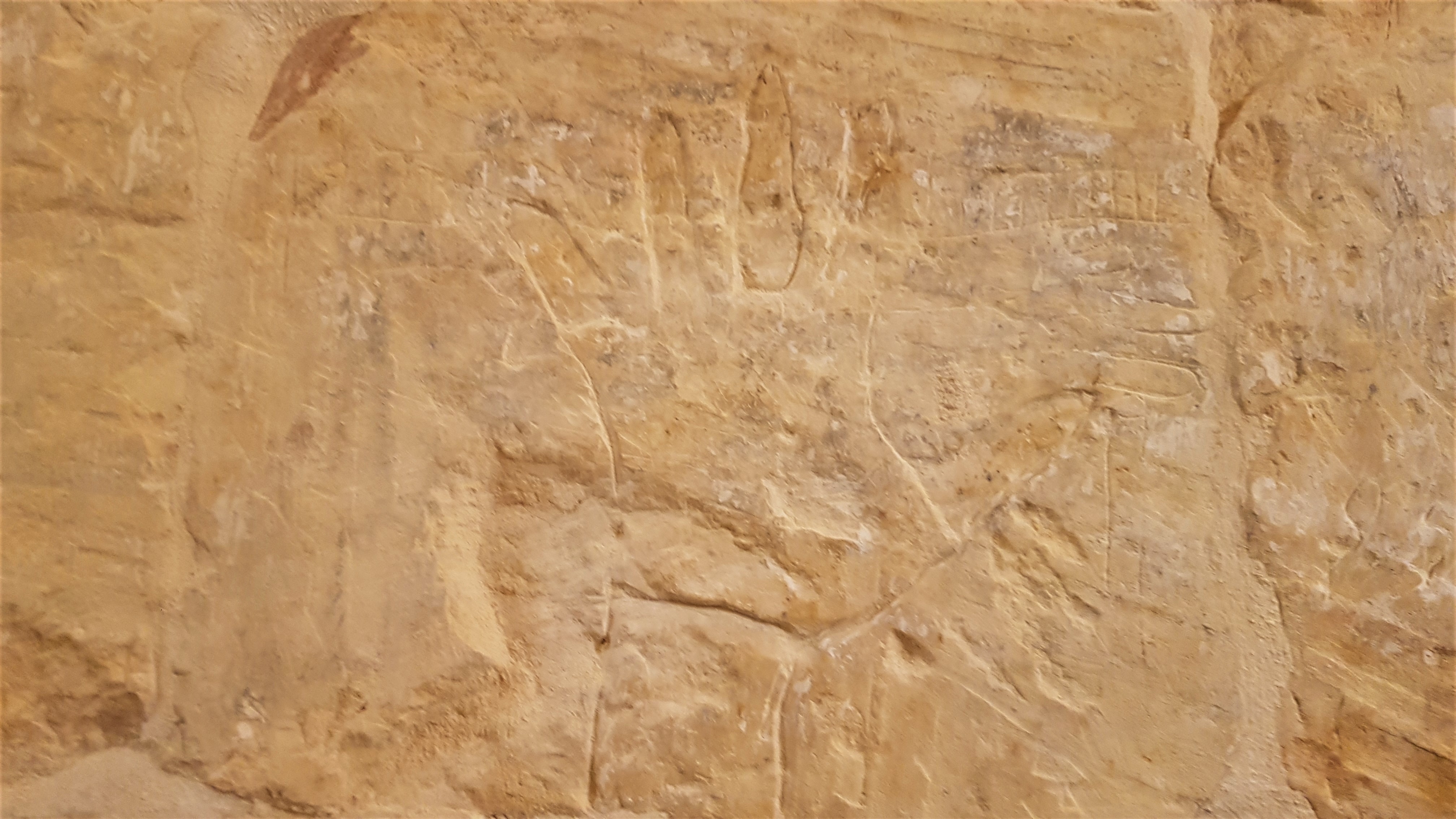
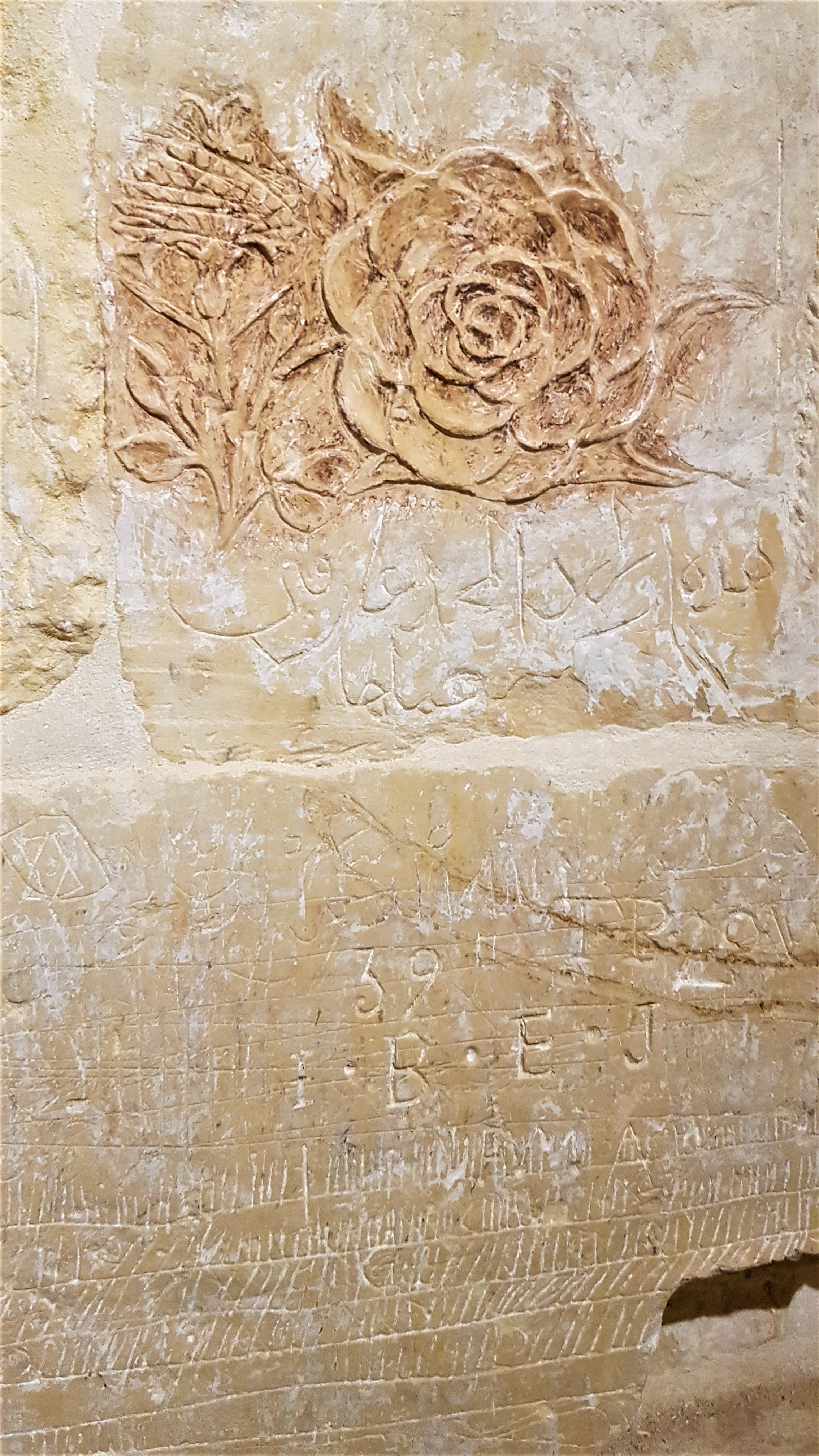
Not that we have changed a great deal nowadays:

A journalist and an anti-corruption activist, a modern heretic ?
——————————————————————————————————————–
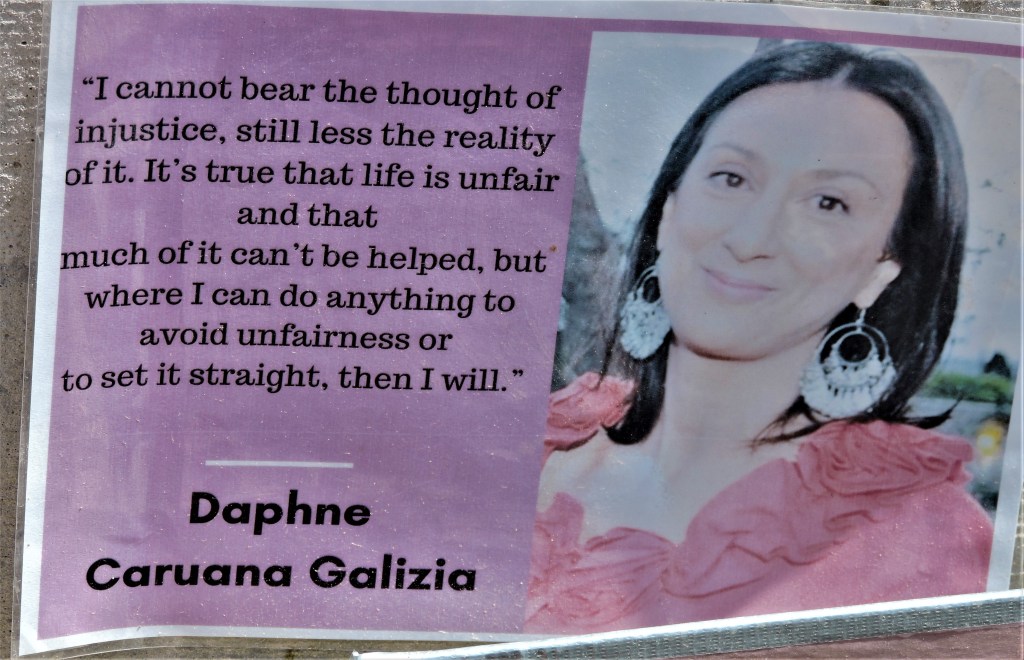
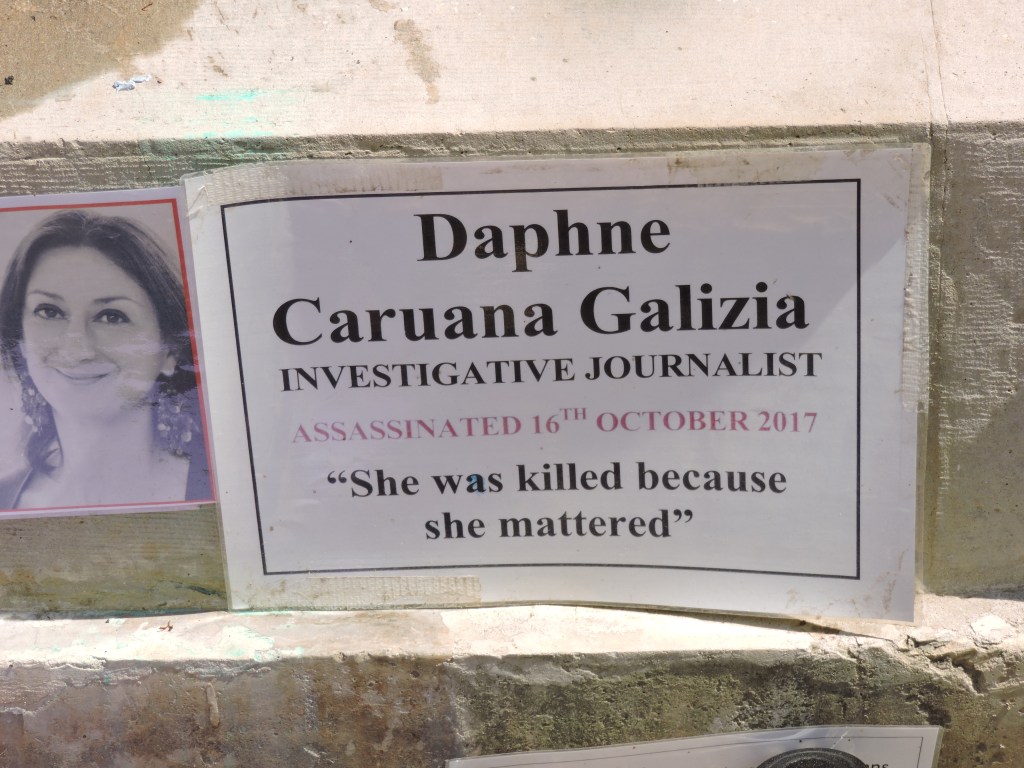
“The brave die never, though they sleep in dust: Their courage nerves a thousand living men.” Minot J. Savage
Next time, not so sad, the highlights from the stone age
cheers Gerburg

 gerburgkamm