(unfinished article missing Uluru, Kata Tjuta, Kings Canyon, and many more sights and encounters! Will I ever have the time to tell it all?)
“Think of something that you like … bring it in your mind’s eye … hold on to it …”, my mentor’s voice faded. Eyes closed I was drifting off, my mind searching for my perfect object …
That was the moment when I decided to go to ULURU
(C’mon, stop calling it Ayers Rock, Mr Ayers didn’t really have anything to do with this sacred area of the Pitjantjatjara Anangu people)

- it’s a long way
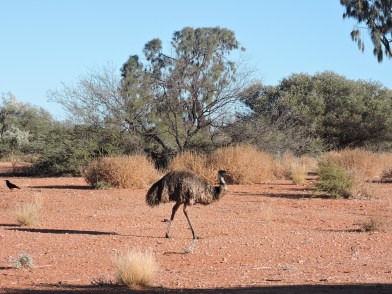
searching
… and finally, in the distance ….
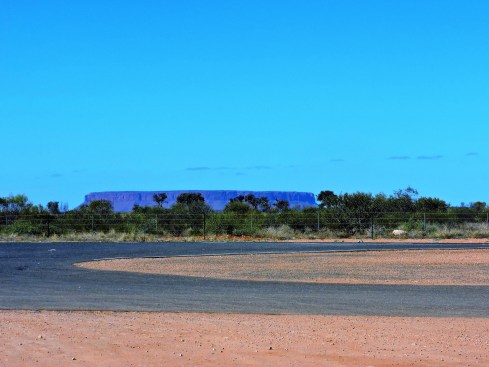
Oooops, that’s not the one, in fact that is Mount Conner named after the politician and sportsman Mountifort L. Conner (sportsman alright, he indulged in chasing wallabies … how can anybody doooo such a thing?)
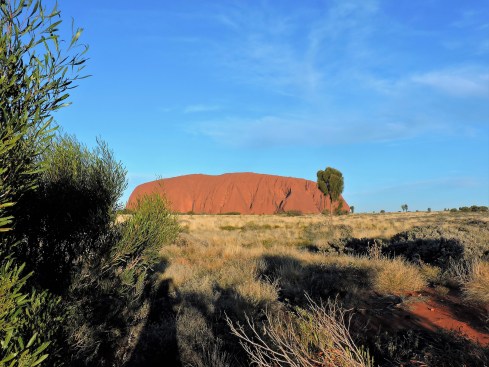
This is it
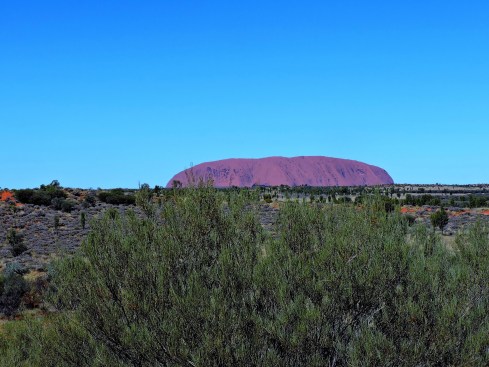
At daytime
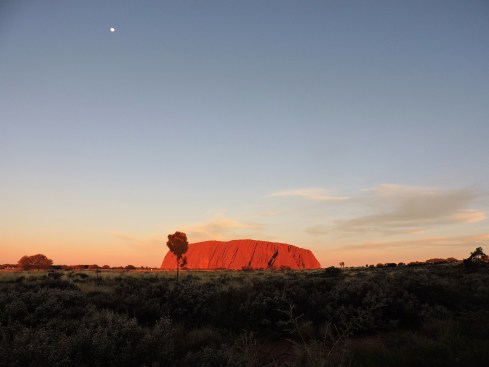
At sunset and moon-rise (really good to see wia glass of bubbly)
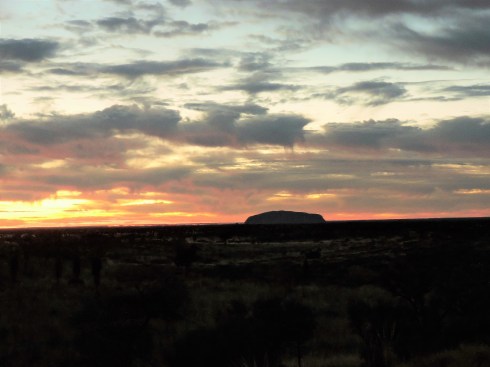
At sunrise, it’s so cold you go to the lookout point with ALL your clothes on and your sleeping bag around
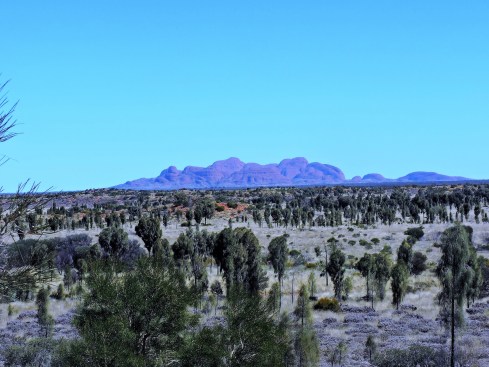
Look the other way, too
Get closer, take a shadow selfie
“What men call the shadow of the body is not the shadow of the body, but is the body of the soul.” (Oscar Wilde)
Look around


It’s a sacred site, don’t climb it, look at it, listen … learn …
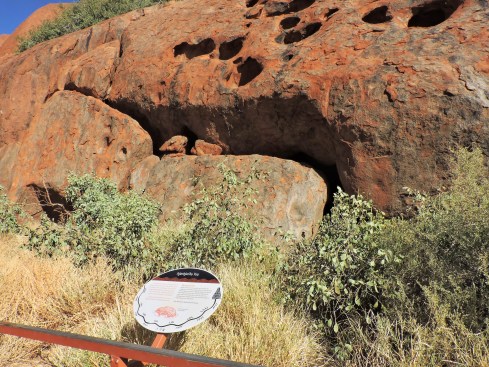
Itjaritjariku Yuu
The Itjaritjari a marsupial mole, blind, palm size, golden-coloured fur, has lived here from the beginning of time. In the Tjukurpa (creation time), the ancestral Minyma Itjaritjari (marsupial mole woman) built this shelter and yuu (windbreak). The yuu is the large, wedge-shaped stone at the opening to this cave. the holes in the rock above the cave have been tunneled out by Itjaritjari.
Kulpi Nyiinkaku
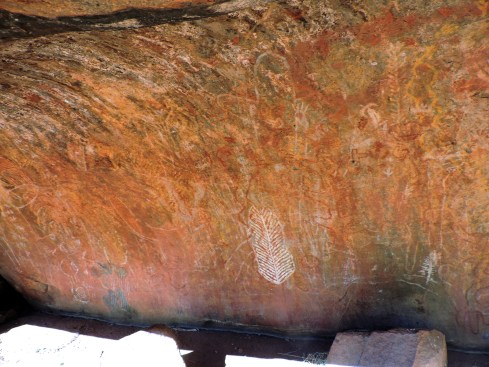
Teaching cave: for many generations Anangu elders taught nyiinka (bush boys) in this cave how to travel and survive. Generations of grandfathers painted these pictures, like a teacher uses a school blackboard to teach nyiinka how to track and hunt kuka (food animals). Nyiinka would the be taken to the bush to learn where to find waterholes, animals and materials for tools and weapons. The colours come from a variety of materials: tutu, red ochre, and untanu, yellow ochre, are iron-stained clays that were very valuable and traded across the land. Burnt kurkara, desert oak, provides purku, black charcoal, and tjunpa / unu, white ash. The dry materials are placed on a flat stone, crushed and mixed with kapi, water.
Kulpi Watiku, the men’s cave and the Mala story
The mala people came from the north and could see Uluru. It looked like a good place to stay a while and make inma (ceremony). Men raised Ngaltawata, ceremonial pole, the inma had begun. In the middle of the preparations, two Wintalka men from the west approached and invited the Mala men to join their Inma in their country. The Mala people said no, explaining their ceremony had begun and could not be stopped.
The disappointed Wintalka men went back and told their people. They summoned up an evil spirit, a huge devil-dog called Kurpany, to distroy the Mala inma. As Kurpany traveled towards Uluru he changed into many forms, from mikara, bark, to to tjulpu, bird, and different grasses. He was a mamu, a ghost.
Luurnpa, the kingfisher woman, was the first to spot him. She warned the Mala people but they didn’t listen. Kurpany arrived and attacked the men in this cave. some were killed and they turned to stone. The remaining Mala people fled to the south with Kurpany chasing them.
Kulpi Minymaku
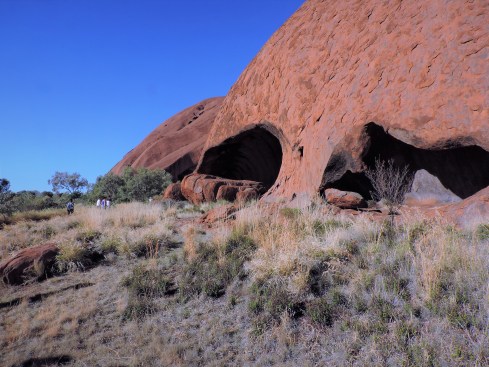
Women, girls and small children would camp here. The women would go out into the bush to collect mai, bush foods, and return to the caves to process them. The minymas, women, would teach the kungkas, girls, this knowledge, which is still passed down today. on the cave floor seeds were pounded with round stones. The flour was then mixed with water and the dough cooked in hot coals to produce nyuma, flat bread.
The Mala people brought their food here to share. men would bring kuka, meat, and the women nyuma, fruit and mai. food would also be sent to the nyiinka, bush boys, and the old men.
Tjilpi Pampa Kulpi
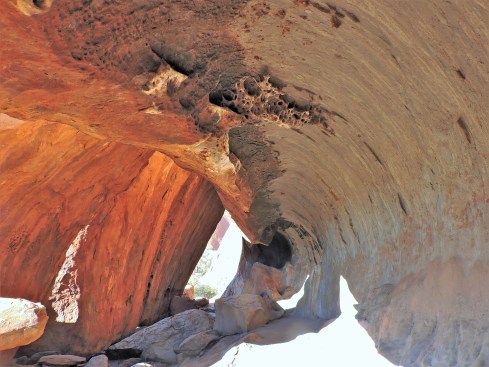
This is where the old people sat, you can see the ceiling blackened from their fires. During Mala ceremonies the men who were too old to participate would rest in this cave. They would make sure the women and children did not enter the men’s ceremonial areas. 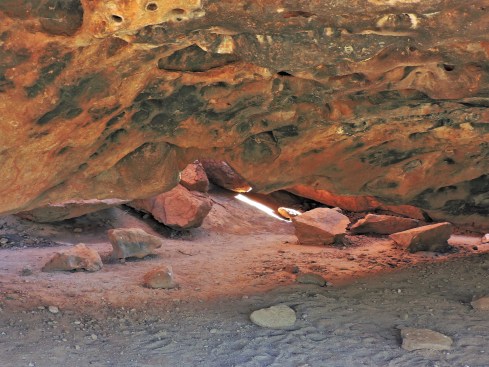
 gerburgkamm