Exceptional kids
My friends’ children and the miracle of …
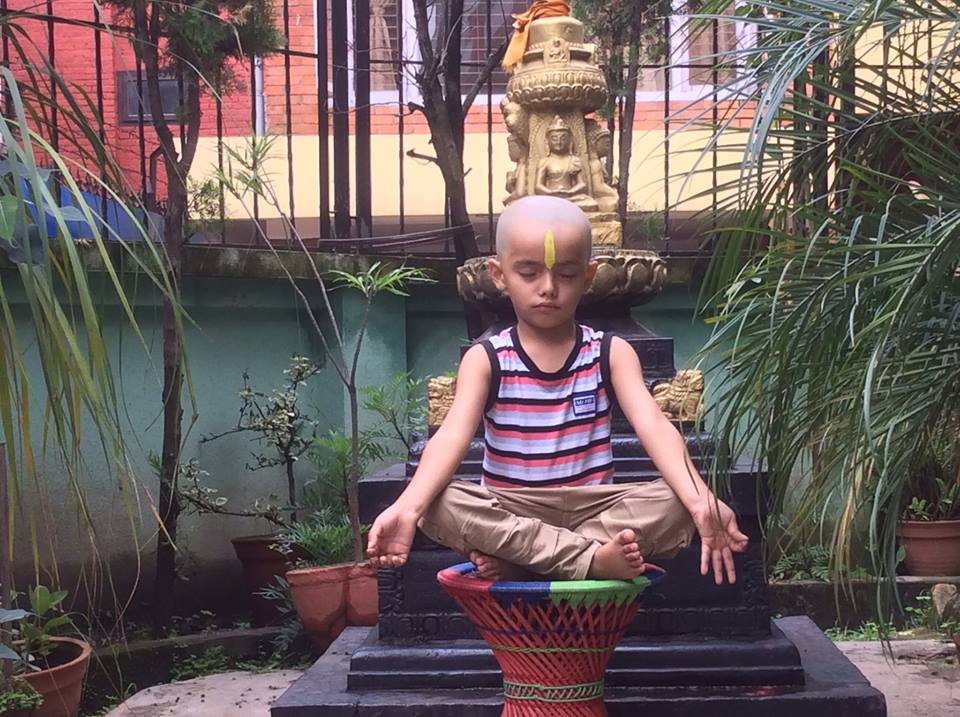
… a lively little boy sitting perfectly still!
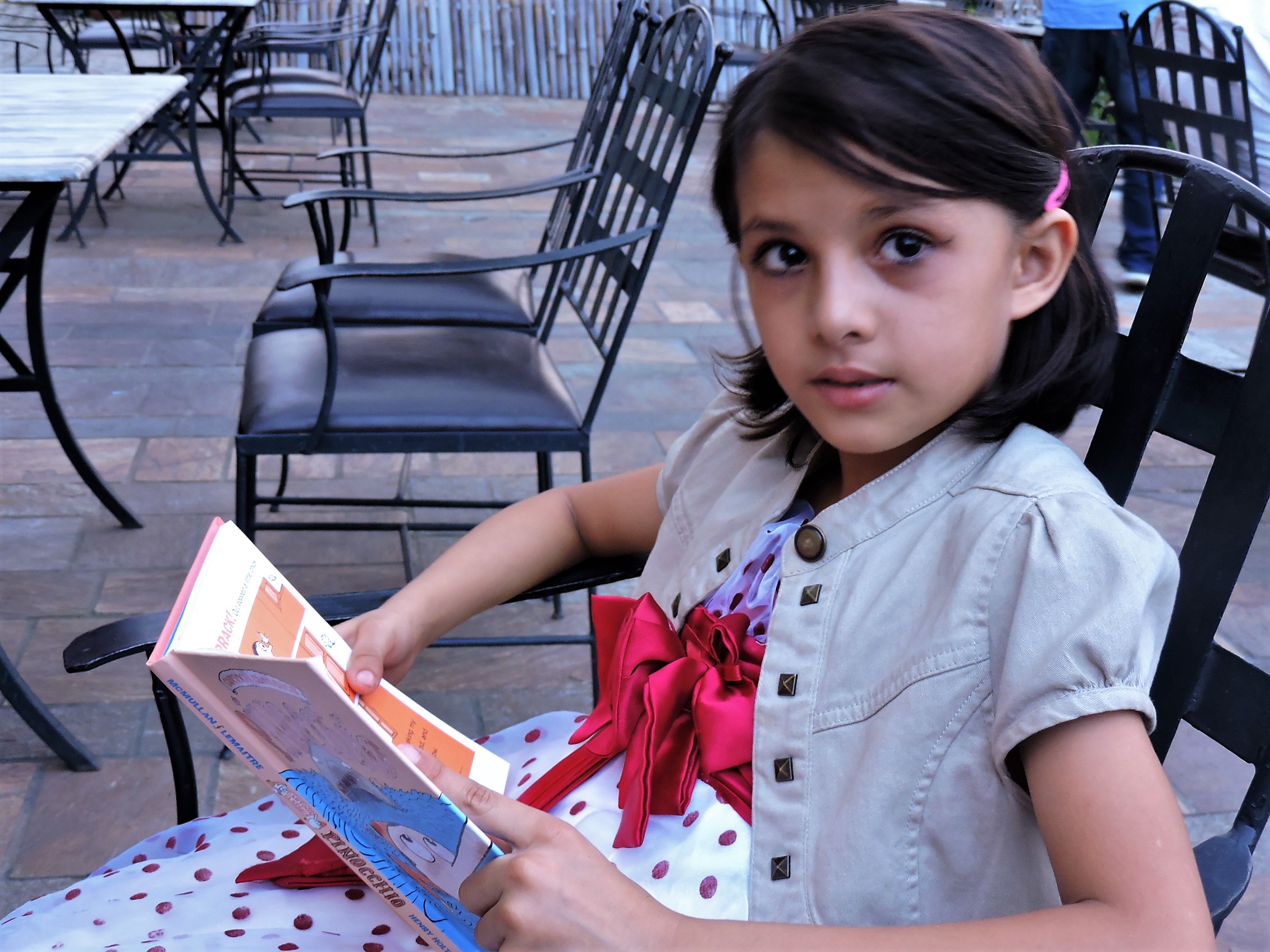
… a little girl seeing my gift from Italy exclaiming: “Oh, Pinocchio! I like Pinocchio!”
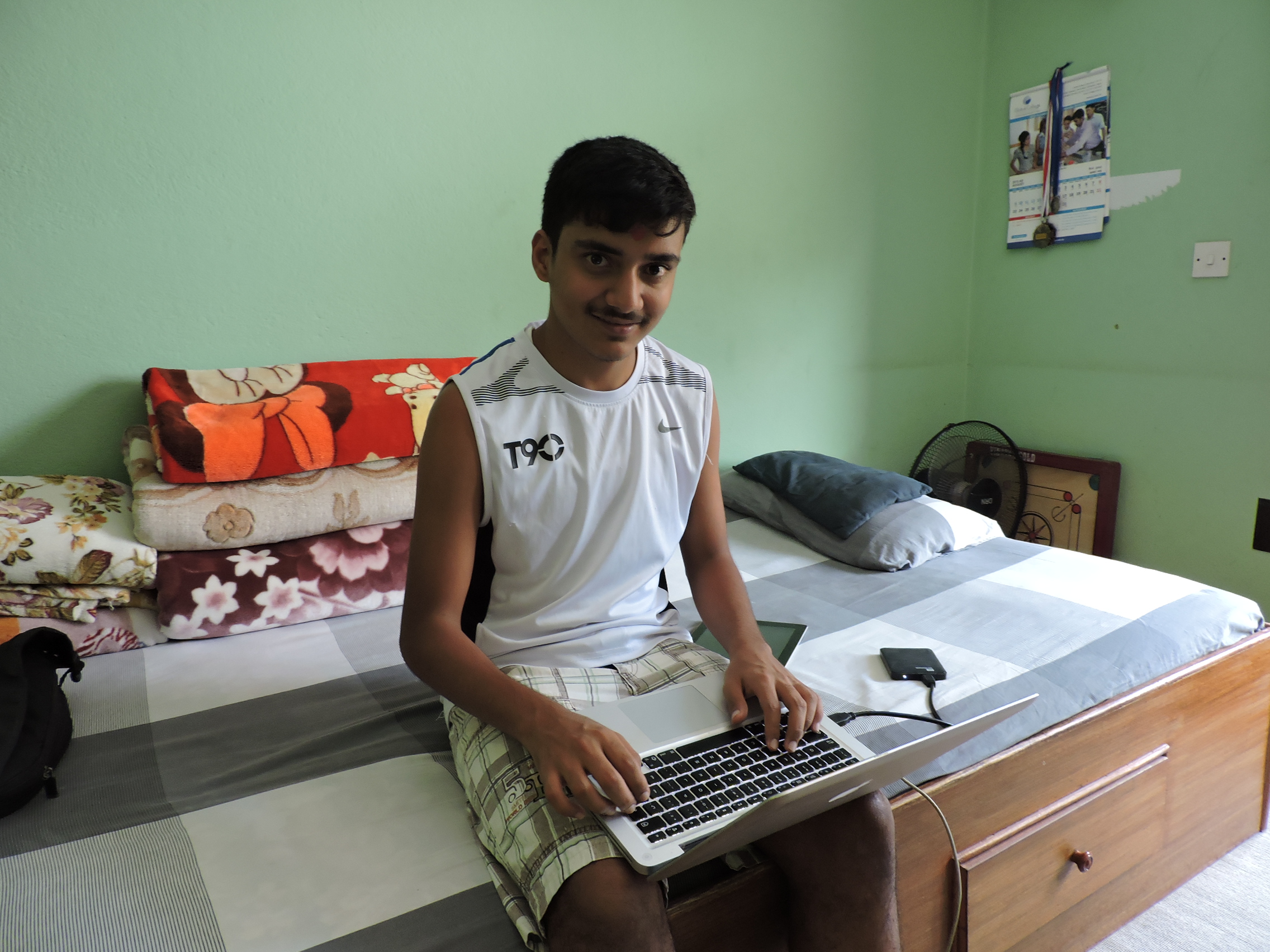
… growing up: Nasib, twelve years ago the liveliest boy, today the most serious student
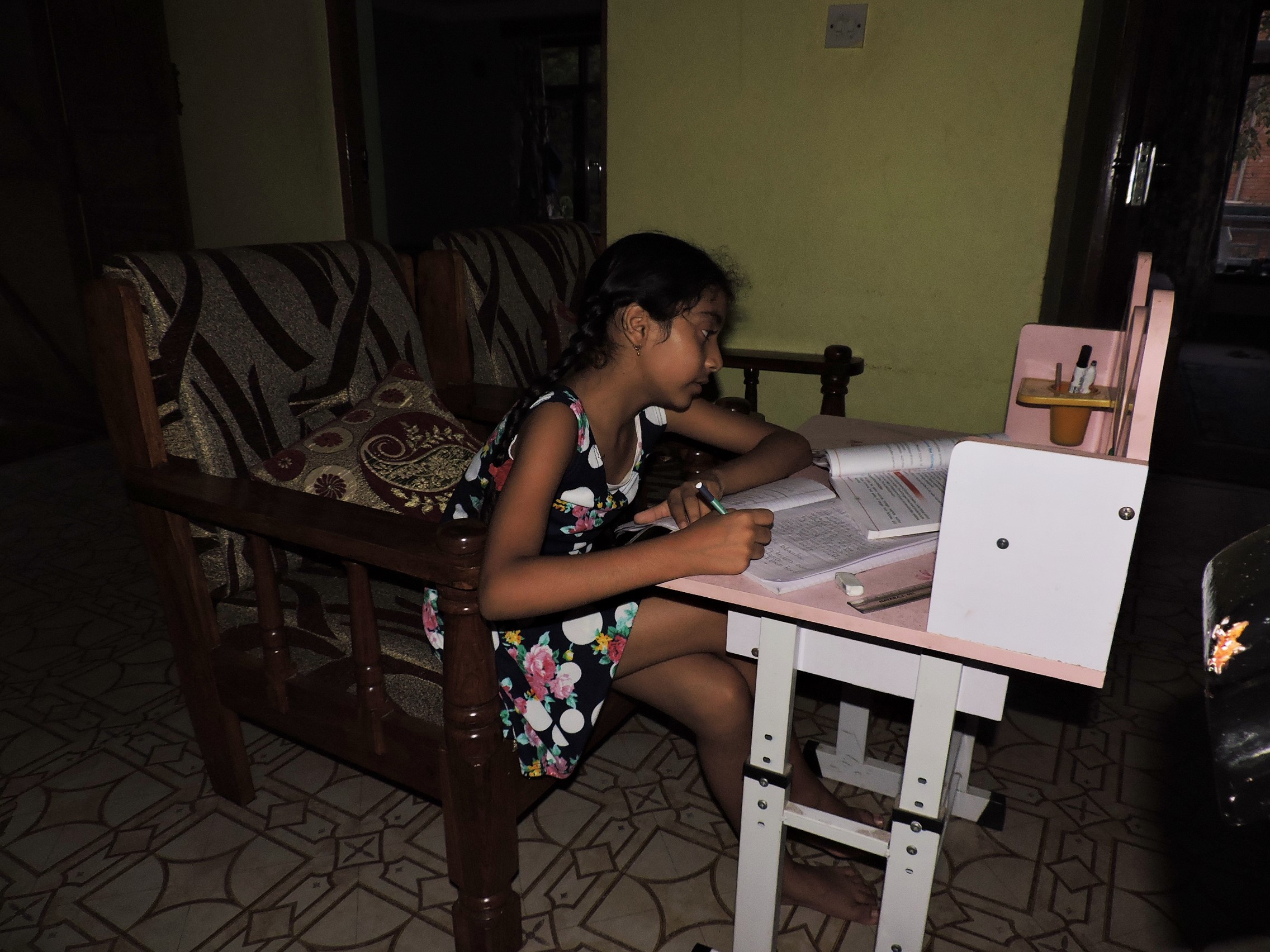
… Muskan’s sense of duty: studying in the dark during a blackout
Januka
My host family call her “their daughter”, in Europe we would say a bit less affectionately, she is an au-pair-girl, similar to our sons and daughters going abroad for a while, living in a family, helping with the housework for a couple of hours, studying, learning … Januka comes from a village in the West of Nepal and is the eldest of many siblings. My host family have taken her in about a year ago and Januka does everything she can to recompense them for the chance they have given her. In the morning she goes to school, later she helps with the chores and does her homework. On Fridays school is from 5.15 a. m. to 7. 15 a. m. (yes, a. m.! Think of the teachers!) so the students find enough time to work or help their parents during the week-end, half Friday and Saturday. Januka is also good at cooking and applying Henna.
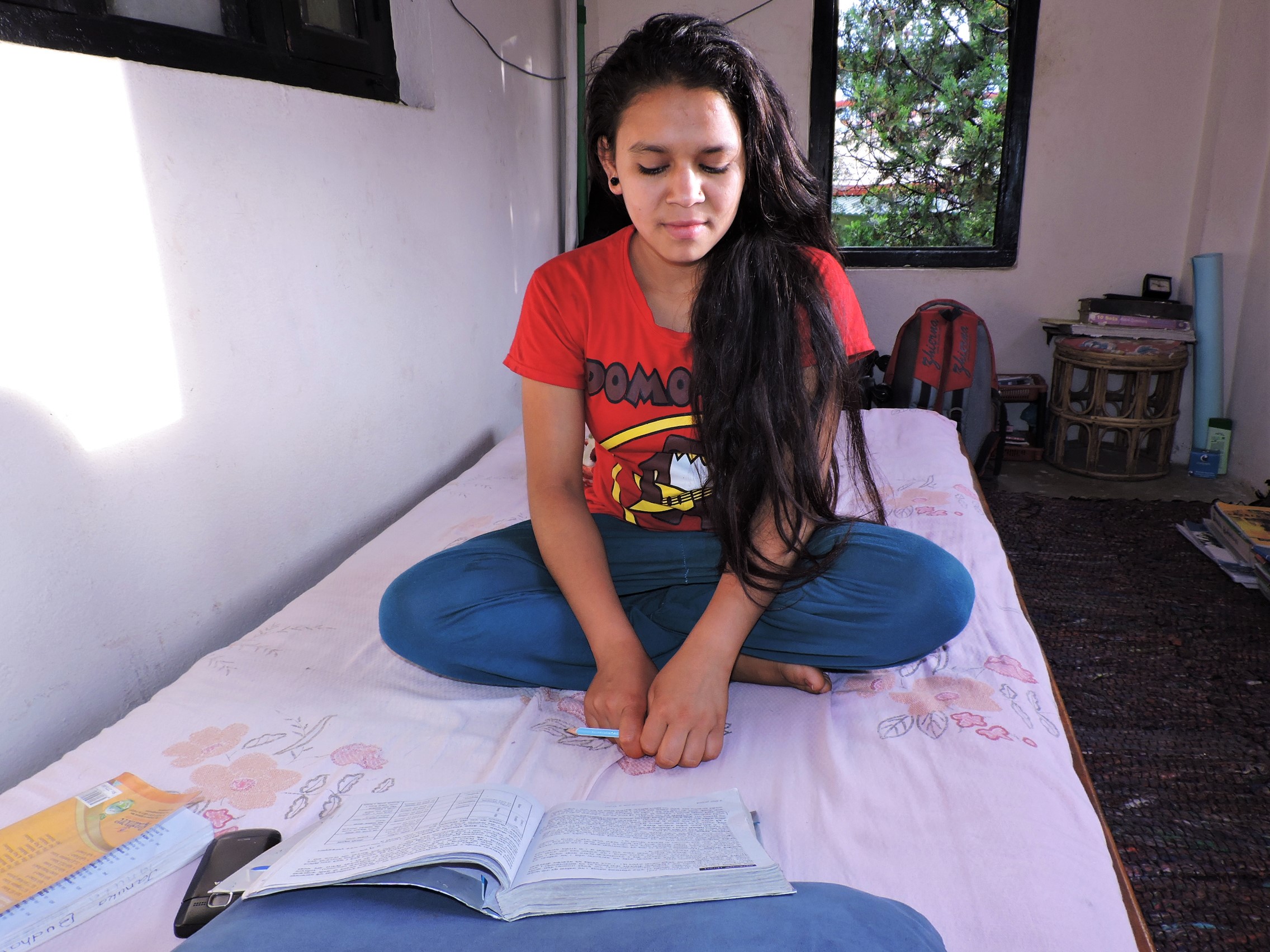
Januka studying in her room
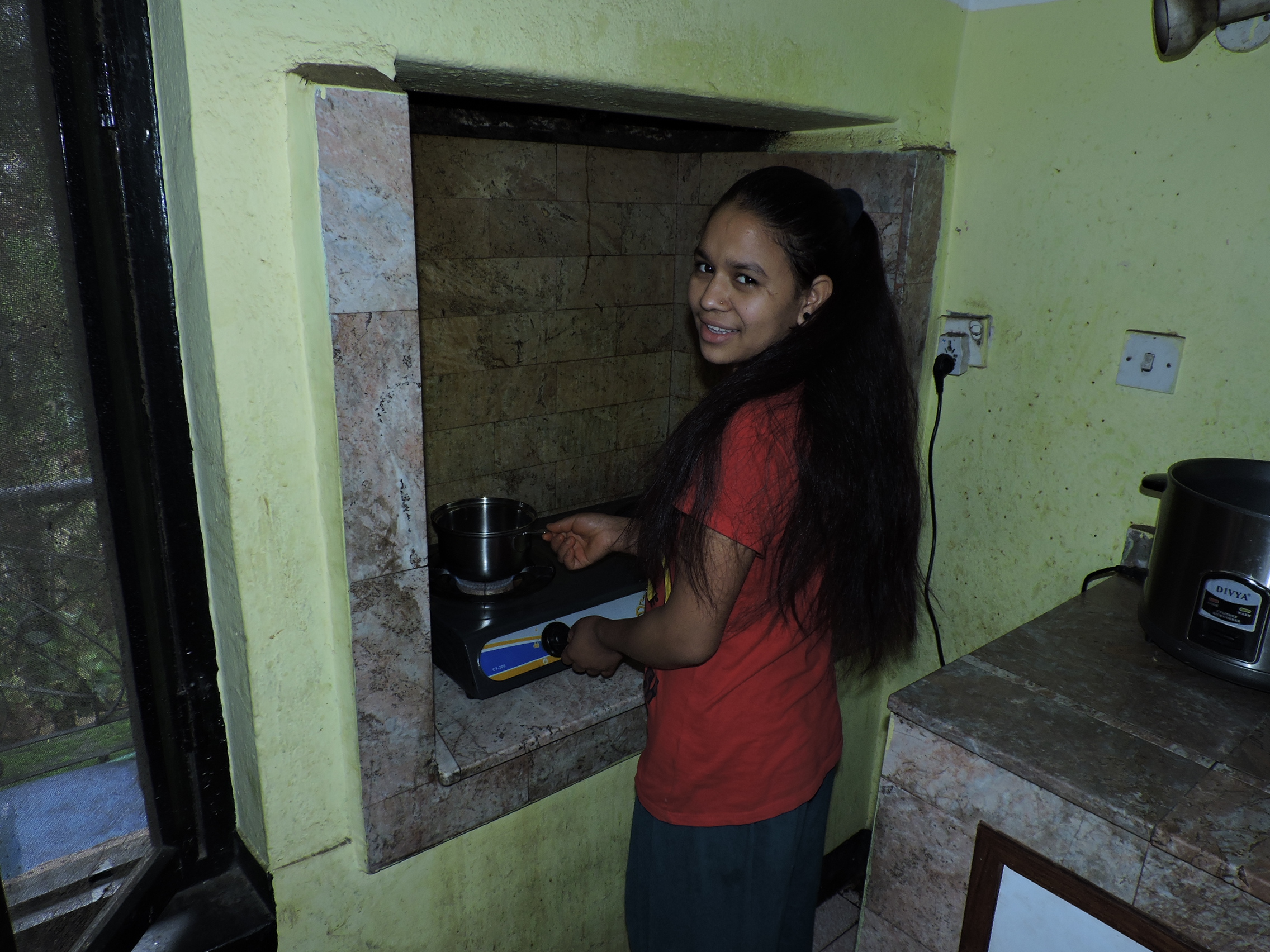
Making tea for all of us and … smiling, even though we interrupted her studies …
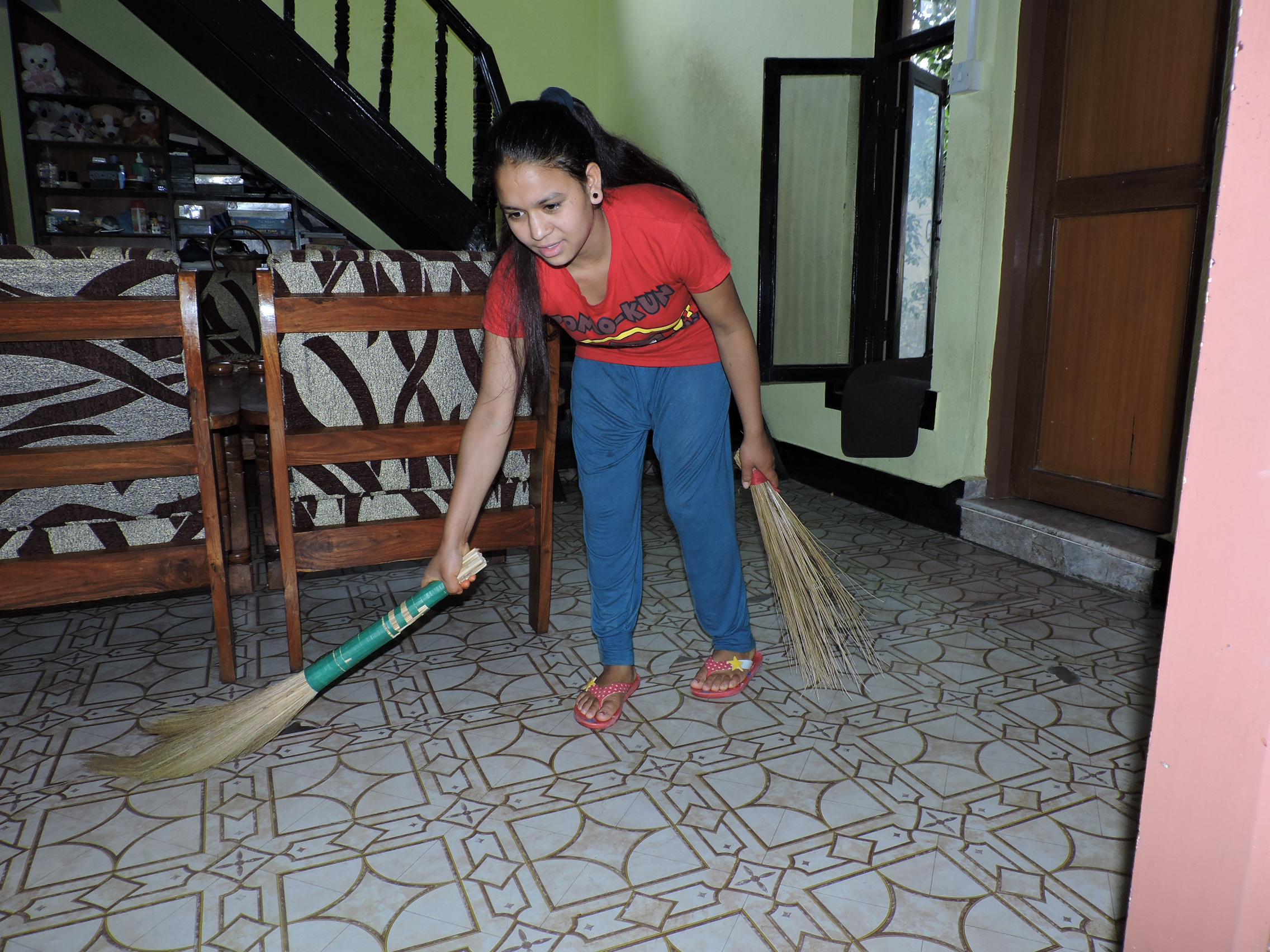
House cleaning
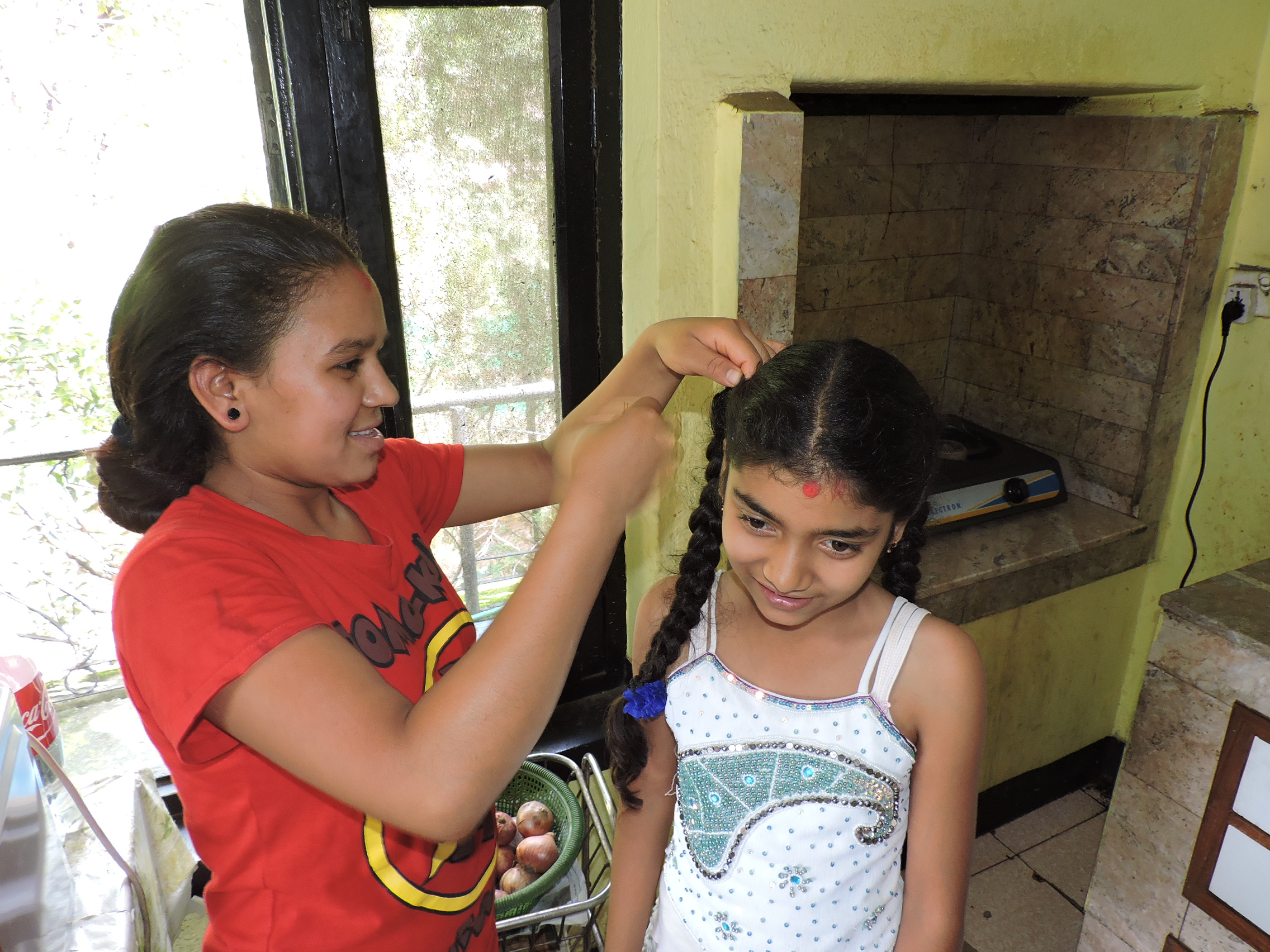
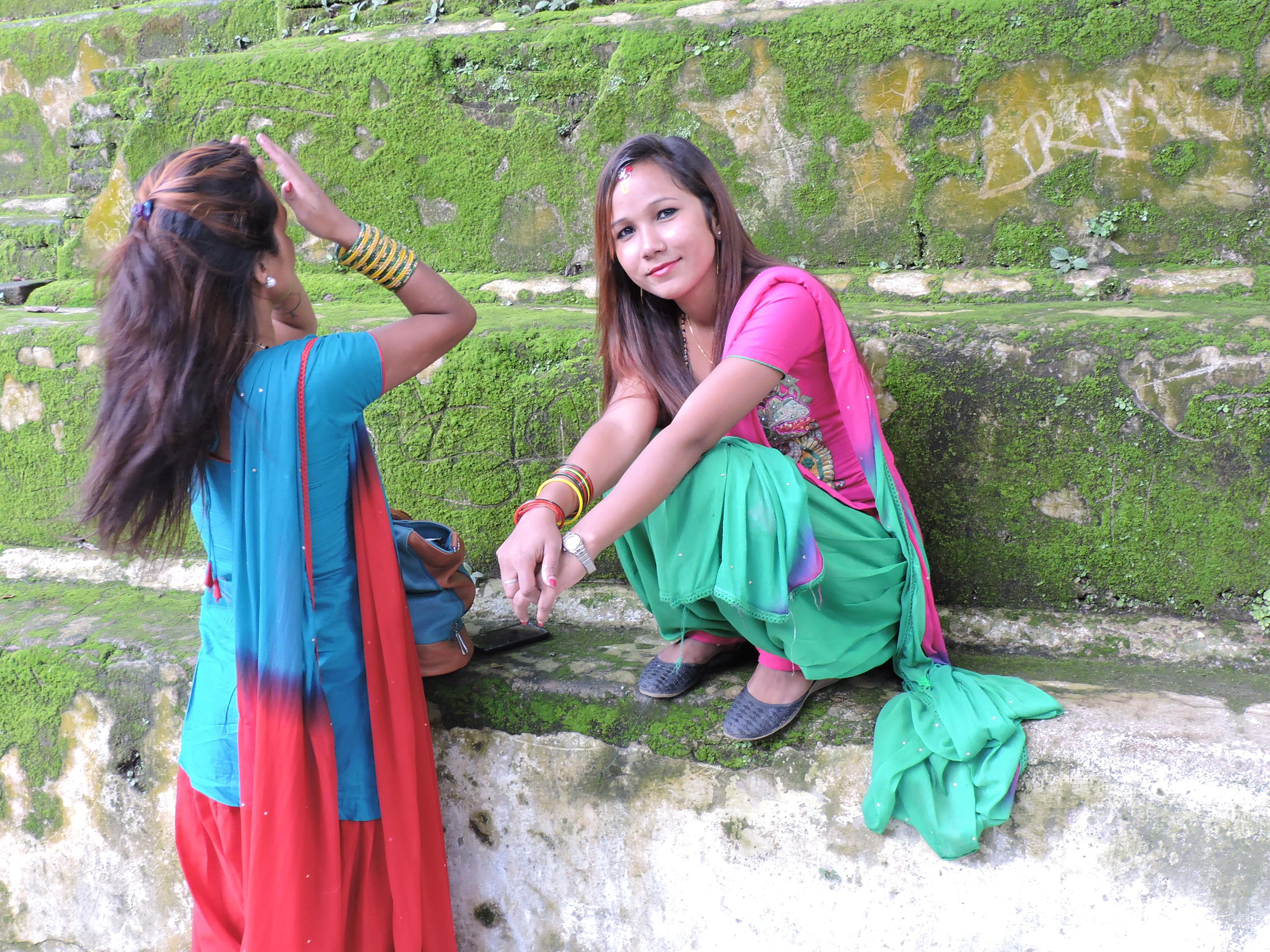
… helping Muskan do her hair
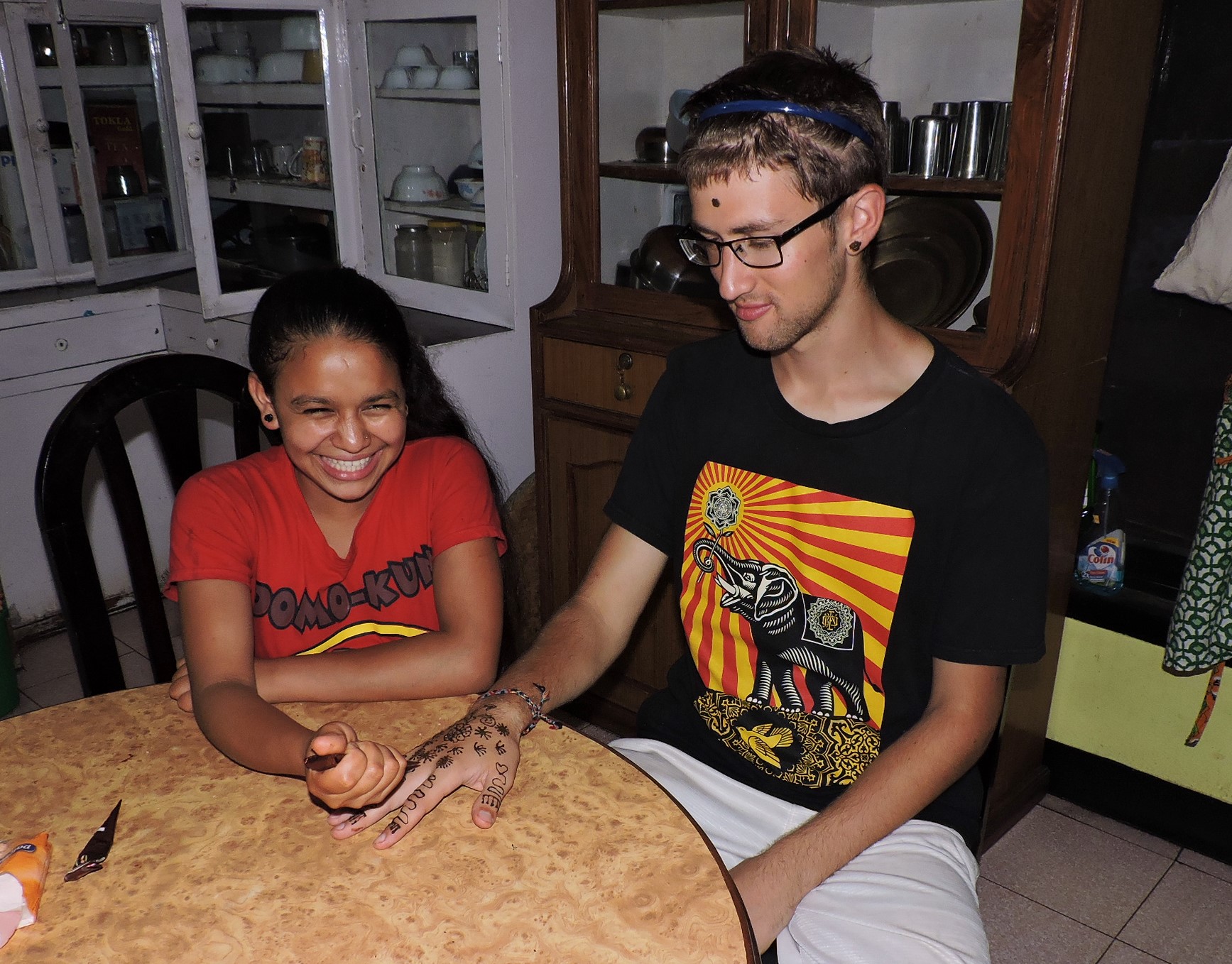
… applying Henna designs to one of the guests’ hands (face, ears); needless to say: he is going to be a famous anthropologist one day
I’m sure all the other guests will agree when I say: “… miss your smile, Januka.”
Vishwa Shanti Vihara School
When I came back from a month’s stay in Nepal 12 years ago after teaching English in a Buddhist Monastery school I had a real culture shock. I couldn’t understand how youngsters like the ones in Europe could be so restless, continuously moving, chatting, unable to pay attention, cracking stupid jokes, laughing apparently without reason. Now I was curious if anything had changed in the Vihara, too. True, the boys have become a good deal livelier, more open, comunicative but at the same time they are calm during lessons, interested, attentive, respectful …
The monastery is still there, with a few cracks but nothing broken, the abbott of the monastery is the same and the headmaster of the school a former student remembered me for the songs I did in my lessons (Beatles with the elder students, didactic songs with the younger ones). He had liked this techique (as he said) and had continued to improve his English with songs and later with films. We, the abbott, the headmaster and I agreed to try out my little theatre play with the students. The play is about the life of the Buddha. I had started to write the play many years ago when I had the idea of combining two things: teaching to speak English and dealing with the life of the Buddha. The students responded to the play with more enthusiasm than I had expected. As the headmaster told me, in spite of being a bit shy in the beginning they enjoyed acting. In the pictures you see them all being very serious and concentrated but in actual fact, we had a lot of fun and a good many laughs together.
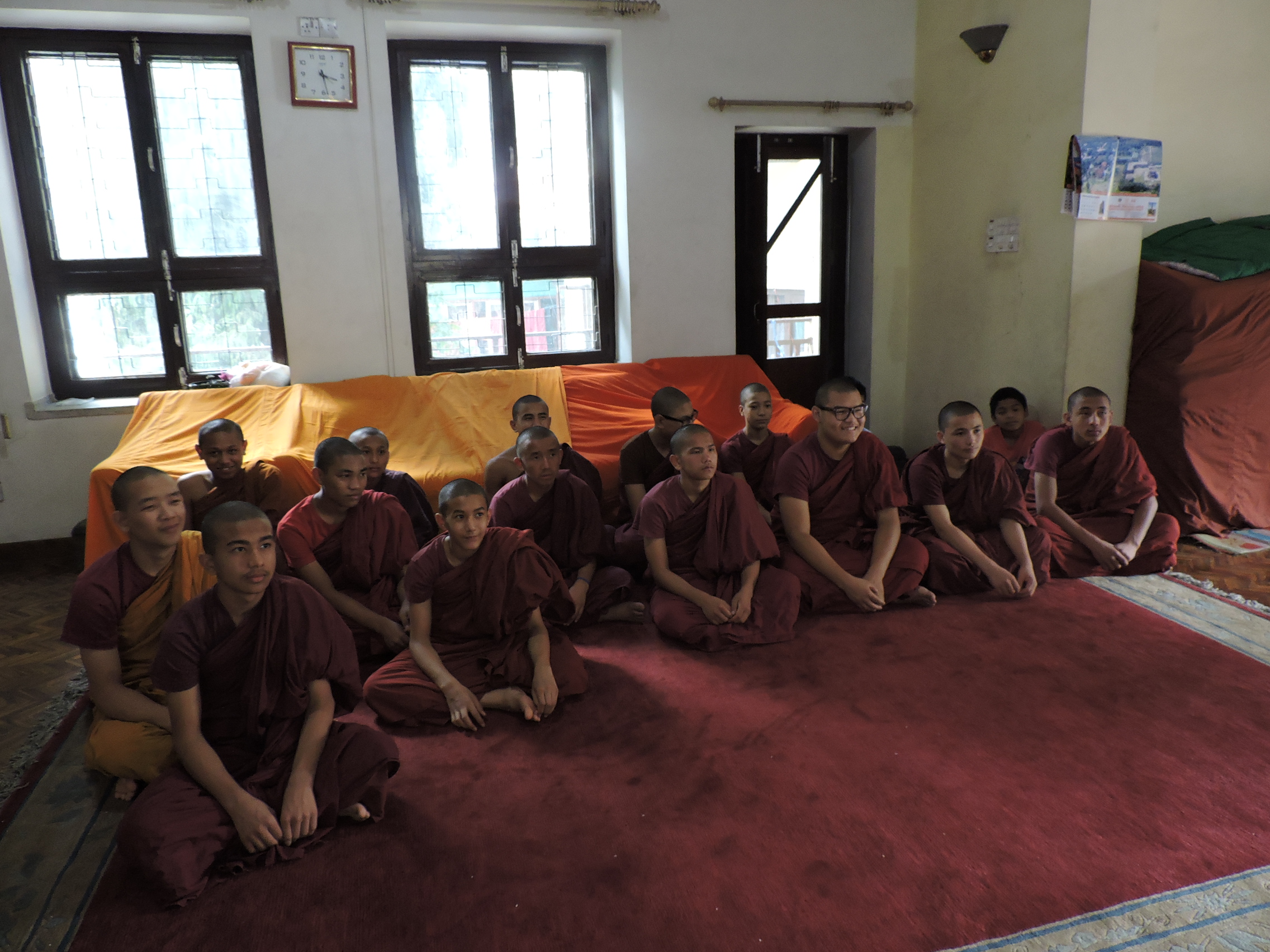
Curious
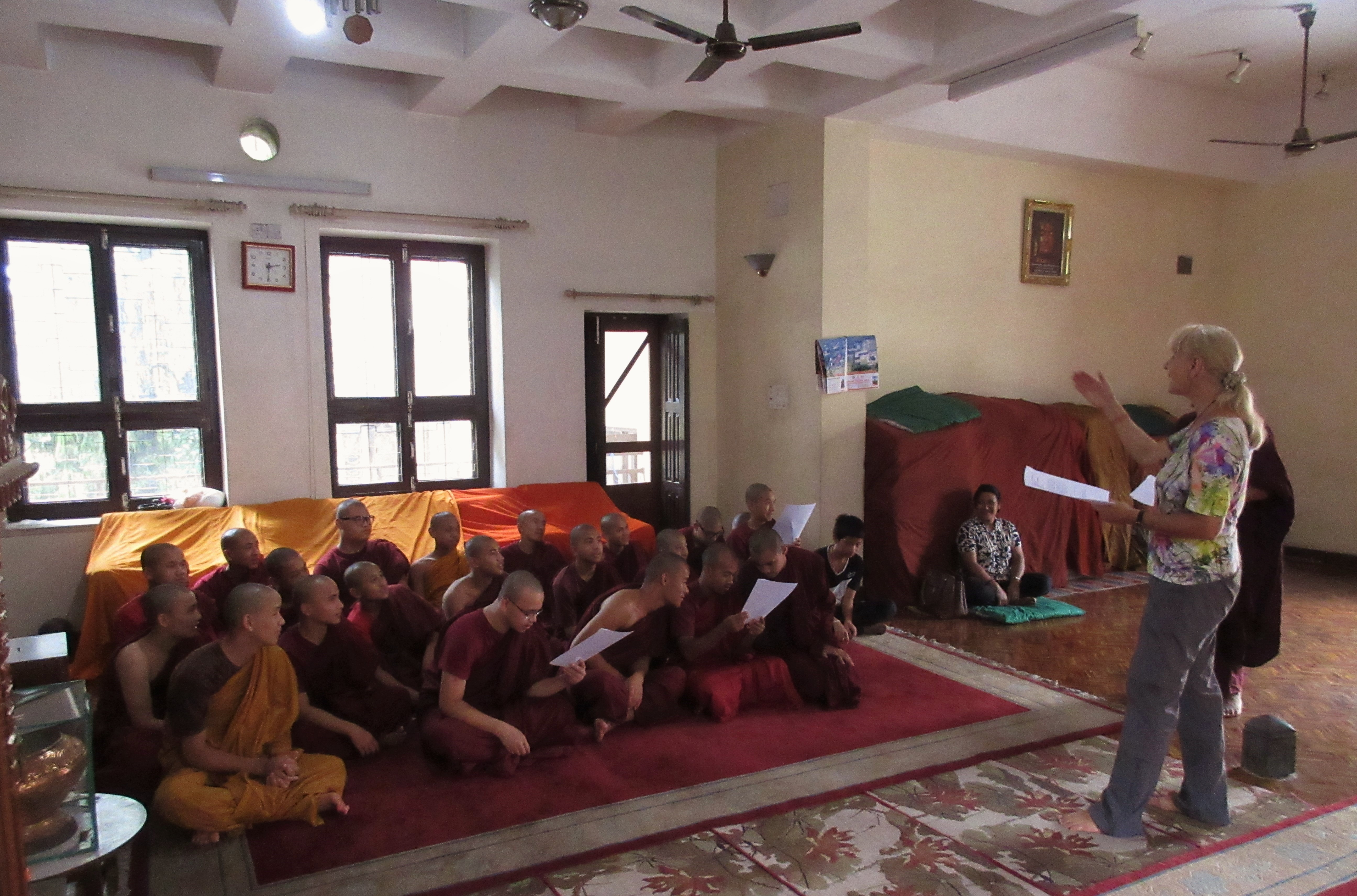
Learning should be fun; first practice still sitting
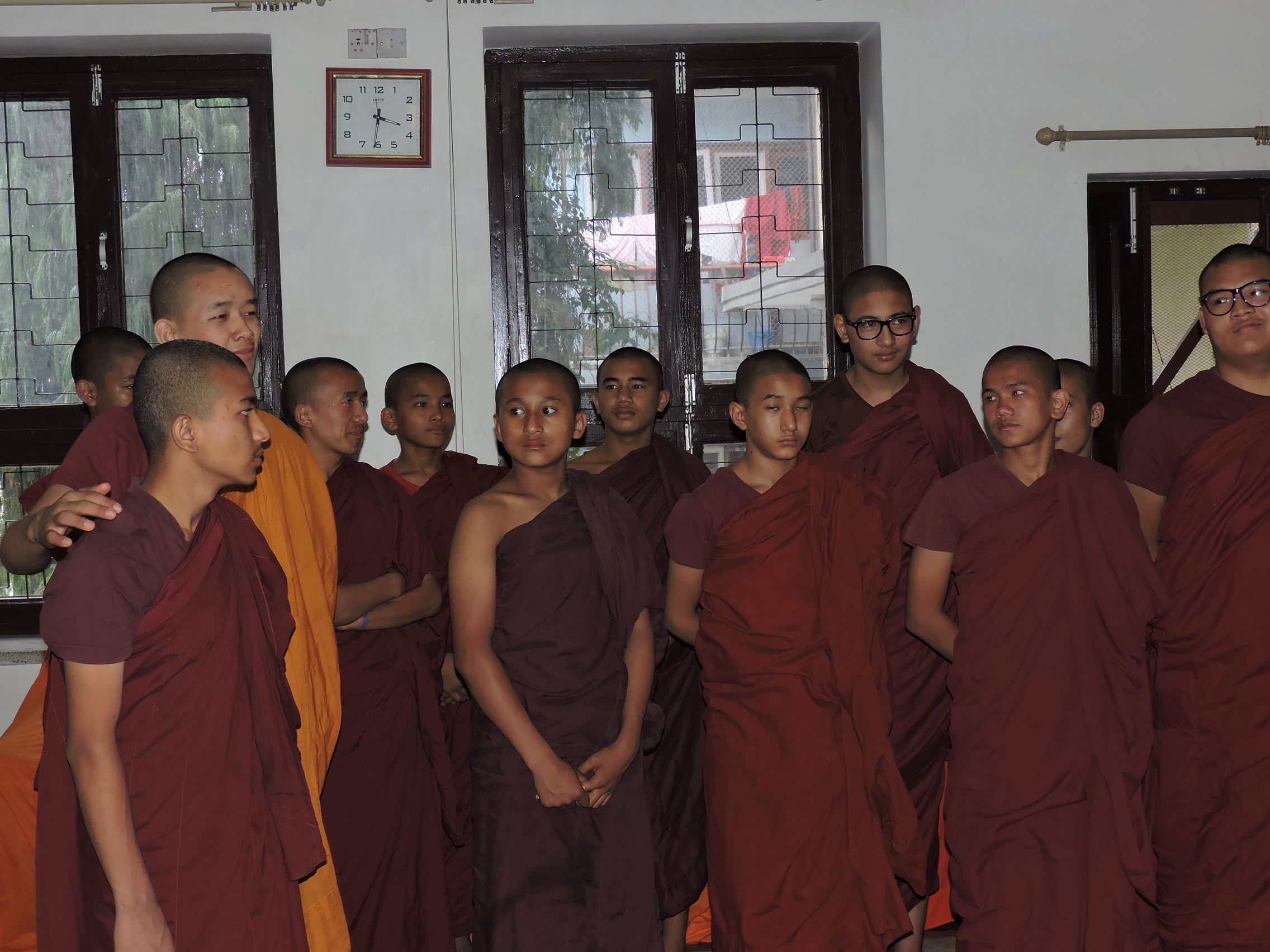
Real actors are not just sitting on the floor
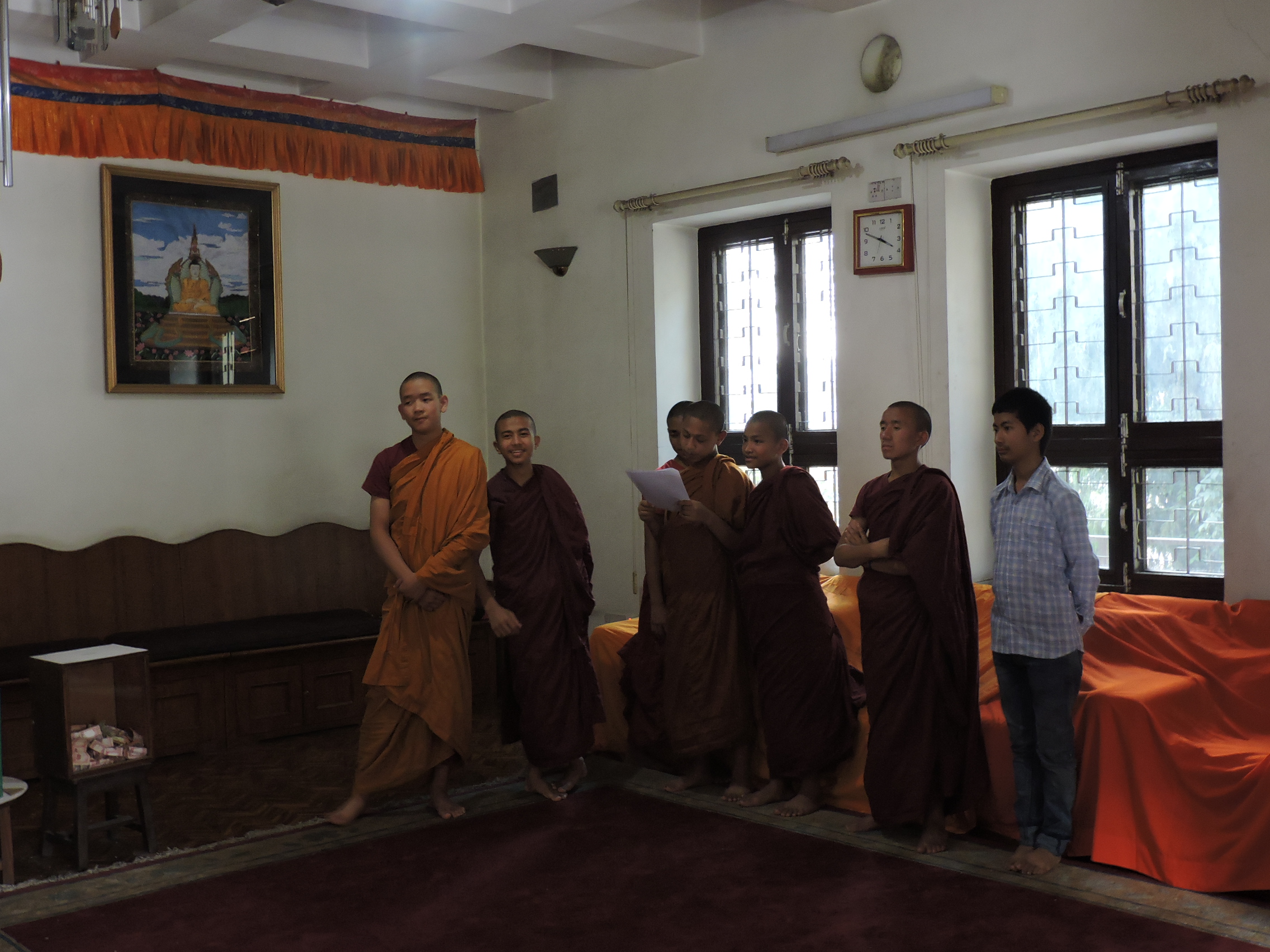
Trees and flowers populate the scenes. There is a part for each student.
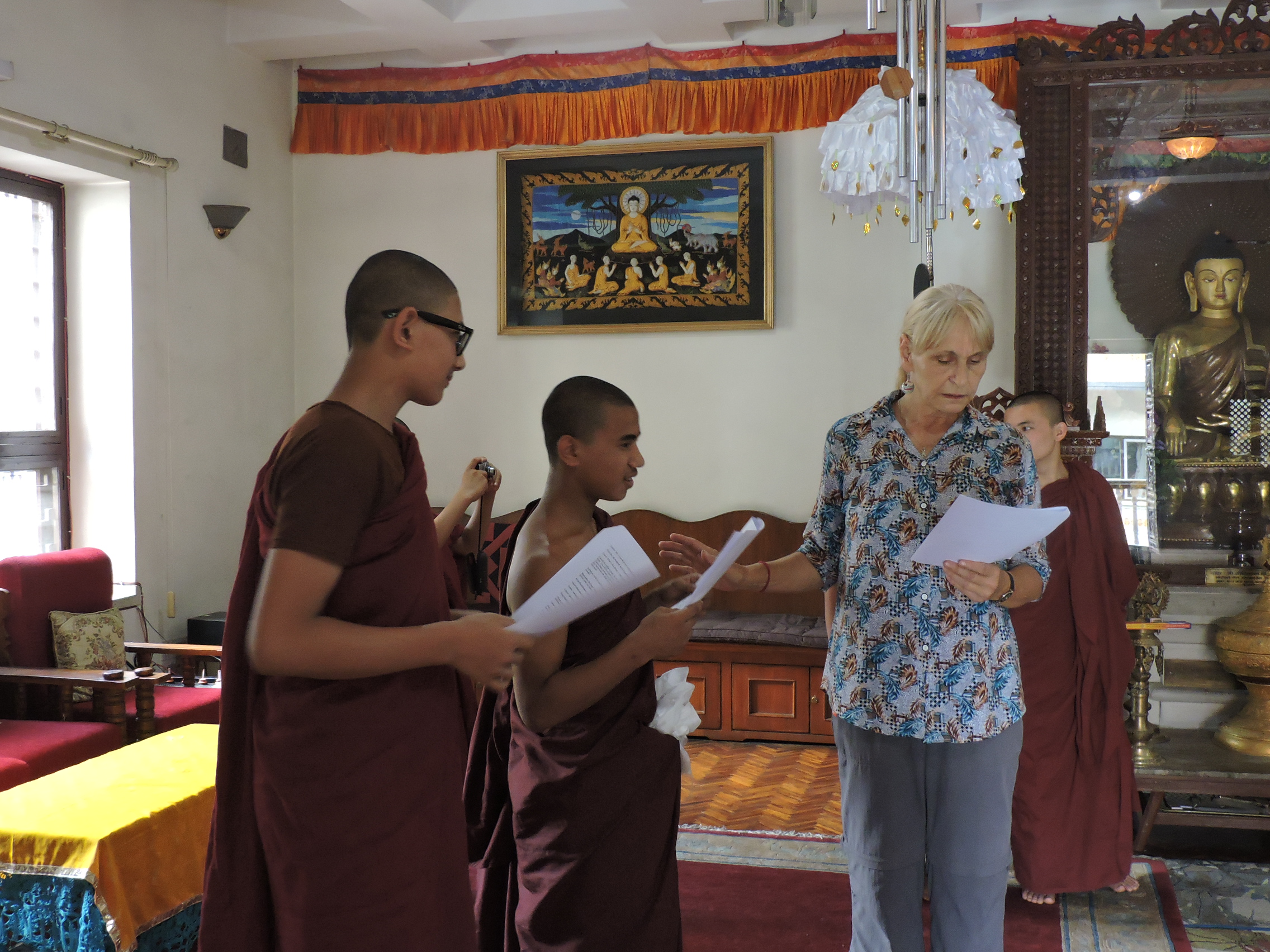
Siddhartha’s father and mother (the laughs!)
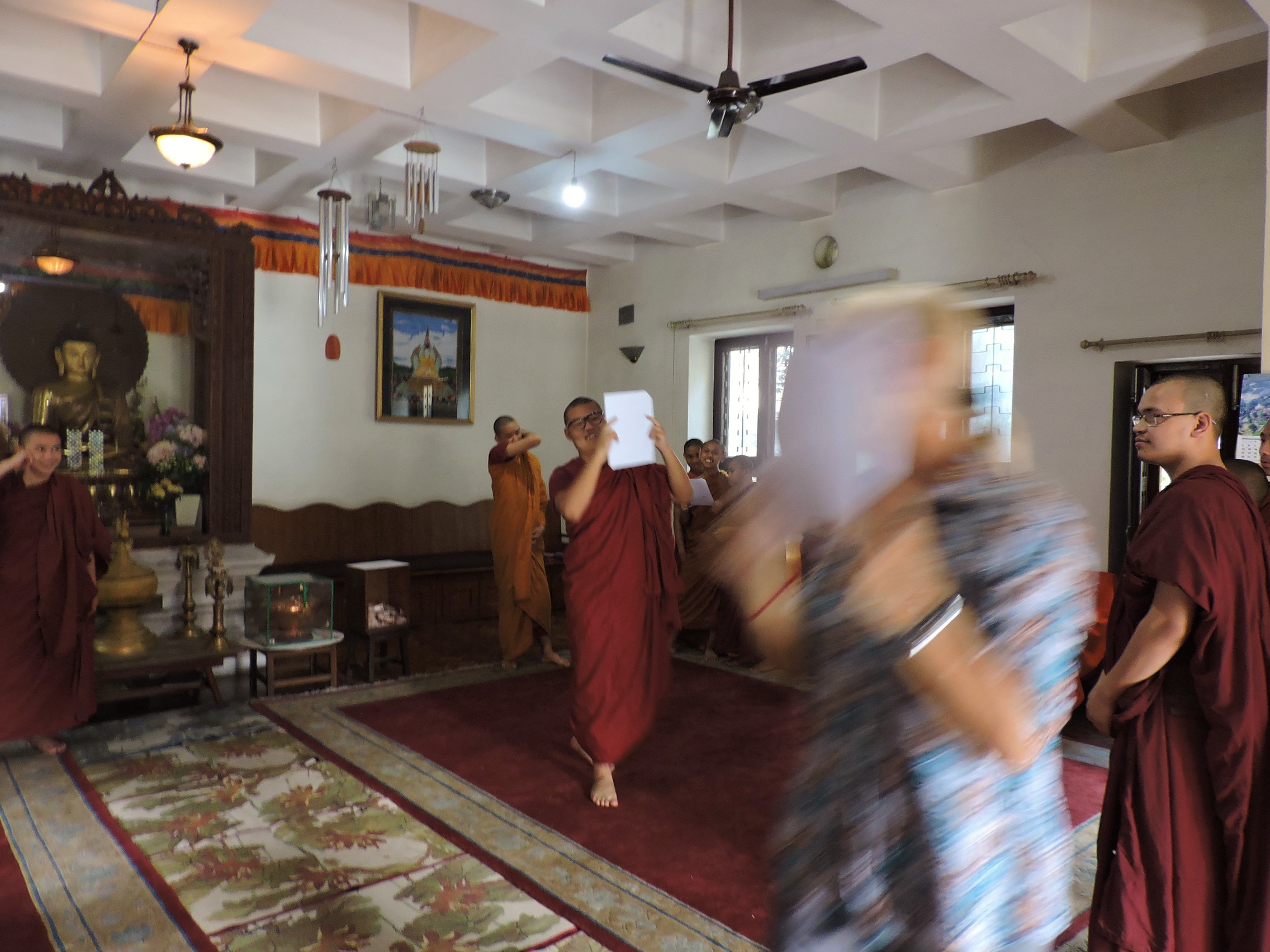
Me, teaching to act
After this boost in motivation I will now finish the play, formatt it and then send it to them.
On one of my last evenings on Durbar Square in Kathmandu I came across these youngsters. They were taking care of an old homeless woman, giving her to eat and to drink and the young chap cleaning her fingernails. As young as they are, they must have realized that being kept clean has something to do with dignity.
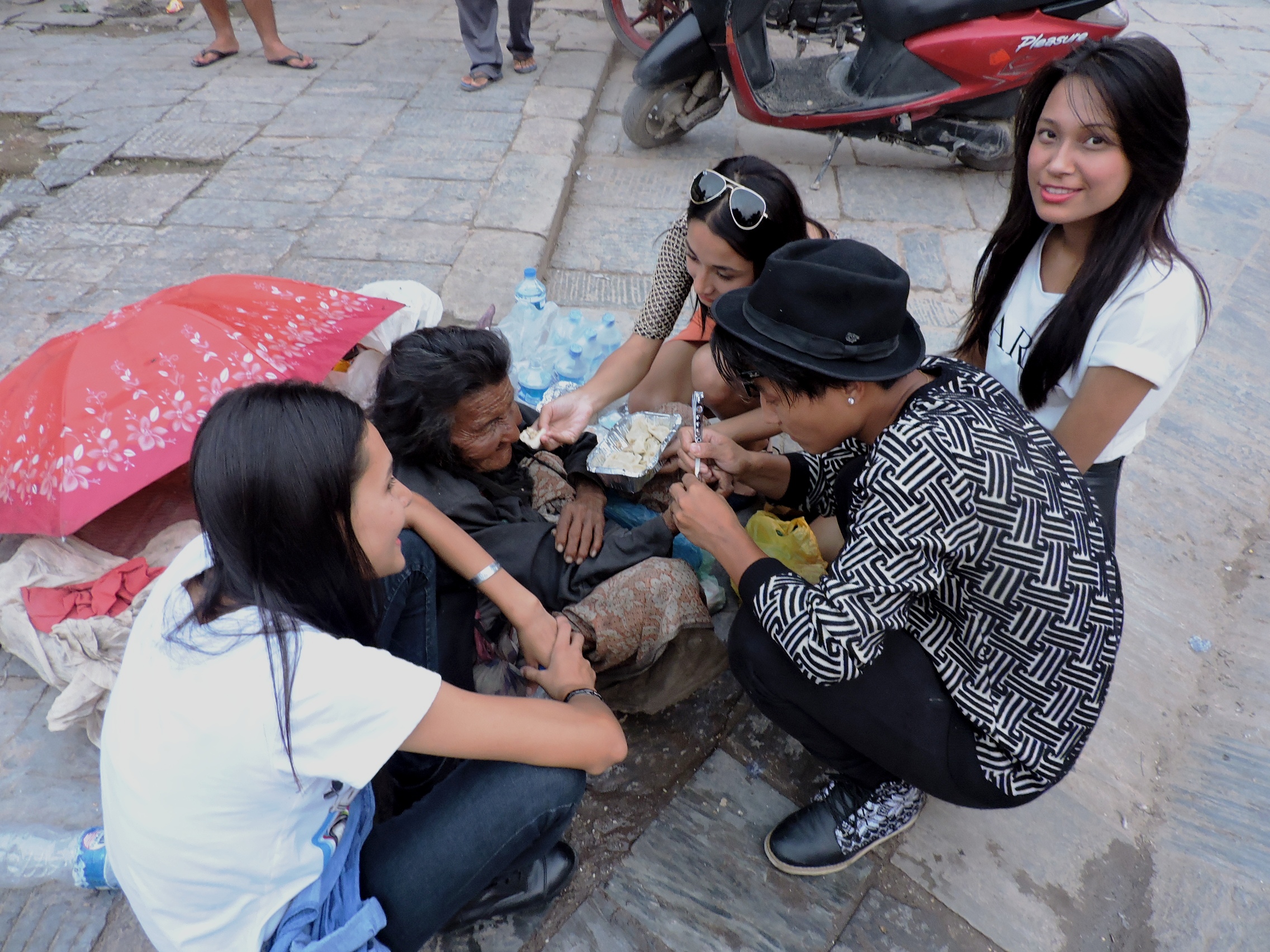
Feeding the old lady Momos
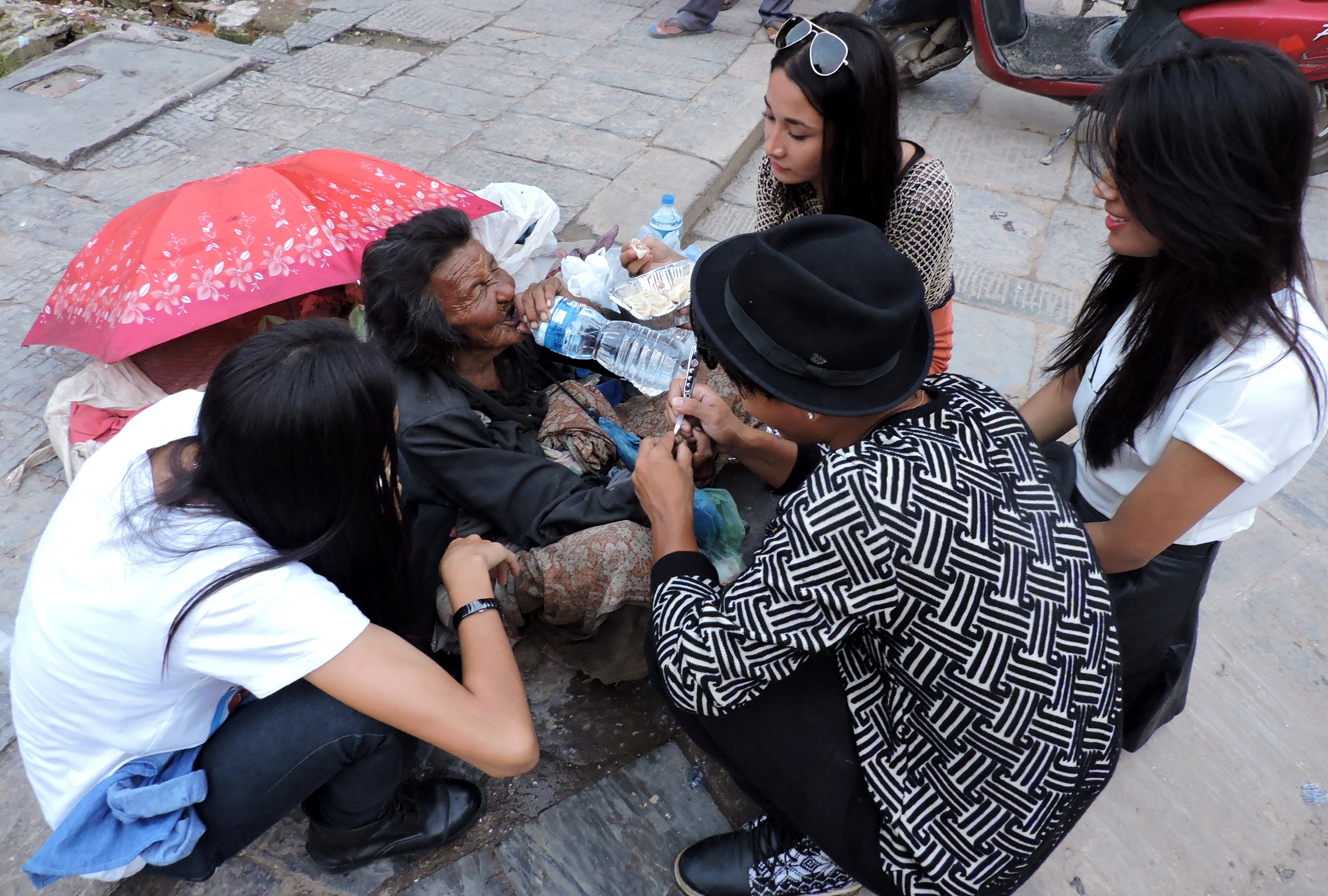
Giving her water to drink
And if they go to the discotheque after their good deed, so much the better.
Kumari

Ok, no problem.
The last child I am presenting to you remains without a picture. It is forbidden to take fotos of her, because she is not a child, she is the Kumari, a living goddess, … and who wouldn’t want to be one! Except, when you google her name and read about the life she leads, you can’t help thinking that Dalit street children probably lead a healthier life from the psychological point of view than the poor little goddess that spends her whole childhood until her first menstruation locked away in her special home. She comes out only on festivities or when an earthquake threatens to wreck her house.
A young man in Bhaktapur tells me that their Kumari leads a normal life and gets locked away only for a short period of time together with her parents: a compromise between tradition and a child’s right, because believe it or not, even Kumaris have got one life only.
Different in Kathmandu, where every day tourists gather in the little courtyard at Kumari Marg until she appears at a window and looks down at the people with her big, earnest kajal lined eyes.
Listening to the tourists it seems to me that even Europeans believe in child goddesses and have never heard about a child’s right to play, to have peers around them, to go to school, to have a toy, a favorate dish, to walk with her own feet, to laugh out loud, to throw a fit … all rights that they would claim for their own children at any time.
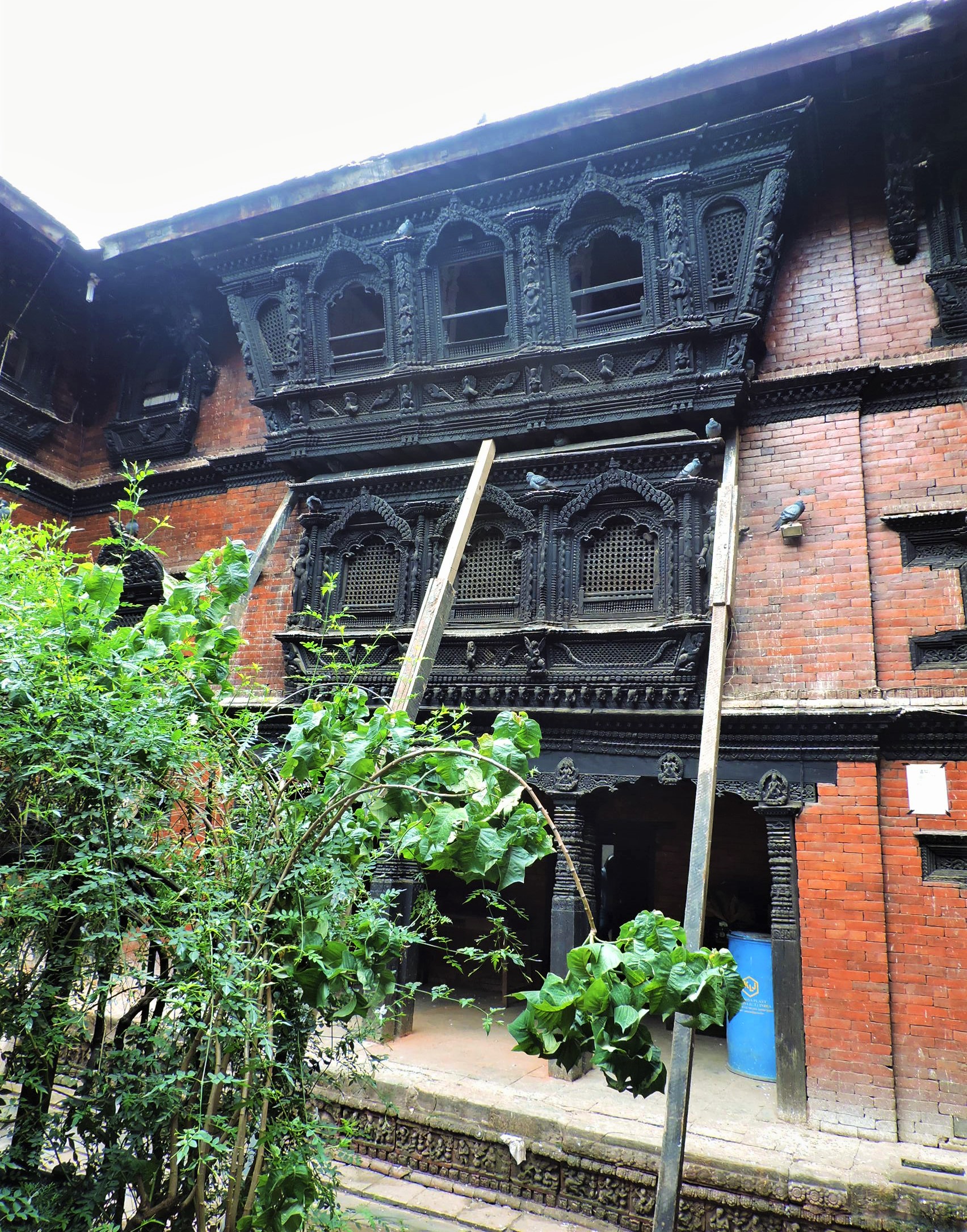
Still standing amid destruction: at 4 p.m. she appears at the window for just a minute
Let’s hope that Kathmandu one day will find a similar compromise for the life of the little Kumari like in Bhaktapur.
Bye bye
Gerburg

 gerburgkamm