Not a tombstone
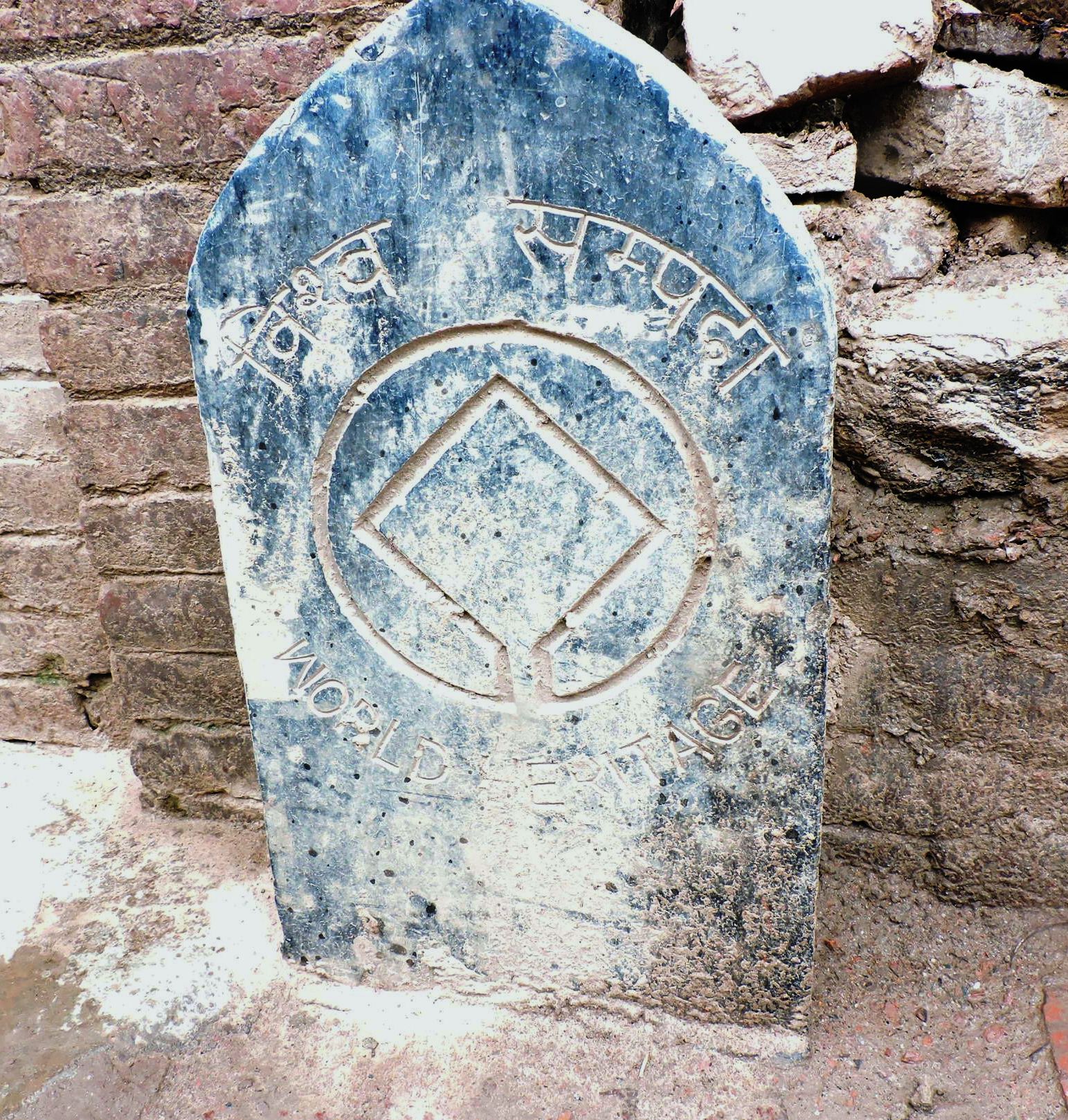
This is the UNESCO sign of World Heritage
Is it actually possible to fall in love with a city, once, on one day only, and to find it utterly changed years later, after a huge hand (of a trickster, maybe?) had swept over it scattering its fine artistic components, destroying its harmony, its order, its beauty, its heritage of humankind? And to love it even more then, because you feel in the end, the essence of it all, the essence of her, the beauty of Bhaktapur, still is?
While travelling to Bhaktapur on the usual ramshackle bus over the flooded and muddy road I could feel a lump forming in my throat. I expected the destruction to be worse than in Patan (Lalitpur) and Durbar Square in Kathmandu.
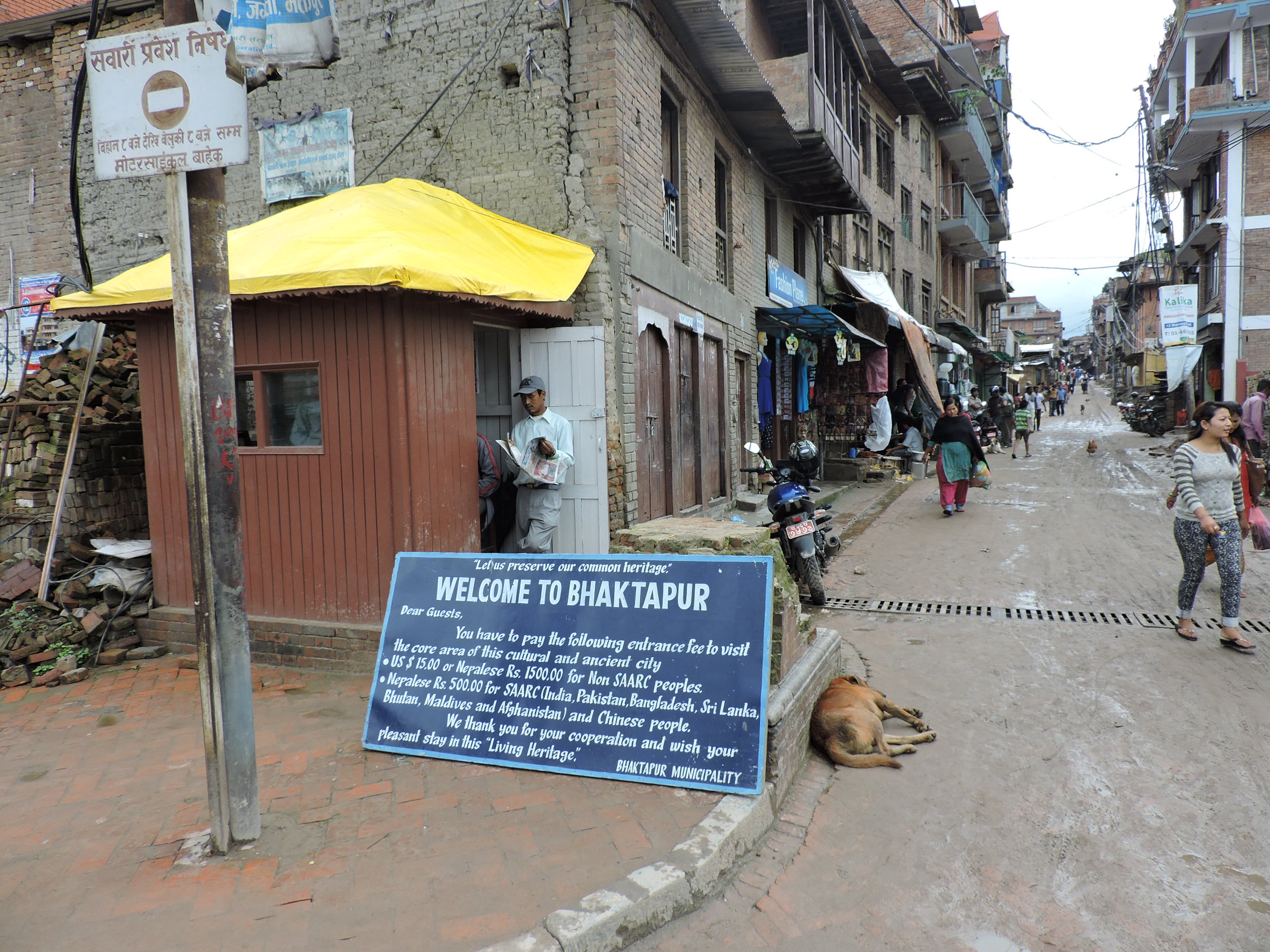
Of course there are ways to get to the historical centre without paying, but the municipality needs the money more than ever
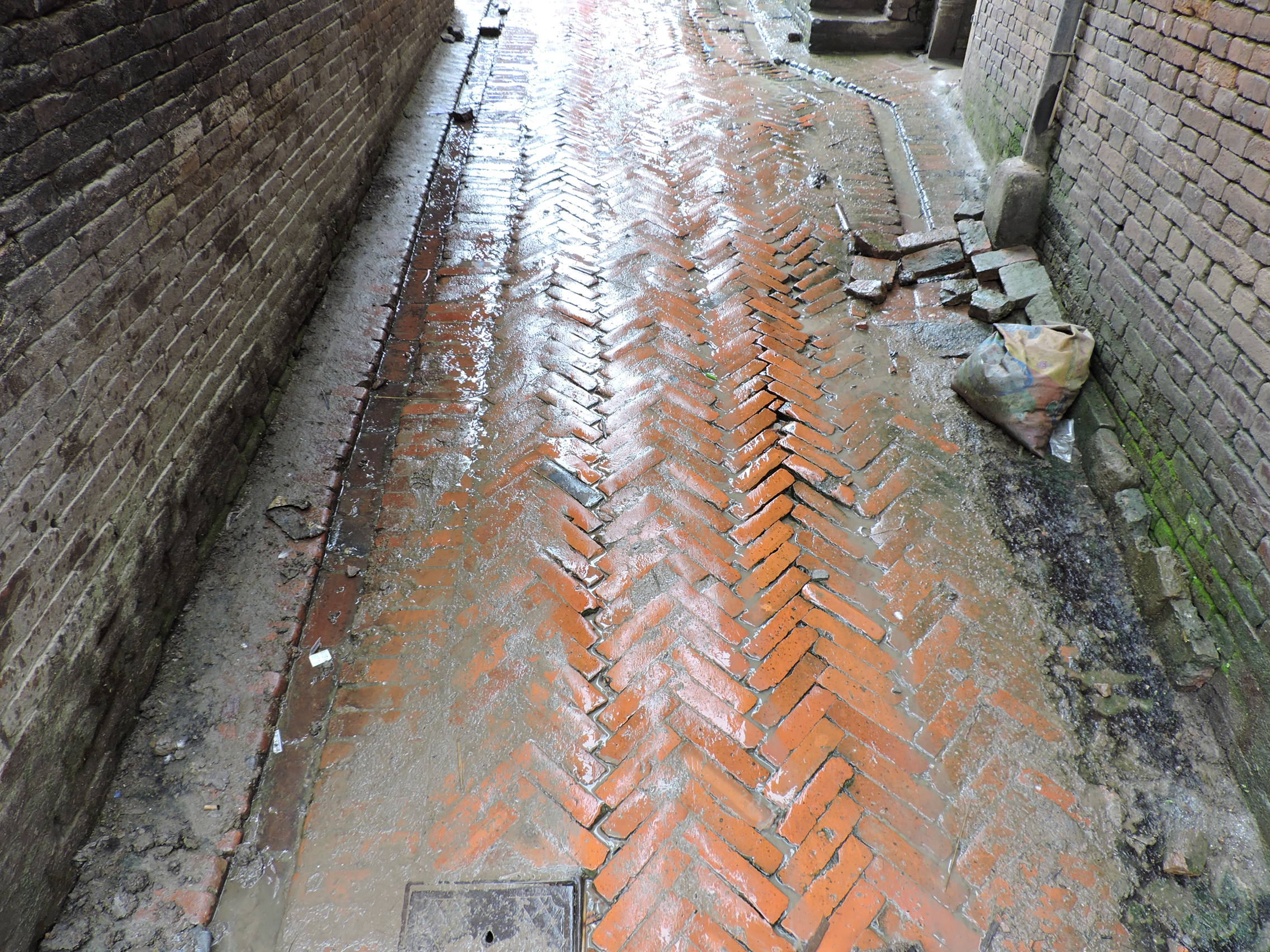
Eleven years ago the people of Bhaktapur talked about two things to me: how the Germans had restored and preserved the historical centre, especially its fish bone paved streets with sewage and water pipes underneath and how in 1993 Bernardo Bertolucci had directed the film Little Buddha here and had generously compensated the population for their help. I appreciated being somehow related to both nationalities.
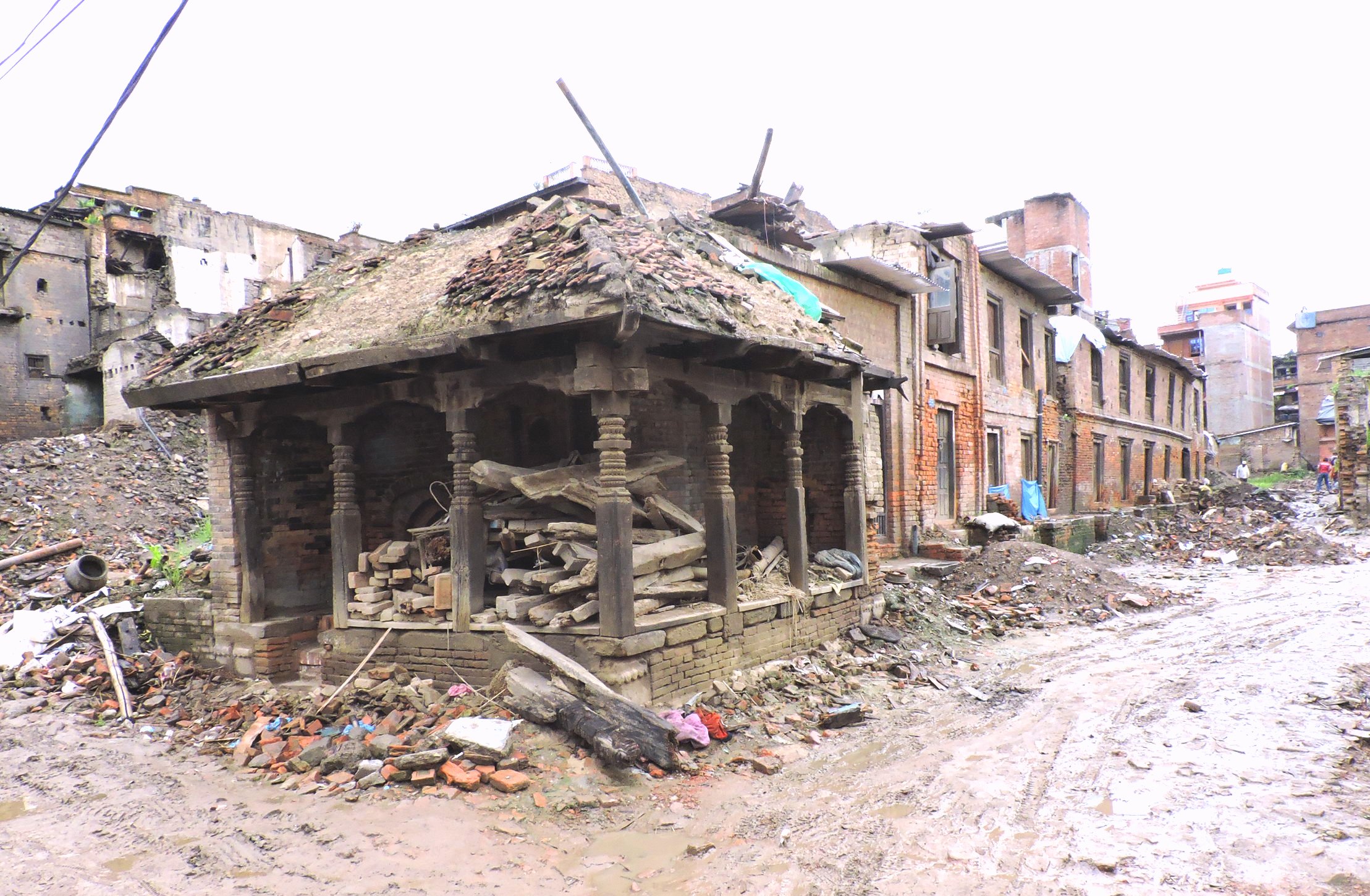
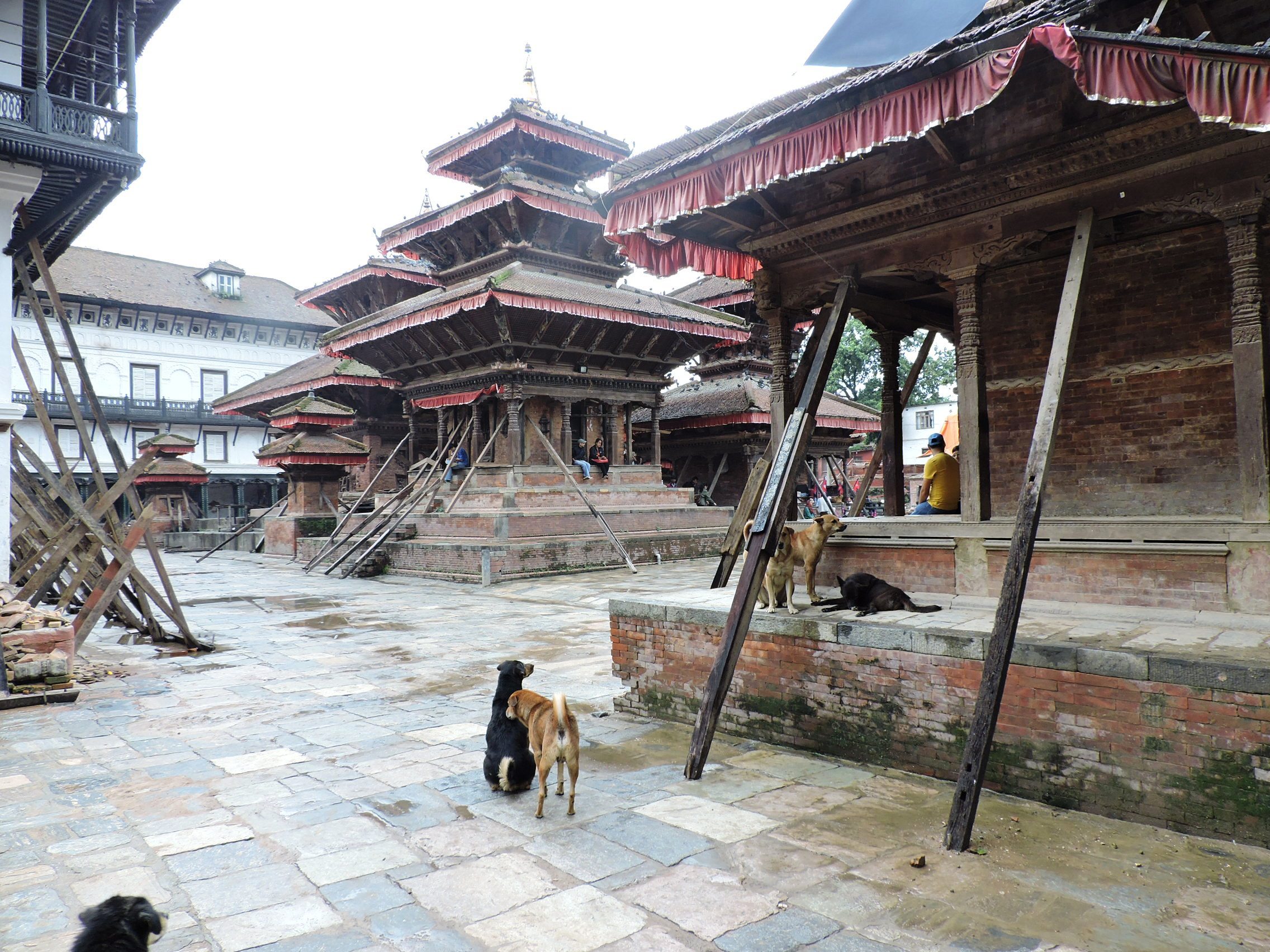
A haunting silence lies over the historic town
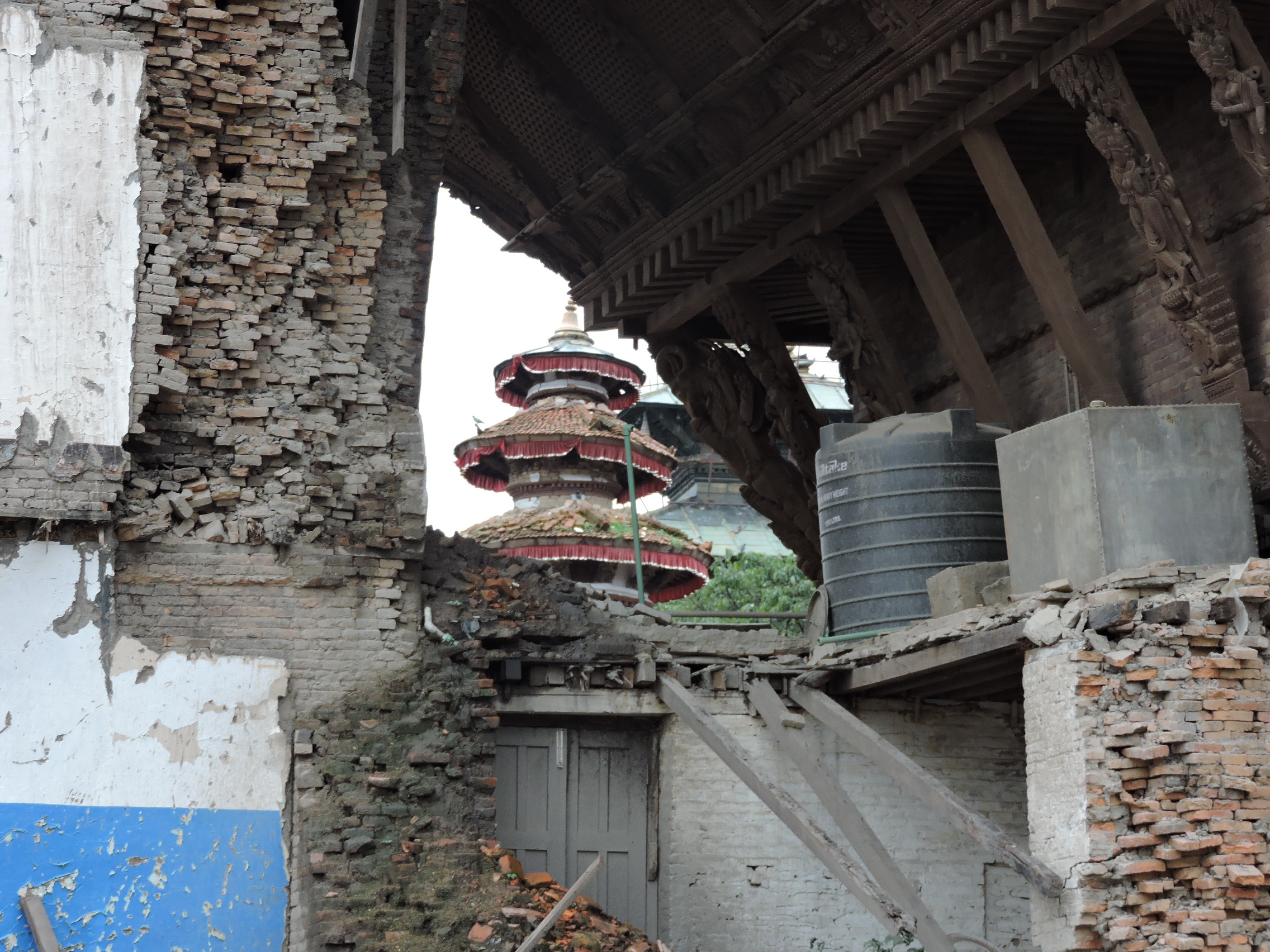
My promise to my Nepali friends to focus on the positive, on what was still in place and standing, was impossible to keep in Bhaktapur. An invisible hand had grabbed my camera and directed it to the worst affected parts.
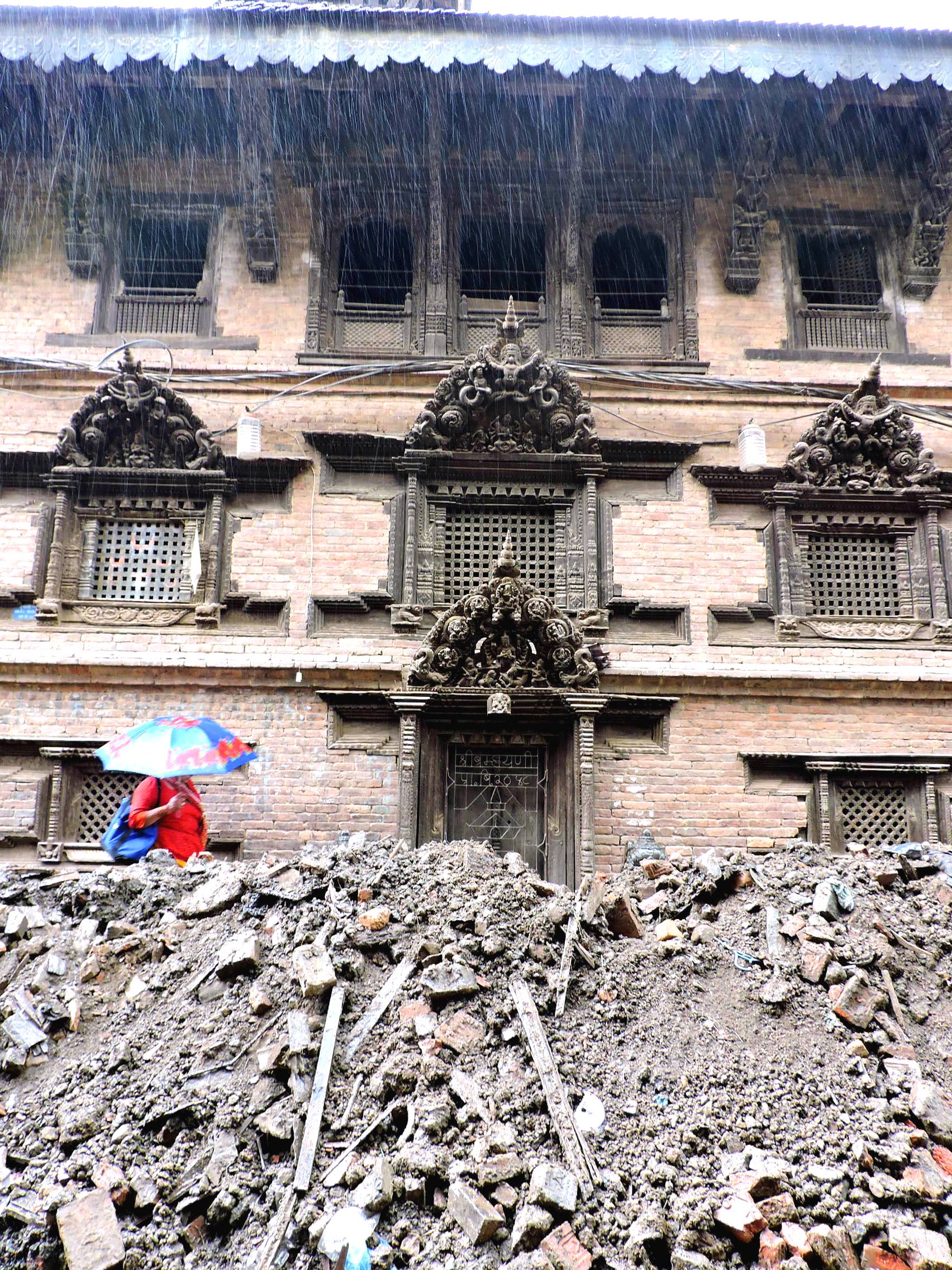
And the relentless rain makes the overall picture even gloomier
The usual readiness to smile has given way to uneasiness
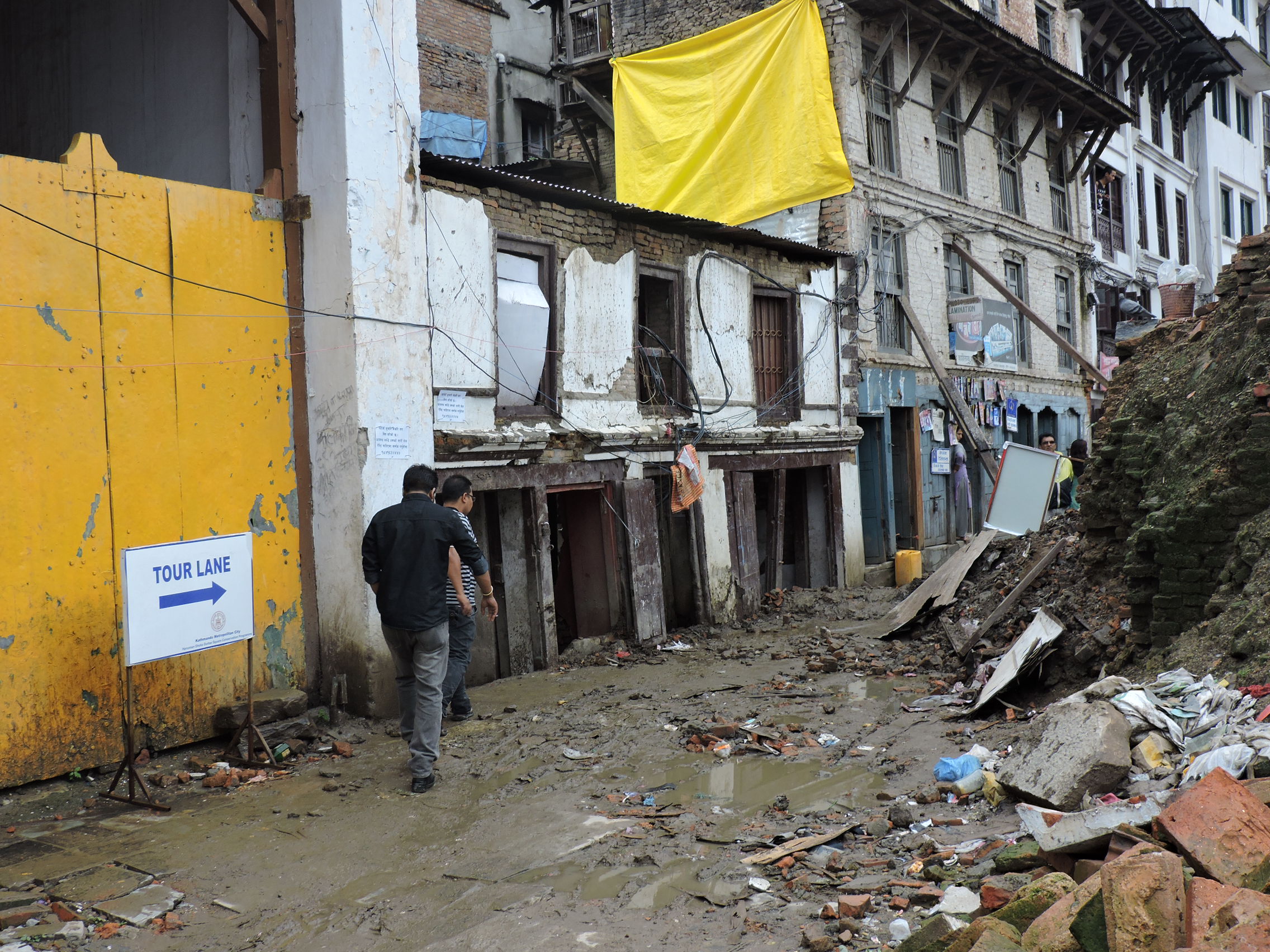
The wonderful fish bone pavement is still there, even though in most places covered by mud
Can this ever be cleaned away?
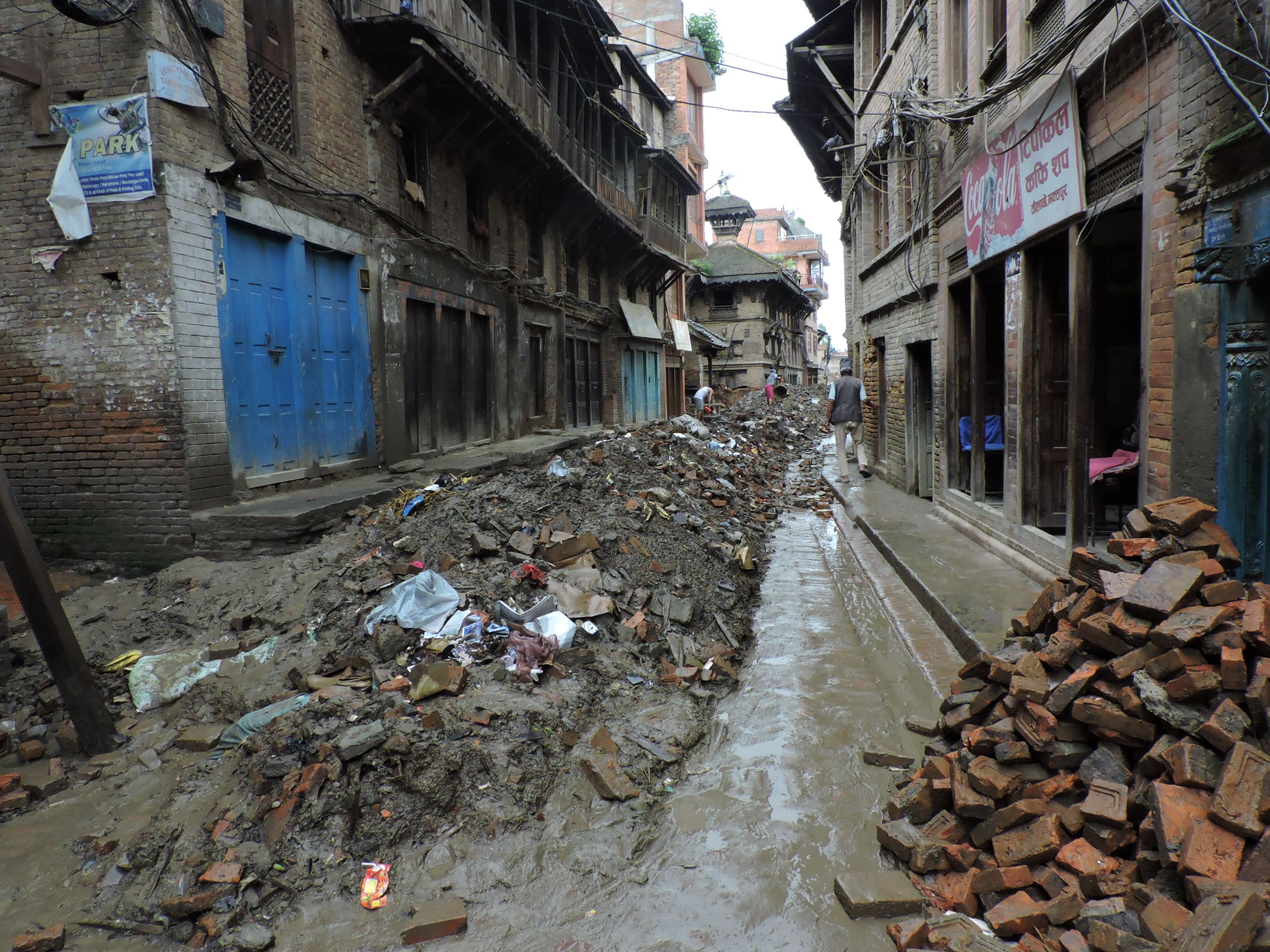
once picturesque
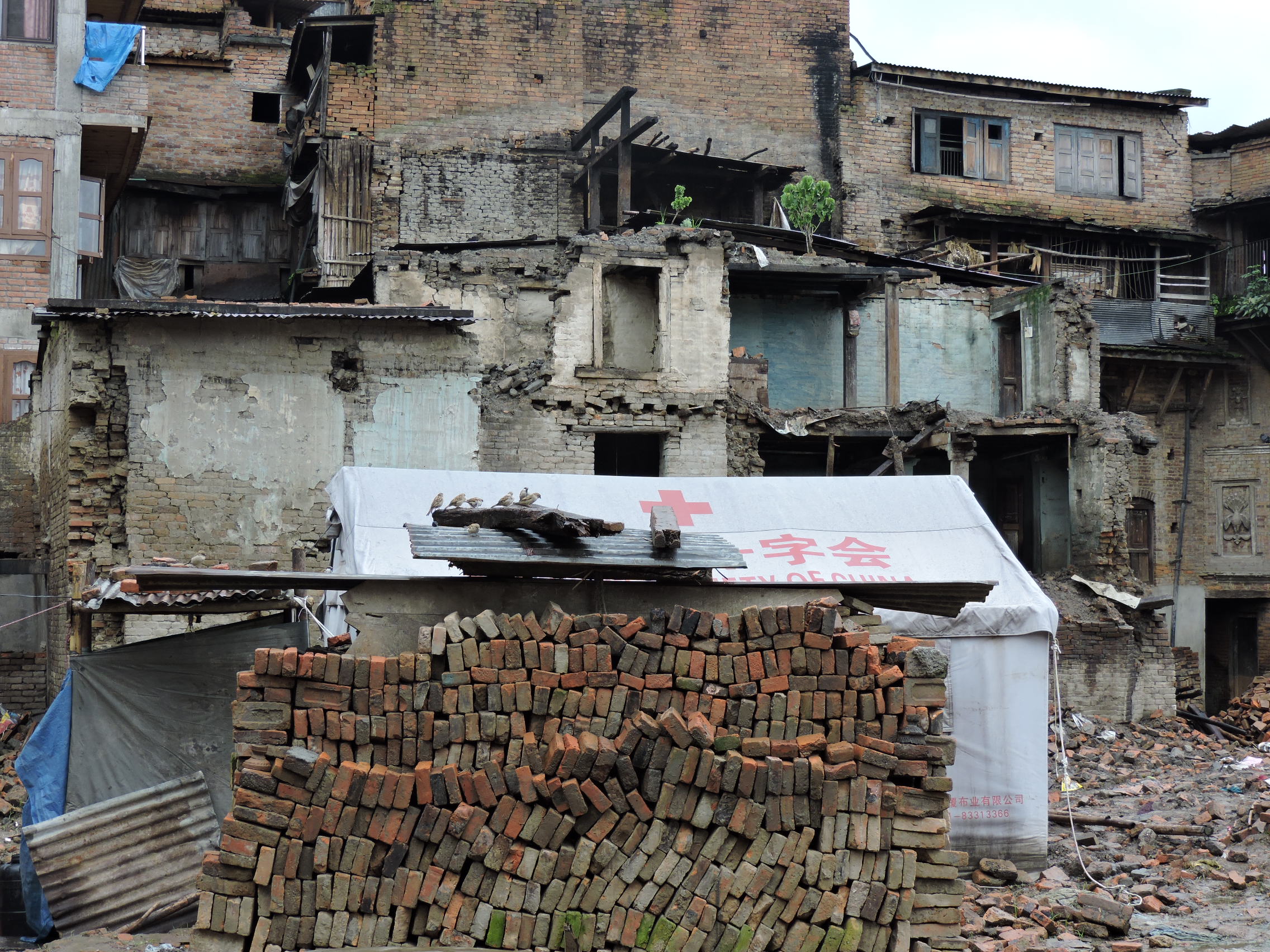
What a shock, when a part of one’s flat just breaks off …
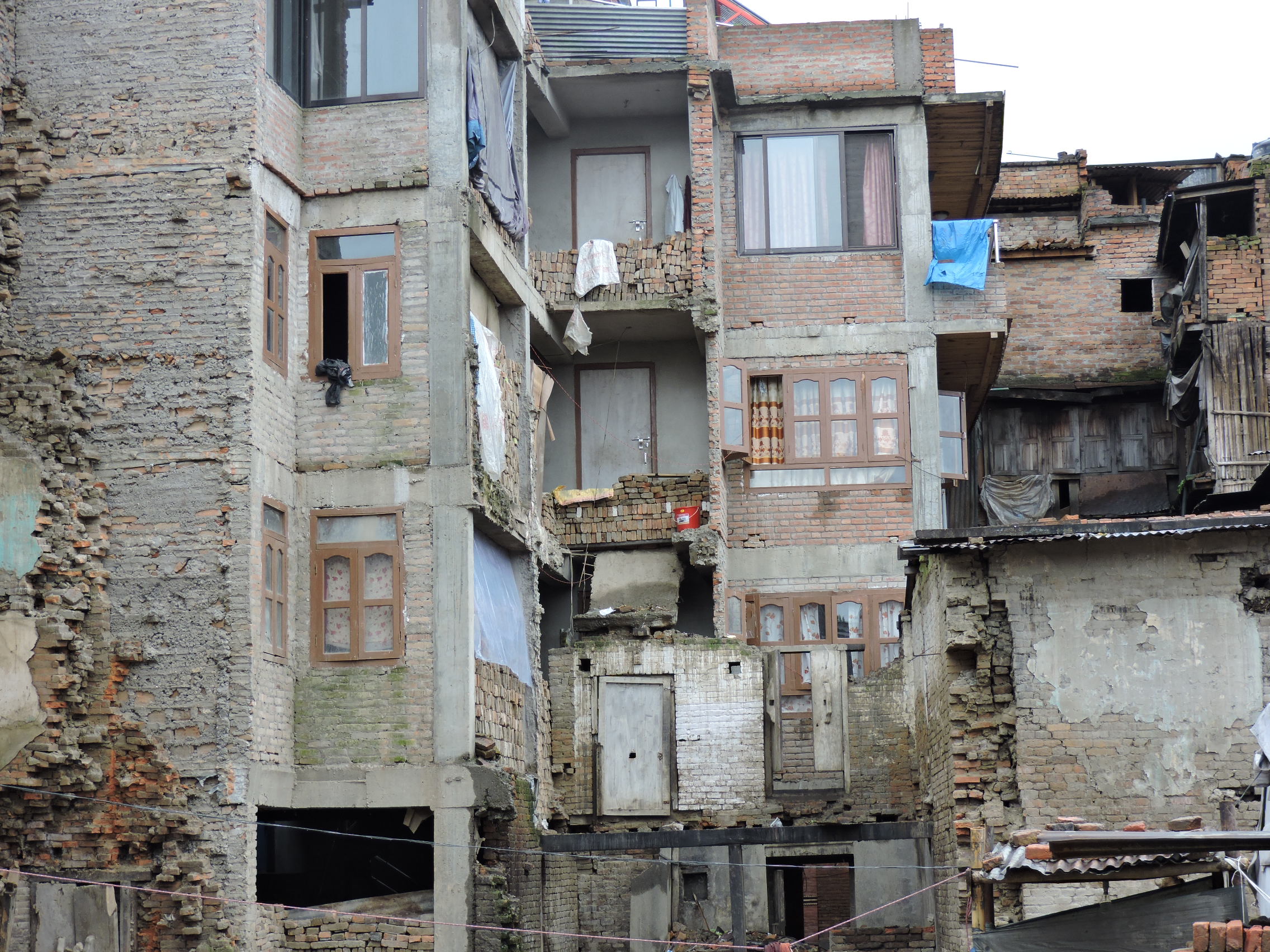
Still habitable? The criteria depend on necessity
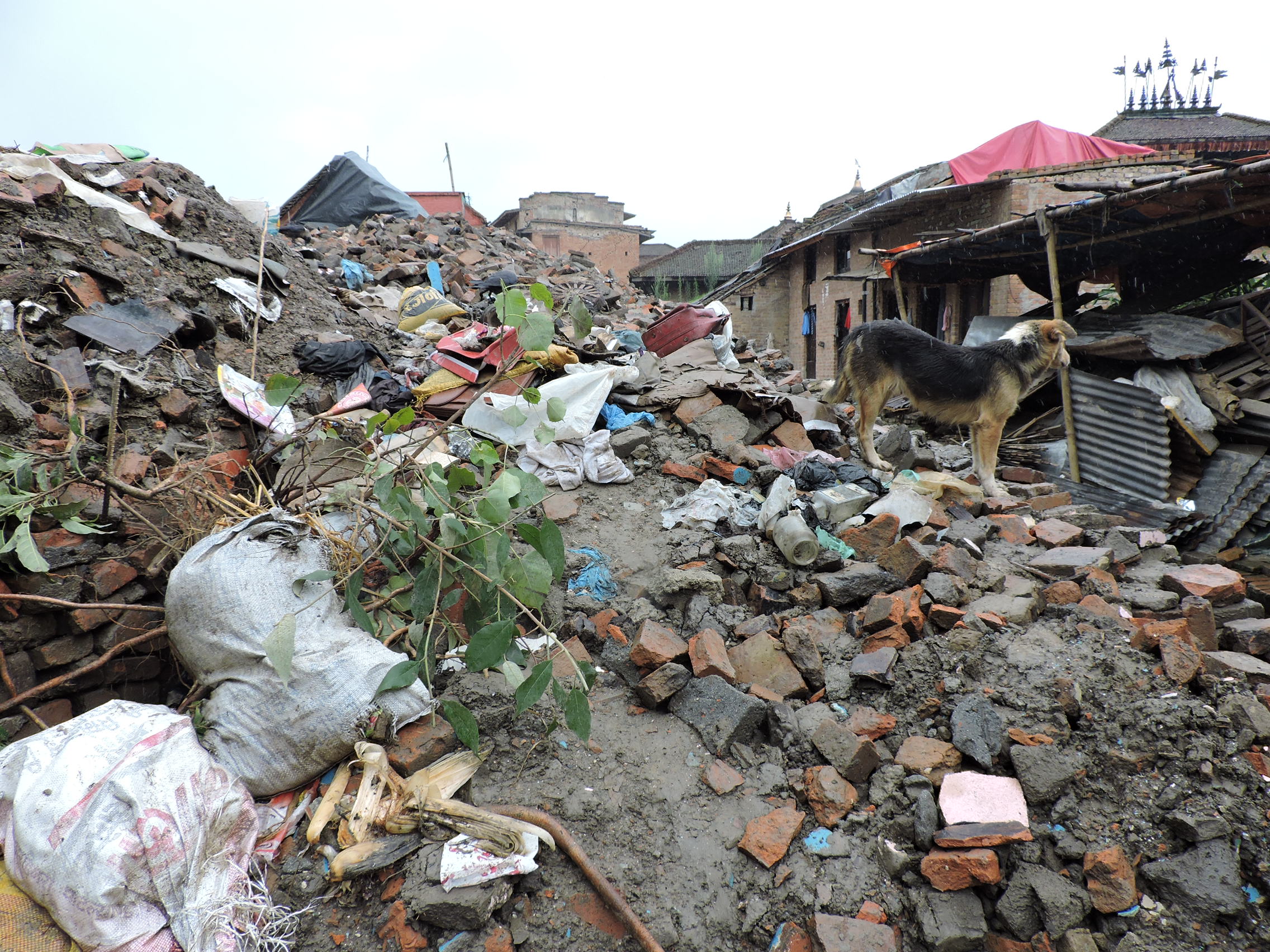
unrecognisable
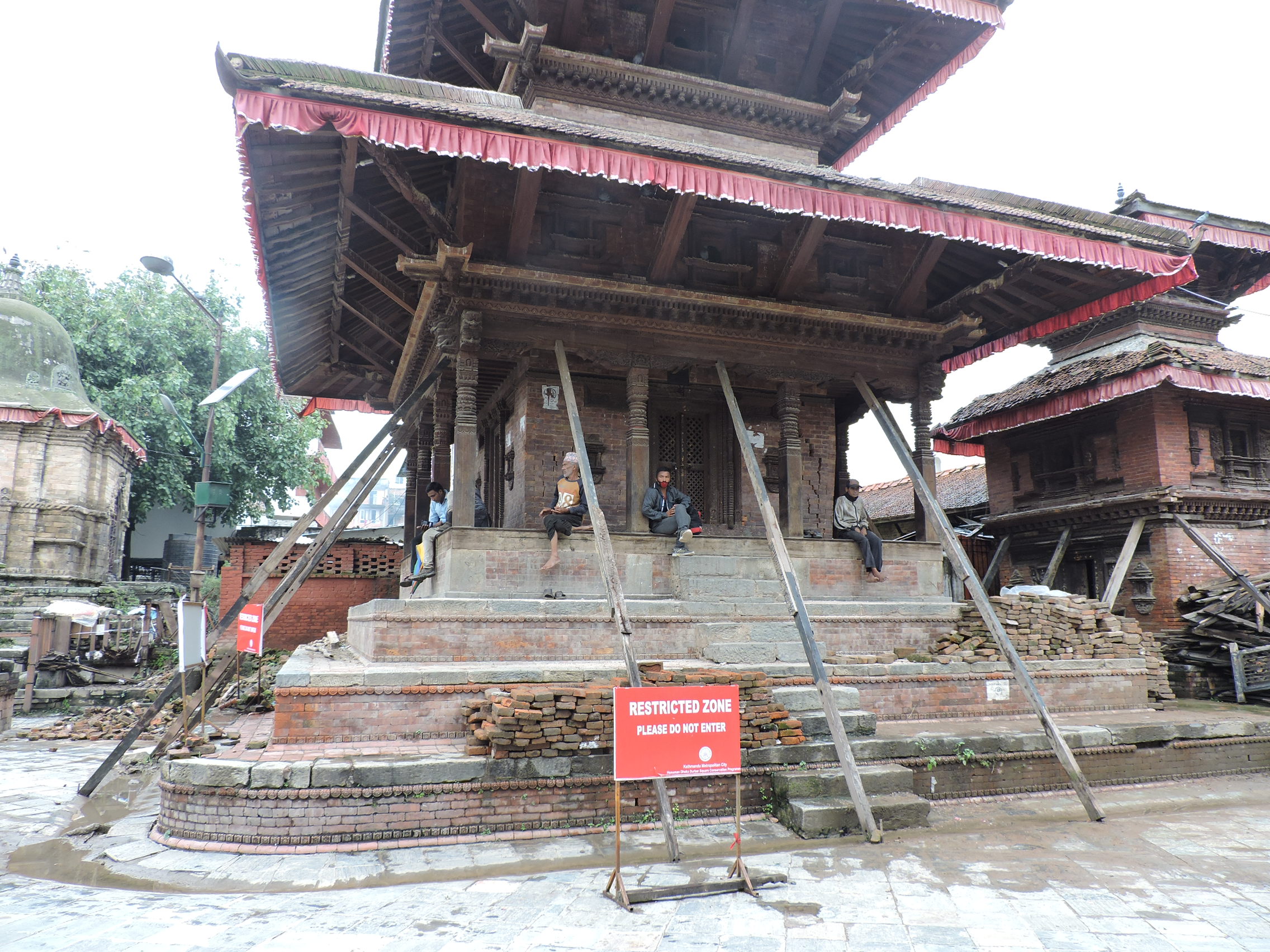
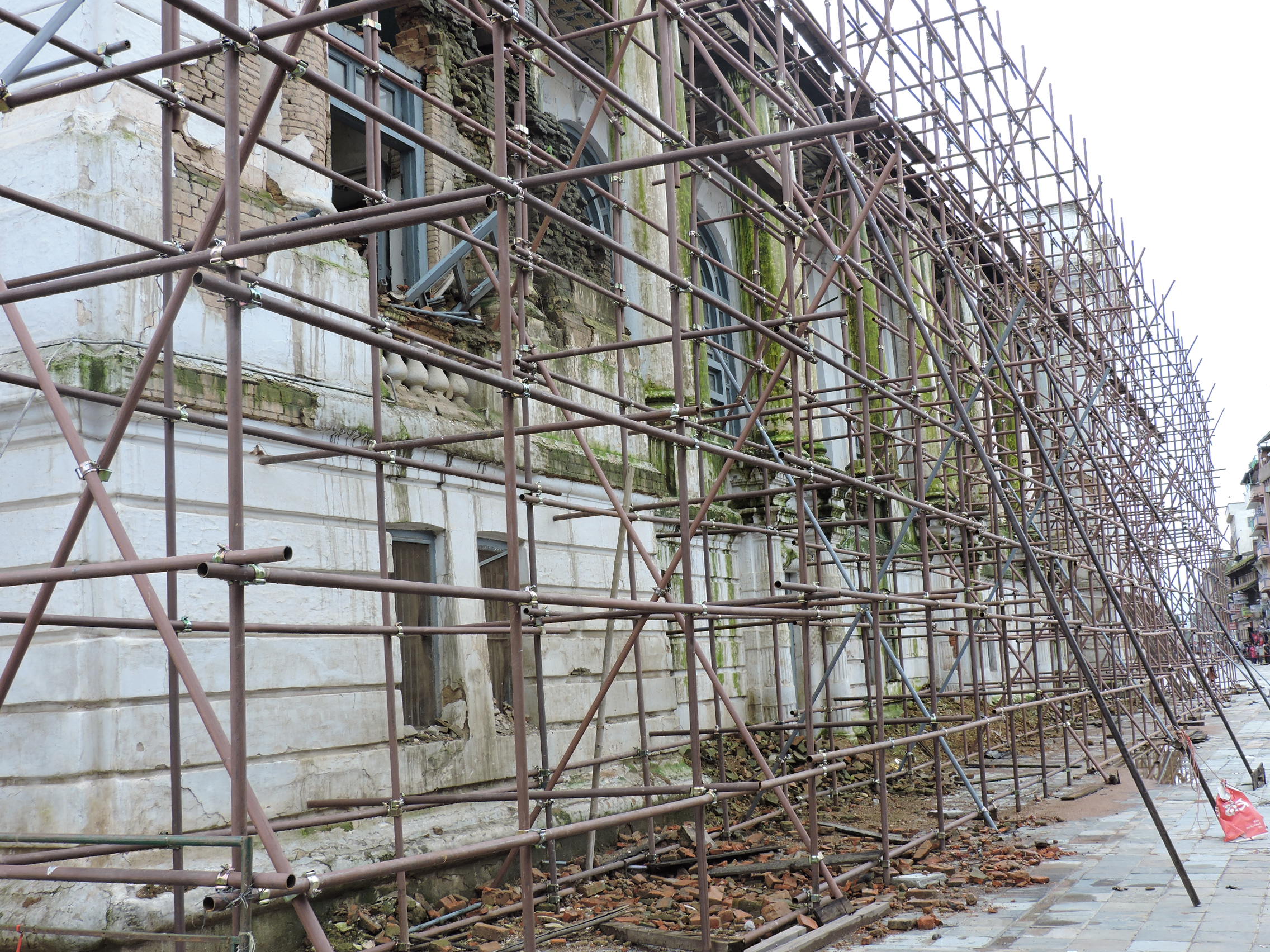
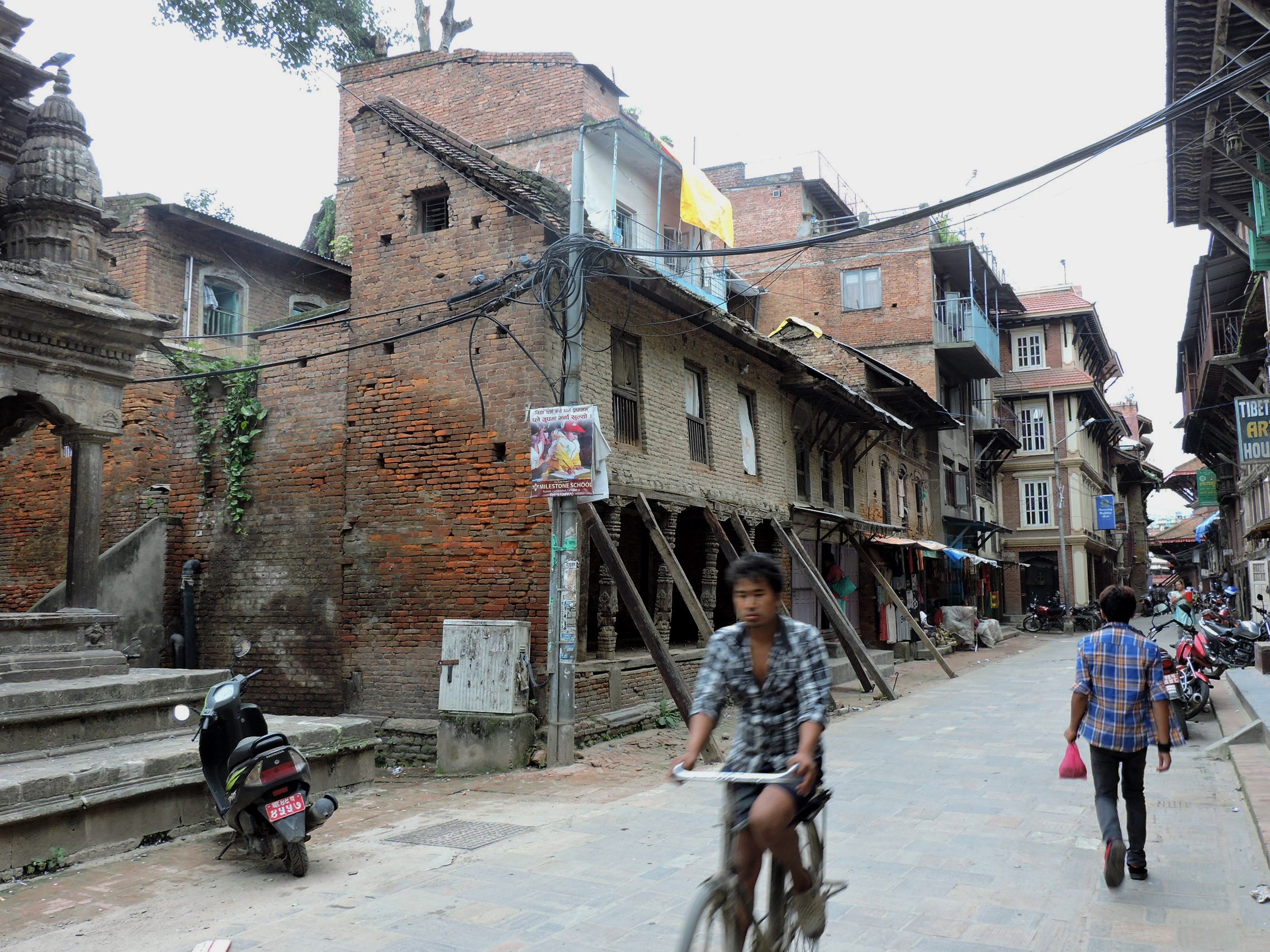
A city on crutches
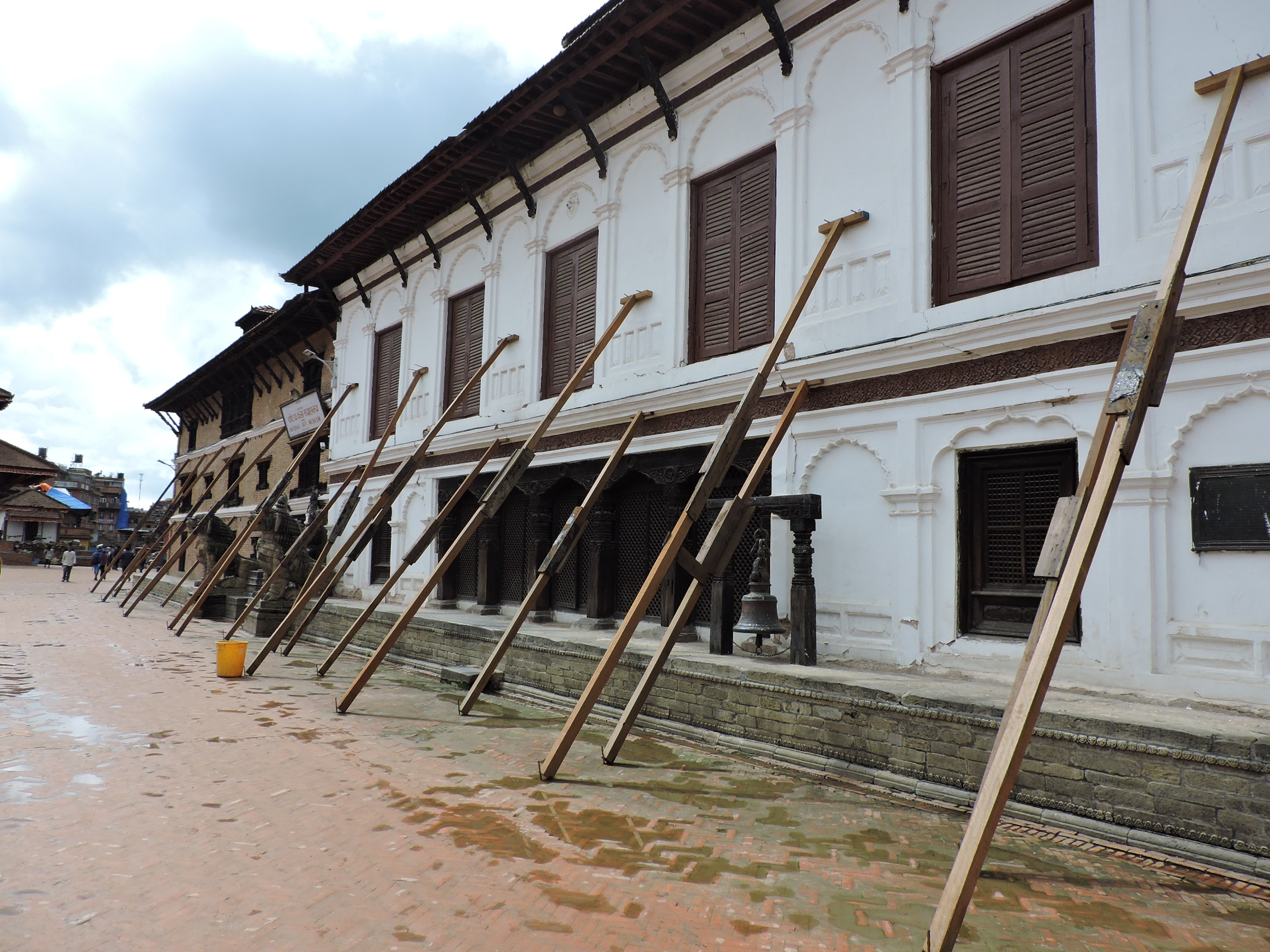
palace
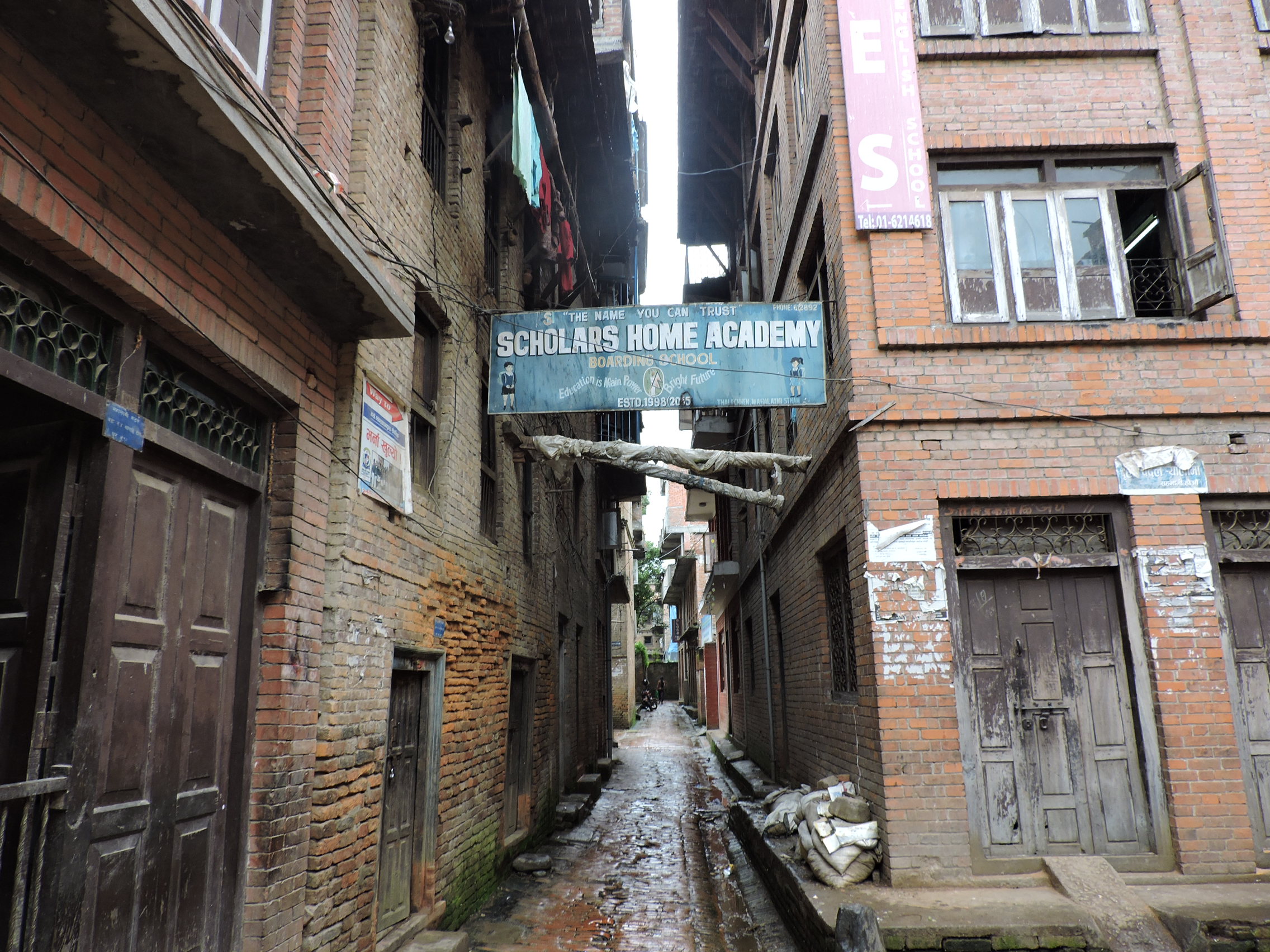
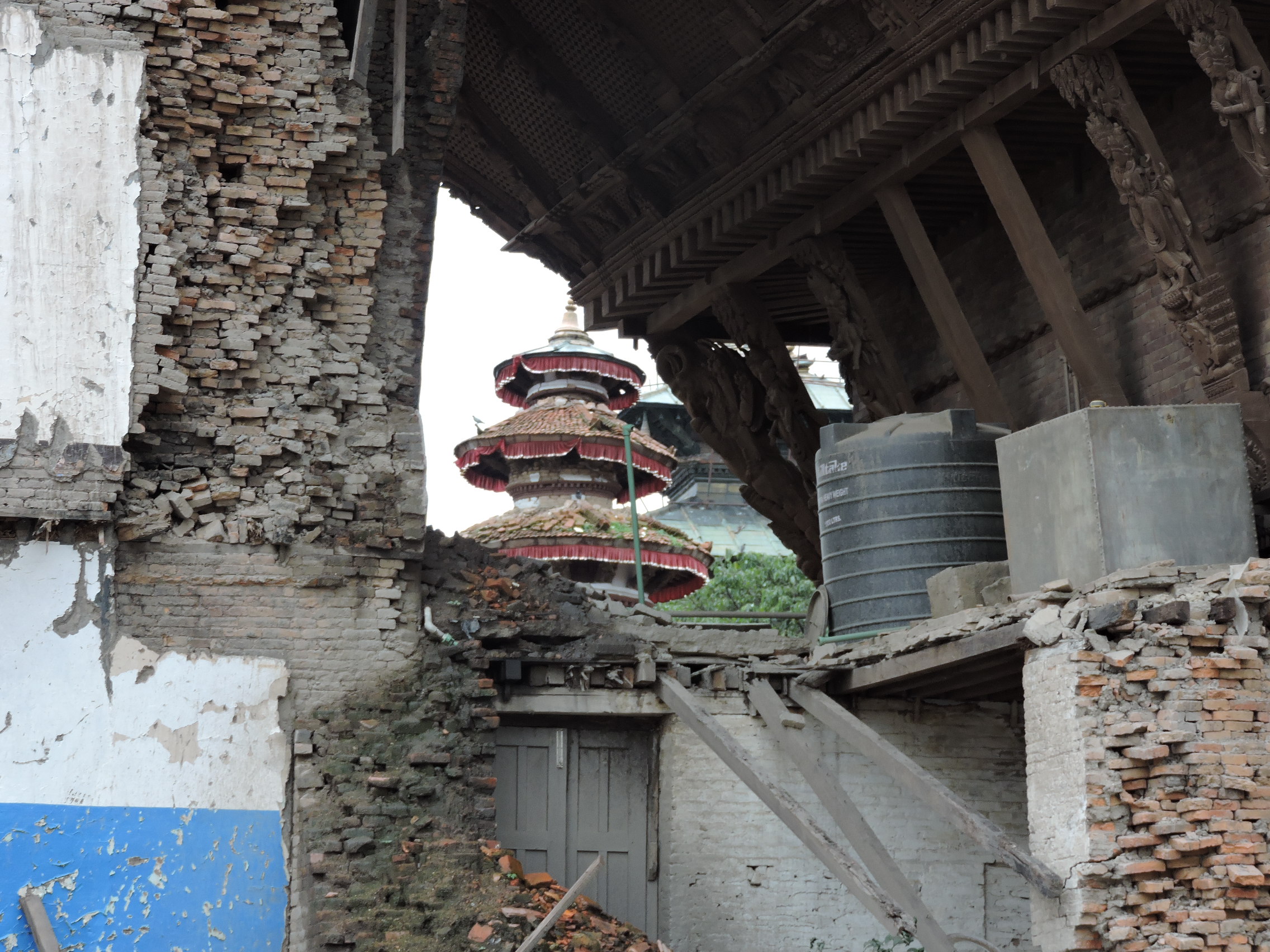
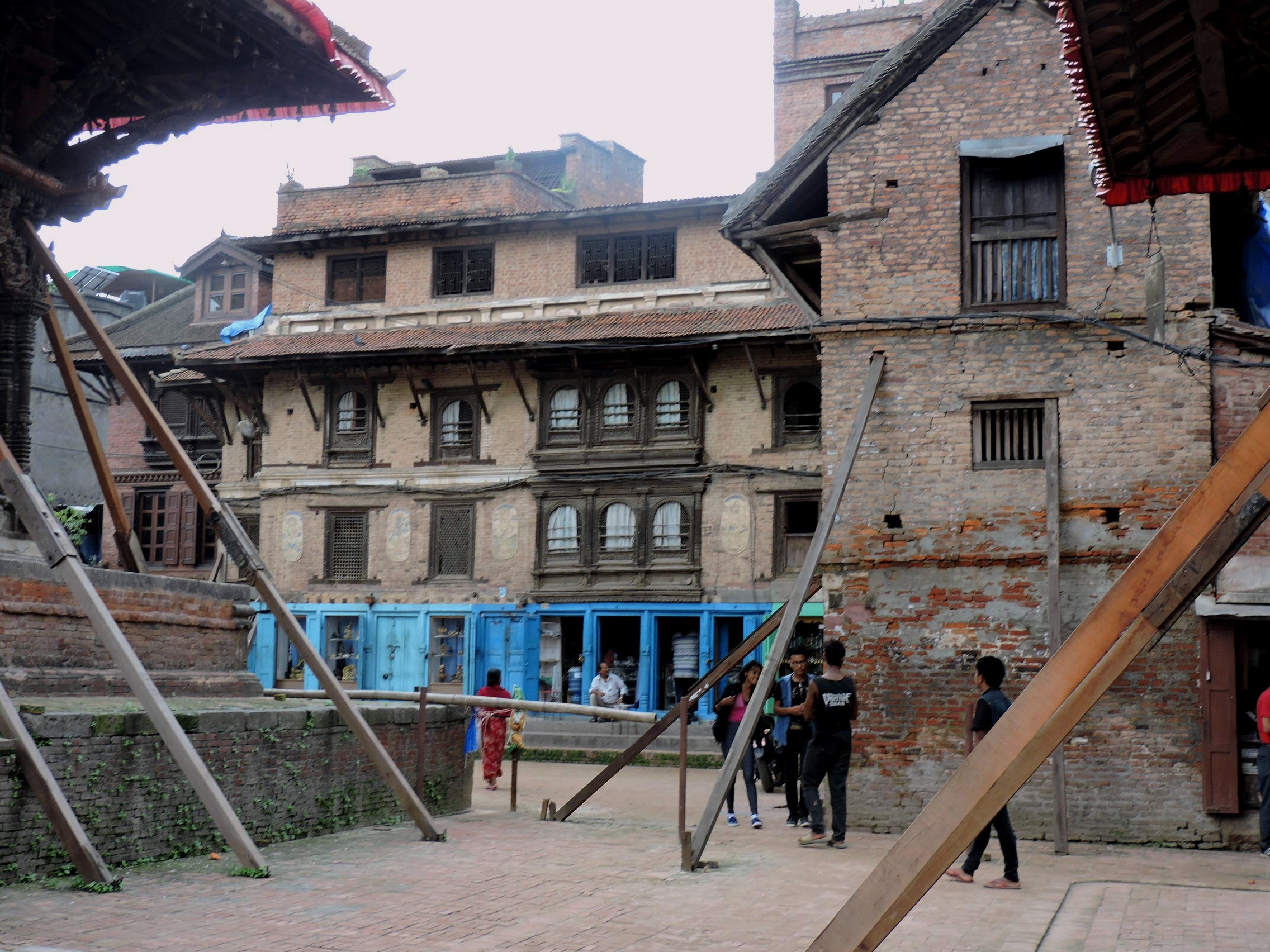
buildings holding each other in place
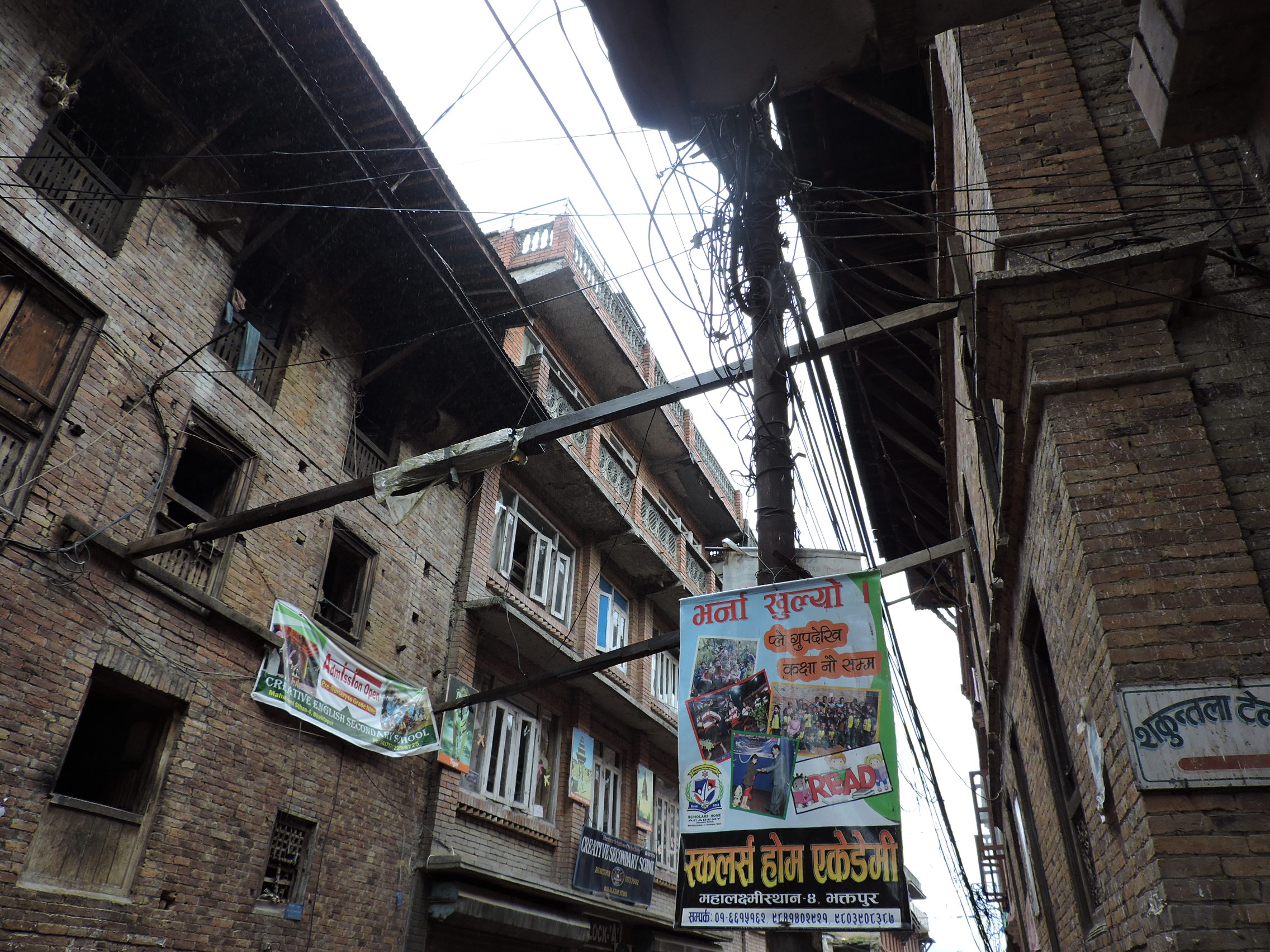
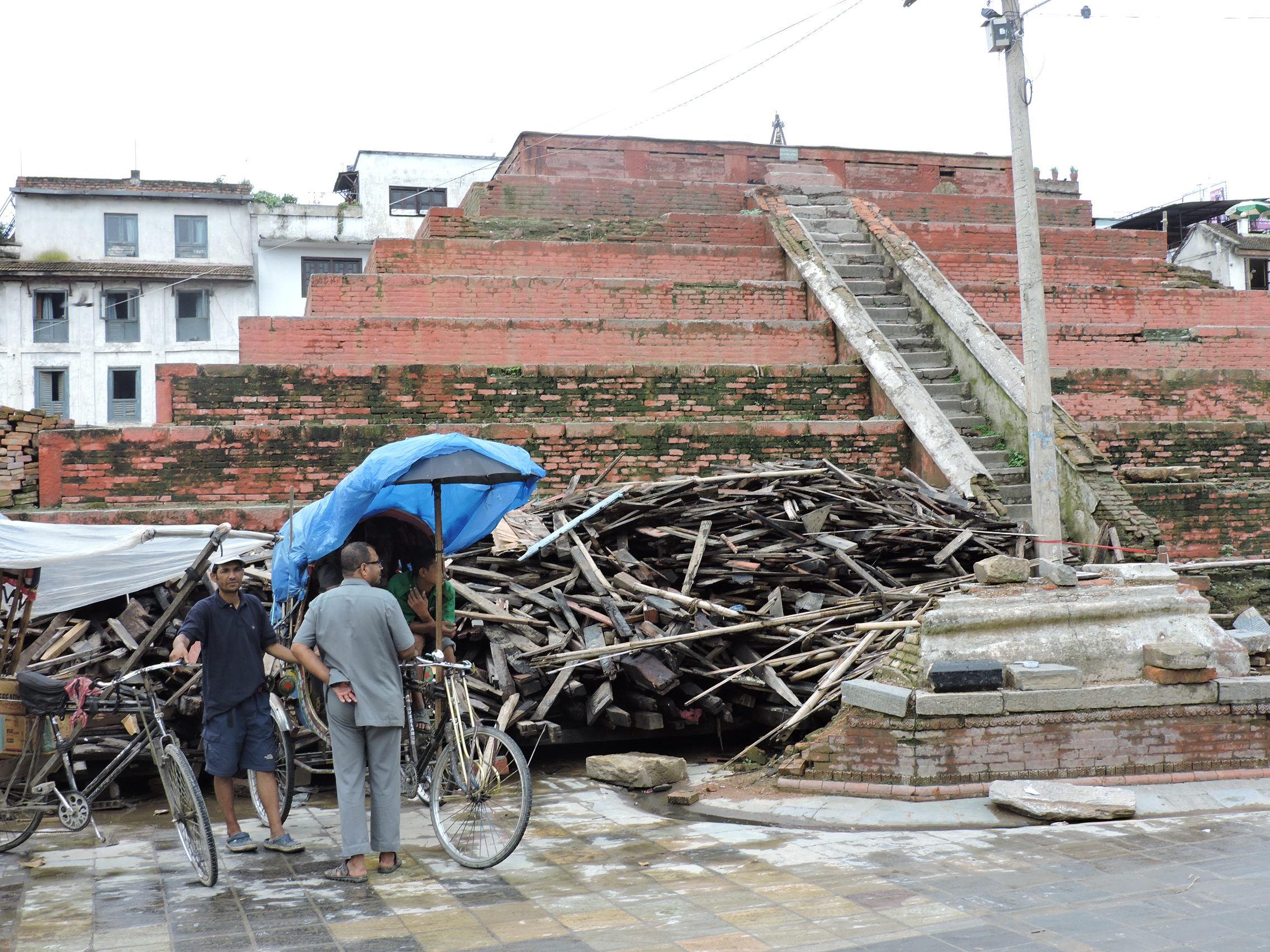
a forest worth of wooden beams
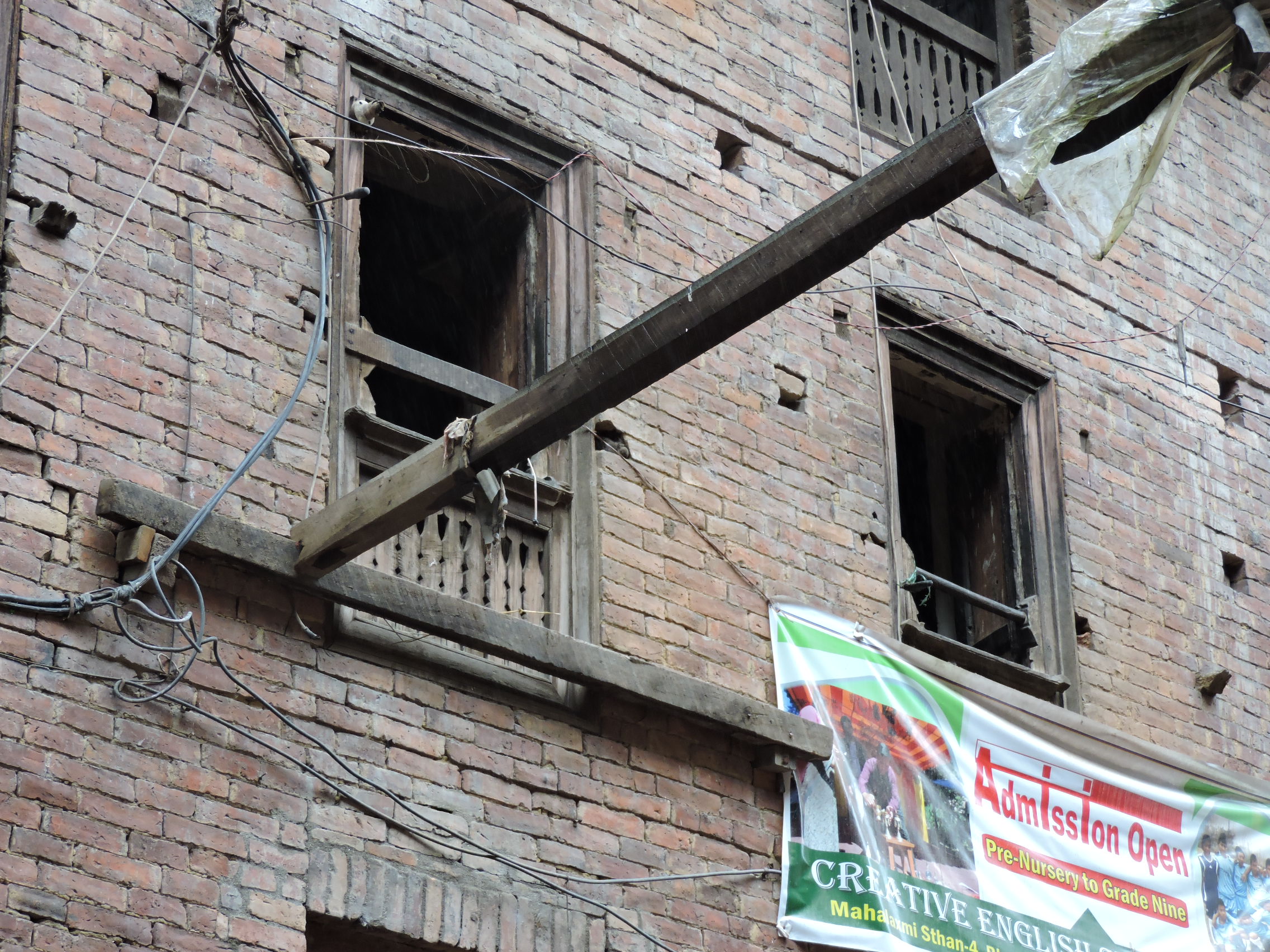
for the time being …
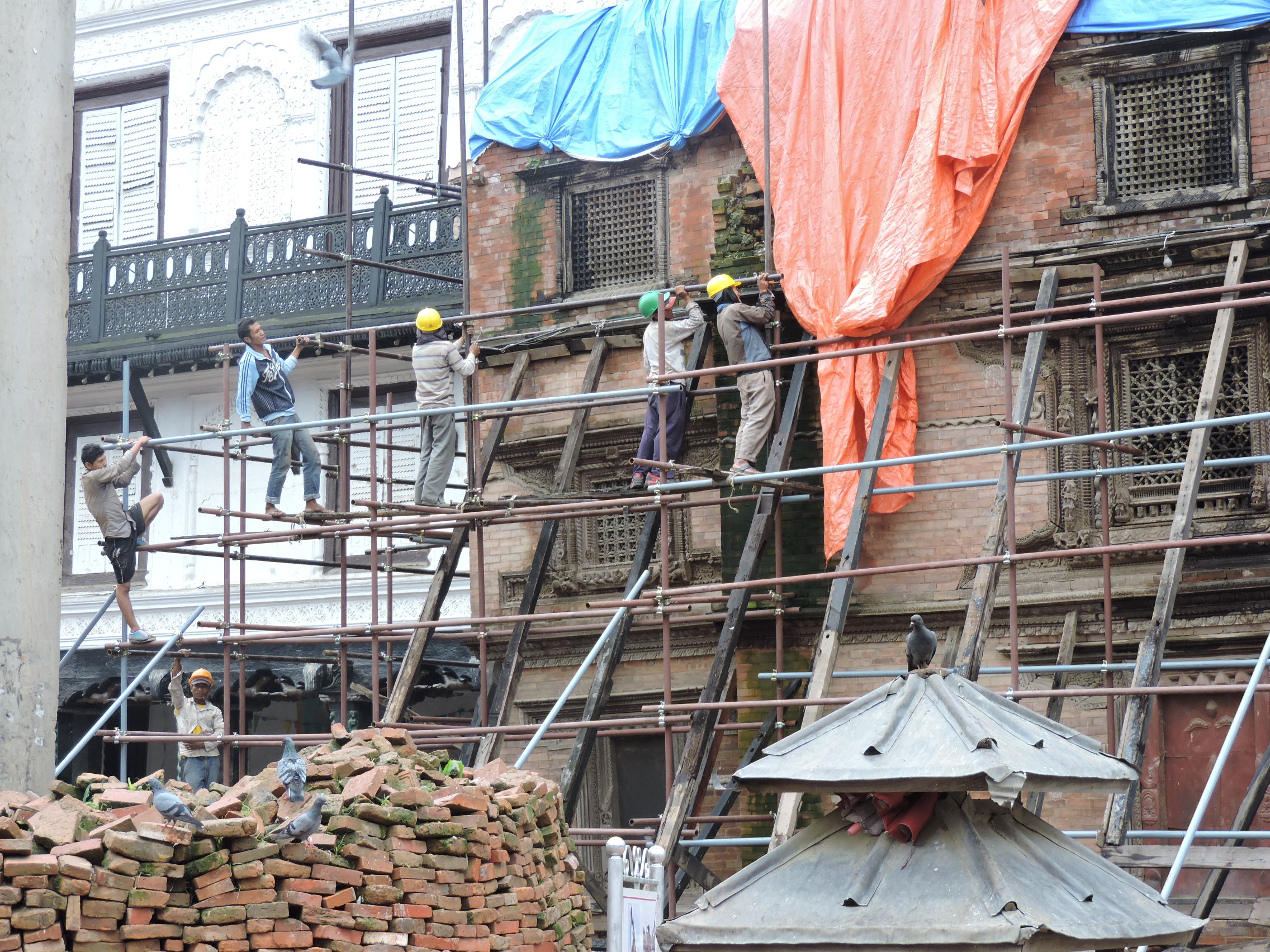
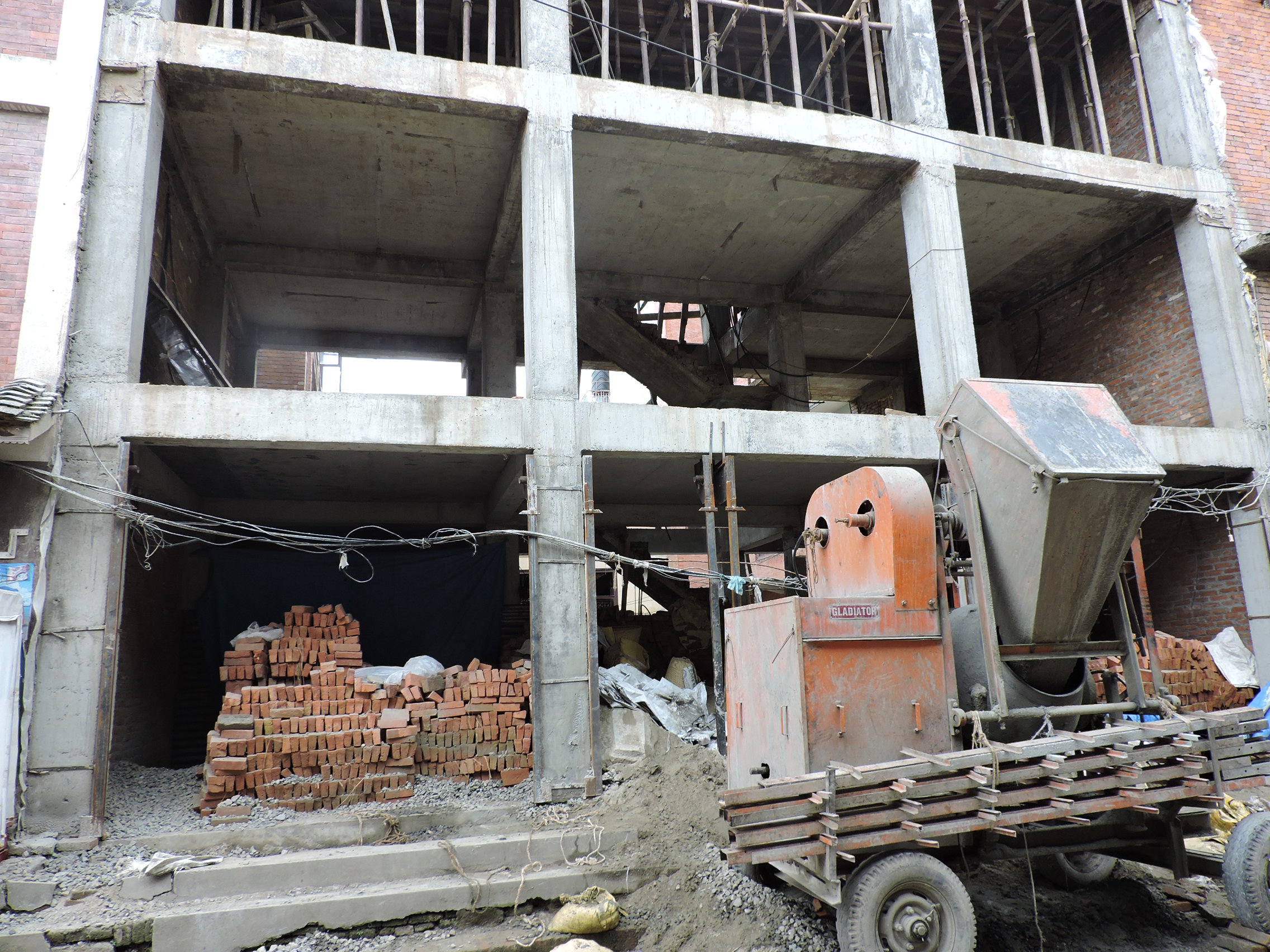
Everybody rebuilds as best they can, on their own initiative, there doesn’t seem to be an overall plan
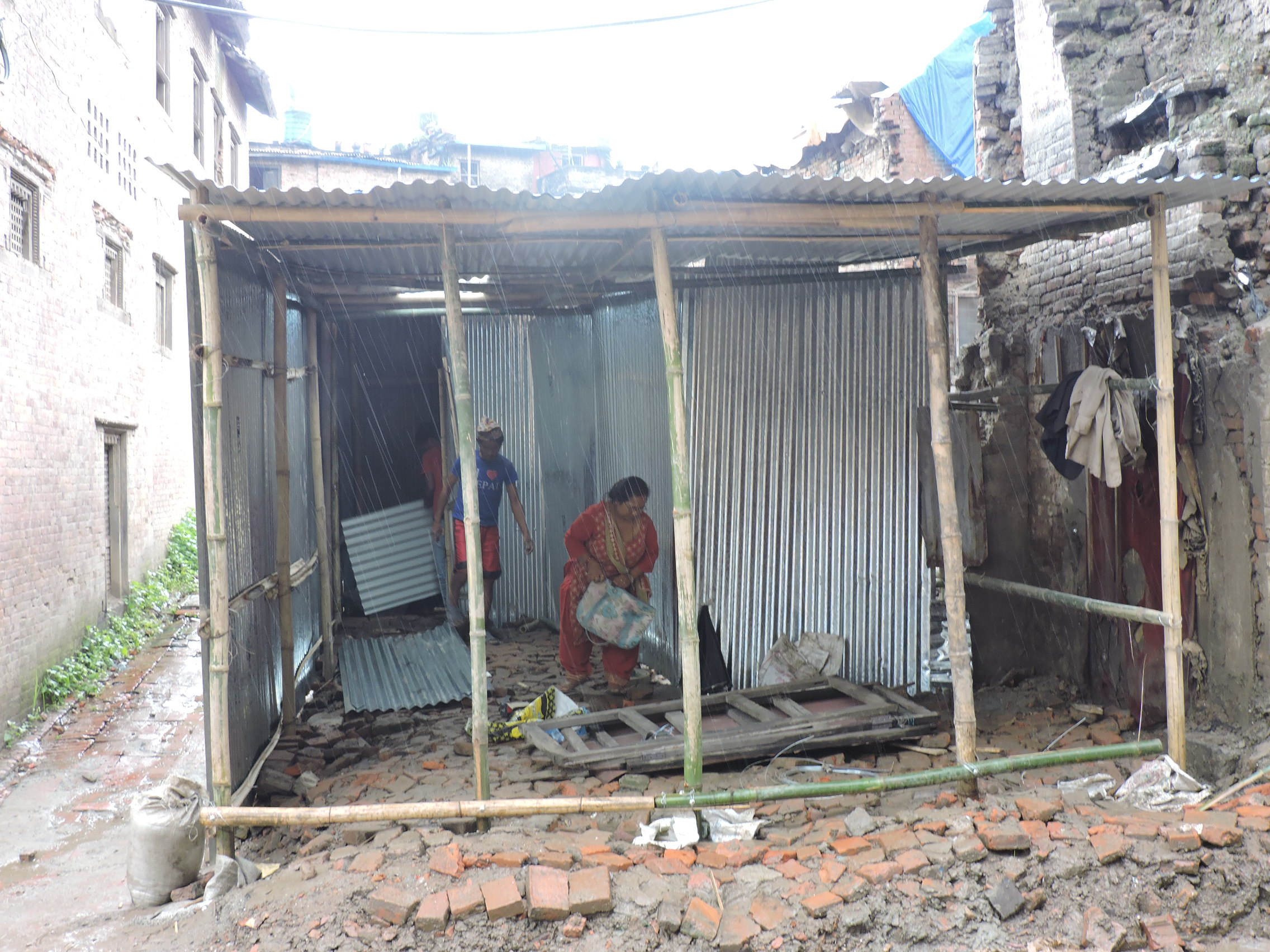
building a provisional shelter,
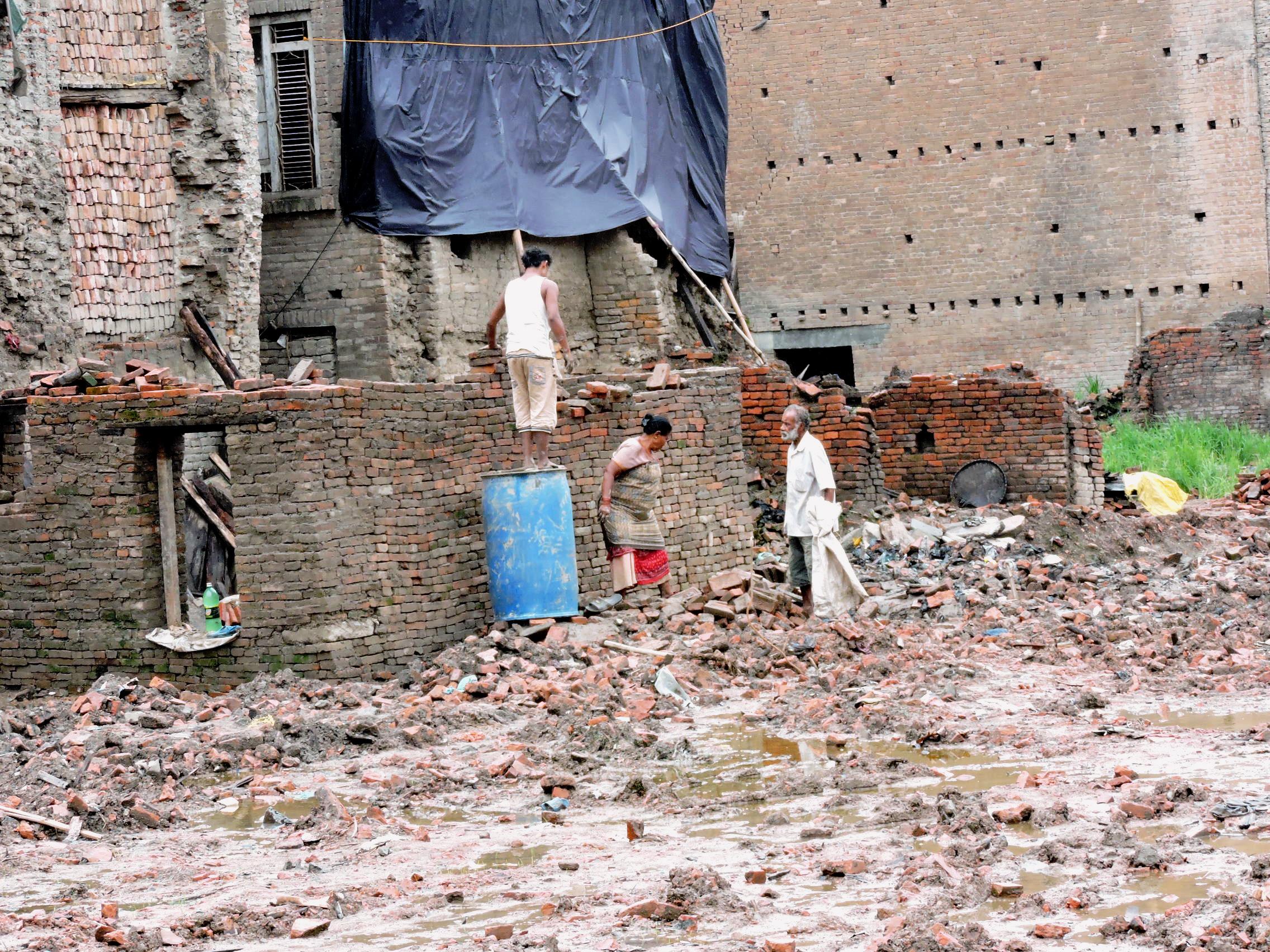
building up, without the more secure frame structure, a makeshift solution
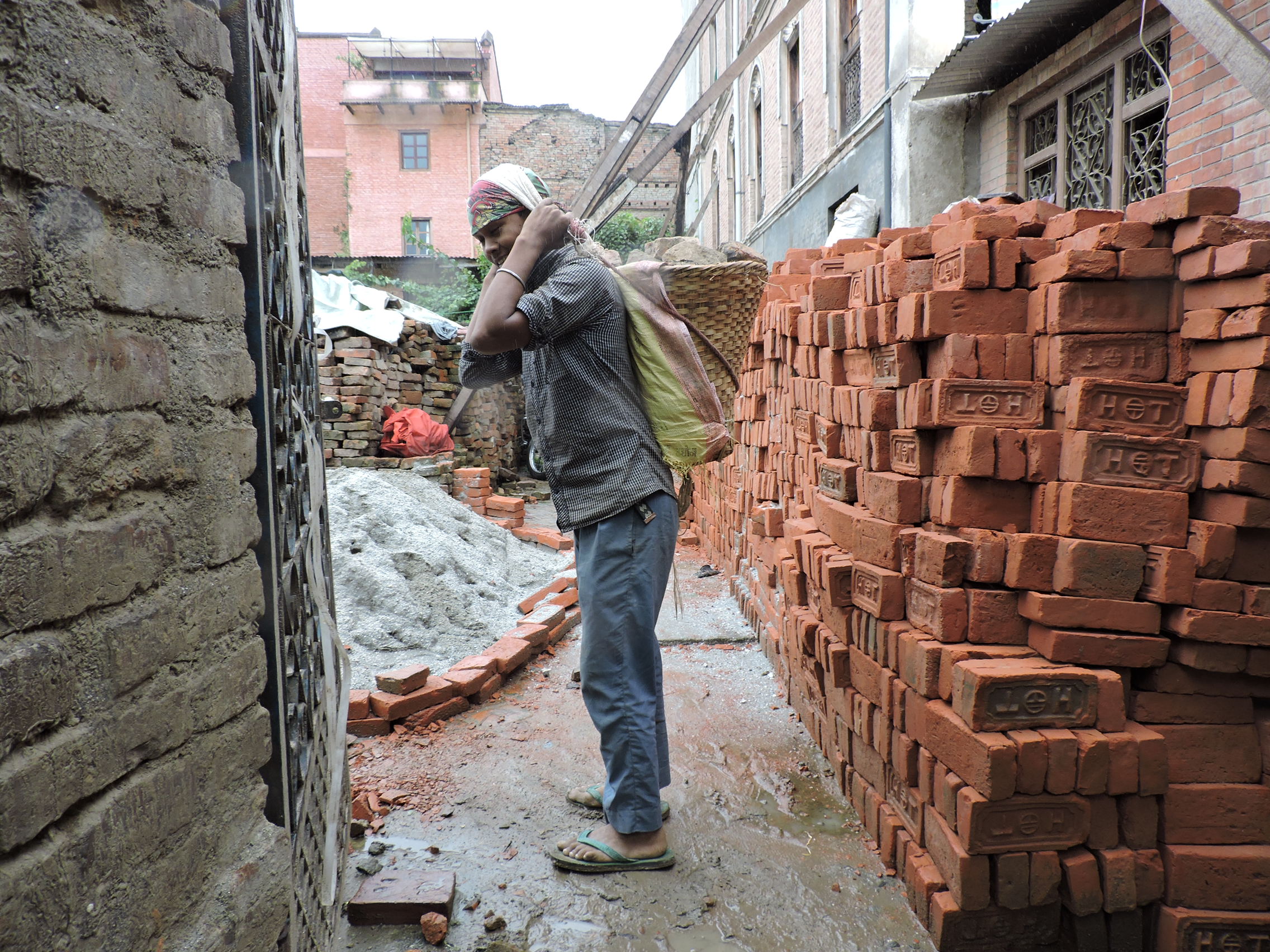
a boy doing the hard work of an adult
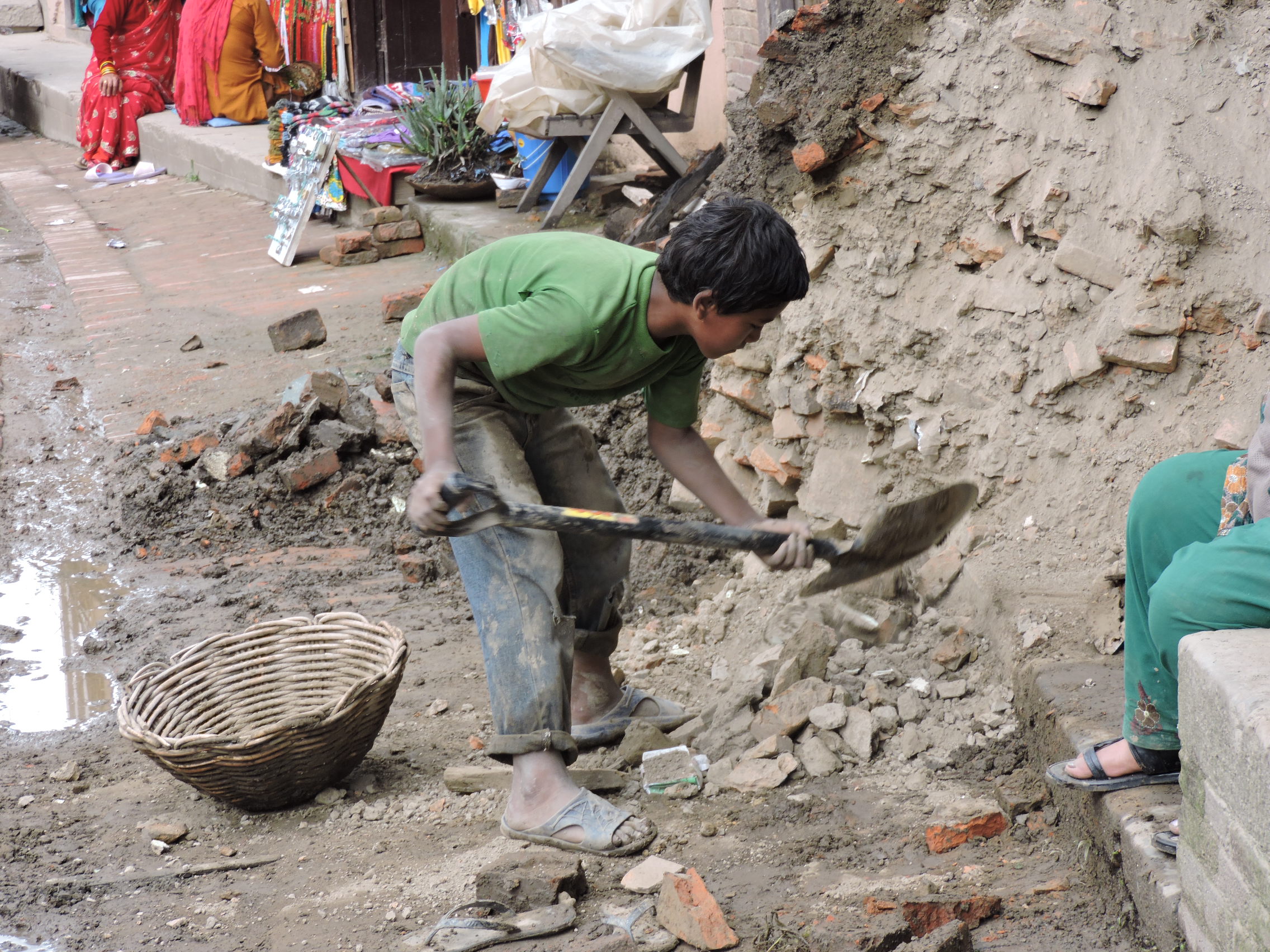
as I say, the best kids in the world
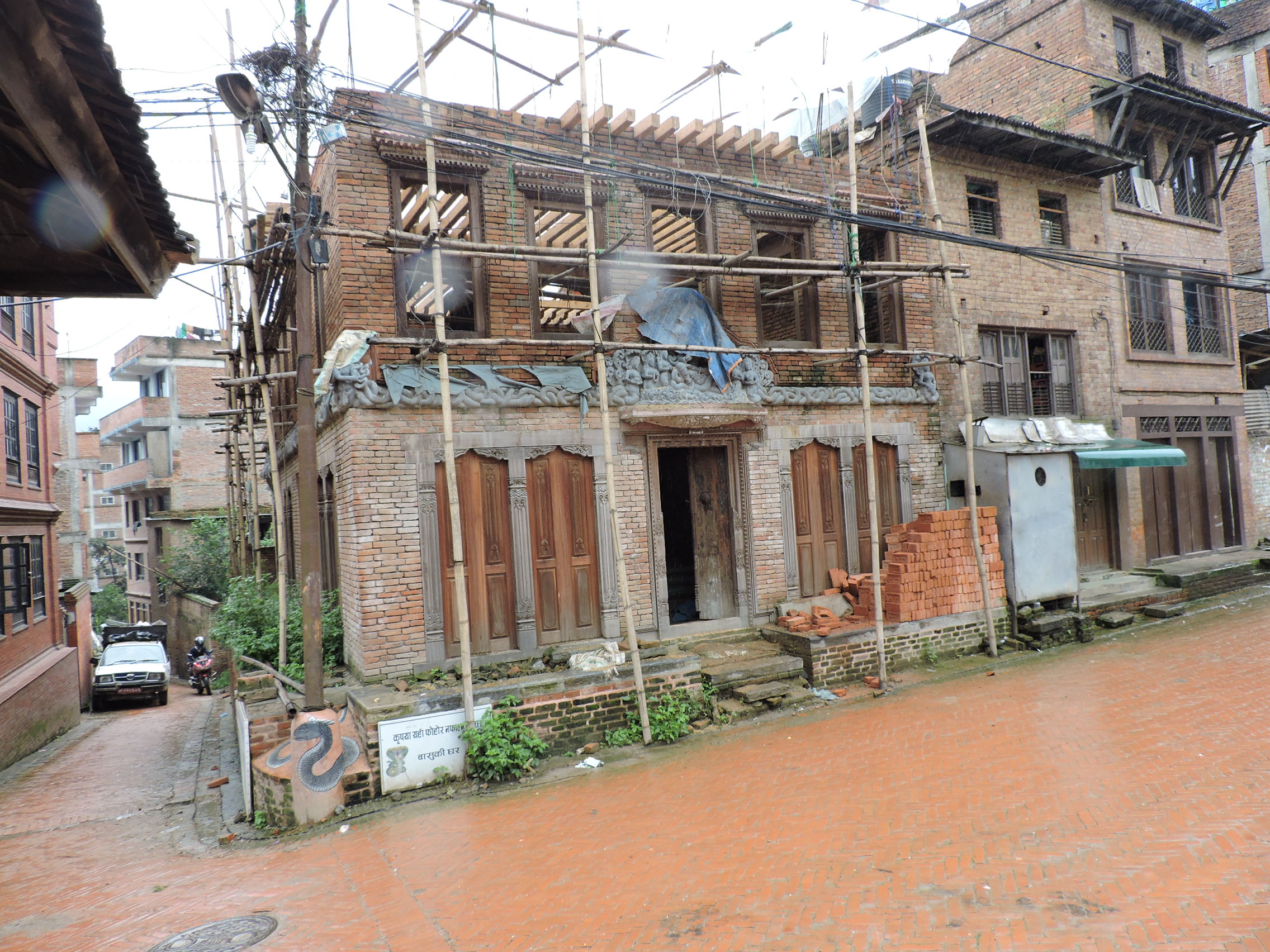
Bamboo scaffolds, nice work, but again no frame structure
Life goes on

an artist painting patiently his colourful signs, but the customers are missing
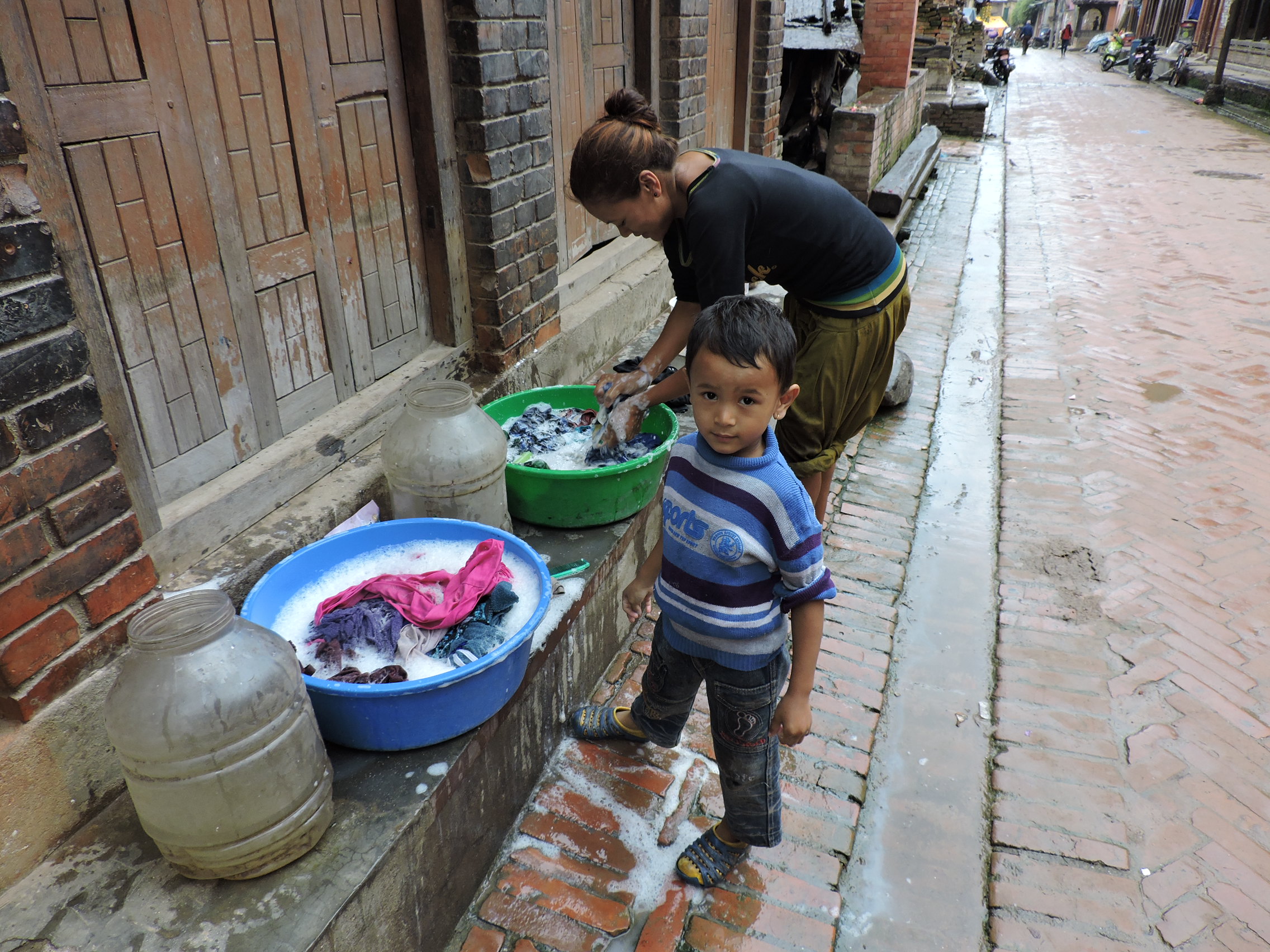
doing the laundry with mum
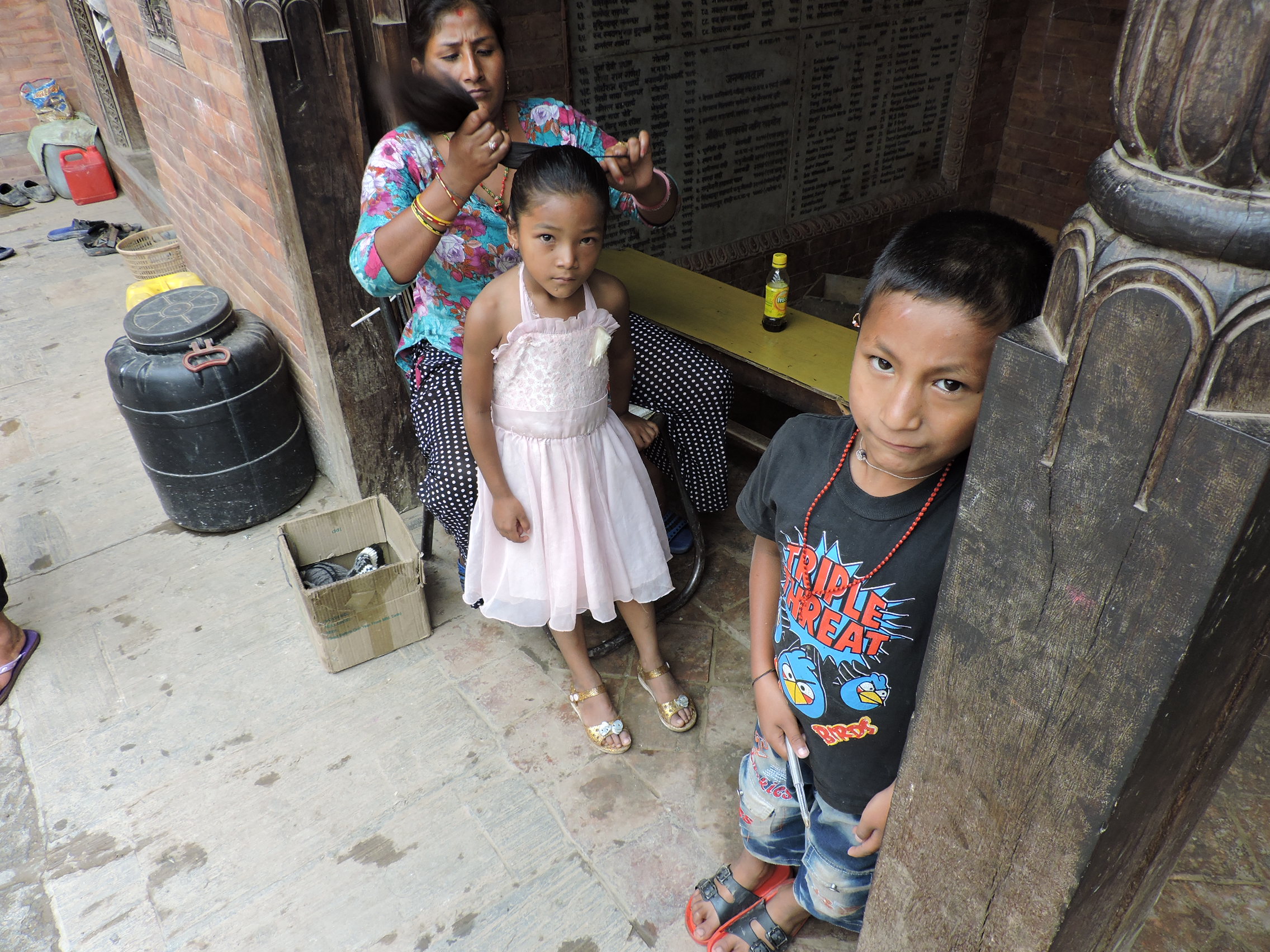
looking pretty
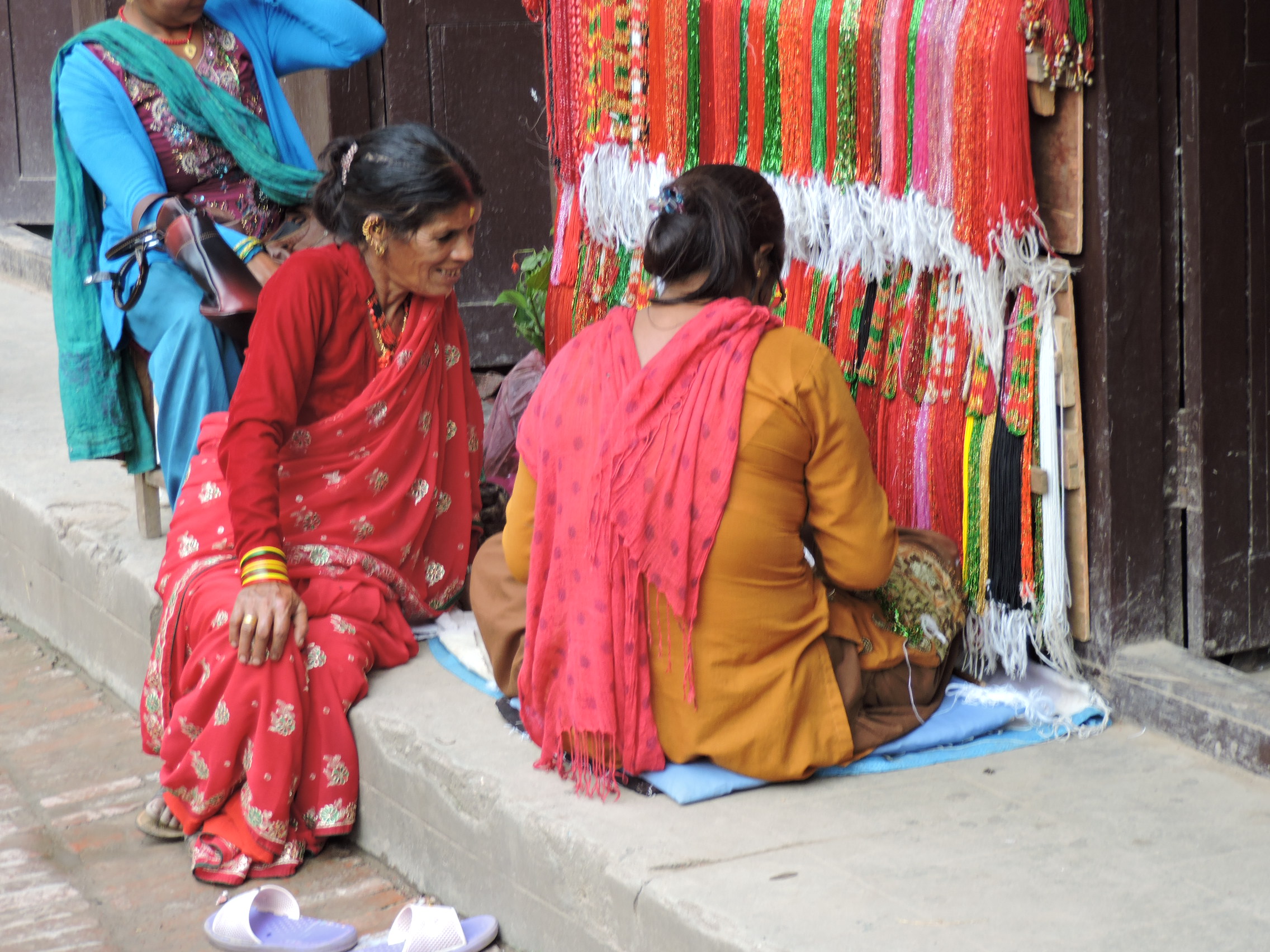
choosing a necklace
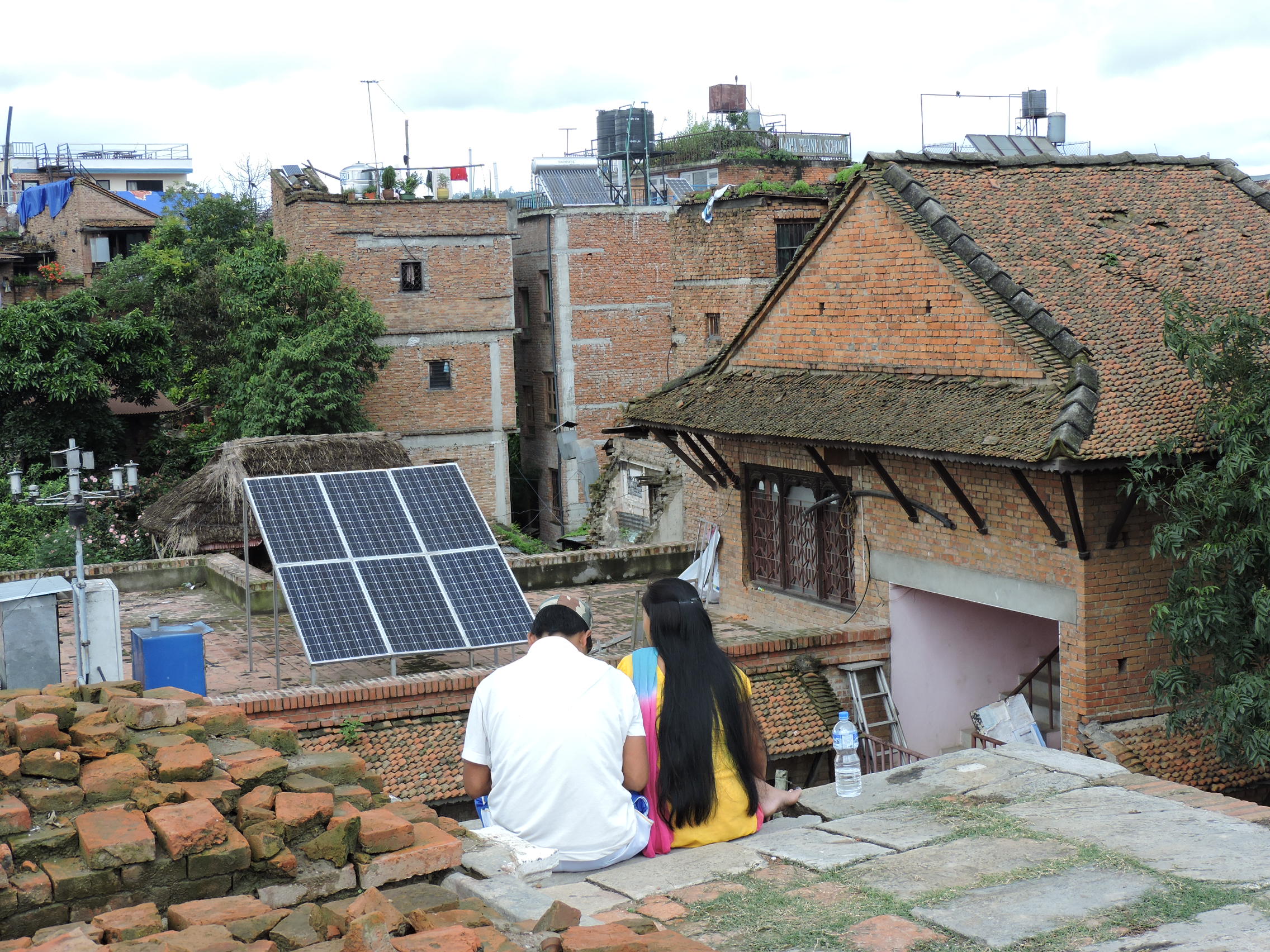
dating
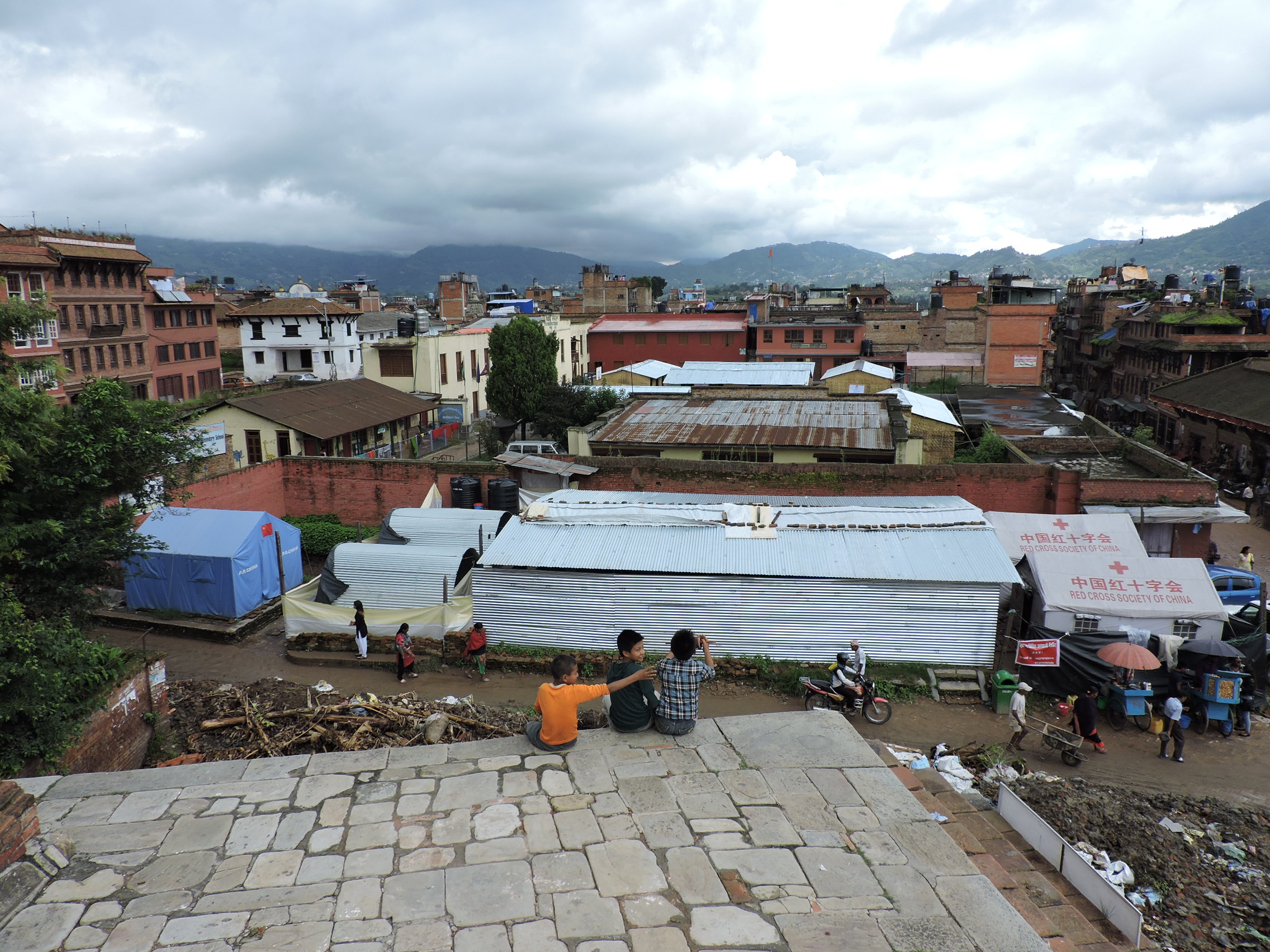
flying kites, the kites can’t be seen in the picture. The kids always ask the tourists to buy them spare parts (handmade, the kites break easily)
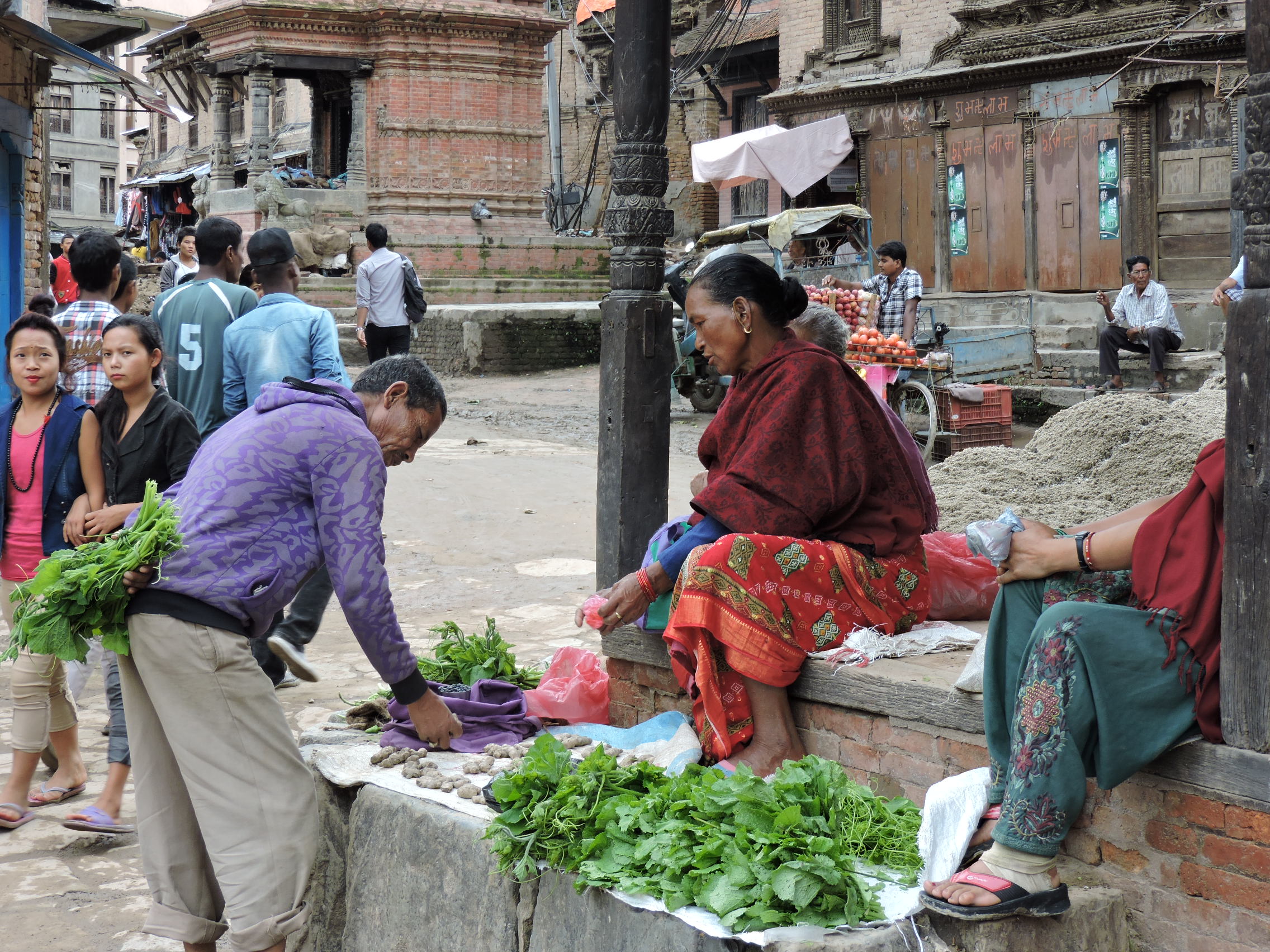
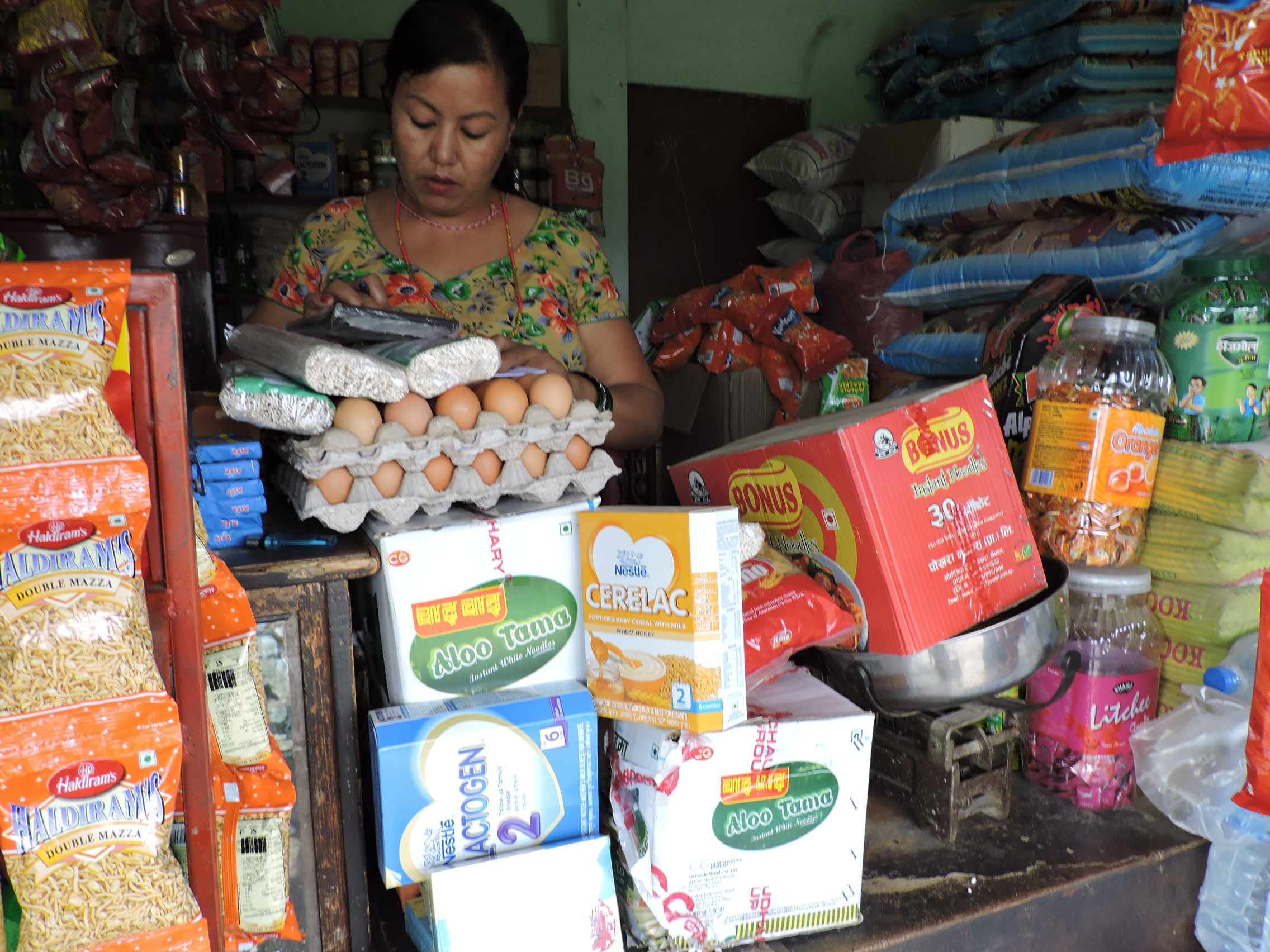
selling and buying
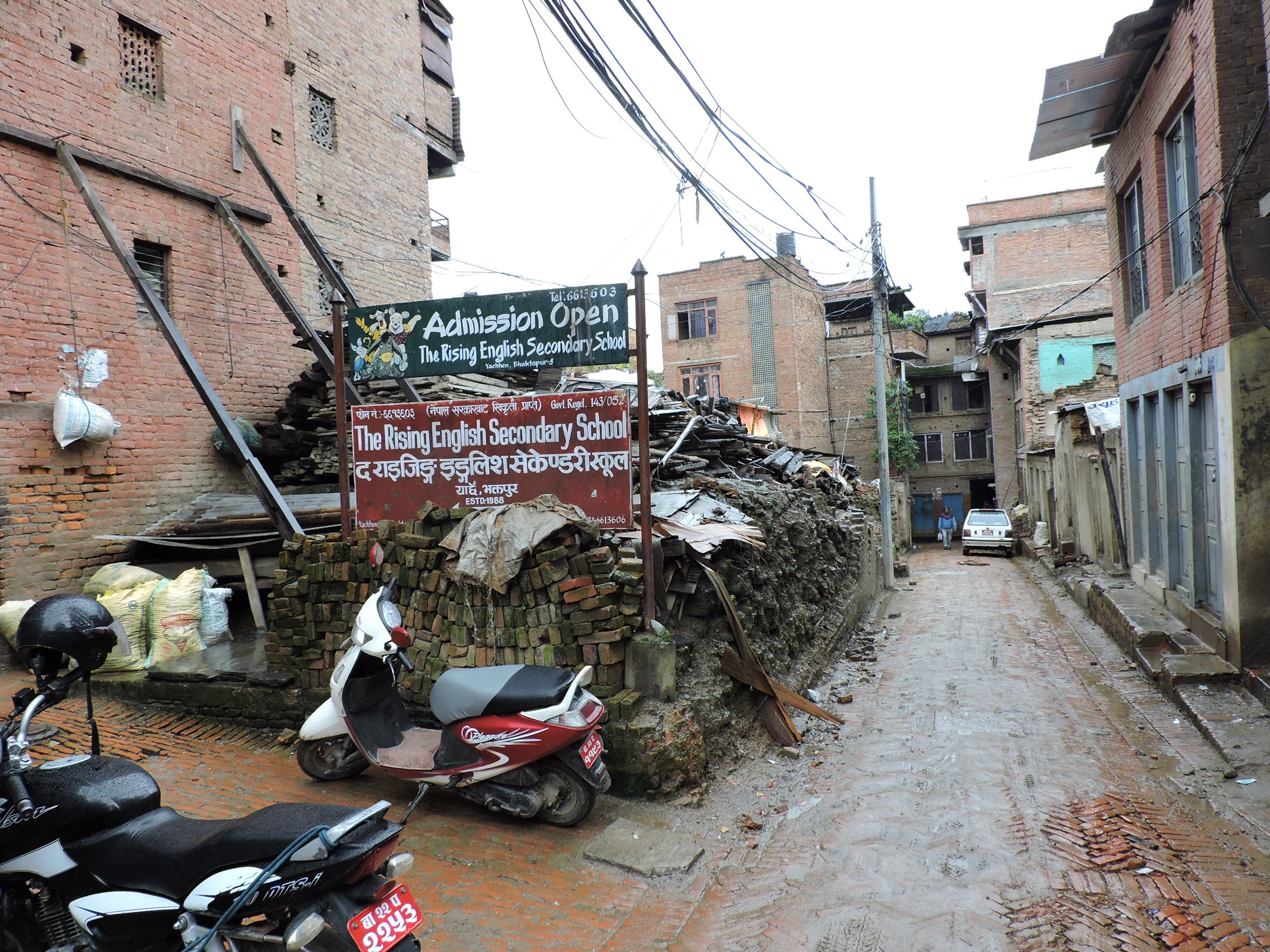
schools re-opening
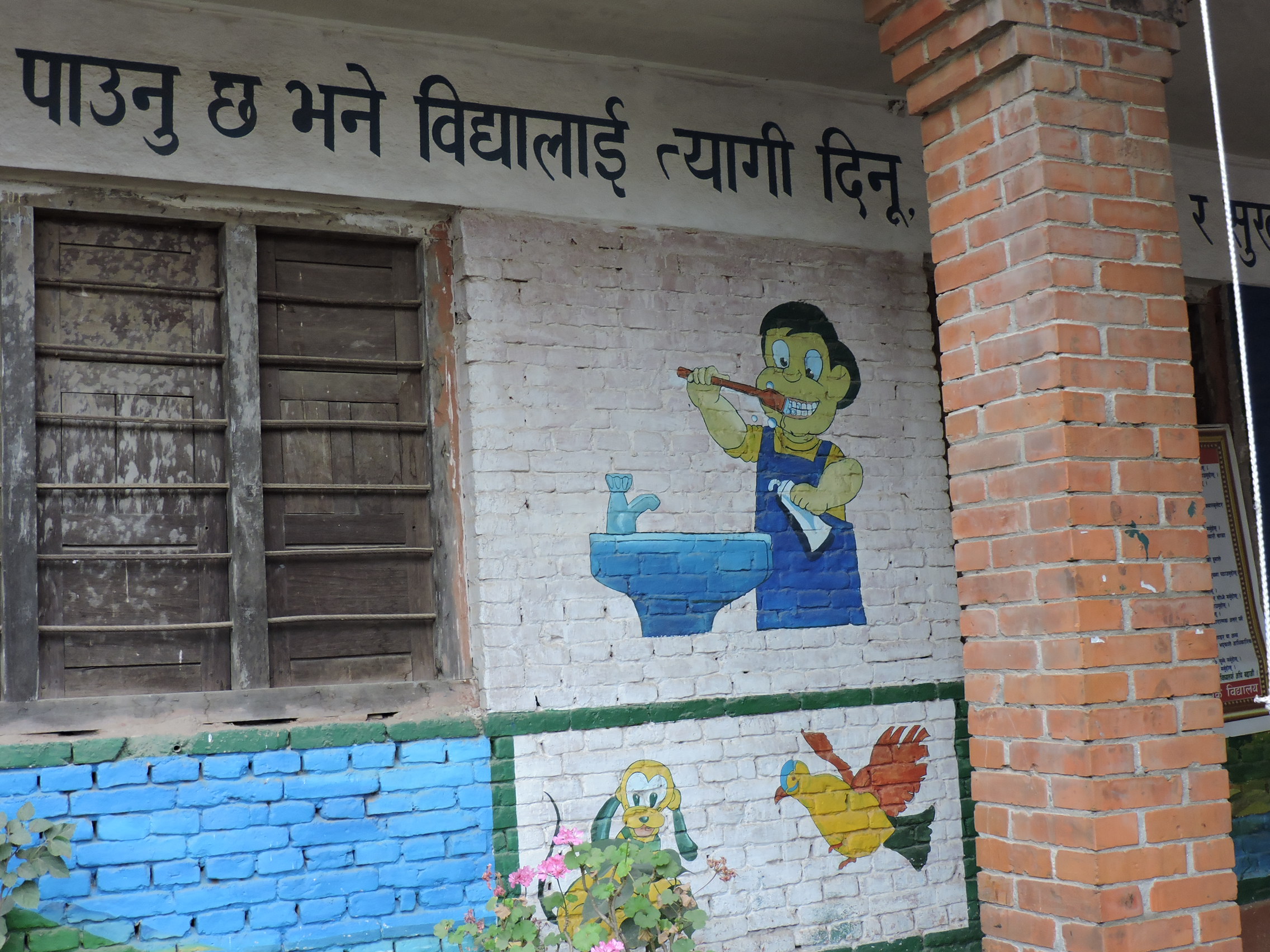
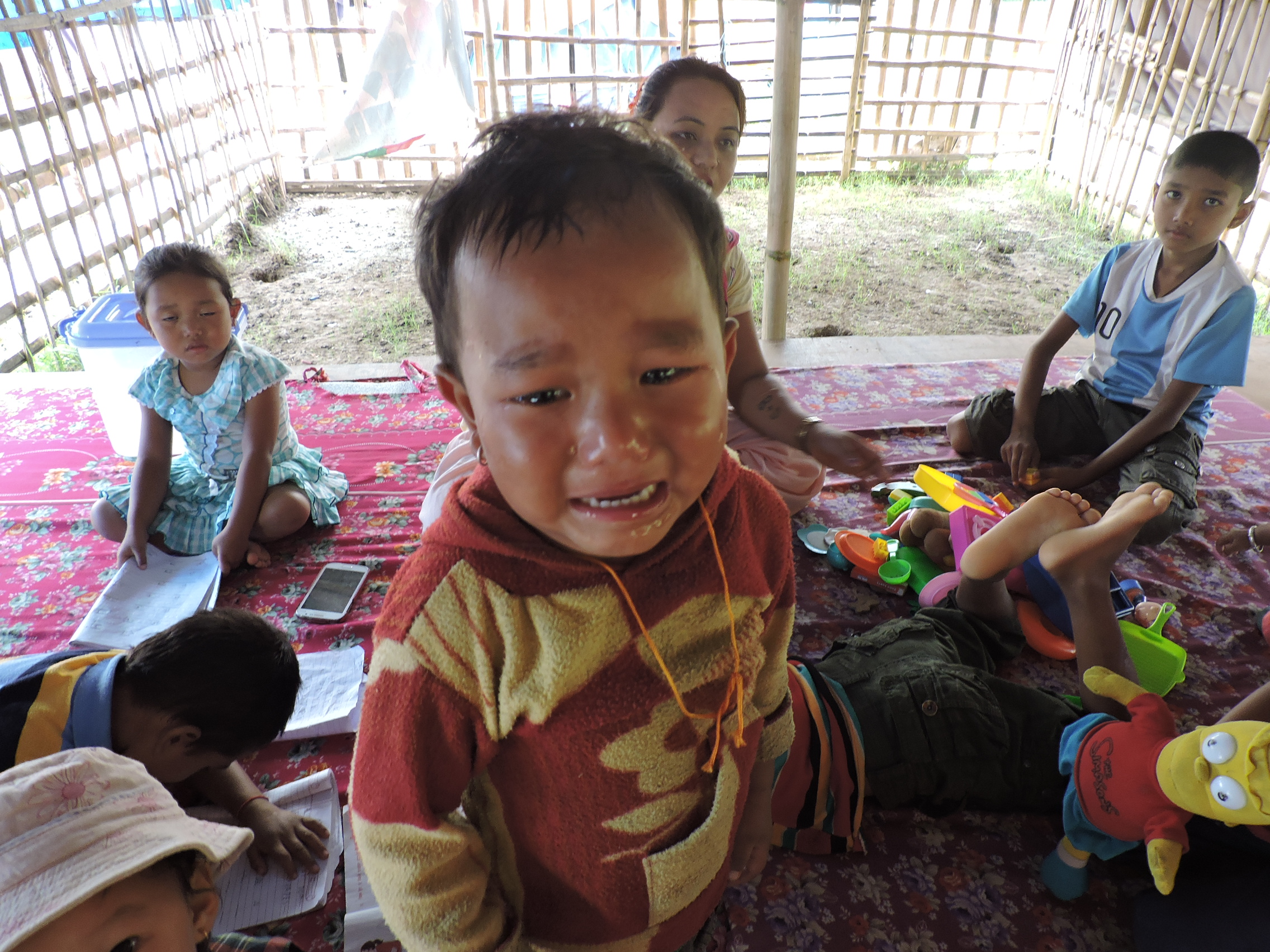
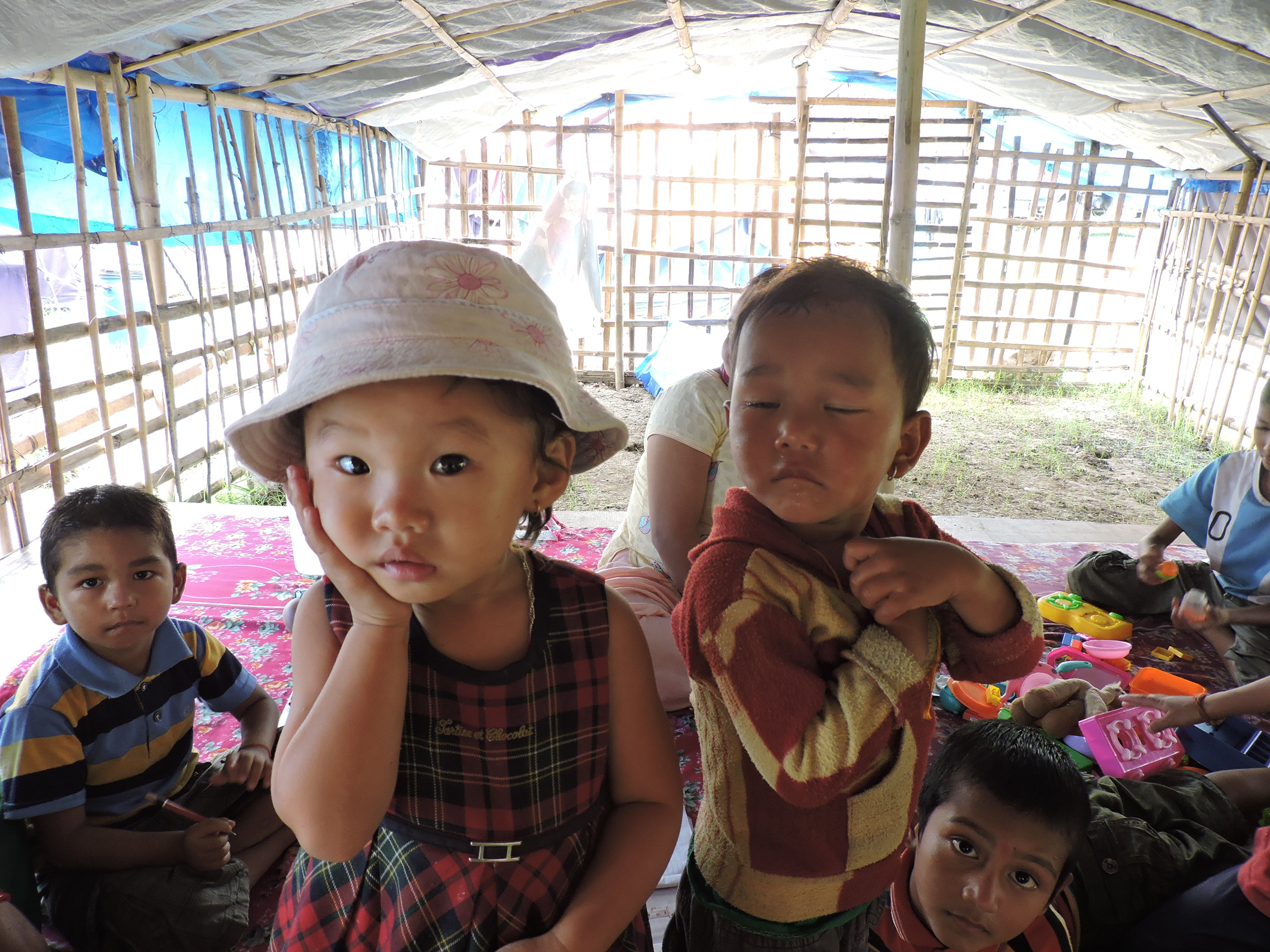
Kindergarten promissing good education in hygiene
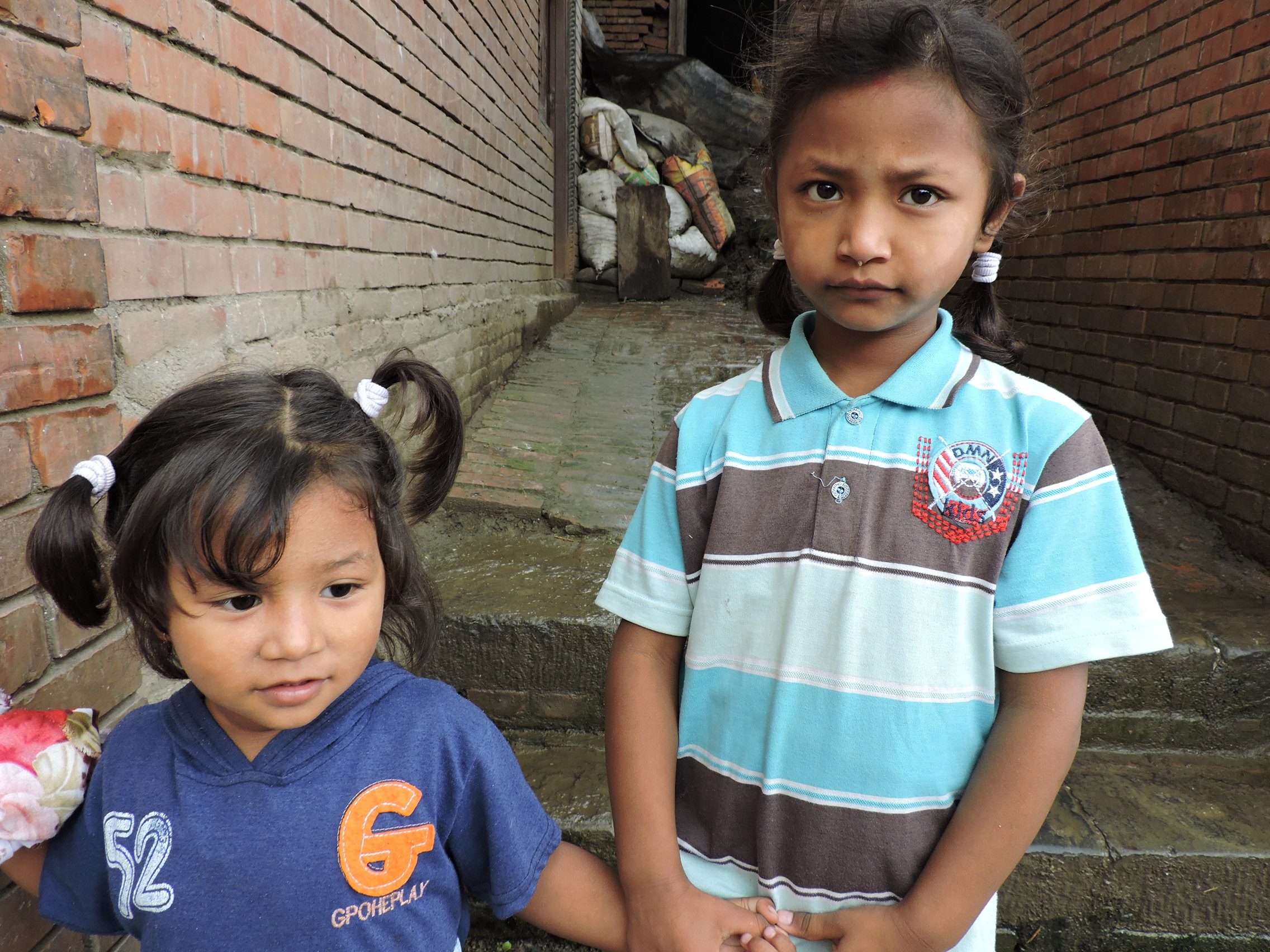
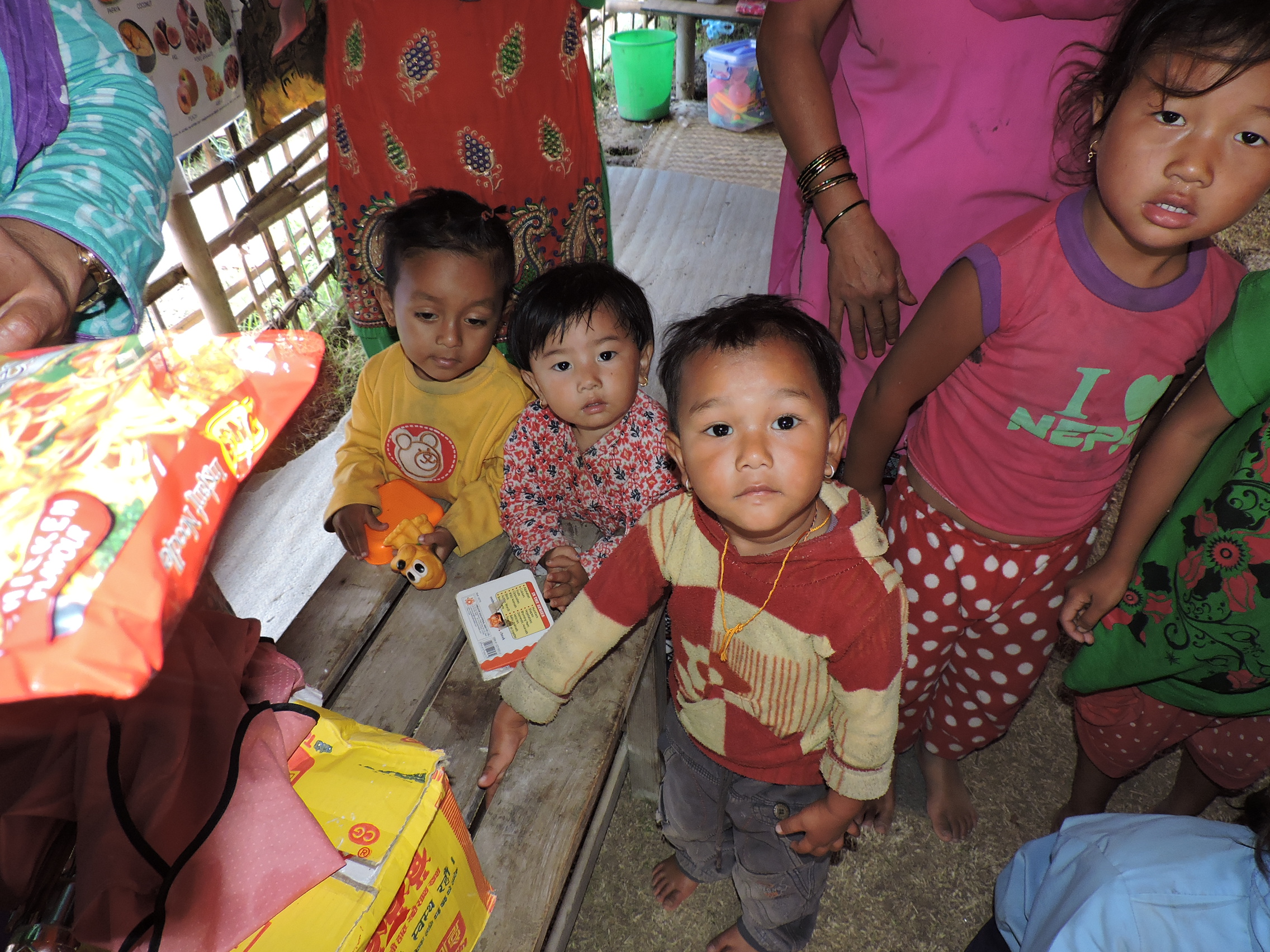
Abducted by three kids, I ended up at what is probably the only supermarket in the old town. Inside some English speaking Nepalese customers helped me negotiate with the children as to what I was willing to buy for them and what they would have liked me to buy. In the end we all came out quite satisfied. In the picture they look rather earnest but before I pointed my camera at them they beamed with excitment and happiness. Even the cashier girls smiled.
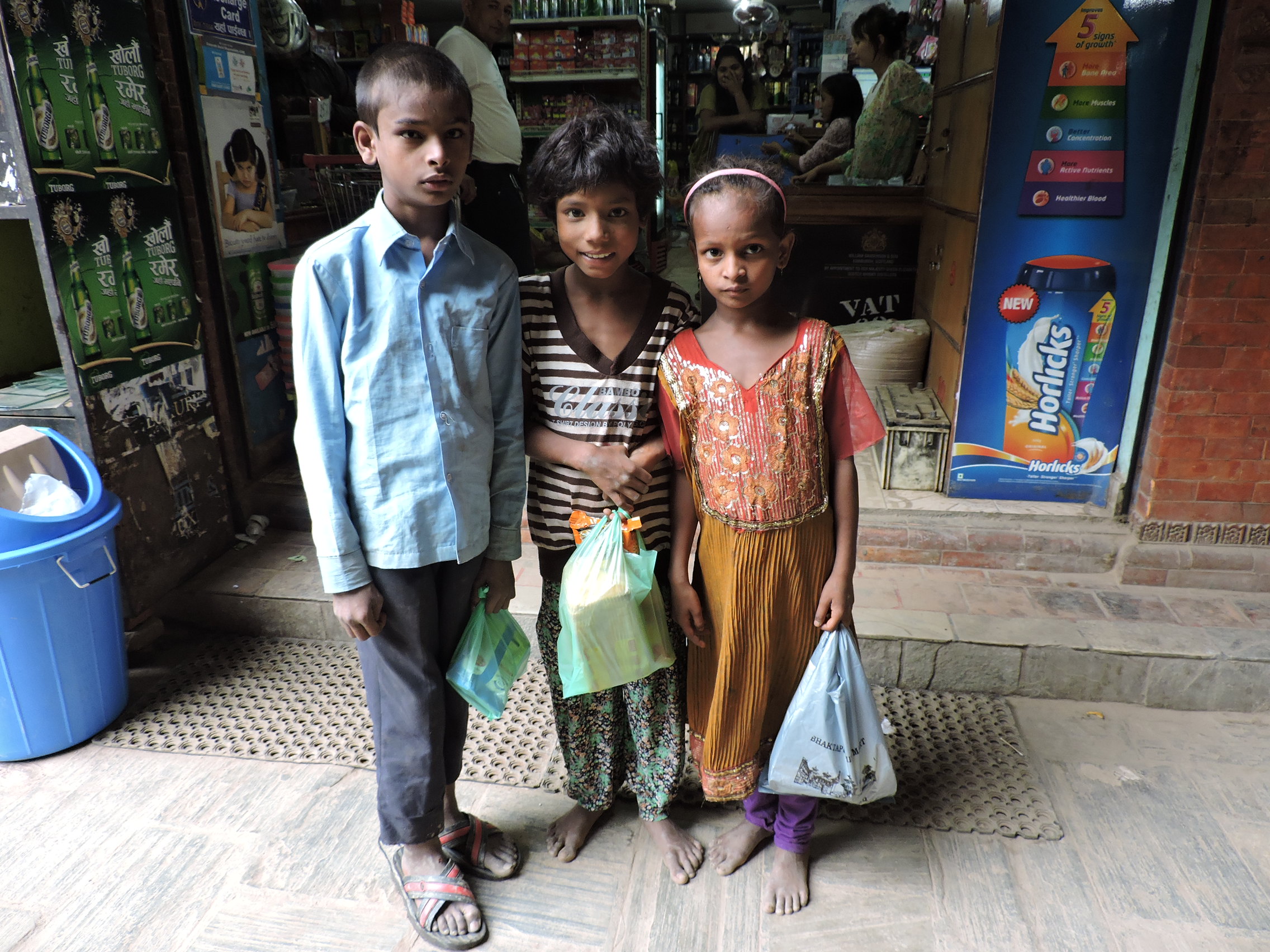
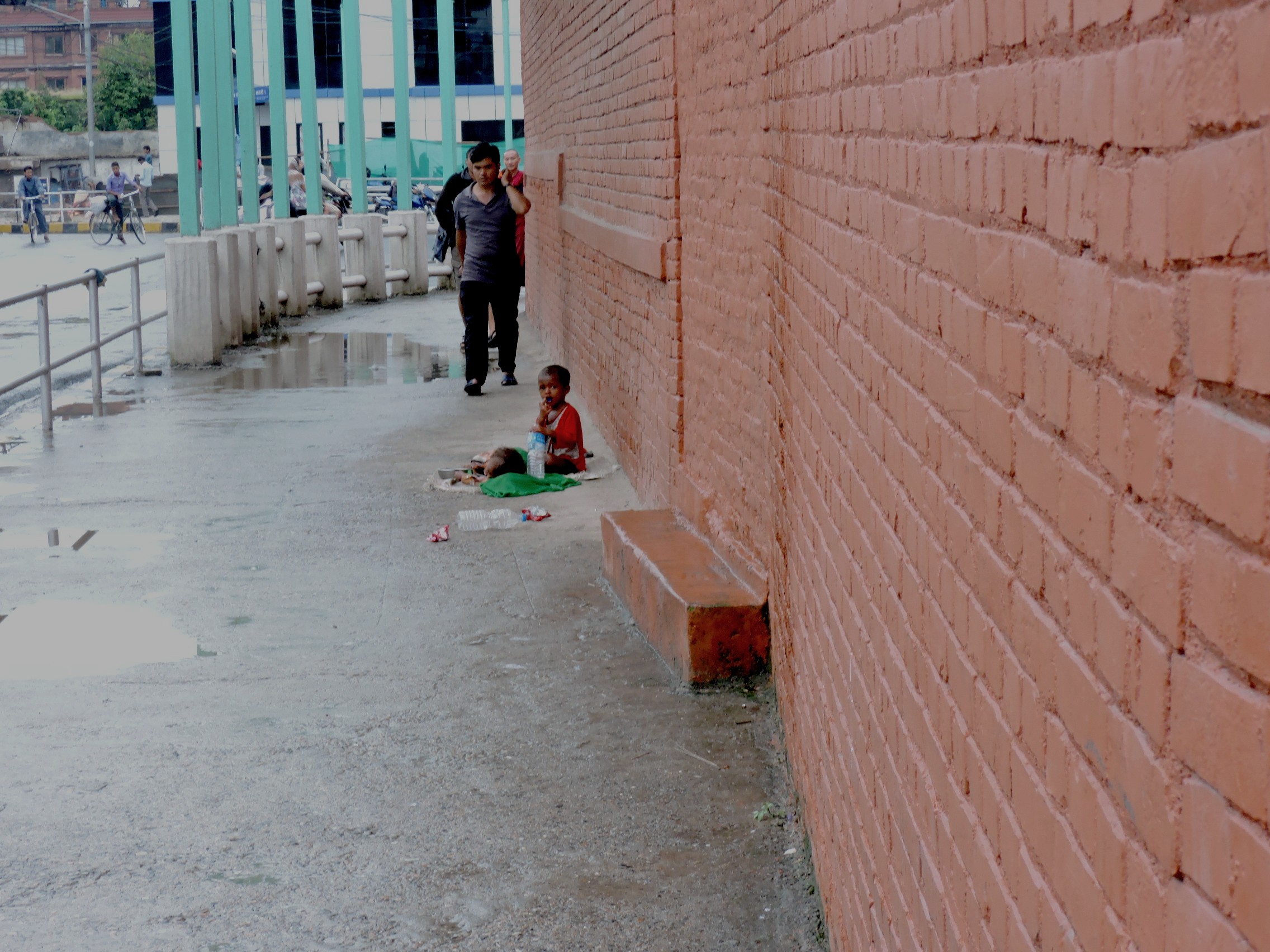
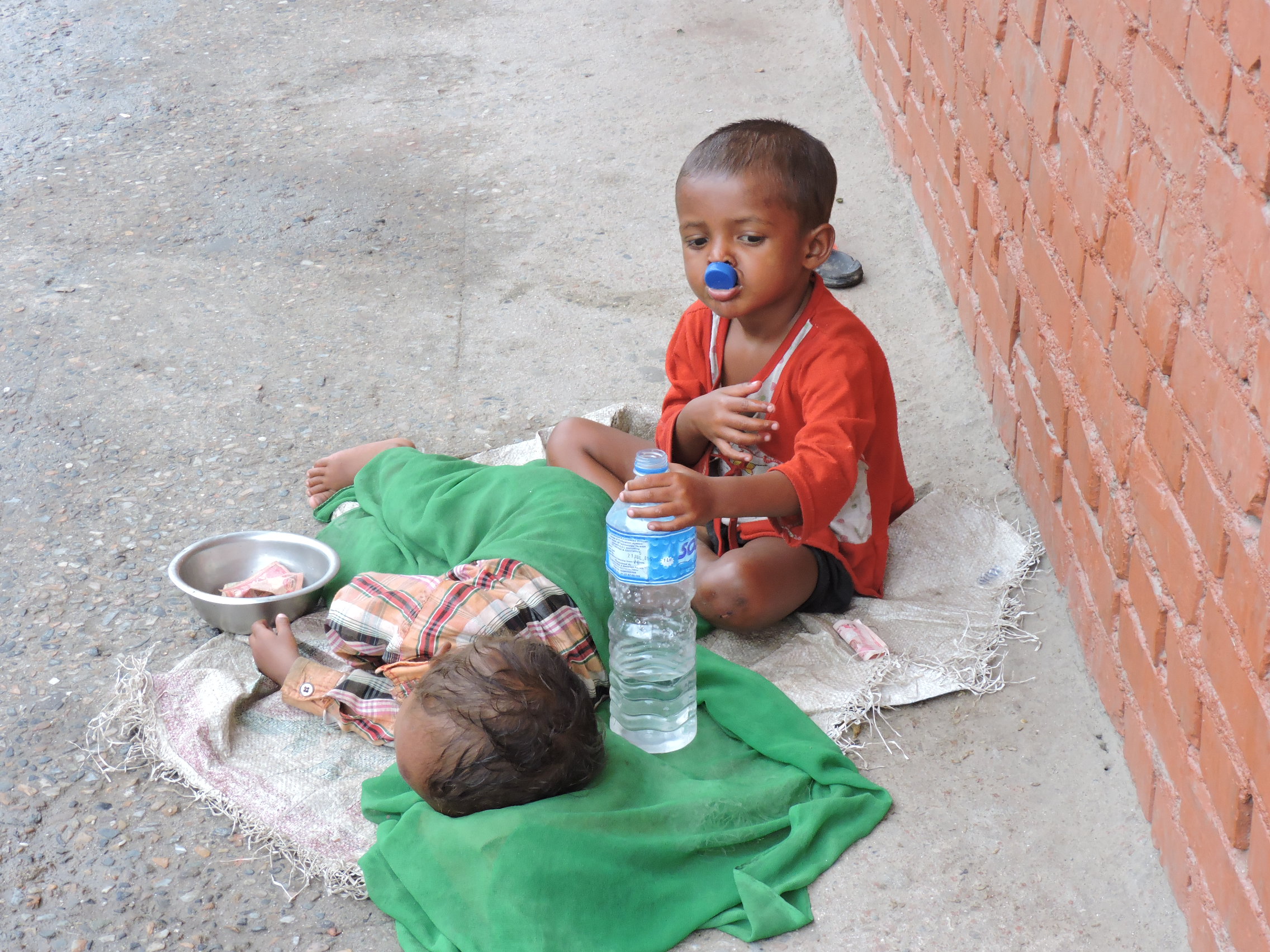
begging for food; I insisted on something healthy to eat and drink
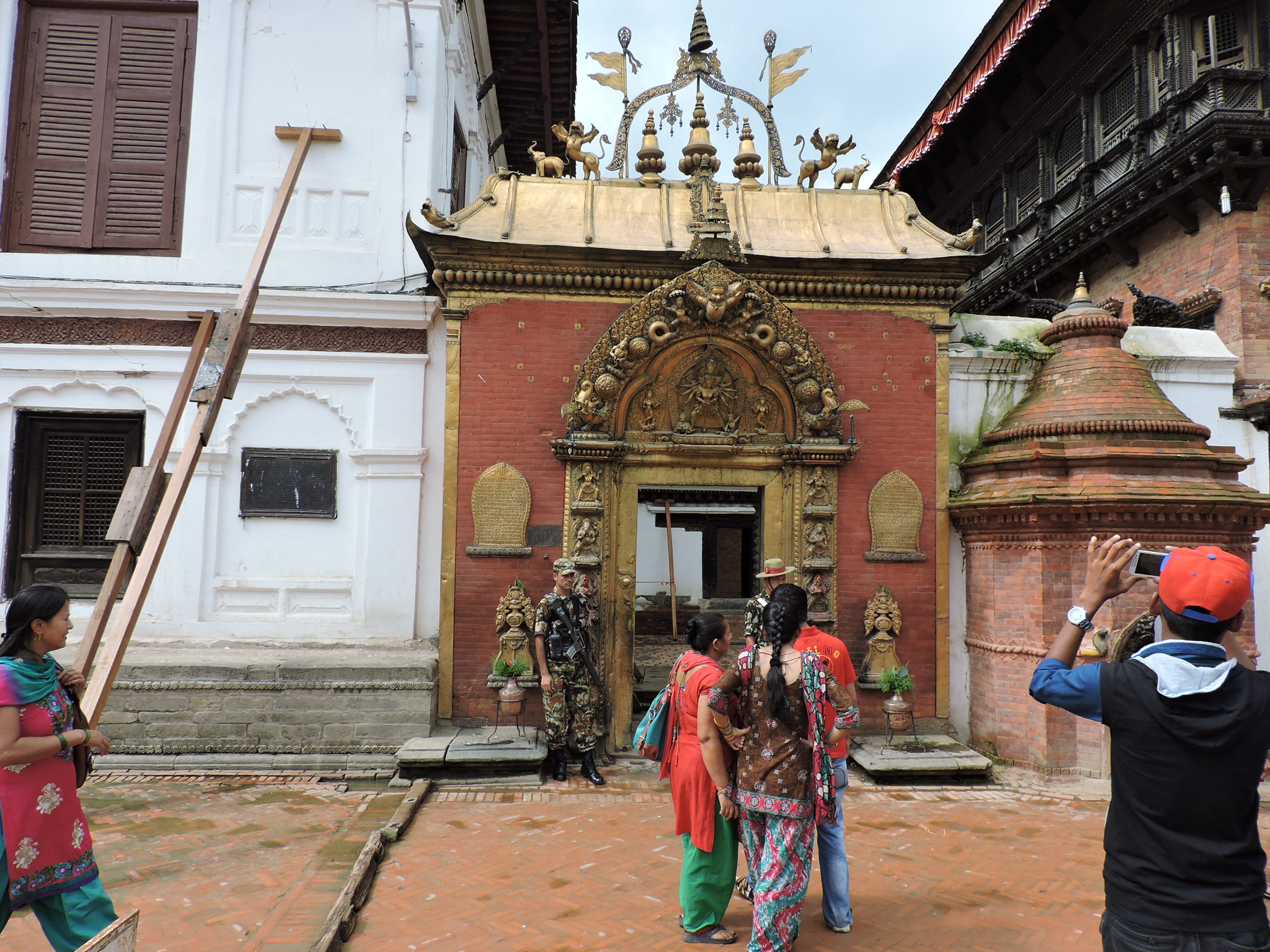
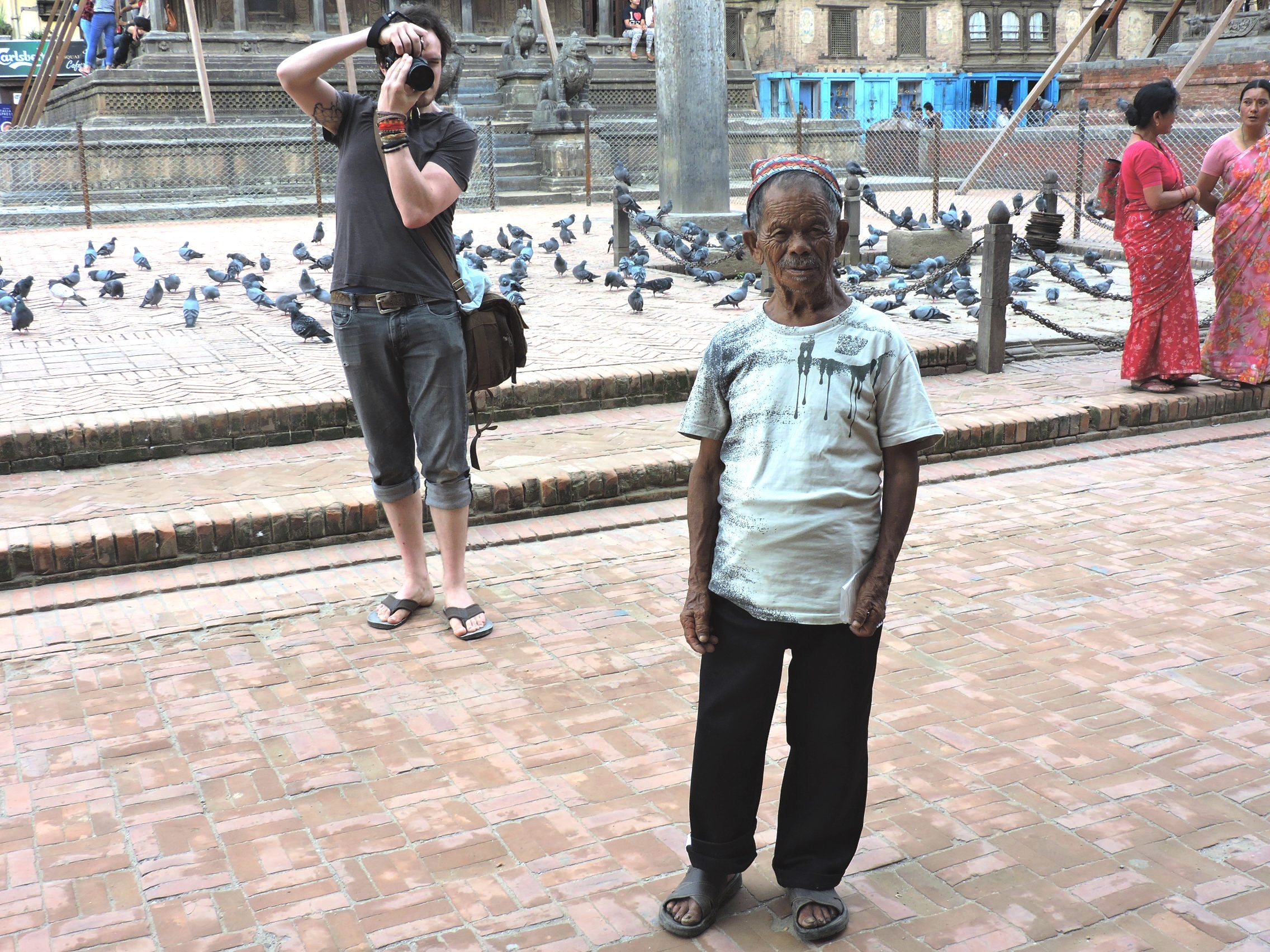
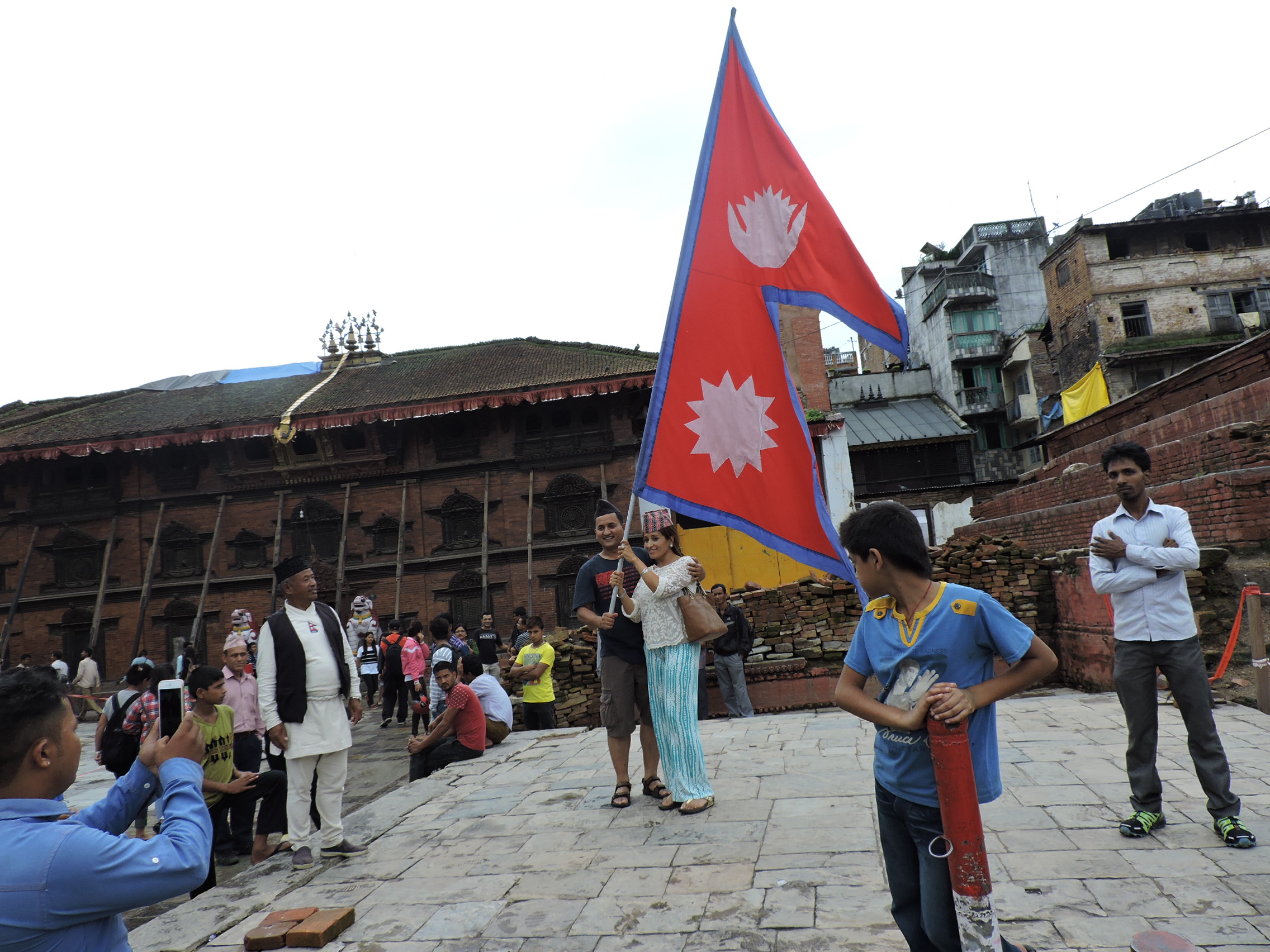
Nepalese tourists taking pictures of their cultural heritage
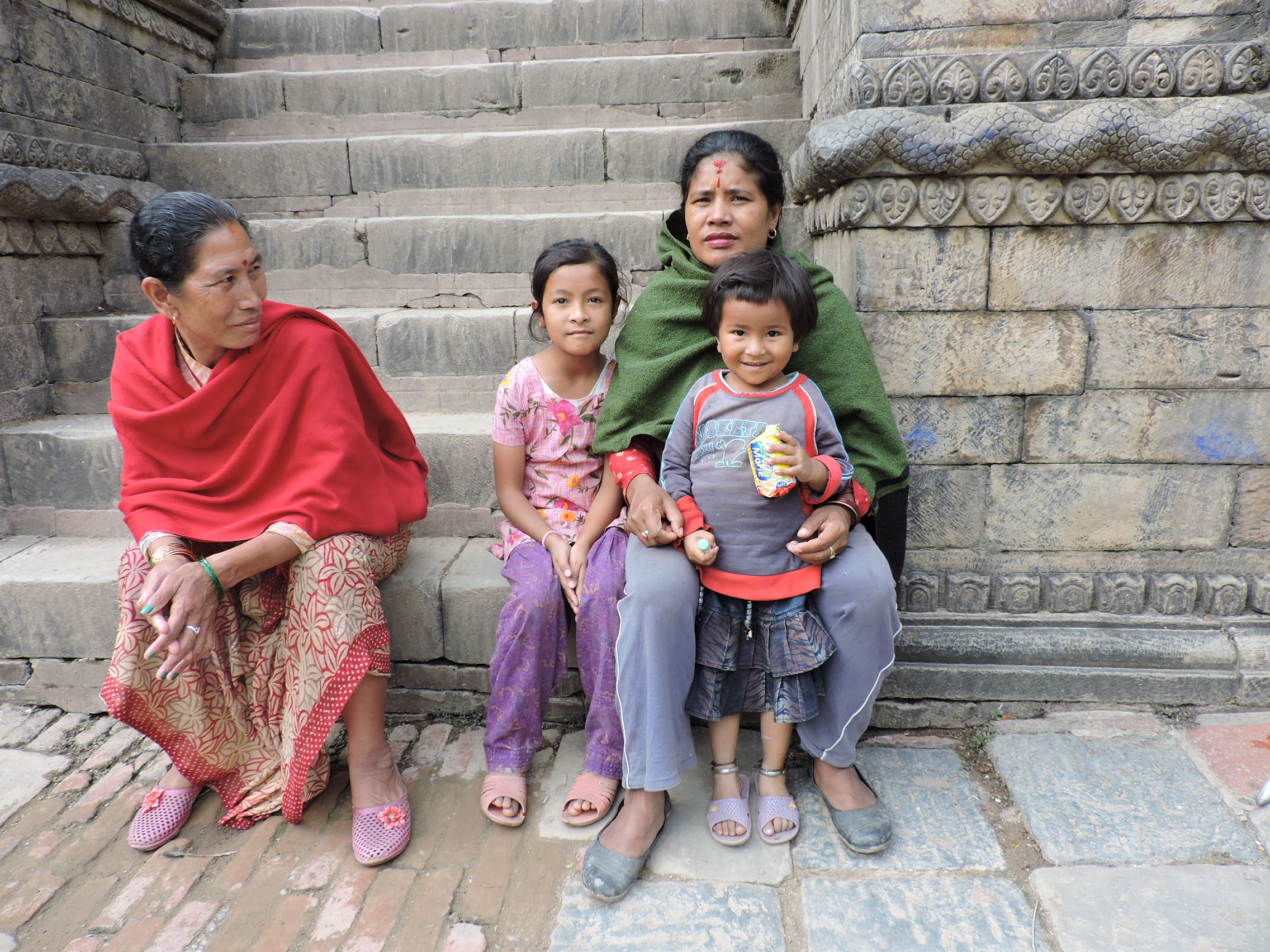
Mothers taking their children to visit the temples
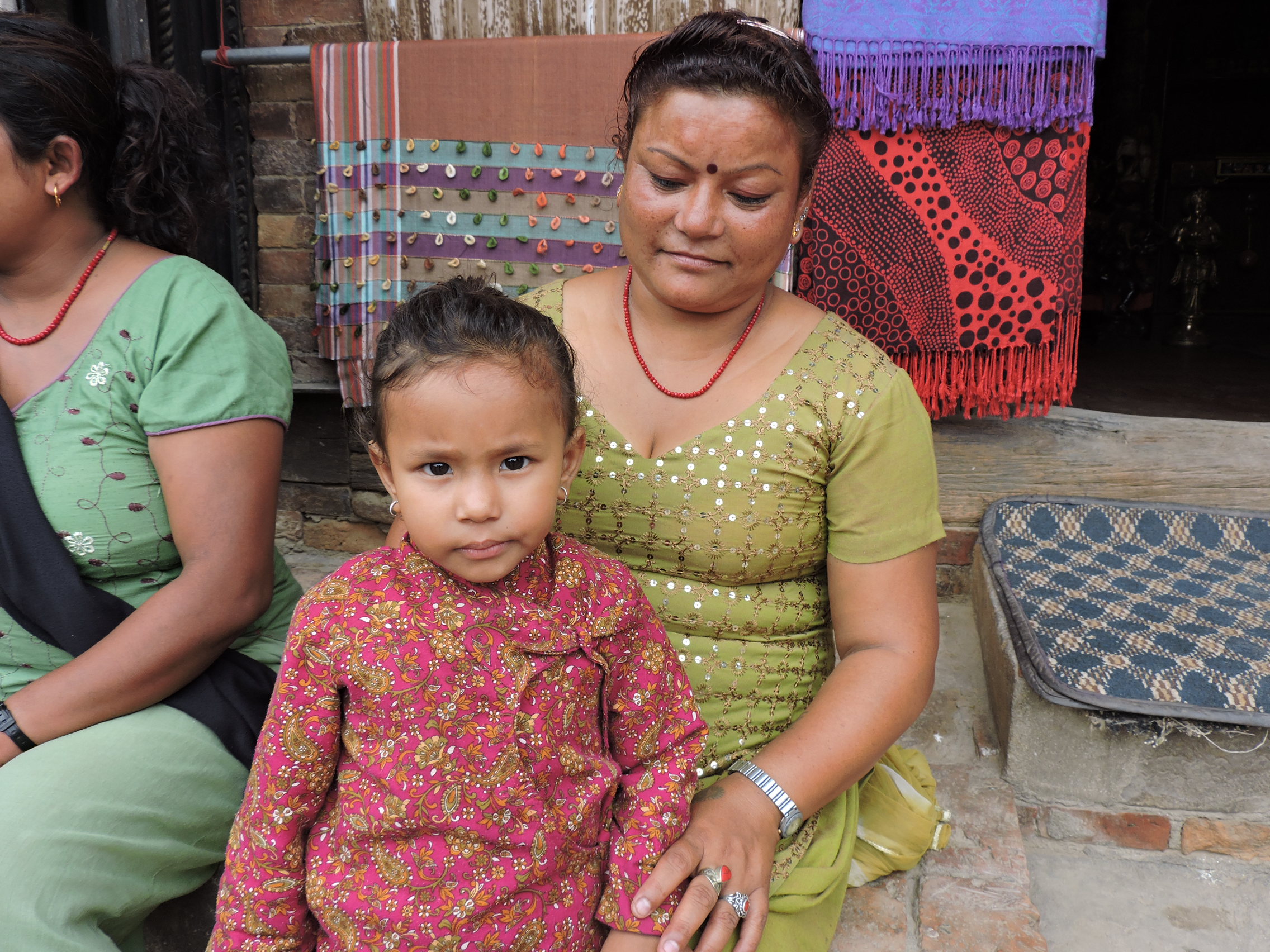
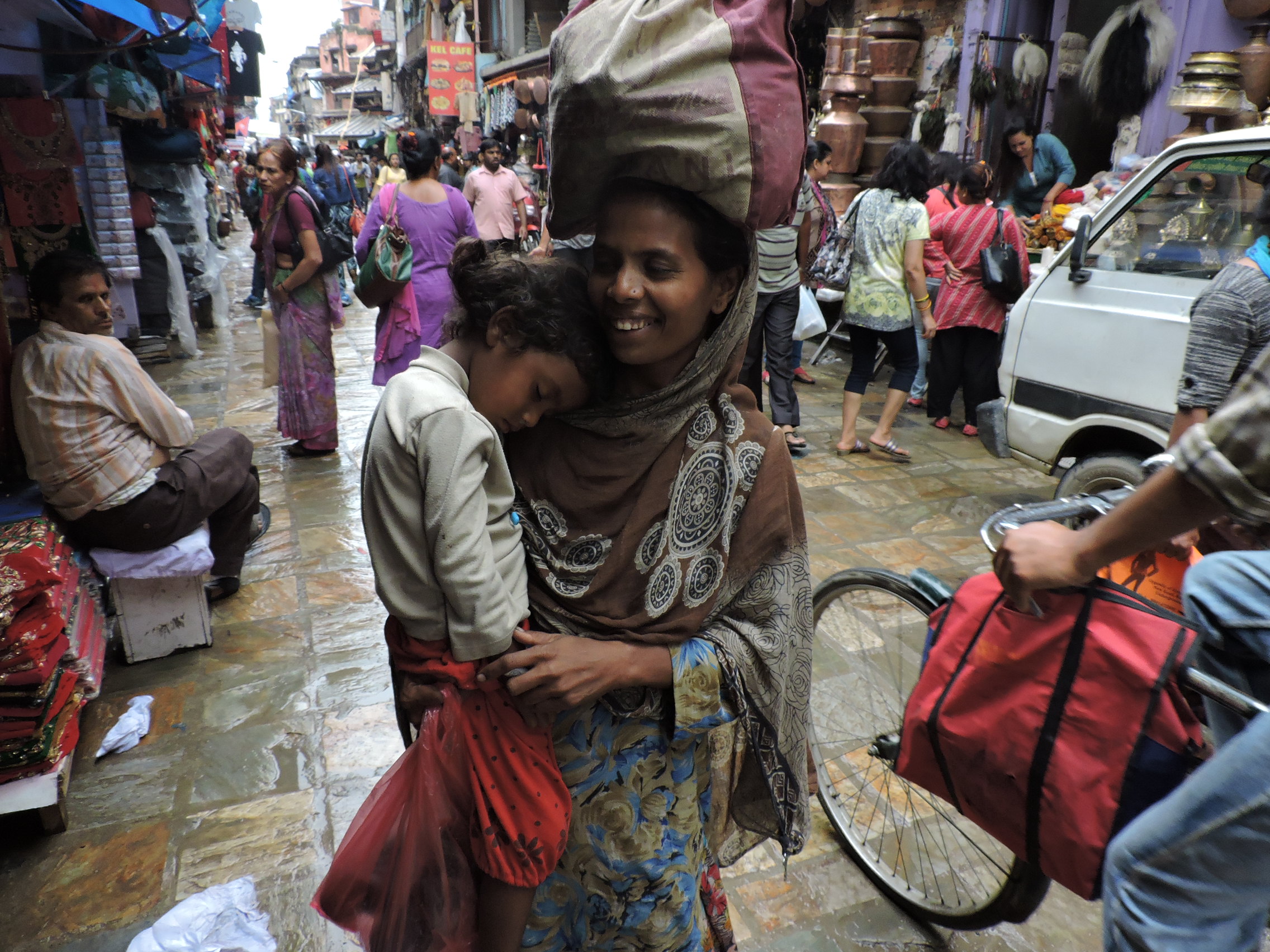
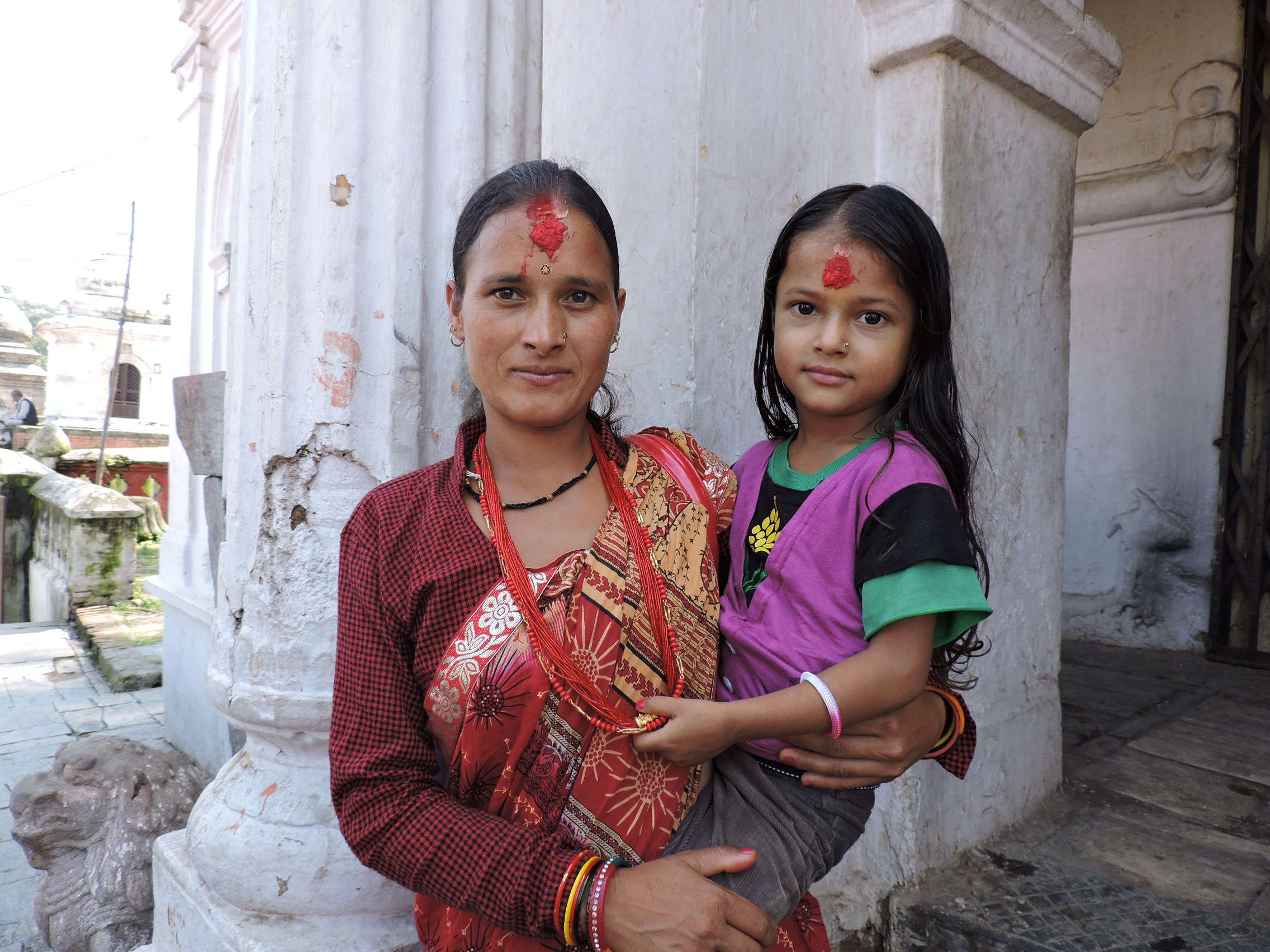
Mother and daughter in front of a shop
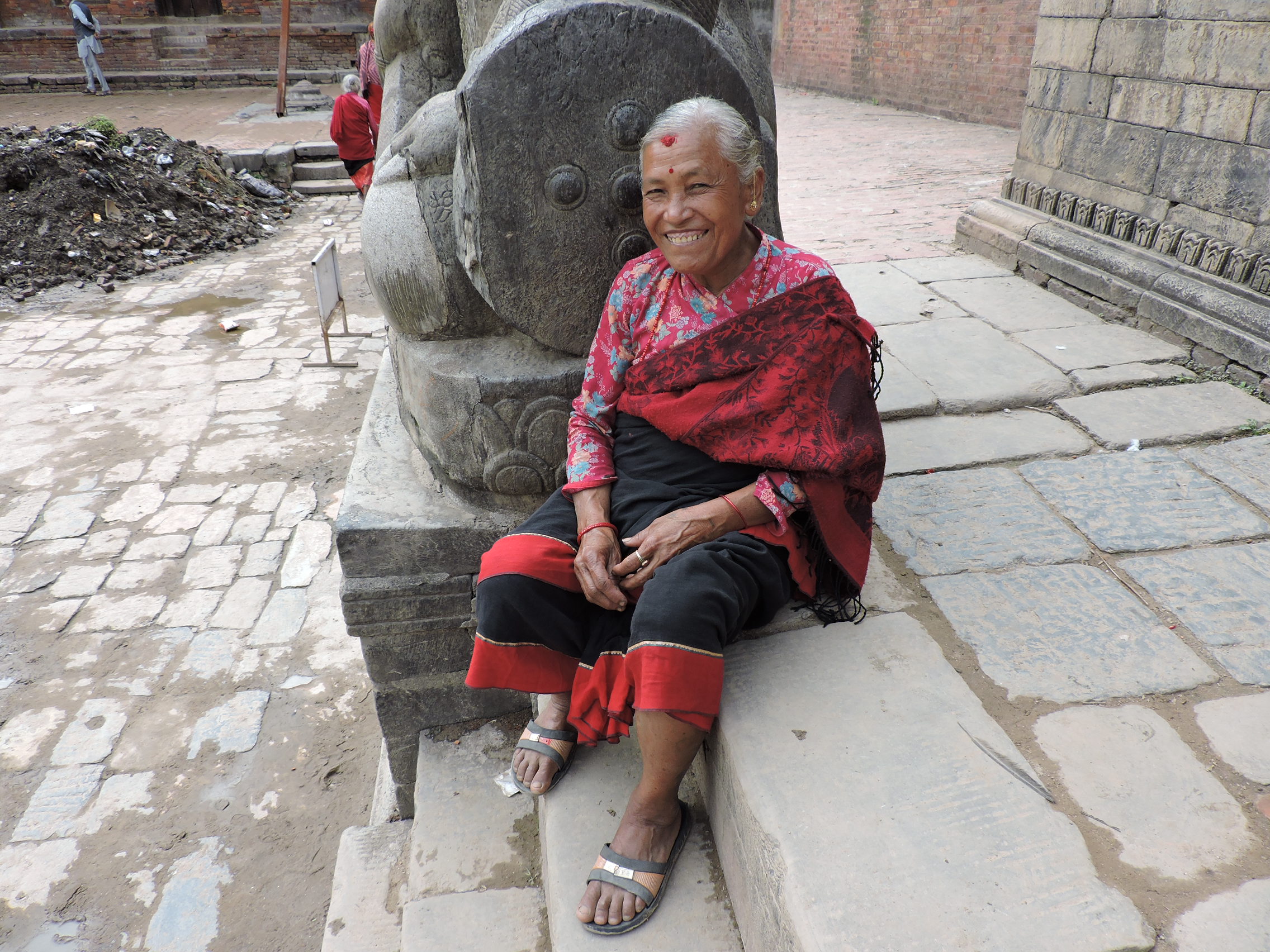
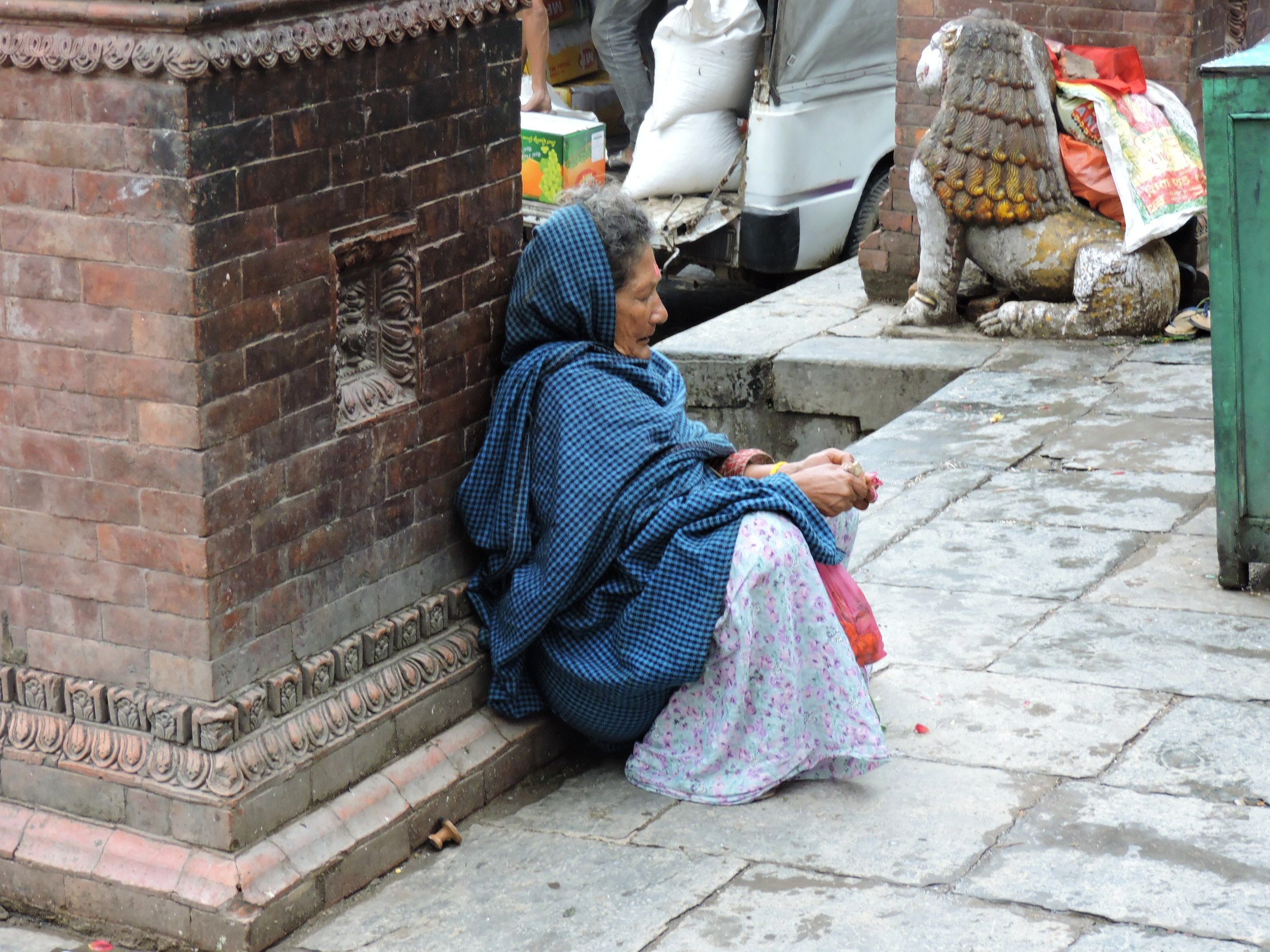
Granny resting from a visit to the temple (I call her granny but she must be younger than me)
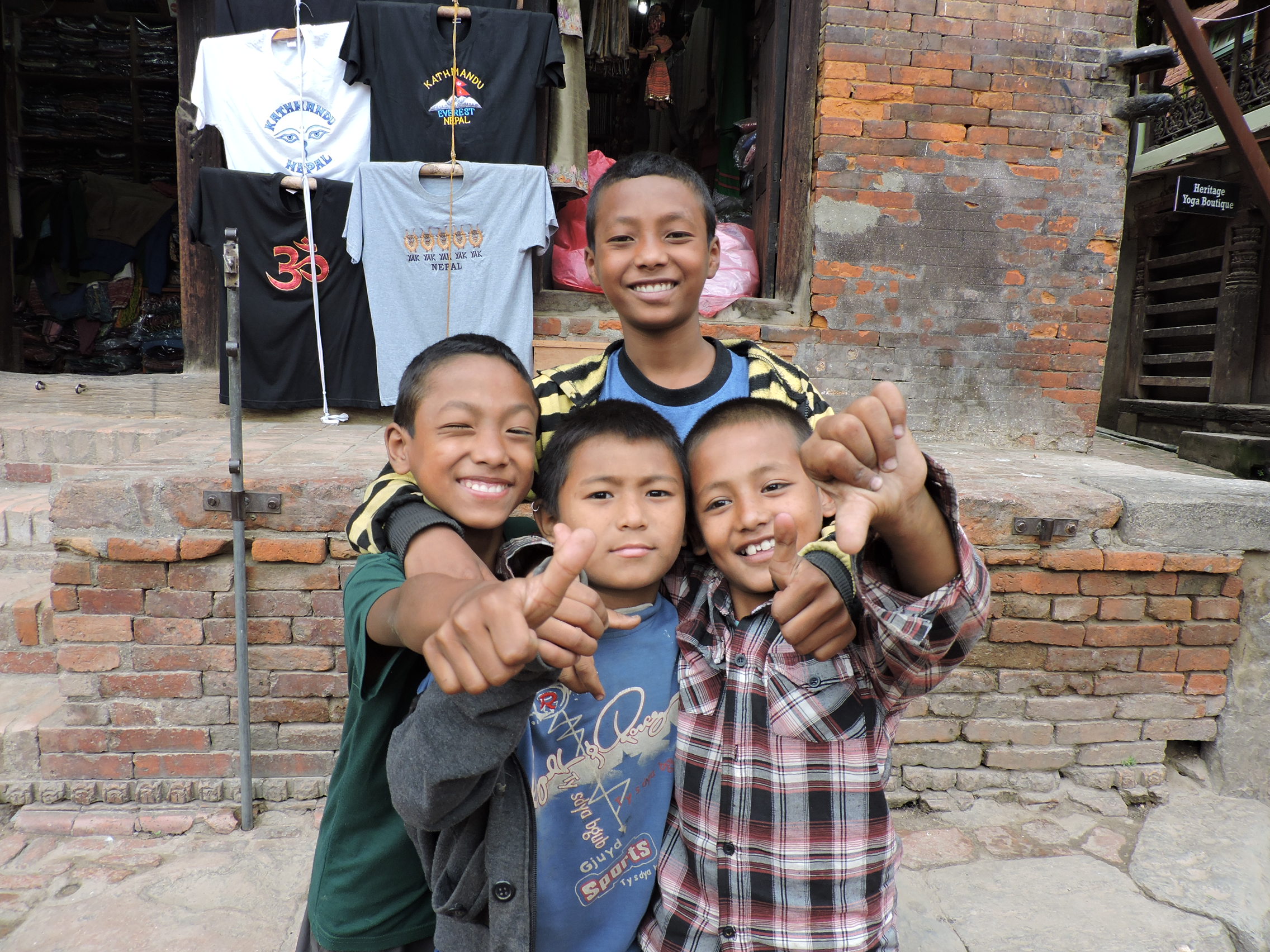
Boys will always be …
After half a day of walking around I was not only hungry and soaked from the rain, but my camera had run out of battery. So I went to a nice restaurant at Durbar Square (remember all three towns Kathmandu, Patan and Bhaktapur have a Durbar Square) to eat and to get my camera charged. The place was almost empty, more waiters than customers, just a group of American youngsters, probably volunteers. It was good to sit down and leave the rain outside.
Suddenly a European comes in, elderly man (gee, who am I to talk like that) with a young Asian girl at his side. Maybe he’s her Daddy, oh so sweet! I think. They sit down at the table next to me. The food comes and before starting to eat, I see the girl wipe the cutlery and the dishes with desinfectant tissue.
So I turn toward her, look her in the eyes and tell her: “You mean, you are a sugar daddy’s baby and you are worried about clean dishes (!?!?!?$$?)?”
No, I’m just kidding, I wouldn’t even think of doing a thing like that.
By the time I had eaten a delicious Dal Bhat and some fruit and taken a coffee, and my battery was charged enough to take more pictures, it had stopped raining and the sun had come out. That’s why you see some dry pictures, too.
After lunch I went to look for the little Newari hotel where I had stayed 11 years ago. I didn’t remember its name or address but I found it. The young proprietor had at the time been so nice to keep my luggage after I checked out, so I could go sightseeing without carrying my backpack around. The “Unique Guest House” was still standing and the proprietor, still young, seemed really touched that a former guest had bothered to look him up. He offered a cup of tea and I sat down and we talked. His closer family, he said, was alright, but among more distant relatives and friends some had lost their lives. He didn’t know anyone who didn’t have someone to mourn.
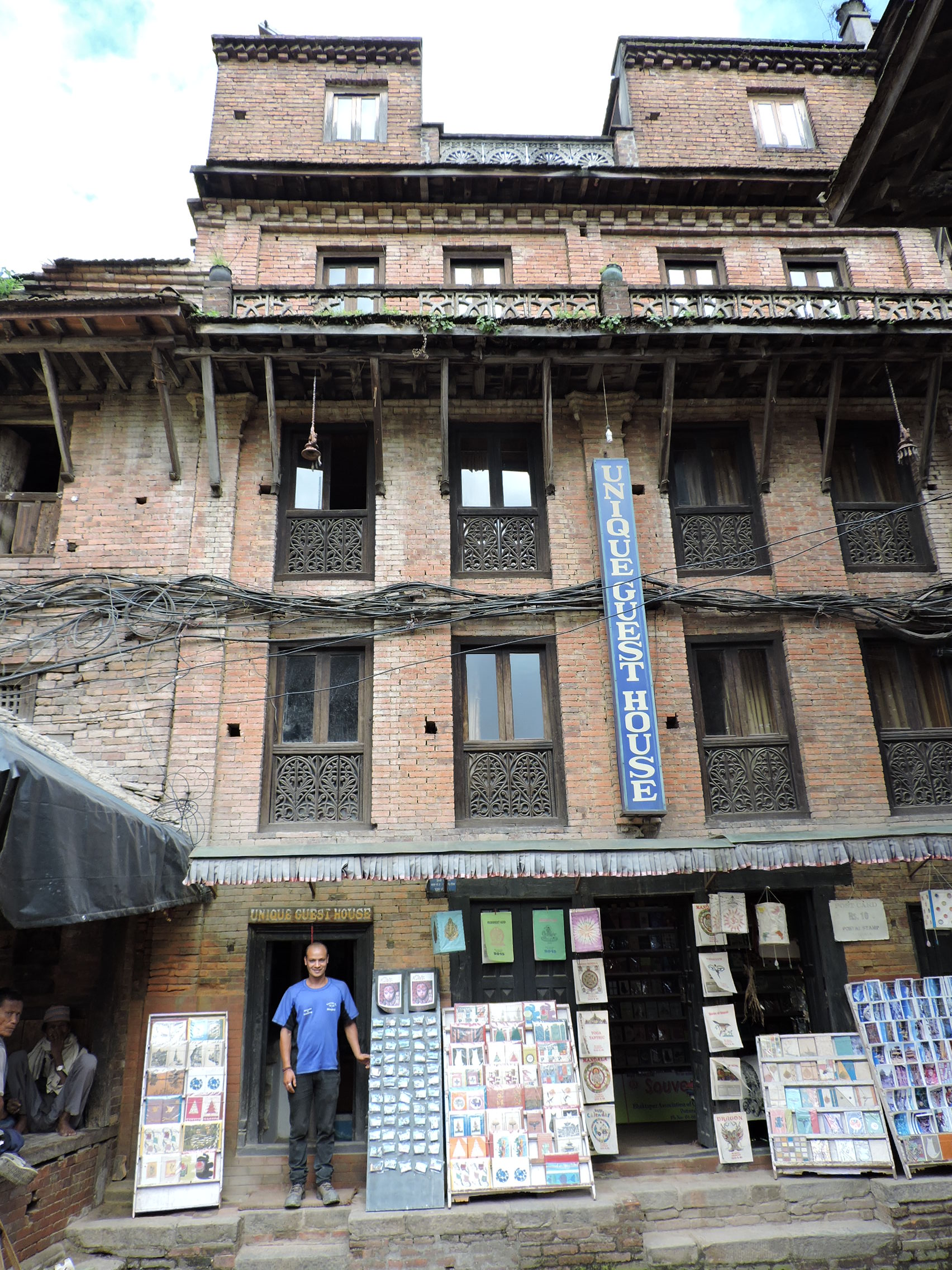
the Unique Guest House
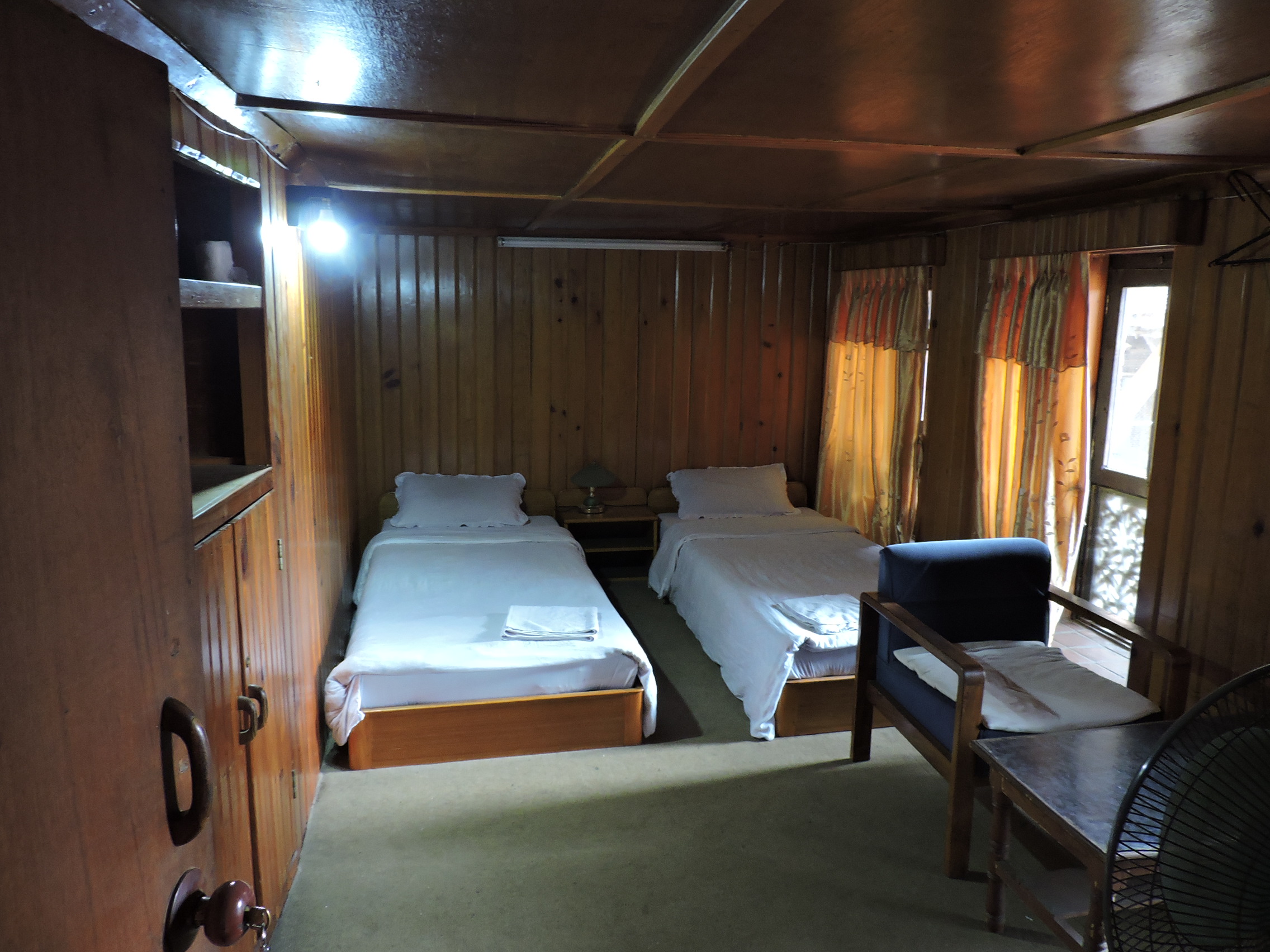
My room 11 years ago, the room on another floor is still inaccessable
Nearby, the famous Peacock Window, a wonderfully carved, wooden window, which I had taken a picture of on my last visit. The proprietor of the shop in front had invited me to go up to the 2nd floor of his house to be able to take a more frontal picture. I remember when going upstairs I met the only two children in the whole of Nepal that didn’t greet, that didn’t say: “Namaste”. They were probably also the only children in Nepal at that time who were playing video games. The family had come through the earthquakes unharmed but the house is uninhabitable.
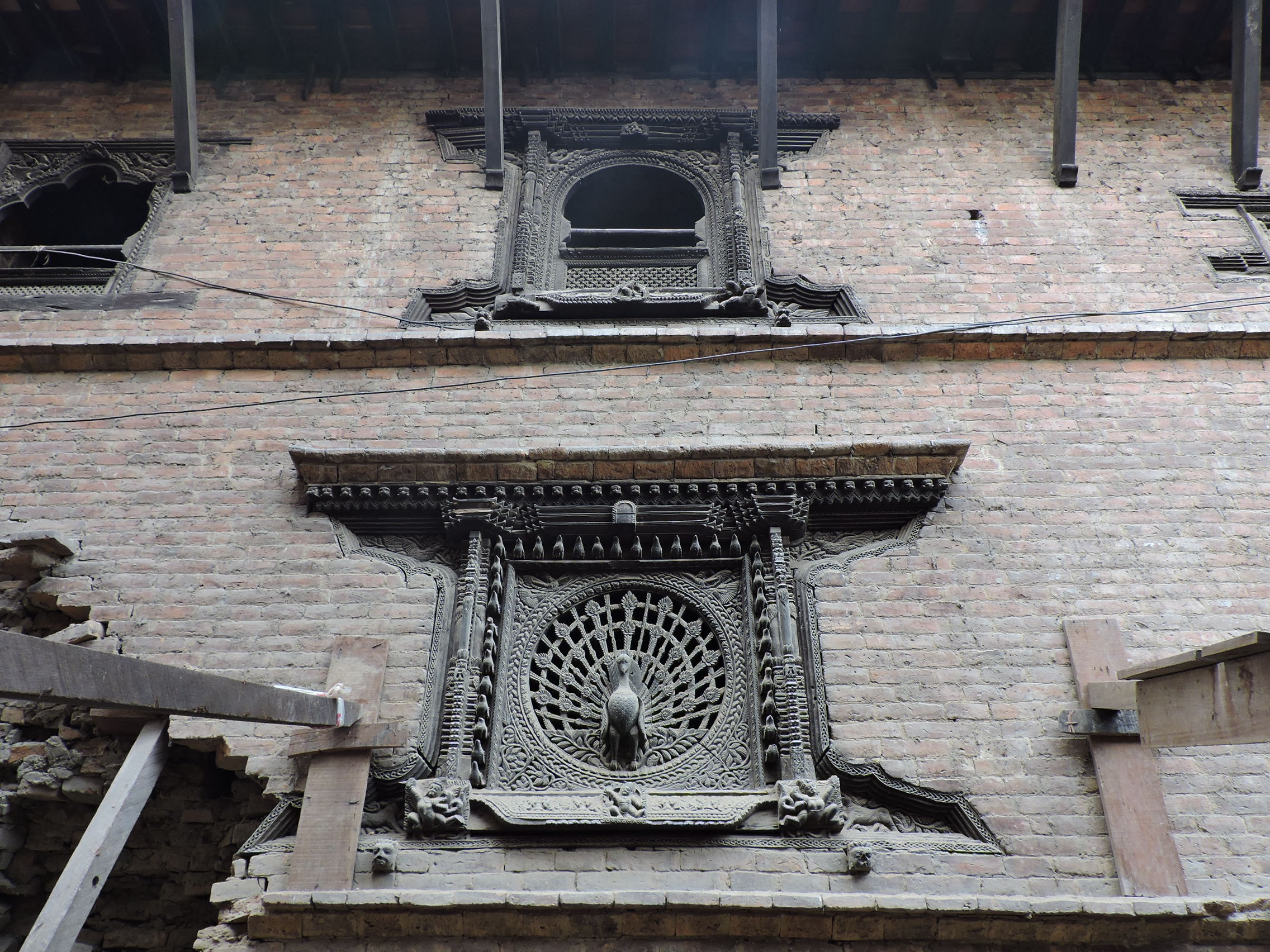
Peacock Window seen from the ground, the house opposite is not accessible
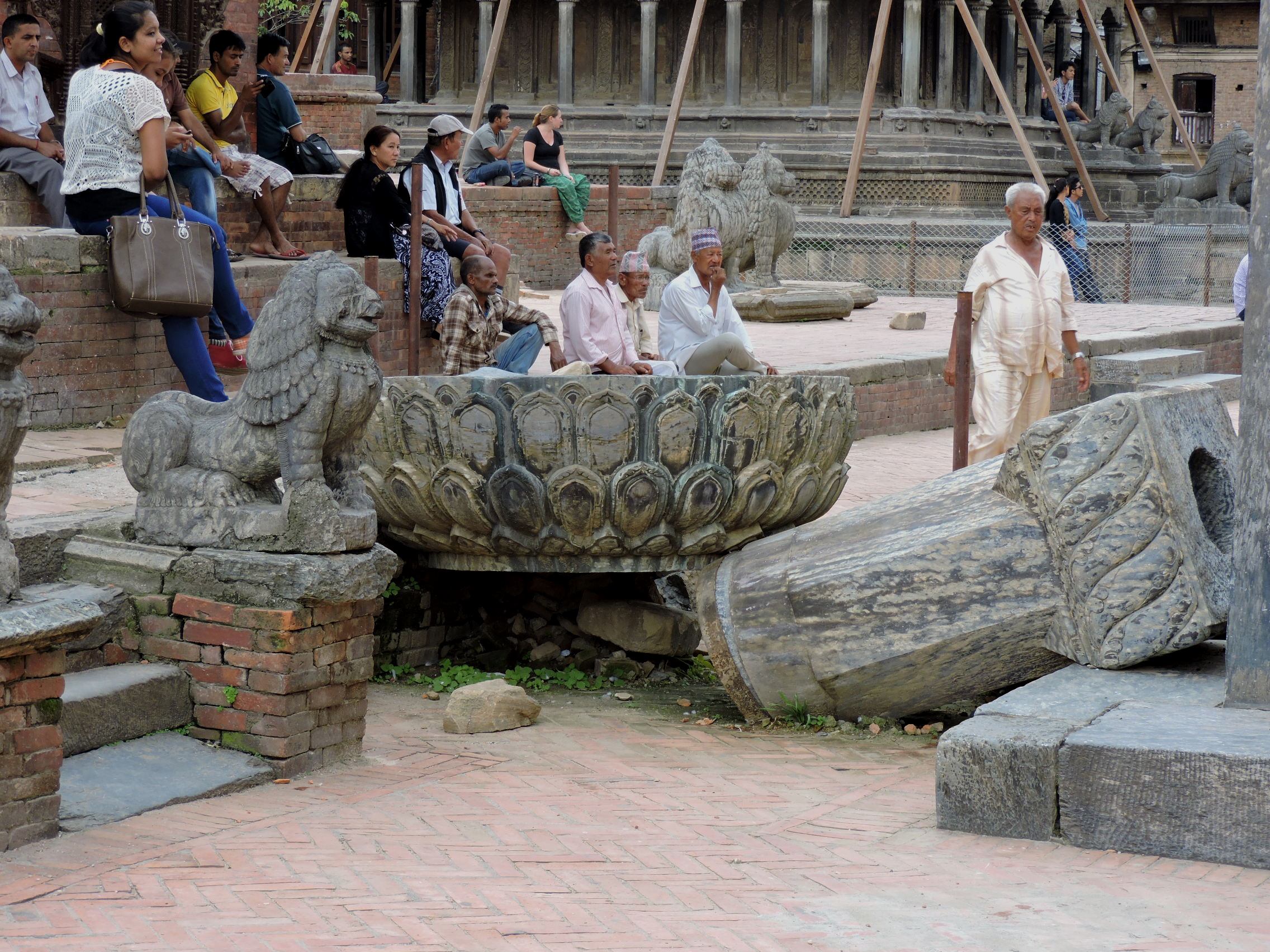
Homage to uncaring gods
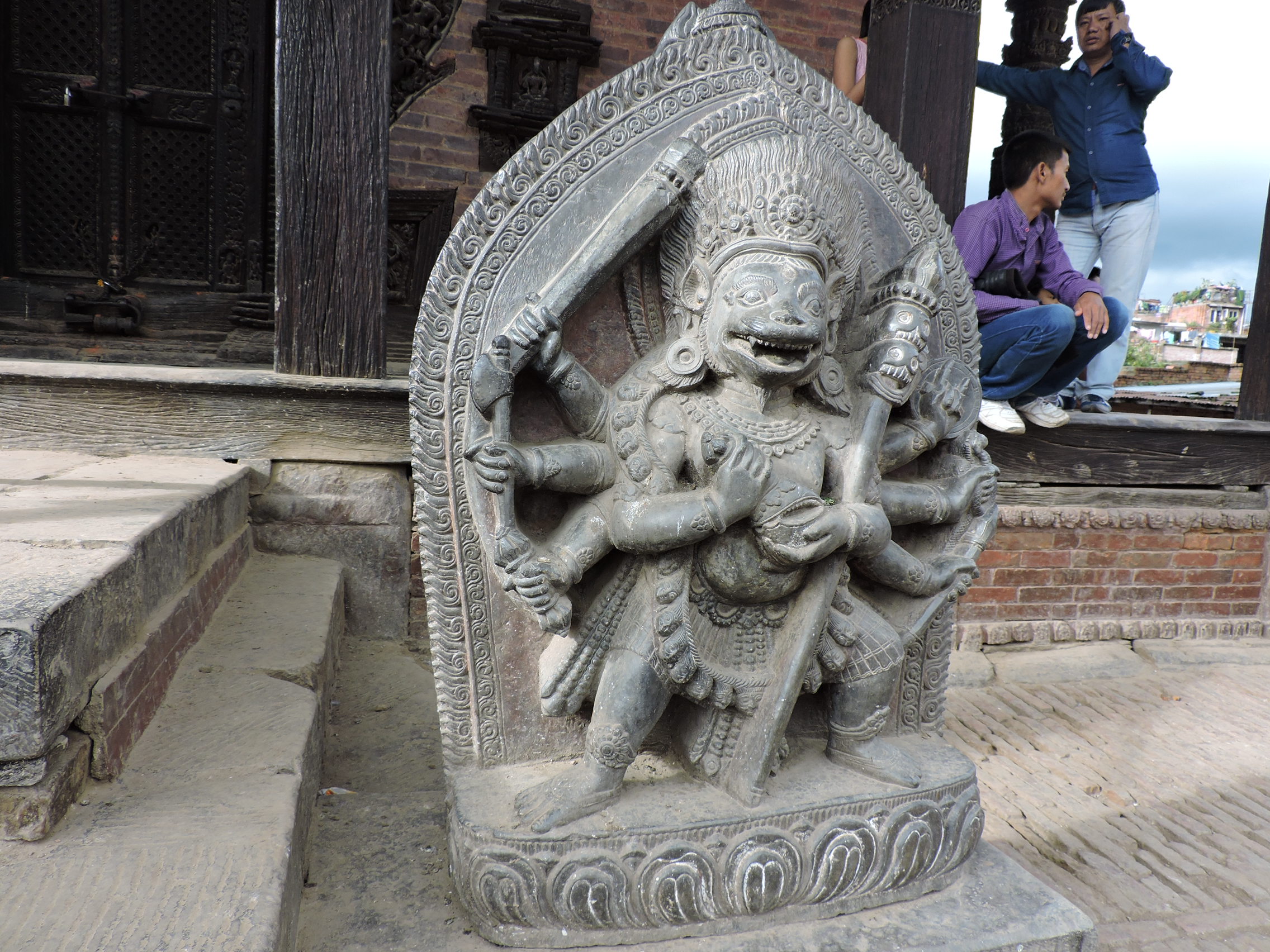
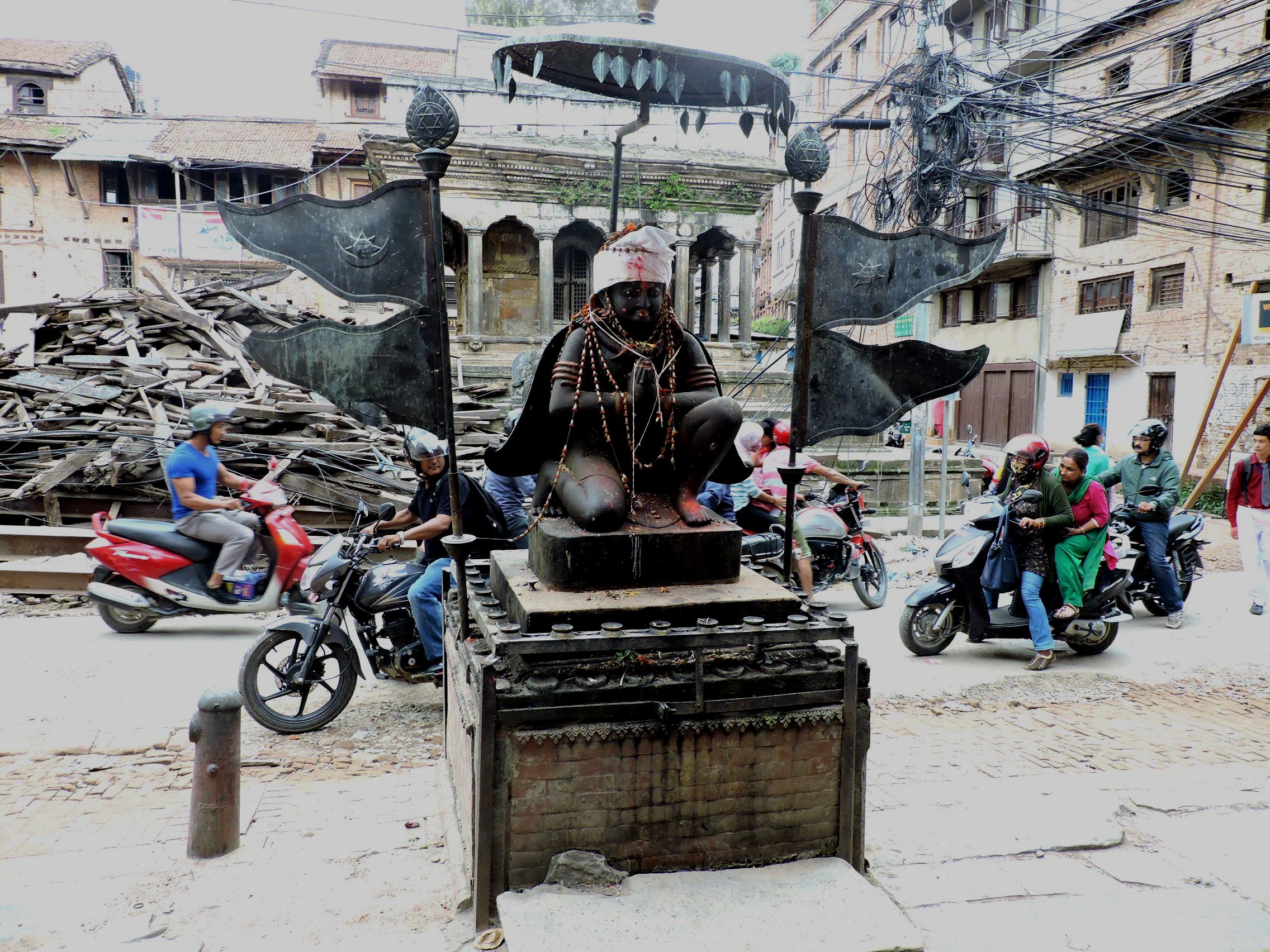
Hanuman
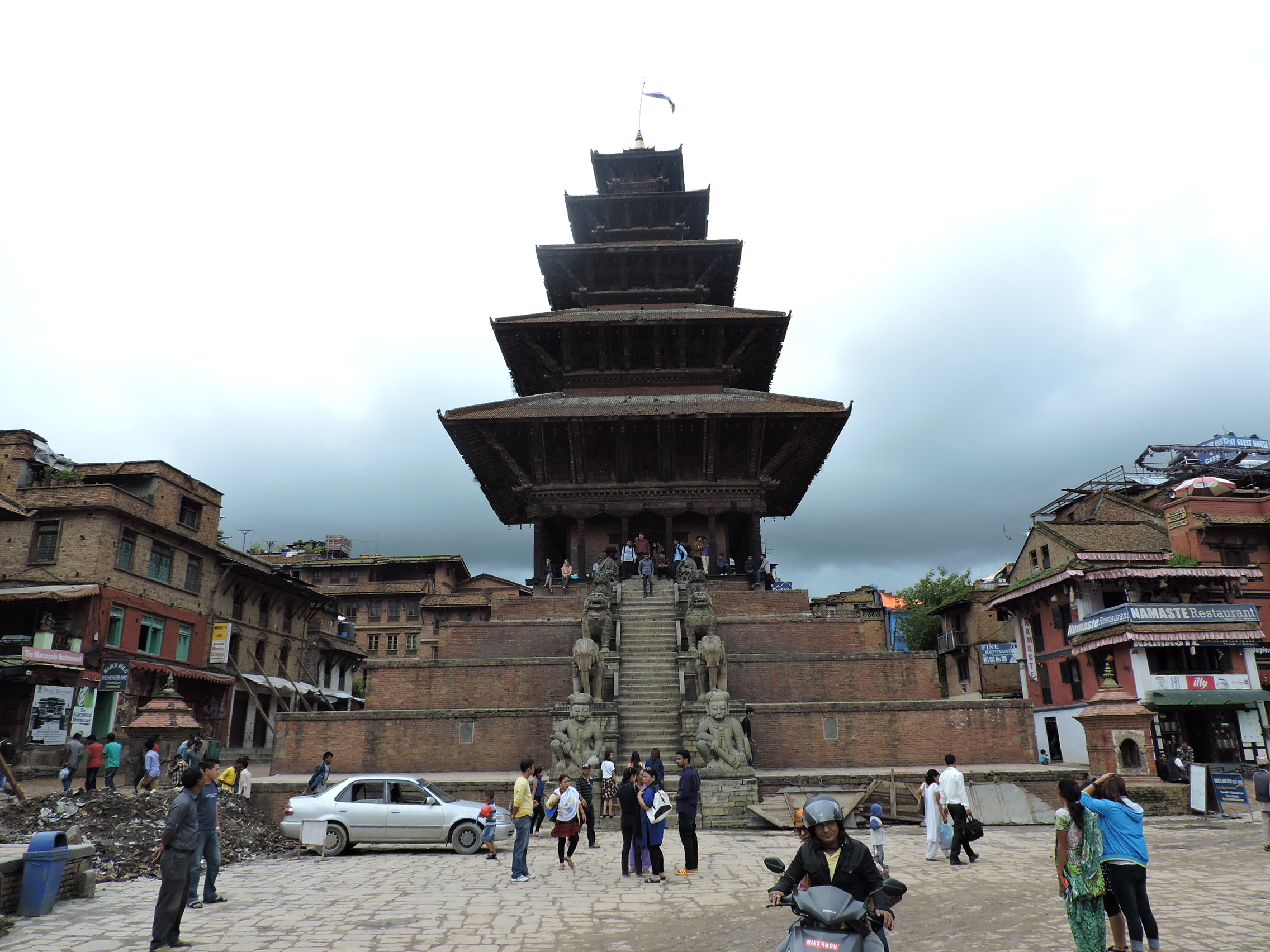
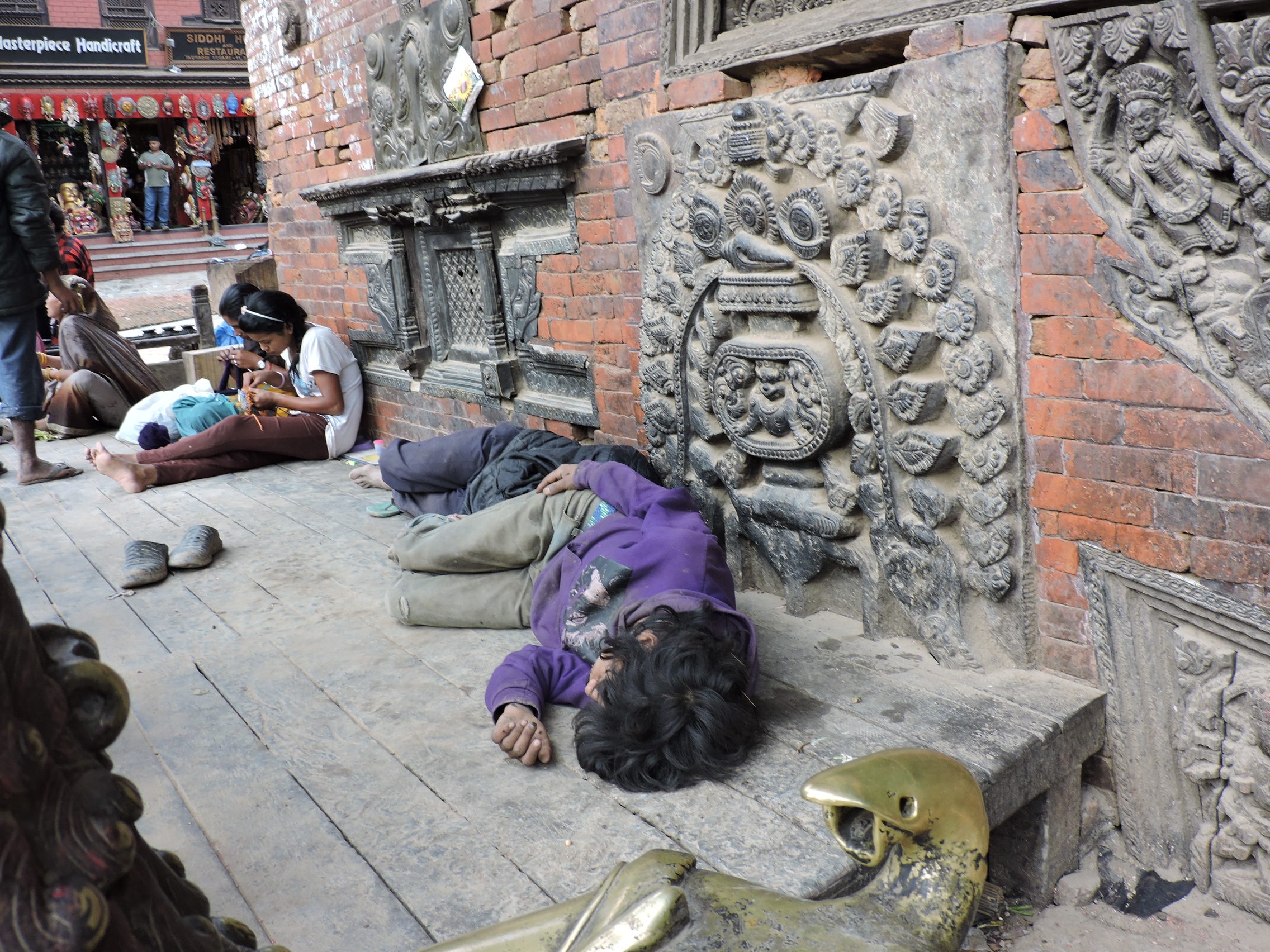
worse than uncaring gods, indifferent people
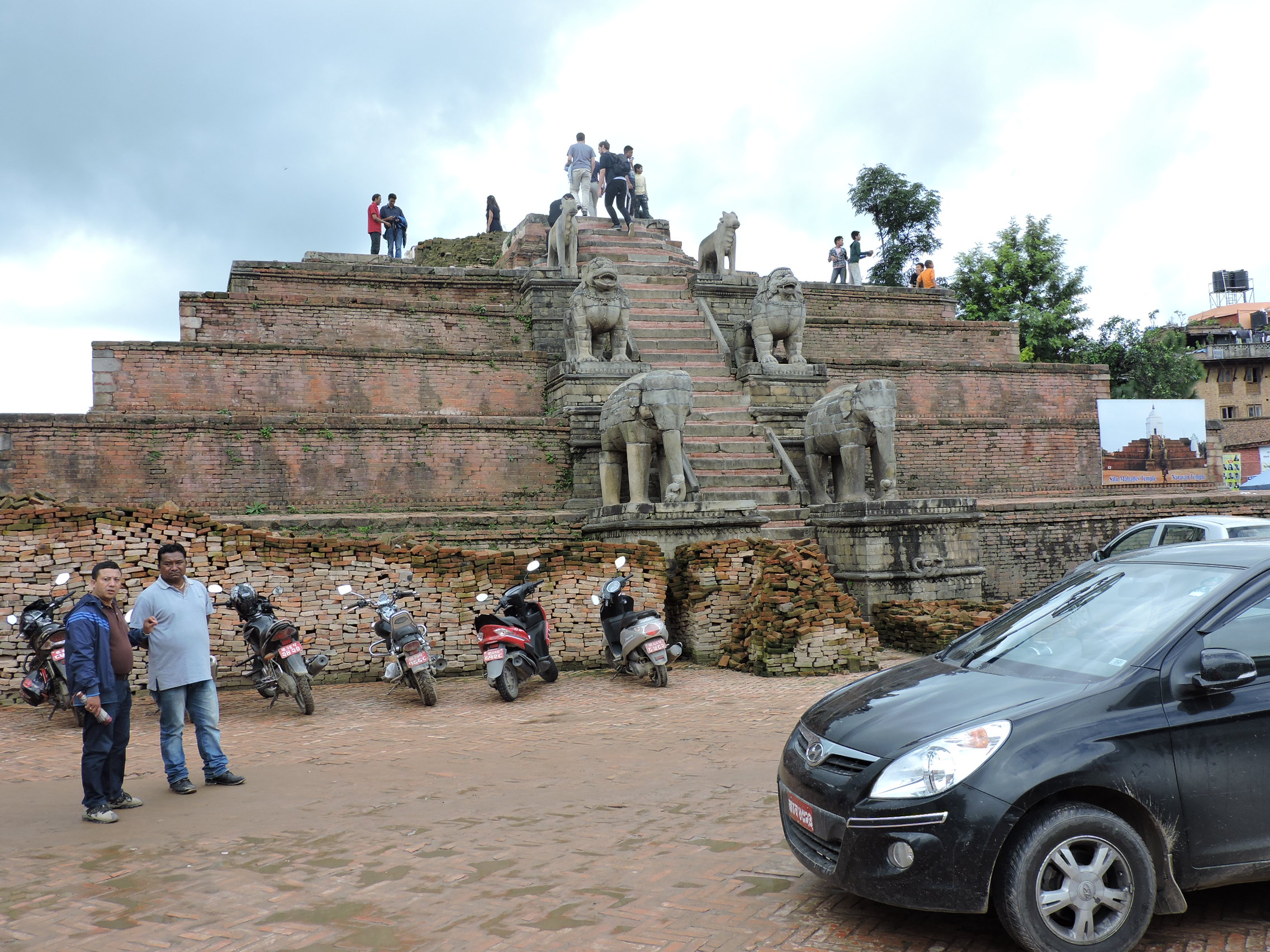
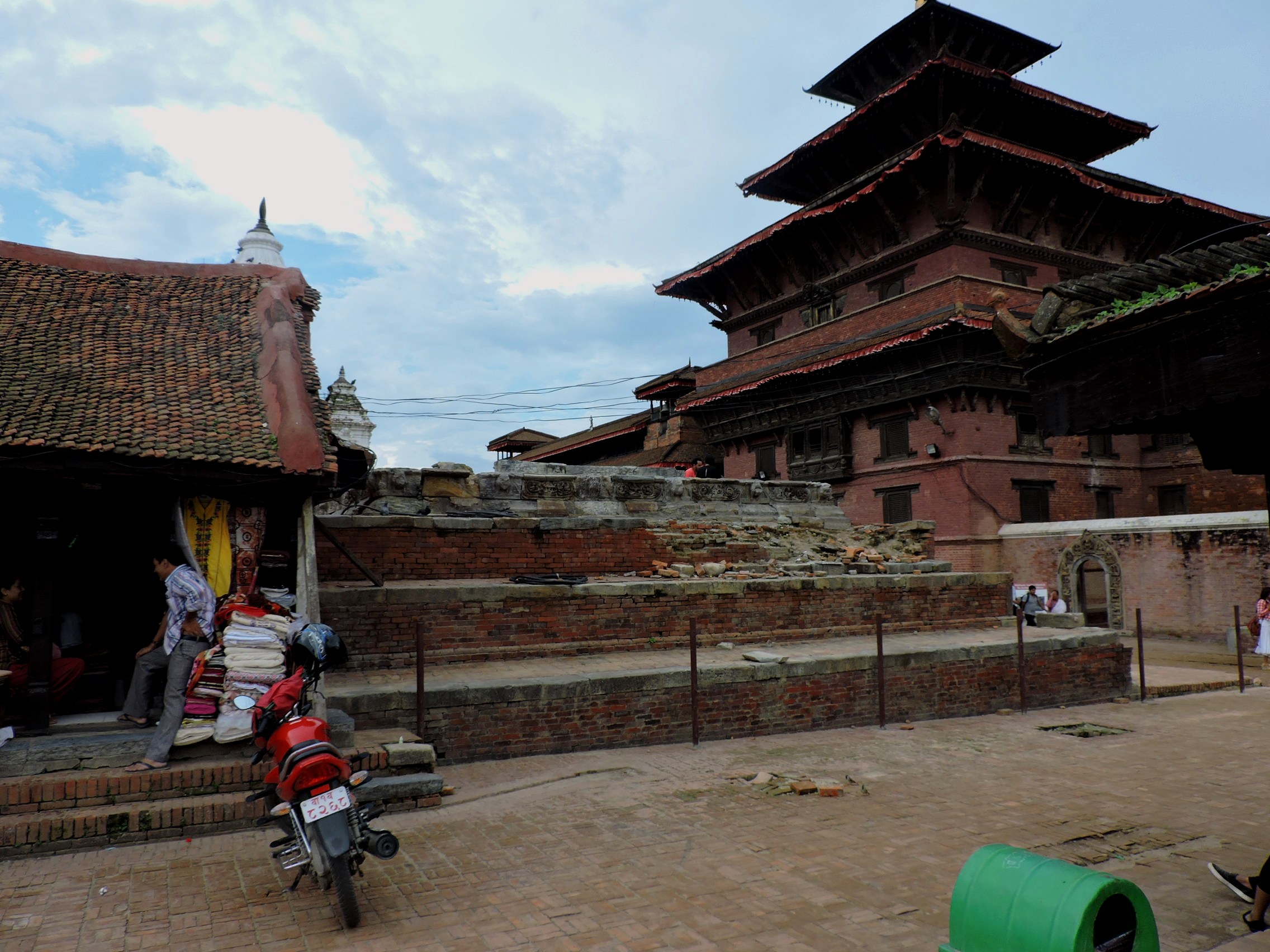
what remains, the foundation of the temple
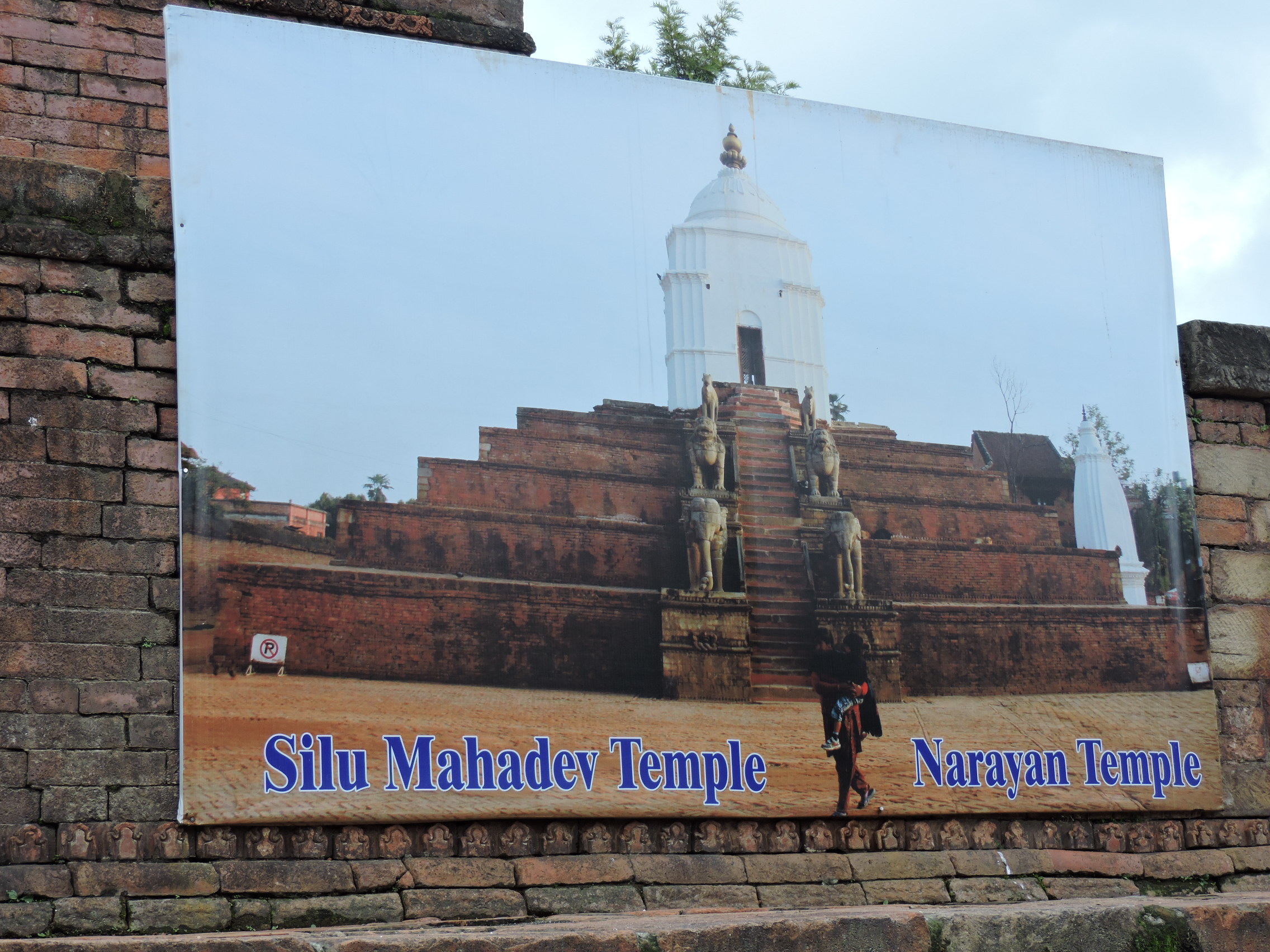
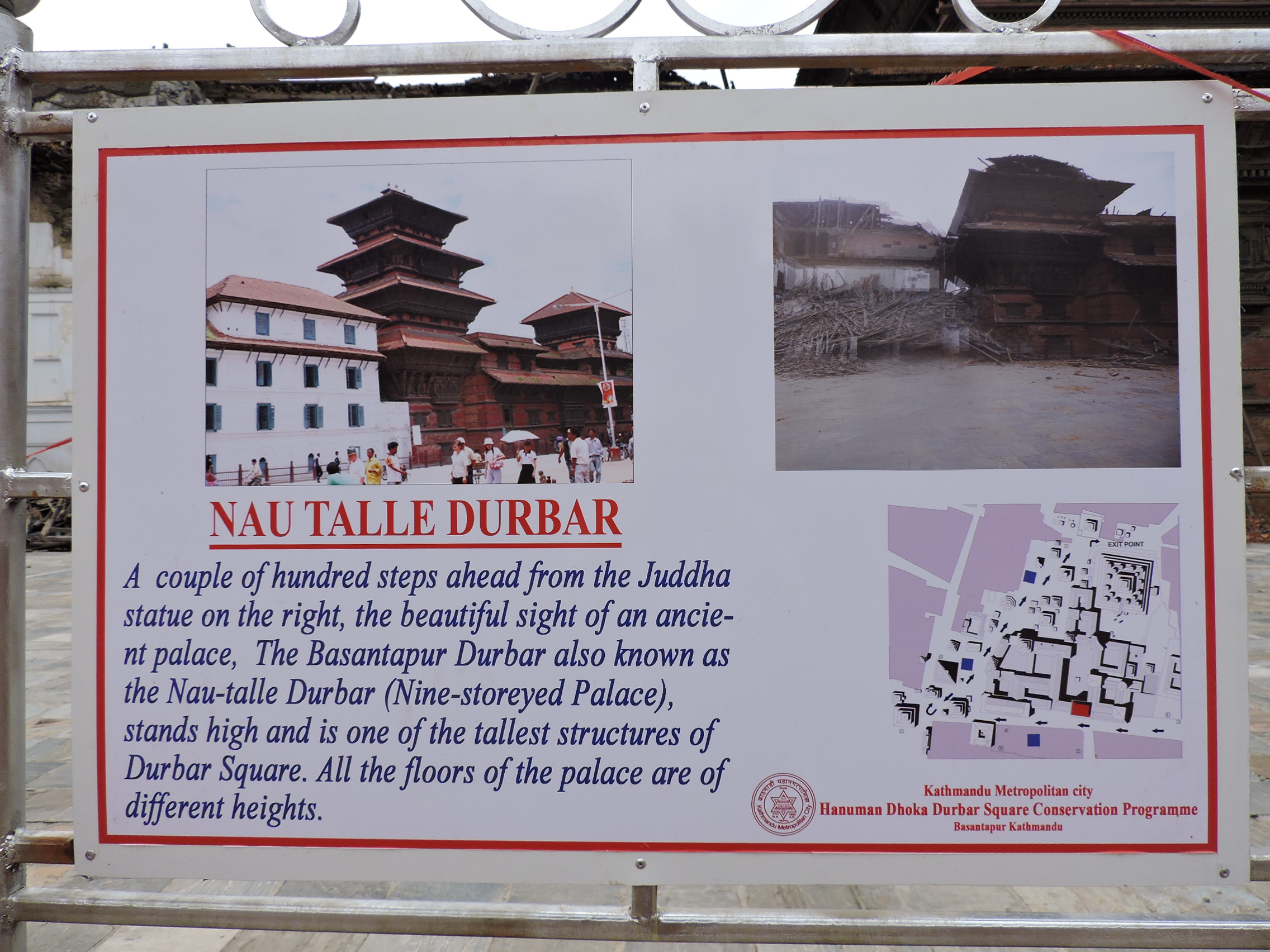
one of the many posters of what the temple looked like
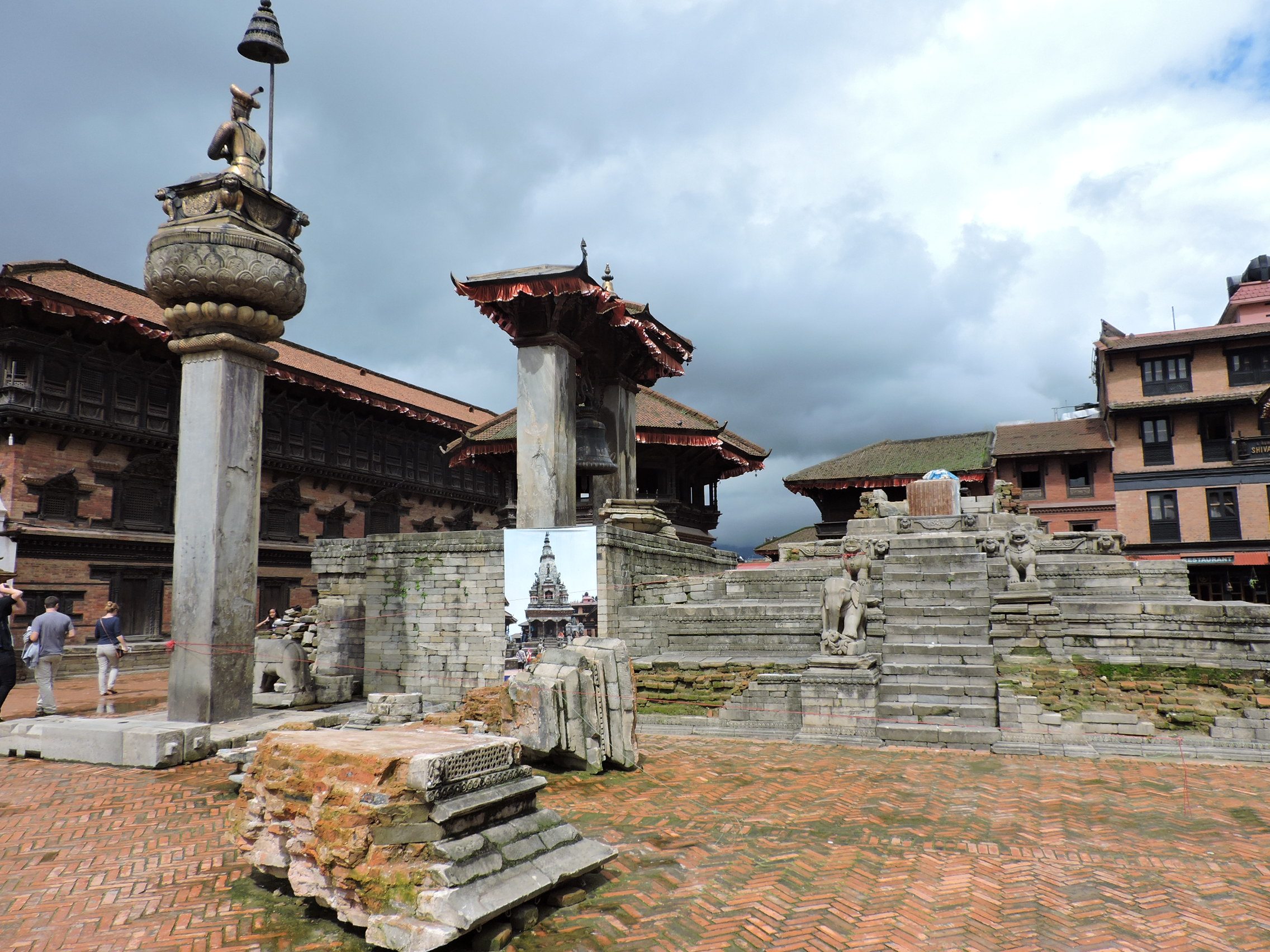
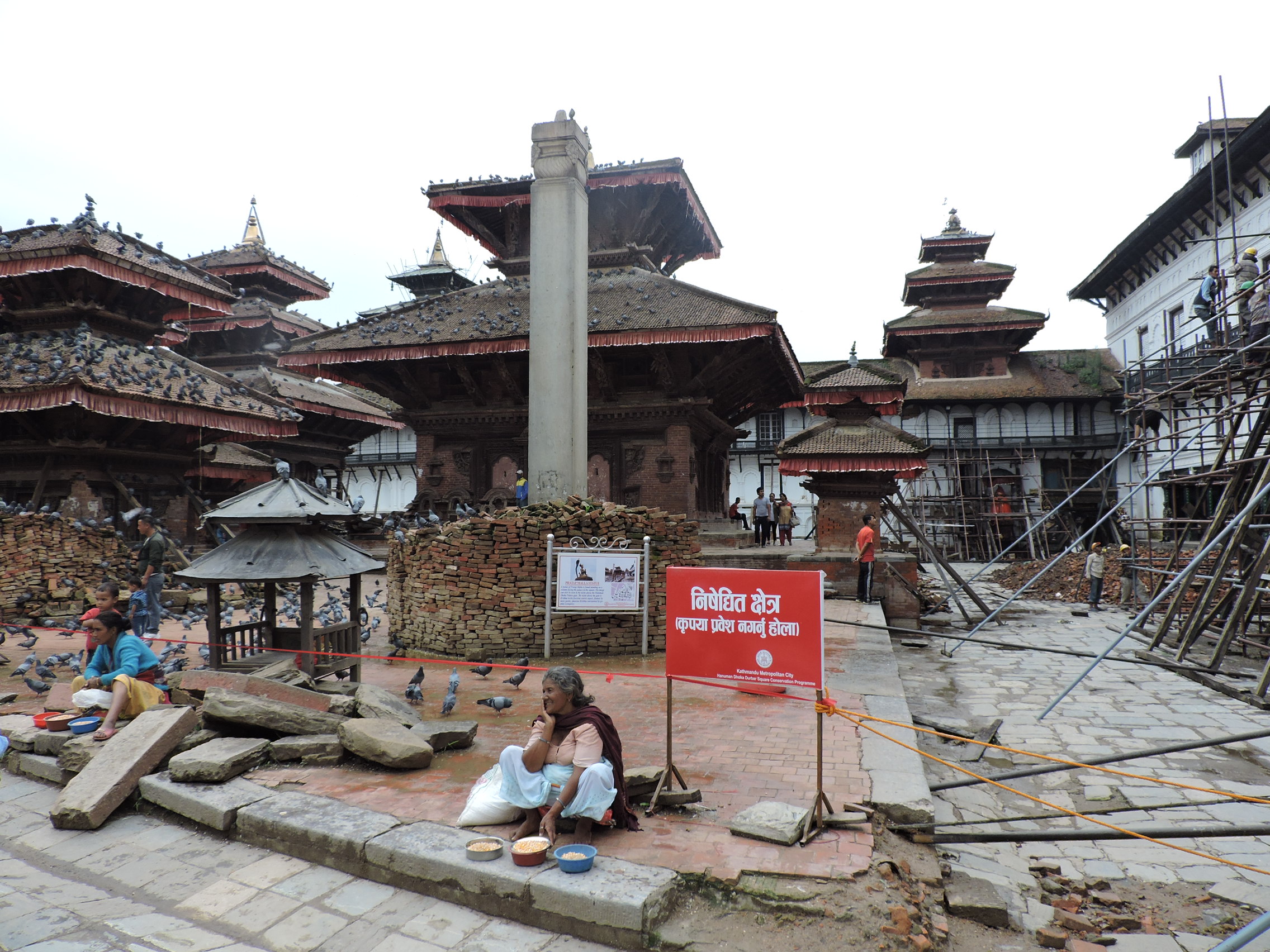
some temples gone
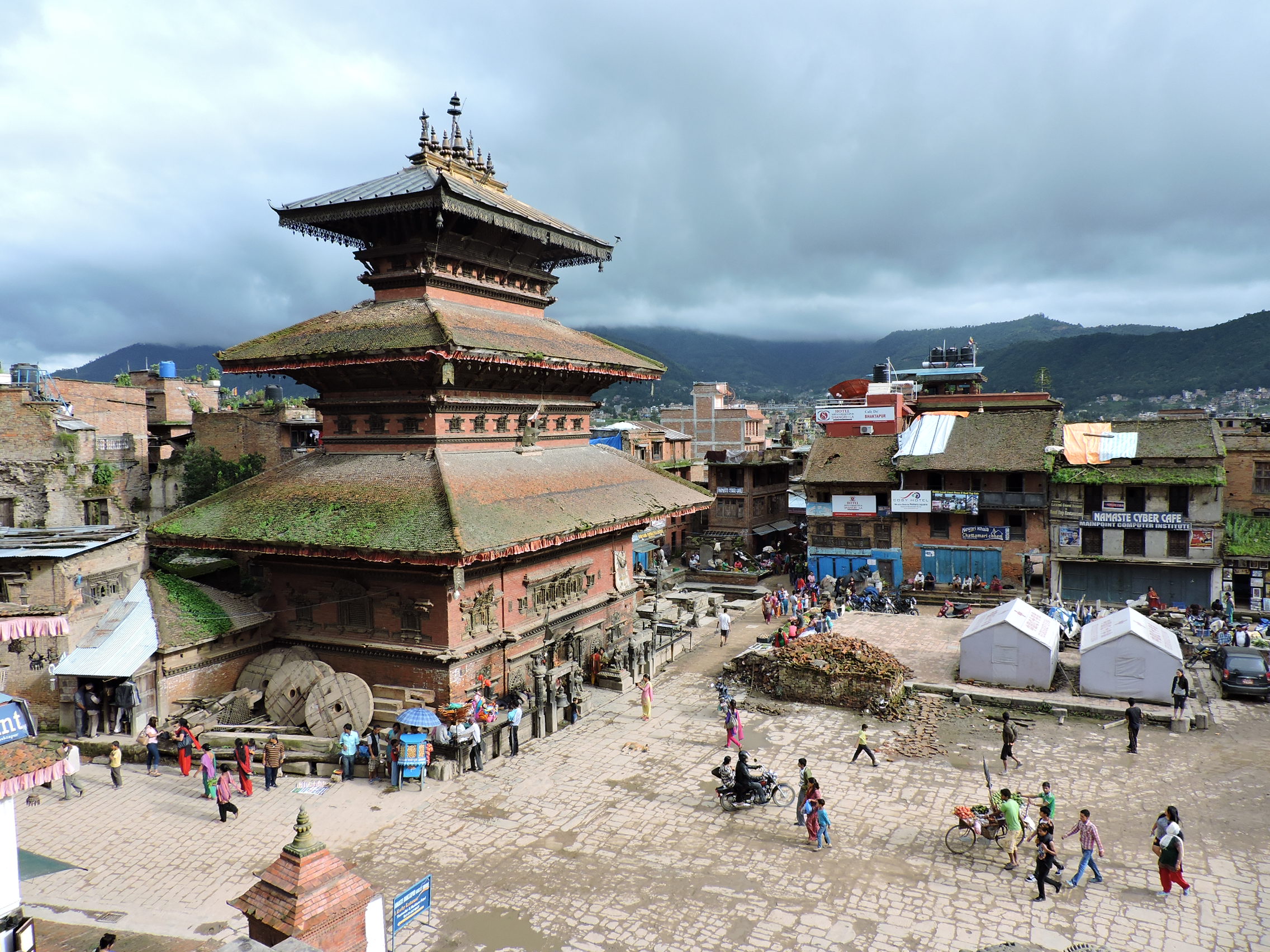
some temples standing, in between, tents from the Red Cross of China
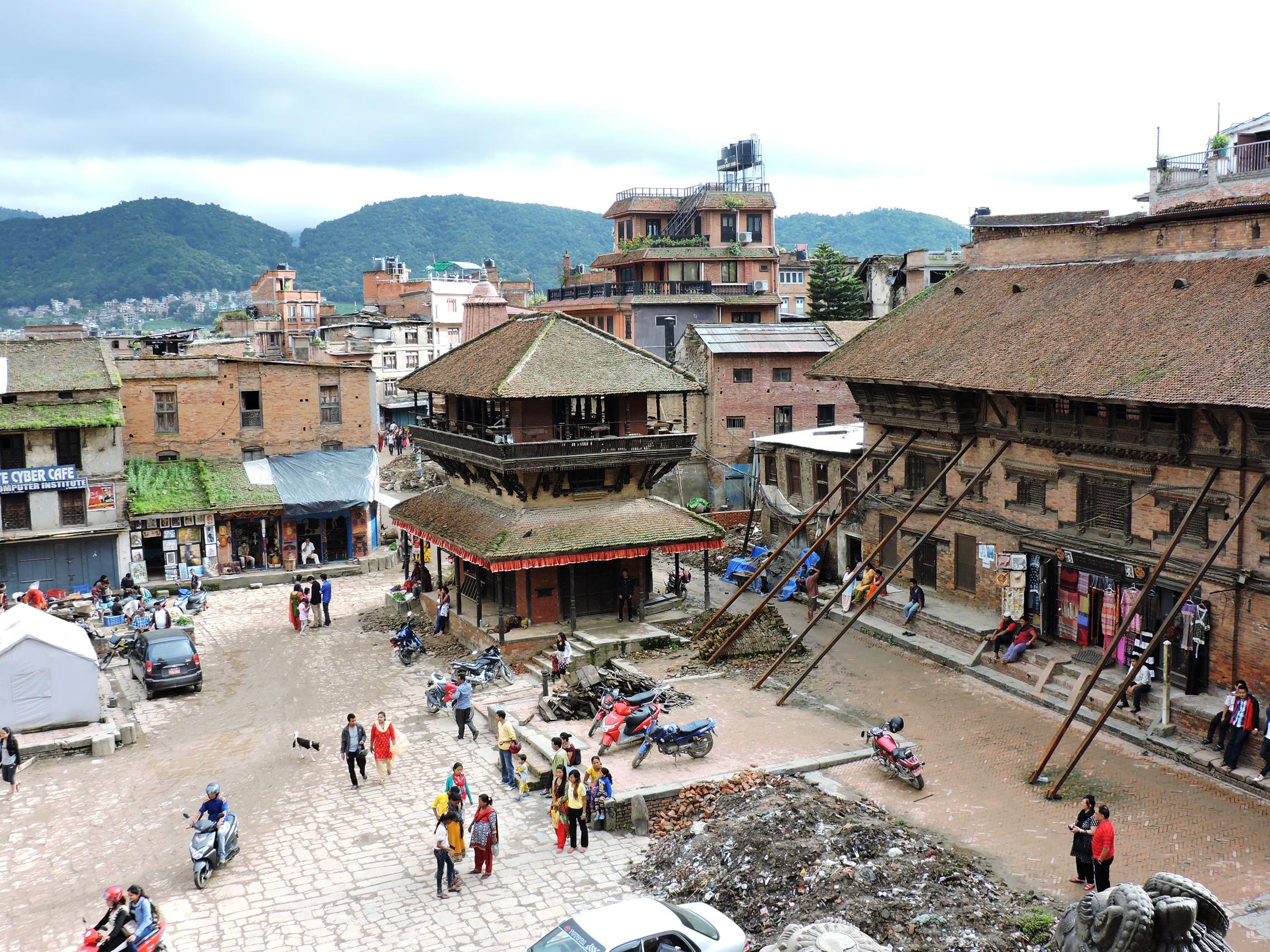
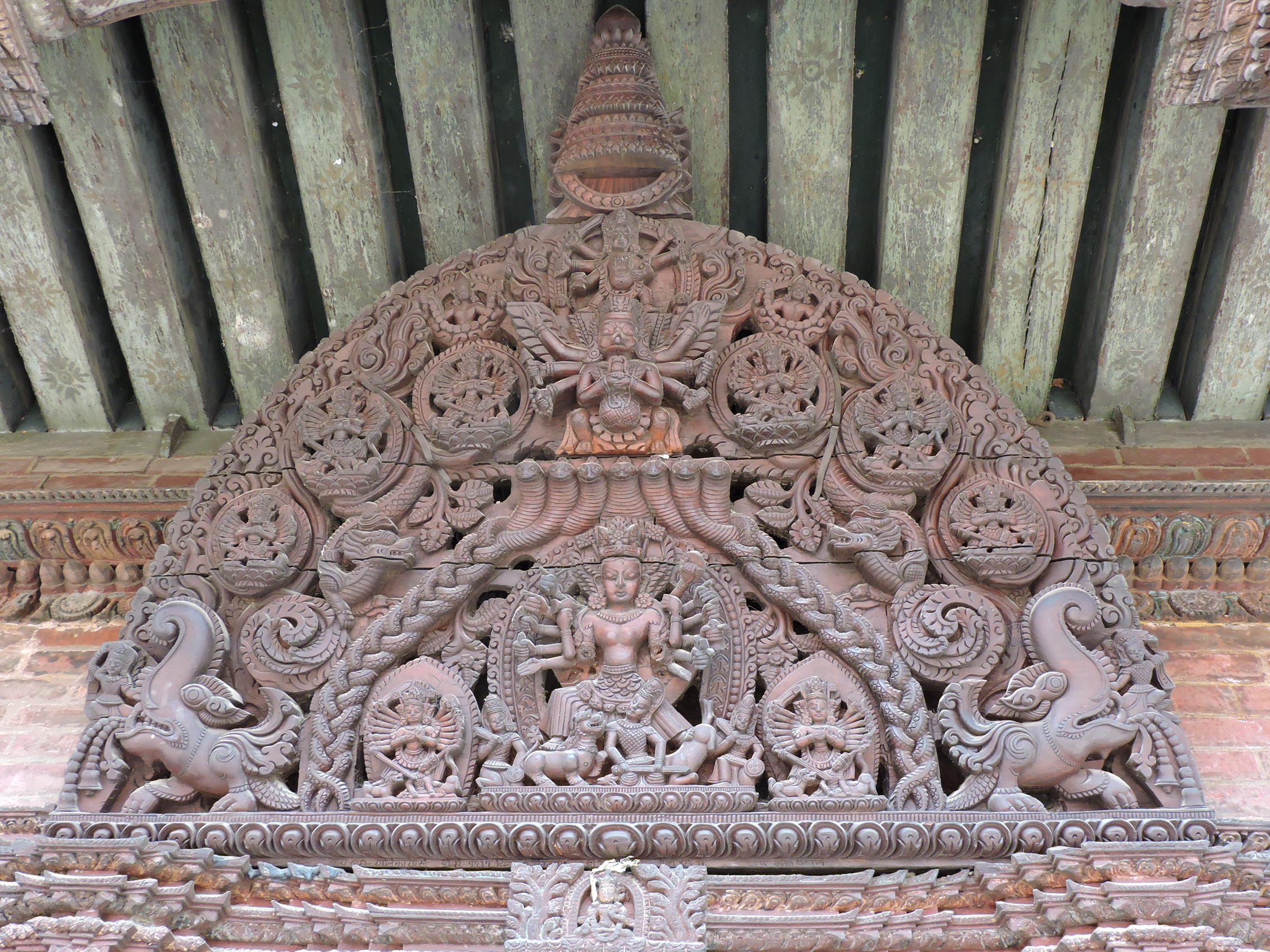
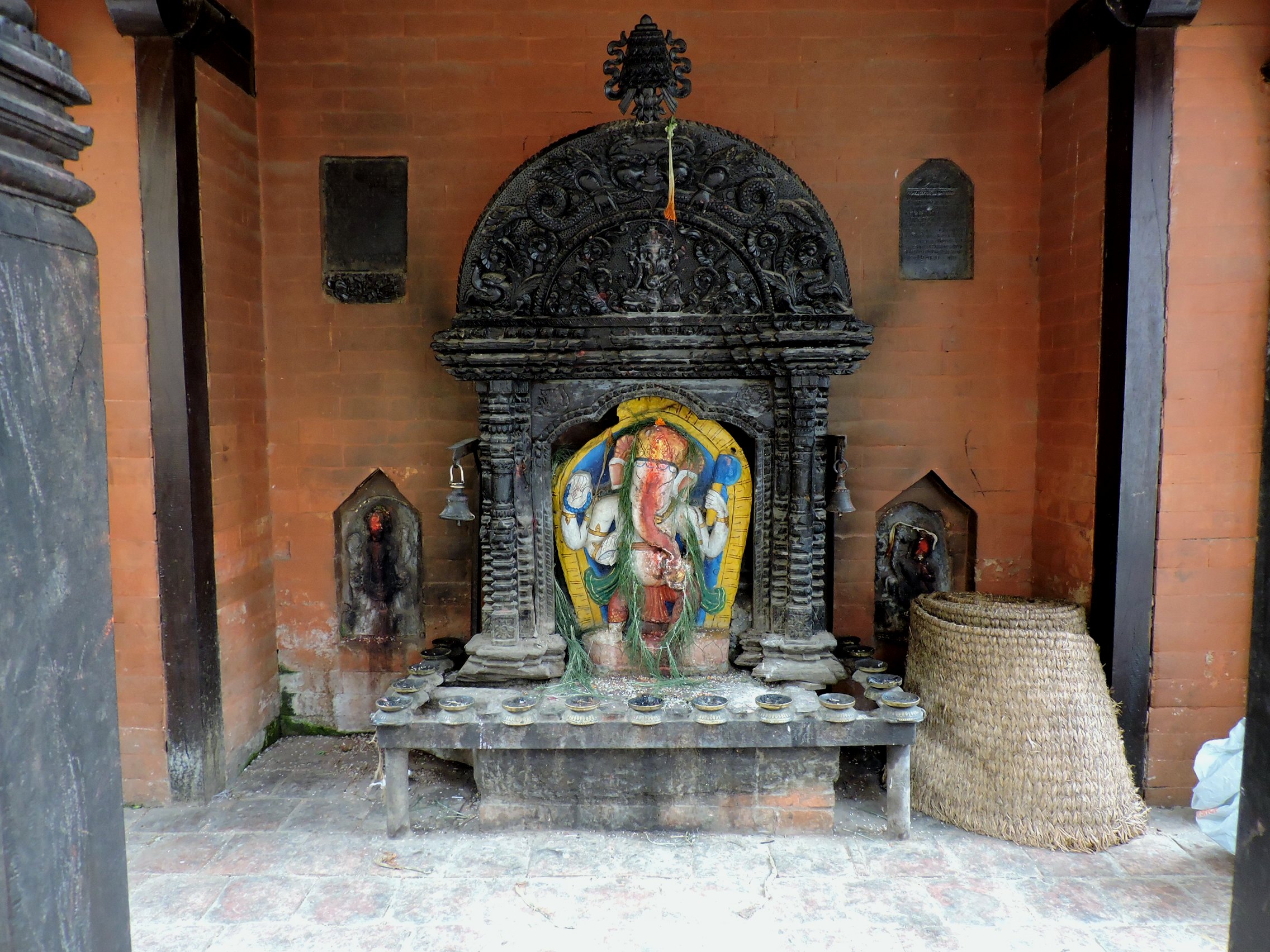
Devotion brings about the finest art
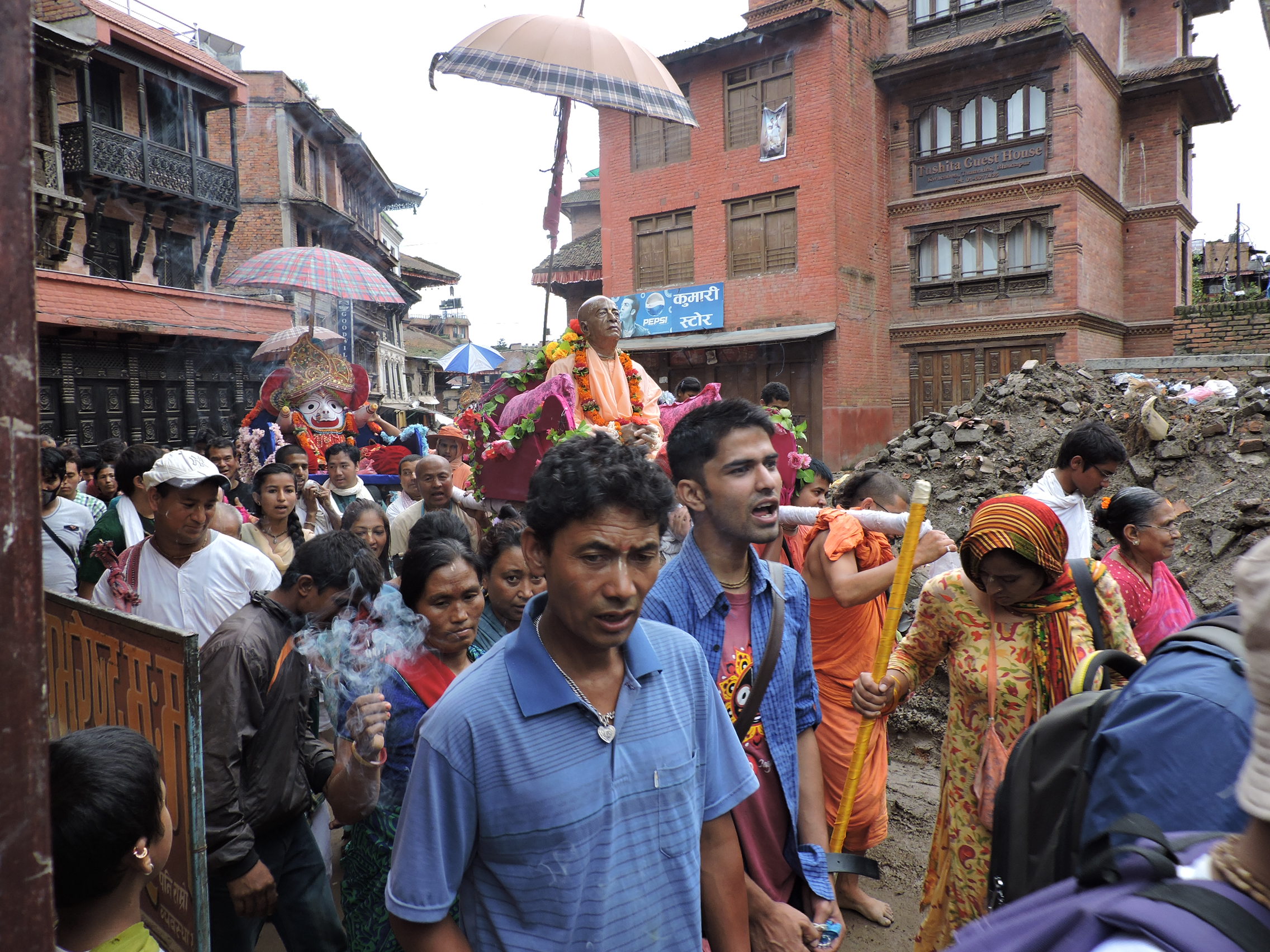
Adulation goes on … anyway …
Good-bye Bhaktapur, it will take time to heal
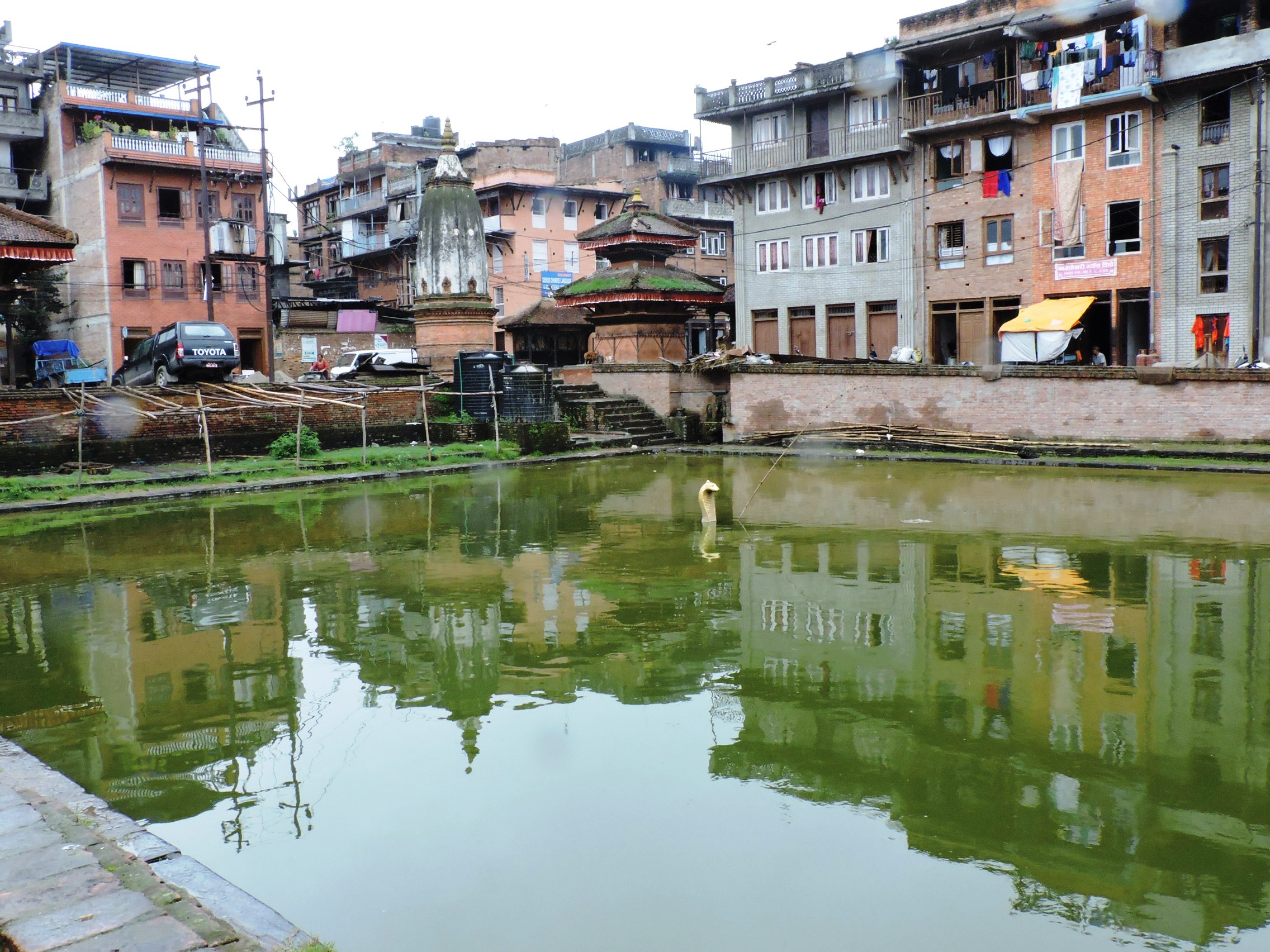
Snake pond
And all the time throughout my tour I keep thinking of a hand sweeping arbitrarily over a beautiful sand mandala scattering its wonderful shapes into the wind to teach us human beings that all things are ephemeral and nothing lasts forever. But then, this is only true for the outward appearance, the essence, the idea of the colourful mandala, the plan of an amazing town full of life remains.
I know that the people I met 11 years ago are alright and with a couple of hundreds of fotos more in my camera I go back to the turbulent modern age.
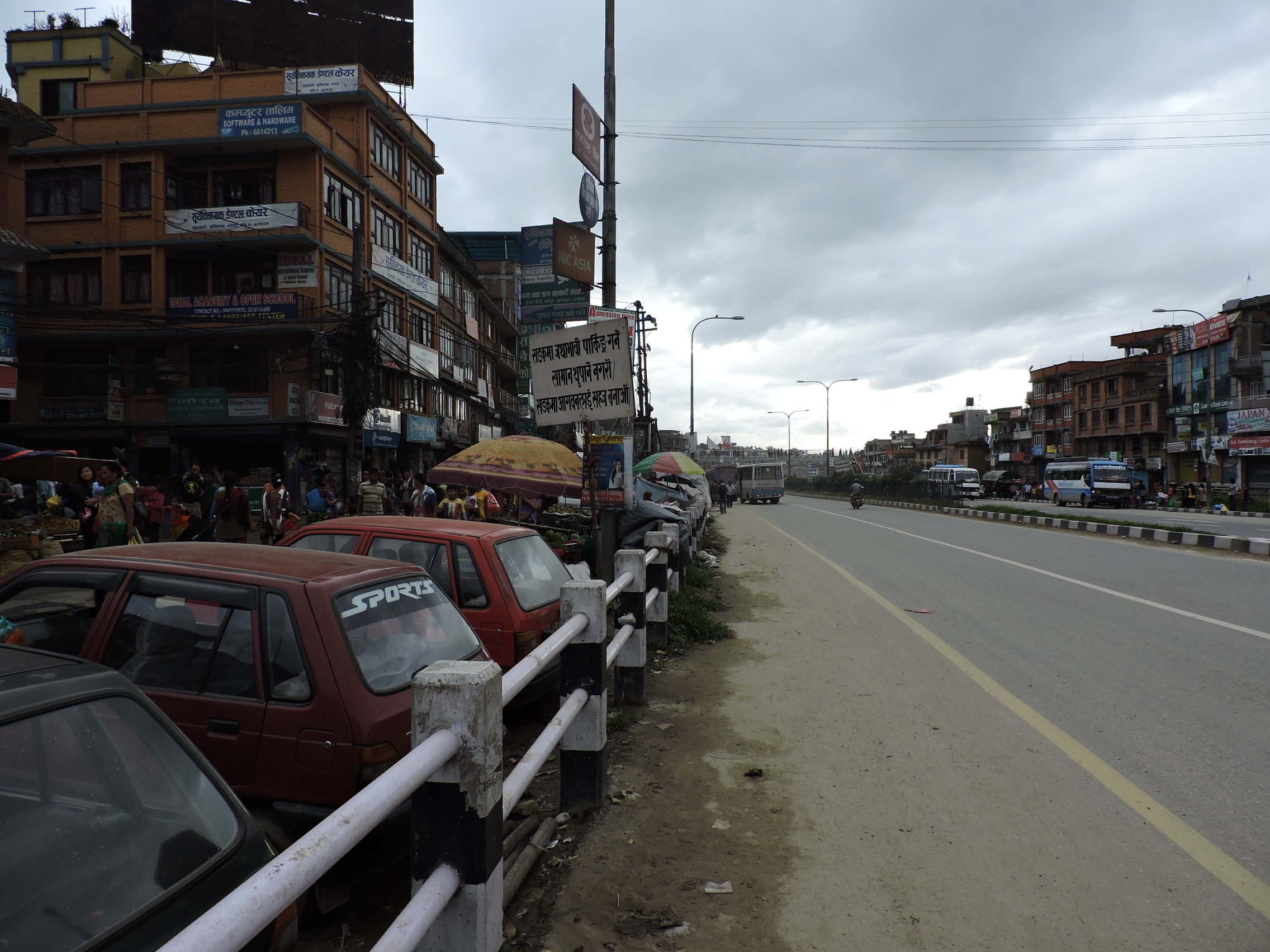
Trying to catch the bus back to Kathmandu
Cheers
Gerburg
 gerburgkamm