Archive | August, 2014

A Trip to Thethi

23 Aug

This is Thethi (pronounce with English th) in the Albanian Alpes and it could easily be one of the most secluded places I’ve ever been to. No restaurants, no shops, not even to buy souvenirs or postcards, and … NO TRAFFIC …
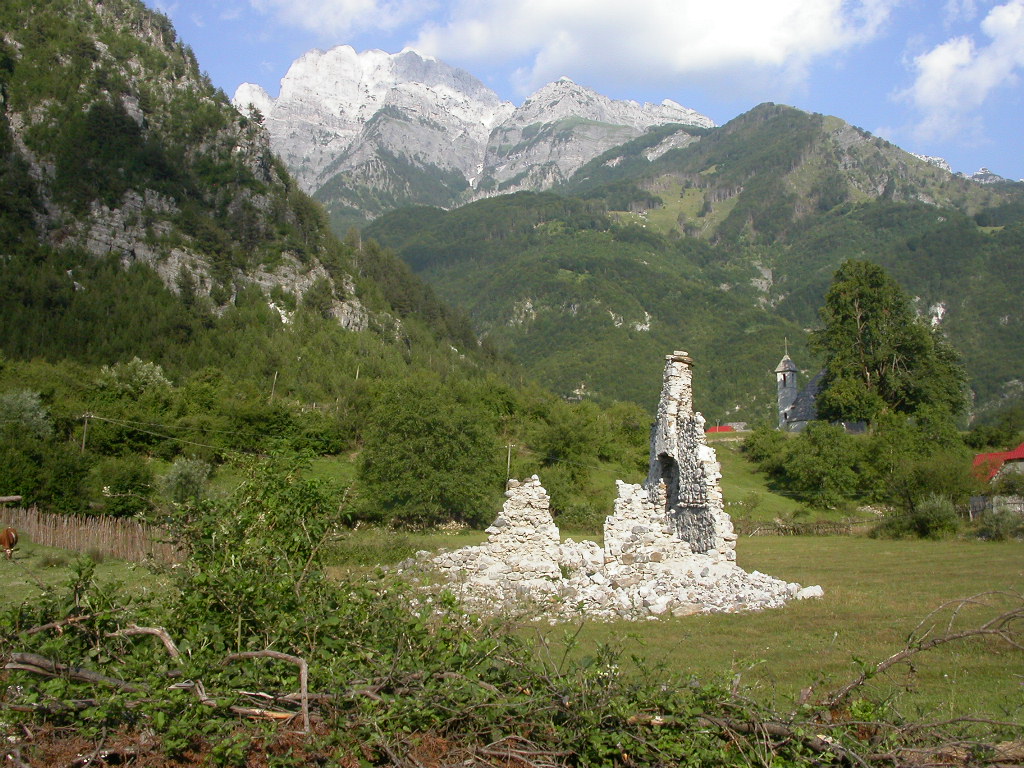
DSCN8041

How come? Infrastructure! This is a bridge!
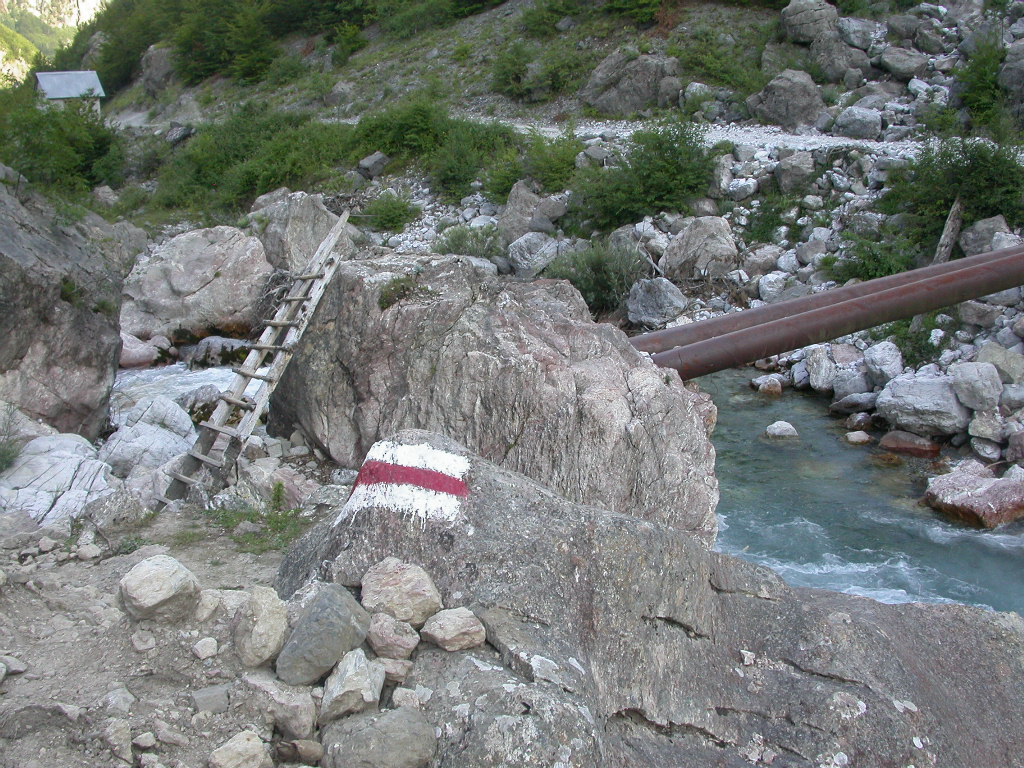
DSCN8043

How do you get to a place  like that?

Once you have made your booking at a B&B-agriturism-homestay you get contacted (e-mailed, whatsapped) by someone who lets you know that he might be about the only person who can take you to Thethi from the town of Shkoder (for the unalbanian price of 40 €), he has got a four-wheel-drive whereas normal cabs either won’t go there at all or will charge more than twice as much (plus you might have to pay for a broken axle). Whatever the price, you better believe it and make a reservation.

The driver is punctual at the meeting point in Shkoder, except then he asks you, could we give a lift to a friend of his? Now, as a traveller in a “struggling” country you can’t be tight, you gotta be generous. Okay, we go and get his friend, who says he wants to take his son, too, but they need some time to get ready. Okay fine, we’re on holiday, we are not in a hurry, we want to get to know the people … The driver invites us to a coffee. We start chatting: he has two little daughters, his wife, he tells us, speaks Italian much better than him. She needs it for her work, telemarketing. Cool, I think and then it dawns on me, is she one of those persons that phone us at any time of day to sell whatever …  with us trying very hard not to shut her up too rudely? … The guy says, her job is not nice because the people she calls don’t like that and yell at her and offend her … She works 4 hours a day and earns 100€ a month. The downside of capitalism, I comment but our driver says, in capitalism, if you don’t like it you quit, under Enver Hoxha’s communism you had to do the job you were told to.

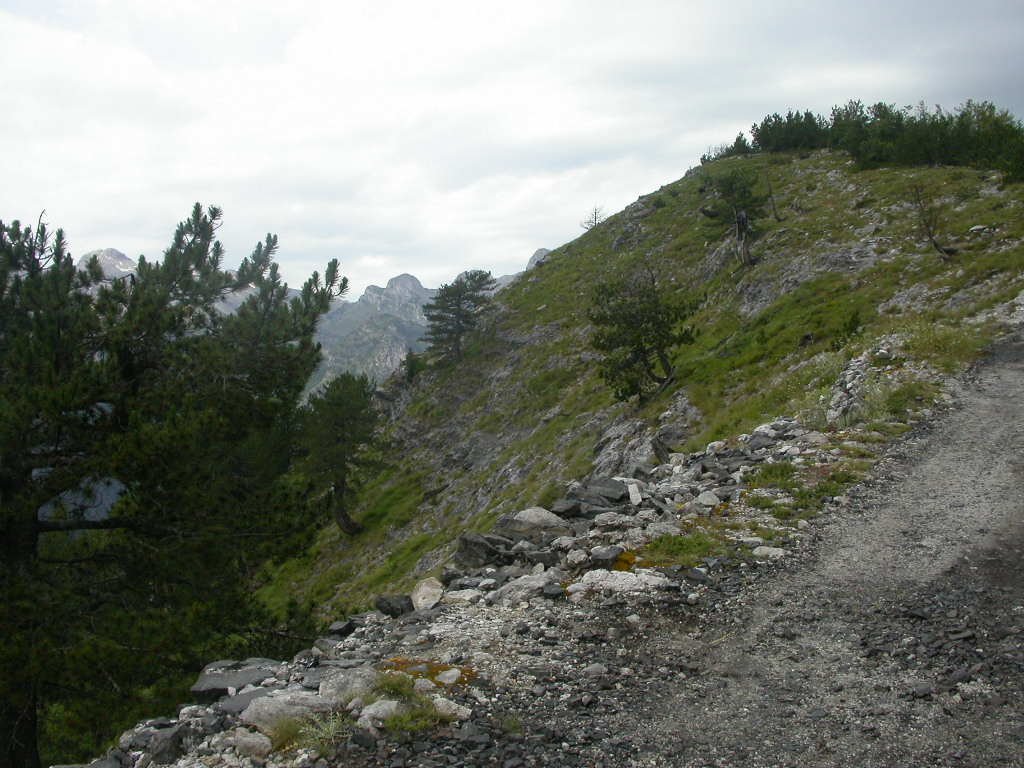
We go and pick up the other passenger and his son, we get to know the family, the women stay home. It turns out another two passenger friends are coming along ,too. It’s getting crowded. In town we stop a couple of times to pick up some tomatoes and other veggies, two bottles with … water … Sure, I think, you can’t travel without water. We leave the town two hours late.  In the mountains the road becomes a narrow, untarred, rough lane, rocks on one side, precipice on the other. After having lost so much time waiting in Shkoder, now the driver doesn’t lose a second. I concentrate on the view.
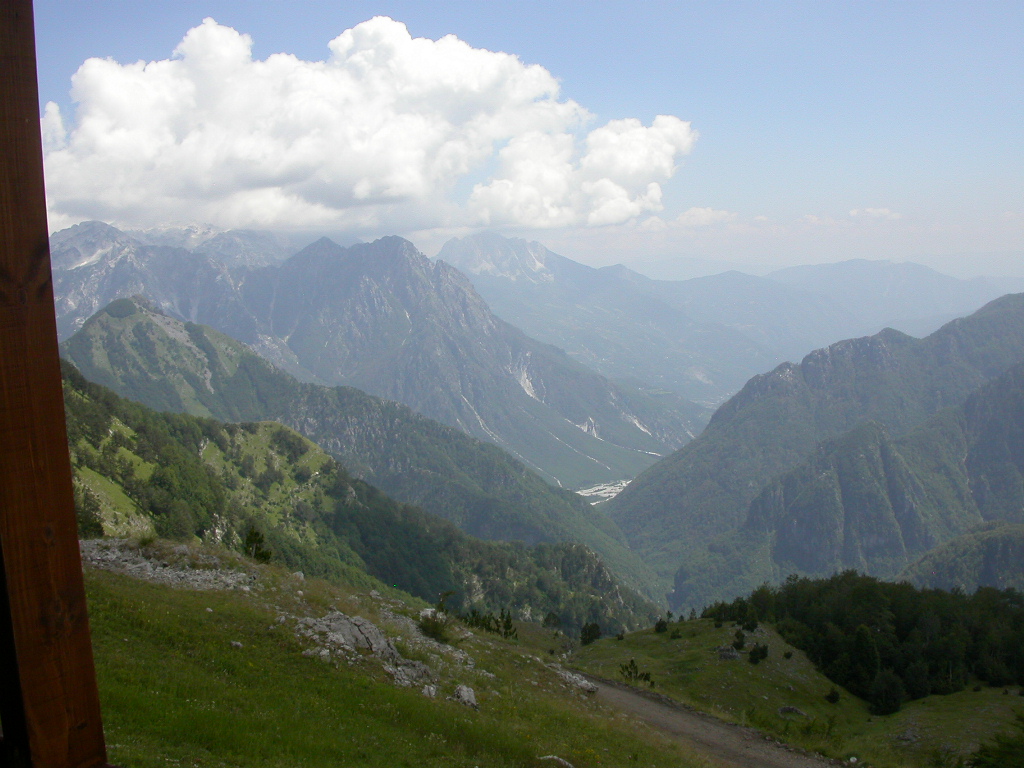
DSCN8036

Somewhere we stop and get loaded onto another 4-wheel-drive. Different car, different driver, no explanation in a language that we understand. Off we go, and … stop again, the  boy runs back to the other car, they have forgotten their bottles. “Oh your water,” I say in my naivety. Everybody laughs. They open one of the bottles and make me smell it. It’s Raki and they start drinking (maybe to forget the precipice on one side and the rocks on the other). The driver doesn’t drink, he is busy on his cell phone, conscientiously keeping one hand on the steering wheel (thank God). Seatbelts aren’t working. Does the word “unrelaxed” exist? I start chatting with the boy who studies English and German at school. For the moment he prefers English.

One of my fears materializes when a car comes from the opposite direction. To make it clear that he won’t yield our driver accelerates a little and comes to a halt only half an inch away from the other vehicle. Both drivers start shouting at each other. The rule would be, the other car, coming uphill, should recede. Never mind the rules, they shout, with their heads bent forward like gamecocks, our driver turns the engine off.

Me: “Oh take it easy, calm down” in Italian. The raki drinking guy behind me whose Italian seems to be improving after a couple of gulps, laughs: “Don’t worry, they are colleagues.”

Our driver, to show he has no intention to solve the issue, takes a pack of cigarettes, gets off the car, the other driver, too, they go back up the road where we have come from.  They won’t fight, I think, the road is far too narrow for that. In the end it’s our driver who gives in (I mean, is that so difficult to be a wise man instead of being a fool?)

Later, when we pass by a burnt down house, the boy tells me that the family that lived there had quarrelled with another family who then decided to torch their foes’ house and even their car in the city (Shkoder) and finally the family who lost the battle had to leave the area. “Woow,” I think,  having read about feuds and blood feuds and never believing they could still be in practice. No problems for tourists as long as they keep clear of quarrels between locals.

We get to our destination.
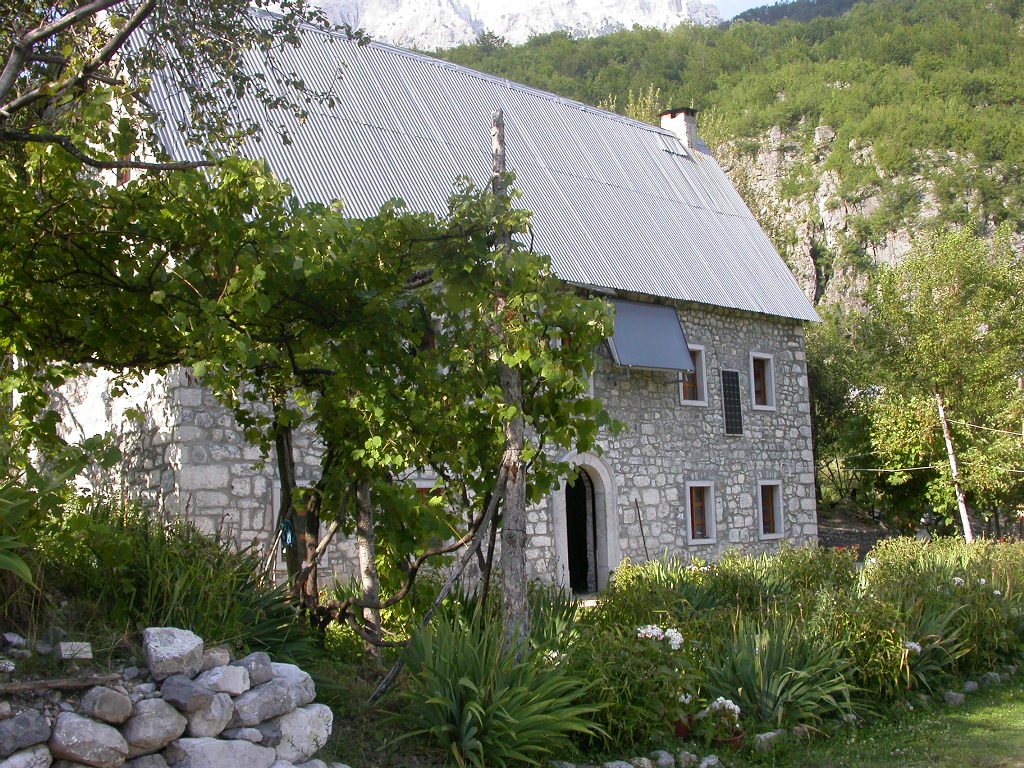
DSCN8038

This is the place where you get: best breakfast, best lunch, best dinner. Best byrek (a pie stuffed with veggies and feta cheese), chicken drumsticks so big you think they were not just free-range they were athletes. All topped off with fresh onions, tomatoes, tzatziki and always oven-fresh bread. The landlady, never to be seen without her babushka head-kerchief, is boss. She does the cooking, housekeeping, accounting. Her husband comes in from the fields in the evening, sticks his pitchfork into a flowerbed and disappears. She speaks Albanian and employs two students from Durres who speak the other languages. The girl has learnt Italian just by watching tv from her childhood days onwards (good news for foreign language teachers!). Just chatting we tell her how much we paid for the trip to Thethi. She tells the landlady, an animated discussion follows, they phone someone and the argument continues (heating up even) on the phone. In the end we are informed that on our way back we are going to pay 20€. That’s ok.

There is a certificate hanging on the dining room wall, it says our landlady’s name and the only other words I understand are “United Nations and Women Empowerment”. They have done a pretty good job here.

Magic Thethi: lonesome walks
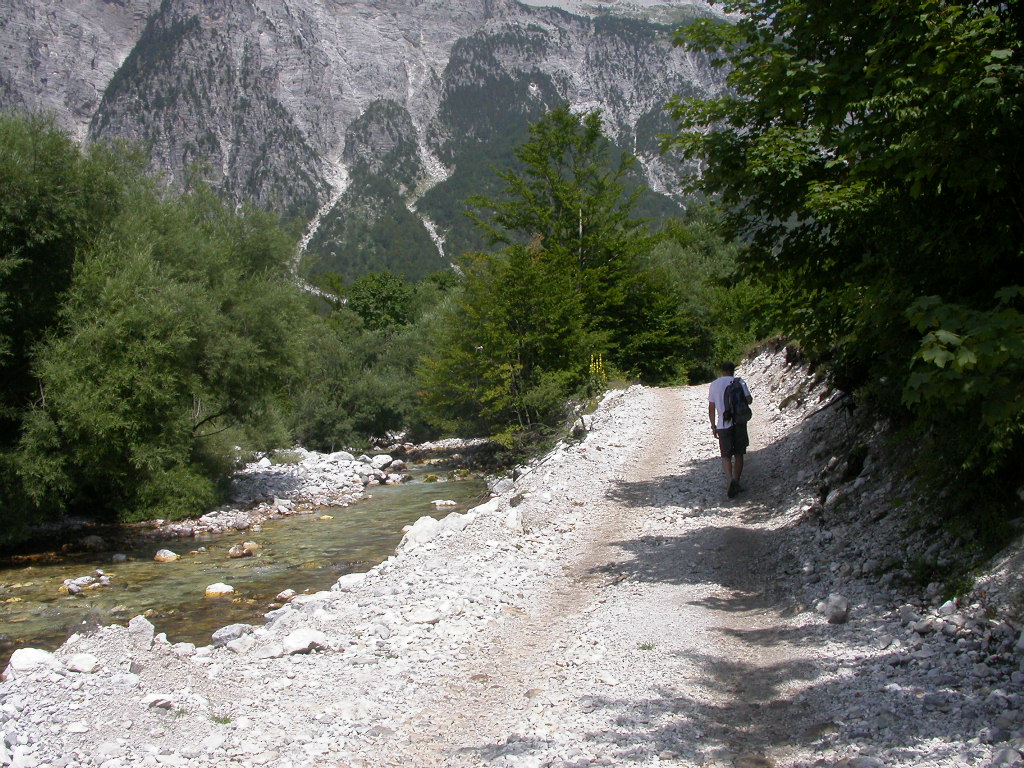
DSCN8052

Who the h.ll  is this lonesome traveler? The Italian again? (I suppose you are all familiar with “Where the hell is Matt?” No? see YouTube)

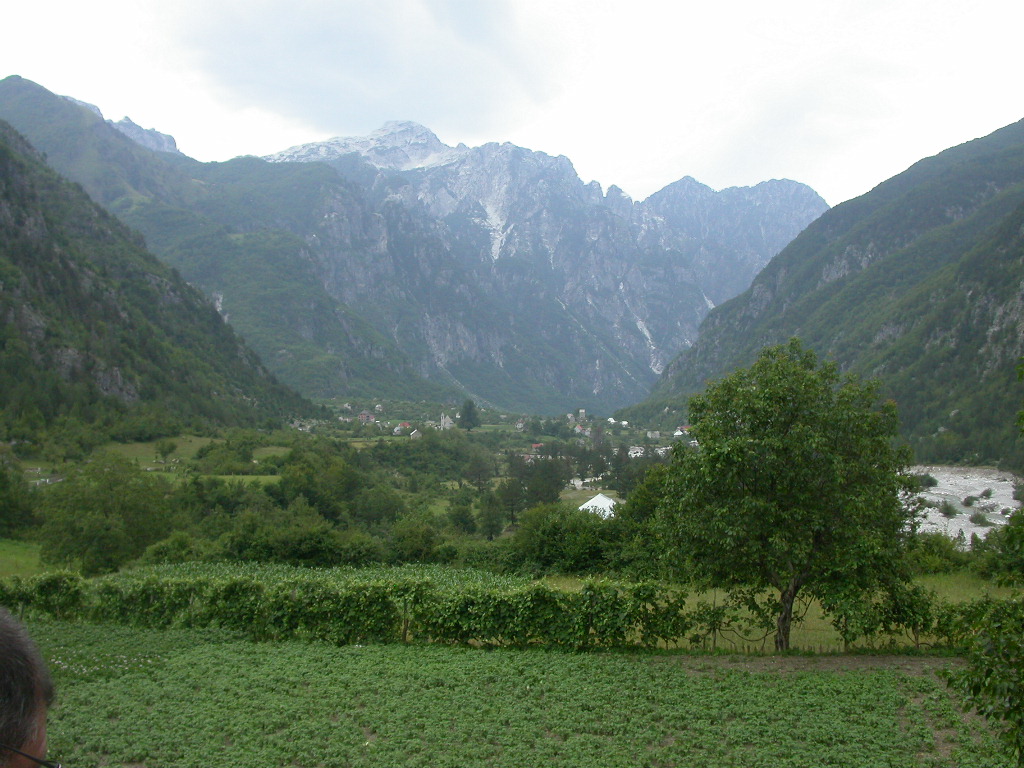
Awsome views:
DSCN8065

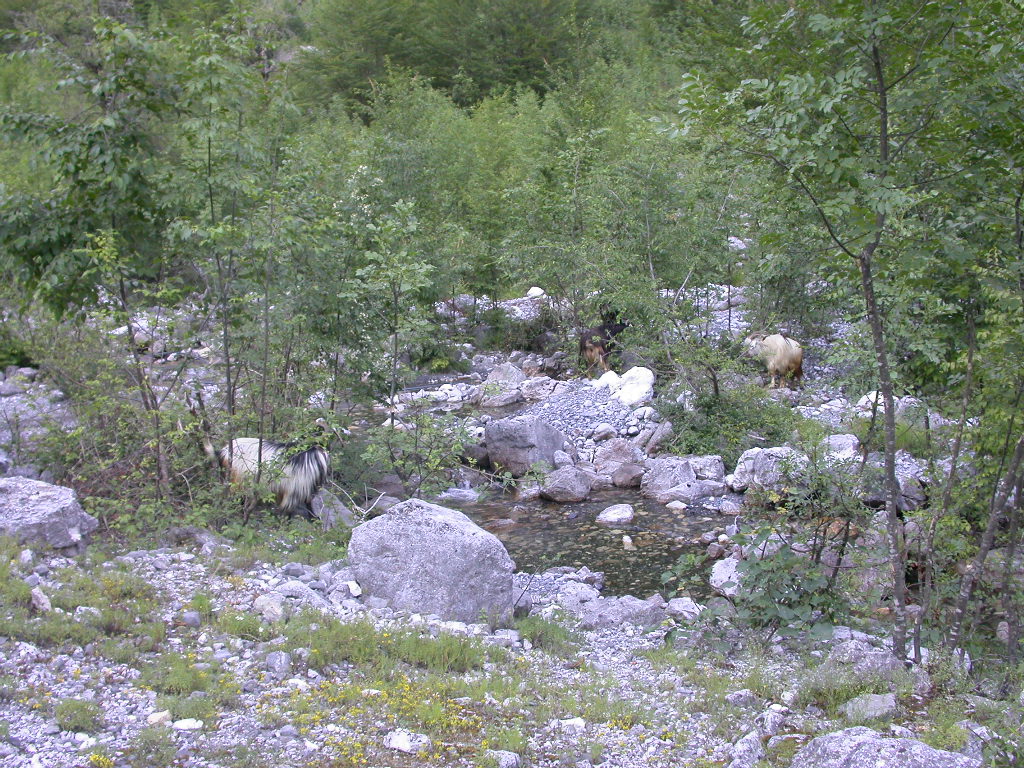
 On those lonesome hikes you’ll meet bears, wolves and lynx, I thought, but no! These are goats, of the kind that at a certain hour they just gather together and go home (tame, domestic, unexciting), nicely camouflaged among the rocks.
DSCN8046

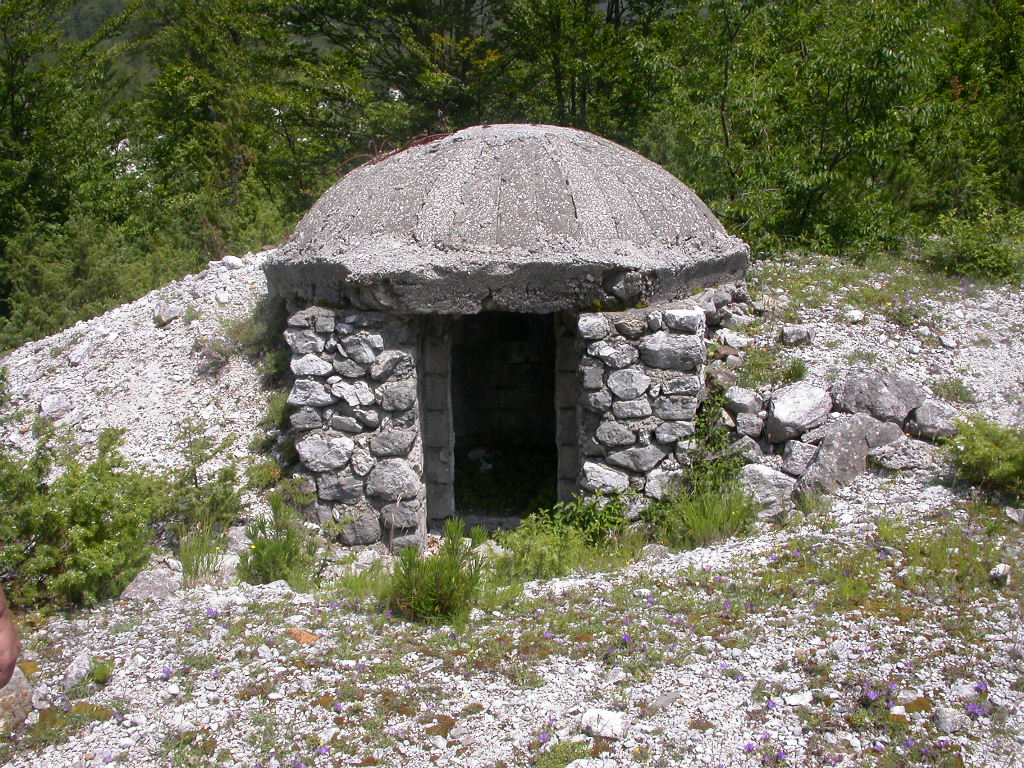
And of course, where would mankind be without …
DSCN8057

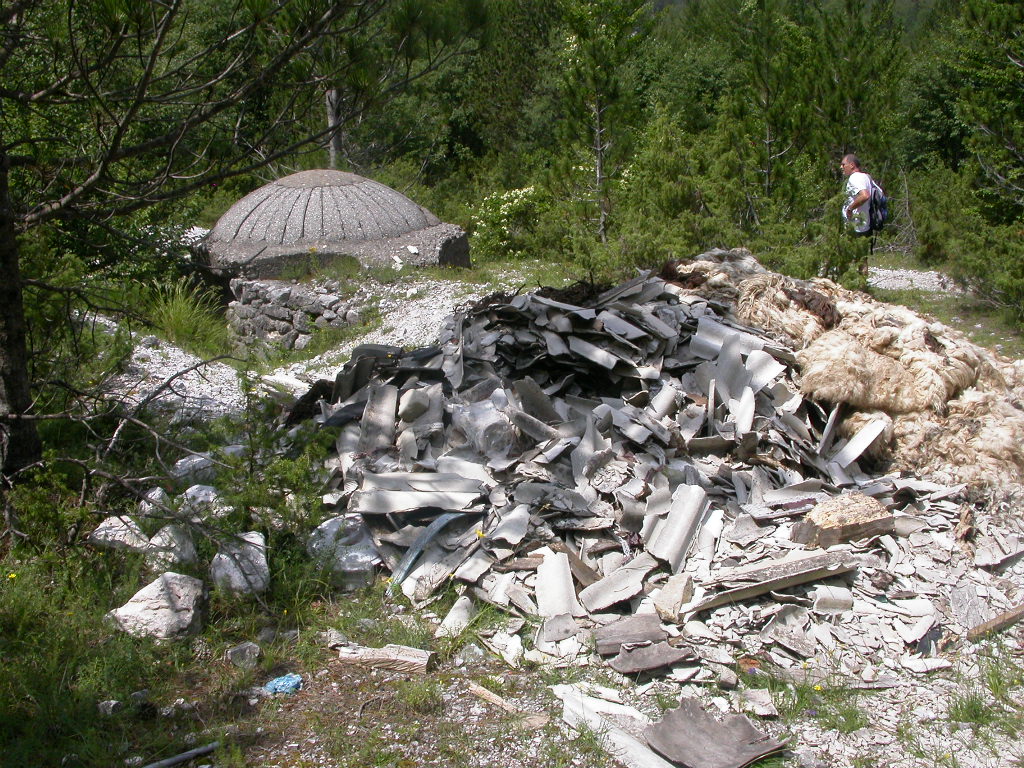
… rubble dumped in the wild! On the right: hundreds of goat skins (no hiding place for the poor beasts!), back left: pillbox peeping out from the rocks, back right: the Italian tourist (probably musing about what the heck could have caused the invasion paranoia of Albania’s one time leader).
DSCN8059

On our way back I have the occasion to take pictures along the road.

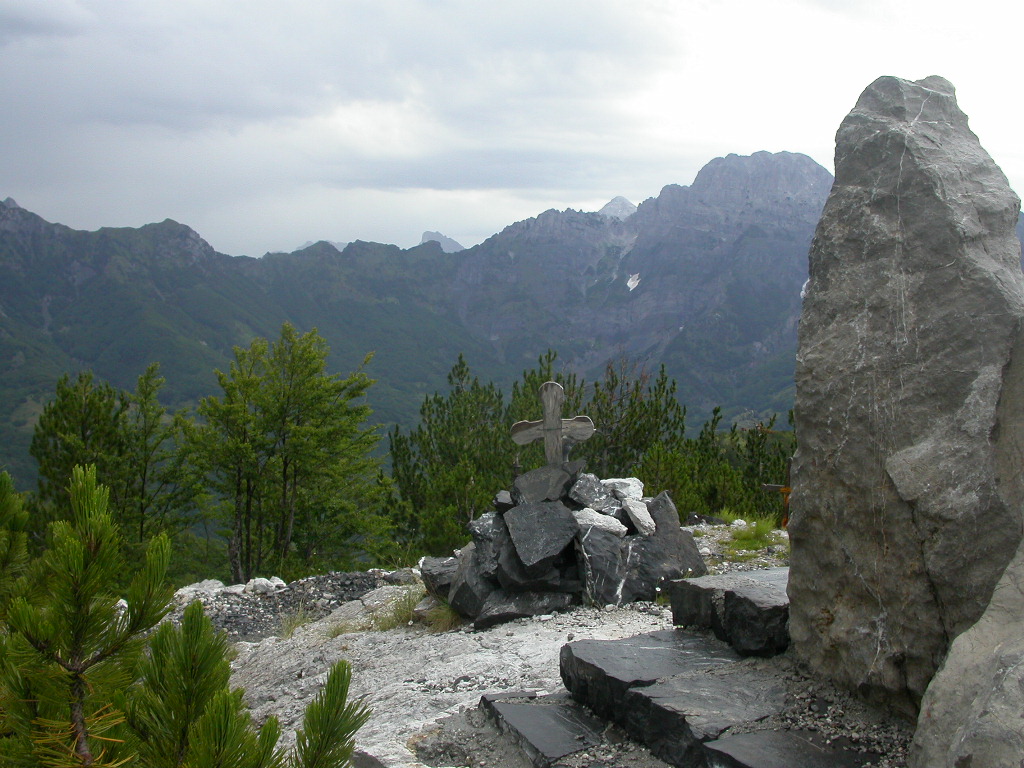
Not an omen:
DSCN8068

This is a slope, not a precipice

DSCN8072

The travelers are: an Albanian-Kosovarian from Switzerland who speaks Albanian (and English and almost all the Swiss languages, on the picture talking to the driver) and his Swiss girlfriend (white trousers) who speaks German among many other languages, a young couple from Novosibirsk (next to the vehicle), their English is very good and the girl understands German, too (I’m so happy these kids can travel nowadays like everybody else), an Italian who understands a couple of languages except Albanian, an Albanian driver (striped t-shirt) who understands and speaks Albanian and my humble self who gets a bit mixed up talking to all of them except for the Albanian-only speaking driver …

DSCN8075

Where the h.ll is the Italian?

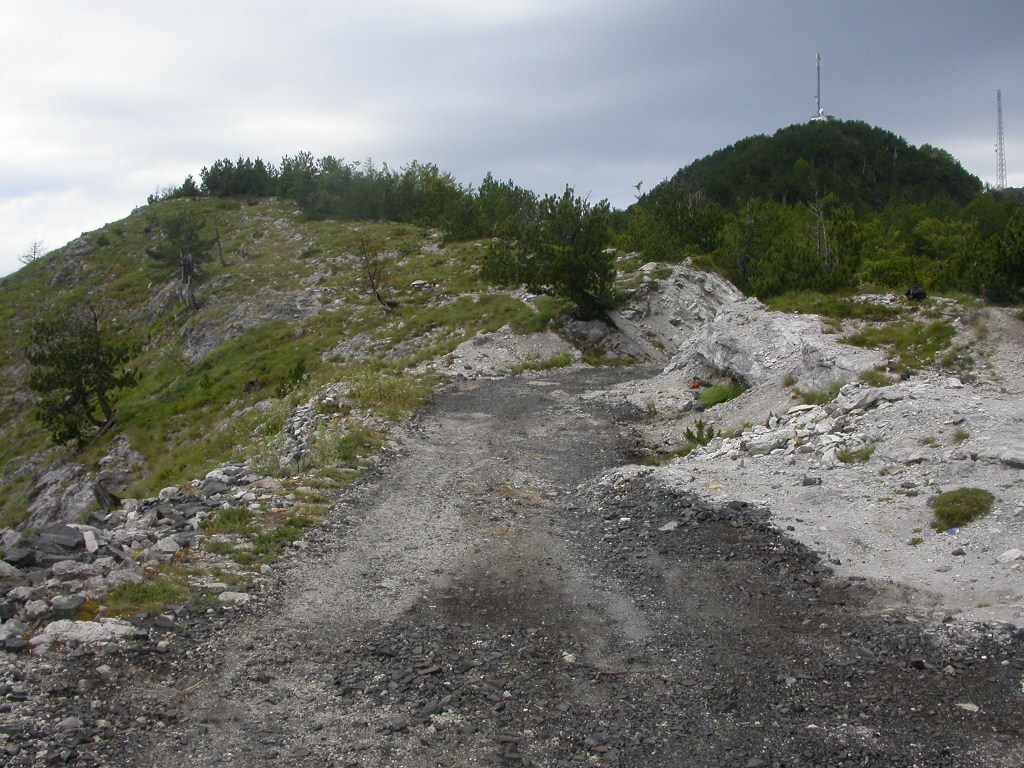
The Swiss lady tells me that the Germans (GIZ German Society for International Cooperation) are constructing the road to Thethi now. That’s a good idea, development comes with better infrastructure and …
DSCN8073

… of course, Germans don’t like bad roads.

Cheers

Gerburg
Kruja is a must

14 Aug

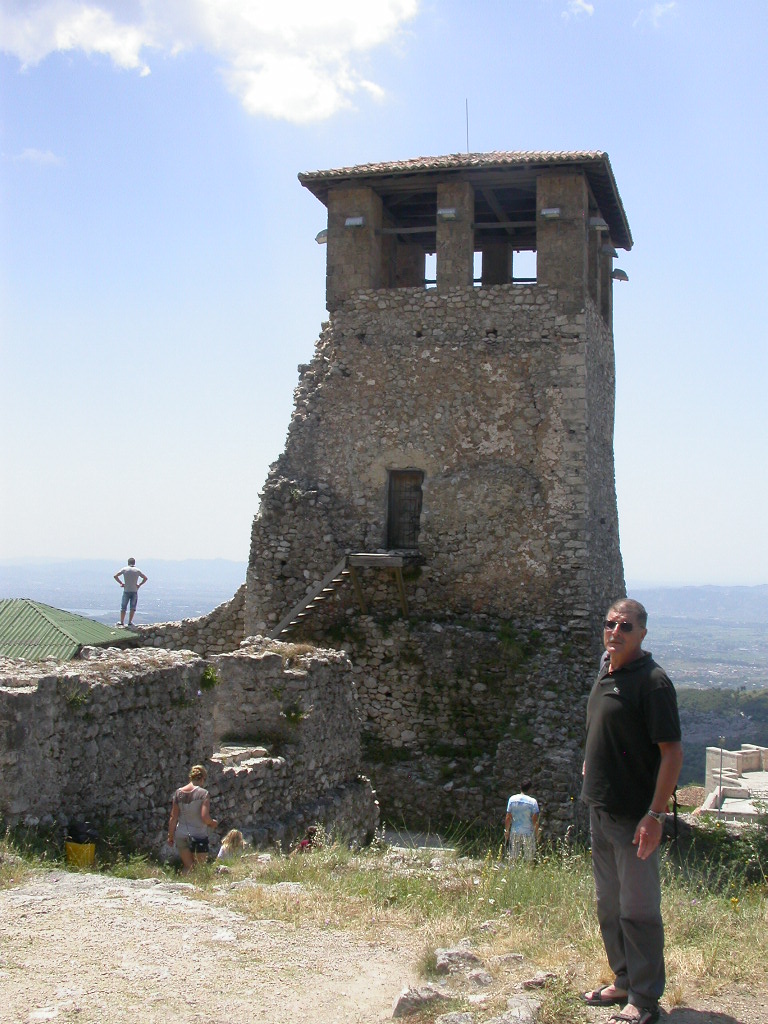
Just to become familiar with travelling in Albania a daytrip from Tirana to Kruja (statue, bazaar, fortress) is a good start. You wouldn’t believe it but it’s a most historical place:

DSCN7969


this is where the great Skanderbeg (pronounce slightly Skanderbey) stopped the Ottomans for about 25 years, ten years after his death the besieged inhabitants surrendered, got  killed and the women enslaved (a kind of ISIS at the time).

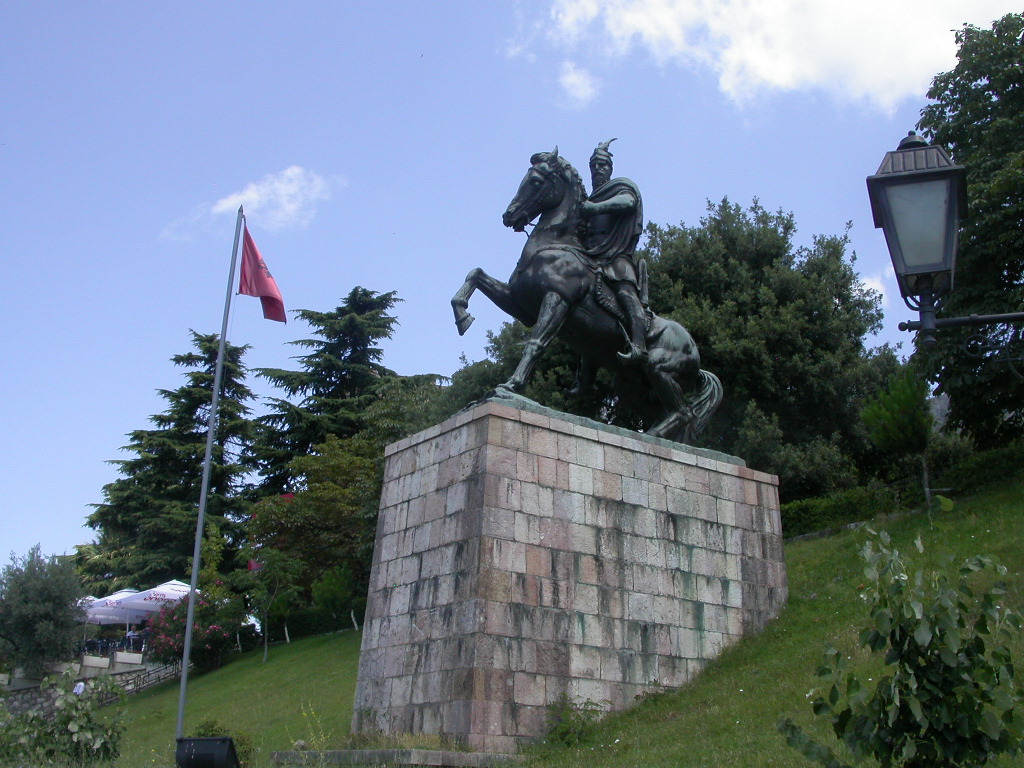
DSCN7966

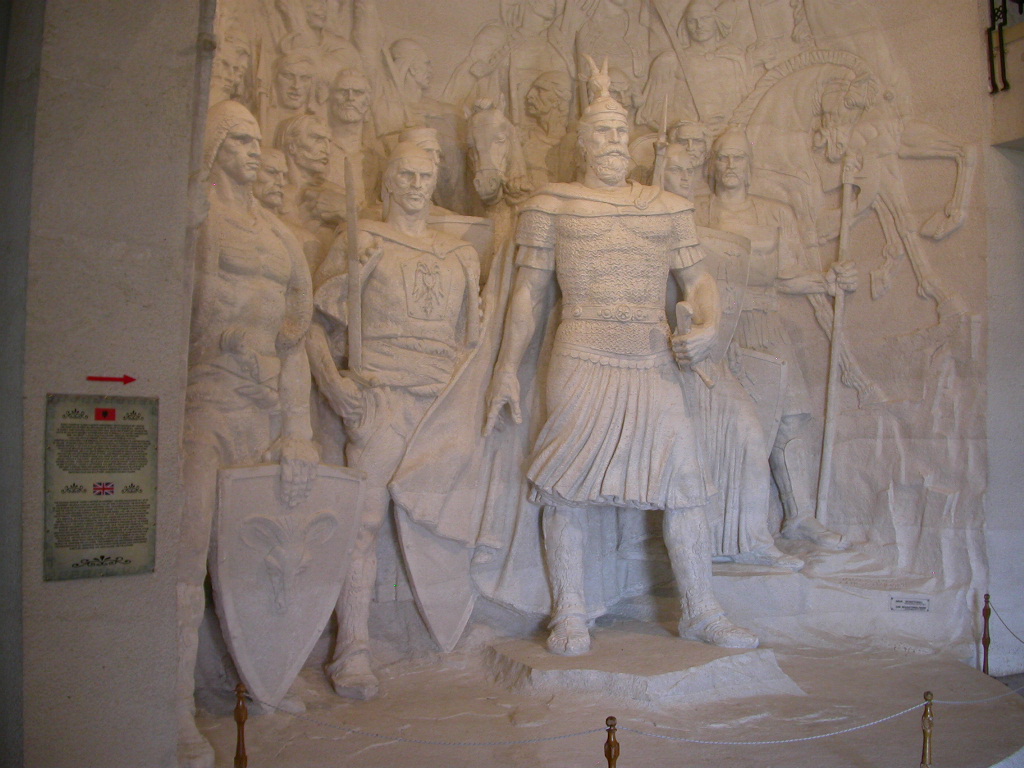
A magnificent statue of Skanderbeg! You can spot the two horns on top of his helmet. His helmet was adorned with a ram head, eloquent sign of virility, power, divineness – what it means here: an allusion to Alexander the Great, the two-horned-one, Iskander, his Ottoman name … Skanderbeg means Lord (bey) Alexander, see the connection? The real helmet and huge,heavy sword of the 15th century hero are in Vienna (Kunsthistorisches Museum), because the Viennese also know something about the Ottomans.

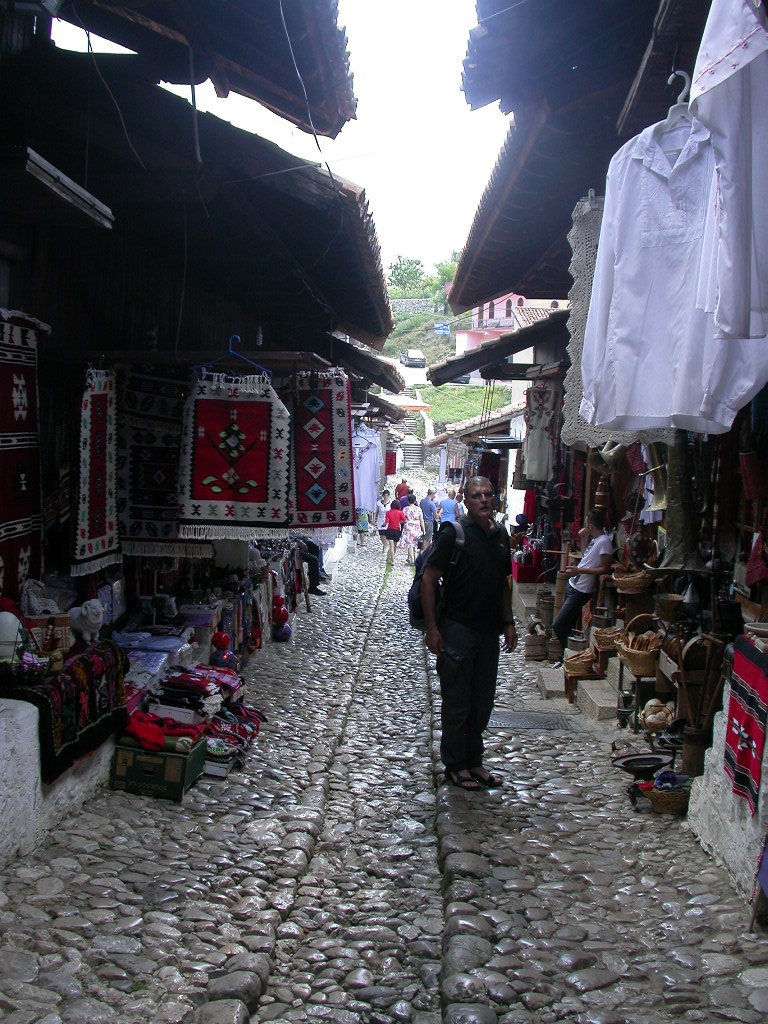
DSCN7970

Beautiful ancient bazaar (here with an Italian tourist … gee, they are everywhere!). This ancient shopping mall had already sunk into oblivion and was SAVED and reconstructed, guess by whom? Enver! one point for him (never say never). Cross the bazar, you can buy everything there, from blouses, to wood carvings, carpets and ancient tools, but then you have to carry them. Buy a small pill-box to be used as an ashtray (how fitting, a bunker with ashes inside!), good quality and a real souvenir. Do you think my taste would be bad enough as to buy one?

Sure!

DSCN8886

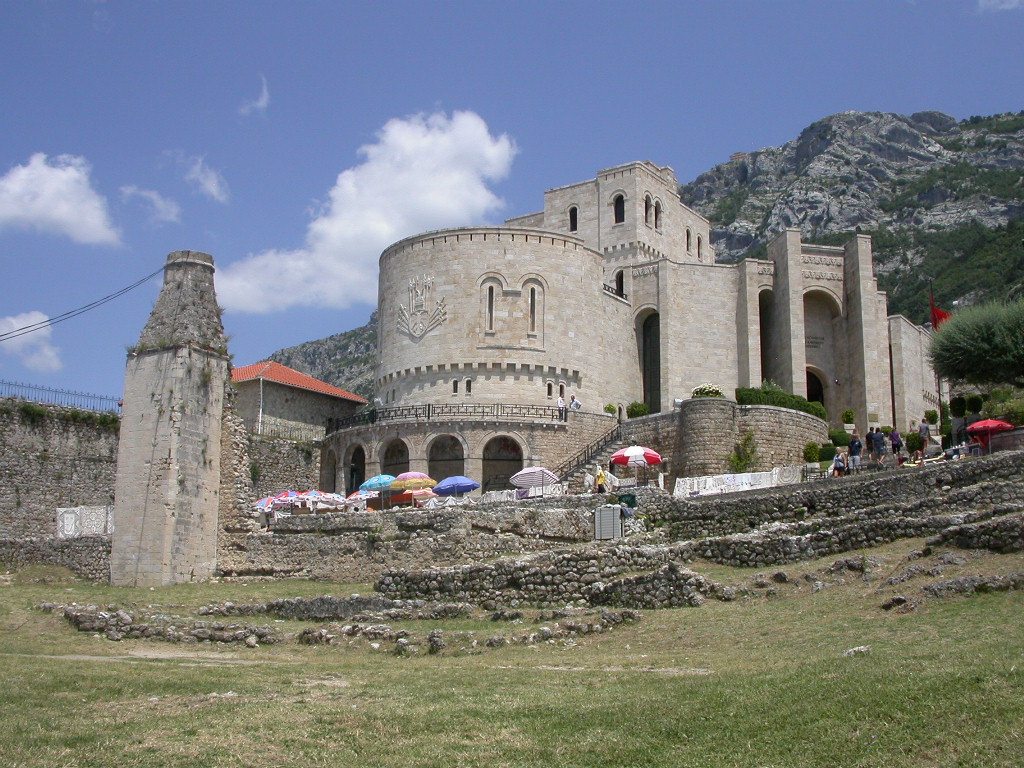
Go up, up, up (wear good shoes on cobblestone!) and you reach the fortress. Is that the medieval fortress you expect to see?                  m e d i e v a l ? or neobyzantine-fascio-comunist-modernism?

DSCN7995

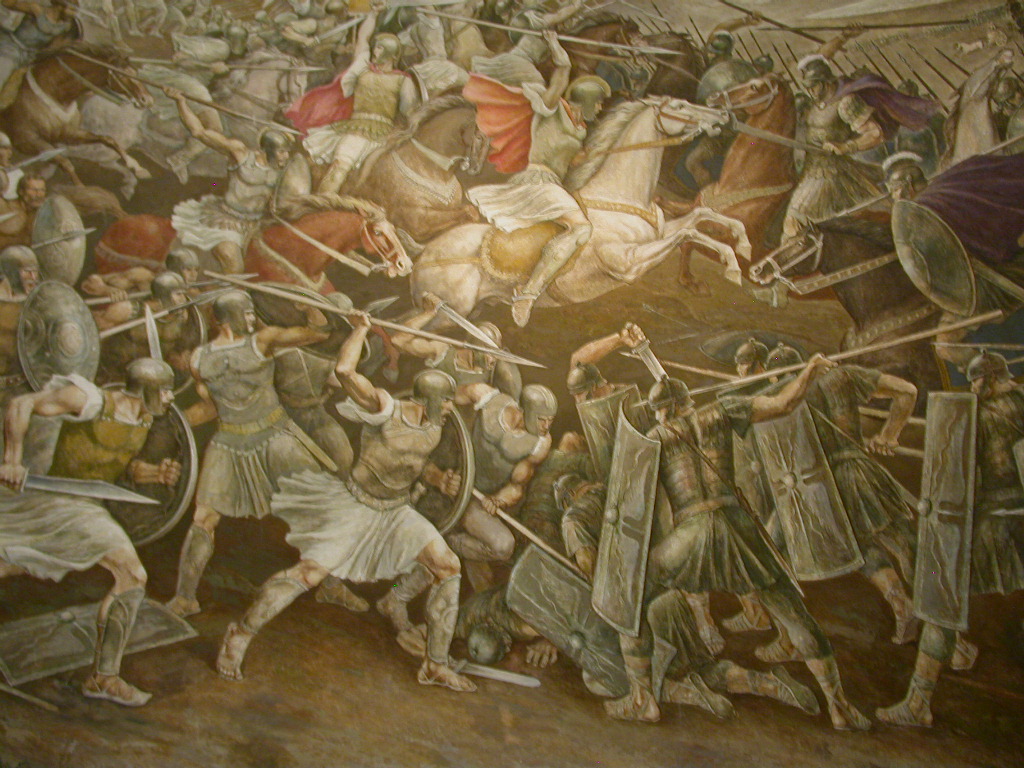
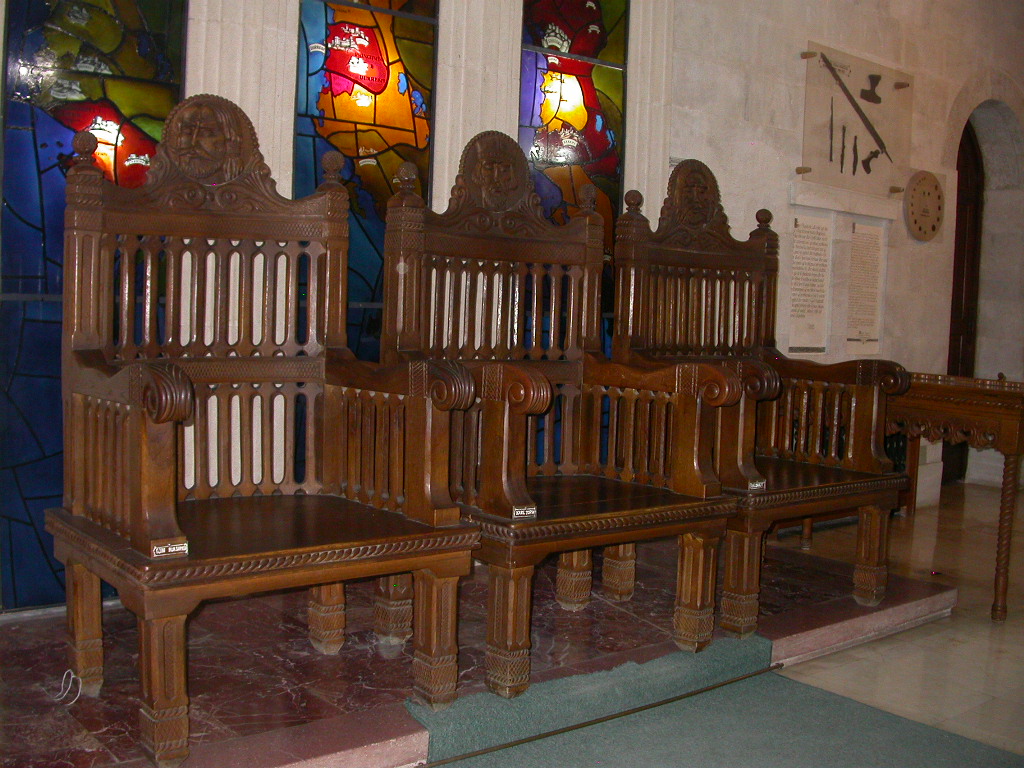
Wild guess who ‘architected’ this; right! Pranvera Hoxha, Enver’s daughter; remember the pyramid? The building hosts the Skanderbeg Museum. When buying the entrance ticket you are informed ‘no taking pictures inside the museum’. Okay, rules are … Then you observe Albanian families flock into the museum teaching their children about their history and their culture and all of a sudden in their boundless enthusiasm they start putting their children on the thrones to take pictures of them, so I felt free to sneak out a few photos for myself.

heroes

DSCN7976

battles

DSCN7980

thrones (without children)

DSCN7982


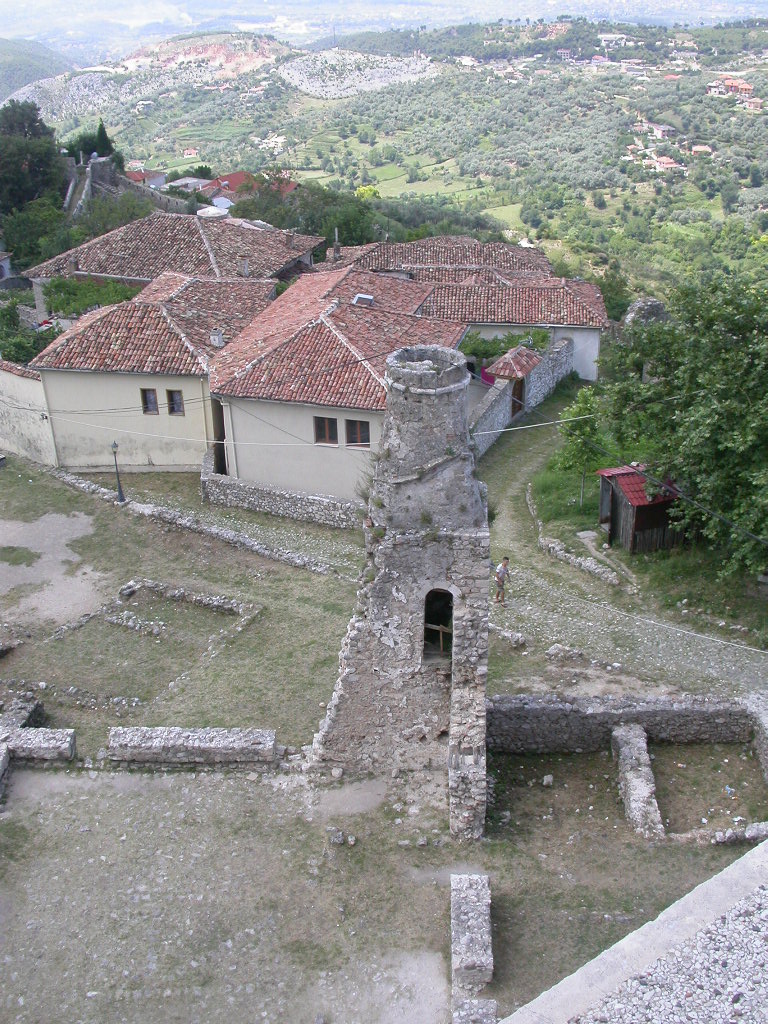
This is what’s left of the ancient castle (in front the Italian tourist, again)

DSCN7993 DSCN7984


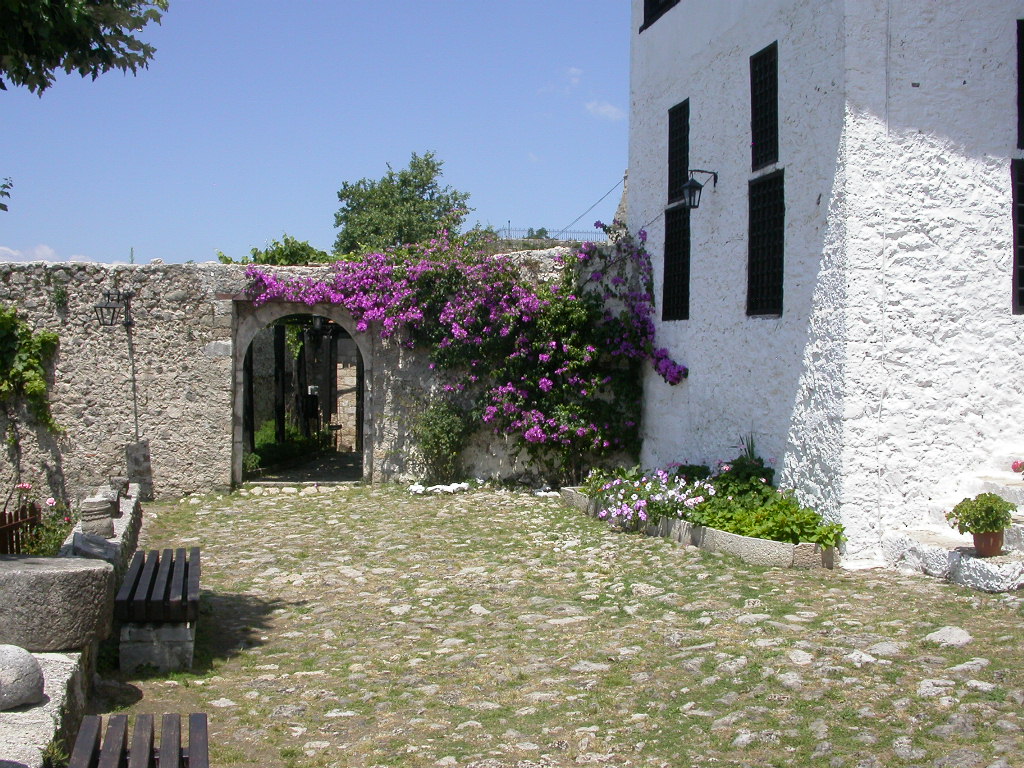
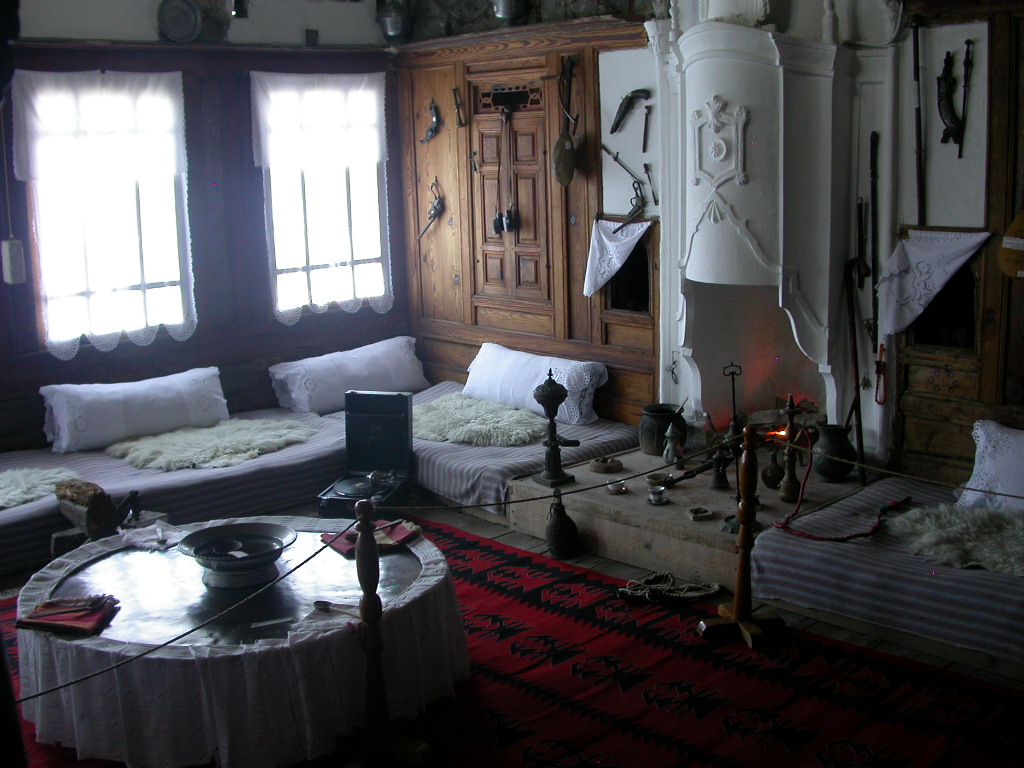
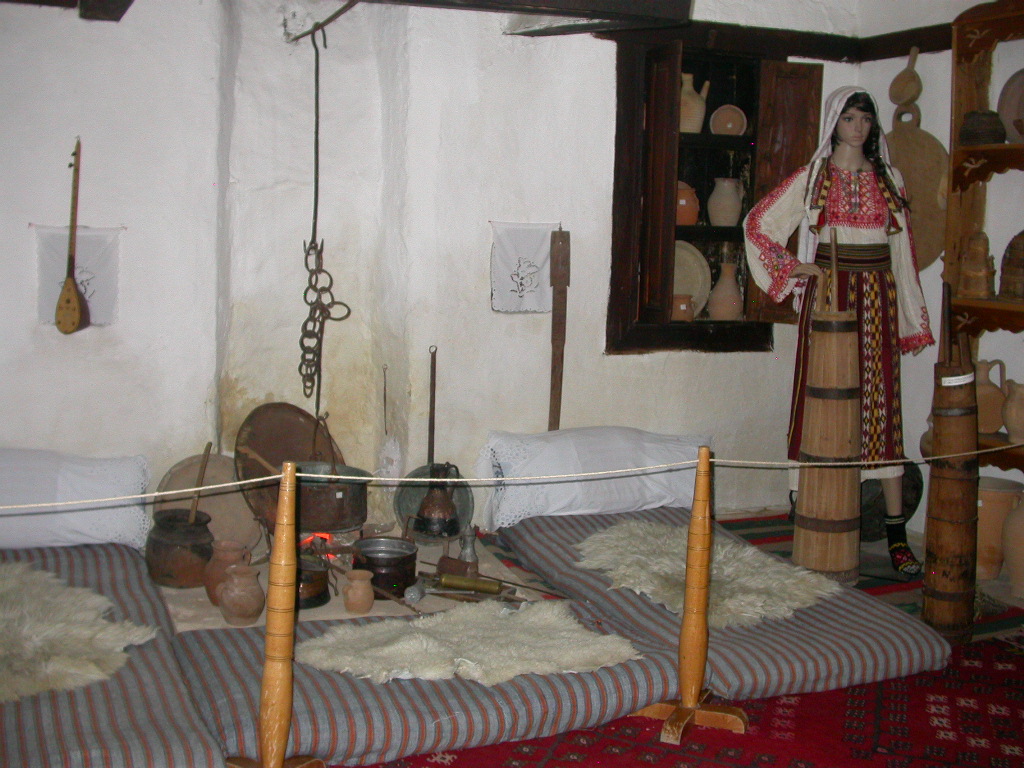
The National Ethnographic Museum (you find National Ethnographic Museums everywhere and they are usually Ottoman villas)

beautiful entrance

DSCN7998

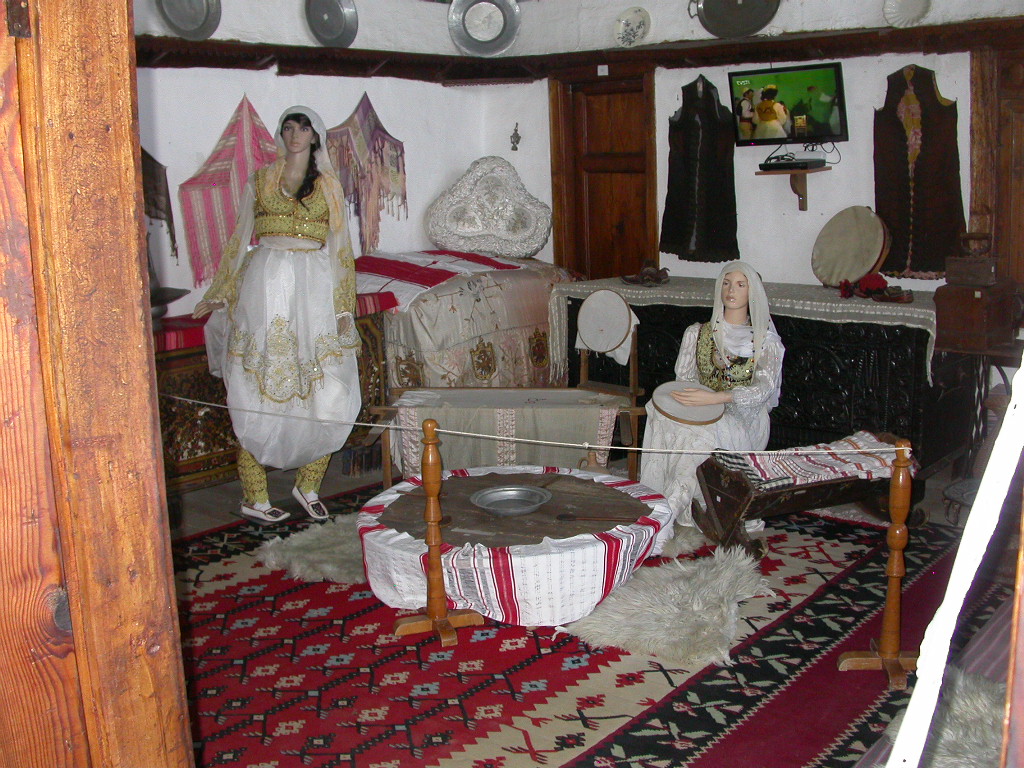
        the ladies’ quarters

DSCN8007

comfy living room (for the men and their guests)

DSCN8010

 bedroom (I guess)

     DSCN8018

And after visiting this wordly Ottoman villa  a more mystical site attracts my attention:

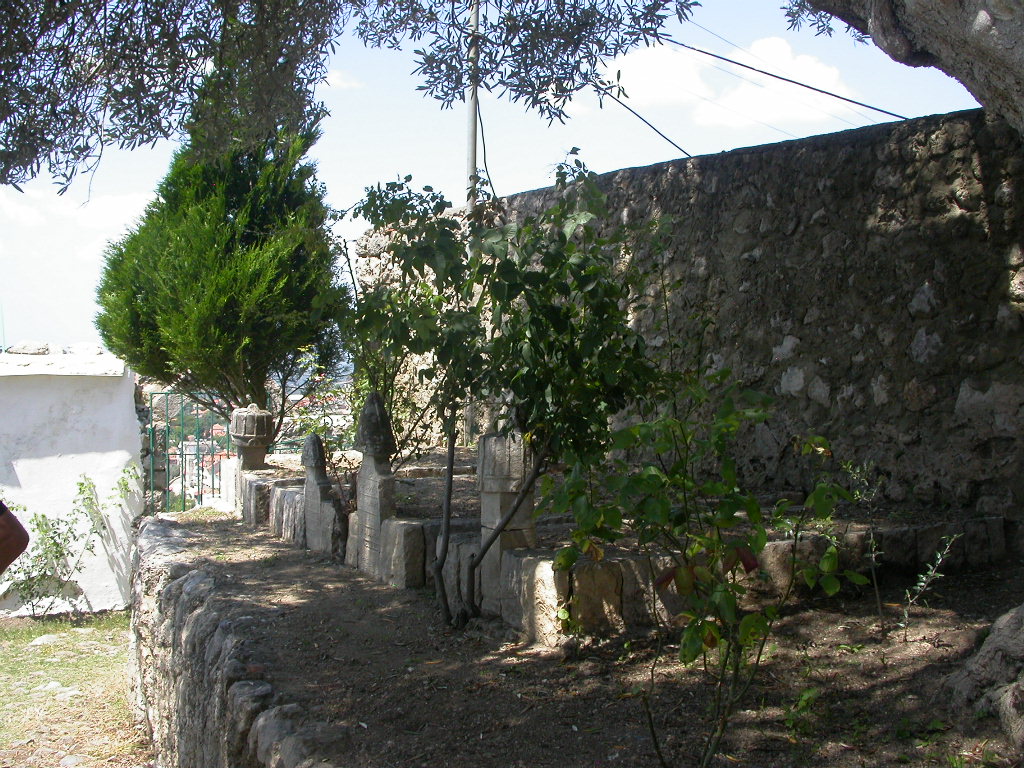
a Bektashi cemetary

DSCN8028

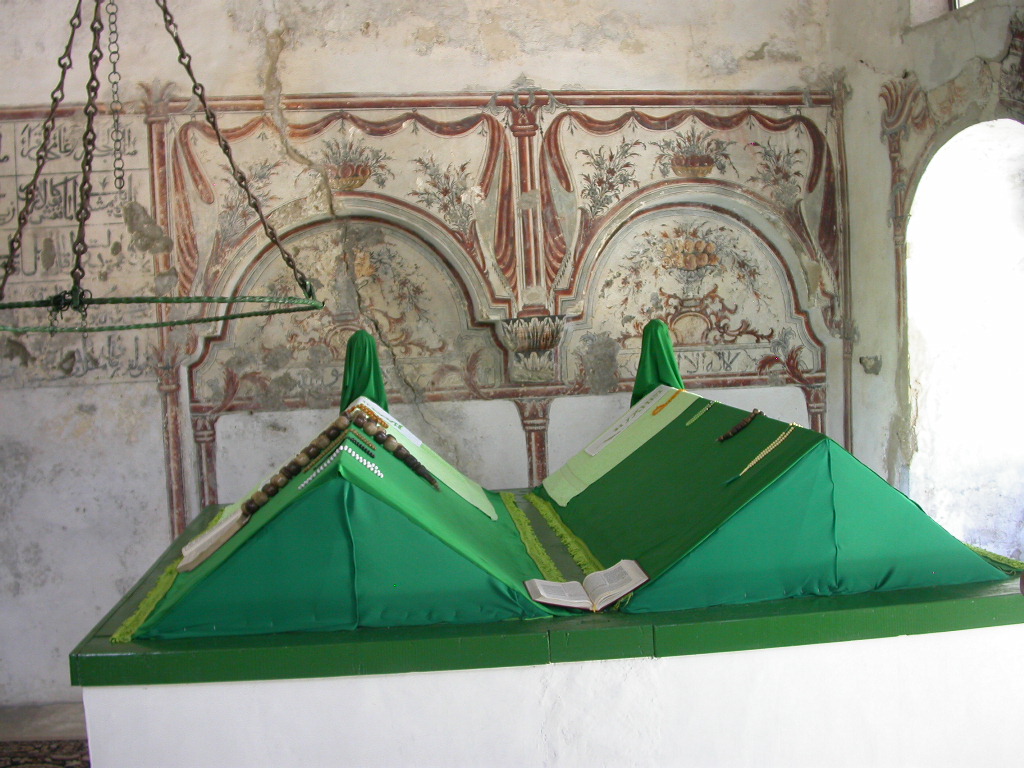
Bektashi tombs

DSCN8024

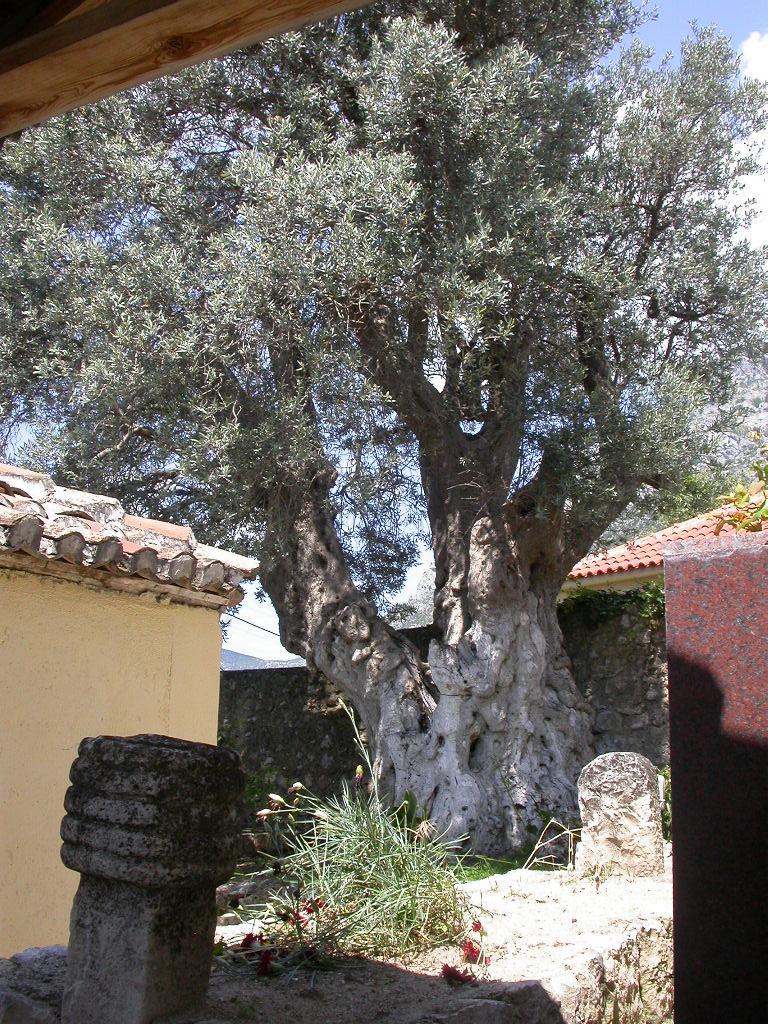
and a millennium olive tree

DSCN8027

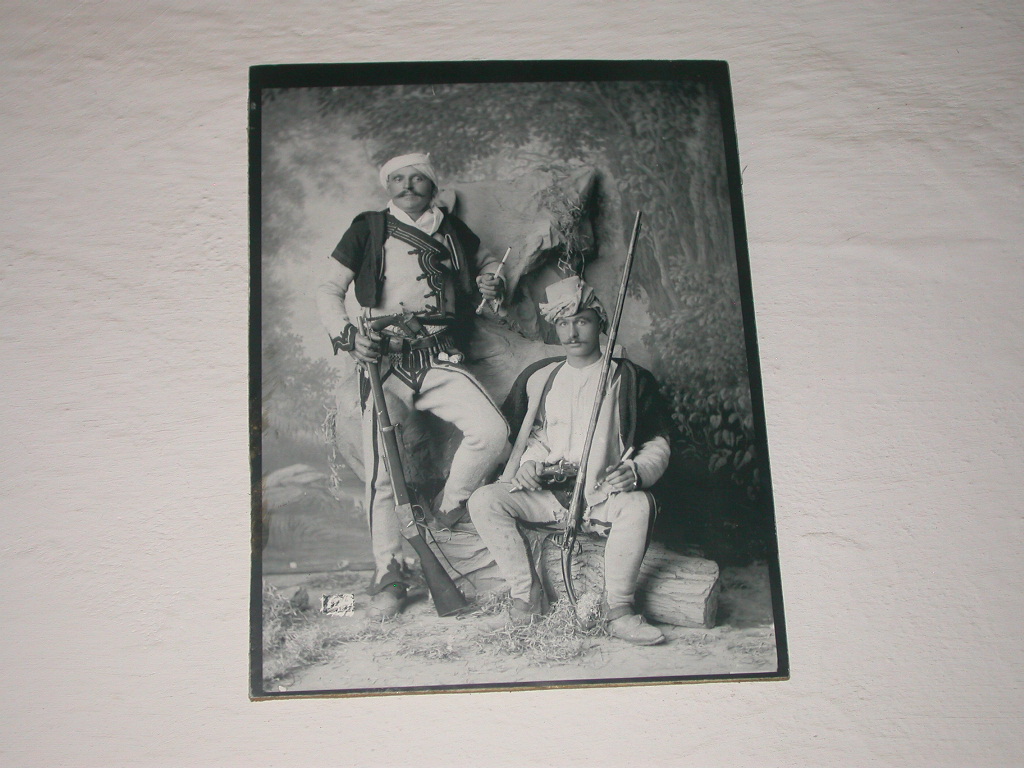
Bektashism is a kind of Sufi order but I don’t want to bore you =I can’t explain, you may have to look that up yourself. One thing I can say is the man who was on guard at the tombs was extremely reserved, modest, friendly, calm … all a result of training oneself to acquire praiseworthy traits? Albanians on the whole are really very friendly people

and who knows where all those prejudices that I hear come from?

DSCN8020

More about that next time

cheers

Gerburg
Greetings from around the corner

7 Aug

Summer holidays again and I think of all the letters I wanted to write and the pictures I didn’t send last year:

Yucatan, huge, well restored  pyramids with unpronouncable names, the hot, humid jungle with still to be excavated pyramids, grim looking Mexican policemen who stop buses and check on pale, blond tourists and stern dark local travellers, San Cristòbal de las Casas in Chiapas (Zapatista country with their (not so) secret signs the green crosses), Mexico City, its archeological area of the Templo Mayor with sad remnants of the conquistadores’ will to destroy Aztec grandiosity (Tenochtitlan) and to put their own church in its place (Metropolitan Church, bombastic), Frida Kahlo’s enchanting home and Diego Rivera’s socio-critical murals, culture keen Mexicans and their pride of their European and American heritage, colourfully clad Maya women who sell beautiful embroidery.

California and Oregon: the Oregon Trail and its historical museums (and I remembered all the teen-saturday nights I didn’t go out because I was so hooked on western movies), the Sierra Nevada, gold mining towns, wild bears and their appetite for processed food, fabulous Yosemite and uncontrollable wildfires, San Francisco, Monterey and Cannery Row, gambling in Reno and many more. Most importantly, I wanted to tell you about American hospitality and cuisine with roast beef cowboy style and homemade gingersnaps, Mexican-American casseroles, Italian-Californian restaurants so generous the doggy bags make up for another meal …

This year’s plan: get to know a next door neighbour and not go broke on a cup of coffee (so that neighbour wouldn’t be Switzerland), a place where the locals are not outnumbered by tourists and tourists are human beings …

Greetings from Albania, land of the Shqipetars,  sons of eagles.

DSCN8700

If you are German: remember Karl May, end of 19th beginning 20th century, popular German writer of adventure novels like “Through the Land of the Shqitpetars”, with the famous protagonists Kara Ben Nemsi and Hadschi Halef Omar? Fascinating! But … I’m not badmouthing him, if I say… for more reliable information about the country and its history read Ismail Kadare, Albania’s most famous writer (translated into 40 languages).

Why Albania? What’s there to see? (my friends were perplexed)

Tirana

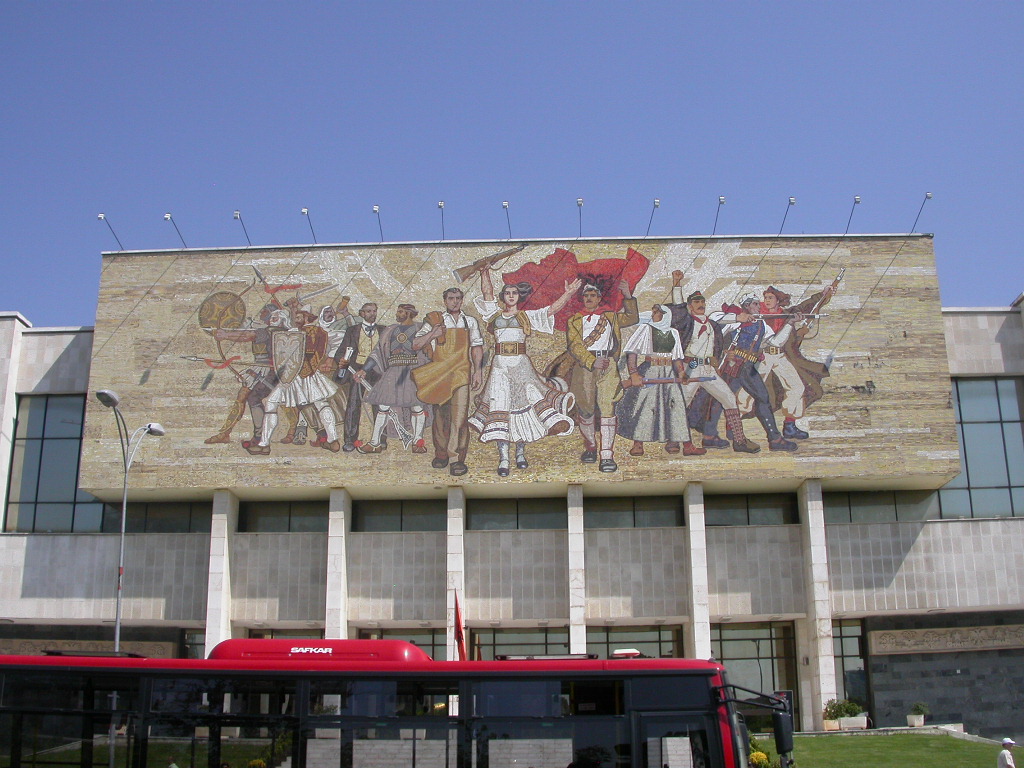
Look at this mosaic mural entitled “The Albanians” probably featuring all national heroes (not fallen in disgrace later) from Illyrian times to today (Skanderbeg Square, Tirana, facade of National History Museum)

DSCN7953

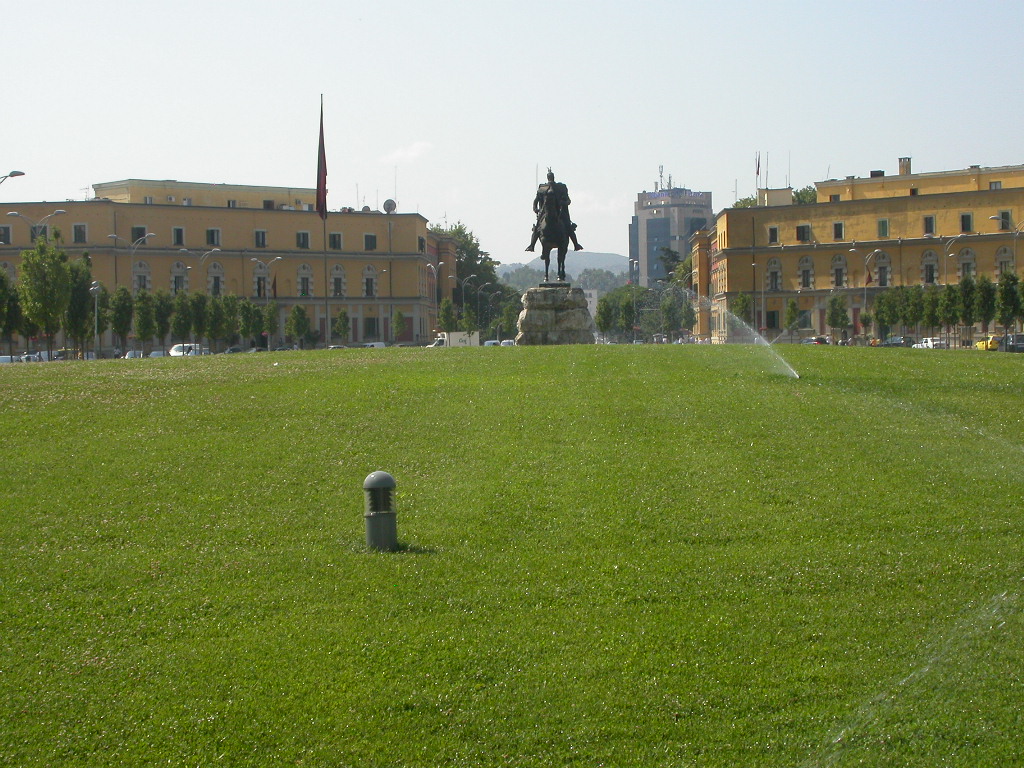
Also on the square, a statue of the great Skanderbeg, 15th century hero, who fought at first for and later against the Ottoman empire, and brought their expansian to a halt, temporarily.

This is not a good picture of his statue, but you can see how big the square is.

DSCN7958

What is not there to see anymore is the gigantic (10 m high) statue of Enver Hoxha (pronounce hoʤa). Remember Stalin’s, Mao’s, Pol Pot’s little cousin? I used to think he was a boy scout compared to them, but he did his best to come up to their standard and for the people who were tortured or killed by Hoxha’s Sigurimi (a kind of Stasi, KGB, Securitate) it didn’t make a difference who was worse in the end. Under him the death penalty was brought down to the age of 11 years, and was applied for offenses it would make a sharia law advocate go pale. Enver’s effigy was pulled down in 1991 by a freedom hungry mob and inscriptions for example on mountains (ENVER) were changed to “NEVER”. I took a picture of that but the word didn’t come out, too far away.

How did the Albanians get to know about the outside world? They secretly listened to Adriano Celentano, Toto Cotugno, Al Bano, that’s how they learned Italian, even more secretly they watched Italian television (under Enver you could be sent to an Albanian gulag or worse for that) and they still do, quite openly, because Mediaset (Berlusco owned) is still an exciting alternative to Albanian tv stations. Now most people speak Italian here, from basic up to excellent. Nessun problema. English is another option, more popular among the young.  Besides that people speak the language of the country they work(ed) in, so if you don’t know English or Italian and know Greek you get along, too. On the beach in Saranda I heard a German Albanian explain something about the beach chairs and umbrellas to a Polish couple in German. So any language goes.

The Euro is the widely accepted currency beside the Lek, you change your money for the little things like bus fare or ice cream.

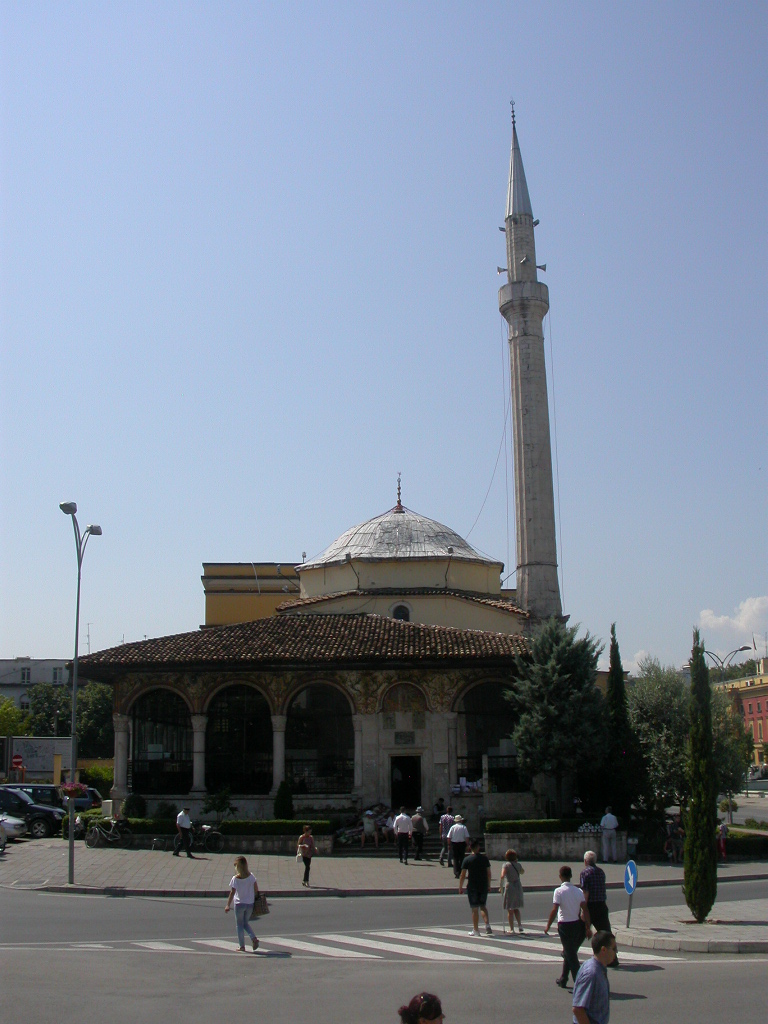
Also on Skanderbeg Square there is a beautiful little mosque, part of the 5% religious buildings that survived the cultural revolution of 1966/7.

DSCN7960

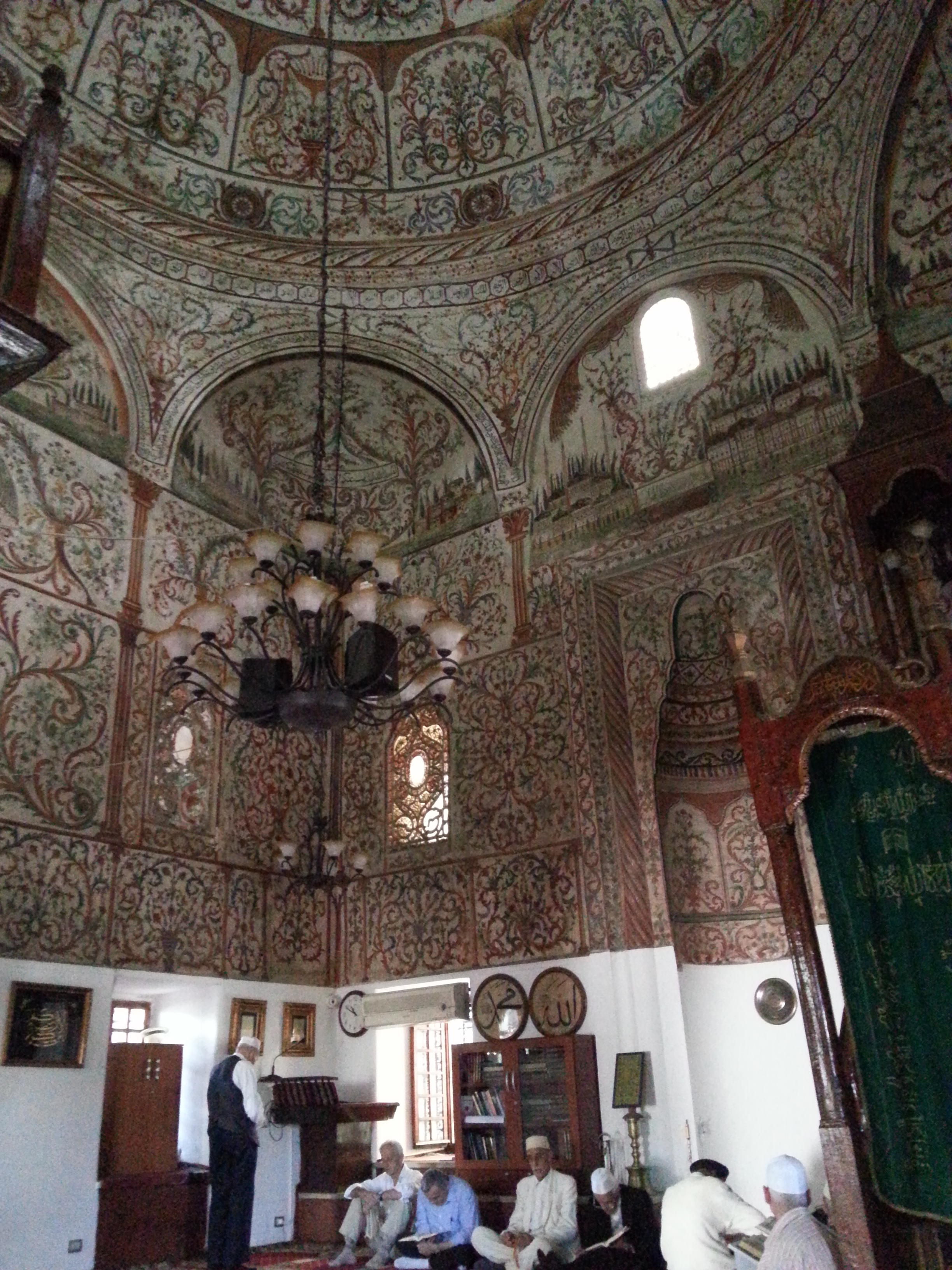
Beautifully decorated inside (imagine what cultural heritage was lost – the destruction of it took place about 30 years before the Taliban blew up the Bamyan Buddhas. See, also Europeans have their little Talib inside).

20140718_104938

Albanians are easygoing on religion. Slightly more than 70% of the population are nominally muslims and slightly more than 70% are not practicing regularly.

When asked if we could enter the mosque the door keeper shook his head sideways, which made me laugh, because Massimo was already about to turn away in frustration, when I remembered, it means “yes”; they let me enter without telling me to cover my head, I had forgotten to bring a headscarf, to top it off I sat down in the wrong part, the one for the men, for a while and went upstairs later, when I realised …

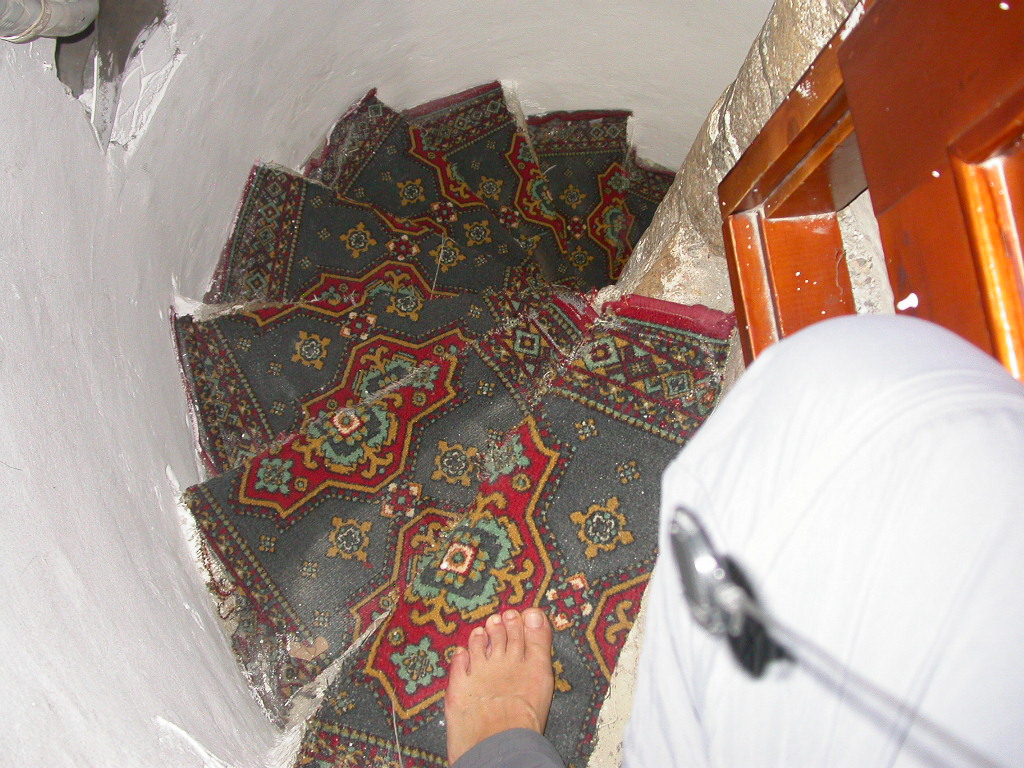
Gee, they don’t make it easy for a woman to climb up to the ladies’ section of the mosque or do they just want the young ones?

DSCN7963

Signs in front of churches and mosques tell you to be decently dressed, but we saw (short) shorts on women and undershirts on men occasionally in some orthodox church. On the bus a woman wearing a niqap arouses more attention here than she would in Christian Europe.

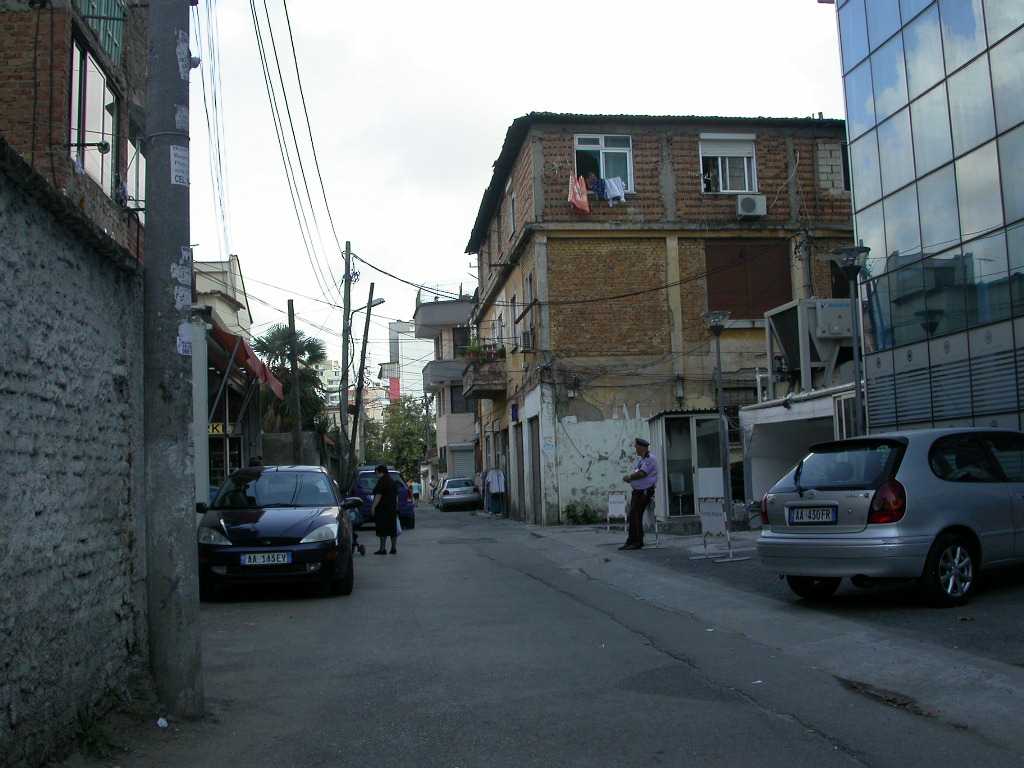
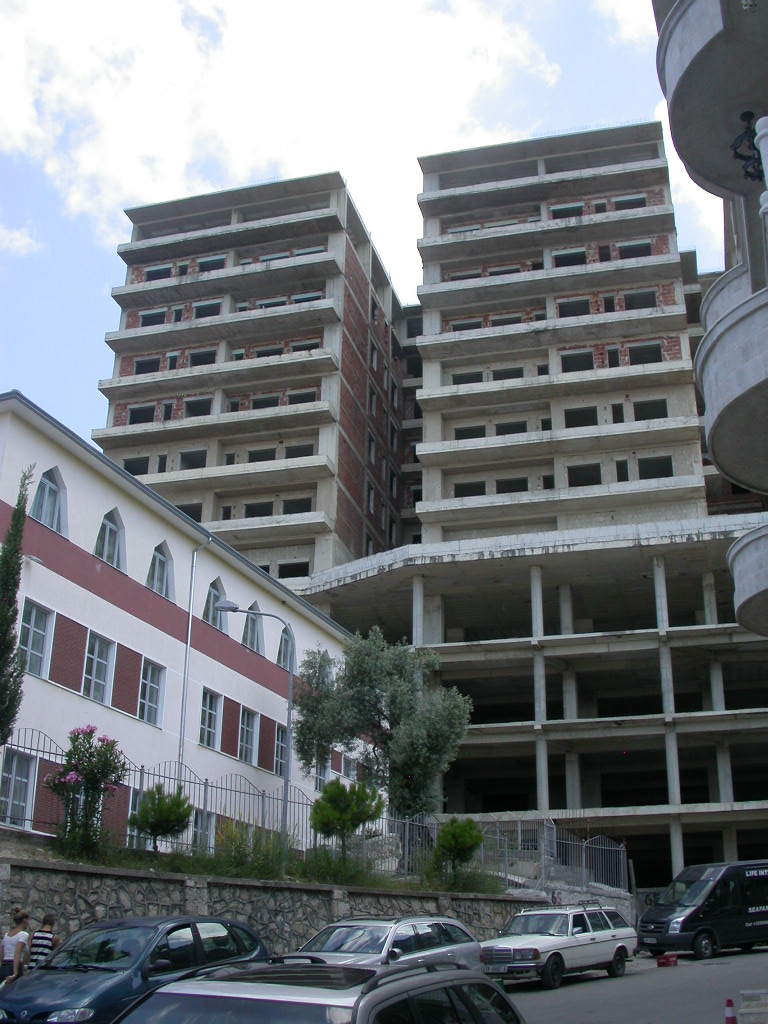
Tirana otherwise for better or for worse is a modern city and you recognise housing built during real socialism, post-socialism … doityourselfism

DSCN8873

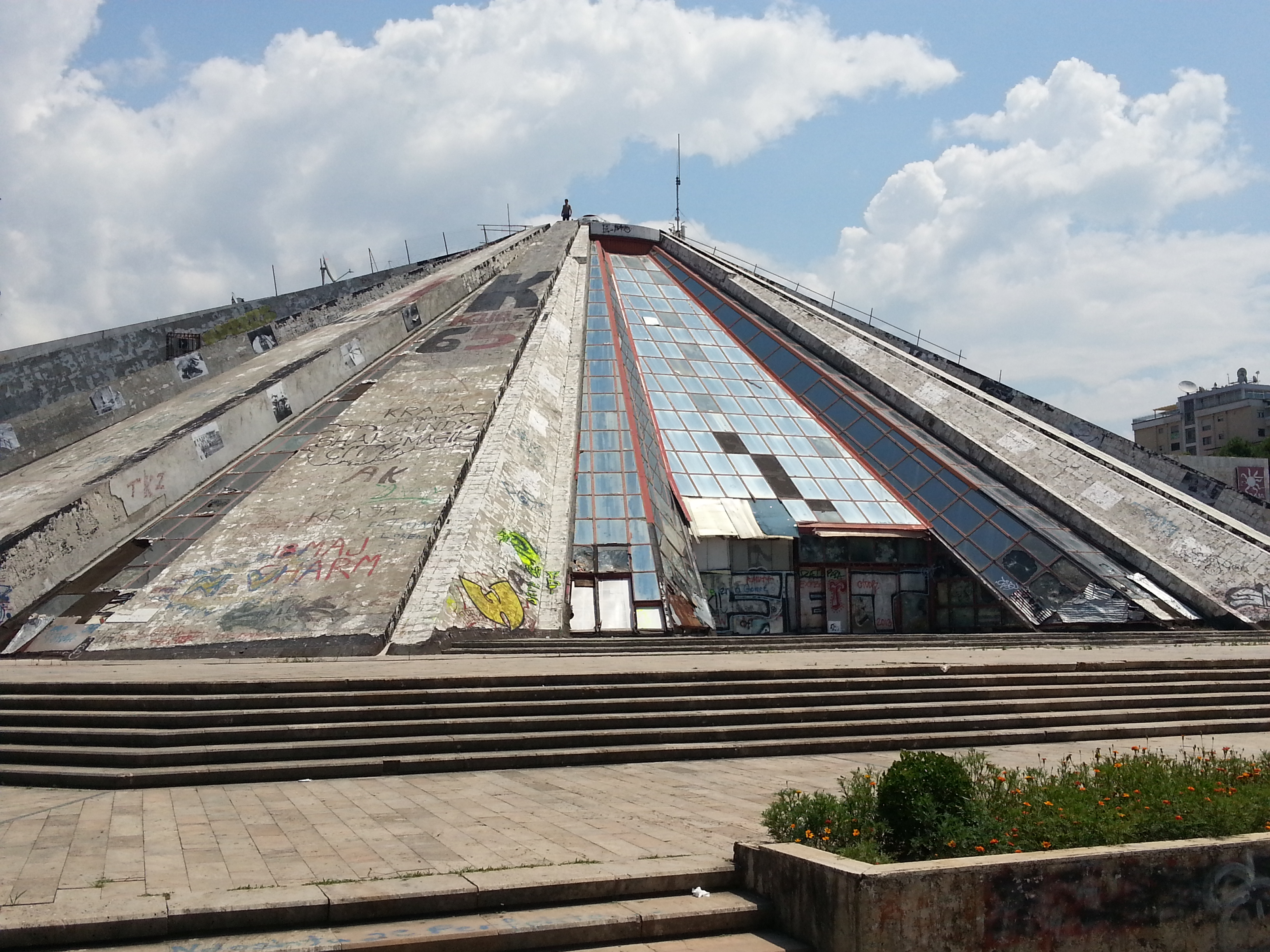
and for worst a pyramidical something built by Enver Hodxa’s daughter and her husband, as homage to big Daddy to host a museum about him …

20140718_123014

… now a ramshackle remnant of grandiosity …

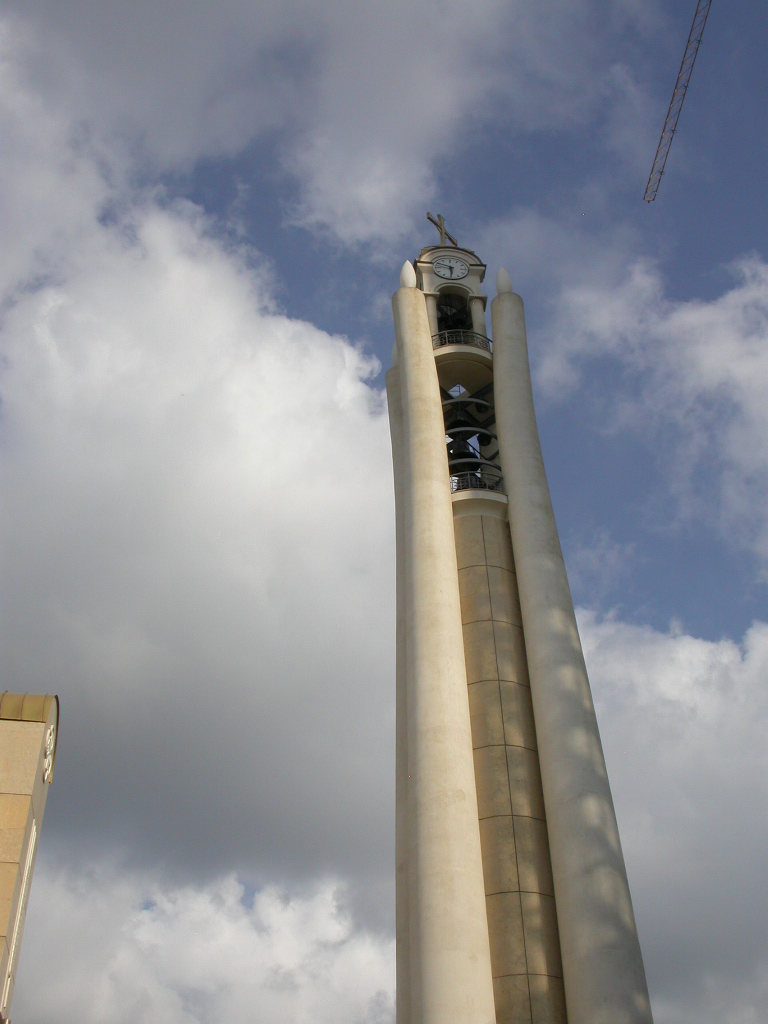
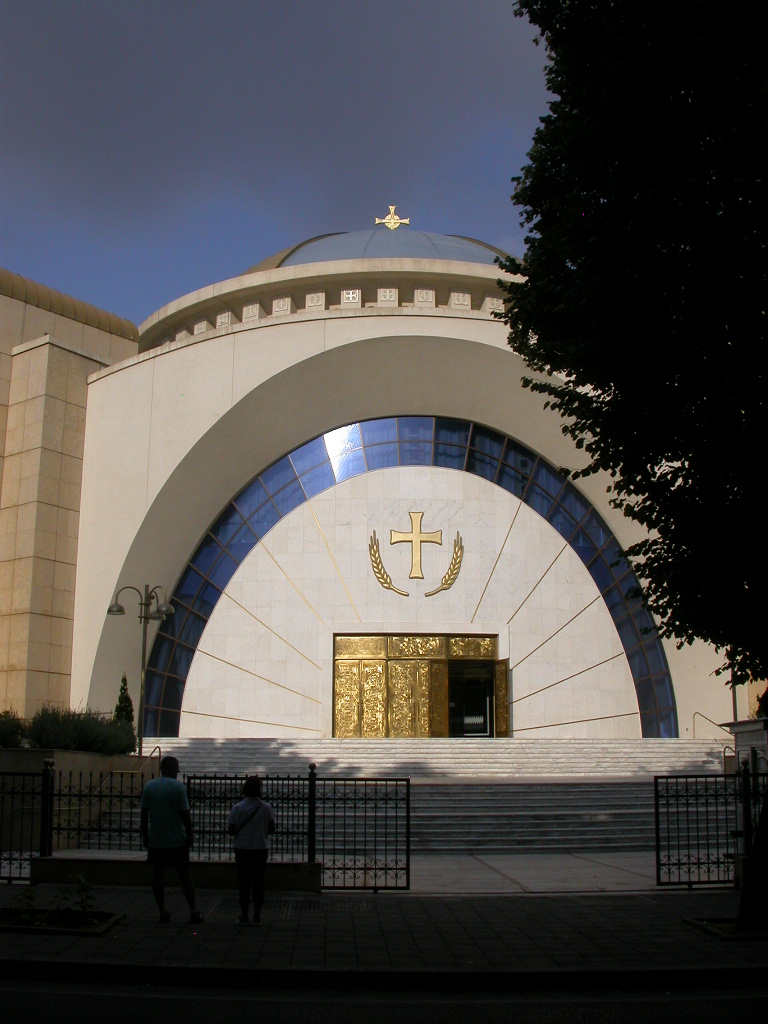
A modern orthodox church, very modern, it’s predecessor was destroyed.

DSCN8868DSCN8867


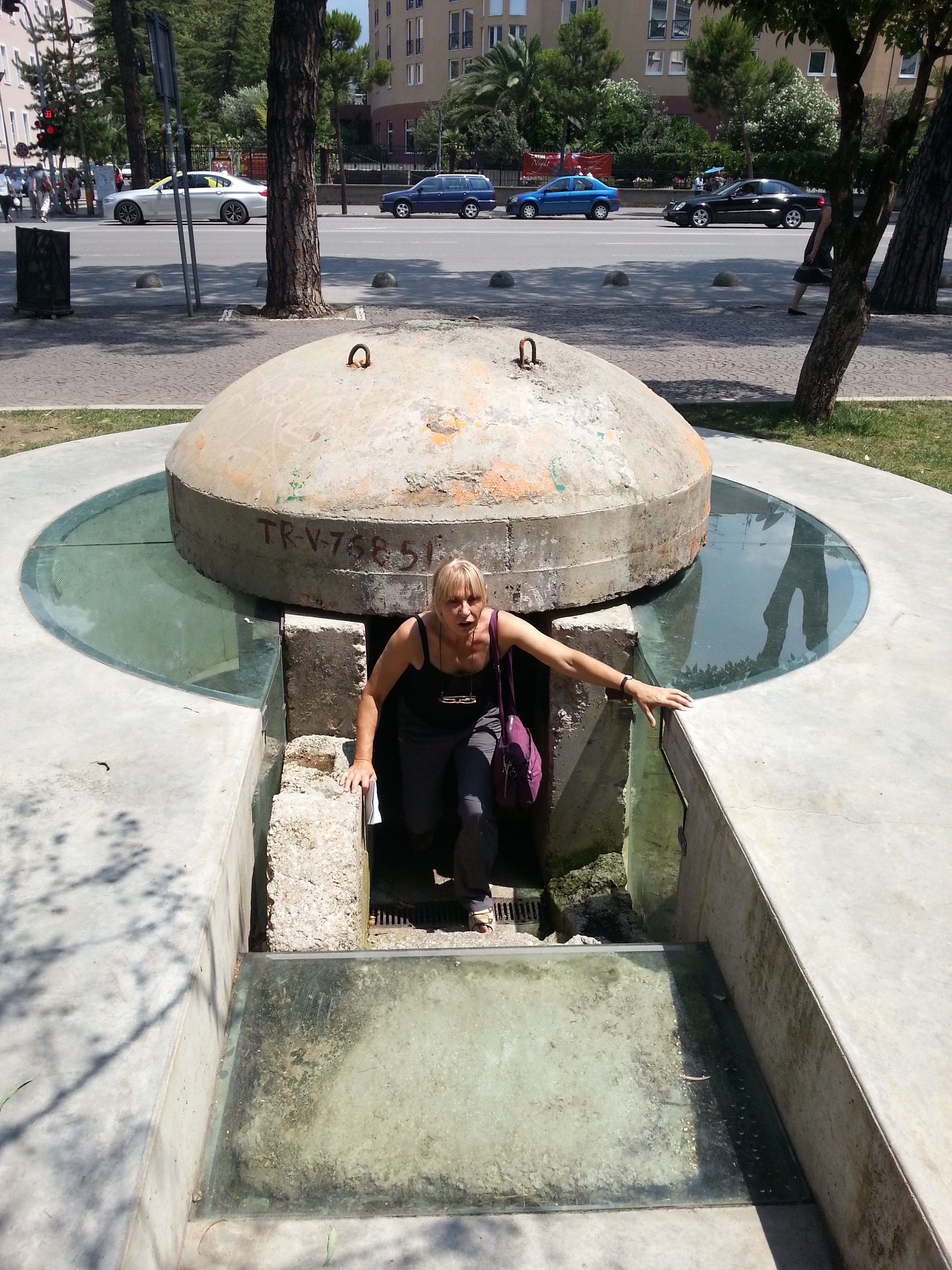
After breaking with all his cousins near him and in the East and far East (Tito, Chrustchew, Mao) Hoxher withdrew from the world, locked his country in, became autark and autistic, distrustful not only of his fellow countrymen but of the outside world, and had 740 000 pillboxes of varying sizes built all over the country, one for three people on average, so they could hide and survive an attack by the East or the West (North, South …) and even save a goat or a sheep to have something to eat afterwards. (Don’t sneer! I remember times when in the West people were told to hold their briefcases over their heads in case they had to protect themselves from nuclear fall out).

20140718_124939

This is Bunker Park in Tirana, but you find these 5 tons, indestructable, nondisposable concrete and iron, little mushrooms in the mountains, at the seaside, in gardens, parks … When I had this foto taken I still thought I would have difficulties finding the other ones.

In Tirana do

what you do in big cities:

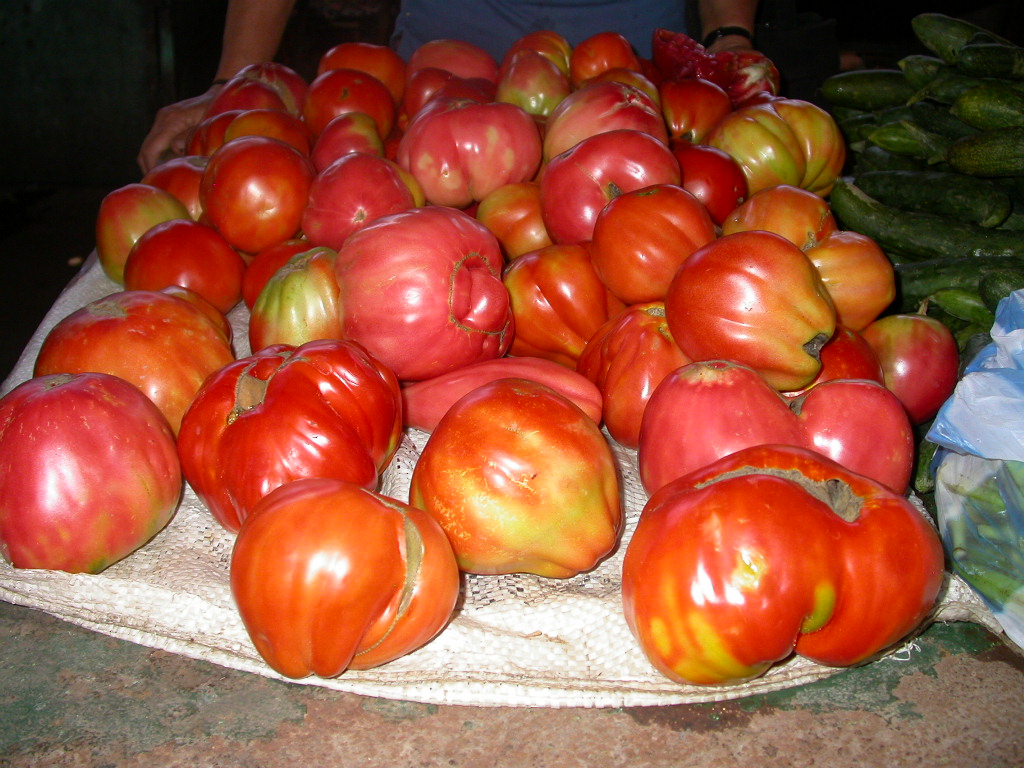
1 … see the monuments, museums, mosques (just one) churches (not many), go to the opera, to a nightclub, go to a restaurant (good and not expensive, a dinner for two with meat, veggies, chips, beer and whatnot costs like a pizza for one on the other side of the Adriatic, waiters are friendly and polyglott up to a certain point, if you don’t understand the explanation take your chances and order, it’ll taste good, no worries. The diet is mediterranean, with lots of olive oil and – eat tomatoes, they are real like they were in Italy some 45 years ago, you don’t find them anymore. ..

DSCN8604

2 … and do what Tiranans, actually what  Albanians do in all places: go for a stroll after 5 o’clock (less hot), stroll along the streets with your friends, family, on your own, sit in a café, have coffee with someone and chat chat chat … (even with your smartphone, like everywhere else).

My next letter tells you:

where you can go from Tirana, i. e. you can go anywhere if you are smart enough to find out how and from where and what time. There is no Tourist office (at least not one that is known to anybody), there is no bus terminal, no office for public transport, nothing. Busses to different towns leave from different parts in the city. You ask around, people always try to be helpful, even if they don’t have the answer on the spot, they take their time to remember, point into a direction, someone tells you around what time the bus should leave, from memory because it doesn’t say anywhere. You keep asking and finally someone tells you to wait at a bus stop, without any signs or timetables. You wonder if you’ll still be standing there the next day and all of a sudden the bus shows up, punctual, inexpensive, old but reasonably comfortable if not too crowded. And if crowded a man always gets up for the foreign lady, I feel embarrassed, because these men are probably older than I am. And then, you notice something familiar about the bus, s. th. that makes you feel at home …

DSCN8606

DSCN8382


… old, discarded vehicles from Germany and Italy!

In the streets you notice ambulances, too, it says Notarztwagen on the hood. Who could understand or pronounce that word in an emergency?

It’s the same with all the other cars, they wouldn’t be allowed to circulate in western countries any more, but European emission standards are a luxury this country can’t afford. You smell it in the air, less traffic and more pollution …

… that would have been better 25 years ago, wouldn’t it?

Amazing how many mercedeses there are in this relatively modest if not in many ways backward country! “How come?”, Massimo askes a young chap who speaks Italian fluently. “Ah you know,” he smiles “they are the cars we stole from you”.

Okay, that was his joke.

Next letter, all about the rest of the country

cheers

Gerburg